
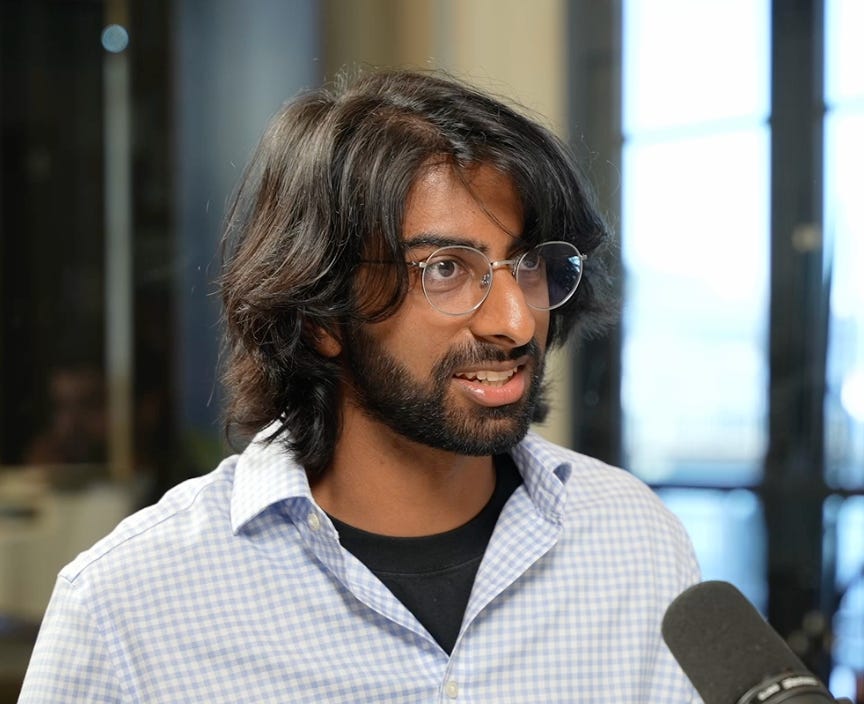
 Joe Lonsdale: American Optimist
17 Nov 2026 · 38m

 Add vo to ChatGPT or Claude to ask about everything you hear
vo listened to this episode to put together the overview and transcript, so there may be the odd mistake.
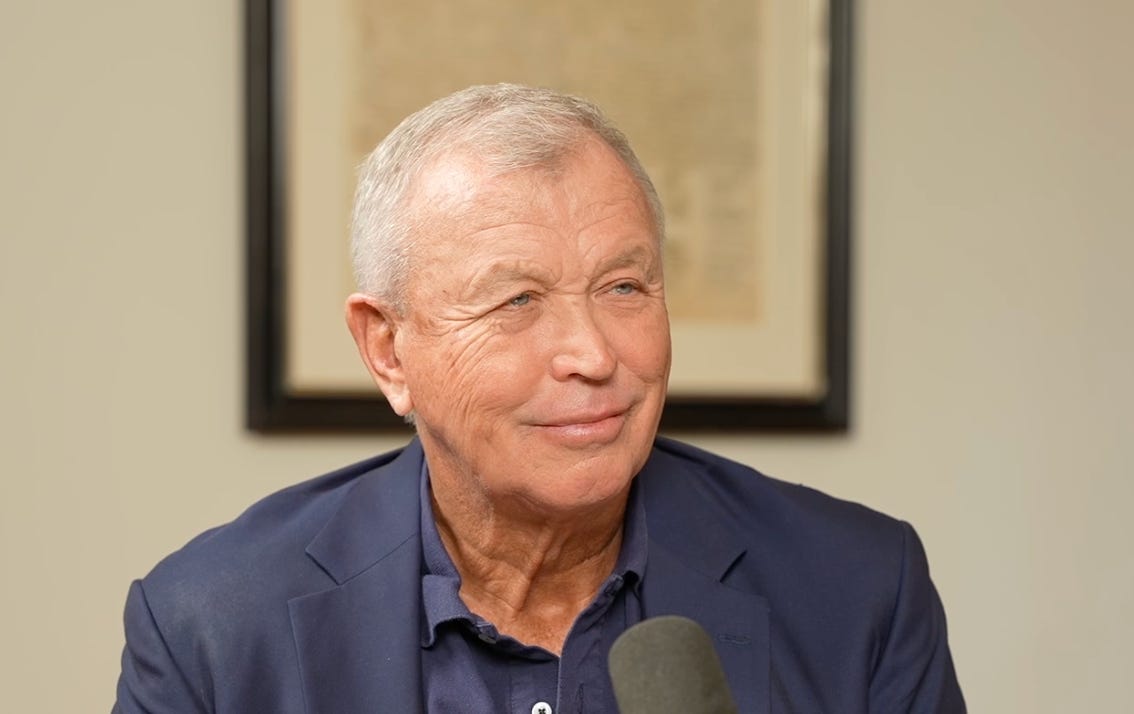
Geoff Rehnert (Audax Group) explains how Bain Capital’s strategy/operating playbook translated into Audax’s middle-market private equity success, why AI is becoming a “moat” for portfolio operations and investing, and how Audax builds scale via disciplined buy-and-build add-ons and private credit. He also discusses PE’s societal impact and his philanthropy, Miles for Military.
Geoff Rehnert, CEO of Audax Group (multi-billion-dollar middle-market PE); board chair of Miles for Military. Background: early Bain Capital associate (organized 1984; first fund $37M), Stanford Law School; later co-founded Audax in 1999 with Mark Walpole; built a long-tenured partner team.
Bain’s “institution” model and continuous improvement drive durable performance; Audax tracks time, uses in-house legal to cut add-on costs (~$20k outside legal per add-on), and deploys AI across portfolio to improve organic growth. PE aligns ownership/control and can save jobs.
Bain deals like Staples, Domino’s Pizza, Sports Authority; early Audax LBO Calumet Coach (invest $1M, sell for 35x in 2.5 years); Artisan Entertainment/Blair Witch Project luck during dot-com era; Miles for Military flies E1–E4 service members home after 25 volunteer hours (49 flights in year 1, 540 next year, 1,000+ this year; goal 5,000).
0:00We invested a million dollars and wound up generating$35 million. That sounds like AI returns almost. A lot of the AI returns are yet to be realized. You're CEO of Audax Group, which is one of the leading private equity funds in the country. You worked with Mitt Romney when you helped him start Bain Capital. Romney and Bain scored hit after hit with corporate acquisitions. Staples Office Supplies, Domino's Pizza, Sports Authority. We were one of the first private equity firms that actually tracks our time and how our people spend their time, And particularly now with AI, it's a real moat around our business.
0:32What advice do you have to other people who are building firms, who are thinking of building a firm? We did a couple of things right. One is...
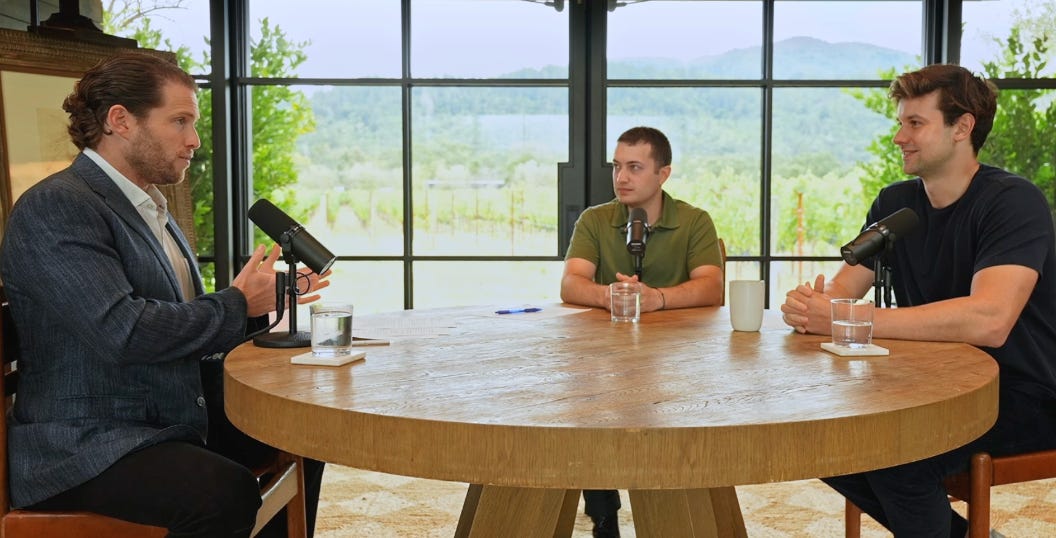
0:45Jeff Rennard is a friend and a mentor, and he's a legend in the private equity space. He and Mitt Romney had over 100 % IRR at Bain Capital, one of the first early top funds ever in our sector. and Jeff went on to build Audax, which is a leading multi-billion dollar middle market private equity firm on the very top firms in this space. On top of that, Jeff's a great leader, not just in business, but in philanthropy as a great American as well. His organization, Miles for Military is starting to help huge numbers of people who serve our country, who can't get back to see their families. There's a lot we can learn from Jeff about how to build the top firms and finance an industry and what's going to happen in the coming years with AI.
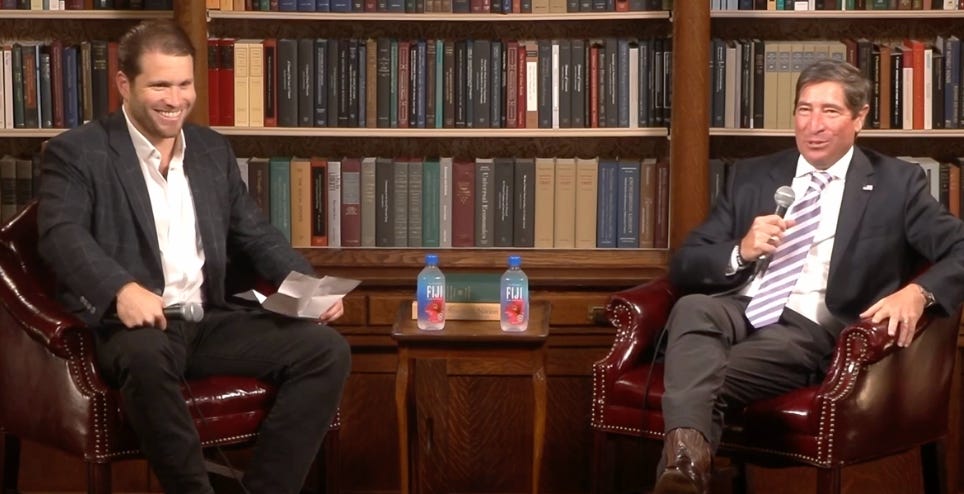
1:23There's a lot to learn from Jeff about how to be great Americans. who look out for other Americans as well. Welcome to American Optimist. Really excited to have my friend and mentor, Jeff Renner, with us today. Jeff, thanks for joining. No, thanks for having me. It's great to be here. Jeff, you're CEO of Audax Group, which is one of the leading private equity funds in the country. You're board chair of Miles for Military, which I'm excited to talk to you about. Let's go back earlier in your career. You worked with Mitt Romney when you helped him start Bain Capital, right? You're working for him.
1:50When was that? The mid-80s? In 1984 was when Bain Capital got organized. I had the opportunity to be one of the first two associates to help start it. And we were in 1984 with a$37 million fund, the largest first-time fund in the venture capital or leveraged buy-up business. The word private equity didn't exist back then. And 37 was big for the 80s. It sounds like a Series A these days. By the end of the 80s, it wasn't so big. But 1984, the entire amount of money under management in the venture capital and the leveraged buyout business was$1.7 billion. That was the entire industry. And you guys hit it out of the park.
2:34I think the IRR was something close to 100 % over time there. The first several funds averaged on realized deals over 200%. Wow. And when my business partner and I left in 1999, even including unrealized deals marked at the investment at cost, the IRR was over 100%. And what was the thesis back then when you were working from it? And like, what was he telling you to work on or to do? What were you looking for? So all of us who helped start Bain Capital came out of Bain & Company, the consulting firm. And in the early 1980s, Bain & Company was the leading strategy consulting firm. They were hiring the talent from the top business schools and law schools.
3:19I went to Stanford Law School, where they also recruited. And they were hiring the best and the brightest and then going into corporate America and helping companies change their strategy, change the way they operated. And so the theory behind Bain Capital was we were going to take those same skills and principles and apply them to companies we invested in. So rather than sell fees for services, we were going to invest our own capital and our investors' capital and generate equity returns. And obviously, it worked really, really well. There's a bunch of deals. Staples was one of the most famous ones.
3:54Tell us about a couple of the deals. Well, Staples and Sports Authority were startups. They were both just business plans when we backed the entrepreneurs who started them. We also got into the leveraged buyout business. We sort of figured that out on our own back then. None of us had ever done deals before. And our first leveraged buyout was a company called Calumet Coach Company, which was a a small company that made vehicles which housed CAT scans and MRI units in vehicles that would then go to various hospitals that couldn't afford to buy their own. It was a shared services concept. And we wound up buying that company at a low multiple with some leverage.
4:43And we sold it two and a half years later for 35 times our money. We invested a million dollars and wound up generating 35 million. So we returned almost the entire fund. That sounds like it sounds like AI returns on this. A lot of the AI returns are yet to be realized. There you go. The actual exit. They're very important. The AI returns look great on paper right now. We'll hopefully turn those into cash soon. That's a big question over the next year for a lot of us. It's no, that's amazing. And you went on, obviously, to build and still run one of the largest and most successful PE funds in the country.
5:15What are some of the skills you learned back then that you applied? Like, like are there, you said you were the best and brightest from Bain Capital. So obviously the talent matters a lot. Like, what do you look for when you're, when you're training and helping someone build these things? You know, the, uh, the, the credit for Bain Capital has to go to Mitt Romney. He did a terrific job of thinking through how do you, how do you create an organization and an institution in a industry that, um, really for the first 15 years that, uh, you know, we were at Bain Capital there, there were very few, uh, organizations that, that It grew and you would call anything close to an institution.
5:51Bain Capital is really on the cutting edge there. Today, to have any kind of capability to survive in this industry, you have to be an institution. So when we started Audax Group in 1999, we had the benefit of the Bain Capital DNA. And we took that and we focused on a segment of the market where the institutional players or the emerging institutions weren't focused. And that was the middle market, the middle market. You know, the companies are smaller. It's more relationship driven. And there's actually more opportunity to actually change and impact the businesses. And so we brought a lot of those institutional skills and continuous improvement, of course, you know, attracting top talent.
6:42And, you know, at Audax in particular, we were looking for people who wanted to play as part of a team. You know, one of the things that I learned early in my career and big believer in that, you know, the greatest feeling in the business world is to be winning as part of a team. It's for me anyway, more fun than, than just being a lone wolf. That cultures influence 8VC as well. That's how we try to do things as well in the, in the venture space. And when you say middle market, how big was that back then? And how big is that now? What does that look like? It's changed. It's evolved, you know, middle market, uh, back then were companies of, you know, a hundred million in, in revenue and, uh, you know, 10 million to 20 million of EBITDA and, you know, total enterprise value of, you know, 50 to a hundred million today, middle market is, you know, pretty much anything under a billion dollars and, you know, sometimes even a little bit bigger than that in purchase price and, you know, revenue and EBITDA all over the place.
7:39Multiples have expanded. So, you know, today, most of the companies that Audix Group's buying are somewhere between, you know, 40 and, you know, 150 million of EBITDA. And, you know, in recent years, there's been a lot more criticism of PE and how it operates. I'm obviously a huge proponent of a lot of things in PE, but in particular, people attack PE for having hollowed out parts of the country by sourcing all sorts of things they attack it for. What's your view of PE's impact on our civilization and on our country? You know, in any industry, there are good actors and bad actors. And, you know, there's no question there are some bad actors in the PE business.
8:18But I think you look at any industry, any profession, there are people who, you know, skirt the rules or don't think about the broader consequences of what they're doing. I think by and large, private equity has been terrific for the economy, for the country, for society. What it does is it aligns ownership and control. And the people who own the business are also overseeing how it's run. And that's always been one of the issues with large public companies. You have an agency problem. The people that are running it are not always doing it for the benefit of the owners. So I think, you know, there's been an enormous amount of success with private equity, fixing broken companies, making them more profitable, enabling them to compete on the global scale and, you know, in the face of global competition.
9:16There are a lot of companies that would have failed and PE firms have gone in and helped them turn around and save jobs. And there are a lot of companies that are much bigger and better businesses today because of private equity ownership. So my experience overwhelmingly has been that we've made better businesses, we've created jobs, we've done all kinds of analyses across our portfolio. And, you know, we generate a lot of organic growth and we've also generated a lot of new jobs. Yeah, no, it makes sense in our society. You want more things being controlled by their owners versus on behalf of the owners by committees.
9:58We all know the committees don't actually own things. They're going to do things for the wrong reason. They're going to be more interested in helping their friends and cousins and other who knows what else they're going to be doing versus doing the thing as the owner. Yeah. Well, human nature is human nature. And I think private equity does a good job of harnessing that. I think the industry has evolved enormously. I think most private equity firms today that are still in business have all kinds of talent and skills to make the businesses, they buy better businesses. 100%. And Audix has been immensely successful.
10:31But I want to go back early on. You had a couple of things right at the beginning that didn't quite work out. I think Indian Motorcycle, you said it made you physically ill when you lost tens of millions on that early on in the firm. And did it ever come close to failing at the beginning? And were there key lessons from the early on? Yeah. When my business partner, Mark Walpole, and I started Audix in 1999, it was the peak of the dot-com bubble. And we just tried to do too much too quick. We left Bain Capital. Mitt Romney had gone off to run the Salt Lake City Olympics. All our colleagues at Bain Capital wanted to go into the large-cap private equity business.
11:08We wanted to be in the middle market. But we also got caught up in the dot-com frenzy. We had the right to buy one of Bain Capital's companies, a company called Artisan Entertainment. And coincidentally, just as we were setting up Audax and had the right to buy a couple of the portfolio companies out of the Bain Capital portfolio, Artisan released the movie The Blair Witch Project. And the Blair Witch Project went on to become, in a very short period of time, the most successful movie as a multiple of costs that had ever been released. And so we acquired Artisan Entertainment, and people thought we were dot-com geniuses because Artisan had used the Internet to market the movie.
11:56And at that point, no one really knew how you were going to use the Internet to make money. So people presume Mark and I knew how to use the Internet to make money. The problem was I could barely turn on a computer, much less figure out how to use the Internet to make money. We happened to get very, very lucky there. And as a result, we just spent too much time on the movie business, too much time raising a venture capital fund, not enough time overseeing the private equity fund that we raised. We also had a private credit fund that we raised, a mezzanine debt fund, and we just spread ourselves too thin.
12:33And I think the lesson, there were a lot of lessons learned. One is focus your attention when you're starting out. Put all your eggs in one basket and watch that basket. We put our eggs in too many different baskets and didn't watch it carefully enough. And then focus on what you're good at. You put your eggs in a basket where you know how to take care of that basket. So Mark and I realized what we understood was middle market leverage buyouts where we understood what the business did and how it made money and how it had a defensible position. So we spent all our time and effort doing that on both the private equity and the private credit side.
13:15And we were able to recover from that initial debacle with Indian Motorcycle and some of the venture deals. And we lost a few years on some of our competitors in those early days. But I think the lessons we learned and the people that went through that period with us learned have made us a much more successful firm today. We today have eight partners in our private equity business. They've all been with us over 20 years. All were there at the time of Indian Motorcycle and in its aftermath. And in our private credit business, we also have six partners, and they have all been with us over 20 years.
13:59And the benefit of some of those difficult times and the lessons learned when you keep a core group of people together is those lessons are shared and deeply embedded and unlikely to be repeated during anyone's lifetime. Well, that's awesome. Well, philosophically, it makes sense because there's ownership and control in the areas you're focused on and know best. And that's which we try to do that, too. To date, Jeff, your firm has done, I think, more than 1 ,500 add-on acquisitions. How do you decide how to build a platform and do these add-ons? And tell us a little bit about that strategy. So one of the things we learned as we were recovering from the Indian motorcycle debacle was we had done a very good job at doing some add-on acquisitions and integrating them.
14:45And we made a very conscious decision to become the best in the industry at buy and build. And we focused on it. We built systems, processes, and scalable systems and processes. What's an example of like a process around this? So we were one of the first private equity firms, if not still one of the few that actually tracks our time and how our people spend their time. And out of that, what we learned was people were spending lots of time reinventing the wheel on parts of the process that could be more efficiently done by specialists. So we developed a deal sourcing focus with people who are specialized in bringing in deals, people who finance deals.
15:29We built an in-house legal team to handle the legal work associated with add-on acquisitions. When we first started doing add-on acquisitions, particularly small ones, we'd be buying companies for$2 ,000,$3 ,000,$4 million and spending$500 ,000 in legal fees. So it was materially affecting the economics of those deals. By having in-house legal team that could do the repeatable, non-critical, but important legal functions to make sure you're protecting yourself, but really are creating value. they're more protective of value, that we were able to bring our average outside legal cost down to about$20 ,000 per add-on acquisition.
16:09So that made a big difference. And so we were able to do lots of labor-intensive small add-on acquisitions. We metric everything in our business. We have lots of metrics for how people spend their time, what we spend our time on. We also created a knowledge management system very early on that is increasingly important, particularly now with AI. It's a real moat around our business that gives us an advantage when we're looking at lots of different industries. That's amazing. It's a lot of operational discipline and lessons in competence. Enormous operational discipline. You guys have an amazing operations team.
16:50We have a portfolio support group today of over 70 professionals. Awesome. And then one other question I want to ask about this. I think in 2016, I saw that you said that the government regulations have made it tougher for banks to lend in the middle market. And you're filling this gap with the credit team. I think it's now something like$28 billion that you guys manage. Yeah, we're actually over that. We just closed a$10 billion private credit fund, you know, with all the noise out there about private credit. Yeah, what's going on in that area? Well, our team is a loan to maturity strategy. We don't do distressed.
17:26We have a very diversified portfolio. We didn't have a lot of SaaS exposure. And the SaaS companies we had are all performing well. So we have extraordinarily low loss rates. And it generates very attractive returns. Private credit as a whole, there's been a lot of noise because of the AI impact on SaaS in particular. was the thing that scared a lot of retail investors. Our investor base is overwhelmingly institutional in our private credit business, so they're not panicked and don't tend to follow the crowd. And being very disciplined and very methodical, our credit business shares a focus with our private equity business on the U.S.
18:14and North American middle market. And we see between the two businesses, we probably see somewhere between 80 and 90 percent of all the transactions that occur. And so there's just an enormous amount of knowledge about, you know, what are good businesses, what are not good businesses, who are good sponsors that our private credit business is comfortable lending to. And there's, you know, managed properly economies of scale have a real advantage. So we today are well north of$30 billion in our private credit business and our private equity business. Currently about$20 billion. And can't talk about fundraising until it's over.
18:58You guys are crushing it. We'll talk about that when the latest fund is raised. Of course. You guys have been really crushing it. And speaking, so you said the private credit business, you weren't as worried about the impact on SaaS of this AI stuff. if you're seeing your SaaS business anyway. The portfolio our credit business has is performing well and minimal impact. The other thing about being in the credit business is we're high up in the capital structure. So there may be, to the extent that there's kind of a leveling off of the growth of some of these businesses, the creditors will still get repaid.
19:33So the credit's still going to be worth something if the equity's not worth quite as much. We talk a lot about AI on this podcast, Jeff. I'm obviously on record being very bullish on the productivity boom that's coming from AI, allowing us to build things here in the U.S. again. What are you seeing in the last year with your private equity companies, your portfolio companies? Are you seeing anything yet? Do you expect to see things there? As I mentioned earlier, 70-person portfolio support group, enormous focus on AI there and deploying AI across all these middle market companies. And it's having an enormous impact.
20:03I mean, AI is incredibly powerful, very, you know, creates enormous efficiencies, better ways of doing things. We're actually seeing improvement in organic growth. We're figuring out how to, you know, cross our portfolio, figure out, you know, where there's overlapping customers and figure out how to leverage that when we talk to customers. And we're using it internally in our own investment processes to make those more efficient. It's, you know, it's it's it's remarkable. It's a big advantage for you. It's a huge advantage. As someone who started their career when they were typewriters and carbon paper and no cell phones, it's, you know, to be in the world of A.I.
20:47You know, in the same same career, same lifetime, it's it's kind of mind boggling. But, you know, the patterns, you know, the patterns are still there. The concepts are still there. It's just AI is, you know, it's like anything we've seen before, just quicker, faster and more powerful. Yeah. It seems like a good time to be doing what you're doing when AI makes all this stuff work a lot better. You know, it's good to be doing what we're doing when you have scale. And the other thing we have is we have a team that has been focused on continuous improvement from the get go. So you have all the data from years.
21:22We have years and years of data. And we also just have a culture where people are always introspective and thinking about how can we do this better? How can we do this more efficiently? Coming out of the Indian motorcycle debacle, when we, you know, the team that, you know, that's still here today, we met and, you know, this was 23 years ago now. And we really did a lot of introspection and spent a lot of time. You know, how are we going to get better? How are we going to make sure we don't make these mistakes again? How do we create systems, processes, and a culture that leads to excellence and sustained excellence?
22:00And, you know, I'm now executive chairman. I'm not in the day in, day out anymore. But those lessons and principles and core values are deeply ingrained. And it's really rewarding to see it happening without me having to be the prime mover anymore. You've gone from the associate helping start the firm all the way to the new firm you built, and now you're executive chairman. I have a lot of listeners who are on different journeys along that path. I'm obviously building my own firm over the last week. We just got our 10-year anniversary this year on my side. Congratulations. Thank you. And what advice do you have to other people who are building firms, who are thinking of building a firm?
22:35If you go back and talk to yourself 25 years ago, what sort of lessons have you learned? Well, we did a couple of things right. One is the core values, I think, are really important in finding people who share those values. And as I mentioned early on, people who like being part of a team and want to win as part of a team, I think that's how you create an institution. It's not about one person. Very, very hard to create an enduring institution. You can have exceptionally talented people, but they need to be able to value and respect and appreciate others who might not be as talented, but are committed and hardworking and be willing to share.
23:18And that's one of the things that I think I'm most proud of is we've kept all these really talented people together for a long time. And they've all done well financially, but they were willing to play for the long haul to build a winning team. So I think you need to do that. I think you need to have, you know, constant introspection and innovation. The world's just changing faster and faster and faster. And I think you have to have a culture of, you know, continuous improvement to be able to do that. And then I think you have to focus. You know, that was the mistake we made early on was we tried to do too much too quick in areas where we didn't really have a distinctive competence.
23:58And I think, you know, we learned that lesson and, and, you know, we've, uh, we've never lost sight of the importance of that. Right now, again, there's so much going on. It's, I think it's hard for some people. If you're talented, you could do a lot of things, but you're going to be the very best of the thing you're doing. And, and you start having success and, and then pretty soon people come at you, well, you could do this, you could do that. And it's very, very tempting when, you know, you have all these options to go in different directions, but, um, you can, you, you can get yourself into a lot of trouble and, um, You know, it takes a long time to build a good reputation.
24:29It doesn't take long to lose it. That's well said. Well, Jeff, one thing you and I have in common is we're both patriots. And I really admire what you've done for our country and how much you love it. And a cause that you're involved in that I think is amazing is called Miles for Military. And I'd love to tell our listeners about this. What is this cause and what inspired you to get involved in it? So I was shocked to learn that the military does not provide transportation or pay for transportation home for active duty personnel. So when someone's stationed at a military base, they get leave, but it's on them financially to figure out how to get home.
25:07Even if they have family at home, a young family? If they're stationed in North Carolina and they're from California, they have to pay their own way to come home to see their family. Certain people, you know, as you get more senior in the military, people typically have their families with them. It's the junior people, the most junior enlisted that are the ones who, you know, really, I guess would say, you know, are lonely. And, you know, there's a real opportunity to support these people by offering them a free flight home. And so the concept was developed by a friend of mine who's the mother of a Marine who had a son stationed in North Carolina.
25:52And she flew him back to Boston for Thanksgiving. It cost$900 to fly him. And she said, you know, how did the other guys in the barracks, what are they doing? How do they afford to go home? And he said, Mom, no one goes home. Wow. Yeah, they, you know, these people serve in our country, they're 18, 19, 20 years old. They're spending, you know, Thanksgiving, Christmas, you know, weddings, all these important dates they're spending in their barracks and unable to go home because financially they're, you know, they're not capable. First of all, majority of them come from a modest backgrounds, rural America, inner city, a lot of first generation Americans, and they get paid very little.
26:41People sort of, you know, I assume, well, you know, the military takes care of everything. You know, they got housing, they've got food, you know, they get the GI Bill when they get out. Well, the reality is the privates and the corporals, E1 through E4 are the ranks and the equivalent in the Navy and other branches. But in the Army and the Marines, the privates and the corporals get paid in the low$20 ,000 per year. They just got a boost about a year ago with the new administration, but still very modest. And that's before taxes. So after taxes, there's just not the money for the majority of them to go home.
27:20So what we found was, you know, we started looking into this was, you know, most junior personnel go two, three, sometimes four years without seeing their family. And as a parent of five children, you know, I remember just being heartbroken when they would go off to college and it was going to be four weeks until parents weekend and I could see them. I can't imagine, you know, not seeing a child for two, three, four years. And and this is, you know, these are people serving our country who are, you know, going through, you know, all kinds of hardship. And it just seemed to me this is a this is a group of our society that is deserving.
28:05And and there there ought to be, you know, a way to a way to help them. So my friend came up with the concept. Her son had worked at it. He had volunteered at a special Olympics a couple of weeks before that Thanksgiving. He came home and he was talking about how much he'd enjoyed it and how he and a couple of his Marine buddies had, you know, just had a great time and how much the kids enjoyed it. And she came up with the idea of starting a not-for-profit that if our servicemen and women would do 25 hours of volunteer work, we'd create a not-for-profit that would provide them a free flight home.
28:44Got it. So it's actually like a more pro-America thing where these people will do extra volunteer work and that's good for them in America. And then as part of that, you're going to give them a free flight home. You know, it's a win-win-win. The volunteer work is something that gets them off base. It gets them involved with a group of people they wouldn't be talking to otherwise. And then the benefits ripple all throughout the volunteer community. This year already, there have been over 100 ,000 volunteer hours from the folks. And we expect by year end, it'll be north of 300 or 400. What types of volunteer activities are you seeing?
29:19Everything from USO to working in animal shelters to cleaning up beaches to working with veterans organizations. And there's, you know, enormous variety. Red Cross has also been an organization a lot of folks have volunteered at. And it's something that last year of the 540 folks we flew them last year, the average volunteer hours were 75. So, you know, the minimum is 25. Most people decide to do more than that. and they find that it actually becomes a very meaningful part of their service experience. Well, it's really amazing. These are the Americans that the armed servicers are supposed to be lifting up and helping and respecting.
30:03I think there's something in our culture where we're supposed to honor our troops and honor our veterans. And so it's crazy to me as well to hear that there's, it sounds like there's, how many people are there? Tens of thousands of these people are not flying home? We have 450 ,000 E1 through E4 personnel in the U.S. military. Enormous population. The U.S. military as a whole is two million. We're focusing on the most junior, the, you know, the typically the youngest and also the people who get paid the least. And they're the ones who, you know, really need this because they're typically not able to have family.
30:40Some of them do have families, and in most cases, they're separated from their families. And the ones who are just going off out of high school or at a very young age, they're on their own. And we found that the impact of this program is it gives them hope. It's been a huge boost to morale. This year, we've already flown over 1 ,000 home. We're hoping to fly 5 ,000 by year end. So it's a bunch of Thanksgiving and Christmas flights. Travel tends to be heavily back and weighted in the year around the holidays. So we're seeing a big surge in demand now. We started really two years ago. We flew 49.
31:24Last year, 540. This year, the goal is to almost 10 times as many as 5 ,000. And we're scaling this. We've got a terrific team. It's, you know, I've, I've started companies before. I've never started not for profit. You know, with companies, you, you, you, you can give, you know, stock options or carried interest. It's harder with nonprofits. With nonprofits, you need equally talented and equally motivated people, but they have to be mission driven. They penalize you if you pay them too much with a tax code. Actually, it's interesting how it works. Yeah. And so it's, so I've, I've committed to covering the overhead for miles for military while we're getting this off the ground.
32:07And so every dollar people give is going towards flights for our military. I love it. Well, I'm a proud donor and hopefully some of our listeners will step up as well. Thank you very much. It's an important cause and we really appreciate your help. I mean, I mean, ultimately we should get this to hundreds of thousands a year. It sounds like if we scale up, right? That's the goal. This is a big idea. We've got a few corporate partnerships, Empower Inc., Retirements Benefit Administration Company, Wyndham Hotels. Both of those have signed on as corporate partners. We're looking for more corporate partners.
32:43We have a few NFL teams who are going to sponsor us during Salute to Service Month, which is next month in November. Awesome. And we're optimistic that when people become aware of this need, that this is a cause that everybody can get behind. This is not a political issue. This is not a red state, blue state. It's an American issue. And the service people are every walk of life and really very, very deserving of our support. Well, it's a great combination of supporting those who are serving our country and who are also in need at the same time, which is, as it seems like, one of the most important areas.
33:26Jeff, there's a lot of bad ideas in philanthropy. I love this idea you're doing. How did you like how do you approach philanthropy differently or how are you thinking about this relative to other things? How do you how do you how do you frame the fact that you came to this idea? I try to choose philanthropic ideas where, you know, you're having an impact and you're making a difference. And particularly where, you know, I can I can make a difference there. You know, this is a underserved population that really is deserving. And I thought I could bring a skill set to help create a not-for-profit.
34:05I've served on other not-for-profit boards. I donate money to lots of different not-for-profits. I'm very supportive of all the causes. There are a lot of worthy causes out there. And I think you have to, kind of like investing, you have to do your homework. You have to figure out who you're dealing with. Are they authentic? Are they doing what they say they're going to do? And really try to understand the impact and the benefits. Well, Jeff, Miles for military, I think, really shows off your patriotism as well and how much you care about fighting for our country because it helps on so many levels.
34:41My parents both served during World War II. I never served. I've been the beneficiary of living in a free country, a great country, and we enjoy the life we lead because we have people who are willing to serve in the military. And so this is something that really resonated as a way for me to be able to give back and try to create an organization that lots of people can get behind and take it to a level that on my own I can't do. We need lots of help. We would love to have some donors and anybody who would be interested in a corporate partner reaching out would be terrific. On that note, Jeff, we started this podcast to push back on a lot of the cynicism and pessimism in our country.
35:32And you're obviously not someone who's cynical or pessimistic. You're clearly optimistic and you're fighting for our country. What makes you most optimistic for the future of America? We have a set of principles that, you know, or how we, you know, govern ourselves and our constitution. You know, it starts with, you know, the Declaration of Independence and, you know, life, liberty and pursuit of happiness. And I think it, you know, it's founded on, you know, the better parts of human nature. And I believe that, you know, human beings are, you know, human nature is human nature and there's good in all of us.
36:09And and I think people resonate with with higher purpose and cause. I I believe the American dream is still alive. I've lived it. And my father never made more than thirty five thousand dollars a year. I you know, I my my mother always told me when I was young, when I wanted things, if you know, if you you want something, go figure out how to make the money to pay for it. And so with with that kind of attitude, you know, I eventually was able to figure figure that stuff out. And now, you know, uh, like most people who, you know, have been blessed the way I've been blessed and, you know, now's the time to give back.
36:47And I see so many people who want to make a difference who, you know, are giving back and doing all kinds of things to try to, you know, perpetuate the American dream and, um, make it available to everybody. So, um, I, you know, I, I, I believe that, you know, we're, uh, you know, we're, we're, we're in a complicated time. There's a lot of change. There's a lot going on in the world. And, you know, we're the greatest country on the earth and have been since we were founded. You know, we're not without, you know, faults at times. So I think we're really good at correcting our faults when, you know, when we understand them.
37:26So I'm still very optimistic. Awesome. Well, if we keep fighting for our fellow men and embracing those principles, It sounds like our best days are still ahead of us. Jeff, thanks for joining us. Thanks, Joe.
As one of the first employees at Bain Capital, Geoff Rehnert helped Mitt Romney build a juggernaut firm, averaging over 100% IRR for 15 years! He went on to found Audax Group, which has become the leading firm in the middle-market U.S. private equity industry. What does it take to build a top firm — and stay at the top? How does he see AI disrupting private equity? And how does his leadership extend beyond business into a new nonprofit focused on our military service members?
We discuss these topics and more with my friend and mentor, Geoff Rehnert. Geoff spent fifteen years alongside Mitt Romney building the firm that famously backed Staples, Domino’s, and Sports Authority. In 1999, he co-founded Audax Group, which now manages more than $50 billion across private equity and private credit. Geoff also serves as Board Chair of Miles for Military, an important new charity that flies junior enlisted service members home to their families in exchange for volunteer hours.
We begin with the founding of Bain Capital and the legend behind their earliest big wins. Geoff breaks down the strategies and culture that transformed Bain into a powerhouse. Next, we cover the origins of Audax Group, including some early bets that almost sank the firm. Geoff explains how Audax recovered and became an industry leader at buy-and-build, from starting their own in-house legal teams to creating a knowledge management system that is now an AI moat. We also explore the state of private credit, where he sees AI impacting PE, and his advice for building an enduring firm. Finally, he shares the story and mission behind Miles for Military. Most people would be surprised to learn that tens of thousands of junior enlisted service members can’t afford to fly home during their leave. Miles for Military covers their travel expenses in exchange for volunteer work, as a way to serve our military and help the local communities where they’re stationed. If you’re looking for a worthy charity to support, especially during the holidays, please check out Miles for Military.
(00:00) Episode intro
(01:45) The secrets to Bain Capital’s success
(04:13) The $1 million deal that returned 35x
(07:40) Is private equity hollowing out America?
(10:45) Blair Witch, Indian Motorcycle & the mistake that almost sank Audax
(14:30) How Audax became the best in the world at buy-and-build
(17:00) $10 billion credit fund and the SaaS scare
(19:30) Typewriters to AI: what’s changing inside PE firms
(22:30) Advice for building a firm
(24:30) “Mom, no one goes home”/why Miles for Military exists
(35:20) The American dream lived out
Scan the code with your iPhone camera
Listen in the app.