
 Joe Lonsdale: American Optimist
8 Oct 2026 · 33m

 Add vo to ChatGPT or Claude to ask about everything you hear
vo listened to this episode to put together the overview and transcript, so there may be the odd mistake.
Scott Kupor, OPM Director, argues the federal government’s incentives are broken (hire more, avoid accountability, hard to fire), and says merit-based hiring and performance-based firing are needed. He discusses shrinking the federal workforce, restoring tests for technical hiring, and building the U.S. Tech Force to place top engineers/data/cyber talent into agencies to modernize high-scale systems.
Scott Kupor is the first A16Z employee (venture capital) who later moved into government; he now leads the Office of Personnel Management overseeing about 2 million civilian federal employees. Host Joe (UATX founder) is a venture/tech leader and runs a university program; he interviews Kupor.
Federal workforce reduced by nearly 300,000 net (to ~2.0M), smallest since 1960; consent decree since 1981 removed, enabling technical tests (using CodeSignal); TechForce is a two-year program placing ~1,000 high-end tech professionals into agencies; performance ratings are being tightened (low performers get improvement plans; top rankings capped; bonuses tied to top performers); minimum experience/degree proxies are being removed to hire based on demonstrated skill.
“Deferred Resignation Program” (DRP) to reduce headcount; prior self-attestation and near-zero pass rates for technical tests; digitizing federal retirement records (paper mine in Boyers, PA) and consolidating fragmented HR systems (119 HR/IT systems; $2B/year down toward $40M/year); TechForce example of a 19-year-old “Big Balls” (college dropout) hired/leveled using skill tests.
0:00What Elon recognized is you can't be incremental. You have to actually make real change. You were the first person to work at A16Z and you decided to go into government and be constantly attacked. Why did you do that? My wife asked me that question every day. Her actual line to me was, why are you effing up our life? We have a fundamental systems problem in the federal government. Incentives are hire more people for every problem. Don't actually hold people accountable. You presided over the biggest federal workforce reduction in modern history. On a net basis, a little bit shy of 300 ,000. The federal government is the smallest it's ever been actually since 1960.
0:32Now, when we hire technical people into the government, we actually give them a test. You guys are building the U.S. tech force. If you want to work on the most complex, the most challenging, the most high-scale problems, this is a place to do it right.
0:49My friend Scott Cooper is running the Office of Personnel Management for the federal government, OPM. That may sound boring to you, but I'm having him on for a second time here because I think this is one of the most important areas of our federal government. He's in charge of all 2 million personnel. How we hire them, how we measure them, how we can fire people. 50 years ago, we made it almost impossible to fire people in the government. We got rid of the tests for hiring them, and the quality of work has gone way down. It's a mess. Scott is working with President Trump and the administration to put back in merit, to change the rules, to make it so you can fire people for being inept, to make sure you can reward people for being successful.
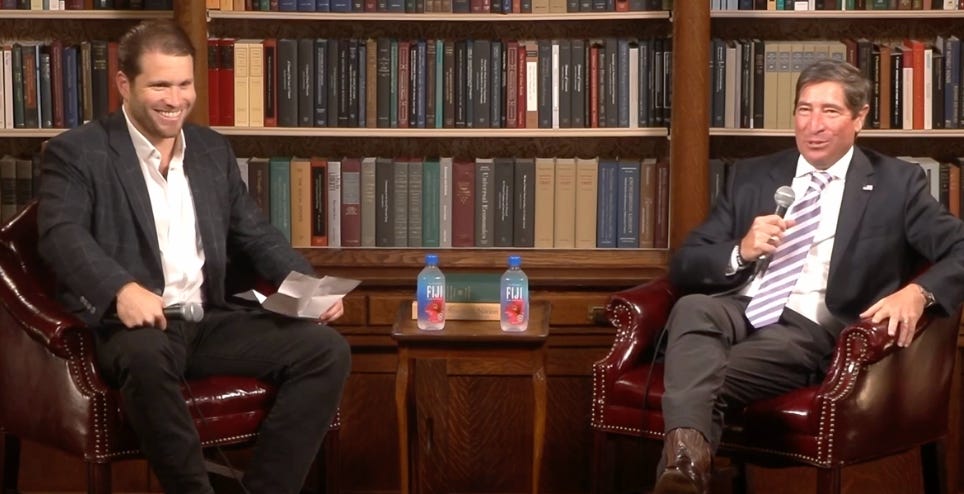
1:25He came to UATX, our new university, and the whole group was really excited to hear from him. I think you will be too. It's wonderful to see everyone here. We're off to a very strong third year of our third class at UATX, and a lot of our students are here in the community. So thanks for joining us, Scott. It's an honor to have you here. Thank you for having me. Great to be here. Scott is working in one of my very favorite areas of government we're going to get into and talk about. This is a very important area of how you make sure that people are able to be let go of their incompetent and admit competent if they're hired, it turns out it's good to be able to have not totally incompetent government, even though I'm not suspicious of it in general, but it's even worse when it's stupid.
2:01Scott, you're - You're going to get me in trouble tonight. I know. I'm definitely going to try to get him in trouble. We're not recording this already. Oh yeah, this is definitely going to be an episode of my podcast, so. Well, no, it's okay. So Scott, you were the first person to work at A16Z, so you helped start with one of the largest technology firms in the world. I presume you made a lot of money from that and don't have to keep working, And so you decided to go into government in a very contentious area and be constantly attacked. And so why did you do that? That's great. So first of all, Joe, thank you really for setting this up tonight.
2:35And I did get a chance to spend a couple hours with the folks here today and incredibly impressive set of students and faculty and everything. So thank you for that opportunity. It was great. And thanks for those of you here. Yeah, so that's a really good question. My wife asks me that question every day. Why the hell would you do something? Actually, her actual line to me was, why are you effing up our life, basically, was what she said to me when I decided to do this. Look, in all seriousness, look like you. I've been incredibly blessed in my professional life and just lucky to be around really smart people and making good decisions with stuff.
3:06And I had always had a bug to do public policy stuff. In fact, actually, I was a public policy major at Stanford. And in fact, actually, the current chairman of the Federal Reserve, Kevin Warsh, and I were public policy mates back at Stanford way back when. So it always kind of was on my it was always on my bucket list of things to do and just kind of life got in the way. And when the opportunity came up, when as a firm, we got more involved in tech and technology, obviously, and regulatory technology, whether that was crypto or AI or other stuff. Obviously, we made a decision to get more involved politically.
3:36And, you know, you can read all about it in the newspaper. It's all out there. We're grateful you guys did. I was feeling lonely in D.C. for. I know. I was going to say, right, it took us a little bit longer, Joe, than you to get there. But of course, in fairness, we were living in Silicon Valley. You were in Texas. So we didn't have any air cover. Right. So it's pretty hard at Silicon Valley to do these things. And look, the opportunity just came up. I mentioned to Mark one day. I'm like, hey, if this, you know, if Trump wins and it works out and it's OK to take a leave from the firm, I'd love to do it.
4:02And I kind of forgot about that email. And then he came back to me in September of 24. And he's like, hey, you got to meet this guy, Howard Lutnick, who, you know, is now obviously the Commerce Secretary, however, is running the transition team. and, you know, one thing led to another and I found myself sitting in Mar-a-Lago in December of 2024 talking to the president and it just, you know, seemed like the right thing to do. But, you know, look, from a personal perspective, you know, I believe in what, you know, you and I have talked about, which is, look, I believe in a government that actually can work and on behalf of the American people, I believe that we should not bankrupt our grandchildren and children with the work we're doing.
4:37I think, you know, we can have an accountable government that actually does deliver if we fix some of the things we've talked about. So that's really what I'm trying to do. So tell us, what's been your most surprising experience so far in D.C.? You know, look, I would say a couple of things. One is, look, surprising on the positive side is, look, we're responsible for two million civilian employees. So look, like any large organization, there are, yes, there are definitely people who are not doing what they're supposed to be doing, and we should fix that. But that's not surprising when you've got two million people.
5:07On the other side, I would say, like, there's a lot of people who actually are really dedicated to what they're doing and actually really believe, you know, in the public service work they're doing. So that's been a positive surprise. The biggest, it's not a surprise, but I would say the biggest observation is we have a fundamental systems problem in the federal government. And, you know, you and I have talked about this, which is, look, organizations to me are pretty simple. They're just collections of people that are lined around a common objective, right? That's all an organization. It doesn't matter if it's the government, if it's the private sector, if it's a nonprofit or an academic institution.
5:35And, you know, whether we like it or not, people respond to incentives. And we just have a systems problem in the federal government, which is the incentives are all wrong. Right. The incentives are like hire more people for every problem. Like don't actually hold people accountable. Don't differentiate performance in terms of, you know, kind of what people contribute to it. Never take risk because God forbid, you know, you should get a GO report or inspector general report or you should get a hold in front of Congress. And so a lot of what we're trying to do is like address the root of the problem, which I think is if you can solve the systems problem and solve the incentives problem, then you have a chance to actually get people to do the things you want to do.
6:07And so, you know, we can talk more about that's a lot of kind of what we're trying to do. Yeah. And so, you know, you've presided over the biggest federal workforce reduction in modern history. I think it's 378 ,000 out, 127 ,000 in approximately since I checked. Yes. Correct. So how did you successfully rein in the size of government? Did anything break? Like, what have you learned from that experience? Yeah. Okay. Yeah. So it's a great question. So roughly, just if you have a sense, there were about 2.3 million people when the Biden administration left and Trump came in, we're today roughly around 2 million.
6:39So yeah, on a net basis, a little bit shy of 300 ,000. To give you a perspective, that is the largest reduction literally since in peacetime since 1930. And it also means that the federal government is the smallest has ever been actually since 1960. So it's significant. What do we do? Look, an enormous amount of credit goes to, you know, obviously your friend and longtime partner, Elon and the Doge guys, which is, you know, for all of the, you know, kind of, I would say, feedback that Elon took for lack of a better word. Look, what Elon recognized is, I mean, I'll say it bluntly, which is, look, you can't be incremental when you're trying to turn like a, you know,$2 trillion, you know, a $7 trillion, you know, oil tanker, basically, right?
7:22You have to actually make real change. And, you know, like what Elon did was like, look, like we need to actually like go in there and make change. And so he did a great job. We had to invent something that they invented called the Deferred Resignation Program called DRP. You and I talked about this, which is it's extremely difficult to actually get rid of people in the government. So we literally had to invent a program, which every other, of course, company in the world does, which is called severance, basically, just like get people to leave for severance. And I still to this day get, you know, kind of backhanded compliments from the media about how we wasted money by paying severance to people.
7:58And I was like, okay, like, if you can't figure out like, if you can't figure out the math that we actually reduced by close to 300 ,000 people, like permanently that expense, we had to pay some severance. I don't know how to help you in that process. but you know look these guys did a great job and then look what we're trying to do Joe is as you know is look now we've got to institutionalize it right so like we made a bunch of changes now we actually have to figure out like how do you make efficiency a first-class citizen how do you make stewardship of taxpayer dollars important and again to me that is now like an incentives problem and we just have to actually orient people around those incentives yeah there's so many things I want to ask you about this I know a lot of it's too sensitive so just push back on me so so that's all right go you know so one thing i so i'm a we've had this conversation i'm obsessed with the fact that we used to actually have merit-based tests for the federal government right so so there was a the very high level is that the civil war the government grew a lot and all of a sudden everyone realized that every time a new president wins they bring in like all of their friends and maybe they're like stupid cousin vinnie is like actually a stupid lazy guy and they put him in charge of something because it's their cousin vinnie and it's a disaster right our nation shouldn't run based on that.
9:00And so what we decided to do is we decided to have like pretty hard tests where you actually have to score reasonably high to be able to work in important places and even higher if you want to be the boss. And you know, this actually, I think worked pretty well overall. We went to the moon with people who came into the government and passed these tests and ran these departments and hired people. We won the world wars. So it was like a functional thing. And then the 1970s, uh, we decided that this stuff was like too functional and that the, you know, it's not fair that there's people from different backgrounds and different racial backgrounds that score differently on these tests.
9:31And they actually confirmed in the court decisions in the seventies that the tests were predictive of how well you do the job, but despite being predictive, they, they, they decided they were racist and they got rid of them. And so it was a mostly don't score people anymore. And then at the same time, they actually made it like nearly impossible to fire people. And so, and so you, so you do this thing with severance, but there's all sorts of other things where, and, and, and I want me, I won't mention the department, but my friend's the CIO of one of these places that works with our friend right now.
9:59And he had 40 people come on the other day as his DevOps leaders. And I was told not to put this in public with his name, so I won't say his name, but then only five of them would come off Zoom, even though he's the boss, to say what they were doing. And the rest of them realized they couldn't get fired if they just didn't speak up. And then it took them a year to replace the general counsel who is protecting these 35 people. And they still haven't fired most of them. And so it's a total disaster. and my impression and just so I want to pass this over to you my impression is that every time we try to create new rules with the executive power to do this that we think are constitutional like the there'll be some activist judge who will say no it's not constitutional and then we have to go to the Supreme Court and it's just this thing where they could just like stay everything and so how are you dealing with that can we just do enough that they can't stop us like what can you do here yeah okay so that's awesome let me let me just fill in a couple of pieces so yes thank you do if you guys haven't heard you can't tell joe is actually passionate about this stuff and and and what's great by the way you know and this is not surprising because joe's brilliant in many areas but like he's just very learned in lots of these topics so yeah let me fill in a couple things right so you're exactly right which is every single job at one point in time was a patriot job in the federal government right so it turned out yes exactly as joe said like you know a president would get elected and he would put all his cronies in and then you know along came this thing called the pendleton act basically and we basically said okay let's not do that we should probably actually have you know merit be the decision uh and as joe said that's basically the way it worked until literally like 1979 1980 we had a test it was called pace i actually have a hard paper copy of it in my desk if anyone's interested in seeing it it's actually a really hard test so you should give it to the students here yeah you know i was gonna say yeah i want to i actually i'm gonna do that when i get back i'm gonna send you a copy and i'd like to see what the pass rate is from your students here um it's uh exactly but uh and so anyways what joe said was it turned out, you know, under the theory of disparate impact, which of course we now know is no longer kind of a valid theory for, you know, kind of core discrimination cases.
11:56The Carter administration entered into a consent decree, which basically said, you know, thou shalt no longer test people. And I kid you not, in lieu of testing, what we did was we went to a process of, we did two things. One is actually, which is interesting, which I didn't know this until I researched this, Joe, you may know. We actually went to like a kind of top 10 % like thing, like the University of Texas and A &M and others do, which is kind of we basically took like GPA and other stuff and did effectively auto admit to federal government. It turned out actually interesting enough, by the way, that had almost zero predictive value for people's success in work, which is probably not surprising for academics and educators to understand that.
12:33The other thing we did, which literally until about 12 months ago we did, was we used self attestation. Okay. So, you know, Joe knows this, right? So I am not a software engineer. But if I want to apply for if I wanted to apply for a software engineering job, I would get literally I would fill out a form which would say, OK, rate your skills from one to five on how good of a C++ coder are you? How good of a Perl coder are you? Like, what do you know about? Like, what does you know? What is literally they just can pretend right completely. So this is the same guy. Surprisingly, believe it or not, people don't actually give you honest answers on the self.
13:04This is the same guy. The same guy had over 3000 engineers still working for him. Sorry. Now I know. Yeah. I don't give you too much trouble. and they and they did and they and they you can't test them still for hiring it's still not allowed right you're gonna change that we've changed that yeah okay so back then he couldn't do it a year ago so we gave him a test to use for organizing the department and out of 3 000 it was something like 60 or so passes like basic basic competences programmers these are the full-time programmers of their jobs like they were all just lying and not working it's like it's like it's really i gotta tell you i think i told you this but um so this person got something at some point You know, somebody's going to slip and say it, but I'm not going to say it.
13:41Anyway, so this person, he called me on a Saturday and he gave me that stat. And my oldest daughter went to Stanford. She was a computer science major at Stanford, and she now works at a startup. And so, you know, this guy, you know, the guy Joe's talking about, obviously, is a very skilled person. So I said, hey, you know what? Like, let me just check because maybe the test was really hard or something. Right. So I called my daughter and I said, hey, can you please like get this test, get a copy of this test? And it was a Saturday. She's like, look, I'm not going to sit down and do a four hour test.
14:08I said, just like, look at it, you know, quickly. Look at it. She called me back in about 10 minutes. She's like, if you've taken a single computer science class in your life, you would get like a 90 % on this test, basically. So I at least did a sample of one validation that it wasn't crazy. So we've changed it. So some good news. Yeah. So let me tell you the good news. The good news is about 12 months ago, we actually got rid of this consent decree that has been on the books since 1981. And so it's called Louvano, L-U-E-V-A-N-O, which is the name of the plaintiff. And in fact, even the original plaintiff was still alive.
14:37and he actually agreed with us and the DOJ that this was no longer relevant. So we got rid of the Xen degree. We now have tests. And for the first time, actually, now when we hire technical people into the government, we actually give them a test. We happen to be using CodeSignal, which some of you may know if you've been in the startup community. And for the first time, you actually have to take a software development test to do this. So we're working on that. Now we need to go build out all the tests in other areas. But this is the kind of stuff that's just crazy. And the people who complain about it are, well, what kind of biases are there and everything.
15:10I was like, look, and you all know this if you've hired people. The most biased process is literally sitting down and interviewing somebody. We all have incredibly terrible biases on this stuff. The most unbiased thing is, do you actually have a demonstrated skill that we can actually measure through some of these tests? So I think it's going to be great. If you want to talk about the other stuff, let me know. But I know I'm over my time here. No, it's good. uh well well i want to ask one more doge question because obviously yeah obviously like elon got attacked a lot yes we've seen not what you're in charge of but we've seen like all the latin american countries like vote the other way when we don't spend lots of money like helping the left down there of course which was coming from usa and otherwise so there's a lot of things we turned off that i i'm glad we turned off like should we have been even more aggressive in certain areas where there are things that you did politically that made it so we had to stop that we didn't have to necessarily do like give us give us like your take on what could have been better there yeah i mean and look uh obviously i have enormous amount of respect for elon and i don't even you know can't pretend to like sit in the same room as somebody with his skill set um i think as an observer of it like um i think where um maybe we could have done differently is um there's probably you know maybe it's just a process thing which is in some case like some kind of concept of empathy or just understanding that okay like we are changing the rules of the road, right?
16:29And again, I'm 100%. So fewer chainsaws. Fewer chainsaws, yes. If I had to do it all over again, yes, I might have actually nixed the chainsaw. Yeah, in all seriousness, look, it's really easy for me to Monday morning quarterback someone like Elon, and look, I'm grateful for what he did. But I think that's it, and I think that's what, at least that's what I've learned, certainly, in my time in D.C. is, you know, look, everything, you want to think, okay, like efficiency, how can that be political? But everything's political, right? There's just nothing that's not political. And so some of this also is just like, you know, showing some kind of, you know, human side of things and making sure that we at least acknowledge it and don't actually have an outcome that's different, but at least just demonstrate that, okay, we understand the gravity of the situation.
17:10So showing empathy. And then one thing that I've heard that I'm not sure. So a lot of stuff we were turning off was grift. And I know it's very asymmetric in this country. I think it's quantitative. You can look at it. The majority of that grift is tied to interest on the left. But I think some of it's tied to some interest on the right that apparently are not good either. Have you seen this at all? Is it something that you've exposed to? Because that's something people are saying. Yeah. Honestly, I have not seen as much of that. But yes, I mean, look, this is the problem. The script is in the eye beholder, right?
17:36And so, yes, you're exactly right, which is every one of those programs is tied to somebody. So let me give you a different example. So you and I have talked to us. One of the things I do is I run this retirement operation. And one of the great things that Elon did was, and I can bore you with stories about the retirement thing, But basically, we literally have an underground mine in Boyers, Pennsylvania, that has 400 million pieces of paper that represent the last 100 years, literally, of retirement records for the federal government. And until, you know, Elon and actually our friend Joe Jebbia came in and built this new system, we literally, by hand paper and by snail mail, processed every single retirement application for the United States.
18:15Now, this is, by the way, this is not like a new problem. It's as brilliant as Elon and Joe are. It's not like they just discovered this thing. You can go back to like 1980 and you'll see articles written about this. But the problem is, and this is where everything comes down to like the grift that Elon was finding, is every single thing that Elon was doing has either a congressperson or a senator or somebody in whose district that money is going. Yeah, there's jobs there. It's jobs. There's somebody like Deloitte getting paid to make it more expensive. They don't want to turn it off. Yeah. So this is the fundamental challenge with all these things is, again, so what we did was we finally actually digitized this and it's great, but no one wanted to touch it because yes, obviously there's people's jobs there or somebody's getting rent on this building.
18:58It's actually amazing because the way it worked is it was so disorganized that when you retired from the government, you wouldn't even know what your pension was going to be until several months later because they had to go down and go back and they tried to get the records. Here's the problem. Now you're going to get me started on this. So, OK, I'll give you my 30 seconds on this. Right, Joe? So, yeah, here's the problem. Like most people in federal government work at different agencies over time until actually we fix this. There are 119 different HRIT systems across government for which you as the taxpayer spend two billion dollars a year on these systems.
19:29None of them talk to one another. So part of the retirement problem is if Joe's worked at five different agencies, literally until the day he retires, I don't assemble his final permanent record. I have no like canonical view of like his entire history. And so half the reason why it takes us six to 12 months to retire somebody in that old system is we got to like go reconstruct Joe's entire like career in the federal government. Number one, we solve this with electronic system. Two is we are actually consolidating H.R.A.T. into a single H.R.A.T. system that will hand government. Taking us into the 1990s.
19:58Yes, we're going to take us into the 1990s. Yes, I agree. I will tell you, yes, unfortunately, HR is not the most technically advanced thing. But just to give you a sense, like, as I said, we spend$2 billion today. When this is fully implemented, which will be 12 months from now, 18 months probably, sorry, we will spend$40 million a year across the entire business. This is a really big deal. Like, this stuff just hasn't been fixed forever. And nobody wants to do it because, yes, like, we upset the contractors and we upset people and, you know, all this other stuff. But, like, literally$2 billion to$40 million, like, that's real money.
20:26We should do those. Yeah, those contractors are, it's the one downside of my place in D.C. is I look across the water to the building and says Deloitte on it. And I'm just like, sorry, I shouldn't, I shouldn't. Some of our best friends are contractors, right? Maybe some of your best friends.
20:44Do you know how much money we spend, by the way, on contractors? Well, that's the thing, because you have two million people who work for the government, but then you have the contractor people. Right, yeah. And it's way too many. So my organization, so we have responsibility for 2 million civilian employees. Obviously, the military is different. So for 2 million civilian employees, we pay roughly$350 billion a year. Okay, so call it 150 odd thousand or so, like average fully loaded cost. $350 million there. We spend$750, sorry,$350 billion. We spend$750 billion on contractors. Okay. So, and look, as I, you know, all kidding aside, like contractors have a, you know, There is a role in this world for contractors, which is, do you need temporary surge help, or is there some skill that we can't get?
21:28But what's essentially happened is we've created a shadow FTE force in the form of contractors in the government. Or if your cousin Vinny can't get a job and can't do anything, but you can get paid a lot of money to work for Deloitte. That's exactly right. So for the privilege of paying basically 25 % to 75 % higher on a per FTE basis, we have contractors who literally have been there 5, 10, 15, 20 years in the government. They are basically FTEs that we just pay a lot more. They paid a lot more, and their incentive is to make things take longer and be more expensive and never fix the underlying problems.
21:55And there's so much corruption there. So speaking of fixing these things, you guys are building the U.S. tech force. Yes. I'm really excited to ask about this. So there was something called the digital service under Obama. And I actually had some smart friends who went into the digital service. And my impression of what happened there, because I saw – I actually went in and did some meetings with them in the White House at the time and talked about things like this thing we're talking about here to solve. And they would actually figure out the problem. they'd come up with a solution and then someone like valerie jarrett and obama's office would be like oh my gosh the government unions are going to hate this the contractors are going to hate this no you cannot do it we're not willing to be controversial we're canceling it and so so my so my impression is there's always billy's the other administration's been like some good tech people but you need like tech people plus the boldness to actually just push through the bureaucracy and get it done is it is that is that correct here and by the way yeah i'll tell you about yeah by the way this is true of every single problem in government so like the the problems are obvious.
22:49It doesn't take a rocket scientist, you know, it doesn't take someone with Elon's mind to figure out like we should not be doing paper retirement things in the year 2026, right? The problems are obvious. The solutions are obvious. Everything is exactly this, which is, are you actually willing to take on the execution risk, right? And some of that is a cultural issue, right? Which we talked about, which is like every bone in the body of every federal agency is don't ever take risk. You know, God forbid I should get an OIG audit or I should get a GAO audit or I should get caught in front of Congress.
23:16Like nobody wants to take risk. And then some of it is, yes, like there's downstream contractors and, you know, jobs and other stuff that people care about. So, yeah. So what TechForce is, for those of you who don't know, is it's a two-year program. We're trying to bring a thousand like extremely high-end data scientists, engineers, you know, cyber folks. And you're actually letting them do stuff. Yes, and exactly right. And so what we're doing is instead of like piecemeal putting them in various places, we are putting them in teams and dropping them into agencies at the leadership of the agency head to solve all the major modernization problems, right?
23:47And we're doing that. And the other piece we're doing, which Joe's been incredibly helpful with, is we're doing that in concert with about 40 public technology companies that you all know about, right? All the major - Watch out for those guys. No, that's good. A lot of them actually do want to help because it's not a big source of profit for them. Yeah, look, this is small money for them. What I really want, though, and part of this is, which we're trying to do a better job generally in government, is this is a test case for us to show, can we get really smart people into government who actually have agency to do things.
24:15And then, by the way, when their two years are up, if 100 % of them want to go into the private sector, that's great. I'd love for all these private tech companies to bid up their salaries and pay. Yeah, so how do you get great engineers who probably can make a hell of a lot more money in the private sector to go in and solve these problems? So what are you guys doing? Yeah, so we're doing a couple things. Look, one is, you know, look, I'm screaming it from the rooftops. I'm just trying to market the hell out of it. I'm trying to get people like you to back us up, right? So some of it is, look, like, you know, do you care about this country?
24:41Do you actually want to do something? And yes, like I can't pay, you know, half a million dollars to any of these folks. So, but what I can do and what we did in this program is we actually can eliminate proxies for skill set that actually arbitrarily limit people's compensation opportunities in government. So I'll give you a great example. You know, our friend Big Balls. It's only been 30 minutes and it's taken me that long to say Big Balls. I love it. So if you guys don't know who that is. And he's a college dropout. Well, exactly right. And this is my point. Sorry. Yeah. All kidding aside, as fun as it is to say his name.
25:10By the way, I feel much better. I didn't know this, but it turns out his dad gave him that nickname a long time ago, and it's his gaming moniker, basically. So I don't feel like it was some fraternity prank joke or something. Anyways, so great example, though, and this highlights everything, and this is what we changed in TechForce. He's a 19-year-old guy, went to Northwestern, dropped out, and is just killing it for the federal government. He was part of the Doge team. Now he works for Joe Jebbia on the National Design Studio and is doing great stuff. when I was there was an article in the paper you know whatever 12 months ago at the height of all the doge you know kind of you know anti anti-doge stuff and there was a government employee who said we would never have hired Ed which is his name because he doesn't have a college degree and he doesn't have five years of work experience and that's the stuff that like when I saw that I was like okay that's the kind of stuff that just makes me want to pull my hair out so what we have done systematically is we've gone through every job description in the federal government and we are doing two things.
26:05One is we are eliminating minimum experience requirements, as many as we can. And I know we're in an educational institution, but we're also eliminating college degree requirements where appropriate, right? I mean, obviously, look, if you're going to be a medical doctor, there probably is some thing that you need to know. And it's really important because this is what happens, right? So the software engineer that we would have hired a year ago would have been probably like what's called like a GS5. We would have been able to pay them like 50 grand because they may have just graduated from college, but they didn't have the right minimum years of experience.
26:39But now that we're using a test to demonstrate their skills, I'm hiring these guys at a GS14, which is, look, it's$175 ,000,$188 ,000. It's not what they can make working for, you know, Anderil or something or Palantir, but it's a hell of a lot better. So some of this is a leveling problem, right? When you eliminate proxies for skillset and you actually measure people based on skill, then you can actually at least level them appropriately and solve some of the compensation gaps. So what's your pitch to the talented students here and their smart friends? Like, why should they come work with you?
27:06Yeah, here's my pitch. Very simple, which is, first of all, like, your government needs you. Like, you know, no matter what your political views are, like, if you're smart and young and ambitious and you want to, like, actually help improve this world, like, we need you, basically. My second pitch is, if you want to work on the most complex, the most challenging, the most high-scale problems, you know, this is a place to do it, right? If you want to, like, figure out how to solve, like, you know, Medicare problems and billing problems, Like there is no bigger platform to be able to do something like that.
27:31Or if you want to figure out either how to kill the IRS or how to make the IRS more efficient, whatever your preference is like, you know, those things are really important. So it was a big debate early on a palinger. If we would ever work with the IRS, I was opposed. But I lost I lost that. Some point in time, you know, laws laws do matter. So that's the second thing. And the third thing, by the way, is we have to stop this ridiculous dichotomy in my mind. And Joe, you know, I talked to this, which is I don't need you to come and have a 40 year career in the federal government. Come for two years.
28:00Right. I know. Look, nobody thinks about 40 year careers. That's relevant. Come for two years. And then what I need to do is I need to prove to you that doing two years actually gives you a valuable skill set. Then if you want to go to the private sector. And so that's why I think like tech force to me are so important, which is like that's what I'm trying to do is to prove that like the federal government actually is translatable skills in the private sector. And then the final thing I want to mention, which is if I'm going to get you here, you have to come into an environment that's actually conducive to the type of environment you want to be in.
28:27And so, as Joe said, historically, there's been no accountability on the low end in the federal government. We leave people in place who cannot perform their goals. One of the big things we have done from a policy perspective is change that. Now, everybody who gets rated low actually has to have like a performance improvement plan. After that plan, they either are up or out. We've changed the kind of process by which that happens. And then the high end, again, I'll say this in an academic institution here, everybody historically has gotten an A. There's been great inflation, like rampant, basically.
28:53Everybody gets ranked top of their class. As a result, there's no actual differentiation among employees. For the first time ever starting this year, we have put actually a curve in place. I love this. First time in the federal government. So there is an actual cap on the number of people who you can rank at the top of the class. And oh, by the way, two thirds of all bonus based compensation has to go to those individuals at the top of the class. The final thing I'll mention is we've eliminated, as I said, proxies for skill sets. So in almost every federal job today, there are what's called time and grade, which is you have to be in that seat for at least a year before I can even consider promoting you.
29:27We're eliminating all those things because, again, my view is if you come and you knock the cover off the ball, then we should promote you every six months, every three months. I don't really care. So we should look like our best companies that we back in our sector where you can advance really quickly. So that's my message, which is look like, give us a shot. And then what we are doing is trying to change the culture in the environment. So when you get there, it will be a high performance culture that will actually be conducive to the kind of culture that I think young, smart people want to be in.
29:53And then we need to help you if you decide government's not for you, which is fine. We need to make sure that that skill set is translated. I love it. Well, we're definitely hiring a lot of really talented people coming out of this already from Doge. There's a lot of famous companies, teams that were a part of this. Yeah, look at what's happening in the startup community with those Doge guys. That's a great example. Well, it's a really good track record, the people going in, coming out well. So, Scott, I really appreciate you being here with us tonight. I do this podcast interview stuff because I think a lot of people are really too cynical, too nihilists.
30:22I think they're especially like blackpilled on D.C., even on both political sides. People are just so negative on D.C. And you're sitting here and you're fighting and you're winning. Like, what makes you optimistic for the future of America? What have you seen and what are you seeing that makes you an optimist on D.C. as well? Yeah, look, you know, when I was in my old job at the venture capital world, I used to tell people, and Joe, I think you could probably feel for this. Look, if you're ever depressed at the time we were on Sand Hill Road, I was like, look, come spend a day with me at Sand Hill Road and listen to entrepreneurs pitch ideas.
30:53And if you come away like other than like so optimistic, so excited about the future, if you're depressed, like there's something really, really wrong with you. Like you literally might have a clinical problem that needs to be addressed medically. And and I feel the same way, by the way, when I now now I'm getting the opportunity to go to college campuses. I feel the same way, which is look like there's a lot of reasons to be pessimistic. And as you said, like lots of people are pessimistic, but you got to choose to be an optimist. Right. And I think, look, that's the nature of the business we've been in.
31:18And when I go to universities and I see great students and, you know, got a chance to meet some of your students today, like the not just the intellect, but like the drive, the creativity, like the curiosity that people have, like you can't possibly be depressed when you hang around folks like that. And so, look, I'm absolutely convinced, like, the U.S. is by, without a question, like, is the absolute greatest place ever in the world to start a company, to build a company, to think about, you know, economic growth. And yes, of course, we're not perfect. We have issues. But man, like, the opportunity for us to change that is so great.
31:48And, you know, what I think this president has given people like me the opportunity to do is, like, go try stuff. Right. And part of this is, like, you know, you know this again, like, if we're going to, like, innovate and do things, the answer is we're not going to get right all the time. And that's fine. And that doesn't mean that we like failure. We all hate failure. But it means we recognize that on the path to greatness, sometimes there is failure. And so, like, we're trying to change that culture. And I think if you change that culture, you would not only have a more efficient, which, you know, should mean a smaller government, but it also means you have a government that's actually responsive to the needs of American people.
32:19So, yeah, like, I'm super excited and super optimistic for the future. And look, maybe I'm wrong, but man, like, choose to be optimistic. I love it. Well, thank you for being a leader and for going and fighting for our government.
32:33политica
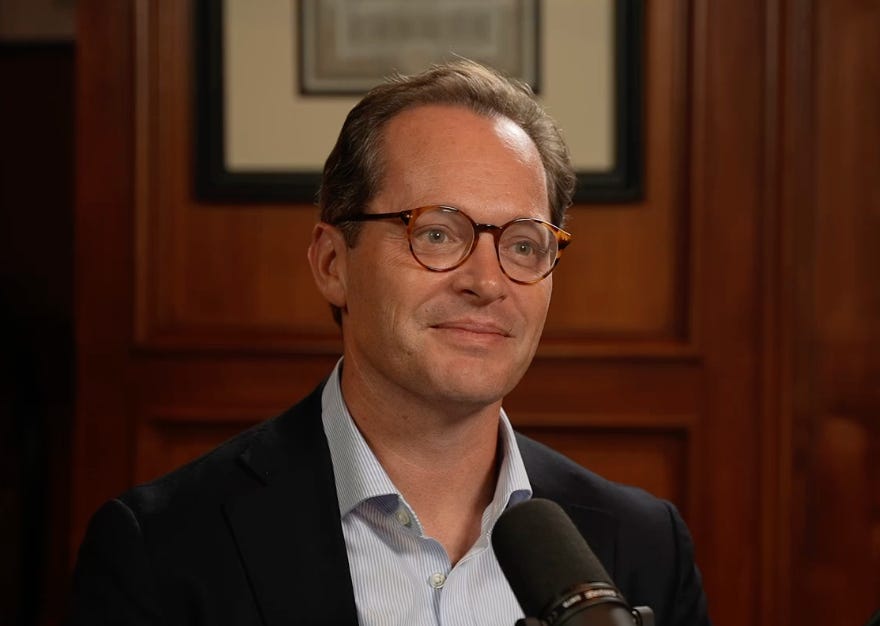
Scott Kupor is the Director of the U.S. Office of Personnel Management and has achieved some of the most important reforms in DC in only a couple years. How has he reduced the size of the federal government for the first time in generations? How is he bringing merit back to the civil service? And what is he doing to incentivize and make it easier for our best minds to serve in government?
Before joining the Trump administration, Scott was employee number one at Andreessen Horowitz. As Managing Partner, he helped build it into one of the world’s largest venture firms. He’s also the author of the bestselling “Secrets of Sand Hill Road: Venture Capital and How to Get It.” In 2024, he was confirmed by the U.S. Senate as Director of the U.S. Office of Personnel Management, where he’s responsible for more than two million civil service employees and the policies governing their hiring, firing, and retention.
Recorded before a live audience at the University of Austin, we begin with Scott’s unlikely path to DC and the incentive problem at the root of government dysfunction. Learn how a consent decree over four decades ago killed entrance exams for federal jobs, and how Scott got it overturned — merit is coming back! He also explains how he executed the largest peacetime reduction in the federal workforce since 1930, while eliminating degree and experience requirements so we can get our top talent into government regardless of their background. Finally, Scott dives into the launch of the U.S. Tech Force and his effort to recruit an elite corps of software engineers to make government competent and functional again. He ends with his pitch to young Americans: if you want to take on some of the most complex problems that impact millions of your fellow citizens, there’s no better place than the U.S. government.
(00:00) Episode intro
(01:40) Why leave tech to be attacked in DC?
(06:27) Biggest federal workforce reduction in modern history
(08:45) How the left killed merit-based hiring
(14:40) How Scott is bringing merit back to DC
(15:50) Lessons from DOGE
(18:20) Hidden costs of outdated systems; billions wasted
(23:40) Building a U.S. Tech Force and hiring for skills
(26:20) Eliminating degree requirement to get the best talent
(27:16) Why should a young talented person serve in government?
(30:28) Optimism for DC; rejecting the blackpill

Scan the code with your iPhone camera
Listen in the app.