In short
Podcast Notes: Joe Lonsdale: American Optimist - Ep 101: Gov. Kevin Stitt
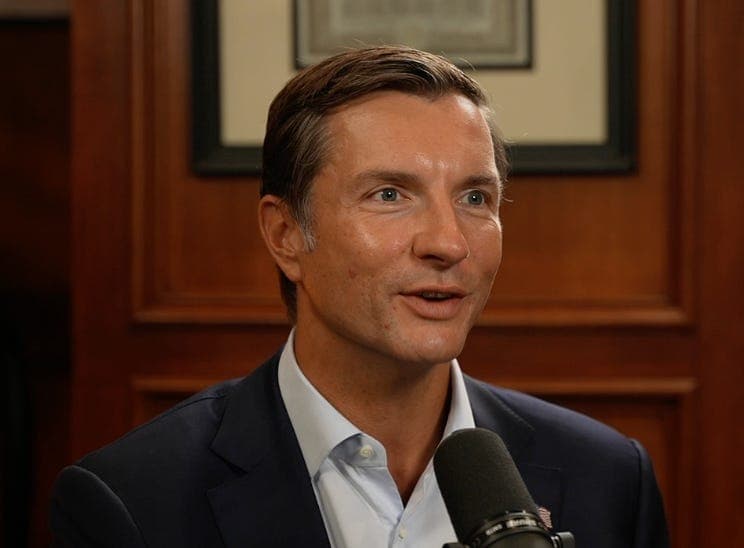
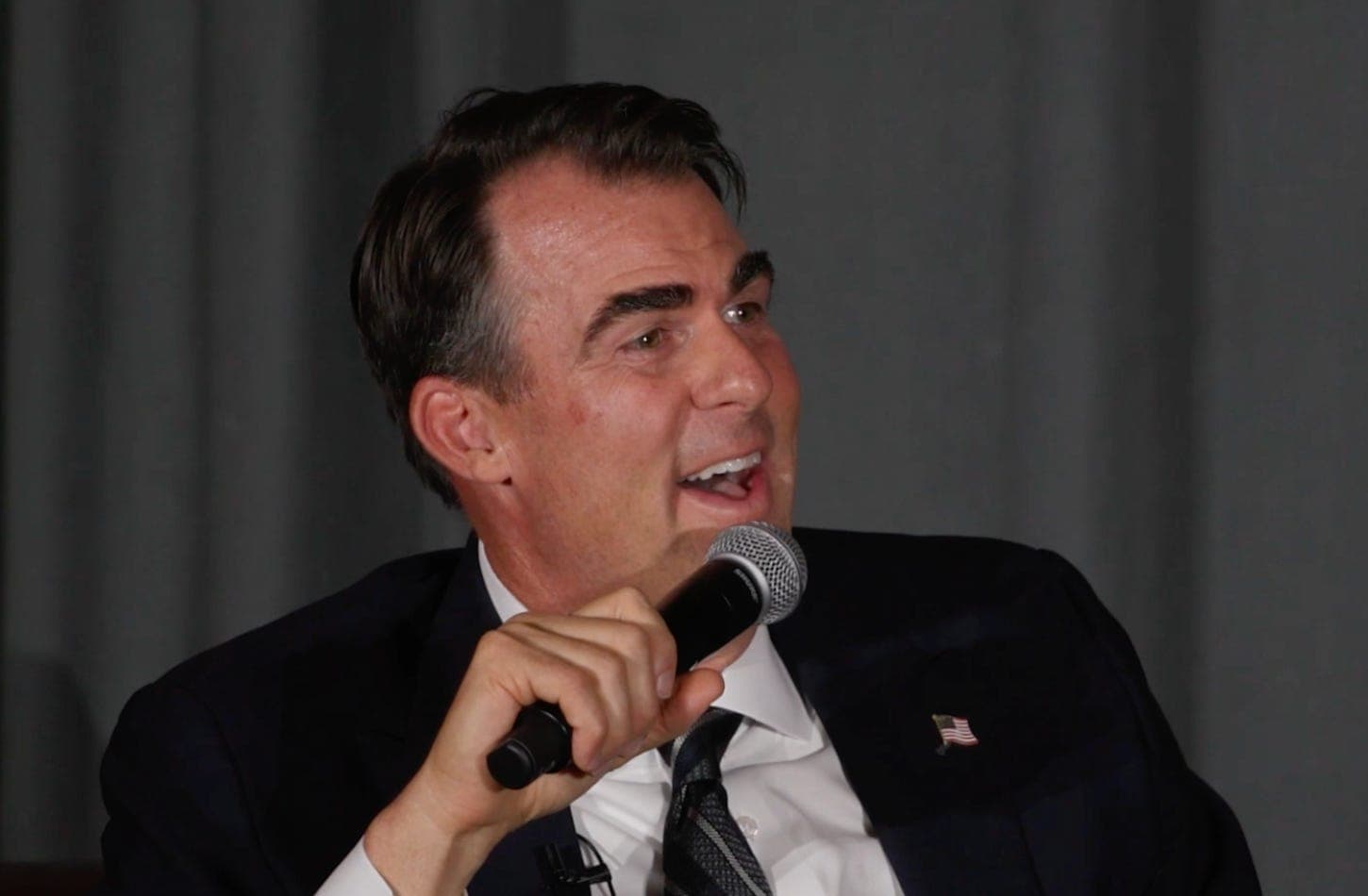
Episode Overview In this episode of "American Optimist," host Joe Lonsdale interviews Oklahoma Governor Kevin Stitt, who embodies the role of a businessman governor. The discussion revolves around Stitt's political courage, his experiences in governance, and how he challenges special interests while addressing pressing issues in Oklahoma.
Key Themes and Discussions
Political Courage and Leadership
- Definition of Political Courage: Governor Stitt exemplifies political courage by standing up to powerful special interests.
- Honoring Courageous Leaders: The interview took place at the Cicero Institute's 2024 Courage Awards, celebrating leaders who confront cronyism and corruption.
Stitt’s Background
- Entrepreneurial Journey: Started Gateway Mortgage with $1,000, growing it into a national company.
- Motivation for Running for Office: Witnessed significant challenges in Oklahoma, including budget deficits and teacher walkouts, leading him to seek change through governance.
Key Policies and Initiatives
- School Choice:
- Passed a substantial school choice program that offers families up to $7,500 in tax credits for education.
- Emphasizes parental choice in education, contrasting with the traditional public school system.
- Homelessness Approach:
- Stitt tackled the "homelessness industrial complex" by enforcing laws against homeless encampments in public spaces.
- Advocated for mental health treatment alternatives over incarceration for those struggling with homelessness and addiction.
- Vetoing the Police Pension Increase:
- Stitt vetoed a bill that would increase police pensions from 75% to 90%, prioritizing taxpayers and budget sustainability over special interest lobbying.
- Regulatory Reforms:
- Implemented policies to streamline permitting processes, reducing bureaucratic red tape to facilitate business operations in Oklahoma.
- Enforced a rule requiring state agencies to eliminate two existing regulations for every new one introduced.
Governance Philosophy
- Business-like Governance: Stitt approaches governance similarly to running a business, focusing on efficiency, accountability, and fiscal responsibility.
- Limiting Government Growth: Advocates for a constitutional amendment (TABOR) to cap state government growth to inflation and population increases.
Challenges in a Deep Red State
- Special Interests: Noted the presence of special interests even in a conservative environment, including challenges faced from police unions and other lobbies.
- Navigating Political Landscape: Stitt discusses the necessity of having bold leadership to counteract lobbying pressures that conflict with taxpayer interests.
Future Aspirations
- Post-Governorship Plans: After his term ends, Stitt intends to return to the private sector, keeping his promise to Oklahomans about not making politics a career.
Optimism for the Future
- Positive Outlook: Stitt expresses optimism about the future of America, particularly with the return of Trump to the White House, emphasizing the importance of decision-making leadership.
Episode Structure
- 00:00 - Intro: Introduction to the podcast and Governor Stitt.
- 01:58 - Entrepreneur to Governor: Stitt's transition from business to politics.
- 05:29 - Passing School Choice: Discussion of school choice legislation and its impact.
- 08:33 - Tackling Homelessness: Stitt's approach and policies regarding homelessness.
- 12:20 - Police Pension Veto: Insights into the decision to veto pension increases.
- 15:45 - Regulatory Reforms: Efforts to reduce regulations and streamline business processes.
- 19:05 - Addressing Workforce Readiness: Strategies to improve workforce skills and nursing shortages.
- 22:13 - Limiting Government Growth: Initiatives to cap the growth of government spending.
Key Takeaways
- Courageous Leadership: The importance of standing up to special interests and advocating for the public good.
- Business Practices in Politics: The value of applying business principles to governance for more effective and accountable leadership.
- Community Engagement: Encouraging local initiatives and faith-based organizations to tackle societal issues collaboratively.
- Education Reform: The necessity of adapting educational systems to prepare students for the workforce and combat ideological indoctrination.
Conclusion Governor Kevin Stitt's experiences and policies serve as a noteworthy example of effective governance that prioritizes fiscal responsibility, community welfare, and educational reform, all while standing firm against special interests. The conversation emphasizes the role of optimistic leadership in shaping a prosperous future for Oklahoma and the nation.
Written by AI. May contain mistakes. Listen to the episode to check what was said.
Transcript
Automatic transcript. May contain errors.0:00We love our police. We're a law and order state. They have a 75 % pension plan. So in other words, if you're in Edmond, Oklahoma, you worked there for 20 years, you cap out at$116 ,000 a year. 75 % at your retirement you get for life. $87 ,000 a year. That is a lot of money. The police lobby came into the Capitol and they said, 75 % is not enough. We want to go to 90%. This will take our pension plans, right? And I veto it.
0:34We just had our annual Courage Awards at my policy institute, the Cicero Institute, where we partner with and celebrate courageous policy leaders. Governor Kevin Stitt of Oklahoma was a successful businessman. He saw some real big issues with his state, major budget deficits, lots of dysfunction, lots of grift. He decided to go in and run it like a business. Oklahoma now is growing one of the fastest states in the country. Budget surpluses, doing amazing work. He's been really bold on great issues like school choice and otherwise, and has really stood up to special interests. Really interesting to hear from him, even in a ruby red state, as he'll tell you, all 77 counties went for the right in this election.
1:08Even there, there's just a lot of special interests and other things to fight as well. But Kevin Stitt's a bold leader, and I think you'll enjoy hearing from him. We're going to do a little interview with the governor. We're lucky to have him to hear about what's going on in his state, but the country as well. Two days post-election. Congratulations. I think you're the only state where every one of your counties voted for President Trump. It's all 77, huh? I don't know if y 'all saw it, but there was a meme going around that there's no perfect state. And then they were like, no, wait a minute.
1:33Here's Oklahoma. Every single county went Trump. And Trump loves bragging about that. All 77 counties. You began your career in the private sector, right? You found a gateway mortgage in 2000, built into a national company. I think you started with$1 ,000 in a computer. Tell us about your entrepreneurial journey. Yeah. So I grew up in Norman, Oklahoma. I want to first, I got to introduce my wife. I'm going to get in big trouble. Sarah, stand up and wave at everybody. 26 years. And we have six kids from, yeah, 26 years, 24 down to 10. And I grew up in Norman. Dad was a pastor. And then I moved to, went to school in Stillwater at Oklahoma State.
2:15Was always entrepreneurial, wanted to have my own business. And so started my company, like a lot of us entrepreneurs with a thousand dollars and a computer, and then grew that over the next 20 years and grew it to over a thousand employees, bought a bank, and just was kind of living the American dream. And then really, the reason I ran for office, 2018, I'd never ran for office before, but I started seeing my state struggle. And we were having billion-dollar budget deficits. We were having teacher walkouts. As I traveled to other states, I saw all the state pride in these other states. And then I started thinking and looking and see who was running.
2:58And it was just more of the same, just the same career politicians. And then I realized our founders never envisioned politics to be like a profession, like a climb the ladder. They thought you were going to be a successful business person or farmer or rancher, and you go leave that to go serve your country or your state. And that's what I promised Oklahomans I would do. And today we've got the largest savings account we've ever had. We've done tax cuts, done more money into education than any other governor in my first five years, and I did for 25 years before I got there. Amazing. More money into school choice than anyone else, too, relative to the size of your state.
3:37What would you say to your fellow business leaders who don't want to get involved in politics? Do we need more of these guys to step up? Absolutely. I'm so excited. I mean, on Tuesday night, I mean, Wednesday morning, it felt like the sun was a little brighter, didn't it?
3:52and what I remind Oklahomans and really Americans is I mean if you if you look at the resumes of the people running for office versus President Trump I mean running state government specifically is really a lot like running a business there's 30 ,000 state employees in Oklahoma we're a state of four million people we have a 22 billion dollar budget and that's why we love you know, President Trump because of, I mean, it's a win for free markets. And it's so much bigger than just the people at the top of the ticket. And if you think about, you know, personalities that people kind of vote for this person or that person, but really you have to think about energy policy.
4:31You have to think about regulation policy, foreign policy. You mentioned that, you know, sanctions on Iran, all the good things that are going to happen with the Trump administration. It's so much bigger than one person. It's actually the free markets that we believe in, that it was a huge win for the American people. Inflation going down, all the things that we believe in, it's going to be a great next four years. Look at the markets. The markets were up like 4.4 % just over the last three days with the Trump presidency. We're very excited about it. I'm glad they're not going to steal from us too, but it's a lot of really positive things.
5:10I believe we're in a battle for Western civilization. I think this battle is a really tough one, and we really have to fight to win it. I think there's really dangerous ideological cancers. How can we be more bold in this fight? And are you seeing this even in your state? Are there ways that woke nonsense gets into things in Oklahoma? And how are you thinking of fighting it? I mean, there's just a – everything is a fight. And you said it best when you were up there talking. If you're moving the needle, if you're actually making change, they're going to come out of the woodwork and they're going to fight you.
5:41I mean, it is just unbelievable. Our school choice plan. So I tell people all the time, I say, listen, rich people already have school choice. They could put their kids at any school they want. They're going to move to a certain district based on the school. If your kid started getting into, you know, hanging out with the wrong crowd, if your daughter was hanging out with the wrong crowd, if they got into drugs, you would do whatever you could to pull your kids. But I'm telling you guys, if any of you were governor, and you would have to talk to the single moms or the single dads that were like, Governor, what am I supposed to do?
6:14I don't have the resources. I can't move my kid. And then during COVID, I was one of the only governors in the country, by the way, that refused to do a mask mandate statewide.
6:28But we had a couple big school districts, and like a lot of states, it's kind of the independence of the school districts, that were closed down. Tulsa Public Schools was closed for 355 days. I hammered them every day because the moms that would tell me, Governor, my first grader is not learning how to read on Zoom right now, and I have to go to work during the day. And I would have been the biggest hypocrite because my kids were in school the entire time, right? And that's what drove me crazy about some of the other governors from the other side of the aisle. Their kids were in private schools, and they were saying it wasn't safe to go to public schools.
7:02So I really got passionate about school choice. And I know with my own six kids, not all of them learn the same way. And so we passed what I think is the best school choice plan in the country. Now, every single family has up to$7 ,500 of a refundable tax credit to go to a school to their choice. And it's just amazing. And I have people all over the state coming up and thanking me. They didn't know how they could pay for that. Regular working people and just so thankful that now they have options. And you know what? You talk about free market principles, that injects competition in the education system.
7:38And now everybody has to get better. You've also shown tremendous courage, we mentioned, on the issue of homelessness. This one is important to me for a lot of reasons. First of all, there's a huge number of people suffering with bad solutions. But second of all, in this country, NGOs receive over$100 billion of funding from governments now. It's actually probably a lot higher than that. The last administration started not reporting anymore how much they're giving out to their friends, running NGOs. And these things tend to be unaccountable. They tend to be corrupt. And they tend to want to like make problems worse because that's how they justify more funding.
8:07So it's a very, very broken system in our country. And of course, because of that, they really attack anyone who goes after them. And so you had just protesters in your office trying to intimidate you. Like, why was this important to you? And then take us through that saga. Leaders have to lead. So I remind my staff, they're like, you know, governor, there's this many people that don't want us to do that. And I'm like, listen, there's some people are going to complain if your ice cream's cold, right? You cannot please everybody. But in this situation, it's pretty straightforward to me. We want Oklahoma to be the most business-friendly state.
8:39And if you've got homeless camps, if you have people camping out on public places around your city, it's super hard for people to want to go do business there, to want to bring their family there. And we don't want to be, we're not being cavalier, we're not going to be hard on that. We just do not believe in building hammocks. We want to build a trampoline for some of these services, right? Well, I don't think throwing money at this problem is the right solution. And so we banned, obviously, campments on any kind of public places. And then we had to change the law where our police, because a lot of this is mental health.
9:20It's addiction. And so our police at first weren't allowed to take anybody except to jail. So we had to write different laws to make sure that they could take them to a treatment center, et cetera, et cetera. And so we put a lot of money in mental health. We set up what's called be a neighbor because I believe that more government is not the solution. Ronald Reagan said it best. Most of the time, government is not the solution. Government is the problem. And I believe that, especially when I've been on the inside now. So we set up be a neighbor. And really, at the end of the day, to change society is a neighbor walking with a neighbor.
10:01And so engaging the churches. We just rolled out our faith-based initiatives in Oklahoma. I'm the son of a pastor. And I know that people's heart are to help people in different situations. And so we're just trying to use the state government to connect and to promote some of those nonprofits, some of those churches, whether it's homelessness, mental illness, incarceration, coming out of incarceration, aging out of foster care, all those type of situations. I love it. Yeah, I mean, I'm on the board of Ron Reagan Library. He said the scariest eight words in the English language are, I'm here from the government, but I'm here to help.
10:34You're a Republican governor in a deep red state. And I'm curious, so we, you know, we're a non-progressive organization. Obviously, Liberty said, Liberty side tends to align with the right much more often. But I feel like there's special interests in our country on both sides. And I'm curious, being a deep red state, what are the biggest obstacles you face? Are there special interests? Are there things that go against you from that side? I tell people in business, it's such a pure way to make decisions. You get together and I believe businesses are trying to take care of their customers, their employees.
11:07They're trying to take care of the environment, trying to do the right thing. And what I've realized, because I've never been in politics, that you could hire a lobbyist and you could go to the state capitol and you could get legislation written that would be supportive of your business or your industry. And it's just so disheartening for me to think about when the right decision is really clear what to do. And the money is always on the yes side. And I'll give you a couple examples. But what I mean by the money is on the yes side, I tell people all the time that, you know, Oklahomans aren't coming to me and hiring a lobbyist to say no.
11:49Right. Only the money is on the yes side that's going to benefit someone. They're the ones that have the money to hire the lobbyist to go whip up the legislature to get stuff passed. I'll give you a perfect example of this legislative session. So pension plans for police. Right. We support our police in Oklahoma. I give you story after story. I've given them pay raises. We love our police. We're a law and order state. Okay, they have a 75 % pension plan. So in other words, if you're in Edmond, Oklahoma, a regular police officer, you worked there for 20 years, you'd cap out at$116 ,000 a year. 75 % at your retirement you get for life.
12:27$87 ,000 a year. That is a lot of money. In the private sector, how much would you have to spend? We probably have actuarial people in here that can tell us, or insurance people, how many millions would I have to give you to guarantee me$87 ,000 for life? And then it probably follows to my wife, right? Whenever I passed away too. So, long story here, but so last session, the police lobby came into the Capitol and they said, 75 % is not enough. We want to go to 90%. Okay. So now that$116 ,000 goes to$104 ,000 a year. Well, this will tank our pension plans, right? And I veto it, all right? I veto that bill.
13:07Well, then all the police stand up in the galley, and they start running ads, Stitt hates police, blah, blah, blah. And I'm like, no, I love the taxpayer. And this is an unbelievable amount of money to give, because here's the deal. As soon as they get 90%, guess what? The highway patrol, because that was only the municipal, Then the highway patrol, the teachers, every other fireman, every other pension fund would come next year with their handout. And the police all get up in the gallery and they put so much pressure on the legislature that they overturn the veto. And so that's a perfect example of how you have to be bold.
13:49The lady that ran the bill lost her primary, by the way. Wow. OK, so Oklahomans know when these when these legislators are just so in bed with the lobbyists, the special interest groups, and it can get very disheartening for the taxpayers. Let's talk a little bit more about policy. You set an ambitious goal for slashing red tape, which I love. Tell us about your progress to date on that one. When you think about deregulation and you think about red tape, I've passed several different executive orders. And one of them was if we're going to do if we're going to promulgate rules. So a rule is from a state agency.
14:23Right. So if you're going to add another rule, we want you to go through and scrub the list and get rid of two rules. Right. So pretty, pretty easy to do, because over 100 years, we became a state in 1907. You just get these rules and these laws and these things that are duplicative. It just gums up business. And so we've done that. The other thing that I did that really upset the apple cart a little bit with the state government is I signed an EO that said that if you don't have a permit done to business within 30 days, it's free. I love it. Okay, because we want government to be moving at the speed of business.
15:03And permitting is a huge deal. huge deal. If you have shovel-ready sites, if you have these municipalities that are stopping development, you talk about housing prices and why that's happening is because the developers aren't allowed to get those lots developed, et cetera. One of our friends here does amazing policy work, got that done, but it's 45 days for Texas. So you beat us with 30 days. Excellent. That's a good one. Are you open to sunset clauses, for example, on regulations? Like, what else can we do to stop the regulatory state? Have you looked into some of those things? One of our new policies is we think their regulations should just automatically go away every eight to 10 years unless they're justified by the staff with the data because there's just way too many of them.
15:41What do you think? Oh, 100%. Yeah. We should be putting in sunset provisions for state agencies. There's way too many boards, commissions. But even on the sunsets, it's so frustrating for me as governor that a sunset will come up and they'll send me a legislation that says, well, well, let's keep it going for like another three years. All right. And I veto it. And my favorite one to do, and I don't know how this crowd's going to like this one, but OETA, right? So state public, state, state funded television. And I'm like, why are we in the television business? Why do I spend taxpayer dollars? And then they just attack me.
16:20Well, you're not going to be able to Sesame Street and Big Bird. And I'm like, I don't know. I'm sure that other stations are going to pick that programming up. I don't know why I have to fund this. And then it's just super liberal. The programming that they do, the indoctrination of the kids. Even in the red state, they always do the anti-market stuff on these programs. 100%. And then, but the legislature, they caved to pressure. They overrode the veto. So you would think that because then all the lobby comes in and all the people come in, oh, we can't let OETA fall apart. The sun will come up tomorrow if we don't have a state agency.
16:57That's all I have to tell you. Oh, we got to work on the courage for some of these legislators with you. I need some of the Florida and the Utah and the guys that are in this room to move to Oklahoma and help me. We'll go primary some of them with you. You know, I want to ask, because you've done an amazing job on school choice, which we talked about. This is very important. I think the amount of money for the size of your state is potentially a record. Other than that, how do we push back on some of the public education issues in our country and in Oklahoma. Because, you know, Thomas Jefferson, one of our founders of our country, he thought we had to have public education.
17:32But the number one reason he gave was that you want to teach kids and teach our citizens in a democracy about the dangers of despotism, about the dangers of what today we would call socialism, right? And the dangers of big government. That's literally the reason our founders thought we had to have education. It's funny to me, because it feels like public education is the opposite right now. It teaches them about big government to hate our country and to want CRT and DEI and all this nonsense. Like what else can we be doing there to fight it? Obviously, I signed an executive order that banned DEI teaching in our universities.
18:04We've done that. Ben Carson has a great program called Little Patriots that we're rolling out through the state of Oklahoma for elementary kids to teach this patriotism and teach about our founding fathers and the greatness of our country. But I think the other thing that I want to talk about real quick in education is we've lost our way. I'm telling you, it's pretty simple. When I sit down with our higher ed, with our career techs, with common education, and I'm saying, guys, it's really simple. Let's get every kid ready for the workforce. And let's mirror the businesses of what the workforce needs they have with our education system.
18:43And I'll give you a quick example. So when I first became governor, the big hospital CEOs came to me and just said, we don't have enough nurses. We need more nurses. So I'm like, no problem. I'm the governor. I can fix this stuff. So I go to the University of Oklahoma Health Science Center. And I'm like, tell me how many nurses you're kicking out every year. And they said, well, governor, you know, it's complicated. You know, they've never ran to answer your question. You got to ask like 12 questions deep. CEOs in the room know that. Their first question, they want to spin you in a circle. But 250, finally get the answer.
19:18250. I I said, how many applicants are you getting? Well, we get about 550 applicants. And I'm like, well, in business, if I have 550 people that want to do business with me and they have the ability to pay and the ability to do it, I'm going to figure out a way to do it. And then they start, well, accreditation and student to faculty ratio and blah, blah, blah. So then you have to ask a couple more questions. Well, how many student to faculty ratio does Texas A &M have? Let's go find. And then you keep asking these questions. And then my favorite press conference was a couple years ago at the OU Health Science Center.
19:54And the President Joe Harris and I got up there and we proudly announced there were 600 nursing applicants to OU Nursing School. And we accepted all 600. Wow. And I just think that's a perfect example of you have to push some of these folks because to them, it's just a lot of work. The other thing is in education, we need to start focusing on, you know, the careers. If you go if you go to the University of Oklahoma or Oklahoma State, you get an engineering degree, you're going to be fine getting a job. But if you get a zombie study degree, you're in trouble. Right. And we talked about that earlier.
20:34So every kid is not going to go to college. So we just set up, I went to Norman High School, and we just set up an aviation high school in Norman. So now if you want to become an A &P mechanic, when you're a freshman in high school, you can go to this special high school. And by the time you graduate, you're an A &P mechanic. And American Airlines is in 5 ,000 employees. They're in Tulsa, Oklahoma. Then we've got Tinker Air Force Base with 30 ,000 employees. They need more A &P mechanics. And the American Airlines executives, I sat in their C-level room with them and I was asking them these questions and they said, Governor, do you know what we start an A &P mechanic in Tulsa, Oklahoma for?
21:11And I said, what's that? They said, 70 ,000 a year. I went home and I told my son, I said, you're going to become an A &P mechanic. And then I said, how many of y 'all started as an A &P mechanic. This is the C-level room. And that like 40 % of the room raised their hand because then you can go on and get your bachelor's and you can get your master's and you can work your way up. But we need to be thinking outside the box. And I think Germany, these other countries do a better job of apprenticeships, getting kids ready for the workforce. Amazing. We love transparency and accountability for these places.
21:44And it turns out that majors that are useful tend to be a lot less ideological than the ones that are not useful. So it works out for our goals. You know, I want to ask your term limit is, Governor, what do you hope to achieve by the end of your second term? And what are your plans to do next? Yeah, so I was just talking to Mr. Weekly about this. And, you know, one of the things we're going to do is a contract with Oklahoma. And we're going to roll this out. It's probably I'm probably spoiling it here for if it's on TV, if we're recording this. But it's a contract with Oklahoma that we're going to get in our Constitution, what we call a TABOR.
22:15And basically, it is a limit to the growth of state government. and it's limited to, you take a base year and it's limited to inflation plus population growth. Because the question I always ask is, how big should government be, right? And in my state of the state last year, I used this example to try to encourage us to keep spending down, is I gave two examples of two states, Florida and New York, okay? About the same size population. New York is actually smaller now than Florida. So New York's about 19.8 million, Florida's a little over$20 million. So let's talk about their budgets. You would think they're about the same size, same population.
22:54New York is$233 billion is their state budget. What do you think Florida is? $115 billion. And Florida has a 0 % income tax. New York has 10.9 plus the city tax in New York City. They're in a death spiral. We know this in business. They could never catch up. And the wealthy is leaving. The taxpayers are leaving. All they can do is raise taxes. They can't cut it. You look at their pensions. And so if I can limit the growth in state government in Oklahoma, if I would have had that day one in office, I would have been able to cut taxes more and more than I've already done. But what happens is government can never spend enough of your money.
Read the full transcript
23:35It's just so true. And so when I'm the businessman governor, so our economy's been booming. We're top 10 of people moving to our state. And when we have a billion-dollar surplus, the legislature just tries to spend it because they want to play Santa Claus to everyone. Lastly, I want to ask you, you've been an amazing businessman and governor. What do you plan to do next after you're done? You're term-limited out. What are you doing next? So term-limited, right now my plan is to go back to the private sector. That's what I promised Oklahomans that I would do and go live by the same rules that we've had to create.
24:09and I just think that's what we're supposed to do. Then I'll applaud and cheer on the next person and then we'll see if, you know, obviously we're ready to serve our country any way we can. Are you optimistic about the future of our country? I am optimistic, especially with Trump in the White House because he's a decision maker. Awesome. Awesome. It's an optimistic week. Well, thank you for your courage and thanks for being here, Mr. Governor.
From the publisher
What does political courage look like in action? What does it mean to stand up to special interests? And what are the fights we must take on — and win — to keep America free and prosperous?
I recently interviewed Oklahoma Governor Kevin Stitt at the Cicero Institute's 2024 Courage Awards, where we recognized him and other bold leaders from across the country for taking on cronyism and corruption in the face of great opposition. Stitt considers himself a businessman governor: he started Gateway Mortgage with $1,000 and a computer before scaling it into a national company. He never sought public office before running for governor, and since he's taken charge, he's run it like a business: balancing budget shortfalls, streamlining permitting, and slashing regulations. More impressively, he's demonstrated real courage in standing up to powerful special interests, like the homelessness industrial complex, and others you might not expect, like the police union.
Learn how he succeeded in getting real help to the homeless and mentally ill, and why he vetoed a pension increase for police officers. Stitt also explains how woke nonsense and cronyism manifest even in a deep red state — and how to fight it; why politics shouldn't be a career profession; and how he succeeded in passing one of the boldest school choice programs in the nation. Oklahoma has become one of the nation's fastest-growing states under his leadership, and you'll see why.
00:00 Episode Intro
01:58 Entrepreneur to governor
05:29 Passing school choice
8:33 Taking on the homeless industrial complex
12:20 Vetoing police pension increase
15:45 Slashing regulations
19:05 Fixing the nursing shortfall / workforce readiness
22:13 Limiting the growth of government
This is a public episode. If you would like to discuss this with other subscribers or get access to bonus episodes, visit blog.joelonsdale.com