
In short
Podcast Notes: Joe Lonsdale: American Optimist - Ep 102: "If You're Not Blowing Stuff Up, You're Not Innovating!" — Stanford Professor Steve Blank
Episode Overview
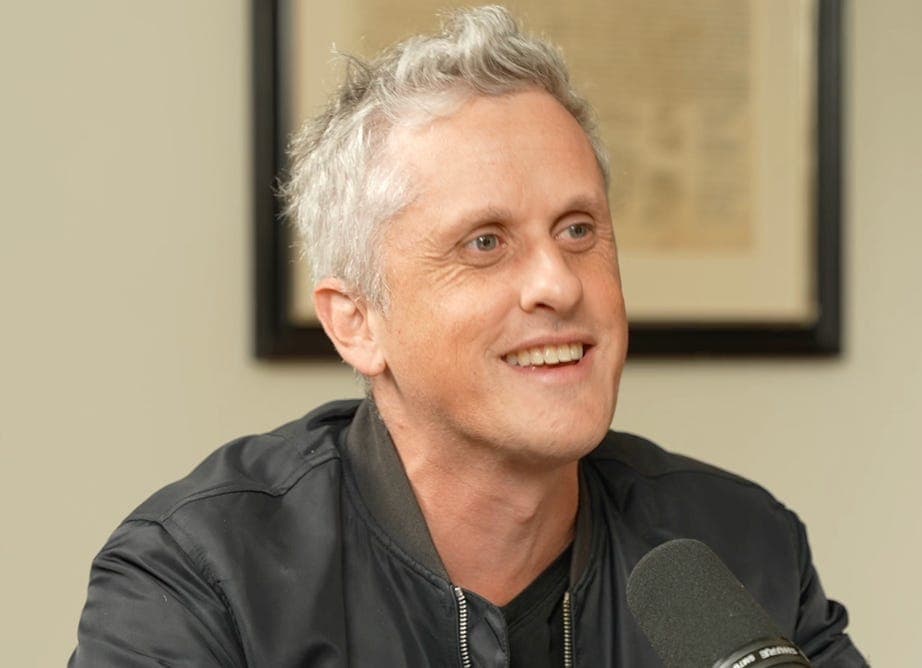
- Host: Joe Lonsdale
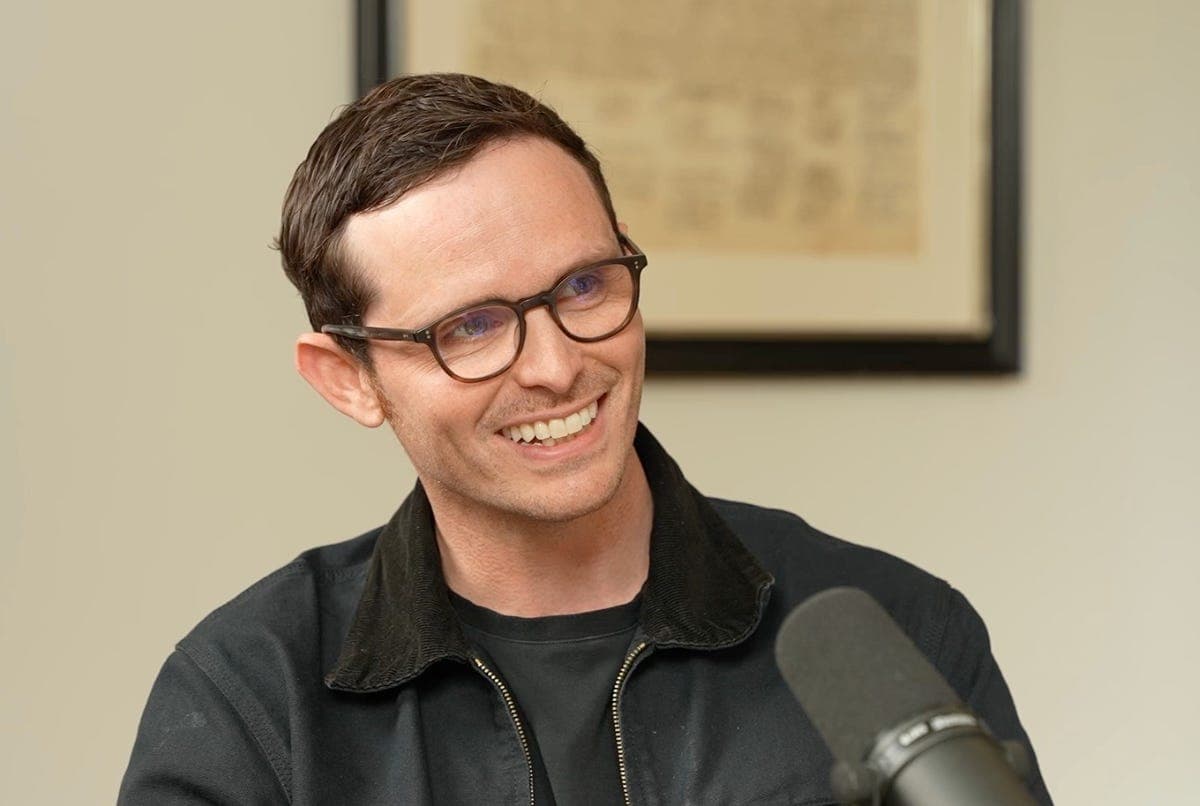
- Guest: Steve Blank, a serial entrepreneur, Stanford professor, and influential author in the innovation ecosystem.
- Focus: Discusses the evolution of Silicon Valley, the role of government in technology, and innovative ideas for national security, particularly how the U.S. can compete with China.
Key Themes
- Historical Context of Silicon Valley and Innovation
- Bill Perry's Influence: Steve's first boss and a key figure in electronic warfare during the Cold War.
- Stanford's Role: The university as a center for military technology innovation, particularly through Fred Terman’s leadership.
- Significance of Outsourcing Technology: The U.S. government outsourced advanced technology development to universities and private companies in WWII, shaping the future of Silicon Valley.
- Government and Innovation
- Decline of Government Leadership in Tech: Shift from government led innovation to a slow bureaucracy, resulting in the U.S. falling behind in technological advancements.
- Execution vs. Innovation:
- Execution: Traditional government processes that are slow and bureaucratic.
- Innovation: High-speed agile processes exemplified by companies like SpaceX.
- Need for Reform: Proposes radical ideas for reforming the Pentagon to improve speed and innovation in national defense.
- Comparative Analysis of Organizations
- SpaceX vs. NASA: Contrasts rapid innovation at SpaceX with traditional government processes at NASA, highlighting the need for both execution and innovation.
- Lean Startups vs. Fat Startups: Discusses the differences in approach between small, agile companies and larger, established firms within the defense industry.
- Industrial Policy and National Defense
- Critique of Current Policies: The government operates on a zero-sum budget that stifles innovation.
- Engaging the Private Sector: Advocates for a national policy that leverages private equity to fund new technologies and ideas for defense.
- CHIPS Act: Support for national industrial policies that incentivize domestic chip manufacturing and secure supply chains.
- Artificial Intelligence
- Concerns Over AI Development: Calls for a pause in AI research to address ethical concerns, particularly regarding military applications and the lack of accountability in autonomous systems.
- Importance of AI in National Security: Emphasizes the need for the U.S. to stay ahead of adversaries like China and the importance of integrating AI responsibly into defense systems.
Discussion Points and Quotes
- On Innovation:
- "If you're not blowing stuff up, you're not innovating."
- "Execution and innovation need to coexist in organizations."
- On Government's Role:
- "The largest purchaser of electronics in the 50s and 60s was the U.S. government."
- "We have world-class organizations in the DOD, unfortunately, they're for a world that no longer exists."
- On AI and Ethics:
- "When we start connecting very smart machines to weapon systems, ethical boundaries come into play."
- On Future Optimism:
- "It's a great time to be alive; AI is going to be one of those force multipliers just like the net was."
Conclusions
- The episode underscores the urgent need for innovative approaches to national security in the face of rapid technological advancements by adversaries.
- Steve Blank's insights highlight the critical role of Silicon Valley's entrepreneurial spirit in driving innovation and the necessity for reform in government processes to keep pace with the private sector's agility.
- The discussions on AI and industrial policy illustrate the complex balancing act between fostering innovation and ensuring ethical standards in defense applications.
Call to Action
- Encouragement for innovators, entrepreneurs, and policymakers to collaborate and rethink the frameworks of innovation and defense in the current geopolitical landscape.
Written by AI. May contain mistakes. Listen to the episode to check what was said.
Transcript
Automatic transcript. May contain errors.0:00Watching SpaceX catch a Starship booster versus watching SLS trundle out to the launch pad But$20 billion a pop, if that doesn't make the point between the difference between high-speed innovation done by crazy people versus process-driven innovation that, listen, gets us there, but not when your adversary is operating at starship speed.
0:29Steve Blank is a serial entrepreneur who's been building in Silicon Valley since the late 1970s. He's a Stanford professor, one of the most famous authors in the innovation world. These days, he's spending more time in national defense. He studied the DOD and the Pentagon and been involved in national defense for decades. He has some crazy new bold ideas. Let's hear about him. I'm Joe Lonsdale. Welcome to the American Optimist. It's an honor to have Steve Blank with us here today. Steve, thanks for joining. Thanks for having me, Joe. So, Steve, you're a serial entrepreneur. You're an author of various things, including four steps to the epiphany that the lean startup movement was tied to.
1:02And these days, you're a professor at Stanford and founder of the, is it called the Gordian Knott Center for National Security Innovation? That's it. Amazing. Let's hear about your background a little bit first, Steve, for everyone. After serving in the Air Force, you landed your first job, I think it was 1978 in Silicon Valley. That's correct. And it was at the Electromagnetic Systems Lab. Was that Bill Perry's? That was Bill Perry. Bill Perry was my first boss in Silicon Valley. That's a cool first boss. Tell us about the Electronic Systems Lab and how Silicon Valley helped end the Cold War.
1:29What were you guys doing there? Well, you know, Bill Perry had managed a lab at what was called GTE, bought by Sylvania, basically working on electronic countermeasures for the U.S. government, and then got pissed off and did a startup in the late 1960s, basically to do, oh, back then, national means of technical verification, at least ultimately, overhead systems to intercept telemetry. but he was the first company ever to use computers for SIGINT. And by this time, Bill Perry had become CIA's consultant on signals and telemetry intercepts. Edward Land was CIA's consultant for imagery. So between Perry and Land, they had the technology covered.
2:18And Perry partnered with the first head of CIA science and technology division, Bud Whelan, and came up with a really set of interesting things. But I remember when I interviewed Bill, he had a really interesting take. He said, you know, when it became a choice of doing the right thing for the government or making money, we always defaulted to doing the right thing for the government. I love it. That kind of stuck with me for, you know, the rest of my career. The other thing he did was he modeled the company after Hewlett Packard's culture, which was the gold standard at the time. except he said at HP only the executives had stock and and he changed that everybody including the lowest level employees include which included me got equity in the company which was pretty amazing because they got bought by TRW.
3:06So that's an amazing way to do things though and I love that it was always something at Palantir and other companies I work on defense where where if you're being the good guys means you're doing the right thing for the government not the right thing to make to make money and you don't always see that especially in the legacy companies these days unfortunately. And so you spent the next few decades, Steve, as a serial entrepreneur and founder, what were some of the technologies that you helped to build and deploy? Well, I did two semiconductor companies. I would never say I knew anything about semiconductors.
3:31One was a startup called Zilog, a competitor to Intel in the early days of microprocessors. And then another with a junior professor from Stony Brook, who just started at Stanford, named John Hennessy. And that became MIPS Computers. And John was amazing then. And of Of course, his track record as president of Stanford is pretty well known. But it was pretty interesting going up against Intel, which basically created a monopoly in microprocessors, which obviously has come back to bite them in the country today. Tell our listeners what MIPS was. John Hennessey obviously is an amazing man. He did a lot of great things as president of Stanford.
4:12What did you guys build together? Tell us a little more about that. So MIPS was just a different way to build computer architectures on a microprocessor. It was called the Reduce Instruction Set Computers, which basically said you can have a minimal number of instructions, number one. But most importantly, almost all those instructions would execute in one cycle, which theoretically would make them faster than the existing kind of kludged architectures. And they were kludges back then because they were kind of developed in piece parts and layers and added features, et cetera. And so we went head to Intel and Andy Groves crushed us.
4:49But it was a great learning experience. So I did two semiconductor companies. We did a supercomputer company. I still know what R1 half is and vector scalar startup time and was teaching salespeople supercomputer architecture. Let's see, what else did I do? I did an enterprise software company, which was my last one called Epiphany. I did a video game company, which reminded me, never do a company where your customers are 14-year-old boys. Video games is hard. What was the enterprise software company? What were you selling to enterprises? Basically, we were kind of the first, you know, back in the 90s, enterprise software was client server.
5:28And so we were one of the first companies to pick up on the Internet and realize that the browser would be a much more efficient interface and, more importantly, architecture. And so we built three components and a lot of tool, a data mining tool and a campaign manager. And it was essentially the beginning of CRM. Tom Siebel did a much better job in positioning and marketing. We called it enterprise marketing automation or something, EMA, and he came up with CRM. But it was the same thing. We were essentially the same type of company for a while. and that went public in September 16th, 99 and I retired on September 15th, 1999.
6:11Wise man. So you did okay there. I have a t-shirt that says luckiest man on earth, number 248. So I'm not confused. I have a few friends, Steve, who just keep trying to build things and they're smart and they push. And I think the way luck works is that if you're smart and you keep trying really hard, you're going to get lucky, you know? And show up a lot. I, you know, that old line about, you know, half, half the game is showing up and and at least throughout my career i did a lot of showing up so i also did consumer software consumer hardware we did a mac peripheral company let's see semiconductors consumer stuff workstations before they were pcs etc so i got a pretty broad view of tech deep tech and and interesting tech in different markets in silicon valley you're making me a little jealous i've started a couple dozen companies and six of them I got lucky are unicorns.
7:01But I think you've done more different variety of things than I have, which is pretty rare. So that's a pretty crazy background. But it's a question of who has the bigger house, Joe? Well, in Texas, the houses are big. Come on, what can I say? You give a popular lecture called The Secret History of Silicon Valley. Where did all this entrepreneurial culture come from? And why is it unique to that region? I think you could tell us better than anyone. You were in the middle of this for so long. Like, why that place? How'd that work? Well, listen, I'll describe that. But I'd probably first tell you why I decided to do that is, you mentioned earlier, my first career was in the Air Force, but it was in electronic warfare and electronic intelligence during Vietnam.
7:38And EW was a big deal then because we were flying lots of planes and losing them over a pretty tough, what we would now call A2AD system over North Vietnam. Russian provided surface air missiles and radar guided AAA. And I got pretty intimately familiar with that system. And then I joined ESL, Bill Perry, and now it's, you know, 30 years later, but it's kind of feels like a bookend. So that kind of stuck in my head, always asking, you know, even when I was the Air Force, how do we know what to jam and what frequencies and what's the radar order of battle actually look like, you know, early morning radar and then local radar and then surface air missiles.
8:17And I always kept asking these questions. And even when I was in ESL and those customers actually didn't like you asking questions, but I was always curious about how did we know what we were building and why. And so I started thinking about how we learned this stuff. And it turned out that the history of EW and electronic warfare started in World War Two and long history that I talk about in the secret history. But the real question for me always was, well, who started this and how did it get started? And it turned out there was a single professor at Stanford named Fred Terman, who was part of Vannevar's Bush Office of Science, Research and Development.
8:58And OSR &D, as some of your listeners and viewers know, basically was a brilliant move by the U.S., the only country who did this in World War II, that outsourced advanced technology to professors. That is, Vannevar Bush went to Roosevelt before the war started and said, World War II is coming. It's going to be a technology war and big idea. Our Army and Navy are ill-equipped to actually build advanced technology. They know nothing about physics. I mean, with all due respect to what was ONR back then, not really. I mean, there were pockets of innovation. And he said something crazy. He said, scientists should be building advanced weapons.
9:37And, of course, the heads of the Army and Navy laughed. And Roosevelt agreed. And so they stood up something called OSR &D, where all the advanced weapon systems, whether they were radar, electronic warfare, rockets, and a small physics program that started in Berkeley and others and ended up over Hiroshima and Nagasaki, all were run by civilians. It's amazing. And one of those programs was run by Fred Turman from Stanford. When Turman came back from World War II, he basically took all his lab managers and set up an advanced electronics and microwave group at SAM. And he's the one who introduced Bill and Dave of Hewlett-Packard as well, right?
10:16He was a kindly professor whose grad students were Hewlett and Packard. I was sad when we took down the Termin Engineering building at Stanford. I don't think there's any more homage to them, is there? Because I think there really should be. So here's the punchline. So I'm thinking about all these connections, but I hadn't written a story. And I get my first office at Stanford in the Termin Engineering building. Amazing. And I thought there was a finger of God pointing to me to tell them that to tell me that it was someone needed to tell the story about the connection of the DOD and intelligence community and where innovation entrepreneurship came at Stanford.
10:55because all research universities in the United States during the Cold War worked on military weapons systems. But it was only Stanford where, by then, Terman was the provost who pointed the university outwards. All other universities were focused inwards. Your best career path could be a professor. Terman said your best career, if you were working in microwaves or electronics at the time, was to take your technology and leave the campus and actually start something that could be sold to contractors or primes or eventually. I think Stanford as a newer university trying to compete was always a little more tied to the real world maybe than some of its East Coast competitors.
11:34And today I label Stanford as an incubator with dorms, which most of the professors don't like to hear. But as you know, it's probably the most accurate description of the school. There's a lot of entrepreneurship going on there. It's interesting because we talk about, you know, the government working with Stanford then, and it was really impressive to me how they work together and how they push things forward. And during the space race, Stephen, the Cold War, it seems like the government and the universities were oftentimes even a decade or two ahead of the private sector. And today, oftentimes, in some areas, it's the opposite, especially the government, it's the opposite.
12:05What's your take? I think you're right. It's hard to remember. But the largest purchaser of electronics in the 50s and 60s was the US government. There really was no commercial market at scale. In fact, the first large customers for integrated circuits from Fairchild, the semiconductor, which was one of the early chip companies, were not only for the Apollo guidance systems, but for the Minuteman 2 guidance system, which actually kept them in business because they could charge an exorbitant amount of money. But that shifted when we went to consumer products and PCs in the US. The amount of dollars being spent by PC companies and others just far exceeded what the military...
12:44So the market just became much more important on the free market side versus the government. And that's a big part of it, you think? And the rate of innovation, because the rate of competition in the consumer space was much faster than the need of innovation in the military side. Because the Soviet Union and the United States in the Cold War both had their same bureaucratic kind of processes, which kind of equaled out, even though each country was trying to do an offset strategy to the other. So the consumer space basically dominated. And by the way, that didn't matter until the last 10 years or so, because inside of FFRDCs, federally funded research labs and our prime contractors and service weapons labs, we still had the most advanced technology to deter or win a war, whether they were drones or hypersonics or overhead service, you know, whatever.
13:39those you know things in space were battlestar galacticas that required billions of dollars etc um but that changed about a decade or two ago as you know and and a good number of your listeners now all of a sudden all those things that were owned primarily by the dod and ic are now commercial products and half of them being made in china and here's the here's the rub and and you live this with palantir unfortunately our acquisition system is still stuck in the a system where all that technology was owned by the primes or internally to the DOD system. And we still haven't kept up with the fact that there's a huge impedance mismatch between how the government acquires and what's outside.
14:23You know, the way I describe it is China operates, and also the speed. On a good day, China operates like Silicon Valley. And if we're really lucky on that same day, the DOD is operating like General Motors. um that's just not a fair fair process no this is something that obviously bothers me a lot we when we started palantir it was pretty obvious at that point to those paying attention that the silicon valley software tech culture had gotten way ahead of the government in a way that it just it was probably already getting ahead in the 80s and 90s but i feel like it does silicon valley with with obviously that the wave of the internet wave just pushed it so far ahead that it was almost comical how far behind the government was so it was to me it was not like palantir was the genius of a thing to start it was just very hard it's just but it was but but it was obvious and then but the hardware side has become more shocking to me in the last 10 years obviously when we back to the under all the beginning and started building on the hardware side was partially because it does seem like the government also got behind in that area which i don't it hadn't been as you know before right and and and here's the rub is that none of this would matter if we didn't have an adversary that um doesn't have the and didn't have the legacy that we had and didn't have the coin-operated Congress as we had.
15:34And so you end up where we're competing with someone who's operating with a different organizational design and different clock speed and figured out how to fuse civil and the military together in a way that does a whole-a-nation approach to national security. We've just not gotten out of our own way. I think we're coming to the conclusion through your help and others that we can't keep going on like this. You know, the observation, and then I'll let you move on, is that we have world-class people and world-class organizations in the DOD and IC. Unfortunately, they're for a world that no longer exists.
16:13It's a big idea. I mean, if you would agree we're in a crisis, you would say, huh, in a crisis, why are we appointing the same people we would have appointed when we weren't in a crisis? Or why do we have the same organizations that we had when execution at a reasonable slow pace? And I think it came, you know, if civilians didn't understand this, watching SpaceX catch a Starship booster versus watching, you know, SLS trundle out to the launch pad, you know, at$20 billion a pop, If that doesn't make the point between the difference between high speed innovation done by crazy people versus process driven innovation that, listen, gets us there, but not when your adversary is operating at starship speed.
17:04Does that make sense? Yeah, no, it does. And the thing that really gets me, and I see this in so many areas of our country, is it's not just that things are like 50 % more expensive or twice more expensive. We're literally spending 10 to 100 times more for the same old results, which becomes a problem. And so I want to ask Steve, obviously, so you found the Gordian Knot Center for National Security Innovation. You've served on the Pentagon's Defense Business Board. So you're involved in this world. There's widespread agreement in D.C. on some of the challenges of China and the need to innovate more rapidly.
17:33I think it's obvious, right? So people see that. Like, where's the conventional wisdom wrong? Where would you push the department to be more bold? Like, what's something controversial that you'd say, here's what you have to do? Well, but by the way, we're talking about Congress. You know, it's your fault that some of it's broken when you hired Mike Gallagher. So Mike was the most cogent and leading advocate. Mike's house got swatted by people on the far right, I believe. I mean, he's had a really tough time the last couple of years. So I think I think the problem in our society is it's very tough to be a politician right now.
18:05I think there's some really nasty forces there that encourage people to get out, which is sad. But he had the most cogent understanding of both the problem and potentially how to solve it. But I'll tell you a couple of ideas. You know, I also sat on the Navy Science and Technology Board and world class people, you know, dedicated folks in the Navy. And these boards historically come up with world class incremental solutions. Let's give autonomy another hundred million dollars. Yeah. Well, guys, you know, how much is a how much is let alone a fourth class carrier? Fourteen billion. But wait a minute.
18:43How much is a strike group? Great. Yeah. And we're going to give one hundred million dollars to more autonomy. Have we thought about like what the operating concepts should be when we have a hybrid fleet? Then where are those dollars coming from? Those dollars are coming from me with Cerronic. Exactly. That's the problem right now. But if you think about it, no, they're not. Because the DoD budget right now, here's the other problem. Number one, the DoD budget is thought of as a zero-sum game. That is, if I want to put a couple billion dollars into an autonomous fleet, well, where's that going to come from?
19:17My shipbuilding budget is only X. So problem one is the DoD budget is thought of as a zero-sum game. That's a massive mistake. We've not engaged the whole of nation in figuring out who should build things. I mean, you understand, and I know some of your listeners do, that the largest satellite manufacturer is not Northrop Grumman or Lockheed or Boeing. It's SpaceX, right? They have a factory that makes this at scale, at a scale unimaginable that would have made people giggle or, you know, go like, no, please stop smoking dope inside the Pentagon. There's no way you could make 2 ,000 satellites.
19:57Put up 6 ,000. What are we up to, 6 ,500? I mean, that's insane. But wait a minute. How much did that cost the government? It's not that Elon didn't get any money, but no, I mean, that's the that's the paperwork budget that Northrop Grumman or that's a lobbying budget. Yeah. So my point is, is how come as a strategy we haven't engaged and and put incentives to private equity, not just venture capital, but private equity at scale to be investing tens or hundreds of billions of dollars in the new things that we need? and is it tax breaks or whatever and and the reason why by the way is do you know the only economists we have in the dod are the ones working at the cape you know the with green eye shades and whatever it took two random guys jason rathke and eric volmer to come up with a billion dollar loan authority at the office of strategic capital how come we don't have 25 economists thinking about crazy things and so so that's one big idea is how do we engage the whole of nation And by the way, we should have understood that when Russia appointed an economist as the head of their defense department, not a general.
21:09You know, the light bulb went on for them. China's been operating civil military fusion for 15 years. We should have figured this out as well. Ash Carter understood this is why he stood up DIU, that the integration of all pieces of society. The second part is, you know, DIU has been a defense innovation unit has been a great science experiment. Now reporting to the SEC dev has a billion dollar budget. Hopefully that doesn't go away. Number one is, you know, we should at minimum probably 10x or 20x it. But it's essentially a shadow R &E that it is Heidi Hsu's department, but quicker. But there is no equivalent for acquisition.
21:48That is, there isn't, we don't have a rapid acquisition budget. Everything goes through the palm and the pbe that is the yeah the massively complex just imagine we threw 50 billion dollars in a diu for acquisition that'd be very entertaining for us one of the big things we're trying to convince people as well steve is that maybe not having a monopsony having multiple buyers so that you can have competition because i think then you'd have one buyer shame the other buyers you know well so so the other piece of this is why don't we have the combatant commands have the authority to kind of buy from that new acquisition thing for anything less than Fiverr.
22:25That is, if it's going to be a treatable, combatant command should be able to buy from that group. So you asked what kind of crazy ideas that we could come up with rather than let's add another couple hundred million dollars to make people happy. But Joe, I'm going to push back to you here for a second and not to put you on the spot. But you know, you guys have been at it for decades. There's now a whole set of VCs now operating in this space that followed you guys at HVC. But we don't speak with one voice. That is, every smart VC has a lobbyist and some of the bigger companies like Palantir and Andrew have their own lobbyists.
23:03But we all go to Washington and we talk with individual voices about our line items or maybe our space. but Silicon Valley defense hasn't spoken as a group. And I don't mean as a group saying, gee, we need more money, but as a group coming up with a set of ideas that just like I articulated, and my suggestion back to you is I can't think of anybody better to get a bunch of defense VCs and some creative folks from Andrew O 'Panter in a room for a day and say, if we could reorganize the DOD, what we what would we hand the hask and sask for language for the ndaa what would we want um you know i find myself doing this but then realize you know congress comes out visits we bitch about x or y and they go back and all they heard was bitch bitch bitch individual item does that make sense at all yeah no and we and i think there are some some groups that are that probably could be better organized i think it's a fair pushback i think there are some groups that are saying, what are the high level frameworks?
24:11And of course, there's ways we work together. So maybe this is inappropriate to say, but the primes have different incentives. Sometimes, sometimes they have similar incentives on some things, but sometimes they have different incentives than us on the innovation side. So for example, a lot of them wanted to defund some more of the innovation things because they didn't like the fact that it was disrupting them. And a bunch of us got together. It was a very big victory and we kept it funded. And we introduced people running DIU to the people in the Senate and various places that they hadn't known before.
24:35And we were able to keep the funding and even increase it because it was obvious it was working for the country. And so there are ways in which we'll kind of defend and push these things forward. I think you're right. There's some bolder things around, like you said, giving more acquisition money in parallel to come back and come back. I'd love to see competition. You know, in my view, if you only have one buyer, then the buyer could do something that's 50 times as expensive, but quote unquote safe and mediocre. And then they get away with it. If you had two buyers and they knew there's a good chance the other one was going to do the thing to shame them, then they might also take the risk to not look stupid.
25:07So I think there are things like that we should be putting together to push. And I know some of us have been pushing it a little bit together, but you're probably right. There's ways we can ally and really teach them. You should, Joe, to be honest, I want to push on you a bit. You are kind of a leading light in the space. Why don't you just call up a bunch of your friends for a weekend and literally have them out to the house and figure out if we could redraw the diagram to compete at speed, what would it look like? Rather than how do I get another$100 million or a couple billion dollars for X and Y?
25:42That should still go on. I'm not suggesting we stop lobbying for individual interests. But collectively, we now know what's broken. And we ought to use the imagination we use to build companies to rebuild the Department of Defense and National Security. I think we have enough imagination to do that. And here's the insight. The DOD is built around execution, execution of processes and PBE and whatever. Silicon Valley is built around innovators who create new things that never existed before. And here's the rub. The executors never come up with innovation processes. I mean, they'll do it around the edges, and it's not that we don't innovate incrementally.
26:21But innovators at the same time hate coming up with process. Process? I don't need no... I think Elon especially is like so not interested in process. But you're right, the government runs on process though. So we have to fix it. So the problem we're facing is both groups have a Venn diagram of zero intersection in thinking about what radical reform would look like. And I'm sorry to get us on this high horse, But I think it's incumbent to the innovators to actually come back and say, no, it should look like this if we want to compete with China, Russia, North Korea, Iran. Whoever thought we'd be like shooting at Houthis?
Read the full transcript
26:58I mean, how many people could find them on the map? The whole thing is so one off right now, Steve. You're right. I mean, I literally was on the phone with a congressman two nights ago because the head of the Secret Service is working with him to try to like do something to try to protect. I'm not going to say who, but you can imagine who's being threatened right now in our country, you know, after they went on them and they needed some new technologies we have access to. And it's kind of an embarrassing mess, like if you want to try to do something competent quickly versus do it the right way.
27:24So I think you're right. I think you're right. We need to come up with the frameworks. The thing I would say is I do think there's something about big, trusted primes run well that's very positive as well. I actually would like there to be seven or eight new primes that are really well run and trusted, you know. And the things you invested in certainly are on that path. You know, that classic consolidation diagram that shows all the primes we had in the 20th century coming down to 10. When I sat with Kath Hicks, I said, ma 'am, all you need to do is visualize that diagram flipped horizontally.
27:57lovely that is what we need to do is now generate a whole new set of those things and we could use some of that exorbitant billions of dollars where we have on the mdap list in fact my my line is is that the goal ought to be that 10 of the mdap major defense acquisition programs ought to have new entrants on them in in the next three years and if they don't we're simply not rebuilding the national industrial base um you know we made a set of semi-logical decisions to consolidate when We thought the Cold War was over and the end of history, et cetera. But we've not made the equal decisions other than a lot of word salad to actually put money to kind of recreate that ecosystem, this time using private capital.
28:39And, you know, the equivalent to what Roosevelt and Vannevar Bush did in World War Two in handing advanced weapon systems to professors and universities would be handing advanced weapon systems designs to startups. Yeah. Yeah. If you really think about, and I'm not suggesting that, but that's the equivalent of what we did. This is why instead of the startups, I'd want there to be new trusted primes of a sort that are kind of proven enough. I do agree with your point is that you actually, there's just probably, listen, there's only two VC funds have been doing this for a long time, but then there's probably about 15 new ones in the last several years.
29:12And that's great. And these are competent technologists. So I think you could take the top 20, 30, 40, whatever, don't be exclusive, a bunch of VC funds, take the top up and coming companies and include them in the planning, include them in the strategy, right? And there's a pushback on doing that, but it's crazy because that is our biggest asset as a country is all these technologists. And they're not currently included. Like if you tell me that you want to have this certain type of system in 2029, and then there's going to be a competition where a couple of us are going to get funded with a competition in 26, I can then invest right into that and I can build that.
29:44I can win the competition. So I have been coaching a bunch of people on all sides around these ideas. I think you're right. It's probably better if we all work together and try to push it together versus separately. Invite the primes because eventually as much as they're trying to, you know, stiff arm all this, their business model needs to change. Right. And some of them understand it. Right. It certainly would have Chris Moran and Lockheed in the room and others. And, you know, while they're defending their turf of, you know, even even Huntington Ingalls understands that the days of only carriers are going to go away, that they understand it.
30:15At minimum, it's going to be a hybrid fleet. yeah right so having some of them at least understood at least offer uh what they want what they're thinking because they'll try to kill you on k street anyway so so putting them in the room in any case i don't mean to get us off track here because i know you want to talk about other stuff but um um i just want to point out you are the lightning rod for this industry and we ought to act like it i'll try to bring more friends together to push i think you're right there's an organization there that we could be doing better in the valley uh you know i want to ask So, Stephen, growing up in Silicon Valley, especially in the 2000s when I was building things, your book was obviously read by everyone, The Four Steps to the Epiphany, and it's kind of the intellectual backbone of leading the startup movement.
30:58And it was always interesting because there's obviously a lot of important wisdom there for how a lot of the Valley worked, but it always seemed to be pretty different to me than how the defense side of things worked, right? So, it's kind of interesting talking to you about defense now because in some ways, Palantir was like a fat startup, as was SpaceX, as was even Andrel in some ways. So a lot of these defense things, it's like you can't quite do those things lean startups get to. Is that how you think about it too? Are the principles still apply or is it different? Well, what's really funny is, you know, of all things, I use SpaceX as an example of how you actually can build.
31:34Fancy word is an ambidextrous organization, a$20 word that you use in universities to mean can you chew gum and walk at the same time? Meaning, can you execute, that is, do continual processes and incremental innovation? At the same time, you could do crazy things in the same large organization. And of course, I think most people listening understand that SpaceX is launching out of three launch pads, two at Kennedy, one at Vandenberg. And that's operational excellence. Those Falcon 9s are popping off. We might hit 120 this year. Maybe we'll hit Elon's 144. But But in any case, they don't screw around.
32:10There's a book, and that process needs to be fail-safe. But when we look at Starship, Elon's model is we're not blowing stuff up, we're not innovating, and if we're not blowing them up fast enough, we're not innovating fast enough. Different culture, different people, different risk profiles. But the big idea is everybody understands Falcon 9 pays your salary, but Starship will pay your pension. And that innovation stuff that's at the edge will move to the core. And they're not separate organizations, even though they are. They're connected horizontally. The learning is going back and forth. The DOD actually does some of this by hacking their own system when we create black programs.
32:53So if you want to beat the bureaucracy, you put it in a SCIF or a SAP program. And if you've been in some of those, they do operate with speed. um does that make sense that is we hack our own system we have socom you know you're a startup where's the first place you go you go to socom or you go to black program or you go to cia or somebody else who needs something in some way spacex still is doing a lot of what you talked about with failing fast and everything it's just doing it a different way that's interesting yes and and so it's possible to build this in the dod we've done it before that is you need organizations that operate the core in execution, but are capable of actually creating innovation.
33:34And the problem is that at the end of the day, it's leadership. If you don't have a leadership that understands the difference between execution and innovation, and I mean disruptive innovation, different clock speed, different people and whatever, you just tend to do the same things. And who understood that? Bill Perry understood that as SECDF. Ash Carter understood that as SECDF. I would contend most of the rest were political appointees who couldn't tell you innovation from white. When we were innovating, Steve, for Palantir, we studied a lot, obviously, talked to a lot of people. And there were really two parts, I'd say.
34:11One part was like we had a vision. We're like, this is the correct answer. You need these nodes that have dynamic ontologies. that over time they're going to allow them to talk to each other between the US, between allies and you need to have this platform that does data integration and you need to have the platform that does collaboration. We had all this big, big vision but then there was also like every week or two we'd fly out and show people things and we'd get pushed back and we'd iterate. So I guess there was an iterative part of it but there was also just this like, if you build it they will come conviction we had and we just kept pushing and it turned out to be right and it took many years.
34:42It seems like a different way to build a company than some of the other things of value or does that relate to how you think about things as well no that that's in fact you know the mississippi is pushing that ball uphill and the good news is you guys were one of the few that got it up the hill but you were fighting against a system that wasn't designed to intake radical innovation and the point i just made previously is we can actually get the dod organized to do that this goes all the way back to you know us getting together as a community and explaining to Congress how we should organize this.
35:18And more importantly, who should be running these things? Right. Doug Beck should not be running R &E. Heidi Hsu should not be running DIU. They're different people, different processes, different clock speed. If we could get that idea through, we need both. We need to have an or so imagine an or a DOD that actually had that culture when you started Palantir. It wouldn't have taken 10 years. I would have owned more of the company by the time we got there. Well, right. So, I mean, one of the things we did six years ago was to start a conference and to get the innovators and the senior leadership in the DOD together called the Red Queen Conference out here at my ranch.
36:01And we're going to have it this week on Wednesday and Thursday. And so, and here's the other part that Silicon Valley failed. So those senior leaders, we got admirals and generals, We got the head of a country's joint chiefs of staff out here or whatever. They would then leave our little conference and then they go visit individual companies in Silicon Valley. They'd all scatter. And it took me six years of running this before I went, why don't we invite the companies here across a set of VCs in a set of areas? They've said, do you know there's no Silicon Valley one defense trade show in the valley that when people come out and visit or even for the reagan conference or something why don't we all get together across all the portfolios and show our wares and you know a lot of the best ones are still are still in el segundo or elsewhere in the country but you're right there are some important things right in the valley too to be seeing well so wait a minute at the reagan conference you've got all those folks why isn't there a trade show in a building across the street yeah i am on the board of the library i can't make any excuses i'll go i'll ask him and see no no listen it took me six years of having all these and then going where are you guys going oh we're going to go visit palantir oh we're going to go see andrew you know what the secret answer is is that the very top companies that are doing well get into those places like the right thing anyway of course but what senior leadership doesn't understand where those companies fit in the ecosystem unless we expose them to the ecosystem no that's fair i think that's the right thing to do right every vc wants to show them just their portfolio and baby but but the but But I'm just pointing out that there's mutual interest of them seeing everything across the space.
37:39Why? Because, Joe, think about it. If it's just Andrew, then people could go, oh, we don't like that company. Those people piss us off or whatever. Now, all of a sudden, if they say, holy cow, there's an entire ecosystem out here and we're still buying stuff from Lockheed or who name your favorite prime for a thousand X. what these in in 10 years there's a whole system to choose from as you know it's a tougher one because there's like a certain bar where you really have to be really really good to be good enough and so defense for me is different steve in other areas where it's like i know every area has like lots of failures but i feel like i feel like it's only the top 10 percent that are real and a lot a lot of times in these ecosystems because you actually have to have a certain bar you pass to know how to deploy and then it actually ends up not working and you gotta be really careful as well not to expose them to lots of crap, I guess, is a trade-off.
38:28There's dialectic there. So we teach a class called Hacking for Defense, which Jill Felter and I and Pete Newell started. It's now in 60 universities. And so a good number of our students end up trying to sell to the DODs. And the answer is, I'm kind of agreeing with you, but we could teach them how to do this. And we do. That is not just how to get to an MVP in a demo. The DoD has more demos than anybody knows. But what's the go-to-market strategy of finding the color of money? Or how do you get a requirement written for just your stuff? Or, gee, who's the saboteur? That is, who actually has the existing contract?
39:05And do you think they're going to sit around just waiting for you to come in, etc.? You could teach startups this as a process because the other mistake that goes on in Silicon Valley is thinking sales to the DoD is just simply complicated enterprise sales in the commercial market. And I laugh hysterically when I hear that, having done both. It's definitely, it's definitely, no, that's very, that's very fair. I think you have a lot of wisdom there. I tend to think it's going to end up being six, seven, eight new primes that are like 80 % of the new impact that matters. Not, not the super distributed thing that, but, but at the same time, it was, you know, we'll probably be buying a bunch of those eventually into the big companies and figuring it out.
39:42But I want to ask a little bit about two things. And one other thing is industrial policy. You talk a lot about that. Obviously it's tied to some of these things we're talking about here. I think you support the CHIPS Act and call for more policies like it. I, on one hand, want America to make sure we're doing the things we need to do to compete against our adversaries. On the other hand, I'm always very skeptical of top-down policy and central planning and dumb rules that get put in place by bureaucrats. I'm curious how you trade that off and what kind of industrial policy you'd like to see. So in a perfect world, which we try to run for the last 50 years, the market would decide where we put our money in.
40:16Smart, et cetera. And so where did VCs put their money? In social media. Was that in the national interest? We could argue possibly not. In fact, I would argue vehemently not. But why did that happen? Well, the quickest returns, the largest returns, etc. What did China do? And by the way, if we didn't have a nation state adversary, that would just be fine. And OK, who cares? The problem is we're competing with people who have a different model. and their model has been focused on building things that are building up their national security state. And, you know, to me, the best example is like, how many new ships are we putting in the water?
40:58And how many DDGs are China putting in the water? And like, great. And where's our investment going in venture capital and private equity? And what kind of incentives do we have? I think the CHIPS Act was the first, you know, major piece of national industrial policy, which you mentioned in probably 75 years, which simply was somebody looking at a map and going, huh, where do all the advanced logic chips come from? Oh, China calls it a province, right? This might cause a problem. Perhaps we should do something. Oh, look, China is building up their chip business. Oh, whose equipment are they using?
41:32Oh, they're using us. Why don't we put export controls on? Now, to be fair, we ended up building a dam across half the river because while we put export controls on the u.s companies tokyo electron and and asml who provide the other parts of the machinery don't have export controls no it wasn't done very well i think at a very high level of theory it makes sense the government is very good at breaking things that i think you know for a long time we couldn't build stuff because there wasn't enough female construction workers because of the dei rule there was just all this comical kind of bad stuff they put in place with these things like is there is there a way around that yeah so so joe you just pointed out i think something interesting is so and and now let me give you a discreet answer to your question about national industrial policy to compete in a world that we live in not the world that we want we do need national industrial policy one two is we need to take this stupid cruft out of national industrial policy and and figure out what the goal was right it's like we could decide that the goal is jobs or that the goal is dei or the goal is something else That's not really national industrial policy.
42:39That's something else. So if we separate out the two, which is, do we need to get indigenous chip manufacturing in the U.S.? Sure. Do we need to have a secure supply chain for an industrial base for manufacturing? Sure. What do we need to do that? And what incentives do we need to put in place? I think we did a pretty good job of thinking about on a high order bit of we need chips. but I would probably agree with you. We've probably cluttered it up with things that probably shouldn't. Very well said, fair. One more topic before we end, I want to ask about is AI. And this is interesting because you've spent a lot of time, I think, correctly talking about how all these things actually now matter because we have a state adversary.
43:21We have to respond to the state adversary. But it's interesting because last year after GPT-4, you wrote the AI Research Research, to consider pausing to develop some guard riddles. So it's interesting. So on one hand, we got to stay ahead of our adversary. On the other hand, you were actually worried enough to say we just consider pausing do you still believe a pause is prudent where are you on this you know what's really interesting is uh i think of gpt and chat uh ai is kind of a shiny object that really people are kind of like distracted by you know the nobel prizes that came out this year were real really the issue is that you know google deep mind figured out how to do uh protein folding in a way that basically accelerated molecular biology probably by 30 years.
44:09We solved 3D structures of 200 million proteins. We had maybe solved 100 ,000 of them or maybe 20 ,000 of them manually. We're going to see the same thing in material sciences, and we're going to see the same thing in other deep tech areas. The part that's concerning is, you know, I don't know if you've ever remember a movie called The Forbin Project or there were some others in the 1980s when you connected very smart machines to weapon systems. The Terminator. Yeah, Terminator being probably the extreme. But, you know, the problem here is when we start doing that and there's no men in the loop, you know, and also when we start doing that and we have ethical boundaries, but our adversaries don't have ethical boundaries.
44:57That's the challenge. But I should remind your listeners that both the U.S. and the Soviet Union had dead hands on their ICBM systems. Yeah. We had transmit radios on a small part of our Minuteman fleet that said if all of our command and control is about to be shot out of the sky or the looking glasses are gone, you push a button and you launch a set of Minutemen with a UHF radio that transmitted the go codes to the rest of the Minutemen. That's pretty terrifying if someone had figured out those codes. Well, wait a minute. But the Soviet Union had the same thing called the dead hand. And those were with human beings.
45:34Now, just imagine connecting that to an AI system that wakes up one day and says, well, maybe I need to automatically push this button. So everything we've done in science and technology has been a double-edged sword. When we invented biotech and genetic engineering, we took a pause to say how dangerous could this be? And until Wuhan, we managed not to kill ourselves. Let's dig it on that. I think you make a good point. On one hand, obviously don't want the AI launching the nuclear weapons. I don't want the AI being able to take over and attack us. That's obviously insane and scary if it's done wrong.
46:14On the other hand, you know, for example, one of our companies, Sironic, we're going to be producing thousands of weaponized vessels to complement the fleet. And we're teaching them how to use AI. and like in the heat of a battle against a bunch of autonomous stuff from the other side reacting in real time you're going to want to be able to do certain things in real time with the ai otherwise you're just going to lose and so it's going to be like well we're more ethical but we lost the war so it's so it's becomes a tough tough trade-off right you have to make some of these trade-offs and and in fact you know if your viewers haven't seen it the chinese demos of 10 or 15 000 drones simultaneously synchronized in the air are just like just imagine you're on a carrier watching that incoming.
46:52This is why we're going to put our electromagnetic shields in the carriers like in Star Trek and have a shield that goes out miles and just turns off all electronics, right? We need stuff like that. Or if we weren't putting all our assets on carriers and maybe putting our assets on a distributed... Some of each, some of each, some of each. That's fair. I have to defend the carriers for now. Otherwise, they'll tackle my small ship, Steve. There we go. There we go. That's why we need something more than a zero-sum game in the DoD budget. I know. And that's very, It is very zero-seller when you're careful.
47:21So it's interesting because you agree AI obviously is necessary to stay in every adversaries, but there are just lots of risks is your eye level. Yeah. You know, the risks in a complicated society are compounding. You know, our grid is fragile. You know, we take for granted all these things that keep us alive. Food system is fragile. Our distribution system is fragile. All these things are, AI is just going to add one more piece of fragility into a network. Hopefully we could do it right. On the positive side, we did start American Optimist to push back on cynicism and pessimism. I'm curious, like what areas of innovation excite you for the future?
47:57What's going to make things better the next 10 or 20 years? Well, you know, I've been lucky enough to live through the valley of when we were literally cutting Ruby lift masks with an X-Acto knife and microprocessors when we maybe, I think, had a couple of thousand, you know, transistors on a chip. And now we have like tens and maybe hundreds of billions and eventually trillions in my lifetime. It's just been amazing. And, you know, my first half is actually I did stuff in my second half of my career. Now, when you know what I could do, you teach. and so watching my students do amazing stuff. Capella Space were students in my class.
48:33Bannervear Labs were students in my class. I mean, just a whole set of people who've gone off and done amazing things. It's just a great time to be alive. AI is going to be one of those force multipliers just like the net was, just like microprocessors and computers. We're living through some amazing times in technology. The problem is we're also living through some amazing times in geopolitics, as you know, and they're in the middle of. You know, we thought we were smart when we came up with a two plus three strategy with Mattis in 2018. But we haven't embraced the fact that our adversaries have like morphed again, and our national security strategy hasn't morphed.
49:11So, you know, I'm happy living through the technology shifts, and I'm concerned that we really haven't been as smart as our adversaries in playing the geopolitics. I mean, they've been playing everything. They've been fostering division in the country. They've been coordinating efforts in regional wars. And I don't think we got the memo yet that they're not actually reading our national defense strategy and they're acting a little differently than our plan. But to answer your question, I'm optimistic there's not a better place, better time to be alive. Well, Steve, having leaders like you help push the DoD, help push us to make sure we innovate, to stay ahead of our adversaries and seeing all the innovation coming out of the tech world and of even places like your classroom and stuff makes me more optimistic.
49:57So thank you for all you're doing. Well, thank you. And thank you for putting your money where your mouth is or your mouth where your money is. Both are important, Joe. Awesome. Good to see you.
From the publisher
In World War II, the U.S. government embraced a radical idea: putting scientists and technologists in charge of building advanced weapons. The rest, as we say, is history. What are the radical ideas we need today? And what can we learn from the history of Silicon Valley?
This week, we talk with Steve Blank — serial entrepreneur, Stanford professor, and influential author who created concepts that define today's innovation ecosystem. After serving in the Air Force during the Vietnam War, Steve landed his first job at William Perry's now-famous Electromagnetic Systems Laboratory. He went on to launch several companies, from taking on Intel in microprocessor manufacturing to building early versions of CRM. His book, "Four Steps to the Epiphany," is credited as the intellectual backbone of the lean startup movement. He has also studied the Pentagon for decades, served on the Defense Business Board, and co-founded Stanford's Gordian Knot Center.
We start with Steve's entrepreneurial journey and the evolution of Silicon Valley over the past 50 years, from helping end the Cold War to pioneering the computer and internet age. We also examine the devolution of government and its decline from the engine of technology and research in the 20th century to today's slow, bloated bureaucracy. Steve outlines his bold ideas for reforming the Pentagon and outpacing China in the technology race; he also breaks down the difference between execution and innovation and how the best organizations, like SpaceX, can manage both simultaneously. Finally, we discuss why Steve had called for a pause in AI research and, given his concerns over China, if we can afford to pause.
00:00 Episode Intro
01:40 "Bill Perry was my first boss"
7:43 The Secret History of Silicon Valley
12:14 How US govt fell behind SV
17:05 SpaceX vs NASA
22:00 Radical ideas for Pentagon
26:28 Execution vs Innovation
31:13 Lean startup vs fat startup
40:11 Does industrial policy work?
43:40 Why did Steve call for AI pause?
This is a public episode. If you would like to discuss this with other subscribers or get access to bonus episodes, visit blog.joelonsdale.com