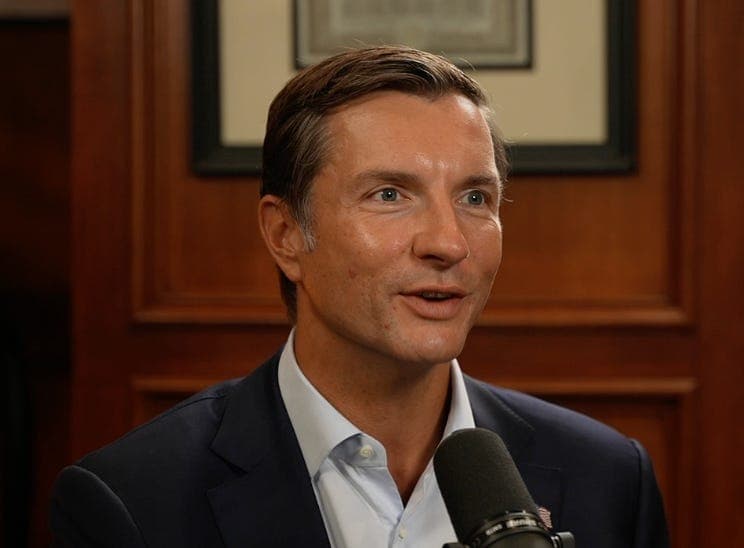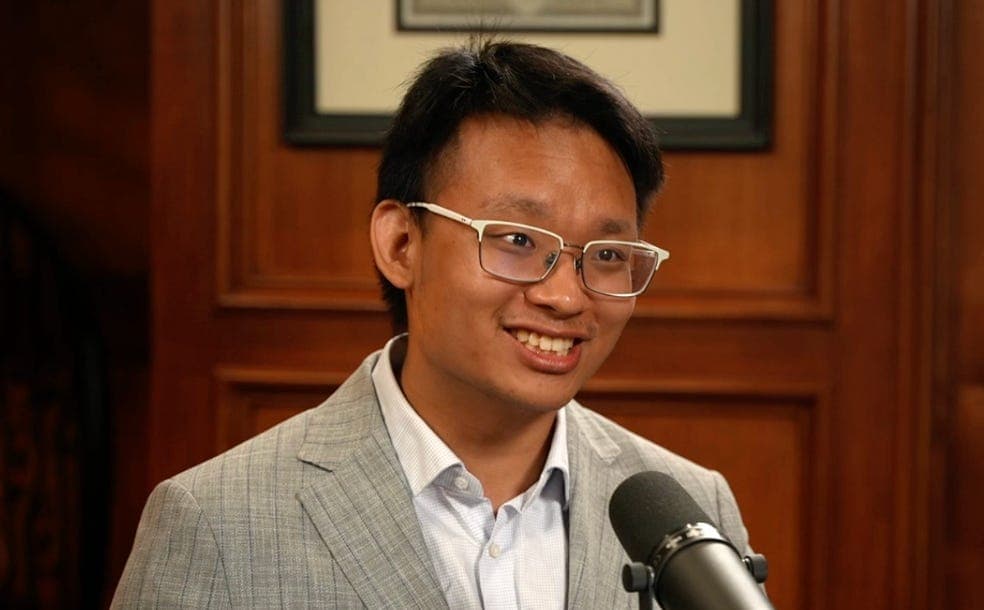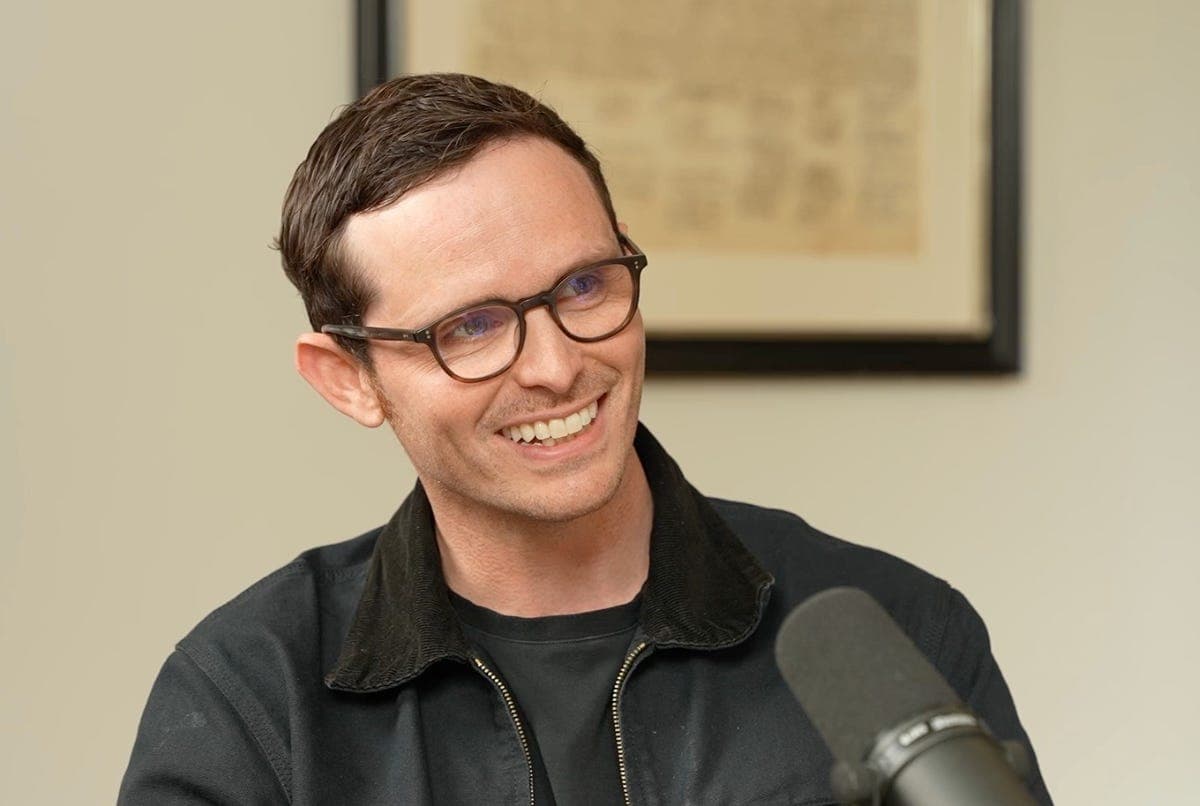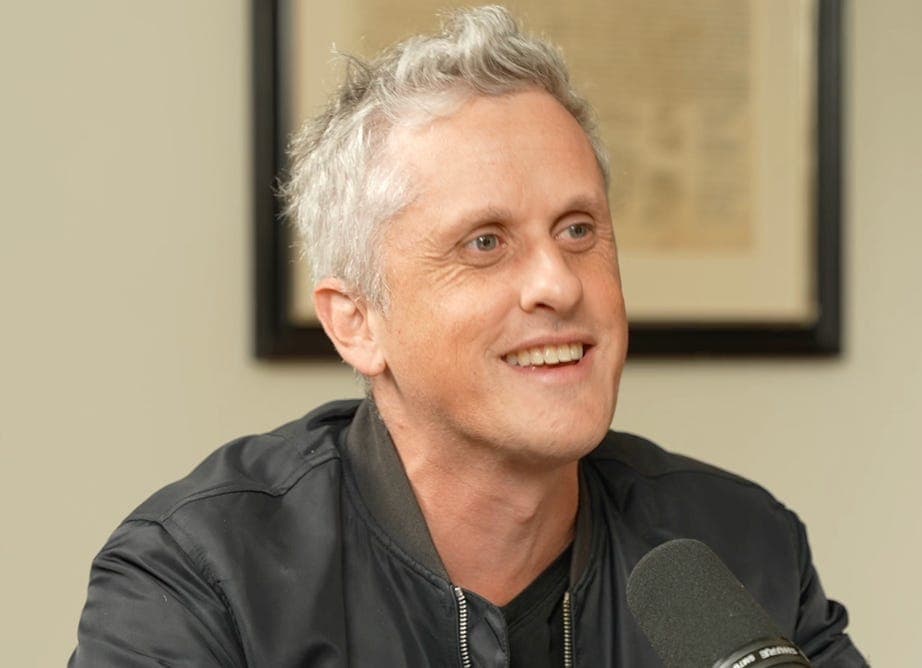
In short
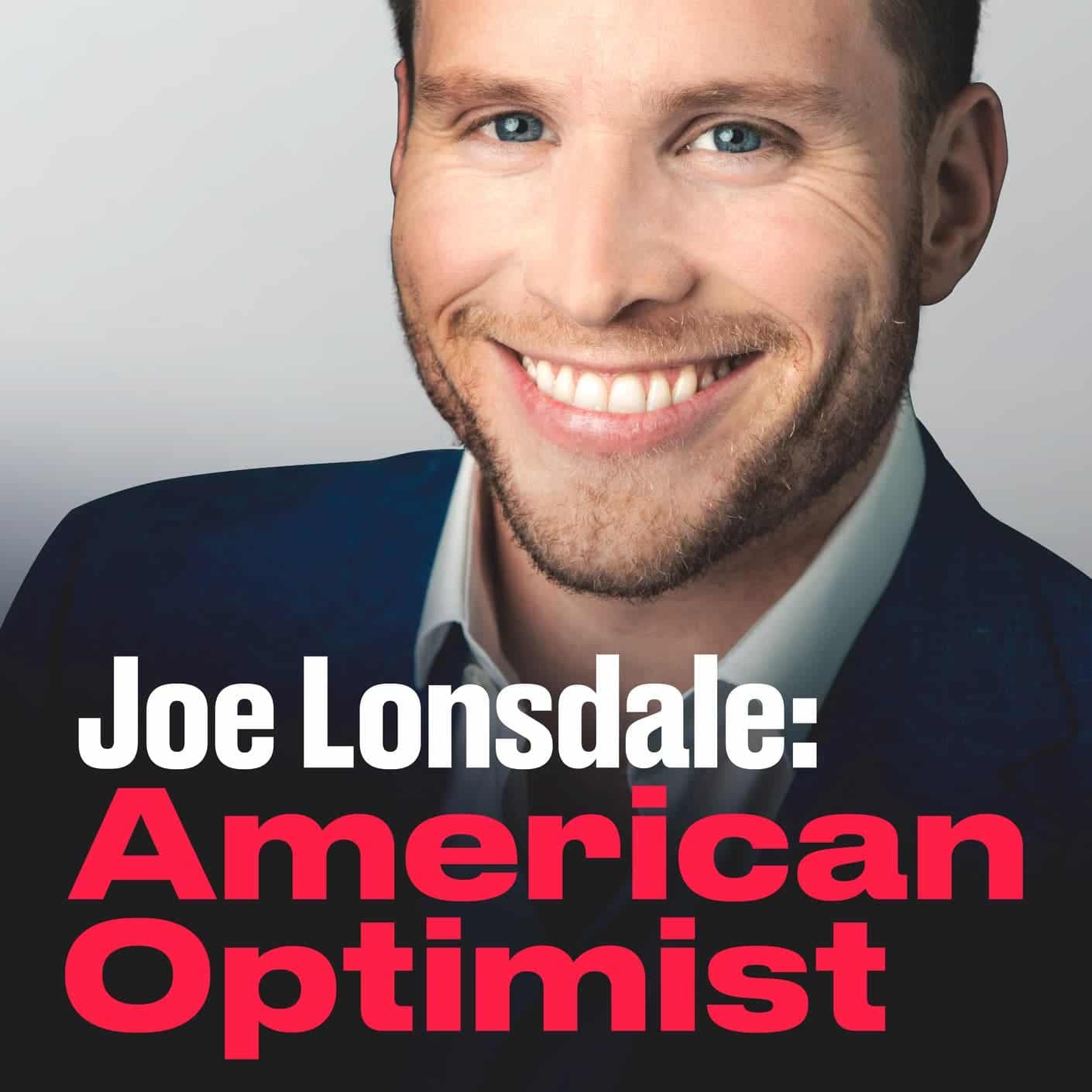
Podcast Summary: Joe Lonsdale: American Optimist - Episode 113
Episode Details
- Title: Why Sam Lessin Believes AI Isn't Disruptive & Venture Capital Is Fundamentally Changing
- Host: Joe Lonsdale
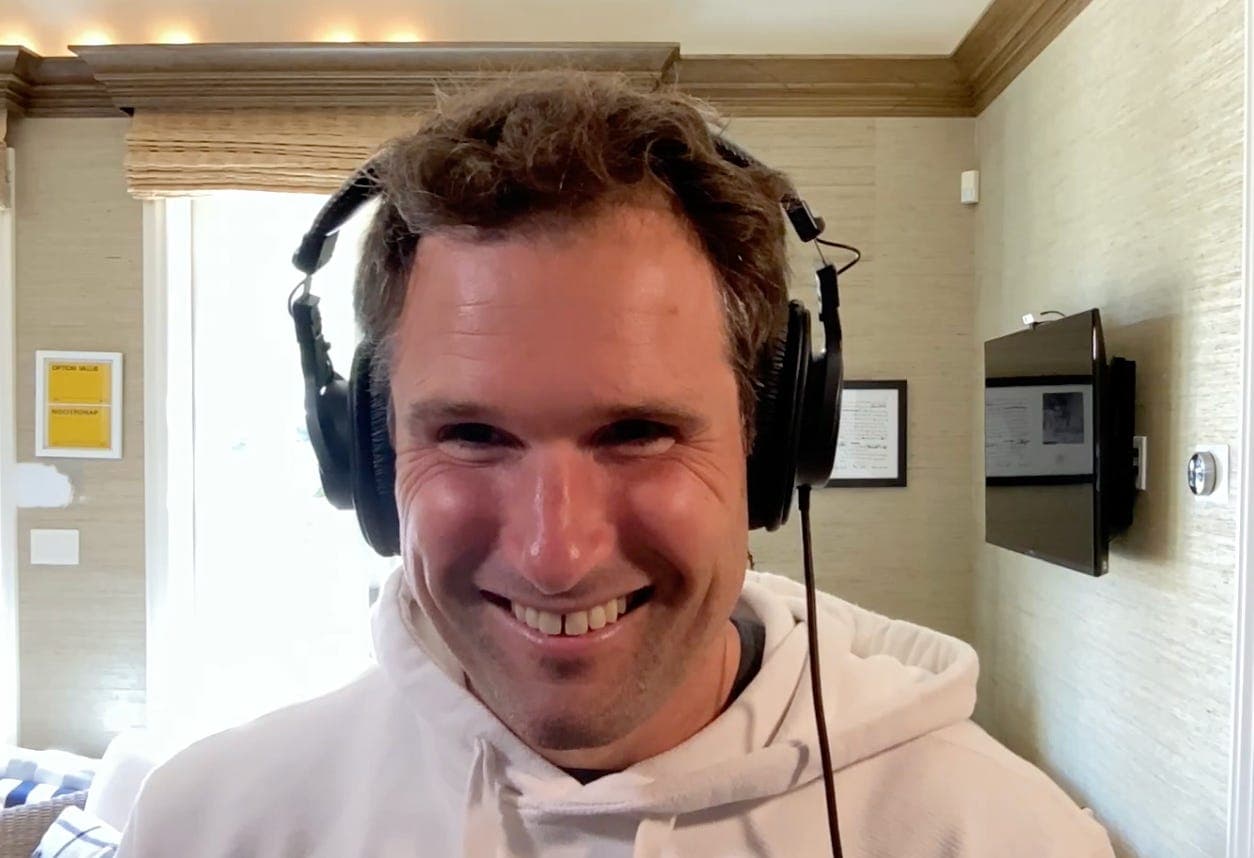
- Guest: Sam Lessin, co-founder and General Partner of Slow Ventures
- Key Themes: Disruption in technology, the evolution of venture capital, the importance of merit in hiring, and potential reforms in higher education.
Key Highlights
- Introduction
- Joe Lonsdale introduces Sam Lessin, an influential figure in Silicon Valley known for his early work at Facebook and investment successes.
- The episode revolves around Lessin's views on AI, venture capital trends, and his recent initiatives regarding merit-based hiring.
- On AI and Disruption
- Lessin asserts that AI is not fundamentally disruptive, comparing it to mobile technology, which merely enhances existing systems rather than revolutionizing them.
- He argues that crypto holds more disruptive potential due to its structural challenges for incumbents.
- Emphasizes that incumbents, especially large companies, will benefit disproportionately from AI advancements.
- The Changing Landscape of Venture Capital
- Lessin outlines how venture capital has evolved from a standardized factory-like model to a more bespoke approach due to changes in market dynamics.
- Highlights the decline of the traditional "factory line" method where startups would progress linearly through funding stages.
- Stresses that public market trends and SPACs have altered how venture funds operate, with a shift towards valuing companies that may never go public.
- Reforming Higher Education
- Discusses his experiences at Harvard and his efforts to reform it, including running for the Board of Overseers.
- Highlights the decline in meritocracy and the need for institutions to prioritize academic excellence.
- Lessin advocates for a focus on merit over identity metrics as a way to revitalize institutions and combat anti-Semitism and other forms of discrimination.
- Meritfirst: A New Initiative
- Introduces Meritfirst, a company aimed at transforming how organizations hire talent by focusing on tested skills rather than traditional credentials.
- Discusses his conviction that hiring should be based on performance tests and assessments that reveal candidates' abilities, regardless of their backgrounds.
- Outlines the potential of AI to streamline the testing and evaluation process, allowing for a fairer assessment of talent.
- Hiring Innovations
- The conversation covers the importance of grit and determination as key traits in successful candidates.
- Lessin suggests using AI to help design better assessments that accurately reflect the requirements of various roles.
- Emphasizes the need for organizations to open their hiring processes to a wider talent pool, allowing opportunities for individuals who may not have traditional qualifications.
- Final Thoughts and Optimism
- Lessin expresses cautious optimism about the future, noting an uptick in genuine innovation and creativity being applied to new technologies.
- Encourages a shift back to prioritizing merit and real engagement with ideas that challenge the status quo.
Key Takeaways
- AI's Role: AI is an enhancement rather than a disruptive force; its real potential lies in augmenting existing technologies.
- VC Evolution: The venture capital landscape is moving towards more personalized investments as traditional models become less effective.
- Focus on Merit: Reforms in educational institutions and hiring practices should prioritize meritocracy to foster a more equitable society.
- Innovative Hiring Practices: Implementing skill-based assessments can lead to better recruitment outcomes and help discover hidden talent.
Additional Notes
- The discussion reflects broader societal themes of innovation, accountability, and the importance of maintaining high standards in both education and business practices.
- The podcast serves as a platform for exploring optimistic narratives in contrast to the negativity prevalent in mainstream media.
For more insights and discussions, visit [American Optimist](https://blog.joelonsdale.com?utm_medium=podcast).
Written by AI. May contain mistakes. Listen to the episode to check what was said.
Transcript
Automatic transcript. May contain errors.0:00So you put a billboard up on the 101 recently outside of San Francisco that says AI is not your moat. What did you mean by this? Silicon Valley loves the story of disruption, right? Because everything is disruption, right? And why do you like disruption? It's because you get to reset the chessboard, you know, turn over the big winners. It sounds like super cool. And so everyone likes to talk about these waves of disruption. And the reality is, is that like, it's a way overused term. And there are innovations that are actually disruptive. Like crypto is fundamentally disruptive structurally to the incumbents because it's a very hard leap for them to make.
0:33I'd actually argue that AI is kind of like mobile. It's not disruptive. It's great tech. To be clear, it's important. But just as the internet, I would say just as like mobile was just more internet, AI is just more technology. It's like more cloud.
0:54My friend Sam Lesson is one of the most influential and interesting writers and thinkers and investors amongst the leaders of Silicon Valley. He's sort of an insider's insider. He was early at Facebook as a key leader during the hyper growth years after being at Harvard with Mark Zuckerberg and others. Sam runs one of the most interesting venture funds, Slow Ventures. He was right at the beginning of Solana, 2000X there, lots of other big wins. He's been working hard to confront Harvard University and has lots of thousands of alumni there helping him confront Harvard, figure out how to fix it.
1:24He's working on all sorts of areas, including how we bring back merit in our culture. And we think taking merit to the extreme is actually a really big advantage for a lot of our top companies. We can bring that to other companies as well. And he and I decided to build something together in the merit area. And we're going to give you a glimpse into that. Welcome to American Optimist. Excited to have today with us my friend Sam Lesson. Sam, thanks for joining. I'm happy to be on American Optimist as an optimistic guy and an American. I love it. Sam, it's great to have you on. Let's start with your background.
1:53How did you make your way from Harvard to Silicon Valley? Tell us about your entrepreneurial journey. What did you do after Harvard? Yeah, so after Harvard, I did the most boring thing you could possibly imagine, which is I moved to New York and I worked for Bain & Company for two years to the minute. And after two years to the minute, I literally faxed in incorporation papers on the Bain faxes on the way out. Went with a friend of mine who I had met at Bain and we started a file sharing company in Brooklyn called Drop.io. What year was that? That was 2007. And the company was basically, if we're being honest, it was kind of a Dropbox also ran.
2:24We kind of raised a bunch of financing in New York, which by the way, this was before YC was big. So it was kind of novel for 23 year olds to be raising venture capital. We were really early adopters of Amazon web services. I was literally as a kid on the customer, the first customer advisory board for AWS, because it was so early that, you know, no one else was using it. And kind of we built that up, ended up selling it to Facebook, where I was an exec for a bunch of years reporting to Mark running a bunch of the product team. You're a VP of Proctorily at Facebook. You created a lot of stuff there during the hyper growth years.
2:56I want to ask you about that, but just to stop for a second, I'm curious, some of us, like some people like Zuck dropped out of college to start something. Some people, I'd say like Peter Thiel and you both got like boring jobs and then like realized that you had to leave and go do something better. Some of us kind of went more straight to the entrepreneurial journey after school. What is it about your personality that caused you to do the two years of boring stuff and then go do something cool? Like what happened there? Joe, the funny thing is those two years cost me dearly because the reality is when I was leaving Harvard, I was actually very close to joining Facebook then, which would have been truly at zero.
3:29I was in Kirkland House when Mark launched it. And I was a huge fan of it. I actually had been pretty close to Six Degrees, which was one of the proto-social networks that actually wrote the friending patents back in the day. So I was around it. I thought it was a huge deal. But honestly, Joe, here's the reality. I was still in the gold star game. I liked being told I was good at things. And I thought that people knew things. And so it was, you know, I kind of graduated Phi Beta Kappa from Harvard. I actually got good grades in college. Then I left and I wanted other people to tell me I was still good at things.
3:59And Bain told me I was good at things. And so it took me an extra two years to figure out the emperor had no clothes. Got it. And that honestly, you could just do stuff. At which point kind of the journey began. This is a really big thing, I think, for a lot of people is the mindset you're in is that you're following this thing where you're getting good grades, you're getting rewards, you're being told you're good. And as opposed to like, you can actually just change the world yourself versus going on their path. Yeah. And look, I was right on the edge of it, right? Actually, in college, I started, you know, actually a localized eBay, even before Facebook, that was Harvard only.
4:30Like you had to register for the fast domain. Like I was always super curious and involved in entrepreneurship. but honestly the reality is i still was like too good of a kid and wanted to like be told i was good for a few extra years it's amazing well these mindsets are tough you know it's interesting these days i think you get a little bit more entrepreneurial energy you might have already these days just gone to facebook based on what you've you know everyone now knows i feel like the immigrant kids suffer this the most though we're like the immigrant kids if their parents are like really bad at this and force them the wrong way yeah but you know the best ones break out of it.
5:00And the reality is, it's like when you're 21 to 23, that two years of Bain seems like a really expensive lesson. And in some ways it was, but the flip side is life is long. You know, I think there's no time like the present and you just kind of do stuff. You've managed to do all right. Tell us about your key lessons learned at Facebook. You were running products there when all sorts of things were happening, when it was becoming a giant company. What takeaways do you have from that time? Yeah. You know, look, I was there for about four years, but it was a pretty key four years in the history of the company.
5:29So it was basically 2010 through the IPO, etc. And when I joined, I initially joined and I got really excited about working on profiles. I built the original Facebook identity team. I really cared about digital identity and the opportunity Facebook had around that. That became building up the first product privacy team. That became a lot of really interesting work we did. Reflecting back on it, it was an amazing time. I got to recruit incredible people. I built incredible teams. It was incredible conversations. There are so many lessons. I think the one that probably was most relevant though, that I think is when I kind of started at Facebook, I'd come from Bain, right?
6:08I'd come from starting my company. And I had this very metrics driven view of the world that like metrics exist and they're good and they're good for optimizing. But if you really want innovation, you have to kind of scope out, right? You have to be able to go beyond the metrics, you have to be able to make leaps, things like that. And I kind of was one of these guys, like I understood metrics. I was actually shocked when I entered Facebook, how little metrics they had coming from being into my own startup. This was, again, a very early different era. Now it's highly metrics. But I had this interesting relationship where I really respected them and thought they mattered.
6:38But I also thought to make innovations, you had to have like leaps, right? And they were in some ways constraining because you're like, well, if you want me to just make number go up, I can make number go up. But is that really the right thing? And I actually, by the end of Facebook, especially as the company started getting really big, started to really understand their power and the freeing power of metrics is what I would say. Because the interesting thing is when you're running a big org, if you can articulate to a person or a team, make this number go up, right? I don't care how you do it.
7:05Just make this number go up, right? And if this number is doing a good job, that actually allows for an incredible amount of creativity in terms of how you do it, right? Whereas I'd argue on the flip side, if you don't give people metrics and everything has to be done by judgment or feel or things like that, that's when teams start getting super constrained. So I think that's like one of the most interesting discussions to have about startups in general. And then in fact, at least certainly scaling startups is how do metrics actually, how do you pick the right metrics? How do you pick metrics that actually are the right ones to optimize and matter?
7:39Because you're going to get whatever you measure, but then how do you think about them as actually ways to free teams and free people to do their best work? It's interesting because I also have this like instinctive fear of over optimizing on the really simple incremental things. If I'm just measuring something near term versus like, okay, it's going to take us six months, but if we get this bolder thing done, then that's going to lead to much better metrics long-term or something like that. Yeah. I mean, like, look, when I was at Bain, one of the things I did was optimize the peanut M &M line in Hackettstown, New Jersey.
8:08Right. So like literally like the peanut M &M line, they had a hot nut problem where like the nuts were all climbing. And I was sitting there being like, metrics are the worst. Like, I understand we got to optimize this problem, but how I was like, why don't we just sell the mega peanut M &Ms? Like, what are we doing here? Were they bigger if they were too hot? Was that what would happen? They would glom together and you'd have these like super M &Ms, right? And they were like, had this loss rate problem. It's the whole thing. It was actually a fun adventure in business history, but you know, you kind of have this like very narrow view of what metrics are and you start fighting them.
8:40You're like, well, we can't look at this stuff. We need to think big. But then you start realizing that in some ways, the beauty of capitalism is the metric is profit. And if you look at how the best for-profits operate versus non-profits with exposure to both, there is incredible beauty in being like, make money. And that's how you do it. It's interchangeable. It's freeing. It allows you to do great stuff. Whereas in non-profits, you have this constant problem where you have like a triple bottom line. You have four goals. They compete with each other. How do you optimize around that? It becomes kind of a management mess, right?
9:14And so really thinking strategically, I think Facebook, the story of you got to measure the right stuff. You're going to get whatever you measure. So you better have the right numbers and have the right instrumentation. But then thinking really strategically about where that's actually quite freeing versus constraining, I think is one of the most interesting problems in business. It's a really good point. It's like nonprofits will always end up pretending something's happening in order to justify themselves because they don't have a real metric. And we just announced the out-of-par recent Series G.
9:42It's up online right now. And I was just going over the CEO goals with him. And it's like things like EBITDA margins and high revenue. And it's actually really freeing relative to trying to measure. And I love the nonprofit work I do, but business is a lot better that way. It's 100 % the case. Yeah, I mean, I think it's one of the things that you look at these over long periods of time, you look at organizational competencies and who wins and how they win. And it really comes down to these little things, right? These little features of a for-profit versus a non-profit and how they compete and then how they're able to enable their talent and kind of how that trickles down the system.
10:15It really matters. A hundred percent. I want to ask you one other Facebook question because you mentioned it and I think it ties to some of your more recent work as well. You said you worked on identity at Facebook. And this is kind of like my friend who worked on anti-fraud in Afghanistan. I'm like, what happened? Did you solve it? Because why is there no identity later for the internet? Look, I always thought, you know, I had a weird level of exposure to a bunch of kind of the early days of social networking for a kid, right? Because I was really interested in it. You know, I knew Andrew Weinrich, who founded Six Degrees, which in a lot of ways was really the first social network with like a friend graph.
10:50And, you know, in the end of the day, I was enthralled by the internet. But the switch from the internet is this anonymous pile of content to, oh my God, this is a trusted platform where you can speak to real people. You know who people are. That was a very emotional, huge shift. I went from the era pre-Facebook and experienced it very much of the internet is a scary place. We don't know who these people are. We don't know what's being said, what's real. They're going to steal your identity, whatever. To, oh my God, we're on Harvard's campus. These are all real names. These are real people. I now have a much richer social experience because this is a trusted closed loop of like, you know, friend to friend trust.
11:29That was a major shift. And when you kind of scope it out to the globe, so many of our problems right now come down to the fact that the Internet was born without an identity layer. Right. Like that is like, you know, what is a Russian bot? What is human? Who's manipulating who? What's real? You know, if you if you only look at the content and not the context. Right. The world's like a crazy place right now. And if we had a super strong context layer, I think we'd have a much better. Now, the question was how to get there, right? There was a reason the internet was born without an identity layer.
11:58It's actually probably why it grew so quickly. An identity layer would have been really hard for it. So the question was how do you layer one on top? I thought at the time that Facebook, you know, this is circa 2009, 2010, really had a shot at being that rich identity layer with kind of a friend-to-friend, peer-to-peer validated, you know, platform. And in a lot of ways, I think it did. I think kind of obviously the world moved on and moved quickly in a direction that we didn't want it to. And that didn't happen. Right. Like that's not the world we live in today. Yeah, we can get into it. I think part of it, honestly, Joe, is like metrics and goals.
12:32Like, you know, the reality is the Internet in general, not just meta properties, not just Facebook, but the Internet in general. It's an incredibly good machine for engagement and attention. Right. It's incredibly entertaining. And why? It's incredibly easy to measure. You can measure time spent because you can measure time spent and engagement and optimize for it. You can run that machine and get so good at engagement entertainment. Now, information, truth, reality, these are much harder to instrument and they're much harder to optimize for, much harder to monetize. And therefore, candidly, the Internet has gone the way you'd expect it to go.
13:06Right. Which is it's tended towards the things where you can turn that crank efficiently from a capitalism perspective. I would like someone to use crypto or something else to solve this. sam i'd be very useful i mean i i've been early and and very heavily involved in the crypto world i couldn't agree more that i want it solved but it will only get solved when there's like a clear crank to turn right with metrics and an out of the crank to turn that's for it's very funny for me on something like x it's like i'll comment on something they'll be pro-american but they know i'm a jew and there's probably some guy named faisal in pakistan who has like 10 bot accounts that are like shouting christ is king at me to try to get the christians to turn against the jews in america is this the whole thing is just like a mess online right now yeah and you just i think that's the thing people honestly is you have to get really comfortable with the internet because i also like to be somewhat of an internet troll and post provocative things it's like maybe it's you who's posting those things on my account like you're dirty to you lawnsdale i'm fine by the way but the um the um is you just have to accept what it is and understand which is just because someone wrote something on the internet doesn't make it real in fact your default assumption in 2025 should be that it is not real, right?
14:13And like, in less proven otherwise. That's why, for instance, you know, you and I are a lot of group chats together, right? Things like that, that are private. It's like, why? It's like, well, because I need things I can trust are real with people that have real identity and the open unwashed internet, you just have to understand what it is, right? And then once you understand what it is, all of a sudden people get so upset about, you know, I posted blah, blah, and someone's yelling at me, like, that is probably a bot. And And if it's not a bot, it's like a proxy bot because it's like a human somewhere who's being paid some ridiculous thing to say crazy things.
14:43You just have to accept that as part of the unfortunate reality of the web. Or it's Nate in our chat if I post something too far right. But that's totally fair. Let's talk about your fund. You co-founded Slow Ventures. It's one of the top angel funds in Silicon Valley. Tell us about your focus and some of your core themes. What are you focused on? Yeah, it's interesting, Joe. So look, all throughout even my early years when I was at Bain and then after, I was pretty involved as an angel investor personally. So I was the first investor in Venmo. I helped seed MakerBot. We built a whole New York ecosystem when that was a backwater of early stage, just getting cool people together and finding cool ideas.
15:18When I left Facebook, Kevin Collar and I, along with Dave Moore, who's a good friend to do a podcast with him, we're like, let's just formalize a real seed fund. And so, you know, we've raised now, we're on our fifth fund, kind of towards the end of our fifth, about to start our sixth fund of our core fund. We have an opportunity fund. We've kind of built this crazy creator fund. But our whole thing has just been like, in the end of the day, you know, where can we put money that's non-obvious, right? Where there's real leverage, where we're betting on people and ideas that I'd call out of the money.
15:48Like, I think seed investing is basically buying out of the money call options, right? And so in the end of the day, and like the good news about that is that when it works, it really works. Like, you know, I was the, you know, I was like, I think the third investor ever and like really did help seed Solana from zero. Right. And that's like an example of like... I was an investor in that fund to return a multiple of the fund. It was like a thousand X or something for the position. It was almost a 2000 X if you held it a lot more, right? Because we did distribute it. But the upshot is on a deal like that.
16:15It's like, why was that? Why did I get value from that? Why did I enjoy that? And why do we get it right? It's like, well, part of it's know thyself. And I got to say what I love when everyone thinks I'm wrong and I'm right. It's like emotionally very valuable to me. And so it's a good match with seed investing because it means like I want to pay a low price. I want to back the crazy ideas because partially because it's great to make money. It's a great scorekeeping. It's a great metric, right? Is making money. Like if you're not making money, it's like it's part of the game. That's the core metric of the game.
16:44But the way you do it, right? And how you do it, And for me, it's not about being the thousandth person to plow money into X. It's about finding things people think are wrong, but happen to be right and being there when it matters. So you put a billboard up on the 101 recently outside of San Francisco that says AI is not your moat. What did you mean by this? Yeah, look, I mean, I think for a long time in Silicon Valley, Silicon Valley loves the story of disruption, right? Just everything is disruption, right? And why do you like disruption? It's because you get to reset the chessboard, turn over the big winners.
17:15It sounds like super cool. And so everyone likes to talk about these waves of disruption. We went from packaged software to the internet, internet to mobile, mobile. And the reality is, is that it's a way overused term. And there are innovations that are actually disruptive. Crypto is fundamentally disruptive structurally to the incumbents because it's a very hard leap for them to make. The internet was fundamentally disruptive to packaged software because the whole distribution model was so different. And the way you do business was so different that it actually changed everything. You know, I'd actually argue that AI is kind of like mobile.
17:49It's not disruptive. It's great tech. To be clear, it's important. But just as the internet, I'd say that just as like mobile was just more internet and pervasive internet, AI is just like more technology. It's like more cloud. It's more the same. What that means is that by default, the incumbents broadly should win. there'll always be an exception to it, right? Like, you know, it's not a perfect model, right? To think about, there'll always be some exception or some way to make money. But when I look at AI, look, I'm sitting here scripting things that makes our fund more efficient. Like I use it all the time.
18:20I'm super like, there's incredible technical leverage in it, but I just don't think it's that disruptive, right? And so for me, you know, if you're a money plower, if you're looking to put tons of money in and make a two to three X, sure, there are opportunities in AI, right? And like, there are things to be done. I think the best thing you can do is hold the biggest companies in the world and call it a day. But as someone who wants to bet out of the money, you can't bet out of the money on AI, right? The AI is the money. This is your derogatory term for people who have much larger funds as money plowers.
18:50I mean, I'm hearing this. I have a few for it. But yeah, I mean, they're asset managers, they're money plowers. It's fine. You're the creative guy on the side who's taking the giant bets and they're just like pushing giant amounts of money. The money plowers, it's a better business model, right? You will make more money as a money plower than you will as... But I'm an artist, Joe. I see. I see. You are an artist, Sam. So, speaking of that, you recently posted your state of the VC in 2025. So, you're kind of mapping out Sam's view of the world of VC and where it's changing. Where's VC headed? Tell us a little bit about this.
19:28Yeah, look, I think the reality is that the big model I've had for a few years is that for about a decade, there was almost this factory line of venture capital, right? And so if you think about the factory line, what it would be, it would be like people like me, you'd go find some entrepreneur, some crazy idea, you'd back it. You knew that if you hit a million dollars in ARR with certain properties, you'd hand it to the Series A people who would hand it to the Series B people all the way down the factory line, you pop out a public company at the end, right? It's a great model because, again, standardization, metrics, standard markets, very scalable.
20:00And so it's worked really well. And people got really excited about it. And venture got way bigger than it was as a result because the factory was working. I'd actually argue in the last bunch of years, the factory shut down. Because what happened was in the public markets, everyone came to realize that you'd rather just put more money into Meta than back the$5 billion baby public company that maybe grows up and maybe doesn't. It wasn't worth the diligence. especially once you could have multi-trillion dollar big companies, right? There used to be like, everyone thought you couldn't have a company that was like over a hundred billion dollars.
20:31So you had to find little companies, the public market. Now you don't, they can be as big as you want. So like, as a result, that changed the public market demand. I'd argue SPACs also kind of screwed things up because basically the private markets handed the public markets all their trash, right? And the public markets were like, screw you guys, you give us Stripe. Why are you giving us all these terrible companies, right? And so like the public markets lost faith in the private markets. So what I think has happened now is that basically, it isn't that there is innovation, it isn't that there's stuff going on, but because the factory line shut down, the whole thing has become way more bespoke, right?
21:03And what I mean by that is, there is a public market, some companies can get there. There is increasingly a very robust private market of companies that may never go public, right? But that private equity firms and VCs will trade amongst themselves and they're valuable, they're just valuable in a different way in a different market. A lot of us are afraid of being a public company and being harassed and having to deal with it. And it's like something I think about a lot because on one sense, you kind of owe it ethically at some point to give people liquidity. But if you can give them lots of liquidity otherwise, why be like a target in public and waste all your time dealing with that?
Read the full transcript
21:38And this has been a narrative since Sarbanes-Oxley, which is the barriers of being public have gotten so high that people argue it's not that bad or it is that bad or whatever. It's a whole set of arguments, but there's just clearly going to be an entire separate private market ecosystem that's quite robust, that has nothing to do with the public market with different financial sponsors. That's like a separate market. Then there's seed and like early stage stuff where, again, what you're seeing is the seed funds might value things relative to each other in interesting ways, but there is no magic million dollar in ARR number anymore.
22:09I have things that are like two or three million ARR that are not hard AI problems. So they're like having trouble with their A's right now, which never happened a few years ago. And it's like, it's just the markets have gotten very bespoke in a lot of ways. That doesn't mean that companies won't be created. It doesn't mean there won't be value created. But it does mean that you have to be a little less brain dead about how you think about venture capital, what you're investing in, the narratives that matter. So the 2025 deck is about kind of that story of disaggregating markets. We're going from a globalized single market into regionalized, fractionalized communities and cults all over the place.
22:42It's not just global trade. Everything is tending that way and there are reasons for it. But that's what we're seeing in capital, right? You serve a set of LPs. Some of those LPs, they have different interests. Some LPs need to deploy gajillions of dollars, right? I'm a terrible capital allocator. I can't take that amount of money, right? And they don't care if it's not super high return because they want the volatility washing and they're 3X on paper, right? Because they're trying to get promoted internally, whatever it is. You just have to really understand the interests of the actual LPs and kind of the companies you're building.
23:14That's well said. We generally agree with you, by the way, that AI does kind of probably help existing dominant SaaS and dominant other companies. Although I am pretty bullish on the disruption in the giant parts of the services industry. So there's lots of old services companies. I do think you can build competitors too, by the way. Yeah, I agree with that. I think the question of like those service businesses, to what degree they are venture backable or what is like an interesting question. They're also just much more complicated, Joe. I mean, I think this is something we face. you know we've done we did years ago when it wasn't cool a bunch of like small business platform stuff so i see it at a company called team shares years ago when no one else would give them money which i love because it means it was cheap you know i like to make money now it's like too hot everyone's rolling up pool cleaners so it's like hard to invest in but like we were doing that when that was was harder i think there is leverage in these things but but the problem with a lot of them is they're a lot harder to diligence right and they're a lot harder to get right because they're just more complicated right if you're selling it's the operating side You have to actually have the tech and the operations and operations are something to Silicon Valley historically.
24:14Like when I do advanced manufacturing now, or when I work in some of these other areas, is it operations and stuff? It's fair. You got to get that right. A hundred. I mean, there's an argument that what we're, what Silicon Valley has always been good at is like, you get one thing so right, it swamps everything else and growth forgives all sins. And I just think that the reality is business is getting harder. Business is getting smarter, right? And as a result, it's not getting one thing right. It's multiple and it's way harder. I always say no fucking bank shots. Like it's too hard to do a thing to do a thing.
24:43Right. In most cases, I agree. You know, I like it when it's harder when the test is hard. It means I can beat everyone by a lot more with the curve, you know? So yeah, like I like it when the test is easy. I can just go to the corner where no one else is and be right. I want to speaking of tests this is a good transition point I want to talk a little bit about Harvard your alma mater um it is in the news a lot right now uh and you I think you spent a lot of time working to help fix it you campaigned for the board of overseers I think you were too disruptive they didn't want you on it I guess they want to keep doing things their own way uh you know I think it's in violation of lots of civil rights laws and did all sorts of bad things but I also understand there's different points of you on how to fix it like what can be done What's going on?
25:22Yeah. So look, I always say that my backstory on this is simple, which is I loved Harvard. I thought I had an incredible experience there. I met my wife there. I worked with most of my friends from Harvard. And I thought it was a great institution when I was there. For many years, I've been the Harvard apologist in my friend group. So in those private group threads and everyone's freaking out about Harvard doing X or Harvard doing Y, I'm like, guys, look, it's complicated. They're not perfect, but it's still a fundamentally great institution. Then 10-7 happened. And I said, oh my God, I might be the one that's wrong here, right?
25:54It actually might be way worse than I thought. And I hate being wrong, right? And so the question was, what do you do about it? And again, how do you kind of... Everyone's saying we're going to lean out. Some of the stuff you're working on, like your university, I think is great. I've given money to it. I'll continue to. I think it's a great effort to push on. But I also kind of from a contrarian perspective, it's worth seeing what you'd have to do. Everyone thinks this is unfixable, but what if it's fixable, right? And that's kind of the contrarian bet. And so how do you operationalize that? I ran for overseers, which is this kind of board that's...
26:26It's not the most senior board, but it's one of the two senior boards and the one you can kind of run for in some sort of a process. And I got more... Bill Ackman had some people running. I got more votes than him. I got incredibly close to getting it done, but didn't get it done. And then what I did is I said, let's transition that organization. It's something called 1636, which is I said, look, think about growth and engagement in 2025. There's this thing called the HAA, the Harvard Alumni Association. I'm like, I can outgrow them. I can be bigger than HAA, right? I don't need... Because they're sending paper magazines.
26:57Like, we're going to do a great weekly newsletter. We're going to keep alums informed. We're going to build power through that. And so fast forward a year, working with Allison Wu, who now is the COO of that organization, which is a 501c3, we've built for sure the fastest growing alumni community. I think it rivals HAA already in terms of engagement. 20 ,000 people read our newsletter every week. And through that, we've built basically most of the members of the corporation, most of the administrators read our newsletter. We've built a fair amount of influence. And the way we've done that is just by being true to our principles and honest, which is our principles are Harvard should return to its roots as prioritizing academic excellence in Veritas.
27:38None of this other stuff like that has to be... You have to have that single metric true north that you can be held accountable for because this double, triple bottom line stuff doesn't work, right? And then things like free speech, their inputs to that end, like free speech is not a right on college campus in and of itself. It's a right to the extent that it drives academic excellence from in the academic concept. Same with student safety. Like if students aren't safe on campus, they can't participate. If they can't participate, how can they possibly drive academic excellence? So we kind of put everything in that framing along with governance reform.
28:08And it's been really impactful. I mean, I think, you know, a lot of stuff is going on at Harvard. It's complicated. It's also there's a lot of unintended consequences, which is kind of a wild thing to be playing out. But I will say, Joe, I'm actually, despite all the FUD, reasonably optimistic that Harvard is moving in the right direction at this moment. But it's complicated. We could do a few hour podcast just on that. A few more on this really quick. One, it used to be for a long time, based on merit, over 20 % Jewish. it's very clear that along with this other kind of anti-Semitic stuff that was like not okay for the people running it.
28:42And they, they've pushed that down to, I think under 5 % now, like, like, is that going to keep going? Are they going to go back to merit and just see what happens? Like, like, it just seems bad, right? Here's what I'd say. The merit, this is the thing I think you and I probably most vehemently agree upon, which is we have to optimize for merit, right? That is it, right? And like, we can talk about what kind of where you take that and where you go. And that is the only possible true North. Now the complicated places come when people talk about anti-Semitism at Harvard, it gets really complicated really fast.
29:10So I'll give you just some data points. One is, yes, the Jewish population has declined at Harvard a lot. And people question why. One answer, which is true, it's actually not the Jewish population, it's the white population, right? So is it really anti-Semitism? Or is it actually the Jews are just a scaler on effectively the white population has come down? There's another thing in play is everyone looks at the numbers say, well, guess what? It's definitely anti-Semitism. Because how could it possibly not be from a merit perspective? Well, here's the thing. There's a strong argument. I say this as a proud Jewish person.
29:42Here's the thing. Jews in America have gotten pretty successful. We're now a few generations in. In a lot of ways, the Asians are the new Jews. That could be true, that the Jews are getting out-competed. Well, that's the other problem is that they're discriminating against white people and Asians. I mean, I started with the Jews, but it's all bad. It's all bad discrimination. It's all bad. So, long part of the way, there is a major anti-Semitism problem at Harvard. There's no question. In fact, there was just a major report that came out that no human is going to read because it's 300 pages. Allison read it.
30:08We've done a lot of good reviews in 1636 of what's in it and it's bad, right? So there are problems to solve without a doubt. But I also think you can't just look at the decline in Jews at Harvard in a vacuum and just immediately claim anti-Semitism, right? Because it is more complicated. It's definitely more complicated. I mean, I totally agree with that. I'm against what the Trump administration just banned this use of like statistics for racism. I totally agree with that. I'm just like, it does seem like there's lots of points. There's just dangerous. And like the number one thing is, I think in the end of the day, if you, Harvard does need a return to a place as do all these elite institutions where they say, look, our goal is truth.
30:44Our thing is merit. Like if you got back there, I think it's really easy for universities to justify their existence, to justify their tax status, to justify their value to society for sure. But I do think the problem is once they weighed out of that into a lot of other issues, we can get into why that happened and how it's very complicated. It's just a fraught relationship. And I don't think it's good for anyone. I want to pivot to merit, but I have one other question on universities because this is something I'm obsessed with right now. And I want you to help thinking through this in front of everyone.
31:12So basically, I'm I'm looking at all these universities, even in red states right now. And what happened the last 50 years is there's this this like some call it the march through the institutions. But whatever you want to call it, like a lot of departments have been conquered by very left points of view. Right. And you've had like you have like entire women's studies departments that are just all hard left. and they're anti-US, anti-capitalism, pro-socialism. You have sociology and history departments that used to be more about statistics and science and a little bit at least. And they're now like, you can't get hired as a story in any of the top 100 universities anymore if you're not kind of on one side of things.
31:49And you know what? It's free speech for private universities to do this. And there's a way to fix it at Harvard maybe, but it's hard. But at a public university funded by taxpayer dollars, my contention is there's nothing in the Texas Constitution, for example, that should require Texas to be funding these like completely captured departments. We should actually find a way to measure and defund them if they're this insane or force some kind of diversity. I mean, what's what do you think about this? It's like the principle is very hard because I do believe in free speech, but I also don't believe in just funding nonsense.
32:19Like, do you have an opinion on how this can be done? So I know less about the public side and a lot more about the private side. Right. And kind of have done a lot more thing. But I think you have to think about first why this happened. happened right like and and you just like scope way out like how did this happen like how did we end up with this and look i think part of it joe that's really important to understand is that the private sector has just gotten way better at employing intellectually minded people right it's just like the biggest scope out problem so like if you think about like my my grandparents are academics right and if you think about back to their generation you're like i'm really intellectual i care about these issues like what's a good place for me to work right and And it used to be like, well, universities are amazing.
33:00I can have tenure. I can pursue my research, et cetera. There is no Google, right? There is no place where I can go as an economist and do really interesting work and have freedom and a great lifestyle. The private sector has gotten so much better at employing people that are intellectually minded and provide such better jobs on a relative basis that really, as someone pointed out to me, it's like, if you believe in capitalism at all, why would you go work at the sociology department of whatever? There's like a thousand better places. So what you end up with is this like screening of who even wants these jobs.
33:28This is Neil Ferguson's answer is they're a lot dumber than they used to be, which is kind of sad. Well, it's just like there's just like a screening to this thing. And I think that is a problem. You know, what do you do about it? It's like, look, I agree. I mean, I don't see any reason that taxpayers need to be funding anything that's ideological or maybe they shouldn't be funding schools at all. Like, I think there's a strong argument. Everyone's talking about the private universities. Like, there's an argument that's like it was a mistake for them to ever let the government fund them at all.
33:53Like, they should just be independent. so they can be independent, right? And so I believe that. But I guess that's a long-winded way of going back to your actual question, which is I don't know enough about the bounds on the public stuff, but I would say, yeah, like the government should be funding things that matter to the government and the people broadly. They shouldn't be funding special interests. All right, well, we're gonna try to fix that. And we're also gonna try to fix this merit idea in general in society. It feels like things did get to be too extreme where we're focused on everything but merit.
34:19And it feels like the vibe is like shifted back to this. And like you said, private sector already kind of has a pretty good like sense of these things but i feel like it can go even more in that direction i think the top companies do the top companies are really focused on that so you and i uh helped create this company merit first tell me about this what how this come about for you yeah so this is like one of those things i'm a big believer in doing things you know and you find out right and so one of the things i was thinking a lot about at harvard uh in the context of working on this is like man if harvard had an exit exam right this would be a lot easier, right?
34:50If you're just like, look, you can do whatever you want. I can't be. You can do whatever you want. There's an exit exam. You have to pass it. You have to do a great job on it. Like what would that look like? And then you start thinking about my experiences because these experiences compound is for years, I was kind of running a lot of PM recruiting at Facebook and all the PM onboarding. I was like, how do we hire these PMs? Like we were hiring all these PMs from Goldman, from Morgan, from all these places. And you realize because when you touch it firsthand, how incredibly inefficient and imprecise a lot of the interviewing is that gets done, right?
35:18You're kind of looking from... You're saying, hey, who worked at Goldman and Morgan and Bain and McKinsey and Google? It's like not the best people. It's the people who happen to be credentialed, right? In a lot of ways. But that's clearly not the way to do it today. So you start mucking around with that. And I started messing around with this. This should just all be test-based, right? It's clear that you should just basically for every job or everything you're doing, just have a test. Whoever does the best, those are the people that you should hire, right? I don't care where they come from. I don't care what they look like.
35:46I care how they do on the thing that's necessary. And so you start playing with these ideas. And for me, at least, that's where I kind of came to merit first. I said, look, from a practical perspective, why don't we just run tests for all these things? Why doesn't that happen? And like, there's actually good reasons. One is, if you ask most hiring managers, write a test that actually represents what you need, they don't know how to do that, right? That's really hard, right? Two, if you said, hey, we're going to run a test, and anyone can apply, I don't care what your resume says at all. You're going to get a million applications.
36:20How do you filter through those? And then you have this big problem of cheating, which is like, if you want to administer a test, right now, it basically has to be some basic multiple choice test. Because how on earth are you going to grade that and prevent cheating and da-da-da-da-da? So you start looking at all those problems and say, hey, there's actually a lot of new leverage on this with AI. And again, this is where I think you can be super long the changes in the world in technology. Well, not everything is an opportunity. But I think in this case, we have this incredible opportunity, which is, hey, wait a minute, you know what AI is actually quite good at?
36:50If you told me some of the questions or even gave me some of the best examples of people who are great at something, generating good, meaningful tests becomes a lot easier. It's like, oh, I need to grade 10 ,000 tests. I literally don't have the manpower to do it. Ah, but I can do first pass with AI, right? Or even the anti-cheating stuff. It's a little bit of a war of attrition. You know, everyone's building these tools to cheat on tests. But you can say, hey, all of a sudden, let's not make them written. and let's make them stand and deliver. Let's make them video based. Let's add the right tools to check.
37:18So we kind of met, we started messing with all that. And I realized this is doable. And I think that this is a really important place where like the world can change for the better. And so, you know, in the process, like we started doing this for associates at Slow. How'd that process work? You actually hired a new associate. What kind of tests did you create? Yeah, we basically, I did. I mean, you got to dog food your own stuff to learn, right? So I worked with some friends. We built a V1, literally end to end. We built a test around it. instead of just hiring, calling my friends at Goldman and saying, who are the four kids that are interested in venture capital, which is what we've done historically, I posted it on the internet.
37:52We got like 1500 people to fill out this test. And then we talked to the best people and hired someone. And it was from a place we wouldn't have hired from historically. And so I think that's like, you're like, this does work. And this does feel like the way the world should go and will go. But in the end of the day, you still need to build this stuff. Right. That's like kind of, I think where the company comes from and what you and I are teaming up on. This feels like a really good way to find a lot more people is like have a contest for a really cool job. And then somebody wins. But then the next 10 top are also really impressive.
38:22And maybe there's other things you find for them, you know, a thousand percent. I think this is like if you think about the future of education, even like I'm not as cynical as some. They're like universities are irrelevant. No one's going to college. I think that's just not true. but I will say this if you need to learn a bunch of stuff you can learn a lot on YouTube you can learn a lot with chat GPT like you could basically get an incredible education if you were motivated to yeah for like what's the line from Goodwill hunting for like ten dollars in late fees at the local library that's actually realistic now right and so I think it's just a massive missed opportunity for all of society and for the best companies and for the best opportunities to not say, hey, the funnel is open, right?
39:03Like that doesn't mean it's the only way you hire short term. It might be that you're going to do your normal thing. But then you say, hey, I'm going to go do a second pass on all my candidates, right? There might be a lot of people that come into your funnel. And you're like, look, I'm only going to... Normally, I would review these 20 operative people. I'm still going to review them. But everyone else, instead of saying, go no, you say, hey, you didn't pass our first filter. But if you want, here's an amazing test. And we're going to look at the people seriously who do a great job on it. Why would you not do that this is my controversial point of view is that it used to be like 30 years ago is oh the sat it's kind of unfair if you're poor because you can't get as good of like a study tutor but like now there's things to study online that are free that i think it's i think there's almost no excuse not just to have agency now i guess some people are in some areas where they don't have access to computers or they're not don't have access to food or whatever fine like there's probably some extreme poverty that still blocks you but in america today i think it's more about agency and culture and then intelligence.
39:58Now, I want to ask about these tests. What should the best talent assessments measure? Because obviously, IQ is a very big part of this, but then there's other things as well. How do you think about that? What are the vectors you're measuring? It's a good question, Joe. And I think it's different for every role and opportunity. Not all things are the same. So I think it's a little bit hard to think about this fully in the abstract versus saying... I mean, in an ideal world, you think about it, in an ideal world, which I don't think is that far off, you as a hiring manager, someone who has an opportunity, you might not even be able to articulate what you should be testing for.
40:30Instead, you might say, hey, who are the 10 best people at my company? Let's just run AI with them and emergently figure out what the right questions are to ask. Because you might actually not know or even need to know. So I think there's a whole bunch of stuff that's going on that is the future of this stuff. But I think the reality is that for most normal roles or most people you want to work with, it's the same stuff that matters, right? Yeah, in most jobs, not all, but a lot of jobs, like, you know, how your IQ matters to a point. If it doesn't, then maybe not. But in a lot of jobs, it does, especially in an AI.
41:05Like grit, I've always cared most about gritty people, right? That are just going to run through walls because in my experience, even very intellectual jobs, and there's some balance to this, nothing's that hard, right? There's a spectrum, but like, Like, you know, maybe you can set aside some sort of super high-end physics or super high-end math. Like 95 % of jobs are not that hard. And the most committed win, right? And so how do you design tests, right? And how do you design things that, you know, figure out who's gritty? By the way, you mentioned before, you can just kind of get a study guide in the SAT.
41:40Let's pretend the SAT was really just a grit test, right? You're like, it's just anyone can do it. It's just like you have to commit hours of work to demonstrate that you did the hours of work. Like that alone is like an interesting thing to understand, right? From like a who do you want to work with, right? Because who wants it the most really matters, right? Yeah. So I don't know. I don't think there's like a single right answer. I think it's contextual. But I think knowing what you actually need specifically, and then, you know, be realizing you can now look at not just the people who happen to maybe be credentialed enough that they're worth your time and attention.
42:18It's very rough. You're just like, look, just look at everyone, right? Look at anyone who wants and like use the right criteria and find them. It's interesting. And how do you think how this changes how people hire and recruit from like a personal standpoint? Because you kind of get a bunch of people hopefully applying interesting things or passing people over from some other tests. And so, you know, they're qualified. You still have to kind of choose for culture fit or you think test measures that too? or how do you think about that? So I think it's just a moving line, right? In the end of the day, like you need for any job, a person who's going to work best with you or in the context of the job, right?
42:51And that is a personal thing. I'm not, I don't believe that we're going to cut to some magic machine that like just completely hires the right person and checks for culture and whatever. Maybe go find you a spouse while they're at it, you know, or something. It's interesting. There's some highly abstract thing you could think of that would get you there. but I just don't, I don't think that's kind of what we're at least optimizing for now. I think what we're optimizing for now is like, look, you're going to spend 20 hours interviewing someone for a role, 10 hours interviewing people for roles, like whatever the budget you have of time and attention to get the right person.
43:25Use it as best as possible, which means filter to the right people, right, that are going to like really be the right matches for the role. And then, yeah, like in the end of the day, there's always going to be some judgment involved and, you know, things like that. Awesome. Well, Sam, to wrap it up, I want to ask you, you interact with founders on a daily basis. What innovations excite you the most right now? Like what makes you most optimistic about the future? You know, it's funny. I've been thinking a lot about this because I wrote my 2025 deck and I really try to be thematic, like, you know, and kind of pattern match right back and forth.
43:54And, you know, I'd say what makes me pessimistic, I'll start with that, Joe, is there are AI is so compelling to so many people that you're seeing a lot of people who are kind of running like a cookie cutter playbook of plus AI on blah, blah. And they're like, it's this thing plus AI. And you're like, it's just incredibly boring. And like, I also think it's like, it's kind of like, you know, people like when if you have someone who theoretically could have written their pitch deck using chat GPT, it's like, forget about it, right? Because it's just like, there's this, it's just, it's so boring.
44:26But I'll tell you what is exciting. And what is interesting to me on the flip side is there is just new leverage in the universe with these tools, right? That you haven't seen before. And the level of creativity that some people are bringing to them, where they really are coming in and whispering a new secret of the universe or a new what if you haven't heard before, that's kind of mind blowing. It's a low end thing. It doesn't happen that often. The thing about being a seed investor is you have to listen to 100 terrible pitches in order to get the one gem, right? You have to be a shit shoveler in a way that later stage investors don't because they kind of have that pre-screening to some degree of like, well, you kind of made it this far, right?
45:04But I will say that the like, oh my God, you just whispered me a secret of the universe, right? Or like a mind blowing idea or a crazy idea. Like there is just new excitement and new ideas like that cropping up at a faster rate than it was two years ago when people kind of didn't have great ideas is my sense. I agree. We're seeing a lot of those too. Sam, I really appreciate you joining us. And I think we'll post a link from here at first. People want to check it out as well. I think. Yeah, no, we're excited about it. And Joe, it's good to be working with you on something in that context. All right.
45:31Thanks, man. Make it happen. Take care. Talk to you, dude. Bye.
From the publisher
After leading the product team at Facebook, Sam Lessin became one of the top seed investors in Silicon Valley, known for cutting the first check into Venmo and seeding Solana (a 2,000X return!) Why does he think crypto is more disruptive than AI? Why does he believe the VC model is fundamentally shifting? And why are we, together, building a new company focused on taking merit to the extreme in corporate America?
We discuss this and more with Sam, co-founder and General Partner of Slow Ventures, a leading early stage venture fund. Prior, he was the VP of Product at Facebook during its hyper growth years. Sam is also heavily involved in fixing Harvard, his alma mater, including a recent campaign for the Board of Overseers and building a new alumni network to help return the university to veritas and its founding principles.
Sam first met Mark Zuckerberg at Harvard and watched Facebook being built firsthand. But, as he explains, fell prey to conventional status games and spent two years at Bain & Company, before breaking out and going on to play a critical role at Facebook. He then launched Slow Ventures to take big bets on unconventional ideas. Learn why he believes AI is overhyped; where venture capital is headed next; and what we're building at Meritfirst to unlock hidden talent and overhaul how companies source and hire the best and brightest.
00:00 Episode intro
01:50 Harvard & the wrong career choices
05:13 Lessons learned at Facebook
10:15 The challenges of an open internet
14:48 Venmo, Solana & Sam's investment thesis
16:55 Sam's contrarian take on AI
19:15 How venture capital is changing
24:56 How to fix Harvard
34:13 Building Meritfirst together
This is a public episode. If you would like to discuss this with other subscribers or get access to bonus episodes, visit blog.joelonsdale.com