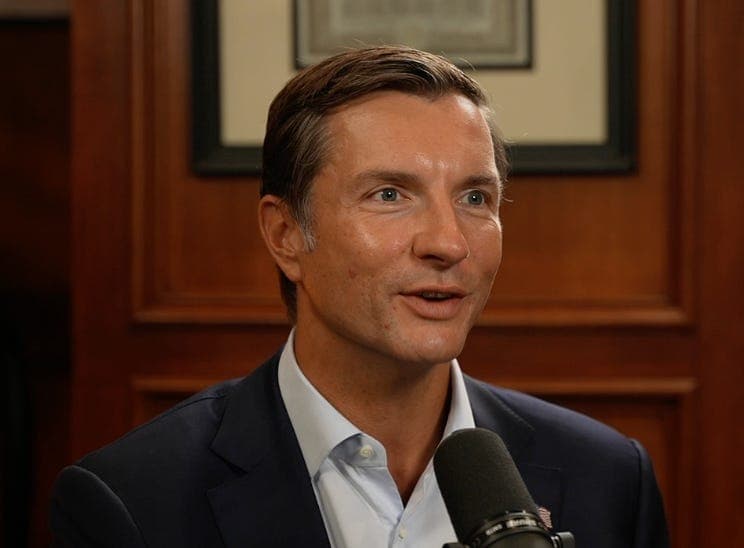
In short
Podcast Notes: Joe Lonsdale: American Optimist - Episode 114: Flying Cars Are About to Change the World — Joby CEO JoeBen Bevirt
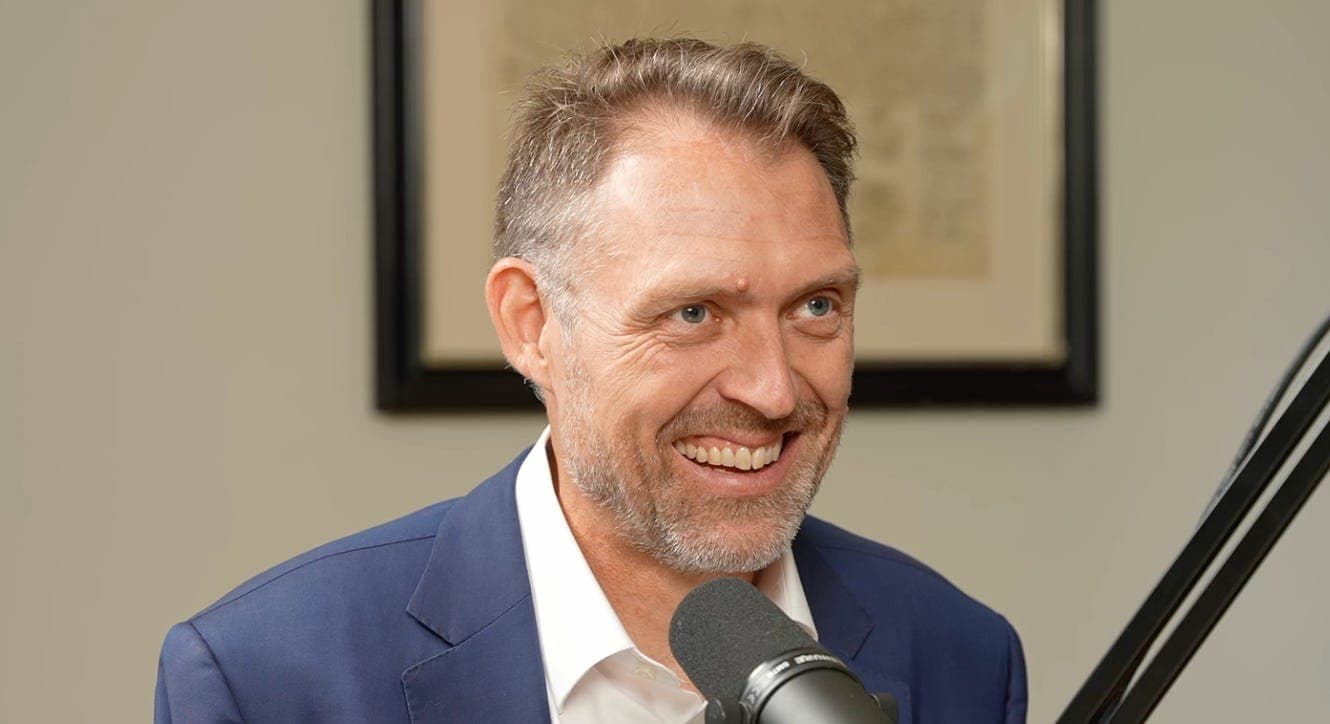
Episode Overview In this episode, Joe Lonsdale interviews JoeBen Bevirt, Co-Founder and CEO of Joby Aviation, a pioneering company in the electric vertical take-off and landing (eVTOL) aircraft space. The discussion revolves around the upcoming commercial rollout of flying cars, their potential transformative impact on urban transport, and the technological and regulatory challenges faced by the aviation industry.
---
Key Points
Introduction to Joby Aviation
- Company Overview:
- Joby Aviation specializes in all-electric eVTOL aircraft, designed for air taxi services.
- Capable of carrying a pilot and up to four passengers, traveling at speeds of 200 mph.
- Positioned to offer rides similar in price to Uber Black.
JoeBen Bevirt's Journey
- Background in Aviation:
- JoeBen has been working on flying car technologies for two decades, inspired by a childhood passion for aviation.
- Education: Received engineering degrees from UC Davis and Stanford.
Technological Innovations
- Battery and Hydrogen Advances:
- Significant improvements in battery technology, achieving over 300 watt-hours/kg compared to the 40-50 watt-hours/kg of the past.
- Exploration of hydrogen as a fuel source, which exhibits 100 times more energy density than current battery technologies.
Industry Disruption Potential
- Transformational Impact:
- Air taxis could save users significant time in their daily commutes, potentially converting lengthy traffic into quick flights.
- Joby aims to reshape real estate dynamics by making remote areas more accessible and desirable.
Regulatory Landscape
- Collaboration with FAA:
- Joby is closely working with the FAA to gain certification, having already made significant progress through various certification stages.
- Emphasis on the importance of a streamlined regulatory process to keep America competitive against other countries, particularly China.
Market Position
- Joby’s Competitive Edge:
- Early leadership in the emerging eVTOL space with significant investments from notable partners like Toyota, which has committed nearly $900 million.
- Anticipates launching passenger flights in Dubai within a year and expanding operations in the U.S.
---
Key Takeaways
- Transportation Revolution: Joby envisions a future where flying cars significantly alter daily commutes, urban planning, and overall quality of life.
- Infrastructure Development: A parallel focus on building a network of vertiports to support air taxi operations is essential for scaling and operational success.
- Partnership and Development: Joby is actively seeking partnerships with real estate developers and urban planners to facilitate the integration of air taxi services into existing infrastructures.
Future Outlook
- Commercial Launch: Expected to roll out commercial air taxi services within the next year, with a growing demand for air travel solutions as cities face increasing congestion.
- Societal Changes: The shift to eVTOL could redefine urban landscapes and commuting norms, promoting productivity and enhancing living standards.
---
Conclusion JoeBen Bevirt's vision for Joby Aviation encapsulates the promise of flying cars as a solution to modern transportation challenges. The episode highlights the intricate blend of technology, regulatory navigation, and market strategy required to realize this ambitious dream.
For further insights and discussions, visit [Joe Lonsdale's Blog](https://blog.joelonsdale.com?utm_medium=podcast)
Written by AI. May contain mistakes. Listen to the episode to check what was said.
Transcript
Automatic transcript. May contain errors.0:00I'm really excited. You're making flying cars. What if you could take the people who spend two hours a day commuting and turn it into 15 minutes? It's an electric vertical takeoff and landing aircraft. It has capabilities similar to a helicopter, but it's dramatically quieter. How fast are these first machines now? 200 miles an hour. On the road, those are linear. You need more lanes. With this, you build a new vertiport and you can go to any other vertiport on the network. You can go different heights for different lanes. We want this to be comparable in place to taking an Uber Black. You're in New York, you want to go to JFK, that it'll seamlessly stitch an Uber trip to the Vertiport and a Joby flight to the terminal.
0:33SpaceX and Palantir famously kind of broke into the government. Is this something like this? Absolutely. Ensuring that American innovation can thrive is so vitally important. Life is short, and so we might as well spend it solving really big and important problems.
0:54My friend Joe Ben's been working on flying cars for about 20 years. This has been an idea that's coming for a long time. It seems like we're really close. They're working closely with the Trump administration and the FAA is moving fast. Joe Ben's now raised billions of dollars. He's scaling up manufacturing for groups like Toyota, preparing to launch in Dubai, preparing to launch in America very soon. Is this as big a deal as the automobile? Joe Ben thinks it is. He thinks our lives are going to change dramatically in the next two years. Let's hear from him about Joby Aviation. Welcome to American Optimist.
1:24Excited to have with us here today, Joe Ben, who is CEO of Joby Aviation, a good name for a company. I was an early investor in Joby and I'm really excited. You're making flying cars. You know, I think Peter Thiel had a catchphrase in 2011. I think he said we wanted flying cars and said we got 140 characters. Did you ever think about that when you were building this company? Absolutely. It was absolutely inspiring. to think about being able to transform the way we move around. And first, I'd just love to say thank you so much for your support for so many years now, coming on a decade and having partners like you on this journey has just been invaluable.
2:03I think when we look big picture at what we're trying to accomplish, we want to usher in the first transformation in the way people move around on a daily basis that we've had since the advent of the automobile. And the implications that that has on life and the productivity of our societies, I think is really exciting. It's a really big jump. I actually tried to bring Peter and his guys in when I first got involved. Unfortunately, I don't think they got very involved, but it's definitely an inspiring idea. You know, since then, you've obviously raised, I think it's been a couple billion dollars.
2:34I think there was recent news on Toyota coming in again and backing you guys. This is a big public company now. Tell us about the product. It carries four people plus a pilot. as six rotors? What does it do? Yeah. So it's an electric vertical takeoff and landing aircraft. So it can take off and land vertically, but then transitions and flies on a wing very efficiently. And what this means is we're able to build an aircraft that has capabilities similar to a helicopter, but it's dramatically quieter. It has redundancy across all of the systems. The double redundancy, right? If you lose two rotors or any two batteries, you're fine, So the idea has to be extremely safe.
3:11Exactly. In fact, we've got two aircraft down at Edwards Air Force Base. And with those aircraft, we've been able to demonstrate the incredible robustness. And we've intentionally shut off lots of different systems on the aircraft and demonstrated in flight that piloting the aircraft, there's no change in piloting the aircraft. So it's transparent to the pilot even after you've had failures. And so, again, putting layer on layer of redundancy across all the different systems. So let's go back a little bit in your life. I think at one point Larry Page tried to hire you. I remember hearing about this when he was trying to build like flying cars and stuff.
3:49Like how long have you been thinking about and working on this area? Yeah. So this has been a dream of mine since I was a kid. I worked on it when I was growing up and I inherited my uncle's model airplane collection and all of the engines and stuff. and then convince myself I needed to go get an engineering degree if I was going to make this dream come true. Where'd you grow up? I grew up just about 20 miles west of here on the Pacific Ocean amongst the redwoods. And it was an idyllic childhood. I, you know, incredible gardens and animals. And like for me, it was, I couldn't ask for, to have had a better childhood, but it was also in the middle of nowhere.
4:28I was born off the grid before living off the grid was cool. and uh and it was a long long long way home from school so i loved where i went to school but it was like two city bus rides and then a five mile walk and so this inspired you as a kid being like this is too long i gotta go faster i gotta get here faster it's very funny so this is like you're creating a new commute that's like how fast are these first machines now uh it's 200 miles an hour miles an hour so you're thinking about this since you're a kid obviously and you love airplanes where'd you get your engineering degree so uh undergrad at davis and then grad school at Stanford.
5:01When I was doing my undergrad, I had the opportunity to work on electric VTOL for the first time. So a company I was doing an internship with was building combustion VTOL, but they also were building electric VTOL for doing inspections. So like the first quad copters, 1993. These are kind of early drones, basically. Exactly. And so I did a bunch of research on batteries and what the progression of battery chemistries was looking like. At that point in time we were running nickel uh nicad and nickel metal hydride batteries so that's 32 years ago how much lighter are they batteries for the same power same power storage these days so at that point in time we were 40 to 50 watt hours a kilogram now uh we're more than 300 watt hours a kilogram and there's cells in the lab that are up to 500 watt hours a kilogram and uh uh prototypes coming that are over a thousand watt hours so 40 to 50 to 300 today already seeing 500 pretty soon and a thousand the current joe machines we're testing what what are we using what's density is that the 300 exactly wow so if you get to a thousand it triples the range basically well it's even more than that because you hold a lot of the energy in reserve for uh for contingencies you don't need to increase the amount of reserve that you hold yep and so if you double the energy in the battery you're actually probably getting three times the range amazing and right now the range is going to be like 200 or 150 so so it's uh we'll be launching on routes of up to 100 miles got it because there's lots of contingency or because you're really keeping it super safe if something goes wrong you just go pretty far to go somewhere else and then last summer we demonstrated a 500 mile flight with the hydrogen electric aircraft uh and so there's you know incredible capabilities when you look at uh hybridizing whether it's a turbine electric or hydrogen electric for uh taking the incredible safety that you get with with battery electric or with electric propulsion, the acoustic signature you get with electric propulsion and extending the range and capabilities.
6:59So we're jumping back into the, because I was just so fascinated by the product. I love talking about it. So hydrogen, how much more energy dense is hydrogen than the batteries? Like what's the ratio there? Hydrogen is a hundred times higher specific energy than today's batteries. It's three times higher specific energy than jet fuel. So if you care about building an aircraft that can fly long distances or can stay in the air for a long time, hydrogen is a total game changer. And we all were like brainwashed from this 90-year-ago Hindenburg disaster where the hydrogen blew up. And like I think of hydrogen, I think of like, oh, my God, I'm going to explode.
7:32And so why is that the wrong reaction? Well, so the interesting thing about the Hindenburg was actually the envelope. It was the fabric that covered it that burned in the hydrogen. Hydrogen is so light that it convects incredibly rapidly. So it's actually not. It didn't actually explode, the hydrogen. No, it was just the fabric burning. I didn't realize. I always assumed the hydrogen somehow exploded. Oh, wow. That's really crazy. I have a friend who I shouldn't mention his name. He's like a prince in Germany. And I think his ancestor was part of the people who funded this because it was all the aristocrats in Germany, of course, at the time who were creating this new thing.
8:08And it totally destroyed that mode of travel, which I think is too bad because it could have been interesting if they got it right. But there's phenomenal work going on. You look at, Sergei's got a company close to here, Lighter Than Air Ventures, that's doing spectacular work on Lighter Than Air aircraft. Which could be very fun. But why is Joby the answer to that? So you're saying you want to change how everyone gets around. This is not just for rich people to have fun. Why is this thing scaled to everyone? Yeah, so I think of where we are today as similar to where automotive was in the late 1890s.
8:39And where we were building tens and then hundreds. hundreds of cars per year. And then as we drove that, that manufacturing scale that allowed us to, to bring the price points down. So as we launched the service, we want this to be comparable in place to taking an Uber black. And then as we drive that manufacturing scale and get to hundreds and thousands and then tens of thousands of aircraft per year, and, and really, you know, leveraging the manufacturing muscle, then we want this to become as affordable as driving. And you've taken on, obviously, a ton of really hard regulatory, really hard engineering challenges.
9:18One of the hard challenges here is just manufacturing a skill. I guess Toyota has announced recently even more investment in you guys. Is that a big part of solving that and learning how to scale this up? Absolutely. Having the world's leading automotive company that's known around the world for incredible quality and incredible reliability and real attention to detail. Having them deeply integrated with us has been very, very valuable. And then as we look to this manufacturing ramp, they build roughly 10 million automobiles a year of the 100 million automobiles that the world builds every year.
9:54So 10 million cars, it's a very complex machine. It takes incredible supply chain prowess. And doing that with the, again, And the consistency and reliability that we're looking for, having their expertise on manufacturing scale as we move from tens to hundreds to thousands and tens of thousands of aircraft a year, we think is incredibly valuable. They have, I guess, a bunch of plants in the U.S., right? They have a lot of people here. And then, so are you going to plant kind of with their help in the U.S.? Or what's the idea? Absolutely. So, you know, we're an American company. We've designed, built, tested this aircraft here.
10:29We have our manufacturing here. We employ more than 2 ,000 people. Wow, 2 ,000. already yeah uh toyota has you know more than 60 000 people here in the u.s 14 plants uh they you know build everything from engines to transmissions to automotive components uh to the to the full cars they're just we couldn't dream of a of a better partner don't tell us anything we're not supposed to know but like how many you said it's like the 1890s where they're building tens and then hundreds and then pretty soon even more cars like like what's realistic for how many of these types of aircraft are created i imagine if we're all going to be using them in cities and stuff you're going to need tens of thousands like like what's what's the ramp look like the next few years well i mean we need to get to millions but it's going to take time to get there right that's the reason why toyota is such a an incredible partner there um but you know today we have capacity to build about one a month and we're ramping that as quick as possible we've got doubling our footprint and manufacturing footprint in marina california that plant plants coming online this month.
11:30Is this really the right place to scale it up? Well, then we've got Ohio. And so we purchased a building there. We're starting to hire the team there and install the tools and, uh, and what could that be? Should that be 10 a month or something? Or like, how do you think about that? Well, we, we need to scale again to hundreds of planes a year and then thousands of planes a year, but we do need to take it in a, in a stepwise way. Yeah, of course. Of course. And then, and then, so where, when can we first expect to be flying on these in public? Like you already had test flights of pilots. You've had a bunch of things working really well.
12:01Obviously, safety is key and you've done really well there. I hear rumors Dubai could be the first place. Is the timing on that maybe end of the year or what are you thinking? Yeah, so we've shipped the first aircraft off to Dubai. We're going to have it there doing hot weather testing this summer. I guess it is really tough when it's hot or things don't have as much lift. Yeah, you have to put more power into the propellers in order to generate the same amount of thrust. and so not only are you delivering more power but you're also it makes it harder to cool so when it's uh make sure it's not overheating this is a problem in texas too by the way you gotta we have better regulation there but we have hotter summers so so we've done amazing work the team has has done fantastic testing we've tested tested it in the lab tested it in down at edwards where it also gets hot but now it's time for it's game time and uh we're really excited to show what this aircraft is capable of.
12:53Is there anything you have to do to like these propellers for after they're running for hundreds of hours in the heat? Like, like what do you change to make sure they don't break? Uh, so the, the, the propellers are incredibly robust. The team has, has put them, put them through millions and millions of cycles where we're loading them at loads that are far higher than they'll ever experience in flight. So it's the certification process that we've gone through over the last six years with the FAA has been a very, very rigorous one. And again, is the foundation upon which the incredible safety that we've designed into this aircraft is built.
13:29Is there anything you changed like three, four, five, six years ago, based on what you learned to like make it even more robust? Like what are the types of things you learn as you do these crazy tests over time? That's what we've incorporated in. So like we began flying full scale, transitioning full scale aircraft in 2017. And we've now gone through multiple iterations that have been about making the aircraft more reliable and ensuring that they meet every single one of the requirements that we've agreed to at the FAA. So we were the first company to achieve stage, complete the stage one of the certification basis, the first complete stage two, first complete stage three.
14:05And now not only Joby, but the FAA is making record progress on stage four. Two quarters ago, we announced that the FAA was making record progress. This last Last quarter, we announced that they made even more progress, and that progress has continued to accelerate, where the lean-in from Secretary Duffy and from acting administrator Chris Rochelow has never been greater. They are laser-focused on ensuring that the U.S. leads in this next really critical age of aerospace. I love it. How many stages are there? Stage four, the last stage? Stage five is the last stage. So we're closing in on finishing stage four, beginning to make great progress on stage five.
14:51What is stage five? What does that mean? Stage five is when the FAA signs off that we have completed every single test. So stage four is outlining all the tests that we're going to do. And then we go, once the FAA approves those test plans, we then get to go run the tests. And then we write the test reports, submit the test reports. And then when the FAA signs off on those test reports, we get points. The FAA gets points on stage five. So when we submit the test report, we get points. And when the FAA signs off on those test reports, they get points. So is the product effectively frozen now? You've iterated a bunch.
15:25It's really great. You're not changing anymore. It's ready to go. You're confident in it. What is the kind of fun engineering stuff you get to do then? Is there like, is the scale stuff the hard part? Like what else do you get to be working on? So we're working on building out the VertiPort network. So as you look at it, well, one is ramping manufacturing and two is building out the vertiport network. So the thing that's exciting about these kinds of aircraft is compared to ground-based transportation, whether that's rail or cars on the road, those are linear. And so if you want to, you know, get more capacity, you need more lanes, you need more lanes with this, you can go, you build a new vertiport and you can go to any other vertiport on the network.
16:08so it's you know it's like an information network or anything it scales like exponentially you can go different heights for different lanes exactly yeah what what are the rules tell our listeners i assume it's similar to the airplane rules where you go different heights for different directions how does it work yeah it's we we fit into the airspace just like every other aircraft does but it's uh phenomenal that this administration is is leaning in uh and really driving forward on revitalizing the air traffic control and expanding the capacity of our air traffic control system to prepare for this really exciting new future.
16:48And I love this administration. It's so forward. I think the last one was not too bad in FEA either, actually, despite their other obligatory issues. It seems like everyone's been pretty positive in general, or were there unreasonable things you had to deal with? So there was a bit of a curveball that we got thrown when they changed the regulatory framework under which we were going to get. What year was this? Around 2022. Previous administration had some things they changed to slow things down a bit. Yeah, we had our path agreed to with the FA and that made it so that we needed to go back and relook at a number of pieces.
17:27And the good news is that all of that work is behind us. We've done that work, But it definitely, we would have gotten to the finish line a lot faster if that curveball hadn't come along. Well, we've just recently heard exciting news about Toyota increasing their partnership with you, helping you scale. There's a great interest in this area. I think we're going to be launching in Dubai with Joby in the coming year. And I hear you also recently announced a big partnership with ALJ, a big Saudi group. It's a billion-dollar partnership. That's right. So this dates back to when ALJ invested in our Series C.
18:01And ALJ has been a Toyota partner, one of their most important, Toyota's most important distributors for 60 or 70 years. So they're very close on that side. ALJ is also one of a really fantastic technology investor, one of the earliest investors into Rivian. So having them as a partner, they've been working alongside us as we've been building out the Saudi market over the past few years. And we're now formalizing that partnership where we'll be working on the sales and distribution of aircraft in the kingdom and also the support of those aircraft. And so there's a ton of different opportunities across Saudi for air taxi operations.
18:54Saudi is really leaning in. They're growing at a very rapid rate. Riyadh, the capital city, is seeing huge population growth. And therefore, traffic is becoming very, very challenging. There's also incredible opportunities on the tourism side. LJ is really our dream partner as we look to explore the opportunities in Saudi. And couldn't be more pleased with this initial tranche of a billion dollars for the commercialization in Saudi. I love that you got there before China and it's a very forward looking kingdom. So that's going to be exciting to see what they do. I want to talk about there's been like a little bit of interesting things in the background going on where I think a lot of people are jealous of Joe because you guys are the leader.
19:38When you're the leader, you get attacked. You get a lot of crap. And so I think you guys, like you said, you're first through, you're going to be the first to deploy. So other companies have been trying to throw a shade at you. And so this has been interesting for me because I'm obviously, I think I helped lead the first round, you know, when you guys raise institutional capital with a couple other friends. And then later on, there were other funds. One fund that put a billion dollars in is my friend, Michael Thompson, who he, you know, I feel like I'm friends with both sides. I'm kind of on the moderate, right?
20:01I'm on the right. And Michael is on the right and his partner, Reed Hoffman's on the left. And they put a ton of money in. And I think some people who are really jealous of you are trying to attack you because Reed's on the left. They're trying to say, it's Riedhoffman, it's Riedhoffman, we should stop them with the administration, which to me is ridiculous. There's a lot of people behind your company on all sides. It seems like it shouldn't be political to try to have safe, convenient, affordable ways to get around better, which we can talk about why it's good for society. But they've been going at you and they've been trying to write stories and get people, journalists to come after you to try to turn the administration against you.
20:32What's going on with this? Is it typical jealousy and sour grapes? Is this something you expected? Certainly didn't expect it. And yes, I think that that's true. I mean, we're a great American success story, designed, built, tested this. We've created an industry. We are, you know, the model for this new industry around the world. And I think, you know, when we're creating a new industry, like everyone in it should be paddling together and trying to create this, you know, exciting new mode of transportation and, you know, lifting everyone up rather than trying to undermine. Yeah, well, I think when you're losing a battle with which other companies are to you, then there's other things.
21:17You know, it's interesting. I've always worked with people on all sides. I feel like part of what's great about America, it's a pluralistic society. So I have a lot of investors who agree with me on a lot of things. And I have some investors who disagree with me on things. I think for a while we had people from Soros, people from Coke. And I think that's what's cool about America is we don't have to agree on everything politically. We probably don't. But let's work together to get great things done and to help everyone. And it was frustrating to me. I heard that these people were trying to play out these attack stories, I guess, which is, I guess, hopefully you don't have to pay too much attention to it.
21:47We're laser focused on delivering on the mission. And this is so exciting. And the progress we're seeing is accelerating, as I mentioned, on both the Joby side and the FAA side. We've got a record number of aircraft flying, now more than five aircraft flying thousands of flights. A larger and larger percentage of the flights have got pilots on board now. We're preparing for FATIA, which is where FAA pilots get in the aircraft and they begin flying. It's a cool job to be the test pilots for these things. Absolutely. And another phenomenal thing is because these aircraft are fly by wire, it means that we can fly them with a pilot in seat or fly them with a pilot on the ground.
22:30And it's completely transparent. They fly it exactly the same way with exactly the same control. Or a computer could fly it in theory. Obviously, once you have thousands of these, like it's probably very safe to do that. That's against the law right now, I guess. Right. No, it's just that we're in parallel with our piloted certification. We are developing the technology stack and preparing for autonomous operations. So the regulations may support that if you show that it's safe already. Absolutely. And there's phenomenal progress that's being made by the FAA and the DOT on putting the framework in place for that really exciting future and for all sorts of new next generation aviation technologies.
23:09So the tailwinds, and it's really vitally important that they do that so that America can continue to lead in this next stage of aviation. You see countries like China where the CAC, which is the Chinese equivalent of the FAA, is very forward-leaning. And they already have companies in this sector that are certified. And then you have the Chinese government, which is buying hundreds of these kinds of aircraft, placing orders for hundreds of these kinds of aircraft to drive what they call the low altitude economy. And so aviation has been one of the U.S.'s most important exports historically. And it's vitally important that the U.S.
23:54continues to lead the way in this next stage of aviation. There's going to be thousands and tens of thousands of jobs if we get it right. Right. Obviously you have to hire her. So, so, so tell me, I think I've seen China has like these drones that are maybe competing with you, but a lot of them don't have wings, which seems way more dangerous. Is there, is there a similar design to Joby? It's also competing. Are they different designs? Like what, what does it look like? Well, you know, they, they say that invitation is the finest form of flattery. There's now, uh, dozens of, of companies that are building aircraft that look almost identical to ours.
24:24Um, and so it is like the, the amount of, of competition is, uh, is going to be very intense. It's going to be intense from China. They're very good at copying things, but that's interesting. So you got to go fast. And this is, this is a big problem in biology, you know, is that we'll start something here. That's, that's, that's based on a new breakthrough, a really important new target. And because the FDA is so slow because it takes you a decade and China only takes four or five years. They'll literally start something a few years after taking all of your insights, going really slightly differently to get around the patent and they'll sell it back to our pharma companies before we finish.
24:56So it's like, they're very good at this. So I guess I wouldn't be surprised if they're trying to do something here like this, too. And that's why these new regulations and the work that the F.A. is doing to make it to transition the way that aircraft certification is done for these really small aircraft. So for the air taxi that we're building, it makes sense to use exactly the path that we've gone down. But for smaller aircraft, it can be good to have a faster and more nimble process. And so you're trying to create that. The FAA has built the rule set for that. And the DOT is, you know, making great progress on finalizing it.
25:45So that lean in and that ensuring that American innovation can thrive is so vitally important. So let's talk a little bit about how this changes society, if this works. It seems to me that there's places that you could have lived, but there's just no connections to them that are too expensive. So all of a sudden, there's land that might be 80 miles outside of a city that all of a sudden is a really attractive community to live in. And I'm curious how you think about it. In my view, you might have this beautiful village, whatever you're all living in, that basically cost nothing before. All of a sudden, it's really nice.
Read the full transcript
26:17In my view, you could build one really big building and put it on top. You tell me, but even if these are quieter, you'd still be even quieter if it lands high up. How do you think about this and how's it going to work? Yeah, I think that's exactly right. And, you know, you look at real estate, it's a$300 trillion or$400 trillion global asset class. It's, I think, probably the world's biggest asset class. And real estate has, all through history, been all about location, location, location. Now you can take a piece of real estate, you know, beautiful spot, but that's inconvenient to get to. And you now have access to this new motor transportation.
26:53So lots of people around the world spend more than an hour a day commuting. And what if you could turn that hour into 10 minutes? What if you could take the people who spend two hours a day commuting and turn it into 15 minutes? And that is the promise in the productivity. I think that companies around the world are competing for talent and being able to get the very best people and to allow them to be in the office and all work together is vitally important. And being in person, it turns out, is really, really useful. Is it so it's 100 times quieter, 50 times quieter? How do you measure that?
27:31What's the actual number? Yeah, it's about 100 times quieter than a helicopter. And that's in hover. And then in overflight, it's nearly silent. So it's really like a quiet plane. Cause it's electric, I guess. Exactly. So it's, it's really fun because we have folks come down to the, the flight test, uh, facility and you know, a bunch of people will be standing around and you go, because in order to be able to hear it when it flies over, it's just this. That's cool. Which I appreciate by the way, because they're going to be around everywhere. We don't want to like noise pollute the whole frigging city.
28:03Yeah. And that's when it's flying over at less than a thousand feet up. So it's even higher. You're not even going to hear it. It's like completely silent. So, uh, uh somebody was like wow that that sounds like a jet when it's up at 10 000 you know the jets up at 10 000 feet and yet this is this is just flying right overhead and is it the case then you probably want to like let's just say at a building i build out near my i would be going to a bunch of land in texas if i build it higher you would not even hear it barely taking off or how do you think about that exactly we're here in woodside today because you're you're based nearby like should we have like one big building at woodside we can all land on is that is that a thing i could convince the neighborhood to do and then it'd be convenient in like a few years i mean the the aircraft we have today it makes sense to have a few different take takeoff and landing locations in woodside yep but what where i want this technology to get to is where you can land you know in a place like woodside you can land at home um because it's so quiet that uh the neighbors don't even hear it um it's actually going to get even quieter how do you do that so we've been working on acoustics and really focused on acoustics since i founded the company 15 years ago and uh our our research team is is very laser focused on continually progressing quieter and quieter aircraft i guess we shouldn't tell the chinese listening your secrets huh it's something i remember you explained it to me once also there's lots of rotors and i think it's like correlated with like the fifth degree of the the rotor explain can you explain this part again Yeah, so it goes as the tip speed to a high order.
29:34To some high orders like that. And so you want to slow the propellers down as much as you can. It's also about the design of the airfoil on the propeller blade. We also do this interesting thing where we vary the spacing of the propeller blades. So instead of having a consistent harmonic, like it, it spreads them out and it spreads the noise out. And so that gives it that sound instead of the. So it's quieter versus a pulsing sound. Exactly. What are, what are some of the other engineering challenges you can tell us actually? Cause you've used obviously, you know, everything about how to build these things.
30:14What were some of the hard ones in the past you had to figure out? So we we've chosen as a company to be incredibly vertically integrated. So we want to make the best flight computers. We want to make the best air data computers. We want to make the best motors. We want to make the best battery packs. We want to make the best actuators. And when you sum that up, it means that we can build the most performing aircraft. We've taken an approach very similar to what you've seen with a company like SpaceX, where by owning the entire stack, you're able to build something that's dramatically more performant that means that we can move people from A to B faster, more affordably, and safer, and more quietly.
31:01So is this like a very advanced model T and in 10 years, it's gonna be like even way better? Is that where the space is going? Like, so like just what's it gonna mean for the average person in the middle class if you wanna live, you know, let's say in 10 years from now, So you're 100 miles outside of a city and you're going to have a commute where just you're probably not going to own it. Right. Probably going to come pick you up because it's much easier and you'll be in your carpool. Maybe how much better is this get? What's the experience? I think you're going to see both of those those things.
31:27You're going to continue to see the the shared ownership model blossom. So we're we're very focused on building out air taxi services in cities around the world. It's like Uber. It's an alternative to Uber. Well, we have an incredible partnership with Uber. So we, you know, we have the partnership where there are demand funnel and where, you know, when you pull up the Uber app and you say you want to go to, you know, you're in New York, you want to go to JFK, that it'll seamlessly stitch an Uber trip to the Vertiport and a Joby flight to the terminal all together in a seamless package. Also, we acquired the Uber Elevate team from Uber, and that is the foundation of all the servers and the algorithms that run on the back end based on Uber's best in class architecture and then also the app.
32:23And then we've continued to develop that. We've got an amazing team. So very grateful for the partnership and very grateful for the technology stack. When do I get to use the app? Uh, so, uh, we're going to be rolling this out, uh, sequentially as, as we roll out in, in cities, you know, both here in the U S and internationally. And, uh, we're so excited to welcome you on board. So there's next, next year there's a good chance it gets you to use the app somewhere. Yes. Okay. That's really cool. And then, you know, I'm actually, I'm curious. So SpaceX and Palantir famously kind of broke into the government cartel of like, it's basically impossible to work with it.
32:59And it took us many, many, many years. and we kind of pushed through and we laid some tracks and andro laid more tracks and there's like a lot of stuff happening there is this something like this where you guys have maybe by becoming this first big winner like a palantir or spacex maybe have like made it easier for others to innovate along these lines and there's going to be more types of things going on like this absolutely so like we we started working with the dod back in 2016 with with diu and that laid this incredible foundation for us with the DOD. And it was that expanded with the work with AFWERX.
33:33DIU has been a spectacular partner for us for many, many years. And we think that both the existing aircraft and then hybridized versions of it are going to be incredibly valuable. Also, the hydrogen electric technologies that we're pioneering are going to be game changers for a bunch of different dimensions of work on both the commercial side and also on the DOD side. So we do think that the pioneering pieces we're working on, also the pioneering pieces we're working on on the autonomy side. So we acquired a team called X-Wing, which is one of the leaders in aircraft autonomy, and they're doing fantastic work on autonomous logistics and other autonomy applications for the DoD.
34:23And Rebel Aircraft, apparently. Exactly. That's a great name. You know, what would you say to people who are looking at problems this big? I mean, even when I invested with our team in this about a decade ago, you know, even the people talking about flying cars wouldn't give you money. And like people thought I was pretty crazy. And then you were doing this for even years before that. Like what inspired you to take on such a hard and practical problem? And like, how do you know you're going to be able to be successful? It just seems like impossible to an outsider. Like what, what, what is, what, what got you motivated to keep going and make this work?
34:54I think that, uh, for me, the only problems that are worth, uh, working on are the ones that are going to have massive societal level, uh, implications. And, you know, I've always cared about transportation since I was a little kid. I dreamed of building vertical tech off and landing aircraft. And so, you know, having started and built a number of successful companies before, I felt like this was the best way that I could give back. And, you know, life is short. And so we might as well spend it solving really big and important problems. I think this is a really big and important problem. and having partners like you and everyone else that has had the fortitude to really envision this new industry and then step-by-step build it, that's been an incredible journey.
35:47I'm so grateful. Were there any really strong negative people early on who are now admitted they were wrong or something? Or do you remember any doubters who got you down early on? I'm curious. Is that something? Or do you just ignore that and you put it out of your mind? I usually have confidence that over time I'm going to get everybody else on board. But I had some Wall Street friends that I remember telling about this back in 2008. And they were like, are you serious? And then, you know, each step along the way, they're like, wow, you're actually doing it. Like, you're going to change the world.
36:26And so, it's been really, really fun. When did it become clear it was working? I think it's been progressive. You know, we're just progressively a little closer. But I think when we flew the full scale in 2017 and we were able to show both to ourselves and everyone else that we could build an aircraft with that was incredibly quiet, that had redundancy, that had unprecedented performance. That was really, really exciting. If people want to partner, like there must be like a bunch of, I have a bunch of listeners who are like real estate billionaires who are like, they're like, this is super cool.
37:00Like what should they do to be reaching out and partnering with you? Are there people trying to like get communities ready or land ready? I mean, it seems like there's all these opportunities. Massive opportunities. And, you know, as we look at building out new developments outside of cities, as we look at building out, you know, brand new cities, this is such an incredibly synergistic opportunity. And then even people who are building new developments in a city, this is so exciting. We would love to partner with all of them. And yeah, it's just the opportunities and the synergies here are spectacular.
37:38If Joby's worth hundreds of billions of dollars, are you going to use some of that money to build new cities or build new things? Absolutely. I think where we are today is the most exciting time in the 40 years that I've been working on technology. The rate of progress and the opportunities to transform the future and the speed at which we can transform the future has never been greater. When you look at the ways that we're able to apply AI to the problems and the problems in the physical world is just so exciting. And the acceleration of knowledge and the acceleration of productivity. I can't wait to see what we're going to create at Joby and what the world is going to create over the coming years as we apply all of these technologies to accelerating aviation and, you know, societal transformation more broadly.
38:40As it goes to officially commercial and people are paying for it, who's going to take the first commercial ride? Well, we've got a long, long line, but you'll be right at the front. All right. Thanks so much, Joe Ben. Thank you. Wonderful to be with you. What's the human heart? handoff
From the publisher
JoeBen Bevirt has spent two decades building electric vertical take-off and landing (eVTOL) aircraft, and now he's on the cusp of commercial approval and rollout. Will flying cars be as transformational as the automobile? How will air taxis impact our cities and the way we live? And how did JoeBen achieve this feat of ingenuity?
This week we're joined by the Co-Founder and CEO of Joby Aviation, an American aviation company pioneering eVTOL aircraft for air taxi service. All-electric, virtually silent, and traveling up to 200mph with a pilot and four passengers, Joby is opening new possibilities in the skies above — starting at the price of an Uber Black. The implications for productivity and quality of life are massive, saving the average person an hour or two a day sitting in traffic and unlocking new swaths of land for development.
I'm proud that 8VC co-led Joby's first investment round about a decade ago, when many others, even flying enthusiasts, thought it was a pipedream. Since then, Joby has single-handedly shaped an entire new industry, from engineering breakthroughs to regulatory pathways, ensuring that American aviation stays ahead of China. Joby expects its first passenger rides in Dubai within a year and is working closely with the Trump administration as it nears the final stages of FAA approval. Inspired by SpaceX, Joby is vertically integrated and plans to aggressively ramp manufacturing here in the U.S., backed by a $500 million investment from Toyota (bringing Toyota's total investment near $900 million). While we await the first passenger flights, Joby is also building out its infrastructure nationwide — and they're looking for real estate and partners! You can contact JoeBen and the team here: info@jobyaviation.com
00:00 Episode Intro
01:38 Flying cars are here
04:00 JoeBen's journey
05:48 Battery progress & hydrogen breakthroughs
08:50 Air taxi for the price of Uber Black
12:35 When will commercial flights start?
20:30 Why Joby is the industry leader
24:20 Why China is copying Joby
28:00 How air taxis will change your life
32:10 How Joby will transform real estate
35:45 Solving intractable problems
This is a public episode. If you would like to discuss this with other subscribers or get access to bonus episodes, visit blog.joelonsdale.com