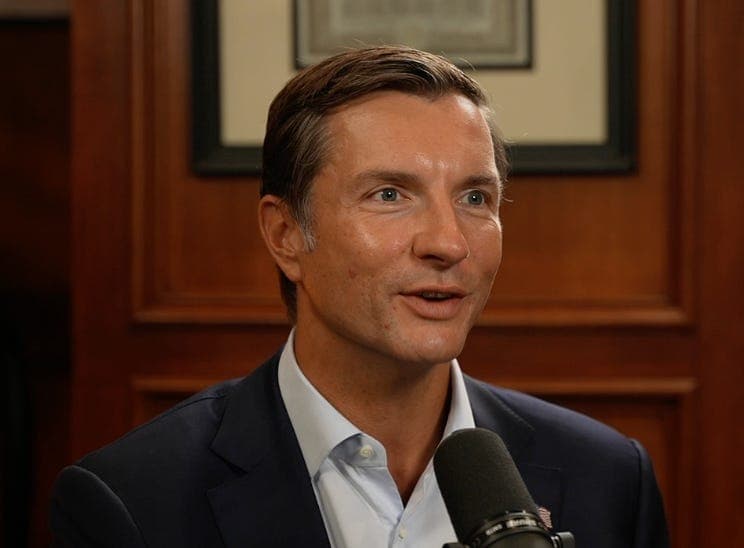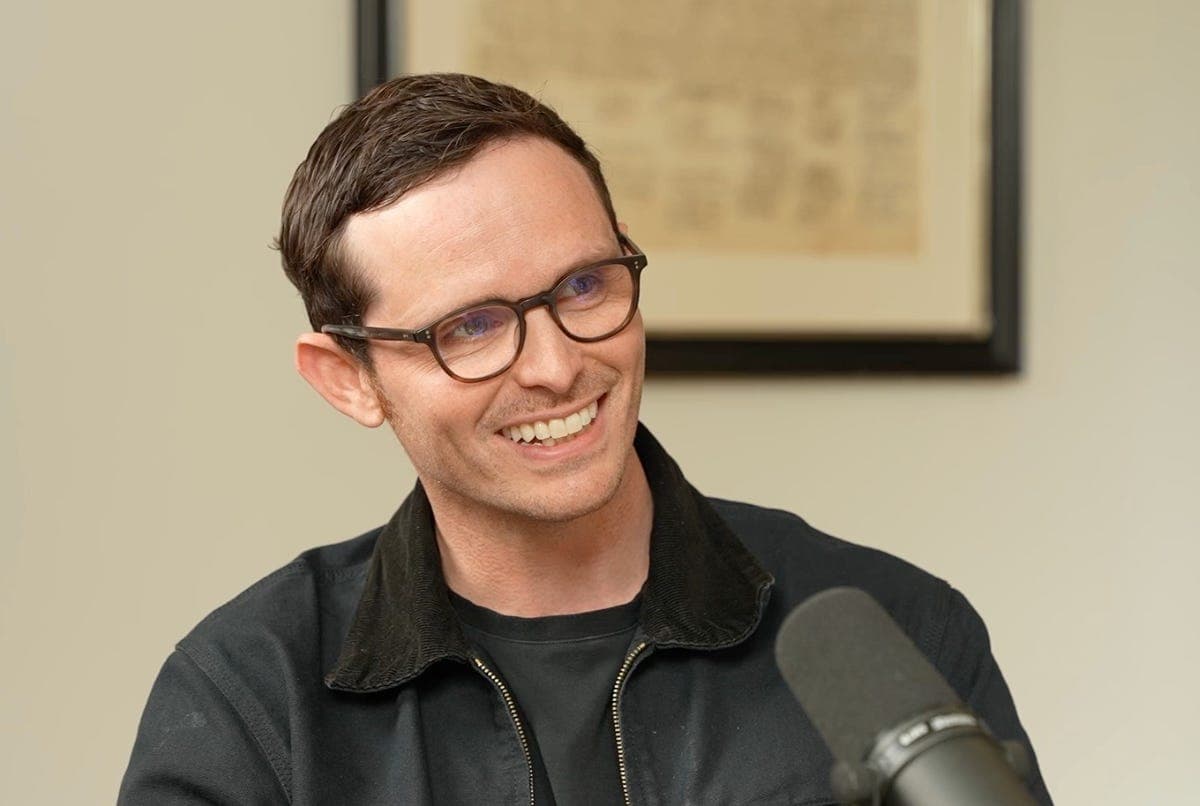

In short
Podcast Summary: Joe Lonsdale: American Optimist - Ep 118: Marc Andreessen on AI, Robotics & America's Industrial Renaissance
Episode Overview In this episode, Joe Lonsdale interviews Marc Andreessen, co-founder and general partner at Andreessen Horowitz, discussing pivotal transformations in America's economy, particularly as it relates to the rise of AI and robotics. The conversation addresses America's historical industrial strength, the current shift towards an AI-driven economy, the implications of trade and immigration policies, and the necessary steps to ensure economic growth is shared across rural and urban America.
Key Themes and Discussions
- Historical Context of Tariffs and Trade
- Understanding McKinley and Trump on Tariffs:
- McKinley’s protectionist policies initially evolved to embrace reciprocal tariffs, as American manufacturers required access to foreign markets.
- The historical significance of tariffs in nurturing industrial growth in the US was emphasized, contrasting the shift towards a service-based economy since the 1960s.
- America's Economic Shift
- Transition from Manufacturing to Services:
- The discussion highlighted how the US economy transitioned from an industrial base to a service-oriented model, benefiting coastal cities disproportionately and leading to political and cultural divides.
- The Clash Between Urban and Rural America
- Deindustrialization as a Policy Choice:
- Marc argues that the shift to deindustrialization was not an inevitable outcome but a series of policy decisions, resulting in slow economic growth and the rise of populism.
- The Promise of AI and Robotics
- AI as a Fundamental Turning Point:
- The rise of AI represents a transformative opportunity for America to redefine its industrial capacity.
- Robotics is positioned as a potentially massive industry, with implications for job creation in manufacturing and rural America.
- Immigration Policy
- High-Skilled vs. Low-Skilled Immigration:
- The conversation explored the complexities of immigration, suggesting that while high-skilled immigration is essential for innovation, low-skilled immigration policies need reevaluation.
- The impact of DEI (Diversity, Equity, and Inclusion) policies on the opportunities available to local talent, especially in rural areas, was also discussed.
- Bottlenecks to Growth
- Challenges to an AI-Driven Economy:
- The conversation touched on potential bottlenecks, including regulatory burdens and the need for skilled labor in AI and robotics sectors.
- Addressing these issues through better policies and investment in infrastructure was emphasized as critical for America's industrial resurgence.
Key Takeaways
- Optimism for Future Growth:
- There is a strong belief in the potential for AI and robotics to revitalize American manufacturing, with an emphasis on creating future jobs rather than trying to resurrect past manufacturing jobs.
- Policy Choices Matter:
- The podcast stresses that the future trajectory of the economy is shaped by policy choices, and a commitment to reindustrialization is necessary for economic growth that benefits all Americans.
- Uniting Divides:
- There is a hopeful outlook towards bridging the divide between urban and rural America through shared economic opportunities arising from technological advancements.
- Healthcare and Education Challenges:
- Healthcare and education were identified as sectors needing technological innovation to reduce costs and improve access for all demographics.
Conclusion The episode wraps up with a call to action, urging listeners and policymakers alike to embrace innovation and reform to tackle the pressing economic challenges facing the nation. The discussion leaves room for optimism regarding America's potential to lead in the coming technological revolution, if aligned with suitable policies and inclusive growth strategies.
Written by AI. May contain mistakes. Listen to the episode to check what was said.
Transcript
Automatic transcript. May contain errors.0:00We're at this very specific and important and fundamental and I think profound turning point in technology, which is the rise of AI. How do we explain this to people? Because a lot of Luddites are going to attack this. Do we want the U.S. to be an industrial superpower or not? These are choices. These are policy choices. And AI is only happening in two places. It's only U.S. versus China. China's basically been running the American system playbook. There's another turn on AI that's coming, which is the turn to embody physical AI, which is robotics. There's billions, tens of billions, hundreds of billions of robots of all shapes, sizes, descriptions, running around doing all kinds of things.
0:27What we should do is lean hard into the manufacturing jobs of the future, which is designing and building all of these new things. If you don't do this, you're living in a world of Chinese robots everywhere.
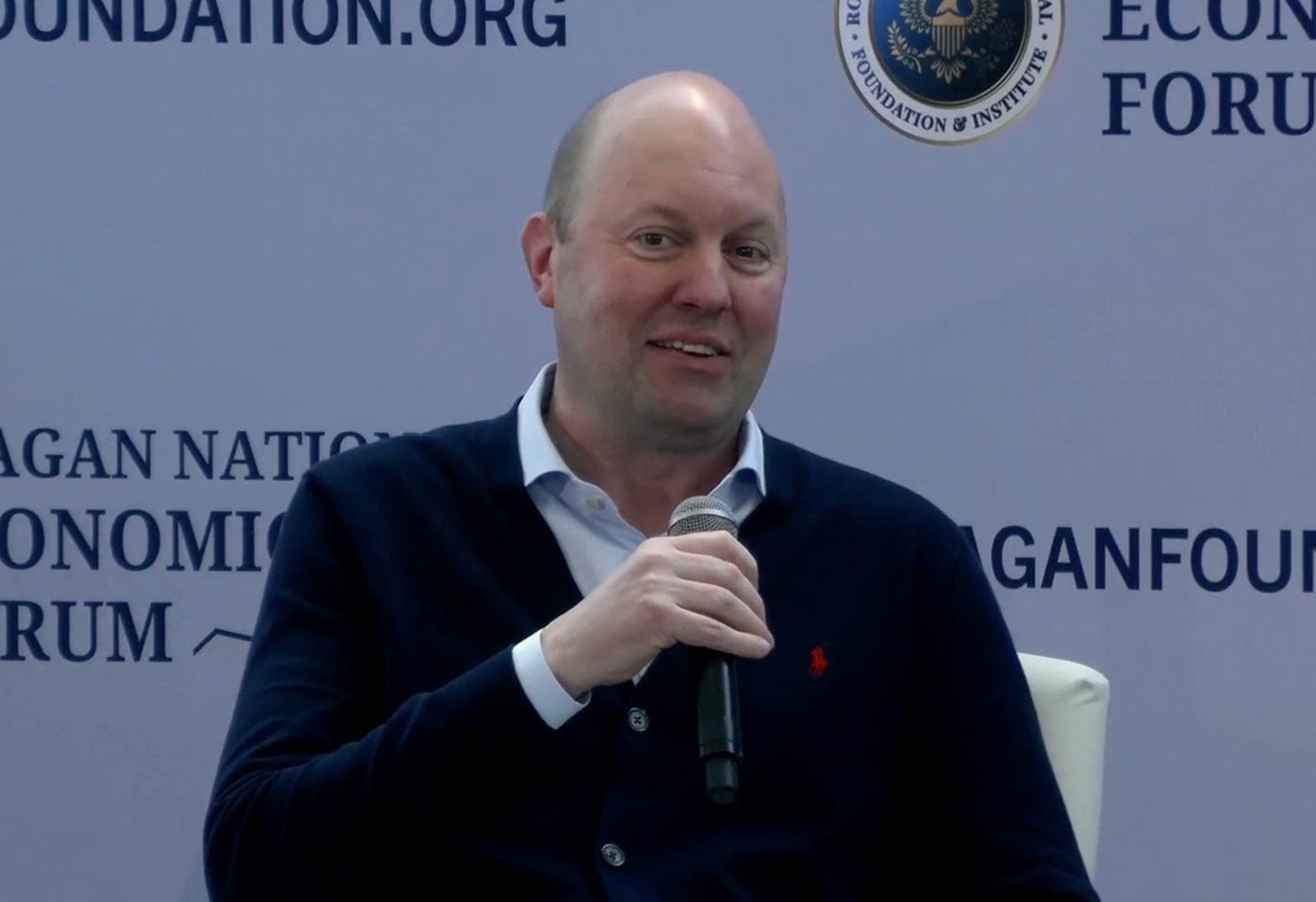
0:43A few weeks ago, I got a chance to interview my friend Mark Andreessen at the first annual Ronald Reagan Presidential Library Economic Forum. This forum is a competitor to Davos, the World Economic Forum. It's gathering a lot of top leaders who are interested in capitalism, in markets and American dynamism, and really has kind of a more pro builder mindset than we see in Europe. We had a great chat with Mark. He's been really interested in US economic history, studying Hamilton, studying McKinley, whose policies changed, of course, to be more reciprocal from his original tariffs. And there's some interesting questions today from these people.
1:17Our economy, we talk about started off focused on industrial economy, on manufacturing. It shifted to more of a services-based economy with a lot of policies starting in the 1960s. And now today, 60 years later, it's shifting again from manufacturing to services and now to AI and energy. An AI-driven economy looks very different than a services economy. What are the right policies on trade, on immigration, on regulation? Mark's really bullish on robotics and what that does, especially for rural areas versus city. What are we going to see with productivity growth? How do we make sure we share this wealth?
1:50We're creating the right way with everyone. So it lifts everyone up in the United States. There's some really interesting and important policy questions that are going to determine the future of our country. And Marc Andreessen is the right guy I talk to about it. Excited for you to hear from him. Welcome to our first annual Reagan Economic Forum. It's an honor to have you guys here. You know, we talk a lot here, of course, about Reagan's economic pillars and policies, which include deregulation and lower taxes and lower spending, all of which are very relevant today. But Marc, I want to start off asking you about someone I know you've been reading about and President Trump's been reading about from 100 years before, which is William McKinley.
2:24And William McKinley, of course, was a staunch protectionist at first. Is this historical example of how to revitalize American industry relevant today? Is it relevant to everything we're doing in AI and energy? How do you think about this? Yeah, so I've been doing my best to kind of spin up in the history of this. And so there was something in the 19th century actually originally created by Alexander Hamilton when he was Treasury Secretary called the American system. and really what they this is even, you know, this is like 80 years before McKinley 90 years before McKinley you know, what they were dealing with was the British Empire, right?
2:56The UK was the preeminent industrial power you know, they were the first like giant industrial power on planet Earth and had built this, you know, very commanding economic, technological, military position and of course America, you know at the time of the revolution was mostly farmland and then there was this raging debate between Hamilton and Jefferson as to whether you'd want America to be an industrial, you know, kind of urban financialized power, which is what Hamilton wanted, or kind of a rural, you know, kind of rural farming aristocratic power, which is what Jefferson wanted. And, you know, and Hamilton won that debate.
3:25And so that led to what was called the American system. The American system led to, you know, the creation of the United States as an industrial power that developed over the course of the 19th century. But it really took off at the tail end of the 19th century in what was called the second industrial revolution. And so So between call it 1870, 1880 and like 1930, basically everything we view today as the modern world was basically invented then. And like you could almost look around the room here today and you could say basically every piece of physical infrastructure, everything around us, you know, literally everything.
3:58The airplane, manufacturing techniques to be able to make modern glassware at scale, air conditioning, television, radio, the automobiles we drove to get here. It all was the result of the second industrial revolution. And then the McKinley presidency was right in the middle of that period. It's really when the whole thing catalyzed. And so it was really the point at which America became the world's industrial superpower. And then, of course, that led to America being able to become a huge player in both World War I and World War II, ultimately winning World War II and becoming the arsenal of democracy.
4:40It all kind of floated out of that period. And the American system is something that people really don't like to talk about these days because it was heavily protectionist. And the whole theory of it was you don't industrialize just with like a single technology or a single company. You industrialize by having an entire ecosystem, right? You industrialize by having, you know, not just three car companies, but by having all the thousands of parts suppliers that make all the parts for the cars. And so the Brits had done this. They had run a very heavily protectionist program to be able to boot up the first industrial revolution in the UK.
5:11You know, they then advocated for free trade when exports became more important. McKinley was the inheritor of the American system. And so he was heavily protectionist to build up the second industrial revolution. And then he actually switched to become more of an advocate for free trade because as American exporters were becoming more successful, they needed export. They needed foreign markets. And then, by the way, in the 20th century, basically every industrial revolution in every other country that has worked in the last hundred years basically follows that model as well. So, you know, it's the same thing Germany did.
5:39It's the same thing Japan did. It's the same thing Korea did. It's the same thing China is doing right now. China has basically been running the American system playbook in China. And then this goes to tariff policy. And I'm not here to make an argument like it's in favor of tariffs, but more of like a historical observation that there has been this phenomenon over time that if you want to have the kind of clustering effect that leads to industrial preeminence, it is not unusual to have a combination of tools and methods used to do that. It has been historically characteristic that tariffs would be a part of that.
6:12But it's also historically characteristic that there becomes this point when you also therefore want to go for exports and you want to go for free trade. And McKinley specifically, he ran for office very much on the idea of having a high and permanent tariff. Once he was in office, he switched more to a model of what he called reciprocity. And basically it was, we start out by tariffing, but the goal actually is to get everybody to lower their tariffs. The goal is to get a world of much more free trade, and then therefore these American exporters are able to succeed globally. And of course, he was able to use tariffs, American tariffs, as a lever to get other countries to drop their tariffs.
6:46And so in that sense, what we're going through right now in the U.S. is sort of very characteristic of that. And what makes maybe the whole thing kind of more poignant is there is this kind of fundamental underlying question, which is, do we want the U.S. to be an industrial superpower or not? Right. And in the 19th century, they were completely clear that they wanted that. And in our time, I think we're still ambiguous about it. It's interesting, though, because, I mean, and you've said this yourself in other contexts, We had this manufacturing wave. And then in starting in the 1960s, services really drove a lot of our growth the last 60 years, which obviously was not as tied to that.
7:18So the elite maybe were not thinking about these issues as much. And I guess the question is today, are we shifting into something else? Is it an AI-driven economy? What is it? And, you know, it seems like Trump's camp's a little bit split. You have really two visions. One vision, you'd say, maybe more like the Bannon side is more focused on reviving traditional manufacturing through tariffs, through industrial incentives. Then you have the other side that's more about tech acceleration via AI, via chips, via energy. How do these things play into, I mean, are we going to be able to copy the past or is it a new policy here?
7:47Yeah, so this is, I mean, this is sort of the central question, I think. So my read of the trajectory basically is call it between 1870 and 1920. The U.S. economy was heavily based on industrialization, all the stuff I just talked about. By the way, very high immigration environment at the time, very rapid rate of immigration, and then actually very high tariffs. And by the way, an annual growth rate of something like 3x, the current growth rate of the U.S., with a much smaller population and with much fewer tools to work with. Then there was sort of the 1920 to 1970 period, where the growth rate was maybe something like 2x, the rate that we have now.
8:23And that was the space race and rockets and electronics and the beginning of the computer industry. And it went quite well from an economic growth standpoint. And then around the time I was born, around 1971, basically, the U.S. economy permanently downshifted its growth rate, both in terms of productivity growth, which, of course, measures technological transformation in the economy as well as economic growth. And so we went from super high growth to high growth to low growth. That low growth coincided with this shift, with all the shifts that happened in the 1970s, many of which Reagan was a reaction to.
8:57But many of those shifts happened and many of those shifts have continued. you know as you said less less less industrial uh enthusiasm more what they call you know services um you know by the way the good news of that transition is the transition to knowledge work has worked really well and you know we live and work in places like silicon valley and austin and others that have done phenomenally well because you've got all these tech companies that are global exporters of technology and the ai revolution is happening in the u.s you know and it's absolutely tremendous but you know we've we you know we transform the american economy to basically have knowledge work on the high end and then financialization and banking and currency and being the safe bond asset on the other hand.
9:36And then we basically, we chose to de-industrialize and we chose to de-industrialize through a set of explicit policy choices, not least of which is we made a lot of industrial activity illegal over time. And I would argue, number one, that formula has not, first of all, it just hasn't worked that well in terms of growth. right if it doesn't pay off in terms of productivity growth and economic growth like how is it actually going and of course the the problem the irony of this is if you don't like populism the way that you get populism is slow growth right because you because slow growth puts everybody in the mind of zero-sum right everything becomes a zero-sum you know kind of fight for resources because people don't think that there's a lot of opportunity in the future and so you know we like the formula that kind of all the smart people did you know actually created the preconditions for the sort of researches of populism on both left and the right.
10:24And then the other kind of really, you know, critical thing happening right now that you see just happening kind of everywhere in our politics and society is this just giant divide between the cities and the countryside. And, you know, I'm, I'm sort of a weird example of this myself. I grew up in rural Wisconsin, you know, in what was sort of, you know, originally farming and then sort of light industry, you know, kind of world. And, and then, you know, and then when I, you know, graduated college, I moved to California. I did of jump to, you know, kind of the polar opposite kind of culture and kind of world.
10:53And, you know, of course, when I was in Wisconsin, I was like, wow, that, you know, those smart people in the coast must be so much better and smarter than we are. And then I got to the coast and I was like, wow, these people on the coast really hate everybody where I grew up. This is interesting. I knew they didn't like us. I didn't realize they despised us quite to this degree. And so now we have this like, just like raging cultural, social, economic disconnect between the cities and the country, in the countryside, which I think is quite dangerous. Let's be controversial and dig into this a little bit more on cities.
11:21So I think a lot of us have noticed that our cities are deeply dysfunctional. They're broken in our society, right? I think we have a candidate who's like a socialist Islamist who's in danger of taking over New York very soon right now. And we have all sorts of problems. People can't afford to have kids in cities the way they're set up. I think there's this cost disease for everything. What went wrong? What's going on with these cities? And what's an optimistic take on it, Mark? How can we fix this? Yeah, so the guy in New York is interesting. And he's kind of running slightly behind Cuomo for New York mayor.
11:53But he's literally running a platform, among other things, of having city-owned grocery stores. And so the joke is he's reinventing bread lines for the 21st century. That's impressive. Really tremendous, tremendously, tremendous platform. The Seattle is another case study of this. Seattle, to give you a sense how crazy things are, the district in Seattle, the city council district, where the most Microsoft and Amazon executives live, I elected a city councilwoman who ran a platform of nationalizing Microsoft and Amazon. Right, and then in the Bay Area, I've got, I live in ground zero of dysfunction and collapse, and I've got thousands of stories from the Bay Area.
12:32Yeah, so I think there's a very fundamental political economy thing happening, which falls out of this sort of economic transformation that's happened, this policy transformation that's happened. And so there's a guy, there's actually a French writer, a geographer, who has, I think, the best analysis on this. And he's written a great book on it called Twilight of the Elites. And what he basically observes is if you look at all the Western countries through this process of sort of deindustrialization and financialization and technology, you know, sort of technology, knowledge work, you know, becoming preeminent at the high end of the economy, you sort of have this pattern where basically like in an agricultural economy or in a manufacturing economy, you kind of have to spread everything out throughout the country.
13:08because like natural resources really matter and energy really matters and physical infrastructure matters and access to, you know, trains and all these things, you know, really in rivers and water and so forth really matters. But if you're going to replant your sort of commanding heights of your economy on knowledge work, then what you're going to do is you're going to slam basically all economic growth into the cities, right? Because you're – which is what Silicon Valley has done, right? So you're going to – all the software developers in one place and you want them – you know, they're going to – the good news is they're going to eat at high-end restaurants and they're going to employ a lot of nannies.
13:36but like fundamentally they're going to be sitting in conference rooms, you know, designing software together. And you want that to happen in a single concentrated place. And so what happens is basically the city has become a magnet for basically two kinds of people. One is sort of the upper class, which is to say kind of the, you know, highly educated elite in the knowledgeable professions who make enough money where they can afford to buy, you know,$3 million houses. And then you've basically got the, so you've got basically like super expensive homes. And then you've got public housing, so-called public housing, right?
14:05and council estates in the UK or Section 8H or whatever it is housing here, where you've got, you know, basically public housing. And so, and then the public housing is, you know, it's basically, it's, you know, people who are very low paid, kind of on the low end of the service economy. And then that's the city. And then who's squeezed out of the city is basically, right, the entire middle class is squeezed out. And just to give you an example of this in the Bay Area, if you're a cop or a firefighter in the Bay Area and you work in Palo Alto, you commute three hours, both ways, just to be able to like have a house and afford a family.
14:36Right. And then of course, you look what's happening in the cities and like, it's, you know, there's, there's like lots of dogs. There's very few kids. Right. And it's like, you know, what on earth is that about? Well, you can't buy a house. You can't, you can't, you can't have a family. You may not even own a car. Like how are you going to get kids anywhere? But what happens is from a political standpoint is the cities that are run right there in their local democracies, it's these super high end kind of very progressive elites. And then it's sort of the clientele underclass, right? In the U.S., it's Hispanic immigrants or African Americans.
15:07In Europe, there are other kind of clientele underclasses that they've developed in places like Paris. And so you've got this high plus, you've got this kind of old political kind of structure of sort of top plus bottom kind of configuration. And what you've done is you squeeze the middle and you've ejected the middle out of the cities into the countryside, but you've de-industrialized. And so there's no new economic activity happening in the countryside for all the middle class people to do. This so far is not an optimistic panel, Mark. Sorry. Sorry. Let me try to make it optimistic. Sorry. Let me try to make it optimistic.
15:37Okay. Let me try to make it optimistic. These are choices. These are choices. These are policy choices. Sometimes the way this stuff gets painted is that these are just impersonal economic forces or technology forces. And of course, I get this a lot. It's like, you idiot. Don't you understand that it's just like manufacturing is old fashioned. We have all this new stuff. We shouldn't need... But no, these are choices. Like there were specific choices made. So the classic choice, the classic choice that was made, since I wrote the Reagan library, I'll beat up on Nixon. So Richard Nixon, the year I was born, 1971, he proposed something called Project Independence.
16:10He actually, visionary president, he saw the energy crisis coming. And he said it's a national imperative to build a thousand new nuclear power plants, civilian nuclear power plants in the U.S. by the year 2000. Cut the entire U.S. electric grid over to nuclear. By the way, it would have gotten us to electric cars probably 30, 40 years faster and would have completely separated us from strategic involvement in the Middle East for energy. So that was the good news. The bad news is he created the EPA and the Nuclear Regulatory Commission, which then prevented Project Independence from happening.
16:38And, of course, no new nuclear power plants got built. But that was a policy choice, right? And I'm sure that was not the result that he intended, but that was a policy choice. And so, you know, and by the way, a lot of this is happening right now in Washington. Like there is an opportunity to look at everything from nuclear power, minerals, natural resources. I was on a call this morning on natural resources with very promising progress being made. You know, rare earth metals. There's, you know, construction. We have a project to build a new city in California. We've bought, you know, four times the acreage of Manhattan in Solano County.
17:12You know, we had the opportunity to build like entirely new cities in this country. you know like there's any number of things any number of these policy decisions that we could make that would cause revitalization so we're going to fix better policies there's something else going on though which i think you and i are both very bullish on which is which is these ai wave and ai services right and so i think i think one thing that's very interesting right now is obviously we all know there's major cost disease in our society health care is becoming more and more unaffordable we i think people are talking about our 36 trillion dollar debt it's actually 150 trillion more if you include our health care promises much bigger problem uh we obviously education, housing, all these things are becoming less affordable.
17:46But you and I have both seen that a lot of these new technologies are going to turn some of these services into much more affordable products. And I think we're making big bets on that. Tell us about this. So first of all, just a moment on AI. So you asked a question earlier, which is like, is there like, there's a traditionalist view of like, we need to go get the jobs that used to exist. We need to somehow bring them back. And you know, and here you get into this argument of like, well, you've got, you know, Chinese laborers working for a dollar an hour or whatever, like, you're not going to get those jobs back.
18:09It's just not cost-effective, bring those jobs back. What we have, though, is we're at this very specific and important and fundamental and, I think, profound turning point in technology, which is the rise of AI. And I would say the good news, let's make the panel optimistic, the good news is the U.S. is, like, by far the leader on AI. Now, by the way, we need to decide whether we want to be the leader in AI, because there's, like, a lot of forces in the U.S. and in the U.S. government that are trying to prevent that from happening. But there's over a thousand laws at state level we've been trying to fight and stop that would screw this up, right?
18:34So there's a lot of people who are against this. California state government almost passed a law to outlaw AI in California six months ago, which is an indication how crazy California is. But yes, it's like everything else. We can have it if we want it. These are all choices. But AI is happening, and AI is only happening in two places. It's only US versus China. There's a whole competition thing there. But the US is very powerful on this. And then, by the way, the US is benefiting a lot because Europe has basically made AI illegal. They're regulating themselves to death. And so the smart AI people in Europe are moving to the US.
19:03And so the US really is ground zero for AI. Today, AI is software, right? And so when you use AI, you use ChatGPT. It's an app on your phone, right? There's no manufacturing kind of component. You know, really, people are building giant data centers, but it's not a huge generator of middle-class jobs. But there's another turn on AI that's coming, which is the turn to embodied physical AI, which is robotics, right? And this is a transition that has already happened. It's already actually happened in drones, where drones went from being human piloted to actually being autonomously piloted. They now fly themselves.
19:37It's a transition that's happening in cars right now, right? Where cars went from, you know, basically purely physical products to now basically being rolling computers that drive themselves. And if you haven't tried this yet, if you ever have the misfortune of finding yourself in San Francisco, take a Waymo. It's amazing to live in a cyberpunk future reality where you're in literally a state-of-the-art self-driving car that's literally out of the Jetsons driving past people who are dying of fentanyl overdoses on the sidewalk. I recommend having the experience at least once. but the self-driving car really does work like it's really happening and then what's going to happen you've all probably seen you know elon has this optimist robot that he's building um these human robots like the the the general purpose robotics thing is going to happen and it's going to happen in the next decade and it's going to happen at giant scale and i i think there's a plausible argument which elon also believes that robotics is going to be the biggest industry in the history of the planet it's going to be gigantic there's going to be billions tens of billions hundreds of billions of robots of all shapes sizes descriptions running around doing all kinds of things.
20:33Those robots need to get designed and built, right? And so my view is, you know, we don't try to get the old manufacturing jobs back. What we should do is lean hard into the manufacturing jobs of the future, which is designing and building all of these new things, right? By the way, which includes drones and cars, right? And robots. And, you know, we shouldn't be building manufacturing lines that have people sitting on a rubber mat for 10 hours screwing screws in by hand, but we should be building, you know, what Elon calls, he calls alien dreadnought factories, right? Which is like these super sophisticated factories with like tons of robotics.
21:02But you can imagine thousands and thousands of different categories of industrial production that have to happen all across the U.S. in order to make this happen and would cause just enormous economic growth throughout the country. We get a huge payoff from all the tech investment that the coasts are making, but we generate many tens or hundreds of millions of jobs in the countryside. And then the U.S. would lead, it would be the third industrial or fourth industrial revolution. We would lead in the development of all these new things. And then you get to the national security side of this, which is if you don't do this, you're living in a world of Chinese robots everywhere.
Read the full transcript
21:35And that has very profound consequences for, let's just say, yeah, profound consequences. And it's an important policy point. And I want to dig into this a little bit more. A lot of, I was just in an interview up there, like, aren't we going to destroy tens of millions of jobs? Isn't AI scary? A lot of people are very scared right now with the disruption. I'm very excited about the higher productivity because I see it being disinflationary. I see it creating more jobs. How do we, assuming we're aligned, how do we explain this to people? How do we explain this is actually a really good thing for the country, because a lot of Luddites are going to attack this.
22:01They are going to try to stop it. Yeah, so the Luddites are wrong. The Neoluddites are wrong. They're wrong in the sense of like, for the reason they've always been wrong, which is the reality is we have not, in the last 50 years, been in an era of fast productivity growth, technological change. We've been in an area of slow productivity change, slow economic growth. AI, if it works the way that actually people either hope or fear that it's going to work, it's going to cause productivity growth to shoot up. That will naturally accelerate economic growth. But look, if it just stays as software, then the result of that is just going to make the cities much better off, right?
22:31It's going to make San Francisco and LA and New York much better off and Austin much better off, but it's still not going to answer this question of what happens in the countryside. To answer the question of what happens in the countryside, you need to get to the next thing. You need to make AI hardware as well as software. And you're right back to that same prescription of basically re-industrializing the country. And again, not re-industrializing the country on the stuff that has already left, re-industrializing in the country based on all the things that have to be invented and built. And it's just like we know, I'm just like incredibly highly confident that there's going to be these giant industries of computerized everything, AI powered all kinds of hardware of all kinds of shape sizes to descriptions.
23:08You're funding a lot of that kind of thing. I'm funding a lot of that kind of thing. I mean, look, the entire defense base has to get rebuilt around this. We're going to redo the manufacturing. We're going to build roads and tunnels and everything cheaper. It's going to be exciting. Yeah. And so this is the thing to do. To me, the path like on this is very clear because we have to do this because it's necessary from a national security standpoint. We have to do it because we need the economic growth. We have to do it because we need an answer for the entire population of the country, not just the cities.
23:36And yeah, and we have to do it because if we don't do it, China's going to do it and we don't want to live in that world. So I want to circle back to another controversial topic, which, you know, over the last several decades, you mentioned this, we've kind of pursued deindustrialization, financialization. We've also pursued mass immigration. And, you know, the view from the tech world has almost always been, we need more of the smartest people to come here and build with us. A lot of my smartest friends are immigrants and they've built great things. But at the same time, some of this mass immigration has really affected the working class in certain ways.
24:04It's maybe not great. I know your views have evolved on this topic. Like what is the right immigration policy and how does it tie into what you're seeing for the next few decades? Yeah. So separate it, you know, the classic split between so-called high-skilled and low-skilled immigration. So on the low-skilled immigration side, it's actually a lot of the AI doomers kind of have this split personality where they're like, AI is going to eliminate all the jobs and we need to import another hundred million people from the third world as fast as possible. And we won't have any, you know, so, so, so there's a bit of a, there's a bit of a weird kind of disconnect, I think, in the logic and the logic on that.
24:36Um, you know, look, the country went through this before, you know, as I said earlier, the, there was very high immigration between like 1870, 1920, you know, they closed the gates in 1925. Um, and you know, look, 1925 to 1970, 70, you could argue it would have grown faster with higher immigration, but they grew a lot faster than we've grown. Right. And so I like, I do think there is this, like, if, if you have advanced, if you have AI, if you have advanced high productivity growth, if you have lots of robots running around, you know, I do think there is a question of exactly how much low, low skilled labor you need in the country, which, which, which bears on a lot of the immigration debates.
25:08Um, the high skilled immigration debate is, is the one that's coming. Um, and it's not really top of mind right now, but it's the one that's coming. And the reason it's coming is because, I mean, look, we, you know, we need, we need talent of course, to build all the AI, build all the robots and do all these things. And you see this in the debates around the universities with the move that the administration is doing on foreign students and so forth. And there's this kind of very one-sided argument that's happening on that right now, which is you kind of need a limited high-skilled immigration from the rest of the world.
25:34You're not going to have the smart people building stuff here. And I would say, look, like Joe, our portfolio at our firm is like the United Nations. It's founders from 100 countries. I benefited enormously by working in a place characterized by very high skilled immigration. The thing that's really coming to roost though, is sort of this fundamental issue, which kind of nobody wants to talk about, but I've started to talk about, which is it's the intersection of DEI and immigration that has really, I think, warped, I think, our perceptions on high skilled immigration over the last 50 years, which basic, and you see this, by the way, in like this, you just, you look at like the foreign enrollment rates of the top universities, which went from, you know, like two or three or four percent 50 years ago to whatever, 27 or 30 or 50.
26:16And Columbia is over half, right? 70 percent or whatever it is. And so there's been this massive transformation in who gets educated. And then there's been this massive transformation of who gets admitted through affirmative action. And then, you know, as we now know at DEI. And again, this goes straight to the political divide in the country, which is if you're a family, you know, if you're a family, if you're parents of a kid where I grew up and you've got a smart kid and you think you're going to get them into, you know, top university in this country, like you are fooling yourself. Like there is no chance, right?
26:45Because they've got their, well, the top universities basically, the top universities have basically an admissions program that looks like this. It's like DEI for white people, which is the donors and all the fake sports, right? And so a lot of fake sports, like I have a friend who got into Yale to play varsity croquet, which let me just say is not a sport that we played a lot in rural Wisconsin. And then you've got, you know, DEI generally for the other groups. And then you've got this immigration influx. And as a consequence of that, it is nearly impossible for somebody coming from a Midwestern or rural background or Southern background to get into the U.S.
27:18By the way, this doesn't just affect white people. Obviously, we now see how it's affecting Jewish people. But it actually also affects African-Americans in a very interesting way, which is actually both the universities and the corporate employers are literally, this is true, they literally import Africans so that they don't have to hire African-Americans because they they still count as black. There was a great story. The thing that woke me up to this, there was a story in the New York Times 20 years ago about Harvard. This is a Harvard admits, you know, black students, but which ones back when the New York Times could talk about these things, honestly.
27:47And it quoted actually Henry Louis Gates and Lonnie Guineer at the time at Harvard Law School, basically observing that African-Americans were not benefiting from an affirmative action because Harvard had figured out that they could import Nigerians. Right. And again, it's just like, great, the Nigerians are great. They're very smart. They're very productive. It's fantastic. You know, all of the things being equal, you'd like to have as many of them in your country. But like, is that really why we're doing, you know, the set aside programs? And so like there is this really fundamental question, which is like what level of untapped talent exists in this country that a combination of DEI and immigration have basically cut out of the loop for the last 50 years?
28:20And how long can we have this story to everybody in the Midwest and the South that says, you know, sorry, you're, you know, because of historical oppression, your kids are SOL. This is the angry populism people are worried about that's affecting our politics. Yeah, this is what I've really come to appreciate from growing up in the one place and now being in the other place, which is if you're in the center of the country, you're just like, wow, these people really hate me. They really hate my kids. Like, they're really out to get me. And that's just such a toxic dynamic. Like, that's a very, very bad thing for that to continue.
28:52So I guess to finish on a more positive note, we have all these challenges you've outlined. No, it's fair. I think in order to be optimistic, you first have to say what are the challenges and diagnose it and then say what are the ways to succeed. Here's an optimistic thing, which is we have talent in this country that is like we have so many smart people in this country who are not being properly trained, properly educated and properly employed. We really genuinely do. We have tons of smart kids running around who have all kinds of potential, who have been completely cut out of opportunity for the last 50 years.
29:17So we're going to have this wave of productivity growth. It's going to be in the real world with robotics. We're going to start to build, hopefully, to get the policies right. And it's going to lift all these people up. What are the bottlenecks or things in the way of doing that? We have the amazing secretary of energy here. Energy is obviously a really key thing to get right. there's obviously the chips, there's the critical minerals you mentioned, regulatory stuff is insane in this country, it needs to be fixed. What are the biggest ones you're focused on, and how are we going to get those to a place we need that ends up with the optimistic outcome?
29:44So I'd say yes, those. So, I mean, the good news on this is a lot of it's obvious, right? The minute you look at it, you're just like, well, obviously we have to do these things. If you talk to anybody running businesses in any of these sectors, they'll tell you right off the bat the things that need to happen. And so I think, you know, and the current administration, I think is pretty devoted to a lot of this. You know, look, the other, I would just say the other positive thing is happening. There's this new book out called Abundance from Ezra Klein, who I would say I disagree with on approximately zero of everything.
30:13But I think this book is really good. And I think he and his co-author, you know, outline, you know, they don't necessarily have the policy prescriptions I would outline, but they, you know, they make this point of like, it's like, you know, liberals used to believe in building things, right? Well, I mean, if you go all the way back, like communists really believed in building things, right? Like all like Soviet iconography 100 years ago was all like rockets and skyscrapers and cars and motion and energy. And it was all amazing. And they built all these huge things. And then, you know, liberals, you know, up through, I don't know, up through the 19, you know, up until basically the 1970s, you know, really believed in, they really believed in building things.
30:44They really believed in building the future. And so Ezra and Derek Thompson are trying to recapture that. And there's, and there's a bunch of, by the way, there's a bunch of leaders of that party in Washington that are now, you know, pushing that quite hard. And so maybe, you know, although it seems hard to believe these days, but, you know, there may be an opportunity for some actual bipartisanship here. And again, it just makes sense. If the country is growing faster, it's going to be a happier, it's going to be a fundamentally happier place because people, whichever side of the political spectrum you're on, there's going to be, Reagan, there's going to be a sense of optimism, right?
31:16There's going to be a sense of mourning in America. There's going to be a sense of opportunity. There's going to be the sense that your kids are going to live better lives than you do. And I don't think that's a particularly partisan view at the end of the day. And I think there may be an opportunity to maybe bridge the divide a bit. And I want to dig a little tiny bit deeper as we end into what that means. Because for me, for example, I think both of us see how health care doesn't need to take up 20 % of our GDP, right? It's very obvious that AI can make these things half, a third the cost for better outcomes.
31:40And yet, every one of our states in this country has very powerful provider and payer lobbies and has very powerful cartels to block competition. And so if we want to go build something with AI, we're not allowed to right now. Like, do you see the left and the right tech working together to fight these special interests to actually fix the regulatory state? because it's not like the administration could just do it, right? It's going to take a lot of effort. What does that coalition look like of the good guys against this kind of broken regulatory cartel in all these industries? Is that something we're going to all have to fight?
32:08Yeah, so the way I think about this is there's basically three components to the American dream. There's have a house for your kids. And kind of a definition, this goes back to the geographic lens. The house needs to be near a place where there's great job opportunities, right? So it can't be a house in the middle of nowhere. It has to be a house where there's going to be great jobs. and a safe environment and so forth. Number one. Number two is healthcare. You need great healthcare for you and your family. And then three is education. You want to send your kids to good schools. If you disaggregate sectors of the economy over the last 25 years, what you find is basically everything that technology touches basically collapses in price.
32:44And so television sets and computer games and everything, anything with electronics in it, basically the prices, productivity growth in those sectors has advanced very fast. product prices have collapsed. Everything is much cheaper. But if you chart housing, education, and healthcare, the prices of those things are skyrocketing, right? And we all see this. It's just the price of housing is exploding. The price of education is exploding. And the price of healthcare, I mean, healthcare is 20 % of the economy on its way to 50%. And so the prices are exploding. And so it's like, okay, what makes healthcare, what makes those three components of American dream have these exploding prices.
33:23It's basically it's two things. Number one is, and these are interrelated, but number one is technology is not really touching them very much. And you could say the tech industry has done a bad job at addressing housing and healthcare and education, or you could say that, you know, those industries have been resistant to it. But technology hasn't really touched them that much, which means that the productivity growth hasn't happened in them. And then the other thing is they're heavily regulated. They're heavily dominated by the government. They're heavily regulated. And then in all three of those sectors, the government both restricts supply, right?
33:53And so zoning laws and university certifications and so forth, right, mean that it's very hard to actually build new of those three things. And then the government responds to the political pressure caused by the rising prices by subsidizing demand. And of course, if you subsidize demand and affect supply, you get skyrocketing prices, right? And so every time there's a housing crisis, you know, it's perpetual housing crisis in California, the answer always is subsidies for home buyers, which always has the effect of driving prices up further and making the problem worse, right? Right. And so that drives, those are the microeconomics of what's happening.
34:27I don't think there's easy answers on this, but I think the acknowledgement that this is, in fact, what's happening. And then I think the people have to decide that they do not want to live this way. I think the marginal American voter needs to decide. It's just, look, it's just not acceptable that if I can't spend$3 million, I can't have a house that's in a good neighborhood with a good job attached to it. And it's just not acceptable that a four-year college degree is going to cost a million dollars, which is what it's on its way to doing. And it's just not acceptable that this healthcare monster is running out of control.
34:56And so in many ways, this is the fundamental policy political question of our time that kind of needs to be dealt with. Again, these issues become much easier to deal with in a high-growth environment and an environment with very rapid technological development. Let me give you the good news story on healthcare. Everybody talks about healthcare. You can't break these curves. There's one area of healthcare that is incredibly sophisticated, technologically advanced, and the price curve looks like Moore's Law. The price curve looks like video games. The price curve is just a straight line down, and the quality of the service has gone way up.
35:26And that's LASIK eye surgery, right? And the reason that's the case is because it's outside the system. It's a discretionary purchase paid for by the consumer. And the LASIK eye studios are in strip malls. And they've got three people and a super advanced, incredibly advanced laser eye machine. and you go in there and you get zapped and you have perfutized site and every year it gets better and cheaper. And so that's like an example of what happens if you're able to touch these sectors with technology and if you're able to get them out from under all the regulatory and government overhang. And so that potential exists, I think, throughout the system.
36:00But fundamentally, we have to decide we want it. And fundamentally, the population of the country has to decide that it wants it. Well, I'm optimistic more of the leaders in the tech and government sector are going to be on our side and push through and fix these regulations and the technology is going to get us there. So thank you, Mark, for being here. Appreciate it. Good. Thank you, everybody.
From the publisher
America's global ascendency was tied to its industrial strength. But since the 1960s, our manufacturing might gave way to white-collar services. Now, we've on the verge of a new AI economy. Is this our moment to reindustrialize? What does it mean for trade and immigration? And how do we make sure everyone, particularly rural America, shares in the potential economic growth?
These are some of the most important policy questions that will determine the future of our country, and Marc Andreessen is the right person to ask. Several weeks ago I interviewed Marc, co-founder and general partner at Andreessen Horowitz, for the first annual Ronald Reagan Economic Forum, an alternative to the World Economic Forum that offers a more dynamic, pro-growth view of the future of America and the West.
We begin with the debate over tariffs, and what Marc has learned from studying President McKinley, a key inspiration for President Trump's trade views. McKinley's protectionist agenda is well known, but Marc explains why he actually shifted to reciprocal tariffs by the end of his term as manufacturers needed new markets. Next, he details America's transformation into a services-based economy, why it benefited the coasts over the heartland, and the intense political and cultural divides that emerged. Learn why Marc believes that AI plus robotics will provide a unique opportunity to capture the manufacturing jobs of the future and help rural areas share in the upside. We also discuss the debate over immigration and what smart policies look like in an AI-driven economy. Finally, we cover the potential bottlenecks to an AI boom, and how our leaders can position America to lead an industrial renaissance.
00:00 Episode intro
02:18 Understanding McKinley & Trump on tariffs
07:20 Manufacturing to services; America's economic shift
11:30 The great clash between cities & rural America
15:50 Deindustrializing wasn’t inevitable; it was a choice
17:40 AI is a fundamental turning point
20:30 Robotics will be biggest industry ever created
23:54 High-skilled immigration + DEI hurts rural kids
29:32 What are bottlenecks to AI boom
This is a public episode. If you would like to discuss this with other subscribers or get access to bonus episodes, visit blog.joelonsdale.com