
In short
Podcast Summary: Joe Lonsdale: American Optimist - Ep 119: Former Waymo Leader Boris Sofman on Autonomous Construction & Bringing AI into the Physical World
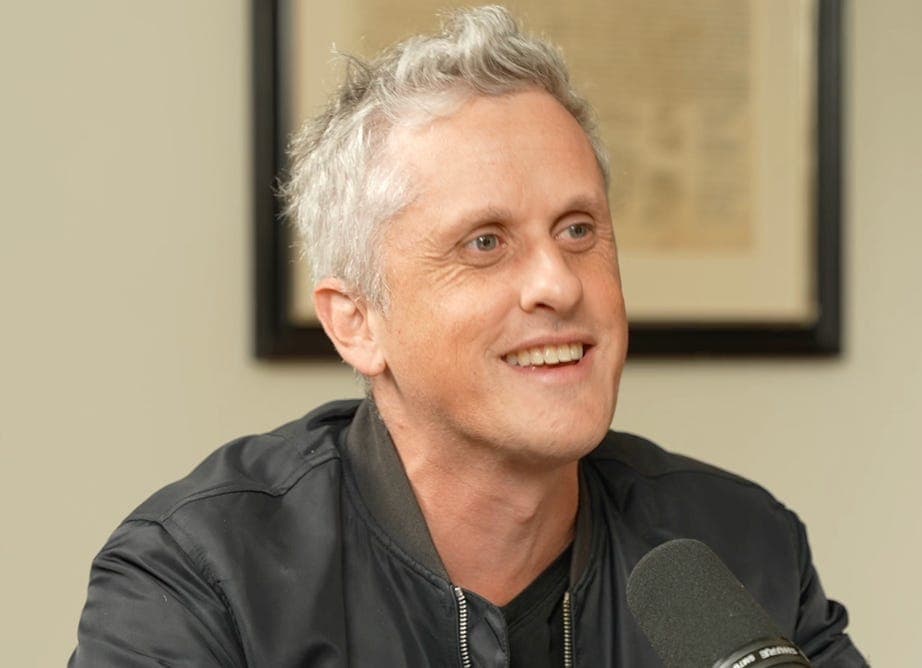
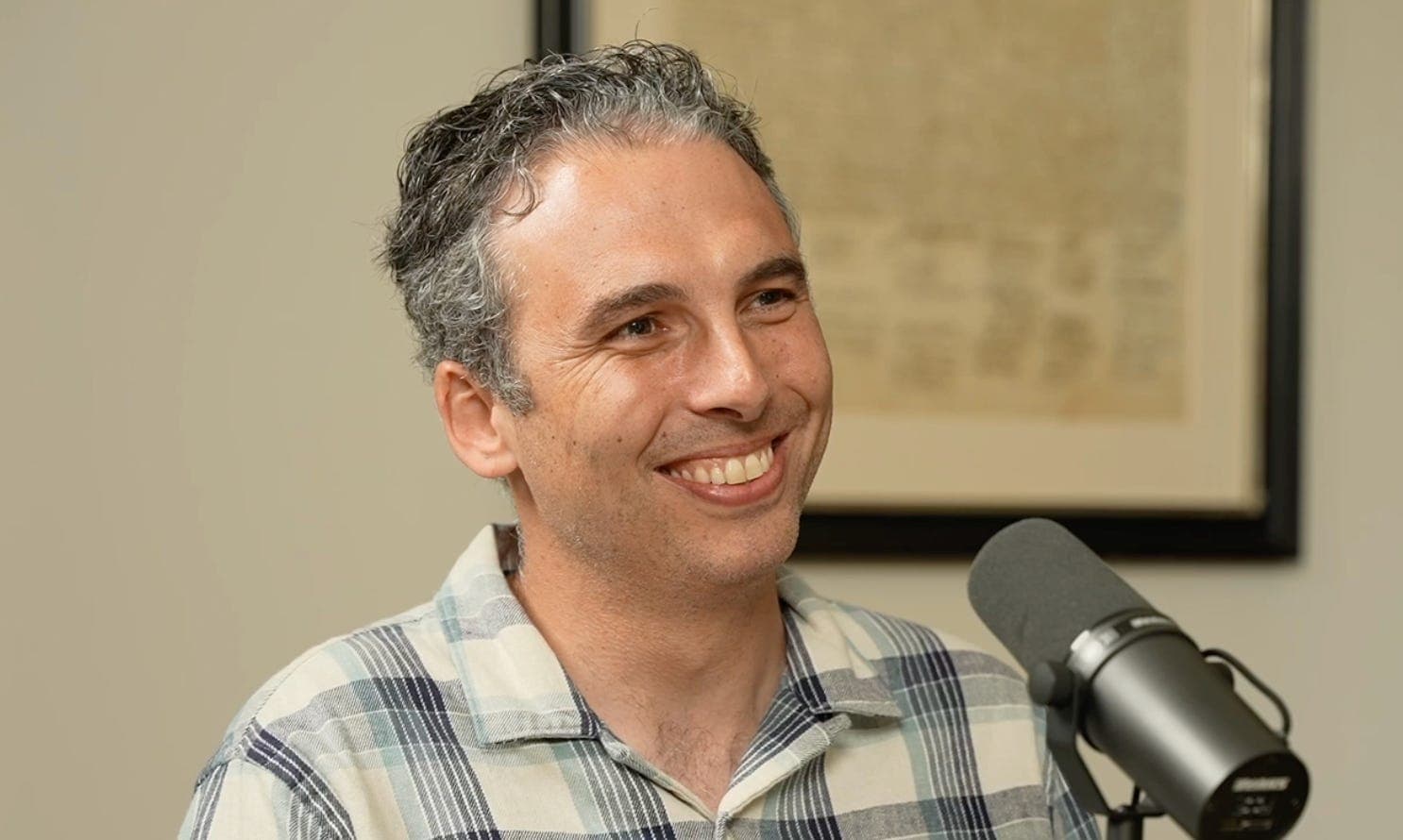
Episode Overview In episode 119 of "American Optimist," host Joe Lonsdale interviews Boris Sofman, co-founder and CEO of Bedrock Robotics, which aims to revolutionize the construction industry through automation and AI. The conversation explores the challenges faced in the construction sector, the potential of autonomous technology, and how these advancements can create more jobs rather than eliminate them.
Key Themes and Discussions
- The State of the Construction Industry
- The U.S. construction industry is valued at $2 trillion, facing issues like rising costs and slow processes.
- Construction impacts many aspects of life, including infrastructure and housing.
- Aging infrastructure and a labor shortage are pressing challenges, with up to 40% of the workforce retiring over the next decade.
- Boris Sofman's Background
- Sofman immigrated from the Soviet Union and developed a passion for engineering.
- He earned a PhD in Robotics at Carnegie Mellon, contributing to the early research in autonomous driving.
- After founding Anki, which produced popular consumer robots, he played a key role at Waymo, leading advancements in self-driving technology.
- Transition to Construction Automation
- Sofman left Waymo to co-found Bedrock Robotics to apply lessons learned in autonomous driving to construction machinery.
- He sees significant potential in automating heavy machinery, particularly excavators, to improve efficiency and reduce costs.
- Technological Innovations in Bedrock Robotics
- Bedrock Robotics is focused on making heavy machinery capable of autonomous operation through advancements in AI and robotics.
- Key components of their tech stack include:
- Integrating sensors and control systems to manipulate machinery.
- Leveraging AI for predictive modeling and trajectory planning.
- Job Creation and Economic Impact
- Contrary to fears about job loss, automation in construction is expected to create jobs by increasing efficiency and enabling more projects to be completed.
- Enhanced productivity allows firms to take on more work, reducing costs and making projects feasible that previously wouldn’t pencil out.
- Public Perception and Acceptance of Technology
- Sofman addresses concerns from unions and skeptics, arguing that automation will alleviate labor shortages rather than displace workers.
- The conversation touches on the need for better systems thinking in society regarding technological advancements.
- Future Vision for Construction
- The potential for a robotics revolution in construction is highlighted, with visions of affordable and innovative building practices.
- Sofman stresses the importance of human-machine collaboration, where machines enhance human capabilities rather than replace them.
Conclusion The episode presents a compelling argument for the role of AI and robotics in transforming the construction industry. Boris Sofman’s insights illustrate how technological advancements can address labor shortages, reduce costs, and create jobs, ultimately leading to a more efficient and innovative construction process. The discussion encourages optimism about the future of the industry and the potential for a collaborative approach between humans and machines.
---
Key Takeaways
- Industry Challenges: The construction industry faces high costs, slow progress, and a labor shortage, needing innovative solutions.
- Autonomous Benefits: Automation and AI can significantly enhance efficiency and job creation in construction.
- Technological Foundations: Advances in AI, robotics, and sensor integration are critical for the future of autonomous construction machinery.
- Economic Implications: By improving project feasibility and reducing costs, automation can stimulate job growth and economic expansion.
For more insights and discussions, visit [American Optimist](https://blog.joelonsdale.com?utm_medium=podcast).
Written by AI. May contain mistakes. Listen to the episode to check what was said.
Transcript
Automatic transcript. May contain errors.0:00Digitizing the physical world is probably one of the most exciting things about the physical world. 85 % of our GDP is physical industry. At the end of the day, we have to build things. You became a key leader at Waymo. What was that like? The fundamental challenge of autonomous driving, you can't ship until you're really almost perfect. Statistically, it's five times safer than a human. You decided to move into construction. Why did you find bedrock? There's something like$120 billion of excavation contracts per year in the U.S. You can capture incredible signals and actually kind of do pretty magical things.
0:27The machine becomes autonomously capable. It's just a physical manifestation of the AI wave. A lot of people aren't going to understand that. They assume you're destroying jobs. How do you think about it? You can't hold this back at the end of the day. There's an inevitability to it. And the entire country will benefit from it.
0:50Boris Softman lives at the cutting edge of AI and the real world. He was a PhD in robotics at Carnegie Mellon with some of the top roboticists in our country. He built a robotics consumer company, a lot of really cool popular toys. and it was bought by Google. At Waymo, he helped develop some of the most important systems for self-driving, for trucks and otherwise. After Waymo, he's left and he's now revolutionizing another industry, which is construction. Construction is one of the largest industries in our country. It affects the cost of pretty much everything. Boris is taking some key lessons from Waymo and applying it to the construction industry.
1:21Most people have no idea how much there is to gain in construction. There's so many projects that are not quite affordable that we wish we could do. There's so many things that are broken with infrastructure and with our buildings. There's so many things that cost so much more than they should. So there's going to be this huge argument in our country from the Luddites against the AI. But talking to Boris, it's fascinating what's coming and how positive it is for our civilization. Excited for you to meet him. Boris, thank you for joining us. Yeah, thank you, Joe. My pleasure. I'm really excited to be here.
1:48Bedrock, of course, is a very exciting company we're going to talk about that's just doing new things with autonomy and construction. It's going to change a lot of possibilities in America. It's a big week for you. You guys have a big launch going on as we're releasing this. But let's talk about your background a little bit more before we go into real world and AI. Tell us about you. You're a PhD in robotics at Carnegie Mellon. Is that right? That's right. Yep. I was in Carnegie Mellon, both foreign grads, stayed for a PhD, focused on autonomous driving, where that was kind of an epicenter of a lot of that early research.
2:17And that was the type of work that really kind of got me into robotics. It was one of the holy grails of the entire space. What was going on in Carnegie Mellon when you were there? What kind of robotics work? So what's interesting is that at that point, nobody could imagine how aggressively we would get pushed to commercialization. At that point, it was, you know, the Robotics Institute existed since I think the early 90s was the only university that really invested in that degree. It was a lot of work funded by NASA, by DARPA, Caterpillar and Deere were actually starting to fund a little bit of kind of more kind of industrial applications.
2:52But it was a lot of like applied research for autonomous driving. So navigating on-road, off-road, starting to develop the beginnings of perception systems, path planning systems, being able to ship this onto large-scale mobile robots and actually try to drive intelligently. And a lot of the people around that time ended up being the seeds that then propagated to all the Grand Challenge, Urban Challenge, and then Waymo, Aurora, Uber, ATG. It was this really fascinating pocket of talent, actually. Yeah, a lot of great talent came out of there. And going back further, your Your dad's a scientist, right?
3:24You come from a little bit of that background yourself? Yeah. So I was actually born in the Soviet Union and immigrated when I was pretty young. I was about six years old when we left. Came into the U.S. through New York, ended up in Texas. My dad was a mathematician and worked in the telecommunications industry for a long time on kind of optimization of cell phone networks and data flow. And I've always been excited about engineering, math, science, and then really, really got into AI just being around it so deeply at Carnegie Mellon. And did coming from the Soviet Union to America give you an appreciation for business and freedom and building things at all?
4:01Yeah, it's interesting. Not even the probably like talking to my parents, the things that they went through. It's hard to even imagine. I try to grasp it. But they've been trying to leave for about 15 years before they were finally able to. and were really deeply involved in even kind of helping organize the first kind of batch of immigrants that were able to leave legally in a deal between the Reagan administration and Gorbachev administration. And then we immigrated and it was, you know, it was like a very, you leave everything and start from scratch. And actually, it was kind of interesting because like last year I hit the age that my dad was when he left the country, barely spoke like a tiny bit of English, zero assets left.
4:43Every asset he had, had a six-year-old me and my sister was one month old and it was like a fresh start. And so it kind of hit me hard. I'm trying to imagine what that would feel like. And it's really hard to put yourself in those shoes. Just to totally start over. Wow. Amazing what he's been able to do for his kids and what you guys have been able to do here. You've built multiple companies, of course, after your PhD, you started something called Anki. Tell us about that. That's right. So Anki was a consumer robotics company. So we're using really some of the most kind of novel and innovative technologies in robotics, AI, computer vision, and trying to create very interactive and entertaining consumer products, so toys and games.
5:20And we were able to use both really novel kind of technologies on the software side and leverage the smartphone industry actually on all the components that were dropping in price and pushing a lot of complexity to software. And so we made really interactive high-end games and toys that were super popular. They were like number one selling products for certain years and or something cool is for like almost like a Pixar character coming to life in the real world. And so you had these really popular consumer robots. It was working pretty well, though I remember I guess it's a tough business to sell almost all of your stuff in the Q4.
5:53Oh, it was horrible. The toy didn't appreciate how bad that would be. It's like it's you almost have to have a little bit of ignorance going into some of these industries to, you know, and then you kind of tackle the problems. But yeah, we were like it was the most seasonal business I've ever heard of still is 85 % Q4. And we were like, kind of close to a hundred million in revenue. And so your cash flows are spiking up and down like crazy. And you're locking in forecasts and end of the summer for what you think is going to be the demand. If a toy doesn't go quite as well, you're in big trouble basically every year.
6:22Totally. And every year you're over under, you never get it right. And so you're like, either, like I remember one year we were the number one selling product on eBay and the, the$150 product was going for a thousand on eBay. And then another year you're like massively overbuilt and then you're like figuring out how to do promotions and, and get it out. So it's, that's about as hard as it gets, uh, in terms of a kind of a business flow. That's a tough one. You sold on key to Google and you went there and you became, you became a key leader at Waymo, which everyone knows now we see him driving all around our cities.
6:53What was that like? Yeah, that's right. So they pulled us in where like a lot of the team, um, uh, the, The core of our company was basically these types of backgrounds that were from perception, planning, robotics, autonomy, electronics. And so we basically became the trucking team. And so I was leading autonomous trucking there and bringing up a second application. At the same time, I led a handful of the technical verticals, like the overall perception team, where we helped launch the Jaguars into San Francisco. and then we also eventually led reliability and freeway driving. We launched Ravos on freeways and it was pretty amazing.
7:34It was like this, you know, autonomous driving went for probably like 12 years where it was hype, but then it wasn't quite there and it was just like endless R &D where it felt like it was getting closer, but not quite there yet. Everyone thinks of Google as being like too cautious, but I guess like you have to be cautious on this thing. You're not allowed to release it. It doesn't work, I guess. No, so this is, yeah, exactly. This is one of those where oftentimes you think of like AI or products where it's like, yeah, get it out there and iterate. This is one of those where you're optimizing for the worst case, not the average case.
8:03This isn't search where you give some bogus result. Like you could kill somebody. Elon maybe iterates fast in public with XAI. We had to do some interesting things recently. But at least that's something. It's an eventful few days. It's very eventful. But it's not. I guess Waymo is like much more. And what years were you there? I remember I remember I was like drive by Google and Mountain View on the one on one, maybe a decade ago. And there'd be these cars with these things on them. The lighters. And I'm like just super obnoxious, you know, young guy at that younger guy at that time. So I'd like to test it and see like if I can get it to like break quickly.
8:37So like if no one else is around, I wasn't trying to cause any damage. It's kind of funny. Yeah. I'm sure you've seen much worse than me, but you're curious as a driver, like how will this react? And it was 10 years ago. When was it? Yeah. So it's 2019, summer through spring of 2024, so about five years. And it was like a really cool phase because it went from that kind of really aggressive R &D point to where that launch in San Francisco was the beginning of this incredible hockey stick that is like actually the beginnings of like real scaled commercialization for autonomous driving. And there's a couple of things that were amazing about it, where one, there was a real aggressive transformation of the technology stack to kind of embrace these very machine learning, kind of new age of machine learning and kind of data driven approaches, particularly on the behavioral side where you're learning from large scale data instead of engineering a system with heuristics and search and so forth.
9:30Yeah, I remember I was talking to Elon about this. It was maybe late last year when he said that like everything had been redone by the AI. Like it just got rid of all the heuristics because it was safer and better just itself. Yeah, and there's a couple of properties there where, you know, for Waymo, it's an interesting kind of a hybrid because at the end of the day, some layers of structured heuristics are actually helpful because of long tail safety challenges where you have some guarantees that no matter what happens, you're kind of like, you have some guardrails. But the way to solve the mass of the problem has to be ML.
9:59It just doesn't work any other way because without it, you have such a brittle system that is engineered and you run into a problem. You can go and solve it, but you'll create five other ones in this infinite space. and the further you go, the more complex the system becomes. ML is the inverse where the further you go, the better competency you've gathered and you end up using data to explain whatever gaps you have and those gaps are less and less the further you go. And so the system from San Francisco generalized really well to Los Angeles and Phoenix and Austin and even from car to truck where we unify the tech stacks and that jumped to 80 ,000 pound big rig.
10:35you're basically, again, using data to explain how the dynamics are different. And so you 10 % to 15 % more data. Oftentimes, we get the models to driverless level quality. And you end up getting this kind of like flywheel in that subsidy. When you say that quality, does that quality mean you have to be like 10 times safer than the human driver? Like, how do you quantify what's safe enough to put on the road? Yeah. So Waymo still has an incredible safety culture where, you know, today, like, there's over 70 million miles and statistically it's five times safer than a human it's like genuinely uh like it is saving lives from a on a from a statistical basis so if there'd be 20 deaths on average in those miles now there's four deaths yeah and i mean and there's been zero like really significant accidents almost every accident that actually has happened has been um you can kind of they've released safety reports where it's actually human caused by you know it's probably some jerk like me experiment oh it's not the word i mean there's like people that were jumping on the front hoods of the car.
11:35We actually had a rate on it.
11:39It would happen in different rates of different cities. And so you can estimate how civil a city is by how often people jump on the front hood of your car. Oh, that's funny. You can quantify it. It could be a very dangerous, politically incorrect issue if you start to quantify it too much. Let's be careful. It's a rating. Going back to the AI here. No, but the system, it actually then works And you start to really think about it, not in terms of geographies, not in terms of anything else, but what are the gaps or companies that you need to add on? And when you expand the new cities, the burden kind of shifts more towards the operations and qualifying the system.
12:18And there's always little things that you learn, but that flywheel is just working incredibly well where you've seen that exponential growth. So I want to push back on one thing you said on this before we move on, because I think it relates to some of your new challenges. You said you just have to add a little bit more data and adjust it for a truck. data sometimes. Well, sorry, but a lot more data for a truck. But like for me, just intuitively, like the way you safely drive, like a really large truck, it's going to have different braking ability. It's going to have to stay farther away. It's just like much scarier to me as a human, like thinking about trying to maneuver a giant truck, but you're saying the data still like really applies.
12:51So highways in general. So this was a big aspect of our focus over the last few years, just kind of unifying the car and truck stack, But highways in general have a pretty gigantic extra complexity where you can never stop. Like you just can't stop in the middle of the road like you can, you know, on a 20 mile an hour street. And so you have extreme reliability challenges and you have a really difficult sparsity of the events that you see on a highway. And so the foundations of how you drive that that holds like you can carry over and really learn. And you start thinking about how you, you know, how you interpret the environment, how you detect vehicles.
13:28how you think about lane changes and so forth. But the long tail becomes really, really challenging. And it's actually both cars and trucks where you're dealing with, you know, events that happen once every many millions of miles. And so the fundamental challenge of autonomous driving, which is why it took so long and so many billions of dollars, is that you can't ship until you're really almost perfect, like not perfect, but you're really beyond a human relative safety. and you have to solve every one of those types of flavors of challenges. And so there is no traditional kind of startup release process where you get something out, it's imperfect but pretty decent, and then you kind of keep improving.
14:05You really have to be able to handle everything that San Francisco can throw at you or a highway can throw at you before you can launch. And so even though the ML systems fundamentally do carry that property that things carry over, the cost of actually shipping a system is astronomical, including redesigning the platform itself. Yep, that makes sense. Well, let's shift. So you guys, a lot of top talent in the world, obviously crushed these problems at Waymo. Everyone's seeing what it's starting to do now. It's amazing. And you decided to move into construction and starting with excavators for the real world.
14:37So how do you make that shift? Why did you find Bedrock? Yeah. So part of it was really appreciating how incredible those scalability capabilities we just talked about were, where you start with a beachhead, in Waymo's case was San Francisco. So and now you have this fly where you're adding new capabilities, new geographies, new platforms. And setting aside the complexity of the public road driving domain, the generalization actually like really, really works well. We saw an opportunity to apply that to a space that never had that type of approach in it, which is automation of specialized heavy machinery.
15:14And construction was a especially exciting place to start where you have large numbers of machine types. that are all in these slow-moving, semi-controlled environments. You have astronomical amounts of work that needs to be done. You have an industry that fundamentally has these astronomical tailwinds where manufacturing has to be built at massive scale. You have onshoring of manufacturing, reindustrialization. Infrastructure is going through a refresh cycle where you have to repave giant amounts of roads. You have housing shortages. You have energy. So you have these huge demands. At the same time, labor is going the opposite direction where you're seeing the average age go above 50.
16:00The up to 40 percent of construction workers are retiring in the next 10 years. And so you have this like crisis level pain in this industry that's like about double digit percentages of our GDP. And it's a perfect problem for autonomy to help, you know, really diffuse some of these kind of constraints that are holding it back. And it's genuinely supply constrained. And it has very similar properties where you have a lot of different types of machines doing very diverse types of work, but you have pockets of incredible volume of work that needs to be done that is incredibly well suited for learning and automation.
16:35A lot of it's very repeatable, I guess. It seems like in some places it's easier and in some places it's harder, right? So the thing that seems maybe easier to me is you're not driving with like tons of other cars around. Safety is still a problem, but it seems like maybe not as… Way more controllable. You can iterate a lot more of something by itself practicing. So it's like probably easier and cheaper to iterate and learn. One thing that seems a lot harder to me is you're like moving on very uneven ground and weird hills and things which you don't encounter. And then you also have like an excavator where like maybe in some cases it hits dirt.
17:04Some cases it hits rocks. Some cases it hits something that slips. Everything moves. So you have to like model all sorts of different things here. Yeah, there's some gives and takes. So on the easier side, these are actually very, very significant where you can't launch a robo taxi as a legitimate product until you solve 100 % of San Francisco. We can actually be very surgical on the product kind of categories and mixes of machines and capabilities and become incredibly competent in a certain type of work. For example, heavy earthwork for an excavator. And that has astronomical amounts of value.
17:32It's one of the most capable machines, one of the highest volume machines and highest utilized. And it's the hardest to learn. and there's jobs where that's all they do for a year, moving gigantic amounts of - For a year, just moving things. Setting a foundation of a factory, right? So construction is like$2 trillion industry. Excavators might be some like, it's like 100 billion. Yeah, so the way I think about it is that there's one and a quarter billion hours of operator time operating these heavy machines just in the US. So one and a quarter billion hours a year. Wow. That's massively constrained because there's giant amounts of jobs that just don't pencil out and everybody has shortages.
18:04And every general contractor we talk to is turning down work that they can't handle. And so and that's just one foundation. There was a study we saw that there's something like one hundred twenty billion dollars of excavation contracts per year in the US. Now this is everything. Right. Like but and excavators we're seeing are oftentimes like twenty five, thirty percent of fleets. And so the fact that you can isolate the product side is a huge value add safety. You have a very slow moving, semi controlled environment. So the interactions that are at the core of the complexity for qualifying a vehicle on a public road, you now can actually have a much more controlled problem that for a variety of reasons, we actually can chop off a giant percentage of the complexity of safety.
18:45And the hundreds of millions of dollars it would take to reinvent a vehicle platform for public road safe driving, these machines are actually beautifully designed to where we can upfit, retrofit existing machines and go to market without a vehicle. So you could take something like a Caterpillar machine or whatever and just put stuff on it and go use it. Sensors, compute, and now the machine becomes autonomously capable for the situations it's cleared for. That surface area increases through software updates over time, and it can still be manually operated, and the product becomes the digital operator and the driver of these machines and all the services that you can kind of get beyond it.
19:19And so there you can actually start to gradually get that beachhead, And then you use this flywheel to add new capabilities, demolition, material handling, other kind of more nuanced tasks, new machines like wheel loaders, motor graders, compactors, new types of work. And you start that expansion, but you can start getting a really genuine business from the very beginning. Tell us about some of the problems with excavating. I'm just curious, what's the tech stack look like for when you're digging and it's going to have different types of ground? Does it learn over time about the ground from looking at it, from digging it?
19:52Can you tell what's going to happen? And like, does an experienced operator know, watch out, this is going to slip. And you have to learn that too. Like, how does it work? So there's maybe like two really big buckets of things that are super different and challenging about this. So one is the fact that you're like manipulating the world and you have these like interesting weird dynamics. The second is the interface on how you actually define it. So on the first one, you're totally right. There's this physics where you're cutting through earth. Clay is different than different types of soil. You have rocks, you have like pipes, you have all these different things.
20:20And if you screw up, you're just going to fall into it probably. So you could, there's actually some pretty bad things that can happen. And so that's actually like pretty modelable. You can like, you see the terrain model of everything. You can model the physics, what safe orientations you can be on. The harder part is probably what is inside the earth and how do you actually kind of The pipe being there that you destroy. The pipe, the rock, how do you not fight against it? How do you not cut fiber to DFW, right? Like, so apparently that's like somebody told us it's like a million dollars every few minutes.
20:51You cut that line or something. Don't cut that line. Don't cut that line. So there's like the lava guy to just make sure you don't cut that line. So anyways, so there's stuff like that. But when you think about the interaction of the soil modeling problem, what's interesting here is that you can treat like the broader problem is like a giant scale imitation learning problem. where you're learning from expert kind of demonstration and you're learning the nuances of how you interpret this kitchen sink of everything that's happening through massive scale data and picking up these nuances of how does this actually, how would you actually navigate these challenges?
21:25Very similar to how, in a way we can learn from human demonstration, how you navigate the kitchen sink of stuff that's on a public road. And so in some ways, the fight against the earth and everything, there's an element of that that you just directly learn because you see how people react to it. And the sensors data you're collecting is not just the data from the top of the machine. We're actually seeing all the signals inside the machine that give you kind of the pressure gauges, the like IMUs, the resistance. You feel that resistance and the fact that you're not moving as much as you could.
21:54And so you can tackle it through directly learning. There's also a lot of things that we're thinking about in simulation where we actually have simulations that model kind of like different Earth densities. and over time you can actually even think about modeling kind of huge diversities of properties of earth and just making sure that you're sufficiently able to navigate yeah i mean could you could say there's resistance to resistance here oh we found a large rock that's underground here that you actually have to change your strategy to remove this that's right you change your strategy you change your pressure you do all these things and um uh and so you can treat it as a reinforcement learning problem to some degrees and so there's a lot all sorts of interesting ways to kind of like isolate this out where um the interesting things about these physics problems is you don't even have to like perfectly model the earth.
Read the full transcript
22:33You just want to be able to throw a diversity of circumstances and be able to kind of like test out your system. There's also, you know, frankly, you kind of have a, you have this ability where it's not like a life or death thing where you can go and you can kind of like work through it and try to kind of like figure it out and push your way through it. So because it's not life or death, you can iterate a lot more. You can iterate a lot more. It can take you a little bit longer to deal with like some tough challenge. You can even get remote assistance if you like really need it. So you have a lot more flexibility on how you tackle these problems where it's not this like sparse situation where everything's fine and then suddenly you've heard you have an accident, right?
23:09That's great because we talk about man-machine symbiosis is this thing we keep coming back to, which is, you know, the 1960s framework. People do what they're good at. Machines do what they're good at. That's right. This is a lot easier way to work together, basically. And these are meant to spice into existing fleets. And so you and so maybe this thing starts as like an excavator doing heavy digging tasks as part of a crew doing a heavy civil project in Texas. And then as this progresses, you start to go to more capabilities and more machines. And you still have huge amounts of work that has to be kind of like partnered and done.
23:40And in fact, it's expansionary because you're actually creating jobs that wouldn't be done otherwise. But you have an ability to kind of move higher and higher level and create almost like an operating system for a general contractor to define the work they want by the goal versus micromanaging the machines. I want to go to the expansionary nature, but let's dig into the tech one time first. We've been talking a bunch about this. Most of our audience is not super technical. Some of them are. Let's just go a little more complicated here. Like, what are the actual AI breakthroughs allowing this?
24:04Like, what are you using? What type of talent does it require? And what does that look like in the tech stack? Yeah, absolutely. So fundamentally, when you think about the tech stack, it's this like big chain that goes from the hardware to system architecture of how to integrate on the machine, get the right coverage for safety purposes and everything else you need. Spice into the machine itself and be able to kind of like read the signal and control it. So there's a lot of like hardware and system architecture elements. There's infrastructure, the operating system. That's actually controlling machine actually going.
24:33Yeah. The feedback back and forth. How do you like pass through data and then create your own signal that basically, you know, we'll dive in a little bit more detail there. There's controls. There's a large scale kind of like model in the middle. There's effectively the autonomy stack, right? And the autonomy system. So you're creating models of all sorts of things there. Yeah. So you can think of this as almost like this giant model that takes an input, everything from the camera, LiDAR. So there's cameras, LiDARs, IMUs, GPSs, like tons of signals from the machine itself. And it controls itself from the human in a lot of cases where you're using that for training.
25:09And then you're piping that in and you're also giving it a goal of what you want the world to look like. Maybe it's the shape of a trench or a foundation that you're digging. And the model is actually interpreting all of this and extrapolating out to a trajectory of what it should do. And you can... Here's what you do to get to this part, get to the result. That's right. And so, and you can think of, and it's a complicated model. It's not just like one giant system. You can think of like embeddings for the vision components that you can borrow from open source LMs that already have captured kind of like what are the embeddings that are like very powerful for, for, you know, cameras or LIDAR.
25:39You can, so you can do a whole bunch of kind of like sub training of these systems. But at the end of the day, what you're doing is you're trying to like replicate and predict what, what a person would do. And so that output is like a high dimensional trajectory of what the body plus the bucket might need to do in this machine. This is kind of funny because it reminds me of discussing like AlphaGo and AlphaChess and stuff where you model it. And there's no equivalent of like Move37 and AlphaGo where you just do something shocking. There's not going to be a thing that surprises you. It's just a subtlety of like interpreting the patterns and the nuances.
26:08And again, in our case, across tens of thousands of hours or hundreds of thousands of hours of data, you start to pick up these patterns of how do you go and manipulate the world to get it to where you need to go. And what's beautiful about it is that you don't even – like this is not a problem where you could engineer a solution through rules and heuristics. You have to have this sort of modern approach, which even five years ago or seven years ago wouldn't have been really possible. And today, that's actually the only way to solve these sort of problems. And so you have this like big model that effectively is learning and outputting this trajectory.
26:38And the way to think about it is almost not too different from how LOM has this like giant context and giant foundation. You give it some context and it spits out a sequence of words. Here, it's somewhat similar, except the sequence is not words. It's actually action space of this machine. And what's nice is that that architecture, it doesn't matter whether you have an excavator doing digging or demolition or a wheel loader or a compactor or an agriculture machine. The foundations of that architecture, the hardware carries over, the safety system carries over, everything carries over. So it's a little bit like an LL, but instead of letters or words, you're actually modeling it based on real-world things.
27:16Output the trajectory, yes. It's like a high dimensional trajectory for, you know, bucket and body. And then you can do inverse kinematics to actually figure out how you actually execute that world. And so you're effectively, if you think of the modularity of it, and then you obviously have a huge amount of infrastructure for like the cloud component for training, managing these machines and everything else that's like very complicated and very important in this whole system. And then simulation stack and everything that you do for offline development. But you're effectively creating this onboard system that is ingesting all of this data, the system splicing into these machines where we can basically now take existing machinery in a way that's totally reversible.
27:56It's non-invasive. And in less than four hours, we can take a machine and upfit it to be, you know, to have the system on it. Now you're able to actually, you know, take that input and give it, you know, give it real intention. and then a lot of the interesting challenge becomes on how do you get the data to really train that signal and how do you actually interface with it? How do you set the intent in a way that's human understandable? I remember one time we were talking about this. People are measured by their years of experience. There's an equivalent of a level five-year or ten-year person.
28:28Maybe someone gets to a ten-year level sooner than some of them. So what's the computer at now and what's it supposed to be going towards? Yeah, good question. So the interesting thing is for humans, like excavators are one of the toughest machines. That's why it's like very high dimensional. There's like seven degrees of freedom. And like, you know, you like all these subtle controls on the bucket, the body, the treads. So it's a lot harder to learn than a car or truck to drive. And so we've heard that oftentimes it takes like four to five years to get really, really good at this. And obviously you can get decent early on.
28:59We're in the early stages of learning these capabilities, but it's moving quickly. and we can jump through these learnings astronomically quicker in time than a human can. A lot of it is actually based on the right structures of kind of like data and the way you leverage it. And so the way we think about this is unlike a human which kind of brings up their competency uniformly and they're kind of a somewhat okay operator in everything and then gradually kind of like build their way up, We're collecting data on a wide range of tasks, but what we really want to do is to get incredibly competent at particular deep areas.
29:37To be the very best at a very specific thing that maybe there's$30 billion of that to do in the economy. Totally. Exactly. So, for example, just like heavy earthwork where you're loading dump trucks or trenching or digging. where art scale, like, you know, a factory where you have to, like, we're collecting, we're working right now in a factory where you have to move 600 ,000 cubic yards of earth to build a paper factory. This sounds terrible. It's basically for several months in a row, just on this, like, multi-acre site, just scooped the dirt loaded, scooped the dirt loaded, literally for months on end.
30:08Months, like, yeah, like 12 hours a day, seven days a week. In the case of these sort of projects in Texas and Arizona, they have to stop working in the heat. There's just like all these like fundamental challenges. And this is a part of the project that actually has like the most variance. And so when you have like general contractors bidding on, you know, a project for Department of Transportation in Texas or Arizona or something like that, they're bidding. They're winning the project by maybe like 1%. And the contingencies are very heavy on like kind of the earth portion of, you know, a lot of these like kind of projects like this or factories.
30:40And you have problems like variances in talent, attrition, external elements like heat. And this is the sort of thing that can make or break whether you make a profit on a project. I want to talk about now the bigger picture here, which I think is a fun one. So, of course, there's a lot of Luddites lining up to attack this, a lot of trolls who want to demonize what's going on here. I think I posted something about autonomous construction previously that I mentioned before. And I think the head of some California labor union tried to use it to attack me and say I was a bad person. I obviously believe that this is going to ultimately create a lot more jobs.
31:18I believe it's going to bring prices down. I believe it's going to help our crumbling infrastructure. So, to me, it's obviously good. But a lot of people aren't going to understand that. People are not very good systems thinkers. They assume you're destroying jobs. How do you think about it? How do you explain this to people about why it's good? So, this is not a zero-sum game. There's an astronomical demand for projects for just given all the trends we're seeing, the data centers that need to be built, the housing that's too expensive, the roads that are in a refresh cycle. There's just not enough people to do this work, and it's actually getting a lot worse, like a lot worse.
31:48And this is the number one problem that we're hearing in the industry from almost everybody we talk to. And every single GC we talk to has more jobs that they could take on that they just physically can't. And so when that happens, market forces come into play. You have prices that skyrocket. You have projects that just simply don't get done. The things that absolutely have to happen get done, but get done for a much higher cost. That cost gets burdened by companies, by consumers, by governments, which in the end goes to taxpayers. And all of this kind of perpetuates. And we've heard of literally multibillion dollar projects that got approved and funded, but don't get off the ground because they don't pencil out, meaning you just cannot do them profitably.
32:27So when you think of something like the heavy machinery work that happens up front in a project, that might be – it's actually a very painful, expensive, and unpredictable phase of it. But what it does is it can change the entire physics of how that project can be priced out where, for example, it could be done two months faster because that part is running 24-7 instead of eight months at six months. So now the developer that funded that project and has to pay 9 % interest on a$400 million loan has a completely different unit economics on the project. So they'll invest in more projects. The construction crew, now there's more projects to be funded.
33:03So there's way more work that starts getting created for all the other construction work that exists, the materials that need to be sourced, the building itself, the materials. And so you have this like massively expansionary element of the economy now that powers every single other part of our GDP because construction is the foundation layer of almost everything we do. And in the end, it's like almost any big wave like industrial revolution or computers or Internet. It's very easy to identify a few of the local things that maybe very directly get impacted. But the elasticity of supply demand that now gets unlocked, the volume gets astronomically larger.
33:39The salaries actually get bigger because there's more at stake. And each person could do more now. More, like hugely more because, you know, you're now having like a one to end sort of ratio or people are moving to the hardest parts of the job and the parts that are like that are massive volume, but actually like very ripe for automation get taken care of. And now everything kind of like lines up in a better way. One of my mentors I was lucky to have was Milton Friedman. And one of my favorite stories of him, you've probably heard, is he goes to China and in the giant Chinese construction projects, they have thousands of people with shovels and they're digging things.
34:12And he says, you know, there's like this modern machinery that could do this so much more efficiently and you get so much more done. and the Chinese leader says, well, if we did that, then we wouldn't have as many jobs to give all of our people. And he says, oh, I see. So how about you have them only use spoons instead of shovels? You can have many, many more jobs because the spoons would be so much slower. And there's like this like economic intuition that a lot of people just don't have. The communists in particular, by the way, didn't have. And they do now, I think. But they did not have that before there in America.
34:42There's now communists in America who also don't have this intuition. But it is fascinating to me because there will be better infrastructure. There will be more construction projects. There will be less taxpayer dollars going towards it. So, more dollars for other things. It seems so obvious on one hand. And yet, you're going to get attacked by this. I don't know if you're following at all. There's a lot of different people trying to pass laws, making AI harder. Is this something I guess you guys are going to have to fight against? We saw the same thing at Waymo. Right. So it's you know, there's a lot of challenges and friction that you kind of push through on something that just feels inevitable.
35:17Like you can't you you squint and you fast forward 20, 30 years and you're like, do you think that we will go and like, you know, harvest fruit the same way or, you know, build buildings in some way? It just feels like the I mean, everything just grinds to a halt because like the age demographics just don't work. Yeah. If that if that's the case and we're just fundamentally holding back the economy. So I think holding back autonomy in the end, it will go back and look like holding back the industrial revolution or the tools that helped farming be more efficient 100 years ago. In this case, I think there's a very understandable fear because of just the pace of innovation that's happening and the unknowns behind it.
35:58I think there were elements of this with the Internet as well, but maybe this is a little bit faster and more pronounced. I think for us, we're able to – the advantage that we kind of have is that we actually can be very intentional on partnering in parts of the country and sectors and companies that are really excited to embrace this and see the benefits of it. And they become kind of the test cases that end up being really visible. And I just hope that other states see this and they actually pick it up because you can't hold this back at the end of the day. It's like there's an inevitability to it and the entire country will benefit from it.
36:43And instead of the local fear of change, ideally, the energy goes towards how do you really facilitate these evolutions to where you do protect maybe pockets of industries and people that are more adversely impacted. but the net production of GDP and jobs is just so massive that the opportunities are there. And that's where the energy should go on. How do you make these transitions very humane and smooth? There's going to be things protected from automation for a while. We saw that with the ports, which whatever you think of that, they're protected for now. I don't necessarily agree, but I respect it.
37:15But I am proud of Texas, I think, as one of my home state where you're doing a lot of work. We have a facility outside of Austin that's going to be a really huge hub for us. And for me, I tend to think we are on the cusp of not only an advanced manufacturing revolution that brings back a huge amount of activity to us, but also robotics revolution that's coming. Is what you're doing related closely to robotics? It's a form of robotics in a way, isn't it? It's definitely a form of robotics where we're automating physical behavior in action. It's just a physical manifestation of the AI wave that's kind of happening all over where we've all seen it on the chat pod side, LM side with chat GPT and everything else.
37:51obviously we're seeing it in transportation with Waymo, it is absolutely inevitable that that starts to hit manufacturing, construction, and these other industries. And in a lot of ways, it's actually, to me, it's even more exciting because like 80, 85 % of our GDP is physical industries. It's the physical world. And so there's only so much you can do with like more intelligent data movement. But at the end of the day, we have to build things, we have to harvest things, we have to produce things. And it's a real economy. I mean, we love our digital side too, but like, yeah, it's the, it's the, the, there's, there's something both like beautiful about the, you know, just gigantic potential of all this and the physicality of it.
38:30But there's just a practicality that what transforms the economy, a big portion of it is building. It's the building things, manufacturing things. Well, it's going to be so cool if we could all afford to build much bigger, much cooler things really inexpensively. You're going to have people be able to design stuff no one's thought of underground, above ground. Boris, you're on the cutting edge of AI and robotics. You're seeing all the new possibilities. What are the most exciting things coming in the physical world to you? What's really cool that's coming up? Interesting. In the physical world.
39:01So, one of the interesting things, there's the neighbors of the physical world where hardware is way more accessible than ever before. So in our case, we're heavily leveraging the automotive ecosystem where every car company is going to have a level two, level three solution in the next three, four years. So the price of cameras, the price of compute, like NVIDIA's Nextchips, they're all kind of like going down in cost because they're going to be boosted by millions of units of production. Exactly the same way that the smartphone completely revolutionized the price points of all of its components.
39:28And so that's a pretty massive enabler where suddenly Waymo invented incredible sensors, compute, LiDAR, everything, because it kind of had to 15 years ago that just the ecosystem wasn't there. Today, we're able to leverage all of that. And so that's like a giant enabler of all of these systems. Um, what's, um, what's also interesting is that, um, you know, you start like the production of a lot of the systems out there, they're starting already to be designed to be digitally friendly where the APIs are starting to be there to interface with machines, um, in these sort of sectors, um, uh, or to be able to extract a data feed from infrastructure for a new building or for a new city that's kind of getting built.
40:13So you take something conceptually, it can help you figure it out and then you can automatically have. Yeah, and the moment you have data, you turn it into an AI problem, where fundamentally that's at the root of everything, where if you have enough data to actually structure an ML problem around it, you can capture incredible signals and actually kind of do pretty magical things. And so digitizing the physical world is probably one of the most exciting things about the physical world. Well, speaking of magical things, I have a young daughter who's very into art and architecture, and I've told her that if she really studies architecture hard and we design a really cool castle together, I'll help her build it in the real world.
40:43So I hope you can help me build this thing. I love it. Yeah, it'll be amazing. And the biggest castle we can possibly build. And the cool thing is, is just like the, you know, thinking about like the architecture side of all this, like one of the interesting challenges is really novel here is what's the interface to these sort of systems? How do you define the goal and the precision and the requirements? And how do you change it on the fly and mix these modalities from digital to verbal to, you know, gestures and cues? And so there's like a really exciting kind of like world ahead where these are not systems are going to be operating on their own.
41:14It's going to be tools that just enable people to build beautiful things faster, quicker, like better, more accurately and cheaper than ever before. Well, I think you're definitely working towards creating a more beautiful and more affordable future. I really appreciate the work you're doing. Thank you, Joe. I really, really appreciate it. It's an honor to be able to join and talk about it.
From the publisher
Construction is a $2 trillion U.S. industry ($13 trillion globally) that impacts nearly every aspect of our lives. Yet, building has become too expensive and too slow to meet rising demand and aging infrastructure. What if we can apply breakthroughs from self-driving to construction? And what if we can use AI to operate heavy machinery autonomously 24/7?
This week, we bring the AI revolution into the physical world with Boris Sofman, co-founder and CEO of Bedrock Robotics. Founded by three former Waymo leaders, Bedrock emerged from stealth this week to bring autonomy to the construction industry. Boris earned his PhD in Robotics at Carnegie Mellon before founding Anki — a consumer robotics company that produced some of the world's most popular toy robots. After Anki was acquired by Google, Boris became Director of Engineering and Head of Trucking at Waymo, where he was instrumental in Waymo's successful deployment into major cities across the country.
We begin with his journey from the Soviet Union to the U.S. as a young boy, and how Boris fell in love with engineering. We discuss the consumer robotics wave and his time building Anki, before jumping into the race for self-driving cars. Get a rare look behind the scenes at Waymo and the extreme engineering challenges Boris and his team had to solve. Next, he reveals the recent developments that unlocked autonomy for heavy construction and the immense potential to transform the cost, quality, and speed of building in the U.S. Already, unions and special interests are lining up against these technologies; learn why Boris believes autonomy will unlock a wave of pent-up demand and create even more jobs and opportunities for humans. Bedrock is one the companies and teams I'm most bullish on, and you'll see why!
00:00 Episode intro
02:16 Soviet Union to robotics leader
06:57 Conquering self-driving at Waymo
14:38 Why leave Waymo to start Bedrock?
19:10 How to make heavy machinery autonomous
24:06 AI breakthroughs that make this possible
31:06 Why autonomy will create jobs, not destroy them
37:44 The impact of the robotics revolution
This is a public episode. If you would like to discuss this with other subscribers or get access to bonus episodes, visit blog.joelonsdale.com