In short
Episode Summary: OMB Director Russ Vought on the Big Beautiful Bill
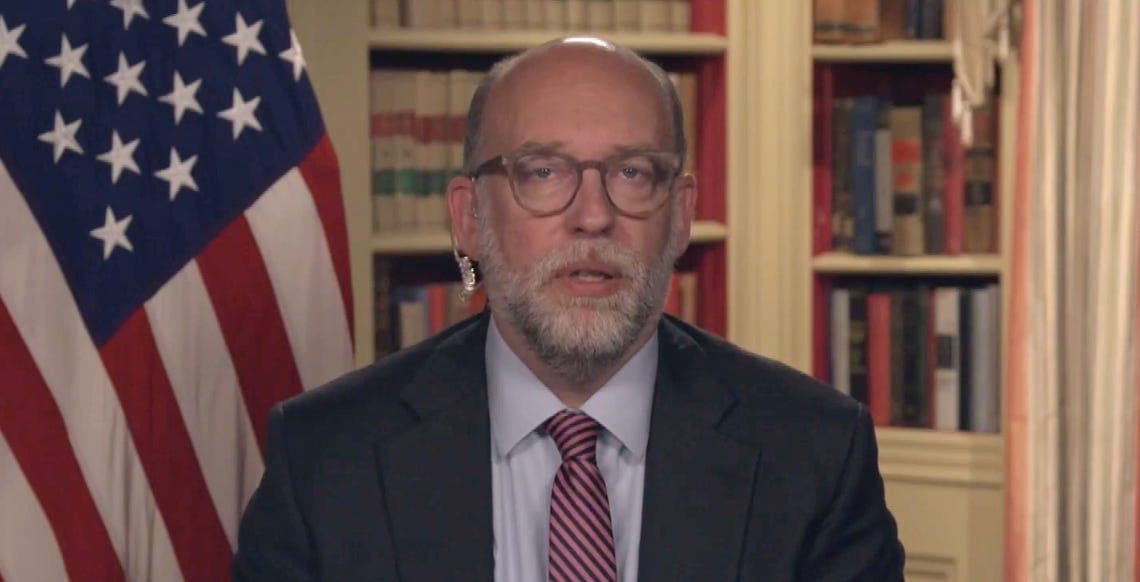
Podcast Overview Podcast Title: American Optimist Host: Joe Lonsdale Episode Title: Ep 120: OMB Director Russ Vought on the Big Beautiful Bill, Making DOGE Permanent & the Looming Battle over Impoundment Episode Description: The episode features Russ Vought, Director of the Office of Management and Budget (OMB), discussing various fiscal policies and institutional reforms during the Trump administration. Key topics include the Big Beautiful Bill, the future of DOGE funding cuts, and insights on the Impoundment Act of 1974.
Key Guests
- Russ Vought: Director of the Office of Management and Budget, key architect of Trump’s budget and regulatory strategy.
Episode Breakdown Introduction
- Introduction of Russ Vought as a critical figure in Trump's budgetary and regulatory agenda.
Role of OMB Director
- Key Responsibilities: Managing federal budgetary matters, overseeing regulatory review, and ensuring agency compliance with presidential directives.
- Lessons Learned: Vought reflects on lessons from Trump’s first term that inform strategies for the current administration.
The Impoundment Act of 1974
- Definition: Legislation limiting presidential power over spending.
- Discussion: Vought argues the Act is unconstitutional and discusses efforts to restore presidential control over appropriated funds.
The Big Beautiful Bill
- Overview: Vought claims this bill represents the most significant mandatory spending reform in history, estimating cuts of $1.5 trillion.
- Key Components: Includes reforms to Medicaid and changes to student loan programs.
Future of DOGE Cuts
- Discussion on DOGE: Vought shares insights on making cuts identified by DOGE permanent and strategies to implement these cuts.
- Tools for Implementation: Emphasis on legislative measures and executive actions to enforce budgetary reforms.
Dismantling the Consumer Financial Protection Bureau (CFPB)
- Critique of CFPB: Vought outlines the CFPB’s overreach and its negative impact on businesses and consumers.
- Efforts Made: Discusses efforts to minimize CFPB’s regulatory powers and establish a more favorable environment for innovation in the financial sector.
Optimism for Washington, D.C.
- Fiscal Restraint: Vought expresses optimism about the potential for real fiscal and regulatory restraint in Washington.
- Broad Vision: Describes a future where the administrative state is effectively reined in, leading to a balanced budget.
Key Takeaways
- Administrative State Reforms: A focus on restoring proper constitutional balance and reducing bureaucratic excesses.
- Significant Budgetary Reforms: Emphasis on the impact of the Big Beautiful Bill and the importance of permanent savings measures through DOGE.
- Legislative Strategy: A commitment to using executive power to achieve budgetary goals, regardless of congressional support.
Conclusion
- The episode concludes on a hopeful note, with Vought articulating a vision for a streamlined government focused on fiscal responsibility and innovation, enhancing accountability within federal agencies and promoting a balanced budget.
---
This summary captures the essence of the podcast episode featuring Russ Vought, highlighting critical discussions on fiscal policy, the Impoundment Act, and efforts to modify or eliminate ineffective regulatory bodies.
Written by AI. May contain mistakes. Listen to the episode to check what was said.
Transcript
Automatic transcript. May contain errors.0:00Let's talk about the big beautiful bill. Some of my friends on the right, people like Elon Musk, were upset they didn't think it cut enough. If you're the American people and you're like, these guys are full of it. Why would I ever believe that they have a desire to move towards a balanced budget? We've changed that. This was the first time we had something that passed and had achievable, meaningful savings. Where does Doge come into play? Doge identified a lot of savings. We're in the process of making those permanent. $3 million for Iraqi Sesame Street, LGBT activists in Congo. So we now have a playbook to be able to get more and more of the way to a balanced budget.
0:41Russ Vought is a director of OMB for the Trump administration. He was in charge in Trump 45. He's in charge today. This means he's the architect of Trump's deregulatory cuts. He's the architect of the budget. A lot of debate right now about what happened in this bill recently. Russ explains how he sees it as cutting over a trillion dollars in key areas and setting the tone to shrink government a lot further. He's excited for what's coming up with Doge. And he has some interesting theories you're going to hear a lot more about soon. What's the Empoundment Act? What's the Unitary Theory of the Executive?
1:10These are terms you're going to start hearing a lot more about in the coming months, setting us up for some very big fights about the power of the president, his ability to fire people, his ability to set the tone in DC and what power he has versus Congress. Let's hear from Russ about what's going on in Washington, D.C. Welcome to American Optimist. We have Director Russ Vought with us of the OMB today. Russ, thanks for joining us. Absolutely. Good to see you, Joe. You're the OMB Director for Trump 45 and 47, so you know what you're doing. You're a key architect of Trump's agenda, reigning in the administrative state, reforming the budget.
1:40Give our audience a quick crash course. What are the levers an OMB Director has? What are you in charge of and how are you helping the president? Sure. We're involved in pretty much every budgetary matter that's involved in administration. Anytime an agency is spending money, we're a part of that conversation. All federal regulations go through our Office of Information and Regulatory Affairs for cost-benefit analysis, a legal review, policy review on behalf of the White House. And then anytime you have two agencies that are working, that all of government, the management part of OMB is involved in making sure things are rolling out consistent with where the president wants to be.
2:18And so it's a really key office for a president to use to get a handle on the bureaucracy, ultimately with the ability to use the apportionment power that the president has to turn off funding if it's necessary until he can make sure the bureaucracy isn't wasting money on things that are inconsistent with his administration. Well, I'm really excited to get into some of the stuff you're doing. I've read a bunch of your research from before you were in again. Tell us, what were some of the key lessons learned from the first term? Like what are some of the things you're doing differently than the first time Trump was there?
2:52Well, I think we had a lot of theses that turned into convictions over the course of the first four years and getting to think about the job as in exile while we were trying to plan. And the president was running again, trying to get back into office. And one of those was the extent to which you really have to be a describer of the types of problems that the bureaucracy is prone to. And one of those things is just pushing money out the door. And if you don't come out there and say, look, the fundamental way that the town has functioned on the basis of 50 years under the Empowerment Control Act, if you don't kind of go out there and describe that and name it and say, you know, we have fundamental problems with it, you're not setting yourselves up to have the moral high ground to do what's necessary to turn the funding off.
3:51I think that we've learned quite a bit on the issue of at-will employment with government employees, the extent to which we've never really used reductions in force in the first term. That's something that is certainly something we've used extensively. and the speed, the number of shots on goal with regulatory efforts, DREG, all of those things are things that we're just doing at a quicker pace because we know what we're doing. We could do it on day one. Let's take a look into the ICA. I guess one of the things you talk about is the unitary executive theory. What does that mean? And I guess it was 1974, right?
4:32We had this act where they're trying to limit Nixon's power at the time, very Democratic Congress. And basically, you believe the Constitution doesn't actually allow them to do that. So you're able to go faster here. Are we going to get that to the court eventually? Like, what's going on with this thing? I expect that to occur. The president ran on Impoundment Control Act being unconstitutional, the notion of restoring presidential control over the ability to not spend money. And we obviously believe in congressional power of the purse, the notion that Congress sets a ceiling and you can't go above that ceiling.
5:05That's a hallmark constitutional principle. But the founders never envisioned in 200 years of presidents never had to live under the constraint of having to spend every dollar. And that's really something that was imposed in the 1970s with the passage of the Impoundment Control Act. And I'll just note, even when they passed that bill, they had to call it the Control Act and not the Impoundment Prevention Act because they recognized the extent to which presidents had this authority. And it's basic common sense. If you as Congress say, look, we want you to do something for$100 million. We think it's important for the country.
5:41Here's the funding. And we can do it for$75 million or$80 million. Just as good. Are you really going to ask us to buy flat screen TVs and copy machines at the end of the fiscal year to get the money out the door? That's insane. Everyone knows that's insane. But ultimately, there's more to the story, Joe, in the sense that this became a fundamental aspect of how portions of Congress, not necessarily the entirety, but the leadership of Congress, the committee chairman, the appropriations committees, really used it to control the bureaucracy to have it more oriented towards Congress than the president.
6:17And those are the types of reforms that we saw from progressives over the last 125 years is the extent to which you're trying to weaken the presidency, set up independent agencies that are not considered in their own minds reporting to the president of the United States. The executive branch, there's one president. He's in charge of the executive branch. He's in charge of all of the agencies. And that is something that, again, the president ran on the notion of making all these independent agencies bring in their rules to AWIRA. And we want to make sure that from a funding standpoint, the president has the ability to spend less than an appropriation.
6:59And we've got a lot of executive tools up to using impoundment that we intend to use and are looking for opportunities to do so. Well, I'm excited to get that in front of the court and to take back that power. Another area in the 1970s where they went really extreme without Congress was stopping your ability to fire people, right? So in the late 1970s, Jimmy Carter had a whole new framework for everything he was going to do. And actually, some of the stuff he did in Georgia, by the way, wasn't totally insane. He actually got rid of a bunch of agencies. But it seems like the Congress back then was to the left of him and they were totally controlled by unions, right?
7:31And so they put in all these crazy rules. They got rid of any merit-based tests at all. And they made it basically impossible to fire people. How do we get around that law? Like, what do we do? Obviously, we have to follow the law, but the law is crazy. It seems like some of it's against the Constitution. What are we doing in terms of civil service reform and being able to fire people? Well, even under current law, if you typically went through the process of – and the processes were extensive, you could remove people that were not aligned with your administration. But obviously, it took way too long.
8:03I think what we've been able to do with the reductions in force is to dramatically change events on the ground in a way that allows you to reduce the workforce substantially and kind of assume, look, we're going to a lower level. It has to be at a categorical level. You've got to say a particular office is coming by X amount and RIFS is not necessarily an individualized one person is inconsistent with our administration. But you can say, look, this whole division is something that we don't need anymore and it's going to look very differently. So those are the types of things that I do believe are very new with this administration that we've seen some of the best successes along that front.
8:50Secondly, the reform to make it so that if you are a career individual that's engaged on policy matters, and I've classified my organization, OMB, as 90 % of the people at OMB are engaged in policy matters on behalf of the president, being in a situation where you are essentially in the category of the at-will employment, right? So that is a very important reform. We're going through the rulemaking process on that. And if your schedule policy, which is kind of how we talk about it, you're going to be in a category of it being expected. You know, you're not the firefighter at the Forest Service.
9:37You're not necessarily a NASA engineer, but you're writing regs. You're implementing decisions to fund the wall. These are the types of things that are policy positions and, you know, we'll be able to have a much tighter control. Look, we, and I've told this to my organization, you know, we want the best of your advice, your expertise, your skills over many different administrations. This is not an effort to get the best of that continuity of government. But when a decision is made, often after an extensive process, and the president makes that decision, it's time to go. And I think that's what this initiative has allowed us to turn the corner on in a very fundamental way.
10:22And I see it in my agency. Our agency is at the forefront of a lot of these activities and very united behind what the president is trying to do. That makes sense. You need the president to be in charge. I want to dig into that merit thing briefly, though, also, Russ. So I'm maybe a little too obsessed with the Pendleton Act of 1883, which created a lot of these protections, but also a lot of tests. And when you see America went one World War I, World War II, we went to the moon, the people running all the agencies used to have to pass pretty hard tests. Most people couldn't pass them. So you had some sense of the merit of people in charge of various things.
10:56And then those were taken out in the 70s. Is there any chance we can find ways of putting that merit back in? Are you thinking about that or looking at that area? I think it's a great idea. We're always looking for good ideas, you know, in terms of making it so that you have the highest possible standards for our career civil servants. We also want to make sure that we have people that may not have the advanced professional degree, but they're just really good at their job and the ability to hire and to ensure that, look, this is not going to be fixed overnight. This is one of those paramount progressive movements was to create this expert class that was divorced from the actual management of the president of the United States from his oversight.
11:43And we're going to need these kinds of reforms. And hopefully we have enough movement to change events on the ground that we lead to efforts by Congress to lock it in and actually have reforms that are more enduring than what our administration might be able to accomplish in four years. I hope so. Let's talk about the big, beautiful bill. So a lot of stuff in there, major accomplishment getting it through. Some of my friends on the right, people like Elon Musk, were upset they didn't think it cut enough. As far as I can see, it does contain unprecedented budget cuts in terms of the mandatory savings.
12:16I think it's$1.6 trillion. Obviously, there's a lot more to cut in government. Can you walk us through what's the most important elements of the bill and how to think about that? Yeah, I think you nailed it. There's a$1.5 trillion in savings to mandatory reforms, which is some of the big structural drivers that we have. If you looked at the biggest mandatory reform in history, it would have been 1997 and$800 billion adjusted for inflation. So we very nearly double it at$1.5 trillion. We fully pay for any spending that's in the bill for the border or for defense, Golden Dome. And we pay for additional tax relief that's in there as well.
12:57So this was a net reduction in deficits of$400 billion. And so that would all go to helping with the debt and deficits. So what's the deal with the CBO attacking the bill, right? They have all these crazy projections. Are they just inaccurate? Do we have to fix it? What's going on there? So CBO uses a baseline. So anytime you have a bill, you've got to judge it against what is current law, right? What is current policy, current law? And CBO, and we've said this for decades as conservatives, CBO looks at bills and they say any tax relief that has a sunset is going to go away. But they don't do that with spending.
13:36So with spending, they ignore the sunset and they assume it's eternal. With tax relief, they don't. And so you're constantly in the situation where if you just extend current law, and there was a lot of that in this bill, it was$3.8 trillion of the cost was just extending TCGA from 2017, they would say that's a cost and a hit to the deficit. Now, we may say, look, the baselines, we're not in a situation where we're headed towards balance. We need to go further. Those are all legitimate debates to have. But the notion that this was a cost, that a new cost is something that's just not true. And it's unfortunately, if you're a fiscal watchdog, and I work with all of these fiscal watchdogs, and you're like, I want to make the deficit the biggest issue, and you're generally policy agnostic, and you don't care if a tax increase occurs, then of course you're going to use the jerry-rigged score to be able to put into the ether the fact that the bill is going to have this big cost or increase in the deficit.
14:41It's just not true. And we've done a lot of work to get out there and explain this, because they think if you're – the other aspect of which they don't do is they don't – they certainly don't score the impact of that tax increase. If we were to not do the extension, we would be having a recession. And that's certainly not built into their numbers. And what I've tried to do, Joe, is explain it on the basis of the static scoring to the deficit hawks. If you don't share our view of the economic growth that will materialize from this bill, We believe it's in the neighborhood of$4 trillion, 3 % economic growth compared to 1.8 % that CBO assumes.
15:21If you don't – we want to win it on both terms. We believe in dynamic scoring. But if you're just a static guy, this bill reduces the debt and deficits. You just have to deal with the fact that the way this town views is it's organized to stop conservative policy. So we're not going to be bound by the way that CBO looks at the world. Is there any way to fix CBO? Would we have to pass a new bill in Congress with 60 votes so you couldn't do it? Is that the problem? How do you do it? You know, CBO needs fundamental reform. It's required in statute to have a CBO. I think there's probably a new enthusiasm to deal with CBO.
15:58They're constantly ruining the debates that we have based on the information that they're putting out and not really assessing the world as it is, as opposed to kind of how the straitjackets that, you know, they put themselves in. And I think you'll see more of that debate going forward. So I want to dig in one more time on this bill. So it's$1.5 trillion or so versus the biggest mandatory savings cut before was$800 billion, I think, in the late 90s with the Republican Congress and Clinton. What is that$1.5 trillion in cuts exactly? What are we cutting? Sure. There's substantial reforms to Medicaid that protect the program, but also allow us to get illegals off the program to deal with what is essentially a money laundering scam, where a state will have almost a fake tax on a health care provider, use that to cause their Medicaid share to go higher, and then turn around and spend more dollars.
16:59They pocket, they have some walking around money for things like illegal immigrants in the case of California, but then they use that to then send it back to the states. So they've used the tax, they then make the provider whole. In some cases now increasingly they're going farther than making them whole. And then they've also benefited their state by giving themselves more ability to expand Medicaid and deal with other of their own issues. So it's a major reform. It was put in the Senate. The House had gone a couple steps that direction. The Senate went even further. And then just getting a lot of the waste and the abuse out of the program.
17:37And since Obamacare passed and the expansion has been causing states to move aggressively towards the 90-10 match, there's been a complete breakdown in oversight of most of the program. And that's why you have so many illegals in there. That's why you have questionable activities. And this does a major effort along those lines to deal with that issue. But there's reforms across the board, the student loans, making it so that we still have a student loan program. But the extent to which you can just go and get full repayment for any type of degree, we're beginning to make reforms away from that status quo.
18:26And it's overall a very exciting bill from the standpoint of mandatory reforms. Look, we had nothing. This is the point I made to conservatives. There was literally fiscal futility for decades. All of the talk about, you know, and discussions and policy debates, you know, Paul Ryan never went anywhere. Never went anywhere. And we obviously as administration have a very different view of his approach to mandatory reforms. But regardless, nothing passed. This was the first time we had something that passed and had achievable, meaningful savings that now, if you're the American people and you're like, these guys are full of it.
19:07Why would I ever believe that they have a desire to move towards a balanced budget? We've changed that because the president just secured one and a half trillion dollars consistent with the fiscal framework in our first six months that I would, I think tariffs included is heading us dealing with a third of what's necessary to get to a balanced budget. I love it. And I love a lot of those things, capping the crazy student debts. There's all sorts of great things in there. Where does Doge come into play? So I still have a lot of friends working on good things at Doge that I'm aware of. I guess there's the rescissions.
19:39Just recently, I was talking to the vice president briefly yesterday. I think he was a tie-breaking vote on this package. They're trying to push ahead. What's the difference between mandatory and discretionary? And how's Doge working on this? Is it going to be able to make any impact? So right now, Doge identified a lot of savings in conjunction with OMB. we're in the process of making those permanent. So we have a lot of different options to do that. We heard from a lot from Congress of a desire to send these rescissions bills up and we will vote on them. I want to make sure they pass. So the first bill was the bare minimum of, and the easiest hurdle for them.
20:19Corporation for Public Broadcasting, a billion dollars, dealing with their next two cycles of advanced funding, and then$8 billion in foreign aid, all of which was connected to what Doge had found in waste abuse,$3 million for Iraqi Sesame Street, LGBT activists in Congo, Pride events in Prague. All of that stuff is embodied in the bill that the Senate moved forward last night. And it hasn't been easy, Joe. I mean, I think that's part of the story. We're on the one yard line with an incredible bill, but it has not been easy. It was a tight vote in the House. Why is Senator McConnell fighting this stuff?
21:01Is he just in a bad mood with the administration? It seems like obvious stuff to vote for. You know, I think we're trying to continue to explain to people what this bill does and what it doesn't do. And if you're not interested in cutting this, the bare minimum of what we've articulated, then it's a huge indictment on the town. And it's one of the reasons that we've been so clear about our executive tools that we can do more unilaterally through the president. It's like, we're going to make these cuts permanent. We've got a lot of different options. We would love to have Congress as a willing partner, but they need to prove that they can pass these bills because otherwise we're going to have to look at other options.
21:43I love it. And I hope you can get tens of billions more from some of the doge work and make all of us happy to get that done there. A couple more questions before we finish up, and I want a short time here. I want to ask about the CFPB. This is one of the worst examples of government run amok. I think you were named the acting director to help dismantle it. Tell us a little bit about this. Yeah, it's the second agency that I run. It's across the street from OMB. We've really tried to minimize what it does. And what we found is that this is an example of an agency that in its DNA is really aimed at being weaponized against the American people.
22:21The notion that this is consumer protection is just not true. They are trying to make it so that people in ordinary course of businesses are constantly having to deal and look over their shoulder from someone, a supervisor, an examiner here in D.C. And just give you an example of one that we tried to overturn. They went after a company called Townstone who had a podcast and was complaining as a private citizen about the extent of which there was crime in Chicago. I think if you did a poll of anyone in the country in a diner, they would say, yeah, I think there's probably crime in Chicago. In fact, the mayor of Chicago, a Democrat mayor, had said substantially the same things, and they accused this individual of redlining.
23:18They had no evidence of actual intentional discrimination. They had no evidence of any discrimination. And they used the powers of the CFPB to go after this individual and put them in court for years and pay fines and things like that. We tried to overturn it. But it's an example of the extent to which the agency is weaponized against the country. The other aspect of it is they just would make up law. You know, it has legitimate enforcement powers on things to prevent, you know, veterans from getting screwed and military lending oversight. All of these are legitimate. Doesn't necessarily have to live at the CFPB long term.
24:03Could be somewhere else. But the notion that you would just give a speech and opine that you're going to now have a new regulatory oversight that's unconnected to any amount of law, and it's just you put it out there, or worse, to regulate through enforcement, you sue someone on a legal theory, and that's really just a form of regulation. We saw that constantly. So we've been doing a lot of dismissing cases. We pulled down all the regulations that are the guidances that were kind of being used as the enforcement mechanism. And then now we're going through the process of deregulating where we have to actually send out a new regulation.
24:47Well, love what you're doing there. A lot of my friends think of it like a mafia, that if they speak up, it comes after them and they're very afraid to say anything. And it's all these crazy theories, disparate impacts. So that's going to help innovation a lot in the financial world. I want to end on an optimistic note. We really appreciate the work you're doing. What's the best possible outcome for reigning in the administrative state? If everything falls your way, what does this look like? And why does it matter to the American people? Well, I think at the end of the year, we're set up for the president to be able to say conclusively that we've had fundamental change on the two biggest aspects of what's necessary to get our hands around the country fiscally, the mandatory and discretionary.
25:26If we, particularly with what we're doing on making these cuts permanent from the Doge effort, from OMB's effort, we'll be able to have basically turned the last 50 years of precedent and paradigm on its head and be in a situation where we now have a playbook to be able to get more and more of the way to a balanced budget. And the way that we're doing that are using the same tools to get a handle on the administrative state. So we're already in the process of doing that. And I think you're seeing it every single day. The CFPB is probably one of the best examples, not unlike USAID, of changing events on the ground.
26:07And so if you just put in motion executively what you can, consistent with the law, it forces Congress to respond in a positive direction. It limits their ability to say no. In fact, they have to catch up with you and you've set the terms of the debate. And I think we're doing that in every agency and we're doing it aggressively. And I think we're going to have a great story to tell. I think we already have a great story to tell. You guys are doing very important work. Thanks very much for joining us, Russ. I appreciate it. You bet. Thanks, Joe.
From the publisher
We're joined this week by a key architect of President Trump's budget and regulatory agenda: Office of Management and Budget (OMB) Director Russ Vought. How much does the Big Beautiful Bill actually rein in spending? Will DOGE cuts become permanent? What is the Impoundment Act of 1974 and why will this be a crucial fight in the coming months?
We discuss these timely policy issues and more with the "radical constitutionalist" at the helm of Trump's OMB in his first and second terms. From ending critical race theory at all federal agencies to spearheading historic deregulatory actions and making bureaucrats accountable again, Director Vought has been instrumental in some of the most consequential policy battles in Washington D.C.
In this episode, we begin with his efforts to reform the administrative state, and why the next major battle will center on the 1974 Impoundment Act and the President's authority over appropriated funds. Learn why Democrats' retaliation against President Nixon tipped the balance of power toward unelected bureaucrats, and how Director Vought seeks to restore proper constitutional balance. Next, we dive into the Big Beautiful Bill and why he believes it's the most consequential mandatory spending reform to ever pass into law. And when it comes to discretionary spending, he reiterates his commitment to make the DOGE cuts permanent and outlines possible strategies, whether through impoundment or a rescissions packages via Congress. Finally, we talk about his role in winding down one of the most egregious examples of government overreach — the Consumer Financial Protection Bureau — and why Americans should be optimistic that, for the first time in decades, real fiscal and regulatory restraint is starting to take hold in Washington D.C.
00:00 Episode intro
01:43 Role of OMB Director & lessons from Trump’s first term
04:37 The looming battle over impoundment & Presidential power
07:25 Can we return merit & tests to government?
12:12 Big Beautiful Bill - how much does it actually cut?
19:41 What's the future of DOGE?
22:03 Dismantling the Consumer Financial Protection Bureau
25:10 Can Washington DC actually be reined in?
This is a public episode. If you would like to discuss this with other subscribers or get access to bonus episodes, visit blog.joelonsdale.com