In short
Podcast Notes: Joe Lonsdale: American Optimist
Episode Title
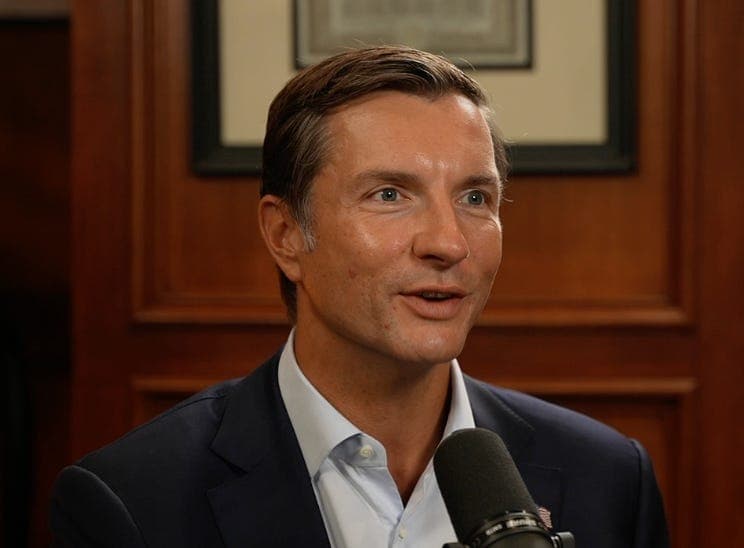
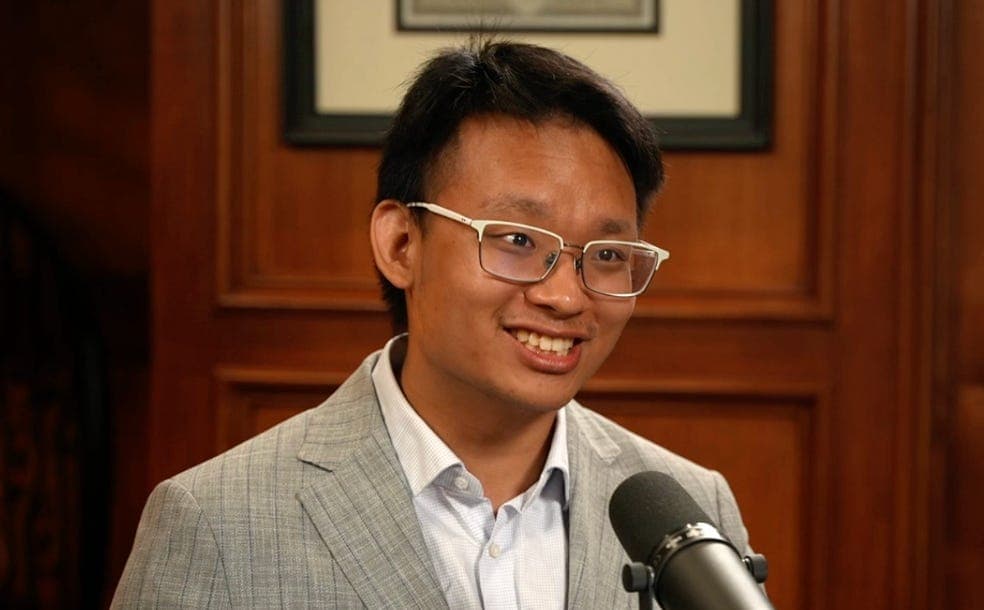
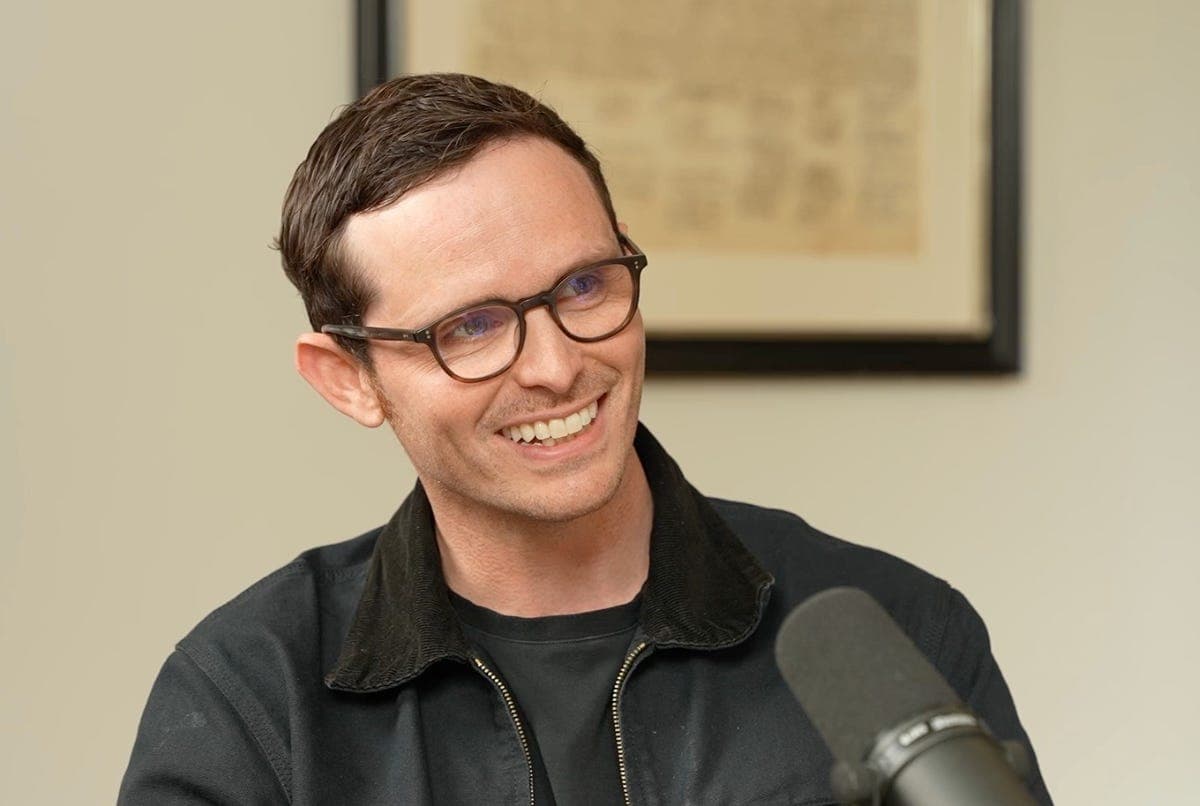
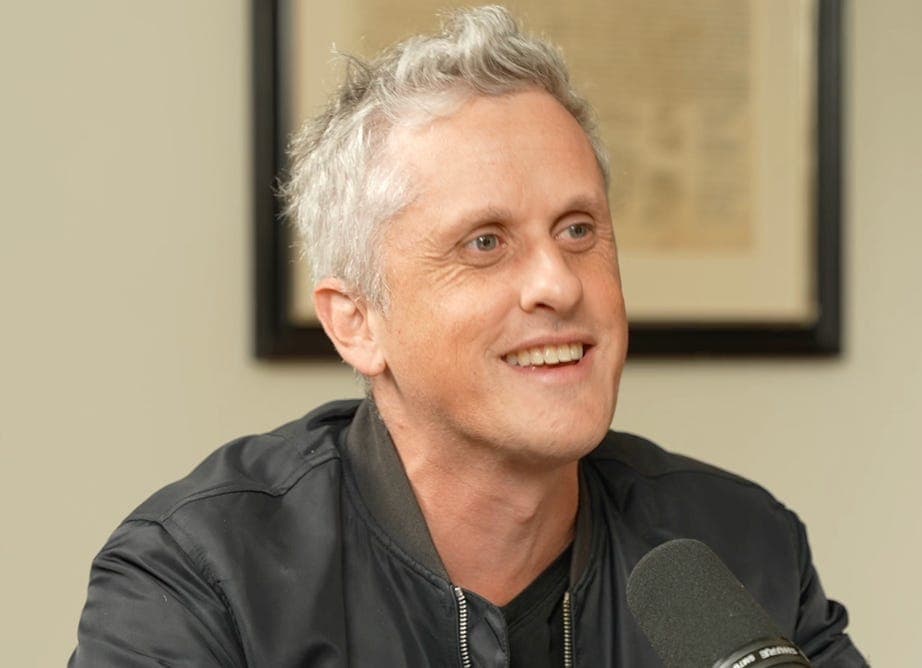
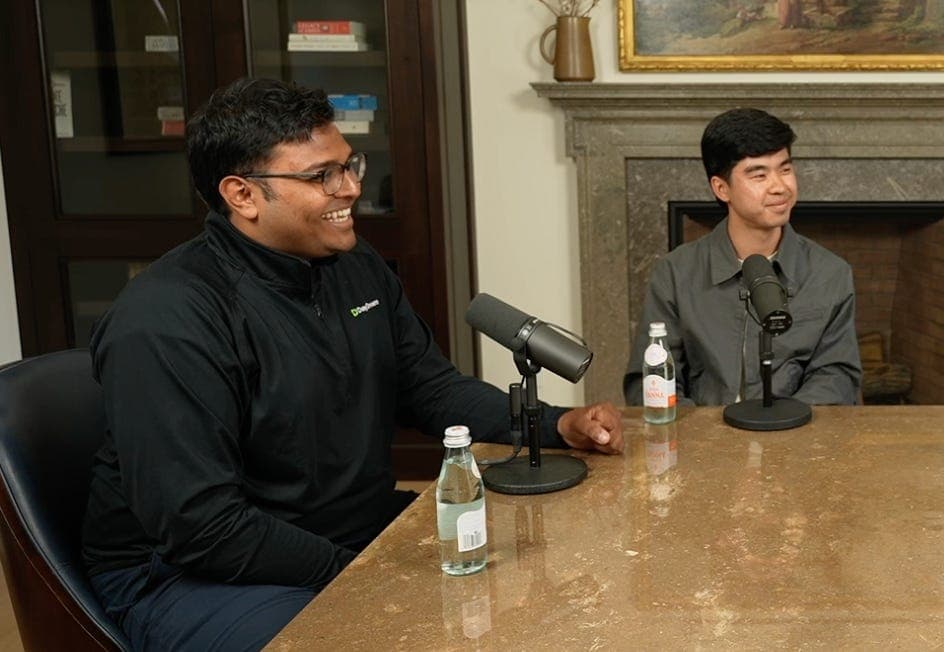
Ep 122: The AI Services Revolution with Shreyas Parab & Anton Lin of DayDream
Episode Overview In this episode, Joe Lonsdale discusses the transformative impact of artificial intelligence (AI) in the dental billing sector with Shreyas Parab (co-founder & CEO) and Anton Lin (co-founder & CTO) of DayDream. The conversation revolves around the inefficiencies in the $5 trillion US services economy and how AI can address these issues, particularly in revenue cycle management (RCM) for dental practices.
Key Topics Discussed
- Importance of Dental Billing
- Current State: The dental billing process is highly inefficient, characterized by:
- Thousands of insurance companies with unique billing processes.
- Lack of standardization leading to unstructured data management.
- High rates of claim denials (approximately 20% of claims).
- Significance: Efficient billing is crucial for the financial health of dental practices, affecting their operational performance and overall patient care.
- AI in Dental Billing
- AI Transformation:
- DayDream employs AI agents to expedite the billing process, reducing the time taken from years to weeks for recovering claims.
- AI can interact with insurance companies, handling queries and resolving issues often considered mundane for human workers.
- Indistinguishable Performance: AI agents have reached a level of sophistication where they can pass the Turing test, being perceived as efficient human workers by insurance agents.
- Impact of AI on Employment
- Fear of Job Loss: There are concerns about AI causing layoffs in the dental billing workforce.
- Reality: Shreyas and Anton argue that AI frees up billers from mundane tasks, allowing them to focus on higher-level responsibilities like consulting and growing the dental practice.
- Productivity Gains
- Efficiency Metrics: Staff can now handle 3 to 5 times more claims due to the automation of repetitive tasks.
- Financial Recovery: For example, DayDream helped a dental practice recover $400,000 in outstanding claims within six months.
- The Future Vision
- Expanding Services: DayDream aims to evolve into a comprehensive back-office solution for dentists, managing not just billing but other operational aspects like finance and accounting.
- Community Focus: The goal is to empower local dental practices, allowing them to thrive without the burden of administrative tasks.
- Market Trends in Dentistry
- Private Equity Involvement: The rise of private equity in dental practices, driven by a need for operational efficiency.
- DayDream’s Position: The company supports both independent practices and larger groups backed by private equity, tailoring services to meet diverse needs.
Key Takeaways
- Optimism for AI: The use of AI in dental billing is seen as a positive force that enhances productivity, creates new jobs, and empowers small business owners.
- Community Impact: The integration of AI not only helps in operational efficiency but also enriches the community by allowing dentists to focus more on patient care.
- Sustainable Growth: There’s a belief in a future where AI enhances the capabilities of human workers rather than replacing them, creating a more productive and satisfied workforce.
Conclusion The episode highlights the potential of AI to revolutionize sectors within the services economy, particularly dental billing, by improving efficiency and overall practice operations. The discussions encourage a hopeful view of technological advancements, suggesting they can lead to job creation and better outcomes for small business owners and consumers alike.
For further exploration, visit the [American Optimist blog](https://blog.joelonsdale.com?utm_medium=podcast).
Written by AI. May contain mistakes. Listen to the episode to check what was said.
Transcript
Automatic transcript. May contain errors.0:00There are thousands of insurance companies. is. Every single one has a different process, different workflow. Standardizing all of this unstructured data is a massive problem. What we've deployed is a bunch of AI agents that will call the insurance company and go figure out what exactly happened. Not only do we pass the Turing test, the human agent was like, you're really good at your job. You're so efficient. The AI was like, yeah, thank you so much. Like really appreciate it. So you want to take human workers, take away the waiting on the phone, the boring stuff, let them operate at a higher level to actually create more value.
0:28People always ask us, does this mean I have to lay off my team? Actually, what we find
0:39Dental billing? Why are we talking about dental billing? It's actually tied to some of the most important stuff going on in our economy today. Shreyas and Anton are building Daydream, which is a quintessential AI services company. There's this huge wave of these companies in our economy that are going to empower small business owners. They're going to help other workers work on more interesting problems instead of having to do the grunt work. It's going to make these small businesses more profitable and it's going to raise productivity in our economy. A lot of people are afraid of what we're seeing with AI right now.
1:08Talking to Shreyas and Anton, you can't help but be optimistic for the impact here on dentists in this case, over 140 ,000 dentists on small businesses and on the jobs people get to do in the future economy. This is great for our kids. It's great for our country. Excited for you to meet Shreyas and Anton. Welcome to American Optimist. Today, we have Shreyas and Anton from Daydream. Daydream is a dental billing company, which is like, why are we talking to a dental billing company? But obviously, there's a huge wave happening in AI and productivity, and you guys are doing awesome work. So, thank you for joining us.
1:37Thank you so much for having us. We're stoked. Yeah, excited to be here. I think a lot of people say, oh, yeah, you guys are like building autonomous warships and like curing diseases. Like, why are you doing this? But, you know, in my mind, this is some of the most important stuff in our economy because like basically, there's a lot of smart people that spend, you know, millions of hours on these sorts of things. And it's a total mess and it makes everything more expensive. And you guys I guess, how many dentists are there overall in the country? There are over 140 ,000 dentists in America. 140 ,000 dentists.
2:04And so this is a key workflow for all of them. Why is this important for you guys to solve? What's your background here? How'd you come to this? Yeah, I jokingly say I was born into dental school. My mom was pregnant with me when she got into dental school. She raised me all throughout it. When I was 10 years old, she started her own practice. She really built her own American dream. And I was there. I was the IT guy, the bookkeeper, the janitor. I did not choose the dental life. It definitely chose me. And since then, I have not been able to escape it. And Anton, you grew up in Fremont, which I did as well.
2:31Is there dentistry in your background or are you just interested in the idea? No dentistry in my background, but interested in great businesses and also just like helping automate this like really boring process. I love it. And so maybe explain to us a little bit, really boring process. Like what is dental billing? There's something called healthcare billing in general. This is a type of healthcare billing. How does it work and why does it matter? Yeah. I mean, think about any experience any American has had at a dentist. There's always someone who's gotten a bill that they don't understand. an insurance denial that doesn't make sense, suddenly a bill that is higher than they expect.
3:00And it's because in dentistry and in healthcare in America, not only do you have to pay the dentist, the insurance company has to pay the dentist. So there's this really long, complicated process called revenue cycle management, where basically when a dentist does work on a patient, they have to submit a bunch of paperwork to the insurance company. If that paperwork so much has a missing comma, the insurance company can deny that claim, which means then the dentist might not get paid or the patient has to pay. And so there's all of these rules and regulations and this complicated process the dentist has to follow.
3:30And if they don't, someone else has to pay. I mean, how many rules can there possibly be? Hundreds of thousands of rules. Because there are thousands of insurance companies. And every single one has a different process, different workflow. And again, standardizing all of this unstructured data is a massive problem. And I think it's also like hundreds of thousands of rules, but also no rules, right? Nothing written down. It's something you just have to learn as it happens. Crazy. So there's like a specialized like profession of just learning over time which things are going to work, which things are not going to work.
3:58So if someone is a dentist, they're starting off, they have to like hire people who know what they're doing here. Yeah. In fact, you know, when you look at what it takes to become a dental biller, there's no class, there's no college for medical billing. It's a whole industry. You can go to a community college and take a medical billing class in dental billing. There's no experts. All of them just learn from previous generations of dental billers. So most people in the industry, you ask them, how did you learn how to do this? They said, well, the office manager before me taught that. And then I just spent 20 years doing it.
4:27Does someone write like a good book at least or something? Actually, someone on our billing team actually wrote a book on how to do it. And so we actually put out content on how to do this because there's a huge lack of knowledge in this industry. So take us through what you guys are doing. Like, obviously, AI is going to change this and make it a lot easier. AI still makes mistakes, too, though. It's not perfect. So what's possible here? What are you guys building? Yeah, I think at its core, we're like a tech-enabled service. So what we actually have is a team of roughly 30 billers. And we're really prioritizing human in the loop.
4:58And so our AI does a lot of the boring manual processes and does to the extent that it can. But obviously, sometimes there's some higher order decision-making need to happen. And to do that, we rely really on our team of expert in-house billers. Each one of these billers are US-based. They have eight years of experience in a dental office doing dental billing. and they really help us like train, not just like our own AI systems on how to do this process, but also like the engineers work with them very, very closely and like really, really understand the different workflows that are required to do this entire process.
5:30So I love this framework of what, you know, there was a essay in 1961 by Lake Litter, a famous kind of computer science philosopher, which he wrote about man-machine symbiosis, which we always talked about at Palantir. Like what does the machine do best and what do the people do best? Back then you said man, because that meant everyone, but it's, you know, I guess nowadays you'd maybe say people-machine symbiosis, this. But fortunately, we're not politically correct around here. So, it's okay. So, in general, obviously, there's more things the machine can do than it could before. But what you're saying is it still can't do everything.
5:55Is it getting to a point where maybe you can do like almost everything? Or is there still like, you have a ton of these billers. In 10 years, we'll be doing everything. How do you think about it? I think in a couple of years. What I would say is that dental billing, like the difficult part is it's very unintuitive. So, it's also not like written down that's not really in like the training data right um and that like unintuitiveness is why we need the billers to like sort of correct the system also like for the billers to teach the engineers like why is this the way that it is um and i can maybe give an example of like one edge case so it's like let's say um you got an eob back from the insurance company and eob is basically a receipt on how they adjudicated and or paid the claim right this usually comes in the mail um along with a check.
6:38And it could be that you got this EOB back for this claim, and you're like, I never even submitted this claim. And it turns out that they sent it back under the parent's name instead of the child's name because they're on the same insurance plan, right? And so you'd have to go into the EHR and go figure out, oh, actually, I'd never submitted this claim. Let me check the family file. Let me go look at this. And then it turns out you submitted four x-ray codes, and they returned back, oh, we paid you for one code. And you're like, why is this the case? And it turns out, oh, they combined the different codes together in this very unintuitive way, in a way that like they would have to pay less.
7:07And so like all of these just weird edge cases is something that it's extremely hard to encode into like business logic. Interesting. So there's something where you try to say you owe me for this and this, and they say, actually, this thing over here is only one code, but that should cover both of these and therefore I'm going to pay you less. Exactly, exactly. And so there's just all sorts of these nuances. And it turns out there's a combination that's massive. Yeah, yeah. And like nothing's written down and it's extremely unintuitive. And so like business logic before wasn't able to really like handle these edge cases, but LLM doesn't sort of reason as to why something may have happened and like taking more context.
7:36I think what you guys are doing, what's interesting to me as well, is I think this is like a example of a lot of other businesses that are going to exist in our economy, right? So there's this massive wave. I think there's$5 trillion of wages or something in U.S. services economy. This is an example of going after and making that more efficient, which obviously creates wealth for everyone, except for, I guess, some of the billers you're replacing, right? But overall, it's a good thing for the dentist. Overall, it's a good thing for the consumers, right? Well, I will say on the billing side, one thing that I always tell our billing team is So much of their work historically has been working in the business, doing data entry, being on hold with the insurance company.
8:10These people are experts in their craft. They have eight plus years of experience. They should be working on the business. So many of these single location private practice dentists, they're small business owners who are looking for someone to come in with expertise to help them build and grow the business. Interesting. And one thing that I always tell the billing team is, you know, you are going from just doing dental billing work to becoming dental consultants, really helping them grow the business, identifying new revenue opportunities, new ways to grow the business. And that's what humans are really good at.
8:38This is a really great point. So you want to take human workers, take away the kind of grunt work, take away the waiting on the phone, the boring stuff, let them operate at a higher level to actually create more value. And so what you're doing is you're going to have more value created per person by far. Exactly. Exactly. Exactly. And one thing that's kind of counterintuitive that we've seen when we work with groups and large practices, people always ask us, does this mean I have to lay off my team? And we always say, no, actually what we find is they reallocate the resources of their existing team to, again, higher level work, which then grows their business, which then merits even more people to actually sustain a growing practice.
9:15You end up having to hire another dentist or another person to help with the office as it grows. That's very interesting. And so what has been the response? so far? What kind of efficiency gains are you making? How's it working? Yeah. Do you want to talk about the... Yeah. One really big thing is that we help recover outstanding claim revenues, outstanding AR. So AR, this is money that they try to charge, they never got it. Maybe it was from a year ago or two years ago. Yeah. Basically, one in five claims that you send to a dental insurance company just won't come back within 30 days. And you're going to have to call or go to the insurance portal and figure out what happens.
9:4620 % of the claims you have to go chase. Yes, exactly. And so what we've deployed is a bunch of AI agents that will call the insurance company and go figure out what exactly happened to your check, right? Maybe you got lost in the mail and the agent will ask to reissue the check. This is crazy though. Like you should just be an API at the company, but they don't have an API, which there's no way for the computer to talk to it. So you have to pretend to be a human to talk to it. It's the only way to do it. Exactly. And like, you know, maybe on the insurance company side, like they will also have AI talking presumably in the future and they'll just like AI to AI.
10:13AI will start talking. I heard like maybe they'll start developing like a secret language at some point. It's much faster. maybe morsegut i don't know english is not necessarily like for us it's it works you know chinese or english or something but like but they probably have some other language yeah it is funny because right now we have the ai voices talking our ai agents talking to the like the humans on their side yeah and not only do we pass the touring test we had a call two weeks ago where the the human agent was like wow your voice sounds really familiar i didn't i talked to you yesterday you're really good at your job you're so efficient and the ai was like yeah thank you so much like really appreciate it.
10:46I'm doing this a lot. And again, like it's, we see these conversations happen all the time. In fact, word on the street is the insurance rep prefer the AI phone calls because of how efficient they are. That's true. The AI phone calls get right down to business. You know, you know, you know, they're going to be, it actually is funny. Customer support that works through AI. People are happier in general, right? On both sides. It's like, it's not as annoying. What, what, what kind of efficiency gains are you seeing? Like, how do you guys think about this from like a productivity perspective? I mean, one of my KPIs is always how many dollars are we putting back in the dentist pocket?
11:16So there was this wonderful husband-wife team in Colorado. They had$800 ,000 in outstanding claims. This is like almost a million dollars. It is a lot of money. Over multiple years. Over multiple years. And again, they're not alone. I mean, we work with practices where this is like not uncommon to have half a million dollars. And if you can imagine being a small business owner or even a large business. A lot of money for everyone. It's a lot of money for me. Exactly. So it's a lot of money. And, you know, in six months, we were able to recover$400 ,000. So$400 ,000 that was held up in these insurance companies.
11:49And again, if it was just humans doing it, it would take years to do this kind of cleanup. Is this because you're doing so many calls as well? It's like, like, I guess it's because what kind of stuff? So it's suddenly like for every outstanding claim that the human has to work instead of them spending 30 minutes on the phone, the AI agent is doing it instead of them having to go navigate these old insurance portals and spend a bunch of time just looking up data, it's brought back. The AI agent brings that data back for the human to then decide, hey, what is the next step? And you kind of start to see this weird paradigm where our billers are orchestrating these agents as almost like a puppet master, right?
12:25Like, hey, intern, go do this. Go on hold for me. I will wait for you to come back with the information. I'll make a decision. And what we find is that they're able to work through three to five times more claims in the same amount of time because they're no longer doing this menial work. There's something weird where our society works based on trust right now that you can call people. What if people just started spamming everyone? I guess it'd be expensive to do that or something. Like it's kind of interesting. You just call people and get things done. There's no, there's no like code to get in or something.
12:51Yeah. You know, it's funny. Sometimes the insurance reps, they'll ask the AI, like if they suspect it's AI, Hey, how's the weather where you are? They'll like try to ask like codes to suss it out. And now the AI has gotten good enough to get around it which is pretty cool how's it whether we are you can answer you just get ready for the answer yeah yeah oh man but do people get angry sometimes that it's ai not angry but sometimes they will hang up the phone um but like that happens like less than eight percent of the time exactly you measure it of course and so it's working you're getting the old money back you're making their business more efficient in terms of operating it's going to cost less like where do you go beyond billing are you thinking about other use cases for this yeah i mean i think we're all in on dental.
13:29Again, maybe it's just because of the way I grew up, but there's so many problems that a dental practice has that most people are not seeing. If you think about these people, you know, people like my mom, they're fantastic clinicians. They went to a ridiculous amount of schooling to become amazing dentists. No one ever taught them how to do insurance billing. No one ever taught them how to read QuickBooks. No one ever taught them how to do expense management. The world that I see Deidre moving into very quickly is right now we help dentists bring money into their business. But what happens afterwards?
13:58Where do they store that money? How do they help grow that money? Where do they spend it? How do they spend it? I could very much see a world where we are back office in a box for dentists. Interesting. Where suddenly dentists can just focus on the thing they love, which is patients. And then we handle a lot of the back office functions, like making sure that everyone's getting paid, making sure that the patients are getting the right bills sent to them, making sure that, hey, your revenue is growing and you're able to grow your business, not just survive. Making sure you get the accounting hooked up and the legal and everything hooked up, huh?
14:26Really the financial operating system of the business is what the vision is. That's awesome. So there's 140 ,000 dentists, right? You start, you're just getting going. How are you reaching out to more dentists, by the way? I'm curious. Like how do you get people, you're saving them a lot of money. How do you tell them about it? Yeah. I mean, we've been doing a lot of creative stuff. Again, this is an industry that traditional people have not innovated on go to market on. And actually, if it's okay, I'll show you an example of one of these. So this is a campaign we're doing. I don't know if you can see this uh it says your cash is here i'll put it in front of me like this what's it say there you go your cash is locked inside ready to set it free and inside is a little uh little surprise here it's actually a safe and in order to unlock this safe that's cool uh-huh you have to schedule a demo with us we'll send you a three-digit code and inside is a prize because you know for so many practices their money is quite literally locked in by you send them like money in here sometimes?
15:22Yeah. In fact, in these boxes could be anywhere from$100 to$5 ,000. So, they're regularly just got$100,$100 bills. And word on the street is, I know we were talking about this before the pod, maybe a special surprise from you. That's right. That's right. Well, I was saying if you're going to have$100 bills, maybe we should have like some fun$500 bills as well. I used to collect these larger bills, which I don't know if dentists are into that. Maybe they would be though. I think it'd be cool. That's like one insurance claim. Well, it's actually particularly relevant today, actually, given all the discussion around tariffs is I think McKinley would actually be the president on the$500 bill.
15:53So we have, we have a lot, I just interviewed Mark Andreessen on, on this a few weeks ago. And, and like, you know, a lot of what Trump's doing was very similar to what McKinley would talk about with tariffs. So anyway, cause it may be interesting to get one of his bills too. That would be cool. That'd be cool. Yeah. I love it. So that's, that's a neat idea. So you're sending everyone saves with cash. I guess if they don't schedule a demo, the cash is just locked in. Which is kind of, which is kind of similar to what's happening with their cash as it is. Exactly. If they don't use someone like Daydream, their money is quite literally just in someone else's pocket.
16:19And again, I think what we've really noticed is, you know, in traditional SMB marketing and go to market, you know, it used to be field sales. Now, one of our biggest sources is actually, that could be the YouTube thumbnail, you know, that's a good one. Yeah. But it's, you know, Facebook groups. We are in so deeply embedded in these communities. I probably spend 10 hours a week on weekends, Saturdays and Sundays, just answering dentist questions in these groups, adding value to their, you know, to their community. You know, it's funny if you go back two generations in our country, a lot of the dentists were like immigrant Jews.
16:55And so a lot of my, my, my mom's side's Jewish and a lot of like my great uncles and stuff were dentists and they're great dentists. And it's kind of like, seems like paralleled now with a lot of the Indian communities of the case. Yeah. Yeah. There's a lot of South Asian dentists and a lot of immigrant dentists. I mean, you know, I know, you know, we talk a lot about like American Optimist. You guys talk a lot about on the show, like, again, so many dentists are really chasing their American dream. They came here from a different country and build their own business. I mean, it is like, it is very exciting.
17:23And you live very well at the dentist. These people are making hundreds of thousands of dollars, right? And they're doing very well. Well, they are producing hundreds of thousands of dollars. Are they collecting all of it is what we help them do. But, uh, so, so I want to ask about this because this is a, there's these independent practices in dentistry. Uh, there's another trend, which is private equities rolling up dental, maybe in part because it is hard for some people to run their own offices. What do you think about this trend? Is that trend not as necessary with what you guys are doing, maybe?
17:45Yeah. I mean, we've seen it almost double the amount of dental practices in the past six years that are owned by private equity. It's doubled in the past six years. And this trend is because of like, people are saying, I'm tired of running the business side. I just kind of want to get this off of my hands. We see this trend happening. We serve both single location, small practices in Omaha, Nebraska, all the way to large groups that are private equity backed in Texas. I mean, we serve the whole gamut. Our take is dentists should have that choice on how they want to run their business. Yeah, you'll help either one.
18:17If they want to be independent, you can help them do that better and with more what you build. But if you want to make a private equity group work better, you guys are good at that too. And for a lot of these private equity backed ones, what we're noticing is like, we basically become their drop-in RCM department. These private equity firms are great at acquiring practices, doing real estate deals. They're not really good at dental insurance. No one is really good at dental insurance. And so what we see them coming to us as is like, hey, I have a lot of money on the table. Can you help us recover it?
18:44And the ROI for them is quite clear. And then for the SMB side, what we see is, hey, I literally cannot find people in Omaha, Nebraska to do this. you know? So we serve both, but it is both exciting and also somewhat interesting to see the impact on healthcare in America. And I would say dental to me is the last frontier. You know, in medical, there's been so much consolidation over the past 20 years. In dental, 70 % of the market are still people like my mom who just love being in the community, serving the community. You know, there's not a diner in our town that they don't know Dr. Sue, you know?
19:17And I think that's special. I love it. And so there's this long tail of healthcare in America, especially dentistry. What's the optimistic case? How does healthcare look different if this stuff works? I think the world that I'm really excited about is when we have these groups that start to form. So not these thousand location practices, but groups where they basically really know deeply the region, they deeply know the community and the needs of that community, and are able to run more efficiently and actually focus on patient care and what the patient needs. So much of the bad rep that dentists get in this country of, oh, they suddenly prescribe me more fillings than I think I need.
19:51It's because dentists are feeling the squeeze of the supplies going up, the insurance companies getting more complicated. In the world where Daydream is in every one of these 140 ,000 practices, the dentist can just focus on patient care and they don't have to worry about the back office BS. So, no, it makes them do it right. That is unfortunate. Some of them have bad incentives. Some are really good, I guess, in that. Let's take a little more into the AI as well here. Because I think this is, if we're stepping back again, there's going to be a lot of businesses in our economy that are making things more productive.
Read the full transcript
20:21They're helping people operate on the more interesting problems because the AI is taking care of the more routine things. How does that work? Like LLMs, obviously, we all see them. I think very famously went crazy on X recently and said some really intense things. These things are obviously still flawed. They're still figuring everything out. They're still making mistakes. How are you harnessing this to do a good job and not just be crazy? Yeah, yeah. I mean, I think the way that we think about it is there's probably two modalities of how we use LLMs. One is data rails, data normalization. And traditionally, I would say one of the differences between dental and medical is that the data rails in medical are far, far better.
20:58And so this might be calling the insurance company to get the status of a claim check, where traditionally it might be an API call. right um or using like ai agents to scrape the web portals um and to gather information about like a claim or like uh like benefits for a patient right what what is covered what it's not so the ai can go look and get all the information from the web portals as well as have all the data that you guys have exactly and so that's like data normalization and like augmenting what are like broken data rails with llms right and that wasn't possible before because it's so unstructured right um and then i would say like the the second part is like probably like the more agentic llm stuff, which is like, okay, now that I have all this data, how do I act on it?
21:36What decisions do I do? How do I post this into, how do I post the payment into the EHR in the correct way, given A, B, and C conditions that are all three individual S cases mixed together? So, you're mapping out, apparently we'd call it an ontology. You're mapping out an ontology of the data which you're structuring, and then you're mapping out the ontology of the workflow, basically, and defining the types of workflows you could do and seeing which ones the agents could do. And then you're training them how to do it, you're practicing? Yeah, exactly. And so like, the way we do is that every engineer at our company owns a workflow and they're measured on the automation lift on that workflow, right?
22:12And so they work extremely closely with the humans and the billers sort of understand and then sort of, you know, some may call it prompt, some may call it like engineering, like business logic. They, they sort of just figure out how do we mimic these human workflows in a way that is like repeatable and obviously like has to be extremely high quality because you are basically doing accounting for the dentist. And so they're iterating a bunch on things, including the prompts to get it to like work a very high percent of the time. Exactly. And are there like how high percent of time does it have to work for that workflow for it to like be usable by the billers?
22:44Like, how do you think about that? It's very dependent on the workflow. I would say sometimes we go with the, you know, like Devin-esque approach of like the agent doing everything. And sometimes we go with the cursor approach of let's augment the human a little bit and like maybe try to 10x the human. But I would say like you have to be very intellectually rigorous with how you choose to automate. And I'll give one example. It's like if the agent calls the insurance company and you need 10 pieces of information and the agent is able to get nine pieces of information, the human still has to call the insurance company, wait on hold and get that last piece of information.
23:13So you actually ended up automating less than 90 percent of the work, right? Almost closer to 20 percent, something like that, because the human still has to do repeat work if you're not able to do all of it. Right. so just being very like rigorous about how we measure the automation and like how we go about automating certain parts um i think it's like sort of like the key sauce in what we do are there certain things you learn like okay that it should say being at the call i have 10 pieces of information i need in order to get this call done right and can you help me with them or things like that or that you kind of practice with or how does that work yeah i think like we obviously play around with the script we play around with voices um but i would say like part of it is the calling but also part of it is a lot a lot of just like like like it's like web scraping stuff and like how sure are you that the information you got is correct because if you're unsure the human doesn't really want to trust the system and the human will go back and redo the work are there certain voices that work better than others like is it like a sean connery or is it like a friendly woman or like like what do people want to hear we ab test a whole bunch of different voices a whole bunch of different accents like a very strong indian accent so they think they're outsourcing Indian person calling.
24:18We have used some offshore accents. And I would say that like one funny tidbit is the name that we use for our AI agent is Alex Lee. And the reason is it's the shortest one. It's like ethnically ambiguous. It's gender ambiguous. It's very, very easy for the AI to spell it out correctly. Yeah, that's funny. And I think like one of the, you know, going back to the reasoning and the agent, how do we get it better? Having that billing agency of human data labelers in-house. This is a part of the story we maybe didn't mention, which was, we basically went out and acquired an existing service business, a billing agency that ran, and then we used AI to automate it from the inside.
24:54And one of the unique things about that was, effectively, we have data labelers in-house. So as we are experimenting with these prompts and these agentic workflows, the agents are not having to net new understand. They're watching all of the data that we're collecting as our human team is doing the work. This is a very interesting strategy. So you actually bought a services business and then use that to kind of like get going and training and working on, which is probably a very common thing a lot of our people are going to do. You get one services business, you make it much better and you can expand it massively, huh?
25:25Exactly. Exactly. And I would say that probably saved us like years of time having to come up with a zero to one of, hey, how does dental billing work? Because for example, for the phone calls, we have, before we started automating the phone calls, we had literally hundreds of hours of our humans talking to the insurance company. companies. And that was what we used to build our agent. And how much, we're trying to talk productivity, is it like, is like twice as productive, three times as productive? Or how do you think about that? Yeah. I mean, across the board, I, you know, for all of the workflows, I would say about three to five times more effective.
25:59Every one person is now three to five times more effective. Does that mean that if you'd owned a services business and then you did this, you'd make like three times as much? Or how do you think about that? Maybe not just the margin, but also the productivity of the employee. So they're able to handle so much more volume right and so you know i think it's really cool when we see you know we have a couple of practices that are growing really fast they went from like we started working them when they had two locations and now they have like five or six and it used to be one human that was on that account and it's still just one human and i think that's exciting because when they go to seven or eight i still think it's going to be one human and you can charge them more if they're doing more things though exactly and so i think you do start to see it bleed into margin, but it does take a little bit more time.
26:41Is the AI just getting a lot better every month or two? Or is it about the same? Or how's the rate of improvement? It's like a lot more data integrations. The AI is obviously becoming more accurate. And it's like, it's handling more of the long tail of edge cases of which, like in this industry, there are a bunch, right? And I would also say that like, part of this is like productivity and margin improvement. But actually, I think like we put a lot of effort into automating in service of margin and productivity. but actually we've seen like an equal amount of improvement in just overall quality and accuracy of the service and the reason is because like like for a human services based business it's very hard to ensure quality when like there's a different person servicing your account and it's like all about the training and it's all about you know like standards and sops and stuff but when we're able to encode best practices directly into the llm then we know that it's doing high quality work all of the time and it's something that we can guarantee across like thousands of different clients you're making the service just way better so dennis working with you just going to get much better service.
27:34Does it make sense for you guys at some point to like buy other billing businesses that exist and have a bunch of clients and just make them like way better and worth way more? Yeah, I think so. I mean, I think the way we think about it now is like, we did it once and we're going to keep on growing this. And then eventually we're going to know what our LTV CAC is. And then if, you know, sending out cash in these lockboxes, you know, once we run out of these ideas. Yeah. I mean, I think not only that, I could imagine a world where we white label the software to these other billing agencies and say, hey, you know, we have all of these other services like card spend, bank accounts, bookkeeping and say, hey, you guys have all this distribution in your region.
28:12Yeah, we'll just white label the software. And then you guys help us increase the productivity of the practice. And we grow with that. That could work. Maybe we just buy them. Yeah, I'm down to buy them. Cost of is always a famous like the cost of like time is greater than the cost of cost and just like get bigger faster. Right. Yeah. And it's like, but I love that you're starting with, let's be like, especially because you come from your mother being in the industry, let's like be the best thing possible for the dentist. And that's a really cool place to start from that you care about what they're doing.
28:37And I think that's been, you know, I jokingly say our marketing budget is actually our customer success budget. Dentists have this one unique shared qualities that they all went to dental school. So every dentist, every one of our customers knows 30, 50, 200 dentists. When we do a fantastic job, we're covering hundreds of thousands of dollars. Guess which group chat they're telling? Like, hey, I can probably buy a new Porsche. Like, And why? It's probably because of daydream. I like to keep that going for as long as we can. You guys are crushing it. It's going to change how dentists and patients experience that.
29:10And then the ending here for Optimism for America, what other trends should investors and builders be paying attention to? What has this taught you guys from doing this? Two things. One is the power of American small business is still alive and well. I mean, we see it every day where we are working with dentists who are suddenly... you know technology historically has left these smbs out we live in an age where actually intelligence can be distributed to a small business owner to grow their business and not need to hire the staff that they needed to or to actually have the knowledge to be able to grow and i think that's super exciting to me is in all of these small towns that we we serve you know these dentists they feel like they need a lifeline and for the first time technology is not something they're scared about they're excited about it it might actually help them build their business And then the second trend, which I think is maybe counterintuitive these days, people say AI is going to come and take all of the jobs, right?
30:02That's like maybe the negative case for AI. What we actually see is the opposite. We see our billers becoming more empowered to do more work. We see them working on the business. Our billers, you know, we have one in eight people on our billing team. They're military spouses, right? These are in small towns in Missouri who are suddenly growing dental practices across the country. A lot of them, they counted themselves out of the workforce. Maybe they started families or they wanted to work remotely. We got a chance to bring them back into the fold and help them give them the tools to be able to serve more customers.
30:35And I think people worry that AI is going to take everything. I actually think we see the bull case every day where a mom in Missouri City is now a prompt engineer and working for us. And not only that, she's going back to school to be a software engineer at night. And I think that's the American dream we see every day. That's amazing. Well, that's a great, optimistic note to end it on. AI creating more jobs and making small business better. I'm bullish on America with that. Thank you, guys. Thank you.
From the publisher
This week we're talking dental billing! Why? Because large parts of the $5 trillion US services economy, like medical billing, are inefficient and dysfunctional, which holds back growth and increases costs for Americans. How is AI transforming these broken sectors? What's possible now that wasn't just a few years ago? And if AI can revolutionize dental billing, what does that mean for productivity at large?We dive into the AI services wave with DayDream's Shreyas Parab, co-founder & CEO, and Anton Lin, co-founder & CTO. DayDream is applying AI to transform revenue cycle management (RCM) for dentists, and helping them recover the money they are owed faster and more effectively. Chasing down errant claims can take humans years; DayDream is doing it in weeks with AI agents!We begin with the broken state of medical billing -- thousands of rules per company, little written down, and knowledge passed down person-to-person like an ancient religion. Shreyas and Anton explain how LLMs can reason through unstructured processes in ways that previous business logic couldn't. Next, we discuss the lost revenue from missing claims (nearly 20% of all claims!), and how AI agents are becoming so effective that humans can't tell the difference. This raises the obvious question: will agentic solutions result in mass layoffs? Shreyas and Anton say the opposite is true -- AI is enabling billers to operate at higher levels and focus on expanding the business instead of waiting on hold with insurance companies. If top talent plus AI can revamp Byzantine systems like dental billing, there's a tremendous opportunity to reform the entire services economy. This means economic growth, and disinflation that benefits everyone.
00:00 Episode intro
01:35 What’s so important about dental billing?
07:50 Will AI destroy dental billing jobs?
9:50 AI agents are becoming indistinguishable from humans
17:45 Private equity rolling up dental
24:56 Understanding the AI services model
This is a public episode. If you would like to discuss this with other subscribers or get access to bonus episodes, visit blog.joelonsdale.com