In short
Podcast Notes: Joe Lonsdale - American Optimist
Episode Title
Ep 123: The New Space Age with Ian Cinnamon
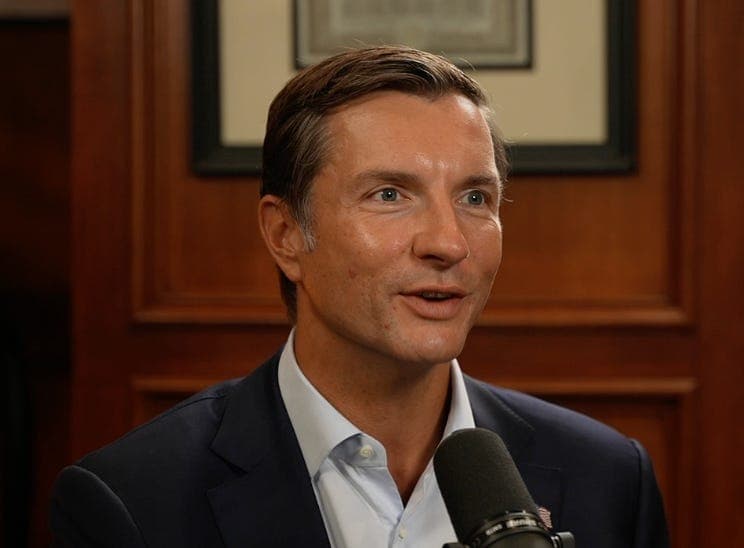
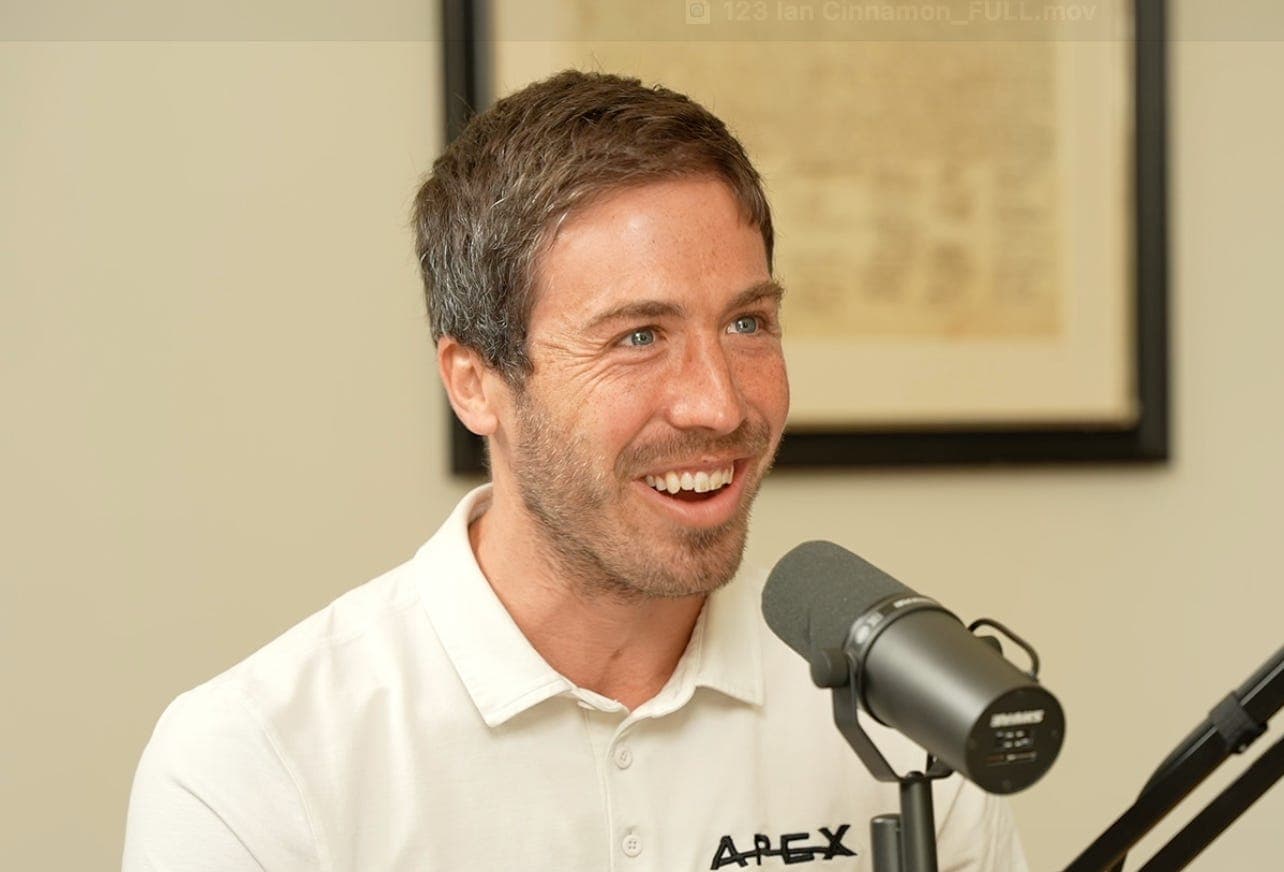
Episode Overview In this episode of *American Optimist*, Joe Lonsdale interviews Ian Cinnamon, the co-founder and CEO of Apex Space, a satellite platform company. They discuss the evolving landscape of the space industry, including the impacts of reusable rockets, the changing economics of satellite manufacturing, and emerging opportunities such as asteroid mining. The conversation also delves into geopolitical aspects of space, particularly regarding competition with China and defense initiatives like President Trump's Golden Dome project.
---
Key Themes and Discussions
Ian Cinnamon's Background
- Education: Ian studied brain and cognitive science at MIT and later attended Stanford Business School.
- Career Start: He began his entrepreneurial journey by co-founding Superlabs with Mark Pincus and later founded Synapse, a computer vision company that was acquired by Palantir.
- Project Maven: Ian worked on this U.S. government initiative aimed at applying AI to defense.
Space Industry Dynamics
- Emerging Opportunities: The space economy is rapidly evolving with an increase in satellite launches and new defense and commercial applications.
- Shift in Satellite Manufacturing:
- Traditional satellite models are moving toward more frequent launches of smaller, less expensive satellites.
- The concepts of "proliferation" (launching many satellites) and "attritability" (making them disposable) are gaining traction.
- Impact of SpaceX: SpaceX's reusable rockets have transformed cost structures and launch frequency, allowing for new market dynamics.
Golden Dome Project
- Overview: The Golden Dome is a defense initiative aimed at providing a protective shield against potential missile threats.
- Strategic Importance: Ian emphasizes the need for both terrestrial and space-based interceptors in maintaining U.S. defense capabilities.
Geopolitical Considerations
- China's Space Ambitions: Discussion on China's plans to expand its satellite constellation, raising concerns about technological competition and potential espionage.
- U.S. Defense Strategy: The importance of staying ahead technologically and not allowing adversaries to gain a strategic upper hand.
Innovations Beyond Earth
- Asteroid Mining: Ian expresses excitement about the potential for mining asteroids to obtain rare earth metals, likening it to concepts found in science fiction.
- Future of Space Exploration: Speculation on human colonization of other planets, including Mars and the Moon, and the implications for humanity.
---
Important Insights
- Market Growth: The satellite bus market sees $34 billion in annual spending, with a significant shift towards higher quantity, lower-cost satellite systems.
- Engineering Challenges: Ian discusses the complexities of developing satellite platforms that can withstand harsh space environments while being cost-effective.
- Vertically Integrated Manufacturing: Apex Space aims to integrate manufacturing processes to enhance efficiency and reduce costs in satellite production.
Concluding Thoughts
- Optimism for the Future: The episode closes on a hopeful note, emphasizing the potential for space technology to improve life on Earth and enhance national security.
- Call to Action: Joe and Ian encourage listeners to remain optimistic about technological advancements and the opportunities they present for humanity.
---
Episode Structure
- 00:00 - Episode introduction
- 02:09 - Ian's journey through MIT and founding Synapse
- 06:17 - Insights from working at Palantir and Project Maven
- 08:53 - The light bulb moment that led to Apex
- 15:23 - The space boom and new opportunities
- 21:30 - Engineering challenges and lessons from SpaceX
- 27:50 - China's ambitions in space
- 30:19 - Discussion on Golden Dome and interceptors
- 36:00 - Understanding satellite orbit altitudes
- 40:00 - Concerns about IP theft from China
- 44:13 - The future of asteroid mining and possibilities beyond Earth
---
Final Reflections The conversation between Joe Lonsdale and Ian Cinnamon presents an insightful look into the future of space exploration and technology. With the convergence of innovative engineering, geopolitical strategy, and entrepreneurial spirit, the podcast highlights the transformative potential of the new space age.
Written by AI. May contain mistakes. Listen to the episode to check what was said.
Transcript
Automatic transcript. May contain errors.0:28SpaceX started reusing their rockets. I started this company to say, what if we applied computer vision to those problem sites? That's kind of how Palantir talks about the world. So no coincidence, Palantir ended up buying this company. At Palantir, I had the opportunity to work on something called Project Maven. This is the one that famously Google's protesters stopped it from working out. And inspired us to say, let's go work on it. I want to be able to go have fleets of satellites that go to these asteroids and get these rare earth metals and bring them back in abundance to Earth. All the science fiction books, all the Asimov books, I want those to become reality.
1:04Ian Cinnamon is the founder of Apex, a satellite platform company. There's a lot of stuff changing right now in the space economy. You've got thousands of more things going into space that are attributable and that are involved in all sorts of defense and commercial applications. The big, beautiful Golden Dome is going to require a massive amount of work in space. You have SpaceX changing what's possible. You have new defense systems, communication systems, spy systems out there changing what's possible. Ian comes from MIT. He sold a company to Palantir, was a star at Palantir, but he saw this massive change going on in the space economy, wanted to be at the center of it.
1:38He's now building satellite platforms that are vertically integrated and being done faster than anyone else and are taking advantage of huge changes in our economy. Let's talk about space. Welcome to American Optimist. Today we have with us Ian Sidderman, the founder and CEO of Apex, which is a satellite platform company. Thanks for joining us. It's great to be here. Thanks, Joe. So Ian, tell us how you got your start. You were at MIT. You went to Stanford Graduate School of Business. We were sometimes skeptical of business school students. Me too. That's fair. MIT is somewhat legit. What did you study at MIT?
2:09So I studied brain and cognitive science, which has nothing to do with aerospace. But I fell in love with kind of how the brain works and how the mind operates. And for me, all of entrepreneurship, starting a company, selling a product, even programming and writing code and building hardware, it all comes down to the connection with what you're building and the human brain. Because at the end of the day, who's using anything you're building? It's humans. So if you understand that mentality, it makes it a lot easier to actually find that product market fit and build something that people want to use.
2:38Well, it's interesting. When we were starting Palantir, we were reading David Hume and talking about the brain a lot, too. A few of my friends were PhDs in cog size. I totally agree. It applies to a lot of things. In that case, it was how does the brain access data? But understanding the brain is understanding people and the reality. You started Superlabs first. What was that? What was that company? So right out of college, actually, I think this is where we actually first met. I had the opportunity to work with this Silicon Valley entrepreneur, Mark Pincus. And I started working with him. And he started an incubator called Superlabs.
3:08And I had the opportunity to found that alongside him. What year was this? This was 2013. I love it. Because he was because he and Mark's one of our genius, crazy friends. He was building a lot on Facebook early on. This was a little bit after that, though. So he built a lot on Facebook, had great success there. And then Zynga started shifting to mobile. And Zynga got to mobile a little bit late. And as part of that, he wanted to make sure he never missed the mark again on kind of what the next technology shift was. So I started working with him to explore virtual reality, augmented reality, and kind of whatever the next future medium was.
3:38And out of that, we ended up, when he parted ways with Zynga, we ended up working together on Superlabs. You guys sell some companies there? It worked out okay? So Zynga ended up buying it, which was a great outcome for Mark and great outcome for me. So it worked out very well. I got to be along for that ride. And really, Superlabs was Mark's brilliance and Mark's creation. And for me, it was an amazing learning experience. Getting to be surrounded right out of college by someone who is so successful and has... I mean, I think he's one of the most brilliant product thinkers I've met and has that mentality.
4:10He was incredibly... Mark always comes up with the most interesting, crazy ideas. I love it. Oh, yes. So great. We can talk about that another time. I'll have to bring them on. But then you founded another company, Synapse. That was a computer vision company. Is that right? That's right. So at MIT, studied brain and cog sci. And it's funny, even in studying brain and cog sci, you went to Stanford, right? So you'll know symbolic systems is a major that a lot of people took. And I tried to recreate that at MIT. That was really what I was trying to do. And as part of that, you end up learning a lot on the computer science side, but then also a lot on how the brain works.
4:41side. And it turns out artificial intelligence is exactly that, right? It's effectively how are we trying to operate in a way with computers with how the brain works, how neurons actually fire. Although that approach didn't end up being the one that created OpenAI, but it is related to it. Back then, that was the hot thing. That's what we thought AI was supposed to be. I was guilty of that as well. Yes. And this was back in like 2015, right? When I started exploring this. And I'm like, wow, what if we like mimic how the brain actually works? And started a company with that premise. And I really based it on the work that I did at the research labs I worked at while I was at MIT.
5:14And those research labs were funded by Department of Defense and Department of Homeland Security. And it really ingrained in me from the beginning that technology wasn't just something that you could use to get people addicted to video games and make money in those ways. But you can actually use it to make the world a safer place and make the world a better place and protect democracy. And for me, that was very inspiring. So when I realized you could take AI and combine that with the problems that I saw at the lab at MIT, where we were looking at things like full motion video coming off drones and how we analyze that.
5:47We were looking at x-ray imagery off security checkpoints at airports or courthouses or military bases. We were looking at some satellite imagery, and it's really hard to analyze that. So I started this company to say, what if we applied computer vision to those problem sets? The way you're talking about this sounds very Palantir-esque, because that's kind of how Palantir talks about the world. So no coincidence, Palantir ended up buying this company. Yes. Would you stay there for a year or two or what'd you do there? So we got to Palantir and had the opportunity to take the team that we had built and really be a key part of building out AIP and kind of that product line, which obviously is, I think, one of the coolest products that Palantir has.
6:23We at Apex today are a big customer of Palantir. I love it. And love using that product as well as many others. So it all ties together. But at Palantir, I had the opportunity to work on something called Project Maven. So Project Maven was the, or is the U.S. government's big efforts around how do we apply artificial intelligence to different kind of elements of defense? This is the one that famously Google's protesters stopped it from working on, which scared a lot of us. Meanwhile, you guys were going on it. Exactly, and inspired us to say, let's go work on it. Actually, there was a period where I remember we were all out here in the Bay Area, and there were all these protesters outside of the Palantir office.
6:58And we were like, oh, this is so cool. We're so proud to be able to actually work on this kind of stuff. This is what the protesters never realized is that they always make the people more proud to be like standing up for something they know is right, even though it's unpopular. Exactly. It was actually inspiring. It was like, wow, the work we're doing matters. Thank you for calling it out. My friends, I'm not allowed to say who it is, but one of my friends like got the security guards to like take one of their banners and like keep it secretly in his house because he's like, this is awesome. You know, it's like I feel like you can hang that in your garage.
7:25It's like, oh, exactly. Exactly. Look what I'm doing. This is like a good thing. It's very funny. The protesters get paid by the left to do it, but then they're actually just encouraging you. I think we took, like, our team took, like, photos in front of them at one point. And we're like, look, we made it, guys. Like, people actually care. It's actually, speaking of protesters, it's kind of funny. There's a big space conference every year, a satellite conference. And there's always protesters out there saying, stop. You're going to get the aliens to come to Earth. Oh, wow. And that's another one I love taking photos in front of.
7:53I'm like, look, it matters. It's the alien protesters. It's not clear whether or not they're crazy or not. I think they're paid for by the aliens. So, you know. Yeah, exactly. Who's paying for this? Totally unclear. Maybe those ones aren't paid for. Are there other lessons or processes at Palantir that you kind of took with you to Apex? Or like, what are the positive things to take away from there? So many. So, the biggest problem with that company Synapse was at the end of the day, we were building AI and computer vision algorithms. But we were applying them almost more as a kind of a consultancy where we'd see a problem space.
8:25We'd modify an algorithm. We'd go apply it to something. And we'd get paid for it. It would work well. But it was something that really never took off, right? We were able to make money and pay the bills and grow the team a little bit, but it wasn't really that hyper growth. And when I got to Palantir, the most impressive thing that I saw was you had this underlying platform or set of platforms, right? You had Foundry. You got them. You had others. And these platforms were, sure, you build them. You have to configure them to each customer. But the scalability of them was absolutely incredible.
8:55And you could take the same thing you built once and apply it to a completely different type of customer, but they end up having this very similar kind of problem. And it was almost like a light bulb moment in my head where I was like, wait a minute, this is the key to building a technology product that actually can scale and is really repeatable. And that was, for me, one of the things that I really took away from it. The other aspect, frankly, was just how to work with the government. Government is not an easy entity to work with. I had my first go at it when I was working at that research lab at MIT.
9:24But you know how that works in academia, right? It's like you get a grant, you're funded to do something. Maybe there's a crater or something. But it's very different than actually sales. It's easy to get sibbers, right? And being in that small business. What's a sibber for our listeners who don't know? It's basically a small business set aside, right? So the government, DOD, puts aside certain money to help innovation, which is a great idea. The problem is they kind of dole those out like candy, where it's not that hard to get a million dollars here, a million dollars there. And a lot of people mistake that as a signal of saying you're building something that people want.
9:58But the reality is, how do you convert that into an eight-figure contract and then a nine-figure contract and keep growing? It's a lot harder. That's the valley of death that everybody talks about. And what did you learn about how Palantir targets that that influences you at Apex now? Probably the best lesson that I learned is you need to really embed with the customer and deeply understand kind of the problem they're going through. But even if you can solve the problem that they're going through, if they don't have the right contracting vehicle, the right budget in place, and the right people, not just at the top, but at the bottom, who all want the same product, it's not going to come together.
10:29So the way that I think about it is like any government contracting requires money. It requires a contract vehicle. It requires the right person at the top to be advocating for it. The right users of it who are the actual end users of it wanting it. And the right customers, like user and customer are different, right? customers who's paying users the one important lesson exactly so you need all five of those to come together and that's hard it's very hard the way the way i like to think of it is when you're building one of these companies whether it's palantir apex or andrel or whatever whatever you have to a have some of like really really great breakthrough products in tech that's much better than what they already have that you said is what they need so it's all the all the hard work of building it that kind of product and tech and then you have to do all the hard work of building a company that knows how to navigate and sell to government and work with government with all the levels you're talking about and it's like in some ways it's two separate things you have to be a plus of both of them which is why it's a little bit of an unnatural act to build these companies you have to have almost been through something and seen it like like working before you figure out yourself which is why i think pounder took us a long time because we didn't know what the heck we were doing when we started because you got to figure out both of them but then you created a blueprint now i think for other people to see so even with like with synapse i would argue you know sure we had a like outcome that ended up being positive but it was overall like a failure, right?
11:43In my mind, if you kept the shares, it would have worked out pretty well. Exactly. Yeah, exactly. If I hadn't bought my home and held them, then it would have been great. But still, for me, one of the lessons that Mark Pincus actually taught me is if you're going to go start something, you're going to, by the nature of it, put your 200 % into it. So you might as well aim massive. So for me, success is I want to go build a$100 billion company. Anything smaller than that, in my mind, is a failure. You want to have a huge impact. I love it. So I want to talk about Apex. Before we do that, Apex is in LA.
12:10It's just, I guess, just north of LAX and north of El Segundo. Unfortunately, you mentioned buying the home. You bought a home, I guess it was near the fires. Can you tell us about this briefly, what happened with this? Yes. So my wife and I bought what we thought was a beautiful kind of starter home, first home. And we lived there about one year. We had our twins, which is amazing. And then a few months into that in January, I get a phone call from her saying, I see smoke. And I said, no worries there's fires in LA all the time that's why we pay our taxes like the fire department will take care of it and uh about an hour later I get a call saying I'm in the car with the kids and the dog and like I can't get out of the like house because there's like a line of cars and it's gridlocked like help me um and I ended up driving from our office home it's about a 30 minute drive saw the planes like dumping water and literally my wife is uh like facetiming me from the car and it's surrounded by flames the car next door is catching on fire and i like drop my car off at the bottom of the hill and run like two miles like straight uphill felt like i was in an action movie so honestly fun in the moment she's very traumatic for her and obviously in retrospect though and uh the entire neighborhood burned down and uh i think the most devastating part of it was the firefighters who as we were trapped in this gridlock we'd roll it on the window say where do we go?
13:30And they say, we don't know. We don't even have water for our hoses. The infrastructure was just gone. And it's really tough. And I'll say even now, we're very lucky to have a good friend who's letting us stay in her place in a five-minute walk from the office. So that's actually very convenient for me. But when we think about, okay, what are we going to go do in a year or two years? We have no idea. And your home didn't even have proper insurance, I guess, because we just lost the insurance market in California. Yep. So we had to go with the state insurer California fair plan. Which you would think, you know, we paid a lot of money for that every year.
14:02It's not cheap. We think, great, we have insurance. They won't pay anything. They say that, you know, they find, you know, lead, asbestos, all that in the house. And they say, oh, that's fine. You could move the babies back in there. No big deal. It's totally, totally crazy. Well, this is, I guess, how does it make you feel that like Western civilization seems to be breaking down around you as you build your company? I guess it's something to fix when you make some money, I guess. Yeah. You know, it is, I have to say, like this weird moment because it's like I'm spending all day, all night, every like in the middle of the night, building these satellites that are pushing technology forward and creating incredible defense capabilities, Golden Dome, all these great things.
14:40And then you look and you're like, we can't even have the fire hydrants have water to put out a fire. Like, am I working on the wrong thing here? But I think the reality is do a great job at what we're doing, hopefully make a tremendous amount of money, and then figure out how we can actually fix those things. And it's my friends and I and our job to try to hopefully, when we have done well, to fight for it. So we'll try to do a better job fighting for it. I'm in Texas, obviously. But man, there's a lot to fix there. Yes. I like recruits. So we'll talk about something other than that, though. Let's jump into Apex.
15:09And so you're at Palantir. You guys are crushing with Maven, all sorts of things. What gap in the market led you to wanting to build Apex? What did you see? So Palantir bought Synapse in 2020. And that was actually a very pivotal year in the space industry. So what happened was if you rewind a few years before that, say like, you know, 2019, 2018, 2017, et cetera, getting from Earth up into space was actually pretty difficult. And it was difficult because there was not really that many reliable and robust ways to get up there. SpaceX was starting to do pretty well. They had reliable launches maybe once a month.
15:42There were other vendors too, but it was still this thing that you didn't take for granted. Today, I think about getting to space and I'm like, ah, easy, right? Like SpaceX is launching at this point multiple times a day. Is it really multiple times a day? Not every day, but there's some days where they've done like three in one day, which is great, including like human launch. That's impressive. That's really impressive. But in 2020, we were at the turning point where they started to reuse the Falcon 9 rockets. And we went from being able to launch maybe once a month to about once a week. And then the reuse also made it much cheaper.
16:13obviously the way elon describes it you're not like blowing up the plane every time you use it so obviously this is actually something that i think a lot of people um not just in the industry but in general uh conflate so the cost went way down the price point elon is smart there's not really a reason to drop the price he doesn't drop it too much exactly you drop it enough to get rid of you know uh oh like all right we're the obvious choice but you don't drop it so much that you're not making a great margin that's fair it is and in fact the price has gone up every year since then so they have the pricing power now it's still very affordable right like if you rewind to 2015 or 2010 to launch uh our like small satellite like aries you'd be looking at 10 to 20 million dollars today it went from you know 1.1 million to 1.3 million so we're an order of magnitude cheaper than it used to be but it's still going up every year a little bit which is fair you know and i will say, when I see those price increases, my reaction is good for them.
17:11They deserve it. They've created this whole market. It's a great company. I'm an investor there, too. Yes. So you're building a satellite platform. Why was there need for another satellite platform? So the reality was because SpaceX started reusing their rockets, there was all this new access to space. The architecture for space started to fundamentally change. So historically, it used to be something where, take the US government, for example, we would go spend hundreds of millions or billions of dollars on one satellite. And that one satellite would last on orbit for 20 or 30 years. And it would be an amazing satellite, right?
17:44Great capabilities, great technology, really hardened. So it's really hard to cyber attack or take that. Because it's so expensive to get up, it's worth spending an insane amount of money to get like six or seven nines as opposed to three nines, right? Exactly. Exactly. But now that it's so much easier to get up, you get up more often and the price has gone down. What happened was around 2019, the architecture started to shift. towards what they call proliferation and attritability. So those are the two buzzwords. Proliferation, a whole lot of them, attritable, make them disposable. We don't need it to last 20 years.
18:14Let's make it last five years. And the advantage of something that lasts a shorter time span is the technology is more recent when you launch it. So if you're launching, let's say, a camera to look down at Earth and do some government observation. That's true. The cameras from 20 years ago are not going to be nearly as good as today. You probably want to update it every five or 10 years anyway. Exactly. So now if you think about it, you have a five-year lifespan on a satellite. You're not launching a satellite every five years. You're launching probably, you want a constellation of maybe 20 satellites to get global coverage.
18:43You're launching four satellites a year every single year continuously. So you get to a steady state of 20. And that means every year you're getting newer technology to orbit. That's cool. So it really improves. I mean, it's very parallel to what we're seeing, for example, in Ukraine with drones. What we're seeing, for example, in the Middle East with how Israel is protecting themselves against like the ballistic missile attacks where you have these like cheaper interceptors or ways of taking it out instead of spending all this money. So same thing is now happening in space. And that shift started happening in 2020.
19:14But what happened was, even though we wanted to shift to this proliferation and the tritability, there were major problems in the supply chain because satellite platforms are nothing new. They've been made for 70 years at this point. The problem was they were designed in a way where it's gonna be, you know, those five or seven nines of reliability, right? You're going to build this perfect system that takes 10 years to manufacture because it's going to last in orbit for 30 years. That doesn't work if you want to go launch 100 or 1 ,000 of these a year. You need that high-rate manufacturing. You need to be able to think about this as a real product, not as a custom bespoke piece of equipment.
19:48And that's the realization that I had when I was at Palantir. And honestly, Palantir was great. The only reason that I ended up leaving after a year was because I saw this opportunity. I said, oh, my God. You're an entrepreneur. You want to build something. I got to go do it again. I'm a masochist. I enjoy the pain. How many of these satellite, they're called satellite buses, which is an awkward word, not platform, but how many satellite buses are being used per year now? Like how big is this market overall? So in general, there's about$34 billion of annualized spend on satellite buses. That's a lot of money.
20:18That's a lot. But that includes the really expensive multi-billion dollar programs that you launch every 20 years and you annualize that over the full lifespan. The shift now is on the defense and the government side, not just the US, but our allies also. to take those billion dollar programs and break them into, hey, look, let's go spend the billion dollars, but let's go spend it on 100 systems or 1 ,000 systems or whatever it may be. So to give you a sense of the numbers, right between 2019 and 2024, so over that five-year period, the US government has about tripled the number of satellites that they've launched that are government-owned.
20:52So they've gone from a pretty low number, or like call it about 50 or so, to now about 150 or so. But their plan number is significantly higher than that, what they're trying to get to. The reason they're not able to launch more than, let's say, about 150 satellites last year in 2024 is fundamentally nobody is able to manufacture the platforms fast enough. And that's why we're coming in, right? There's the demand for it. Just there's the inability to build these fast enough. What are some of the hard engineering problems to tailor these things? What parts are you actually building? Why do you need?
21:22I mean, I know you have amazing engineers. Why do you need that? Yeah. So the platform is nothing new. It's been built for 70 years, right? It's not like we've invented some crazy additive manufacturing or something like that. What we've done instead is we said, how do we take commercial or automotive grade parts and effectively design those parts in a way where they're going to work in space? Space is a tough environment, right? You have radiation, you have UV, you're in a vacuum. It's harder. You still need to harden these things. Exactly. But instead of, for example, buying a$100 ,000 flight computer, what if instead we We bought a$5 ,000 flight computer and put four or five of them on and made it very redundant.
22:00Where if one of them dies, you switch over to the other one. And you write really good software that allows you to do that and have it be more interoperable. Have you got to the point where one or two of them died and the rest of them are still working? Is this a regular occurrence now? So the way that we've designed it is, if you look at all the parts on the satellite, there's something like 100 plus different kind of true components that are not just a nut or a bolt, but something that's meaningful on the satellite. We are vertically integrating pretty much all of them over time. So we don't start by doing them all at once because that would take forever and we actually want to make money.
22:30But as we build more satellites, we start vertically integrating more. So you're learning how to create these yourself. But my point is, have you sent something up with like four flight computers and had like three of them break, but the last one's still working? So we've done it with two flight computers and had it be, you switch over, like you do the A side, the B side. You've done one two and you've got one and go down. Exactly. And it went down because it's some kind of space radiation you don't even know. Yep. So basically you're being pummeled with radiation constantly. there's a solar flare and that creates an issue.
22:55There's, you know, constantly you're being hit by things in space. It's kind of interesting. And so there's a lot of parts that have to be redundant rather than just hardening them. And that's much, much cheaper. Exactly. Exactly. And more ubiquitous supply chain. So it's not just about the price point. Because what I find interesting is we're not the cheapest provider out there and we don't want to be. We want a price for value. But as part of that, what that means is like, I want to, if you're going to spend millions of dollars on one satellite for me, I want you to know it's going to work. And that is what actually matters to our customers.
Read the full transcript
23:23Interesting. How many things have you sent up so far? So we have our first satellite that's on orbit. We have four, five more now that have been delivered to customers. Some of our customers don't want us to know if and when they're launching them on the government side. We're just the platform. They're very top secret stuff sometimes. Exactly. Most of the work we do is on the defense side. And in general in the space, what's the ratio of how much stuff there is in defense to commercial? How do you think about that so i have a slightly contrarian take on this i don't think anything is pure play commercial nothing interesting so not even starlink yeah so well starlink has started their star shield supposed to be government starlink's supposed to be commercial i guess it could be used for government stuff too look what ukraine was using it for for example yes right there's there's always going to be or or iran i guess exactly both sides yeah and well hopefully the good people on iran but yeah i guess that's a question of yes being used those that's like i think some of my friends are sending uh are sending like starlings to the to the resistance than I ran, which is good too.
24:16That is great. That's a great use case, right? That's amazing. Hopefully positive. But that's interesting. I mean, there must be some things that are purely commercial, obviously, right? There's things that are intended to be or more commercial than defense. But my point is defense always touches it one way or another. And there's some things that are pure defense, of course. But what I would say is when we look at where we're targeting our company, we don't even consider ourselves a space company. We think of ourselves as a defense company who happens to be focused on space. and really everything that we do everything we design for everything we're trying to build is all around how do we support the u.s and our allies and protect the u.s and our warfighters isn't that awkward not to get feedback on some of the satellites that are being used secretly when you when you want to get feedback yeah very very awkward yes i would love to know what's going on and it's it's uh it's one of those situations where like we have our security clearances we're we're able to have that but even then that doesn't mean that they want to tell us everything that's happening.
25:12Interesting. But you are getting some up that you're watching. It's working really well. Yes. Things are working very well. What can you say about the pipeline? It sounds like you have a lot of interesting customers right now. Yes. So one of the things that I really value, and it's actually a lesson that I think I took from how Palantir it operated, was you don't want to kind of work in a vacuum and then hope that one day somebody wants what you're selling. So my philosophy was from the very first day of the company, I wanted to actually be producing revenue and have money coming in and selling these products and not just hoping that one day people would buy it.
25:44So really getting that part of market fit early. So we've been really lucky to be selling these now. Our company is not even three years old and we don't give out our bookings and revenues numbers publicly, but it's been very, very good. No, it's very strong. And I guess your first satellite has been out for a year where there are like key lessons learned from that to do way better next time too? Yes. So the first satellite, because it was how do we move as fast as possible? We purchased a lot of those parts. We vertically integrated about 40%, but we had to buy a lot of parts that we just didn't have time to vertically integrate.
26:14We've learned very quickly that supply chain is probably the biggest challenge in this industry, hence vertically integrating more. We've learned that sometimes what suppliers say is true is not actually true. This is interesting because your co-founder, Max, comes from SpaceX. And I think they have this, you keep using the word vertically integrated, they have this thing where they do that all in-house themselves. So I guess you kind of probably have that tradition you want to copy, I guess. We do, but I will say the nuance that Max brought over from SpaceX, and just so you know what, SpaceX, Max was the guy who would take a given part and figure out, we made one of these, how do we go make one a day or one a month, right?
26:46Like the high rate manufacturing. And one of the things that he brought over from SpaceX was this DNA and this mentality of, we don't want to reinvent the wheel. We don't want to vertically integrate. We're only going to do it if we have to. Now, the reality is, similar to SpaceX, we pretty much have to do almost all of it over time. That doesn't mean we have to start by doing it all. So as we scale up and as we grow, we're going to vertically integrate more and be very strategic about the parts that we bring in. Very interesting. And stepping back to the market as a whole again, overall,$34 billion spent a year on these types of buses.
27:18Some of them on the giant platforms. More shifting over to the area you're focused on. Where's this market going to be in 2030, 2035? Obviously, Starship's supposed to make it even easier to get to space. Maybe Elon lowers the price a little bit with that or something to create more volume. Like, how much more stuff is going to be going up there? And is there room up there for it all? Well, I'll tell you what our friends in China are doing. They've announced plans to launch a constellation of 13 ,000 government satellites in the coming few years. Not even 2030, but before 2030. This is without reusable rockets.
27:48It's whatever they have, right? So, of course, they're trying to copy exactly what SpaceX is doing. So, they want to get there. I keep seeing, like, slight failures. But I guess eventually they'll figure it out. Slight failures is pretty generous. I see a failure and it's a giant explosion. but you know yes no they keep not it's like they're almost gonna they may get it so they might they might but they've announced plans to go do this and that's what they publicly have talked about so what i would just say is like if the trend and those are chinese government satellites not some commercial company in china yeah and if they want to go do that and i look at how many satellites the u.s government was able to launch last year not how many they wanted to but they were only able to launch according to the data that we've been able to pull 146 and i look at that discrepancy and i'm like we are in multiple orders of magnitude off well because i'm catching up elon has how many up there for starlink do we think and those are commercial right but he launches about 2 000 per year 2 000 a year so china's trying to ramp up to be ahead of where spacex yes i think it's probably like an ego thing or something of course no it definitely is right it's a thousand percent that being said there's a ton of space up there so like the analogy that i like to make is right like um uh if you're on the 101 freeway right driving between i don't know let's say like Palo Alto and San Francisco, the number of cars that are on that freeway over the course of like a single hour period are more than all of the satellites in orbit.
29:07Wow. And they're on that one little freeway, like over that, like what 30 mile stretch versus you look at the vastness of space. We have a lot of room up there. No, of course. I mean, people realize how big an ocean is. Space is even, it's a, it's out of part of the spheres. It's like practically infinite space for what, for the purposes of what you're doing. Exactly. Now, if there, if there were to be, God forbid, We had a war and satellites each split into like 20 ,000 pieces and we're each flying around. Would that at some point have enough stuff that it would start causing problems? Certainly, right?
29:34And that's absolutely a risk. And that's why we want to avoid going into a situation where we have these, you know, capabilities in space where we're shooting down other satellites. I'd much rather use electronic warfare or cyber attacks or things like that. Better turn them off than to blow them up. Exactly. Because if you blow them up, you might hurt yourself, right? Because things are going to go everywhere. It's hard to track really small pieces. and bad things can happen. Elon should be supporting electronic warfare. It's their preferred method. Yes. That is definitely our preferred method.
30:03That being said, though, I'm sure you're tracking the Golden Dome and all these initiatives. Of course. What is Golden Dome? Tell me our listeners. The way that I view Golden Dome, I'm curious how you see Golden Dome, because we're still defining the details, is it's effectively the shield over the U.S. and potentially our allies as well, where if something is trying to penetrate that shield, whether it be a hypersonic glide vehicle or ICBM or some other type of missile. We have the ability to spot the threat, understand where the threat is going, and then intercept and destroy that threat. I think another way of looking at it is the Iron Dome is what was built to do this for Israel, of course, and has been very successful overall.
30:37And the Golden Dome is the same for the US, and it's golden because it's Trump's. And a little bigger. And a little bigger. And a little bigger. Which we shouldn't actually probably say, because I think it should be nonpartisan, hopefully. I agree. Because it'd It'd be nice if everyone wanted just to defend us against ICBMs. Yes. And see, that's the thing that I really try to hammer home with people about Golden Dome. This should be something that is not the left or the right. I mean, North Korea has multiple times had their leaders threaten Palo Alto because, you know, Perry was working against them in the Defense Department and now teaches at Stanford.
31:09So there's multiple reasons all of us are probably going to want this to work. Exactly. And if you really look at it, right, this is a no-brainer. Like, of course we want to defend the U.S. I will give you like the counter just because I think it's always worth having a devil's advocate here. I am a fan of the Golden Dome. There's a lot of theorists who say that when one side has like is getting super dominant, like technological supremacy, it actually puts things out of balance and it forces the other side to like strike in other ways because otherwise they know they're not going to be able to have a counter anymore.
31:38and like so if you assume that everyone is like in a dark forest and fighting each other if one side's proven it can completely defend itself then it has the ability to like force the other side as its boss and annihilate it which is very scary for the other side so i i don't know if you've thought about these things at all it's interesting and i will say that i think there's a lot of other initiatives outside of just golden dome that we should focus on and we probably are focusing on and some we'll talk about and some we won't talk about i will say when i see the reaction to Golden Dome, though, from near-peer adversaries, right?
32:10They're terrified of it. They're terrified, right? The CCP spokeswoman came out and was like, this is terrible. And I'm like, okay, that's like the protesters. It's like, we did it. We did it, guys. It's probably a good thing that they don't like the way we're defending ourselves. Especially because China is building a lot of nukes, unfortunately, right now, which is a terrifying conversation. But so putting that aside for a second, it's the Golden Dome itself. Obviously, you need a lot of things on the ground, a lot of things in space. You need to watch everything in space. Yes. I mean, in theory, you have things in space to go down and stop things coming up.
32:40This is things. Yep. And you're going to need a lot more satellites. So this is obviously something you guys are going to be helping. Good for Apex. Yes. Good for Apex. Good for the country. So the way we see it is there's two key parts. One is how do you see everything that's happening, which is missile tracking, missile detection, and then understanding basically how you want to go intercept that satellite, right? Which is something called fire control. Then the other side of it is, and this is what Trump talked about in his executive order, is what we call space-based interceptors. And this is the idea that in space, you have an interceptor that is able to, when a missile is identified, deploy that interceptor and eliminate, whether that be in space or which we call exo-atmospheric or endo-atmospheric, which is in the atmosphere.
33:22So right now, David's sling is a certain part of the Iron Dome that actually intercepts Iranian ballistic missiles outside of the atmosphere. Those currently are fired from ships and things from the ground. Exactly. That's like the Arrow 2 and Arrow 3 interceptors. Exactly. So those are, or THAAD is another one, right, that the U.S. deployed in Israel. Those do exo-atmospheric interceptions. And if you've seen the videos posted on Twitter or others, they're actually pretty beautiful. It's like a beautiful firework when they intercept it. It is pretty fantastic to see. Those are actually happening in space.
33:52And so the idea is to build some of these things on satellites themselves to launch from there. Exactly. Because guess what? but then you're right next to where it's going to be intercepted. It's much easier to do that interception. So doing that exoatmospheric interception, it's already happening. But if you're doing it from space, you can actually do it much more cheaply and much more reliably if those assets are already lingering in space instead of needing to track from the ground and then basically aim perfectly, make sure there's no failures, and then hit that thing. Do you think there's any chance we'll be using any forms of direct energy?
34:21I obviously spend a lot of time with that press on turning things off. The microwave blasts, which works miles away, you can actually disable the steering on something. You can hit it with a laser, especially once you know where it's going to be exactly. Is that kind of stuff, is that too far away? Or what are your thoughts on that? No, I think it's going to be, there's no one size fits all, right? And this is probably the biggest misnomer about Golden Dome. If someone thinks, oh, we're going to put a couple of missiles up there and then we're good. The reality is for different types of threats, you need to intercept them in different ways.
34:47And for different stages of the threat, right? Are you in boost phase or coast phase or something else? How are you going to intercept it? So whether it's directed energy, whether it's cyber attacks, or whether it's a kinetic or energetic interception, those are all, like, it's all the above. It's not one or the other. I guess in cyber attack, they'd be particularly cruel as to break into it and turn it back around. That would be pretty neat. Maybe, maybe. Cruel are just very smart, right? I mean, that's probably the most - Fire at us is going to hit you, so don't fire at us. No, these things are - It saves us a missile, right?
35:17That's very efficient. It is interesting, because you're talking about how when people do satellites now, there's like new ones every year. Golden Dome is going to have new parts of it every year in order to stay ahead of the adversary, because it's a little bit of a cat and mouse game, right? To keep building new capabilities that they're going to try to get around. Exactly. Exactly. It's not something where you can just say, hey, we did it once. It's up there. It's working. And that's why this whole idea of proliferation and attritability, especially in low Earth orbit, is really started again like five plus years ago.
35:43But it's really becoming the cornerstone of how the DoD, the Space Force and our allies are thinking about things. You're talking about low Earth orbit. Let's educate our listeners a little bit, too. We have LEO, MEO, I think GEO. What do these mean? And what are the different advantages of each? So the simplest way to think about it is how far away from Earth are they? So low Earth orbit, LEO, you're somewhere between, call it 400 and 1200 kilometers away from Earth, which is actually pretty close, right? Like you think about that distance just going straight up. That's not that far away. And what that means is because you're close to Earth, for things where they want to look down at Earth, or you want to intercept a missile, it's really well located because you're going to be really near the thing that you're looking for um then you could go into mio mio is a huge range right mio is anything from call it uh 12 1400 kilometers away up to tens of thousands of kilometers away and so mio there's no air resistance does low earth orbit have a tiny bit of air or not really not really the atmosphere where does the atmosphere stop around 400 so the atmosphere will stop actually a bit lower than that right so we have some satellites that fly in what we call v leo very low earth orbit and that could be pretty much like 300 kilometers 200 kilometers or less and that you're really dealing with atmosphere like a tiny bit of atmosphere but in some cases depending on how low you go a lot right you have to do with atomic like atox atomic oxygen which like corrodes things some people always try to take in the oxygen use it somehow but then you're probably breaking this thing over time exactly and then what happens is because you're in that you're in a much tougher environment it's more expensive to have a payload work etc so we've uh kind of uh our architecture as a nation has really decided that low earth orbit is very interesting.
37:19VLEO is enticing, but still more science projects. Tough and messy. And then what goes to mid-earth orbit? So then, yeah, mid-earth orbit, you have a nice middle ground, right? Because you're higher up, so you could see more of the earth from where you are. So you need less satellites to do what you're doing. When you're in LEO, keep in mind, you're so close to earth, you need a lot more satellites to cover the whole earth. Yeah, the middle earth, if you're trying to like watch the whole earth, I remember I've seen these pictures from the D-class side of like looking at earth you still want things like really far away to see the whole thing exactly but then it's hard to zoom in right so that's your trade-off so really the right architecture is you probably want a little bit of everything uh so mio is kind of that middle ground right where it's you're higher up so you could see more of it you're further away though so it's harder to see the details of what you want and it's a little bit harder to communicate is it harder to shoot you down there too uh in theory because it's further away the problem with mio though is it's the toughest of all radiation environments so you're in this uh kind of awkward middle ground where you're just pummeled constantly with radiation.
38:16Why is it a middle ground? Why is it worse than being farther away? So basically, it has to do with like where the Van Allen belt is and how Earth's magnetic field is basically pushing away the radiation. And this is where we exceed my exact knowledge, but essentially that middle ground is where it's hit the worst. And then if you go above that, you go to what you call geo, which is geosynchronous orbit. That's very interesting so that is as the earth rotates you're high enough to rotate at the same cadence so you stay over the same spot the entire exactly so if you're really curious about a single point on earth you probably want to park your satellite over there the problem is at that point you're like 30 000 kilometers away so you're not really seeing what's going on in great detail exactly you really or you need a huge satellite that could zoom way in right think of it i guess the government might secretly have and not supposed to talk about exactly so when we think about those billion to our satellites, most of them are in geo.
39:08Then they're trying to, yeah, who knows, but they may be very big telescopes. Right. Exactly. Watching, watching the roof very closely. They see me walk outside. Exactly. Um, so, but the right architecture to be frank, it's not, Oh, let's do everything in Leo or Mio or geo it's, you want all of the above. So if you think about it, you probably want something in geo getting a high level picture, right? Then you want something in Mio that can basically, you're zooming in a little more, but you still see a lot. then you probably want to task the satellites that are in low earth orbit to then zoom in even more, make the final determination and let's say fire an interceptor or things like that.
39:43So the point is, it's not a one versus the other versus the other. It's actually how does everything cohesively work together. And going back to like the geopolitics of it, this is all for defense, of course. Obviously, that could be useful against some of like the terrorists, Islamist terrorist states, if someone bad running Russia, doing crazy things, stopping them. But really, China is like the adversary that unfortunately we have to be most concerned about and trying to do this as well. Is China trying to steal your IP at all? Have you caught them doing this at all? Like, like what's, what's your view on what they're doing with our, with our sector and companies like you?
40:15Yes. So, um, let's put it this way. Um, we've had some very interesting job applicants come by, uh, that we haven't interviewed. We, um, due to the nature of our work, we can only hire us persons, but that doesn't mean people still don't try to sneak in or we, we catch some things that are not quite adding up. And then we've had suppliers reach out about, oh, I'm a great machine shop. I do this. And we dig in a little bit and we're like, you are not who you say you are. And I can't go into too many details because we actually, we report all those things. We actually work very closely both with the State Department, FBI and others on all of this.
40:50But yes, it's, let's just say constantly, like every day there's something interesting. Yeah. And I guess this is what they've done very, very well in other industries. Obviously, So, you know, at Palantir, we'd catch them in the old days trying to steal stuff. And it was interesting. The thing that really I've mentioned before, but it shocked me was there's people we knew and trusted from PhD programs who are working with us. And then it seems like they returned by the fact that they had family in China, which is really bothersome to me because it's like an American citizen you trust. You want to work with a lot of the best people I work with of Chinese origin.
41:20But because they had close family in China, they were able to like then force them to steal. So you have to like watch this closely. if someone, you know, if they're a citizen, if they have family there, right? Yep. I mean, they're effectively being blackmailed, right? Like I feel, I feel terrible for them, right? It's not, it's like, it's just because they happen to have family there, they're susceptible and it's really hard. Yeah. It does seem like the space area is the one area where America is just like pretty far ahead of China right now. It's probably a pretty big advantage. I guess they'd be scrambling right now.
41:47Yes. I do think we are, we are far ahead. That being said, I think that because China has the advantage of the public and private markets are won there, they can move at a pace that is slightly different than here, right? So if they decide they want to go do some initiative, they could put unlimited money or resources towards that instantly, right? They could turn entire factories into building what they want to build. So when we think about, you know, you could go read science fiction or read about the original kind of Star Wars concept or things like that. But let's say China wanted to go do that.
42:21I guarantee you they could get that to orbit and test it a lot faster than we could just because there's no red tape for them to jump through. For us, right, like even now, to get your license to fly a satellite. And that's not just Apex. That's Starlink has to go through the same thing. Elon has to go through this to launch Starship still, right? You need to go through the licensing process, get your approval, like make every agency happy, get a thumbs up. I remember he was talking, there'd be like a random lady somewhere in Florida who worked out of the office. It was just if she's in a bad mood that week, she's just not going to sign your thing and stamp it.
42:55Right. Yeah. Or it's like, oh, you know what? Like, we all decided to take this week off and we're like, OK, but we're going to like that doesn't work. I don't understand how we can do that. So you look at some of these things on like this goes back to like the government efficiency aspect. It's like, yes, we want things to be more efficient. Like, absolutely. No, we absolutely. And it's really good to have some really strong leaders in the DoD right now who are prioritizing this. I think I'm very excited to see them pushing it forward. China, you're right, has this authoritarian side. But I think we have innovators who are actually maybe even better.
43:27And right now, at least, they're in charge. So, hopefully, we can get them to push it hard. 1 ,000%. And you have companies like Apex in the U.S., so lucky for us. I will say, though, to your point on leaders in the DoD, there are some, I mean, not just some, but so many fantastic people. And even you look at General Gutline, who's in charge of Golden Dome. And when I heard that he was becoming the Golden Dome czar, as Trump called him, it was like my smile was just massive because he is one of those thought leaders that can just push things forward. And there's so many others, too. So I think we have a really good shot at succeeding here.
43:58I want to end on an optimistic note that takes things away from the defense side for a second, which is it's very optimistic that we're doing this competently. Hopefully it means we have peace. What are some of the possibilities in space that excite you the most that have nothing to do with defense? So I would say there's a lot. Some of them are on the realm of like, what can we do if we are moving beyond just Earth? And I think there's some elements where we move humankind beyond Earth, like to Mars, like Elon Musk or somewhere else. Those are exciting. But even in the interim, things like asteroid mining, right?
44:27I want to be able to go like have fleets of satellites that go to these asteroids and get these rare earth metals and like bring them back in abundance to Earth, right? Like how, like all the science fiction books, all the Asimov books, all of those that I would go read. Like I want those to become reality. I saw something the other day. There was like some asteroid that's like not too far away that has like 700 quintillion dollars worth of gold or something on it. Which obviously you take the gold market, but yeah, you take the gold market. But, and this is where I think people misunderstand.
44:55Gold is actually really useful as a metal. Like you actually could build a lot of things out of gold and they would be much cheaper, right? Exactly. So that's how I think about it. It's not so much like, let me get a bunch of gold and dump it on the market. It's like, here's all these rare earth metals that we need to build our phones and our cars and whatever it is. If we have that in abundance, everything should be cheaper and better. And everybody should be able to have these technology and these devices. Yeah, there's probably not going to be a scarcity of stuff if you go up into space for that.
45:21If you did have to live somewhere in space, where would you want to live? Oh, that's a good one. Like permanently? Or just maybe for a year? For a year? I mean, for a year, honestly, it probably wouldn't be the space station because that thing is cramped but if i knew i could come back from mars i would go to mars in a heartbeat i think that'd be fun to go to mars the one-way trip would be tough though i don't know if i could do the one-way trip i hear there's like lots of ice on the moon and i feel like i feel like it's just because it's shorter and faster it'd be kind of fun to go up there and play some sports and have a hotel that that would be cool if you go resort if you don't like the cold though that's my problem right like you turn into water then you're dead anyway yeah it's gonna be the real temperature just turn on the ac i love it thanks for joining us today thanks joe it's great to be here We'll be right back.
From the publisher
Reusable rockets, new economics, and surging investment are quickly making space one of the most promising areas for growth and innovation. Like other areas of defense, we're in a transition from billion-dollar, exquisite satellites to the proliferation of attritable platforms. What are the new markets and opportunities this creates? How will the Golden Dome impact the space race and competition with China? And what exciting possibilities, like asteroid mining, are in our future?
This week we talk all things space with Ian Cinnamon, co-founder and CEO of Apex Space, a satellite platform company. A graduate of MIT and Stanford Business School, Ian first launched a startup incubator, Superlabs, with Mark Pincus before founding Synapse, a computer vision company later acquired by Palantir. There, Ian worked on key initiatives like Project Maven before leaving to build Apex, and bring speed and efficiency to satellite platform manufacturing.
We begin with Ian's entrepreneurial journey and how his research at MIT informed the creation of Synapse. A top talent at Palantir, he reveals what it was like working on Project Maven — and the protesters that inspired him — plus the "light bulb moment" that led him to launch Apex. Next, we dive into the space boom and how SpaceX upended the entire way we think about, and build, for space. Learn about the unique challenges of engineering for space, why Apex is moving toward full vertical integration, and how it plans to meet skyrocketing demand for more launches. We also discuss President Trump's ambitious Golden Dome project, new possibilities for space-based interceptors, and China's plans to overtake U.S. supremacy in space. Finally, we conclude with Ian's most exciting innovations beyond Earth, and why asteroid mining isn't as far-fetched as you might think.
00:00 Episode intro
02:09 MIT, cognitive science & building Synapse
06:17 Palantir, Project Maven, and protestors
8:53 Ian's "light bulb moment" for building Apex
15:23 The space boom & new possibilities
21:30 Engineering for space and lessons from SpaceX
27:50 China's ambitious space plans
30:19 Golden Dome & space-based interceptors
36:00 Understanding orbit altitudes for satellites
40:00 Is China trying to steal your IP?
44:13 Asteroid mining and new possibilities beyond Earth
This is a public episode. If you would like to discuss this with other subscribers or get access to bonus episodes, visit blog.joelonsdale.com