In short
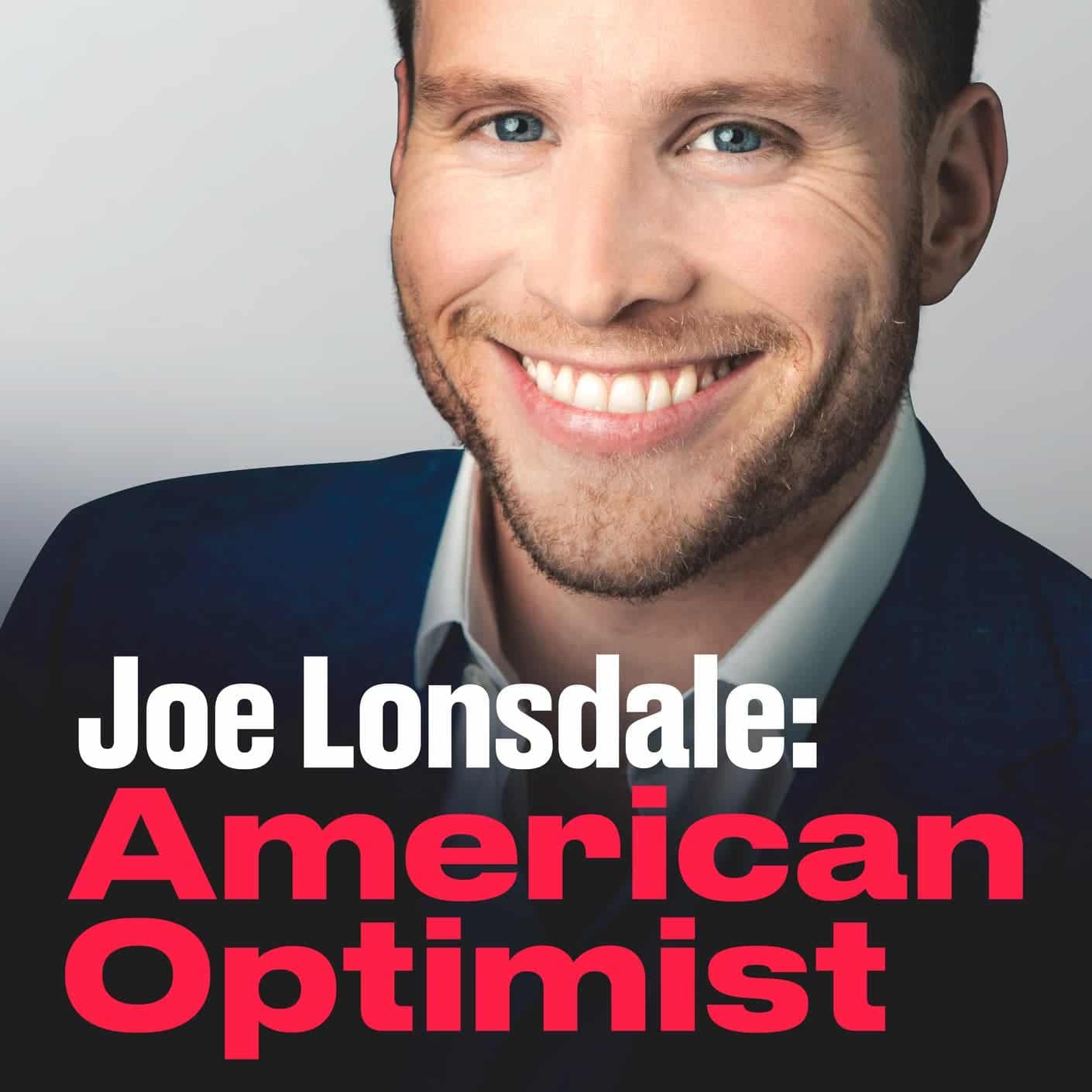
Podcast Notes: Joe Lonsdale - American Optimist
Episode Title
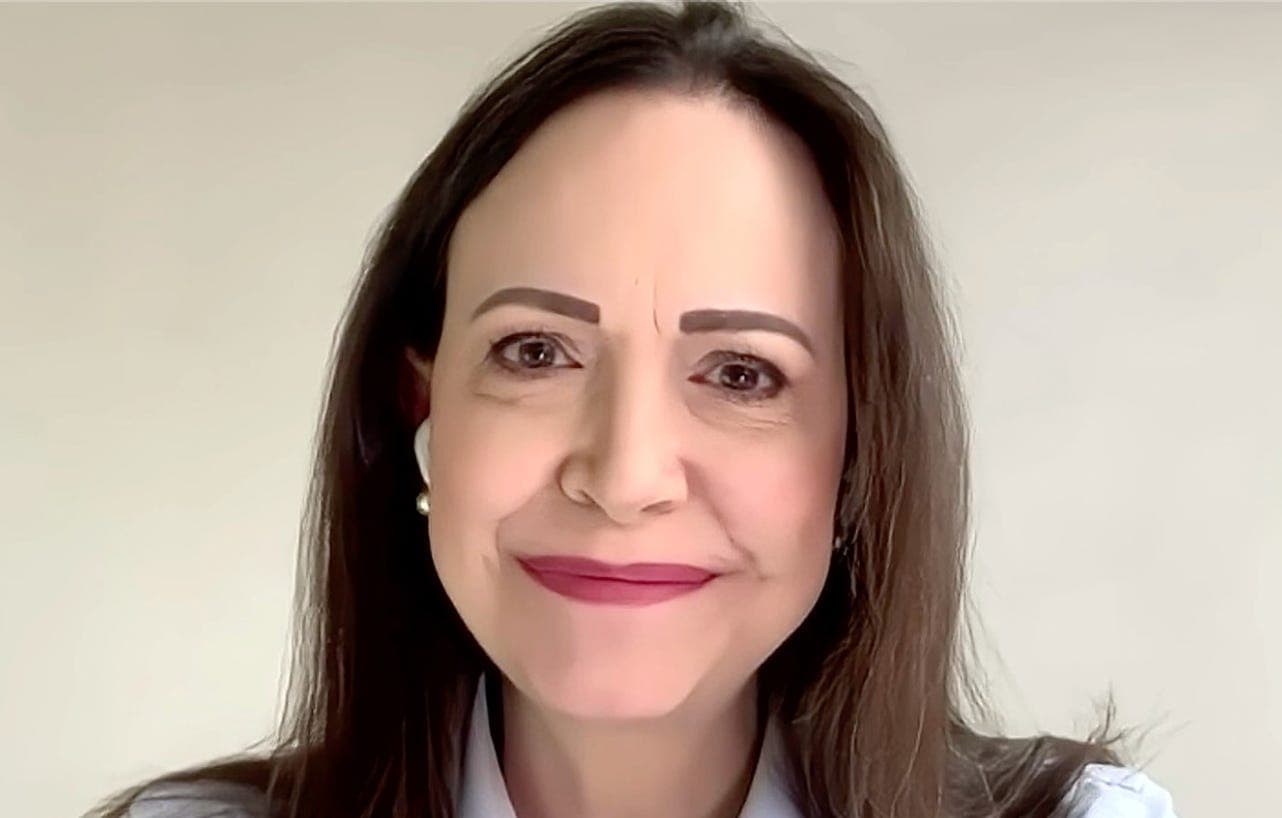
Ep 124: The Fearless Adversary of Venezuela's Dictators - A Special Interview with Maria Corina Machado
Episode Description This episode features Maria Corina Machado, a prominent Venezuelan opposition leader, often referred to as the "Iron Lady." Despite facing personal attacks, threats, and political challenges, she continues to fight for liberty in Venezuela, believing that the end of Nicolás Maduro's regime is imminent.
---
Key Themes and Discussions
- The Downfall of Venezuela
- Historical Context: Venezuela was once the wealthiest country in South America but has since become poorer than Haiti due to socialism and mismanagement.
- Impact of Socialism: The transformation from a prosperous nation to a state plagued by crime and poverty, highlighting the negative implications of socialist policies.
- Current Dilemma: Venezuela has turned into a hub for drug trafficking and criminal activities, affecting the entire region and U.S. national security.
- Maria Corina Machado's Journey
- Political Involvement: Transitioned from a successful business career to political activism to confront the regime.
- Personal Sacrifices: Faced physical violence, threats to her life, and separation from her children due to her political stance.
- Vision for Venezuela: Envisions a free and prosperous Venezuela that can thrive as an energy powerhouse in the Americas.
- U.S. Policy on Venezuela
- Regime Change vs. Criminal Enterprise: Machado emphasizes that the U.S. approach should focus on dismantling the criminal structure of the Maduro regime rather than traditional regime change.
- Trump Administration's Actions: Positive views on the Trump administration's policies, including sanctions and actions against drug cartels.
- International Implications: Discussion on how Venezuela's issues relate to broader geopolitical dynamics, including relations with Russia and Iran.
- Future of Venezuela
- Economic Opportunities: Highlighting over $1.7 trillion in potential economic opportunities in resources and energy.
- Cohesion Among the Population: A united front among Venezuelans against the current regime, fostering hope for a democratic transition.
- Calls for Support: Encouragement for U.S. citizens to support Venezuelan freedom and democracy, suggesting that a strong response is crucial for the region's stability.
---
Key Takeaways
- The episode presents a vivid depiction of the severe consequences of dictatorship and socialism in Venezuela.
- Maria Corina Machado’s story illustrates the personal costs of political activism and the resilience required to oppose authoritarian regimes.
- A critical evaluation of U.S. foreign policy in relation to Venezuela, promoting a perspective that sees intervention as a necessary step against organized crime rather than mere regime change.
- The future of Venezuela holds promise, with potential for economic revival and an emphasis on democratic values, contingent on the removal of the current regime.
---
Notable Quotes
- "Every dollar that Maduro gets goes to repression, violence, and destabilization."
- "Venezuela has turned into a satellite of the Iranian regime just hours away from Florida."
- "We will turn this country in ruins into a vibrant economy."
---
Conclusion This episode of American Optimist is a powerful commentary on the current state of Venezuela and the fight for freedom led by Maria Corina Machado. It sheds light on the broader implications of her struggle for both Venezuela and the international community, stressing the importance of hope and resilience in the face of adversity.
Written by AI. May contain mistakes. Listen to the episode to check what was said.
Transcript
Automatic transcript. May contain errors.0:00After the election, which we won by a landslide, Maduro accused us of terrorism. He has put over 2 ,000 people in prison. 44 people disappeared. Children, women have been tortured. They broke my nose in the middle of a Congress session, and they are looking for me. Venezuela used to be the richest country in the region. Today, we are poorer than Haiti. That's the legacy of socialism and communism and crime. Every dollar that Maduro gets goes to repression, violence, and disabilization. What's the right policy for the U.S.? This has nothing to do with regime change. It's about dismantling a criminal structure that is the biggest threat for United States national security.
0:44We're going to turn this country in ruins into a vibrant economy. We're talking about over$1.7 trillion opportunity in oil, gas, minerals, gold, tourism, telecom. This is huge.
1:07Today on American Optimists, we're honored to welcome Maria Karina Machado, the opposition leader in Venezuela. Venezuela has gone from the richest country in Latin America to poorer than Haiti. It's an utter disaster what the communists did there. It started off with Hugo Chavez preaching a lot of the same nonsense we're hearing from the far left and from the ascendant candidates around the U.S. today. It's really important we understand how is this country completely destroyed by the communists. How could it not happen here? We should know as Americans, Venezuela is a hotbed of drug cartels.
1:39It's allied with China and Russia. It's producing with manufacturing plants, weapons for our adversaries. It's sending all sorts of mayhem and destruction around the Americas. In the election last year, it was clear her party won by over two thirds of the vote. And yet the people running Venezuela, the bad guys are still in charge. They're not giving up power. The Trump administration is taking significant actions. This administration, the U.S., has realized this could be a really opportune time to push really hard and to eliminate the bad guys from the Americas. This is great for the U.S. It's great for everyone living in this part of the world if our administration can stand up to them.
2:13Maria is a very inspiring leader. Excited for you to hear from her. Welcome to American Optimist. We have a very exciting episode today. I'm very honored to welcome Maria Corina Machado, the opposition leader in Venezuela. Thank you for joining us. It's a pleasure. Thank you very much. Some people call you Venezuela's Iron Lady. I was a fan of Margaret Thatcher as well. It's a big title to have. You were an elected member of the National Assembly from 2011 to 2014, and you won the primary election as the opposition candidate in 2024 last year. They found a way to disqualify you. So then you had someone else run.
2:44And it was very clear that your side won the election by a huge amount. And of course, Maduro's regime has stayed in power. So we're in a very, very crazy situation today. I want to have you teach everyone about. First of all, what's the state on the ground in Venezuela right now? Do you fear for your safety? Are you in hiding, I understand, right? Yes, I've been in hiding for over a year, just because after the elections, Maduro accused us, everybody involved in the election, which we won by a landslide, as you said, of terrorism. So he has put over 2 ,000 people in prison. Over 800 are still in prison.
3:1944 people disappeared. We don't know where they are. Children, women that have been tortured, and they are looking for me. But as you say, things are moving really fast in Venezuela. There's a grid of excitement right now and hope that finally we will end this era of destruction, violence, and socialism that has brought so much misery to our country. So let's talk about what's going on right now, I guess, with the United States and Venezuela. You know, it's interesting, growing up, there's a cultural background in the US where the left kind of controls a lot of our media. And they told us, don't do anything in South America, stay away, don't fight the communists.
3:58And I kind of almost believed that as a kid, because that's what we were all told. And then I realized, wait a second, maybe it's not good for this part to be run by communists, because I'm watching Venezuela. I hear Hezbollah is operating there. I hear there's cartels operating out of there. I hear there's all sorts of bad things to the United States that come when the bad guys take over and when they do bad things there. And so I know President Trump recently has taken some very strong actions. He actually put a$50 million bounty on Maduro himself, which is high. Osama bin Laden was only$25 million.
4:25This is a very big bounty on Maduro. He's designating him as an international drug trafficker. He's designating cartels as foreign terrorist organizations. Tell us what's happening right now. Well, this is unique. This is totally unprecedented. Venezuela is today the criminal hub of the Americas. For over 26 years, first Chavez and then Maduro turned Venezuela into a safe heaven for all the enemies of the West democracies and the United States to operate freely and to join efforts, not only to destroy our country that has huge natural resources and governments, as you know very well, But to create a hub for operations, for instance, Venezuela has turned into a satellite of the Iranian regime just hours away from Florida.
5:17And the Iranian regime has production, a facility that products drones, military drones, attack drones in Venezuela. It's the only country in the region. Not only that, Maduro has promoted criminal structures and gangs such as Trenderagua that operates from Canada to Argentina. But the head of the Trenderagua is Maduro. And it's the same with the drug cartels. I mean, it is something that that it's hard to understand. It's not like other countries that fight the cartels or that might have some business with the cartels in Venezuela. The reality is that the cartel is in power. The head of the cartel, who means Maduro, is also the head of the tyranny that has been in power for so many years.
6:11How extensive are these cartel operations? Are these killing American citizens? What is the drug cartel doing? Where are they operating? Well, the DEA estimates that 24 % of cocaine that is built worldwide goes through Venezuela. Most of it is produced in Colombia, but Venezuela is starting to have high-tech labs operating in conjunction with all the other cartels and the Colombian guerrilla. But imagine having all the infrastructure of a state, the financial system, ports, airport, vessels, military used to promote these illegal activities. And it's millions and millions and millions of cocaine that reach the United States every year.
7:06And who benefits from those deals is Maduro and his torch. And tell us about how they keep up. So they make a lot of money from cocaine. I know Venezuela was a very, very wealthy country, obviously had a lot of oil wealth. I know earlier we revoked Chevron's ability to export oil. I think we reinstated it more recently. And so I'm confused on the policy here. Like why would we allow or not allow oil companies to work there? I guess we probably don't want Chinese oil companies working there. So we'd probably rather it's ours than them. But obviously we don't want these guys getting money. Like how should we be thinking about the policy here?
7:40Let us be very, very clear here. Venezuela used to be the richest country in the region. Today, we are poorer than Haiti. Wow. That's the legacy of socialism and communism and crime. Venezuela has the highest, the largest proven oil reserves in the world. The eighth in natural gas, fifth in gold. I mean, we have minerals. Venezuela is unique in terms of the natural elements and the opportunity, the potential. And that's why this regime wanted to take control. And the resources they get, they don't go for the people, for schools or hospitals or security. It's corruption and promoting destabilization of the region, mainly the United States.
8:34So we need to dismantle this criminal structure and need to understand that every dollar that Maduro gets goes to repression, violence and disabilization. But we will turn, Joe, Venezuela from the criminal hub of the Americas into the energy hub of the Americas. We can be producing millions of barrels of oil a day. We will do that and American companies will have the biggest opportunity in a lifetime. Taking advantage of Venezuela, it's going to have a rule of law that it's going to have sensible legal frameworks and we will have protection for international investment and private property. Well, Venezuela is obviously a huge opportunity.
9:23I want to talk about that. And I want to talk about the history a little bit because a lot of us in America, we have candidates that are running on maybe similar platforms as Chavez, as he ran on 25 years ago, which is very scary to us. But before I get there, I want to talk about what's the right policy for the US. A lot of my friends now are involved in this administration. A lot of them obviously don't want criminal enterprises running around the Americas. Because, of course, a lot of them are also very anti-war. And so they want to put pressure, but a lot of them maybe are unlikely to go to war.
9:51So what's the right policy? Should they be letting oil companies work there? Should they be putting more sanctions than they are? What have they done so far? Walk us through how we should be thinking about this. Well, first of all, some people talk about not wanting regime change. I want to be very clear here. This has nothing to do with regime change. We already, the Venezuelan people, mandated the change of the regime in a presidential election that took place last year on July 28th. And we won by a landslide. Yes. 30-70. OK, even with the rules, absurd rules, unjust rules of the regime. And we proved it.
10:27Secondly, this is not about changing a political regime. It's about dismantling a criminal structure that is the biggest threat for United States national security, as Secretary Rubio has stated. So the policy that President Trump is putting in place and deploying as we speak is a correct policy. You have to cut the sources, the inflows of resources that regime use to stay in force, to stay in power by force. And to the oil companies, what I say is, look, today, if you operate here, you are forced to operate in alliance, in a society with a mafia system, with a drug cartel. Once we have the transition moving forward, you will have the opportunity to operate with absolute transparency, zero, zero tolerance to corruption and respect to, you know, your private properties and the agreements that we will sign.
11:31So it's, you know, it's a win-win situation, Joe. And things are moving fast as we speak because President Trump has made the correct decision in the interest of the American people, but in the interest as well of the whole region. President Trump's definitely on the right side of this. What else could his administration do? It's like, could the Secretary of the Treasury take certain actions? Could the Secretary of State take certain actions? Are there other policies that you want to see? Absolutely. Yes. And I think many might be coming soon. In the international front, I would say, you know, who used to be Maduro allies historically?
12:12Syria? Well, we know what's happening there. Iran? Not its best moment. Russia? I'm sure they don't want to mess with President Trump at this point. And China? So, you know, clear messages going into these other regimes telling them, you know, you should not support a criminal structure in the heart of the Americas that is damaging the United States. It's important to be bold against them. You know, I had been friends in the past with some other leaders in Latin America. I knew El Duque and Colombia, for example, through families we visited. And when we were there, he was showing us that the Russians were giving technology to the far left protesters to come from Chile across the border.
12:57And it was Cuban, Venezuela, and Russia, he said, seemed to be tied to some of these protesters that were trying to spread kind of basically communism, you know, in his country and other countries as well. It's interesting. Is that how it works? It seems like Russia is still helping some of these, or at least has been in the past, still helping in the region, some of the very far left. Is that what they do? Absolutely. And not only with, let's say, intelligence and information, but also with arms. Venezuela is the sixth largest military arms buyer of Russia. And many of their agents freely operate in Venezuela, have trained Venezuelan army and militias, as well as the Iranian Kud's army.
13:43So this is certainly something we will have to dismantle. And I think this is a great moment for the messages to reach to these regimes and let them know that they have to get out of the Americas. And this is a moment to do it. I love it. It seems like when the bad guys take over a regime, I'm saying bad guys, but I mean it. The bad guys take over a regime. They want other countries to be run by bad guys as well. They want the socialists. They want the communists to take over because then they become friends and they make money together from running their crime scene to get together. What's interesting in Latin America, it feels like there's some maybe ruver optimism because on one hand, Argentina has pushed in a very free direction.
14:21And then I hear Bolivia this week, this last week, the candidates, there's going to be someone who's not on the far left running it for the first time in a long time. Are the people waking up and seeing what's happening? Absolutely. But let me tell you something. I'll go further because it's really important what you said. Here in Latin America, Foro de Sao Paulo and other left-wing groups had managed to exchange technology, information, resources, even to promote fraudulent elections all over the region. And what we are doing now with Venezuela experience is that we are helping other countries because of all what we learned in terms of how to dismantle the fraudulent system.
15:02And as you said, we just saw this last Sunday in Bolivia. This is huge after 19 years. You know, the left is absolutely, has absolutely disappeared. And we're seeing that in Ecuador and certainly our really good friend Javier Milay in Argentina. And imagine what's going to happen to Venezuela, because let me tell you something. If there's one country that rejects socialism, that is Venezuela, because what we have suffered. And this is a country that is willing to embrace the ideas of freedom, of liberty, of open markets and having family together. Joel, having suffered so much during all these years, have shown our generation, and it is the best prepared generation, to turn this country all around.
15:55And we will have, you know, solid, profound Republican pillars on which we're going to build a country that's going to be the enemy of the world in terms of how much wealth and prosperity we will bring to our people and to the regime. I love it. Well, I'm very excited to invest in a free Venezuela when you get there. I want to go back and teach people a little bit about how he came to this. I believe your father was a businessman in Venezuela in the old days. And it sounds like when Hugo Chavez first rose to power, he sounds a lot like a lot of the candidates we have right now, like our mayor running for New York, unfortunately.
16:29He had a lot of people from the U.S. actually helping him. Our recent DA in San Francisco, who he threw out of power, Chesa Budin, I guess worked with Chavez, as did many other of the far left in the U.S. And so I remember Chavez, I think he would say oligarchs tremble was a popular slogan. He tried to rally everyone against the rich people, against the landowners and the businessmen. And he said anyone with a large rural estate or farm is someone with a stolen car. So anyone who has money, it's like they stole it, I guess is what he would tell everyone. Tell us what his tactics were. This obviously was convincing to people at the time.
17:00It's obviously not anymore. Do people regret, you think, supporting some of this stuff? Do they realize it was a mistake? What happened there? You mentioned my father. My dad was a visionary, not only a common businessman. And he taught us that being a real businessman was not only about making money, but creating wealth for all stakeholders and society. and he created many enterprises and people really admire and respected him. But he always said, you have a responsibility towards your nation, your country, the future generations. And everything we had, we had it here. And when Hugo Chavez came to power, he took over more than 5 ,000 ongoing companies and enterprises and business.
17:52And he confiscated them without paying the owners. He took over 22 million acres of productive land, over 30 percent of the total amount of productive land in Venezuela. And he destroyed everything from the tiny businessmen and business to the huge companies. Everything. Why? Because socialism needs to have a society dependent on the state. begging with your hand like this and your head looking down. That's what they need. That's how they stay in power intentionally. They want people to be poor. They want to destroy the value of the money, of the currency. And they want families separated. That's why migration was a strategy.
18:45We have over 30 % of Venezuelan population that has been forced to flee. That was intentional. And that happens everywhere where socialism reaches power. And I do have one concern and warning because, you know, 26 years ago, people used to say, well, that's not going to happen to Venezuela. You know, we're not Cuba. Cuba is an island. It's poor. It's small. That's not going to happen to us. You used to be the richest countries in the region. And look where we are. So I hear people saying sometimes in other cities and countries around the world, that's not going to happen to us. What happened to Venezuela?
19:25Venezuela is, you know, a Latin American poor country. It happens everywhere. And once socialism and communism reach power, it's very, very hard to make them leave. Millions of people have fled. We hear horror stories of hospitals failing. How would you build it back up? I guess if, let's say you voted them out, they won't leave. Let's say somehow we force them to leave. And I'm curious how. And then how do we start building up again? What does that look like for Venezuela? it's going to be marvelous believe me you will see a bright country rising up because it all started a few years ago when we decided to reach out and to tear down the barriers the regime had built to the to divide us and that's a typical approach from the socialist communist uh regimes they want to divide society on every single uh turn or dimension yeah by race as well right Because he said, oh, it's white people who don't like me.
20:22I'm a mulatto. It's that kind of thing, too, huh? Exactly. Exactly. And Venezuela was a cohesive society. And he and Thomas looked to divide us. You know, those who live on one side, on the east and the west, those who live inside, those who have left by race, by religion even. And what we decided is, you know what, we're going to get back this country together around values, virtues, around ambition. And that was, you know, there was a single longing that I found sharing with everyone is that we want our kids back home, those who have left. And this was such a strong force that brought us together.
21:03That's why we went to the primary process and I won with 92 percent of the votes, Joe. And then we went to this absolutely throttle and scram election and it turned in something that was much more than electoral. It was an existential fight. struggle. And that's why Venezuela today has 90 % of our population. Cohesive society, I dare to say probably the most cohesive society around the world. We all want the same. Not only getting rid of Maduro, of course, and he will go out, but how to turn this country into a really land of grace and how we do this together. So this is very powerful. And that's why I want to convey this message, the transition in Venezuela to democracy will be orderly, will be stable, because we have a whole country that wants the same, and that has been fighting for freedom and dignity for so long.
22:03That's beautiful. Maria, I want to ask you about your story a little bit here, a little more. So I don't know if you know, I have five young daughters myself, actually, and we also talk a lot about our duty to our society and our values. And I'm also a businessman. So I'm curious. So clearly your father imbued these values in you very strongly. And originally you were an industrial engineer and you had finance and all sorts of other backgrounds for business. What made you decide to become a leader this way and to fight for your society? Well, you're very lucky to be a father of so many daughters and the eldest of four daughters.
22:37So, and we adore our father. So I said, well, I'm going to prove this guy that he didn't need to have a son to follow his steps. So I went into study what he had started, engineering and finance and so on. And I loved what I did. But I suddenly realized that you cannot live in islands isolated when your country is falling apart. So that's why we decided to create a civic movement to channel all these tensions and violence that Hugo Chavez was promoting. And one thing brought me to another. No, you know, from civic activism. Finally, I realized I couldn't complain all the time about politics and politicians and how bad they were doing things and, you know, but not wanted to get involved.
23:24So I decided to take the step. And we created the first libertarian party in Venezuelan history. And they told me it was impossible to reach out, you know, to poor rural areas because we have only seen socialism in Venezuela so far. But on the contrary, when you start speaking about the ideas that really work and you value, you know, individual freedom and what people and trust people and their talent and potential, then you make these great things happen. And we've created this movement all around the country. People that are ready to take over our, we know what we're going to do. The first 100 hours, the first 100 days, and how we're going to turn this country in ruins into a vibrant economy and a great society to which millions of Venezuelans will come back immediately as soon as Maduro comes.
24:29Amazing. And this must have taken a lot of courage. Tell us a little bit. I mean, you must have gotten threats. You're obviously in hiding right now for your life. How do they try to intimidate you when you first get involved as a leader? And what do they do? Wow, it's a long story. I have a friend that says if I open the criminal code laws in Venezuela, where all the different penalties are stated, I would have all of them. Because I've been accused of everything by Tavis and Maduro. So perhaps a part of the thing is going against my honor, my reputation, and my family. The fear they brought to my kids.
25:10I had to send them away a long time ago to study abroad. I remember one day, Joe, I was in the National Assembly, and I was speaking and denouncing, you know, the mafia and the cartels. And suddenly my voice simply shut down. I got freeze because I was thinking of my daughter that she was driving home from college on her own. So that day I decided they have to go. And I was banned from leaving my country. I've been banned from leaving Venezuela for almost 12 years. So I knew what that meant, but I had to put them in safety. So since then, as I say, they have accused me of everything. They have beaten us.
25:52They broke my nose in the middle of a Congress session. And but as I say, I have my colleagues in prison. Many disappeared, my closest friends. But we are determined and we know that we're very close of the day of freedom and the new era starting in Venezuela. We all really appreciate seeing your courage and hopefully you can take your lessons and not make the same mistakes. And hopefully this administration continues to fight for you. It sounds like you're really positive on what's going on with the administration's recent moves. There's more coming. I guess there's probably certain things we're not supposed to say that are coming, is my guess on the details.
26:32What would you say to people in the U.S. about what we could do to support Venezuela? What should we be doing to help you? Well, this is the biggest opportunity in a lifetime. I mean, this is huge what's happening right now. Once Maduro goes, the regime in Cuba will follow. And also the Nicaraguan regime will fall. And for the first time in history, we will have the America's tree of communism and dictatorship for the first time in history. But also we will turn a land, a country that's been, you know, attacked and dismantled by this criminal structure into the greatest ally the United States will have in the region.
27:12Not only a matter of security, but also in trade and energy and certainly in stabilizing the whole region. And that's what at stake right now. Maduro is weaker than ever before. Ever before. What we need for the regime to know is that this has no way back, that we do have the support not only of the United States, the Trump administration, which we do and we're so grateful to President Trump and to the Secretary of State, Michael Rubio, but we have the support of American society. We know that, you know, it's freedom, loving, good working people. And imagine, you know, hundreds of thousands of Venezuelans that now have taken refuge in the United States.
27:59They will come. They will come back home. And also a huge business opportunity will be open like no other in the region before. And we're talking about over$1.7 trillion opportunity in oil, gas, minerals, gold, tourism, telecom, you know, cheap electrical and clean energy. I mean, this is all here in Venezuela, a few hours away from the U.S. This is huge. We have a lot of friends here who've had to flee Venezuela and who are huge fans of yours. And we're very excited to come back and invest and build with you when we get to be a free country. So thank you so much for your leadership, Maria. It's very inspiring.
Read the full transcript
28:41Thank you so much, Joe. We really know we can count on you. We need you all, all the freedom lovers, visionaries in the world. And I know that very soon I will be able to host you here and we'll see how we turn this tragedy into a real land of grace. So thank you so much. All right, let's keep fighting for the good guys. Thank you, Maria. I appreciate you joining us. Good luck. Thank you. Bye-bye.
From the publisher
This week, we're honored to be joined by Venezuela's "Iron Lady" — Maria Corina Machado. She's been physically assaulted, forced into hiding, and separated from her children, but that hasn't stopped her from standing up to dictators and fighting for liberty. Right now, she believes the end of Nicolas Maduro's regime is closer than it's ever been, and a bright new future for Venezuela — and the entire region — is in sight.
In the early 2000s, Maria set aside her business and career aspirations to lead a recall against Hugo Chavez, quickly earning a reputation as his "most detested adversary." She went on to serve as an elected member of the National Assembly of Venezuela from 2011 to 2014, becoming a key leader in the widespread 2014 protests against Maduro. Leading up to the 2024 presidential election, she won her party's primary elections, but was disqualified and forced out by Maduro and his cronies. Still, her opposition party went on to win overwhelmingly, and Maduro has since rejected the results and refused to relinquish power.
We begin with the tragic downfall of Venezuela, from the wealthiest country in South America to poorer than Haiti. Learn how socialism brought one of the world's most energy rich countries to its knees, and instead became the criminal hub of Latin America, flooding the U.S. with drugs and narco terrorism while providing safe harbor to Russia, Iran, Hezbollah, and other enemies. President Trump has taken strong actions in recent months, from placing a $50 million bounty on Maduro to designating cartels as terrorist organizations and directing the U.S. military to go after them — we get Maria's take on the President's policies and what else she hopes to see from our leaders in Washington. Many Americans are rightfully wary of foreign interventions; Maria explains why she doesn't see it as regime change but rather dismantling an international criminal enterprise. Finally, we cover Maria's personal journey and sacrifice, why she continues to fight even with threats against her life, and her ultimate vision for a free and prosperous Venezuela that becomes an energy powerhouse for the Americas.
00:00 Episode intro
02:30 How Venezuela became a criminal hub
09:45 What's the right US policy? Regime change?
16:24 Parallels between Chavez & the far-left in the U.S.
22:17 Maria's personal story & sacrifice
26:36 Maria’s vision for a free Venezuela
This is a public episode. If you would like to discuss this with other subscribers or get access to bonus episodes, visit blog.joelonsdale.com