In short
Podcast Summary: Joe Lonsdale: American Optimist - Ep 127 with Max Meyer
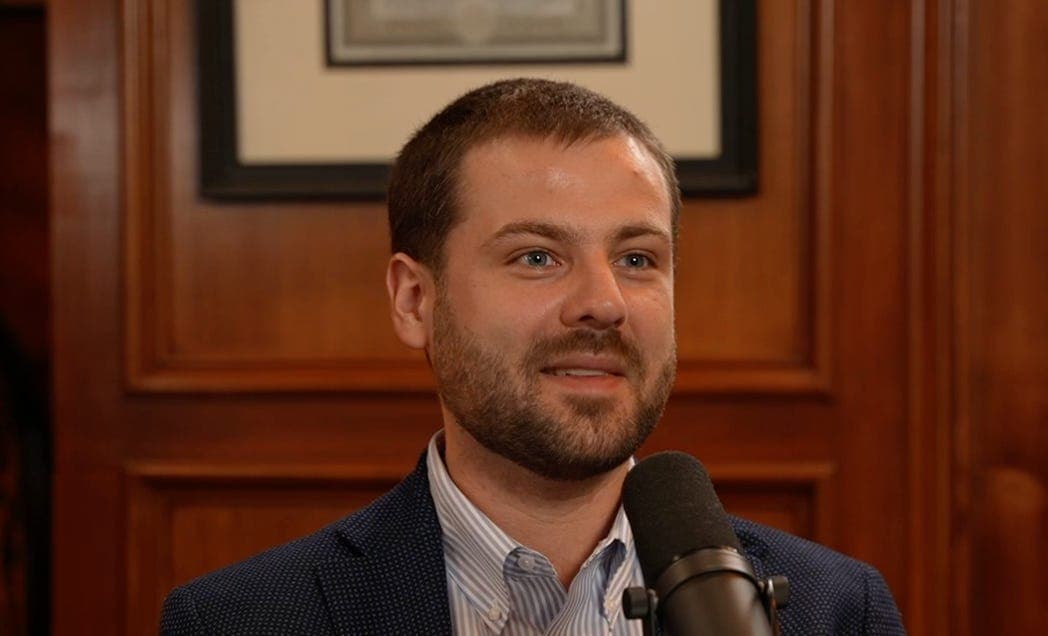
Podcast Overview Title: Joe Lonsdale: American Optimist Host: Joe Lonsdale Episode Title: Ep 127: Max Meyer, Arena Magazine, and the Battle for Truth, Beauty & Progress Description: In this episode, Joe Lonsdale speaks with Max Meyer, Editor and Publisher of *Arena Magazine*, about the decline of legacy media, the rise of AI-generated content, and the importance of high-quality journalism.
Key Themes and Discussions
- Introduction to Arena Magazine
- *Arena* is a pro-America and pro-technology magazine aiming to provide high-quality journalism in a time when legacy media has become increasingly negative.
- Max Meyer discusses the vision behind creating a paper magazine that stands in contrast to the low-quality digital content prevalent today.
- The Decline of Journalism
- Discussion on how traditional media outlets like *Scientific American* and *TechCrunch* have shifted from celebrating innovation to adopting a more cynical, negative perspective.
- Meyer attributes this shift to several factors:
- Decreasing advertising revenue leading outlets to sensationalism as a business strategy.
- An ideological shift within journalism as it became an elite profession, resulting in a disconnect from the entrepreneur class.
- A culture of negativity and jealousy towards successful entrepreneurs in the tech industry.
- The Impact of AI on Media
- Concerns regarding the inundation of "AI slop"—low-quality, AI-generated content flooding digital spaces.
- Meyer emphasizes the value of curated, trustworthy content created by humans and argues that there will always be a demand for quality journalism in contrast to AI output.
- High-Quality Journalism as a Solution
- Max discusses *Arena's* commitment to high-quality, premium content that is aesthetically pleasing and intellectually engaging.
- The magazine aims to present a pro-American narrative and support entrepreneurship by providing a platform for stories that mainstream media overlooks.
- Key Projects and Future Directions for Arena
- Recent work includes in-depth profiles of significant figures in technology, such as Brian Schimpf of Anduril.
- Future issues will focus on critical American industries, such as infrastructure and finance, with a strong emphasis on quality design and storytelling.
- Plans for the *Arena Wire Service* to provide timely and relevant news in a pro-American framework.
Key Takeaways
- The Need for Quality Media: There is a growing demand for high-quality, trustworthy journalism as a counter to the negativity in mainstream media and the rise of AI-generated content.
- Cultural and Ideological Shifts in Journalism: An examination of how the evolution of journalism from a working-class to an elite profession has led to its current state of cynicism and hostility towards entrepreneurship.
- The Role of *Arena Magazine*: *Arena* seeks to rebuild a media landscape focused on truth, beauty, and progress, celebrating American innovation and the entrepreneurial spirit.
Conclusion This episode highlights the essential role of quality journalism in today's media landscape and the efforts of *Arena Magazine* to combat negativity with positivity and high standards of reporting. Joe Lonsdale and Max Meyer reinforce the idea that hope and optimism should dominate our discourse, especially in challenging times.
For more information and to subscribe to *Arena Magazine,* visit [arenamag.com](https://arenamag.com/).
Written by AI. May contain mistakes. Listen to the episode to check what was said.
Transcript
Automatic transcript. May contain errors.0:00There's going to be millions and millions of automated social media accounts. People that work in industry, they're going to look for curated sources of information and for high quality work that humans are doing. We wanted to start a paper magazine to sort of rebel against this and make something super high quality. Arena is a technology magazine. The magazines that have historically covered this area are just super negative now. By being bold and positive, we're going to battle with them. It's not just you. It's not just Elon. When Marc Andreessen published his techno-optimist manifesto, TechCrunch put out a headline, when was the last time that Marc Andreessen talked to a poor person?
0:34They'll attack anyone that they think they can get a scalp on. It's not working anymore. But I appreciate being the controversial Joe Lonsdale. No slanted takes, no hit jobs. We're pro-American. We don't compromise on that.
0:51Max Meyer is one of my favorite people. He's the founder of Arena Magazine. He was the editor-in-chief of the Stanford Review, which I was as well 20 years ago. And Peter Thiel was as well when he was at Stanford. Max is one of the most interesting people to talk to. He's creating some of the most beautiful and fascinating content right now in the USA with Arena. It's a quarterly magazine. Pretty much a lot of the top investors, top CEOs, a lot of my good friends all subscribe to it. It's growing really quickly. You know, a lot of the other magazines, stuff like Wired, Scientific American, things like TechCrunch, they've really fallen.
1:20They've really been captured. They've been politicized. They're no longer interested. day. They no longer love the entrepreneurs. They just want to attack them. I still am really interested in new technology. I still get excited about what's going on in America. Max does too. And you really can feel that when you're reading the arena. I think you'll enjoy it and you'll enjoy hearing from him. Welcome to American Optimist. Really excited to have my good friend, Max Meyer here with us today. Max is the founder of Arena Magazine. Hey Joe, how are you? Hey Max, I'm great. Excited to talk about Arena.
1:45We have some beautiful copies of it. We'll show everyone. It's a quarterly magazine. First of all, people don't usually make magazines in paper anymore very much. Are there a lot of other people starting new magazines? Why are you doing this? There's a dwindling number of magazines left in the world. They've not been great businesses over the last 20, 30 years as digital advertising replaced paper advertising. A lot of them have started to go out of business. We wanted to start a paper magazine to sort of rebel against this online onslaught of doing everything digital, everything in the inbox, and make something super high quality.
2:18Most of the magazines that you see today, the most popular ones are printed on super thin paper they're stapled together they're cheap they're low quality these are these are these are not cheap and low quality huh yeah these ones you want to keep them on your bookshelf they'll they'll last for a long time i like i like the war the war issue here issue four this is uh it's beautiful he got you're allowed to use star trek images how does that work it turns out that that photograph from the stars from the star trek set was put into the public domain by whoever took the photograph amazing um so yeah that was the that was the fourth issue.
2:50That was war. That was all about defense tech. Arena is a technology magazine. Entrepreneurship, enterprise, technology, those are our three pillars. And, you know, unfortunately, the magazines that have historically covered this area are just super negative now, and they're done at a low quality. And so by being bold and positive and producing a beautiful, a beautiful physical object, we're, you know, going to battle with them. It seems like you also are a little more patriotic. These magazines seem to be like on the side of America, which you don't get the sense without reading other magazines anymore, that they're like excited about America.
3:23No, they think that their sort of so-called journalistic objectivity means that they have to be neutral about even the most basic things. America, whether we support our own country. And of course, in many instances, they're actually negative and just pretending to be neutral. We're pro-American. We don't compromise on that. And it's an America focused magazine. I love it. When I was younger, you'd get like Scientific American or Wired, or even like in the 2000s, like TechCrunch was like a place that was interesting. You're kind of like curious what's going on and you're excited to see all these new things.
3:53You'd be excited when the magazines would come in the old days. And now, I guess everyone in our industry knows this, like if someone's writing to you from TechCrunch or usually from Wired, they're looking for an angle to attack you, looking for an angle to attack your companies. What happened with these places? First and foremost, the advertising revenues have just been very bad over the last 20 years since Google and Meta started taking a bigger share of the ads. They're not good businesses. And so they need to attract a larger number of eyeballs than before. And by attacking people, they think that they're able to do that.
4:24So the outrage machine is actually a business strategy, but it seems like they truly don't like us too. Like it was one thing if it was just a strategy, but I mean, I've met some of the people there. The second thing in parallel is that in many instances, these journalists are writing for one another and they sort of collectively hate the entrepreneur class. And so when they're virtue signaling for one another, by writing about how bad the entrepreneurs are, then they get positive feedback from other journalists at other outlets. And I think simultaneously, the fact that technology has been a very good business at the same time when media has been a bad business means that there's this natural antagonism rising from what is basically jealousy.
4:59Their business is failing, technology is doing super well. And so going after the ascendants with negativity is a way for them to be perceived as underdogs. And there was like some ways in which maybe they were even too positive before, right? Like, I mean, I guess Theranos was like pumped up as like this thing that was great. The classic Forbes cover with Elizabeth Holmes holding the little vial, that was total propaganda. And in that instance, it was, you know, in service of a political agenda. They wanted to remind us that she was the first female self-made billionaire in the technology business.
5:34And so in that instance, the political agenda made them supplicants to the right type of entrepreneur who was politically correct in a certain way. Interesting. I guess even by that point, it had been kind of corrupted. It did feel like they were kind of more on our side. Is this impossible for journalists? It seems like historically, are they usually either on your side or against you? It seems like the objectivity stuff. I mean, I'll say something maybe a little obnoxious, but a lot of the people in journalism 20 years ago, it felt like a lot of them, like especially a lot of the young women in different parts of media, like if you're covering soccer, they're probably interested in soccer players.
6:08And they could say the same thing about other areas, which maybe I shouldn't, but it was almost like they had really admired them and they really liked them and they're on their side. And then all of a sudden they went from that to like being resentful and negative. I don't know how to explain the full phenomenon, but in some cases they think that they're going to get objective points from the audience if they're purely negative. And that is something that has arisen out of journalism becoming a more elite profession. You know, you used to have, you know, working class journalists. You imagine the Washington Post newsroom in the 60s and 70s.
6:38It was a lot of men and women who hadn't gone to college who had just gotten their skills in journalism by delivering papers and then doing copy editing. And so they're sort of non-elite in this way. Really? It wasn't an elite profession even? Yeah, so the percentage of journalists who are coming out of schools like the Columbia Journalism School and these sort of elite graduate programs has gone way up. And I think that that's like clearly one of the root causes of it becoming like extremely more negative, extremely more woke is that it's, you know, if you're coming from the most sort of radical graduate schools and Columbia journalism is right there with the worst of them, you know, you're going to see that contagion propagate through the profession that the school is feeding into.
7:20So this is fascinating. So, you know, we're both friends with Barry Weiss, who we admires, who started the Free Press, which is probably the biggest disruptive new media org. And when she and I got to know each other in the past years, you know, we've started this university together. We were talking a lot about how these institutions have been captured and have been broken and we need to rebuild and recreate them in our society. So arena is obviously a good example of trying to rebuild and recreate functional, beautiful institution versus what was there before. So we talked in general about all these places are broken.
7:48How much does that come from the universities? Because you go to Columbia, we all kind of know we've kind of seen Columbia's clearly corrupt, clearly just like an example of like a terrible place, which is why the administration's had to go after it so hard. Is it the universities themselves in the disruptive journalism? I think it's these series of intellectual bubbles, universities and journalism being two extreme liberal bubbles, where they're both sort of elite areas. You have people that are affluent in these areas. And if someone spends enough time in an 80 or 90 % left-leaning area, then they'll begin to think that anything other than 80 or 90 % left is unfair and that the scales are being tilted.
8:23I think that this explains why a lot of left-wing journalists, when Elon Musk took over Twitter and started cleaning up shop, they were under the impression that that was explicitly tipping the scales in favor of the right if it was anything other than 80 % to 90 % left. Yes, we've made it 50-50 to them that felt super right. If you've spent a significant amount of time at Berkeley or in the Bay Area or in Cambridge, Massachusetts, then you will think that something that is fair or balanced is actually, you know, tipped extremely in favor of the other side. And with a place like the Times, which Barry left, I think the point there is that they're not fooling anyone.
9:05Everyone knows their bias, but they want to pretend like there isn't one. where the free press succeeds is in being very upfront about their bias, which is that they're on the side of civilization, they're on the side of certain principles, and then they can get past their bias with the audience. And because they're not lying about it, the audience can take what they say with a grain of salt if necessary. The Times wants to pretend that anyone thinks that people in their newsroom are voting for the right, and everyone knows that they're not. Everyone knows that there's no chance that they are.
9:31What are some of the examples that you've seen in like, I think a lot of our audience might not be familiar with the fact that like wired and tech crunch have like gone crazy like what's the evidence so i was down in brownsville texas at starbase for the very first launch of the starship which is the biggest rocket in history um and it blew up this was a what they call a rud at spacex rapid unscheduled disassembly uh it was like a few minutes into the flight and the mood down there was like totally electric the team was going wild even though it blew up and all of the headlines that day, Elon Musk's very bad day, Elon Musk fails with rocket, rocket explodes.
10:08If you had read the headlines from basically every media outlet down there, you would have thought that it was this catastrophic failure and that Elon Musk was licking his wounds and sort of cowering in fear. If these outlets had known anything about SpaceX, they would have known that the first three SpaceX launches ever in 2008 all blew up on the pad. And then the fourth launch succeeded. And since then, they've launched hundreds and hundreds of rockets successfully. And so the reaction of the media was to immediately paint it as a failure. And if you had read that that day and believed them, then you would have believed it was a failure too.
10:41And there was a bias. They wanted to paint it as a failure, or maybe they were so deluded they drank their own Kool-Aid that they actually did believe it was a failure. Well, I mean, once Elon helped Trump and they're against Trump, therefore they're against Elon and the whole thing is just painted negatively. But does this happen? So Musk would be like an extreme case given the Trump thing. What are other examples? When Marc Andreessen published his Techno Optimist Manifesto, this is basically a long essay proclaiming what I find to be totally true, which is that technology can lift up the poor and make everyone's lives better across the economic spectrum.
11:15there's very clear evidence of that over the last 50 and 100 years that technology clearly raises living standards and you know tech crunch put out a headline when was the last time that mark andreessen talked to a poor person suggesting that he was totally out of touch with how technology can improve people's lives and he has no idea just how bad and evil it is and that was totally you know airheaded it was it was ridiculous but to them that's like you know they take it as they take it as gospel that this is bad this is a big win for them it's just like troll mark and say when's the last time you talk to a poor person it's actually funny because like basic economics that you understand i think for like 75 of people is you understand that if we innovate and increase productivity it like lifts up the lives of poor people and the poor people in america are like much better off than poor people in other places this is almost like basic common sense and these people is it's funny so they're attacking mark on something that's that far left because they sound like idiots to everyone else.
12:09It's totally stupid. And I mean, you could just ask people in the lowest 20 % of income earners, many of whom will have an iPhone or an Android phone similar to one that people in the top one-tenth of 1 % will have. Technology has totally flattened the economic spectrum in the US where the costs just plummet. Everyone can afford a laptop. Everyone can afford an iPhone. Everyone can afford internet access. Everyone can afford telephone access. That was not the case at all, you know, 50, 60, 70 years ago. Today it is. That is one of the most economically liberal, you know, phenomenon that you could have, small l liberal.
12:47It makes people free. It increases opportunity. And, you know, it's pretty straightforward to me that you have these other economic trends with AI and other types of technology that will do the same. Mark was pointing that out. They see that as false preaching, despite all the evidence. It feels like they've kind of overplayed their hands. When they first started attacking me, some of the attacks, it was actually kind of like useful for them against me. Like it made people say, Oh, I'm nervous. Joe's being attacked. This is more like eight, nine, 10 years ago. And then, and like when I got piled on online on Twitter by these like communists or whatever, they would like go along with that narrative and find a few people to attack me.
13:27And they have a big article just, just purely attacking me. And they'd send it, and people who didn't, I guess they'd send it around or whatever. And at first that was kind of negative and they do it to palantir too and palantir i think was nervous yeah and now it feels like they've attacked like so many of my successful friends unfairly that a i think it like drives these people to like to the other side these people are now like more bold in their values and views and b it's just like people don't believe it anymore right yeah um there was a time when people who were leaning toward the right or just you know doing their work would get attacked and they would think that that represented like a real groundswell of support against them and in fact, it's not true.
14:02It's just emanating from this sort of hateful element of the media. And today it's become almost a badge of honor because of how ridiculous the attacks have become. It's not just Marc Andreessen. It's not just you. It's not just Elon. It's not just the people with names. They'll attack anyone that they think they can get a scalp on. It's not working anymore. And it has become an effective tactic to signal to the rest of the public that you're against these people just because of how crazy they are. It's like actually like people want to be attacked because now they show that they're good guys and they're fighting and they're not cowards, right?
14:31It's very funny. It's become this positive thing now for some people even. Yeah. It's not like facing your most formidable opponent. It's like if you were given the opportunity to duel against your weakest possible opponent, would you take the offer? Yeah, it might make you look good. It's funny. So you have this decayed thing that's losing even its power to attack. Maybe it makes you look good if it attacks you, but it's just kind of fading away. What comes next for media? What do we build? What do we create? Should our people be creating these things too? How do we do it? Yeah, there's clearly a lot more room for more media products, projects, companies.
15:06We think that audience trust and premium media is going to be the future. If people don't believe you, then you've lost before the games even started. And if things feel like they're low end or feel like they're being produced on a shoestring budget where it's like, why do I even care? Nobody's going to want to pay attention to that. So we're trying to do the opposite of both of those. Make something high end, make something that people trust, that people want to show off, and that they're actually proud to be associated with rather than just getting it in the mail or whatnot. What are some of the topics or some of the people you're covering that people have been excited about?
15:41We did the first ever media profile of Brian Schimpf, who's the CEO of Anderil. I know that he worked with you at Palantir. Brian's super fascinating. Anderil is obviously one of the top new defense companies over the last 20 years. Palmer Luckey is one of the founders of Anderil. Most people are under the impression that Palmer is actually the CEO of Anderil. In fact, it's Brian. And everyone at Anderil is emphatic that Brian is the decision maker, is the executive. We learned in that profile that Palmer has no direct reports at Anderil. And so that was a long piece in issue four, thousands of words, lots of photos, where we did a deep dive on both the institution and on Brian himself, which was super fascinating.
16:17Yeah, Palmer's a genius inventor. And I was with him last week, a really fun, really smart guy who's critical. but Brian actually is running the place. People don't realize it's funny. I get hundreds of notes trying to meet Andrel to invest and they're always asking to meet Palmer, which is, so it's kind of fun that you showed off Brian a little bit. Yeah. If people had read the arena article, then they may, they may learn about the chain of command over there. No, that's good. Well, Brian, Brian obviously learned a lot of being a really key player at Palantir for a decade. So that's fun to write about.
16:40What are a few of the other things you guys are covering? So the fifth issue mission critical, which is for September, 2025 is all about the industries that have been overlooked by a lot of the investment world and the tech world over the last 20 years. Electricity, nuclear power, we're talking about ports and port security, infrastructure. These are the areas where it's not been a big cultural impact like social media has, but it's actually super critical to American security, American prosperity. And so there are some really fascinating businesses. A lot of them write in Austin, actually. It's a more Austin-focused magazine compared to some of the previous ones, which naturally gravitate toward California.
17:17Amazing. And so you guys have extraordinary design. How are you doing that with these magazines? So all of the design is in-house these days. We've studied a lot about typography and art. Our art director, Jennifer, is doing the covers, which are great. These take months and months of iteration. So as soon as one magazine is done, we're already on to the next and designing the cover. And we'll go back and forth sometimes 70 or 80 times on a single cover. We put all the cover iterations in a single document, and it's sort of amazing to see how it evolves. um other than that you know good design is just one of these things that it either is there or is not and if you've studied the theory and the practice and you've and you've and you've trained a bit as a designer it's pretty difficult to make things look bad i think it actually says a lot about all these other areas there's no care whatsoever because they treat design as an afterthought rather than being like the main thing uh but if you think about it what is design it's making people want to look at it and it's making people want to read it making it easy to read No, you're making it engaging.
18:17Well, it does feel like each one of these is a work of art you're really proud of, which is awesome to see. Yeah, we want these things to be displayed proudly in people's homes. And we're delighted by the response that we get from subscribers all the time. Children, you know, looking at the pretty pictures. Some of them can't handle the 6 ,000 word articles yet, but they'll look at the covers, they'll look at the photographs. Let's talk a little bit more about your background, Max. You grew up in Iowa and you went to Stanford, as did I, and you're also the editor of the Stanford Review. So I was the editor of Stanford Review when I was there.
18:46Peter Thiel kind of helped get it going 15 years before me. Was being the editor of the Review relevant for all this work? Oh, totally. I think I published upwards of 50 pieces while I was the editor of the review. Those were all sort of, you know, tirades. They were opinion pieces. They were rants. There was a funny one where Palantir was recruiting at the Stanford Computer Science Career Fair and a group of students, students for the liberation of all people, slap. they were protesting Palantir's inclusion and I was like oh that's odd this was related to Palantir's work with border enforcement and so it turned out that at the same career fair there were four or five Chinese state-owned telecom companies and so I wrote a little piece that you know if you're if you're really socially conscious and you're you know you're you don't want to work at Palantir for ethical reasons you've got some good options you can work for the Chinese state this is sort of tongue-in-cheek there was a lot of other stuff I was following campus activists.
19:42I was following campus nonsense. I was one of the first people in America to write a big article about Chesa Boudin, who was the DA in San Francisco right after he'd been elected. Right after he'd worked with Hugo Chavez in the past. It was literally crazy. He had enlisted to work in the presidential office of the Venezuelan dictator. And the national media wasn't really paying attention to it. I did a review of his record like a month after he entered office and was really proud of that. He ended up getting recalled, as you know. And that was in part due to all the crazy stuff that he did. And at the Stanford Review, we were one of the first outlets to pay attention to him.
20:17And we were just a college paper. I love it. It was interesting because we didn't know each other yet. When you were defending Palantir, but the fact that people were angry at Palantir and not angry at Chinese state-owned stuff, it really does seem like that class of the left in the U.S. does hate America more than China, right? They actually were just, their problem was America, as you said in the article. Totally. Totally. I think you always have to be wary about global competitors or whatnot. But sometimes there's a group of people within the country who are more aggressively trying to tear down our civilization than certain foreign powers.
20:48I know for Rina, you've hired some of the other top people out of the Stanford Review as well. So you have some really A plus talent here that our friends were annoyed at you because they were trying to hire them as well. I guess that's what you have to do to build these things. How do you think about like quality media as we build things? So one thing I'm scared of is just everything becoming AI slop right now. So you're just like, there's like all this, there's a lot more content thanks to AI. And it feels like it's being thrown at me from all these different angles. And I just want to like, like turn everything off.
21:13Like, how do you respond to that? So there's going to be more web pages created than ever because the cost to create them has gone to zero. And so all these companies are putting out blogs with information that they've generated in five seconds. There's going to be millions and millions of automated social media accounts, whether it's writing text posts on X or doing entire AI generated videos on TikTok and Instagram. There's this total deluge. And there's going to be like these like hot women and men like 3D characters speaking them as well. So it's a total onslaught. And so there are some people who are definitely going to, you know, get immersed in AI totally.
21:51You have some of these, you know, Facebook boomers who will see these AI videos and just sort of comment, wow, amazing. They don't realize that it's been generated. We think that as that approaches sort of unsustainable levels for people that are looking to do good work, for people that work in industry especially, that they're going to look for curated sources of information and for high quality work that humans are doing. It's not that they're going to be obsessed with never encountering anything that's AI. They may enjoy Mid Journey or some AI-generated art every once in a while, but they don't want to spend a Saturday afternoon reading a magazine article that was written by Grok or Claude.
22:30They actually want to know that there was care being put into it. And for now, we're still much better than the AIs are at writing stuff that's engaging and that's useful. I guess that's interesting for now, because it is clear that when you read Arena versus you read stuff by AI, it's just much, it's written much better. It's much more nuanced. There's much more interesting things to it. I guess that could change in the coming years. I'm prepared for the day when it does. But at that point, we'll just deny it. We'll still say we'll be back with the heart. I think there's something that happens with the LLMs based on the way that they work, which is that a lot of the sentences are the same.
Read the full transcript
23:06They have the same structure, the similar sort of syntax and sentence structures. And while they're extremely useful for writing things that are short and informational or helping draft emails or whatnot, there's always going to be the risk that people have egg on their faces if they get lazy. And if you think about it, writing is really just a process of thinking. And unless you're convinced that the LLM is smarter than you, then you should do the hard work of thinking through the ideas. So what are some of the other ideas for issues? We have mission critical right now, which actually is kind of interesting because it's kind of like the middle of the country versus the elites in terms of the types of businesses, right?
23:46Absolutely. There's a great point out there about how the media, part of the reason why they may be misinformed or negative about technology is because they're living in New York City and Washington, D.C. for the most part. They don't know that there's a lot of this stuff happening elsewhere. I think it's super entertaining that Waymo, which is owned by Google, self-driving cars, it's very much a Bay Area company. But the place where they're doing the best and where they're going to have a massive business is Texas. And Texas has this sort of small L liberal orientation toward business. We're super pro-entrepreneur, super pro-liberty, super low regulation.
24:24And so the Waymos are doing super well. I read the other day that Waymos are going to be allowed to test in New York. there's going to be eight of them and all of them are going to have drivers this is until mom donnie comes probably then then then you probably can't even do that uh yeah at that point at that point all bets are off uh unless they play the call to prayer maybe they can um uh yeah the taxi drivers over there are super powerful and so you have this you have this union that's totally dominating it and so the prices for taxis and ubers are set by price controls in new york basically well the taxi lobby is just insane it's crazy and so it's uh i think it's uh 50 or 60 flat fares from anywhere in manhattan to jfk airport or whatnot if you had like low regulation that would be much lower but you have a city over there that's defined by the sort of economic cabals that run the place the landlords the slumlords the um the you know the the the the housing authorities at the at the local level the taxis um we did buy the blade helicopter commuting thing with joeby though so we can maybe compete that way.
25:25I mean, we keep the taxi fares high for our Jobeys. It's like a strategy. Right. Well, and it's not going to have a union cabal attached to it that can fix the price. And so we're doing mission critical. I think if you're thinking about anything else, you're thinking about for future issues, you want to tell us? So the December issue is going to be about Wall Street and broadly the world of money in America. It's a three martini lunch. Three martini lunch. I like it. This is sort of a callback to the sort of the high culture of finance and advertising. I can't even do two martinis at lunch and make it.
25:56How did these guys do in three martinis? These were some of the greats, I guess. Or maybe they just weren't doing much after lunch. Who knows? So Wall Street, Sand Hill Road, the world of money in America is super fascinating. There's lots of technology in this area now as well. Some great banks, entrepreneurs working in that area. And Arena is also about aesthetics. And so the, you know, the aesthetics of finance have been very important historically. You know, some of our founding fathers were bankers as well. Yeah. Well, Hamilton started Bank of New York. That's right. I'm a big fan of that.
26:30There's some cool stuff there. You know, have you thought about doing it, doing an issue on the media itself to pick a fight with them? Because that might be fun for them to be outraged. That's a good idea. Maybe we can call it a mirror mirror.
26:45Yeah. Well, you know, I think, you know, battling with the media is like an ongoing project. I would hate to limit it to a single print magazine. We may just need to create an archive or a, you know, a Babylon Bee style thing where we, where we, where we lampoon the headlines being put out of those organizations. I feel like they need more, they need more direct combating. And so what else is coming for Arena? This is actually, I think the actual title of the company, which obviously I should claim I'm, I'm involved in as well with you is the Intergalactic Media Corporation of America. The Intergalactic Media Corporation.
27:16So it's not just a magazine. What are we doing to do something that's intergalactic? So intergalactic media, it's American propaganda. And ARENA is our most important organ. But we don't want it to just be limited to a magazine. We're going to be publishing very high-end coffee table books soon. Those are going to be hopefully available for sale early next year. We're going to do some fun stuff around the semi-quincentennial, the 250th anniversary of the United States. Lots of fun stuff being organized at the federal level there. But we think there's going to be some collectibles that people are going to like.
27:49And related to the hostile media outlets, we're going to be doing more breaking news soon with this thing that we're creating called the Arena Wire Service. The old wire services used to literally send news across the wires so that they would arrive at these desks. So Bloomberg and Reuters and the Associated Press still do this. And so at newsrooms around the world, they have these receivers where the stories will come in. we want to give people an opportunity to do breaking news and announce things with an outlet that doesn't totally hate them it's impractical to do breaking news on a quarterly schedule in print just because it's uh you know it'd be it'd be late breaking uh to put it to put it mildly so there's going to be a new section on the website soon the arena the arena wire service where people can get notifications if startups want to announce news there then that can be fun we'll put it out on social media too i assume it'll go out on all the social media uh and if people you know get wind that uh some other outlet is about to publish news you know they can they can come to us and we'll and we'll and we'll scoop the outlet and we'll we'll ruin their day put it in a framework that the that's more pro-america more pro-entrepreneur i guess is the idea yes there will be no uh uh no slanted takes no no no hit jobs in like the simple news no calling you controversial in the first sentence just to announce that you've raised some money but i appreciate being a controversial joe lonsdale well you're gonna remove that maybe we'll maybe we'll keep you as the controversial joe lonsdale that was that was you're saying tech crunch did that with one of my fund announcements when you told me apc fund five the controversial joe lonsdale has raised 800 million dollars uh so not that controversial i guess i guess it's not that they'd have to talk to the 800 million dollars i had like 200 different lps giving me the money to you think i guess i'm not that controversial amongst the institutions but i am amongst the media people so that's that's a different thing so so wire service collectibles uh just a beautiful high-end things coming up next um and and what's the team we've got eight people um you know we're in san francisco we're in austin we're doing a lot of art photography uh maybe some video coming up soon do you have parties too right yes um we're doing you know typically at least one solid event per quarter we're going to be doing more we like to celebrate the print issues.
30:03Eventually we'll want to do some more programming focused events. And subscribers get invites to all of those. And so if you sign up for a subscription, you get the four magazines per year. We let you know about all the events. You get the newsletters. There's the beautiful website. And the events will hopefully be getting bigger. So we'll put a link in here for people to subscribe to Arena. If someone has breaking news for your wire service, when is this starting? We're ready to go now. We've got a little red phone in the office where people can call the arena wire service can we have the number flash on the screen here uh yeah yeah absolutely 800 call max now no it's not that arena wire service you call we post that's the that's the you're gonna have a thing where the people can email to it though also people can people can email their tips to wire at arena mag.com already we're getting the phone set up uh and we'll we'll have a we'll have a nice uh you know headline flashing thing on the website for the for the wire service i love it well max thanks for fighting for America and for putting out such awesome content.
31:01We all love when we get the arena magazine and look forward to it and keep it up. Thanks.
From the publisher
Max Meyer is the Editor and Publisher of Arena — an American technology magazine that is pro-America and pro-technology! How did legacy media become cynically motivated and ideologically captured? Will "AI slop" only make things worse? And, most importantly, what is the antidote?
We discuss these issues and more with the entrepreneur and writer behind one of America's most exciting new media outlets. Before launching Arena, Max studied geophysics at Stanford University and served as editor of the Stanford Review, where he drew national attention for his investigative reporting, including exposing former San Francisco District Attorney Chesa Boudin's ties to Venezuelan dictator Hugo Chavez.
We start with the fall of once-great magazines, like Scientific American, and why Max is going all-in on high-quality, shoe-leather journalism that stands the test of time. Next, we discuss the evolution of journalism from a working-class to elite profession, the implications therein, and why the attack pieces and hit jobs are starting to backfire. We dive into some of Arena's recent work, from the first-ever profile of Anduril CEO Brian Schimpf to covering breakout industries and entrepreneurs routinely overlooked by mainstream newsrooms. Then, we talk about Max's time as editor of the Stanford Review, and carrying on the tradition started by Peter Thiel and other editors, myself included, of challenging campus groupthink and defending Western values. Finally, we address the coming avalanche of "AI slop" and why Max is betting that trustworthy, premium-packaged content will stand apart from the noise.
Learn why top builders and leaders are reading Arena -- and subscribe here to get the magazines. You can use code “JOE30” at checkout to get a 30% discount off your first year subscription!
NOTE: This episode was recorded before the murder of my friend Charlie Kirk.
00:00 Episode intro
01:38 What is Arena?
06:00 Why is journalism broken?
09:50 How Wired, TechCrunch, etc. went off the rails
15:07 Why Max is betting on premium, high-end media
19:00 Exposing Marxists as Editor of the Stanford Review
21:20 Should we be worried about AI slop?
25:58 What's next for Arena?
This is a public episode. If you would like to discuss this with other subscribers or get access to bonus episodes, visit blog.joelonsdale.com