In short
Podcast Notes: Joe Lonsdale - American Optimist
Episode Title
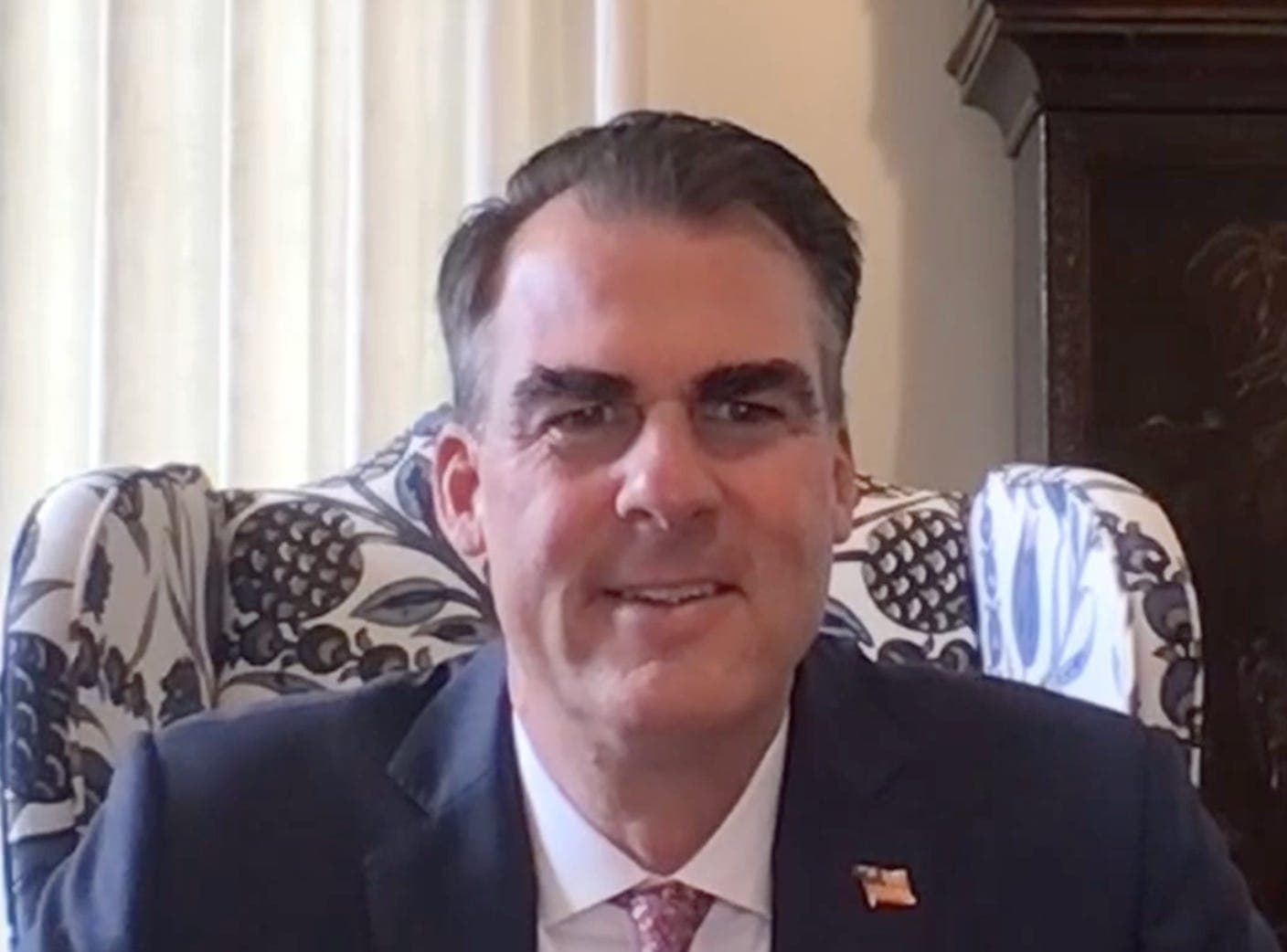
Ep 129: Oklahoma Gov. Kevin Stitt Steps Up to Save Tulsa — and Prove What's Possible
Episode Overview In this episode, Joe Lonsdale interviews Oklahoma Governor Kevin Stitt, who discusses his bold actions against homelessness and crime in Tulsa. He emphasizes the importance of state leadership in addressing urban issues and presents innovative solutions for holding local officials accountable.
Key Themes and Topics
- Oklahoma's Urban Challenges
- City Failures: Cities across the U.S. are struggling with crime and homelessness, often due to ineffective local governance.
- Governor's Responsibility: Stitt argues that governors must intervene when city officials fail to protect citizens.
- Operation Safe
- Initiative Details: Governor Stitt initiated Operation Safe to tackle homelessness and criminal activity in Tulsa, cleaning up nearly 2 million pounds of trash and drug paraphernalia.
- Results: The operation led to a significant decrease in crime and restored safety for families and businesses in the area.
- Innovative Accountability Solutions
- Citizen Engagement Apps: Discussion of an app that would allow citizens to report illegal activities, offering tax rebates if the government fails to respond in a timely manner.
- NGO Accountability: Stitt highlights the need for nonprofits receiving taxpayer money to demonstrate effective use of funds, discouraging profit motives from worsening issues.
- Addressing the Homelessness Crisis
- Compassion vs. Enabling: Stitt asserts that allowing homelessness to persist is not compassionate; instead, effective measures must be taken to address the root causes, including mental health and addiction.
- Rehabilitation Focus: Emphasizes the importance of helping the homeless seek treatment and get off the streets instead of simply providing services that perpetuate their situation.
- Legal and Political Context
- Trump's Executive Order: Stitt credits President Trump’s executive order on crime and disorder for empowering state leaders to take bold actions.
- Response to Violence: The episode discusses the critical need to address violent crime and hold repeat offenders accountable, referencing the tragic murder of Iryna Zarutska by a known criminal.
- Cultural and Political Dynamics
- Leadership and Courage: Stitt emphasizes that true leadership requires courage to address controversial issues and take decisive action to protect citizens.
- Public Servants' Duty: There is a call to return to the notion of politicians as public servants rather than career politicians focused on re-election.
Key Takeaways
- Bold Leadership: Governor Stitt's approach serves as a model for other state leaders, illustrating that effective governance can lead to substantial improvements in quality of life.
- Community Involvement: Empowering citizens and ensuring accountability at all government levels can drive positive change in urban environments.
- Focus on Solutions: Addressing homelessness requires innovative strategies that prioritize rehabilitation over mere containment.
- Restoring Law and Order: A strong stance on law enforcement is critical to creating safe and thriving communities.
Conclusion Governor Stitt's leadership in Oklahoma provides a hopeful narrative in the face of urban challenges, showcasing the potential for impactful governance that prioritizes public safety and community health. The episode encourages citizens and leaders alike to be proactive and accountable, ensuring a safer and more prosperous society for all.
For more insights and discussions, visit [Joe Lonsdale's Blog](https://blog.joelonsdale.com?utm_medium=podcast).
Written by AI. May contain mistakes. Listen to the episode to check what was said.
Transcript
Automatic transcript. May contain errors.0:00The thing that happened to a young lady in North Carolina was preventable. We need to be a law and order country. I think you're the only red state governor who's really stood up to our cities to save our cities recently. So it was getting out of control. People were walking down the street and they were getting hit by homeless with a brick. It's not compassion to let people live on the street. I sent my highway patrol in to clean up Tulsa. We removed about 1.9 million pounds of trash and debris, needles, drug paraphernalia. We have single moms crying, thanking us for cleaning up because they had called the police over and over again and nothing had happened.
0:37Why don't we have citizens have an app? If it's not removed, they should be able to get a rebate on their property taxes. I think it's brilliant. You're thinking about it like a business person.
0:50Many of our cities throughout America are broken. You wouldn't want your young children going downtown. You wouldn't want your wife walking alone through many parts of our cities. I don't like walking alone through many parts of our cities. It's ridiculous. President Trump showed that we don't have to live like this. He sent in the National Guard. Carjackings are down over 83%. People are grateful that our nation's capital is once again becoming a lot more lovable. The first governor to follow Trump's lead and to take the lead on this for other governors is Oklahoma Governor Kevin Stitt. Governor Stitt believes we can show compassion towards the homeless while not having to put up with our cities being broken and dangerous in a giant mess.
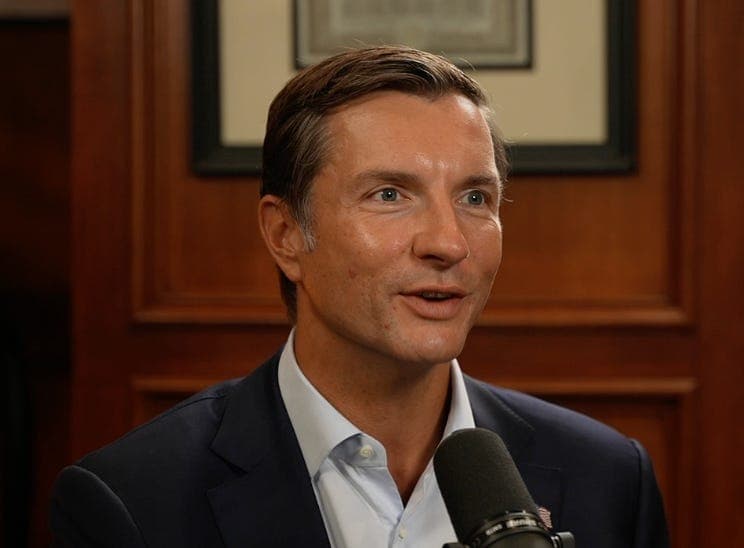
1:24Let's hear from him how he did it and how other red states can step up and fix our civilization in cities. Really excited to have our friend, the governor of Oklahoma, Kevin Stitt here with us. And Mr. Governor, I'm really excited to talk to you for many reasons. I'm a big fan of yours, but in part because I think you're the only red state governor who's really stood up to our cities to save our cities recently. And it's obviously doing something similar to what President Trump has been pushing as well. This is becoming an idea. His time has come. And we really appreciate your leadership. Tell us about the situation in Tulsa prior to taking action and how did the city officials feel to take responsibility?
1:57Why did you have to step in? Yeah, absolutely. Well, first off, it's great to be with you. And I'm a big fan of yours as an entrepreneur and leader and everything you're doing with Cicero Foundation. And so just super pumped to be here with you and have this conversation. You know, Tulsa, the business community really reached out to me and the homeless situation was getting out of control. You had people that felt unsafe going to their businesses. They would pull into the parking garage, felt unsafe. We had incidences where people were walking down the street and they were getting hit by homeless with a brick.
2:32We had muggings. We had people pulling knives on business leaders going to a restaurant. And so it was getting out of control. our mayor at that time the current mayor in Tulsa basically said well I'm going to fix homelessness by 2030 and I'm going to fix it by building houses and I'm like I called him I'm like listen you can never build enough houses for homeless because you're just going to keep attracting more and more and more people everyone wants a free house we are totally aligning with that it's nice it's a nice idea it doesn't work in practice that's exactly right I mean you're checking a box and you're acting like you're doing something, but you're doing nothing.
3:11And it's ridiculous. Business people understand that business people are going to call a spade a spade. That's why we love following you, Joe. And so basically we went in and I sent my highway patrol in to clean up Tulsa. And we first went in and told them, you're not allowed to camp here. We gave them one day to get away. And then the next day we showed up and we basically said, we're going to give you a couple options. We will take you to go get help to some of these nonprofits. Um, but you're going to have to get off drugs. There's going to be some requirements that you're going to have to do to get the help.
3:45Uh, we can take you to jail. Um, and you know what? 99 % of the people, they just leave because this is a lifestyle and they haven't hit rock bottom yet. And they're literally just getting on the train tracks and walking on to the next community. Um, whether it be another city or another state, that's going to kind of welcome them with open arms. They want a place where they can get free stuff and free drugs and not have to work. I mean, our data shows a lot more mentally ill. A lot of them, a lot of them are on drugs, but yeah, they're still making the choice, aren't they? In many cases. We believe so.
4:17We don't think it's compassion. Everybody's like, well, governor, you're not being compassionate. Well, it's not compassion to live people, to let people live on the street. And I've had somebody explain it to me like this. If you saw an elderly person with dementia, Alzheimer's walking around, you would never say, well, that's their civil right. Let's let them, you know, walk around and get abused and sexually abused and get robbed and harmed and live on the street. Of course, we wouldn't do that as a society. We'd be helping those people. And so I think by us just simply laying the law down and say, we're not going to allow you to do drugs, live on the street, break the law, do these camps, you're seeing it cleaned up right now.
4:59And so the business community is very, very thankful that we stood up because the politics of the left is not – they're not doing anything. No. In fact, actually, here in Austin, Texas, when we had a very progressive mayor, not only were they not doing anything, he actually brought the camps downtown for a while. And then his funding for his progressive causes went up. So people don't realize this actually helps their causes sometimes. It helps them get more money, even though it also increases sex trafficking, drug trafficking, crime. So I think this was called Operation Safe in Tulsa. So I want to hear more of the details because I think we actually do have a few other governors and legislators who watch our show and follow these things.
5:34And I understand you've already removed over 1.9 million pounds of trash and hazardous materials. Is that is that true? That's a lot. The Toss House works. Yeah, it was amazing. We literally through our Department of Transportation, we got it all organized. I sent my highway patrol out, which is the state police. And then we contracted through our Department of Transportation. And we got a vendor because some of this stuff to clean up, you know, these are hazardous, hazardous things. And so we found 55-gallon drum we filled up with used needles. And we can show you some of those pictures. But we removed about 1.9 million pounds of trash and debris, needles, drug paraphernalia.
6:15We found stolen credit cards, scrap metal, stolen bicycles. So it's just unbelievable. There were 64 different camps. And you'd be shocked, like literally right off the highway in some wooded areas, some encampments behind people's houses. We had ladies and single moms crying, thanking us for cleaning up because they had called the police over and over again and nothing had happened. car dealerships were having their cars set on fire and they came to us just thanking us for finally coming in because think about it this joe who's thinking about the business owner who's thinking about the people that use all their savings to open a dry cleaner and now nobody's coming to their shop because you've got homeless laying on the street who's thinking about the school kids walking to school so everybody always thinks about the people breaking the law and we want to get those people help.
7:10We want to get, if you're mentally ill, we want to get you into the treatments that you need, but we're not going to let you break the law in Oklahoma. I love it. So I think it's important to recognize President Trump's executive order on homelessness and disorder and how he helped lead the way for some of this and lead the way for others as well. How did the executive order empower you? Is this related at all to something you could use for this? Yeah, absolutely. So we obviously support President Trump. I mean, he is a decision maker. He's not, you know, moved by the politics. He's literally trying to do the right thing.
7:40And so he issued an executive order that I think if states just followed, we could get rid of some of this crime and this homelessness you're seeing around the country. But basically, you know, we think that it was largely driven, you know, a lot of this homelessness, my mental health issues, substance abuse. You know, what he's talking about is let's make sure we're enforcing the law in our states. And, you know, what's your message, Mr. Governor, because a lot of red state leaders in the past, you talk to them and say, listen, Joe, that's a blue city. It's a Democrat mayor. It's a Democrat's fault.
8:13It's not my problem. What's your message to these other red state leaders who may be on the fence about whether or not they're going to take action and save their cities? Yeah. You know, I think it's the I think it's the government's job to protect public safety. You know, first and foremost, as governors, I'm not going to let a million person city like Tulsa is and, you know, kind of go off the rails. We're trying to grow our state. The businesses that are moving here, we have an obligation to make sure that they have the public safety is at the forefront of what we're doing as government leaders.
8:46So if you're a governor and you see a mayor that's going off the rails, I think you have an obligation to protect the citizens of your state. So that's basically what we did. And we haven't taken anything off the table. We could declare an emergency and we could go in and do some other things on even city property. But now we've kind of turned it back over to the mayor and the city leaders and said, hey, you're going to have to now enforce the law or we'll come back. and I think you're seeing them move. We saw our mayor sign a bill that banned the panhandling and some of the stuff that we were seeing.
9:26The other thing, Joe, that I think is interesting, from our surveys, around 45 % of the homeless in Tulsa were from out of state. And to your point earlier, nonprofits, the way they make money is not by solving these problems. They can make, can raise more money if it gets worse and they keep talking about it. And so when you create all these services, you're going to be attracting more and more of that population. And so I think that's the thing that people don't understand. No, I totally agree. One of our big pushes is to hold the NGOs, hold the nonprofits accountable with radical transparency.
10:07If they get any money from anyone in the state, maybe they should have to show their metrics. Maybe you can look into it more because, you know, in our view, coming from California, I know a lot of these things were grifts where they'd hire all their friends, all their family, you know, even their even their aunt Sally, everyone's working for the nonprofit for two, three, 400K. And it's obvious like this is not officially for profit, but they're obviously making some money from perpetuating these things. So I love that you're standing out for it. I want to ask one more question on the other people.
10:32You know, I think I think there's something in our society today. I'm curious what you think, but I think there's something that's a little bit softer than maybe our forefathers were. We're a little bit more cautious. We're a little more unwilling to offend. We don't want to cause stress in our lives. And I think a lot of these leaders in our states, you're a businessman and leader by background. I think a lot of them are afraid to just get involved in controversy. They just, it's much easier just to blame it on someone else and actually go in and fix it themselves. Like what, what has to change culturally in our society and our party for leaders to stand up and actually do the right thing here?
11:01Man, that's a question I've been, been wrestling with and trying to think about and how do we encourage, you know, the right people to get involved in politics. And I think it comes down to what are you, you elect your leaders to do a job, right? So you elect them to be the governor or be a mayor or the attorney general or the person that's running education or your U.S. senator. And what's so frustrating, the reason people hate politicians is because they can see right through them. As soon as they get to that position, they start running for their next deal or it becomes how do I stay and get reelected?
11:35How do I stay in power? How do I make friends with all of the funders so I can all the nonprofits and all the, you know, the folks so I can stay in power? And and I mean, I just totally think that's that's not what our founders envision. They envisioned you to be a public servant and you're going to be a successful business person or rancher or farmer or teacher. And you leave that for a time to go serve your state or your country. And when you have that mentality like, hey, I'm going to go back to the private sector and I am leaving this a better place. And my job as governor is to protect public safety, to improve education, to make sure we're the most business friendly state.
12:17And then I'm going to go back to the private sector and I'm going to live under the same rules that I actually passed. And I think it's as simple as that. The character of the people that we're putting in these positions should be focused on the public service and not on getting reelected. But when you're wanting to get reelected, yeah, your normal default is, oh, well, I better not get involved in something controversial. That's kind of a hot potato. Let me not lead on that issue. Let me just sit back and I'll see where the political winds flow. and that's not leadership and that's not what you hire people to do you wouldn't hire a ceo not to drive change in your company right you want them making a decision and uh being the visionary and basically you know put pushing the needle yeah you want to drive towards what's right and what's substantively correct not towards what looks good that's a huge mistake that happens in a lot of parts of our lives uh it does does seem to be a problem in politics let's let's talk about a couple more policy ideas we can go a little wonky for a second i think this is interesting to get your thoughts.
13:19I know you've much of been looking at this problem a lot. There's all sorts of ways that a governor can confront a city, obviously, especially with the legislature on your side. You know, at Cicero, our policy group, we have a bunch of different ideas. One of them we like recently is using the residents to hold the city accountable. So one idea we like, this comes from here in Austin. We have a very similar problem that you talked about in Tulsa. I've had a lot of friends screamed at, yelled. There's been people killed by homeless who keep getting let out. Unfortunately, it's a huge mess downtown.
13:45They're breaking the law and there's these encampments, you know, so we actually passed laws. We both had a proposition in the city and the state law now against these encampments and yet they're still having encampments. So one of our ideas is how about this? The city's not enforcing the law. Why don't we have citizens have an app? And every time a citizen sees an illegal encampment, they can report it. If it's not removed within say 24 hours, however long, uh, for whatever, maybe give them two days to remove it. If it's not removed, they should be able to get a rebate on their property taxes.
14:12So the city gets defunded because the citizens don't have to pay anymore. I know it's kind of crazy, but like you have to give citizens some way to actually hold the city accountable. Curious what you think about things like that. Yeah, no, I mean, you're thinking about it like a business person. If they have something to lose, then the city's more likely to actually enforce the law. I think it's brilliant because unfortunately, when you have when you've got some of these, you know, politician, you know, mayors that they're they're just afraid of their own shadow and they're not willing to take a stand on what's right.
14:42I've told people, listen, I'm not solving homelessness here. I go, that's up to the churches and the nonprofits and getting people help that they need. I said, all I'm doing is enforcing the law and saying, you're not going to be staying here doing drugs on our streets and you're not going to be here and camping. We will absolutely drive you to the nonprofits to get the help that you need. Um, but I love those ideas and it's, it's basically, um, incentivizing the, the, uh, uh, the, the, the, the citizens, but it's also de-incentivizing the city or the state from not actually following the law.
15:21So I think that's brilliant. And the more ideas you come up with like that, if we can get that across the finish line with the legislature, I think that would, uh, it would force your mayors to actually do their job. Yeah, no, we love it. Maybe the local businesses and the citizens can actually hold them accountable for once. I think government should be afraid of people, not the other way around. We should be able to hold them accountable. I think that'd be more fun. One idea you mentioned as well, we really like the idea of more drug-free homeless zones, which, by the way, for a while, HUD, the national government, was actually coming in under the Biden administration, and it was forcing people to allow people to use drugs in their treatment areas, which we think is totally crazy.
15:57I think you mentioned this, that you actually wanted these things to be drug-free as well. Talk to us a little bit about that, because that's not how California handles it. California brings them in and gives them drugs. So I'm curious how you're thinking about this. Yeah. Yeah. I mean, listen, well, first off, I mean, we've got we've passed in Oklahoma. They have medical marijuana and because it's just such a, you know, people think about the way it passed was, hey, we thought that, you know, they ran an initiative petition that said that this was going to help certain people. And we're very, you know, compassionate people in Oklahoma.
16:30And if we think something's going to help someone, we, of course, want to want to do it. But what's happened is it's turned into kind of recreational. Anybody with a with a hangnail basically can get a medical marijuana card in Oklahoma. So we've got some of these issues like we're seeing in other states. But that's so harmful for young people. I think the people are now waking up to the effects of even marijuana use, et cetera, et cetera. So when you make it easy for people, when you give them needles, when you do all these things, you're just going to create more of this type of unhealthy lifestyle.
17:06So as a general rule in Oklahoma, we don't like that. We don't think that's the solution to give someone and make it easy for them to do drugs in Oklahoma. And it's it's I know other states may do things differently, but we don't see any evidence that that's going to curb drug use by, you know, giving them more more needles. Yeah, no, we exactly. It was it was an interesting idea when it came out 20 or 30 years ago to some people. And to me, it's very clearly the wrong idea now. We shouldn't be encouraging it. We should be cutting off drug use. It's a major problem. I want to ask you about maybe this is some people think this is conspiracy talk.
17:44I actually think we're learning, increasingly learning that there is a coordinated national effort on the other side with our cities right now. And so when I talk about this, I mean, everyone's already heard, of course, groups like people like George Soros and his foundation have been bankrolling progressive prosecutors. And there's been a lot of other people on the left helping him with that. I think some of them realized it was wrong. I don't think his troops realized it was wrong. And I tend to think they must have a nefarious intent when you look at it. But it's not just that they're coordinating the prosecutors, Mr.
18:11Governor. We now see evidence. There's something called the Wren Collective, which is actually writing and coordinating their policies. You literally have these leftist groups going and getting money from the press of offices, sending people, sending them official policies, pushing them to let people out of jail, pushing them not to prosecute. It's happening all over our nation. More than 48 DAs were caught specifically funding the Wren Collective around this. What are we going to do against this? Can governors, legislators root this out? Should we be going after these groups? It seems crazy to me that we're just letting them ruin our country with this.
18:39Yeah, I mean, you make some great points and we see that as well and more so in other big cities than we have seen in Oklahoma. But any group that's selling a product or an idea, you need to figure out what is the motivation behind those ideas. You know, one of the laws that we passed, you've got these major, major advertisers that are coming in to do these class action lawsuits. Well, we found out that there are there's companies out there. There's these left wing groups that are really funding these efforts because they're expensive to run the ads, to to get people on these class action lawsuits, to go after companies.
19:18And so you have to now disclose who are your funders. And we're just trying to expose that. So we actually passed a law last year against some of those major, major lawsuits that are coming and who are the funders behind them. So to your point, who's funding some of these efforts that are decriminalizing the drug uses, that are decriminalizing some of these crimes? And, you know, Oklahoma, you know, we fell prey to that before I became a became governor. But lowering the, you know, a felony charge to maybe five hundred dollars or a thousand. Well, now you've got these criminal elements that are very, very smart and they are they know that they're going to get a slap on the wrist and they can steal from retail.
20:07But they're very organized crime, criminal activity that are literally, you know, tearing up our retail. So we've gone back and we've raised the threshold. We've turned it back into a felony. And guess what? Crime's going down in Oklahoma. And so, you know, you have to use some common sense here. We need to be a law and order country. And I do want to say this, too. I think most most Americans are good. They want law and order. That means most Democrats, most Republicans. But it's really these fringes that are the loudest that are, you know, the very small minority, you know, on the fringe of the left that we cannot let take over our politics.
20:48We most people think like you and I down the middle. Let's make sure that that we have law and order. We've got a great economy and we make some common sense and we're not going to let this nonsense happen in our states and our communities. I love it. That's that's well said. Two more questions for you. one of them i want to i have to mention you know we all saw uh in horror the murder of arena zarutska with in charlotte right this was a criminal who went out after 14 different arrests repeated violent career criminal and there's these routinely these judges that are incompetent or worse putting these guys back on the streets like like how do we solve this is this legislation like like what is it just to stop letting these violent criminals out again you know i mean i've use that exact example.
21:31Like, here's why we are cleaning up Tulsa. We're not going to allow this, this stuff to happen. We're not allowed. These people are going to be here. That person obviously had a lot of mental issues, but he's a murderer and it needs to be punished to the full extent of the law. But a couple of things, number one, there's a group of people that have these mental problems. And quite frankly, they need to be institutionalized. They need to be long-term in some kind of system where they're not going to be roaming the streets. So I think we need to really look at that. And that's one thing Oklahoma's looking at is if you have some serious mental issues, we are going to get you into, we're going to prosecute you.
22:09That's part of Trump's executive order. We're going to commit you long term. But then there's a group of people that literally are just, you know, they're addicted to drugs and we need to get them the help that they need. So that's a group of people. But then there's a group of people that literally this is their lifestyle. And as long as you enable them to live on the streets, to do drugs, to move from community to community, and you give them three meals a day and you talk to them about housing, you're going to have people that they're not hitting rock bottom. They want that lifestyle. So I think we want to make sure that if you've got some mental issues, we're going to commit them long term to get the help that they need.
22:51We're not going to let them on the street. And I think that's something that as Americans, we need to relook at. I think pre 1980, there used to be more, more homes long-term for the mentally ill. And I think they went through a move to get them and it's contributed to our homelessness. No, of course. I think everyone saw movies like one flew over the cuckoo's nest and they thought these were horrible places and they wanted to shut them down, but we didn't realize actually you need to have them. And it takes a lot of courage to build them. So I really appreciate you doing this. I think with career criminals like this as well, we talk more about it, but I've seen the data at this point.
23:25I'm now for a two strikes and you're out on violent felonies. I think if two violent felonies, why are we letting them do a third? Because the data is that the third through the 15th in our society is actually the majority of the violent crimes. I'm like, what is going on here? It seems like we should just lock them up if they're bad guys. That's a great point. Yeah, it's a great point. I mean, this the thing that happened to the young lady in North Carolina was was preventable and the judges and everybody should have a have to look in the mirror at what letting that letting that person just continually be on the street.
Read the full transcript
23:57Yeah, well, hopefully it spurs us all to take action in her memory there. And so, you know, this show is called The American Optimist. You know, I have I have five young daughters now and a son and I'm hoping they're going to be safe on the streets. Leave us with a note of optimism. Like we don't need to tolerate this kind of chaos and disorder in our country. Right. Like I'm afraid for my kids to go downtown. right now, even here in Austin, Texas. And can we get people real help while solving these problems? You're feeling good. The whole country is going to figure this out. You know, I am. I'm optimistic that we're going to celebrate our 250th anniversary as a country next year.
24:27And so this idea that the American dream is alive and well in Oklahoma, and I'm trying to promote that to the rest of the country, that we live in the greatest country in the world. And the fact that you can accomplish anything that you set your mind to in America, and it doesn't matter who your parents are. It doesn't matter who you're born to through education and free markets and entrepreneurship. You can accomplish your dreams. You have the freedom to marry who you want to marry. You've got the freedom to go to school if you want to go, not go to school, start a business, not start a business, start a nonprofit.
25:03And we can't lose that idea that just go look at how many people want to come to our country versus others. And you know that we've got something special going on. But if we let, if we let, you know, I don't want to stereotype everybody, but if we let some of these folks just talk about and let people just live on the streets like this, and these mayors just, you know, these political elites just talking about, oh, we're going to build housing for everybody, and we're going to give them drugs and needles. That's not a solution. And it's not going to work. And we need the majority of Americans to step up and hold our elected officials accountable to do what's right.
25:42Governor Stett of the great state of Oklahoma, thank you for your courage and your leadership. It's good to see you. Yeah, you too. Thanks, Joe.
From the publisher
America’s cities are dangerous and broken, and for too long, governors stood by as city officials failed their citizens. But Oklahoma Governor Kevin Stitt has stepped up to prove that we don’t have to tolerate incompetence or lawlessness. What bold actions did he take? Why were the results shocking? And how can his leadership be a model for other governors?
We’re joined this week by businessman-turned-governor Kevin Stitt. In 2000, he launched Gateway Mortgage with just $1,000 and a computer; when he departed, it was one of the largest privately held mortgage companies in the country. He ran for governor having never sought public office before, and since taking the helm, he’s run the state like a business: slashing regulations and restoring fiscal responsibility. During his tenure, Oklahoma has become one of the fastest growing states in the country.
We begin our conversation with Operation Safe — the governor’s bold initiative to clean up homeless encampments and criminal activity in Tulsa after city officials let the problems fester for years. Learn about the extensive theft, drugs, and crime they exposed, while cleaning up nearly 2 million pounds of trash! More importantly, the governor restored safety and order for families and businesses, while helping the homeless seek real treatment and get off the streets. Gov. Stitt explains how President Trump’s executive order on crime and disorder paved the way for more state leaders to take action, and now that he’s proven what’s possible, city officials in Tulsa and elsewhere are on notice that their failures will no longer be tolerated.
Next, we discuss innovative solutions that can empower citizens to hold their local officials accountable. Imagine an app that gives individuals or businesses a tax rebate if they report illegal activity and the city fails to address it — that’s what the Cicero Institute is working toward, and Gov. Stitt loves the idea! We also discuss how states can use their power to hold NGOs accountable and ensure taxpayer dollars are solving homelessness, not perpetuating it. Finally, we discuss Iryna Zarutska’s murder and the strong, but necessary, steps we need to take to deal with violent, repeat offenders. Gov. Stitt’s leadership gives us real hope that other state leaders, especially in red states, will step up, enforce the law, and prioritize the safety of the American people.
00:00 Episode intro
01:44 Operation Safe - stepping up to save Tulsa
05:48 Needles, theft & 2 million pounds of trash
10:15 Corrupt NGOs & weak politicians
13:40 Citizen apps to hold govt accountable
17:55 Soros influence in our cities
21:20 Iryna Zarutska & violent repeat offenders
This is a public episode. If you would like to discuss this with other subscribers or get access to bonus episodes, visit blog.joelonsdale.com