In short
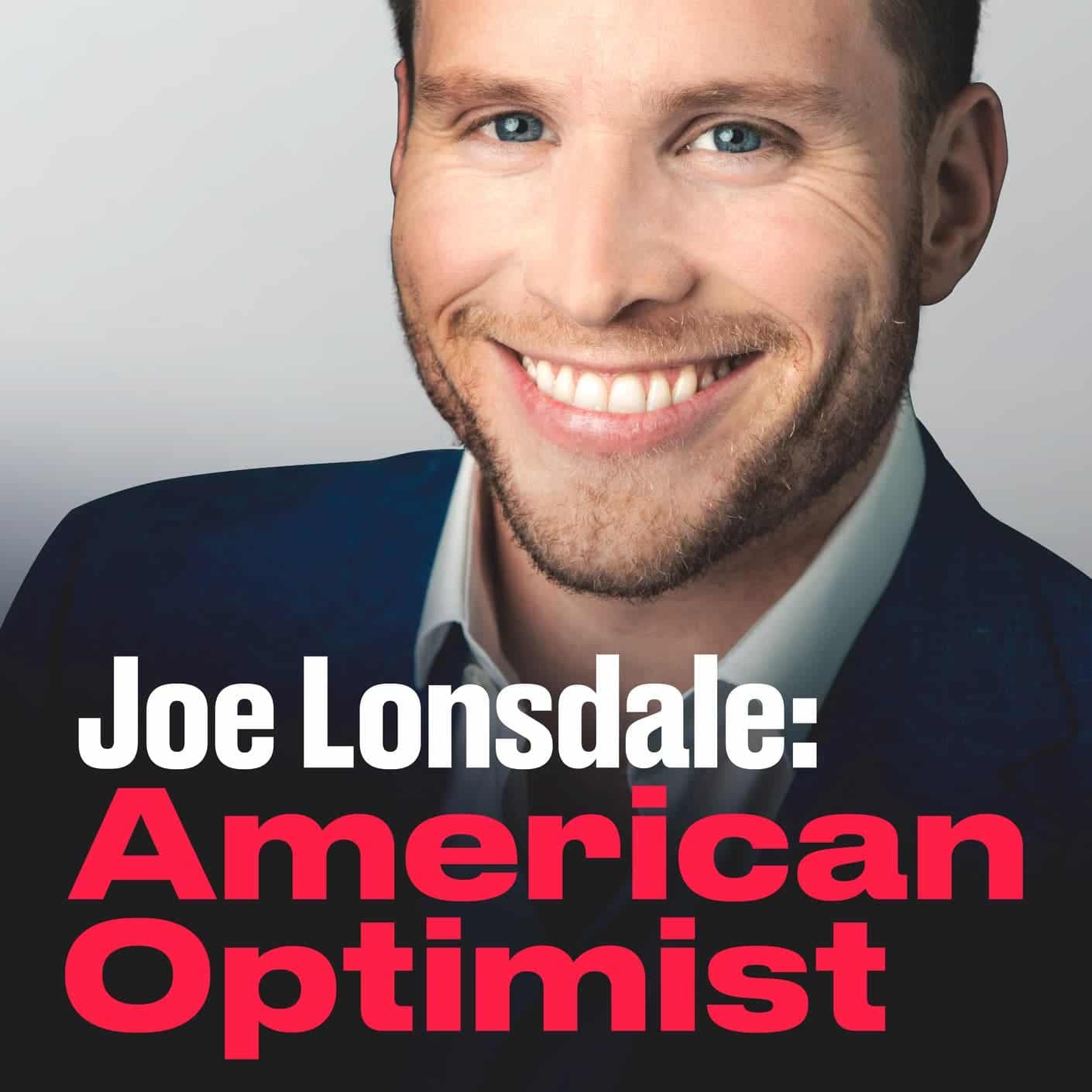
Podcast Notes: Joe Lonsdale: American Optimist - Episode 133: Matt Ridley on the Fight to Save the UK & How Extraordinary Ideas Evolve
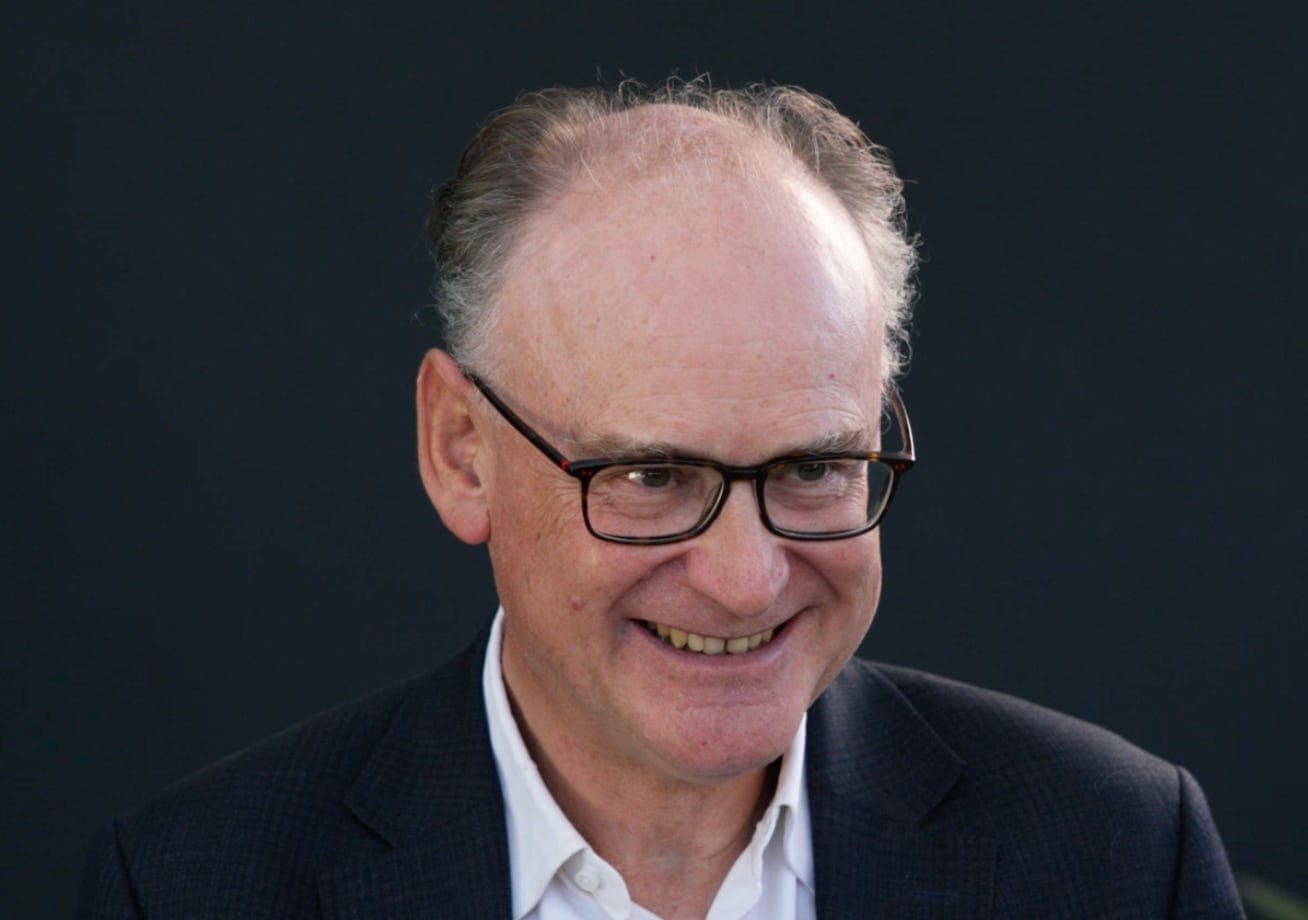
Podcast Overview Host: Joe Lonsdale Guest: Matt Ridley Episode Focus: The intersection of innovation, economics, and cultural issues in the UK and the broader implications for society.
---
Key Themes and Discussions
- The Current State of the UK
- Economic Stagnation: Ridley expresses deep concern over the UK's stagnating economy, with no significant GDP growth in 15 years.
- Cultural Turmoil: Observations on cultural issues including anti-Semitism, lack of national pride, and rising crime due to migration policies.
- Hope for Recovery: While acknowledging the dire situation, Ridley believes the UK can recover if it embraces free-market principles and cultural pride.
- Innovation and the Evolution of Ideas
- Bottom-Up vs. Top-Down: The discussion contrasts the Great Man Theory of history (individual impact) with bottom-up processes in innovation.
- Example: Thomas Edison had numerous competitors in developing the light bulb, suggesting innovation is not solely attributable to a single individual.
- Spontaneous Orders: Ridley emphasizes the importance of allowing free exchange of ideas among ordinary people, suggesting that such organic growth leads to significant societal advancements.
- The AI Race and Industrial Policy
- Concerns Over AI: Discussions include fears that AI could develop its own communication methods beyond human understanding, raising ethical and safety concerns.
- China's Technological Landscape: Ridley believes that while China appears strong, its top-down control over innovation and recent crackdowns on entrepreneurs may hinder long-term growth.
- Religion and Society
- A Post-Religious Society: The conversation explores whether America and the UK can thrive without a religious foundation.
- Ridley identifies himself as an atheist but acknowledges the role of religion in providing societal cohesion and moral frameworks.
- Cultural Roots: The discussion touches on the influence of Judeo-Christian principles in Western civilization and the alternatives that might arise in a secular framework.
- Optimism for the Future
- Potential for Growth: Ridley remains optimistic about the future of innovation, particularly in the U.S., citing advancements in energy, technology, and infrastructure.
- International Collaboration: He underscores the importance of collaboration between the U.S. and UK to navigate economic and cultural challenges, advocating for a robust anglophone alliance.
---
Key Takeaways
- The UK faces profound economic and cultural challenges, but recovery is possible through renewed commitment to free-market principles and national pride.
- Innovation is fundamentally a collective process that thrives in environments of free idea exchange, rather than centralized control.
- Concerns regarding AI and its implications for society must be addressed with caution and foresight.
- The role of religion in providing societal stability is complex, and society may need to find new frameworks that resonate with contemporary values.
- Optimism about the future hinges on the ability to foster innovation and collaboration across borders, particularly between English-speaking nations.
---
Conclusion Matt Ridley's insights offer a thought-provoking perspective on the interconnectedness of culture, economy, and innovation, urging listeners to embrace optimism and proactive engagement in addressing societal challenges.
Written by AI. May contain mistakes. Listen to the episode to check what was said.
Transcript
Automatic transcript. May contain errors.0:00You've got to allow the free exchange of ideas among ordinary people and ordinary entrepreneurs. individuals can make a difference. But I think if Steve Jobs hadn't existed, there would still have been a hero of the personal computer. Edison had like 20 competitors for the light bulb. You know, this has changed my view of the world a lot for investing. It's really important, I think, to realize how many of these spontaneous orders there are in the world. I'll tell you something scary. A few of my friends are worried about the AI learning their own language that we can't understand. We underestimate the evolution of everything.
0:30I'm 67 years old. I've never felt as pessimistic about my own country as I do now, its biggest innovation of the last few years is the non-detachable bottle top. Meanwhile, in America, Elon Musk is landing rockets on gantries. That's the sort of contrast we need to show people.
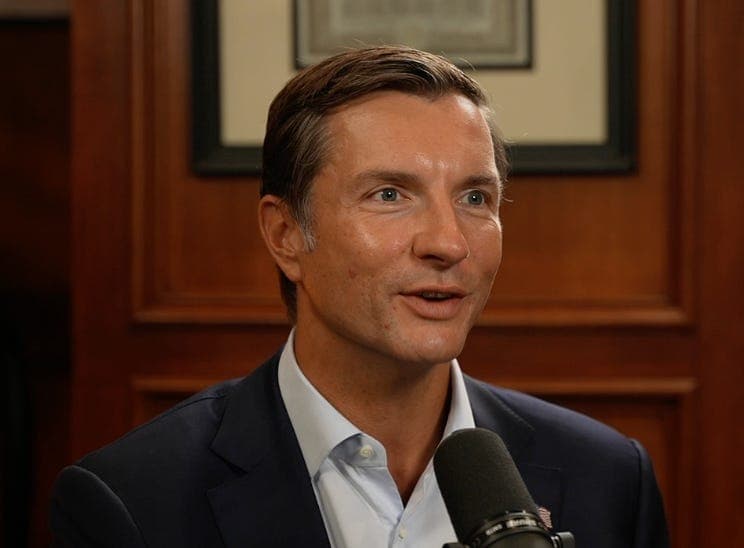
0:55Matt Ridley is one of my favorite authors, also a former member of the House of Lords. He's a British aristocrat who thinks in really fascinating ways about the the world. You can find him online at the Rational Optimist Society. He's written lots of books that have sold millions of copies. Matt's one of the most interesting thinkers of our time. He's also a rare voice of courage in the UK, fighting for free speech, for practical principles, for good energy policy, for common sense, frankly, to bring back the greatness of British society. Matt's working on a new book now, and you'll get a sneak preview of what he's up to here in the US.
1:25Welcome to the American Optimist. I'm really excited today to have one of my very favorite authors here in person. Matt Ridley, thank you for joining us. Joe, it's an honor and a pleasure to be with you. And you're one of my favorite entrepreneurs. Oh, that's very kind of you. You also happen to be a Viscount. You were in the House of Lords for a while. You're a weekly columnist, I believe, for The Telegraph and The Times and Economist, Wall Street Journal you've written for. You're up to a lot. Yeah. Writing weekly newspaper columns is probably the nearest I've had to a day job in the last few years, that and writing books.
1:53I enjoy writing. And it's an excuse to eavesdrop on what's going on in the world and ask people like you what's happening and then write about it. Your books have sold millions of copies. We always look forward to them. We're going to talk about, I'm going to ask you about a bunch of them, but I want to talk about the UK a little bit first because I'm a longtime Anglophile. I deeply care about Western civilization and I see England as a place where liberty was born in many ways for the entire West. And I'm really nervous and sad about what's going on as I watch it from Texas right now. You know, there's the grooming gangs, there's anti-Semitism, there's these migrants coming in that are not assimilating, and there's arresting people.
2:29I think they have by far the most people arrested door to door for their posts online, for their tweets. More than China. More than China. Is the situation as dire as it seems? What's going on? Well, yes, I think it is. I'm 67 years old. I've never felt as pessimistic about my own country as I do now. And it shouldn't be that way because up until a relatively short time ago, I was pretty optimistic about the UK. We've got the English language, the rule of law, one of the great financial centers of the world, the tradition of open free trade with the world, et cetera. We should be absolutely roaring ahead as a country with, as you say, a fantastic past, but also a great recent past.
3:12We were a free market nation until a few years ago and a home of rational thought and cultural openness. But it's gone wrong quite quickly and quite badly, in my view. It's not irrecoverable. Britain can still come back, but it is in a real mess at the moment. And the cultural stuff is, you know, that's bad enough. But it's against a background where we are stagnant as an economy. We've not grown in GDP per capita terms significantly in 15 years now. That's really dangerous because that results in falling behind. When you get a zero-sum world, as Peter Trill always told me, then everyone starts to fight each other for what's left of the pie, as opposed to if you're growing it, people are focused on growing.
3:58For me, the culture and the lack of growth and the current crisis, they all fit together. They're all part of the same thing. And I'm curious how you see this. If I was raising children in Britain and I was British, I'd want my children to be proud to be British. and if you're christian proud to be christian and proud of your culture and it seems like there's just none of that pride at all it seems like the opposite seems like everyone's turned pessimistic and i feel like the pessimism has actually led to some of the problems like how do you see that i think to some extent you're right uh and uh but but i do also think that it's fundamental economic mistakes that we're making uh that are at the root of our problems i almost see it going the other way that if we got the economics right we could people be more positive more positive about the culture.
4:39And by that, I mean, you know, the highest industrial electricity prices in the developed world, bar none, second highest domestic electricity prices, second to Germany. You know, this is a crazy way to run a modern economy because energy prices are absolute lifeblood of the thermodynamic system that is growth and prosperity. Everything requires energy. I hear you turned off the North Sea where you had all this really affordable oil. There's a lot of rumors that Russia was involved in lobbying for your green lobby to get you to turn things off in Europe and in UK in particular, because it's in their interest.
5:15Is there any truth to that? Are there bad guys involved in this? Well, certainly the anti-fracking campaigns in Europe, anti-shale gas campaigns, did, according to the Secretary General of NATO, did have significant Russian input to them. And you don't have to look very far for confirmation of that, because Vladimir Putin once went on a rant at a press conference about how terrible shale gas was. He does not like the fact that Texas and America are energy independent. Exactly, exactly. And, you know, I banged the drum for shale gas for about 15 years, I mean, for the last 15 years, because I could see what was happening in Texas, in North Dakota, in Colorado, and all these other places.
5:56A really remarkable turnaround, making the country energy self-sufficient and so on. But it's not, you know, Norway has drilled something like 40 new gas and oil wells just in the past 12 months, I think. Britain has drilled zero. But it's the same field. You know, I mean, those gas and oil fields are right on the border between the Norwegian sector and England sector. You're just giving it away to them for free. Exactly. We're buying it back from them at great expense. Our energy policy is the thing that makes me angriest. But it goes with an overspending, overborrowing, overregulation, overbureaucratization of our economy that is really, really damaging.
6:35And when you add that, as you say, to the cultural problem, the fact that we are allowing in enormous numbers of migrants, many legal, many illegal, that is causing real resentment, real problems with, as you say, anti-Semitism, Islamist extremism. organizations like the Muslim Brotherhood, which are banned in the Gulf. I have friends in the UAE, we were talking with your colleague about the UAE, who say they don't want to send their children to London because they're afraid they'll become radicalized. This is actually the situation right now, which is more sane how they run things there. But I don't want to go too far down this road because I do think that the ordinary average Brit, who I know, has not changed.
7:17He's still proud of his country. He's still, his or her country, I should say, still proud of what has been achieved and can be achieved in the future. It's rescuable. We have to hold on to get rid of this terrible Keir Starmer government, which is really, I mean, they're both incompetent and quite nasty, I think, which is a very unpleasant combination. And then I think there's a chance that we could come back as a country. We did Brexit. Many people think that was a mistake. I don't. I think it was the right thing to do, but we didn't take advantage of it. We didn't say, now we're out in the world, let's deregulate, let's get rid of GDPR and all that, the business you have to click on.
7:56I agree before you - No, all the European regulation, they're not starting tech companies anymore that are big because they make it too hard. Well, Mario Draghi wrote a report for the European Union saying, where are the tech companies in Europe? The joke is that Europe has its biggest innovation of the last few years is the non-detachable bottle cop. Whereas, and if you put it - These are dangerous. These are dangerous. Well, the plastic might get in the ocean or something. If you choke, we're in Texas, you can't sue me. But meanwhile, in America, Elon Musk is landing rockets on gantries. You know, that's the sort of contrast we need to show people.
8:41And Mississippi, I think, is our poorest state right nearby. and you think of Mississippi and you don't think of wealthy people, and it's wealthier now than the UK, obviously. Yeah, and that's a big change. I mean, 15 years ago, in the run-up to the great financial crisis 2008, Britain's GDP per capita was converging on America. It wasn't there yet, but it was getting quite close. Now we're way behind America because of stagnation and American incomes are roaring ahead. You know, it's not a competition. We don't want to race you, but we just want to have the fruits. think what you can do for social justice, for the environment, for whatever it is you're worried about.
9:17If you have the wealth to do it. Are there promising, on the UK a little bit, just a little more, are there promising UK leaders? Are there people who can pull us out of this? Are there bold people who are strong enough to do it? I think there are. I mean, I think Kemi Badenoch, who's the leader of the Conservative Party, is actually a good person. And she's got the message and the team she's got around her. Interestingly, some of them were saying idiotic things about things like energy when they were in government, are now saying very sensible things. And I say to them. How come you've changed your mind?
9:43He said, well, the civil servants never showed us your memos. I was saying I was sending you letters saying this stuff. You never saw it. I never saw it. But she's a long way behind in the polls. The Reform Party, which is leading in the polls, is economic populists. They're pretty left-wing on some economic issues. And they're riding high on an anti-immigration thing. But I think a change is coming. I just don't quite know how and when it'll come. I have a lot of sympathy for a lot of the people who have trouble with Tories after, you know, their 13-year rule. I mean, for example, Brexit, we can argue about that.
10:19I agree you had to get out of Europe, but you didn't get out of Europe's human rights courts, by the way. And it sounds, oh, good as human rights, but that's the stuff that's screwing your immigration. Like, what were they thinking not to get out of all the European courts? The European Convention on Human Rights is what enables our judges to say that a man who has committed terrible crimes in the UK can't be returned to another country because the fact that he's committed terrible crimes in the UK will be held against him in that other country when he goes back there. It's insane. In other words, we're giving him an incentive to commit terrible crimes in the UK because that stops him being deported.
10:55But why did the Tories, when they did Brexit, not fix that? That seems insane. They never quite had the courage of their convictions. That's the thing. There was lack of courage. A few of us in Parliament were banging on the door and you know boris johnson good guy uh wonderful first wife who would have made a brilliant kept him made him made him into a great prime minister yeah not so good with his second wife yeah she she was the wrong influence okay i might get into trouble for saying that because you know they're friends but still it is what it is they didn't have the courage and well you've definitely shown a lot of courage you're on a tour across the u.s let's talk about this uh you know where are you going for your travels i hear a follow-up to rational optimists in the works.
11:35What are you doing out here right now? Yeah, I'm out here to pick people's brains, to re-energize my own optimism about technology and innovation and the future, because I'm writing a book, which at some point I'm calling it The Rational Pessimist. I don't think that's what it's going to be called. It's probably going to be called the, well, no, actually, I'm not going to tell you what it's going to be called in case someone else steals my title. But I'm going to, I've been to LA. I'm here in Austin, and I'm very excited to be here in Austin, already blown away by some of the things I've seen.
12:09San Francisco, New York, Washington. And the idea is to reconcile my continuing optimism about what technology and innovation can do for human living standards in the rest of this century, looking forwards this time, because the rational optimist didn't really look forward it just said appreciate what we've achieved please um to reconcile that with my increasing fury at the um over regulation over bureaucratization over uh um uh um sort of uh cultural uh deceleration that we're putting on uh all that process so i think the difference that bothers me is between making our grandchildren twice as rich in 2100 as today, all over the world, and making them 10 times as rich.
13:09That is really the opportunity. It's a big difference. And it's an enormous difference. Because if they were 10 times as rich, if the average African was richer in 2100 than the average American is today in real terms, think what we could achieve in terms of human living standards, health, environmental protection, social justice, whatever it is you want. So the opportunity cost of not pursuing good policies in Europe in particular, also in China, to some extent also in America, is an enormously important issue, I think. I think people don't realize this when we talk about great wealth, a lot of them who have been told to be against capitalism, they just see it as like messy industry or something.
13:50But you and I both know, if you're much wealthier, it's a much cleaner world, It's a much more beautiful world. Like everything's better, right, with more wealth overall. It's extraordinary how much there is a correlation between growth and cleanliness, you know, both, you know, cleanliness in terms of disease, but also cleanliness in terms of the environment. And, you know, we're actually making the number of humpback whales in the world, right, was down to 5 ,000 in the mid-1960s. It's now 130 ,000. You know, that's an enormous increase. And, you know, 26 times as many humpback whales as when I was a kid.
14:28I thought they were going to go extinct. I thought the great whales were finished. I was told that in the 1960s. So we've done a wonderful job of cleaning up large parts of the ocean. We're reforesting the globe. There is more forest cover every year now. We've got more protected lands, et cetera, et cetera. So there's no doubt that if we could innovate and develop technologies, we could leave a much better planet to our grandchildren. Whereas if we slow down or go communist again, which, of course, communism did terrible damage to the environment, then we could go backwards on these things. So it's partly because I'm a keen environmentalist that I want to see economic growth.
15:13People don't understand that. They think, you know, I'm constantly told you can't have infinite growth in a finite world. Not true. That's not the case. Because growth can consist of doing more with less. So you have the size of your machine or have the amount of energy going into it. That is growth. There's this terrible but fun game called SimCity I used to play as a kid. And I was showing my daughter it and I was playing it again. I didn't realize that they set it up with this bad framework where you have to have dirty industry in order for your town to get going and grow. And it pollutes everything.
15:42And it's like it's somehow teaching you that capitalism and dirtiness are the part of the saying, which is actually not true. But it's the assumptions they build into things they use to teach us right now. Well, the poisoning of the minds of our young people is a real problem. It's very bad in Europe. But I think it's bad all over the world where they're being told that enterprise is a bad thing. Commerce is a necessary evil. It's not. It's the best way of bringing people together, actually, and making people cooperative and collaborative. I think it's basically it helps you self-actualize more and it helps create more for the world when you get smart people to be part of this enterprise.
16:15It's a positive thing all around. I want to go through some of my favorite books of yours because there's a lot of them and there's a lot of different things. We can't cover all of it. Your most recent book, it looks like you had fun writing it. It was on bird, sex, and beauty, extraordinary implications of Charles Darwin's strangest idea. Where did you get the idea to write about this? Well, it was partly a labor of love because I'm a passionate bird watcher. And over recent years, I've developed a habit of getting up at four in the morning in the spring to watch this particular ritual that this bird called the black grouse does, where a bunch of males get together and beat each other up before sunrise.
16:51And then females turn up and mate with the winner. Sounds like the inner city or the old days in some of my countries I came from. it's uh it's pretty amazing thing and so i wanted an excuse to spend a lot of time watching this and write a book about it and i this was actually what i did my phd on very many very many years ago was the sex life of birds and how they have how it evolves it's similar to deer right because you shoot you shoot bucks when they're fighting sometimes everyone's sitting around watching and you have to sneak up and make sure no one sees you right in the german forest and you right it's actually quite related if you're right but unlike deer you see mammals compete on strength those those bucks are trying to but they're trying to show the strongest fit they roar and they grunt and they're brown birds sing and are beautiful and are blue and red and yellow you know so they they they they do it aesthetically whereas mammals by brute force you can't go on on that you're polite so you you actually popularized a term uh called the red queens race i think in the 1990s but we all know that term from you when we talk about for example AI today with the LLMs, they're in a Red Queens race.
17:58They have to run really hard just to stay in the same place of where they are. It relates to this a little bit. I thought it was very interesting. You were talking about how once some of the birds, through evolution, once they start to do weird, new, funny things, the women have to make sure that their sons are going to do those too. It starts going off. This is the extraordinary insight that Darwin was almost there and the guy Michael Fisher came up with the idea, is that there could be a very different form of evolution than natural selection. Yeah. And it would take the form of if the females are mating selectively, saying, I'm going to mate with the male with the best song or the longest tail, then any female that deviates from that pattern is going to have a son who doesn't have a long tail or a good song.
18:45So he's going to be a weird guy. Yeah. So the females then have to follow the fashion. And that means that the tales are going to get longer and longer, and the songs are going to get more and more elaborate. And to crazy extent sometimes, you get this unbelievable exaggeration of these bright colors and ornaments and things like that. And it's a sort of runaway process, which makes the males less likely to survive, actually. You have to fight really hard, use the energy to do that. It's seduction of the hottest rather than survival of the fittest. The other take I thought was quite interesting on it is the youth are more open to innovation in fashion than the older ones, right?
19:25So you see this, like a lot of parents don't understand the kids' music. I don't know if this is related at all. But I think you said the first-year birds especially, but also the second-year females are much more interested in new shiny objects or new ways of doing things from the males, whereas the other ones aren't. How does that tie into it? Yeah, well, I think you're right. An awful lot of innovation comes from the young in our own society. I think you've got to be careful not to read too much of this bird evolution stuff into human society because we're very different. We form pair bonds.
19:54At least you and I do. But most people do. And, you know, we're not highly polygamous like these birds. But there is clearly sexual selection going on. And one of the theories I touch on at the end of the book is the theory that the human brain, which exploded in size around 2 million years ago, very suddenly increased the rate at which it was expanding at huge cost to the individuals. Because women must have had to die in quite large numbers trying to give birth to these big brain babies. Interesting. So that could have been a sexual selection thing. This could have been sexual selection, not natural selection.
20:32Wow. Because what do we use our big brains for? We use it to write poetry and do art and be funny and all these kind of things. So we use it for seduction. So there's an argument that this thing is the human version of the peacock's tail. That's fascinating. I want to push back on the – I do parabon. We're very traditional. But I want to push back because I thought it was interesting. You know, doves, we always saw the picture of them being love birds. But then we found out that the women are cheating on the guy constantly and running around with the alpha male and coming back to the guy giving her resources.
21:00but in poor communities all over the world, I think in Britain and rural poor communities, they measured it was like 25 % at least of the kids were not from the right father. Not just in poor communities. I think it was more in poor communities. I think you're right. Yeah, this was a discovery really made in animals in the 1990s. You see all these birds forming a pair bond and the male and the female both help raise the kids and that's fine, but it turns out half the eggs in that nest and not his because she likes the song of the guy next door and she's snuck off and but he's the alpha so she can't get resources for him she only get she can't get resources but this is not unknown in human beings that you stick with the guy who's good at providing but you get the genes off the tennis coach yeah you gotta watch out the tennis coaches uh in 2020 in 2020 matt you wrote how innovation works and why it flourishes in freedom this is obviously an extremely important topic.
21:55We're in a technology race with China. How do we think about industrial state policy, state intervention? I think you and I, your book talks about how it works bottom up, not top down. So what does this mean for all this industrial policy? Are there some ways to balance the freedom and free trade markets with some sort of national security or reshoring key industries and still innovating? How should we think about it? I think clearly it's impossible to get the state out of the innovation game altogether. I mean, it's taking a huge amount of your money off you. So you might as well have some of it spent on innovation.
22:25That's one way of looking at it. But I think the lesson that I've seen from all around the world is that the idea that you can decide what to innovate next, what to invent next, based on what wise men inside government know about the world is very mistaken. And whether it's China or America or anywhere else, You've got to allow the free exchange of ideas among ordinary people and ordinary entrepreneurs to produce the next innovations. And you've got to free that process up. And actually, China does show that because when China became a rapidly growing and pretty innovative nation, it did so by liberating its entrepreneurs.
23:11Deng Xiaoping, you know, turned around and said, look, you can, farmers can do what they like now. Entrepreneurs can do what they like now. And the result was this explosion of economic growth in China because there were very few of the regulations and rules that hamstring entrepreneurs often in the West. He learned from Singapore from Li Kuan Yee. That's changed. Yes, exactly. But that has changed under Xi Jinping, I think. Yeah. I think he's way more like a Ming emperor or Mao Zedong in that he wants to control everything from the center. And that's not going to end well. I mean, you've seen what's happened to a lot of Chinese entrepreneurs.
23:44as they've been swallowed up by state-owned enterprises or partnerships with them. I've had multiple good friends who died in their sleep in their 40s because they were against what was going on in China. So it's a very scary time right now if you're a great builder there. And then you've seen the number of tech starts have collapsed over the last four years in China. Who in their right mind? So by the way, a lot of us here, I've built multiple big companies. Elon, hundreds of us have built multiple big companies. If you're in China, you're already very successful. Why would you start another one?
24:11You just become a target at this point. Right. And Jack Ma experienced that and many others. So, I mean, I think the idea that China is about to overtake the US is looking out of date, actually. I think its economic growth is largely dependent on its property sector now. It's slowing down. And yes, it's going to be a force to be reckoned with in the modern world. But just like 40 years ago when I was living in America, everyone was panicked about Japan overtaking America. That didn't pan out. I think it's the same here. I think America is still the best bet in the world as long as it keeps its tradition of decentralized government, fragmented federal system where you've got competition between states and a open free exchange of individuals starting businesses.
25:08I think we're on the same page on that almost entirely for productivity and for wealth and for how society works as a whole. It's interesting because, for example, our government was correct about a nuclear bomb being possible with Manhattan Project and only government could have done that. And right now, China may be correct about certain things in AI that they are pushing. Their open source models in the world, for example, are now dominated by the Chinese. We're still ahead of them, but not by that much. And they have all the top AI open source models. It feels like they are choosing certain sectors where despite maybe hurting their overall society, you talk a lot about how innovation actually works.
Read the full transcript
25:41How are they able or are they able to do a bunch of this innovation with the government and what's going to work and not work there? Are there other lessons we should have about how do you do top down plus bottom up? You would probably know better than I would. I mean, you're a seasoned entrepreneur in this area and you know what's going on. So I'd be interested to know your answer to that question. But again, I would just say that you have to allow a degree of bottom-up in this process because, you know, whether it's drones in Ukraine or something else, even the military hardware stuff is to some extent going to come in from individual entrepreneurs in the in the civilian sector to change what happens.
26:23I think it might make sense for the government in certain areas to provide, for example, the 20 gigawatts of energy you need for the massive data center, then to have a competition for who gets to use it, but then make sure there is an outcome where someone wins if you need that to happen. So maybe there's, again, I'm very uncomfortable with industrial policy, but I feel like if there's things that are like the Manhattan Project, maybe the government does need to be somehow involved to make sure we get there first. Yes, I think the Manhattan Project does stand out as an extraordinary exception where it could not have been done without a government.
26:55But I don't think there's that many other examples. On the whole, when you look at attempts at industrial policy, like trying to give America a strategic position in memory chips in the 1980s, that was a waste of time, frankly, etc. etc. So you've got to be careful that in picking winners, you don't end up with losers picking the government. I agree with that. The quantum thing is probably that too, for most of the money where it's going right now. So that's very fair. Quantum is well above my pay grade. That's also a fair answer. And it probably matters to some degree, but not clear the government's going to be the thing that brings it about.
27:32One of my other very favorite books of yours that I've got a lot of my friends to buy, I think it's from 2015, is The Evolution of Everything. And I want to ask you about this. That shows you've got good taste because very few people bought that book. Oh, I'm sorry. It was a commercial failure, but a critical success. The reviewers liked it, but the buyers did. Well, I loved it. I've at least had like a couple hundred friends of mine buy it. It's not enough. So everyone should buy this evolution of everything. Thank you, Joe. There's a bunch of different topics there, but one of the key things is that you taught how everything evolves, but how a lot of humanity's most important achievements came bottom up.
28:03And something that it was really interesting to me, it changed how I saw the world a little bit when I read it, because I hadn't appreciated how much stuff maybe would have happened anyway and i still believe in the great man theory of history for certain things i think it's i think we do make a difference and it matters and you don't have to strive to be great men but it's interesting even like newton and leibnitz basically both came up with a lot of calculus at the same time and of course edison had like 20 competitors for the light bulb and all these different theories we've named after different people had other people figuring out at about the same time even darwin would not have gotten credit for the evolution of he hadn't published things a lot of people were figuring it out how does this change how we should be thinking about the world are most things just going to happen the way they're going to happen Do you believe in the great man theory at all?
28:41Do any of us matter? Of course, individuals can make a difference. I think that's absolutely right. But I think, you know, if Steve Jobs hadn't existed, there would still have been a hero of the personal computer around that time. We'd still have Facebook and Google and Apple iPhones and everything. But it would have taken a slightly different form because, you know, note Steve Jobs was obsessed with, you know, fonts and things like that. So it became a key part of the Apple process. There's a certain design and other things he cared about that was different. And I remember when I first saw an Apple Mac and thought, oh, I thought computers were gray.
29:18I didn't realize they could be blue, you know. You know, this has changed my view of the world a lot for investing, because when I look at certain areas, I say, this probably should exist. Something like this should exist, some platonic form of a Facebook, of a Google, of a Twitter. And I think about this for enterprise, too. There's probably, like I say, okay, in this area, there's going to be about a thousand companies with these products that should exist. And we want to be the ones to bring it first and do it right. Right. I think that came from having read your book 10 years ago, because it makes you think that there are platonic forms maybe that are naturally going to evolve in the world.
29:48I think that's right. But it also it means that if you do get to dominate a competitive industry that's going to happen anyway, it's all the more impressive because it means you've beaten others to it. You know, it's Shakespeare didn't have to, you know, worry about someone else writing Hamlet. well well well even shakespeare is interesting because i don't know if it doesn't relate but i was in an old hotel in england once they had these books from the 1400s in the end of the 15th century and a lot of them were like old versions of shakespeare stories i hadn't fully appreciated he was stealing other people's ideas a lot and there might be something platonic there that there's like a great possibility that he takes about human nature right i think that the the best example of how we underestimate the evolution of everything to use my phrase is language because you know if you look at the english language it's constantly evolving it's constantly changing now who's in charge of that process is there a you know a commissar of sitting in london telling americans and indians and brits what they how they can use the language no of course there isn't it's it's it's you and me it's coming up with new ways of system with and we have all these rules about how the the language works the grammar works you know uh and and and we drop words and we change words, meanings, etc.
31:00But it's an interaction among all ourselves. There's nobody in charge. And it's really important, I think, to think, to realise how many of these spontaneous orders there are in the world. You know, lunch is the other one. I've just had lunch here in Austin. It was extremely good. That restaurant didn't know I was coming there. Nobody told them. You know, the lunch commissar of Austin hadn't said, you better have enough avocado and steak in case Matt Ridley comes in. It's bottom up. And this is a Frederick Bastiat example, but 10 million people eat lunch in London every day. Nobody's in charge and it works fine.
31:36So let's give some of these spontaneous orders more credit. It's really interesting. Another one that I think about as I was a big chess player is when we taught AI to play chess, the way it learns, if you start it from just knowing nothing, and it plays against itself billions of times throughout a day, it actually goes through some of the more popular historical openings that people liked too and moves through them as it gets better. It learns the Sicilian defense. Exactly. And then it learns new things and it plays new things. But it's learning like people were learning. And because there's openings where a popper 300 years ago that we don't play anymore that it goes through as well.
32:09Isn't that interesting? That is fascinating. I didn't know that. It's an evolutionary process. And yeah, you wonder how many of these things, like the language thing, I'll tell you something scary. And a few of my friends are worried about the AI learning their own language that we can't understand because there's probably a natural way for them to communicate that's better than our language. And it looks like it might already starting and be trying to learn in different ways how to do these things, which as it gets more sophisticated, it's kind of creepy. It'll evolve something else. Right. There's a guy called Mark Verlund who's just recently written a book called Everything Evolves, which is kind of like my book in some ways, but he's an academic.
32:40And he makes the case that you can divide the sciences into the ones that work by rules and ones that really just work by path dependence, by history, by what happens. And he said if the word evolution hadn't been associated with biology at the start, it would have been better, actually, because we then see just how widespread this phenomenon is. I want to ask about politics there, too. This is something because I think about the world this way a lot. Thanks to thanks to your book. It feels like there's like certain types of political movements that are natural to evolve at any given time. And so you can argue that, like, given what Germany went through and given like all sorts of other biases, unfortunately, there might have been like a lot of versions of a national socialism, even without Hitler, potentially.
33:23So a lot of people talk about the unique evil of Hitler, whereas like maybe there was unfortunately a lot of things that were going to lead to that direction in some form for multiple demagogues. Similarly today, we have populist movements on the left and the right that are evolving. And we'll talk with someone like our friend Peter Thiel or others about, you know, where the world's going and what's natural. And it's almost like the people matter, but maybe they don't matter as much as they think because maybe there are these forces that are going to happen. I think that's exactly right. And to some extent, you can actually pin down what is the cause of some of these trends.
33:54I personally think that radio played a large part in the rise of the dictators in the 1920s. If you look at the degree to which Mussolini and Hitler used radio as a demagogic tool. To capitalize on what was going on. And it's quite similar to the way social media has polarized our world today. We eventually learned to make radio a less dangerous tool, if you like. And I think we're learning to make social media a less dangerous tool today. And there's a similarity really with the invention of printing and the way that divided the world into a very polarized Catholic-Protestant division in the 1500s.
34:32So I think there are – I'm a bit of a technological determinist here. I think innovations in technology can have political implications, and it's quite important to try and understand them. But you're absolutely right. You know, you get, you know, Donald Trump in America, George Maloney in Italy, Nigel Farage in Britain. You know, you get similar characters, not exactly the same, but similar characters emerging at the same time in different places. And that suggests that the people taking the credit for something don't deserve quite as much as they think. Seems like that's the case. speaking of the religious wars you know 500 600 years ago i want to ask your respective on religion in the west today we i asked a little bit about it earlier but you know there's been a little bit of a revival of sorts here in the u.s to maybe more appreciate some of our founding christian principles i happen to be jewish but i really respect christianity and what i call our judeo christian civilization um you know we removed the ten commandments from a lot of public schools because it was not seen as appropriate anymore and then we ended up with trans flags and a new ideology that in some ways was its own version of a religion, in my view.
35:36Can America and UK be great without being Christian, without our religion? Where do we stand on these battles and what's happening right now? Well, I'm a bit of an old atheist myself who feels that we'd be better off with the rationalism from the classical world rather than the Judeo-Christian tradition that came after it. That's my prejudice, if you like. That was a more brutal world in many ways, wasn't it without the dignity from yes but so was the early christian world and you know the takeover of the roman empire by christianity was a was a uh was a jihad it was pretty unpleasant and they burned a lot of books and destroyed a lot of knowledge and things like that so i don't think i think one's one's got to not be too uh too kind about early christianity now that and they were horrible to the jews of course you know christians were that said christianity then became generally a force for good and that i do accept and the days when uh you know i wrote a biography of francis crick i'm a friend of richard dawkins daniel dennett people like that the days when those kind of people thought we were going to see all religion just kind of sort of fade away i mean we clearly that's not the case religion exists inside human heads and always will and it might take the form of worshiping greater thunberg rather than jesus christ well i'd you know i'd prefer Jesus Christ.
36:55It might take the form of a very strongly radicalized Muslim version of monotheism, which is on the rampage in parts of the world now. Prefer Jesus Christ to that too. Exactly. Ayaan Hesse-Ali, who I greatly admire, a wonderful woman, has gone from being a Muslim to being an atheist to being a Christian. And her argument, as I understand it, is, look, we can't fight extremist Islam without a creed of our own. I suppose that's right, but I worry that you're kind of giving away the principle if you say, yeah, no, we have to have our own version of a superstition in order to win the argument. So I'm afraid you're looking at a bit of an old-fashioned, you know, I like Lucretius was this wonderful Roman poet.
37:46Do you like Lucretius? Let's have a bottom-up view of the world without gods. I do like Lucretius a lot. It's an interesting question. When you have no faith, so science explains a lot of things, and science can explain why it's in your interest or why it's rational for something for you for whatever reason. But science, at least to me, can't explain why you should choose to believe that something matters or why you should choose to risk yourself to fight for something that you care about. It's almost like you have to have a leap of faith to choose that the universe does matter and that my life matters and my country matters.
38:22It feels like faith is very healthy for society, for people. Yes, but I guess my problem is why does faith have to be attached to a particular set of Middle Eastern myths? You know, that's my problem as well. So, you know, in a sense, I treated Queen Elizabeth II a bit like a god. You know, I thought she was wonderful and couldn't put a foot wrong and was a great unifying force and was some, you know, there was no particular reason to think that there was anything superhuman about her. But it did enable my culture to have a sort of something above and beyond, as you say, rational self-interest.
39:01That's a bit of a weird thing to have said, I admit. No, that's very interesting. I understand what you're saying. Let's sort of go back to where we started. As someone studying America from the outside, what gives you hope for America's future? America's been written off before and wrongly so. You've come to the rescue of the Western world at least twice in the past couple of centuries, and not just militarily, but economically as well. So again, going back to the 1980s, when everyone thought Japan was going to take over, et cetera, and Asia was going to be better at making all the electronics we needed.
39:37America said, no, there's this new industry called software. We're going to invent it and we're going to absolutely blow you all away with that. Now, it's really important that America continues to do that because, as I say, the fragmented nature of different states with different competition, people moving from San Francisco to Austin to find a more congenial environment, which is exactly what happened, by the way, in the 1500s in Europe when Gutenberg moved from Mainz to Strasbourg or the other way around. I can't remember one or the other. It's always escaping the center of the empire to the frontier, right?
40:10That's where you want to go. Or just a more congenial regime. Yeah, it's in some places easier. So I do think that the federal system is absolutely critical. That plus the respect for enterprise, the love of innovation, the respect for people who buy low and sell high, who end up making a lot out of a little, is incredibly important. And I see signs that this country, having maybe, you know, stuttered a bit in recent years, is getting its mojo back together. And I think what's happening in energy policy, what's happening in technology, what's happening in infrastructure, what's happening with the space industry, etc., is very exciting.
40:56And I'm looking forward to what you guys can help the world achieve in the next 50 years. No, it's once again a very dynamic economy. Productivity is going up. I'm very confident we're pushing forward. I'm actually extremely confident about America. I'm a little bit more worried about UK. And so I want to hear a positive, some positive take. Like, what gives you some hope for the UK? How can we help our friends across the Atlantic achieve their greatness and keep the whole civilization going? Like, what's possible here? Well, I think some of the things you're doing already are actually quite helpful.
41:27So things like complaining to our government about its crackdown on non-crime hate incidents, which is the ridiculous Orwellian term for people who say things online that lead them to being arrested. Criticizing that, as J.D. Vance has done, is the right thing to do. We need to be reminded of the importance of free speech. Elon Musk has done a great job speaking on this as well. It's something that I've gotten some people annoyed at me for doing too. So I'm going to keep doing it then. You're quite right. So there's that. And using the economic relationship that we have between the US and the UK to help nudge us in the right direction economically, without, of course, telling us what to do, because that would just cause a backlash.
42:12We wouldn't like that. So, for example, there's a data center being built just down the road from me in the northeast by the Virginia company that builds a lot of data centers. And the guys who are doing that are coming in and saying that we want to help you, we want to do this, et cetera. So I think the relationship between the two great English-speaking countries is important. and the more you can keep faith in those of us who are trying to do the right thing in Britain, the more we will reward you in the long run by getting it right once we get rid of the current regime. We have a lot of respect for your military, especially your special forces groups and some other leaders I've known over the years.
42:54And I have a lot of respect for a lot of leaders there. So we're rooting for the UK to wake up from this kind of like broken thing and come back to our civilization with us and fight forward. Yeah. Well, I think the angle of the anglophone alliance, the five eyes, you know, Australia, Canada, America, and Britain and New Zealand is a, is a, is a, a really good force for good in this world. And it, you know, not in enmity to everybody else, but in pooling our resources and seeing what we can achieve. All of us still want to work with James Bond and with his majesty. So we're rooting for you guys.
43:29Thank you, Matt. Well, I'm not sure James Bond was ever based on anything factual. You actually do have quite a good intelligence. One of my mentors ran MI6 for 30 years. And the difference is in the last 40 years, it's been almost all beautiful young women as opposed to males who are the 00s. They actually are quite good. Right. Well, you know more than I do. Or at least I couldn't tell you if I knew. Exactly. Exactly. Thanks for joining me, Matt. Thank you so much.
From the publisher
Do great men alter the course of history, or is everything more bottom-up than we realize? Or both? We credit Thomas Edison for the light bulb, but what about the 20 competitors that were right on his heels? What can the evolution of language, biology, and complex systems teach us about entrepreneurship, investing, and the conditions for human progress?
Matt Ridley’s writings have influenced how builders, investors, and policymakers understand the world, myself included. A former member of the House of Lords, The Viscount Ridley is a prolific columnist and author whose works range from The Rational Optimist and The Evolution of Everything to The Red Queen: Sex and the Evolution of Human Nature. An intellectual army of one, Matt has taught millions that the free exchange of ideas produces the next great innovation, not top-down policies, no matter how well-intentioned. He’s also been a rare voice of courage in the United Kingdom, fighting against free speech crackdowns, insane energy policies, and corrosive regulations.
We begin with Matt’s dire warning about the UK and its rapid descent into economic stagnation and cultural turmoil. Is this great civilization doomed? Learn where Matt sees glimmers of hope, and get a preview of his next book on the future of the West. Then, we dive into lessons from Matt’s great works, from the impact of mating choices in birds and other fascinating scientific research to the evolution of ideas and conditions for innovation. If Steve Jobs didn’t exist, would there have been a pioneer of the personal computer? Matt says yes, and you’ll hear his compelling case. His frameworks have helped shape how some of us think about technological revolutions and strategy. We also cover the AI race with China, including Matt’s perspective on industrial policy and why he believes China is not as strong as many think. Finally, we spar over religion -- Matt’s a longtime atheist -- and whether America can survive as a post-religious society.
00:00 Episode intro
01:45 Is the UK doomed?
11:40 Matt’s next book and why he’s touring the US
16:29 The extraordinary implications of Charles Darwin’s strangest idea
22:00 Industrial policy & tech race with China
27:45 Evolution of everything vs Great Man Theory
35:20 Can a post-religious America survive?
39:20 Reasons for optimism
This is a public episode. If you would like to discuss this with other subscribers or get access to bonus episodes, visit blog.joelonsdale.com