In short
Podcast Summary: Joe Lonsdale - American Optimist, Episode 138
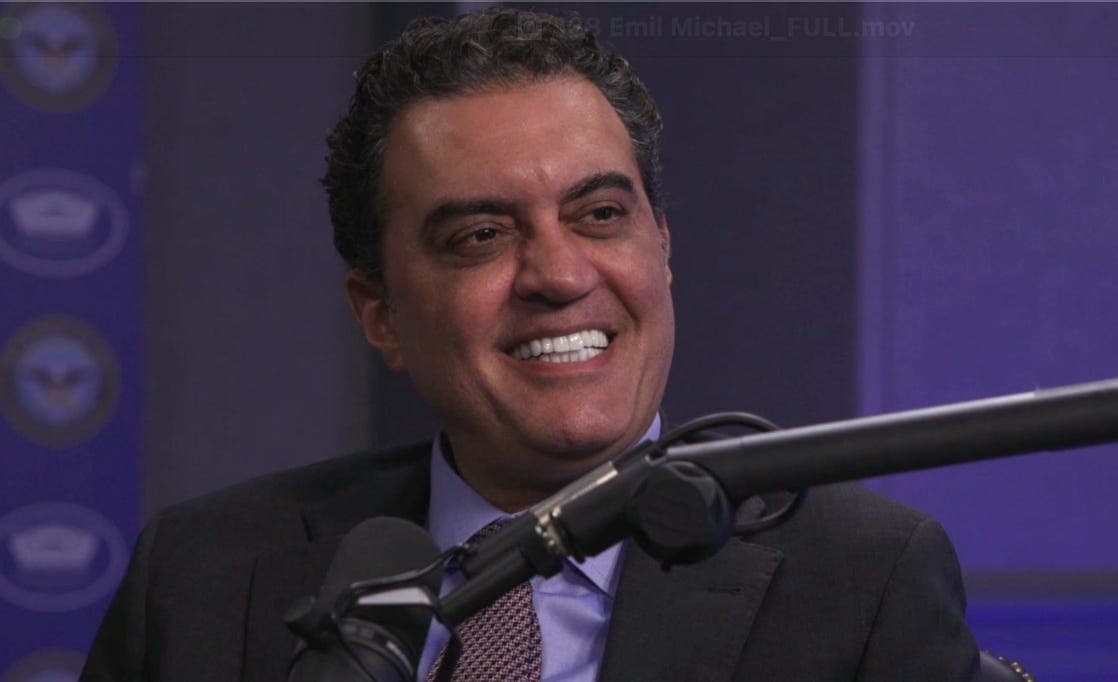
Episode Overview In this episode, Joe Lonsdale interviews Emil Michael, the Pentagon's Chief Technology Officer and Under Secretary of War for Research & Engineering. Emil is responsible for overseeing advanced technologies and innovation within the U.S. military. They discuss a range of topics including the integration of AI, key innovation areas in defense, and cultural shifts within the Pentagon.
Key Themes and Discussions
Introduction to Emil Michael
- Emil Michael brings a unique perspective to the Pentagon, having previously led global growth for Uber.
- His experience in a fast-paced tech environment raises questions about applying similar speed and agility to military operations.
Disruption in the Pentagon
- Cultural Change: Emil emphasizes the need for a cultural shift within the Pentagon to adopt a more agile, startup-like mentality.
- GenAI.mil Launch: Within two months of his tenure, he successfully rolled out GenAI.mil, Google's Gemini AI, to approximately three million military employees.
Critical Technologies List
- Narrowing Focus: Emil consolidated the Pentagon's Critical Technologies List from 14 areas to six, allowing for more focused R&D spending.
- Identified Areas: The six critical areas include:
- Applied AI
- Hypersonics
- Battlefield information dominance (including quantum sensing)
- Contested logistics
- Directed energy
- Biomanufacturing
Commercial First Approach
- Emphasis on a "commercial first" mindset to encourage partnerships with tech companies rather than relying solely on traditional defense contractors.
- Discussed challenges faced by companies like Palantir and Google in engaging with the government.
Talent Acquisition and Workforce Innovation
- Emil's strategy for attracting top talent includes "Recruiting Tuesdays," focusing on individuals motivated by a service mentality.
- Plans to leverage industry talent to supplement military capabilities, especially in areas like AI.
Future of Warfare
- Emerging Threats: Discussion of evolving threats such as cyber warfare, drones, and hypersonic missiles.
- Defense Strategies: Introduction of initiatives like the "Golden Dome" for missile defense, inspired by Israel's Iron Dome.
Optimism for the Future
- Emil expresses a strong belief in American innovation as a driving force for national success, alongside a shift in corporate attitudes toward collaboration with the government.
- The episode concludes with a message of optimism amidst challenges, highlighting the potential for technological advancements to strengthen national defense.
Key Takeaways
- Cultural Shift Necessary: For the Pentagon to adapt to modern warfare, a cultural transformation towards quicker decision-making and implementation is crucial.
- Focus on Innovation: Prioritizing a reduced number of critical technologies allows for better allocation of resources and clearer strategic objectives.
- Partnerships with Tech: Building relationships with the private sector is essential for keeping pace with technological advancements.
- Talent in Service: Engaging talented individuals who want to contribute to national security is vital for building a robust defense workforce.
- Optimism: Despite challenges, the potential for innovation and collaboration offers hope for a stronger and safer future.
Conclusion This episode not only sheds light on the current state of military innovation but also emphasizes the significance of optimism and proactive change in addressing the challenges faced by the U.S. defense sector. Emil Michael's insights reflect a commitment to bringing the agility of the tech world to the Pentagon, ensuring readiness for future threats.
Written by AI. May contain mistakes. Listen to the episode to check what was said.
Chapters
Tap a time to open that second in VOUnderstanding the Current Threat Environment
0:00 to 1:30
Learn about the evolving landscape of military threats including AI and hypersonics.
“The American public is probably not as aware of the threat environment.”
Emil Michael's Journey to the Pentagon
2:10 to 4:20
Discover Emil's motivation and experiences that led him to work at the Pentagon.
“And I got to work with the Secretary of Defense at the time, Robert Gates.”
Reforming Pentagon's Approach to Warfare
4:20 to 6:10
Explore how Emil is aiming to bring Silicon Valley speed and innovative practices to the Pentagon.
“I would say that the American public is probably not as aware of the threat environment with our adversaries as we were when we were growing up and during the Cold War.”
Critical Technology Focus Areas
6:10 to 8:30
Learn about the six critical technology areas that Emil has identified for the Department of War.
“and surpassed them, but they've made a lot of ground since then.”
Biomanufacturing and Logistics in Warfare
8:30 to 11:30
Understand why biomanufacturing and logistics are vital for sustaining military operations.
“You know, one of the things in general as a leader, if you have dozens of things you're focused on, it might mean you're not focused on anything, right?”
The Role of Quantum Technology in Warfare
11:30 to 13:20
Discover the significance of quantum technology and battlefield information dominance in modern warfare.
“Biological organisms could separate rare earth metals.”
The Challenge of Hypersonic Threats
13:20 to 14:01
Learn about the complexities and challenges posed by hypersonic missiles and the need for a balanced defense.
“So scaled hypersonics and scaled directed energy.”
Missile Defense Challenges
14:01 to 15:50
Discusses the complexities of missile defense and the need for cost-effective strategies.
“Even when they're, frankly, in reentering, they slow down.”
Golden Dome and Iron Dome
15:50 to 17:42
Explores the significance of missile defense systems like Iron Dome and their applications for the U.S.
“I want to dig one more step deeper on that.”
Defense Innovation and Commercial Strategies
17:42 to 20:40
Details the Pentagon's approach to engaging with commercial tech for defense solutions.
“You have all this stuff going on now with like changing how the Pentagon works, right?”
Show all 14 chapters
Scaling Defense Technology
20:40 to 23:07
Discusses initiatives for improving the defense industrial base and acquiring critical minerals.
“the good news, again, this administration's serious about reducing these dependencies that matter.”
Recruiting Innovative Talent
23:07 to 25:39
Covers strategies for attracting top talent to the Department of Defense.
“I spend Tuesday afternoon dialing for dollars, recruiting, finding people with a service mentality.”
Assessing China's Military and Peaceful Relations
25:39 to 28:03
Analyzes China's military power and the importance of maintaining peaceful relations.
“So tell us, does China have the equivalent of this?”
Optimism in American Innovation
28:03 to 29:31
Explore the optimism surrounding American innovation and its impact on success.
“And then they have our equipment because Biden left$25 billion of military equipment.”
Transcript
Automatic transcript. May contain errors.0:00The American public is probably not as aware of the threat environment. the explosion of drones, electronic warfare methods, cyber attacks, quantum sensing. Hypersonics are a different threat altogether. The AI stuff's for real. I'm combining some of the most important data that the United States has from an intelligence standpoint. We're deploying it to warfighters. You led global business through Uber before. Uber famously is one of the fastest moving companies ever. Can you bring some of that startup speed to the Pentagon? In two months, we were able to launch Gen AI, which is Google's Gemini for every employee.
0:33Obviously, you can't tell us everything you're doing at the leading edge. Is there anything you can tell us about that's like a really hard, fun challenges you guys are working on? Every day I wake up and I think.
0:50Emil Michael ran growth at Uber and built one of the fastest paced companies in Silicon Valley. He's now the undersecretary of war for research and engineering. This means he's in charge of helping the Pentagon and the Department of War work with our top companies and our top researchers and scientists to confront the biggest threats our country is facing. He's redefined the critical areas to focus on, obviously different parts of AI, battlefield sensing, hypersonics, directed energy. We're going to hear from Emil why he's focused on these areas, how he's getting the Pentagon to move at the pace of Silicon Valley, and how President Trump, Secretary of War, and the team with Emil at the Pentagon are working to deter our adversaries and achieve peace through strength.
1:30Welcome to American Optimist. Excited to be here in the Pentagon today with our friend Emil Michael. Emil, you're now the Undersecretary of War for Research and Engineering. Is that right? That's right. It used to be called another title when you first joined, but now it's war. Now it's war. This is what you do around here is you know how to fight wars in order to keep the peace, right? Right. Peace through strength is about being able to make wars to keep peace, right? We were just at the Reagan Library this weekend. That was President Reagan's thing you focused on, which I think is great for the country.
1:57You know, it's really inspiring to me to see some of our best minds for the technology world coming in here, moving quickly to make the Pentagon work in new ways. Thank you for serving as you're doing. Can you tell us what inspired you to do this? What brought you in? You know, Joe, I did, I was a White House fellow in 2009, almost 15, over 15 years ago. And I got to work with the Secretary of Defense at the time, Robert Gates. And I traveled with him to Afghanistan, Iraq. I saw sort of the inside, having never served in the military, I saw the inside of what the military looked like. And I was like, someday I'm going to go back with the right president at the right time, you know, with the right job.
2:35And those three things aligned. Why is this the right president for this? What does that mean in this context? For me, he is clearly a disruptor. We think about disruptors in business, right? Like in the tech world, he's a disruptor in politics. And one could argue, I would argue that the system's been broken for a long time in a lot of ways. So if a disruptive president comes in and you have a disruptive secretary of war, then you're like, wow, I can really actually change stuff, not just talk about it. And that's what I mean. I love it. So you run one of the military's most critical offices, basically, in the U.S.
3:09government. You're directing our military's research into advanced technologies, into advanced weaponry. Officially, you're reporting up to the Depsec, to Feinberg? They call it a principal staff assistant to the secretary. But then the deputy secretary sort of, you know, essentially manages sort of me and the other undersecretaries. So that we, with one voice, we advise the secretary of war. Got it. So you guys will align on things. and bring it to them. Is there lots of debate sometimes before you bring things to them? Yeah, we debate a lot. I mean, you have three military services, Army, Navy, Air Force, and the Marines inside there, and now the Space Force.
3:47And then that's sort of vertical, if you will. And then horizontally, you have the Undersecretary for Research and Engineering, for Acquisition and Sustainment, for Policy, for the Comptroller, which is CFO. So you've got, it's the biggest organization in the world. It's three million people. So it's incredibly complex. So yeah, you have debates. Even though you'd been working with Robert Gates a little bit 15 years ago, you came in as an outsider. You didn't have your clearances, I don't think, until you even got here. So I think when you first come in, you get like your first threat briefing, right?
4:15Like what was your reaction to it? What do you think? I would say that the American public is probably not as aware of the threat environment with our adversaries as we were when we were growing up and during the Cold War. and we were doing drills in school. Yeah, you'd have to hide under the desk in case something happened. I don't know if that would have helped with the nukes very much, but they made you think about it. Made you think about it every day. And remember there was a movie about the day after, I mean, all these things with this great power rivalry and people don't quite see China as a great power rivalry, but it is both economically and militarily.
4:57And so being able to see that and understand that from that position sort of really reinforced to me like, holy cow, we're in a similar type of moment where there's a great power rivalry happening. And most people don't feel it the same way we felt it. And did it feel like when you came in here, was there a sense of, oh my gosh, we're not ready. We need to be doing something differently or better or faster. I would say that during the global war on terror, right, the Afghanistan war and the second Iraq war, we were building our military to fight an irregular army, kind of ragtag like improvised explosive devices.
5:35So we were thinking about how we armor our tanks. When we were doing that, China was investing in sophisticated military equipment. They were starting from a clean sheet of paper. They didn't have a legacy systems like we had and all that. We were the target for them to compete against. Yeah, right, right. So we were the pacing threat for them. So they were using technology where we were kind of going backwards in a way and trying to protect against, not a war that, against sort of a sophisticated army, but just a bunch of tribal sort of things. So we then need to catch up and surpass China again.
6:09I think we're already caught up in so many areas and surpassed them, but they've made a lot of ground since then. And you led global business growth for Uber before. Uber famously is one of the fastest moving companies ever. It's probably not possible for the entire Pentagon and 3 million people to move as fast as you guys did at Uber, but can you bring some of that start of speed to the Pentagon? Like, is any of that working so far? Is that even a model at all that inspires you to push harder? Absolutely. I mean, every day I wake up and I think, you know, if they have this once in a moment lifetime, this once in a lifetime moments where you have a disruptive president, a disruptive secretary of war, and I'm in this job, I'm not going to do it forever.
6:46How will leave my mark, right? And my mark on behalf of the country. So I wake up every day thinking that way and trying to bring the Uber practices. And some of those are, they're actually kind of normal business practices. When something's not getting done, you call everyone in a room, you do stand-ups every day until you get to the answer. Someone says, well, you can't do that. I said, well, show me the policy. And you read the policy. You find your way to answers, which is why in two months of having the chief AI office run in my world, which was a new move, we were able to launch Gen AI, which is Google's Gemini for four million, every employee, military and civilian in the department.
7:27And they never had AI on their desktop before. Now it's on every single desktop in two months. So it can be done. That's awesome. And it's interesting too, because back when I was at Palantir a lot more heavily, like they refused to do Maven and they kind of got, I remember going on TV a decade ago saying they're not a patriotic company. It seems like it's changed. They're actually willing to work with you now. Big time. I'll give Google a lot of credit. They were the first of the big frontier AI companies to say, we want to work department of defense. They were easy to work with on the contract.
7:56We're paying 47 cents for the whole year for all of this. So they're like taking a loss to make sure that they were the first in the department. I think some of the others will follow. But yes, a totally different world. And I say that to them all the time. I say, what happened? You know, the cloud wars, your employees were chaining themselves to their desk, you know, because they didn't want to do business. President Trump has ended the world era. I don't know, man. Something like that. Something happened. Something shifted. And they say it's a new day at Google. And I love it. Yeah, I think October 7th might have affected some of the leaders too.
8:25Anyway, it's complicated what happened there. I want to talk about other things you've done. You made some pretty big announcements. You know, one of the things in general as a leader, if you have dozens of things you're focused on, it might mean you're not focused on anything, right? So you've got to have to like narrow things down and focus. I noticed on the critical technologies list, I think there were like at least 14 before. You've chosen six of those you've announced that are now the real critical focus. Tell us about these. Yeah. So Congress said, wrote in legislation that I, as the CT, I'm also the chief technology officer of the Department of War, have to come up with critical technology areas that guide the rest of the department how to spend their R &D dollars effectively.
9:06And two predecessors ago, they added 10. And then the next predecessor added four. And that was eight years ago. So now you're looking at 20, 25, 26, saying, are those the same things? And by the way, you've run a business. How many corporate values do you have? You can't have 14. It doesn't make sense. It doesn't make sense. Right. No one can remember them. You can't wake up every day thinking, this is what I have to do every day. It has to be push one of these missions. So I spent a couple months analyzing these things, figuring out what the right ones for the, for the threatened bar more. And we came down to six and I really believe in them.
9:37And I think they're going to be good guidance for, for everyone. And I have cheat codes because I wrote them down for myself. because I wouldn't have remembered it all. Of course, I would have, because I'm an expert on this stuff. It's applied AI, which is pretty obvious, but really, really critical. What are some of the things other than the Google win that you've done there? Yeah, so the Google win was just getting everyone the basic access to AI so they could get familiar using it and understanding it. Then we're going to do it. Then I would say that's a corporate use case, right? Like any big organization.
10:05Then we're going to do the same thing for intelligence. How do you analyze mountains of intelligence that we have that we currently rely on humans for and allow humans to sort of get more, you know, analyze more with less, but using computers effectively. And then war fighting, which is logistical planning, modeling and simulation, all things that go into a battle man. Command and control. Command and control. I know Andrel and Palantir are working really hard on the new C2 systems there, which is obviously critical for our country. And it's interesting you mentioned because contested logistics was one of the other six.
10:37We have companies like Gallatin working on that. Is this a big focus of yours then to kind of fix that? Yeah, because the contested logistics means how do you operate in a remote environment and sustain troops and weapon systems and defensive systems when they're far away from a military base? And if there's ever a conflict in the Pacific, we'll, by definition, be remote. And frankly, the most remote place you could imagine. And contested logistics is how do we move stuff around? How do we move people around? Food, water, medicine. systems, ammo, fuel, you name it. And so, what technologies are we gonna use to enable our war fighters to sustain themselves in a remote context?
11:20I love it. Another one was biomanufacturing. I've invested a lot of money in that area. It's been very hard for the competition internationally to have America sustain. Is that the thing the Department of War is working on? Yeah, because, I mean, you know biology could do a lot of things. Biological organisms could separate rare earth metals. Biological organisms can create TNT, gunpowder, energetics, if you will. Biological materials can create materials that you could fix aircraft with and all kinds of things. We have our company, Cambium, a special heat shielding where you're actually the best heat shielding in the world using a biomanufacturing technique, right?
11:51So that's some fun stuff there. Right. So fun stuff. And we've been behind, again, because some of our adversaries have been dumping, like with rare earth metals to get us dependent on battery technologies, on critical minerals, pharmaceuticals, you name it. And so part of my job also is to use these technologies to rebuild the defense industrial base and the broader, the industrial base in America, broadly speaking. I love it. And you guys have a new office of biotechnologies. You're taking it seriously. Yeah. Some good stuff there. This is serious. Another one is interesting. You said it's called quantum and battlefield information, information dominance.
12:20Why is quantum in that one? Quantum is because, you know, people think about quantum, think about quantum computing, but it's also quantum sensing. Quantum sensing uses waves to find, to find and communicate in a battlefield. So we want to call that out as part of the overall information environment in a battlefield. Like you'll have sensors, radars, radio communications, satellite, and quantum sensing. And that is also going to be a contested area because lots of countries now have satellites there. That wasn't the case 20 years ago. We're the only country that really had a satellite. Does this include the part of electronic warfare of turning on and off sensors?
13:01and interference and that kind of stuff, watching what's going on. Because to dominate, you have to not only have your own, you have to make sure the enemy doesn't block yours, right? 100%. You have to be able to do this at scale cheaply, right? This is a big issue because I know a lot of our old stuff is just so expensive. Very expensive. It doesn't scale. And then scaled hypersonics, I think that speaks for itself. That's a hard one. That's a hard one. So scaled hypersonics and scaled directed energy. Yeah. So the technology's there. We understand how to do hypersonics. Hypersonic missile is, hypersonics can be a missile that flies at Mach 5 or more, and it's maneuverable.
13:36So we used to be worried about intercontinental ballistic missiles where you could sort of project their path and then try to intercept them. Hypersonics are a different threat altogether. They go faster, and they're maneuverable. So it means it's harder to take them down. So the stuff we are blocking from Iran that was shot at Israel, those are also hypersonic, but they're not the same thing as hypersonics, because even though they're going really fast, they're not maneuverable. Not maneuverable, but they're not going at hypersonic speeds also. Even when they're reentering. Even when they're, frankly, in reentering, they slow down.
14:06Got it. That's why we take them out when they're up there. That's right. Yeah. But these other ones are much, much harder to deal with. Much, much harder to deal with. So we know how to build our own, but we have to do it more cheaply. Yep. We have to do it at scale. We have to do it. And it's a deterrent effect, right? It's just like we had nuclear missiles and the Russians did or Soviets did. if China has them, we have to have them to make sure there's balance there and we can secure peace. These things always scare me with regards to big boats with lots of people on them, because it seems like it'd be really hard to stop a bunch of them coming at you.
14:36I guess we have to work on that. That's what we're working on. I mean, Golden Dome is about missile defense. Hypersonics is about making sure we have offense. I love it. The sixth one actually was scale directed energy. Yeah. I've obviously worked with that person and others on this. It's a big area. Yeah, it's a big area because with the explosion of drones, how do you take them down? You can take them down with high-powered microwave like Epirus. You could take them down with lasers. Jewish space lasers. Israel. You can't say that. I'm just joking. You could take them down with lasers. You could take them down with some other electronic warfare methods, cyber attacks, so on.
15:09But it's a real thing. We've got big events coming in this country. Just next year, you've got World Cup. You've got 250 USA. In 28, you've got the Olympics. We've got to protect these places. We've got to protect these places. And the border. you know drug drones coming over the border in 2018 when i helped my friends start epris that's what i was thinking actually is what could a crazy terrorist do to like attack something in the stadium and you actually do need just to be able to turn these things off yeah just turn off and affordably and now that now that they're mass produced because you could watch your war it's not like the technology is it's actually scarier now because now because we were thinking about this eight years ago now it's like much cheaper to do this kind of attack and it's and so we got to stop it well thank you for being on top of that to protect us you know speaking of that you mentioned Golden Dome.
15:50I want to dig one more step deeper on that. I think it's a pretty big deal. Iron Dome was actually a major, major accomplishment. It's extraordinary that Israel was not wiped out a lot more by the insane amount of things shot at it. It's obviously America and Israel worked together on that. So the idea for President Trump is to do this for our homeland now, right, in a much bigger way. Yeah, in a much bigger way. So we have bigger territory, obviously. We have also more sophisticated adversaries. So their weaponry is more sophisticated. So it's a layered approach. which is you're going to use space, ground, and sort of the underlayer to make sure that you can get any attack from a boat, from a boat that might attack or a nuclear missile or conventional missile.
16:31So if North Korea all of a sudden were to shoot a few things or something, we need to be able to know we can take those out. North Korea, Iran, Russia, China. Yeah. Right? And we have a big homeland. We do. There's a lot to protect. There's a lot to protect. And we're going as fast as we can. I mean, a lot of this stuff traditionally takes a decade. How do you go faster than that for some of these things? You know, so you can't because and this is the thing I love about my role. It's it says research and engineering, but that doesn't mean it's in the lab. Yeah. That means it's I could take stuff that's almost ready and push it faster forward.
17:03I love it. And so it spans the whole gamut from from deep science at DARPA that's reporting into me and and what new companies are doing like Anderl and Palantir and so on. and how do you push those things to the edge to make them more capable? And so you'd be surprised at what we could do on anti-missile defense if we then deploy it. You have to have a defense industrial base that supports that. And we do have to have some new technologies. We just did an RFI for space-based interceptors, which is how do you put something in space that could take something down in space? It's a big deal. That's a big deal.
17:41I hope some good guys are helping you on that one. Some good guys. You have all this stuff going on now with like changing how the Pentagon works, right? I think you guys worked a lot. The Secretary of War came out, well, it's been a few Fridays ago now. It was last month. And just you're reorganizing how you're working in a bunch of different ways. One of the ways is you're going more commercial first, which rather than just instantly work with the primes, you just, you want to see like what is already out there. How do you culturally get people to do that? Because it's a big change, right? For this place.
18:05Like I'm sure some places there's just, people are still just doing the same things. Like how do you as leaders shift it to these new directives? Yeah, it's the right question. And this goes back to what your, one of your first questions, like, why now? It's because you have disruptive thinking in both the president and secretary. We have the aperture now to, like, say, what do we do? How do we, we have to do it different. And one of the examples I use, I use Palantir and Roland and SpaceX all had to sue the government for the first big contract because the primes were sophisticated at selling, sophisticated at protecting their interests.
18:36We can't have that happen anymore. We're not going to have that happen anymore. We don't like to sue people, ideally. I mean, but it was because you weren't given a fair shot. Exactly. Right? And so the question is, how do I get the next five companies to come in without having to sue and cost us years and years? So we have the Office of Strategic Capital in my group. This is a big deal. What's that do? So what that does is it gives government loans to companies that can scale a technology that already exists. So we'll take a minute. It's for the defense industrial base, half of it, half of$200 billion.
19:11So$100 billion is to make sure that we have solid rocket motors, brushless motors, batteries, all of the components that go into our weapon systems. The other half of it's for critical minerals. And we've announced three or four deals in the last 45 days to make sure that we get access domestically and through allied partners to critical minerals to reduce and eventually eliminate our dependency on our adversaries. I love you. You've already done a bunch of these critical minerals deals, but now we're going to, I guess the idea is anything that needs to scale faster for your goals that maybe couldn't get the money from the market, but it's still profitable enough that it could do it, right?
19:48Well, it's, so number one, we're sending kind of a demand signal. We're saying we're investing in this company because it has this product or this mineral that we need. And what's happening, which is great, is exactly what I want to happen, is private capital is crowding around those investments. They're doing due diligence. These companies, therefore, are then more accountable because they have shareholders now. It's not just the government. So it's basically treasuries plus 100 bps. So it's fairly good. It's a good price. It's a good loan, but then you still have to get other investors. So it'll be a real business.
20:20Yeah. We don't have to get our investors. So our loans can stand alone. So we're doing diligence to make sure they stand alone. But when other equity capital crowds around it, it just makes it more likely to succeed. I love it. And how much of this is there to do? We have 100 billion for critical minerals and 100 billion for the defense industrial base. Scaling that up. Yeah, so I mean we're serious about, the good news, again, this administration's serious about reducing these dependencies that matter. And these, we kind of slept walked into some of these. I mean our pharmaceutical supply chains all, and you know this too from some of your companies, it's all abroad.
20:57And some basic medicines, we have 250 medicines on shortage. in the United States. Yeah, and if it was a war, someone cut us off, we'd be in trouble really quick. Right, so this is why I think in a short time, we're running as hard as we can at these problems. What are ways, so we have a lot of listeners who are building things who are interested in helping the Department of War. What's the right way to engage? I'm lucky I happen to know you. People don't know you. What's the right way to engage with your team and to work with you guys? So we've tried to declare or tell people in the industry that we're open for business.
21:30What does that mean? That means I've got funding mechanisms and entry points at each stage of the company's life cycle. So at the beginning, there's something called CBER, Small Business Award. That's very for early, early stage companies. And then we have something called APFIT, which is a company, low rate production for companies that have developed something that we need for the Army, Navy, Air Force. And then we have DIU, the Defense Innovation Unit, and the Office of Strategic Capital. So I have many ways to get companies in. And then there's the traditional way. You go try to sell to a service.
22:05You build a product that they want, need, to spec. And if someone at the service says, this is amazing, you guys are going to hear about that somehow? Oh, yeah. That's what happens? Yeah, I mean, for sure. So my job is to make sure I'm understanding all the trends, the tech trends that are happening, that services are adopting. And I learn stuff from them all the time that I can't see directly or don't see directly. and try to pull all that together so we're reducing duplication and say, hey, this is working for the Army. We should think about this for the Navy if it's something that has similar capability, like directed energy.
Read the full transcript
22:34You want directed energy at an Air Force base, a Navy base, an Army base, you want on a ship, you may want on a plane, you may want on ground. Let's use it on these other places too. That's right. I love it. And how do you get the right talent on your side to evaluate these things? Because that's been a bigger problem. I think in the old days, you go back to the mid-20th century, it's like the best and the brightest engineers were all here. And there's still some pretty good people here, but it seems like you can get paid so much more, you know, best and brightest engineers that it's harder. So how do you recruit great people to help you and make sure you're evaluating these things correctly?
23:05Well, two things. I call the first one recruiting Tuesdays. I spend Tuesday afternoon dialing for dollars, recruiting, finding people with a service mentality. Like they want to serve the country. They have a spot in their career. They have just a hunger to like do something for this president or at this moment. And that's some patriotic sort of instincts. The second thing, though, is there's a reason Secretary Hegs has said we're going commercial first. It's because, yes, there's great minds in industry too. And so for these frontier AI companies, for example, I'm not going to try to build our own model here and spend$100 billion.
23:41Why wouldn't I work with the best minds in industry, have them make something that, for our use case, that builds on what they've already built. The marginal cost is a lot lower and we get the benefit for their continuing innovation. So the more we can do that, the more we're accessing the best minds in the department and outside the department. I love it. And a lot of the top talent, I think a lot of people do want to serve. This is a very cool way to serve. A lot of them want to make sure, they want to work on the very most interesting things, the bleeding edge. And obviously you can't tell us everything you're doing at the bleeding edge, I assume.
24:09But is there anything you could tell us about that's like a really hard, fun challenges you guys are working on? I mean, the AI stuff's for real because I'm not only taking the frontier models and just making them available, I'm doing it across classification levels. I'm combining some of the most important data that the United States has from an intelligence standpoint. We're deploying it to war fighters for the most important use cases. And that's not just putting them all in front of them, right? You have to get the data in, you have to do the right training, you have to do the right prototypes and so on.
24:40I think it's super exciting. And we've been able to recruit a lot of great people really fast for that effort. We always have DARPA, which is sort of the premier institution for advanced research, and it remains that way. And it's run by killers. There's some great people in DARPA. There's some really great people there. And they have cool contests too, which are the top people to compete to win. They do. Yeah. And they're term limited. So everyone at DARPA walks around with their exit date on their badge. Oh, I like that. So they walk around knowing that I've got to get this project out. You should do that at the Department of Labor.
25:11Sorry. That's two. You're up for two. Almost striking him out.
25:21And Doge brought in a lot of great people. The campaign brought in a lot of great people. I mean, the energy from the young people who join the campaign is extraordinary. They're motivated. And, you know, good attracts better, right? It's that thing. B players attract C players. A players attract other A players. And I feel like we got a lot around the table and are doing a good job. Yeah, I know you guys do. You got the right thing here. So tell us, does China have the equivalent of this? Give us more of an assessment, a little bit of China in the sense of what's going on. You mentioned earlier in the chat, it's obviously, you know, potentially the greatest adversary and they're doing a lot of things that are really aggressive.
25:54I would love not to have war with China. I think that's hopefully the goal, obviously. But like, what are they doing now? I think the president has done an excellent job negotiating sort of a way to ensure that there's less inflammatory sort of moves by either party. And they're talking all the time. I mean, how many times did Biden go to China? Yeah. You know, how many? This is the first time there's a military to military communication between our military and theirs. You're not allowed to put the autopilot on the airplane. You should probably delete that one. Actually, you are. I guarantee that on a pen was on an airplane.
26:32No way it wasn't. I probably were. That's true. Sorry, keep coming. But you have increased connectivity, but increased recognition that they have greater and greater power. So I think the thing that's always worked in world history is strength on strength causes peace. It's just a fundamental truth. We're decaying and broken and embarrassing and they think they can shame us with an attack. But if they think that we're really strong and really good and really dangerous, they're not going to want to. But wanting peace.
27:06We want you to be successful as a country. I mean, you know, the president made peace with the Syrian leader, wanting him to be successful. And that's a hard thing to do, given his background. We'll still see. Press it for now. But the point is, if you can show some respect, and the president said this when he went to the Middle East, he said, we shouldn't be nation building in our image. You guys should be nation building in the Middle Eastern image of what progress means. And there's something to that. Yeah, I think it's fair. I think there are universal human truths about liberty and about rights.
27:40But at the same time, there's different cultures with different structures of how they're going to succeed and move to the future. And I agree with the human truth thing. It's the question is, can you impose - You don't want to impose structures on people. It didn't work in Afghanistan. It was very naive to try to bring democracy to that region that way. In our way, our form of democracy, what did it get us? Yeah, it got us pride flags in Afghanistan and then kicked out. Yeah, that's right. Not how it's going to work. And then they have our equipment because Biden left$25 billion of military equipment.
28:08Well, it's called the American Optimist because a lot of people are cynical and nihilist. And I think any one of my friends on left or right who is like watching what you and others are doing, it's really hard to be cynical because there's just so much confidence and so many great Americans building really quickly in ways that they absolutely weren't 10 years ago. I think it has to give everyone optimism. What makes you the most optimistic that we're going to succeed here and going to get to where we need to be? I'm super optimistic about American innovation continuing to be the greatest driver of American sort of greatness.
28:37And you find it in politics, you find it in business, in tech, in so many different ways. when we're focused on it. And JP Morgan announced that they're going to sort of back a bunch of the Office of Strategic Capital Loans. Companies are coming to us saying, how can we help? And there is a national moment now that makes me extremely optimistic, despite the TDS sort of crowd or despite the nihilism in any place in the political spectrum. Most people, most companies are really wanting us to succeed and knowing that their success depends on the government. And that relationship is something that, you know, Google is being the perfect example of just open mind, like, wow, the world's different now.
29:21We've got to be on Team America. And I feel that makes me really optimistic. And I think I know we'll win. I love it. Well, that makes me optimistic on Team America, too. Mr. Undersecretary, Michael, thanks for joining us. Thank you for having me, Joe, as always.
29:38you
From the publisher
Emil Michael directs the U.S. military’s research and development of advanced technologies. Previously, he led global business growth for Uber — one of the fastest moving organizations in Silicon Valley history. Can he bring that startup speed to the Department of War? What are the six critical areas of innovation he’s prioritizing? And how is he investing in these key technologies to bolster the defense industrial base?
We’re honored to go inside the Pentagon for a special episode with Emil Michael, Chief Technology Officer and Under Secretary of War for Research & Engineering. He oversees the Defense Advanced Research Projects Agency (DARPA), the Office of Strategic Capital, and other critical organizations. Prior, he helped scale multiple businesses, including D-Wave Systems, Tellme Networks, and Uber Technologies. Earlier in his career, he also served as a White House Fellow and later on the Defense Business Board.
We begin with Emil’s decision to join the Trump administration, and why he believes this is a generational opportunity to transform the culture and pace of innovation inside the Pentagon. Learn how he rolled out GenAI.mil (Google’s Gemini) to the entire force — roughly three million people — in a matter of months. Next, we dive into his decision to pare down the all-important Critical Technologies List, which drives the Pentagon’s R&D spending, from 14 areas to six. Then, we discuss the Department’s shift to a “commercial first” approach and what that means for the defense industrial base. Finally, we cover his priorities for the Office of Strategic Capital, plus how he’s thinking about talent and encouraging our best and brightest to step up and serve the country.
[NOTE: This episode was recorded prior to the United States capture and extradition of Nicolas Maduro]
00:00 Episode intro
01:40 Time to disrupt the Pentagon
04:20 What did you learn from your first threat briefing?
06:30 Can you bring Uber speed to Dept of War?
08:45 Redefining the Critical Technologies List
13:30 Hypersonics and Golden Dome
18:00 Commercial first approach and changing the culture
23:00 How to recruit the best talent into government
28:45 Optimism for the future
This is a public episode. If you would like to discuss this with other subscribers or get access to bonus episodes, visit blog.joelonsdale.com