In short
Podcast Episode Summary: Ep 139 - Make Government Beautiful & Functional Again with America's Chief Design Officer Joe Gebbia
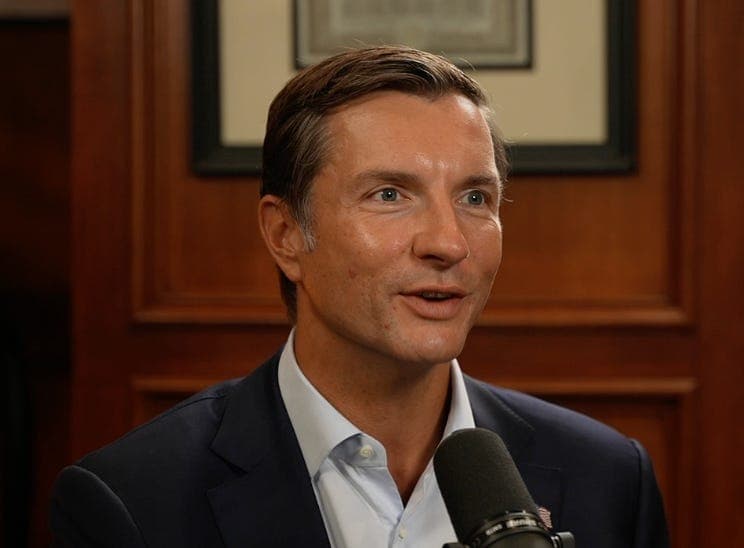
Podcast Overview Podcast Title: American Optimist Host: Joe Lonsdale Episode Guest: Joe Gebbia, America's Chief Design Officer Episode Description: Joe Gebbia discusses his transition from a successful entrepreneur to a pivotal role in government, focusing on modernizing the U.S. government's online presence and improving usability for citizens.
---
Key Themes and Discussions
Introduction
- Joe Lonsdale's Mission: The podcast’s purpose is to counteract fear and cynicism prevalent in mainstream media by showcasing innovators and leaders making positive changes.
- Joe Gebbia's Background: Co-founder of Airbnb, transitioned to government to improve federal services and design.
Joe Gebbia's Journey to Washington D.C.
- Political Shift: Gebbia explains his transition from a lifelong Democrat to supporting President Trump due to a mismatch with the Democratic Party's current values.
- Inspiration to Serve: Gebbia was motivated to serve after witnessing issues in government and seeing potential for improvement.
Major Achievements
- Federal Retirement Overhaul:
- Gebbia digitized the federal retirement process, reducing the time from six months to just days.
- The Mine Problem: Addressed the storage of federal retirement paperwork in an underground facility, transforming the process into a more efficient digital experience.
Modernizing Government's Digital Presence
- Government Websites Revamp: Gebbia's new initiative aims to improve the aesthetics and functionality of over 27,000 government websites.
- Goals of the Initiative:
- Create user-friendly digital interfaces comparable to services like Airbnb and Apple.
- Engage top design talent to ensure a modern approach to government services.
Insights from the Oval Office
- Meetings with President Trump: Gebbia shares his discussions with Trump about the importance of aesthetics and functionality in government design, drawing parallels to initiatives from past administrations.
Challenges and Opportunities
- Overcoming Bureaucracy: Gebbia acknowledges the difficulty of navigating through entrenched government processes but emphasizes the excitement for positive change.
- Bipartisan Support: Improvements in the retirement process have garnered recognition from both sides of the political aisle.
---
Key Takeaways
- Design Matters: Gebbia argues that a government should be as appealing and functional as leading consumer brands.
- Civic Duty: His work illustrates that individuals from the private sector can significantly impact public service.
- Opportunity for Change: Gebbia invites talented professionals to contribute to this transformative effort, emphasizing the unique moment for innovation in government.
---
Episode Timeline
- 00:00 - Introduction to the episode
- 01:15 - Gebbia's political evolution
- 07:50 - Joining the DOGE team
- 10:20 - Discussing the "Mine" and federal retirement reform
- 13:50 - Goals for a streamlined retirement process
- 21:45 - Current status of DOGE
- 23:30 - Gebbia's role as Chief Design Officer
- 26:45 - Insights from conversations with President Trump
- 31:00 - Plans for improving U.S. government websites
- 34:00 - Vision for a beautiful and functional government
---
Conclusion Joe Gebbia's efforts in the U.S. government demonstrate a hopeful vision for transforming public services through design and technology. His journey highlights the potential for private sector innovations to improve government efficiency, ultimately benefiting all Americans. As he continues to lead the charge towards a more user-friendly government, he invites others to join this crucial mission.
Written by AI. May contain mistakes. Listen to the episode to check what was said.
Chapters
Tap a time to open that second in VOThe Role of the Chief Design Officer
1:20 to 2:33
Discussion on the responsibilities and vision of the Chief Design Officer.
“Excited to have my friend Joe Jebbe here with us today.”
Joe Gebbia's Evolution in Politics
2:34 to 4:28
Joe Gebbia shares his political journey and views on government policy.
“like reasonable, moderate, and you ended up along with your friend Elon and other friends supporting Trump and changing your mind.”
Border Policy and Immigration Views
4:29 to 5:13
Exploration of immigration policies and personal experiences with border security.
“I don't think that like dissolving our border is a policy that I can get behind.”
Impact of Crime on San Francisco Living
5:14 to 7:00
Joe discusses crime issues in San Francisco and their effects on residents.
“My parents' home had three break-in attempts in a very short amount of time.”
Motivation to Serve in Government
7:01 to 7:56
Insights into Joe's decision to actively participate in government.
“But yeah, Gore wasn't necessarily for all these things in 2000.”
Involvement with Health Care Policy
7:57 to 9:30
Discussion on health care challenges and Joe's initiatives in government.
“I'm really impressed So, cause you've done a lot more, you've actually come here and you're, and you're serving in DC.”
The Mine Problem and Digital Solutions
9:31 to 12:28
Joe outlines the 'Mine Problem' and plans for digitizing retirement processes.
“It was like, it was like, felt like history was unfolding in front of you.”
Revolutionizing Government Processes
12:29 to 14:01
Details on how Joe aims to streamline government services for retirees.
“I think we can learn from this maybe because you've, you've been successful at this one.”
Digital Retirement Initiative Success
14:01 to 15:28
Learn how a team dramatically accelerated the digital retirement process in just days.
“there was one tiny use case where you could have a digital retirement.”
Reactions from Silicon Valley
15:29 to 17:58
Discover how Silicon Valley views Joe Gebbia's work with the government and the mixed responses he received.
“which in back and going back to Airbnb land yeah uh we were trying to figure out how to make our marketplace work.”
Show all 19 chapters
Improving Federal Retirement Processes
17:59 to 20:48
Explore the steps taken to streamline federal retirement applications and how technology played a key role.
“And so we spoke to a whole range of retirees, both upcoming and those who had just retired and gone through the existing process.”
The Spirit of Doge and Government Change
20:49 to 23:08
Understand the ongoing influence of the Doge initiative and its impact on government efficiencies.
“Because most government workers on average tend to be on the left and tend to be skeptical in general of Trump on average.”
Becoming America's Chief Design Officer
23:09 to 25:54
Learn about Joe Gebbia's transition to Chief Design Officer and his plans for modernizing government design.
“of some of these contracting firms is time and materials.”
Designing for the Future of Government
25:55 to 28:02
Explore the vision for a national design initiative aimed at enhancing government services.
“that would be presidential from Trump himself.”
Revamping Government Design
28:02 to 29:17
Explore the initiative to modernize U.S. government interfaces and design.
“And what they left behind were literal icons, the National Parks brand, the NASA logo.”
Innovative Solutions for Government Websites
29:18 to 31:14
Learn about the strategies and projects aimed at improving government websites.
“My methodology is you bring in the best possible talent out there.”
Pharmaceutical Pricing and Accessibility
31:15 to 33:20
Discuss the initiatives to address drug pricing and accessibility for Americans.
“can ai help with some of this too along with the designers because all by hand would be tough no No, it's not all by hand.”
Changing Perceptions in Washington
33:21 to 36:27
Understand the challenges and progress being made in reforming government design.
“So this is a very unusual DC conversation because you're like positive about all these things you're getting done.”
Optimism for the Future of Government
36:28 to 38:53
Hear about the potential for hopeful change in the U.S. government.
“So incredible props to President Trump for pushing it forward.”
Transcript
Automatic transcript. May contain errors.0:00What if we just make the government as delightful and satisfying to use as the Apple store? President Nixon in the 1970s created a presidential initiative to improve society through better design. And what they left behind were literal icons, the National Parks brand, the NASA logo. You're now the chief design officer of the United States. How did that come about? President Trump has done a phenomenal job. He knows that aesthetics matter. Not just one agency, not just one website. All of the digital touch points between the U.S. government and the American people. This is a shot on goal that we've never had before to actually upgrade the way we present ourselves to the nation, to the world.
0:47My friend Joe Jebbia is the founder of Airbnb and had maybe what I'd call typical Silicon Valley views. He's since come around. He's friends with Elon Musk and others, and he decided to back President Trump and fight for his values. Now he's in government. Let's hear from what he thinks about what's going on in D.C. A lot of us are really inspired by what he's doing right now. Not only has he fixed a bunch of things, but he's put together some of the very best designers in our country. And he's going to fix websites to get tens of millions of visits per year, make our government beautiful and functional again in a lot of areas.
1:18Excited for you to meet Joe. Welcome to American Optimist. Excited to have my friend Joe Jebbe here with us today. Joe, thanks for joining again. Joe, it's great to be back. Thanks for having me. I think of 134 episodes or so, I think you're our first repeat guest. So honored. I appreciate it. I appreciate it. You are a busy man right now. You are currently the chief design officer for the country. We love seeing you in Austin, of course, for basketball and otherwise. We miss you when you're out here, but you're doing really important work. What's been interesting or what have you learned or uncovered about how DC works?
1:45This is probably your first time doing this, right? Well, first of all, anytime I come to DC, I couldn't wait to get out of DC. I'd always come through and be like, yeah, you know, it's a place of you know very important decisions and very important people uh it's you know kind of the bedrock of where democracy takes place in the united states uh i remember thinking just the speed with which it moves never spoke to me and i used to think wow like i'm so glad i don't have to spend time there uh beyond the occasional you know meet a senator meet a congressman as a founder of airbnb you were here for policy purposes sometimes you did drop in for a day and uh you you know, take some meetings.
2:23And so it is, you know, a great twist of irony that I'm now spending a lot of time here. Your politics have evolved over the last decade. I think you, if I may say so, I think you had what were more mainstream Silicon Valley viewpoints and you've always been like reasonable, moderate, and you ended up along with your friend Elon and other friends supporting Trump and changing your mind. Like why'd your politics evolve? Funny thing about this question is that I actually don't think my politics evolved that much. What happens is I think after being a lifelong Democrat, going back to Al Gore in 2000, when I could first vote in college, it was hard for me to identify with the things that they stood for.
3:00The things that I remember from previous presidents and previous policymakers on the Democratic spectrum, it kind of went so far left that I couldn't identify myself with the party in the same way. Were there certain things that particularly offended you or certain battles that were really important? Yeah. Look, I think there's a couple of things I've spoken about the border before. I think having a border that was really just wide open, where as I dug more and more into it, I started asking questions back in 2021, 2022, seeing these headlines of, you know, tens of thousands of people every week coming into our country, um, unvetted, um, you know, more effort into having people pass through, uh, customs at the airport.
3:46than we do with, you know, multiple times that amount coming across our border on the South. I thought, this is odd. What's going on here? I should look into this more. And that led me down a path of talking to people on the left, talking to people on the right. And I felt like I got a lot more direct answers from people on the right who were just much more forthcoming about what the issues were, why they were happening. And lo and behold, you know, we had a lot of excuses in last administration about why the problem couldn't get solved oh you gotta wait on this that and the other and in the first couple months of the trump administration it became very clear that the power to solve this problem was entirely in the hands of the president you know all the excuses that were rolled out over the last administration were false as proven by this president as presented by president trump yeah suggest they might be doing it for other reasons unfortunately Unfortunately, I think this President Trump has done a phenomenal job securing our country, making sure that people who immigrate here are following the legal paths, which are great.
4:52I'm all for legal immigration. I don't think that like dissolving our border is a policy that I can get behind. And so that's one of the one of the initial straws on the camel's back that tipped me. But other things too, like, you know, living in San Francisco and going through a whole DA situation there where they just didn't prosecute criminals. My parents' home had three break-in attempts in a very short amount of time. I remember biking around the city. You'd see these sparkles as you're biking on the bike lanes and you catch your eye. And like, you know, every two blocks, there's another like set of sparkles.
5:32And it turns out it's like a smash and grab, you know, The window gets broken on the car and it's just, it's so pervasive. Like I remember I had to change so many bike tires because you're always riding over glass in San Francisco. Because there was never any consequences. I've had so many friends and people I work with have had stuff stolen from them in San Francisco. It's embarrassing. Yeah. It's like a rite of passage, you know, I avoided it for so many years there. And then one day I come out to my Volkswagen GTI and it's like gone. But I learned early on, like never leave a valuable in your car at all.
6:04In fact, on my block, people used to leave their windows down and the doors unlocked. And there was a note in the window that people would literally put on their car that just said, nothing of value here. You know, like that's how bad it got. We still own a house in California. And during the Biden administration, the cartels in the very nice area hit five of the houses right around it. We had a ton of security and cameras and stuff. So I think they avoided ours. But I heard they did this thing where they go in and they take the safe and they leave. And it was people coming across the border. So the safety was a big issue for all of us.
6:34Well, and I think wrapping that up into a headline, it's caring more for the criminal than the victim. And it's something I just can't agree with. You know, it's like there's just so much more thought and care and energy put into, you know, I think the wrong side of the equation. So you started to see a bunch of these things, investigate it more, and you realized you agreed overall a lot more. And by the way, these were not necessarily like, these are some of the many things that had shifted. You know, there was a drift. I'll call it a drift. Like the Democratic drift. But yeah, Gore wasn't necessarily for all these things in 2000.
7:07No. I mean, go back to, there's clips floating around the internet of pretty much every major policymaker on the left, going back to Bill Clinton, espousing how important our border is, is talking about how we have to, you know, tamper down legal immigration. There's Schumer talking about this, Bill Clinton talking about this, Hillary talking about, like, that was the Democrats that I grew up with. That was my association with them and my idea of what they stood for and how they represent my ideas, my values. And so something happened, you know, in the last administration where things just like really drifted.
7:47And now we have socialists and communists. So why did you decide to step up and serve in DC? Like what led, so this is one thing to get involved in the election. That's a civic duty. I did that as well. I'm really impressed So, cause you've done a lot more, you've actually come here and you're, and you're serving in DC. How did that happen? This was not my cards whatsoever. And so, you know, I, I, as a supporter of Bobby Kennedy, Secretary Kennedy, um, just super excited about what he has been doing for our nation. Um, and before he even got to office, um, was excited about his pro the prospect of what he could do, which is here.
8:19You have a guy who has big, bold ideas about how to improve the health of our country. and right now the health of our nation's in the gutter um you know 70 of people have chronic disease yeah it's uh it's kind of insane you know at all age ranges um and it's like we spend the most on health care yet we have the most disease and there's there's a something that's like very wrong with that there's a lot of stuff that's broken i know you spent a lot of your own money we talked about cleaning up our oceans with plastic is a big thing you've been working on there's all these things that are just messy and broken our garbage is not taken care of huh yeah Yeah.
8:53You know, and here comes somebody who spent his life fighting for folks and has big ideas and is not, you know, captured by industry. He doesn't come from the industry. You thought you could trust him based on that? Well, yeah. And I felt like, you know, if you just keep repeating what you've been doing, how are you going to get any different results? So if it's just a revolving door of industry coming in and out of that position, I think he comes really from the outside and has had really bold policies. And so I came to DC back in January for his swearing in, his confirmation hearings in the Senate, which were incredible.
9:29Like what I felt like as a part of history, you know, you're in those beautiful old rooms and, you know, there's also all the decoration and it's like the media and it's like it was standing room only. It was like, it was like, felt like history was unfolding in front of you. and I got a text from Elon around that time, around that time of the day. It said, hey, I heard you're in DC. You want to come hang out with the Doge team? I thought, well, I got a flight tomorrow back to Austin, but why not? And I ended up spending the day with that team and saw some of the things they were working on and saw the speed with which they were moving.
10:07And I go, wait a second. This is not the DC that I've, I remember. This is moving at tech speed. This is moving at Silicon Valley speed. And they're actually getting stuff done. They're actually shipping things. And after my time with them, they asked me if I would come help with a pretty unusual problem to solve. They lovingly called it the mine problem. The mine. This is a giant underground mine that all retirement papers go into. Yes. So I was like, what the heck is the mine problem? It turns out there is a mine in Pennsylvania that is a, you know, it's a service that is offered to companies that have physical media that they need to store securely and safely.
10:55And what better place to put physical materials than inside of a mountain? You really need it to be safe. Yes. It's like Gringotts. Yes. The company's actually called Iron Mountain. Great name. And so it's an interesting place. You know, they house a lot of the media companies, Disney, MGM, like some of the original Bond films are there. Some of Michael Jackson's original recordings are there. Some of the tech companies house physical media there. King Arthur's sword. There is a lake under the mine. Excalibur. Believe it or not. It actually helps the cool, the whole place. Oh, there you go. That makes sense.
11:34So, it's also the place since the 1960s, the government's been storing paper there. specifically for retirement yeah which in the 1960s made sense because you had a lot of paper and it was all had to go somewhere you go somewhere um skip ahead you know half a decade or half that century and why on earth are people using paper to retire from the government when it takes six months to process it's riddled with frustration and errors all these problems that i think are an injustice. It's just like a classic, stupid, old-fashioned government. It's old-fashioned, like archaic artifact of the past. And they said, can you come, please make this an online only digital experience that can be a lot faster than the six months.
12:20There's a hundred thousand workers retire every year from federal government. This is a big, a big issue. It's a big issue. And you know, if you've given the best use of your life to the government, it should be enjoyable on the way out, not an obstacle course, which it is today, which it was. So how'd you attack this problem? I think we can learn from this maybe because you've, you've been successful at this one. You're not even doing bigger things. Like how did this work? What'd you have to do? You have to rip up certain things that were there. You had to oppose certain interests. Like how did it work?
12:43Well, it started with my very first meeting on my very first day. I'm in a, in a conference room with myself, a team member of mine, and a couple of the career folks who work in retirement services. And we start with this giant whiteboard and map out, okay, here's Bob. Bob's been with us for 45 years. He's ready to retire. Walk us through what Bob has to go through to exit the government and receive his much deserved annuity payment. And so we spent at least two hours boxing and arrowing. It's like a saga for Bob. It was a saga for Bob. Look at every database and every system that had to talk to the next one that stalled out here and had to flip over here and had to wait on some other agency.
13:30And anyway, the whole thing was like - It was like Thelma in accounting who's 72 and she has to like do something to make the next step happen. It's just crazy stuff. It was, I mean, my eyes hurt at the end of the session and looking at this whole thing going, how does this thing even working? It's so convoluted. And the partner I was working with on this, his name is Anthony. we asked the team in front of us, we said, you know, if we took, there was one tiny use case where you could have a digital retirement. We said, let's take that one use case and let's push one through the system. How fast can we do that?
14:12And so we asked the folks in the room and they go, well, four months. And the person said six months. A guy on the video call said, wow, definitely would take 12 months to figure that out. them and we go well what if we did it in a week yeah and there was a hush in the room you could see terror on people's faces a week to do an all digital retirement's never happened before and so we said well if you had the supportive leadership if you had access to all the resources that you needed and if we just handheld one meaning at every step along this way that you We just mapped out here together. If we get stuck somewhere, if there's a speed bump, we will go to that person's desk and talk to them and say, hey, we're in the middle of a sprint right now.
15:00Can you unblock this for us? We'll call them. We'll physically go to their desk and talk to them. Isn't that against union rules? Sorry. It's all in this building. No, it's fine. And so, that's exactly what happened. Actually, that's not exactly what happened. we went off the careers took this assignment on and they didn't do in seven days they did it in four days wow they did it faster than we all thought wow it was possible you know again it was a proof of concept prototype yeah this this was very much like Paul Graham's YC advice to us which in back and going back to Airbnb land yeah uh we were trying to figure out how to make our marketplace work.
15:44And he said, pick one city and make that city successful. Figure out supply and demand in one market and make that work and then scale that model to the rest of your markets. And this is very much that, like we picked one city, we picked one use case and we just made it work. From that, of course, everyone was blown away. Oh my God. And it gave people a proof point that it actually is possible. That's extraordinary. And I want to ask because, because you mentioned Paul Graham, who was obviously an amazing mentor to you guys in Airbnb. A lot of people in Silicon Valley have been giving you a lot of crap who you used to work with.
16:18I know he's not a fan of the president. I know if he said anything or not to you, but like in general, like what has the experience been like talking to people back in Silicon Valley? Have you tried to show them what you're doing good things and they appreciated it? Have a lot of them cut you out? Like, like how they react to you doing this? Around this time where I got involved in this work, it was um it was a mixed bag you know uh certain people reached out and said you know I'm I'm excited that you're doing this and I could never really speak up in my company uh you know I kind of always stayed a little bit quiet yeah uh because I couldn't I couldn't promote my uh support for this administration and so a lot of people reached out to me directly and said thank you so much for for doing this um you represent me like you've gone out in front and you've been public about this yes it takes a lot of courage to do they couldn't um and then i think that you know there's a whole other group of people who you know i don't went off the deep end so they send you lots of notes yeah like i would notes is for being very kind i call them like hate mail it's probably the right way to put it um and so i don't know like hey guys i'm fixing retirement in the government yeah to make it better for federal employees uh do you really have an issue with that like come on like if you have if you have a problem with that i i can't help you like and you know i probably shouldn't dwell on on those kind of people in our life who the connection is so surface level that just by association to an administration trying to fix something for the greater good you know they want to end the relationship with you good there were some positive ones it's sad there were negative ones but it sounds like hasn't affected you what was the end result for the for the retirement program is it now working for everyone absolutely so i pulled in um silicon valley engineers a couple xn airbnb guys um pulled in some amazing designers and we got to work you know we did a design process which is usually starts by deeply understanding the problem and the best way to understand the problem is by talking to the people who were living it every day.
18:23And so we spoke to a whole range of retirees, both upcoming and those who had just retired and gone through the existing process. We talked to people in HR, we talked to people in payroll, and we really started to understand this ecosystem around what does it mean to retire in the federal government? And through these conversations, you'd hear repeating patterns. You'd hear simple things like people had no idea what the next step was or what setting expectations would go a really long way to help people along the process. I love that principle of government, show them what the expectations should be, show them about how long things should take, like have some frameworks for them.
19:01People just having transparency and insight to like, what are they actually going to be earning with their annuity payment? The way it worked previously is you didn't find out how much you're going to make every month for the rest of your life until your first check arrived months later. Oh, that's funny. How can you plan your life? It's a big surprise how much money you get or not. Exactly. It's a huge surprise. And so just imagine that, like you've already been retired. You're not earning any income. You've got bills to pay, rent checks, perhaps you're trying to plan your life with your grandkids or the vacation you always wanted to take.
19:33And you have no idea what your income is going to be. That's a fun surprise, but that's crazy. If it's higher than what you think it's going to be. It's not a fun surprise if it's lower. So we did things like we tapped into databases that have been around this whole time to instantly get a snapshot of somebody's work history and their payroll history yeah and feed it into a uh a calculator to give somebody an instant estimate of what they're going to earn yeah get an estimate might not be perfect but it's close it's usually perfect you know it's often like the edge cases are when it's off by a few bucks but um in most cases it is what they're eventually going to end up making.
20:12And so through that, we realized we can like dramatically speed up this process. And so the time that somebody would actually spend filling out their forms and applications on paper, we brought everything online. There's no new paper involved. And we've allowed people, everything's pre-filled because we pull from those existing databases. We give you your annuity estimate for the first time ever. It's like a huge innovation. We tell you what's coming next in the interface. Has anyone thanked you from the government? He's like, oh, this is nice. Oh, yeah. We get lots of love notes from people who are like, wow, this is so fast.
20:47Like, I can't believe how you do that. Because most government workers on average tend to be on the left and tend to be skeptical in general of Trump on average. But do you think some of them were impressed by this despite that? Yeah. I mean, this is, you know, insanely bipartisan. Yeah. Just fixing things. Just fixing things. You know, fixing broken things. and uh on august 1st we flicked the switch all new retirements uh required to go through our software and now we've got upwards of 70 000 uh retirees in in the pipeline i mean the process that a retiree spends themselves or an employee went from you know you know dozens of hours to six minutes or less i love it it's we've really streamlined this whole process and instead of six months it's it's it's days weeks now days amazing so it completely fixed it and i want to take some of the principles and talk about what you're doing now but first i want to ask you so doge i thought got a lot of great work done obviously uh elon and the and the president had a bit of a spat i'm pretty happy to hear their friends again now but it seems like a lot of people around elon left to go build things in the rest of the economy again uh so so what's what's the latest with doge like are there still people here doing it well yeah i think it's part of what elon said on his way out.
21:59Doge is a state of mind. It's like Buddhism. It's an idea that can persist. But it's still going on and fixing things in terms of the spirit of the agencies and the people Yeah, some people have taken full-time roles within different agencies and have brought the spirit of Doge into those agencies. But you're still seeing people publish on the X sites, like we cut$5 billion but that's more from within the agency than from any kind of central Doge. Exactly. The idea of Doge has made its way through all the agencies. And one of the things I really liked and I don't know how much it's appropriate to talk about but there's a lot of consultants who charge billions of dollars and were very slow and who didn't seem to be part of the solution, who've been around here for a long time.
22:35A lot of them got removed by a lot of people. Is there anything you could tell us about that? Well, you know, it's not hard to bump into some project that's managed by an agency where they shop out the technical part of it to some third party. And the common phrase that I've heard over the many months is, it's almost done. it's almost done. And then when you dig into that a little bit more, some people will admit to you, well, they've been saying that for five years. And then you dig into a little bit more and you realize the business model of some of these contracting firms is time and materials.
23:15Yeah. Which means that your business model is to never finish. Your business models just go as long as you possibly can. What's the incentive to get something done? Yeah. And so this sort of, it's almost done. It's almost ready. was kind of on repeat in some of these places that I would interact with. So you've shown it's possible to fix something big and bold that mattered. You've created new principles for people to interact with the government, see their salary they're going to get ahead of time or annuity they're going to get ahead of time. All this great stuff. It's functional. And it turns out there's like hundreds of other things like this to fix in government.
23:48And so we need a bigger effort. And I think a lot of us are really excited. You're now the chief design officer of the United States. How did that come about? Well, it's around April. I'm in OPM, Office of Personal Management, where retirement takes place. And I get an email from Secretary Bergam from Interior. And I get on the phone with him and he basically pitches me this idea to, Joe, can you please come fix recreation.gov? so turns out recreation.gov is a booking platform where people go to book their campsites park tickets you know something about that from airbnb one or two things yeah which he was very aware of and he said i heard you're on campus could you please come fix this for me uh you know it looks like one of our competitor sites from maybe 2009 you know it's it's there's a lot to be desired for when you have like this incredible feature of the american experience international parks yeah they were being undersold in the way that they were showcased and so i said secretary i absolutely love to help you with this and um sort of after that other secretaries began reaching out and so i started to see like okay there's demand here for better design there's demand here for modernizing the digital surfaces of the government.
25:10And I thought, well, you know, I've given six months commitment to fix retirement, and then I'm gonna go back to Austin. But if I were to stay a little bit longer, what would that look like? And what would it look like to have a national initiative to actually go in and up level and upgrade not just one agency, not just one website, all the websites, all the agencies, all of the digital touch points between the US government and the American people. And that's where I began to think about like, what would be the biggest thing I could possibly come up with? Well, it would be some kind of design for America initiative that would be presidential from Trump himself.
26:00You'd be like America by design. That would be the national initiative. Okay, well, within that, I'm gonna need some kind of team to recruit and procure the best of the best from our era to come work on this. And so we'll call that, like it's like a design studio for the nation. It's like the national design studio. And then I thought, well, I'll probably need a title with some authority to help push these things through and make this happen i thought well chief design officer of the u.s so that became the pillars of of this concept um and that was back in april so then how do you go from that to actually bringing it to life yeah that was a long journey i heard earlier this year you spent an hour with president trump talking about design actually you actually you think you said it was probably the greatest birthday present you've ever gotten.
26:54What do the media and critics not understand about him and that interaction? Were you able to inspire him with this when you spent that time together? Yeah, we had an amazing session in the Oval Office where I was able to give the pitch that I had honed over the previous couple months and was able to talk with him about this initiative and what it would mean for him to take this on as a presidential initiative. And one of the things I share with him is that it's not the first time in U.S. history that a president has seen design as a way to prove society. What I discovered in my research is that President Nixon in the 1970s created a presidential initiative to improve society through better design.
27:42And so because it was a national initiative, it attracted the best and brightest talent of the era. You had like Ames was there, right? Charles Eames, one of my design heroes. He was the most, I'd say, the most prolific designer of the mid-20th century. Masabo Vignelli, for all the graphic design fans out there, and all of their contemporaries came through D.C. and actually contributed. And what they left behind were literal icons, the National Parks brand, the NASA logo. Every agency got a visual upgrade to the standards of the 1970s. they even did things like uh the national highway signage system which is great they standardized all of that yes yes it was kind of like let's let's tidy things up you know and so i think it's time to tidy things up in our nation at this point time where you know the internet didn't exist in 1970s it does today we have upwards of some estimates say 27 000.gov and uh websites that some look like they're from the mid-90s with regards to their interface design.
28:47It's like, what if we just make the government as delightful and satisfying to use as the Apple store? This is going to affect tens of millions of Americans' experiences. How fast are you going to go? Are you going to start seeing this stuff soon? Yeah, we're still ramping up the team. Been able to recruit some of the best and brightest minds of our era. And we need the top talent. And we need the top talent. This is a shot on goal that we've never had before to turn government interfaces and digital experiences into a consumer app that's at the level of Airbnb or Apple or many of the companies that you invest in through AVC.
Read the full transcript
29:23This is the time and the way to do it. My methodology is you bring in the best possible talent out there. That's the only way this works. There's a lot of really exciting stuff that you're doing right now. What would you say to talented people in the technology world who were curious about it. Well, I'd say this is a once in a lifetime moment where we have a shot on goal to actually upgrade the U.S. government, the way we present ourselves to the nation and to the world. My vision is that at some point, somebody's working on a startup and they go look at a.gov website to see how they did it. And we can actually create references for good design in the government rather than be the butt of a joke.
30:00This is like the 1970s where the NSA was so far ahead of everyone that the universities will only figure out like more than a decade later, like why they did what they did. We all, we grew up seeing the government could be confident. And so you think, you think it's possible again? I do. I do. And so for anybody listening, who's software engineer, who's a designer, this is a really a once in a lifetime moment to serve the country, to be drafted onto this team. You know, I've only got about 15 jerseys for designers and 15 jerseys for software engineers. So somebody did say, this is like the dream team in 1992, Michael Jordan.
30:33Magic Johnson, Larry Bird playing in Barcelona, going for the gold. They said, this is going for the gold when it comes to technology and design. And then gold is appropriate given this White House. Exactly. I think the fact that you and many of our friends are donating to this and supporting the effort, and I'm a proud donor on a smaller level than you guys. I think it's a really positive thing. If people want to support it, to me, this is a really important thing. Because you're not just doing design like aesthetics, which is nice. you're doing like the interaction the principles of interaction for how consumers get to work with the government which i think is really important to make it confident right how many dot gov sites are there by the way and how many are you going to try to fix well some estimates have up to 27 000 and we're fixing all of them all of them this is why not why why wouldn't we if we have i guess can ai help with some of this too along with the designers because all by hand would be tough no No, it's not all by hand.
31:26We're employing modern technology to solve this very modern problem. And you're going to share showing results by next year? Yeah, we'll have major updates before July 4th. We've already shipped a couple things already. People can see some of our initial work on safedc.gov, which is a new website to help attract law enforcement talent to come join the task force here in DC. We shipped trumpcard.gov, which is... Trumpcard. That's the golden one we can show on the screen. It's the eagle, right? Yeah, yeah. This is where people have a fast track to a green card if they have the resources for it. And then another interesting one is TrumpRx.gov, which we're working on right now.
32:04What's this? This is a very cool initiative. So drug companies invent their drugs in the U.S., sell them around the world. And typically the prices for those drugs cost more in the U.S. than they do in other countries. This is not a new issue. Every president has tried to level the playing field and say, look, why are we subsidizing drugs for other nations? It's even first world nations. Yeah. I mean, maybe in Africa it's fair if they can't afford something otherwise, but I think versus like Europe or something, it seems wrong. Exactly. Exactly. So most recent presidents have tried to work with the industry to fix this.
32:46And Trump in the second term has done a phenomenal job of actually cutting through and fixing this. And so he has the pharmaceutical companies now bringing most favored nation prices to the U.S. And TrumpRx will be the storefront for Americans to access the lowest cost drugs on the internet. And can you use your insurance there? How does it work? Eventually. Eventually. We're looking at that. Right now it's a pass through. So you'll be able to find, source, whatever drugs people need to stay healthy. And we'll connect you with the source for the lowest cost drugs. Cool. So this is a very unusual DC conversation because you're like positive about all these things you're getting done.
33:30Usually very oftentimes people are like, oh, and then the bureaucrat stopped me here and then this was broken. And you do have some negative things you have to push through sometimes. Yes, of course. You bump into things and old processes and people saying, well, it's always been done this way. Why would we change it? I think though there's an incredible amount of momentum behind this. You know, the excitement around America by Design, the excitement around national design studio, an excitement on the demand side of secretaries and people in agencies. Yes, please fix this for us. We're so happy you're here to make this look good.
34:07Why would we shortchange the way that we present our nation to the world? It doesn't make any sense to me that we have a nation where you can have ideas like XAI and open AI and be on the forefront of technological innovation. And in the same nation, government websites, some of them turn off at 6 PM because they have operating hours. This is crazy. This is crazy. I have to ask because the president Obama did bring in tech talent, but this stuff didn't get done. Like what's the difference is letting president Trump and you fix this. Is it just your leadership and his leadership or like what's, what's, is there a cultural difference?
34:45Like what's happening? Why is it working now? I think this is working because it's a presidential initiative. I think it's working because we are really pulling in veterans out of Silicon Valley from a talent perspective. I think it's working because this president really deeply cares about how things look because he knows that aesthetics matter. when i was with him in the oval office we got into the topic of design we talked about the the cracker barrel brand fiasco he said oh joe what would you do with that and i said well mr president um i think they have one option which is to roll back they strip the soul out of their brand yeah uh and so they just have to go back to what they had which actually they end up doing that and we had a good laugh about that and then he pulls out the drawings for the the ballroom design and we're leaning over his big desk in the oval office and he's showing me all the details oh joe look at the circular window, just like the White House with the trim, the color and paint.
35:41I said, Mr. President, I think you and I have the same care for detail. And he laughed. I love it. I love it. I was watching that from Secretary Besson's office because it looks over it right now. I guess everyone's going crazy about it, but it seems like a very rational thing to do to fix it. Well, yeah. Have you seen what they host world leaders in when they come to town? Yeah, exactly. For big events? Exactly. It's a plastic rental tent. It's a white rental tent. You'd see it like a wedding or something. yeah you know like a medium budget wedding makes it makes a lot of sense yeah you go to most any other nation you go to the uk and you're in some grand ornate hall that's got it's rich with history this president definitely has pride in our country and wants it to be great show up i mean just look at the side by side for anybody who's an issue with the ballroom just look at what we were doing to present ourselves to prime ministers kings and queens from around the world.
36:32It was a joke. So incredible props to President Trump for pushing it forward. And by the way, doing it without costing taxpayers a dime. This is all privately funded. So it's amazing. I think pounds are outpayed for it along with many others, of course. That's what it is. But there's a lot to be discouraged about in DC. I don't, you know, we started American Optimist to push back on that cynicism and pessimism. I actually just sense when we talked to you a lot of optimism, you actually think you're going to get a lot of this stuff done. Like it's for real. You're going to be showing, continue to show progress in dc and you're feeling good about it is this something that everyone else who are leaders can come and do too is something people should be doing more i think president trump and this administration have done an amazing job of bringing the private sector into the fold and finding ways to plug them in so i i'm i'm so committed to this joe like i think this is one of the the hardest challenges i've ever faced besides how do you get a stranger to stay in a stranger's home this is like the next biggest challenge how do you upgrade a whole web of outdated digital experiences for the american people in less you know what three years or so so having been in dc for as long as you've been this year now it's only been this year most people come to dc and it's more black pilled or a lot more negative are you feeling more optimistic about our country now that being here i have hope you know i've also seen things behind the scenes where like, man, there's a lot of duct tape in here.
38:01How does this whole thing stay together? But I am optimistic. I, again, credit goes to president Trump for inspiring that optimism. I think we have a very strong leader who cares about this stuff. Who's using every part of his intellect and every part of his you know political you know genius to to push change in our nation and actually go a direction that i believe in you know a direction i think is good for all americans a direction that that puts our country back as a superpower of the world you know like portrays us again, like as the nation that I remember growing up in. Well, it's been inspiring hearing about what you're doing, man.
38:48I think all of us are rooting for you and are really excited to see what you're going to build over the next couple of years. So thank you. Thank you, Joe.
From the publisher
First, he digitized the entire federal retirement process, cutting it from six months to a few days. Now, he’s overhauling the U.S. government’s online presence, one website at a time. And Joe Gebbia has been in Washington, D.C. less than a year! Learn why he stepped up to serve, and the impact our best minds can have on D.C., in a conversation with our nation’s first Chief Design Officer.
As co-founder of Airbnb, Joe turned a living-room experiment into a multi-billion dollar global brand. Then, he launched Samara, helping homeowners reimagine their yards with state-of-the-art Accessory Dwelling Units. He also sits on the boards of Airbnb, Airbnb.org, and Tesla. Last February, he joined Elon Musk and the DOGE team in D.C. to overhaul retirement for federal workers, before setting his sights on modernizing the nation’s 27,000 .gov websites.
We begin with Joe’s journey to D.C., and how a former Democrat came to support President Trump and take on problems that have plagued government for decades. His first challenge: federal retirement and “the mine” — a storage facility inside a Pennsylvania mountain that houses all federal employees’ retirement paperwork. Learn how Joe worked alongside career civil servants to transform a broken, six-month slog into a digital-only process that takes mere days. Now, he’s set his sights even higher: overhauling the government’s digital portals and delivering an Airbnb-like experience, starting with the Trump Gold Card, TrumpRX.gov, and, more recently, RealFood.gov and TrumpAccounts.gov. We go inside the Oval Office and Joe reveals his conversations with Pres. Trump on the importance of aesthetics, functionality, and design. Drawing inspiration from President Nixon’s beautification initiative, he worked with Pres. Trump to launch the government’s first digital makeover. It’s inspiring to see Joe’s leadership, and if you, or someone you know, wants to join his elite team of designers and engineers, there are a few spots remaining.
00:00 Episode intro
01:15 Lifelong Democrat to Trump White House
07:50 Text from Elon / Joining DOGE
10:20 “The Mine” & fixing federal retirement
13:50 “What if we did it in a week?”
21:45 What happened to DOGE?
23:30 Becoming America’s Chief Design Officer
26:45 Inside the Oval Office with Pres. Trump
31:00 Fixing 27,000 .gov websites
34:00 Making America beautiful & functional again
This is a public episode. If you would like to discuss this with other subscribers or get access to bonus episodes, visit blog.joelonsdale.com