In short
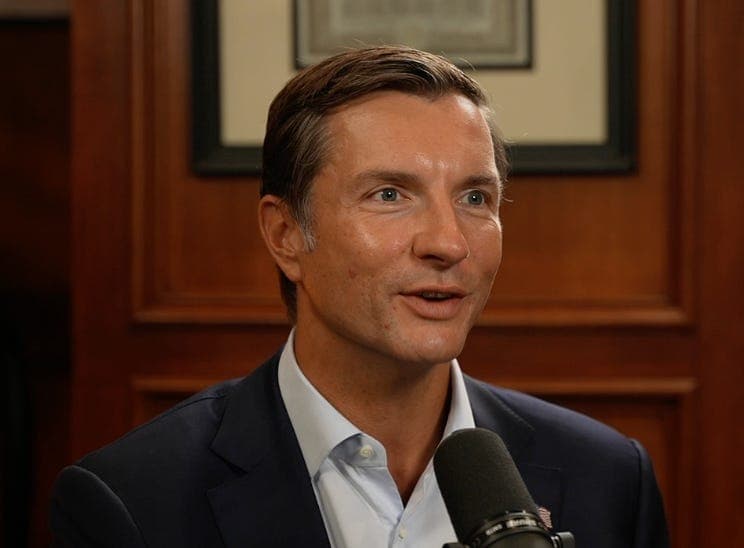
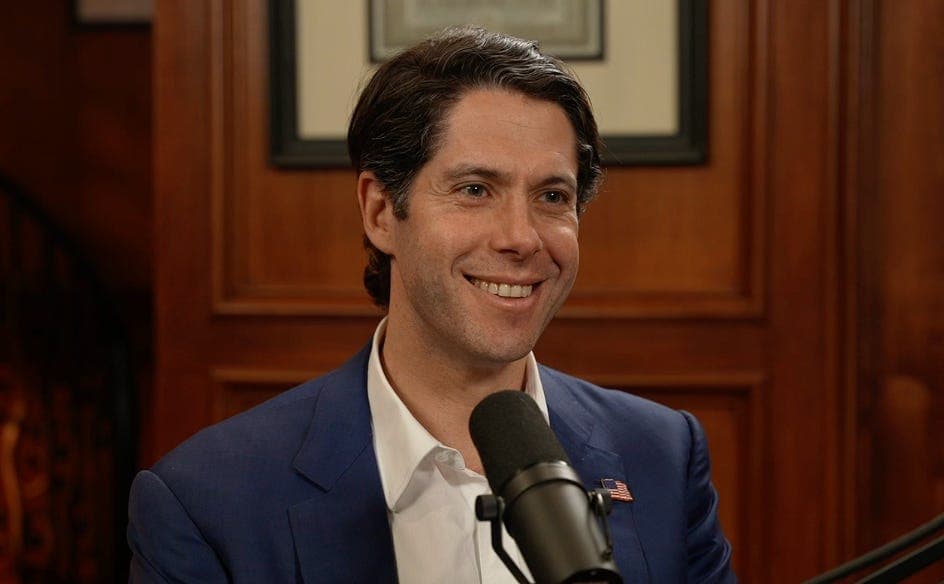
Ben Black, CEO of the U.S. International Development Finance Corporation (DFC), explains DFC’s $205B reauthorization and strategy to use private-capital-style investing to advance U.S. interests (energy, critical minerals, technology), counter China, and deliver taxpayer returns rather than “wasteful” foreign aid.
Guest backgrounds
Ben Black studied at Penn (history) and Harvard; worked at Goldman Sachs; later at Apollo (energy/credit) and founded/ran Ford and Ross. He cites family WWII service (grandfather, B-24 tail gunner) as motivating public service.
Key claims
DFC is the “government international deal team” that co-invests with partners to export free-market systems (rule of law, property rights). He argues many aid/NGO programs lost metrics and oversight (“mission drift”), unlike market-based investments. China’s Belt and Road is portrayed as extractive/state-capitalist.
Notable examples
Marshall Plan (70% used to buy U.S. goods); Rwanda road built by Chinese but “extractive”; rare earths supply chain (sulfuric acid processing; sulfur baths near mines to reduce shipping); DFC rare-earth investment recently announced for acquisition (described as a successful return).
Written by AI. May contain mistakes. Listen to the episode to check what was said.
Chapters
Tap a time to open that second in VOBen Black's Background and Inspirations
0:46 to 2:52
Ben shares his educational and family background, including his grandfather's WWII experience.
“My friend Ben Black is a key figure in the Trump administration.”
The Influence of History on Service
2:53 to 6:34
Discussion on the importance of American values and service inspired by past generations.
“Was there some skill in surviving in this position as well?”
The Role and Mandate of the DFC
6:35 to 9:36
Ben explains the structure and objectives of the International Development Finance Corporation.
“And most recently before DFC, you were the founder and managing partner of Ford and Ross.”
Investing vs. Foreign Aid: A New Approach
9:37 to 12:17
Discussion on how investing in partners can create better outcomes than traditional foreign aid.
“And really the way we think about it is as the government's international deal team.”
Lessons from Historical Foreign Aid
12:18 to 14:00
Exploration of the Marshall Plan and the evolution of US foreign aid practices.
“They don't have the same accountability.”
The Aftermath of the Cold War and Economic Statecraft
14:00 to 16:00
Explore how the end of the Cold War influenced U.S. investment strategies and international relations.
“And we had a first call on strategic and critical materials.”
Challenges in NGO Funding and Metrics
16:00 to 19:48
Discuss the loss of discipline in NGO funding and the importance of tracking outcomes.
“Like the NGOs were not giving money with iteration towards metrics and towards results and towards outcomes.”
Industrialization and Economic Growth
19:48 to 23:24
Learn about the role of industrialization in poverty alleviation and economic development.
“That's where that LNG or now that natural gas comes in.”
The U.S. Approach to Foreign Investments
23:24 to 27:08
Understand the U.S. strategy in foreign investments and its implications for global economics.
“You have a future US buyer of goods and as countries get richer, much more propensity to invest in the United States as well.”
The Future of Global Economics and Alliances
27:08 to 28:00
Discover the potential shifts in global economics and the importance of U.S. alliances.
“but we can definitely say there was success on that.”
Show all 16 chapters
Shifting Global Dynamics: Opportunities and Concerns
28:00 to 29:55
Explore the changing landscape of international affairs and the potential opportunities for the US.
“What's being shaped right now is the future of the next 50 years.”
Latin America: A Pro-American Shift
29:55 to 31:21
Discuss the pro-American movements in Latin America and their implications for US relations.
“So you see things moving in our direction to partner with us more.”
Challenges and Changes in Global Alliances
31:21 to 32:58
Examine the evolving relationships with European and Middle Eastern allies in the new order.
“And I'd be really remiss if I didn't talk about how terrific our allies across the Gulf and Middle East have been in terms of investing in America and us working together with them.”
Insurance and Investment in Conflict Zones
32:58 to 34:42
Learn about the role of insurance in facilitating investments in war zones and conflict areas.
“Tracking and being honest if something's working or not is oftentimes very hard for people because it's really tough to be honest if something's not working.”
Building a Collaborative Cabinet Culture
34:42 to 37:06
Discover the importance of interagency collaboration within the DFC and its impact on strategy.
“And I should say the recovery is that in terms of not getting paid back, we collected in the end.”
Optimism for America's Future
37:06 to 38:18
Hear about the optimistic vision for America's role in global investment and opportunity.
“that you see from a lot of different people about our country.”
Transcript
Automatic transcript. May contain errors.0:00You were confirmed last fall, Ben, to lead the DFC. The government's international deal team. We had our reauthorization this fall, a$205 billion authorization. Just a little tiny bit of money for you to manage. Tiny bit, tiny bit. We execute on U.S. foreign strategic interests, energy, critical minerals, and technology. We move the needle for the development of our partners and allies. And really more than anything else, we deliver a return for the U.S. taxpayer. This moment in time is unlike any other, certainly in our lifetimes. What's being shaped right now is the future of the next 50 years.
0:46My friend Ben Black is a key figure in the Trump administration. He has$205 billion to invest in our developing allies. Ben runs the DFC, the International Development Finance Corporation. Here's a novel idea. How about let's invest and partner with our allies with money instead of just shoving money out the door to create dependencies and waste everywhere. Ben and his team plan to make money for the American people while cementing our alliances, pushing back on China and making sure the next century is the next great American century. Excited to have my friend Ben Black here with us. Ben is the CEO these days of the International Development Finance Corporation, DFC.
1:21Welcome, Ben. Joe, thanks for having me. Yeah, no, it's great to be here. Before we dive into DFC and your role, tell us a bit about your background. You studied at Penn and Harvard, worked in finance. What were you up to? Yeah, I'd be remiss if I didn't. So I start off at Penn. I was a history major. I actually did a year abroad or at Dartmouth. And before going to grad school, I was at Goldman, kind of traditional finance route. But, you know, as I said, history background and growing up in New York City, I was very much influenced and shaped by my grandparents, particularly my grandfather. I talked about him in my Senate hearing, but he was a veteran of World War II and he served up in the Aleutians as a tail gunner on a B-24.
2:09Tail gunner on a B-24 in Alaska. Yeah. And up in the Aleutians. And so I had no idea what being it, you know, I used to love hearing his old stories, but I didn't quite realize how dangerous being a tail gunner was. It's a very low survival rate for people on that position, right? Incredibly low. So he actually won the flight medal, you know, 30 successful ups, which was a lot rarer than I realized during his lifetime. Um, but, you know, he kind of inspired me a desire to serve my country in some capacity, uh, at some point. And so both American history, as well as doing something for the country was always instilled in me through him.
2:53Obviously required a lot of luck. Was there some skill in surviving in this position as well? Like, like, like you just get shot out. You're dead. Like what, what, what, what keeps you alive? So, you know, there's a great show, which is obviously highly dramatized, called Masters of the Air, which was pretty eye-opening to me. I mean, look, he was a tail gunner, not a pilot. They were in a landing crash at one point, but actually everyone turned out okay. I think a lot of it was luck. Look, up in the illusions was a totally different case. I think learning to layer and not die from the cold was something else altogether unto itself, especially when you're sitting down in a ball turret.
3:33I remember the British gunners had to break the windows and then they had 40, negative 40 degree cold, but that's the only way they could see well enough to like see the planes in the distance to shoot them. Was it, was that similar? I think that was particularly a British plane problem. I think it was British thing. I mean, the way my mother and uncles always phrased it about him was he always stood ready. He wasn't in the battle of the illusions, but where he was stationed, which, you know, I've done some research on and everything. You know, they didn't see direct combat, although they engaged in fire at some point.
4:08Amazing. Well, my grandparents served as well. My wife's grandfather was also a tail gunner, but over in Italy. So I guess that was a different challenge there. To say the least. It's amazing. I guess we're lucky. The people alive now are the grandkids are the ones who's, the rare ones who survived those positions because most people didn't. But being able to speak to them and learn from that greatest generation, I think, has shaped so much of my life unquestionably. And it's something you talk about, and we've talked about this before, but simply appreciating the United States, America, American values.
4:43It was, frankly, run of the mill for all these guys who went in at the age of 18, and they really saved the world. and be partially raised and have your values instilled by those people. It's more GFK asking what you could do for your country versus I think Kamala this week was telling women that you got to ask when I'm going to get mine, which is probably maybe a little different perspective on what we should be telling from our leaders. Isn't that from Jerry Maguire? I know, seriously, that's what she was saying this week. And of course, I think you'd be remiss not to, so you had your grandfather, your father and your family also built one of the great financial organizations in the world, Apollo, that must have shaped you a little bit growing up too.
5:21100%. I mean, look, what was fascinating was just some of the business luminaries I got the opportunity to meet growing up and just being able to be a fly on the wall, listen to how John Malone, Ted Turner, all these different people who built the cable industry, Mike Milken, who I'd go on to work for later, it was the shaping of an era of growth. And it's an interesting thing. I was talking to my father about this the other day because frankly, right now is the largest CapEx boom in America since when he was a young banker and you were building out all the cable and telecom across the country.
6:07and you know a lot of people talk about the lbo business but it was a lot closer to what a lot of you and your friends do in terms of building new businesses and just how it dramatically transformed the lives of everyone in the country i always joke i really appreciate all this capex and the telecom case i got to build my internet companies on top of it and in the ai case i'm going to build my ai companies on top of it hopefully it works out better for the capex investors this time because you know it's definitely needed it worked out for a lot of those guys. Some of them did pretty well. Some of them didn't.
6:37That's very fair. And most recently before DFC, you were the founder and managing partner of Ford and Ross. Tell us about that. Yeah. So actually, so I was at Apollo doing energy and I had actually, so I did the only thing I knew that did that wasn't, you know, your traditional, at least not today, finance path was I also worked as a lawyer at Sullivan and Cromwell. And I was very lucky to have a phenomenal mentor there in Jay Clayton. And so I did a JD MBA at Harvard after I had left Goldman. And then I found myself, I really liked the credit. And while I was at Apollo, I got the benefit being an energy of going through a real restructuring cycle, which most didn't get since the 08, 09 crisis.
7:28And obviously there's a lot else that goes along with that from a pure finance side, being in the energy space, it was completely different. So I started on the desk in 2014 when oil prices after that OPEC meeting went from 80 down into the 30s pretty fast. And you saw a lot of capital markets debt, which was like worth 20 cents on the dollar. And so you're getting a real good business, bad balance sheet type experience. And so the debt and credit side of things and working across the capital structure with my legal background kind of became a hallmark from there of really where I focused. Awesome.
8:12Awesome. There's a lot of fun nuance there to get right. And so you were confirmed last fall, Ben, to lead the DFC. This is a really important organization strategically for the United States. A lot of people don't know about it. What's this mandate? What are you trying to accomplish? Yeah. So it's the United States International Development Finance Corporation, which is a bit of a mouthful, but DFC works. And it was founded in President Trump's first term. And what it really is, is the rump of the old OPIC, which is the Overseas Private Investment Corporation, which started in the early 70s, 1971, I believe, to invest overseas for the US interests.
8:51We can talk about a little of the history, fundamentally, we had our reauthorization this fall, a$205 billion authorization. Just a little tiny bit of money for you to manage. Tiny bit, tiny bit. But fundamentally, we have three tasks. Through the mobilization of private capital, we need to pursue and we do execute on US foreign strategic interests. We move the needle for the development of our partners and allies. And really more than anything else, we deliver a return for the US taxpayer. So you're trying to actually make money for the US taxpayers. So it just shouldn't cost us money, but you're also trying to help our allies, help cement those relationships.
9:36A hundred percent. And really the way we think about it is as the government's international deal team. Our goal is to really drive the American free market systems export all over the globe, because we really believe that that is the engine that drives worldwide goodwill, security, and growth. And you and I actually wrote a piece before the administration started, where we talked a little bit about some of this. I think we called it how to doge foreign aid. So, a lot of the money the US was spending around the world, I guess we talked about how it was, like we'd go to Uganda and we like helps build all this infrastructure and help them a lot.
10:15And then China would come in and like do the minerals deal, right. And take, and take the upside. And so a lot of the foreign aid, A, you would spend money instead of making money and B, you'd like help our adversaries basically in these places. So like, like what's, what's, what's the idea now to how to, how to change that? Like what's the right framework? So I think this is why the DFC is so important because it's investing for these purposes. I I mean, go back to America's founding. I don't remember the part in the history books where we got grants from France and others. Alexander Hamilton honored our debts and it built the greatest free enterprise system the world has ever known.
10:55Yeah. The way you lift people out is you treat them like a partner and you do business with them. You don't just like dump money on them, right? It's an amazing point. And my head of investments has gone overseas to places and has gotten thank yous for being treated like a partner to have expectations set rather than an incredibly paternalistic view that frankly does not create partners, but dependency. I tend to find that people, especially on the left, have this kind of soft bigotry of low expectations where it's paternalistic and you're like, oh, you're dysfunctional. I need to give you money or else you're going to die, as opposed to it actually is better for them.
11:32It seems like we're being rapacious or mean if we're trying to do business with them, but it's actually better for them if we're investing in them, right? It's an interesting thing. And this goes throughout the work of Kahneman and Tversky and everything in terms of behavioral economics. But when people actually have skin in the game, are invested in, and are working hard for something, and it's why we have our partner countries co-invest with us. I think people don't realize like the reason our civilization works is because of property rights, because of markets, accountability, investing for returns.
12:06These are all frameworks that actually, because we have these things, because we believe in them, we've made things work. And I think a lot of our partners that are, a lot of the developing nations that are the most in trouble right now, they don't have those same property rights always. They don't have the same accountability. They don't always, you know, they don't have frameworks where they have that. Is part of the goal to export these values to these places? Well, exporting the free market system, I think you're hitting on it entirely. Because look, every culture is going to have its own values.
12:33There are going to be different cultural mores, but our system, our rule of law, property rights, and that stack, that bundle, as they would say in law school, is so incredibly powerful for doing business, growing wealth for a country, and building better lives for an entire populace. And that's how you have a trusted partner and market to work with. You know, when we think of foreign aid today, for those of us actually reading the articles and paying attention, like when I think of foreign aid, I think of waste and fraud. And, you know, originally we had the Marshall Plan, which was quite successful.
13:08How do we go from the Marshall Plan to like tons of waste and fraud around the world? Like what happened there? So it's a great question. And look, the Marshall Plan, I view as the apogee of a train of evolution through American history that worked incredibly well from Hamilton to Theodore Roosevelt using economic and industrial might to build out our interests to the Marshall Plan. What people don't realize about the Marshall Plan, part of it is this myth has been taken on about pure altruism. And it was incredibly altruistic. But 70 % of the funds that the U.S. sent over to Europe in the Marshall Plan were used to purchase U.S.
13:50goods and services. So 70 % were actually paying us, giving us back basically something. It was a stimulus for us and it hardwired markets for US workers, businesses, and capital. And we had a first call on strategic and critical materials. So look, it's a great question. I think in some ways we were slightly victims of our own success. You go to this period of time after we win the cold war and everyone's into fukuyama's end of history and if you build it just people will automatically convert to our system we let china into the wto we lost all discipline we thought they were going to like convert to our system i guess but like by magic by magic do we feel guilty it feels like there's like some guilt that was driving some of these things it seems like maybe interaction by guilt's a bad thing but we felt guilty and just gave money away in stupid ways.
14:46Like what happened? So I don't think the United States of America felt guilty. I think, look, we have a much different history than some of our allies across the pond. And over that period of time, and we're working on a white paper that talks about this at the DFC just over the course of economic statecraft, there was a system that got built in where, I mean, development is fantastic. It's raising everybody up. It's a rising tide that lifts all boats. This concept of human development that, you know, is frankly, a lot of it's quite regressive. You know, these are all the degrowth people today.
15:30And so there's a whole separate system that came out focused on NGOs and kind of no restrictions, no paying attention. And And we had a lot of lost agencies because we had won the Cold War and we looked inward and we weren't really focused on a plan and we thought things would happen just automatically. It seems like something the market does is that when you make an investment, I assume you're looking for metrics and for results and for things that are going to actually happen. Something about the NGOs, they lost that discipline, right? Like the NGOs were not giving money with iteration towards metrics and towards results and towards outcomes.
16:07Somehow they just started giving lots of money towards things that weren't working. It seems like a different discipline. But I think losing discipline is the right phrase. I mean, there were many early NGOs and things that were done early on where there was a lot of discipline and metrics attached to it. And then there was just a lot of mission drift and slip and less oversight, frankly. And so what the Trump administration represents and where President Trump is so fantastic is he is the most financially astute president we've ever had. And he's really focused on how economics makes the world go round and what it means for not just the exercise of American power, but building out the next century to be another American century.
16:52Just going over the flaws, just a little bit longer. So when we look back, I'm looking at our piece over here that we wrote, and we looked at all these examples. There was lots of money towards improving gender equity in the Mexican workplace or gender equality for climate change opportunities. Or I think there's promoting respect, equity, and belief. There's all these lists of things. And it's one thing that they sound woke, so they're easy to make fun of because they sound kind of ridiculous. But there's something about them that's also because of the way they're designed to sound so woke in virtue signaling that it's almost impossible to create metrics around that, right?
17:26It's like they just lose all discipline just by the nature of what they are. Well, it's also they're small, they're disparate. How are you tracking them all? So remember, we went from$60 billion to$205 billion. And one way of doing that, it's not what we're choosing to do, is you could just have thousands more of tiny investments and good luck tracking that. I mean, we're also doing a whole thing. We're bringing in a lot of data metrics, analytics, following all this because you have to. The other thing is if you look at the course of human history, do you know the single factor that It has brought the most people out of poverty throughout civilization.
18:06I assume something about markets, but what is it? Actually, industrialization. Industrialization, that's fair. And so, when you think about the projects you're going to do, you need the big ones that move the needle for people. I mean, it's the story of America in a lot of ways. Look at the railroads going west and everything. Towns develop alongside railroads. The industrial revolution and the industrialization around that, the outcomes are just so much higher. Exactly. But also, I mean, think about putting the cart before the horse on what you're describing. You're going to build a town or a cooperative somewhere and for some reason that business should work.
18:45I mean, it doesn't really make sense. A business that opens up alongside a railway line. Now that makes sense. So what's the Trump administration's approach? You're helping these places industrialize as well. What does that mean? So I think it's projects that move the needle. So we think about it, look, we're the largest energy exporter in the world, the largest producer of oil and the largest producer of natural gas. So our RE-auth kind of lays the path of what the key sectors to invest in are energy, critical minerals, and technology. We have the right to invest anywhere in the world, no restriction there to block choke points from China and Belt and Road, but also to move the needle for others.
19:30But take energy as a continuum. You go somewhere, you want to build a port where US LNG can be exported to. We need a regas plant there to send it to the country. Maybe we need a critical mineral, lithium, cobalt or something in that country. but mining is incredibly power intensive. That's where that LNG or now that natural gas comes in. And along the way, you can also supply consumer power to villages, to small businesses, large businesses, and you grow an economy. Can this tie in? So for example, there's just like trillions of cubic feet of natural gas we're not using in Alaska. Can this tie into taking those and building an LNG terminal and then sending it to some of our allies?
20:15Is this the kind of thing that might look at? I think that's definitely part of the plan. We can't invest inside the domestic United States, but we work heavily across the interagency. In terms of policy priorities, we work heavily with the White House, the admin, NSC, and state. And then we work a lot with Exum. And John Yubanovich is a close friend and the head there. He's all about exporting stuff from the United States. Export and import as well. Hence Exum. Exactly. Exactly. But part of that though is I like to say like, hey, some of that's working capital and maybe we're long-term investment.
20:54I was just in Japan and we were with a minister there who's in charge of investing hundreds of billions of dollars into the US. Ah, J-BEC. Yeah. And there, that's interesting. I wonder if there's ways to collaborate. They can invest in something here that you can then use to help allies or something like that. I think it's a great point. We call these nexus deals where, and it happens in the Gulf. as well with our partners there where maybe there's a mine or a gas field and we invest in it together and then you look at the processing and that's going to go in the United States. We wouldn't invest there, but different parts of the government would as well as private capital.
21:32That's really a key part of this because if it were just using government dollars, we wouldn't be any different from China and they're seven times the size of us. So you want to have private capital, scale it up and do the things that make sense alongside you? Look, no matter how, and we brought a private sector approach in to the DFC. My goal is to move at the speed of the private sector, but there is nothing like the dynamism and incentives of the private sector. So China is spending over a trillion dollars on its Belt and Road Initiative, which like you said, it's a lot more money. But I guess you're saying we have a much more dynamic and deeper, even private sector than they do, and that's an advantage you have.
22:08And building markets, it's okay. So I went on part of my honeymoon with my wife to Rwanda and remember driving. We did a guerrilla trek and, you know, an amazing country, especially what they went through with their genocide and civil war and how the country has been rebuilt. But, you know, the driver on the way to the guerrilla trek, guys are Americans. We love Americans. this road, everything here was built by the Chinese. We hate the Chinese. I go, but they built you the road. Why would they? They go, yeah, they built our road. They won't pay and they won't use Rwandan workers. They don't eat at the same restaurants or anything like that.
22:53It's purely extractive. It's very similar to the example you made in terms of the critical minerals deal where we'd build a road and then the Chinese would come in and that we wrote in the article. It's very similar there, but it's completely remote. I like to say it's not even M1 capital in monetary terms. And so with the US capital with a full stack, similar to the Marshall Plan, when you build a market, you integrate the entire ecosystem and economic ecosystem. You have a future US buyer of goods and as countries get richer, much more propensity to invest in the United States as well. Because you're coming there with other businesses to ensure you're integrating the businesses into their economy.
23:35Exactly. You're making them like us because you're actually hiring people from there. You're thinking about the positive sum outcome. It's strange that China wouldn't be thinking about positive sum outcome. Why would they get that wrong with that? Because it seems like such a mistake for them on how they build the road. So they've built an interesting machine. And I'm sure you've read some of this. And they've accomplished amazing things within their own country. but it's very much a state capitalist system. And therefore, they're not looking at foreign markets. They exert control over foreign markets through their economic heft.
24:11They're thinking, here's what we need from this for our internal system. So they're coming and they're taking. They're not coming to integrate and be long-term allies. Precisely. And look, we saw this with the rare earth scare last year. And it's kind of how we sort of took our eye off the ball as the United States in the 90s and early 2000s, we used to have the Bureau of Mines that would disseminate processing data and information across to all mining industry people. And we kind of exported that entire industry. And if you go back to Hamilton again, Wealth of Nations, if something is for the defense of the nation, invisible hand doesn't apply.
24:53You need the redundancy. You need the self-reliance in the country. This is where I think a lot of libertarians get confused because I'm very, very liberty-minded. I want things to be as much that way as possible. But for our defensive purposes, there's certain things we have to have here and we can't just like have, if China's doing it cheaper than us, that might be the right market solution, but it's definitely not the right military defense or country solution, right? 100%. And you see this across minerals. You also see it across pharmaceutical APIs as well, which we learned much to our chagrin during COVID.
25:24Are these things where you're going to invest with our allies outside of China that we can trust more? Obviously, we got to bring some things back to the US, but are there ways to use allies to also diversify our supply chains here? 100%. There's nearshoring components. I mean, look, in some parts of the mineral supply chain, if you think about it, and this will be a whole new fun panic coming up. So, sulfuric acid exports have been banned from China, and that's 25 % of the market. That starts May 1st. What is sulfuric acid used for? Sulfuric acid is used often for the processing of rare earths.
25:58It's incredibly important for fertilizer and a whole host of agricultural products. But the example I was going to use here on sulfuric acid is if you think about the processing and movement from raw ore in a rare earth to oxide, which is the powder that is moved on to the metallization process. It's like 5 % of the weight yield. So sometimes building a processing plant and doing the sulfur baths much closer to where the mine is, is much, much cheaper in terms of shipping. And if it's a trusted country and ally, it makes a lot of sense. That's 20 shipping trips versus one. Of course. Of course.
Read the full transcript
26:42So we should be doing it there. Do you have any examples you can give? this is all secret so far? What are some examples? A lot of it's secret so far. I mean, I have to give a big shout out to the team. There was a rare earths mine we invested in that recently was just announced it was going to be acquired. So it's in three months, a fantastic return for the DFC. You can make a bunch of money for all of us taxpayers, huh? That's the hope for everything, but we can definitely say there was success on that. Are you allowed to give anyone bonuses for making money? How's this work? You know, I think the government has a system of pay.
27:19I don't think it is not like private sector bonuses and there are mandatory bonuses in the system. But actually, it's a really interesting question because it's turned into a question across government. And, you know, DOW has done this in terms of bringing in a lot of private sector professionals. And so there have been different movements about the levels of pay. And look, there are different models to experiment with. You know, sometimes asking people like, hey, we're not asking for a whole career, but something you want to do in your lifetime. I really think this moment in time is unlike any other, certainly in our lifetimes.
28:01What's being shaped right now is the future of the next 50 years. It is a total changing, certainly in international affairs and what President Trump has been able to do. It's a total reworking of the board. And that's not to say it was a desire to shatter either. I mean, orders change. The post-World War II order comes from 80 years ago. No order lasts that long. and we're seeing a change in the world. And it is a phenomenal opportunity right now. It's what's made me partially so excited about everything. Tell us a little more about that change. I mean, there's obviously some concern that Europe is obviously at different values and then things might break up there with NATO.
28:45There's obviously the engagement we have to have versus people around China to make sure there are strong allies. But what's exciting about the change? What's the dynamic? So there's so many places. I'd be remiss if I didn't start with the Western hemisphere. What's going on in Latin America and across the Americas is certainly something that's never existed in our lifetimes. And I think you have to go back over a hundred years to see this type of opportunity there. You have a lot of pro-American governments. You have elections moving in a direction of folks who are pro-business, pro-growth, anti-crime, real allies to the United States.
29:23What the administration did, and this ranges from the president, first of all, but Secretary Rubio, Secretary Besant, and DOW, and Secretary Hegseth in Venezuela is nothing short of amazing. It is remaking our hemisphere, and it is going to be a really special thing for decades to come. We're kicking out the bad guys and the commies. Exactly. Nothing wrong with that. And the goal is to engage. Obviously, we have Miele in Argentina. We have Chile going to the right and being more pro-market again, which it had been before, but it wasn't for a while. So you see things moving in our direction to partner with us more.
30:01Oh, more than that. So, I mean, my first trip out of country in the job was to President Paz's inauguration in Bolivia. Honduras is a trip I'm going on in a few weeks. And President Esfara is a huge change there. You can go country after country across the region. There's a couple of commies left. Are we going to hopefully take care of them? You know, I'm trade. Trade and finance. But the way things are going is really phenomenal for the United States, but also for the people of the region. It does seem very, very positive. Hopefully the people here can look and see that when you shift from the left to the right into free markets, it helps everyone.
30:43We don't vote for the wrong things here because it's always very scary. No, I think that's entirely true. But then there are also, and Europe's an interesting one because, look, a lot of the business people in Europe still want to work with us and they have some great businesses there. So, I think it's important to bifurcate maybe political figures who are distasteful to us versus some of the people on the ground there who are as good allies as they've ever been. And then from Central to Eastern Europe, there's a lot of opportunity. Central Asia, Africa, and then Indo-Paycom as well. And I'd be really remiss if I didn't talk about how terrific our allies across the Gulf and Middle East have been in terms of investing in America and us working together with them.
31:33That's true. I guess that part of the new order is very interesting, where we do have some very strong allies now in the Gulf that are aligned with us in our values and markets, which I guess we didn't have that 30 years ago. So that's a big change. Huge change. I guess those people are now even closer. Well, I guess if Western Europe keeps screwing up, maybe the future DFC will help them if they become really poor based on their current trajectories. Well, look, we can in the sub areas, I said, we can invest anywhere. And there's there is a lot to do there. I mean, look, in the tech world, look at what a phenomenal company is in the Netherlands and ASML.
32:06Of course. Of course. There's definitely key partners there. And just on the note of all the changes, I think people might be a little bit interested. Were there messes from the last administration? We talked a little bit about how the Biden administration did way too many things that didn't track as much. Some of it seemed kind of silly and woke. What were the class of mistakes? Are you having to clean up a lot of things? I don't think it's fair to completely compare. It's an apples to oranges comparison. The reauthorization has created a totally different organization. And I really like Scott Nathan.
32:41He's a very good guy. And it was a very new organization. I think a lot of it is data accumulation and being on top of things in terms of following up on investments. Everyone likes to spend money, but tracking is totally different. Tracking and being honest if something's working or not is oftentimes very hard for people because it's really tough to be honest if something's not working. Exactly. And by the way, experienced it in the private sector as well. And it's just important to instill that culture of responsibility. Are you allowed to talk about the straight of hermos? I think you had to work on some insurance here.
33:16What's going on with that? I am, I am. So this has been an exciting project, you know, as... What happened? Did Trump call you up or someone called you from the White House? Like, what happened here? The president called about that. But prior to that, you know, I'd been talking for a while with Treasury, specifically about our insurance products, how they could apply to war zones. So, you know, as I said before, the DFC is the descendant basically of OPIC. And OPIC had one incredibly powerful tool embedded in it called political risk insurance. And over the course of the DFC and OPIC's existence, there were over 3 ,000 insurance transactions that have occurred.
34:03Also in our Ukraine fund, the Ukraine Reconstruction Investment Fund, or Europe, as it's called a lot, there's war risk insurance and wartime insurance going on there. So in order to get people to take the risk of trying to build things in conflict zones, we'll oftentimes insure their investment, which I imagine is expensive to do.
34:25For the private sector, it would be. I think when the U.S. government's doing it, the insurance from the U.S. government, you really are the pricemaker. Did some stuff get blown up in Ukraine that we insured and it cost us a lot of money or no? So our Ukraine insurance has gone very strongly in the history of the DFC and OPIX insurance product. Pretty much close to 100 % recoveries. And I should say the recovery is that in terms of not getting paid back, we collected in the end. So how does the call go with Trump? He's like, Ben, we're going to have the very best insurance. No one's going to have insurance like us.
35:05You know, there were parts. A call with the president is a special, special moment being in the Oval. So first time I went in the Oval, I looked for that guy immediately, Winston Churchill. But you're just so drawn to the president that that was really where my eyes went. But no, I think what he intuitively recognized faster than almost anyone I spoke to was, hey, if other insurers, people talk about Lloyd's a lot, but other insurers are canceling war risk insurance because the straits closed. And implicitly, that means everybody's insurance programs across the world on stuff like this rests on the back of the US military.
35:46And what he said is, why are they getting paid for it and not us? especially when it's our guys at risk and everything we're doing there. Yep. So have you given out a lot of insurance yet? Not yet. So we're not operational yet. We're getting ready to go. We're working with Chubb as lead underwriter, great American insurance company run by Evan Greenberg. There's a whole host of American insurers working alongside with them and they're providing up to 20 billion and we're doing reinsurance on the back end of that of 20 billion. Evan's my mother-in-law's cousin-in-law. So I've met him before. through the classic jewish geography yeah smart smart guy through through the non-jewish side funny enough but yeah so yeah we're all breaking the rules it's uh and uh and is there anything else you could tell us about working with the cabinet it sounds sounds like it'd be a really fun group of people to work with you guys you must be strategizing all the time across departments right so a lot of them have we are i mean look our basically interagency and collaboration is built in to the core of the DFC.
36:47Our board is treasury, state, and commerce in addition to independence. So working with others is what we have to do. And look, it's a phenomenal cabinet. The teams they built around them are great. And yeah, we're in coordination on a daily basis. I love it. Well, you know, we started this podcast to push back on the cynicism and pessimism that you see from a lot of different people about our country. You know, what are you optimistic about you can achieve at the DFC? And what does this mean for America? I'm incredibly optimistic about the future for America. We can export and build out our tech stack.
37:24We can make sure the operating system of the 21st century and even 22nd are built on the investments we make abroad to make sure that we keep the US as the needed power, as the indispensable nation. And look, there has been a lot of cynicism and pessimism. I think one would say taking the black pill across the board, but I think there's so much to be excited about. And as we look to our interests and build all these allies we were talking about, I just think the world becomes investable and it creates even more investment to the US. And ultimately what that means is better lives for everyone. Everyone can grow wealthier, have more growth and have more opportunity and live their American dream.
38:12The values beyond our civilization have definitely lifted up more lives than, than any others. And if we can take these principles and get our allies to partner with them and to keep them dominant versus the communists and versus the other guys, that's, that's a really great mission to me. I think they will. Awesome. Thanks, Ben. Excellent. Thanks, Joe.
From the publisher
Ben Black is the CEO of the U.S. International Development Finance Corporation (DFC). Backed by a $205 billion budget, his mandate is to invest in U.S. strategic interests, build new markets, and deliver real returns for taxpayers. What projects is the DFC prioritizing? How is he countering China's trillion-dollar Belt and Road Initiative? And how is the Trump administration shifting from a paternalistic view of foreign aid toward investing with accountability and an expectation of returns?
A history major at the University of Pennsylvania, Ben began his career in finance at Goldman Sachs before earning a JD and MBA at Harvard. He worked in private equity at Apollo Global Management before founding the investment firm Fortinbras. Last fall, he was confirmed by the U.S. Senate as CEO of the DFC. His drive to serve was shaped by his grandfather, a WWII tail gunner in the Aleutians, and by watching his father build Apollo into a global powerhouse.
We begin our conversation with Ben’s entrepreneurial journey before diving into the history of U.S. foreign aid. Learn how the U.S. regressed from the Marshall Plan, which rebuilt Europe and fostered investment in America, to promoting a culture of waste and dependency in foreign aid — and how the Trump administration is reversing course (check out our essay from January 2025 on these issues). Next, Ben lays out the flaws in China's extractive Belt and Road model and explains how the DFC is developing trusted partners, promoting free-market principles, and investing strategically. From maritime insurance in the Strait of Hormuz to rare earth mining, Ben reveals some of the DFC's recent wins and where he sees new long-term partnerships in South America and Asia. Instead of showering NGOs with taxpayer dollars and creating charity cases abroad, the Trump administration is restoring discipline and accountability — and Ben is a key leader in executing this vision and generating returns for the American people.
00:00 Episode intro
01:25 Ben’s path to DFC
08:30 $205 billion to invest abroad
10:00 Rethinking foreign aid
13:00 From Marshall Plan to waste and fraud
18:50 The Trump administration’s new approach
21:50 Countering China’s Belt & Road Initiative
28:00 Post-WWII order is changing / new opportunities
33:10 Maritime insurance and Strait of Hormuz
37:00 Optimism for America’s future
This is a public episode. If you would like to discuss this with other subscribers or get access to bonus episodes, visit blog.joelonsdale.com