In short
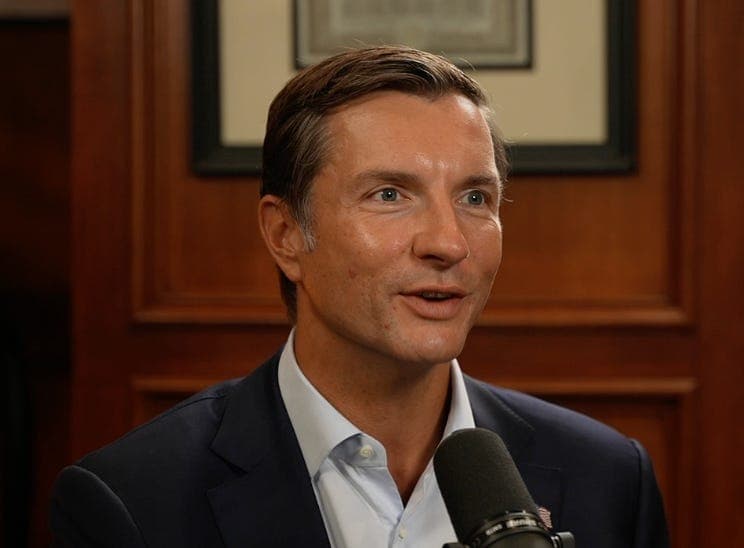
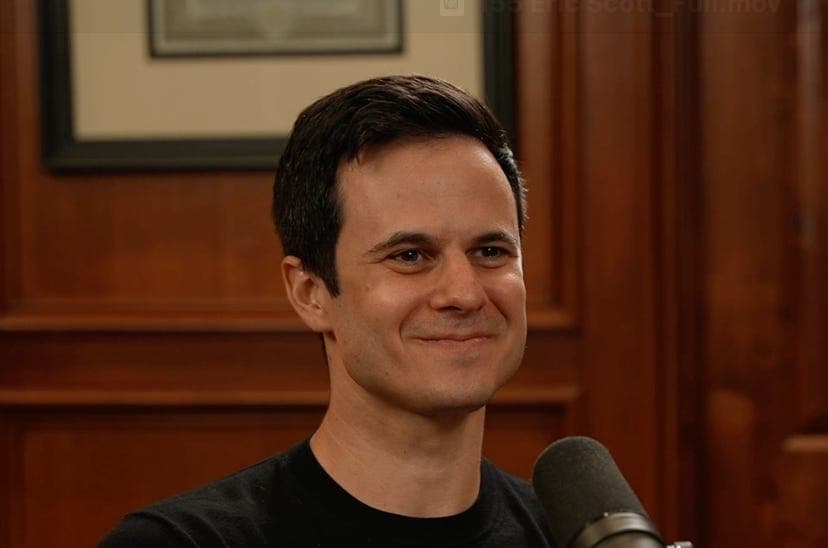
Eric Scott (Overlook Capital) argues venture is missing “economically invisible” opportunities: many fast-growing, high-PMF companies solving major problems (finance, healthcare, education, etc.) are overlooked because VC attention concentrates on a few “power law” winners in AI/energy.
Guest backgrounds
Eric Scott grew up near Chicago, studied at Claremont McKenna, met Max Levchin via a cold email for a “technical assistant” role at HVF Lab. He later worked as a principal at Founders Fund (Peter Thiel) and helped build/advise firms including Sci-Fi VC and 8VC. He’s now building Overlook.
Key claims
VC dollars are ~10x larger than 10–15 years ago; LPs concentrate into fewer, larger funds; top firms chase mega-platform winners. Overlook will underwrite 10–12 bets to ~3–5x (targeting ~20–30% net IRR), focusing on AI-native founders where AI reduces operating costs (not necessarily the moat).
Notable examples
Sci-Fi VC’s early investment in Cynthigo (microfluidics lowering oligonucleotide synthesis costs); Harbor Health (with Tony and Clay at AVC); mentions top “power law” companies like SpaceX, Anduril, Anthropic.
Written by AI. May contain mistakes. Listen to the episode to check what was said.
Chapters
Tap a time to open that second in VOEric Scott's Journey in Venture Capital
0:45 to 4:40
Eric Scott shares his background and experiences in venture capital.
“Venture capital is a lot bigger part of our economy than it ever was 10 or 20 years ago.”
Lessons from Building Companies
4:40 to 7:30
Eric discusses the importance of commitment and leadership in startups.
“A lot of them do seem a lot faster at a lot of these things.”
The Evolution of Venture Capital
7:30 to 12:00
Overview of how the venture capital landscape has changed over the years.
“And the reason I feel confident and comfortable saying this is the thing, it actually comes down to the first investment I made.”
Understanding the Power Law in VC
12:00 to 14:00
Exploration of the power law and its implications for venture investing.
“Max and Nellie Levchin are sort of singular in their own ways.”
The Skewed Venture Portfolio
14:00 to 15:00
Understanding the challenges in venture capital underwriting.
“underwriting these things that will lead to this incredibly skewed barbell retrospective portfolio where you have one success and 20 failures.”
The Expanding Landscape of Venture Capital
15:00 to 17:30
Exploring the growth and impact of venture capital on the economy.
“So venture capital, it's 10 times bigger than it was before a decade ago.”
Identifying Opportunities Beyond the Hype
17:30 to 20:00
Discovering undervalued companies in a concentrated market.
“you could tell there's enough talent there to make it work, but they're not hot enough to be getting really high valuations.”
AI's Role in Shaping Investments
20:00 to 22:30
Examining how AI influences growth rates and valuations of companies.
“You know, we, we think about our portfolio, we're going to be super concentrated.”
Risk and Return in Venture Capital
22:30 to 25:00
Discussing the implications of investment strategies on returns.
“It just seems like people are underestimating this.”
The Importance of Diverse Industries
25:00 to 27:20
Highlighting the need for investment in various sectors beyond tech.
“It can probably be several hundred million dollars.”
Show all 12 chapters
Optimism in Current Venture Landscape
28:04 to 29:11
Discover what makes the current time the best for starting or running a company.
“What are you seeing that's making you optimistic right now?”
Advice for Young Entrepreneurs
29:11 to 30:18
Learn crucial advice for young entrepreneurs on ambition and perseverance.
“Oh man, I would tell them to be more ambitious.”
Transcript
Automatic transcript. May contain errors.0:00This is the craziest opportunity that exists today in venture. There are hundreds of companies out there that are working on big, super important problems, but they might not be a trillion dollar company. Those just don't get the attention from traditional VC platforms the way they used to. You were a principal at Founders Fund, Peter Thiel's Fund. You worked with Max Levchin at HVF Lab. How'd you meet Max? Cold emailed him, basically said, you can pay me whatever you want. I just want to learn how to start companies. You're taking a very different take on VCs. When people are spending all their time looking at AI and energy, there's still a massive need to push the ball forward in finance, healthcare, education.
0:37These are enormous dislocations in the market.
0:48Venture capital is a lot bigger part of our economy than it ever was 10 or 20 years ago. And the venture ecosystem is changing dramatically. My friend Eric Scott is really well known to a lot of us in the innovation world. He was at Peter Thiel's Founders Fund, built companies with Max Levchin, and also built companies with us at 8VC. He's now building a new firm called Overlook. He's going to tell us what's going on in venture capital, what are the missed opportunities, and how do we think about this key part of the economy. Welcome to American Optimist. Really excited to have Eric Scott with us today.
1:16Eric, thanks for joining. Thanks for having me, Joe. Eric, you were a principal at Founders Fund, Peter Thiel's Fund. You work with Max Levchin at HVF Labs. You guys spun out Sci-Fi VC where you were a partner. You've been an advisor to 8VC. Tell us a little bit about your background. Where'd you come from? Sure. Well, I guess to start from the beginning, I grew up in the northern suburbs of Chicago. I went to Claremont McKenna, where I met your partner, Drew Oden, and my current partner, Roby Miller. I started a company in college. The company was unremarkable failure. I knew I needed to learn from somebody and I found my way to Max Levchin.
1:52I have to tell the story because I don't know if you know this story. No, actually. How did you meet Max? You played a critical role in this. Oh, remind me of this. So Max was recruiting for a technical assistant. Technical assistant is effectively a PhD in computer science. Bill Gates had a bunch of these. They became the next generation of leaders at Microsoft. And Drew had just started working for you. And he was at this dinner and he texted me, hey, I'm at dinner with this guy named Max Levchin. He's trying to recruit a technical assistant. You should totally apply for this job. I struggled to get my minor in computer science.
2:30And I text Drew and I'm like, sure, I'm going to go for it. How do I get in touch with him? And he responds and says, I don't know, email him. So I guessed his email, cold emailed him and he responded in two hours and said, how did you know I was hiring for this position? But yeah, he brought me in for lunch and sort of the rest is history. So despite not being a PhD in computer science, you're able to work with him. Like what were you able to do to add value? You know, my email to him basically said, you can pay me whatever you want. I just want to learn how to start companies. And the idea was I was effectively going to be a junior product manager.
3:04And at the time, the idea behind HVF was Max was going to start one company per year, and he was going to find a CEO one year in to run each of those companies. And so I joined basically thinking I was going to look into markets. I was going to basically just be his chief of staff on the business side of things. And there would be a separate person on the technical side of things. And around six weeks in, there was somebody who was pitching him an angel investment. He brought me into the meeting. He asked me what I thought about the company. It was when big data was the industry du jour. He asked me my thoughts on the company.
3:44And I said, I think it's going to make money, but I'm pretty bored. And he said, hmm, I think you're a lot better at analyzing these companies than you are at rapidly prototyping. I guess there was no AI back then, so prototyping was harder. Exactly. There was no vibe coding. It was all by hand. It's harder. I sometimes wonder these days if the people who are really good at prototyping back then, I guess maybe they're even faster now, but maybe AI does some of the work for them, huh? I think it does. I think it bifurcates the skills a little bit. So the things that made a really good product manager, a good product manager then are only amplified.
4:19So deep understanding of the customer, ability to articulate your ideas to a team with varied skills. AI only makes that job easier and therefore makes it easier to prototype. For the extremely technical people, I've heard it makes them faster. I intellectually understand this, but I'm just not technical enough to, to really say. A lot of them do seem a lot faster at a lot of these things. And, you know, so you started a company that didn't work in college. You ended up helping maximum companies. Let's go back a little bit first. What made you interested in building companies? What in your background caused you to want to do this?
4:51You know, it's, it's one of those strange things. I've always known I wanted to start companies from, from the time I was maybe 10 or 11. My dad ran the family business. He was the third generation. We have a stainless steel distributor in Chicago. So I'd always grown up talking about business. And when I was 10, that was sort of the middle of the dot-com bubble. And I just thought, I think at the time, I just thought it was so cool that people could start companies. And some of these companies would have basically playgrounds at their offices. And now I'm 37 and I realize that's actually a deeply negative signal for the culture of the company.
5:34You're not going to have a playground at your office? What would 10-year-old Eric think? Exactly. This is the one aspect in which I will absolutely have let 10-year-old Eric down. But I always knew I wanted to start companies. And in college, all my friends and myself, sort of the trodden path at Claremont was you're going to go into investment banking. And I said, no, I'm going to start a company. And there was just one problem, which is I didn't have any money. And the only way to start a company without any money was to build software. And that's really why originally I dove into technology and computer science.
6:14Turns out you still need some money, although these days you need a lot less, I guess, right? Yeah. Well, and on the other side of that, if you are an effective entrepreneur, you're going to want to put a marginal dollar to work. So if you can actually take zero money and make profit off of that, you can probably figure out a way to make even more money with a marginal dollar. This is generally true. So you work with Max and some companies. Anything stand out from what you guys built together that you can tell us about? My true pride and joy from that time was spinning out Sci-Fi VC. So that was sort of a core lesson that has taken me a decade to internalize, which is that I do love the process of starting a fund, which I think is actually different than most people who love the process of starting a product-driven company.
7:01I joined right when Max was starting a firm. And right when we were starting a company called Glow, which is focused on fertility. and I helped pull together a company in the insurance space called Pathpoint, sort of recruited one of the two founders into HVF, which is basically a large excess and surplus market. But Syfy does stick out as this thing that is going to endure and be around for a long time. And the reason I feel confident and comfortable saying this is the thing, it actually comes down to the first investment I made. Which was what? which was Cynthigo. And I'd probably spent six months listening to pitch meetings, mostly with Max, before we pulled the trigger on investment.
7:53And I just remember listening to all of these big data companies, many of which went on to make a lot of money. And we'd sort of analyze things and talk about the risks and rewards associated with these companies. And then Paul Drabowski came in, early employee at SpaceX, saying he had a microfluidics system. He and his brother had a microfluidic system that would effectively drop the cost to synthesize oligonucleotides by an order of magnitude. And I said, whoa, this is a company that I know if I were the CEO of, I would not be able to drive it forward in the same way that these guys would. And that actually became way more empowering to me.
8:37It's what are these companies that are so ambitious and so deeply technical? I know I cannot be the CEO of, but I can help enable their success in some other way. That will be Sci-Fi VC's enduring legacy. And speaking of entrepreneurship, you also helped Tony and Clay at AVC start Harbor Health, which is this big local healthcare company. Any lessons learned from these 10 years of building companies? Like what worked, what didn't work for you? Yes. I think the biggest lesson, the biggest takeaway there is the value of total commitment, value of total commitment. And you and I are lucky to interface with some of the smartest people in the world.
9:19Not all of those people, in fact, a very small percentage of those people will have the ability to totally commit to an idea or to a problem, to a mission, to a team, to whatever it is. You need founders to be all in, basically. All in. People actually running the company, you need to be like 110%. This is what they're doing. All in. All in. And I think I'm super proud of Harbor. I think it's one of the fastest growing clinics in Central Texas, if not all of Texas. Clay and Tony are amazing. They're going to make a huge impact in healthcare or at least die trying. but when I think about my personal impact there, it's like there were all these decision points of do I join the company as an operator at all?
10:02Do I join for a little bit and then go back to investing? Do I try to start multiple companies at the same time? And when I think about the people that have had the biggest impact at Harbor, it's those that have said, this is the thing I care about singularly. This is my life mission. Harbor is the vessel to do this and we're just going to commit. Yeah, that's definitely a big failure mode is if there's not like amazing full-time people who own a big piece of the company who are driving it and who are the main people for it. I think you can have a co-founder helping. Obviously, since I've gone all in on things, I now help other people, but there's always like the main leaders there who are all in and they're the ones actually building the company.
10:40Yes, yes. And I think, you know, I have been around incubation. Obviously, in some ways, I've spent my time at three different incubators throughout my career. So you have HVF as the first incubator with Max. You have Founders Fund, which is definitely not an incubator, but every once in a while does incubate companies and they have a great track record of doing so. And then of course, 8VC that has this insanely good build program where the sort of hold is greater than the sum of the parts um and my biggest takeaway there is twofold first of all the person incubating the company is actually still the number one determinant of success yep there's no like magic way to do this that you can write on a whiteboard and say it depends on who you bring in yeah yes yes exactly exactly and the people who remain at the incubation platform, still go through a period of time where even if it is only for the six months that you're getting off the ground, this is the number one priority.
11:45You have to do that. Otherwise, it doesn't work. Yep. Yep. And I mean, just to say something that's obvious, most people can't do that. Most people can't do that. So it's like the platform at AVC is truly unique. Obviously, the culture that Peter's created at Founders Fund is truly unique. Max and Nellie Levchin are sort of singular in their own ways. And that's where it starts. So after all this, you're the managing partner in Overlook Capital. You're starting a new business, which is a firm. And you're taking a very different take on VC. So let's talk about VC a little bit and what you're doing.
12:19First of all, venture capital. What's going on now? We're in the AI wave. There's all these things growing really fast, scaling faster by way than anything I've ever seen. These new young people make me look really slow. I think pounds took 17 years to get to a billion. I wasn't even there anymore by the time I did it. And you have people in their third and fourth year now getting a billion dollars for the very top companies. Give us some perspective on the VC ecosystem. What's going on? What's its size? Has it changed over the last decade? It has changed immensely. So the way I would think about this is first take AI out of it and just think about how this section of the capital markets have changed.
12:55It's predominantly changed in two ways that compound each other. The first is just the absolute size of the market. Roughly speaking, we're talking about 10x increase in the number of venture dollars that are put to work every year from, call it, 10 or 15 years ago. The second impact, the second thing that has changed is people now understand the impacts of the power law. Power law very clearly says most important company in your portfolio, the biggest outcome in your portfolio is going to be far more important than the next two or five combined. Yeah. And therefore in VC, you just got to spend all your time focusing on the power law companies and just figure out what they are and just ignore everything else.
13:40It's like kind of like the lesson they've taken. Yes. Yes. Now there's a catch here. I don't want to jump ahead of myself. The catch here is that the power law is only true in retrospect, and it is very obviously true. But my perspective, our perspective at Overlook Capital is the way to select these power law companies is not necessarily to try to pretend like you have a magic way of underwriting these things that will lead to this incredibly skewed barbell retrospective portfolio where you have one success and 20 failures. People like Peter Thiel and the guys around him over the years, whether it's Brian or Trey or others, seem to have a pretty good track record at choosing these things.
14:25They have an amazing track record. But what I am saying is their loss ratio is actually far lower than one would expect if there was in fact a way to underwrite these companies that wasn't just first principles trying to establish super high intrinsic value. And yes, there are some ways in which the best investors, best venture investors in the world may be overweight to founder personality, mission orientation, whatever it is, like something that a true value investor wouldn't. But ultimately, you're still trying to answer this question of what is a good company? So venture capital, it's 10 times bigger than it was before a decade ago.
15:08Maybe it's 100 times bigger than 20 years ago or something. I don't know if you get the numbers. It's obviously just massive. It's a bigger part of the economy. How big of the economy is it? Do you know? What's the dynamic there? So these numbers are kind of apples to oranges, but I think we're on track in 2026 to clear a trillion dollars of venture capital globally. In terms of investments? In terms of investments. The impact of venture capital far outweighs, historically far outweighs the number of dollars that go into these companies. But it's also now, the amount of dollars going in are now very, very large compared to the past.
15:45It's a much bigger part of global finance than it was. We can put in some slides showing what's going on here. And critically, they're concentrating into fewer and fewer companies. And part of the reason is that the LP dollars that are going into venture are concentrating into fewer and fewer funds. Those fund sizes have basically 9x on average. If you just look at the top 20 funds, and there aren't that many companies that can withstand a billion dollar infusion, which means the universe where they can deploy these dollars just becomes more and more narrow. And so a lot of VCs are chasing the parallel strategy.
16:21The very top ones are doubling down to the very top high growth companies. It seems to be working for them, obviously. I think the top 20 VC firms have all done very, very well overall the last decade. Aside from chasing these top companies, aside from chasing SpaceX and Andriol and Anthropic and whatnot, what does it mean for the rest of the ecosystem? It means there are enormous dislocations in the market. Anthropic and Andriol and SpaceX, these are phenomenal companies. They will be generation-defining companies, and it is a good strategy to give money to 8VC and Founders Fund and Thrive to invest in these companies.
16:57However, if you look just beyond sort of the top 50 private companies, you go from incredibly high multiples to extremely reasonable multiples that look almost, almost like they're very good value investments. And when you say value investments, there's actually stuff that's just, I mean, is this stuff that's actually going to work though? Doesn't a lot of this stuff just fail or some of these things actually, some of them are actually good businesses. I think most of them are good businesses. So you're talking about go below the top 50, look at the next couple hundred. These are companies that are growing steadily that maybe have, you can see, I'll tell the margins, you could tell there's enough talent there to make it work, but they're not hot enough to be getting really high valuations.
17:36Yes. Yes. And the, and the reason for this, the reason that there is this opportunity today, I think is truly driven by the size of these mega platforms. So if you wanted to make a huge bet in your portfolio, you wanted to put 10 % of your fund into one portfolio company, which is fairly concentrated for venture. If you had a billion dollar fund, that would mean writing a hundred million dollar check. Today, if you want to take that same bet, you're going to have to put a billion dollars into a company at a time. And there are hundreds of companies out there that are working on big, super important problems with great teams.
18:11They have high product market fit. They have growth rates that are 50 to 150 % year over year, but they might not be a trillion dollar company. Those just don't get the attention from traditional VC platforms the way they used to. It's actually interesting. AI has things growing so quickly that if you're only growing 100 % at the growth stage right now, that's not as exciting. I just went through this with one of our companies that is a bunch of really talented former Palantir people. I'm not going to name the company. And they're scaling to over a hundred million revenue this year, and they're planning to double.
18:44They may even triple now with their use of AI agents, but it's just like not quite fast enough to a hundred percent grow up the last two years to be a super hot company. So they're going to get the round done, but it's not nearly as high valuation as I thought it was going to be. This in my perspective is like the craziest opportunity that exists today in venture. Because 10 years ago, this was an amazing venture bet. This had some degree of downside protection. By the way, great founders will consistently find new markets to expand into. So who is to say the upside of whatever this company is, is truly capped at a three to five X.
19:21And so you're seeing this opportunity. So your intention is the market's inefficient basically here because it's focused on something else. And there's not enough people there's not enough people pursuing these like kind of very high likelihood of a 5x yes versus but but but doesn't seem to be as high likelihood of a 10 or 20x yes the idea yes yes and and i think there's i think there's there's two things you have to believe the first thing you have to believe for this to make sense is that some of those clear three to five x stories will vastly outperform our underwriting case and will wind up expanding into new markets and potentially be 20, 30, 40, 50 Xs because they find ways to expand the market.
20:05You might be a parallel thing anyway. Yes. Yes. No, no, truly. You know, we, we think about our portfolio, we're going to be super concentrated. We're probably going to take 10 to 12 positions and we're going to underwrite each of them to three to five X because that not, not because there is a first principles reason to do so, but because actually I think that is basically my mental capacity is it sort of taps out at, I can look three years out in the future, have a super strong point of view about why this will be a three to five X. And you know what, if you do a really good job of underwriting those founders, some of those will vastly outperform my own expectations.
20:44Stepping back, what's the IRR on that kind of strategy? If things just do three to five X, and then it's like, so it's a finance question. And the other question is like, why does this matter for the world? So let's do the finance question first. If it just does, the model says, and you're generally right about this, what kind of rate of return are you compounding it? If we're generally right about this, and let's say we don't have the one or two companies that just totally break out, it's something like a 25 to 30 % IRR. I believe that is net, but don't quote me on that. If there's a couple that don't work, you're still above 20 or something.
21:20Then you drop down to closer to 20. We're still in the business of buying risk, so we're not trying to buy things that are truly downside protected because we are hoping one of those. Because you buy things where it's already working, there's a really good chance it's going to keep working. You're trying to choose things that can't be disrupted by crazy AI stuff, hopefully, because it's going to be using AI itself. Why does this matter for the world? So that's the thing. We're not necessarily trying to find things that, quote, aren't disrupted by AI. What we have noticed in our current pipeline of companies, all of these founders who view themselves as AI native founders, but they were founded pre-ChatGPT.
21:57Yeah, so you don't get credit for being an AI company, but they're now using AI, of course. Yes. Yes. And they're doing it and they're taking it as seriously as you can take it. And the tactical way to differentiate this is we want to see AI impacting their P &L. We don't want to see AI impacting their moat. So if they have a network effect, a cost of capital advantage, a regulatory moat, those things are not going to go away with AI. However, their operating costs should be falling off a cliff. Yep. And they're just being given no credit for this. There's a lot of great businesses. That's right.
22:29Where AI is going to really, really help their operating costs the next five years. It just seems like people are underestimating this. And you see this manifest in two different ways, one for GPs of funds and one for founders. The way this manifests for founders is they basically go to bed every night thinking, I cannot believe I'm not being given credit for being an AI founder and not breaking out. Like, clearly I'm going to be one of the greats. I have all the metrics that demonstrate I'm going to be great. The market size is enormous. This is a problem that is important for society, whether that's healthcare, education, food, finance, energy, defense, insurance, whatever.
23:06And yet I'm being given a valuation that is like six times revenue as opposed to 150 times revenue. On the GP side, our diligence for this fund is we would sit down with all of our GP friends at other firms. And instead of asking, hey, what's the hottest company in your portfolio? And they'd say, oh, it's Anduril. And no, you can't get an intro. We would ask them, if you had to put all of your net worth, liquid net worth, into one company, which company would it be? And that company was rarely the hottest company in their portfolio. in part because they already had massive illiquid exposure to that company.
23:45But it would force them to think in this fundamentally different way of who's really not getting the attention of my portfolio that they deserve and who has strong enough product market fit that I could go to bed, not talk to this founder for six months. And when we do catch up, they will have operated exactly on plan. And every once in a while, they'll surprise me with some feature they launched that uses AI to make their company better. So your contention is that it's valuable to have one of the top 20 or 30 VCs going after the very top hot AI companies, playing the power law game. If you're in the top, you can win it.
24:17But then because of the way that game is being played, there's these relatively very safe investments. They're just very good risk reward, places you would want to put a lot more of your money. And so rather than do value investing in the public markets or whatever, they're actually, VC is now big enough that like some of the very best teams in the world that are effectively the best value investments are kind of hidden within these private markets. Yes. Yes. These opportunities are economically invisible to the best venture investors out there. Now, there is a clear catch to the strategy, which is we can only scale absolute dollars to a certain extent.
24:55This is not a$10 billion fund. Cannot be a$10 billion fund. Yeah. Cannot be a$10 billion fund. But it probably could be several hundred million dollar fund and still do this well. It can probably be several hundred million dollars. I think at$500 million, I start to think very hard about the strategy and start to think, maybe we need a different strategy. Now, the catch here is with all these AI tools, it also fundamentally changes how you build a firm. We will need fewer investors to actually execute on this strategy because we're still talking about a relatively small world of companies that we can look at.
Read the full transcript
25:32It just so happens to probably be 10X bigger than the world of companies that the top tier platforms can look at. So you know Peter Thiel and Founders Fund and Max Lovechin and us and have all these other friends in the industry and you have access to all of these companies. So what's your team? It's you and Roby. You just need like a small group then you said? Yep. Yep. It's going to be probably just me and Roby for as long as we possibly can. Maybe add an analyst at some point. I guess AI is your analyst too. AI is our analyst. We will eventually bring on one analyst associate or principal at a time, but that is primarily to give back to the ecosystem.
26:06We will not be a firm that has sort of a partner track, you know, come here, work your way through the ranks, learn how to do it. I do think there is an art to venture capital. And more importantly, there's an ecosystem. And our community is extremely tight knit because there's just not that many people who are trying to work on ambitious problems. And we do need to come together and support each other. So I, on one hand, feel kind of guilty because I know I'm not going to have six analysts that Roby and I are teaching, hey, here's our way of investing. And here's our way of looking at the world and saying capital does need to go to these pockets and it's not going there today.
26:48But on the other hand, there is just some sort of dollar and cents explanation for this, where if we wanted to do that, we would need way larger AUM. And then we would find ourselves competing with 8VC, competing with Founders Fund in ways that we really don't want to, and frankly, don't feel like we need to. Why is it good for the world that you're doing this? Because I think these pockets of companies really do matter for society. And critically, something that has not changed in venture is industries come in and out of favor. I started investing in 2013. I think I've seen probably three different boom and bust cycles just within fintech.
27:33Financial technology is massively important. It will always be important. And when people are spending all their time looking at AI and energy, there's still a massive need to push the ball forward in finance, healthcare, education, sort of all these other incredibly important industries for Western civilization or any civilization. Awesome. Basically, there's a lot of founders who are not getting the attention they need, but they're building important things that are scaling. We started the American Optimist to push back on a lot of pessimism and cynicism in our society. You're spending a lot of time with founders.
28:05What are you seeing that's making you optimistic right now? I'm seeing a lot that's making me optimistic. I think this is probably the best time to start a company or be running a company, at least since I've entered the workforce in 2011. What you're seeing in the headlines today is basically, hey, AI is all that matters. Maybe defense matters because the world is becoming a slightly more volatile place. and energy matters as a derivative of AI. So if you're not already super exposed to those industries, you've already lost. The train has left the station. And I think that's fundamentally untrue because like I said, we're not seeing what's going to happen to the cost of living in these other industries, in finance, in insurance, in healthcare, particularly in education, although I haven't made an education investment yet.
29:02But all of these things are fundamentally going to change and change in a way that democratizes access to top tier product. And if you're advising young entrepreneurs right now, what would you tell them? Oh man, I would tell them to be more ambitious. I would tell them to be more ambitious and just stick with it. And it's such bad advice in some ways because you can't really tell somebody to be more tenacious and you can't really give advice to somebody to not give up on month 24 and keep going. But when I look back at the arc of my career, there are a handful of entrepreneurs that have impressed me.
29:38And those are the ones that say, hey, I know my friend who's working on something else. Let's just say, you know, it's CryptoKitties. They're making way more money than I am. So maybe I should just stop what I'm doing and pivot into something that's going to make a lot more money. When in fact, the problem they're working on is so important and big for society that they could, like the economics will be there eventually if they just keep going and they listen to the market and they actually push through those dark moments. Find something you know actually matters for society and believe in it and believe in yourself and just keep going at it.
30:15Just keep going. Just keep going. Awesome. That's a great note to end that on. Thanks, Eric. Awesome. Thanks, Joe. .
From the publisher
As a former Principal at Founders Fund, Founding Partner at SciFi VC, and 8VC advisor, Eric Scott has invested in and helped build numerous technology leaders. He’s launching his new fund, Overlook Capital, where he sees missed opportunities in the market. How has venture investing evolved in recent years? Where does he see the dislocations? And how will AI change the game going forward?
After graduating from Claremont McKenna College, Eric emailed his way into Max Levchin’s network, becoming an early employee at HVF Labs where he learned to invest and build companies. He later spun out SciFi VC as its Founding Partner, before landing as a Principal at Founders Fund. He was an early investor in Anduril, Crusoe Energy, among others, and a senior advisor at 8VC where he helped us launch Harbor Health.
We begin our conversation with Eric’s journey — from persuading Max Levchin to hire him as a technical assistant to investing at HVF and launching SciFi VC. Next, we dive into the state of venture today. Learn why Eric believes that larger and larger fund sizes are concentrating capital into the hottest AI bets, creating real inefficiencies just below the top tier. He lays out the thesis behind his new firm and where he sees missed opportunities. Finally, Eric shares his optimistic vision for the years ahead and why he believes this is one of the best times in a generation to start and build important companies.
00:00 Episode intro
01:30 Meeting Max Levchin and learning to build
06:30 Launching SciFi VC & investment lessons
12:05 How VC is changing
13:40 Biggest missed opportunity in venture
16:15 Enormous dislocations in the market
21:30 How AI is changing the game
24:00 Overlook Capital
27:50 Optimism for the future
This is a public episode. If you would like to discuss this with other subscribers or get access to bonus episodes, visit blog.joelonsdale.com