In short
Podcast Summary: Joe Lonsdale: American Optimist - Episode 52
Episode Overview
- Host: Joe Lonsdale
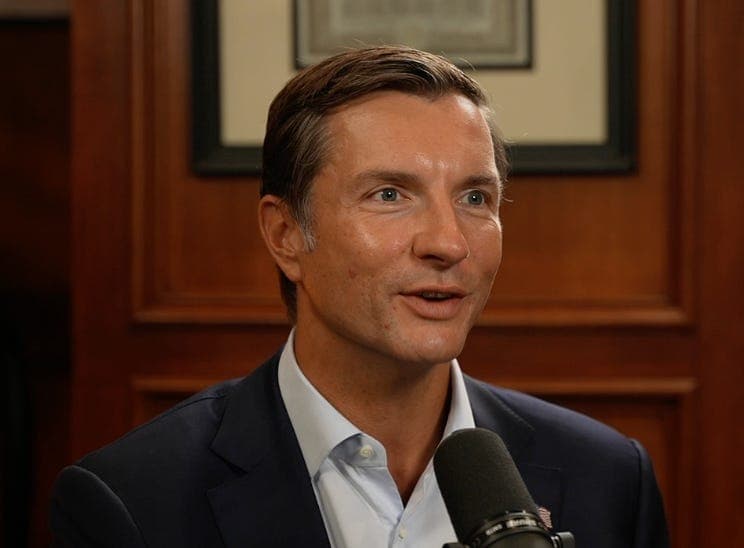
- Guest: Yitz Applbaum
- Focus: The transformation of Israel and the Middle East, personal anecdotes on entrepreneurship, venture capital, and archaeological discoveries in Israel.
- Theme: Optimism in the face of challenges, economic growth in the Middle East, and personal stories of cultural connection.
Key Points
Introduction to Yitz Applbaum
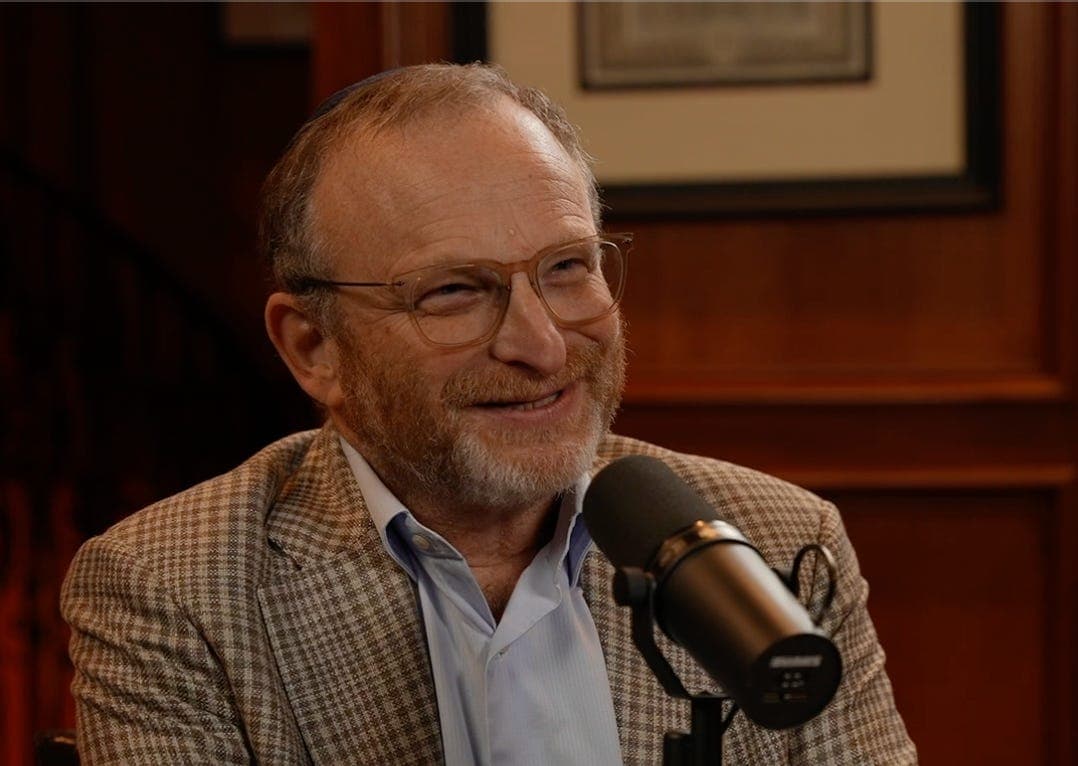
- Yitz Applbaum is an Orthodox Jew, venture capitalist, and philanthropist.
- Chairman of a genome sequencing company in Saudi Arabia.
- His background includes starting a banking software company and founding MizMaa Ventures.
Transformation of Israel
- Discussion on Israel's evolution from a nation of impoverished refugees to a global innovation powerhouse.
- Emphasis on necessity as a driver for innovation, such as advancements in agriculture, water desalination, and technology.
- Highlights the importance of Israeli startups and the shift towards a more strategic and market-driven approach in venture capital.
The Abraham Accords
- Explanation of the Abraham Accords and their impact on the Middle East.
- Enhanced economic and cultural relationships between Israel and Arab nations, particularly focusing on the UAE and Bahrain.
- The significance of people-to-people connections and building trust through trade and shared goals.
Cultural Insights and Military Influence
- Insights into Israeli culture such as military service, "chutzpah", and a bottom-up approach to business.
- Discussion on how military service fosters a culture of innovation and collaboration in the startup ecosystem.
- The importance of national service in fostering a sense of unity and shared purpose.
Economic Opportunities in the Middle East
- Discussion on the economic landscape in the Gulf Cooperation Council (GCC) and its potential for growth.
- The need for Arab states to diversify economies beyond oil and embrace innovation and technology.
- Encouragement for engagement in business and trade to foster peace and stability in the region.
Archaeological Projects in Israel
- Yitz’s role with the Western Wall Heritage Foundation and ongoing archaeological discoveries.
- Discussion about the significance of historical sites and their impact on modern identity in Israel.
- The connection between historical discoveries and contemporary cultural narratives.
Whiskey and Wine
- Light-hearted conversation about Yitz’s expertise in whiskey and kosher wine.
- Insights into the world of wine collecting and the cultural significance of these beverages.
- Discussion on how wine connects communities and enhances social experiences.
Optimism for the Future
- Yitz shares personal reasons for optimism, including family and potential growth in the face of global challenges.
- Discussion about resilience during tough economic periods and the potential for innovation and improvement.
- A call to embrace hope and collaboration for a better future.
Conclusion
- This episode embodies the optimism of American entrepreneurial spirit, highlighting transformative changes in the Middle East and the importance of cultural connections.
- Yitz Applbaum's experiences provide a unique lens through which to view the future of Israel and its relationships with neighboring countries, signaling a renaissance of cooperation and innovation in the region.
Key Takeaways
- Necessity Drives Innovation: Israel's challenges have led to significant technological advancements.
- Cultural Connections are Crucial: The Abraham Accords demonstrate the power of relationships in fostering peace.
- Optimism is Essential: Embracing hope in difficult times can lead to growth and improved outcomes for future generations.
Written by AI. May contain mistakes. Listen to the episode to check what was said.
Transcript
Automatic transcript. May contain errors.0:00You know, I'm in Saudi all the time. I've got nine companies there that I'm involved with. I'm chairman of a genome sequencing company. First Orthodox Jewish boy from Brooklyn who's chairman of a genome sequencing company in Saudi Arabia, right? So think about that. I have a set of kosher pots and pans at a great restaurant in Riyadh. So go imagine that. You have a set of kosher pots and pans waiting for you to help with that. Whenever I go, they take care of me. I love it. And things have changed here. Just in the last three or four years that I've been going, things have changed dramatically.
0:25More women in the workforce, more restaurants, a more modern dress, surely a much stronger entrepreneurial community, a venture capital community, LP community. It's bursting.
0:43Yitz Apelbaum is a Jewish VC, a rabbi. He's well-connected in Saudi Arabia, Mahrein. He's the chairman of the most important archaeological site in Israel. He has the very best whiskey and cigars of any of my friends. What can we learn from this international man of mystery? And what bottle of scotch will we open in this show? Excited to have Yitz Applebaum with us today. Yitz, thanks for joining. Great to be here in your lovely home and your lovely town. You're one of the international men of mystery, I have to say. I'll be at tables around the world. There'll be multiple people there from different backgrounds, a Texas oil billionaire, a finance leader, somebody visiting from Europe.
1:18And oftentimes, all of them will know who you are and have interacted with you. So you're very well known in a lot of circles. You run a venture capital firm. You have really good taste in whiskey and cigars. You're a huge philanthropist. Tell us a bit about your background. Well, first of all, thank you. I love hearing all those things, and I need to put them into my database and add a few of those things, but thank you so much, Joe. I started in Brooklyn. My dad was a rabbi. He was a rabbi for 52 years in the same synagogue, and my grandfather was a rabbi. Actually, pretty much died in his synagogue.
1:47He was at the same synagogue for 65 years, and I was destined to be a rabbi. In fact, I spent a year in rabbinical school, but I couldn't cut it. You know, the rabbi works really long hours, doesn't make that much money, and actually, I can say this. It's the most rewarding work in the world because you're helping people. But you couldn't afford good cigars and whiskey. You know what? Even then I knew I wouldn't be able to afford it now. And that was the greatest planning I ever made. And so I started as an entrepreneur and the story goes from there. And your first company was a banking software company that was acquired by Bank of America?
2:17Yeah, called Concord Solutions. We did credit card and mortgages online before there was online. And by the time we sold it, there wasn't online. So we morphed it into an online credit card company. And you were at Lightspeed for a while. And since 2000, you've really been focused on building and investing in Israel. Tell us about that. Why are you spending a lot of time in Israel? I started in 2000 after I sold my company. I worked for a couple of years for Bank of America as a senior vice president, building a corporate investment group. And my boss or the head of the division then was a Presbyterian, actually.
2:46He said, Yitz, I want to come to Israel. I took him to Israel. He fell in love. It's 1999, 2000. And I haven't stopped going back. I basically been there a week a month since the year 2000. Did you start going in the 90s a lot yourself? When you took them to Israel in 99, you already knew it really well? I knew the religious part and the historical part because I grew up Orthodox, son of a rabbi. And so I'd been to Israel numerous times and understood the part that had played in my historic from a historical context. But I knew nothing about business. The first time I landed, oh boy, I was asking the taxi drivers whom I can go see to get some good technology.
3:18Yet you're the founder and partner of Misma Ventures based in Tel Aviv. Tell us a little about it. Oh, sure. It's a firm I started with a partner, a woman named Catherine Leung out of Hong Kong. We're on our second fund. We've raised about$250 million. And we focus on the things that are strongest in Israel. What is Israel best known for? Cyber, digital health, fintech, cloud, software as a service, and mobility. And what we do is we do very early stage companies. We do builds. We start seed, pre-seed companies. What we do is we not only help them grow from a technology perspective. But my job more than anything is to help them go to market.
3:53How can I bring them to the Emirates? How can I bring these companies to the US? In the old days, Israeli companies, what was it, ready, shoot, fire, or fire, shoot, ready? Today, we don't invest in an Israeli company that doesn't have a design partner, that doesn't have a beta or an alpha customer, because how do you know what you're supposed to build? So the fund that we've built, Misma, where my oldest son Aaron is a partner as well, is to help these companies go to market as quickly as possible, leveraging the great technology. And you work with companies as well in Saudi Arabia and other parts of the Middle East.
4:23Yeah, sure. Absolutely. We do quite a bit in the Emirates. One of the great parts of the Abraham Accords and things that are going on in the Emirates, and in Saudi for that matter, is that there's an inordinate amount of access to markets and great companies. But imagine kind of like tech enabled. What Israel can help the Emirati companies is take their deep tech, their great tech, attach them to these big conglomerates that they have in the Emirates and help them sell in the rest of the world. And I spend a lot of my time doing it. It's great for the peace accords, but it's great for our shareholders, which is most important.
4:52Awesome. So, you know, my family, my mom's side is Jewish and they came over relatively poor to the U.S. and were somewhat successful. People who went to Israel mostly came as impoverished migrants. A lot of Jews, very poor, a lot of them fleeing, obviously, the Holocaust and fleeing what was going on in Europe. How did an impoverished nation of refugees turn into a top 30 global economic power? What do you attribute it to? Well, necessity first and foremost. I can give you many, many examples of how in Israel, because they had no water, they needed to figure out how to desalinate water. Today, Israel is one of the net largest exporters of water in the world.
5:28The same is true now, believe it or not, for gas. We're actually exporting gas. We found some gas in the Mediterranean. That was useful. Right. Very, very useful. Maybe a little lucky too. But the whole process really started around agriculture. Most of the people who came from Europe, my grandparents who came from Eastern Europe, came there in the agriculture, in banking, of course, but really agriculture. And Israel, for the longest period of time, was the largest export of oranges, jaffa oranges. You grew up on them in the world. And so the concept of not having a population that actually could buy what you make, but you had to export, started the whole process in Israel.
6:02Everything we make is not for us, it's for the rest of the world. And everything we do has to be driven by necessity. There's obviously adversity was a big part of it and necessity. Dan Sinor, I know who's a mutual friend, he wrote Startup Nation. He attributed it to four things. I'm curious what you think about it. One of them is bottom-up culture. One's military service. One is maybe chutzpah. And the last one is like the global network, the interconnectedness of Jews. What do you think of those four? Well, I call it the 1 % Moses. There was a period of time, 1 % Moses, 99 % business. For a period of my life, I actually sold Israeli software in the U.S.
6:35And I couldn't get anyone to take my call. So I said, would you rather the UJA called you or me call you? Because remember, you can write off 50 % of an investment when the UJA, the United Jewish Appeal calls, you can only write off 33 % for charity. But I used that 1 % Moses to get in the door. And then the rest I sold. And the way we were able to convince people, now see what the opportunities are in Israel. So the number one, it was really leveraging the diaspora Jews was a very big part of it. You know, Dan talks about it. Everybody talks about it. But Chutzpah and the most famous story of all of them is when Intel came to Israel.
7:07Today, Intel is the largest, one of the very largest employers in Israel. Many of the chips are built there, both from an engineering perspective and from a production. The president or the CEO would come and they would call him as first name basis and challenge and attack him in a room without ever having met him before. And the senior mission - That is the culture in Israel. That's the culture in Israel. And that's how they get things done because they think and they challenge. It makes the middle management really hard because people don't like being managed very much. You want to be all the way at the bottom or all the way at the top if you're in Israel?
7:35That much I can tell you. I've done them both. Any more wasps there? They have, sorry, stereotypes. Even I know that. That's okay. You're allowed to make fun of wasps these days and we're Jews, so it's all safe. Israel has less than 10 million people, produces more textiles per capita than almost any other country in the world. Are there things we can learn from Israel from all this? Like, obviously we can't all have a network of global Jews helping us. Does the military service or other parts of the culture, things that can be copied? Yeah, I think there are a lot of things we can learn, but I'd want to start with this because This is a place where I think America and the rest of the world can also take some great guidance.
8:07If you're at 8200, of course, which is the most famous of the Israeli military units in tech and in cyber, although there are many, when you leave the military, believe it or not, you're actually encouraged to take that technology with you. Now, I don't mean if it's top super secret, but they want you to take that technology. What happens? You build a company. Look at Checkpoint. They were the original folks, three guys out of the 8200 back then. They took that technology and they built a$20 billion company. So not only has it funded the treasury, but there have been hundreds and hundreds of companies that have been spun out of that.
8:38Look at Mobileye, right? Bought by Intel for$16 billion, just went public for$22 billion. The leading company in the world driving autonomous cars. That came out of necessity from the military. When they left the military, they took it. And look what they were able to do with it. So I think working more closely with our militaries is one major lesson to learn. It is interesting. There's this culture of national service that everyone is part of it, too. Does that do something positive for the culture? Sure. You know, I like to think, I know there's a company in your portfolio called Affinity. You know, I passed on unfortunately right at the beginning, unfortunately.
9:10It's this neural network, right, around know everything that you know and how do you cut connectivity. Think of the Israeli military that way. You, through not six levels of separation, but through one level of separation, at most two can get to almost anyone. So that's one thing. The second thing is, is a natural trust. Number three, there's sort of like a pecking order almost. If you're in the Air Force, we're hiring you. I don't care who you are, where you came from, because you got to that level. There's a certain level of dependability and where you know that that person has certain levels of greatness in areas that might be interesting to you.
9:41So there's a certain knowledge going in who you're dealing with. But I think maybe the most important, and this isn't talked about a lot, it's called in Hebrew, which means I care. And so I'm not going to go out there and try and do some harm to you because you're a competitor. Yes, I'll be competitive. But because we might have served in the same military or your father and my father served in the same unit. There's a level of respect. Of respect that, yeah, that you can't and you don't see anywhere else. But that's one of the things that drives the success in Israel. And we see it over and over in our portfolio.
10:09I like that principle. And it feels to me like a very important Jewish principle in general. You might say Judeo-Christian principle we're supposed to have in all Judeo-Christian societies is that man is created in the image of God and we care about each other. There's something that's part of God in each of us. But it seems like for some reason that it comes more to the fore when you have that level of respect, I guess, and that closeness in society. Correct. In the common background, common goals, that's something that we can all can learn from. We have a common goal. We know where we're going.
10:36We know where we came from. And I think that's something else that's very, very important as well. Speaking of knowing where we're going and where we came from, let's talk about the Abraham Accords a little bit. So Abraham was the father of the Jews. He's the father of Yitzchak. Which is my name. your name. And he was also the father of Ishmael, who in both Islam and Judaism, that was the father of the Arabs, right? That's correct. Of course. Why are these important? What are the Abraham Accords? What's happened? What are you doing around it? Well, so first of all, I think if we look at where the world is today with all that's going on in certain regions, from a business perspective, but also from a personal perspective, there was extraordinary growth opportunity in the Middle East, in the GCC, in the MENA region, 1.4 billion or 1.5 billion people.
11:19Plus you have all that. 1.5 billion people in the region. That's more than I realized. Oh yeah, yeah. And if you add Africa to that, it's even larger. But if you take all the Muslim states, Malaysia and Indonesia, it's a - They're all kind of tied into each other economically. Oh, very, very much. And what the Abraham Accords really did was open that up from a number of perspectives. First of all, there are people I could never talk to. And now I can sit around the table and talk to them as cousins or brothers. We understand each other's history. We know where we came from. Why would they talk to you now and not before?
11:47You know, unfortunately, sometimes things happen at leadership levels that doesn't necessarily trickle down to the people. Now, the leadership, I must say, of Bahrain, United Emirates, the UAE, took the bold move to create a platform for peace. This is not the end all and be all. That's G to G. But really, where the essence of peace is, and where I'm feeling it the most is B to B, because that's what drives commerce and that's what drives growth and economic benefit, but also the P2P. I would say the most important part of all of this is the person to person, the people to people. One of my first visits when I went to the UAE was actually an organization that does early childhood development under one of the family's auspices.
12:29And they were more interested in understanding how Israel deals with early childhood education than how they do cyber. Because they actually wanted to learn that lessons, what's working there. Yeah, cyber I can buy from Palo Alto. Don't get me wrong. Cyber is very, or from Austin, sorry. Cyber is very, very important. But what's really important is how do we see eye to eye on things? And that's some of the greatness that I think is going to, and make sure that peace stays. That's fascinating. One of the things I understood that Israel did over the last few decades is it quietly went around and tried to help all these states with some of their problems.
12:59So it would work with the royal families to help them with their water problems or an energy problem or other operational problems and kind of built up trust over time. Did that all contribute to this? Like, why was this able to be brought about? Well, so the answer to that question is absolutely yes. And I'll go a little bit deeper. Also, hosting families and hospitals in Israel, you cannot imagine how many stories I hear of people who come to Sheba Hospital from the Arab states, not in the last 24 months, in the last 25 years. That made a very big difference. And also sharing of intelligence.
13:28As you can imagine, Joe, from your background, And there's an enormous amount of G2G and sharing of intelligence. A lot of the bad guys are trying to take down these regimes from an extremist perspective. Israel can help them. Without a question. Without a question. We can help each other, and we will help each other going forward. All the states in the region, all the nations in the region, but that contributed. Plus, there was a lot of on the ground, behind the scenes. And then you had great bold leaders like Yusuf Oteba, the ambassador, the emirate ambassador to the United States, and Ron Dermer.
13:58These people helped to bring peace about. So these people were working, obviously, with Jared Kushner very closely under our former president, who's become quite interesting lately, but that's not a topic we're going to talk about. But actually, on that topic, how did the conventional foreign policy establishment miss this opportunity? They've been focused on things around this for so long, trying to do two-state solutions, trying to do other things. They completely missed this, and suddenly it seems like a very different approach was able to work here. What was that different approach? What happened?
14:22Well, first of all, they were trying to solve the wrong problem, and I think if you're trying to solve the wrong problem, you're never going to get the right problem solved. There's no question that the issue and the solution to the Palestinian people will be found, especially with all that's going on in the region. But really, economic prosperity is what drives so many people today, especially in the region, especially where we've come from and they've come from. And this was approached really from the perspective of defense. There was a lot, a lot of stuff that went on behind the scenes around airplanes and sharing of information.
14:52Jared and his team led with that, certain compromises. Defense and prosperity. Yeah, thank you. Those are really the two things I think that drove this and reasonable people sitting down together with no preconceived notions about what it was going to look like. And if you look at how it ended up, you never could have imagined it being the way it was if you looked at it from the old perspective. It is very interesting because I guess if you're in the State Department, the State Department, you tend to come from a very left view of the world. You're not thinking about money and economics and business.
15:20Probably none of these people have done business in their lives for the most part in the State Department. And you're probably not even thinking as much, You should be thinking about defense, but it is more of like a business and hard-nosed. Was it a more realist view of the world? I think very much. But I'll add something to that, Joe. You're most probably, unfortunately, not thinking about family values. And when you look at the role that, and this is, I've been to UAE 20 times and to Saudi as many times, if not more. When I meet with people in this region, in the region, they want to talk about their family.
15:48They want to talk about the Shabbat. They want to talk about what's important to the growth of their family and of their nation. And we're Zionists and they're Uaetists, whatever the right word is. But the idea is that people care dramatically about their history and where they're going. And you don't always find that in the political world, unfortunately. So we've seen this amazing, really, renaissance of relationships with Israel. What are the major countries? It's doing a lot more with Uaet, doing a lot more with, is it Morocco, Bahrain? Morocco, Bahrain, and the Emirates are the three places that are leading.
16:18Chad is also in that. I would say that Morocco, a little bit less. They might have a little less technology, so there's a lot going on in agriculture. But if you look at the Emiratis and you talk about Bahrain, I was just there a couple of weeks ago. Bahrain is a mini Saudi or a mini UAE. You can meet all the important people there in three days or four days, and you can do things really quickly there. Of course, the Emirates are much bigger and more complex, but they are open for business. Let's teach people a little bit. I think a lot of our listeners maybe don't know too much about what these places are.
16:47So the UAE, there's seven Emirates. Dubai is very well known because they opened up as a free charter city. I think the Emirate with the most oil is most very well known by financial people. It's probably Abu Dhabi. Because they have giant sovereign wealth funds. They're very well run. These people manage trillions and trillions of dollars very well. And Bahrain is one, is a city state? Yeah, it's its own country. But believe it or not, it's an island. It really is a very small island. Each of these places, of course, not Saudi, but each of these places have relatively small populations. three uh qatar has 300 000 local citizens then they bring in a few million other people from india from the region that's exactly to live there and work with them exactly right and so they're serving small populations but they have a lot of money and what they want to do is not only make their lives better which is very important but they want to try and export all the things that they're building a to get off the oil economy it's very very important for them but secondly to contribute to the world and you see it so much in the region what can we do to make the world a better place.
17:46These people have so much wealth and money from the energy and from the oil economy. They're trying to transition out of it. You know, I found it really interesting. UAE obviously learned a lot from Singapore, a very well run small state. They're clearly learning a lot from Israel, but secretly before openly now. You know, it's fascinating to me when I go there, I meet such competent people now in the UAE from Britain, from different parts of Europe. And it almost seems like the civil servants in England, they would go run the world in the British Empire. And they actually had quite competent civil servants, apparently, for a couple hundred years.
18:17It seems there's nothing for them to do anymore. And so it seems like a lot of the most confident young people out of Cambridge and whatnot now are recruited by these places like the UAE, and they're helping run the world from there instead. Well, you've had a lot of nails on the head. First of all, the tax structure there is extraordinary. You can't underestimate how important that is. If you're an Israeli and you want to go move to the U.S. with your family, it could take you a year, two years to get all the visa. If you want to come work or start a company from Tel Aviv in Abu Dhabi, Dubai, you can bring your whole family and all your friends.
18:46Maybe it'll take you three or four months. They've set up an ecosystem there, governmentally and societally, to accept immigration in a huge way. So you have a talent pool running, you have a tax pool running there. There was an article in the paper just yesterday that the Dubai government is going to spend$7.8 trillion over the next 10 or 15 years to become the number three leading economic center in the world. Well, I'm packing my bags. You know, it's a very beautiful place to go. The beaches are beautiful. Hope you'll still visit us in Texas, yes. Texas who? Sorry about that. You live between Oakland, California, and Jerusalem right now.
19:22That's your two biggest bases. It's a good hub. Believe me, it's a good life. So what does the Middle East look like in 10 or 20 years? Is Saudi going to jump in on this whole thing as well? It seems like they might be close to doing it. Like what's going to happen the next decade in the region? I really hope so. If you think about it, Saudi Arabia is the oil tanker or the aircraft carrier. Slow to move, but when they move, watch out. And I think, obviously, the Emirates has great access to that 1.5 billion people I was talking about. But Saudi really is the leader in the region from that perspective.
19:50And as Saudi goes, the rest of the Arab world goes. And I think that's pretty well known. It just strikes me that a lot of people in the region really admire MBS and admire what he's done in the last several years. You know, there used to be very extreme religious police there. I visited twice in my life. And when I went there several years ago, you had to eat separately from other people. If you're with a woman, you have to go into the kids and women's section and women have to be totally covered up. And it felt like a very oppressive environment, frankly. And then when I was there more recently in the last couple of years, the religious police were gone.
20:21Things had become a little more Westernized. It's still a very different society, but it seems like it's kind of being embracing working into the modern age. And I think MBS has a very, very tough neighborhood. He has lots of people trying to kill him. He has a Game of Thrones going on. We've all watched these shows like Game of Thrones. It's very intense what's happening in the background. I think it's hard to judge as an outsider the types of things he has to deal with. Now that said, obviously there's no moral system in which we hopefully can agree with some of the things that have been done to people like Khashoggi and others.
Read the full transcript
20:47But at the same time, I feel like we don't have all the facts or the context. And maybe overall, he's very good relative to other things. So I'll give you two data points. Well, surely the whole issue around women, I'd say, you know, I'm in Saudi all the time. I've got nine companies there that I'm involved with. I'm chairman of a genome sequencing company. First Orthodox Jewish boy from Brooklyn who's chairman of a genome sequencing company in Saudi Arabia, right? So think about that. But I have a set of kosher pots and pans at a great restaurant in Riyadh. So go imagine that. You have a set of kosher pots and pans waiting for you to help with that.
21:16Whenever I go, they take care of me. I love it. And things have changed here. Just in the last three or four years that I've been going, things have changed dramatically. More women in the workforce, more restaurants, a more modern dress, surely a much stronger entrepreneurial community, a venture capital community, LP community. It's bursting. It's very interesting. And from a realist perspective, everything is obviously just seems like it's gotten much better. It's playing a really good role in the region. They're much friendlier towards Israel. I think they let flights sometimes go between them.
21:44No, not sometimes. You can fly over Saudi. And I've known a person or two that touched a goat in Amman, but I won't say who that was with. So yes, it's easier and it's getting easier. It is interesting because the American, they were rightly angry about some things that, again, I don't know if we have full context on, but then even Biden came and kowtowed to him for the realist perspective as well more recently. It's unbelievable. Yeah, it really was unbelievable. Well, hopefully that goes the right direction. I want to ask you a question about Jerusalem and speaking about the region. You're the chairman of the Western Wall Heritage Foundation.
22:14It's a very important place to me and to all Jews. We have the ancient temple and there's like one part of the temple that's still exposed is the wall in the west that Jews have access to and would go pray there. And you guys did this crazy archaeological project. I think this is the coolest archaeological project in the world. So if the wall is like this, this is the top part. Like you're digging under so we can see the bottom part of the wall from the top. You're just going to remove the whole part. You're finding all sorts of things from the Ottoman Empire, from the Roman times, from King Solomon times.
22:41King Solomon. Those are our latest finds. There's coins. There's mezuzahs in the wall from 2 ,400 years ago. Or these places where there was marked for mezuzahs. Tell us a bit about this project. So, you know, they say, and I don't agree with this, but people say that charity begins at home. I'm not sure if that works or not, but for sure they say it. Well, if you think about the Jewish people, but not just the Jewish people, all three major religions, the essence of where we came from was Mount Moriah, Haramoriah. That's where the world was created. That's where the binding of Isaac and Ishmael, by the way, happened on the Temple Mount.
23:11But what really happened on the Temple Mount that's relevant to this project is that God's Shechina, His soul rested, metaphysically rested on the Temple Mount in what was called the Betamikdash or the Holy Temple. First one 2 ,800 years ago, destroyed. The second one, God willing, the third one will come. But unlike the conquerors of Mexico who destroyed the Aztecs, at the tunnels, everything was kept. Everyone respected the generation from before. So what we have is 2 ,800 years of living history where each room was filled in by dirt, and then the next generation was built on top. Built on top.
23:50So Jerusalem's like a city that has layers built up over a few thousand years. In fact, there's a room there that you know we call the Hall of Generations, where you can see from the time that King Solomon walked and where he most probably used a ritual bath, all the way up to modern times. The hall was cut by a British explorer 150 years ago. Exactly, yeah. The classic British thing to do is to just cut right through it. Start but not finish. There you go. You have King David's palace. That's in the city of David. The city of David, right next door to the temple. Less than a quarter of a mile.
24:16And that's where King David came to capture the Canaanites, right? And then King David came and said to his son, King Solomon, go build the temple. We have, we see the stones from the very time that King Solomon lived. And what's amazing to me is you go under there, you're digging things that haven't been touched in thousands of years, and you're finding old little coins, old little, I think there's a stamp of a scholar that worked for King David, and we know this from the Bible, or there's all sorts of things. It's a great story. It's a great story that during the time of Obama, this happened, we actually found a coin that had the name Netanyahu on it.
24:50Now it wasn't the exact same Netanyahu. We gave it to then prime minister, current prime minister. He took that to the White House in his first visit and said, this is a true story. You may say, President Obama, that we don't have a historical right. Aristarchal right only started in 1948. This was my great, great, great, great grandfather. It sits, by the way, in the prime minister's office. This was a general in the Torah. It was a seal, I'm sorry. It was a seal from a general in the prophets, in the Bible, that we found 2 ,700 years ago. Yeah, exactly. It's where one of the governors lived in the time right after King Solomon, where we actually found the coin.
25:25Think of that living history as you work on a project. Think about where we've been and where we're going as all three religions, by the way. Well, and you've built some really beautiful things underground there. We have the time of Herod, some amazing old fountains that you can see when you're down there. You guys built an extraordinary synagogue right next to the Holy's part of the Western Wall. Right, the first synagogue. Well, in a thousand years, that's so close to the Holy of Holies. Imagine praying on the high holiday on Yom Kippur, five meters from the Holy of Holies. Right, today it's incredible.
25:54It's a beautiful place. And it was very special to be able to dedicate a little piece of it to my late mother and my daughters as well when we were there. One of the great honors of our whole family, because the Western Wall, the Kotel is a family. Really one of the great honors for our family since the beginning. It's getting late in the interview. I want to transition to talk about whiskey a little bit. You're one of the world's experts, I have to say. So I brought... Oh, thank you. Glasses here. Beautiful glass. So you took me and 10 others, which is something you do often, to... There's a distillery in Scotland that Diageo owns, where they make all the very best stuff in the world.
26:28I guess they, there used to be about nine or 10 of these separate, really famous Scotch places. And they bought them all together. And they bought them all. Yeah. It's capitalism. It is what it is. And it's working, by the way. It's working for them. I think they're doing pretty well. Oh, absolutely. So, so we went there and this is, and so all these places, they'll have thousands of old barrels that they keep at their old distillery over the last past decades of their very best stuff that they'll age much longer. They keep around. So we went around and tried a lot of them. It was very difficult.
26:53And we picked our favorite. Is this one of your, this is one of your favorites? This is one of my favorites in the whole world. And we tasted actually 20 different whiskeys, including some of the rarest in the world. And we chose this barrel that made these bottles. And this is, you know, if you ever hear farm to table or something like that, this is true farm to table. Isn't that a stunning bottle? This is number 370 out of 544. Classic Yitz, you pay a certain price for the barrel and then you just calculate how many you get. And you got like 140 more out of this one than expected. Yeah, but in the last one I got 30 less.
27:25So it ends up equaling out over time. This is a good one, though, so why don't I give you a little bit? Thank you. How would you describe this scotch for us, Yitz? First of all, you know, there are several different regions. This is an Islay. Islay is the region where some of the peated, the most peated and smoky whiskeys come from. This particular whiskey is very rare and it's very unique because it was a single barrel. I love single barrels. Blending is great, but single barrel is sometimes, in my opinion, is just more honest and more is a greater expression of what you're drinking. And this was in a sherry butt first filled barrel from 20, now almost 30 years ago, but 28 years ago.
28:04I bought it when it was 26 years old, let it sit for two more years. And then we bottled it to perfect, really perfect perfection. I have to say L 'Chaim.
28:17It's very good. It's a very peaty scotch, but it's very smooth for peaty scotches. Very. It's a decent alcohol content. 50.6%. They tend to come pretty high. A lot of people say you put a drop of water in and it brings out more of the flavor. Do you do that? I don't. Yeah, I don't either. I sometimes, if there's an abundance of it, will want to try. Or when I'm tasting different barrels than I might, because I actually just did a second barrel called Caledonian, a 48-year-old of which you're getting some bottles. And it's so high proof that actually when you add a little bit of water to it, without the water, it tastes like single malt.
28:50With the water, it tastes a little like bourbon. So I'm almost getting 2x for my money because a little bit of water. But in general, I don't add anything to it. You're also one of the largest kosher wine collectors in the world. Tell us a little bit about that. So you do. So this is kosher regardless. Or whiskey's kosher. Anything that's not grape-based is automatically kosher. For wine to be kosher, it's harder. You've got to have more juice involved in the process somehow. It's way more complicated. But I grew up with my dad, as I shared at the beginning, was an Orthodox rabbi. And he was kind of at the forefront.
29:16In those days, there was three kosher wineries, maybe five. They weren't very good. And they weren't very good. But as they got better, he kind of kept up with the pace. Today, in Israel alone, there are 400 boutique wineries, 400, which I'll add and admit I've tasted from most of them. Are they mostly kosher? 70 % are kosher. I write a wine column for something called the Jewish Insider. We have 100 ,000 subscribers. Every Friday, I do a wine column. When I write a wine column, the wine sells out because American Jews are - That's pretty good. Yeah, that's pretty good. We should put some software on there.
29:46I know.
29:50When Jews, especially they've moved into being, you know, have more means or they became more orthodox, they noticed either they had drunk non-kosher wine before. Well, they noticed that everybody's having a great time drinking wine. Why can't we? So as an example, and you know this very well with, you know, my good friend Ron Fisher, we do a barrel of Harlan every single year in the Napa Valley Reserve. So I have a vertical from 2004 to 2020 of basically of Harlan wine kosher. Harlan is one of the very, very best Napa Valley wines. And the fact that you have kosher Harlan is a very impressive high bar.
30:21It's a lot of people think of this whiskey and wine as a sport just for the ultra wealthy. Obviously, the good stuff can be pretty expensive. Is this something that people can start getting involved in or collecting without having extreme amounts of wealth? Well, I'll start this way. If I had a nickel for every person I taught to drink, believe me, I'd be a wealthy guy. And you don't start with my Lagavulin, that's for sure. It's a journey and it's a process. And especially in the single malt space, but in the bourbon area as well, there are so many, so many extraordinary single malts in bourbon that are$50 a bottle,$40,$80.
30:53You have to start by developing a palate profile. You have to start by understanding what you're drinking. So much of this is about context. Where did it come from? What's the story? who you're drinking with. I think it's important, Joe, to talk about the fact that I've had some of my best drinking experiences sitting with you in so many different places in the world. That's what makes you remember the whiskey more than anything else. So having context around what you're drinking, who you're drinking, where it came from, the price point is very important. And then as you develop a taste, and this is true in single malt, but of course it's true in wine, as you develop your palate, like in everything, you want to ski better.
31:27You want to do everything usually you want to get better and better. The beauty of single malt is that there's, well, sky's the limit actually. And I've gotten pretty close to the sky, you know? So you can get, so you can get good stuff for$50,$100. Oh, absolutely. It's like a$100 sort of thing. Luggable and 16 year old, right? Just like this. It's a great whiskey. This is a 28 and this happens to be a really good year, but it's a great whiskey at 16 as well. And you can do it. What's an example of a$5,$10 ,000 bottle? This is like a$5 ,000 bottle. It's about$5 ,000. What's like a$10 ,000 bottle?
31:55And why does it cost more? How's that work? Right. So I love going for the distilleries that are no longer in existence. There's a number of reasons I like doing that. First of all, believe it or not, most probably in the olden days, they did things better than they do today, number one. Number two, if you want to buy something that's 40 years old or 35 years old or 30, you can't buy it from a distillery that started a year ago, obviously. So you need to be able to go back in history. Now, since many of these distilleries were closed, it's a little known fact that this whiskey was used as blending whiskey until 20 years ago.
32:24When Diageo bought Brora, which is what we're going to talk about in a minute, they bought Brora and they bought other of these distilleries, Port Ellen, one of the most famous of them, it was used as blending whiskey. Alex Karp, who started Palantir with me, Port Ellen is his very favorite. And that used to be a blending whiskey too, right? That's correct. Today, they do a barrel or two every year. It starts at 10 ,000. So I would say if I had a couple of favorites, it would be Port Ellen. That's like the 30, 40-year-old stuff. These are all 35 and above. They're all one barrel, two barrels. Very rare, but beautiful taste.
32:55But I'd say my favorite is Brora in the northernmost part of Scotland where the North Sea is. I turned 40 last year. You brought a really good one. We got some more of those coming. A 1982 40-year-old. A 1982 40-year-old Brora. That was good. And if you're going to smoke a favorite cigar with a whiskey, what whiskey was cigar? Do you think right now? No, it's going to have to be a Bejique. It must probably have to be a Bejique 56. I like a big ring cigar. Cohiba Siglo 6 is one of the greats. It's another one. I had a meeting with the mayor of Jerusalem and Arnold Schwarzenegger. There's about 15 of us in the room.
33:30And when everyone left, I said, can I have a moment alone with the governor? And everyone said, how could you do that? Fine. I got a moment alone. I said, okay, what's your favorite cigar? And he said, Mani 2. So talk about price to performance, a$20 Cuban cigar. His favorite, he said it was sweet. Did he say that because he's a politician? No, no. Mani II is his favorite cigar. It's a great cigar. So a BG56 can be$300 and a Mani Torpedo can be$25. It is a good cigar from Cuba. Yeah, I like that. It's hard not to be optimistic drinking this, yet I want to end on a note of optimism. What are the best reasons to be optimistic about the future?
34:01What makes you optimistic? Well, I can say in old age, a couple of things. First of all, I just had my first grandson named after my dad. So that makes me very optimistic. Secondly, I unfortunately or fortunately, have lived through 1999 and 2000. I've lived through 2008. I lived through 20, you know, the first part of COVID. And we're in a very difficult period now. But it's in these difficult periods that I think we get strongest. If you look at what happened after the big crash in 2000, surely what happened after the beginning of COVID, we got stronger, we got bigger, we got better, we got more flush with money, we got more passion, more drive.
34:35And that's what's going to happen now. We're in for some difficult economic time, inflation, etc. Maybe some worse even than that. But our future is really right ahead of us from all the things that we've been building on for the last 50 years. It's going to make the next 50 years. And surely in the area of digital health, in health, and the genome sequencing, I've got very involved in that space of late, miracles. So I'm encouraged by my grandson. I'm encouraged by Peace in the Middle East, which is here and coming, opening of new markets. I'm encouraged by the fact that we're a little bit nervous now around the political system.
35:08It's only going to get better and stronger with some of the things that you're doing in Cicero and some of the other things that you're doing. So why not be optimistic? I hate the alternative. Thank you. It's your great, great American and great citizen of the world. I really appreciate you joining us. Thank you. It's been a real honor and a real pleasure.
From the publisher
Yitz Applbaum is a philanthropist, international bon vivant, and accomplished venture capitalist specializing in Israel and the Middle East. He began his career building a banking software company (acquired by Bank of America) before joining Lightspeed Ventures and later founding MizMaa Ventures. In this episode, he discusses how Israel transformed from a nation of impoverished refugees into an innovation powerhouse. Looking ahead, he explains how the Abraham Accords are reshaping the Middle East economically and culturally — Yitz, an orthodox Jew, is currently Chairman of a genome sequencing company in Saudi Arabia!He also expounds on some of the most important recent archeological discoveries in Israel, given his role on the Board of the Western Wall Heritage Foundation. Moreover, Yitz is a prolific collector of whiskey and Kosher wine — we open our favorite bottle of scotch in this episode!
Thanks for reading Joe Lonsdale! Subscribe for free to receive new posts and podcasts.
This is a public episode. If you would like to discuss this with other subscribers or get access to bonus episodes, visit blog.joelonsdale.com