In short
Podcast Summary: Joe Lonsdale - American Optimist
Episode 53
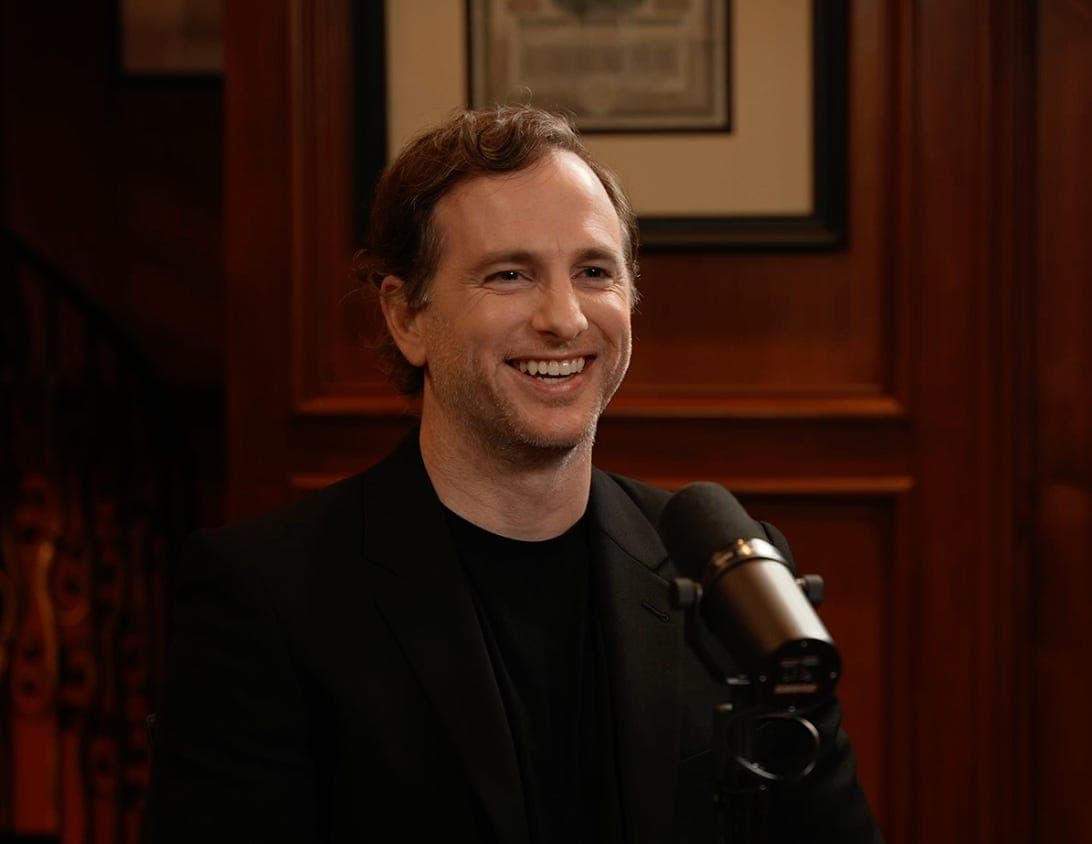
Airbnb Co-Founder Joe Gebbia on Transforming the Hospitality Industry and His New Venture Samara
Episode Overview In this episode, Joe Gebbia, co-founder of Airbnb, discusses his entrepreneurial journey, the origins of Airbnb, and introduces his new startup, Samara, which focuses on innovative housing solutions. The conversation also touches on his philanthropic endeavors and views on nuclear energy.
---
Key Concepts and Discussions
The Birth of Airbnb
- Genesis: Airbnb started as a means to generate income during a financial crunch when Gebbia and Brian Chesky needed to cover increased rent.
- First Guests: The first guests were treated to a unique experience featuring airport pickup, breakfast, and local tours, which set the tone for Airbnb's community-oriented approach.
- Challenges of the Sharing Economy: Gebbia discusses the initial skepticism they faced about their business model, reinforcing the concept that necessity drives innovation.
Samara: A New Venture
- Overview: Samara aims to transform how homeowners use their backyards by offering Accessory Dwelling Units (ADUs).
- Product Launch: The first product, named "Backyard", provides versatile living spaces for family, productivity, or rental income.
- Streamlined Process: Samara handles the entire building process, making it simple for homeowners. This includes permitting, utility hookups, and installation.
Innovative Housing Solutions
- Market Trends: Gebbia notes significant demographic changes, such as the rise in multi-generational households and increased remote work, which Samara is designed to address.
- Community Development: The potential for community-oriented development using ADUs is discussed, highlighting government support for these initiatives.
Philanthropy and Airbnb.org
- Origins of Airbnb.org: Initiated in response to Hurricane Sandy, Airbnb.org connects hosts who can provide temporary housing for displaced individuals.
- Global Impact: The organization has responded to various crises, including the refugee crisis from Ukraine, demonstrating Airbnb's commitment to community support.
Views on Nuclear Energy
- Changing Perspectives: Gebbia shares his shift towards supporting nuclear energy, recognizing it as a critical solution for climate change and energy needs.
- Innovation in Nuclear: The discussion includes advancements in nuclear technology, such as small modular reactors that are safer and more efficient.
---
Key Takeaways
- Creative Problem Solving: Gebbia attributes much of his success to the ability to think creatively and adapt to challenges.
- Community Connection: Both Airbnb and Samara emphasize the importance of community, connection, and providing value to users.
- Importance of Optimism: The overall narrative encourages a more optimistic view of entrepreneurship and innovation, particularly in addressing societal challenges.
---
Conclusion The episode highlights Joe Gebbia's innovative spirit and commitment to transforming the housing market while also making significant contributions to community support through Airbnb.org. His evolving views on nuclear energy represent a broader shift towards sustainable solutions for the future. The discussion ultimately champions optimism in the face of challenges, positioning entrepreneurship as a key driver for positive change.
Written by AI. May contain mistakes. Listen to the episode to check what was said.
Transcript
Automatic transcript. May contain errors.0:00I'm often asked in all of the trials and tribulations of our company, all the times when people said, no, I'll never invest in that, that's crazy, that's weird. people often ask, well, why did you keep going? And it's because we had a firsthand experience. Like we saw something that weekend that others just hadn't seen yet.
0:26My friend Joe Jebbia famously started Airbnb with Brian Chesky. I just found out from this interview that he started the basketball team at RISD, which explains why he always crushes all of us in basketball. He also played apparently the most famous prank at his high school, which you'll hear about. Excited for you guys to meet Joe and hear about his entrepreneurial journey. Joe, thank you for joining us today. Joe, it's great to be here. Joe, you were the co-founder of Airbnb and Samara. You're still chairing Airbnb.org. What are you doing now? What's Samara? Why is Backyard the first product?
0:54Well, it's exciting to be here, Joe, and to share some stories with you about the past and the origins of Airbnb and about the present with Samara and my next venture. So Samara is a new company that's reimagining how people live in the future, starting with the home. And it actually started as an innovation team inside Airbnb. We spun it out last year. I brought in a co-founder, Mike McNamara, and we started an independent company. And you guys are building ADUs, accessory dwelling units people can buy at their homes. They can have guest rooms, they can rent them out. That's right. That's right.
1:27Our first product is called Backyard. Think of it as a little home designed for the next chapter of your life. as we see new ways that people are living. We see that new ways are people relating to their home. We see use cases of people needing to house family close by. Use cases of wanting to be more productive working from home. Use cases of wanting space to rent out to earn rental income. And so Backyard facilitates all of these. So it could be an office that you can sleep in. It could be for your in-laws. It could be to make money on. What are these costs? Like how expensive is it to do this uh well so the way it works is you go to smart.com and you can configure your backyard unit kind of like you configure a tesla online so we get the order and we handle everything you know we've learned over the years that uh the home building process can be fairly complicated and cumbersome for the average homeowner so we decided to take on everything you do it all we do it all we make the whole process really simple so for the homeowner we handle everything including the permitting, the site serving, the utility hookups, the factory fabrication of the unit, the delivery and the installation.
2:35Pretty awesome. I like the Tesla reference. You're on the board of Tesla now too. I am. Yes. Yes. Great company. But Samar has been really fun and exciting to take the learnings from Airbnb and how people share space with each other and translate that into a physical good. You know, we're, we're factory building these homes with all the precision that you get from, from factory built. That's a different operating thing than Airbnb. I've never actually hired people to build stuff before. Just a little bit. Just a little bit. No, it's been really great. My co-founder, Mike McNamara, was CEO of Flextronics for 12 plus years.
3:06So he's built stuff before. He's built a lot of stuff before. And so it's a great combination of us. We've got an amazing team working out of the Bay Area. Are you delivering units yet? We are. Yeah. We launched in November. And we've taken a lot of orders and we're in production. Amazing. So it's just really fun. You know, like people's values towards their home have shifted, especially during COVID. 58 % of Americans spend at least two days a week working from home. One in five of every household across the United States has two generations living together. Wow. These are big changes and shifts in the way that we live and, you know, purpose our home.
3:46And so Backyard's really just a tool and a space to facilitate these new ways of living. Does anyone buy two of these? Is that a thing or is usually just one? Well, we actually have an emerging use case of community development. And so developers have been emailing us and reaching out to us to say, hey, I've got a few tracks of land. I want to develop it. I would love to do an ensemble of studio one bed units on the land. And what's great is that governments are getting behind this, too. As you know, you did a lot of work in California. I think both of us are involved a little bit in wanting more housing in California.
4:22Yeah. Yeah. So governments love this because it creates more horizontal density in cities. Communities love it because homeowners get to earn income. It can create more affordable options for residents in certain neighborhoods. There are like millions of homes in California that are now allowed to do this, right? Yeah. So California passed a law in 2016 that basically makes it a right for somebody to have an ADU in their backyard. And since that law passed, permit applications have increased 17x. Wow. In the state of California, eight other states have also copied California's laws. They made it so California has to get back to you in like a month or something now if you apply it for a permit, which is amazing.
5:01That's right. And the other great thing is that neighborhoods love this, especially in California. There's mandates to add a certain amount of housing over the next couple of years. And so between the different options of high rise, multi rise, neighborhoods love the idea of ADUs, you know, not adversely affecting the visual character of a neighborhood because they live in discreetly. in backyards. So are you thinking about bringing some of these here to Texas? What's going to happen with that? We will be expanding. We launched in California as a starting place. It's one of the biggest markets.
5:31But other states and other governors are starting to see the real benefits of ADUs. As I mentioned, eight other states have passed laws to make it easier for homeowners to get ADUs. So stay tuned. We'll be announcing some new locations soon. That's good because I hear there's some tech guys who moved in Austin, Texas. They're driving up the prices. Well, anybody watching who wants a backyard in their state can go to smart.com to tell us where. Enter their zip code, and who knows? They may influence our next expansion market. Awesome. Well, we have a lot of land here. I have a big backyard. I'm just excited to try one out when you're ready for me, Joe.
6:04That's cool. Let's go back to the beginning of Airbnb. You were a talented artist. You attended the Rhode Island School of Design. Is that right? And you met Brian Chesky there? I did. I did. So I went to Rhode Island School of Design in Providence, Rhode Island. I grew up as an artist, artist and athlete, and, you know, was fortunate to have high school teachers along the way, including high school, who called out my talent and said, you know, you need to go to art school. You need to continue this. That's cool. And there's one place to go, which is RISD. And sure enough, when I got there, it was, you know, a life changing experience.
6:40It's where I met Brian. We were known as the two entrepreneurs on campus. Why were you known as an entrepreneur already? I mean, I hear you love pranks, right? Like, is that tied to that? Is that entrepreneurial energy or is that separate? Yes, that's a whole probably different podcast about some of the pranks that I've pulled and a lot of, you know, creative thinking and the implementation. I feel like these are the same things, though. I feel like being an entrepreneur. Tell us about one of your, I think you're some epic high school prank is pretty famous. What are you known for in that? Because I feel like it is related to that energy.
7:09Sure. Well, so the story begins when I was a freshman in high school. And that year, the previous year, rather, the senior class pulled off this prank where our school mascot was a horse called Bronco. And down the street was this country western store who had a giant full-size plastic horse on top of their sign, three stories tall. And somehow the senior class got that horse off the sign, put it on top of our school on the last day. And it became a legend. That's impressive. It was impressive. How did they do it? You know, it was, it was funny. It was lighthearted. Nobody got hurt. So it was a great prank.
7:47And I remember as a freshman seeing this and hearing the buzz in the hallways and thinking, you know what? By my senior year, I'm going to outdo that. I've got four years to come up with something. So why not? So fast forward, it's now senior year. It's a few weeks to go to the end of school. And I don't have an idea. Super procrastinated. yeah like all great entrepreneurs well you know it was hard to try to come up with an original idea i went on google at the time and i searched high school senior pranks and the same stuff came up super glue in the door locks uh you let three pigs go in the school with numbered one three and four so they think there's a third pig running around there's like all these things that were like those are pretty good they're good but they've been done a hundred times um i ha i was my criteria was something original and so with two weeks till the end of school I was picking up my sister after school had ended and I'm in the front office and the context here is I went to the largest high school in the state of Georgia, 4 ,500 students.
8:48And I went to the front desk to secretary's office to page my sister over the intercom because you know, it was before cell phones. I had to let her know it was there. And I figured the largest school in state of Georgia must had some really complex system to get on the intercoms across every room. Instead, I watched as the secretary picked up the phone on the desk, hit pound zero zero and talked into the phone. And that's what came out over the intercom. Wow. Wow. That's dangerous. It was like the light bulb shining bright over my head. I was like, oh my God, that was the aha moment. Wait a second.
9:26If I can get access to the phone system, I can get access to the whole intercom system of the entire school. Lots of possibilities there. So what if I got a splitter jack and I plugged in a cordless phone? I could be anywhere in the school and be on the intercom. Amazing. So, um, a whole adventure of sneaking into the school and getting the splitter jack in without getting caught. Um, on the last day of school, I had a tape mix of a couple of songs and the phone and i hit pound zero zero beep comes over the whole school i hit play on the tape player and for about six or seven minutes the whole school was just i was the dj for the school what songs it was two two songs the first was pink floyd we don't need no education and the second one was alice cooper school's out for summer awesome so we had a lot of fun with it and did they find it was you later they did yeah i got caught um apparently the janitor saw us sneaking into the school and id'd us in the yearbook and so uh shortly after um this prank ended this tape runs out i'm in the classroom by the way like the classrooms turns into dance parties people are on their desks dancing the teachers i remember her heads were in her hand she had no control of the classroom at all it was like pandemonium everywhere and an administrator comes in looks at me and says get your stuff you're coming with me marches me to the principal's office i get in there the principal's fuming at her desk faces bright red uh all basically 15 administrators are circled around me there's a school police officer um and she's got the phone and the tape player on her desk he says you want to tell me how you got into the school you broke an entering we're pressing charges you're not graduating Wow.
11:18I mean, overreacted a little bit. It got pretty serious, pretty quick. You didn't even attack her on the intercom, which you could have done. No, but I did embarrass them. Yes, that's true. So the kind of capstone of the story is after that session, we go into the school police officer's office. His name is Officer Harrelson, old Southern guy. And he calls our parents. It says we're not graduating. My mom has a panic attack. um i have to explain to her later in that didn't he be like oh that was kind of cool right like did any adult give you some props well so as we're leaving this the officer harrelson's uh room he pulls us aside and he goes hey boys uh you know i've been at the school for 20 years and just want you to know that was the best damn prank i've ever seen love it it's so funny the adults get so angry this is this this feels like a like a pre-stage as you're running with regulators later on.
12:13I don't know. Well, you know, look. Did you learn any tips for how to make these angry adults chill out a little bit? I don't know. I think, you know, pranks can be creative. And what I loved about it is no one would get hurt. There was no property damage. And it became a legend at the school. Amazing. Well, take us back to the early days of Airbnb, Joe. You guys created custom cereal boxes to keep the company afloat. You were in survival mode. What did you learn through that survival mode early on? So we had, you know, the Airbnb started very accidentally in our apartment in October of 2007. Brian, my classmate from RISD, when we were classmates, he was the one guy on campus that I felt like when you put us in a room, we could think of a big idea together.
13:06And, you know, he was, I mentioned we were entrepreneurs on campus. He was running the hockey team. i started the basketball team oh wow and so we earned this reputation as like oh look there go the two entrepreneurs athlete entrepreneurs not just prank entrepreneurs yes yes exactly and so uh so we um we we hit it off on campus wait a second you started the basketball team at your college you didn't tell me this no wonder you're so good at this game all right keep going that's a whole other podcast right there um but actually the basketball team was like my first startup in essence it was you know assembling a team it was going out for funding from the school it was putting an operation together of convincing other schools to play us um it was a branding exercise uh it was the hardest marketing challenge ever which was how do you convince art school students to play basketball to play basketball and then to go to a game on a friday night instead of going to party.
14:04Um, but it was really cool because, uh, we actually got a cross section of the campus together under the same roof at the same time. Students, alumni, faculty, staff, the president would all come to the games. And other than graduation, that was the only time when the RISD community really came together under the same roof. So for me, there was this joy of community building underneath it all. Yeah. Um, so I learned a lot from that. And I also learned how fun it was to work with Brian. And so the day before we graduated, I decided to share something with him that I felt a premonition. We went for a slice of pizza.
14:42And over the pizza, I looked him in the eyes. I said, Brian, there's something I have to tell you. I think we're going to start a company one day and they're going to write a book about it. And he laughed about it. And we both kind of laughed it off. He went to L.A. I moved to San Francisco. This is now 2006. San Francisco is coming back. YouTube had just been acquired by Google. The internet was sort of buzzing again. It was one of the most exciting times to be in the city. It was, I remember. You remember, right? It was right there. It was building, yeah. It was like San Francisco tracking all the builders, everyone with ideas, software engineers, entrepreneurs, business folks, MBAs.
15:23and it was just became a melting pot of activity if all the funding started to flow back again i was more skeptical of the nba's but the other one well so i'm experiencing this firsthand and i call brian in la i'm like brian you gotta come up to san francisco like the action is is up here and um eventually after about a year of this recruiting he said yes and he packed his life into his honda civic drove from la to to san Francisco and moved in to my apartment. And in that same week of all this exuberance and all this optimism, like we're going to think of something big to work on. It's going to be amazing.
16:02The bands reunited. I get this letter from this landlord and the letter says, dear Joe, your rent is now 30 % higher. Whoa. Whoa. I run to my bank, my online bank account and I see that I have no income and rent just went like this and we have a massive Delta here and no way to close it in a couple of weeks. And so that's when we start scheming, you know, like what can we do? We have to make some extra cash. We got to do it fast. Shortly after I'm in the living room on my laptop and I'm looking at the website for a conference that's coming to San Francisco, a design car. It's so big. It says hotels sold out.
16:47Amazing. And I look in the vastness of our living room. Wasn't that big. And I think, well, I had this airbed in the closet that I used to host people on when they visited me in college. Yeah. What if we pull it out? We'll inflate it on four and we can rent it out to somebody coming to the conference. This is kind of amazing. Cause it kind of implies if you'd had a hundred thousand dollars in your bank account or$200 ,000 from a grandparent or a parent, you wouldn't have needed to do this. So it was almost like not having the money was really, it was really key to like kind of force you to think about it.
17:17There was a lot of necessity here. It's a tough thing for us when having kids now trying to think about this, these trade-offs. That's amazing that I pushed you into that. Yeah. I mean, necessity is the mother of invention and this was a great case study in that. And so we had room for two more airbeds. So I ran to Bed Bath & Beyond, invested, you know, two in two more airbeds. Well, you really packed them in. Yeah, we packed them in. It was comfortable. And even from the very first instance of this, we had this idea that it was more than just a place to sleep. We had actually designed an experience.
17:48So we included airport pickup. We included breakfast in the morning, a BART pass to get around on the subway system, and other fun things. So three guests stayed with us. We had the time of our life. Took them all around the city. They met our friends. It was so social and engaging. It was the complete opposite of, you know, we've all traveled before. You go to a city for a conference. You're by yourself in a hotel, yeah. You're isolated. You're alone. You're by yourself in some generic room and you don't even know what city you're in. Versus you come back to our apartment. It's full of activity.
18:20We're cooking meals together. They're interacting with our friends. We're throwing parties. It was such a remarkably magical experience that by the time they left, we had saved the apartment. We made$1 ,000. dollars, but there was something that transcended that. There was a social interaction that took place. And that was the thing where we go, huh, that was kind of cool. Unexpected, but pretty cool. Do those three people know that they were the first Airbnb guests now, like, like from long ago? Oh yeah. Talk to them since then. Of course. I mean, they're still friends. That's amazing. Catherine, Amol and Michael were the first three guests.
18:54Uh, they're basically celebrities inside the company um they've come back for our 10-year anniversary um in uh that's 2017 and um you know they're signing autographs to employees it's amazing everyone wants a selfie with them that's funny yeah but that was like the the this instance of trying something was meant to be a weekend never meant to be a company but it gave us it gave us the basis for what became the next iteration and i'm often asked in all of the trials and tribulations of of our company all the times when people said no i'll never invest in that that's crazy that's weird people often ask well why did you keep going and it's because we had a firsthand experience like we saw something that weekend that others just hadn't seen you can feel it intuitively that it made sense it was going to work yeah like if enough other people ordinary people like us also had the same experience they would have loved it just as much i hadn't thought as much about the loneliness and isolation part of this which is a big problem in the u.s how'd you learn about do things with community and like it's called a sharing economy is this something that is still innate to airbnb today and how do you guys try to build community with these things oh my gosh yes i mean i think connection is at the core of what we do this idea that you can go pretty much anywhere in the world at this point and there's a host waiting to welcome you in to their home to their neighborhood is that mostly what is the host is mostly there not not mostly just letting you use it when they're not there or what percentage um it's it's split um and even the host physically isn't there they're available on text they're still trying to help oh yeah that people can host remotely you know make sure you have a great experience that's cool um and you know i've i've endless stories of staying in the far corners of the planet in very unfamiliar places, but suddenly feeling like, like I belong in this neighborhood or that city simply because of the host.
20:53That's amazing. You guys always had a lot of challenges over the years. The pandemic seems like it was a really big challenge, but you, you, you bounce back past that, but tell us a little bit about that. So in December of 2019, we started, um, the paperwork process to file the to public and 2020 was supposed to be a banner year for us. You know, we, you're growing steadily, growing steadily. Uh, it was, you know, 13 years since the inception of, of the idea. Um, you know, we held out as a private company for, for a long time. And so we were excited to, to transition to, to a public company and obviously March, everything turned upside down.
21:28Everybody got decimated by COVID travel industry kind of at the top of the list. Um, you know, overnight, our business turned off turned off yeah like the faucet the fire hose the waterfall just shut off um and i'll never forget the feeling when we realized that we had about a billion and a half dollars of refunds to make in about a couple of weeks wow that's a lot that's unheard of you don't like that's just something that it's hard to even fathom um and so we had emergency board calls you know, weekly, you know, daily almost. Um, and it was a real crisis time for us, but we've been through crisis before.
22:12And so, um, you know, I have to give credit. Brian did an amazing job, you know, stepping up and really leading the company through that. Did you have to make some cuts, get some emergency funding, that kind of stuff? We did a whole bunch of things. Um, we think about our company through the lens of stakeholders. And so we have five stakeholders, our guests, our hosts, our employees, our investors, and then the communities that we operate in. And so we addressed each of those. For our guests, we offered full refunds so no one felt compelled, like they had to travel in the middle of a pandemic.
22:46For our hosts, we came up with a relief fund to help put some money back into their pockets. That was$250 million. That's a lot. Out of our pocket. For our employees, we did have to go through a riff. We laid off about 25 % of our workforce. That's tough. But on the way out, we did as much as we possibly could. People got to keep their laptops. People got, you know, extended severance and health benefits. And we even created what we call the alumni directory. Because ultimately, I think at the end of the day, the best we could do to help people is help them find another job. Of course. So I worked with the team and we put together a whole directory where anybody who wanted to opt in could post their information.
23:29anytime the media reported on our riff we made sure that that link was included that's great hundreds of thousands of views people actually got connected with new jobs very quickly for our investors we took out about two billion dollars in debt just to make sure we had money in the bank because no one knew how long this was going to go on for yeah and then the communities we operated in through airbnb.org we actually leveraged our platform to help house frontline workers doctors and nurses who worked at the hospitals treating covid patients amazing cereal able to help the communities to couldn't go back to their homes to expose their families so they could stay in airbnbs nearby those facilities very cool and you got through it and then it's now now the company's above pre-pandemic levels oh yeah yeah so um thankfully we didn't expect is that uh domestic travel really took off later in 2020 if you think about it everyone's cooped up at home with their kids they gotta get out of the house now everyone's going for it they're going for day like you know um you know weekend trips uh day trips and it actually shifted the the whole like the whole mental model of our company where we started to embrace this idea of flexible travel where it's not just about a check-in date and a checkout date it's more like tell me a weekend show me all the weekends where i can go stay in a treehouse with my kids you can go hang out yeah i love it and so speaking of what you did for the community with airbnb.org you've transitioned to have a full-time role in the company but you're still chairman of the philanthropy what does airbnb.org do it's awesome what it did for those communities like what else are you guys working on there so airbnb.org started in 2012 after hurricane sandy hit the eastern seaboard we get this email from a host in brooklyn her name's shell um wonderful host she writes dear airbnb i've got five guest rooms how do i offer those for free to those displaced in new york that's amazing at a time if you remember like people are stuck in hotels yeah there's literally nowhere to go yeah um and so we get this email and we're like we got to do something so we reconfigure our entire payment system uh it was like pizzas and red bulls two all-nighters i remember i put a small team together it's a great love hackathons like that it was total hackathon it had all the energy of this amazing like wow like we can actually do something here and so within a couple days we had a platform where any host like shell could list their place for free.
25:40And we had a few hundred people host. Um, mayor Bloomberg reached out to the time, wanted to partner with us because there was no other option really. And so he held a press conference announcing. Amazing. I know it was okay. I have to ask you about this a little bit because you probably had a lot of mayors that did not like you over the years. Like what was, I mean, obviously you're doing amazing things for them. It's good that he partnered with you. Were there times in the past where you hadn't gotten along with some of these guys? running the cities and and and how did like how do you handle that how that happened a lot of people initially would criticize european be oh you're being too aggressive i think companies should be aggressive how do you think about navigating those scenarios well yeah of course we've we've we've had adversaries over the years um what i've come to find is that uh once we sit down with a policymaker and explain how things work and take them under the hood um we have a a tool called city portal where cities can have access to our data and they can see the activity really so you're Just showing what's going on now.
26:33Yeah. We implemented transient oxy-speed tax, or hotel tax, which since we've launched that, I believe it's over$5 billion. So cities actually take hotel taxes on Airbnb. They do, yeah. And we're happy to pay it. And so I think once we explain, this is how it works. Got it. These are the features and functions. It's a huge source of revenue for cities at this point. Huge. At first, when you didn't have that, I guess you were more misaligned to them because you're taking away taxes from their hotels. but now we control all the payments so it's just easy for us to funnel off um and so you know we partner with you know thousands of cities at this point all over the world for entrepreneurs who haven't been through what you've been through like what didn't you know early on that you would have done differently in terms of how you approach some of those relationships like i think uh don't ignore them like you know like strike them up um and just explain your service you've done obviously amazing things with the pandemic and communities what else are you guys doing with airbnb.org What's the goal?
27:27Well, we've expanded out since the early days. We've now been involved in hundreds of natural disasters. Anytime people are displaced, we have an amazing, generous network of hosts and homes all over the planet. So like Ukraine, for example, is stuff going on there? That's right. So with the situation in Ukraine that started last year, it's displaced. I think it's well north of seven or eight million people. Are people allowed to host people in Ukraine still with this going on? I guess they have to because they need to. It's dangerous. How do you think about that? There's a lot of nuance to that.
28:01And we have a team that works very closely to. With what's safe. Exactly. We don't want to put guests in unsafe situations. Outside Ukraine, our hosts are very active in Poland, surrounding countries, of course. And it's been amazing to see people's generosity, you know, with the global refugee crisis. I think Ukraine has put a spotlight on a problem that's even so much bigger than just Ukraine. There's now more than 100 million people displaced globally for political reasons, for climate change reasons, and beyond. And so this is a global problem of our time, displacement. And there's a lot of reasons why it happens.
28:40And we found we can have the most impact in that moment where somebody is forced from their home. They need temporary accommodations. That's huge. We have this matching platform. And in a way, like we've built the world's largest accommodations platform. What brings me so much joy about Airbnb.org is we can take the success of our business and draft off that to create the world's largest humanitarian housing platform. That's amazing. And unlock this generosity of our hosts worldwide. Some of my good friends help some Afghan refugees to stay in their place and stuff. If people want to get involved and help, people who are displaced to help refugees, is that they're going to go to Airbnb.org to help out?
29:18Yeah, it's an easy way to participate. You don't have to make a big donation to an organization. Let someone stay for a while with their family. Yeah, if you've got an extra room down the hall that's empty, you can put that to use and actually really help somebody. That's amazing. And I want to ask you about, I know you're involved in a lot of philanthropy, I want to ask about one other philanthropy that I've seen recently, which is the Ocean Cleanup Project. There's this plastic mess and people are trying to use technology to fix it. How are we going to fix this problem? Well, it is a big mess, literally.
29:45um there's the the great ocean patches which are where the currents come together and basically for decades have been um you know grouping all this plastic in the ocean uh in one big spot we can get a horrible picture of this for our viewers but it's like it's like square miles right yeah and you don't necessarily see what's on the surface but there's certainly a lot that that um is underneath the water got it so it's just all all over around there yeah yeah um and And so I think there's been various attempts to try to go at this protracted situation. And as somebody who cares about the footprint that I leave on the planet, I've come across, you know, the Ocean Cleanup Project started by this amazing entrepreneur, Boyenslot, who was on vacation in Greece, swimming as a high school student, snorkeling.
Read the full transcript
30:34and had a startling moment where he realized there was more plastic than fish. Well, the problem in Greece is that they used TNT after World War II to blow up the reefs to fish back then in the 15th and 60s. There's not too many fish in certain areas. Separate issue. The plastic's not good either. It's not good either. And so he realized that no one else is really attacking this at scale. And so he started the Ocean Cleanup Project. And for more than the last 10 years, they've been chipping away at this problem. And to approach it with a tech and scale mind in their implementation. So they have a very clever way of using the natural currents of the ocean to funnel existing ocean plastic into, you know, nets that they catch it and then extract it from the ocean.
31:21They take that plastic and, you know, are trying to get the market going for upselling that back into the marketplace. So setting up nets with boats and capturing stuff in the right places at the right times? More or less. Think of it as slightly more autonomous. The nets get placed and they drift with ocean currents. And the nets themselves will capture a bunch of stuff. Yeah, it funnels it into a central location and then a boat goes out and collects. Now, it's one thing to clean up the ocean patches. It's another to prevent the plastic from getting there in the first place. That's harder. I mean, Indonesia, China, some other places are causing a lot of the problems.
31:55So it's hard for us just to all solve it, huh? It is. And what I love about what they're doing is they've used tech to figure out where are the worst offenders. Can you tell us or is this something you don't want to offend people? Oh, no, it's on the website. Oh, good. So you can go to the thing. It's all published. You can see everything they're doing. I understand there's certain countries, especially in Asia right now, they just have different rules. And I think America is not perfect, but I actually think we're pretty good on this score versus some of the other ones. And I always thought we should change our trade rules or something to like, I mean, you know, if you're going to you can't make something here.
32:25because it's too expensive, but you're making it there because you're polluting. It seems like a problem. Yeah. There's a lot to the stack at the policy level all the way down. They're playing their part by stopping, by cutting off the tap. I love it. So they have these devices called interceptors, which are, think of assembly line made boats that sit at the mouths of these key rivers all over the world. Wow. And funnel in plastic before it even gets into the ocean. And these countries don't mind, I guess, because they're just capturing pollution. I love it. You kidding me? And so they have, I think, seven or eight of these interceptors deployed already.
33:01Oh, amazing. The gift that I made and that they're raising for right now is to help deploy those at even greater scale. I love it. Let's get some more interceptors out there capturing the plastic for our kids. That's really cool, Joe. I want to ask about, you know, optimism for the future. A lot of people in our country are cynical. They're pessimistic. You know, what are the best reasons to tell young people that they should be more optimistic about what's going on? Why are you optimistic about our future? I'm optimistic probably because of something a professor at RISD told me when I was a student studying industrial design.
33:33They said, look around you to us in my class, to me. And they said, everything that you see has been designed by somebody who was no smarter than you, who at one time was also a student just like you are. And everything around us has been a decision, a design decision by somebody. This table, these microphones, the camera, our clothes, like the architecture that we're in was all made by creative people. And they went on to say that you can influence that. You can participate in designing the world around you. And for me, that was a massive unlock that you could actually apply creative thinking.
34:16And you could actually not just say like, oh, man, I wish it could be better. I wish that thing over there was better. but actually flipping that and saying, I can fix that. Like I can actually contribute to making that better. What would you say to young people who are afraid the world's just too broken beyond repair and they're, they don't know where to start? Yeah. It's like, it's all things you're really passionate about. You know, like every great entrepreneur, including the one I'm sitting across from goes out to solve a problem. And, and that problem, they're likely more successful, the more passionate they are, the more personal connection they feel to that problem.
34:48And finally, I want to ask, what technologies and innovations excite you the most? I know you're into nuclear power. Is that one of your favorite things? What are the things that are going to make the next 20 years way better? Well, you bring it up. It's nuclear energy. And the more I've come to learn about nuclear energy, the more I realize how wrong I was for most of my life in my assessment of nuclear energy. You know, I grew up with the Simpsons, you know, with parents that had to duck and cover under their desks in elementary school. And so that fear, the generational fear that they had transferred over to me.
35:25Watching Homer Simpson operate this thing did not give you confidence. George Burns was not a good dude. That's true. He was represented by his nuclear energy company. So I wasn't supposed to take him as an archetype, huh? Well, I think the Simpsons would have been so much more successful for a better climate had they made George Burns in charge of a coal plant. That would have been way better. They didn't need to villainize nuclear energy because it is a key component for the future of our planet. And so many people, I think, are starting to wake up to this. And there's a whole generation that doesn't have the legacy of its association with nuclear weapons, which is just a really unfortunate commingling of two very separate ideas.
36:16I think we mentioned that your life partner is involved in this as well. Yes, yes. Isabel Bomek. She's the world's first nuclear energy influencer. She's crushing it. Yeah, yeah. She's done a really amazing job because nuclear needs to be cool because it is cool. And it's just a public perception thing. The technology has proven itself over 50, 60 plus years. It's safe. It's one of the safest forms of energy. People don't realize this. It's actually one of the safest forms of energy. The unfortunate thing is that there's three incidents over the last 40 years that are like these big sort of media moments where people say, oh my God, wow.
36:56It's like when a plane crashes, people think flying is not safe, but flying is remarkably safer than driving in your car. And so yeah, nuclear energy, I'm so excited about 2.0, the small modular reactors, which will address some of the issues of the costs involved in building nuclear plants, the timelines associated with building nuclear plants, small modular actors can actually reuse existing nuclear waste as their energy source. You know this from Ocklo. From Ocklo. There's apparently over 100 years worth of this stuff to power the whole United States for energy. So we're not short on energy.
37:33We're short on people actually getting their act together, it feels like. Yeah. So I'm super excited about Ocklo and New Scale and many of the others that are at the forefront of helping us create clean, carbon-free energy at scale. Amazing. Cheaply. Well, Joe, you're doing amazing work to help influence millions of people positively. Thanks so much for joining us today. Joe, thank you so much.
From the publisher
Joe Gebbia is the co-founder of Airbnb, which grew from an experiment in his San Francisco living room into a multi-billion dollar global company that transformed the hospitality industry. And his new startup, Samara, is reimagining how homeowners utilize their backyards by offering state-of-the-art Accessory Dwelling Units. In this episode, Gebbia explains the unlikely genesis of Airbnb, the challenges in unlocking the sharing economy, and how Samara could address many of America's housing issues.
We learn about Gebbia's most famous high school prank - and how he channels his creative, entrepreneurial energy into reshaping how people live, travel, and engage with the world around them. We also discuss Gebbia's inspiring philanthropic work, which has touched millions of lives, and hear why he changed his perspective on nuclear energy and now believes it’s one of the most important technologies for the future of the planet.
Thanks for reading Joe Lonsdale! Subscribe for free to receive new posts and podcasts.
This is a public episode. If you would like to discuss this with other subscribers or get access to bonus episodes, visit blog.joelonsdale.com