In short
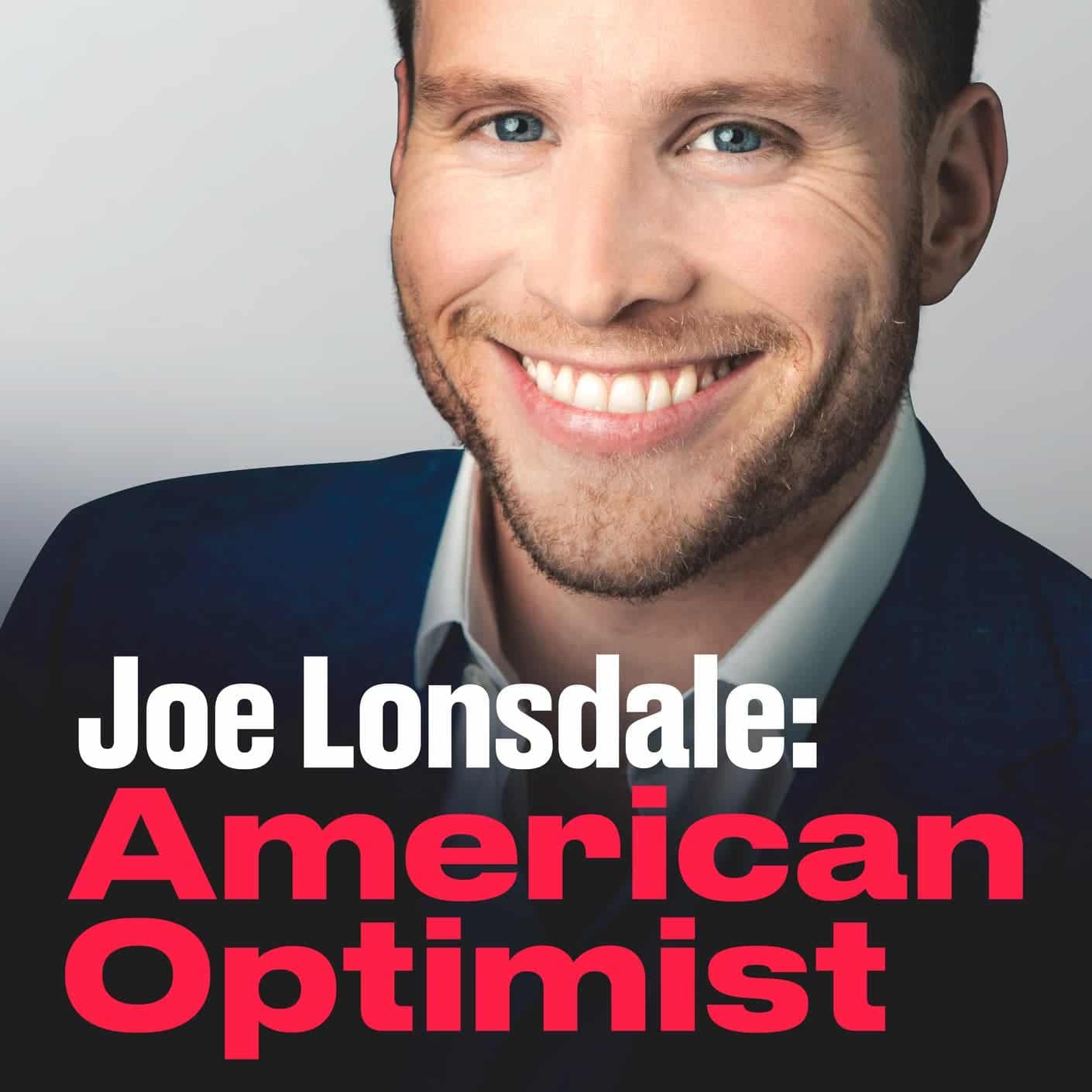
Podcast Episode Notes: Joe Lonsdale: American Optimist - Episode 54
Episode
Peter Attia on the Science of Longevity, Willpower vs Environment, and Why Americans Are Increasingly Unhealthy
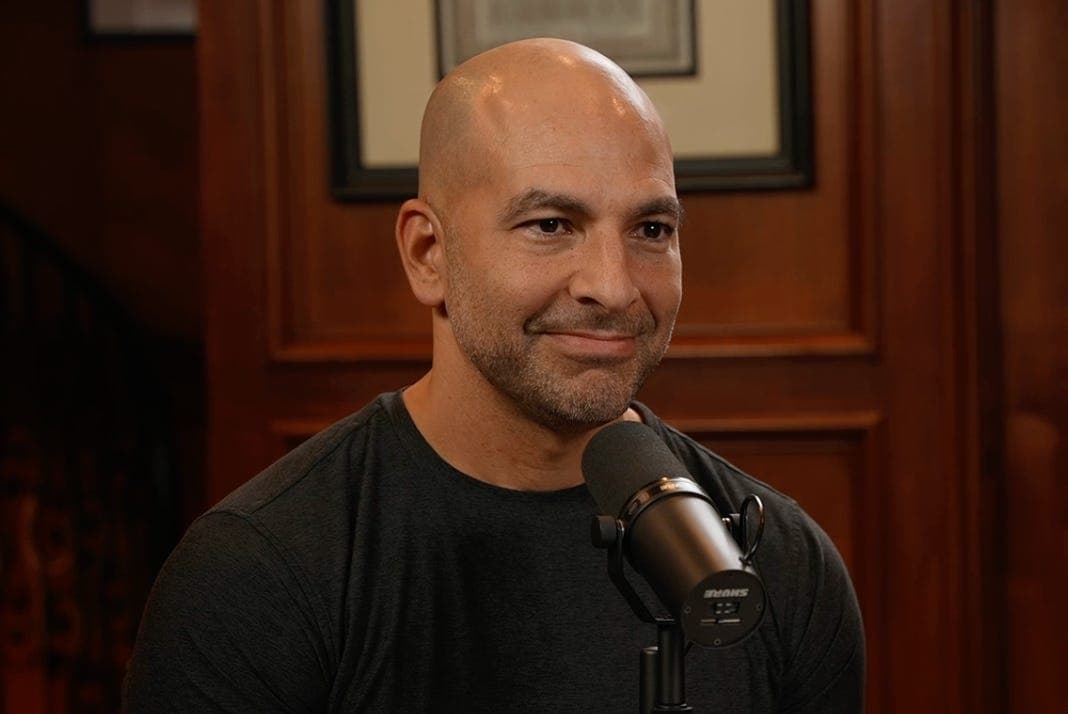
Overview In this episode, Joe Lonsdale engages in a deep conversation with Dr. Peter Attia, a respected physician and expert in longevity. Alongside best-selling author Ryan Holiday, the discussion centers on the principles of extending life quality and duration, the obesity paradox, and the growing health crisis in America.
Key Guests
- Joe Lonsdale: Host, entrepreneur, and investor.
- Dr. Peter Attia: Physician, longevity expert, author of "Outlive: The Science & Art of Longevity."
- Ryan Holiday: Best-selling author and guest.
Main Themes and Discussions
- Introduction to Peter Attia
- Background: Attia graduated from Stanford and had a notable surgical residency at Johns Hopkins but left to explore other fields before returning to medicine with a focus on longevity.
- Motivation: His personal journey into longevity science was sparked by the birth of his daughter, leading him to contemplate mortality and health.
- Science of Longevity
- Exercise: Emphasizes a balanced exercise portfolio (strength, stability, aerobic, and anaerobic training) as essential for healthspan and lifespan.
- Quality of Life: Stresses that the benefits of exercise extend beyond life extension to significantly enhance the quality of life.
- Obesity and Health Trends
- Discusses the obesity paradox: Some evidence suggests low levels of obesity can be protective in older populations.
- Highlights a troubling trend: Increasing obesity rates and deteriorating health metrics in Americans, linked to both environment and personal choices.
- Life Expectancy Crisis: Addresses the decline in life expectancy exacerbated by the opioid crisis and the COVID-19 pandemic.
- Mental and Emotional Health
- Emotional health is tied to longevity, suggesting that a sense of purpose and fulfilling relationships are critical components of a long life.
- Meditation: While not essential for everyone, it can be a valuable tool for improving quality of life.
- Role of Environment vs. Genetics
- Discusses the significant impact of environmental factors on health outcomes, arguing that while genetics play a role, the environment largely influences health behaviors.
- Questions the narrative around personal responsibility given the systemic issues surrounding health.
- Challenges in Healthcare
- Critiques the current state of healthcare and the medical field, expressing concern over the lack of intellectual diversity and debate within medical practice.
- Advocates for a more nuanced approach to healthcare, calling for an integration of insights from various disciplines to improve patient outcomes.
- Future of Medicine
- Proposes a hybrid healthcare model that combines the strengths of both socialized and market-driven systems, ensuring that no one falls through the cracks while maintaining efficiency and innovation.
Key Takeaways
- Exercise and Healthspan: Regular and varied exercise significantly impacts both lifespan and quality of life.
- Focus on Emotional Well-being: Emotional health is crucial for overall longevity and should be prioritized alongside physical health.
- Environmental Influence: The increase in health issues is more attributable to environmental factors than individual willpower.
- Healthcare Reform: A need for a healthcare system that balances access, quality, and personal responsibility without compromising on innovation.
Conclusion The discussion emphasizes a hopeful outlook on health and longevity, advocating for proactive personal choices and systemic reforms to address the escalating health crisis in America. The episode concludes with a nod to Peter Attia's upcoming book, "Outlive," which promises to explore these themes in greater depth.
You can listen to this episode and more on the [American Optimist podcast](https://blog.joelonsdale.com?utm_medium=podcast).
Written by AI. May contain mistakes. Listen to the episode to check what was said.
Transcript
Automatic transcript. May contain errors.0:00If you're willing to commit to, you know, a really serious exercise program, which again, doesn't mean you're killing yourself, crushing it, running a marathon every weekend. It means if you're paying attention to a portfolio approach of strength, stability, aerobic training, anaerobic training, all those things, you know, it can add up to a decade to the length of your life. And more importantly, and I say this to my patients, if all this exercise shortened my life by a year, I'd still do it because of what it's giving me in quality of life.
0:33My friend Peter Atiyah is one of the most famous thinkers in healthcare and longevity. He has a very popular podcast himself. Let's find out why a lot of the most successful people in the world are flocking to Peter and getting his advice. Excited to have Ryan Holiday with me here today and our friend, Dr. Peter Atiyah. Peter, thanks for joining us. Yeah, thanks for having me, guys. Let's start with your background. You graduated from Stanford. You were named Resident of the Year at Johns Hopkins, and you left your residency early. You weren't having it, and you've become obviously a very famous doctor doing a lot of amazing things.
1:00Why did you leave your residency? What was going on? A lot of things. I was just unhappy with kind of medicine in general. Didn't feel like I was having an impact. Felt frustrated by a number of things. Felt that the system of medicine at the time was not very innovative and really moved at a very slow pace. And also, I think, frankly, there were just other things that were frustrating. I really did miss quantitative things. My sort of quantitative areas. And I just had an itch to sort of do something totally different. So actually when I left, I left and, you know, went and did consulting and worked in finance and completely left medicine for some period of time before coming back to it.
1:42You know, you've dedicated yourself to science of longevity. You've become one of the great kind of thinkers in that space and testing all sorts of things. Like how'd that get going? Actually, the seed that sowed it was actually the birth of my daughter. So that was, you know, 14 years ago. And I think, you know, you guys can both relate to this because you both have kids. I do think there's some gene that starts getting transcribed the second you have a child. And there's just a shift in thinking. And all of a sudden, mortality became something I considered and contemplated. And wanting to live longer became an interest, which previously it really hadn't.
2:17All I had cared about was sort of performance. And you're unique in this because you not only teach the science longevity, but you experiment on yourself. You test exercises, diets, training regimens. Did you start doing that right away when you started becoming interested about it? Yeah. Yeah. I mean, I think that's sort of how everybody kind of gets into things as they, they start tinkering on themselves and then you realize, well, there's only so much you can sort of figure out this way. You have to understand more broadly what the science has to say. And then how does that apply? You were an ultra endurance athlete.
2:44You have really intense fitness regime. Is this still something you today? Is that healthy to be, to be super intense athlete for what you do? I mean, I think it's very, it's a relative question. I think some people would still look at me and say, I'm pretty intense and extreme. I would say by the standards of what I did from the ages of 13 to 44, I would say I'm the least extreme I've ever been, but my focus is very different now. I mean, I would say that, you know, my focus is much more on how to be the best 80 year old or a hundred year old. Yeah. But it's, it's, I'm not, I'm, I'm certainly not focused on being the best 50 year old.
3:20There's nobody who walks up to me in the gym today who would say, wow, what are you doing different? You know, cause it's not, that's not really. So what does that mean? How do you get to be the best? Like there's something called the centenary Olympics. I think you mentioned that you want to be able to compete. Like what are how do you get there? And what are the types of things you want? Yeah. I mean, I have this term called the centenarian decathlon, which is mostly just a, it's a mental model, right? It's just a way, it's not an official event, of course, but you know, what, what is it about decathletes that are relevant?
3:46Well, they're generally considered the best athletes. Uh, you know, the person who wins the decathlon at the Olympics is generally regarded as the best athlete. But individually, they're not great at any one sport. They're not the best at the sprints or the hurdles or whatever it is. But in terms of their well-roundedness, they are. And I think that's actually an appropriate way to think about what it means to be an exceptional 80-year-old, 90-year-old, or amazingly, if you can get there, a hundred-year-old. Good at everything. Yeah. You have to be very good at a lot of things. Ryan's latest book is called Discipline is Destiny.
4:17Discipline's a big part of this. How do you think about that? I think for some people it is. For me, it's not. I mean, exercise is, you know, the discipline is to not exercise more. The discipline is to, for me personally, is to, you know, spend time doing other things. Very unusual, probably. Perhaps. But that's still discipline. You strike me as, you're talking about intensity. You're an extremely intense person. So in a weird way, letting that intensity run amok is a lack of discipline. That's right. And to be able to say, hey, also, I don't want to be all these things at 50 that come at the expense of what I want at 70, 80, 90, 100.
4:50Yes, I would agree that I probably exert more discipline in my life around exercise today than I did 10 years ago. And I mean, I give you an example. I had shoulder surgery for an injury that's older than I am, basically. Should have had the operation 15 years ago. Finally had it six months ago. and I have, I'm proud of myself in the regard that there are times when I'm deliberately slowing myself down in the return to, you know, doing pull-ups again and things like that, where I think the Peter of old would have said like, you have to get back to doing as many as you were. And now I'm like, no, play the long game.
5:22You don't have to do them all today. I want to push back on this a bit. The last time we hung out for an hour, we was really hot outside and we had a ton of weight on ourselves and we were walking. That seems pretty intense. Is that, not a little bit intense to actually that ties right into this guy here so that what you're referring to is rucking which is one of my favorite activities so this is an exercise taken straight from the military this is a very important part of how people train in the military so carrying heavy weight is just a very important part of training and if you talk to especially special forces guys they'll tell you like this is you know the stuff that they do is legendary 24 hour march with half your body weight on your back so it's like caesar's legions huh is that carrying all his weight around over the Alps.
6:01So what we were doing was a third of our body weight, which I think is really all you need if you're a regular guy. But what I really love about it is it's half physical and it's to me half emotional health. So, you know, Ryan wrote a book called Stillness and I think it's one of my favorite books ever. And it really left an impression on me, which is that there is no substitute for being in nature, not having electronics, not listening to something because I'm always multitasking, right? I'm listening to an audio book or a podcast, but there's, I don't bring the phone with me when we do that exercise.
6:34And sometimes I have a friend with me like that day you joined me, but most of the time I'm alone and it's just looking at the fractal geometry of the world, hearing the wind. Um, and, and an hour of that, I think, you know, you're, you're getting this amazing physical benefit of the challenge of it, but, but I think you're just getting as much of a psychological benefit. It's a, it's a meditative thing. It's physical and you're in shape for it, but it's your mind that actually emerges stronger and more refreshed. Yeah. And I do different things. There are times when I will focus on an object.
7:08So one of the things I really think that's interesting, most people aren't aware when you're walking, you're generally not aware of the wind hitting your fingers as your arms swing, because we walk and we swing our arms. But if you tune into that, you'd be amazed at how profound that wind is on the leading edge of your hand as you walk. And so there's times when I'll spend half a mile and that's the only thing I'm thinking, all of my energy is focused on that one little thing. And in that sense, it's a highly meditative process. Is meditation important for longevity? Is it important in some way it's tied to whatever things you do?
7:42I mean, I think it depends, right? I think for some individuals, it's probably an essential part of who they are. I don't think meditation per se is essential in the way that I would say exercise is essential and reasonable nutrition and adequate sleep are essential. There is no replacement. I mean, meditation is a tool that for many people can be a really valuable way to improve quality of life. And I think having a high quality of life, having a good emotional life is essential for longevity. If we define longevity to include healthspan. What's lifespan versus healthspan? How do you think about that?
8:13Yeah. I mean, lifespan is the obvious sort of binary part of this, right? Which is like, you're alive or you're dead. So that's the digital piece. I think the analog piece is the harder one to sort of describe, but that's the health span piece. That's the quality of life. And I think there are three metrics. I think there's the physical side of that. So are you free from pain? Do you have muscular strength, muscular endurance, cardiorespiratory fitness, all of those things? And then there's the cognitive side. So do you have good memory, processing speed, executive function, all of the things that define you guys.
8:43And then the, I think the arguably the most important, but the least easy one to quantify is the emotional health piece, right? So what are your, you know, are you, are you fulfilled? Do you have a sense of purpose? Are your relationships good? All of those things. And I, and I think again, to have the others without that is, is purgatory, right? How much of all of this is determined by genetics ahead of time? A lot of these are like genetics first and then you can modify them. No, not many. I mean, look genes play an elaborate role in ultra longevity so your grandmother's like how old 102 and she's doing great right now so so that is almost exclusively a genetic lottery um so once you're in the 90 plus category genes are almost entirely all responsible but if you start eating lots of bacon and stuff that she's honestly like if you look at she's Yeah, yeah.
9:35So if you look at, you know, Tom Pearls and Nir Barzali, who probably run the two largest cohorts of studying centenarians and their offspring, I mean, on average, centenarians exercise less, smoke more, eat worse. They just have good genes. They just have fantastic genes. If you get away from that, again, I don't think you need to win the genetic lottery. Now, look, you can have some real genetic curses. There's no question there are people that, you know, have a very, very strong history of cancer in their family, for for example, or, you know, there are very fortunately rare examples of people who have, you know, genetic predisposition to Alzheimer's disease, for example, you know, 1 % of people who get Alzheimer's disease get it in a deterministic manner, meaning they literally get one of three or four genes that guarantees you'll get it.
10:18But for the most part, I don't think this stuff is genetic. Now, there is actually some evidence that happiness and a person's sunny disposition has a pretty reasonable genetic component. So I don't want to dismiss genes, but I also think we, I think we dwell too much on genes sometimes. And I think we should just probably focus on what we have control over. I saw a commercial that reminded me of you. You've probably seen it. It's this old man and he's practicing with a kettlebell doing, you know, squats or whatever. I saw it on Twitter. So is it an actual commercial? Yeah, it's a commercial. I forget what it's for.
10:50He's fantastic. And this makes me think of Healthspan. So he's doing it and then you find out Christmas morning or something, his granddaughter runs in the room and he's been practicing lifting the kettlebell so he can pick his granddaughter off the ground. And so it's not just the physical component, right? But it's also, have you lived your life? Have you made decisions? Do you have the personality that makes your granddaughter want to spend time with you, right? And so, you know, you could be the fittest 100-year-old in the world, but if you're a curmudgeon or a jerk, or you put work and money and all these other things in front of family, there's nobody who's going to be wanting to run into your arms.
11:27I mean, I couldn't agree with that more. And one of the things we do with our patients is I try to explain, and I use an archery analogy for this, which is we talk about what are your long-term goals? Your long-term goals is your marginal decade, the last decade of your life. So how clearly can you define what those are? And then what are your goals for the next 12 months? And as you know, because you now shoot a bow, have you ever shot a bow? Yeah. So in archery, you have the sight at the far end of the bow, and then you have the peep, which is on the string that you pull to your eye. And so when you are in full draw, what's happening?
11:59You are trying to acquire rear sight, front sight overlap perfectly. If those don't overlap, you will miss. If those are in perfect alignment, you will hit. And the same thing is true. If you say, oh God, in my marginal decade, like I want to be surrounded by love and family and great grandchildren, and I want to be able to lift them up. But in the short-term goals, you're not doing anything about that. You're not going to miss, right? You're not going to hit the target. We were talking about hobbies earlier. Bow hunting is obviously a hobby for you. Is that another thing that gets you into that sort of meditative place that ratchets down the intensity that is an outlet for some of this stuff?
12:36Yeah, totally. I mean, I just, I love things that are precise. And that's, you know, archery is a very precise thing. I don't play golf, but I would imagine it's very similar to golf, but it's also something that requires great emotional control. So yesterday I was shooting and I mean, I was just having a really bad day. I mean, I know today, nevermind yesterday, it was this morning. I mean, I was horrible. And I think what I love about that is I have to control my emotions. You're nervous about the podcast coming up. And, you know, I think like five years ago, I would have thrown a little mini temper tantrum about how bad I was doing.
13:16And today it was just like, huh, this is really interesting. Let me be curious and not judgmental to borrow from Ted Lasso. And let me kind of like, think about like, why am I doing so badly at this today? And can I make an adjustment? Oh, I did. Okay. I didn't make anything better. Okay, fine. Make another adjustment. Oh, actually I did get better. I got a little bit better. And then I got a little worse, but you know, that to me is actually a practice. Like that's a skill that I mean, it's almost embarrassing to say this, but there was a day when if I shot poorly, I had a bad day. Like, can you imagine that?
13:48Like, that's pretty weird to think that you could go out in your backyard, shoot a bow and arrow for 45 minutes. And if it didn't go well, the rest of your day sucks. The hobby shouldn't ruin your day. It should improve the day. That's right. It's like when you play golf or something and you have a really bad golf game, try not to let it ruin the day. Right. And, and so, you know, today something I can be very proud of is like, that's no longer the case. It just doesn't matter. I can have the best day. I can have the worst day. By the time I drop the bow off in my man cave, like I've forgotten about it.
14:14Also, it's another thing that forces you to be present, disconnects you from the phone, the device, things not going well, going well. It forces you outside doing a thing that I think the reason it's not going well is just another benefit, which is that it's humbling. It doesn't matter how long you've been doing it. It doesn't matter how talented you are, how smart you are. It's hard. and therefore beneficial from an ego perspective because it makes you realize you're not the master of the universe, even if you are professionally master of your universe. I remember walking back today from the targets after pulling and I remember just thinking like, this is amazing how hard this is.
14:56It's amazing that this is just really, really hard. This ties a little bit into kind of self-control, virtue, discipline. If you look at the data right now, America's health overall is in a very bad place. Life expectancy has actually gone down recently. Antidepressants, obesity is going up. You study this closely, like what's happening? How can we reverse these trends? Is it partially as virtue? Is it something else? That's a great question. I mean, we know that there are two things in the past three years that have tipped the curve on life expectancy in the United States. So the first of these is the opioid crisis, which is obviously a mental health crisis first and foremost.
15:33So we talk a lot about what is the number of deaths from suicide. And that's, believe it or not, for everybody over the age of 10, suicide is the only cause of death that is always in the top 10 by decade. The only decade for which it's not a top 10 cause of death is under the age of 10. So think about that. 10 to 20, 20, 30, all the way up to 90 and up, suicide is the only thing that is in the top 10 across the board. Was this the case 50, 100 years ago? I don't know. That's a great question. I should know the answer to that, but I don't. But here's my point is that suicide only barely captures it because if you look at accidental deaths up until the age of 55, even probably 60 now, the hands down leading cause of accidental deaths is now overdose.
16:18So that has even exceeded auto deaths in young people, which was formerly the leading cause of death. These are deaths of despair. That's exactly right. These are slow suicides. And so, you know, that has taken an enormous chunk out of our life expectancy. The other one is probably a bit of an artifact, which is COVID, right? COVID, I think probably sped up the demise of a demographic of people who were sick on average, right? So, you know, lots of people have died of COVID who weren't sick, but the majority of the deaths attributed to COVID are people who were probably going to be dying in the next five years.
16:54Vulnerable people. That's right. And so therefore, I don't know how that will reflect in the next decade, but what I don't see a trend to reverse yet is the first thing I said. And that's to me, the kind of elephant in the room. What about the obesity epidemic? I mean, we have this whole body positivity movement, which I think is very unhealthy. It's very controversial maybe to say that, but it just seems like there's a big issue in our society where we're trying to say, oh, certain things that are bad for you are okay or are good or don't criticize. Is that contributing to this as well? I just don't know the data truthfully.
17:24I mean, my view on these things is these things really like we shouldn't really, I'm not interested in the subjective. So I think there's a subjective part of this that I just don't have a voice on or a view on because it's very personal. Like I, you know, I personally wouldn't want to be a hundred pounds overweight. That's just me. Uh, it doesn't mean that a person who's a hundred pounds overweight is any less of a person than me. I just wouldn't want to be it. Um, for me, what is objective is what is the impact of that weight on health? That's really the question that I'm concerned with. And I think there were basically two ways to think about that.
17:56And it's through what we talked about earlier. What's the impact on lifespan? What's the impact on health span? And at a low level, there's actually something called the obesity paradox, right? So a low level of obesity actually seems to be somewhat protective in an aging population. When you're older, having a little bit of extra weight, it's not necessarily bad. That's correct. That's correct. That's referred to as the obesity paradox. Now, I also think that the problem is obesity as defined by BMI is such a crude metric that it's very difficult to really draw much of a conclusion. You know, when you look at somebody whose BMI is 31, like, I mean, my BMI, I don't know what it is, but it's clearly in the overweight category.
18:36Yes, BMI is so strong and you have more muscles. Well, I mean, I just think that BMI is like 25 is considered normal. I'm probably like 28 or 27. And so we wouldn't even consider that metric in a patient. I couldn't tell you the BMI of one of my patients. I'm trying to build muscles as a friend. You told me I should do that. It's healthy. I'm having all this beef jerky recommended. And so it seems like that's probably going to be my BMI goal. Yeah. So what we would care about though is how much visceral fat do you have? Not even body fat, just visceral fat. How much fat do you have around your organs?
19:05Because that's actually the metabolically damaging fat. Are you insulin sensitive or insulin resistant. You have metabolic syndrome. Those are actually the metrics that matter. And, you know, look, those metrics are pretty bad. So I think right now, you know, I was just kind of going through some of these numbers for, as I was finishing my book and the most conservative estimate I can come up with, and there are many higher estimates out there, but if you're taking the absolute floor, it would be a hundred million American adults are metabolically unhealthy. Wow. So that's the problem. I wish that's what everyone would talk about.
19:40Yeah, I imagine despair is part of that as well. Totally. It's like, what, like 70, 60 % of young people could not join the military if they wanted to because they're so out of shape. They're not fit enough, yeah. And you think this part of that, I mean, a big part of it is obviously terrible, you know, food system and people don't have access to healthy, blah, blah, blah, blah. But a big part of it is this is a person who does not think they need to be healthy for any real reason. And they're not they're not being put to use in a way that would make them feel like they are not being purposeful with the decisions that they're making.
20:20Doesn't that come back to virtue and positive masculinity and like your role as for women as well, your role in society? Like, just focus on men for a second. There's a lot of stuff I've seen about declines in testosterone levels. Like, what's happening with that? Is that tied to this? I'm not sure. I mean, I think there are probably lots of things that can explain, you know, a fall in testosterone. So, you know, not sleeping well is going to have an enormous impact on testosterone. So then you want to think, what are the things that impact sleep? How much of it is being on phones, putzing around, like, you know, drinking too much, smoking too much pot, which may or may not.
20:52Twitter and video games late at night. Basically, it's like there are lots of things that if done to excess, like I'm not going to sit here and say don't drink alcohol. I'm not going to sit here and say like, you know, you should never smoke pot. I mean, that's neither here nor there. I'm just saying there are things that if done to excess will impair your ability to have a normal set of hormones. And I think that's probably the issue more than anything else. It feels like the self-control thing with the obesity as well, as both of these things are tied to some form of temperance almost. Well, yeah, except that I think, I don't believe that there has been an erosion in self-control over the last 40 years.
21:25So this is the million dollar question, right? So why is it that 40 years ago, obesity rates, and again, I just said a moment ago, obesity is the dumbest proxy in the world. But I'm going to assume that as much as obesity rates have gone up by two to three X in the last 40 years with it has gone metabolic health. So given that that's, we use the proxy. Okay. I don't think that 40 years ago, people had that much more willpower than they do today. I just think that the environment has gotten so much worse that you would need more willpower today to fight the gravitational pull of this environment.
21:58So 40 years ago, I think, or let's just even say 50 years ago, because I can tell you 50 years ago when I was born, less than 2 % of people in the United States had type 2 diabetes. It was closer to 1%. That number is about 12 % today. So when you have a log fold increase in 50 years of one of the most devastating diseases, you have to ask the question, is this a failure of personal responsibility more or is it a failure of the environment more? And while it can't be one exclusively over the other, I actually attribute more of that to the environment. And I think that environment is not just the grocery store is packed with more awful stuff, but also if people feel worse about things, they're more depressed, if they have less purpose, if they feel like they're left behind, you know, again, why does it matter whether I'm in shape or not?
22:46I'm not of use regardless. I guess social media or whatever can make us more isolated and then we don't see our community and then that could lead to that, which is the problem. I think it's a death by a thousand cuts. I really, you know, and I had an email chain with some friends recently about this where there was a symposium in Europe where they got all the biggest obesity researchers in the world together. And the New York Times wrote a piece on this that basically said, well, we just had basically all the smartest people in the room for a day and they literally couldn't agree on one thing.
Read the full transcript
23:12And I was like, yeah. And I think the reason is every one of those people is an expert in one thing. and I think each of them are partially right. They're seeing it through their view. They're only seeing it through like, it's all this hormone or it's all exercise or it's all junk food or it's all this. And I was like, no, it's all of the above. And not one of those things by themselves is lethal. But boy, when you stack all of those things up over a generation, it's pretty bad. So how do we fix it? Like what do we need to do? I mean, this is the worst answer you're ever going to get on your podcast.
23:41I have no clue. And this is going to be an even worse answer. It's not the problem I want to solve. All right. So what is the problem you want to solve? I just want to solve it at the individual level. I don't, I mean, I don't know how many years I have left on this earth. Let's say it's 30, 40, but I would, I will get far more satisfaction out of working with individuals who then can go on to solve big problems. I tell my patients, you know, my legacy is through you. So if I help you and you go solve a big problem, that's great. But I personally will never solve a big problem. Well, don't you think that also kind of explains where we are with some of these things, which is, you know, if 1 % of the population has it, it's rare, blah, blah, blah.
24:18If 12 % of the population has it, a lot of people have it and it's common and it's accepted and it's all these things. So, you know, um, as it gets worse, it's a negative, uh, feedback loop. And as it gets better, it's a virtuous cycle. And we're probably in this weird thing where it's like, not that you want people to feel insecure or bad, but if everyone's letting themselves go, there's less pressure on the individual. Yeah. And I feel like there needs to be, I wish there was a way to sort of show people what, what the last decade of their life looks like under different scenarios. Um, and it's, you know, it doesn't exist under some of those scenarios.
24:58I was just talking to a friend of mine from high school yesterday and his dad has never taken care of himself, right? He's never taken care of himself. And he's, you know, in his mid seventies now, he's hospitalized with Lewy body dementia. I mean, he's, he's, dying an awful death. And we were just talking and I was like, yeah, it's really, it is sad to see a person at the end of their life who's never taken care of themselves because there's nothing that can really be done at this stage. Like there is no treatment for what's going on. The only thing you wish you could do is capture this moment, transport them back in time and show them that in a crystal ball and say, look, with a little bit of effort compounded every single day for the rest of your life.
25:37It doesn't need to be this way. I love the analogy you use of a glider and you're going to get the glider a lot higher because if it gets below a certain level, it's going to crash. Yeah. You said you're not always, you're not trying to do a big cause and fix everything. You're just trying to fix people. But you know, I thought you were really brave about pushing back on some of the COVID-19 orthodoxy and we don't even have to really get all those things right now. But are you concerned about the diversity of thought within medicine today? It does seem like you're trying to push back against some of this.
26:00Yeah, no, it's horrible. I mean, it's, I, you know, I think I spoke out against vaccine mandates because I thought that, I just thought they were wrong. And I thought that they were wrong at the time that I wrote about it, which was about exactly a year ago, right? Which was, you know, they just, they didn't make sense. They felt punitive to me. And I wanted to write this from the point of view of someone who was very pro-vaccine, right? Which is also to say, by the way, you can be very pro-vaccine and acknowledge that they can have side effects. Like, I think what bothers me is the view of medicine today that there is no dialectical synthesis within medicine.
26:34Yeah, you have no iconoclast. If you're iconoclast, you're kind of like, well, it's just that, you know, today I was on the phone with a patient and we were talking about initiating a statin. And I feel like there's two, there's only two views in medicine now, which is statins should be in the drinking water or statins cause every disease on the history of civilization. And it's like, no, how about neither of those is correct, right? Statins are a really good drug under this situation. And yeah, 5 % of people get really bad debilitating side effects and should never take them. And, you know, this is how you would use them.
27:06This is how you wouldn't use them. If you don't want to use them, you could do this. And so I just feel like that nuance is completely going away. And I think that's a problem in everything. That's a problem in politics, right? Imagine, like, think about how much politics is lacking in nuance. Well, it's interesting. I think so much of that is a response to the fact that we have this, that there's, there is also the ability of people to misuse the tools, to spread misinformation and disinformation to, it's weird. It's like, there's too much nuance. So people create confusion and disorientation and all this stuff that hurts people.
27:42And so I think the reaction oftentimes from the establishment is to try to be like, this is very clear. Let's just go with this. And then, you know, that can create the blowback of like, well, what about this and that? But it's this problem we haven't figured out to solve, which is like, bad faith, is kind of poisoning the drinking water, so to speak. And then bad faith is often responded to with bad faith and then you're stuck. And so I got to tell you, like, I am not sure what is a bigger crisis. We've just spent the last few minutes talking about the crisis of health, which includes a crisis of despair.
28:18You could argue, like, this would be a really fun if we were sitting here having dinner when we had the next three hours instead of, you know, a few minutes. What is a bigger threat to our civilization, that or the fact that civil society can't exist between those two extreme... This is why we can't have nice things. Yeah. Yes. Yeah. I'm not sure which one will sink us first, but if I had to bet today, I would guess the latter is even a bigger threat than the former. Well, to me, they're related in the sense that there's a lot of things in that ladder that are leaking out into our society. Absolutely.
28:53Yeah. Yeah. But, but I, but I think the latter concerns me more. And I used to think about it through the lens of just science and policy, right? So I don't know the stats today, but the last time I looked at this, which was literally a decade ago, if you took the, what is it? How many members, how many, we have 465 in the house or something like that? 455? I think, I think, I think. In that ballpark, right? So, so call it 435, I think. 435. Okay. So yeah, that's right. Yeah. So if you take the 535 members of the Senate and the House, when I looked at this again, 10 years ago, five of them had an undergraduate degree in some form of technology, like science, engineering, etc.
29:33Yeah, but you people in our country have no idea how technology works. Right. So when 1 % of your elected officials even have the most cursory understanding of science, how can you make proper policy around this? Or if the rest of them are extremely old or extremely sheltered or privileged. Privileged bureaucrats and lawyers and committees. It drives me. The whole disinformation thing is just so fascinating to me around this. So in fifth or sixth grade, I was a little bit of a fat kid. I worked out, but I didn't eat very well. And they gave us this food pyramid and they said we had to try to eat to it.
30:04And I remember really trying hard to eat to it. I would get up in the middle of the night and have more bread to hit the clock. I literally was trying to do what I was told by the government school. didn't feel good but i was eating the bread for a month you know trying to hit it and like in retrospect that was probably not the best idea but like the disinformation is so funny because we've gotten information our whole lives from these idiots right it's like it's like what is the damaging one the damaging one to me is when there's a top-down thing that's wrong it's stopping a conversation that's interesting yeah it's it's just um it's like these are complicated adult conversations and there's not a lot of adults who can handle complexity and then it makes it really hard to get to the best policy decisions way of doing it or nuance or whatever it is.
30:47Yeah. I'm not, I'm not just terrified. Lindsey Graham wants to work with Elizabeth Warren to regulate social media. This is like the latest thing to like, you really think they're going to be a good job. What's their combined age? 150 something that's terrifying what they're doing. I don't, I'd love to get on both sides, more, more doctors, scientists, engineers. Why are doctors so bad at like pushing back and thinking for themselves. I'm going to give you a really horrible statistic of all the professions in the 1930s in Nazi Germany. The one that was by far the most likely to be Nazi once it was a popular thing to do were the doctors, was the medical community.
31:22They seem to go along with whatever you're supposed to do. No, no. And that doesn't surprise me as tragic and horrific as that sounds because I think people confuse medicine and science. They're actually not the same thing. And like, I didn't learn one shred of scientific thought in medical school. I was very lucky that I got to spend two years at the NIH in a lab of a very remarkable scientist. The NIH taught you how to think and challenge things. I only learned science when I was in a science lab doing science, surrounded by scientists, going to journal club, ripping apart article every single week in journal club.
31:57Nothing. And back to the question you asked me, why did I leave residency? I think in part because I got sick and tired of the anti-intellectual nature of medicine. And it needs to be that way, I guess, for a reason, because you are learning an entirely new language in a relatively short period of time. There's just a fact base that is so wide that you have to learn this. And I think what is easy to do is to basically just say, okay, fine. Like I submit, I'm just going to learn and learn and learn. And I can't question every part of this. You can't, you truly could not question everything that you wouldn't get through it.
32:34And you couldn't do it. So you'd learn, you'd learn not to question certain things. I mean, could AI changes? Could you have like such good AI that just does all the known stuff? And then the doctors deal with exceptions and work on one of your areas. Is there, is there some bright hope for the future that like, how do we get out of this mess, get and get more doctors that can challenge things that can think for themselves more easily? It's hard for me to imagine that AI will not play a meaningful impact in medicine. I don't think it will be on the timescale that people talk about it. I think people talk about it like, oh, we're just two years away from this.
33:02I don't think that's the case. The chatbot's not quite accurate enough yet. Yeah, yeah. There are areas where it's already making a difference. In radiology, for example, it's already making a difference. Will it rise to the level of, you know, a person walks into the ER and you can gather all this information from them and make decisions? Yeah, but you got to remember, you have to be able to train the AI. And this is what makes medicine a little bit more messy is, you know, you need an unbiased data set and then you need like, you need an unbiased data sample on which you train the AI and then you have to be able to validate it on a sort of a comparable sample.
33:37And I think that's just harder to do with messy things like people. What's like, what's the survivorship bias, the selection bias in any given profession, right? And the logic or the constraints of that profession almost always create a specific type of person. And that person is good at functioning in that system. Usually at the expense of not functioning well in other things or being good at other things. That makes sense, especially for doctors, because they have to do so much fine tuning to get to be good in working that system. Yeah, I think your point is really a good one, which is we are selecting generation after generation after generation for a subset of people who do well.
34:17And, you know, like I don't ever want to live in a world where we don't have really good, competent, capable doctors. I don't want to live in a world where the best and the brightest wouldn't dream of going into medicine. I can't speak to what the stats are today. Like I would, I would gather that there is a historical trend line that shows a waxing and waning of where the top talent go. Like where are the best and brightest out of college go? How many of them are going to Goldman Sachs? How many of them are starting going to startup companies in the Silicon Valley? How many of them are going into medicine or law or business school?
34:48Like, you know, my guess is medicine is falling behind. Is there some hope over the next 10 or 20 years? Are there new paradigms? How do we fix this? Like what's the positive outcome here for how healthcare and medicine is better 20 years from now? You know, look, I think the knee jerk answer is technology, right? We can sort of talk about that as like kind of a throwaway term, like technology will fix everything. And I think it will fix some things. We have a fundamental problem in the United States with healthcare though, which is if we're not careful, it will bankrupt us, right? So it's not become very fashionable to talk about this anymore.
35:22We've sort of forgotten about this, but we do on a per capita basis and in absolute dollars spend more on healthcare than any country in the world. We're not even in the same zip code as the next countries. And our ROI across the board is not great. We have a very high ROI for the people who can access the best healthcare. But if you consider the entire population, we're actually doing a pretty bad job, especially when you consider what we're paying for. So I actually worry a bit about that problem, which is that, you know, if you start spending 37 % of your GDP on healthcare, like at some point you can't keep up, like you can't have enough GDP to make that equation.
36:08I spend a lot of my time on the health policy and my framework is there's like five or six areas of healthcare that are each just captured by cronyism and captured by cartels. And so there's like the healthcare groups, including the nonprofit hospitals. They buy everything and they raise prices. There's pharma companies doing all sorts of sketchy things to kind of keep drugs longer and keep patents harder to work with. PBMs in the middle middlemen. Frankly, the AMA and the doctors groups do all sorts of things to stop the AI from being allowed to work with nurses. Even if a nurse plus AI is better than a doctor, they'll ban it, right, and they'll pass laws.
36:37And the list goes on and on and on. You can't even start a new medical school these days. It takes longer to start a new medical school than it took us to fight World War II. I mean, it's just insane how these things work. Well, I think it's a lot like the obesity change or diabetes change over 50 years. There's no one thing, but all of those things do add up. And I think one way that I think is that I reflect on this is basically looking at what's good and bad about other systems, right? So I grew up in Canada and as you know, Canada's got a very socialized system and I don't think it's a great system, by the way.
37:09So one of the things that vexes me was when I hear Americans talk about, oh my God, if we just had Canada's healthcare system, I'm like, knock yourselves out. Like I wouldn't want to live in Canada if my life depended on it. No offense to my Canadian brethren. And the reason is you can't get anything done. Like there's, you know, if you need an MRI, like you can have it in a year. You have to wait for everything because there's no markets at all. But here's where Canada is better. Nobody falls through the cracks. So it seems to me the solution has to be a hybrid that takes the best of both systems and abolishes the worst of both systems.
37:43A hundred percent. And the worst of the American system is the risk ownership piece. This is the problem. There is a total disconnect between demand and risk. So I'll give you an example. So I had a friend who used to, he was an expat that lived in Saudi Arabia and anybody who's been to Saudi Arabia will know you don't really want to spend summers there. So, you know, he would come back to DC from like June till September. And I don't know how it came up one day. We were having dinner and I was, I sort of said, Oh dude, what's it like when you get back to your apartment in September? Is it like 150 degrees?
38:18And he's like, no, it's 70 degrees. I'm like, how? He's like, I leave the air conditioning on the whole summer. And I'm like, what are you talking about? That's insane. How much does that cost? He's like$20. And I was like, of course, like it's totally subsidized. Energy is free in Saudi Arabia. That's funny. But then you waste it. It's like crazy. Yeah. So it's like when you don't bear the cost, when you don't have skin in the game, it doesn't matter. And that's the fundamental issue with the US healthcare system. Nobody has any skin in the game. Nobody has any skin in the game. We need more markets on some parts and we need to take care of the bottom on the other parts and combine the zero.
38:52You need a uniform system that nobody falls through the cracks. Nobody should be going to an emergency room for general health, right? Nobody should use an ER, which is marked up 87 times as their primary care doctor for general health maintenance, for preventative health. But at the same time, we can't live in a place like Canada where a person should be able to have private insurance, where if they want to pay a premium, they should be able to get a service. A lot of things like this in the world take the best part of what the Democrats want, the best part of Republicans want, and merge the wisdoms when we work together.
39:22I want to end on personal habits and advice. Just a lot of people, you can go listen to you. You have a podcast with millions of listeners. What are some of the things you work with some of the most talented people in the world? Not millions, by the way. I wish I had millions of listeners. All my friends listen to you, so I thought it was millions. I don't know, maybe amongst a certain class of people. But what are some of the most common types of advice you give people in terms of if people come to work with you? Like, what are some of the key things people need to know for their health? Honestly, I think we've talked about the most important things.
39:52I mean, I generally put kind of probably exercise and emotional health are at the top of the list because I think exercise in terms of interventions that people think about has the greatest impact on the length and quality of your life. So if you're willing to commit to a really serious exercise program, which again, doesn't mean you're killing yourself, crushing it, running a marathon every weekend. It means if you're paying attention to a portfolio approach of strength, stability, aerobic training, anaerobic training, all those things, it can add up to a decade to the length of your life. And more importantly, and I say this to my patients, if all this exercise shortened my life by a year, I'd still do it because of what it's giving me in quality of life and what I think about that last decade of my life being.
40:36So, so that's one thing. And I think the other thing I would say is, you know, this, this other stuff we talk about that, that is kind of soft, I think is, is really important, which is, you know, are you setting yourself up to, to sort of live the life you want to live at the end? Because I, I think for me, that's always been a big struggle is it's just, it's so easy to be maniacally focused on the goals, the objectives, the here and the now without realizing, for example, like we all have young kids, like this is a very narrow window of, it's a sliver of time before our kids are gone. And, you know, it's obvious, but it's, it's, it's still stark.
41:10Like once your kids go to college, like they never live under the same roof with you again, outside of unusual circumstances. And even my daughter, who's 14, her interest in hanging with me is way lower than my eight-year-old and my five-year-old. And in some ways it's almost a gift that I've got to experience that because it makes me so much more appreciative of just hanging out with my boys, even when they're being really bad. And even when it's sometimes not that fun to be with them, but I realized this is going to be gone and it's going to be gone in a blink. Peter, you have a new book coming out in the spring?
41:42Yep. It's called Outlive and it's available to be pre-ordered now. Awesome. Outlive by Peter Attia. Peter, thanks for joining us today. Yeah. Thanks for having me, guys. You
From the publisher
Peter Attia is a renowned physician, podcast host, and best-selling author of "Outlive: The Science & Art of Longevity." Peter received his M.D. from Stanford University and was awarded "Resident of the Year" in general surgery at Johns Hopkins University, but left medicine before coming back years later with new perspectives and becoming one of the world's most sought-after longevity experts. In this episode (we are also joined by our mutual friend and best-selling author Ryan Holiday), Peter explains the core principles and exercises to maximize and extend quality of life. We also discuss the obesity paradox and why Americans, on average, are becoming increasingly unhealthy — and how we can reverse that troubling trend.Peter is trusted by a lot of amazing people I know, and he continues to innovate and test his theories, diets, and exercises on himself. His wisdom and expertise have improved lives around the world, and will challenge you to rethink your daily habits.
Thanks for reading Joe Lonsdale! Subscribe for free to receive new posts and podcasts.
This is a public episode. If you would like to discuss this with other subscribers or get access to bonus episodes, visit blog.joelonsdale.com