In short
Podcast Notes: Joe Lonsdale: American Optimist
Episode Title
Ep 56: A Philosopher in Construction? How Maria Davidson Is Reinventing the $250B Construction Materials Industry
Episode Overview
- Host: Joe Lonsdale
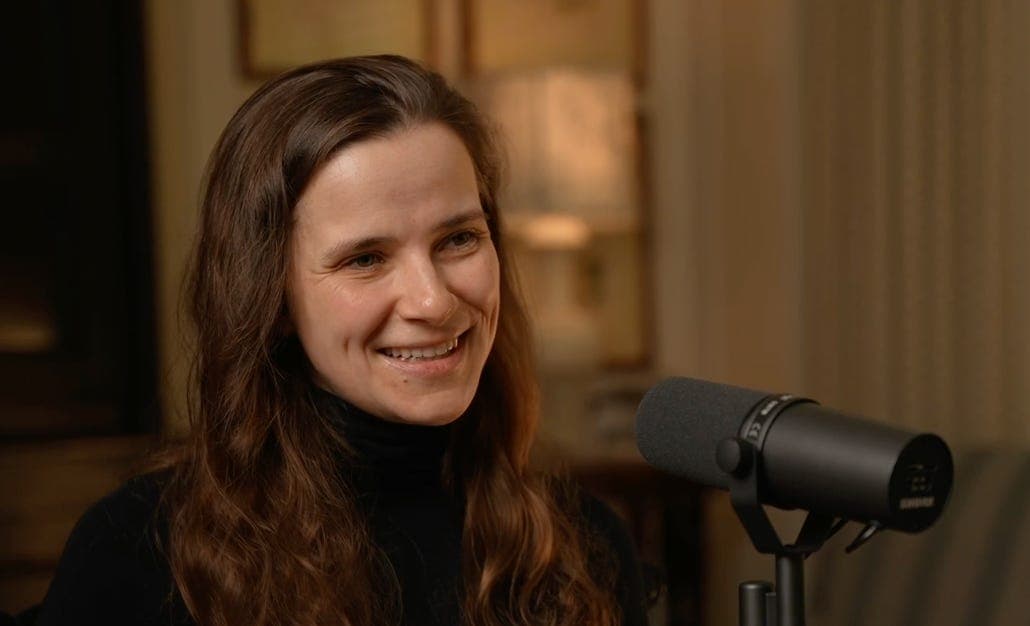
- Guest: Maria Davidson, Founder and CEO of Kojo
- Focus: Modernizing the construction materials industry, which spends approximately $250 billion annually mainly through outdated methods, such as pen and paper.
Key Themes and Discussions
- Background of Maria Davidson
- Cultural Journey: Maria's upbringing spans from the Soviet Union to Israel and later to London, leading her to value adaptability and the importance of understanding different perspectives.
- Education: Graduated from Oxford University, where she served as President of the Oxford Union, inviting diverse and often controversial speakers to foster free speech.
- Career Path: Worked in mergers and acquisitions at Goldman Sachs before pivoting to entrepreneurship in Silicon Valley, inspired by Joe Lonsdale.
- The Construction Industry's Challenges
- Outdated Processes: The construction sector relies heavily on manual processes, with Excel being considered advanced. This leads to inefficiencies and high costs.
- Complexity vs. Methodology: Despite the complexity of modern projects, the construction methods have remained largely unchanged since the 1950s, causing stagnated productivity.
- Introduction to Kojo
- Vision: Kojo aims to digitize the construction materials ordering process, akin to an "Amazon for contractors," enhancing productivity and minimizing errors.
- Current Utilization: Kojo processes over $1 billion in materials orders and serves thousands of customers across various construction sectors, including hospitals and infrastructure projects.
- Insights from Maria's Philosophy
- Perspective on Entrepreneurship: Maria emphasizes the need for curiosity and ownership in problem-solving, encouraging those in their 20s to embrace entrepreneurial opportunities.
- Value of Diverse Opinions: Reflecting on her time at the Oxford Union, she stresses the importance of engaging with divergent viewpoints and learning from controversial figures.
Key Takeaways
- Construction Sector Needs Innovation: The construction industry, often considered unsexy, presents vast opportunities for innovation due to its current inefficiencies.
- Empowerment through Technology: By implementing technology into construction processes, Kojo aims to improve efficiency, enhance communication, and reduce the manual workload of laborers on job sites.
- Youth and Opportunity: Encouragement for young people to actively seek solutions to pressing problems, fostering a mindset of empowerment rather than helplessness.
Future Aspirations
- Vision for Kojo: Maria envisions Kojo becoming a one-stop-shop for all contractors in the U.S. and globally, revolutionizing how construction materials are sourced and managed.
- Continued Growth: There are plans to expand Kojo’s reach, focusing on various trades within the construction sector and leveraging new technologies like AI to further enhance productivity.
Conclusion Maria Davidson's journey from philosopher to entrepreneur illustrates the potential for change within traditional industries through innovation and a fresh perspective. Her commitment to solving complex problems in the construction sector exemplifies the optimistic approach championed by Joe Lonsdale in this episode of American Optimist.
For more insights, visit [blog.joelonsdale.com](https://blog.joelonsdale.com?utm_medium=podcast).
Written by AI. May contain mistakes. Listen to the episode to check what was said.
Transcript
Automatic transcript. May contain errors.0:00We haven't changed the way that we build anywhere near as much as we change the complexity of what it is that we're building. You know, the built environment has become infinitely more complex. We have cities where delivery zones are limited and there's a lot more regulation around health and safety. And there are lots of stricter building requirements around what it is that we're building and the materials that we're using to build. At the same time, how we build has largely been the same since the 1950s.
0:34my friend maria grew up in the soviet union israel moved to london she was the president of oxford union at school there and was a superstar at goldman sachs who stole her away to hvc and got to work with her in the technology world today she's transforming the construction industry which spends over 250 billion dollars a year on materials alone and a lot of that's still happening on pen and paper why does it take an ambitious philosopher like maria to go in and remap the construction industry with a company like Kojo? Let's find out. Really excited to have my friend Maria Davidson with us today.
1:02Hi, Joe. Thanks for having me. And Maria, it's exciting to use your new last name. I know. I'm not used to it yet, but we'll get that. Congratulations. Thank you. So Maria, let's start with your background. You were born in the Soviet Union. You were raised in Israel and you moved to London at 13. Is that right? Yeah, when I was 13. So what did you learn from these different cultures? That's an interesting combination, Russia, Israel, UK. Yeah, it's a great question. I think I really learned the value of adaptability. You know, when you're young, it can actually be really hard to move around so much.
1:31And firstly, it means you have to learn a new language every time that you move. So you spoke Russian and Hebrew and English then? I did. And the hard thing is that those languages don't have a lot in common. So I think the main thing that I learned is that when you have to move around so much, you constantly have to expose yourself to new cultures. And it's actually a very similar pattern to what I see in entrepreneurship, which is you constantly have to confront a new problem, which is you don't understand why things are the way they are. You don't understand the language. You don't understand why local customs necessarily are the way they are.
2:04And then you have to figure it out. And you've got to iterate. And you've got to adapt yourself. So what's an unusual custom in Russia that people from the outside might not know about? I mean, I don't know as much about modern-day Russia. But I think for my parents, they grew up in the Soviet Union. So they were extremely strict. Both of them are academics. Both of them come from an extreme belief in hard work and a lot of real discipline. And then when I moved to Israel, it was completely the opposite, right? There's no school uniform. You call teachers by their fast names. It's incredibly informal.
2:33And so I remember all my friends at school would have tons of freedoms. They'd be running around. You know, they sort of had a lot of free time. And I literally, from 6 o 'clock in the morning till 9 p.m. at night, had a regimented schedule. So this is not what we think of in the West when we think of the Soviet Union. But you say it was actually strict, yes, but hard work. Was that generally in the culture that everyone was hardworking? Or was your parents in the Soviet Union, was that unique to them? I mean, I think they were academic. So to them, it could have been unique to them. But generally, I think there was a real sense of a belief in discipline, right?
3:05There was, to my parents, this belief that all children needed to learn a musical instrument and excel at school, excel at sports, and take as many possible extracurricular activities as you possibly could. And that was very different to the model that I saw in Israel, which was much more about free-form development and allowing the child to discover what it is that they want to do and allow them to develop their own hobbies. That was very different to the Soviet model. And how was the culture in the UK different when you moved there? The UK was a lot more formal. In the UK, I remember being shocked that you had to stand up when the teacher came into the room.
3:39And if you wanted to go to the bathroom during class, you couldn't just stand up and go. You had to ask for permission. And you had to wear a school uniform. And you had to make an appointment to see a friend of yours. You couldn't just show up at the house, which is what we used to do in Israel. And so, again, I felt like their society has, well, firstly, been formed over a much longer period of time. Israel is a much younger country. And a lot of things there are still evolving and adapting. Whereas in the UK, there was a lot more structure. And a big part of that is because these structures have been evolving for hundreds of years, and these customs have been too.
4:14Well, the Israeli culture is probably a lot more direct as well, I would assume. In the UK, you don't say people directly what you mean. You kind of imply it subtly. Is this the case when you were there? Well, you both imply it subtly. But I think there's also a very self-deprecating sense of humor. There's a lot of sarcasm. Whereas, yeah, Israel, definitely a lot more direct. And so you ended up graduating from Oxford. You served as president of Oxford Union. Oxford Union, you bring in speakers, right? It's one of the things you do there. Yeah, you do debates, speakers, and social activities.
4:40Tell us about what was one of the most interesting people you brought in? Who was the most controversial person you brought in from Oxford Union? Most controversial, Joe. I like that we go there. Well, I mean, there are a lot of controversial people. You know, we had a former head of Mossad. I hosted Imran Khan. I hosted John Bolton. I hosted Julian Assange. There's a lot of people in there that could be considered controversial. I think Harold Macmillan, who's a former prime minister of the UK, he described the Oxford Union as the last bastion of free speech. And I think the really amazing thing about the union to me was that it really wasn't about inviting people that you necessarily agree with.
5:16It was a lot more about inviting people whose opinions you wanted to learn about. Maybe it's because you disagree with 90 % of them and you want to learn why they think what they do. And to me, that was something that was really special. Because a lot of these controversial figures, even if you disagree with most of what they say, there's something incredibly valuable about learning why it is that they think what they do. That's an awesome perspective. I was wondering why they invited me recently. Different points of view. So you're working at Goldman Sachs in London. You went there after Oxford.
5:47Probably a lot of smart people did that. And what were you doing there? I was doing mergers and acquisitions. So, I was on the investment banking team, specifically focused on real estate, healthcare, and consumer. And you came out to the U.S. for Burning Man. You started spending a little bit of time in the U.S. I understand. What made you want to shift to the entrepreneurial world? I mean, honestly, a huge part of it was meeting you. We ended up working a lot on entrepreneurial stuff, investing together. You're my chief of staff for a couple of years. You have this kind of cultural anthropologist analysis now of the Soviet Union, Israel, and UK.
6:16What was different versus Goldman Sachs, London, versus working in the entrepreneurial world? Oh, a lot. Goldman is full of a lot of really brilliant people. But what I found was different is that Goldman was a lot more hierarchical than what I saw in Silicon Valley. Goldman, as someone in your early 20s, most of what you're doing is you're doing what others tell you to do. So there are very clear structures around meetings. You know, it really mattered when I was there which order you put the names of people in the true line in emails. And that can become pretty repetitive, right? A lot of what you're doing is you're taking instruction from your associate, who's taking instructions from their VP, who's taking instruction from the managing director, and so on.
6:58And something that I was honestly really inspired by when I met you was realizing that you don't need 10 years of work experience to want to solve a problem. And that if you're someone who's intellectually curious and willing to work really hard, you can, in your early 20s, start making a huge difference to solving these problems and actually taking a lot of ownership yourself. They definitely let you do things like an adult in your early 20s in Silicon Valley. It was a really stark difference. I remember at Goldman, there was this real sense of needing to ask for permission. That ultimately leads to you feeling a lot less ownership over your work than when you're in your early 20s in Silicon Valley, you're trying to build a company.
7:40That's the most extreme form of ownership. We spent time both on investing as well as entrepreneurial work. What did the investing frameworks teach you about building? I think the most important one is thinking about companies as a whole. One of the adages of Silicon Valley that I hear really often is, build it and they'll come. It's this belief that if the product is good enough, people will find it on their own, they'll download it, they'll pay it, and the company will be successful. And I think the thing that you learn in investing is that that's actually not true. You need to build a company with a really strong marketing team, with a really strong sales team, with really strong operations and incredible customer success.
8:17And that's a lot more than just building a product that you really love and you believe that needs to be out there. So, I think thinking about those metrics and having a clear framework around what are the metrics that indicate that all of those functions are working the way they should be, That was something that was incredibly valuable coming from investing. So you got to make the best product in the world, but then you also have to spend a lot of time on all the parts of the business to get it out there and to make customers happy. Yeah, because the thing that you realize, especially when you're selling into an industry that's considered unsexy, right?
8:46And that's something, by the way, I learned a lot from you too, is that there are a lot of industries that have just been ignored by Silicon Valley. When you think about industries... They're not as intellectually inspiring, maybe, as other areas. Well, I wouldn't necessarily think about even intellectually inspiring as much as they're just not as familiar to us, right? Problems like, I need a place to stay. I want to order my food. I want to invest my money on my phone. Those are problems we're all familiar with. Every 21-year-old wants to start businesses in those areas. Right, but how many delivery companies can there really be?
9:13And you compare that to something like construction or trucking or logistics, right? All these giant industries that really power huge areas of the economy that a lot of people in their 20s, they just don't know how those industries work. And so they don't know what the problems are, nor what needs to get fixed. So you don't come from a construction background, obviously. I don't. What inspired you to build Kojo? I actually started thinking about Kojo from the perspective of cities. I moved from London to San Francisco, and San Francisco was full of really brilliant people working on problems in the digital space.
9:47And I was shocked at how slow and expensive and difficult it was to build the built environment. You know, we talked a lot about building the kind of cities that we're proud of, right? About building cities that have all the housing needs of the people that live in that city met and building cities where we can get anything off the ground fast, whether that's a hospital, whether that's a school, whether that's a solar plant. And living in San Francisco, what I kept seeing was that projects were constantly delayed. projects were constantly over budget, and it was just really difficult to actually build the things that we needed built.
10:22So, I, at that stage, said, you know, let me just spend six months figuring out why. Why is it so difficult to build? And let's zoom out a little bit. Since the 1950s or so, productivity has gone up very slowly, almost not at all. 0.1 % a year since 1947. Which is crazy. It's one of the lowest productivity growth sectors. You spend trillions of dollars. Why is that? Well, it really comes down to a number of things. Number one is that we haven't changed the way that we build anywhere near as much as we change the complexity of what it is that we're building. The built environment has become infinitely more complex.
10:55We have cities where delivery zones are limited and there's a lot more regulation around health and safety. And there are a lot of stricter building requirements around what it is that we're building and the materials that we're using to build. At the same time, how we build has largely been the same since the 1950s. A lot of that comes down to, number one, underinvesting in technology. If we don't build great tools to help people minimize manual work and automate a lot of the things that are very repetitive about their jobs. We need more robots going around hammering for people? Well, for things that can be automated, absolutely we should automate them.
11:30But more importantly, what we need to do is minimize errors. We need to make it easy to minimize human error that often comes from the fact that You're doing something really repetitive many, many times. And that's where errors really occur. Well, there's$250 billion a year spent on construction materials. Is that right in the US about that? Yeah, in the last year, actually more than$300 billion. Wow. And how much of that$300 billion is managed by pen and paper? And how much inefficiency and waste is there? Is that one of the repetitive areas it's broken? It is. I mean, pen and paper is probably the most common form in which more than$300 billion are managed.
12:04That's crazy. And that's pen and paper in Excel. That's the main model that we see. And that's a lot of what drove us to start Kojo, because we would talk to companies that literally build the world around us, right? These contractors, they do amazing work. They're building, quite literally, the buildings that we need for our society to flourish. And then they're bringing electricity. They're bringing heating. They're bringing water into those buildings. And when we talk to them about, well, what are the most frustrating parts of your day? they constantly told us, it's the fact that I have to manually write down with a pen what it is that I need.
12:38Then I need to call my purchasing agent and relay that list, or I need to take a picture of it and send it to them. And what we learned is, across that entire project lifecycle, there are just so many breakage points, right? And each one of those breakage points increases errors, it increases cost overages, it increases the likelihood that that project is actually not going to be done on time. So it sounds insane they're still doing this with pen and paper, But if they actually have to write down what they need and then call someone, what's the better process? How do you fix that? Well, that's actually what you bring in technology.
13:07What we do is we built one system of record that brings together field teams, office teams, vendors, warehouse teams, all onto one place to give them one source of truth. And a lot of the people entering the construction industry now, they grew up with phones in their pockets. They have been using Amazon and they're used to... So it's more intuitive to them to do things electronically, basically. Yeah, and also not just intuitive, but also they want to know delivery statuses. And they want to make sure that they're ordering the right thing. And to them, it's actually really frustrating that there's no way for them to see different prices or different availabilities at their fingertips.
13:46So tell us about the platform. Who are your customers then exactly? They're doing all their main processes through it now for ordering, through planning? Yeah, so we work with contractors all over the country. And those are contractors that work on commercial projects of truly every type. We have customers who are building hospitals. We have customers who are working on large infrastructure projects. We have customers who work on government projects. We even have customers who build everything from water parks to sports stadiums. And those typically on the commercial end, on the bottom end of the scale, they'll do maybe$5 million of annual revenue, all the way up through to billions of dollars of annual revenue.
14:21How much spend now is being used, the platform you're using? Is that something you release publicly? It is at a ballpark figure. It's around$1 billion a year. About$1 billion. But there's$300 billion, so you still have a long way to climb. We have a very long way to climb. How much money has the company raised so far? We've raised$84 million. And right now, are there certain types of customers you have more than others? How do you figure out which one's needed at most? It sounds like everyone should be using it, but who do you go after first? Well, something else I remember talking to you a lot about is the need to focus.
14:48So, when we started, we were a tiny team sitting in a room and starting from scratch. So, when we started, we said, well, let's focus on just one trade. and really build the best possible product within that trade. And not only that, but build a really repeatable sales engine, right? Build really scalable onboarding processes. So you went and talked to all sorts of people to figure out which trade. We did everything possible to get people to talk to us. When people wouldn't respond to our emails, we would grab donuts and pizza, and we would show up to job sites unannounced. I love it. Literally, sometimes we would sit in the lobbies of these offices until someone was willing to talk to us.
15:25Wow. And that's also when you realize, you know, at the beginning, there's no incentive for anyone to talk to you. Your product doesn't even exist yet. And so that's where we realized we really needed to go to our customers and to form in-person connections with them to understand what do they really care about. So which area did you find was the best place to start? So we started with electrical. That's both the biggest trade in the US. It's also the trade where we saw there was a huge fragmentation of the number of items that needed to be ordered. There was a really high frequency of what was being ordered.
15:54And the orders were also going to a huge number of distributors. And it's once we saw we were getting hundreds of customers joining our platform and really seeing a lot of value that we saw actually our customers starting to introduce us to folks doing mechanical work and folks doing roofing and flooring and drywall. So you started to get to pull to these five or six other areas based on the things you were already doing. Yeah. How many areas do you have now that people use? We're now in eight and grow constantly. A month from now, it'll be nine. How many areas are there? On a big project, usually there's around 20 or so.
16:26And for us, one of the goals is really to create the one-stop shop for contractors. You know, 10 years from now, we want any contractor in the U.S. and in the world to be able to do everything tied to their material supply chain through Kojo. So, the construction industry is notoriously adverse to change. These people are stubborn, and there's lots of inertia just doing what they're doing. I mean, do people think you're crazy trying to do this? Like, you know, what was the initial reaction? I mean, people definitely thought I was crazy. I mean, when we got started, people constantly would tell us, aren't your sales cycle going to be 10 years long?
17:00Are people actually going to use the product? And the reality is that construction fundamentally changed 10 years ago. Up until the advent of smartphones and especially tablets and iPads, there was no connectivity on job sites. And so that essentially meant if you wanted someone on a job site to use tech, You would need them to exit the job site, go back to their trailer, open up their laptop, and do their work there. And around 2011, when iPads and tablets came out, that really changed the game. And so what we realized is that starting from that point onwards, the possibility of getting technology onto a job site was just dramatically transformed.
17:39And that meant that sales cycles weren't 10 years anymore. Now you had both that dynamic coupled with this generational shift of people saying, well, I use DoorDash to order food and I use Amazon to order goods. Why am I still needing to call my distributor and handle everything over the phone? So, Maria, a lot of my friends, they build a lot of buildings. A lot of our listeners probably run family businesses that develop a lot of things. Should they care that their people are using Kojo and why? 100%. I mean, the purpose of Kojo is to make it easier, more sustainable, and faster to build. And if you're building a building and you know that every one of the trade contractors that's working on your project has a system that's going to allow them to make sure they're ordering the right materials, that those materials are getting delivered on time, and that those materials are being bought at the best price, that can make a dramatic difference to actually ensuring that project stays on time and on budget.
18:31So are you seeing some of these big groups like kind of say everyone should be using this like top down? Is that happening yet? That is happening increasingly on more and more projects, because I think the biggest thing for us is that people are seeing a bigger difference. If you're not using Kojo, the likelihood that a project gets thrown off track is huge. And if you think about what's happening today with the labor shortage, you can see industries like cement getting booked out three to six months in advance. So if, for example, your cement pour gets wrongly scheduled or gets missed for some reason, it might not be three months until you can get that cement pour actually done.
19:06And that means your entire project now gets thrown off by that amount of time. You're giving me PTSD about my remodeling projects, but agreed. No, but you know, and that's why you want to mitigate risk, right? If you're actually owning or developing any one of these projects, it's really important to you that that project gets delivered on time. And so anything that you can do to mitigate that risk is really important. Makes sense. Let's fill softly back up a little bit. So you've obviously got something that's caught fire. You raised your Series C, raised$84 million. How does this impact the industry the next 10 years?
19:35Does productivity finally start going up more with these tools? Yeah, absolutely. I mean, the impact, number one, is productivity is going up, right? We're reducing the amount of manual data entry. We're reducing the amount of mistakes. Crucially, we're taking away a lot of the really unsexy and really frustrating parts of people's days. You know, today in the US, there's a huge shortage of skilled tradespeople. The Association of Builders and Contractors actually published, there's about 650 ,000 people that are missing from the workforce. And what that means is that we need to make the electricians and the mechanics that we have currently in the workforce a hell of a lot more productive if we're actually going to build all of the products that we need.
20:13And how is it productive? I mean, obviously, there's some waste. They're buying things they don't need. That's wasteful. But also, I guess they come to work and they don't have what they need sometimes. Yeah, very frequently. I mean, it's incredibly common for the wrong stuff to show up on a job site because the order wasn't specified. Or for things to show up broken or for things to show up in the wrong quantity and there being no way to actually track that. And also, there's a huge amount of just manual tracking that needs to happen, right? Right now, your average foreman is spending eight hours a week just calling up the office, trying to figure out when is stuff arriving?
20:44Has something been ordered? Can they actually place a change order? All of that really eats into the amount of time that they have to focus on building. Philosophically here, I mean, if you were to go talk to yourself when you were back at Oxford and you were studying, you know, what's PPE stand for? Politics, philosophy, and economics. That's right. All the smart people at Oxford do this. And you want to explain why what you're doing right now is really good for the world and really exciting. Would you have expected yourself to be doing this? Does it align with your view of the world? Well, it aligns with my view of the world, but I didn't expect myself to be doing this, honestly, because back when I was at university, I didn't know it was possible.
21:18I thought you needed to go to a place like Goldman, you needed to walk your way up the ranks, and maybe when you're in your 40s, you would be able to really take ownership over something. I, back then, had no idea that you in your 20s could go into an area, work incredibly hard, and actually become an expert at that area pretty quickly. Yeah, I always like to say there's more gaps in the world than people realize. And there hasn't been a lot of smart people from Oxford who have gone to focus on this construction area. I mean, when you really start lifting over all the rocks that exist and really start to understand how it is that industries work, you realize there are so many processes that are broken, right?
21:53There's an infinity of companies that need to get started to fix all of these things. And I think when I was at Oxford, I didn't know that that was possible. I didn't see anyone around me doing that. Let's say you're successful over the next five or six years. Business public, it's worth$10 million, whatever, something big. What are you inspired to do next? Do you want to build more of these? Do you want to help others build? Do you have any idea? I'll give you a better answer 10 years from now. But for me, number one is I definitely want to help others build. Right now, I find it incredibly inspiring to work with people who are in earlier parts of their journeys, who maybe have just started their companies, and are figuring out all of those things that aren't just the product, that are figuring out, how do I get people's attention in those industries?
Read the full transcript
22:36With a lot of these industries, people aren't spending their time thinking about you. They have their own problems going on. They have a huge array of fires that they're fighting every day. And so actually even getting their attention is a really, really interesting problem to solve. So I think helping others build companies is one of those things. And the second is, you know, I want to keep on building. As I mentioned, there's a lot of problems to solve. So back to the Oxford Union, are there people, more people, places like Oxford and our top schools should be hearing from to get them to do this for the world?
23:09I think hearing people share their stories about how they built something when they're still in the process of building is really valuable. I think a lot of what young people hear is these incredibly successful people who maybe built companies like Nike over the span of 50 years. They hear them talk and they think, well, that's not me. That company was built at a different time. That company was built to solve a problem that is completely solved right now. And I think instead what is really valuable is hearing from people who are in the building process, right? Not people who are so far removed and so successful that you can't associate with them, but people who might be five or ten years older than you, who maybe have already built part of what it is that their aim is, but with whom you can just relate a lot more.
24:00Let's get more philosophical for a bit. We were having dinner last night with a few friends, with your husband and with Sam Harris, and who has very different views in the world than I knew, but someone I respect a lot. We were talking about the sense of the good. Has your sense of the good life and of what is good for people and what's good for society changed based on your experience as an entrepreneur now versus what you guys would argue about back at Oxford? No, it's a great question. You know, for me, a guiding principle in my life has always been this concept from Judaism that's called tikkun olam, which quite literally translates to fixing the world.
24:29And the idea there is that you're meant to leave the world better than how you found it. And so for me, that was always a guiding principle that led me to think, well, in my lifetime, what I want to do is actually leave the world better than I found it. Now, the thing I learned in moving to Silicon Valley is that I didn't need to wait 20 years before I started doing that. I could do that right now. And I think that that underlying tenet hasn't changed. What has changed is realizing the speed with which you can affect a lot of this change. And I think right now we're actually in this really incredibly interesting moment where there's a lot of tools at our disposal that mean we can actually move even faster and solve more of these problems.
25:09Think about the advents in AI or large language models. Those are tools in our toolkit that didn't exist five years ago. Are you going to use AI at Kojo? I mean, we already are, but we have some plans around it. But I think, to me, I think about it more as just an additional tool in our toolkit to help do things like reducing manual data entry, right? Or making it easy to query information. You know, we started American Optimist to push back against this wave of cynicism and pessimism that's really kind of widespread in our country. What makes you most optimistic about the future then? A lot. I mean, America's not perfect, but that's the best place I've ever lived.
25:42And, you know, I think the thing that makes me the most optimistic is seeing how many smart, hardworking, just brilliant people work incredibly hard, despite a pretty challenging immigration process, to move to the U.S., to set up their lives here and to innovate. You know, for me and my husband, both of us, we moved here actually on the same day in February 2016. Wow. But for both of us, we could have gone anywhere in the world. And both of us decided to come to the U.S. because of the culture of innovation here, and because of this underlying ethos and belief in making the world a better place and driving innovation forward.
26:25So there's all these people today in their 20s that are very pessimistic about the future. You started Kojo in your 20s. What would you say to them to help make them feel like they could become part of the solution? Yeah, I started Kojo when I was 26. I would say to them, I mean, what I would say is I'd bring it back to this concept of tikkun olam, right? You can't fix every problem, but I would ask them, what is your vision for how you want things to be? And what are a few things there that you are willing to dedicate a lot of time and a lot of energy to wanting to fix? And the main thing that I'd really tell them is that it's possible to fix them, right?
26:59If you work really hard at it, you can actually manifest that change that you want to see. And I think that's incredibly empowering because I think a lot of pessimism tends to come from helplessness, right? It's this feeling of, well, I can't do anything about this and it sucks. Whereas actually when you realize that, no, you can, that is when you start feeling optimistic and you feel empowered. Awesome. Well, Maria, you're an amazing entrepreneur and amazing philosopher. Thanks for joining us. Thank you, Joe.
From the publisher
Maria Davidson is the Founder and CEO of Kojo. Each year, the U.S. construction industry spends roughly $250 billion on materials, much of which is still managed by pen and paper (Excel is considered cutting-edge). Kojo is a software solution that digitizes the process, à la Amazon for contractors, and vastly improves productivity, efficiency, and safety. Learn why it took an immigrant entrepreneur and industry outsider like Maria to help modernize a giant sector of our economy that is notoriously slow to change. Maria was born in the Soviet Union, raised in Israel, and moved to London at 13. She graduated from Oxford University where she studied philosophy and served as President of the Oxford Union. We discuss the most controversial speakers she invited and why encountering divergent viewpoints is fundamental to the health of a free society. After Oxford, she landed at Goldman Sachs in London before making the leap to Silicon Valley and joining the 8VC team. Applying her philosopher's perspective, Maria sought to understand why it's extremely difficult and expensive to build in America today. That led her, at only 26 years old, to found Kojo, which is now processing over $1 billion in materials orders for thousands of customers nationwide.
Thanks for reading Joe Lonsdale! Subscribe for free to receive new posts and podcasts.
This is a public episode. If you would like to discuss this with other subscribers or get access to bonus episodes, visit blog.joelonsdale.com