In short
Podcast Summary: Joe Lonsdale: American Optimist - Episode 58
Episode Title
Eliot Hodges on Democratizing Access to Private Markets & Expanding the Innovation Economy
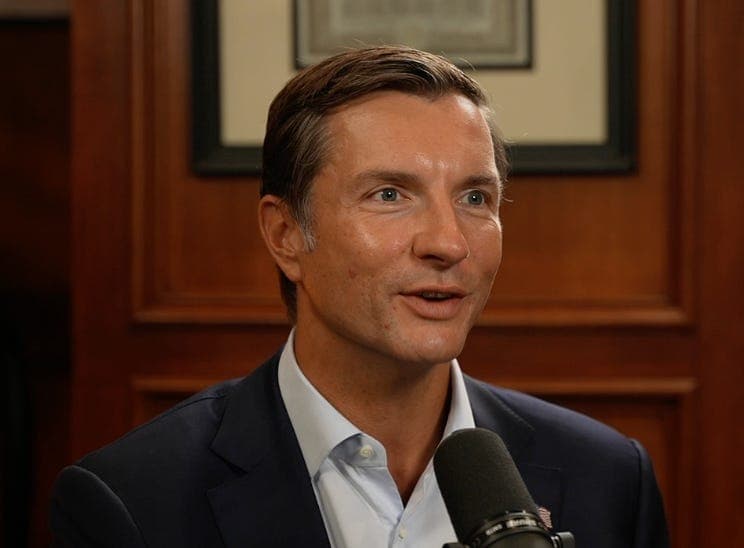
Overview In this episode, Joe Lonsdale interviews Eliot Hodges, CEO of Anduin, a startup focused on improving access to private investment markets. Hodges shares insights into the difficulties of navigating private markets and how Anduin is leveraging technology to streamline processes, democratize access, and ultimately enhance the innovation economy.
---
Key Topics
- Challenges in Private Markets
- Complexity and Inefficiency:
- Private markets are difficult to navigate, often requiring extensive legal documentation, which contrasts sharply with the simplicity of public market investments.
- Investors face cumbersome processes for onboarding and investment, often involving hundreds of pages of paperwork.
- Anduin's Approach
- Digitization of Private Markets:
- Anduin is developing a software platform to simplify the investment process for private markets, making it as easy as investing in public stocks.
- The platform has successfully onboarded over 25,000 investors and facilitated the raising of $45 billion in capital across nearly 500 funds.
- Eliot Hodges' Background
- Career Journey:
- Hodges previously worked at Palantir and Blend, gaining experience in tech-driven solutions for complex industries.
- He emphasizes the importance of understanding investor pain points and creating solutions that enhance user experience.
- Cultural and Global Workforce
- Innovative Team:
- Anduin employs a diverse team, including top engineering talent in Vietnam, which is reshaping the tech landscape.
- Hodges discusses the importance of collaboration across different cultures and how such diversity contributes to innovation.
- Future of Private Markets
- Market Growth:
- Private markets are projected to grow from a $15 trillion asset industry to $25 trillion in the coming years.
- Hodges expresses optimism about the democratization of these markets, allowing more investors and fund managers access to capital and opportunities.
- The Role of Technology
- Standardization and Streamlining:
- The rise of digital solutions is transforming how private investment is handled, allowing for more efficient onboarding and interaction with smaller investors.
- Hodges highlights the trend towards creating a seamless investment experience, likening it to how TurboTax has simplified tax filing.
---
Key Takeaways
- Need for Innovation in Private Markets: The complexity of private investment processes creates barriers for potential investors, necessitating innovative solutions to democratize access.
- Technology as a Driver: Anduin's platform is a crucial step in making private markets more accessible and efficient, reflecting broader trends in the investment landscape.
- Cultural Collaboration: The success of Anduin is attributed to the diverse expertise of its global team, demonstrating the power of international collaboration in technology and finance.
- Optimism for the Future: Reflecting on historical progress, Hodges shares a hopeful perspective on the potential for technology to foster collaboration and solve significant global challenges.
---
Conclusion This episode underscores the significant challenges and opportunities present in private markets. Eliot Hodges' insights into leveraging technology to streamline investment processes provide a hopeful outlook on the democratization of finance and the potential for innovative solutions to uplift the economy.
For more content and episodes, visit [American Optimist](https://blog.joelonsdale.com?utm_medium=podcast).
Written by AI. May contain mistakes. Listen to the episode to check what was said.
Transcript
Automatic transcript. May contain errors.0:00We've done some pilots where literally like filling out these forms is better than most rides at Disneyland. Like they, they love it. And it's so weird to me that, that filling out these forms is actually so satisfying, but it tells you how much pain everyone really understands their pain here. I've always said like, listen, we want to make this process, which people have loved to hate, and we want to turn it into a process that people love.
0:29Elliot Hodges is the CEO of Anduin. He was a superstar at pounds here at the technology company Blend as well. He's an avid mountain climber and adventurer, and he's doing amazing work right now focusing on the private markets. The private markets of capital, they tend to outperform the public markets they have over the last couple of decades, but it's a mess to transact in them. You want to subscribe to even to a top fund, hundreds of pages of legal work. There's no reason it shouldn't be a lot more like signing up to buy a public stock, but you're going to need some great technology to do that.
0:55That's where Elliot's taking us. He's working with hundreds of funds, has amazing momentum. Let's find out about the future of the private markets with Elliot Hodges. Elliot, we're excited to have you here with us today. Great to be here, Joe. Thank you. Elliot Hodges, the CEO of Anduin. And we'll talk about that. In your past, you were at Blend. You were at Palantir. You were in Afghanistan. I'd want to talk about the climbing mountains, though. What is this climbing mountains? Did this be started when you were in Afghanistan or what? So my background, I grew up in a German-American household.
1:23So I grew up in Washington, D.C. My father is from Pittsburgh, Pennsylvania. My mother's German. Uh, and, uh, part of being German is, uh, making sure that I spoke German as a kid and got sent to a German boarding school for several years and, uh, had the benefit of having a, um, uh, PE teacher who would take us down to, uh, Italy, um, into the Dolomites. And we'd do a lot of climbing then in the mid nineties. I mean, it was kind of crazy. Like this guy, um, that teacher would like take us up Mont Blanc. I was like in 10th grade, we would go up Mont Blanc routes that I'd later learned, um, that were just like pretty dangerous.
2:02And, um, but at the time, you know, it was very, uh, considered very adventurous and, um, you know, stopped for a while during college, but then sort of picked it up again, uh, moving back here in California. So, you know, climbing here in Yosemite and doing some international, uh, climbing in, you know, volcanoes in Mexico. I skied off a 20 ,000 foot mountain in Peru, skied off a 20 ,000 foot Pisco. How'd you get to the top of that? You get dropped off or we got, I mean, you know, you take a, take a plane to a nearby town and then you're at 10, 15 ,000 feet and then you take a truck up to 16 and then you hike up to 17, 17 and go from there.
2:39And, um, uh, it's, uh, I mean, it's pretty incredible. It's also really scary. And, um, so we've done that. I've obviously, now that I'm settled down, my, you know, my wife has kind of, uh, curtailed a lot of that. I won't go into details about trying to get life insurance when you self-identify as a climber. It's a challenge. That's funny. We'll have to go on a secret climbing trip for business purposes. Exactly. We do heliskiing, which is also somewhat risky, but not as risky as that, I think. It's a different, it's a lower level. So you were at Palantir. What years were you at Palantir? I was at Palantir.
3:11So I came out to the valley. I was one of those people who had the misfortune of graduating into the 02 recession from undergrad and then in the 09 recession from business school from Kellogg. So moved out to the Valley, as you know, it was like a much quieter place back in 2009. And I remember having a conversation with someone, just asking somebody like, what are the most exciting companies out here? And somebody said, well, there's this company called Facebook, which we all knew, right? Which at the time had a hundred million users. It sounded fantastically large, but the cat was out of the bag on that one.
3:43And then they'd mentioned this cool company that 50 people at the time called Palantir. And what resonated with me then was just that it sort of married the two worlds that the one world that I knew pretty well, which was Washington, DC, having grown up there, but it also married this world that I very so much wanted to be a part of, which was this sort of world of technology. So I knocked on Palantir's door several times before they actually let me in. There's a strong anti-MBA bias at that company. So which but there's only rare exceptions allowed. Only rare exceptions. So I think I got into my second or third try and I kind of but it was a fantastic ride.
4:23And, you know, where I focused my efforts on was sort of one sort of early business development into the some federal agencies, non non security related. but then also trying to get these big data companies, the LexisNexuses of the world, to play nice, I think, with the Palantir ecosystem in order to sort of enrich a lot of these investigatory and sort of data outcomes that Palantir was driving towards. And then you were at Blend for a little bit as well. And then I was at Blend. I joined a group of extremely talented sort of early Pounder employees at this other company called Blend and got to be part of that sort of, God, it was like first 20 who were looking to bring mortgages to the, you know, mortgage applications to the phone.
5:06And at the time, it was kind of considered outrageous. We had to convince people that, hey, people don't want to walk into a retail branch and fill out a five-page mortgage application form. And that's kind of when I joined. It's a very backwards industry. You guys brought the cloud. I think there's over$200 million of revenue in banks now. So, it worked. NEMA has to kind of pull out of the current market situation, but I'm still bullish on it. Absolutely. I think it's super exciting. It's really impressive what they've done there. And again, a lot more innovation, I think, that the credit unions and banks can take here.
5:38And you've played fintech, crypto-type stuff. And then what brought you to Anduin? What is Anduin? Well, Anduin is a, and by the way, the name Anduin comes, I have a weakness for companies named after the Lord of the Rings. So Anduin is the land of the rivers from the Lord of the Rings. And it is a startup that was really rooted in a lot of the pain that people feel when transacting in the private markets, aka any company that isn't public. And if you're an individual investor, it is extremely painful. It's a very exciting world because you're accessing the returns and the diversification that these hedge funds and private equity shops provide.
6:16And that's very exciting. But it's a highly analog process. And there's a lot of pain involved at every single point in the process. Sounds a little bit like blend with you. Five filling up five pages for a mortgage. My entire career has been about this sort of tech arbitrage into these sort of highly analog spaces. So if someone wants to buy a stock, they go on their Schwab or the Robinhood app and you click a button and you're done. Or in my case, I call my family office because I'm too lazy. I think myself, but, but for normal people now to click, but if you want to actually buy, like buy into a fund or you want to buy a private stock, there's a lot more complicated process.
6:48You have to fill out oftentimes it's called an LPA. It is a 50 to a hundred page static form, uh, that is very dense, uh, and is filled out incorrectly 90 % of the time. So the industry has a term called N I N I Joe or N I go, which is means not in good order, which means any one of these documents have one or more errors and it leads to horrible investor experiences. It leads to costly delays. Um, and I can't tell you how many emails I get from friends. You know, they send me emails, emails with subject headers, you know, FML, and it's sort of a 20 threaded email that they have. They want to make an investment.
7:25They're, you know, they're talking to some head of a German family office and they're just trying to align on the right, you know, form or, or Germans probably wouldn't even let you do it until it's all right, because they're picky. They're exactly picky. So what we effectively do is consumerize the, we help the funds, right, the GP, onboard their investors very quickly and efficiently into their investment vehicles. And what we do is we take these static LPAs and we consumerize them, right, to make them really dynamic and really easy for people to fill out. So the best analogy, again, is just the TurboTax analogy, where we now just build logic around all of these fields so that the investors never presented with extraneous information.
8:09And once they filled out one, I imagine it's much faster to fill out the next one if you have all the AI around that. All the AI, all the data. And I think that's the whole point here is where you can sort of build up a sort of a common data picture, I think, of these investor profiles. And no investor wants to fill out the same information. I mean, that's like literally the biggest pain point is like, If I invest in Fund A, I have to go through this process. And then you have slightly different docs asking for the same information in Fund B, and you have to go through the same thing again. And how big is this ecosystem?
8:39This is like a few thousand investors doing this. How many investors are on there in the world solving these types of problems for? Well, I mean, there are low tens of thousands of GPs globally, right, across hedge venture. U.S. is the largest market. You've got private equity. You've got Europe after that. I mean, right now, we've had 22 ,000 investors go through Anduin. We have about 4 % of the global private market, so$40 billion processed through Anduin. So you think maybe that means there's probably like several hundred thousand of these investors? Yeah, I think more critically, I think there's this huge democratization and retailization trend that's occurring in the private markets where we're building Anduin, And I think not just for the current GPs and the current LPs, it's really about the next wave of investors that want access to the space.
9:31Investors want access to the private markets. They want the diversification. They want those returns. But critically, you look at these GPs, they all want access to these smaller investors. So you want to be in smaller investors, but it's really high cost right now to do the bureaucracy and the legal forms and stuff. Absolutely. I mean, these funds have never truly had to operate. You know, they have these back offices that are largely dealing with largely manual processes. They're slammed and they've never really had to operate at sort of enormous amount of scale and interfacing with these smaller check sizes.
10:01But I think every single back office and middle office that we talk to, like the holy grail for them is like they want to diversify their LP base. Right. And everyone's just trying to figure out how can we operate on board, but also successfully interface with these investors at scale while providing an awesome investor experience. I think that's like the broader story here is how do we how do we go from providing one unhappy path to all of our investors to providing these configured happy paths for each individual investor? Because I think the end outcome people really want loyal investors that invest and reinvest and grow.
10:38They don't want them to think about any of these issues. Let's step back a little bit. So private markets, they've outperformed. Private markets means everything that's not like a normal public stock and a public bond, right? So there's venture funds, hedge funds, private equity. But in essence, these are funds that are taking money and that are going and doing things in private companies, whether they're loaning to them or investing in them. And these private markets have outperformed on average over the last few decades, even. I think it's been in the last couple of decades, it's like 14 % on average, depending on how you measure it, versus maybe 9 % or something for public markets.
11:08First of all, is that going to continue? Is there too much money in private markets? Are you bullish on this ecosystem as a whole? I mean, I'm enormously bullish. I mean, this is an ecosystem that's going to grow from, you know, it's slated. It's a$15 trillion asset industry today. It's going to be a$25 trillion asset industry in the next couple of years. And I don't think this is going away. And I think with improved technology, it'll be easier for people to invest and deploy this capital, which means we're lowering the barriers to entry for new emerging fund managers, but also making it easier and more affordable for these larger GPs to interface with these investor bases.
11:44So people might have new ideas about, here's things that need money that could be valuable to our world, and right now they're not getting money. So basically it allows people to start and create things in the world. Absolutely. And I think that's a super exciting future that I think everyone can look forward to. It's called the alternative investing world. It's called alts. Private markets are called the alts as well. Like, is all particularly exciting right now? Like, what are ways in which it's changing? Again, I think it's the democratization piece, which is big. I mean, listen, I sort of think about as this space starts to retailize and democratize, you know, there's probably going to be, you know, there's been sort of indications of more scrutiny from Washington.
12:22But I think the opportunity here is if we create a industry that's digitized, I think it can be responsive to any changes in the environment in a way that doesn't sort of negatively impact, you know, cause undue friction. Right. And so to strike a happy medium. And I think that's the world that we're trying to build towards. And so 2021, very good year in VC. 2020 was good. 21 was even better. They raised tons of money in the new venture capital funds. I think it's a few hundred billion. It's a record. 2022 wasn't quite as strong. Obviously, it started off strong and things were really down. Yeah.
12:56Like, what are you seeing at the end of 2022, start of 2023? Like, are they got subscriptions up? Are there more funds raising? Well, listen, like everyone, I mean, we're not seeing, I mean, it was like one of the things that I was like keeping a close sort of, you know, when the market started to turn last year, it was like, one of the things that I was sort of wondering about was like, what does this mean for demand? And like demand for our product has, if only it's only increased because of the denominator effect, because quite frankly, like, because this is now becoming a standard, right? because people have been doing this process with paper and email for a very long time.
13:30And this is kind of an investor led standard that investors are demanding. And it used to just be that onboarding an investor was just something you did. And if I was going to invest in a Sequoia fund, well, guess what? I would walk over some very hot coals to get my money into that fund. But it turns out like in this new environment, like you're on your onboarding process is your product. So so, I mean, that's certainly a trend. demand hasn't slackened one bit. And I think if anything, yeah, this is very much the standard. And the one data point that I just sort of point out there is the fact that law firms, and I can say this because my father is a lawyer, like the fact that lawyers are now adopting this technology, either trying to be shocking, it's pretty, it's, it's, it's massively shocking, but it tells you that they're in many cases, they're, they're leading, they're partnering, they're leading, and they're trying to bring this technology because their clients are demanding it.
14:21And the clients are demanding it because their investors are demanding it. And so that's because the lawyers are probably in some cases make more money if they just took longer with old fashioned ways. But this is almost like a high integrity thing for them to do. It also just makes them look stupid if they're not doing it. Yeah, I think they're sort of viewed as, you know, I think the smart ones get that their lever is providing awesome legal advice. And it's not charging hundreds of dollars an hour, ensuring sort of accurate form fill. um and so and again there's a very interesting it's been good for us but there's very much a um an arms race uh going on amongst the law firms everyone's trying to weaponize and get ready for this new world so it's at a point now we're there it's just about parity and uh and a defensive measure to have technology makes sense makes sense and even with the market slowing down there's so many more customers coming on the and it's growing fast uh so you took over and after it had already been started.
15:15And it was a really strong, my impression, engineering and product team. And they had a really good product that was close to being good. But you really started to focus it and grow the revenue. Tell me a little bit about that process. Yeah, I mean, listen, when I joined, I think the story was, here's this very exciting company with sort of deep product and engineering DNA that had built out sort of a series of private market products for various different stakeholders. Um, it was, uh, you know, I think when I joined Anduin at the time, we were kind of this uneven athlete, right. Where he had a strong upper torso and just very spindly legs.
15:49Right. So we had one salesperson when I joined and, you know, part of our goal here was to, you know, it was leg day every day for a while and the hiring, building of a BDR team and, and, and marketing. And I think for a long time, Anduin was just this like very well-kept secret. it. Um, and I think increasingly it's just cool to see the traction. And I think, uh, people talking about it. It's interesting to me because you can have a really good product, but unless you have a really good seal seem to get it out there, obviously it doesn't really work. And then obviously I think you focus the product more into in iterated on it, but I've noticed how it is growing virally now because it's become a standard, but you kind of had to get it out to enough people to get that viral growth to start or like, tell me a little bit the LP, we get, you know, we, we listened to that feedback very closely.
16:37We sort of see where, you know, we track NPS very, very closely. And again, I've always said like, listen, we want to make this process, which people have loved to hate and we want to turn it into a process that people love. And, um, I mean, we're now, I think we're like just shy of what an Apple type experience is. We've done some pilots where literally like filling out these forms is better than most rides at Disneyland. Like they, they love it. And it's so weird to me that, that filling out these forms is actually so satisfying, but it tells you how much pain. This is the first job I've ever had.
17:11At Palantir early days, we really had to educate people on their pain before we could sell them technology. Everyone really understands their pain here. And there were about two weeks of buyer's remorse between signing my contract with Anduin and starting. I was just like, well, I'm a first-time CEO. I'm managing a workforce remotely that's partially located in Vietnam of all places. Like this is like unlike any other company, by the way, like prior to Anduin, never even really heard about the private market. So that was entirely new to me. But the thing that was so interesting, like on my first day, my very first phone call that I had, we explained what we did.
17:50We explained, you know, this LP, the pain around LP onboarding. And somebody said, you don't need to explain this to me. This is the biggest pain in the butt of my life. Like, I'm so glad that you exist. And that was just sort of eye-opening to me. Like that, so glad that you exist. I've never heard that before. And so it's not felt like slinging software. It's more felt like people want us to solve these problems. The terrorists weren't so glad we existed at Palantir. They weren't. They weren't, yeah. Different types of problems. You mentioned the team's a lot of remote. A lot of this team is based in Vietnam.
18:19We've hired extraordinary people in Vietnam, really strong culture there. What's it like running that global team? Do you visit Vietnam a lot? How's the culture like there? You'll be shocked. I have yet because of COVID in the United States and then COVID in Vietnam where they had a hard lockdown. Yeah. To the point where people couldn't even leave their buildings. I have yet to visit Vietnam. So I'm actually going out in two weeks. And so couldn't be more excited. Very cool. I mean, listen, it's like, I mean, it's incredible. I think what I love about this company is a global U.S. Vietnamese organization that's bringing, like evolving the standard for private markets globally.
18:55Like that's, I think that's super exciting. And the fact that we have a company that's always working and advancing the ball for our clients, I think is super exciting. That's kind of cool, too. Like when you're sleeping, people out there are people are people are working. And it's 12 hours almost exactly right. It's like Texas. I think it's 12 hours from Vietnam. And so the only challenge is like it makes for, you know, my mornings, I sort of get get slung out of a get fired out of a cannon at six o 'clock and take calls with Vietnam. And then my afternoons are relatively quiet. But then I have calls with with with Vietnam in the evening.
19:26But we've made it work. Do you nap in the afternoon sometimes now? I'll sometimes take a nap and work out or do something. So I've learned to cherish my afternoons. And I've tried to sort of set some barriers around sort of evening goals to make sure they don't go too long. You shouldn't be up in the middle of the night every night helping out. That's the thing. So luckily, I have a kid, so that happens in any event. And I've noticed there's obviously very hard working culture in Vietnam. I'm amazed that obviously you get some really top engineers there that don't cost as much. I mean, people live very, very well in Vietnam on$50 ,000 is my impression.
20:01What do you think of the talent you've seen? Oh, the talent is, I mean, that was sort of the, we've got, I mean, on par with, you know, the best engineers that I worked with at Palantir and at Blend. And what's cool about Anduin was they were a pioneer. Like, who would have thought that there would be this vibrant startup culture in Vietnam? And Anduin was certainly one of the first companies to be there. Obviously, we no longer have sort of the right of first refusal on the best talent in Vietnam. I.e. there's just other companies out there. Things are now recruiting in Vietnam. So I think the word is out that there are great people there.
20:34But what I've loved at this company is like people come to Anduin because of the culture and critically, they stay because of the culture. And more importantly, and I've never had this happen at any other company where people leave the company. They'll be gone for one or two years and they'll actually come back to Anduin. Right. So they go to a different company or they do get a advanced Ph.D. degree, but they come back because they love the company. They love their peers and and they just learn tons. And I'm excited because I think we like we've got amazing engineers, but I don't think we've scratched the surface yet of like what they're truly capable of.
21:09And I'm just excited for all the innovation that's going to come in the private market. A lot you can build and a lot you can build more cheaply than your competitors, too, with that kind of talent. Absolutely. What are some of the most important principles and frameworks for building a SaaS company? Like as a builder, as a CEO, if you think through these things, like what frameworks are you excited about? Are you learning about God? I mean, listen, like, I think for us, it's just like, how do we gain access to these funds? And quite frankly, like establish feedback. I mean, it's really about establishing feedback loops.
21:36Right. And, um, and so whether it's our sales team or our CS team or the account management team, it stands for customers, customer success or customer support, like they're collecting, they're interfacing with customers every single day. And so to make sure that we're collecting the feedback, it's largely positive or negative, but like it's sometimes negative, but collecting that and making sure that that gets relayed back to the product team to make sure that we have just really high signal to noise ratio and that we're building the right stuff for our customers. So that's something that we just like, I mean, it's mostly about process to get that right.
22:12But that's something that we really focus. Sounds like you're really focused on customers and customers success and just like what they need to win the market. Oh, absolutely. And it could, cause I think for us, it's also like, we're now at this point where, God, we have hundreds of customers and really trying to avoid the squeaky wheel. Right. Yeah. There's always, there's always one off requests that are allowed, but then, yeah, that's always a challenge for me. Cause for me, it's somewhat intuitive, like what's needed to fix the high level problem. But now you have like 300 different feature requests.
22:41Then how do you optimize 300 feature requests? There has to be someone focused on that full time and prioritizing it. Yeah. Well, I think that's, we're sort of getting to that point. We're getting a lot of feedback, but it's just, you know, I think at the end of the day, it's about having like very clear personas and understanding like what's a journey, right. That is exciting to this customer. And then obviously giving plenty of room for validation. Let's jump into that a little bit. A persona is like the type of customer. So one persona is the lawyer. Another persona is the LP or the investor themselves.
23:10One persona is the different types of people, the fund. Exactly. And then you, then you develop these things are called roadmaps, right? Where you say, okay, over the next quarters, we're going, this is what we plan on building out. And this is what we know with a hundred percent certainty because there's, there's debt that we have to clean up and, or there's some urgent thing that we need to build in order to land this really big customer. And then obviously as you go down quarter wise, there's obviously sort of less certainty around what you build, but you have some signal. And so I think it's just this iterative process of where you're allowing your customers, you have a clear sense of who you're building for, you're creating these exciting journeys, what you believe to be exciting, or what you're seeing, and then you're just getting validation, I think, from the team, but also critically from the law firm or the fund admin and the fund that you're building.
Read the full transcript
23:58So, Andy, when you've tried to cultivate an open culture, you said, where all ideas will be heard, what does that actually mean in practice? Listen, I mean, you know, been working in the Valley now for over a decade, and, you You know, when you're not the CEO, you have the perception of the CEO as, you know, you hear all these like stories of, you know, Steve Jobs, you know, demanding the iPhone. And so the words, the stories that kind of get that become legendary, the ones where the CEO takes often a, you know, sort of a commend style approach. And, you know, I've sort of just have found that that style, like certainly with our team in Vietnam, it's just sort of not, I think, what resonates and actually moves the needle.
24:40So certainly it's something I'll do when I have to around topics that I'm certainly passionate about. And but I think fundamentally, I think, you know, it's about it's a culture of consultation and influence. And I mean, the good news is like at the end of the day, we have a whether it's here in the U.S. or in Vietnam. I think we're fully aligned on on on our mission. We all love this company. And and so that obviously helps. And and so, yeah, it's just about consulting properly and and making sure we arrive at the right outcome. And I want to ask you, we started American Optimist to kind of push back on the cynicism and pessimism we're seeing right now.
25:20And a lot of people, especially a lot of young people, are very negative on the future of the world. You've obviously lived through some pretty cynical things that happened in Afghanistan after your work there. Right now, you're working with a very inspiring company, but you're working with people in Vietnam, also a very poor country, a lot of suffering there. What gives you hope for the future? How do you see things that are going to be more positive? I mean, listen, I think the bigger picture here is, God, over 50 years ago, the United States was caught in a bloody civil war in Vietnam. 50 years later, we now have a company that is successfully collaborating within Vietnam.
25:54We have amazing engineers from from from Hanoi collaborating with people in Saigon who are in turn collaborating with engineers and salespeople and marketers in the United States to bring technology to fund admins and law firms and and GPs who are in turn serving sort of ever broadening audience of investors. and future investors who are in turn investing in new strategies, new funds, and new ideas. And that's something that's sort of hard not to be optimistic about, about that sort of bigger picture. And that's one that I'm excited to be a part of. That's awesome. People all around the world are working together.
26:33They're solving problems and they're putting money towards good things that are going to make the future better. Absolutely. I love it. Thanks, Elliot. Thank you.
From the publisher
How do we ensure that capital flows more efficiently to the best ideas and creates more value for society? One way is to enable more people to access the best investment opportunities, many of which are in private markets (aka alternative investments) that are notoriously difficult to navigate. It can take a team of lawyers to manage the mountain of paperwork and outdated analog processes — a stark contrast to one-click retail investing in public markets. Eliot Hodges, the CEO of Anduin, and his team are solving this problem. Anduin's software platform is digitizing the private markets and democratizing access — they've already helped more than 25,000 investors onboard at nearly 500 funds and raise over $45 billion in capital. An early employee at Palantir and Blend, Eliot explains his entrepreneurial journey and why Anduin's success is important for the innovation economy. What also makes Anduin unique is that it's a Silicon Valley startup employing top talent in Vietnam. Eliot discusses how he encourages collaboration across different cultures and why the caliber of engineering skills outside the U.S. is reshaping the tech landscape.
Thanks for following Joe Lonsdale! Subscribe for free to receive new posts and podcasts.
This is a public episode. If you would like to discuss this with other subscribers or get access to bonus episodes, visit blog.joelonsdale.com