In short
Podcast Notes: Joe Lonsdale: American Optimist
Episode Title
Ep 59: Adi Berlia on India's Remarkable Rise Out of Socialism & How to Strengthen U.S.-India Ties
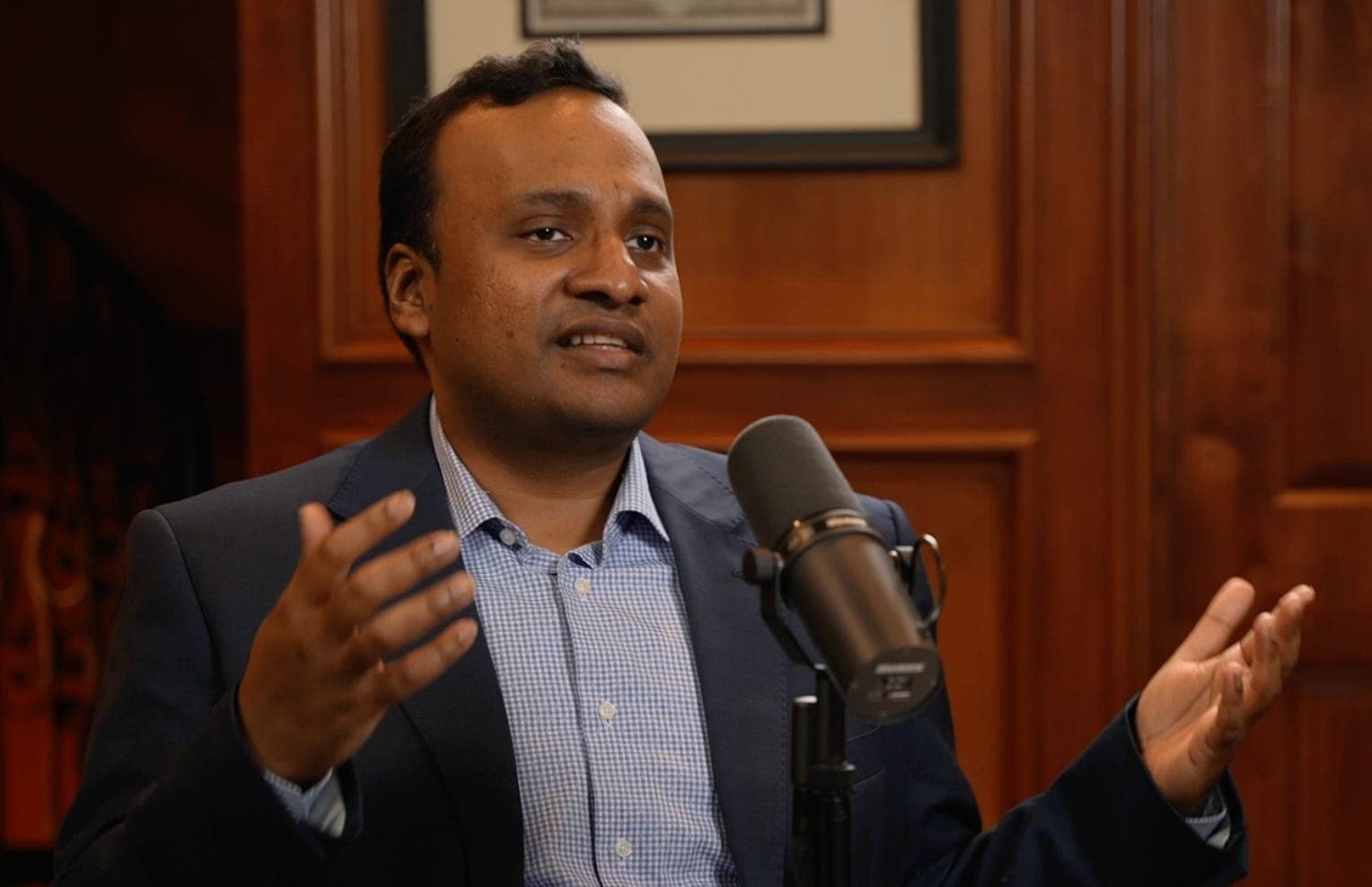
Episode Overview In this episode, Joe Lonsdale interviews Adi Berlia, a prominent entrepreneur, investor, and philanthropist, discussing India's transition from socialism to a vibrant entrepreneurial economy. They explore India's emerging role on the global stage, particularly in relation to U.S.-India relations, education reform, biotechnology, and the future of digital currencies.
---
Key Themes and Discussions
- Transformation of India’s Economy
- Historical Context: India previously operated under heavy socialist influences, where entrepreneurship was discouraged, and options for consumers were minimal (e.g., limited products and long wait times for services).
- 1991 Economic Reforms: A significant shift occurred when India decided to move away from socialism to foster economic growth—leading to dramatic improvements in consumer choice and entrepreneurship.
- Current Landscape: India is now one of the fastest-growing economies and has developed a robust entrepreneurial culture.
- Education as a Catalyst for Change
- Apeejay Stya University: Berlia co-founded India's first industry-focused university, aiming to blend technology and liberal arts education.
- Educational Philosophy: Emphasis on critical thinking, interdisciplinary studies, and practical applications to prepare students for real-world challenges.
- Challenges in Indian Education: The previous education system was heavily regulated, limiting innovation. New policies are beginning to change this landscape.
- Biotechnology and Healthcare Innovations
- Challenges with Regulations: Berlia discusses the lengthy and expensive process of bringing drugs to market in the U.S. and the need for reform in regulatory practices.
- Global Perspective: The need for a more agile and responsive regulatory framework to keep pace with rapid advancements in healthcare and biotechnology.
- The Role of Digital Currencies
- Economic Justice: Berlia highlights the potential of digital currencies to provide economic empowerment, especially in regions where currency volatility is a significant issue.
- Concerns with Centralized Digital Currencies: Potential risks of government control over digital currencies, including the ability to freeze accounts or restrict access.
- Geopolitical Dynamics
- India’s Position: India is navigating a complex geopolitical landscape, balancing relationships with both the U.S. and traditional allies like Russia.
- U.S.-India Relations: Consistency in U.S. foreign policy toward India is vital for strengthening ties, as is engagement in areas of mutual interest.
---
Key Takeaways
- Optimism for the Future: Both Lonsdale and Berlia express a hopeful outlook on the future of India and its partnership with the U.S.
- Empowering Entrepreneurs: The rise of small businesses and entrepreneurs in India represents a grassroots change that can drive national development.
- Interdependence of Economies: Stronger collaboration between India and the U.S. can benefit both nations, particularly in technology, education, and innovation.
- Cultural Exchange: The ongoing people-to-people connections between the two countries help build mutual trust and respect, solidifying their relationship.
---
Conclusion This episode highlights the remarkable transformation of India’s economic landscape, the importance of education and entrepreneurship, and the potential for a close partnership between the U.S. and India. Berlia’s insights provide a roadmap for understanding how these two nations can work together to face future global challenges.
---
For more insights and to follow further discussions, visit [Joe Lonsdale's blog](https://blog.joelonsdale.com?utm_medium=podcast).
Written by AI. May contain mistakes. Listen to the episode to check what was said.
Transcript
Automatic transcript. May contain errors.0:00It used to take three to five years to get a phone line. You would pay up front for a car and you had three options. And you had two toothpastes, right? There were like two television channels. And it was very much like Soviet Russia type stuff. And we had a massive crisis. And in 1991, the government said, look, in order to sort of get over our financial crisis to really grow, we need to switch off socialism.
0:30India is the largest democracy in the world. It's one of the fastest growing countries in the world today. My friend Adi Berlia is at the cutting edge of a lot of leading industries and businesses there. Let's find out from Adi how to think about India's path ahead the next decade. Really excited to have my friend, the philanthropist, entrepreneur, and all-around global man of mystery, Adi Berlia with us here today. Thanks, Adi. It's great to be here, Joe. I love the global man of mystery. I know how much more mysterious I can get, but happy to be here. And I love the name of your podcast, The American Optimist.
1:02I think we have so much to be optimistic about, both about the future of America and honestly about the entire world. So Adi, you grew up in India. What city were you born in? I was born in New Delhi. I wish I had some exotic little city that no one's heard of, but it's the capital. It was a fun, idealistic childhood. It's pretty cool. You have a family business in a few different areas. Tell us about your background. So, you know, grew up in India. I think third or fifth generation family business, just depends how you cut it. Yeah, grew up in a family that really prioritized two things. You know, one was what is the impact that we're having on the world?
1:39And so my classical education in my family was to wake up every morning and say, how are you making the world a better place? And that's through your actions. That includes, you know, the creation of wealth. But it's not just a creation of wealth as in how much money you can make, but what is the impact you're having on your community and society and how you're using that wealth, your connections, your intellect to really make a wide scale impact. And I think my childhood was really obsessed with learning from a lot of people. My grandfather in particular, who would just hold salons in his house and I would get to meet some amazing people who shared those common values.
2:18You've been an entrepreneur across multiple sectors, which your family has as well. Tell us a little bit more about that background. You had these salons at your grandfather's house. Would you learn about building from them? What would you learn? So I think there's sort of two, three aspects of this education, right? One is India itself. I think India, particularly when I was growing up, we were just getting off our socialist hangover. And pretty much there was a culture in India that if you had to do anything really amazing, you had to have two skills. One, you have to hack the system. Because the system, the government system, the government system, right?
2:50It was sort of engineered to make sure that a very small number of people succeed very well, but not allow a lot of people to be entrepreneurs. There was a license system. You could go to the government and they would give you a monopoly on a certain sector. So if you wanted to do anything new, innovative or novel, you had to find ways to work with the system as well. And so that was a very early education in being entrepreneurial that, OK, ask your question, how can you do things differently? How can you disrupt? How can you build something that's sustainable? And the second thing for India, any problem is a problem at scale that you're trying to solve.
3:28Right. I talked to my friends in Europe and they're looking at a total addressable market, number of people they want to have an impact. the entire country's population is 5, 10 million. That's half a city in India. I joke with some of my friends that their entire country is the size of my neighborhood. Because there's just so many hundreds of thousands of people. How many people are in India these days? What's the number? 1.3 billion people. But you were telling me there's only about 40 million who are middle class and above. So it's two different markets. It's two different markets. And my definition of middle class is a little bit different from a lot of classic middle class definitions.
4:02And these are people that if you're creating a value-added product beyond bottom of the pyramid, you have an addressable, easy market around about$40 million. After$40 million, you start to hit price points, which have to be very, very good. And that's when you start hitting the shampoo sachet markets. You start hitting people who have to take a lot of loans and credit to really participate in what you're trying to achieve. So these different markets, and I want to talk about what you went into, but I want to go back to a point you made. This is very interesting, I think, for a lot of people in America to think, what's a free society do?
4:36What's a socialist society do? India, as you said, was getting out of their socialist hangover. In a socialist society, the government is just really involved in business, and you have to hack it. You actually have to get permission to work in different areas. They actually grant people. This is a little bit how healthcare works in America. We're very top-down here, as an example. You get a lot of cartels that don't really function because it's so hard to get into these areas. But this was true of almost every industry in India for a while. You basically had to have a cartel, special permission, very low competition, huh?
5:06No, absolutely. And it was actually extreme. You had to, like, if you ran a steel company, right? Steel, huge, big investment capital. You would think these are people who are, you know, conquerors of industry, etc. And you would get a quota that you have to manufacture X amount of steel and you can manufacture X amount of steel. So bureaucrats decide how much you're doing. And obviously that lends to corruption. Because, hey, if you want to increase your quota of steel, someone has to okay that. And so it created a sort of a clubby system where those who had great contacts with bureaucrats, with the government, with the ministers, they're the ones who kept winning and winning and winning.
5:47If you were an entrepreneur who was trying something new, either you had one of these people who was your friend or a relative or someone who really thought you were smart and they wanted to support you. Otherwise, you had no option. This is fascinating because I think in America, just to tie it back a little bit for people, when we have areas where the government is growing, is regulating more, is getting more powerful, you see certain corporations start to have the same politics as those people in government. And when you say, oh, these world corporations, what are they doing? But that is actually a very strong incentive.
6:16The bigger the government is, the more the corporations are going to have to have the same views in order to get ahead in those areas. I think it's a little bit more than that. You know, once you grow to a certain size, and, you know, this is what I think Milton Friedman, there's a beautiful video of him. He made a great point. Now, there is a difference between a capitalist society and a crony capitalist society. And what tends to happen is that once you reach a certain size, you are highly incentivized to stop new entrants from coming in. And the only way to do that, and particularly in a democracy, is to do state capture, is to work very closely with governments, parrot what they're saying.
6:53And then, you know, when you were coming up, there weren't regulations or at that time you were saying, hey, this has to be free and open. But now more regulation actually works in large companies' favor because they have the money, the expertise, the people to get around those. It's the new entrants that are stuck. And I think that sort of creates this perverse incentive for even large corporations to actually get more regulated, to ask for more regulations because the new entrants can't really come in. It's a big barrier to entry. That makes sense. We got to be really wary of the politics of big corporations.
7:27Their incentives are to close things off. Absolutely. How did things open up more in India? They've opened up more. They're not perfect, obviously, but it's not what it was 30, 40 years ago. Why is that? So I think two, three things happened. One, it failed. You know, it used to take three to five years to get a phone line. Wow. You would pay up front for a car and you had three options. And you had two toothpastes, right? There were like two television channels. And it is very much like Soviet Russia type stuff, right? There were really limited options because if you hand out licenses to a very limited number of people, they're highly incentivized to not give consumers a choice.
8:03This is why always the cable companies here have been so bad because there's only one choice. Absolutely. And I think we had a massive crisis. And in 1991, the government said, look, in order to sort of get over our financial crisis to really grow, we need to switch off socialism. and we really need to embrace a more capitalistic economy. And you can understand for a democracy to do that, to just change their system midstream. It's a big move. It's a big move. And the effects were dramatic. I think in 10 years, you did not recognize India. We had a burst of our human development index just shooting up.
8:41We had actual consumer choice. Fast forward 10, 15 years from there, you could get a cell phone delivered to your home and there are like 10 people vying after you to sort of give you something. You have an impressive amount of entrepreneurship that's come up. And I think it's created a much more equal society. Today, even the common man feels that they are empowered and entitled to truly participate rather than, you know, just say, hey, there's a small number of people. And my calculation was something like 5 ,000 to 6 ,000 that decided everything. These people all control the top down. Now it's spread out.
9:16You must have been, what, six or seven years old when things started to open up. Absolutely. You went to Stanford with me. Milton Friedman was there at the time, actually. So let's start with your work in education. You're the co-founder of Abhijay Staya University, ASU, not the Arizona State University. Not the Arizona State. And, you know, they have an impressive social media presence in a lot of parties. And sometimes we have to explain to people it's a differentiator. You get in trouble in India. Adi, why do you have so many parties at university? All these girls from ASU, it's inappropriate.
9:46There you go. So, India's first industry-centric technology and liberal arts university. You know, one question we get asked a lot because, you know, building UATX, like, why build a new university versus go help another one or fix another one? What inspired you to do this? So, for us, I mean, we are one of India's oldest education nonprofits, right? We started building out colleges and schools, you know, right after independence in 1947. So, your family's proud of having been in education for a long time. Absolutely. My grandfather was a freedom fighter. After India got its freedom, he was invited to be in politics.
10:19He didn't think he wanted to do that at all. And his way of giving back to society was to, you know, start in his backyard a school. And that moved on. And, you know, as the business grew, you know, every year he would put some money aside. And, you know, we end up with something like by 2009, 2010, about 10 schools, 12 colleges. The problem is that because we had been there for so long and we'd worked very closely with the government, education in India was still very much top down. So the government told you what you could teach in the classroom. You had centralized authorities that would set the curriculum for the entire country.
10:59And no matter what your context, you had to learn approximately the same things. Regulations were really stifling innovation. We were still in road learning. I call the 90s sort of the dark ages of education in India. And now we have a very good new education policy. So I do want to say that they've done incredible work in the last three years at the top government level. But it's still top down saying what to teach. I think they're trying to change that. It's going to take them five years. I think they scared a lot of people by changing the policy. But it's a democracy. It's going to take five to ten years.
11:32But back in 2010, what we really wanted to demonstrate to the world is what a 21st century university looks like. And we had a lot of help. So we went to all the top universities in the US, in the UK. We went to CEOs, chairmen, and we asked them a very simple fundamental question. If you were to press the reset button and recreate a top university today, what would it be? How would it interact with students, with faculty, with industry? And our key takeaways were very simple. They said, look, the modern world is changing. The requirements of students coming in, especially if you want them to be leaders and great citizens, is changing.
12:06They need to critically think. They need to be aware of history. They have to be able to connect the dots across a wide variety of fields. They need to have a technical education to be able to really understand the world and have an impact. And when we put this together, we figured out there's no one has done anything like it in India. And so part of us was even going to, you know, provost, so very well-established top 10 universities in the U.S. and saying, you know, you guys are huge if you could press the reset button and change. And we got a huge amount of feedback from them. Oh, my God. It's probably very disparate feedback, I'm sure, from a lot of people.
12:42Absolutely. But I think one was very consistent. They fundamentally believed that things had to change, that the way education is done across the world and in India is not working. I think that was the impetus. You went to Stanford, Harvard afterwards as well. How is this different than your education in India? Tell us. What did you experience in American education that was different than what you had experienced? So I think one, what I loved about the American education is the freedom that they gave. I mean, we were at Stanford, right? We could take any class that we wanted. We could take any course.
13:15If we woke up one morning, two years in, we could say, hey, you know what? I want to be a doctor. And as long as you're willing to put in the time, effort, energy, and really work hard, anything was possible, right? Versus an Indian institution. And I know a lot of US institutions have this, but you basically at grade 11 or grade 12, when you still can't kind of figure out what you want to do in life, you pick a stream and then you're stuck with it for four years, right? The other thing is you sit in the same classroom with the same people, with the same professors, and everyone says, oh, you're getting an education.
13:47But a lot of times to me it felt it was just high school extended by four years. And I think if you really want to create entrepreneurs and leaders, you have to put agency in their hands very early on. You have to get them to take personal responsibility for their learning journeys. And you have to match that with a university system that allows them to do that. And quite frankly, for example, allows them to fail. But basically give them the freedom to fail. And I like that. Take personal responsibility for your learning journeys is important. People are the author of their own lives. Sounds like you're talking about freedom to me.
14:18No, absolutely. And I think part of us was why it took us so long. I mean, we had 40, 50 years of creating colleges. Why did it take us so long to do a university? and because every time we met the government, we said we just want two, three basic things. We want academic freedom and we want the freedom to choose who we admit and we want operational freedoms. And before 2010, most of them were unwilling to give us these three, which is a little bit shocking, but I mean, that was the system that was India. I think now, fast forward 2022, we've sort of acted, I hope, as a metric of how other universities think, how the government can think about regulations as well.
14:56Now they are a lot more open. But back then, this was revolutionary. I still remember a press conference where we said, hey, we are doing these 11 core subjects and we are going to have engineers learn philosophy and psychology and maybe improv and photography. And this reporter stands up and he says, why are you making terrible engineers by making them learn philosophy? Yeah, no, it's funny. People assume engineers are bad if they do philosophy, which is very funny because actually here sometimes we even go too extreme the other way. But by the way, Elon Musk, Peter Thiel, Charles Koch, as we've had on this show, they're all philosophers.
15:30They're success. And they're all, you know, except for Peter, maybe they're engineers as well. So, I mean, having both of them is pretty useful. For us, our key takeaway, it's one world. Yeah. Right. There are different ways and frameworks of looking at it. Right. But it's still one world. and the more frameworks and perspectives you understand, I think that just makes you better at everything, whether you're trying to build a company or you're trying to solve an environmental problem or you're trying to work in politics. It's just understanding the world better from a different perspective. And thinking about the world.
15:58My friends who are leaders like Elon Musk who think about the world, they come to some very powerful conclusions, they do some very ambitious things. A lot of the engineers who just go along with whatever the politics they're told is, they don't think at all about the world, they just do what they're told. And I think that ends up actually causing more problems than people who are taught to think for themselves. And absolutely. I mean, look at how naive we were in the 2000s. You know, I remember us being in the Bay Area in tech. And we all thought that if you just sprinkle tech into everything, we'll solve all the worst problems, right?
16:27I mean, fast, but like 15, 20 years. I've had to eat crow a lot in saying that, well, you know, yeah, I mean, if you don't know what you're building, why you're building it, who you're impacting and what the long-term ramifications are. You can cause some big issues, obviously. That's a lot of trouble. I want to ask you on that. You recently chaired a conference or a panel in Japan on DeFi and crypto, on central bank digital currencies. So speaking of sprinkling tech into certain areas of the world, what are your thoughts on that area? What inspired you to talk about crypto in that context? So, you know, one thing, Joe, which drives me absolutely crazy, right, is that the perspective on digital currencies and all is still very much a first world problem, right?
17:09I love the concept of having a libertarian view of currencies, giving people choice. But the true impact is about economic justice. And by economic justice, I mean the vast majority of the world. They are born into a particular country. They can't immigrate. And the economic system is foisted upon them. They can't decide that whatever the local currency, often very volatile, the moment they get paid the next morning, it's already devalued or it's going up. they can't convert it to a stable currency like the US dollar or the euro or the pound. But in Africa, for example, a lot of people are using US dollar coin, which is a version of crypto tied to the US dollar.
17:49Exactly right. So that's what they're trying to solve for, is basically these people are beholden to their governments and their central banks, often who are not the best at setting monetary policy. If I am a freelancer sitting in Africa, my clients are all across the world. I'm earning in dollars and euros. It's been converted to my local currency because I have to pay taxes. But I can't invest in capital markets. I can't access the worldwide financial system. I'm a small business. I can't take loans there. I am stuck in a very high interest rate. Crypto in a way to give people access to markets.
18:23It's about economic justice. Now, where I think the failure of certain cryptocurrencies have come, and which is why I loved them earlier, was the volatility doesn't give the same stability that we would have hoped for economic justice. And I think that's where country-backed digital currencies come. But what's ended up is that we've now stuck in an arms race, right? Because the problem is so vast, and you've already said it, like you have Africa who's going for a USDT, right? They're going for USDC. You have people who are trying to find proxies for stable currencies. But if you look at if somebody came out with a China renminbi or a US dollar or a euro, The first country that gets out a widely used digital currency that a lot of the world can adopt for personal consumption, trade and stability is going to take up rapid, rapid market share.
19:15And that's amazing in some ways, but it's also dangerous because you have economies and people beholden to whichever country now, in effect, has taken over their financial system. It's not just whichever country, it's the people within that country. So one thing I'm very personally concerned about is a digital dollar that can be turned on and off at whims. So you get these woke committees in the background and they say, oh, you're being penalized for this. And suddenly, rather than it being my money, it's money that someone decides they're going to turn off. The same way Twitter would turn off for the wrong reasons, those same people are in the government and they could turn them off for the wrong reasons.
19:48That seems really scary to me to give them that power. It's very scary. But let's look at a more broader political context. Let's say the Chinese cryptocurrency or the Indian cryptocurrency or any cryptocurrency starts to take headway in a country. They can go to the government and say, or even the U.S. dollar, for example, that, hey, if you don't listen to us, we're going to turn off. Exactly. For all your people in this neighborhood or all those are associated with a particular political party in your country. Which it seems like this is why we would never use these things, because who's going to keep their money on something that could be turned off?
20:21You think, right? But I think the problem with the current monetary system is so stark once you go beyond the first world, it is really hard to transact. It is really hard to get finance. Is independent USDC a better solution? Because if they turn something off, they know no one's ever going to work with them again. So they're a company, right? So isn't it better to have an incentive and have competing groups that can compete rather than a centralized government solution that's much scarier? Absolutely. But the issue is about credibility, right? We've had FTX blow up. We've had a lot of other currency exchanges blow up.
20:52You need a mechanism that gives them credibility. You have a mechanism that gives them freedom and credibility, and that comes out of just regulation. And I really hope the U.S. takes lead on this because I think there are only maybe four or five economies in the world that have the credibility to really put out something that a vast majority of the world would want to use. And quite frankly, it's a race. Is it going to be China? Is it going to be U.S.? Is it going to be Europe? The respective viewpoint, I hope the winners are private companies with the U.S. dollar coins rather than the government.
21:21But I understand where you're coming from. No, but in the sense that I think an ideal system, which you have said, is something that a framework in the U.S. that allows private companies to sort of take the lead. And there is competition among them. And they're able to. And transparent regulatory frameworks. Exactly. And by the way, those regulatory frameworks could be driven by the market as well if it's done correctly. And people could learn, okay, don't trust it unless I have this regulator, which I'm going to go along with. This is what happens if the government doesn't crowd out those frameworks.
21:47And it's great for the U.S. because it gets to have the best of both worlds. It gets to keep the dollar as the fiat currency of the entire world, which is really important for the U.S. But also it allows that transparency for countries to, rather than feel that their currency is being invaded by this foreign currency, actually say, you know what, we really like what this company is doing and their philosophy and how they're doing it. We're going to work with them, actually, to sort of help our currency and economy be stronger, better, and come up with a better world. Totally makes sense. Adi, you're a man who wears many hats.
22:18I want to ask you a bit about biotech and pharma. You're active in these areas. You presented India's drug policy to global conferences on behalf of the government. Tell us about the work you're doing, first of all, in policy in this area and the challenges India faces. So I think one is that, you know, in 2022, what we've seen is a huge, huge change in how the world sort of views the role of pharmaceuticals, the role of health care. I think if you look at the amazing innovations we've had in the last 20, 30 years, and the amazing innovation that we see that's coming out in the next 10, 20 years, it's going to fundamentally change the quality of life that we've had.
Read the full transcript
22:54And I think people don't really understand how much their lives are better because of the amount of work both private companies and to some extent government labs and all have done across the world in really pushing for certain things that make a difference in people's lives. The problem what happens is that the regulations that we've had, particularly around pharmaceuticals, biotech, are sort of still made for issues that we faced 10, 20, 30 years ago. Just to take an example, if you wanted to sell generic drugs very cheaply to U.S. consumers, the way the current structure is, you have to have a 5 to 10 to 15 year timeline or horizon to make it happen.
23:35Why? Why does it take 5 to 15 years? Because so the current structure is that by the time you set up a factory, you start getting the approvals from the USFDA, wait for their inspections, put in your dossiers. How long does the inspection take to get done? So the inspection, so the USFDA is really good at inspection. And that's something I'm very happy with them. They do amazing jobs. You better say they're really good because otherwise they'll go get you. No, no, but genuinely, if you ask me who would you rather be inspected by the US FDA than some other drug authority, I think they really follow the spirit of what they're trying to do during the inspection, especially the rank and file, compared to like a checklist or something there.
24:14The problem is that you have to take a big leap of faith that you'll pass this inspection once you have the factory ready, once you've done a couple of lines of production, then you can apply to them to come and have a look. That's four to five to six years out. Really? So it's a big investment, big risk. It's a big investment and a big risk versus what some other countries are now doing and the WHO is starting that saying, hey, why don't you come and get pre-approval at the start? We'll approve your plans. We'll approve the factory. We'll approve all of this. So you can go in knowing that in two years, three years.
24:48If we do what we say we're going to do, then we can get it done in a few years instead. So I think part of it is just the way regulations right now are structured, clinical trials. It takes half a billion, a billion, two billion dollars to get any sort of therapy really into the market. You built a company early on, right, in helping with clinical trials? Or you did a lot of work on that? Yes, we did. So it was in 2006, 2007. I had a wonderful co-founder, Chris Isert, who was also from our fraternity at Stanford. And what we realized was that the average cost of technology involved in clinical trials was something like at that time, about half a million dollars.
25:28But you could do it for$50 ,000. I think the problem was that really entrepreneurs and disruptors hadn't really shown up on the scene. They were still using a lot of old technology, old processes. And honestly, although we ended up moving on from that company, 15 years later, a lot of those opportunities still exist. It shouldn't cost half a billion, a billion dollars to run every clinical trial. And even though it costs half a billion, billion dollars, you maybe have five of them going on now with your family business here in the U.S., I understand. Why are you doing that in the U.S. if it's so expensive here?
26:03So one is because you need U.S. data, right? So without going to the weeds on how clinical trials works and all of that, but essentially to get the regulator to really believe in your data. So this is a big market. You want to sell here. In order to sell here, you need to get the data from here. At least some of the data from here. And the way it's designed, the healthcare system, the regulations, etc., it's fundamentally very expensive to do that. And that results in very high prices for U.S. consumers because at the end of the day, if it's going to cost you half a billion, billion dollars to get a drug to them, even though you know it works, at, you know, those companies need to get that money back versus India, where it would cost you 50 million or, you know, 25 million.
26:48I mean, if it's so much cheaper in India and Indian markets growing, I mean, I mean, wouldn't some of this market eventually shift over to India and you'd be doing more trials there because that would just work because there's a billion people there? I think it's already happened. And what we're seeing is particularly with late stage biotech and late stage pharma who get it. That's to say, you know what, our US launch is going to to be three to five years over. Let's launch in India. Let's launch in Europe. Let's launch there, get the data, work with the regulators there. And so we are seeing companies targeted towards the U.S.
27:20market. That's their final aim because that's where the real money and the payoff is for them. But they're giving therapeutic access to a lot more different countries because their regulators can process this faster. They can do the clinical trials faster. They can generate the data faster. And that's what's happening. And it ends up being great for the U.S. because you do see a lot of data being generated in those countries. We really get cheaper data that we can then use to do more here. If you were advising, for example, the next president to say that, say, whoever's next president is going to control Congress, going to control the presidency, like what should American policy be on this to make it work better?
27:54I think one is really look at the regulations. There are very good sound regulations to protect the American consumer. And you can't throw that out. And that's why the USFDA was made, and it does a great job. What we really need is to figure out that, look, we need to make the regulations work for the people. And that means really figure out how do we make sure that innovators get paid for the great work that they're doing. But at the same time, how do we cut the red tape? How do we make it really easy for new people to come into this market and to prioritize the market saying that, look, we have to do this very, very quickly.
28:30And we've seen good offshoots of that started. You see the COVID-19 vaccine, the speed at which it was approved, right? Operation warp speed. Operation warp speed. We can argue back and forth whether that was a good idea or not. I was certainly surprised. I think if the government puts its mind to it, if it really prioritize it, I don't know about six months now, but I think they could convert three to five years easily to about a year or two and really accelerate the pace of this innovation. I totally agree. I think that'd be a huge deal. I want to talk briefly about geopolitics because you have an interesting perspective in India.
29:04You've moved to Dubai. You're based in Dubai, but you obviously have a lot of family and business in India and around the world. And, you know, India is an interesting place. It's becoming a bigger power in the world, has complicated relationships with Moscow and Beijing. First of all, with the rise of China and India, how does the world look different in 20 or 30 years? Where are we going? So I think part of it is, so I would sort of divide this into a couple of phases, right? One, you have China, which is doing really well. They are growing massively. They are having issues right now. Is their tech sector being really messy right now?
29:36All these guys being afraid of the ruler? Absolutely. And when you have that sort of power, but they have economic power, if you look at a graph that shows, you know, total trade with the major country, 2000, it's all US. and you have 2020, it's all China, right? And so you do see a pivot to Asia. What percent is China versus U.S. right now? Maybe show a graph on the screen, I guess, or look at this. Yeah, but I think something like 70 or 80 % of the countries have China as their primary trading partner. It's the biggest impact. It's become the big place where they manufacture, where they do lots of things.
30:11Absolutely, right? But more than that, now it's becoming one of their biggest markets. If you look at Europe and Germany and all of that, China is a major, major market. They become a huge consumer. And India will become even a bigger consumer probably in the next decade. Probably, right. But I think what's very interesting about India is that we're a democracy. And if you see the amazing path, and it's truly amazing, you have to credit China for in 10 to 15 years, the kind of numbers they've thrown up in terms of really getting their people from A to Z. India has to take a more nuanced approach.
30:42And I think India has some very big strategic choices to make. But at the end of the day, Joe, we have 1.3 billion people, right? And last 10 years, I think the government has done a fantastic job in creating infrastructure, roads, highways, electricity, airports. And you have all this infrastructure. You also have, by the way, a technology sector. There's now more unicorns per year recently in India than China, as China falls and India seems to be rising there. I mean, the talent we're seeing in India, in Chennai, in Bangalore, in New Delhi, it's just amazing people. We're super lucky. I think maybe 10, 15 years ago, that talent would move to the US.
31:16And we're seeing a lot of Indians at the helm of a large number of companies. And it's the ecosystem in India in terms of venture capital, in terms of banking, finance. A lot of the best ones still come here, but a lot of them are staying and building in India. And they're able to because the ecosystem supports them, right? If you want innovation, you want entrepreneurs. Fundamentally, an ecosystem is what drives them. And I think that's what the difference is between countries who are able to create a lot of entrepreneurship. and countries that cannot is do they have a supporting environment?
31:46Now that the ecosystem is going, it seems like that's a really big deal. It's going to take off the next decade. I think it's already taken off. You know, part of it, and I give full credit to our government for this, you know, there are really, 20 years ago, being an entrepreneur was a bad word in India, right? That meant you were a capitalistic pig. You were taking advantage of people. You were an exploiter of people, right? And, you know, hey, these guys are the bad people. now you talk to college students, right? All they want to be is entrepreneurs. That's awesome. They see lots of examples of that having positive impact, having success, and it's so healthy for that society.
32:22And at all levels. I mean, I think traditionally when people think entrepreneurs, they think startups, they think scale, they think unicorns. But the biggest impact that you have on a massive scale in a country like India is the small entrepreneurs. It's small businesses, people who see a problem or a missing issue in their community, and they come up to try to solve it, and they make money along the way. If you have a country where at the very basic in every little community, village, and society, you have people trying to solve problems and build things, that to me is 100, 200, 500x more powerful than anything you can do top down.
32:59You really have that grassroots resurgence of entrepreneurship that can change the face of a nation. I love it. And I want to ask one more question on geopolitics, just to understand for people, One thing a lot of people don't realize is a lot of the Indian elite are not necessarily happy about what's going on in Ukraine. They think that America maybe helped cause some of the issue, even though Putin maybe is the bad guy. America kind of did things and handled it wrong. And there's a lot of people who don't always have as warm feelings to the U.S. as I would like. I see India as a natural ally.
33:28I'd like us to be very close in 10, 20 years. I think it's very important for the world that we collaborate. What can America do over the next decade to make sure it keeps India as an ally? How should we be thinking about that situation? I think consistency. If you look at India, U.S. past 20, 30, 40 years, right, one of the problems is that as government changes, right, as people change, as Congress changes, you see a little bit of a change in how foreign policy and particularly the way India is engaged. I think every government in the U.S. has prioritized India. They've always said, you know, it is one of our key focuses, But their ability to be constant and consistent in embracing them as a true ally sometimes goes back and forth.
34:10And I think India is coming out from a hangover when it was part of the non-alignment movement. Its best friend was honestly Russia. Every vote at the UN Council, Russia's backed India to the hilt for decades, consistently so. And so you have a lot of people in India. And I won't say the elites. I think the elites are very aligned with the U.S. But you have the common people who see like, look, here's Russia. They've always been there for us through thick end to thin, no matter what happened. And we have the U.S. who we love and we like to move to and immigrate to. And we love their economics and their policy and their freedom.
34:46But do they have our back? And I think demonstrating that consistently on a bipartisan basis would give an immense amount of confidence to all levels of Indian society, saying that, look, the U.S. is not just our natural ally, but both countries are willing to put in the effort to really come close together. Because India gets it as well. The U.S. is its natural ally. Our economy, our people, language, everything else, the U.S. is a fantastic fit. But I think both countries need to show the compounding of better relations. We need to have mutual respect and we need to make sure we're always doing the right thing.
35:25This is also one of the reasons why the visa issue is so important to me because so many Indian nationals are being disrespected in terms of being able to come here, in terms of waits of hundreds of days to see family. And yeah, I totally agree. It's important that we have a respectful relationship. That's really important for the U.S. And, you know, honestly, for both U.S. and India, and I put India on the spot as this, you want to put not just your best foot forward. You want to almost court each other. What are we doing to make you feel special? Right. You know, in the sense that, great, you know, you can fight and argue and friends fight and argue all the time.
35:57allies fight and argue all the time. You can have disagreements. But are you saying that, look, this is a special relationship, the way the U.S. treats the U.K. And both countries, we are going to go out of our way to show our goodwill. And I think if you compound that, even over five to 10 years, you're just going to see a dramatic change. And the only thing about the visa spot, look, I'm very happy that we get to keep our entrepreneurs because they don't move to the U.S. Thanks to the visa issue. But I think in terms of what's really strengthened and helped India and the U.S., even at the worst times, has been the people to people connect.
36:33It's been the soft power of having a lot of Americans who know India and have been in India and are in India. A lot of Indians who are in the U.S. and can, you know, and have the privilege of being able to call their government and saying, no, these guys are really great people. You need to sit down and you need to solve this because, you know, there is a lot of trust that has been built year over year over year. And I think it's amazing for America if they can come up with a robust visa policy. I do understand the issues with, you know, worrying about, you know, a large horde of illegal Indian immigrants sort of showing up.
37:05I don't know if we're too worried about large hordes. But I think a lot of countries, Australia, Canada, Singapore, they've all figured out how to engineer visa systems. Play electronically quickly. To do it quickly, you know, set in safeguards that you attract the people who are really going to invest in the U.S. Spend time there. We'll get our stuff together. Don't worry. So, you know, we started the American Optimist to push back against cynicism and pessimism that we see. You know, a lot of young people are very negative. I think our best days are behind us. Like, what would you say to these young people?
37:37And what do you see the future of America's role and responsibility in the world? You know, and I gave a talk at an event at the Dubai Expo at the American Pavilion. And, you know, one of the big points which I made was that, look, if you really want to look at the future of innovation, of where we are going as a society, as humanity, America is still the leading light here. Right. And principally because we have great tech coming out of China. India is catching up, but we're 20, 30 years away. But if you're looking at coming to solve some of the greatest problems faced by humanity, it is still led by America, America's university systems, America's companies, America's private capital, and America's private enterprise.
38:24I can think of no other country where if somebody has a great idea and they're willing to work hard for it, they can come in and get completely uplifted from zero to 100. If you look at the freedom that people enjoy here to create, the freedom that they enjoy here to sort of be authentically themselves. Now, I see a lot of cynicism that, oh, you know, there's a pushback and things are not as great and we don't do things that well. But look at the comparison with what's happening in the rest of the world. I still think America is the best place on earth to build great businesses, to really have great ideas.
39:00And the sheer intellectual ability here for people to disagree and fight and honestly still remain standing at the end of the day still amazes me. Where I think, which is an interesting thing that America is going through, and this is just a third party perspective from outside. I think maybe 15, 20 years ago when I met most Americans, when I met the taxi drivers or a CEO, they sort of had almost the same idea of what the American dreams look like. And I think what's happened to America has gotten so wealthy and so successful, and it's sort of blown so many social markers off the path. There is a social rethink of what the American dream looks like.
39:42And it's almost people trying to uplift their consciousness to a new level because they have the luxury to do so. I think a lot of countries don't have the luxuries. They are still trying to say, hey, we need to get people fed and eliminate poverty and get basic things in. We're trying to learn how to work on the next level of problems. And the next level of human evolution. And those are great problems to have because that's what you're doing. And I think that's where the fundamental disagreements are happening in America is what does that look like? How do we get together to really do it? But for a young person, that's amazing problems to solve.
40:17And I think the U.S. is still the best place to look at those problems and really, really find the ecosystem support to solve for them. Awesome. That's a great note to end it on. Adi, thanks so much for joining us. Wonderful to be here, Joe. And thank you for some very interesting questions.
From the publisher
In India, "entrepreneur" was once a dirty word; today it's one of the most desirable career paths for young people. How did this transformation occur? How did the world's largest democracy break out of socialism? What does the remarkable rise of India augur for the 21st century?We explore these questions and more with Aditya Berlia, a serial entrepreneur, investor, philanthropist, and the co-founder and pro-chancellor of the Apeejay Stya University (ASU). Adi discusses his pioneering efforts in India's education sector, including building ASU — the country's first industry-focused technology and liberal arts university. He also explains his work around the world in biotech and how the U.S. FDA can more effectively partner with international manufacturers looking to access U.S. markets. Finally, he provides a unique perspective on America's challenges and how the world's two largest democracies can more closely ally and partner in the decades ahead.
Thanks for following Joe Lonsdale! Subscribe for free to receive new posts and podcasts.
This is a public episode. If you would like to discuss this with other subscribers or get access to bonus episodes, visit blog.joelonsdale.com