In short
Podcast Summary: Joe Lonsdale: American Optimist - Episode 60: Dr. Rebekah Gee Is Reinventing In-Home Care With Nest Health
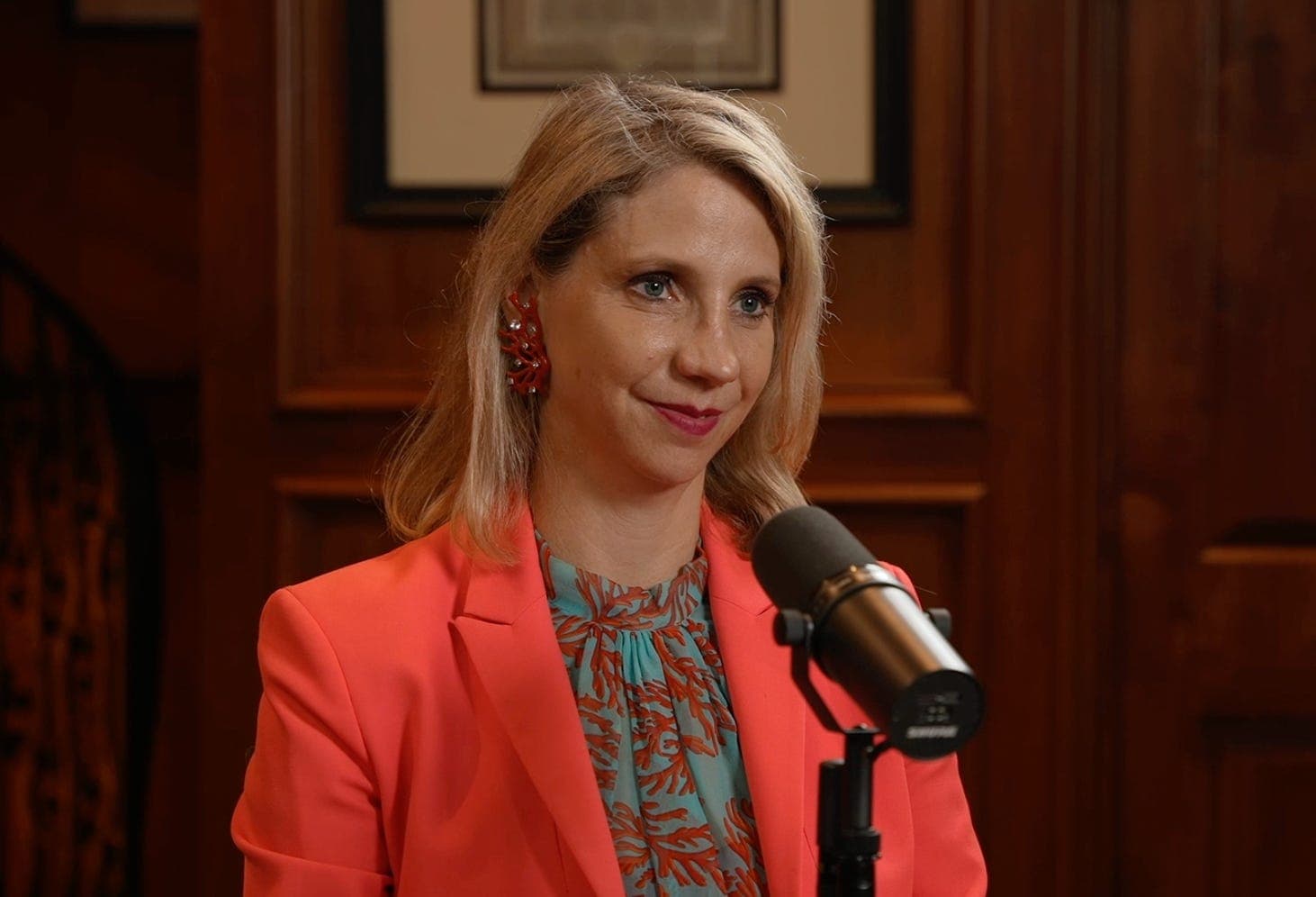
Overview In this episode of American Optimist, Joe Lonsdale interviews Dr. Rebekah Gee, the founder of Nest Health, a startup aiming to innovate in-home healthcare. Dr. Gee discusses her background, challenges within the healthcare system, and the transformative potential of Nest Health's value-based care model for families, especially those on Medicaid.
Key Themes
- In-Home Healthcare Revolution: Nest Health is modernizing the house call, a historical practice in medicine, to improve accessibility and outcomes for families, particularly in disadvantaged communities.
- Challenges in Healthcare System: Dr. Gee highlights systemic inefficiencies and the political complexities surrounding Medicaid and healthcare funding.
- Value-Based Care Model: The focus shifts from fee-for-service to a model where providers are incentivized to keep families healthy rather than merely treating illnesses.
Dr. Rebekah Gee's Background
- Trained OBGYN with extensive experience in health policy, including:
- Former Secretary of Louisiana's Department of Health.
- Leadership roles in healthcare reform initiatives and budget management.
- Proven record in negotiating drug pricing, such as with the Hepatitis-C drug Sovaldi.
- Focus on maternal and child health, emphasizing the importance of quality improvement and access to healthcare services.
Key Discussions The Need for Change in In-Home Care
- Problem Identification: Current healthcare practices often fail to address the root causes of health issues within families.
- Holistic Approach: Nest Health treats entire families at home, providing services like primary care, vaccinations, and mental health screenings in a single visit.
Challenges in Medicaid and Healthcare
- Dr. Gee discusses the complexities of Medicaid, emphasizing the zero-sum nature of state budgets where increased healthcare spending can reduce funding for education and other essential services.
- Political Resistance: The entrenched interests of various stakeholders in the healthcare system, including pharmaceutical companies and health systems, complicate efforts for reform.
Nest Health's Value-Based Care Approach
- Nest Health aims to align incentives between providers and payers, focusing on preventative care to reduce costs and improve health outcomes.
- The model stresses the importance of long-term health, aiming to prevent conditions rather than solely treating them post-factum.
Cultural and Systemic Issues
- The episode discusses broader cultural issues such as childcare access, transportation barriers for healthcare access, and the cycle of poverty that affects health.
- Dr. Gee emphasizes the need for systemic change to support single mothers and low-income families in accessing necessary healthcare.
Notable Quotes
- “We’re not solving the easy problems when they’re easily solvable, but we’re willing to spend a ton of money at the last minute.” - Dr. Rebekah Gee
- “The wellbeing of parents and children are intimately connected.” - Dr. Rebekah Gee
Conclusion Dr. Rebekah Gee's work with Nest Health represents a hopeful shift in how healthcare can be delivered in America, especially for marginalized populations. By focusing on family-centric care, the startup seeks to address healthcare inequities and improve overall health outcomes in a sustainable and cost-effective manner.
Call to Action Listeners are encouraged to reflect on the importance of innovative healthcare solutions that prioritize preventative care and the wellbeing of entire families. The discussion offers insight into the potential for positive change in the healthcare system when driven by entrepreneurial spirit and a commitment to public health.
Written by AI. May contain mistakes. Listen to the episode to check what was said.
Transcript
Automatic transcript. May contain errors.0:00We're not solving the easy problems when they're easily solvable, but we're willing to spend a ton of money. At the last minute, I wanted to save it. Yeah. Right. So Nest is really getting at the root cause of so many of these things. We come to the home, take care of the entire family. We do primary care, vaccines, blood draws. Everything that's in a PCP's office is in a bag we bring with us.
0:29Rebecca Gee is one of the most interesting thinkers in healthcare in our country. She ran the Louisiana Department of Health. She's done all sorts of policy that's helped all sorts of people. She's run a big health system herself. Now she's running Nest, a really exciting startup that's approaching how to help moms and babies with value-based care. She's recreating the home visit, turns out. This traditional home visit is a great way to treat families. You can get 15 things done at once versus everyone having to go in individually. The only chance we have to provide health care to everyone well, we have to raise productivity, help more people for less.
1:00Rebecca has some great ideas about this. Let's hear from her. Rebecca, you ran a health system most recently, LSU Health, before starting Nest Health. But before that, you were also the former secretary of Louisiana's Department of Health, right? That's right. You've been in the government. You've been running a health system. Now you're doing a startup. Tell us a little bit about your background. Sure. So I'm an OBGYN, still practicing a little bit. I have a background in health policy. I've done health policy at the federal level, doing reforms around drug pricing, maternal mortality, babies and moms outcomes.
1:28I've done that in the public sector. And then at the state level have run under a Republican governor an initiative to improve quality. Then for Governor Edwards, a Democrat, ran the state health department and led the expansion of Medicaid. I have a background in quality improvement. So how do you make things better in health care? Will we measure them and make sure that we're actually improving things if we make a change? I'm also the daughter of a university president, someone you know well, Gordon Gee. I grew up under his wing as an only child and seeing what it meant to be in a public role and the impact you could have.
2:03So I always wanted to be both practicing and also having a meta impact on health care. And so I've really enjoyed my career. Of course, most recently, a nest, which you helped me found. Your father, actually, when you're running university, sometimes you end up having to run health systems as well. So I guess he was in this role a little bit, too. Oh, yeah. He's been at seven universities. He's a 42-year tenure. He has more names on diplomas than any president in American history of universities. So, again, I had an amazing childhood. I grew up having Twyla Tharp and Baryshnikov in my home, traveling the world with him, have lived in other countries.
2:41and, you know, of course now live in New Orleans, which is a city that brings together the French and Spanish heritage and the gumbo of Africa and all of those fun things. And so I've found kind of a home in a city that's small but worldly. But, yeah, I've grown up all over the country, which has been fun too because I've seen Colorado, West Virginia, Ohio, Tennessee. So it's been a fun travel across the U.S. as I followed my dad. And tell us about some of your big health care initiatives. You've done some big things with drug pricing, right? Innovative work around Sovaldi. That was hepatitis C drug.
3:14That's right, Joe. Yeah, so I've tended to like to find problems have come to me. And instead of saying, hey, look, this is insurmountable, I have tended to and enjoy the times in my career I've had the most fun of saying, OK, look, this is an awful problem. How do I solve this problem? And when you and I first met, we talked about, well, here are 20 problems, right, that ought to be solved. And so that was my approach as I did my government work or academia. is first i looked at the problem of reproductive health access how do we get access to plan b emergency contraception did work on that sued walmart won a national lawsuit what do you have to sue them for yeah because i had a patient who went to the pharmacy to get her prescription filled for a prescription i wrote her for a plan b a mom that had a bunch of kids didn't want another one wanted protection couldn't get it and so under in the state of massachusetts required that all commonly needed prescriptions be available in pharmacies.
4:09So we want it. And then Walmart changed its national policy. So that was when I was a resident at the Brigham in Boston. And so I got a taste for a while, even as a young person in my twenties, I can, uh, be an advocate and make change. And so, uh, in state government really led the work to address quality outcomes for moms and kids, starting with dashboarding out what those outcomes were, then focusing on really key areas we could improve. And then as secretary of health looked at a bunch of things, how do we run disability services better? We had a 25 year long wait list that was average weight of 13 years for kids, 25 years.
4:47And it had been there for 25 years where kids, we got rid of it by saying, look, we're going to tailor what people need when they need it, rather than bucking them into these super expensive, uh, you know, waiver programs. When the hepatitis C problem came to my attention, it was because of a letter from an advocate saying, Dr. Gee, you're just a crummy person or, you know, you're not covering these drugs. I'm dying of this disease. And I thought to myself, actually, they're kind of right. You know, this isn't right that we can't in the wealthiest country on earth. I can't, as a health secretary, solve an infectious disease problem that is actually costing me money.
5:23That was a tough one because it was just so expensive. It costs a Bentley, right? So if you have, we had 90 ,000 people, we thought, on this drug. And I mean, that would need this drug if we were to eliminate the disease. A billion and$0.8 or something. It would be more. It was going to be more than we spent on all of K through 12 and corrections combined. In the state. In the state. So you had to go negotiate, obviously. It took three years. It was not only a negotiation, but it was a media and communication strategy. You had to threaten them. Yeah, it was politics because money and politics, right?
5:56As you know. But we enjoyed it. And now what's exciting is Senator Cassidy, who's a hepatologist, who's really one of the Republican thought leaders, as well as the Biden administration. The president Biden put an initiative into his budget this year that was mirrored off of what we did in Louisiana. And now I've been working with Francis Collins, who ran the NIH for a long time on democratizing this innovation across states in the U.S. to be able to have a polio type approach. So how do we take an infectious disease and virtually eliminate it so that our future children won't have to deal with it?
6:29That's awesome. So you're working on a lot of really cool areas of health policy right now. I want to get your thoughts in general about health care. Health care costs are going up every year. Productivity in this space is declining. It's one of the only places where productivity tends to go down over time, which is crazy. Outcomes seem to be relatively flat. What's going on? Yeah, we have a crummy health care system in the U.S., right? We spend way too much money on it and we don't get good outcomes for our money. and that spend is crowding out spending on i mean as secretary of health i knew it was a zero-sum game right the u.s can print money and borrow from china well you can't when you rent a state you have a zero-sum game so when one thing goes up another goes down so when health care spending goes up education spending goes down and arguably health is more related to education than health care um and you actually don't have to argue very much to make that point so you know it was frustrating to me, but the problem is the political machine, uh, is very interested in keeping the status quo, right?
7:25So you have all of these companies making a ton of money. So the health systems, you have the doctors groups, you have the pharma groups, you have all sorts of others, I'm sure too. Right. And then it becomes a political battle. So I work for a Republican governor and the, the, I mean, for a democratic governor and the Republicans would always say, Oh, you know, you're spending so much money. You guys are wasteful. So I would say i had my list i had my list of 15 programs and i would bring it to the legislature and say look these are the things i have to pay for to have a medicaid program if we don't pay for these things we'll lose 10 billion dollars here's all the stuff that we can choose to pay for tell me what you want on this list they don't want to choose either they'll be in trouble yeah yeah they would say they would throw up their hands and say we want to pay for all of it and i would say well then if that's the case don't you're spending so much you're being wasteful yeah yeah don't tell them Don't tell me it's the Democrats fault.
8:12I think both sides do this, where as soon as someone actually gives a concrete answer, it's so easy to attack, but no one wants to put forward a plan that actually works. Yeah, because you make an enemy and nobody wants it. Well, to me, some of the answer is that you need more competition, you need less cronyism, you need to make it easier to compete with every sort of level of this complex. But what are the answers for you? Well, part of the problem, Joe, is there's not transparency. I thought about this a lot. I was thinking about my husband and my kids and their health care recently. You know, you get information.
8:39Great example is a surgeon, right? So I, I was trained as a surgeon. The only people who know how good the surgeon is truly are, well, either you have a national data set showing outcomes, which we don't, except for a few small surgeons probably don't want that. Maybe a couple of them might. So, but you, but the people who operate with that guy or gal know how good they are, but that isn't democratized information. So there's, there's a, the, the problem is you want in a competitive environment, you want parity of information, ability to access it. And it's truly not there in healthcare. And so you've got, and you've also got this human, my view, human rights issue where you don't want to be in a country that can afford to pay for the basics, you know, babies dying of starvation.
9:20You have to pay for the basics, right? So then, but then you get to, well, what do I need? And so this is my view on what should happen is not everyone should have everything they want and need exactly when they need it. So we need to, you know, there've been a lot of policy proposals. I think the best ones look like you have some kind of national system. that provides a floor. I mean, Medicaid is sort of that. It's expanded. And states like Texas, unfortunately, you don't have that. You still want competition to provide the floor, though, right? So maybe you're paying for the floor for everyone, but then you want to make it efficient.
9:52Yeah, private companies, just like we do now, providing that. But right now, productivity is not going up. It's going down. Right. And the way that we budget and contracts for states is, so, for example, well, Medicare is a problem because Medicare can go, the spend can go up and up. And, you know, there's not a lot of controls. Medicare drug prices are the best example of this, where there's been tremendous political will to change drug pricing to negotiate them. And yet we are still have made very little progress. There's someone in the background who seems to kill it every time they get really close to fixing it.
10:22There must be some really good lobbyists. Pretty much. Yeah. In Louisiana, when I my first year as secretary, when I started to take on this issue, there were three lobbyists hired for every legislator in my state. Yes. And these are health system lobbyists. They're, they're AMA doctors groups. They're pharma. They're everyone. Pharma. Just for pharma. Just for pharma. There was three. Pharma. Pharma lobby. Just for pharma. There are three per legislator. Three per. Yes. Yes. That's amazing. Yes. So the doctors. So it's, it's complicated, but we've now got this convoluted system where you've had the whack-a-mole.
10:54I mean, the problem is the whack-a-mole concept. You know, you get rid of fraud and be somewhere and it pops up somewhere else. So I think, um, the way to deal with this is either, um, you know, Senator Cassie and I disagree a little bit on the contours, but some kind of a black grant program that's realistic where you cap spending and truly... You need scarcity somehow. Yeah, you need some scarcity, right. And then you should reward value. And what we're finding at Ness, Joe, is that the value proposition, especially for Medicaid, it's so nascent, is these companies don't really know how to do value.
11:24They understand how to do value. Let's tell them to Ness. So you're passionate about moms and babies who are an OBGYN. Ness is going to try to do value-based care in this area. What is that? Tell us about that. I'm a parent of five and including two sets of twins and have run initiatives at the state and national level for maternal and child health. So at the state, I led the efforts to reduce maternal mortality at the state. I led the quality initiatives around how do we take safe care of sick kids and NICUs. But I couldn't change the delivery system. And so I was frustrated by the fact that we continue to have bad, you know, poor access to primary care.
12:00you had very high unintended pregnancy, very high, um, chronic disease that was untreated in women prior to pregnancy. And then that causes a lot of the issues, a lot of the issues. And after you've got so many children who for lack of medical care are not being, you know, their developmental delays are not being picked up. We're not solving the easy problems when they're easily solvable, but we're willing to spend a ton of money at the last minute when it just saving. Yeah. Right. So Nest is really getting at the root cause of so many of these things. We come to the home, take care of the entire family.
12:33We do primary care, vaccines, blood draws, everything that's in a PCP's office is in a bag we bring with us. This is really interesting. I was just reading Peter Atiyah's book and he talks about medicine 3.0 versus 2.0 and his framework is medicine 2.0 waits till the last minute and then treats the thing and medicine 3.0, you're thinking about it even years ahead of time. Would you say that kind of goes a little bit along with a value-based framework in that way too. That's right. We're creating what we hope to be generational change. We've already seen it and I can share a couple of stories of families we've seen, but we're going to create generational change.
13:04What's the story? What's the way you, what's the way you make a change? Yeah. So family last week, mom had five kids. She calls us because she has a two-year-old with an earache. We get in the home. It turns out she's eight days after having a baby. Neither she or her baby had been examined. There was no plan to get to the hospital. Well, she had the baby in the home, which is there. No, she had the baby in the hospital, but then came home. No followup for her. No transportation, no husband, no partner. So it's too hard for her to get there. Yeah. Other kids at home. The other kids were behind on their vaccines.
13:36They were at risk of losing their ability to go to school. If they hadn't gotten their vaccines, they wouldn't have been able to attend school next year. Wow. And the family had used the ER seven times. Which is their only option when it's that. Yeah. That's horrible. So in one visit, Joe, we took care of everything, right? So think about a parent with five. So when you vaccinated them, you checked out the baby. Everyone screened the mom for depression, looked at the home. There were roaches in the home. She couldn't afford, we got, yeah, we got, you know, how do you do bug abatement? We got that involved.
14:05There's actually like certain just types of things you can help with. The roaches I wouldn't have thought of as something you would maybe help with, but you have to do whatever. It's going to create the right environment for the kids, I guess. Yeah. You have a kid. We had a kid with asthma in the home. So if you don't deal with the roaches. So the bottom line is that some of the situations, and that's one family, we've had a bunch of families, some with autism with one child, but we've seen unimaginable challenges in homes where we can go into a home where that parent, that family could have never have gotten care.
14:34How does that intersect with healthcare? Should we be coaching people in certain bad situations how to get out of it into a better place? Well, I think one of the things is, A, it's people need to be, you know, if you're depressed, and that's why Nest is such an important model, right? the wellbeing of parents and children are intimately connected. If mom is not, it's depressed. If mom has issues with substance use disorder, if dad is depressed, has issues with substance use disorder, or if, you know, kids have untreated disease, that whole family is not well and you get into a vicious cycle, right?
15:03So part of it is breaking that part of it is Joe is having an example of, okay, all of our, one of the things we're proud of is all of our family advocates have been on Medicaid and have come from the community we serve. They understand what they're dealing with. They respect people. Yeah, but also to say, look, here I am. I am a Ness family advocate. I'm here to help you. And people can say, oh, man, that's a career path that I could take. So part of it also is we're doing enrollment assistance with families. So let's say you're not eligible for Medicaid anymore because you get a job, but you want health care through the exchange.
15:36We can help you do that and continue to provide care for you. So we're really excited. I think part of it is simply that when you have in this country, we do not have a system that provides adequate child care support. I mean, we know this. It's really hard to find daycare. For single moms, especially, it's just going to be really tough for them to even do any of the health care stuff because they're so busy without daycare if they can't afford it. That's right. And in Louisiana, most low-income moms are single moms for obvious reasons, right? One income leads to lower income for that family. And so then it's a cycle.
16:12And, you know, when you don't have transportation to go to your visit, to get birth control, to prevent the next pregnancy, then you have additional pregnancies. So overall, you're obviously you're you're saving kids and you're cutting costs, which is really positive. It sounds like there's like beyond this, there's like larger cultural issues and life coach issues, which I guess are not the not the purview of Ness. But is that do you think about those at all when you look at that? Because there must be all these other things like you kind of want to teach people how to how to do certain things.
16:36Well, I don't see it as much as life coaching as that there's the Maslow's hierarchy of needs. Once you help them with the basics, they can figure it out themselves. Right. So like I can I can think meta because I am not hungry. I don't. And by the way, we have even people who work for us who've said, I don't have a meal for my kids today. And that's on when even at twenty dollars an hour in this country, if you're trying to pay rent, you're trying to pay your bills, you have three kids. That's not enough necessarily to get all your basic needs met. So you're dealing with people who are having tremendous challenges.
17:11So I think we got to have kind of the basics covered, especially inarguably. Look, there's you can have tons of policy debates on should we be doing this for everyone? But I think we could all agree as a country that for for babies and those children in the early years, it's a great investment for us to think about. Yeah. I mean, A, we should be taking care of babies and children morally. but B, you're actually bringing down the costs, right? Because they're not going to use the emergency room as much, you're not only helping them, but you're going to make the whole system be more efficient. Absolutely.
17:38And think about, Joe, if we find, and we're doing hearing and vision screening for kids that aren't getting it, we pick up just that one thing. And, you know, in New Orleans alone, 59 % of children do not get their well care. 59 % of kids did not go to the visits. So think about just the downstream impacts of that one vision screen, okay? So a five-year-old doesn't get vision screen. Five-year-old can't read. Think about the life course of that individual not being able to work. No, we figured out our three-year-old daughter needing glasses, which is really important. That'd be crazy if you just didn't figure that out forever.
18:11To step back a bit on this, I'm curious, are there lots of maternal deaths and baby deaths you're preventing, or it's much more just about the health overall? What are the key things you're fixing there? Sure. So we're focused on, just first and foremost, vaccines, mental health, well visits, making sure baby's growing, making sure baby's feeding. We've already, as I said, we've been to a family with a baby that hadn't been seen. You know, part of the NEST model is how's baby sleeping? You actually led an effort as Secretary of Health in Louisiana to improve birth outcomes. Like what were the key things to improve the outcomes?
18:42It was how they're sleeping. Is that kind of stuff? That's important. But I mean, certainly as secretary, I focus on hospitals because that was in my purview. You know, are we treating hemorrhage when it's happening? Are we treating hypertension when it's happening? Are we safely delivering babies at the right time? Are we doing C-sections only when needed? So that was kind of before and now, and now really focused around, and then also birth spacing. Are we, are we able to, and Louisiana made huge strides in availability of birth control. You know, our planned pregnancy is happening at a greater rate.
19:13Now we're focused on, okay, you've gotten, we've seen this at home. You've got a mom who went home with high blood pressure of, so half of maternal mortality happens after moms go home. So, and a lot of it's cardiovascular. So she had an enlarged heart, right? She had high blood pressure, but no one's checking. We know that moms will, even though, and I gave you the data on kids, 59 % don't get all their well visits. Even fewer moms get their care. They're focusing on their kids first. So if they're not getting their hypertension treated, they can have a stroke. They can have chronic morbidity.
19:48You know, if they have gestational diabetes, 50 % of them will have diabetes. That doesn't get treated. You know, then you get, you know, diabetic foot ulcers, all, you know, put this down the line. So it's about, and then with kids, it's avoid, you know, when we looked, we were talking to parents also about how do you, you know, we're treating depression. We're helping with parenting skills. So all of these things lead to, okay. Or let's say one example I like is we helped a dad who was smoking, right? Dad's smoking. We have two and seven-year-olds with asthma. So we're now, we help dad quit smoking.
20:22That not only helps him and reduces his costs of getting cancer and whatnot, but now we've dealt with the asthma problem. That makes a lot of sense. And it's interesting because house calls were generally the thing, it was the norm. It was what people did before. And then that kind of went away. It's interesting because you're saying with Nest Health, part of the value-based care thing is the house call, it's just so much more efficient to help families. Why do they go away? What do we have to do to bring it back? Well, I think there were policy initiatives that did a lot of, you know, there's a saying in public health called Romer's Law, a bed built is a bed filled.
20:53Right. So there were these huge investments post-World War II to build a bunch of infrastructure. And then the medical establishment was like, oh, I'm going to set up in these buildings. You got to monetize it once you built it. Yeah. So it's not. And then, you know, then the health systems have an interest. Well, I want to bill because I can bill higher if it's a clinic. They get paid a lot more if you're coming into the health system than if they're going taking care of 14 things at once in the house. Bingo. So that's why this only works, in our view, in a value-based care initiative. We want to get paid to do better, do less with bigger savings, do the right thing.
21:31This is the key point. Rather than getting paid for everything you're doing, you want to get paid to have a certain family you're keeping healthy or a certain set of mom and kids you're keeping healthy. Exactly. So the principle is give us, you know, you would already be paying for primary care. You would already be paying something for care coordination. Give that to us. And then let's true up at the end of the year. How much should we save you? We'll get some of the savings. You keep some of the savings. So it's a, you know, it's a really, we are the first mover company in this space to take care of the entire family.
22:02And Joe, we talked about why the whole family we think is a bigger opportunity for savings. Because if you're just picking off each individual separately, treating the conditions separately with different provider teams, you're not actually addressing. You can do it much more efficiently if you're taking care of everyone. So we think that we're in a really exciting place, but also we're driving this for kids. There is no other company right now that's taking care of that moderate risk child in the startup land. So we're the first there and really excited to be. Of course, you've got a ton of demonstrations and a ton of successful companies like Oak Street that have done this in Medicare.
Read the full transcript
22:37we're taking those same principles and saying, why don't we take care of young people where we can actually have a lifetime of value. And it's notoriously difficult to innovate within Medicaid. You're starting in Louisiana and Medicaid, obviously you're based in Louisiana, so you're starting there, but why Medicaid and how are you managing to innovate there? Yeah. Medicaid's really hard. Actually, when I ran Medicaid, my staff got, I didn't condone this, but they all got t-shirts made one day that said Medicaid is hard and wore them. And I was like, that's totally the wrong message, but it is really hard.
23:03And, um, because there's the idiosyncrasy of state policy. There is a government framework that's federal, but there's so much variation. And then there's high burnout and high turnover. So there are very few people that understand it. Like I do, right. I've been a secretary of health. I've been a medical director. I've run and been responsible for the Medicaid program. My co-founder has worked for both Geisinger and Kaiser. She's worked for landmark. She's got deep experience in FQHC. So she, it's kind of, so if you guys can't innovate here, no one can. So you're going to prove it's possible.
23:34We're going to prove it's possible. And it's hard. People laughed when I first started this. And this was with you. I want to credit you, Joe, because this would not have happened if not for you wanting to make a difference for this population and to solve an issue that we have with government where you've got this issue where you have a spend for moms and kids, but you're not getting better outcomes for it. So you and I talked about, well, what can we do better? It's infuriating. It's spent so much money. And then these people are suffering. It's just insane because it's misaligned. It's misalignment.
24:04And so we've got a team that understands Medicaid. We've got incredible advisors. We've got the resources. So how do you scale this up? You have to go in and you have to have all these top people and you're going to go in and you're going to help a ton of moms and kids. I love this about health care. Our job is to help all of them do really, really well and spend less money. And then people will see that that's a great thing. And then other states are going to want to partner with you on it. Are there health systems, our insurance companies? How does it work? How do you scale it? Yeah. So we're going to do great in Louisiana first.
24:32But we also have a new anchor funder that is the Blue Venture Fund. And what's lovely about that is that they're also one of our largest end customers. So they have an interest in our success. So we're already talking to Hawaii and Arkansas and Illinois and West Virginia and Kentucky. So they're the payer in those places. They want to say, prove this works. And then please come do it for us because you're going to save us money and help the people in our states. Bingo. That's awesome. What's the timeline? Does it take years to prove it works in one place? Healthcare always seems like it's slow.
25:00you know well one of the so one of the things i i feel really blessed to be starting this company one of the toughest times you can start a company where there's just if i had started this with you a couple years ago we would have had more time to prove it out but the bottom line is you know we've raised a great round we had um we we raised 15 million which is more than we had set out to raise and that gives us a lot of time it gives us till the end of 24 or maybe beginning of 25 so The bottom line is we have to prove it before then because that's the way to start up. And that's a nice thing. Look, you've got an experiment.
25:33We're going to be really diligent. We're going to make those shifts. But we're going to prove it in the next year. And the first six months are going to be critically important for us as we especially prove out that we can engage families, which is one of the hardest things, you know, that we can establish trust and go into the home and see as many people as we predicted with this care team that's anchored by a nurse practitioner. And then we're talking about Louisiana expansion in 24 and then other state expansions in 25. Is there someone trying to stop you or would try to stop your health systems to be threatened by this and they wouldn't want it to work?
26:04No, our biggest competition is no care. So what happens is we disarm them by showing them data, which I've found to be very important throughout my career. As people say, oh, yeah, you're going to take our patients. And I say, wait a minute, let's look at the data. Okay. 59 % of these kids didn't see you. We'll take those. You keep the other ones. Ultimately, you're helping more kids. I hope long-term you do take their patients, but we shouldn't say that on the top of the head. Yeah, well, we're not. But value-based care is about doing something. You'll take the patients they don't need to be seeing for the basics to prevent them, and then they'll have the patients.
26:39If there's an acute thing, if there's something that goes on, they still get those. True, but Joe, another criteria we have for NESS selection. So what we're doing is a closed cohort process where we go to the health plan. We know what these people cost because we've done the research. And we say, look, we know these people cost X. Give us this list and we'll take risk with you on this population. It's not everybody in Medicaid. What we know is that people that don't see their PCP are higher cost. And those people are on our list. So a lot of the people that we're selecting just by virtue of our algorithm that's proprietary haven't used health care.
27:11So it's kind of it doesn't we you know, there I'm sure there's always going to be someone that feels a little threatened. But a we're first mover. So we don't have competition in the startup world. We don't have a VBC company coming in. It's a hard thing to build. So it's not a surprise. It's a hard thing to build. Yeah. It's a hard thing to build. And yeah, no. And you're seeing patients that weren't getting care otherwise, weren't having primary care for otherwise. Stepping back because you've done so much in policy in this world, what should policymakers be doing to make this easier so that more Rebecca Gies can come and start companies to do things like this?
27:40Or what else should we be doing to fix the system? Well, we need more Joe Lonsdale's. It's a real deficit to have not started a company before. I hadn't. My background was all in government, which is what you need to start a Medicaid company, right? You have to understand it. To have worked in it gives you the best opportunity to understand it. But generally, who gets funded are people that come from that world that is either the financial side or they've already done a startup, which means that you don't get those outside ideas. So you're willing to bet on people. And I've seen this in so many of your companies who are coming in with a different idea.
28:15They want to take a crack at it from a totally different perspective. So we need more of that. We need more venture funds that are willing to take a bet on big intractable problems and support founders who are expert, but may not have. And then support, as you did with AVC, then surround them with people who know how to build that dynamic. Yeah, I've slowly learned this over time. It's not all 23-year-old tech wizards that are the ones that can build everything we need. We need a good combination of different types of people who have actual different experience, especially for healthcare. Yeah, but I would love a 23-year-old tech wizard.
28:46Well, you need that, too. We'd still need them, too. I agree. Well, hopefully, after you make this into a multi-billion-dollar company, you can help find several more people to fix areas. Are there other areas in healthcare you wish more people were going at right now with this type of approach? Yeah, well, I think hopefully we'll start some more companies. I think there's huge problems with opioid use disorder, mental health. There's the transition from incarceration to the working world. I'm really passionate about that one. And I think there's just the incentives for how we help people come out of incarceration and how there's all the programs around that are so broken.
29:18And it's just crazy because all of us want the same thing. I don't care if you're a Republican or you're a Democrat. Like you want people coming out and you want them to be healthy. You want them to have employment. You don't want them to go back to prison, right? And you want these communities to thrive. And it just drives me crazy the way we do it right now. Yeah. And then also, I agree. I totally agree. And I think that would be a great company to start. I'd love to help you with that. Trying to do nonprofit stuff. There we are, right. Nonprofits are so hard. I probably should just do company stuff.
29:42Company stuff. Cause that's, that's why people ask me all the time. Can you have this whole career and you're a bleeding heart liberal and you've, you've done all this work in government. Why are you in the dirty for profit sector? And I say to them, because it scales, you can actually fix stuff with it. You fix stuff. And when you make money, it grows, right? I know for the, for the, for that coming out of prison, all that stuff. I really, I probably get really attacked if I did it in a for profit way. So I'm like, okay, I'm just gonna try to be good, but yeah, but maybe it's still the right thing.
30:08Sometimes if you're not doing something, if you're not getting attacked, you might not be doing anything important. Well, the problem, Joe, is the people that are in for-profit prison business are running prisons. And their interest is in keeping people in jail. Which is terrible. I think we have to totally change how for-profit prisons work. But the only way they make profit is for more employment and lower recidivism. I think we should totally change that whole thing. It's like health care. You want to empty the hospital? We should pay hospitals to be empty. Optimism for the future. If we step back.
30:31We've talked about all these issues in our society. Let's conclude with what it looks like if we get it right. More broadly, if companies like Nest and other companies and other things you build confront these different areas, What is healthcare? What does our society look like in a decade? I mean, it's so exciting. You know that there's every, the pace of innovation is accelerating more quickly than any other time in human history. So, you know, I am an advisor to a company called 3D Systems that's printing, literally printing organs. I love that. So that we don't have to, you know, use people who are nearly dead for transplanting.
31:04Or just cut out, they just cut out a piece of my quad tendon to make my ACL that I had replaced. We could have manufactured it. I would have appreciated that. The quad is quite painful and it turns off for a month after. That hurts. See, in the future, you could just put your like a couple cells into a petri dish and then we'll grow your quad. If my wife lets me go hell skiing again, we'll do that next time. But yeah, there's that kind of like the pace of innovation. I can put one drop of blood on a slide and you can know. I mean, obviously, there's a big brother aspect to this. You know, you can know from that one drop of blood what diseases I'm going to have and how much is it going to cost to insure me.
31:37however that just there's so many options to to sustain life to improve the quality there's more positives than negatives from what you can learn to help people right absolutely and then value based care right we're it's growing so we're going to figure out as a country that we got to get health care costs down a little bit and you've got tons of innovation it's spreading how much can value-based care bring the costs down if it's done right like how should we think about that not exponentially but maybe slow the growth at least but it can slow the growth yeah yeah Yeah. Yeah. Hopefully a lot. Yeah.
32:07No, I think, I think we're in like 150 trillion of debt or something if you include healthcare costs. So that's to me, the biggest issue friscally. Right. And so it's just working on things like what you're working on are critical for going to work, but, but it sounds like your optimism. We're going to get there. We're going to do better. Look, our kids are smarter than, than we are. Our world is getting better. So I think, you know, the opportunities that I have to, to make a difference in this world are much, much greater than those that my mother had. Uh, I don't know about my dad, but you know, I think dad's a legend, but you'll be a legend too.
32:39So, um, I'm grateful, you know, I think this is an incredible world and, um, it's wonderful for me to have this chance to work on something that is so meaningful. Right. So even if, um, we, uh, you know, everything is learning when we're innovating and we're, we're learning about how these families work. And so even if we're just doing primary care and we're just picking up, you know, hearing and vision, just, just the little things we're doing are making such a big impact. They say in two days, I mean, you save one life, you save the whole world. So it's, it's, it's amazing work you're doing, Rebecca.
33:09Thanks for joining us. Thank you, Joe.
From the publisher
Could modernizing one of medicine's oldest practices — the house call — dramatically improve care for disadvantaged populations? What if doctors and nurses could treat an entire family in their home through a value-based care model that aligns incentives for both providers and payers? These are the questions Dr. Rebekah Gee aims to answer with Nest Health, a new health startup that's reinventing in-home care.Dr. Gee is uniquely suited to lead this effort; she's a mother of five and OBGYN who led Louisiana State University's healthcare program from 2020 to 2022 and the state of Louisiana's Department of Health from 2016 to 2020. She made a name for herself by deftly managing a $14 billion budget and negotiating drug pricing to make a costly Hepatitis-C drug available for tens of thousands of Louisianans. Previously, Dr. Gee served as the Medicaid Medical Director for Louisiana Medicaid and also worked on the healthcare transition team for President-elect Barack Obama. She's now applying the learnings from her extensive public service to build Nest, which is focused on improving health outcomes for Louisiana families on Medicaid. Dr. Gee explains the hurdles she overcame to innovate within Medicaid and how Nest's in-home care model could scale throughout the country to transform lives, cut costs, and increase productivity in American healthcare.
Thanks for following Joe Lonsdale! Subscribe for free to receive new posts and podcasts.
This is a public episode. If you would like to discuss this with other subscribers or get access to bonus episodes, visit blog.joelonsdale.com