In short
Podcast Summary: Joe Lonsdale: American Optimist
Episode Title
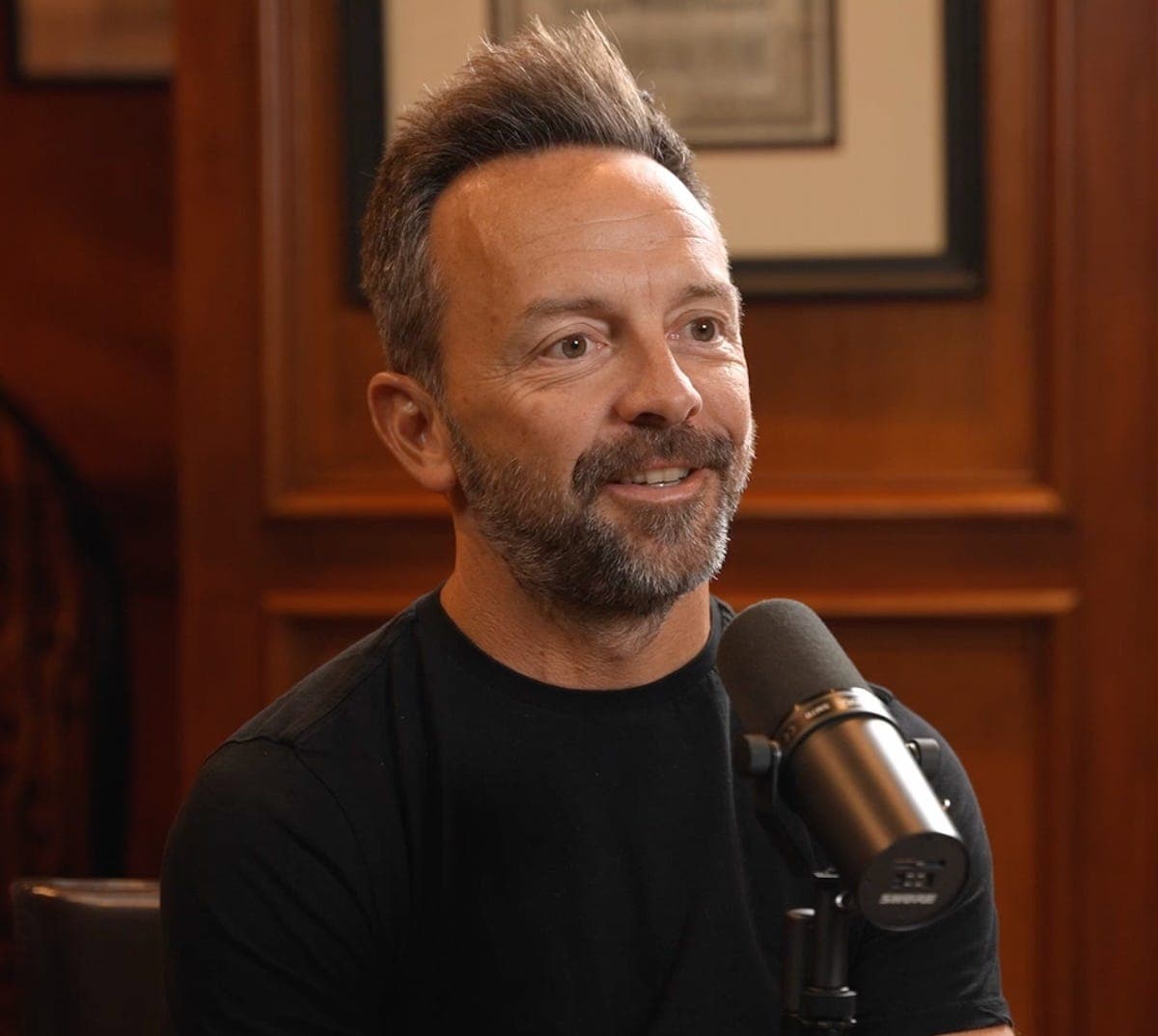
Ep 67: Brad Gerstner on the AI Supercycle & Restoring Faith in Capitalism with Invest America
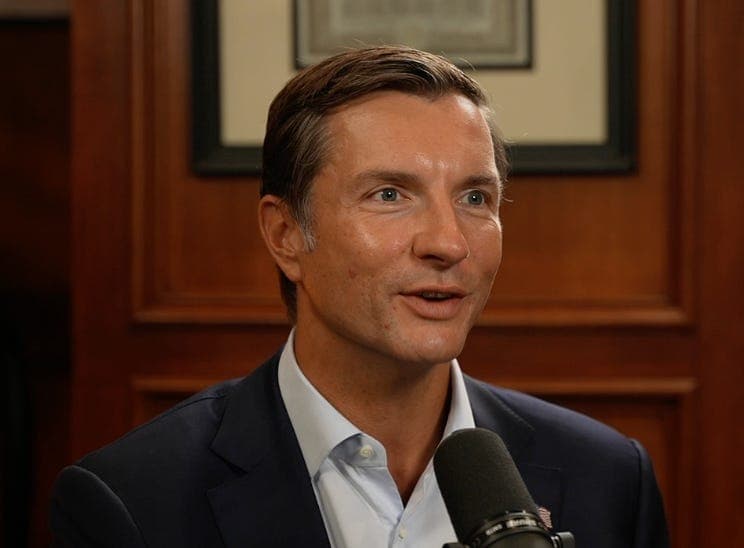
Overview In this episode, Joe Lonsdale interviews Brad Gerstner, founder and CEO of Altimeter Capital, discussing the urgent need for financial literacy and investment opportunities for all Americans, especially the youth. Gerstner introduces the Invest America program, aimed at fostering a new generation of economically empowered individuals through investment accounts seeded by the government. The conversation also covers the current economic landscape, the potential of AI as a supercycle, and the importance of restoring faith in capitalism.
---
Key Topics Discussed
- Invest America Program
- Concept: Each of the 3.7 million children born annually in the U.S. would receive a government-funded investment account seeded with $1,000.
- Goals:
- Educate the next generation about capitalism and wealth creation.
- Provide a financial upside to every child to foster economic participation.
- Projected Impact: A child turning 30 years old could possess over $250,000 in their Invest America account through compound growth and possible matching contributions from parents or companies.
- Brad Gerstner's Background
- Grew up witnessing his father's challenges in entrepreneurship, which shaped his understanding of economics.
- Developed an interest in investment, day trading to fund his education, and eventually founded Altimeter Capital.
- Investment Philosophy
- Emphasizes the importance of understanding major economic trends (e.g., the internet, mobile technology, and cloud computing).
- Highlights the distinction between being early in a cycle and being wrong in investment choices, referencing historical examples like the internet boom.
- AI as a Supercycle
- Gerstner argues that AI (or augmented intelligence) will be more significant than previous technological shifts.
- Discusses the potential for massive productivity gains and job transformations due to AI in various sectors including healthcare and customer service.
- Economic Outlook
- Cautions against current economic challenges, including inflation and high-interest rates, but remains optimistic about future economic cycles and opportunities within the AI supercycle.
- Predicts a forthcoming rate-cutting cycle as the economy adjusts to current conditions.
- Restoring Faith in Capitalism
- Discusses declining trust in capitalism, especially among younger generations, and the need for proactive measures like the Invest America initiative to reconnect people with the benefits of capitalism.
- Warns against entitlement programs that may not empower individuals versus initiatives that promote economic participation.
---
Key Takeaways
- Financial Literacy: Essential for empowering the next generation and fostering understanding of capitalism.
- Invest America Initiative: A proactive solution to create economic engagement and restoration of faith in capitalist principles.
- AI Supercycle: Represents a significant opportunity for innovation and productivity enhancement in the coming years.
- Optimism: Lonsdale and Gerstner advocate for a hopeful perspective on the future of American capitalism, emphasizing the role of innovation and entrepreneurship in driving progress.
---
Conclusion The episode highlights the pressing need to improve financial literacy among Americans and presents a legislative solution through the Invest America program. Gerstner's insights on investment trends and the transformative potential of AI provide a hopeful outlook for the economy, challenging the prevailing cynicism in current discourse. The call for action is clear: fostering a new generation of investors and innovators is crucial for the future of American capitalism.
Written by AI. May contain mistakes. Listen to the episode to check what was said.
Transcript
Automatic transcript. May contain errors.0:00If we had started this 30 years ago, a 29 year old today would have over$250 ,000 in their Invest America account. It's hard to hate capitalism. It's hard to hate America. It's hard to be financially unconcerned when you open up your Invest America account on your mobile device and you see that you too are a participant and winner in this system.
0:28Many of you know my friend, Brad Geersner. He's an amazing investor and leader in Silicon Valley. We're going to hear today a little bit more about his background, how he sees the world, what are the major trends in the past, and what are the trends going forward today, what's going on with today's macro situation in America. We're going to hear about a really awesome program he's creating called Invest America that can realign our country with free market capitalism, with growth, with bringing everyone forward together. Excited for us to chat with Brad today. I'm Joe Lonsdale. Welcome to American Optimist.
0:56Brad, thanks for being here today. Good to be in Austin, Joe. Tell the audience a bit about your background. You're an amazing investor, a pilot, working on some really cool projects right now. Where'd you come from? I grew up in Indiana. My dad was first generation college. He was an only child. So kind of his father sacrificed everything and mother to put everything into him. He became an engineer and decided in 1977 to kind of strike out on his own and start an auto parts manufacturing company in a small town, Northwest Indiana. Now, the only problem with that strategy is he had a young family of four kids.
1:32Interest rates were double digit. Inflation was double digit. We had an oil embargo in the Middle East. The Japanese were ravishing our auto industry and we had hostages in Iran. I'm sure we'll get to it. Some rhymes and rhythms with what's going on in the world today. There was no such thing as venture capital in Indiana. Instead, when you started a business. You mortgage your house, kind of mortgage the car and you put everything on the line. And so I was in middle school and I watched this kind of heroic struggle for about five or six years. Ultimately doesn't work out for my dad. He refuses to declare bankruptcy.
2:09He works the rest of his life to pay the bank back all the money that he borrowed. But I think that set me off on this journey. My grandfather, his father said, rather than becoming entrepreneurs, I want you all to become professionals. So you have to doctor. There are four grandchildren. You either need to be doctors or lawyers. I went to law school. You day traded to pay your way through law school. I did. My grandfather that I referenced. So he sacrificed everything his entire life, drove old cars, live very humbly. So of course the grandchildren were surprised when he passed away that he left$25 ,000 to each of us, which was an extraordinary amount of money.
2:46I had never had any money. I'd never had an investment account in many ways. You know, we, uh, you know, in a rural town, uh, having parents that were struggling financially, I was on the outside looking in, but when I got this$25 ,000 from him, I was really determined to turn that into more. And so I'd end up going to, you know, day trading it to put myself through law school and business school, got my series seven and 63 in law school, you know, and I think part of it was just my journey to reconcile, like, what was it about this business economy that took my dad down? Um, and you know, we all have dragons that we have to slay that are byproducts of our childhood.
3:31That was, that was your dragon. That was my dragon. And just on the day trading for a second, because I think probably the average person shouldn't be day trading is my guess. How do you figure out how to do that? Like, what was the, what was the theory at the time? Well, I, you know, I had a fascination in high school. I was already, you know, going in before school, pulling open the newspaper, plotting stocks. So, you know, mathematically inclined and had an orientation in this regard. And frankly, it was just my hack. It was my way of trying to figure out a way to make money. I can't say that intellectually I had done a lot of studying that this was a refined way to make money.
4:07But it seemed to me that I could study a company. I could study stock patterns and I could figure out mispricings. And I have to say the first time I bought a stock, right, it was not the best reason for buying it. But I bought IBM and they had just they had just put a new CEO in charge. And the CEO's name was Lou Gerstner. and and i you know no relation but i was immediately like attracted to the fact that okay there's somebody's name i recognize and he was um you know would eventually write the book elephants can dance you know and he really remade ibm and at that point in time um they were kind of having their second uh second wave and so made some money on that first stock and then i remember sitting in business school in 1999 i would sit in the back of the classroom because we had Bloomberg terminals outside of our classrooms.
5:01And so I could sneak out, pretend I was going to the restroom and I could get on the Bloomberg and do a little trading. And at the time it was the heyday of internet 1.0. And so remember companies like CMGI that went to$2 ,000 a share and they were moving in 10 and 20 % increments. So again, I wasn't moving a lot of money around and was able to do that and ended up graduating, you know, went to Wabash college, spent time at Oxford law school and business school and graduated debt free. Went to Harvard business school, graduated debt free, got involved in the tech world. And you started your own fund in 2008 with$3 million from friends and family.
5:37Is that right? Correct. So the journey really began in 1999. I was hell bent to get to Silicon Valley, like a lot of other students at that point in time. I had come out and met with some startup companies at the time. One that sticks in my mind is tell me. Another one was a little search engine called Google. My classmate who became my wife decided we were going to stay in Boston. I'd met David Fialco and Joel Cutler. They were thinking about starting their own venture capital firm. And I partnered up with them to help them launch their first business, which was a company called NLG, an early online travel company that we had sold to Barry Diller in 2001.
6:17I became the co-CEO of that business. and so it was really helping them start gc starting that first company we had two more companies i started open list we sold to a public company in seattle room 77 sold to google um got back to the investing side of the business knew i wanted to start my own business and the idea really was to build a crossover fund that was venture first based in silicon valley by a founder that invested in early venture all the way through the public markets. And so that's what drove me down that path. You've been really great at identifying some big trends. Tell us a little bit more about your investing philosophy.
6:57You've been managing billions of dollars now, obviously. Had a really good 15 years. What are some of the trends you've looked at? How do you think about investing? I know you and I have talked about this. One of the things that I thought was interesting stylistically in my first exposure to venture back in 99, 2000, is they were generalists. people would walk in off the street, two people and an idea. And it seemed like the, the office was always full of people doing kind of random things, frankly, from restaurants all the way through, you know, even today on Twitter, Paul Graham's like, you shouldn't actually say you're focused on anything because you should back the best entrepreneurs.
7:31That's right. Tweet yesterday. Yeah. That's right. Um, I kind of, and maybe this was my legal training. Maybe it's just my DNA, but I kind of consider myself more of a researcher and anthropologist. You want And so what I had, you know, when I was studying the internet in 1998, 99 and say, where will durable value accrue? It seemed to me there are a couple areas. One was organizing all the world's knowledge and information. Another one was organizing all the world's products. So helping us find and buy things, helping us discover knowledge. And you could build effectively a tax collection machine that sat in front of those.
8:06So for a decade, I started and invested in search businesses, horizontal like Google and vertical search engines like leading the series B and Zillow or Faircast or Sidestep or Kayak or Booking.com, etc. By 2008, 2009, we had this thing called the iPhone and we said, wow, something's really changing here. That's no longer going to be search first. That'll be something else. And we saw these icons evolving on page one. And so how do you become an application? How do you truly leverage? So companies like Uber and Airbnb, companies that were taking advantage of the social graph, like Facebook, that became applications and were no longer paying the toll keeper, the search engine, in order to gain access.
8:54And then I think we were early to the cloud. You know, people forget, but in 2011, 2012, the cloud was not viewed favorably. And the reason for that is it was more costly. It was less performant and was viewed as less secure than running computing your own data center. Yeah, we had a different opinion there. And so our fund, you know, we run, as you know, a long short hedge fund and a long only hedge fund. And those are permanent capital. And now we're on our seventh venture fund. But back then when I launched our first venture fund, it was almost all dedicated to the cloud. So early investments in Snowflake and Mongo, Twilio and HubSpot really powered the returns.
9:36We were in the same wave. It took a long time to get the big institutions to actually trust the cloud, but it was clear they were going to. And that's where it is now. You know, Brad, a lot of people argue today is harder than it was 10 or 15 years ago. I'm curious what you think. They say that, you know, AI, it's a lot harder, especially for venture, to take advantage of that, given that the existing companies could do it as well. There's a lot of debates about what the returns next 10 years are going to be versus the last 10 years. Like, what are the big trends today and how are you seeing it?
9:59It's not surprising that those arguments are reemerging right after 2022. Yes. Okay. Those same arguments existed in 2001 after that correction and existed in 2009 after that correction. And ironically, as investors and thinkers, we tend to be overly influenced by the most recent events. So I actually think this is the best of time, the intersection when prices have corrected, but you're early in a super cycle. Yeah. I think AI, or I like to talk about augmented intelligence, will be more important to humanity than the first three super cycles I've lived through, which are Internet, mobile and cloud.
10:38I think it'll be bigger. And so I don't buy that thesis. Of course, as Bill Gurley, our friend here in town, likes to say, you know, venture capital is cyclical. Right. We have not suspended the laws of gravity. Interest rates matter. Right. And so that overlay matters. But none of that changes. the never ending waves of innovation that we drive in this country. And when you can get early in one of these super cycles, those tailwinds provide extraordinary opportunities for return. So we're seeing a lot of a hundred million,$200 million AI around some really hot competitive stuff going on the Valley.
11:14Is that what's going to be that makes the money or how do you play AI? Well, oftentimes, you know, as you and I again have seen is being early can be tantamount to being wrong. Okay. So think about 1998. Every venture capital firm in Silicon Valley realizes the internet's going to be big, actually realizes that search organizing the world's information is going to be important. And the mad scramble was on. Everybody wanted a search logo. Lycos, Alta Vista, Ask Chiefs, Infoseek, Go, go through the list. Again, those logos maybe wasn't as good of an idea as it seemed at the time. And here we are.
11:48You could have waited until 2004, before Google's IPO, you would have captured 90 % of the upside ever created by search. And you would have avoided all of those zeros. Remember I talked about CMGI started by David Wetherall that company in 2000, he gave the graduation speech at Harvard business school. He was on the cover of time magazine. He re he bought the naming rights for Foxborough stadium in Boston, renamed it CMGI stadium and was bankrupt a few years later. I've never even I hadn't heard of him. I was 18 years old at the time. Because he beat out Barry Diller in buying Lycos. That's fine.
12:25Had Barry bought Lycos, it may have ended him as well. Wow. So I think being early can be wrong. That doesn't mean that the fundamental thesis was incorrect. In fact, it was right. Internet was going to be bigger than we all thought. Search was going to be bigger than we all thought. But you didn't have to be there and pay those high prices. I think we saw this in early mobile. Danger, Sidekick, BlackBerry. You know, there are a lot, Palm, there are a lot of great mobile efforts before you really had the emergence of the super cycle. Same in the cloud. And so we're early in AI. We're seeing really interesting stuff in the tooling layer where investors in the public market and NVIDIA, Silicon layer has obviously been ignited because of this.
13:06We're going to launch more. We're going to deploy more compute in 2024 than in all previous years combined. combined. Yeah, the data infrastructure and compute stuff does seem to be a good play, obviously, the last few years. That's an amazing amount of money being spent there. Right. And so, you know, the condition required to participate in AI is you have to aggregate all of your data and you have to set it free and get it frictionless into the cloud. So we're seeing reacceleration in terms of that entire stack. But if this is as big as we all think it will be, this will play out like the internet did over decades, not months.
13:41Let me run my favorite idea by you I'm working on right now. We're not talking about too much in public, but I think there's a lot of services businesses in our country where I'll give you one example. Healthcare billing,$250 billion a year is spent. People throw tens of thousands, hundreds of thousands of bodies at these crazy billing situations. And it seems to us, we have some really talented ex-palanteer guys working on it. We've been looking at things like this area. It seems like you can actually make it two or three or four times as productive. That means you have businesses that are worth billions of dollars, where if you fix them, the margins go from 15 % to 50, 60, 70%.
14:13Some of this stuff looks pretty interesting to us that could actually happen the next few years. Are you guys thinking about services businesses with AI or all that stuff? I mean, and by the way, I remember talking to you early in your journey at Palantir, and you guys were way ahead of your time. And Palantir is in many ways just coming into its own, right, in terms of the significant transformations that it can have on businesses leveraging AI. And so I think that, you know, I was in Omaha recently having dinner and you look at the Berkshire portfolio, its entire portfolio is already being transformed with AI.
14:47This is not something that's going to be, you know, discreetly preserved in the tech community, right? This is going to remake how United Airlines interacts with customers. It's going to remake how, you know, furniture manufacturers finish their goods in the US. So I think this is probably the single most important step function we've seen in productivity in this country since the Internet. And I can give you a couple examples on that. When do you think we actually see the productivity statistics? It's always been somewhat surprising to me that we do all this stuff in the tech world. Productivity hasn't gone up.
15:21Are we finally going to see productivity shooting up in the late 2020s? It's hard for me to think about the performance improvements that we're hearing about without seeing that flow through to productivity gains. So a couple statistics. Copilot, which has 30 ,000 beta customers at Microsoft, I think is the fastest growing product in the history of Microsoft. Most companies are reporting. I think Amazon Code Whisperer, so this is a code generation copilot, is reporting that they've seen 56 % increase in engineering productivity as a result of using Code Whisperer. That's awesome. Okay. You look at companies like Meta that have compounded engineering headcount at well over 20 % a year for the trailing five years, now saying we can hold engineering headcount flat to 1 % to 2 % as we look forward over the next few years.
16:13So I think it first manifests itself, Joe, that you just do more with the same people. The next phase is call centers and things like this where you can actually get higher net promoter scores with far fewer people. And so I think we're early in this playing out. 2023 was the year of testing. They tested it in the call center. They tested it in the sales with the sales teams. They tested it with their engineers. 2024 is going to be the year of deployments. We're going to start seeing those gains. You will not see mass layoffs. And then 2025 and beyond, I think you're really going to see those transformations kick in.
16:50I'll give you one other example. I heard this recently. ByteDance, where we're investors, has about 40 ,000 content moderators. Okay. These are folks who are flagging, you know, content. Making sure it's not too pro-US or anti-China. Just kidding. Just kidding. Well played. You and J-Cal, my rivals on this. You know, but flagging content. They suspect that they'll see a 90 % reduction in content moderators over the course of the next year because that work can be more efficiently and better done by AI. I think this will play out. So think of that. One product, one company, 35 ,000 heads replaced.
17:29I think this is going to be the most disruptive moment in labor markets in the history of modern capitalism over the course of the next five years. And so part of the things that you and I are both working on is how do we deal with this as a capitalist system? Well, let's switch to that because it's not clear our government, unfortunately, is in a strong spot right now to respond cogently to these challenges. So it was very interesting. You talked about how you were touched by having this money available for you when you were young. It was a surprise. And you're working on something like this for everyone in America called Invest America.
17:59Exactly. Tell us about this. Exactly. So, you know, some really shocking statistics have come out over the course of last five years about how Americans think about capitalism and free markets. According to Pew, over the last few years, we've seen a 10 percent decline in people's faith and confidence in capitalism. Joe, among the age group 18 to 29, 44 % of that group believe socialism is a superior form of organizing government than capitalism. It's a disaster. Capitalism support is in the 30 percentile range. And, you know, you think about Ray Dalio's book about the changing world order, right?
18:44And what causes that? effectively you have come you have countries that become complacent uh that become decadent wealth inequality grows inevitably that leads to infighting and eventually the rise of other powers so i look at this problem in the united states i said this doesn't you know although dalio uh you know has this incredible view studying 2 000 years of history about the rise and fallen nations. One of the things he says, these are dynamic systems. They don't just happen to us. We can influence the outcome. So the idea of invest America is very simple, harnessing the power of compounding and capitalism to give everybody skin in the game.
19:28It's legislation that would cause the treasury department to create 3.7 million private investment accounts a year. So we have 3.7 million children born a year. Treasury would create 3.7 million private accounts where each of those families has private ownership of those accounts they would seed it with a thousand dollars from the federal government set up a 401k match so companies or parents could match up to two thousand dollars tax-free um each year um and then just let that compound if we had started this 30 years ago a 29 year old today would have over 250 000 dollars in their invest america account wow it's hard to hate capitalism it's hard to hate america right it's hard to be financially unconcerned when you open up your invest america account on your mobile device and you see that you too are a participant and winner in this system it's really interesting because in some ways it's like oh this is the top-down status solution but on the other hand you're you're doing that you're doing this in order to create markets and create more liberty and create people who are aligned and want america to be functional and this what's this cost per year it's 3 000 times 3.7 million that's just about 10 billion dollars well it's a thousand dollars it's a thousand dollars a thousand only a thousand seated by the federal government up to two thousand that can be matched so for example i've talked to uber talked to united airlines and others right the 401k match in this country the corporate contribution annually is 75 billion dollars wow okay if this was one tenth of that yeah one tenth of the 401k match then the child would have$2 ,000 or$5 ,000 in the first two years of life.
21:10$5 ,000 compounded by the age of 60, you have a million dollars in your Invest America account. Okay. So that's if you don't have contributions beyond the first two years, which of course you would. So it's a significant amount of money. Here's the problem. 70 % of families in America don't have and will not have an investment account they will not have skin in the upside of america that's bad for all of us who want america to win exactly and we're gonna this is gonna be solved in one of two ways you're either going to get bigger government programs more entitlement more fighting for ubi more redistribution or we can harness the power of free enterprise and capitalism to reconnect everybody with the civic power right with the specialness of free enterprise and capitalism we can allow them to see firsthand the power of compounding imagine this i was in trenton a few weeks ago trenton like a lot of schools in the middle school is starting to try to teach financial literacy if a kid has parents that don't own anything and the kid has never owned anything it's very hard to teach them a language which is completely foreign to them.
22:27But now imagine that sixth grade classroom. The teacher says, pull out your phones, which they all have. Open up your Invest America account. It has$17 ,000 in it. And you see the top five holdings in the S &P 500. Apple, Tesla, UnitedHealth. Your share, your ownership in America. Let's talk about how you got$17 ,000 in it. It's ironic. The Marxists will not like this. It's good. They don't want these kids having this kind of alignment, which is, but we, but we do want them to have this alignment. I mean, there's good guys and bad guys here and we want, we want them to be aligned with this. This is not a question in my mind about, um, you know, having a foot in either camp.
23:05You're either on the side of free market capitalist democracy, or you're not. And this unequivocally and unabashedly is. It's interesting. We have, I think a$2 trillion deficit this year. You're asking for a$3.7 billion program, which is tiny compared to that. What we've spent in Ukraine to date would pay for this program for 20 years and 75 million children touching almost every American household. Fast forward 20 years. Can you imagine every household in America touched by an Invest America account? Okay. For the same price on just the incremental effort that we've given to Ukraine. Or in the last stimulus package, I think there was 75 billion for incremental IRS enforcement.
23:5275 billion. I know it's, it's a little bit crazy. How is Congress receiving this right now? What's the response? So I will say that, you know, I've spent 30 years like you engaged in the public sector, trying to have impact in a variety of ways, just as an entrepreneur looking for product market fit. I've never worked with something that has quicker product market fit than this. From groups on the left to groups on the right, we have bipartisan support emerging in the house and the Senate. With any luck, we'll have this introduced in the spring of next year. You should need a speaker in the House, hopefully, to help you out.
24:29That was a little bit of a setback for us, but we're working through that. We have set up the 501c3 and C4. I've got great help from the likes of Matt Lira, who you may know from, um uh you know who's driven a lot of innovative reforms include including opportunity zones um who's respected by both sides uh of the aisle and so you know i'm putting millions of dollars up against this uh we're inviting others to stand with us shoulders this is a fight for american free market capitalism by empowering every family and by the way yes this will disproportionately benefit those currently left out of the system.
25:15But one thing I was, I was talking with at an event with former president Clinton and somebody said, yeah, but you know, shouldn't only certain groups of people get this and not other groups of people get this. And we should only allow them to invest in certain companies and not all companies. And Clinton snap called him and said it has to be universal we have to bring people together not divide them and if the s &p 500 is good enough for everybody else in america it's good enough for this program and he's exactly right yeah no you don't want to let a bunch of woke nonsense get into this and fight over which companies qualify or not all this kind of like bullshit that's the whole that's the marxist stuff we're pushing against right and i and by the way what's the greatest weapon against that.
26:03It's making everybody benefit from the upside of capitalism and free markets. If we don't do this, Joe, if 70 % of the people are left out, if tens of thousands of people are displaced because AI is going to displace their jobs, we're going to have a bigger problem, as Dalio correctly points out, in the future than a smaller problem. So you and I, and folks like you and I, can do things proactively to get in front of this. and so i'm going to fight like hell for this because i think it's important for the future of the country actually do you think ai at some point makes the markets melt up if it actually does what you and i think with productivity which means we need everyone aligned with them what do you do about i mean there's obviously all sorts of issues this one's maybe too controversial but my guess is that a lot of people won't want the incentive for people from south america to rush here and have babies across the border in order for the babies to get free accounts like i guess you need to do border security better with this i mean listen listen i hope we don't need another excuse to have secure borders yeah right like if the present conditions in the world right aren't screaming at us loud enough hell i think even the current administration has recently said you know we need to invest more in border security that i you know that to me we don't need this program to remind us that we need to have secure borders and as i've said let's have secure borders and then let's actually have a strategic policy in this country to recruit the world's best and brightest 100 right like we ought to be more aggressive more strategic to invite the world's smartest to build their companies here and to build their families here we just have to have a system that respects fairness and rules when it comes to entering the country we're on the exact same page well i think this is a really compelling idea brad obviously you're eager to be helpful on this one hopefully we can get some of our listeners just to step up on it as well Where can they find out more, by the way, about it?
27:52So Twitter handle Invest America 24. And we'll be launching more. I follow my Twitter handle at AltCap. We've pushed out a few 15, 20 second spots that give you a sense of kind of where we're going to go in the campaigns. But we're going to be pretty aggressive. We have lots of people who've indicated a willingness and a desire to get behind this financially. We've got greats, right? The greats of finance and investing who want to spend their time and energy helping us build the financial literacy that's going to go into middle schools and high schools that's built around Invest America. This is something that really can unite us as a country, unite Democrats and Republicans around a cause that we all believe in, which is American democracy supported by free market capitalism.
Read the full transcript
28:42I love it. Let's zoom out a little bit. But I want to talk a little more about macro outlook while I have you here. Because everyone's asking. Our 10-year note just crossed above 5 % yield. We have a crisis in the Ukraine and Russia situation. We have this stuff in Israel. China is terrifying everyone. Japan's trying to ramp up to deter them. What's going on in the world? Is this like the 1970s? Are we going to have lots more inflation in the next few years? What should we be thinking about here? As a public market investor, I think about the future as unknown and unknowable. And I look at distribution of probabilities.
29:11And something is either becoming more likely or less likely. And you adjust your exposures based upon prices and whether or not those events are more likely or less likely. So as we sit here today, the 10 years at 5%, the Fed has said its forecast for next year is 1.5 % on GDP. I think that's probably rosy given the things that we're seeing in the world. 20 % credit cards, 10 % car loans, 8 % mortgages are having a deleterious impact on consumption. No one's selling or buying houses right now. It's crazy. And so I think there's a lag effect. Powell even said yesterday, you know, continued to remind us of that lag effect.
29:51Whatever it is, we're close to the end of what has been the most parabolic rate hike cycle in the last 50 years in this country. That's been hugely destabilizing to financial markets. It's the biggest bond route in 150 years. I think it's Let me be clear on this. I believe the Fed made a huge mistake in the summer of 2021. I think it was knowable then. I think any of us paying attention were tweeting about it. The cost of a container from China to the U.S. had gone up 20x. Okay. The idea that we didn't have an inflation problem in the summer of 2021 that would warrant just moving off of zero. Yep.
30:27We had Neil Kashkari, Fed president, you know, in Minnesota, who said at the time, there is no chance we raise rates until at least the end of 2023. He was only off by the most parabolic rate hike in the history of the country. Right. So like that to me was nine months that we wasted. We got behind the curve on inflation. And once we got behind the curve, there's positive reflexivity to inflation. So what I mean by that is if your competitor raises their salary, they're going to pay somebody. Right. Then you have to raise yours and then they raise theirs. Right. That is this wage price spiral that we talk about.
31:11We got behind on that. Now I think we're nearing the front end of that. So we're at five percent. Could we go to five point two five? Could we go to five and a half on the 10 years? Sure. But think about the convexity from zero to five. So that's behind us, right? If you look at the futures curve, it'll tell you there's an 84 % chance of a rate cut by June. And the Fed itself thinks we'll have two or three rate cuts next year, you know, probably in the back half. So as investors, you and I shouldn't hype, you know, spend too much time focused on could it go to five and a half or whatever, like, it's not a big move.
31:46I look at this and say we're on the front end of a rate cutting cycle. Okay. So think about 2000, the year 2000, May of 2000, the markets were rolling over, but the Fed, again, raised rates 50 basis points. It's last hike. By January, six months later, they were cutting rates and they would go on to cut rates by almost 500 basis points. So you're not worried about like some kind of fiscal insanity where they spend so much more money and somehow cause more inflation in the next couple of years? You think you think it's pretty naturally just going to go over into a rate cut? Well, listen, there has been fiscal insanity.
32:23There has been. We have to reel it in. The stimulus package that we did right at the start of COVID, right? When we didn't know whether this was Ebola or whether this was a common cold, like that one is justifiable. The second stimulus package and then the push for the third made no sense to me right through a lot of gasoline on the inflation inflation fire. I don't see any appetite in Congress. I don't see any appetite among the Republican contenders for the presidency for any more fiscal stimulus. So I actually think, you know, call me, chalk me up to being a little bit more optimistic. I think we're going to see more austerity on the fiscal side out of Washington.
33:02Obviously, the monetary side of the House is already highly restrictive. We're doing quantitative tightening. We've got over 2 % real rates in this country, the highest since, you know, in over 20 years. And so I think we're set up for inflation to come down as the Fed expects. We're nearing the top of tenure, if not at the top. We're going to see rate cuts next year. And importantly, we're at the beginning of what may be the most important super cycle, accelerant to our economy in a long time. we're going to see cost savings in call centers and engineering, et cetera. So bottom line margin expansion, you think Texas inflationary as well.
33:40And it's going to start, it's going to hit again. You're saying that's interesting. Um, and so listen, we are, there are a lot of things we have to do to tackle this. We have to get a, a modern and strategic immigration policy in this country, coupled with secure borders, et cetera. All of these things will contribute to healthy growth in this country. Um, but listen, yes, it is true. If we don't get our fiscal house in order, right? If we think we can get away with$5 trillion deficits and$100 trillion of national debt, we're fooling ourselves. We'll lose reserve currency status in this country.
34:11But I don't think that's fait accompli. And as they've often said, the U.S. does everything wrong before it ultimately does what's right. I hope you're right. I'm seeing what was called the Inflation Reduction Act. I see a lot of even my companies getting giant$100 million loans that are cheap. I see student debt forgiveness. I see money still being thrown around pretty aggressively. Can we both agree? So Washington, I mean, they do some doozies, right? But only Washington could spend trillions of dollars injected into the economy and call it an inflation reduction. It is pretty ridiculous. It's pretty ridiculous.
34:44It scares me. We need to get the deficit from$2 trillion down to not much of a deficit if we're going to fix it. But I hope you're right and things turn over and then it's not a replay of the late 70s. That'd be much better. One last question on the tech stuff. I really liked your letter to Mark Zuckerberg in 2022 saying that they had to get fit. basically there's warning of bloat i think this is similar to a lot of us are saying to a lot of our companies who are feeling very expansive in 2021 and i mean have you seen things get fit overall in general and in silicon valley is there still a lot of bloat like where are we right now well i thought i think that was a seminal moment and it was made seminal because of mark zuckerberg when somebody writes an open letter like that time to get fit what i said at the time was that it was an open letter to all of silicon valley to all of technology who in the middle of covid in the middle of the age of excess had all done too much.
35:32Hired too many people, spent too much money, too many espressos and free lattes, you know, in the cafeterias in Silicon Valley and that we needed to wake up, right? We needed to get back in fighting shape because we're going to have rates increasing things. We're going to get tougher. And rather than Zuckerberg saying buzz off, he writes what's one of the better CEO letters of, of the last 10 years, year of efficiency where he said, flatter is faster. right um and he really um embraced this idea that when you when you compress layers in an organization when you tighten your belt when you get fit you don't get less you get more people are happier you release products faster and so i think that became the rallying cry for at least all the companies that were awake in silicon valley yeah are there still companies that are asleep at the wheel and think the gravy train is going to continue of course but certainly every company in our portfolios, fitness and efficiency has become the lexicon of this moment.
36:36And I give all the credit to Mark for really taking the lead. Obviously, Elon with the work that he's done at Twitter, right? They reduced headcount by 70, 80%. And the product release cycle is probably gone up by at least 70%, right? It's incredible what they have in the pipeline there and the fact that they're doing this with you know a fraction of the people before right that's the case study yeah facebook's the case study and you know competitors would be well served to follow we're seeing a lot of our companies productivity is going up when you actually cut the cut the bottom 20 bottom 30 i wish the government can learn from them so we'll see if we can take that attitude to dc you know uh brad we've started the american optimist to push back a lot of the cynicism we're seeing it's been you know for me personally a really tough couple of weeks with things I'm seeing in the world.
37:23But you know, what, what, what makes you optimistic? What are you seeing that gives you confidence in our future? Ultimately, you know, if you read the Bill Gates annual letter and you look at any trend line in the history of humanity, okay, so there've been 117 billion people estimated to have inhabited the planet. 110 billion of them never saw a single invention in their entire life. You look at human progress, lifespans, children who die in childbirth, disease, etc., education, literacy. It was basically flatlined for most of human history. And yet, and the reason for that is because their lifespan was shorter than the invention cycle.
38:13So the modern experiment, now you look at any of these trend lines over the course of the last 50 years. and you know it looks like a revenue graph we would love to invest in it's straight up into the right so i think it's really important that we maintain proportionality when we think about where we are in the history of the human experiment um we fought through world wars we fought through vietnam we fought through korea we thought you know i told you about my dad when he got started right 15 20 interest rates inflation embargoes hostages and around we have been through hard shit this experiment that we have in this country i believe is the best experiment to ever be run we're in the fourth generation of risk capital in the world that you and i inhabit entrepreneurs around the world still want to come to the united states to invent the things that are going to improve lives for people make them live longer make them be healthier right whether it's using ai to identify blood cancers using ai to help you identify coronary artery disease before it exists, making our lives better in terms of education for our children.
39:24I think we're on the precipice of moving from this moment where we had no augmented intelligence to super intelligence. I think that's going to be good, but it is incumbent upon those, I think, who are the beneficiaries of the system to do the things you're doing at Cicero, to do the things that we're doing with invest America to try to recognize that there are adverse consequences of human progress. And so we can tackle those things one by one. We can tackle the administrative state that's no longer serving people, right? We can tackle state by state like you have, whether it's healthcare registration, uh, you know, education oriented programs that make all of those things run better and more efficient and really thrive under the power of the innovative process.
40:12And so, you know, I, I tend to be an optimist when it comes to this, you see more engagement, not less engagement by guys like you and me, because I think that, um, there's a recognition, right? That, yeah, there may be 2 ,500 miles that separate Silicon Valley and Washington, DC, but we're all in this together. If America and the American experiment, if people don't believe in free market capitalism and democracy, then we all lose. One of our most successful leaders like you stand up and fight for our country and we're doing that together, that gives me a lot of hope for our civilization. Thanks, Brad, for joining us.
40:45It's been great to be here, Joe. Thanks for having me.
From the publisher
Nearly half of all Americans don't have investment accounts. Financial literacy is the exception, not the norm, in most households. Is it no wonder that so many young Americans distrust capitalism and misunderstand wealth creation?Brad Gerstner is stepping up with a solution: a legislative program called Invest America that would create an investment account seeded with $1,000 from the Treasury Department for each of the 3.7 million children born every year in the U.S. His aim is to educate the next generation on the merits of free markets and give every child a financial upside in American innovation. With nominal recurring contributions starting at birth, a child turning 30 today would have over $250,000 in an Invest America account!Brad is the Founder and CEO of Altimeter Capital, a firm he grew from less than $3 million in 2008 to billions of dollars in assets under management today. A leading voice in Silicon Valley, Brad is a four-time founder with a knack for identifying major trends early, from Booking.com, Zillow, and Uber to Snowflake and Mongo. In this episode, he provides his macro outlook on the economy and explains why he believes AI is the next big supercycle but also why being early in a cycle isn't always the right play.
This is a public episode. If you would like to discuss this with other subscribers or get access to bonus episodes, visit blog.joelonsdale.com