In short
Podcast Summary: Joe Lonsdale: American Optimist - Ep 69 with Boyan Slat
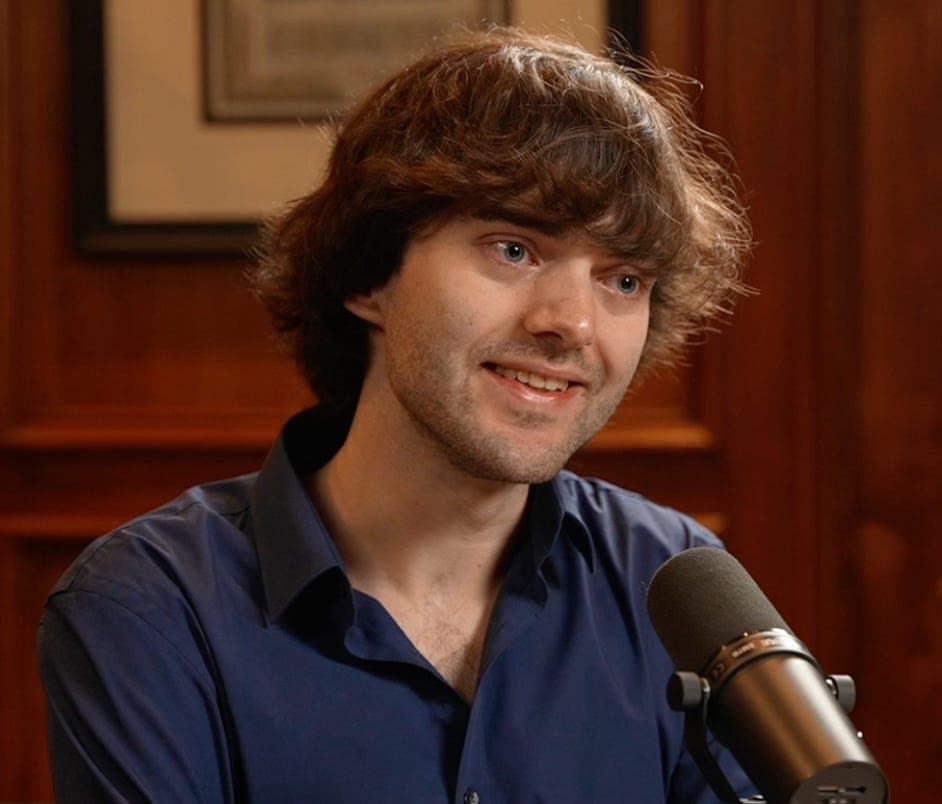
Podcast Title: Joe Lonsdale: American Optimist Episode Title: Ep 69: How a Builder Mindset Is Solving the World's Ocean Trash Problem; Boyan Slat & The Ocean Cleanup Host: Joe Lonsdale Guest: Boyan Slat, Founder and CEO of The Ocean Cleanup Release Date: [Insert Date Here]
---
Episode Overview
In this episode, Joe Lonsdale interviews Boyan Slat, an innovative engineer and entrepreneur from Holland, who has made significant strides in addressing the pressing issue of ocean plastic pollution through The Ocean Cleanup project. Boyan’s initiative aims to clean the Great Pacific Garbage Patch and prevent further pollution through innovative engineering solutions.
---
Key Points
Context and Problem
- Ocean Pollution: The Pacific Ocean has extensive garbage patches, notably the Great Pacific Garbage Patch, which is said to be twice the size of Texas.
- Ineffective Solutions: Billions of dollars are spent on environmental law and bureaucracy, yet little has been accomplished in cleaning the oceans.
Boyan Slat's Background
- Boyan's interest in ocean pollution began at 16 when he was disillusioned by the amount of plastic he saw while scuba diving.
- He pursued aerospace engineering but dropped out to focus on developing solutions for ocean cleanup.
- Received the Thiel Fellowship, which provided him with a platform to develop his ideas.
The Ocean Cleanup Initiative
- Current Efforts: The Ocean Cleanup is designed to remove trash from the oceans and stop plastic from entering waterways, focusing on high-pollution rivers.
- Technology: The system uses a large boom that acts as a funnel to concentrate and retain plastic in the water, cleaning an area the size of a football field every five seconds.
- Achievements: On average, the organization cleans up 750 kg of trash per hour, aiming to eliminate the Great Pacific Garbage Patch within 10 years.
Challenges Encountered
- Initial prototypes faced engineering challenges, including a significant setback when the first full-scale system broke apart within months.
- Boyan emphasized the importance of persistence and learning from failures, leading to more refined systems.
Engineering vs. Activism Mindset
- Boyan contrasts a builder's mindset with a conflict mindset dominant in some environmental activism, arguing the need for solutions over blame.
- He suggests that many environmental issues stem from systemic problems rather than specific "bad actors," advocating for a practical, engineering-based approach to problem-solving.
Financial and Community Support
- The Ocean Cleanup has received diverse backing, including donations from individuals like Mark Benioff and companies like Maersk.
- Local partnerships and community involvement are crucial for the success of the project, especially when implementing solutions in developing countries.
Broader Implications
- Boyan argues against the idea of "de-growth" movements that call for reduced consumption, highlighting that technological advancement is the key to solving environmental issues while maintaining prosperity.
- He expresses a hopeful vision for the future, encouraging young people to adopt a proactive stance in addressing global challenges through innovation and collaboration.
---
Conclusion Boyan Slat's work through The Ocean Cleanup exemplifies how an engineering mindset can lead to tangible solutions for complex problems like ocean pollution. By focusing on innovation, community engagement, and perseverance, Boyan inspires a hopeful narrative that emphasizes human ingenuity and capacity for change.
---
Key Takeaways
- Emphasize engineering and innovation over bureaucracy and blame.
- Community involvement is essential in tackling local environmental issues.
- Technological advancements can lead to a sustainable future without sacrificing human welfare.
- A proactive approach is vital to solving global issues, inspiring others to contribute to meaningful change.
---
For more information, visit [The Ocean Cleanup](https://theoceancleanup.com).
Written by AI. May contain mistakes. Listen to the episode to check what was said.
Transcript
Automatic transcript. May contain errors.0:00It's the largest self-propelled system ever deployed on the ocean. It's a mile and a half long, approximately. That's amazing. And it's just this big boom that we drag through the ocean that acts like a funnel to concentrate and then retain the plastic. It sweeps an area of ocean clean the size of a football field every five seconds.
0:29We spend tens of billions of dollars on environmental programs. We impose hundreds of billions of dollars of costs on our economy and our oceans have only gotten dirtier. No one's been able to clean up our oceans. A teenager from Holland had a different idea. How about we take a build mindset? How about we take an engineering mindset and optimistically just go and solve the problem? Boyan's now cleaning up the Pacific garbage patch. He's cleaning up rivers around the world. This is amazing work he's doing. It really makes me optimistic to see how when you take a bunch of engineers and scientists and you believe that humanity can apply technology, solve our problems, fix things we want to see fixed in our environment.
1:02in our world, we could do it. Let's hear from Boyan. Welcome to the American Optimist. I'm Joe Lonsdale. Really excited to have Boyan Slat with us here today from the Ocean Cleanup. Thank you for having me. Boyan, I'm usually very skeptical of a lot of things that are trying to do things with the environment. In this case, I'm very bullish on you. I think it's awesome what you're doing. Excited to show people. Tell us a little bit about your background and the origins of the Ocean Cleanup. You were born in Holland, right? That's right. Yeah. So I think I come to this problem more from the engineering angle I've I've always been passionate about technology.
1:33I've been building things all my life throughout my childhood. And when I was 16, I went scuba diving in Greece. I was hoping to see all these beautiful things like you see in the documentaries. But then I looked around me and I just saw more plastic bags and fish. And I was so disappointed by that that I sort of asked a natural question for somebody with an engineering mind, which is how do we solve this? How can we clean this up? Then I had to do a high school science project. and decided to study this issue. And then ultimately, I enrolled to study aerospace engineering. But after half a year, I was just so obsessed with this idea that I couldn't stop thinking about it that I thought, OK, let's drop out.
2:15If it doesn't work out, I can always come back. So you were at a Dutch university studying aerospace engineering. Correct. And you actually dropped out into the Thiel Fellowship, Peter Thiel's Fellowship. Yeah. Is that right? Then that actually, so I had already dropped out by that point. So you dropped out and then you decided, okay, let's do the fellowship. That seems like a good group of people to meet and$100 ,000, right? Right. Yeah, exactly. So I think that's pretty cool and I definitely support their mission. I think university is kind of a means to an end. I employ a lot of people that do have engineering degrees.
2:51Of course, we need those. But I don't think it's necessarily the right path for everyone. And if you can reach your goals without it, I think, you know, saves a bunch of years. I think obviously there's a role for university. I'm building one here in Austin, but I agree with you. A lot of these things, you know, not everyone needs to go. Before we get directly into what you're doing, what shaped you to do this? Obviously, you were 16, you were scuba diving. It happens that in Greece, I'm told actually a bunch of TNT was set off to fish after World War II. So that's partially why there's not enough fish.
3:21But there's also this plastic in the ocean. You notice it's a combination, maybe two separate problems. True. And that bothered you. But what is it about your upbringing, you think, that made you want to take this entrepreneurial approach to build and fix this? I guess it's always a question about, so what's genetic versus, you know, what's the upbringing? I do think I have a bit of an innate passion for things, you know, for building things. and i guess in my my childhood i think one thing that i'm very grateful of to my parents with my mom actually my my parents divorced when i was very young is that you know they were definitely not helicopter parents like they gave me a lot of uh freedom and they definitely supported and enabled me my my passion so if i would have um you know an interest in a specific scientific topic you know they would buy me the books about that you know and if i you know at some point i was really into chemistry and you know i was building smoke bombs when i was eight like who doesn't and uh i remember one one time i was um you know i bought some fertilizer and it was distilling ammonium nitrate on the stove pretty intense ah yeah i mean it was lots of fun you don't want to do too much of that in one place yeah no so i actually i forgot about having the thing on the stove almost burned down the house but yeah my mom didn't get angry what's the best chemical for smoke bombs i mean you need some kind of oxidizer so i think the ammonium was the one i could get my hands on and then actually just sugar it puts a lot of sugar in it that's um that's how you do it well let's get to the ocean cleanup uh you know first of all why weren't others doing this?
5:06I mean, you're spending a lot of money, but it's not any government in the world could easily be spending this money and doing it. Why do you think others are not cleaning up the oceans? You're cleaning up the rivers, you're cleaning up the oceans, like what's going on? Why is this something that's not being done? It's a good question. So I think for a very long time, there was this idea that it would be completely impossible to do. And I think also, you know, the sort of consensus within activist community was that, you know, plastic itself is kind of the problem. Plastic is evil itself as opposed to let's go stop it from infecting the ecosystem.
5:39Right. And I mean, it's this, I suppose, almost this dogmatic idea that the root cause is always the best place where you should solve something. And I think it's much more effective to think about, okay, at what level can you be most effective in solving a problem? And I think, you know, looking at the latest data, so roughly 400 million tons of plastic is being produce every year and of that it's only in the order of a few hundred thousand tons that makes it to the ocean so it's like 0.1 percent so um so it's you know it's our view that if you want to quickly stop plastic from polluting the ocean you should probably first focus on that 0.1 percent rather than the whole thing when i look at a lot of the activists there was a very very big movement in the 70s and 80s it was very marxist and then when soviet union fell a lot of the marxists became kind of the leaders of the green activists.
6:34So I think a lot of their solutions are, let's get rid of capitalism. Let's fight capitalism at its core. But then there's a whole separate approach. Let's actually just like help the environment at its core. I think those are two separate things sometimes. No, exactly. So it's like, I call that sort of conflict mindset versus engineering mindset where, you know, conflict is really thinking in terms of, you know, this feeling of being wronged by having different groups, you know, struggle between different groups essentially. And it's, you know, you hear this a lot of my generation versus previous generations, you know, the people versus companies versus, you know, technology versus governments.
7:13And, you know, I think in reality, there often very often isn't sort of this bad guy wronging you. It's just sort of this systemic issue. And the question then is, OK, therefore, I think a much more effective way to address these problems is to think like an engineer. of, okay, what is just the most effective way to solve this? I love this. You're an engineer. You're a builder. You've got together other engineers and builders. You've raised tens of millions of dollars. And it sounds like there's two big things to what you're doing. You started with the Pacific garbage patch, which is there's tons of garbage out there to clean up.
7:46And then you're also going after all the main rivers where the trash is coming out, right? Correct. So this two-pronged approach, we started with the ocean because that just feels like the most neglected thing. When we started, there were already a lot of these organizations trying to do something on the preventative side. So therefore, we said, okay, let's just start with cleaning up the pollution that's already in the ocean, the 60 years of damage that has already been done. What pollution is out there? How much trash is it? Where is it? So there are five areas in the world where the plastic, once it's in the ocean, converges and concentrates.
8:19The largest one is this Great Pacific Garbage Patch between Hawaii and California. Yeah, there's roughly 250 million pounds of plastic. 250 million pounds of plastic. Just that one patch. And that's mostly floating in the top few meters? Yes, so it's mostly a float. Of course, if you wait too long, it does become brittle. It starts to break down into smaller and smaller pieces, which is an issue for two reasons. That's the stuff that ends up in the food chain of three billion people. and once it goes down into the water column, then a 2D problem turns into a 3D problem. You can't get it anymore.
8:57So what have you built? You started with a machine of a certain size. Now you have this massive machine that's just going in. Tell us about it. It's the largest self-propelled system ever deployed on the ocean. It's a mile and a half long, approximately. That's amazing. And it's just this big boom that we drag through the ocean that acts like a funnel to concentrate and then retain the plastic. It sweeps an area of ocean clean the size of a football field every five seconds. Wow. Yeah, if we were just to sort of randomly go through the ocean, it would be a pretty dumb thing to do. So we have, the way we look at the solution, it's sort of part hardware, part software.
9:41So it's not just the machine, it's also the algorithms that we built. We use real-time satellite data to predict where the hotspots are within the Great Pacific Garbage Patch. So the patch is within the patch. How big is the Great Pacific Garbage Patch itself that you're trying to move this thing through? It's three times the size of France, so twice the size of Texas. Wow. I appreciate you making it, like, comparing to Texas for us. Yes, let's use Texas for that, yeah. We're a big state, so twice, that is a lot of space. So if you were just to randomly go through that area, it would just be pretty ineffective.
10:12active um so it's um yeah so the but the you know the the real concentrated areas they're usually just um say like 10 miles and in cross section each so you can if you can really target that it's like the difference between sort of open heart surgery and keyhole surgery right you want to be very specific because otherwise you would just need way too many systems so how many of these machines do you have how many do you need what was it when's it going to be clean and there's five other patches too right there are four others for the other four still requires more research to know whether they actually need a cleanup they appear to be much less polluted and maybe less persistent we don't know yet so we have to find out but for the great pacific garbage patch if we get to nominal performance you know which is the goal for the next nine months with with our current system we would need about 10 of those systems to get the job done in 10 years so of course There's more systems.
11:08We could do it quicker. But 10 systems, 10 years, that's kind of the level we aim for. Is this damaging anything else? Are you catching a lot of fish? Is there a problem with this at all? Very little. So we designed the system to be safe for bycatch. So just as a comparison, regular fisheries usually has a bycatch rate of around 10%, 15 % on average. I mean, arguably 100 % because the thing they do is catch sea land. But, yeah, we have averaged roughly 0.1%. So because we move so slowly, it's about half your walking speed. Your fish can just swim in and out. That's interesting because you want to go quick to catch the trash, but you can't go too quick or it creates problems for fish and everything else.
11:53Exactly. And also the drag of your system increases quadratically with the speed. So twice the speed is four times the fuel consumption. So what you kind of want to do is you want to go very wide, very big, and very slow yep and tell us a little bit about the early challenges you built some of these systems this is not an easy thing to do what were some of the problems with the first ones you created yeah it's been a long and painful journey when i found this like 10 years ago so it's been a sort of 10-year sprint i would say and um yeah just lots of try and error of course something this had never been done before so we didn't know what would work what wouldn't work and uh you know I think the biggest mistake that I made was to go too big too soon.
12:43So back in 2018, of course, we had done hundreds of scale model tests, lab tests, etc. But then we said, OK, let's just build the full scale thing in one go. It was this big launch in San Francisco, took the thing out. We were on 60 minutes, it was a big thing. and um you know then the system didn't collect plastic and it broke into two so um and that was i think that was like a 10 million dollar investment just down the drain in a few months quite a break what would you do wrong so forgive me for being with two technically but um it was a fatigue fracture so if you have like a paper clip you move that a lot then eventually it will break so it's the same effect so at this this big uh you know plastic pipe essentially that of course because of the the waves it keeps going up and down and the calculations we did using just a you know a clean pipe without anything attached to it but on the bottom of it there's this this skirt going down to catch plastic that's not exactly at the surface and those attachment points, there were like little notches in between and essentially that caused a concentration of stress where then a crack started to form and then after three months it became critical and we had two cleanup systems rather than one.
14:10How'd you fix it for next time? Yeah, so actually then we went, that was a very intense period because firstly, we were, mind you, we were more than a thousand miles offshore. So when that happened, just getting everyone and everything back to land safely was kind of a big deal. And of course, you know, team morale was super low. We had, you know, all the, you know, a lot of media exposure of articles saying like the experts told them it wouldn't work. The ocean proved them right. And these people love being negative and making fun of you. Like you're trying to fix the world. Ha ha. We knew you would fail.
14:50That's kind of the energy we get from the journalists. Bring them up and then bring them down. Let's say, uh, I guess, yeah, the controversy sells, I suppose. But, um, so, so that was kind of tough. And at the same time, our, our cash runway was quite critical at the moment, but we felt like, okay, you know, this problem is too big to, to give up on it. So let's give it one more chance. Let's do the right thing this time. So let's go a bit smaller. and let's make the adjustments, apply the learnings. And then actually, within three months, we were able to completely build a completely new cleanup system, which the first one took a year to do.
15:31And we got it out to the middle of the patch, and successfully we were able to catch plastic. Now, that was good, but then we ran the numbers, and then it turned out that, okay, we're catching plastic, but not yet at the scale that it could actually clean up the whole patch. We would need something like 800 systems to do it with that thing. That's a lot. Yeah, and not just that. These systems would occasionally drift out of the patch. Not very often, but if you have 800 systems, it would be like herding cats, which would just be a mess. So we then, and actually we did the math, and it turned out that if we were simply use the boats that would be doing the herding to tow the cleanup systems, we would actually use less fuel than doing that.
16:20So it was quite counterintuitive. So then we said, okay, let's just go active. Let's use those boats. This would allow us to go faster, so cover more surface area. But at the same time, it would also allow us to target those hotspots and be a lot more effective. So that was, I think, the big breakthrough. And then 2021, we got it to work. And ever since, we've just been gradually improving it, making it bigger, as she mentioned. And yeah, I think in about nine months time, we should be at the point that we can say, hey, we're ready. We're ready for this. The technology is ready. Now it's just up to the willingness of the world to make this happen and make it scale.
17:02Before you would have needed 800 of them. Now you only need 10 of the giant one that you've just deployed. Who's backing this? Obviously, you're not making money. You're spending money to help the world. like who your biggest donors that you can say yeah um so it's um i think it's very cool to see like the just the broad range of of support right so uh broad range in terms of level of support right so it's like from children running circles around schools just you know to to raise money for us and i think that's you know very sort of inspiring uh up to you know like a big gifts from people like Mark Benioff, Joe Gebbia, as well as some companies.
17:41So, you know, Maersk, the shipping company is a big backer, Kia, the car company. Well, that's great. So you have some big corporations as well helping out. Our friend Joe Gebbia has been on the show as well. And that's the one who put us in touch, of course. Yeah, no, he's great. And I think one thing that I'm very proud of is also to see that we have been able to inspire support from such a broad group of people also across the political spectrum i think um you know partly due to the environmentalist's own doing uh traditionally i think it has been a very sort of left-wing thing right and i think it's it's great to see that you know we have support from across the spectrum yeah of course uh peter teal is uh also known as a as a supporter of Donald Trump, right?
18:29No, of course. Well, I think this is, like we were saying, this is a non-Marxist version of environmentalism. We're just all trying to clean up the planet and make it work. Yeah, I think this is something that, you know, is really something everyone can get behind. You know, we're not political. We're just about solving this problem. And yeah, I think that's, I think we need to approach more problems in that way, I think. You're a great role model for others. And you're not just cleaning the garbage patch. You're trying to stop things from entering the ocean. Yes. So basically, there's a lot of rivers and middle-income countries where the plastics, I guess the very poor countries don't have very much plastic.
19:00The very rich countries are pretty good at putting our plastic away in the dump. So there's not too big of a problem. So tell us about these rivers you're going after. Where are they? Great. So we actually, when we started, there wasn't really any research on where the plastic was coming from. So in 2017, we were the first ones to publish a study to show where the plastic is coming from. And what we found is that just 1 % of the world's rivers do roughly 80 % of all the plastic emissions. So it's very concentrated. And mostly in, indeed, these big coastal cities and middle-income countries. So places like Panama City, Guatemala, Lagos, Manila, Mumbai, Jakarta.
19:50Those are really the plastic pollution hotspots in the world. And do the governments there care about this? They just don't have enough money to deal with it. Like, do you talk to governments there? What do they say? Yeah, you know, I think it's very much true that pollution is, you know, a problem of poverty. So I think once countries, once people get wealthier, they can afford, it's kind of a luxury to care about more than just your own well-being, right? So I think around the 70s in places like the US, you know, people started to have enough wealth to do that. I think in other countries, I think they're probably a bit quicker.
20:29They do understand that it's an issue. They do face direct economic impacts because of this. It damages tourism, damages fisheries. So there's a real selfish interest also just to invest in this. I think the main hurdle is just that it's new, it's different. There's not a certain category of permit for interceptors, plastic interceptors. So I think that's the main issue. It's not a question of, are they unwilling to support? I mean, they're definitely, when we speak to them, they get it. It's just the bureaucracy involved to actually get the permits. That's usually the main button. Bureaucracy and builders tend to be in conflict in general in the world.
21:15You're building something, we're going to show a picture, it captures trash in the river and filters it out. So that way it's coming out of the river, you're capturing it before it gets to the ocean. And you show up and you say, I'm going to do this. And you just need to work for a long time to get a permit. Are there people who are excited and help you? How does it usually go down? Yeah, I think so. What we said to start off was we wanted to do 20 rivers across multiple countries, eight countries, just to learn how to do it from a technology point of view, but also the whole basic development point of view.
21:44and you know a key there's a couple of key learnings there one is that um it's very important to have this local ownership so uh local champions within the government essentially a private entity that can act like a almost like a franchise holder in the country to actually run and operate this uh you know that's like a major thing if we come you know from the west we enter a country like that and we tell people how, what they need to do, you know, that's not a very effective way. So, you know, we come in, you know, we talk, we, you know, we ask them how we can help. And then of course we, we come in with, you know, the science and technology to, to help them.
22:23Do you tend to partner with a local business leader, with a local mayor, political leader? Is it both or how does that work? It's very bespoke. So I think every country is different. You know, in some countries you have have to work with the national government. In others, it's more state level or municipal level. Yeah. So I think that's the really tricky thing with what we do in the ocean. It's essentially sort of a one size fits all thing. And once you have one thing working, it's just copy paste. In rivers, every situation is unique. It sounds like GovTech or Defense BD, where you have to go and work with the governments in different ways.
22:59Yeah. It's a complex sales for sure. Any fun stories you can tell, or you don't want to say anything to get you in trouble? Oh, well. Without mentioning names, of course. But we've definitely been in situations where you're being asked for bribes and things like that. It's so funny. You have to bribe them to fix the environment. Well, we don't do that. That's interesting. Is it illegal to pay bribes to fix the environment? It's probably not illegal. It's probably just not a good idea. Unethical, I think. It's probably unethical. Yeah. and although it's funny because you'd be bribing them in order to fix the environment this is very funny it's not it's not my business it's like a trolley problem right yeah yeah how do you think about that um yeah i you know i think the you know the the harm it does also just in terms of our own credibility you you just have to you know do the right thing no i i agree there's been countries where we operate in where they they tell us to hire consultants who will be yeah you can get here anymore so it's tough yeah indeed and you know it's not like there's a shortage of polluting rivers in the world so it's if it's really like a total gridlock then you know we can always move to another place but you know it tends to be there tends to be sort of a piece of good in these people as well that they realize okay this is good for my country this is a good thing to do is there any story of like a local business leader just stepping up and just helping with this somehow are giving money?
24:28Does that tend to happen in these places? Sure. Yeah, definitely. So, and in some places, they're even just private entities running this. So, for example, Malaysia, it's a local real estate developer that is our boots on the ground. They want to develop real estate along the river, but their problem is that it's one of the most polluting rivers in the world. So by supporting us, you know, they can actually, you know, help their own business. It makes the land and the neighborhood nicer. So everyone wins. And I think another funny thing is it always strikes me as quite ironic that we need environmental permits to do what we do, which at times has actually delayed what we do.
25:13So you could argue that it's like hundreds of tons of plastic in the ocean today because of. Because of environmental lawyers. No, I've noticed a lot of people, unfortunately, when they become environmental lawyers and they work as bureaucrats in that space, they're not really focused on helping the environment. They're focused on extracting their own kind of like things from some of them. I don't know what it's that. I think generally a problem is that I think it's very important to look at problems sort of holistically and everything that anyone will ever do will have a negative side effect.
25:46You know, that's just sort of law of nature. So just focusing only on the negative, I think, just gives this very distorted picture. I mean, as I mentioned, you know, the system that we have in the ocean is very safe for the environment, but it's not zero impact, right? So if you just focus, so if you say like, okay, you can't have any impact, you know, then nothing would ever happen. Like same with doctors. I mean, you have the Hippocratic Oath. You know, doctors say they will do no harm, but in reality, doctors put knives into people. I mean, they do harm, but of course they do that to remove a bigger evil, a tumor or whatever.
26:27So it's ultimately about having the cost benefit be very positive. I guess anything as a builder or engineer, if you're going to create positive overall, you're going to have some negative. I think right now, like Elon's getting ready to launch Starship and there's, you know, cat ladies who are in charge of fish and wildlife permitting who are delaying our civilization's you know ability to do this based on and it's true there's going to be some impact from the starship but overall you want to do it so it's it's interesting you do get a lot of criticism from the very far left environmentalists who don't want anyone to do anything in the world i guess right yeah it's quite quite funny if you think about and look i think i'm not against criticism overall i think sometimes it keeps you sharp and at times we've used it as kind of a input for our to-do list of what are the things we need to research.
27:13So I don't want to completely dismiss them. There is good criticism, but there's also just a lot of bad criticism. And if you sort of speculate about motivations, I think there's definitely a part of this whole sort of using business approach, using technology to do things. It just really doesn't resonate. It's kind of like those are the kind of evil things. And a good example of that is that even people who run nonprofits that clean plastic by hand off beaches, like they are at times like very critical about what we do. So it's like, OK, clearly it's not about the cleanup part. You're not against removing plastic from the environment.
27:58You're just against sort of big machines doing that. You wrote in The Economist earlier, actually, the technology is the most potent agent of change. So you're obviously on the fan of it. A lot of people do seem to be against technology in general. There's a big degrowth movement in Europe. What do you think about that? Yeah, I'm not on board with that kind of thinking. Maybe not surprisingly. I'm struggling to see the rational case for it. And I understand the intuitive appeal for it, right? So if you look at the macro trends of our civilization over the past few hundred years, everything that comes down to sort of human well-being has been tremendously positive so it's been it truly is the best time yet uh for humans to to live today i really believe that but at the same time you also see the negative trends in terms of you know generally negative in terms of pollution in terms of you know co2 in the atmosphere there was all these you know land Jews.
28:56So I think if you look at that sort of naively, you know, you could make the, you know, you could make the observation that these things are sort of orthogonal to each other, that the, you know, that civilization is at odds with, you know, a healthy biosphere. But, you know, if you then think about the sort of the degrowth movement, they say, okay, we need to consume less, We need to use less energy. But I think the first sort of nail in the coffin there is that, you know, people don't want that. You know, I don't think that even de-growthers themselves truly want that. I don't think they would go to their bosses every year and ask for a salary reduction.
Read the full transcript
29:38I think they wouldn't do that. And then the, and by the way, you know, there is still, there's still 7 billion people that, you know, don't enjoy the wealth that we have here in the West. They want to live like us. I think they have all the rights to enjoy the prosperity we have here. so realistically we're just going to consume more energy consume more materials in the future than we do today um and then they say okay we can do a bit less but even if you cut it by half which as said i think is very unrealistic that's still 50 percent of a lot of problems so that doesn't solve anything we still need a better way to approach this issue yeah so i think this whole regressive movement.
30:25And by the way, if you really go back all the way, it's not like pre-industrial people didn't have an environmental impact. I mean, just Google the quaternary megafauna extinction, right? So all the big mammals, as soon as people went to a new continent, they all disappeared. So I think per capita, our environmental impact today is actually smaller than the hunter-gatherer. There were some pretty awesome animals in North America. Have you ever seen the giant sloths? Yes. 18 feet tall. I'm told that the avocados actually evolved alongside them and then they would eat them and then the seeds would go through the digestive tract and make no avocado.
30:59That's why they exist that way. Wow, okay. We had some pretty giant animals here that we all killed. Yeah, so I don't think that's really the route to sustainability. I think ultimately, you know, we need, you know, I love the biosphere, but I also love humanity. And I think we need to design our civilization that these two things, that it's good for both, both for humans and the environment. So I think the only way is forward. We have, I think, inferior technology at the moment that has these negative side effects. And we just need better technology that gives humanity what it wants without doing the harm.
31:34One of my favorite ideas on this theme for new technology. So first of all, what you've done, what have you spent total so far? Has it been like 100 million, give or take, or how much has it been? Our budget right now is around$50 million a year. $50 now? $50. $50,$50. So you've spent a couple hundred overall so far? A bit less. But you're scaling it up to get it done now. In the terms of the world, this is amazing. You're cleaning our oceans. You're stopping us coming out of the rivers. For a tiny, tiny fraction of the wealth of the world, any single government could easily have done this. Yeah, like a tiny fraction of the wealth and a tiny fraction of the costs.
32:08The estimates, I mean, they vary widely, but it's usually in like the tens of billions of dollars per year that it costs to not do anything, right? The EPA spends$7 billion a year to basically harass us not to build things here in the US. $7 billion a year for permits, you know, and whatever they're doing. For a tiny fraction of that, you're actually cleaning all the oceans. I mean, it's extraordinary what a builder could do versus a bunch of bureaucrats, you know? Yeah. You know, so I think to solve the global inflow and to clean up the legacy pollution, if we want to do that over the next 10 years you're talking about a few hundred million per year for the whole which is so cheap it's the world's cheapest world problem honestly i think there are other things like this i think you're a role model so for one of my big things like we talk a lot about co2 and that's obviously a problem and it's obviously a bigger more expensive problem but if you actually look at it if you combine like more advanced nuclear power with more advanced carbon sequestration i think the numbers actually add up for a builder to solve that problem too versus versus going at the core and attacking capitalism so i think maybe there's other problems we could approach as builders yeah no definitely i i definitely hope that this can be sort of an example you know we shouldn't fight against the things that we don't agree with we should build towards a future that we do agree with and um you know i think you know climate change co2 is definitely a product of uh inferior technology and um we you know i truly believe that through innovation and better technology, we can live lives that are even more prosperous than today while at the same time not having those side effects.
33:45Well, that's a wonderful message of hope. You know, a lot of young people in the world are being more cynical, more pessimistic. What would you say to these people about how they should look at the future, what they should be doing? Yeah, I think it's a shame. I think definitely many people in my generation you know they're not excited about the future they are fearful they are sort of remorseful about what's what's to come you know what i really hope is to to inspire them to to show that you know problems are there to be solved and we don't do that by pointing fingers by you know taking on a sort of a victim mindset but it's by sort of rolling up our sleeves and you know getting to work.
34:30And so I think that's what I hope to be the sort of greater product of what we do at The Ocean Cleanup is to inspire people to be excited about the future and to know that they can, the things they worry about, that they can be solved and that they can do it by using what humanity is great at, by working together, by coming up with things that don't exist yet. I mean, that's how problems have been solved. And that's how we'll solve these problems too. Well, that's a very inspiring note to end it on. Let's roll up our sleeves and get to work building to fix the future. Thank you, Boyan. Thanks for having me.
From the publisher
We've all seen the images — garbage patches twice the size of Texas accumulating in the Pacific Ocean. Yet nothing was being done, despite billions of dollars a year spent on environmental lawyers and bureaucrats. That is until a young engineer from Holland set out to do what bureaucrats couldn't — clean up the Great Pacific Garbage Patch and stem the flow of plastic into the oceans.
Boyan Slat is the Founder and CEO of The Ocean Cleanup, the most effective organization ever built to rid the oceans of pollution. They're already cleaning up an average of 750kg of trash each hour this year, and Boyan estimates their latest technology will eliminate the Great Pacific Garbage Patch within 10 years! Moreover, Boyan and his team have also identified the top polluting rivers in the world and are building interceptors to prevent pollution from reaching the seas in the first place — all for a tiny fraction of other environmental spend.
But it hasn't been easy. Boyan explains how they overcame numerous engineering challenges, as well as intense criticism and cynicism from media and activists hoping they would fail. Boyan's inspiring journey reflects the power of an innovation mindset, and the ability of a small group of highly-motivated builders to achieve what an entire class of experts and bureaucrats couldn't. I'm a supporter of Boyan's work and hope you'll consider supporting him as well.
This is a public episode. If you would like to discuss this with other subscribers or get access to bonus episodes, visit blog.joelonsdale.com