In short
Podcast Notes: Joe Lonsdale: American Optimist
Episode Title
Ep 70: "The Geek Way" — Andrew McAfee's New Book on the Radical Mindset that Transformed the World
Episode Summary In this episode, Joe Lonsdale interviews Andrew McAfee, a principal research scientist at MIT and author of the book *The Geek Way: The Radical Mindset that Drives Extraordinary Results*. The discussion revolves around the success of Silicon Valley and how the culture of "geeks" has led to innovation and transformative business practices in the tech industry. Andrew breaks down the geek mindset into four key norms: speed, ownership, science, and openness, while also addressing the pitfalls of bureaucracy and status in organizations.
---
Key Concepts and Arguments
- The Geek Mindset
- Definition: An "obsessive maverick" characterized by an intense passion for problem-solving and a willingness to challenge conventional wisdom.
- Significance: The culture of geeks has driven innovation, particularly in companies like Amazon, Apple, and SpaceX, leading to extraordinary results.
- Four Norms of the Geek Way
- Speed:
- Importance of planning less and iterating more.
- Overcoming the "planning fallacy"—the tendency to be overly confident in our ability to predict outcomes.
- Encourages quick actions and rapid feedback to learn about reality and customer needs.
- Ownership:
- Encourages less bureaucracy and more individual accountability.
- Contrasts with traditional hierarchical structures, advocating for autonomy in decision-making.
- Science:
- Emphasizes evidence-based decision-making and peer review.
- Acknowledges human biases like overconfidence and channels them to produce verifiable results.
- Openness:
- Promotes transparency and collaboration within teams to enhance creativity and problem-solving.
- Bureaucracy and Its Challenges
- Successful companies are often vulnerable to bureaucracy as they grow, leading to inefficiencies.
- Both individual and collective interests can create a misalignment with organizational goals.
- Cultural Implications
- The podcast discusses how cultural elements, such as the balance of status-seeking behaviors and the desire for collaboration, impact corporate effectiveness.
- The importance of aligning individual motivations with organizational objectives to minimize bureaucratic tendencies.
---
Discussion Highlights
- Technology and Distrust: Andrew discusses the societal tendency to distrust new technologies, despite their potential benefits. He highlights a cultural shift towards problematizing technology rather than analyzing its overall benefits and challenges.
- Lessons for Government: A significant portion of the discussion focuses on how government entities can learn from the agile practices of successful tech companies. Andrew emphasizes the need for reform in bureaucratic processes to foster innovation within governmental structures.
- Education and Geek Culture: Andrew reflects on the Montessori method of education as a nurturing ground for the geek mindset, suggesting that early exposure to inquiry-based learning can cultivate innovative thinking.
- Optimism for the Future: Lonsdale and McAfee conclude with a hopeful outlook on the future, discussing the potential of technological advancements to improve human conditions and the overall quality of life.
---
Key Takeaways
- Innovative Culture: Embracing a geek culture can lead to significant competitive advantages for organizations.
- Agility Over Bureaucracy: Maintaining a focus on speed, ownership, and iterative processes can help prevent bureaucratic stagnation.
- Collaboration and Evidence: Fostering an environment that encourages collaboration, transparency, and data-driven decisions can enhance organizational effectiveness.
- Education's Role: Early educational experiences can shape future innovators and leaders by nurturing curiosity and problem-solving skills.
---
References
- Book: [The Geek Way: The Radical Mindset that Drives Extraordinary Results](https://www.amazon.com/Geek-Way-Radical-Transforming-Business/dp/0316436704)
- Podcast Blog: [American Optimist Blog](https://blog.joelonsdale.com?utm_medium=podcast)
Written by AI. May contain mistakes. Listen to the episode to check what was said.
Transcript
Automatic transcript. May contain errors.0:00It's called the planning fallacy. We are just super overconfident in our ability to upfront map out what's going to happen. We think we can do it. Everything from how long your home renovation. is going to take to what the customer wants. We're just overconfident on our ability to know the future and plot a course through it. And we're not. We're actually fairly lousy at that. Peter's insight, the insight of a lot of geeks that I work with, is that you need to do some planning. You need a minimum viable plan. After that, the only way you're going to learn about reality and learn about what the customer wants or learn about how long your kitchen's going to take is to start doing stuff.
0:43I talked to Andrew today about his new book, The Geek Way. Andrew's a bestselling author. He's written a lot of great books about how technology influences the world. Helped a lot of us think about what we're doing here in Silicon Valley better. There's a lot of big industries that Silicon Valley has run circles around. There's some really key principles around how these companies work. And there's a lot of ways the rest of the world can learn from the very best organizations in Silicon Valley. The government has a lot to learn here. I'm starting a new university. The new universities that we build have a lot to learn here.
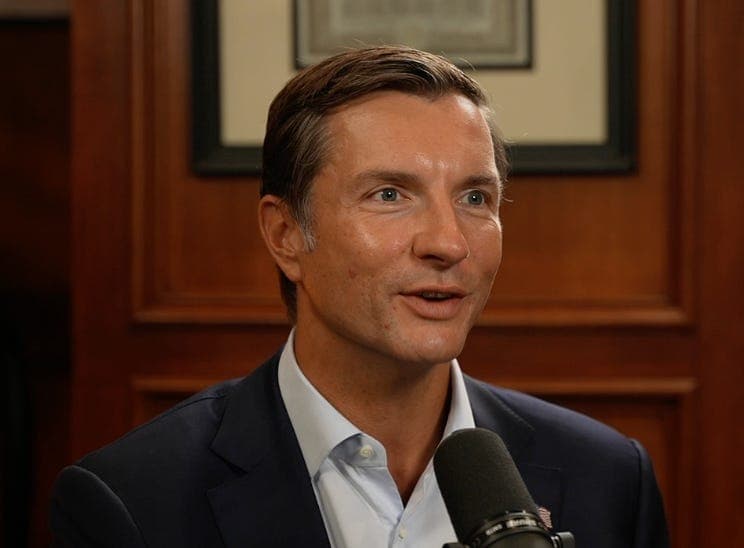
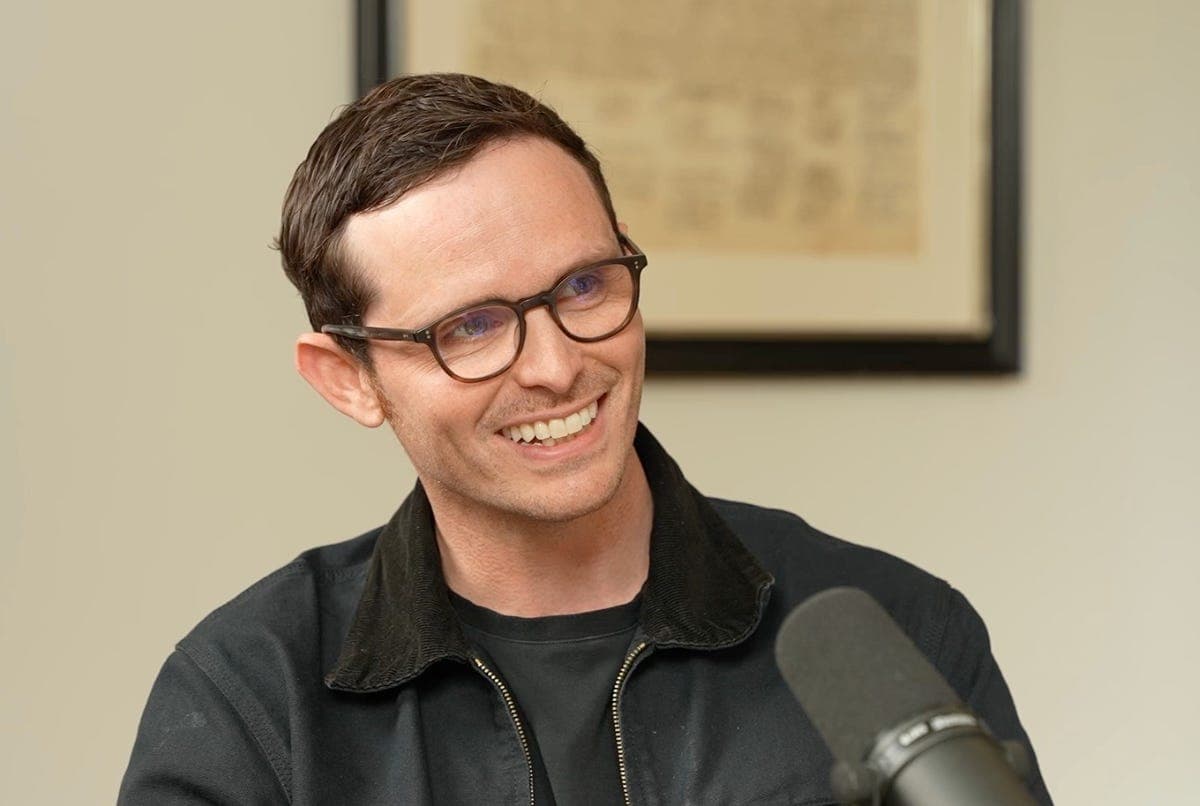
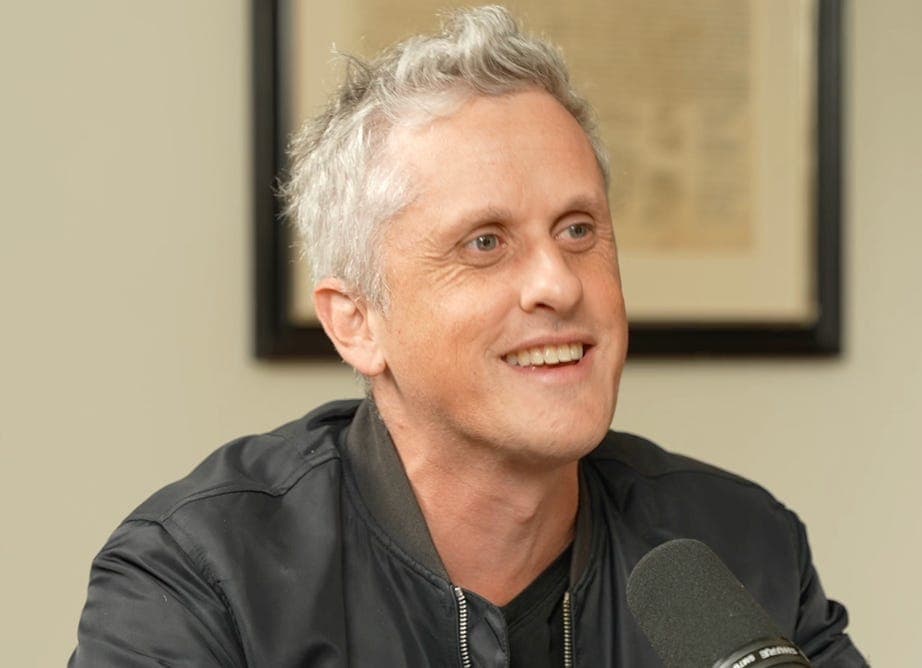
1:10I'm going to give this book to all of our CEOs, and I'm excited for you all to learn from Andrew today. Andrew, you're a principal research scientist at MIT. You're a bestselling author, and your new book is The Geek Way, The Radical Mindset That Drives Extraordinary Results. Thanks for joining us, Andrew. Joe, thanks for having me. So start by telling our audience, please, a little bit about yourself and your work. Broadly speaking, you study how technology impacts our world. Can you unpack that? Yeah. Yeah. So all the books that I've written and the research that I've done has been completing a sentence, how tech progress changes X and X changes.
1:41Maybe it can be jobs and wages. Maybe it's business models. The last book I wrote was our relationship with the environment. And Joe, if you had told me at any point in the past 20 years that I would ever write a book about culture, about corporate culture, I would have laughed in your face because it wasn't that there's no good work done on culture. There's some beautiful work done. But in general, I found the discussions kind of self-congratulatory and fluffy. And there's no shortage of CEOs willing to tell you how they made the tough call and pulled and turned things. And they were just, I didn't get anything out of it.
2:15But I spent my career with one foot in the old economy and one foot in the new economy. And I hate those labels, but let's go with them. And I just kept trying to pattern match and try to understand what was so different about the two because they were deeply different. And those differences mattered because the upstarts were just mopping the floor with the incumbents over and over and over again. This was not a fair fight at all. And I tried to figure out what these upstarts, the new economy, the Silicon Valley, whatever phrase you want to use, what were they doing that was so different? And the book, The Geek Way, is my answer to that question.
2:51I think they've upgraded the technology that is the company. You've captured it really well. You're describing a lot of what I've learned from my mentors and done over the last 20 years. Before we jump into the book, I want to ask, in 2020, you wrote a Wired article titled, Why Degrowth is the Worst Idea on the Planet, talking a lot about the technology world. And I'm curious, why do you think so many people distrust technology and even fair technology today? What's going on there? Joe, I don't know. It's weird. Your podcast is called The American Optimist, right? And we're in this period of pessimism about a lot of the things that I think we should be incredibly optimistic about.
3:27And it is true that every time a technology, a super powerful technology comes along, and maybe I'll lapse into economist speak and call these things general purpose technologies. These are like the steam engine and the internal combustion engine and electrification. These are the things that accelerate economic progress and not coincidentally make our lives better. Every time one of these things comes along, some problems come along with it. This is not new news anymore. But we've lapsed into this mode that I find weird and troubling, where especially the more elite you are, the fancier you are, you signal that you're elite and fancy, not by analyzing the amazing new technologies that we have now, but by problematizing them.
4:13And those are not the same exercise. It's like we're back to the Luddites again, but it's a sophisticated version of it. Yeah, but let's just list all the things that could possibly go wrong. That's not that hard to do. You and I could get it on a whiteboard and make a long list of all the bad things about the hammer. I find it a shallow exercise overall. Analyzing, talking about costs and benefits or trying to understand what's going on in a holistic way, that's a really difficult exercise. I think in general, when we analyze these very powerful technologies, we conclude that nothing improves the human condition and the state of nature more than technological progress.
4:50And somehow we've lapsed into problematizing instead of analyzing. I think that's a shame. It's completely true. I think you have to actually be slightly smarter to understand systems and be optimistic about the new possibilities we don't see versus it's like a slightly easier problem to see the obvious problems with changing things. You know, I think it's not maybe not just smarter, but also a little bit braver, because I think there's an old John Stuart Mill quote who says it's the person who despairs and everybody else is in a good mood that we think is smart. I just I completely butchered that quote.
5:17But he nailed this negativity bias that we still have and that I think is really rearing its head today. And I think you and I should say up front, we are not I'm not and I know you're not. We're not technology Pollyannas. There are challenges that come along with very powerful technologies. Amen. We need to spend time on them and deal with them. Amen. Do we need to sit around and problematize the technology all the time? No. Well, you know, I woke up every morning this summer with notes from friends who journalists had reached out to to try to find some dirt on me. So I think this is a culture right now.
5:50This is a to attack technologists. But let's jump into analyzing them instead and hearing about them. Your book's called The Geek Way. How do you define a geek? You grew up obsessed with computers. Do you count as a geek? Yes, but that's being arrogant because geek is a term of praise for me. And I think more broadly in our culture, the definition of geek has morphed and it's now tossed around more as a term of praise or admiration than an insult. And it's not just somebody who likes computers way too much. These days, I think a geek is anyone with two characteristics. Number one, they get obsessed with something and they're tenacious and they can't let it go.
6:24And whether that's wine or Star Wars trivia or artificial intelligence doesn't really matter. They just get obsessed and they want to solve the problem that that is obsessing them. And if the solution that they come up with is unconventional, that's OK. They're not constrained by conventional opinion of their mainstream or status quo. They will go where their inquiries take them, even if it's to an unusual place. So these days, my shorthand for a geek is an obsessive maverick. I love it. And your core thesis of the book is that a bunch of geeks have figured out a better way to run a company. Joe, a present company very much included, I think, of you as part of this cohort of geeks that for a while now, but I think really accelerating over the course of the 21st century said, like, wait a minute, we don't have to do things the way companies did them in the industrial era.
7:14We are not bound by the status quo. And we're going to keep tinkering and iterating and experimenting until we find ways to solve these dysfunctions that keep creeping in, like bureaucracy and sclerosis and big projects that go so badly off track and these corporate cultures of silence and different kinds of toxicity. I think what you and your cohort did is say, can we do better here? And my answer is yes, hence the book. Who were the group of people, though, responsible for the culture? How did this start in Silicon Valley? How did they get into the water there? I asked people, some folk that you know, I asked Eric Schmidt this question a while.
7:50I asked Carl Bass this question. These are guys who have been around the valley for a long, long time. And they say, look, you know, there was always in Northern California, this combination of academia, of industry, and sometimes even defense industry, and hippiness and freakiness and letting your freak flag fly. John Markoff, who's the longtime technology reporter for the New York Times, wrote a great book called What the Dormouse Saw or Said. I can't get the line right. about this early confluence of freaky hippie culture and academia and companies trying to invent these things called computers in the 70s and 80s in California that helped create the personal computer movement.
8:35But I think more fundamentally, this particular cocktail that is shaken up in Northern California, bringing this stuff together, I think it was a really important catalyst. And then in the 21st century, as the web expanded, as the smartphone revolution expanded, as capital became more abundant, I think there was the second wave of geekdom entrepreneurship that went on. Again, headquartered out there, but not exclusive to there. Yeah, no, I mean, I definitely wouldn't have known how to do the things I did if I hadn't gotten to spend some time at PayPal while I was at Stanford. I think it's just seeing what a functional culture looks like.
9:10And I love how you break it down into four norms. So the four norms are speed, ownership, science, and openness. On the speed one to start with, I want to ask you to describe it. One of the things that really stood out to me is plan less and iterate more is one of the things you said. And, you know, working with Peter Thiel, there'd be times where I want to like talk about something we were going to do or talk about something we should analyze. He was never interested in that. He was like, just do it and then come back to me with it. It was this culture of let's just go fast and like, let's talk about this again in an hour after you guys have done that work.
9:39And there was no like waiting like a month or a week or anything. It was just go, go, go, go, go, you know? Yeah. I didn't know that about Peter. I didn't know that he was wired so much that way, but he overcomes this very deep seated human tendency that we have. I think it's so deep seated that Danny Kahneman gave it its own label. It's called the planning fallacy. We are just super overconfident in our ability to upfront map out what's going to happen. We think we can do it. Everything from how long your home renovation is going to take to what the customer wants. we're just overconfident on our ability to know the future and plot a course through it.
10:13And we're not, we're like, we're actually fairly lousy at that. Peter's insight, the insight of a lot of geeks that I work with is that you need to do some planning. You need a minimum viable plan. After that, the only way you're going to learn about reality and learn about what the customer wants or learn about how long your kitchen's going to take is to start doing stuff and getting valid feedback on the fastest possible cadence. So for me, the great geek norm of speed, velocity is not the right synonym cadence or clock speed or pace of iteration is the right synonym just get good feedback and then try it again 100 you know i love this because right now we're working a lot on all these ai possibilities and i have these young geniuses on my team and they come out of you know academia and phd programs their whole lives and there's this instinct to like kind of like over plan everything and talk about it for so long i'm like you know what guys actually let's just hire a few of these people and let's try building this and seeing how it works Then let's get feedback from the industry and let's try again.
11:07And like, but Joe, how could you start something when we don't even know for sure what's going to work? And I'm like, well, that's how you do it. You start trying, right? You start iterating, you start going. And that's, it's a Silicon Valley mindset to start building and trying things. I think it is very different than how the rest of the world approaches things. I agree. And I think it's one of the keys to your success. When I talk to industrial era companies about this, the immediate pushback I get is that sounds fine for building a consumer web application. But there are mission critical things out there and there are things that we cannot get wrong.
11:39And I say I completely agree with that. But you're making the mental error of smashing together the way you develop a thing versus whether or not the thing can fail. And to make that concrete, SpaceX is the only American company that has built a capsule that is authorized by NASA to take human beings up to the ISS and eventually onto the moon and maybe Mars, right? They're the only ones that did that. There's nothing more mission critical, I think, than keeping people safe in space. SpaceX is the only one that can do that these days. And the way they did it is not by planning a ton. And as you probably know really well, that company are fanatics about iteration and getting feedback.
12:23Meanwhile, NASA, which got a bigger contract at the same time that SpaceX did to build the capsule, they have not yet had their first crude test. Yikes. This iterative approach is the way to learn quickly and improve, even if what you're trying to do is very mission critical and failure intolerant. I love that. Let's move on to the second one. Write a lot on ownership. It means a lot of different things to you. Tell me what you mean by ownership. For me, it's kind of the opposite of bureaucracy. And everyone would nod their heads to that. Here's the tougher part. It's also, in some sense, the opposite of cross-functional coordination and process and structure and hierarchy.
13:01Now, I'm not saying that ownership equals chaos or equals anarchy, but it involves a lot less of all of those things than we became fond of in the industrial era. Joe, I don't know if you're old enough to remember the era of business process reengineering that really got kicked off in the early to mid 90s. I read a lot about it. It sounds terrible. But none of the fact that you just said that is interesting because to your ears, it sounds terrible. I cannot tell you how good it sounded to us, me included, when we first heard about it in the mid-90s. Well, you had to fix the processes, I guess, huh?
13:34There are too many processes. We're going to define in advance all the things this company is going to do. We're going to embed them in software, and everybody has the same sheet of music to play from, and we're going to make beautiful music together. And we did that. We did that for a long, long time. And we wound up with these, again, these very top-heavy, sclerotic kind of bureaucracy, barnacle-encrusted companies that found it very hard to move quickly or to kind of liberate their people at all. And what you and your geeky cohort are doing is figuring out how to build companies that are still very good at executing, right?
14:08But don't have that same kind of crazy overhead associated with it. Amazon is one of my favorite examples because they're a gigantic company now, but they still have this philosophy of like, kind of what's the minimum amount of production? They got rid of their NPI as you talked about, right? Because they used to do this horrible thing in the nineties. Oh yeah. Yeah. Yeah. This is, I didn't know this at all. Amazon was actually well on its way to being exactly this kind of top heavy bureaucratic mess. If you wanted to innovate at Amazon in the late nineties, you submitted your idea to this innovation bureaucracy that would pass judgment on it.
14:43And then they would tell you if you got to proceed, if you didn't get to proceed, but you didn't have to support anybody else, or if you didn't get to proceed with your idea, and you had to support a bunch of other ideas, this was just this absolute misery inside Amazon. Bezos realized that it wasn't working, that it was jamming the company up. And so in this great book, Working Backward, written by a couple of ex-Amazonians who were there, they said, okay, And Bezos said, to his great credit, my first preferred approach for managing innovation at this company is wrong. And we're going to go 180 degrees in the opposite direction.
15:18We're going to build a company where you don't need to ask anyone's permission and you don't need to resource seek from anybody if you want to try something new. I love it. And that involved completely modularizing and decoupling the technology stack. That's the birth of Amazon Web Services and to a large extent, the cloud industry now. And also this organizational decoupling. And what the authors of Working Backwards said is we learned over time that when we start, when we set this up and they had two pizza teams initially, the teams that worked the hardest to reduce their dependencies were the ones that were most successful later on.
15:52they quote bezos as saying if amazon is a place where builders get to build we have to cut down on the communication and sebastian thrun who's an amazing alpha geek said the same thing he said look i tell my teams it's not that don't ever talk to anybody but if you run if you run your idea up the flagpole and then back down the flagpole it's going to be almost unrecognizable by the time it comes back to you just go do stuff this is how steve jobs at innovation as well he'd create these groups that were totally separate and he wouldn't let anyone else reach in an airfare i think he i think the quote was that like, uh, if you try to, you have a committee design a horse, you're going to get a camel.
16:24And so you need to have, you need to have these, the groups be totally separate. And he'd have the ones only he could talk to. So it's, it's very interesting. It's a similar framework, you know, for all these guys. Yeah. And, and you know, Apple is a very secretive company in a lot of ways, but part of what they're trying to do is I think what you said, they're just trying to encapsulate innovative teams so that they don't get bogged down in all of the crossfire that goes on in a company, which was done with good intentions, but the end result wasn't great. So the business geek said, all right, we're not doing that anymore.
16:53I love how you talk about the bureaucracy mass index BMI. These things are fat for their bureaucracy. And the autonomy point really is interesting. You do need single threaded leaders who could focus and have people stay out of their way. One of the areas you talk a lot about for ownership and bureaucracy is about status. You talk about humankind, obviously all of us have this bias towards status. It's tied to our health, it's tied to everything about how we see ourselves. And apparently status helps create bureaucracy. Can you talk about that a little bit? Yeah, you bring up this really interesting point.
17:21So far, I've been dumping on the bosses, right? They're the ones who create these really elaborate processes and approval loops and all that. That's half the story. And I'm not even sure it's the bigger half of the story. Because one of the things I learned when I was researching the book is how important status is for us human beings. And I was actually surprised by it. I shouldn't have been. Because once you realize what we are, we're the most social species on the planet. We're the most social creatures on the planet. Of course, status is important to us. Social status is super tied up with our evolutionary, our fitness, our success.
17:55It matters to us like crazy. And one way you get status inside this thing called the company where you spend so many of your waking hours is to be in the loop. And so subconsciously, almost all the time, we humans, we want to be part of the process. We want to be in the loop. We want to be consulted either in a hard way or a soft way. We want to gatekeep. It's part of who we are. And what the geeks have done is they've channeled that desire for status and they channel it in ways that are aligned with the goals of the company. And they work super hard not to, not to allow these kinds of bureaucracies to encroach so that you can gain status in a way that's not aligned with the goals of the company.
18:37Just through doing books and podcasts, right? Yeah, exactly. Fine. Yeah. Or, you know, with the best of intentions, you say, I think our company which makes software for a living needs to emphasize sustainability. That's a perfectly reasonable thing to say. However, if you're spending five hours a day promoting sustainability inside your software company and that's not your job, are you acting in ways that are aligned with the goals of the company? Maybe not. And so some of the leaders that I learned from who I really respect are the ones that pare back the ways to gain status that aren't aligned with the goals of the company.
19:14One of the points you mentioned a lot is also, and I think it's related to this, is taking people's biases and their ultra-sociality and these biases and directing the cultural evolution of the company in the desired direction. So I guess you'd want them to gain status by doing things that are culturally relevant, right, is what you'd want to shape for. And aligned with what you as the person running the company want. Benioff had this great insight in one of his books. He said when he was a pretty senior person at Oracle, he didn't know how his activities aligned with the overall goals of the company.
19:44And he kind of asked his colleagues and bosses about it. And he said, Mark, don't worry about it. Just hit your numbers. And when he co-founded Salesforce, he said, we're not doing it that way. And you've probably heard of the V2 mom process at Salesforce, which everybody there does and participates in and kind of believes in. All it does is this cascade where you and your team have to say how what you're doing aligns one level up, one level up, aligns up right up to the top of the company with the overall goals of the organization. And my friends who work at Salesforce say, before you go into a meeting with somebody, it is very common to look up their V2 mom.
20:19So you know what their priorities are. That's really lightweight. It's just an example of what, you know, John Doerr would call an OKR process and objectives and key results process. It's simple, but it works. And that's how to keep everybody this atomized kind of swarm of teams at the company, how to keep them aligned and moving in the right direction. And on the science part, you kind of hinted at that, but I love your focus on quantifiable like things have to be things you can actually measure which is you know i wish the government was more that way too i think you can learn from this too you know we wish so many parts of our society were more like that and you can get too obsessed with numbers and if you're dumb about them then your metric turns into something that everybody tries to game uh but that's that's not a reason not to try to measure things and for me the heart of the the geek norm of science is something you said a little while ago it's channeling people's innate tendencies i think what you and the other geeks have realized is let's not try to change how we human beings are wired.
21:15That's really, really tough homework. Let's work with it. Let's work with our wiring. One of the aspects of our wiring, maybe the easiest cognitive bias to elicit, you can see it in any intro to psych course, is overconfidence. We are chronically overconfident creatures, mainly because, and this was a great insight from Robert Trivers, the most important evolutionary biologist since Darwin, Trevor said, the reason we are overconfident is because confidence is valuable for individual members of a very social species. If you believe that you're really, really good, you will appear that way to other people and they will want to have you as part of their coalitions.
21:53So we are overconfident. It seems like a bug. It's a feature. It's a feature for a species as social as ours. However, you will make lots of bad decisions if you're overconfident, if nobody checks you. And the point of the great geek norm of science is to have your peers, peer review in science, to have your peers argue with you and make you produce evidence. The channeling is that you then become an overconfident evidence producer. You're like, okay, I can do science. I'm a good scientist. I'm going to go do the incredibly hard, laborious work of generating evidence to convince the scientific community that my version of reality is the right one.
22:28The business geeks have imported exactly that insight. We're overconfident, make us overconfident in our ability to convince other people with evidence. Man, that's beautiful. It's interesting. Thinking about the evolutionary background so that I would assume that it makes more sense for men to be overconfident based on where it ends up for them in a society, which could be both good and bad, I guess. I believe there are. I haven't gone super deep into the gender differences. The biases that I'm talking about are pretty consistent across human beings. I think you're right. In general, men tend to be more overconfident and that might manifest in somewhat different ways.
23:05But any of the classic demonstrations of overconfidence, if you do them, you will get an effect with any gender mix in the room. One of my all-time favorites, I'm going to do this with a group someday. One of my all-time favorite demonstrations of this was they sent out a questionnaire to a bunch of people. They said, okay, how moral or ethical are you along these different dimensions? And of course, everybody says they're way above average. Then they sent those in. Six weeks later, they sent a follow-up and they said, okay, here are the averages across the whole group of how moral and ethical people thought they were.
23:37Where are you compared to the group? And they're like, yeah, well, I'm, you know, five to 10 % better all across the board, right? They just rated themselves as better. The fiendish trick was what they were reacting to was not the average from the group. It was their own answer from six weeks earlier. So people said, yeah, I'm much more ethical and moral than I am. We're just wired that way. Don't ignore it. Don't try to assume it away. It's very hard to train away. Maybe you could do it. What you should do is work with it. It's a good self-awareness insight. I want to ask about tech today. Obviously, a lot of what you've described is how we created Silicon Valley.
Read the full transcript
24:15When you look at the big tech companies today, do you worry some of them are at risk of losing the geek way? Is it still there? I absolutely do, mainly because the people I talk to worried about it. And not just because of whatever the current crop of companies is, but because these tendencies that we've been talking about lead you away from the geek way. Overconfidence will make you invest way too much money in, I don't know, the metaverse, for example, or the fire phone or your pet project. Over-confident, successful leaders will have a very strong tendency to take their organizations in bad directions, which can be very, very expensive.
24:52We haven't trained that away. And people like Reed Hastings have worked super hard to make companies like Netflix a place where the organization serves as a check on the leader's overconfidence. I think that's imperfect. I think it's very, very hard to sustain. It's very hard to keep the bureaucracy from creeping in. It's mainly because we humans, we want the status we want when things tend to get accumulated to get kind of encrusted over time that none of the geeks that I talked to. And Joe, you know that your friends and colleagues, they're not the most humble people on the planet. Right. This is a confident group who have achieved amazing things.
25:29Nobody that I talked to in the book, when I asked your question, or I did a version of it and said, do you think that the current crop of companies at the top are permanent? Do we have permanent, dominant companies now? They all laughed at me. And they laughed at me because of competition, but I think equally because these dysfunctions have a strong tendency to creep in and you have to keep fighting them, especially as you get older, as you get bigger, and as you become as you become successful over time. The virtue signaling for status and top-down frameworks, they definitely interfere with some of these frameworks that are different frameworks for how to run things, for sure.
26:05You have an organization full of people who are both super cooperative. That's why companies can accomplish such amazing things. That's how we build spaceships and no other creature does. But we have to keep in mind, human beings look out for number one. We're not ants. We don't look out for the hive. We look out for ourselves. One way we do that is by being cooperative. Absolutely. But self-interest is always going to be there. And I learned a ton from Joe Henrich, who's an anthropologist by training at Harvard. And he wrote this amazing book called The Secret of Our Success, where he lays out this tension that we're the most social species on the planet.
26:41We learn in groups and we look out for number one. And he says, history shows that all organizations have the strong tendency to splinter over time because of factionalism and polarization and tribes being formed and the interests of smaller groups and individuals becoming misaligned with the interests of the whole. Man, I think that's a deep, deep insight. That is the thing you have to fight. A hundred percent. I mean, there's definitely a natural tendency over time for any organization towards bureaucracy for all these reasons and for status and for everything else. And so, you know, the one that's been around the most and the longest in the U S and therefore probably has the most of this kind of really dysfunctional bureaucracy would probably have to be our government just because that's done by default.
27:23And you know, a lot of companies, we talk all sorts of stories about companies over the last hundred years that went this way, and then they got beat by competitors and they had to either fix themselves or go away and they're gone. Government doesn't go away when it, when it, when it goes this way. So, I mean, have we ever had a geek president or could we, I mean, how can we bring the geek way to DC and to our government? You know, Jennifer Palka, who started Code for America and went to work for the federal government, she wrote this great book called Recoding America. And she echoes some of the pessimism that you just articulated, right?
27:51For all the reasons that you identify, our government is a very large, very well-funded organization, and it gets its funding by mandate, right? We don't have a choice about whether or not we want to pay taxes and stay out of jail. It's very large. It's very well-funded. It doesn't have a ton of competition in a lot of areas. If I don't like the RMV here in Massachusetts, I don't have a second option for how to get my license plate, right? And it has all of these tendencies. So no surprise, our government has become larger and more bureaucratic over time. I think it's called the Federal Register.
28:27It's this, by now, maybe it's a virtual book that encompasses all the regs of the federal government. It has grown, I forget how much faster than GDP in America for the whole post-war period, but much, much faster, right? So you look at all that and you get pessimistic that we can never make progress. And there's reason to be pessimistic, right? However, when I come back from a foreign country now, I'm amazed at how quickly I go through customs and immigration. I have global entry because I travel a bunch. And these days, in some airports, I just walk up to some kiosk and it looks at my face and says, welcome home, Andy.
29:04So government can still innovate. It can still make progress. I think Jennifer has insights about how that happens. There's an interesting research and interesting book to be written about how you activate these pockets of energy and progress inside a great big permanent monopolist bureaucracy like the federal government. It ain't impossible, but I think it takes some real leadership and energy. You probably know I've built a few big companies in the government tech space. I think it needs both the tech innovation, but it needs forms of accountability and competition. And I think there's ways of putting that in there that could be very interesting to fix it.
29:36Completely. And you're an investor in Anduril, which is this fascinating company, right, which went from, I think, founding to its first billion dollar contract from the federal government in five years. This is this is wild, man. And as I understand it, it's a super, super geeky company. What gives me some hope is that there are people working inside the federal government. And one thing I think we need to acknowledge is that many people are super mission driven working inside government. They want the country to be in a better place. And so one thing that you know a great deal about is reforming some aspects of procurement for the Fed and for the military and to give a startup that's like nothing company like Anduril a real chance to participate in national security.
30:15Like that gives me a lot of hope. Palantir and SpaceX took a lot longer, but kind of eventually taught them that there could be things that are 10 times better from outside. If you shame them by showing something is clearly 10 times better. And then I think the generals and the DoD and the DoD have started to learn, wow, there's actually really important possibilities. and China and Iran are doing this, we better work with the best. And so they are starting to learn a little bit to work with new stuff, which is, it's very bullish, I guess, for our defense, which is helpful there. Yeah, I completely agree.
30:41And you know, you and some guys that, you know, like you say, you slog at it for a long time. And I think the, the degree to which SpaceX makes everybody else in the space industry look like they're standing still, that tells people something, right? And so there should be, I believe there's more willingness to, to reach out to the geek community and say, okay, like, show us what, what can you do? What do you got? What I found is even for the most dysfunctional bureaucracies, if something is literally 10 times better, you eventually can shame them with persistence into getting in. You know, I want to ask a question about education as well before we stop, you know, I think for parents reading this book, can you say a word about the Montessori method its impact on cultivating the geek mindset?
31:19I thought that was an interesting point. Yeah, I can say two words. Thank you to my mom and dad who enrolled me in a Montessori preschool where I grew up kind of in a small town in indiana they had a montessori school not too far away and i went to it and i like i used to skip into school every day as a little kid because the rooms were these labs full of cool things to play with but they were designed by maria montessori who was this amazing educational innovator more than a century ago who dove in she was a huge geek she dove in on this very hard problem of how do young children learn how do they learn best and she said look you give them things to play with.
31:57But the things that they're playing with are designed to convey things like numbers and letters and then reading and concepts like the difference between X, X squared and X cubed. Give them a cube, right? Whoa, that's really interesting. That's a lot bigger. So I remember playing with these kinds of things as a little kid. And Montessori only went as far as the third grade. And so my parents enrolled me in the public school. And I'm like, wait, wait, wait, wait, wait, what did I do? Why am I being sent to the gulag here? Because I'm sitting in a desk in the same place all day, every day. And every hour, a new subject happens, whether I want to move on, like, are you messing with me?
32:36And I thought that the exercises were kind of trivial. I was very far ahead, even though I'd never been through standardized tests or had the lesson plan. I knew how to do math at a decent level. And there's a Montessori mafia in tech, both Larry and Sergey went to Montessori, Jeff Bezos was a Montessori kid. And I don't think that's a complete coincidence. It has a lot to do with they got very lucky with their parents. But also, if as a very young person, you are taught that the world is an interesting place, and your job is to go poke at it, man, that is different than the world is a slog. And the whole point here is to prepare you to be a cog in some gigantic machine.
33:13Yuck. A hundred percent. We're doing that for our daughters too. Andy, let's zoom out. We started American Optimist to push back on the cynicism and pessimism in our country. You study technology. What makes you most optimistic for our future? We're inundated with all these doomsday scenarios. What's the best case for optimistic version of America's future? History, man. We human beings, we've screwed up a bunch, but we have muddled our way through. And while there are so many more of us on the planet now, there are fewer, not a smaller percentage, there are fewer human beings living in dire poverty on the planet Earth than was the case 200 years ago.
33:49We're messed up and we get a lot of things wrong and we muddled through it and periodically very very bad things happen all that is true holy cow would you rather be born today than 20 50 100 200 years ago and joe like as you know very well the technology toolkit that we are building now is without without precedent right we have an entity that understands human language and can participate with us and that's but that's a baby technology how good is that going to get we're going to do quantum computing we are going to go through the energy transition. I think probably via nuclear and hopefully via fusion, these things are going to happen in your lifetime and my lifetime.
34:27Now we're going to get some stuff wrong along the way, but like with that optimism out there, am I worried about the Terminator? Man, I got, I have other things to worry about. I love it. Well, Andy, I'm buying copies of the Geekway for all of our CEOs and a bunch of friends. And I really appreciate you taking the time to chat with us today. Joe, that is super kind. Thanks. Thanks for incredibly sharp questions. I really enjoyed this.
From the publisher
In the last generation, the U.S. technology sector created many of the most valuable companies in the world. Has Silicon Valley figured out a better way to build and scale a business? How did this cohort of outsiders — “geeks” — create cultures that continually redefine the limits of science and technology? And how can others, especially our government, learn from the very best organizations?
These are the questions at the heart of best-selling author Andrew McAfee's new book "The Geek Way: The Radical Mindset that Drives Extraordinary Results." A principal research scientist at MIT, Andrew explores the geek mindset — an obsessive maverick, as he defines it — and explains how geeks developed a new management philosophy that permeates Amazon, Apple, SpaceX, Palantir, and other pioneering organizations. He breaks it down into four norms: speed, science, ownership, and openness, and details the principles behind each.
He also explains why even the most successful companies are vulnerable to bureaucracy and sclerosis, and that human nature and status-seeking have something to do with it. Instead of fighting it, he describes how geeks have figured out a better way to align these innate tendencies with the mission of the company. I've bought copies of this book for all our CEOs, and hope you'll check it out too!
This is a public episode. If you would like to discuss this with other subscribers or get access to bonus episodes, visit blog.joelonsdale.com