In short
Podcast Notes: Joe Lonsdale: American Optimist - Episode 71: Reinventing Community College with Tade Oyerinde
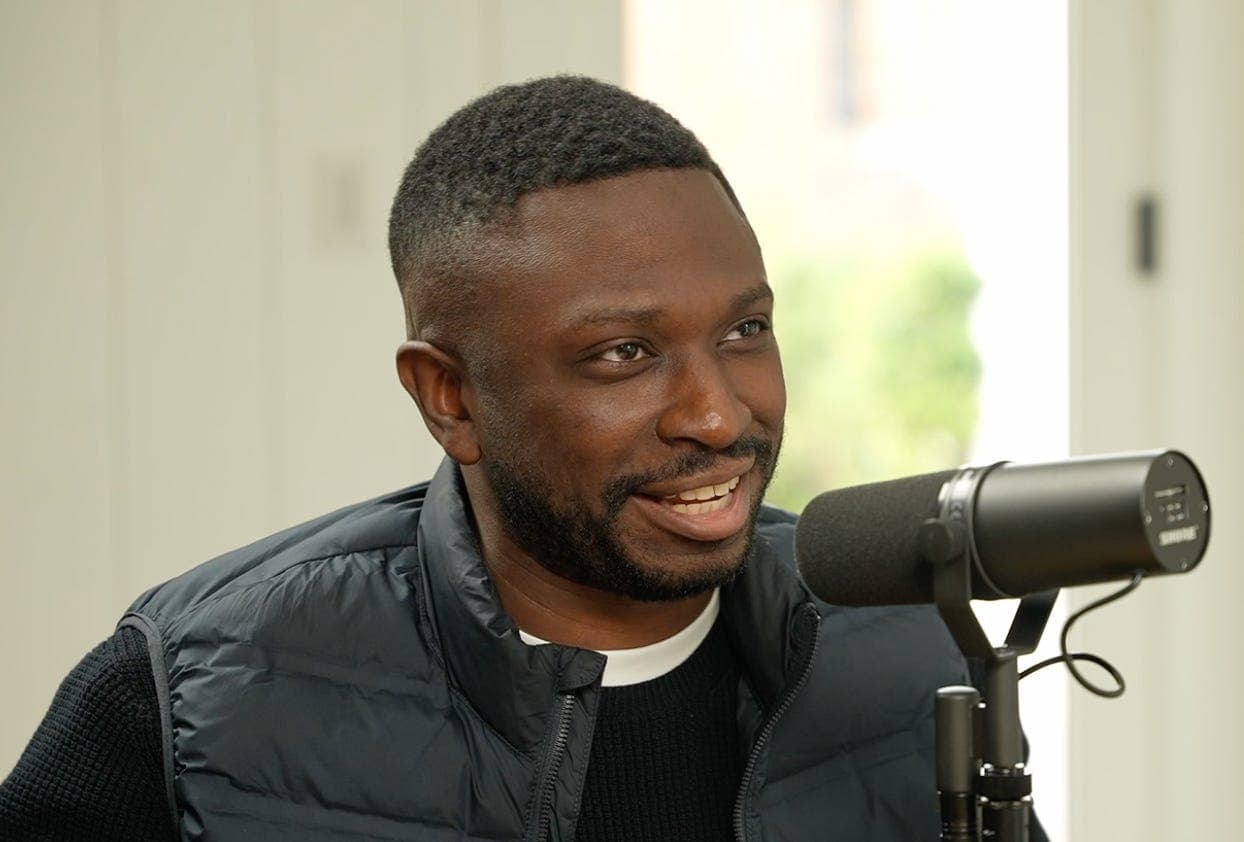
Overview In this episode of American Optimist, Joe Lonsdale interviews Tade Oyerinde, Chancellor of Campus, discussing the state of community colleges in the United States. Oyerinde proposes an innovative model aimed at improving education quality and completion rates for community college students while eliminating student debt.
Key Questions Addressed
- What are the challenges faced by community colleges?
- How can a new model drastically increase completion rates?
- What role do adjunct professors play in this new educational model?
---
Key Points
Current Issues in Community Colleges
- Low Graduation Rates: Only about 30% of students who enroll in community colleges graduate.
- Economic Impact: High dropout rates result in significant economic losses for students and society.
- Perception Problems: Community colleges often carry a stigma, seen as less prestigious compared to four-year universities.
Tade Oyerinde’s Approach with Campus
- Innovative Model: Campus aims to provide a debt-free education, high-quality instruction from top adjunct professors, and robust student support systems.
- Support Systems: Tuition covers essentials such as laptops, Wi-Fi, and personal coaching, all at a cost less than the annual Pell Grant ($7,495).
- Acquisition of Brick-and-Mortar School: Campus has recently acquired a school in Sacramento for hands-on skills training in high-demand career tracks (e.g., medical coding, cosmetology).
Two-Pronged Strategy
- Improving Quality of Education:
- Focus on hiring top adjunct professors from prestigious institutions (e.g., Princeton, UCLA).
- Create a gig economy for adjuncts, allowing them to teach part-time online.
- Increasing Completion Rates:
- Implement supportive measures for students to enhance retention:
- Dedicated Support Coaches: Each student is paired with a coach to provide personalized guidance.
- Full-time Enrollment Requirement: Students are encouraged to enroll full-time to maintain momentum and reduce dropout rates.
Insights on Financing Education
- Distorted Market: The availability of student loans has led to increased tuition costs without improving educational outcomes.
- Potential for Change: With existing federal grant programs, Campus can create a sustainable model without requiring further legislation.
Cultural and Administrative Challenges
- Community colleges often lack the resources to effectively support students.
- The higher education system is plagued by bureaucratic inefficiencies and administrative bloat, leading to increased costs and poor outcomes.
---
Key Takeaways
- Vision for the Future: Oyerinde believes that community colleges can be a viable and smarter alternative to taking on massive debt for a four-year education.
- Focus on Accessibility: The goal is to help a new generation of students access high-quality education without the burden of debt, thereby transforming their lives and career prospects.
- Optimism Amid Challenges: Despite the difficulties facing the education sector, Oyerinde's approach brings hope that innovative solutions can improve outcomes for millions of students.
Conclusion With the combined efforts of innovative models like Campus, there is optimism for a new era in community college education that can support students' aspirations while alleviating financial burdens. Tade Oyerinde's journey emphasizes the potential for systemic change and the importance of maintaining a focus on student success.
Resources
- [Campus](https://campus.edu/)
- [Joe Lonsdale's Blog](https://blog.joelonsdale.com?utm_medium=podcast)
---
Written by AI. May contain mistakes. Listen to the episode to check what was said.
Transcript
Automatic transcript. May contain errors.0:00Imagine you're a high school senior on Admitted Students Day. Remember Admitted Students Day where everyone wears the hoodie of the school they're going to. Nobody wants to be the kid wearing the local community college hoodie. It's like, oh, you were too dumb to go to a four-year school. That's the way people perceive it. Even though for, I'd say, at least half of students in America today, community college is the clever path. It's a smart path. It's way better, even with the lower graduation rates, than getting into debt to go to a tier three private school.
0:33Tade is the chancellor of campus, a new type of community college. We've heard a lot about the problems with four-year colleges, but community colleges are also in crisis in our nation. Right now, the graduation rate is as low as about 30 % on average. And on average, people are coming out with debt and they're not getting benefit from it. Tade has created a new model where you don't have to get any debt, where he's getting the graduation rates way up, and he's innovating to be able to educate hopefully soon hundreds of thousands of people. Let's hear about the community college world and what's possible with Tade.
1:03I'm Joe Lonsdale. Welcome to American Optimist. Really excited to have Tade Ayurinde with us today. Tade, thanks for being here. Sure. Thanks, Joe, for having me. Call yourself the chancellor of campus these days, right? Well, it's what they call me. The chancellor. I love it. Founder and CEO of a startup that's taken over community college and is taking education to everyone in a better way. I'm excited to talk about campus, but first let's hear a little bit about your background. Your parents are from Nigeria. You grew up in Atlanta. Is that right? Yeah. So my father came here to finish university.
1:31My mother came shortly after. They had me, my twin brother and my older sister in Atlanta. And yeah, I was born and raised there. And my older sister's a genius. And so my parents decided to homeschool us because they thought that my brother and I were going to be gifted as she is. And much their disappointment, we didn't quite have the same gifts, but, but yeah, they decided to homeschool all of us. And so we were homeschooled up until, up until high school and, and then finished high school when I was 16 and then, and then moved. I was actually going to be a pilot and went to flight school in Florida for a year and then decided to study aerospace engineering and went to go do that in the UK.
2:11You went to Leeds in the UK. What about aerospace engineering attracted you? You know, it's kind of lame now to say it, but I watched The Aviator and sort of got super, super deep on Howard Hughes and pretty much decided that I'd always loved aviation, everything aviation. But I realized that I actually wanted to do much more than sort of fly the aircraft. I wanted to design them. I wanted to understand the propulsion systems. I thought there was going to be really interesting advances in how we design these systems, how we stabilize them. I thought computing meant that we can do interesting things with VTOL and gimbal thrusting.
2:48We can. Right. They're really going to be difficult to do in a purely analog world. And yeah, I just decided to study it. I thought it was going to be really fun. Did it for three years. And we were talking earlier, you're an optimist, but you're frustrated that things are broken. So part of your motivation for building campus is you're trying to fix things that are broken. Like what's broken that you're working on? I always think broken is a little bit too vague and abstract to like describe things this complex. But what I'll say about our education system, specifically higher education in America, is that it works exceptionally well for some people.
3:21Like we can all point out like, oh, this kid crushed the SATs. This kid got a full ride to Stanford. Like those stories exist, but it doesn't work at all for a lot, a lot of people. And so it's like, okay, well, how do we make it work for everyone is sort of the way I like to frame it. And that's sort of the question that I always make us ask every day at campus. And so specifically, who isn't it working for today? Our higher education system. It's basically, if you look at cost, if you look at the cost of getting a bachelor's degree, if you sort of map it out relative to the cost of TVs, the cost of even healthcare, the cost of pretty much electronics, goods, every other aspect of the things we spend money on.
4:03It's just massively driven up. In fact, there's like a chart you guys can. Yeah, we put the chart on. It's just gone up way more inflation than almost any other area. Why is this? I mean, people hear about it anymore. Administrators. What's the problem? Administrative bloat is definitely a big part of it. It's certainly multifactorial. I think that like one interesting thought experiment is to like think like what is the other, the one other country on earth that has a higher education system comparable to ours in the States? If you think about like multiple institutions, the top 10 globally, but then also a long tail of dozens of great institutions.
4:32Like what would you say? Does the UK come up? It's the UK. Yeah. And so, okay, well, the UK manages with 200 universities to educate 2 million people a year. In the United States, we have 10 times as many students, about 20 million students, but 20 times as many institutions. We have 4 ,000 colleges and universities and states. So we're half as efficient as the Brits. And these are not like, this is just the Brits. It's not like, oh, this is the Singaporeans or the Chinese who figured out some new, This is like the Brits. They were pretty good 100 years ago. Yeah, 100 years ago, right. We should be at least as efficient as the Brits.
5:15And so the way to think about it is every new institution means that we have a dean of this, a chancellor of that, a provost of that. It's like way too many administrators. So at least two times the number of administrators approximately just based on what the British have been able to do. And so I think administrative bloat is a huge part of it. Some of it is also that sticker costs have gone up, but actual, like what students are actually paying on average is not quite as steep. It's still gone up relative to all those things we talked about. It's not quite as steep because institutions just basically charge the full paying students, the international students, the wealthy students full freight.
5:54And then they give a lot of institutional dollars and scholarships to other students. But the main thing is that whenever you have a market where the U.S. government or any other entity has said, hey, we're going to give away student loans and allow people to pay no matter what you charge. You restore the market in a crazy way. It's a complete distortion. And so institutions keep raising tuition and the government just keeps financing more student loans. And that's why we're at one point about one point eight trillion in student loan debt at this point. So with campus you're building, you're focusing on fixing the community college part of this.
6:28Like we're all familiar with some of the problems in the four-year colleges we've talked about. Obviously, I'm starting a new university to compete with some of the top four-year colleges. What's the state of community college in America other than being too expensive? Like is it doing pretty well? Is it not doing well? What's going on? So yeah, cost isn't really the problem with community college. The major like problem with community college, I sort of describe in two ways. It's like quality and completion, which is kind of a child or derivative of quality. And so only about 30 % of students who go to a community college will ever graduate with an associate's degree or transfer into a four-year school and get a bachelor's degree.
7:04They're all dropping out. Yeah, the vast majority, more than two-thirds are going to drop out. Is it because they're not finding it useful for their lives? Is it because they're too busy with something? What's going on? It's definitely multifactorial. There are some excellent community colleges. If you look at what Miami-Dade is doing, if you look at what the City University of New York is doing, If you look at Dallas College, there are definitely bright spots. But the reality is that most of the community colleges sort of have this traditional notion of sort of sink or swim. It's all up to you.
7:35They don't really treat students like they're customers. And they don't have the resources to basically do what we in Silicon Valley call customer support. So like in Silicon Valley, if you're an enterprise software company and one of your big logo companies says, hey, we're not renewing. It's like, holy. Yeah. And you figure out why. Like you figure out why you do everything you can to stop it. And like, you're going to get sworn. In fact, before the renewal cycle, there's going to be a nurturing campaign to like, you know, make sure that those customers don't churn. Yeah. In most community colleges, if a student just stops showing up to class, nothing happens.
8:11They don't even follow up. Nobody notices. Nothing happens. Maybe you'll get some automated email after a month or two or three of not showing up. But there really isn't this sort of infrastructure in place to make sure that we're sort of monitoring students and helping them get across. And then you combine that with, I think, the general decline in the average American's perception of the value of getting a degree. And what you have is a lot of people are saying, hey, look, I'd rather just go work at Chipotle. I'd rather go deliver Uber Eats or DoorDash or something else. maybe OnlyFans, whatever it is, to get by.
8:55And it's like, if you talk to young people today, that's actually what a lot of them are doing. And so what's needed is, and you can't ignore culture. Culture is an important factor. But what's needed is someone who says, hey, we're actually going to make it possible for you to get a high-quality education with all the supports that you need to get through it, without the debt. And that's largely what's missing. So you guys, you actually acquired a for-profit community college because that allowed you to buy it and do something with it. And you have a campus in Sacramento, but you're doing it both in person and online.
9:33And you're trying to scale this massively to help people. Is that a high level summary? Yeah. And I think the long-term goal would certainly be to scale. I think short-term, we're basically trying to further develop the model of student support that's going to help get those completion rates to above 50%. And so - You use technology to do that? Technology is a big piece. So our sort of zero to one, our very first sort of swing at bat at solving the completion rate problem was to look at what actually the City University of New York has done. They've been able to achieve a 51 % completion rate in their CUNY ASAP program, the Accelerated Study of Associate's Degree programs, where they've basically found if you did four things, you can get students to graduate about 50%.
10:15The first is they gave every student a MetroCard so they can come to campus for free. You don't have to jump the turnstiles or like not be able to afford to get there. You get to go for free. The second is they made sure that tuition, inclusive of books and sort of fees, was lower than the Pell Grant. What's that? It's like six, seven thousand these days? Yeah, seven thousand four hundred and ninety five dollars this year. So you can cover it with the grant and therefore don't have to worry about debt? Zero debt. You don't have to worry about debt at all. And then the third thing is they paired every student with what they call support coaches.
10:47Basically, this is a human being who plays the role that my mother played when I was an undergrad who was like signing in like every day to my, like my academic records and like, why weren't you in class? Checking in on you. Like, why do you have that assignment outstanding? Like get that in. And then - So you actually, everyone has a mom, you're bugging them. Yeah. I mean, and by the way, a lot of these students, you know, have complex lives. They're the first in their family to go to college. Maybe they're first generation Americans. Maybe their parents don't even speak English. Maybe their parents have no idea how to help them navigate the higher education system.
11:17And so this, this person, if they're properly trained, can actually, can actually be a huge, a huge sort of difference maker in these students' lives. And then the last thing that CUNY ASAP found super important was that you kind of had to make the students enroll full time. Really? Yeah. You kind of have to have the students. Because if they have a job, they're just going to drop things. Well, there's still, most of these students still have a job. They still work on average 20 plus hours a week, but they have to be enrolled in at least three, three classes a quarter. So it's basically full-time defined as like, um, you're going to graduate a two-year degree in two years.
11:50You're on track to graduate in two years. If you, if you make, if you do halftime, it's going to take you four years to get the two-year degree. A lot of these students are just going to get fatigued. Um, I probably would have gotten fatigued if it would have taken five seconds. I'm going to do a bachelor's in eight years. Like it's a long time. You'd be too exhausted. You'd be too exhausted. We found it's about having a conversation up front with students and really succeeding at helping them to understand the value of getting an associate's degree. What is the value of an associate's degree?
12:15Like what can you do with that in America? Generally speaking, um, if you get a bachelor's degree, you're going to out earn people with just a high school diploma by about a million dollars over the course of your life. Um, associate's degree gets you about half the value. So about half a million dollars over the course of your life. And so the key really is ROI. So it's like an associate's degree should be a no-brainer if you can get one for free. It is a no-brainer if you can get one for free. Are there certain jobs that someone has an associate's degree that's much easier to get? How does that work?
12:43It's more about getting into management. It's more about scaling up in a role once you're there. Got it. So people will trust you more with leadership and stuff. Absolutely. They'll trust you more with leadership roles and you have a credential that you can transfer around from role to role that gives you more flexibility versus just if you have a sort of a job sort of resume, then it's more difficult to convince people that you can sort of, that you have this general foundation of sort of intelligence that allows you to sort of jump into different roles. And you've built on this model because you obviously you took these four principles from this successful school in New York, but you guys are online and offline as well.
13:24And you actually are using a network of like top adjunct professors which I think is pretty cool. Can you tell us about that a little bit? Yeah, so on day one, we were like, okay, there's no point in trying to build and scale up a community college if we don't have a great model that leads to higher graduation rates. And so we've basically been inspired by the ASAP model and we do those same things. We also give our students free math and writing tutoring. Some of them have deficiencies, like they went to a crappy high school and we have to help fill those gaps. And then the other thing is, is instead of a MetroCard, because most of our students are fully online, we give every student a laptop and we pay about a third of their wifi bills if their, if their wifi is too, too slow or unreliable.
14:05But then we've also noticed like this broader trend of students, young people, even their parents just getting disillusioned with higher ed. And there's a massive problem with the way people perceive the quality of community college education. Generally, if you look at the thought experiment that I always tell people is like, just imagine you're a high school senior on admitted students day, remember admitted students day where everyone wears the hoodie of the school they're going to, nobody wants to be the kid wearing the local community college hoodie. It's like, Oh, you were too dumb to go to a four-year school.
14:37Like, or like, it's like, that's the way people perceive it. Even though for, I'd say at least half of students in America today, community college is the clever path. It's a smart path. It's way better even, even with the lower graduation rates than, than getting, getting into debt to go to a tier three. No, it's true that debt to go to tier three doesn't make any sense. And you know, I actually, my friends and I took math classes at the local community college because we went ahead and they're actually pretty hard math classes and pretty good teachers. I mean, there's actually some legit people there.
15:03Now, when I think about it, I tend to think of like kind of social activists, like social justice nonsense when I think of community colleges, sociology, psychology. So I do kind of maybe my own mind disparage some parts of it, but there's also good things there. Look, it's a mixed bag. There's definitely like, there are absolutely excellent community colleges where I would send my kids if they wanted to go to community college. And then there's a long tail of community colleges that are really struggling. And to be clear, I do think they are largely underfunded. Maybe we don't need so many community colleges, it sounds like is your view.
15:33We have fewer that are better. I think it's actually really interesting. And I'll get to that in a second, the number of community colleges that we need. But I think our goal was, okay, let's take this model that's worked. And let's also solve the perception problem, or at least try to solve it. And a big part of doing that was, was let's hire the same faculty who teach at Princeton and Morehouse and UCLA. I love it. And so this was actually kind of how I got into this, this like what I consider to be like a super, super exciting opportunity with campus. I was actually at UCLA. We originally started off as a software business.
16:13We were basically building Zoom plus Slack, you know, plus maybe Quora. It was like a robust communication platform for college classes. And I used to fly around the country. We didn't try and sell it enterprise to the university because I don't know if you could tell, but I'm not an enterprise sales guy. Like I was like, I'm a consumer guy. And I was just like, okay, let's sell to professors. And then you get to actually build software for the professors, not for like this long. Oh, so you guys know some cool professors. That's cool. Yeah. And so I got to meet thousands of professors. I used to fly around the country to spend time with them, try and get them to bring all of their colleagues into an office, and then I'd pitch them.
16:53I was at UCLA in 2018. I met in this professor's office. I get into the office, and he's got an air mattress off to the side. And he's just like, I'm like, what's going on? He's like, oh, yeah, I'm an adjunct professor. I can't afford to live anywhere near Westwood. I live six hours away, drive up on sort of Monday morning and sleep in my office till Friday night. And I go back out for the weekend. Wow. And I was like completely shocked. And he's like, yeah, I make 37 grand a year. Whoa. And it was like sort of blew my mind. Like my mother, you know, was a college dean. Actually, my, like I come from a long family of education.
17:33My paternal grandfather was a college dean. In Nigeria. In Nigeria. My maternal grandfather was a high school principal. My mother's a college dean. My older sister is a dermatologist, but now she's also on the faculty at Baylor. And so like, I'm like very, I thought I knew a lot about, about education. I thought I knew about higher ed. I thought I understood, oh, faculty. I thought adjuncts were like when James Comey or Michelle Obama wants to give back. So they teach, you know, they teach like for fun at Georgetown. It's like, actually that's like very rare. Most, most adjuncts are like grad students with 250 grand in debt who make less than 50 grand a year.
18:09That's rough. And, um, or recent grad student, recent PhD graduates, um, with, with tons of debt and who make less than 50 K a year. And so that was like the first thing where I was like, Holy crap. Like there's this like massive, massive talent supply that's being undervalued. And like, what if we could like, what if we could bring access to these amazing professors? Cause adjuncts in my experience tend to be like more likely to be great teachers than they're passionate about teaching. Teaching is what gets them out of bed. It's not research. It's, it's not, it's not, it's not the politics of it all.
18:44Yeah. Teaching's paid the worst in the college, which is ironic, huh? Exactly. And, and especially in the sort of first two year curriculum, adjuncts generally get, you know, get the brunt of, you know, sort of introductory class and teach class teaching load. And so the idea was like, well, what if we can give everybody access to this amazing, amazing teaching supply and build a network kind of like Uber did, for driving where it's like, hey, you can teach at UCLA or Princeton or Morehouse during the day. And then in the evenings, you teach on campus.edu and we're going to pay you double the average wage.
19:16So the average adjunct makes about$4 ,000 per class that they teach. In community colleges, it's closer to two and a half K. And we pay$8 ,000 to our adjuncts today and they love it. And, you know, our very first professor was a guy called Stephen Keltz. He was, he taught at Princeton Monday, Wednesday, Friday, NYU, Tuesday, Thursday, lived in Newark, New Jersey because equidistant from both. He's like, it's like now he's like said, hey, I'm going to focus on folks on Princeton and campus in the evening. So he gets to do it all from, from, from Jersey and, and gets to like teach this really interesting student population.
19:51It's not, you know, all super, you know, affluent, super academically motivated students. He also gets to help some of these first generation students and it's really exciting. And he also gets to, he keeps his job. He keeps the Princeton logo, the office on campus, all the faculty, intellectual stimulation that comes from that. And then he also gets to earn a lot of teaching with us. That's amazing. And how many professors have you guys hired like this now? Just about 300. Wow. on the network from all from top 50 universities or top five HBCs. And I mean, how big is campus going to be? We mentioned earlier, maybe you don't need quite as many community colleges if a few of them could be just better and scale in a way that's useful.
20:30Like, how are you thinking about that? Yeah, I do think there's going to be consolidation in community college. Like one of the great examples of this is Dallas College. Actually, the former chancellor of Dallas College is on our board of trustees, Dr. Joe May, amazing, amazing human being. He led the charge. So originally Dallas, I think I had nine different community colleges, all state owned and funded. And if you like, if you lived on like the west side of town and you were at the local community college there, and then you sort of moved to the north side of town and you wanted to transfer your credits, like some of them wouldn't transfer.
21:08Nice. These guys didn't get along. You have to retake those classes. It's absolutely insane. So Dr. May basically said, you know, and it was not easy to do this. We're going to make this one institution. And that means a lot of people, you know, who had fancy titles had to lose their fancy titles. And then there's a lot of political cost to get it done. But then it was extremely important, both for the economics of the institutions, but also for the experience for students. When did he do this? It must have been, do you have to work with the governor at the time, I'd imagine? I mean, he had to work across the board.
21:42He had to sort of deal with the sort of more liberals, the conservatives. I'll let him tell the story. I think he just became Chancellor Emeritus and stepped down after. I really admire people who could do things like that in government. It's so hard to do to take together all these things and kind of make them all in one and make it more efficient. You basically just need to be a very stubborn, persistent person. Absolutely. And you have to be driven by, I think, this intrinsic desire to actually help students. and make things work the way they're supposed to work, which is very rare. Exactly.
22:13And to me, it's like a lesson in the challenge that I think a lot of community colleges face, which is that they have so many different constituents. You have your local governments, you have your actual communities, you're a large employer. It's not like, oh, we get to say, our job is to get as many students, the skills that they need to be productive members of society as efficiently as possible, full stop. I don't know if there's a single community college in the country that gets to say that. They have to balance faculty unions and all these different... This is a problem. Once you become a large employer in a state, you actually end up existing sometimes for your own sake as a large employer.
22:50That's very powerful. This is why you have the really powerful healthcare interests and education interests. I come from California. We have a lot of special interests all across the board here. And I went to Texas. I'm like, oh, it's going to be better. But guess what? In Texas, you also have healthcare and education interests because they're large employers and it's not always aligned with what they're supposed to be doing. Exactly. And so it's, it's, and you know, and then you can talk about the campaign finance. We can go down that rabbit hole, but like, it's like, it's, it's, it's tough when you have to serve like three different people who care about three, three different sets of people who care about three different sets of things.
Read the full transcript
23:20And so, again, with campus, our ambition was just to say, no, we're here to help as many Americans and eventually citizens of the world get the skills and education that they need to lead productive lives, contribute to our economy, and in exchange, earn enough to make a life that's actually exciting and worth living. So you've done this as a mission driven model. You decided to go the for-profit route. Can you tell us a little bit about how you decided that? Because it makes sense to me. A lot of people, when they think of this mission you're describing, they would assume you're doing a nonprofit.
23:53Why for-profit? Well, so, you know, we were building a software business at the time when I sort of got obsessed with the low completion rate problem and the low faculty wage problem of community college and higher ed. And I just, I got to know a bunch of great people in Silicon Valley who care a lot about solving these kinds of problems, yourself included, you know, some of our other friends. And, you know, it's funny, like Bloomberg Ventures was our very first backer. I got to know those people really well because they cared about just the software problem we were originally solving. I couldn't get past the front door of Bloomberg Philanthropies.
24:32I don't know anyone in that world. My mother always likes to say, we do what we can, where we're at today, with what we've got. It's true. And so sort of like the tools that I had was like, I know venture capitalists who like to think about solving these humanity level problems and are looking to solve them and build the next Uber or the next Airbnb, the next transformational company. And so that was great leverage. It's also like kind of we kind of lucked into the reality that there's so much funding available as a for-profit entity and it's really difficult to fundraise as a nonprofit. It really is.
25:10You know, you know, we started, we started a nonprofit a long time ago to do things in cities and states. Ironically, the Bloomberg guys were not interested in what we were doing either, even though they're working in cities. And we ended up starting OpenGov as a for-profit because we realized there's something to build to fix. And yeah, I agree. It's much easier sometimes to do things as a for-profit and it actually makes it so it becomes sustainable and grows. You don't have to keep raising every year if you can make a business that works. Exactly. It's like, so the thought experiment that I, and by the way, all of our board of trustees are former presidents or chancellors of nonprofit institutions.
25:41Most of whom. All of the board. Yeah. The entire board of trustees, not the board of directors. We have two boards. But the board of trustees, I mean, pretty much everyone except for one person had like a pretty deep seated antipathy towards for-profit education. Really? And their perspective was that all for-profit education was led by like these rapacious scumbags. There are a few of them out there. Oh, there's a lot of them. Don't get me wrong. I mean, all is not entirely correct, but it's pretty darn close. I mean, it's like a lot of these guys, some really unsavory characters. I think it's especially the ones who are taking the loans, the title for loans.
26:19That's the key. They're ripping off the government. That was the key. Yeah. It's like, I mean, if you think about, you know, I think the worst actor at a certain, at a certain phase, you can have the University of Phoenix. Those guys, when Obama came in, they had 5 % graduation rate. 5 % graduation rate. 5%. Wow. Mind you, community college is about 30. A four-year school, which is what the University of Phoenix should be compared against, is about two-thirds graduate. So it's about 60%. They had 5%. That's bad. And their average drop, the worst part is their average dropout had$10 ,000 in student loan debt.
26:54That's terrible. So you're talking about young people, basically like they go into like young, like black and Hispanic neighborhoods, rural white neighborhoods. Preying on poor people. Yeah, it's like black and Hispanic inner city and rural white. And it's like, hey, we're going to go and we're going to serve you guys with the American dream on a platter, but take out this loan, even though we know 95 % of you are not going to graduate. But your point is there's nothing inherently wrong with for-profit if you're mission-driven in the right way. It's just that certain people were scumbags who were doing that.
27:23And that's why they kind of got that impression. I would say there's nothing inherently wrong. I do think it's a little bit like, what's the right analogy? You do have to have an extremely thoughtful leader to ignore all of the adverse incentives when you do combine profit and education. For example, Here's an easy way that I could theoretically just get our graduation rate up, pass every student. Like, great. We're the best community college in America. 99 % completion rate. We scribble your name down, you get an A. This is why when we measure like vocational and other schools, we look at the average salary of kids coming out, not the graduation rate, right?
28:05Because if you just hold someone accountable to graduation rate, it's bullshit. Well, and luckily for us, we are accredited. And so that means that we have these pretty robust institutions that also generally have, I think, a default skepticism towards for-profit entities that do audit and do keep us honest. You probably could push things in a bad direction if you wanted to, even within that system, I guess. I think doing so in the short term is possible. In the long run, you're just going to end up like the University of Phoenix, where, again, people forget the University of Phoenix is worth like eight lifts publicly traded.
28:39It's like a massive thing. And then now it's worth almost nothing. So short-term profit seeking can lead you down dark roads. And you do have to have leadership and I think long-term infrastructure at the institution that builds guardrails that make those kinds of things impossible in the short term. And this is fair, but you know, this is true of a lot of for-profit things in general, where if you're trying to think of it as a multi-generational thing, you're going to treat it in a lot of ways that are very healthy anyway. And if you're going to think about trying to maximize the amount of money you're making the next couple of years, that's probably not a good thing.
29:14Exactly. And so, and that's how those guys, they started thinking on a quarterly basis and sort of they screwed it all up. Yeah. I think having these things be public measured quarterly is probably very dangerous in some ways. Very dangerous. So before we finish a couple of questions, first of all, who should be applying to campus? Like who are you looking for? What's it cost? It sounds like is covered by Pell Grants? Yeah. So, I mean, our, our, our average student was like a 21 year old, you know, who, who maybe, maybe, um, already went to a community college and dropped out or who said, no, college, not for me.
29:45I'm gonna go get, you know, go get a job at, you know, Starbucks or Chipotle or something. And then, and then, you know, they're, they're kind of like, man, is this all that life has for me? Like, I kind of want to do this other thing. I kind of want to, you know, live this other way. And, um, and, you know, they're, they hear about campus And they're like, okay, wow, I didn't know it was possible to get an associate's degree with no debt, where I get all the supports that I need to be successful, including, you know, getting a laptop and whatnot. What are some of the skills they're learning? What are some of the things they're coming to do?
30:15Yeah. Business is our biggest program right now. So business administration. It's one of the most transferable into a four-year bachelor's degree. And so I think a lot of students focus on that. We're going to be, you know, probably like usurping our announcement, but we're going to be launching our full stack software development associate degree pretty soon, which I'm really excited about. But generally speaking, I think it's students who want to build a great life and get great skills and either transfer into a four year school to complete the bachelor's or get a great job right away. Longer term, we'll be investing more in things that require a physical component.
30:52So you think nursing, you think medical assisting, I think you think welding, I'm just like really important things that our country has to have. Very high wage jobs. Our country needs more people with actually these skills. Amazing high wage jobs. And I think if the like sort of on shoring and reshoring conversation continues and like if the infrastructure bill and more like it. I love it. Let's learn how to build an America again. Some of these things. Exactly. So we're going to be, you know, teaching people all those things. That's awesome. And if this is successful in five years, how big does this get?
31:22There's 10 million community college students in America each year. It's about a$100 billion market. I think if we can help as many of them get associate degrees with zero debt, learning from the best professors at the top universities in the country, I'll feel pretty successful. Tadi, we started American Optimist to push back on a lot of the cynicism and kind of just like division in our country. Why should we be optimistic that we can actually fix some of these problems in higher education? I could spend like three days talking about like that specific thing. I think for me, I got really into fixing higher education, improving higher education through this really deep, studious approach to understanding the problems.
32:07And I think one of the biggest problems is the financing mechanism. How do you actually pay for high quality education? It's not cheap to do high quality education. And so one of the things that gave me an extreme degree of optimism was the understanding that our government already gives away$40 billion in grants, free grant money, you don't have to pay back, to finance education for middle income and low income students. And so it was like, okay, how do we build an institution around that? We don't need new legislation. We don't need to change the rules. Let's just figure out how to build an institution that's economically sustainable with our tuition below that Pell Grant threshold.
32:45And so, you know, we got through it. You know, we had to buy a college to sort of implement this strategy within it. The regulators, you know, we got to know them and they approved the transaction, our creditor. And we're building. I think it's like taking a new approach is what gives me optimism. everyone in Silicon Valley said, are you stupid? Like, don't try and buy a college. Like you're an idiot. No one's ever done it before. It's not going to work. You don't want to deal with the regulators. And that was kind of the contrarian bet that I think was probably the most important decision I've made in my life.
33:20Maybe other than like dating my girlfriend, seriously. Like what, what is the strategy to actually take a big swing here? And it was actually to sort of lean in to the regulation, lean in to the regulatory regime, a regime and actually, actually embrace it, try and understand it. We actually now have a board seat on our, with our creditor and we're working with them to try and build a model that works. And so I think sort of, you know, flip things upside down, look at them from a different perspective, you know, find something exciting, find something no one's tried before. I think if we take that approach to defense is, I know some, some of our mutual friends are with Andrew and some of these other institutions, like you did with Pound here.
34:03I think if we tackle some of these really important problems, then we can actually get a few wins. I love it. Well, your leadership's really inspiring and you're showing the way for a lot of other entrepreneurs. So thanks, Tadi, for what you're doing. Thanks. Thanks, Joe. It hasn't been easy. Chooed a lot of glass to get here. And in a lot of ways, it's still like day one, but I'm really excited to have great, great supporters. Well, I'm confident you're going to impact hundreds of thousands of lives in a positive way. Amen.
34:30We'll be right back.
From the publisher
Ten million students attend community college annually, but only 30% ever graduate! It's a massive economic loss to students and society. What if a new model could drastically increase completion rates while maintaining a high-quality education, and leave students with zero debt? That's what Tade Oyerinde is aiming to build with Campus, a new way to conduct community college.
His approach is two-pronged: improve quality and increase completion rates. First, Campus is pioneering a gig economy for top adjunct professors. Recognizing that adjuncts at elite universities are often underpaid and drowning in debt, Campus offers them the opportunity to teach part-time online — a win for adjuncts and students alike. Next, they surround students with support designed to reduce attrition: tuition includes a laptop, wifi, and a personal coach, all at a cost less than the annual Pell Grant (currently $7,495). Campus also recently acquired a brick-and-mortar school in Sacramento that offers hands-on skills training for in-demand career tracks, such as medical coding and cosmetology.
Instead of taking on large sums of debt to attend mediocre private schools, Tade believes community college is the smarter path for most students, and hopes Campus will be at the forefront of a new era in higher education. But it won't be easy. Learn about his journey to reinvent one of America's most entrenched and misaligned sectors.
This is a public episode. If you would like to discuss this with other subscribers or get access to bonus episodes, visit blog.joelonsdale.com