In short
Podcast Summary: Joe Lonsdale - American Optimist
Episode Title
Ep 72: Illegal Chinese Bio Labs & Secret Police in the U.S.; Investigating the CCP with Congressman Mike Gallagher
---
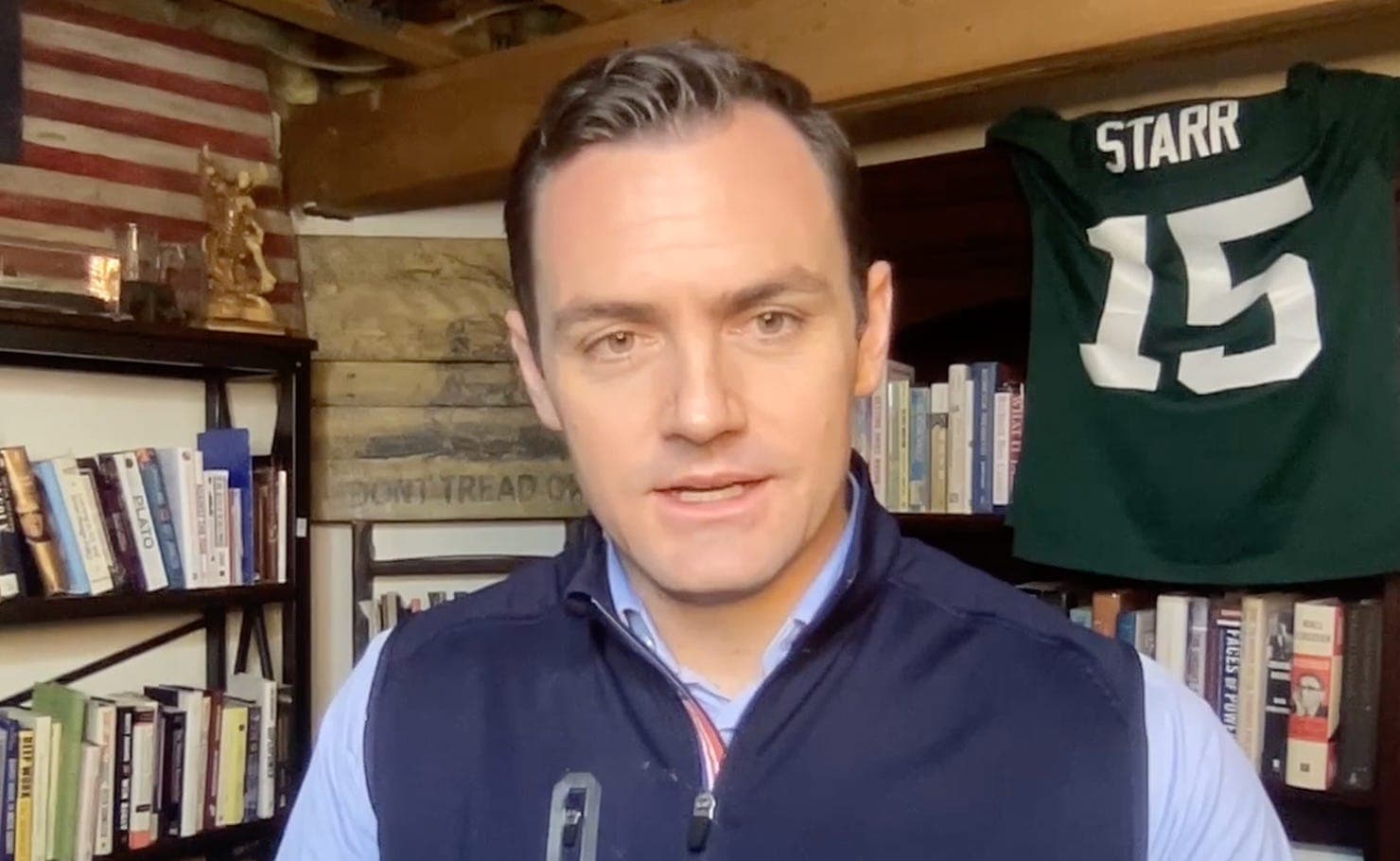
Episode Overview In this episode of *American Optimist*, host Joe Lonsdale engages Congressman Mike Gallagher, the Chairman of the House Select Committee on the Chinese Communist Party (CCP). The episode dives deep into the CCP's activities within the U.S., including illegal bio labs, secret police operations, and influence campaigns, while exploring potential strategies for addressing these challenges. The discussion centers around the implications of China's actions on American sovereignty, economic relationships, and national security.
---
Key Topics Discussed
The Role of the House Select Committee on the CCP
- Objective of the Committee: To educate the American public about the CCP's threat and to develop bipartisan legislation.
- Importance of Awareness: Gallagher emphasizes that the threat posed by the CCP is not a distant issue but one that directly affects Americans at home.
Congressman Gallagher's Background
- Military and Academic Credentials: Gallagher served in the Marines, deployed to Iraq, and holds a Ph.D. in international relations from Georgetown.
- Transition to Politics: Originally aimed at a career in education, Gallagher entered politics to address national security issues.
CCP's Activities in the U.S.
- Illegal Police Stations: The CCP has set up police stations in cities like Manhattan, allegedly used for surveillance and harassment of Chinese dissidents.
- Biolabs in California: Discussion around a Chinese-run biolab in California highlights severe lapses in government oversight and response to potential biological threats.
Economic Relations and Decoupling
- Economic Interdependence: Gallagher acknowledges that the U.S. economy is closely tied to China's, complicating discussions about decoupling.
- Strategic Decoupling: Gallagher suggests targeted decoupling in areas critical to national security, such as pharmaceuticals and technology.
Addressing Fentanyl and Drug Trafficking
- Challenges with China: Gallagher expresses skepticism about China's commitment to addressing the fentanyl crisis, citing previous failures to cooperate effectively.
- Need for Stronger Measures: He advocates for more robust actions from the U.S. government to secure its borders and address drug trafficking.
TikTok and Social Media Concerns
- Risks of Foreign Ownership: Gallagher discusses the dangers of allowing foreign adversaries to control platforms that shape public discourse and influence American youth.
- Legislative Solutions: Focus on developing a bill to address foreign influence in social media without overly broad government power.
China's Future and Risks of Conflict
- Demographic Crisis: Gallagher discusses China’s impending demographic challenges and how they may lead to increased aggressive behavior from Xi Jinping.
- Window of Maximum Danger: He warns that China's internal issues could make it more likely for the regime to act aggressively, particularly regarding Taiwan.
---
Key Takeaways
- Severe Threat from the CCP: The CCP is actively undermining American sovereignty through various means, including illegal operations within the U.S.
- Need for Bipartisan Action: Addressing the CCP's influence requires a united front in Congress, focusing on national security and public safety.
- Crisis of Confidence in Institutions: Gallagher highlights a growing mistrust in institutions like the CDC, which have failed to adequately respond to threats.
- Cautious Optimism: Despite the challenges posed by the CCP, Gallagher notes the resilience of American democracy and the importance of leadership in maintaining global freedom.
---
Conclusion This episode of *American Optimist* sheds light on the multifaceted threats posed by the CCP and emphasizes the importance of proactive measures to safeguard American interests. Congressman Gallagher's insights reflect a call to action for both political leaders and the public to recognize and respond to the complexities of U.S.-China relations.
Written by AI. May contain mistakes. Listen to the episode to check what was said.
Transcript
Automatic transcript. May contain errors.0:00Well, I should say at the outset, this has been the biggest eye-opener in terms of my work on the committee. I came in kind of thinking that the military competition in the first island chain was the center of gravity. And I do think that's like where the crisis could get most acute. But I have now come to understand how this is a global competition and the CCP is undermining American sovereignty here domestically. So, for example, the first thing we did as a committee was a protest in front of this illegal police station. the CCP via an innocuous sounding nonprofit that was basically a United Front Work Department entity set up a police station in the heart of Manhattan that was being used to surveil, harass, and in some cases physically assault people on American soil.
0:52My friend, Congressman Mike Gallagher is a warrior scholar. He's one of my favorite congressman. He represents the 8th District in Wisconsin. He's the head of the Select Committee on the Chinese Communist Party. This means he's in charge for the US House of what's going on with China. This is a very bipartisan area. There's a lot of stuff China's getting away with abroad, inside of our country, influencing elites, secret spy groups, police groups taking activities that are illegal inside of the United States, crazy biolabs, all sorts of things going on. Are China the bad guys? Are we going to be able to work with them?
1:23What's going to happen with our economy and China's and how integrated they are. What do we have to do to stop China from influencing America in bad ways? And how do we have peace and prosperity? Let's find out what's going on with Congressman Mike Gallagher. I'm Joe Lonsdale. Welcome to American Optimist. We have my friend Congressman Mike Gallagher here with us today. Mike, thanks for joining. It's a pleasure to be with you. You represent Wisconsin's 8th District. You're the chair of the House Select Committee on the Chinese Communist Party on the CCP. Is that taking up a lot of your focus recently?
1:49That is taking up a ton of my focus, but it's been an incredible challenge and mission. When Speaker McCarthy, former Speaker McCarthy, created the select committee, he really kind of intended it to do two things. One was to communicate to our colleagues and the American people why any of this matters, right? Why someone in Texas or Wisconsin should care about the threat posed by the CCP, which at times can seem like a distant over their problem. But occasionally we have a spy balloon or pandemic to remind us that it's not. It's a right here at home problem. And then also to kind of act as the accelerator or incubator for smart, bipartisan, CCP related legislation that could pass in the 118th Congress, even in divided government.
2:34So it's been a huge challenge, but very rewarding. And, you know, I think this is the biggest challenge for U.S. national security. So to be in a position where I can influence it is it's really a privilege. Yeah, this is really important stuff to me, too. Before we dive in more, I want to maybe hear a little bit more about your background. You serve in the Marines. You deployed to Iraq. You're Princeton undergrad. You have a Ph.D. is in international relations and history from Georgetown. Tell us about yourself. Yeah, just from Green Bay, Wisconsin, originally not from a military family, kind of grew up in a family of physicians.
3:03Knew early on I didn't want to go into medicine, want to do something different, but went to college without a plan at all. You know, all of my focus as a student early on was just in getting into a good school. And then when that happened, I kind of became rudderless and, you know, wasted my first year. And then it wasn't until I was studying abroad. This would have been 2003 that I really became interested in what was going on in the Middle East. We had just invaded Iraq. And so I came back. I changed my major. I started studying Arabic in the Middle East. I became fascinated by the region. And then as I went down that intellectual rabbit hole, I started to think, OK, what would I do after college with this skill set, with a language skill set, with some knowledge of the region?
3:47And the military kind of jumped out at me as an opportunity to a scratch that intellectual itch, be challenged myself physically and in terms of leadership and see serve my country. And it was a unique opportunity. So I just started studying the branches, the different branches. And the Marine Corps jumped out at me. The Marine Corps is the most effective propaganda organization in human history. And so for a young man in search of adventure, you know, the idea, you know, have gun, will travel. You know, the Marine Corps is very, very appealing. And I loved it. I had just a phenomenal experience.
4:26Great deployments opened up a ton of opportunities. And since then, I've just been trying to contribute wherever I can to U.S. national security. And politics, similarly, was just not part of a plan. To the extent I had a plan, it was, you know, I'm going to teach, use my Ph.D. to teach. And the only reason I went and got a Ph.D. is because I had a mentor called H.R. McMaster and David Petraeus, who had this sort of model of a warrior scholar. And I wanted to be that. And I thought, OK, I could have the type of career where I could teach international relations and Cold War history. I can have a private sector career and then I could do stints of service in the federal government and national security roles.
5:06Politics was not on my radar. But when I moved back to Wisconsin to work for our governor, when he ran for president as his national security advisor, an opportunity to run for Congress came up after that. And though I was reluctant at first, it just seemed like a way where I could get at these same issues, national security, how to defend the country from enemies in a different way. So it was definitely getting outside my comfort zone, but it's been very rewarding, even at the sort of most frustrating points. You are a scholar, and it's clear you never stopped fighting for our country. You went from being a Marine who's fighting, now you're fighting potentially the most important fight we're facing right now with China.
5:40Before we jump into your committee's work more, I want to ask, what do you make of President Xi's visit? Are there any significant outcomes? Is there anything to this fentanyl deal? What's going on? Well, I will confess I'm very skeptical about the fentanyl deal for a few reasons. One is we've kind of seen this movie before. Trump had an agreement with Xi on fentanyl. Nothing came of it. They tend to kind of agree to working groups and then the flow of fentanyl continues. Even when they scheduled or did the equivalent of scheduling fentanyl in China, they switched to precursor production and they shipped their precursors to Mexico.
6:13And the DTOs have now taken some of the technology that used to be in China and the fentanyl continues to flow across the southern border. And it's killing tens of thousands of Americans every year. And of course, the Biden administration has no interest in securing the southern border. Listen, I'd love to be wrong about it. I hope that China cracks down massively on precursor production and the flow of fentanyl across our borders dries up. I would welcome that development. It is unfortunate, however, and this is kind of the second point that we had to kind of give up, in this case, a human rights related sanction in order to get their cooperation when they just should.
6:51If they want to be treated as great power, they should be taking this this step proactively. The other big development that came out of this allegedly was the reestablishment of military to military communications. The Chinese had shut down our those communications after Nancy Pelosi went to Taiwan. on it's still unclear as to whether this is a formal a formal crisis communication channel but again i think it's good to have some sort of military to military uh channel like i think of a you know an old cold war red phone that sits on the desk of our uh chairman of the joint chiefs and their equivalent to minimize the risk of of miscommunication but i don't ultimately think it's going to be a miscommunication or an accident that leads to war right we will go to war with China, if China makes a move against Taiwan, not because one of our ships accidentally bumps into theirs.
7:44And there I remain concerned that no amount of apex summits, no amount of relentless diplomacy are going to affect Xi Jinping's calculus. The only thing that will affect his calculus is for us to surge hard power to the Pacific, west of the international dateline. That is the form of communication that is most powerful, the investment in hard power that we have yet to make. And this revival of diplomatic and economic engagement by the Biden administration has had the practical effect of taking our foot off the gas on key things we need to do, like revitalize our defense industrial base, sanction key Chinese officials, demand transparency on the spy balloon, COVID origin, the list goes on and on.
8:25So I guess I have significant concerns. One final thought, I'm sorry to go on here and you would be you might have a better perspective on this than I do. In some ways, the more grotesque display was what we saw at the business, the U.S. China Business Council meeting afterwards. Yeah. Where you had, you know, American CEOs giving Xi Jinping a standing ovation to include defense contractors, by the way. Raytheon, Boeing. I mean, I mean, it's just I mean, that that's embarrassing. And that sends the wrong signal. It's very embarrassing to me. I think there's something about the new crop of these startup defense companies, which are actually competent and actually have our best and brightest versus kind of the rotten legacy kind of places that become like a weird, distorted version of government.
9:07And the fact that they would applaud our enemy here. I'm curious what you think. I have friends, you know, I used to do stuff in China 10 years ago. A lot of us were optimistic 10 or 15 years ago before Xi Jinping came along. We thought it was going to open up. This is naive. It was wrong. But a lot of us believed it would. And so we're close to a lot of people. A lot of billionaires have fled China, of course. We talk back and forth. And we know a lot of people who were joking and joking to our friends. Yeah, we're getting them back for the opium wars. Now we're a great power. And, you know, they used to do things from the West.
9:34Obviously, it was more Britain than the US, but they used to do things to us. And so now we're a great power and they're decadent. We could do these things to them and do it to their population and they're too weak to do anything. And they laugh about it. And it really infuriates me. Just understand, like, why? Why is Biden? Why are these people not want to secure our border against these things that are humiliating us and killing our people? I just don't understand that fundamentally. yeah well you're supposed to be the optimist joe i'm supposed to be the pessimist on this podcast uh you know i i do think ultimately it comes down to okay i'll make the best case i think argument and then maybe the worst case like i think there are some members of the democratic party who just feel like we have a responsibility to take in as many people as possible or look at this as like a humanitarian crisis and therefore like we need to be unusually generous like that's like the most charitable interpretation of some of these policies i actually don't think that's like the accurate interpretation i think it's more politics uh driving it and there's just a like the attack think about like the attacks on on like and misinformation surrounding a lot of trump's border policies right like whether it was the kids in cages stuff that got debunked it's like this this desire to to paint anybody who's a hawk on the border as like evil and heartless for political gain that uh i actually think if you kind of like peel back the layer it's just a pure political strategy at the end of the day it's very much like what we face in our cities where there's just stuff is broken and when you try to fix it you're a bad guy for trying to fix it you know i'm actually i am optimistic we're overcoming this you know i think people are realizing this right yeah and in the inner city there you have the added variable of like entrenched interest notably the teachers unions who quite i mean are effectively bribing uh politicians right and these are public employee unions that are are playing a massive and distorting role in our politics i mean that that's crazy to me and so the status quo which by the way is failing failing kids in these cities like absolutely failing them continues and politicians aren't held accountable and then in various states like mine you have a weird governance structure where like our governor is never held accountable for educational failures because we have an elected state superintendent and the teachers union is just like no one votes in an off-cycle election for school board or state superintendent and so the teachers unions just get to like appoint whoever they want so there's all these weird things that support the status quo even though any rational person recognizes even Even like center left rational person recognizes the status quo is totally broken and failing our kids.
12:13Yeah, there's so much to fix there. Going back to CCP for a little bit, speaking of all these special interests, like what else have you found of their influence operations inside the U.S.? You recently put out a report on an illegal biolab in California that sounded totally crazy. And like the CDC refused to investigate it multiple times. Then you guys found all sorts of terrible things there. Like what was going on with that? And what are they doing around our country right now? Well, I should say at the outset, this has been the biggest eye opener in terms of my work on the committee. I came in kind of thinking that the military competition in the first island chain was the center of gravity.
12:44And I do think that's like where the crisis could get most acute. But I have now come to understand how this is a global competition. And the CCP is undermining American sovereignty here domestically. So, for example, the first thing we did as a committee was a protest in front of this illegal police station. The CCP, via an innocuous sounding nonprofit that was basically a United Front Work Department entity, set up a police station in the heart of Manhattan that was being used to surveil, harass, and in some cases physically assault people on American soil. Yikes. similarly there you've been crazy instances and stories of theft of of seeds in iowa right uh in order to gain an advantage over america but the readley biolab thing was a particularly crazy story a year ago uh a local building inspector in the city of readley which is a small city in california near fresno ag an ag community saw a hose sticking out of a building that was supposed to be vacant pumping water and went inside and found a bunch of people wearing like lab coats surrounded by medical equipment vials labeled in mandarin freezers and a thousand transgenic mice from mice that have been modified to mimic human immune system uh these people were largely chinese nationals and so they asked for they asked the fbi to investigate the fbi did a background check on the owner even though he's a wanted criminal they said we can't get involved because it's not WMD related.
14:19The CDC hung up on the city officials when they called. It wasn't until the congressman got involved that they were forced to. And it wasn't until May. December was the initial discovery. It wasn't until May of the next year that they deployed a team there. The team refused to test the vials. Eventually, it was discovered that these vials contained Ebola, HIV, tuberculosis. There was a freezer labeled Ebola. It was like these silver Ziplocs inside, and the CDC wouldn't test it, which is crazy. So they didn't get the help they needed from the federal government. My committee got involved at the request of the speaker.
14:56We sent a whole team out there. The city officials asked us to subpoena them so they could get on record. And we just found so many failures in our system. The owner was this guy, Jesse Hsu, who's a Chinese national who came to America illegally from Canada. he was fleeing a 330 million intellectual property claim against him there was an accountant who was linked to the chinese united front work department who set him up with various shell companies and likely a fake alias and then he claimed and then he had it two basic businesses both of which were fraudulent one was fake testing kits for pregnancy covet and some other things and the other was just buying pathogens online for some unspecified purpose which gets to what i think is the biggest gap in our system you right now joe could go online and buy you could buy you could definitely buy aids you could buy mers middle east respiratory syndrome there's no tripwires in place for the purchase of this stuff and so while disaster was avoided in this case despite the failure of the federal government to do a dang thing this has revealed i think a huge glaring vulnerability in our system that needs to get fixed and so i'm hopeful given the bipartisan interest in this that we're going to pass some common sense legislation to fix this.
16:09But the whole thing was just incredibly troubling. Are there people on both sides who see that the CDC is not doing its job? I mean, it seems like the CDC has become very politicized, very bureaucratic. It's like, I mean, Elon would say it's the woke mind virus has conquered this place and it's no longer useful. Is that true? Are there great people at the CDC still? Like, what's going on there? I think on the first part of that question, I think if you talk to Congressman Costa, whose district this is, and I don't want to put words in his mouth so he can dispute this. I think he would say because he he did the preface to our report, which was a bipartisan report with my ranking member, which pointed out the CDC's failure.
16:43I think they would all concede that the CDC dropped the ball in this case or quite literally didn't answer the phone in this case. I think there was some hesitation among our Democratic colleagues to criticize the CDC just because coming out of the covid pandemic, there was so much, I think, deserved criticism of the public health establishment. but we were able to get out of that in this instance and my point to them was like we don't we don't we're not doing the cdc any favors by pulling our punches because if americans continue to lose faith in the public health establishment i think a lot of us have lost faith yes in the public health establishment local state and especially federal after sort of like the fauciization of our response to the pandemic which was a total failure then we're going to go down a very dark dark road so by confronting failures and fixing them that's the only path back to sanity but to the core of your point there's been an incredible politicization of science right like the science and scientism has become a religion in a way that is not helpful right you've had basic you know so-called scientific journals peer-reviewed scientific journals like lancet completely beclown themselves during the pandemic and continue to become become themselves in large part by covering up for the origins of COVID and thereby wittingly or unwittingly doing the bidding of the Chinese Communist Party.
18:07Yeah. I mean, this is something I sometimes wonder about because you see so many of America's institutions in decay and you see that many of them have been deeply compromised by the CCP. And I realize it's two separate things a lot of the time, but to what, what do you attribute the penetration of CCP into U.S. society, Wall Street and Silicon Valley? And how much does this have to do with our institutions being broken? I mean, are they, are we going to find out potentially decades from now that, that these things were all kind of penetrated and and taken over in some ways well i think there's two things going on like there's no question there's there's likely penetration in the classic espionage sense right and we've had public cases of of ccp espionage um involving the united states navy recently and of course there is the persistent and unprecedented level of cyber espionage that's happening every single day By the way, despite the CCP agreeing to back off of it when she went to the White House in the Obama administration, right, which would make us skeptical of any of these agreements that have been made at APEC.
19:07So there's that going on. But I think – and again, you might have a better perspective. I don't want to be too harsh, but I think a lot of it comes down to the profit motive, right? For the last two decades, we sort of pursued China's integration into the global economy. And we could tell ourselves it was because we thought that this was going to moderate their political behavior. And certainly that was a hypothesis both parties bought into for a time. But lurking behind it was the desire to make a ton of money in China. And a lot of people did make a ton of money in China. And we were just talking about the scientific establishment.
19:43So, you know, these science, these ethically compromised scientists that that basically through cold water on the lab leak hypothesis, for example, we're getting federal government grants from Fauci, who was a huge proponent of doing cooperative gain of function research with China. So even in that industry, though, it's slightly different than Wall Street pursuing profits in China. Still, there is a a profit motive and an unwillingness to rock the boat for fear of killing the golden goose. And time and again, we still see this in various industries. Right. Like when was the last time you saw a Chinese villain in a Hollywood movie?
20:17Right. Never. Both of these, they're just so shocking to me, Mike. Like I was invited last week to some like big ceremony for some nonprofit and they're going to honor Fauci. And I wrote back, like, you realize it's as far as I could tell, people saw that this was a lab made virus. They spoke out about it. Fauci gave them a call. They changed their mind in public. Then they got a big grant. Like it's very clear. This guy was bribing as far as I could tell these researchers, not to say it. I don't know when he's going to get in trouble for that or if he's going to get in trouble for that. But it's very clear to me he's bribing them.
20:48And if you go to the Hollywood thing, by the way, I'm actually friends with people who run one of the biggest studios in Hollywood. It's a digital one. I won't say the name because they've told me off the record. But I'll tell it to you. They tell me there's two different looks that Chinese get for every one of their movies. One look is things where they say before it comes out, if you have to censor these or can't go to China. But the other look is things you have to censor for American audiences or else you never work with China again. And so they effectively get to censor these things they're doing.
21:15It's been that way for a long time now. You know, I brought the committee out to California early on in our work, and we had an off-the-record roundtable with a bunch of Hollywood executives. And at one point in the dinner, I asked, OK, if I asked you publicly, is there a genocide in Xinjiang, how would you answer that question? And the person said, well, I would not want to answer that question, because not only would I be unable to work or do anything related to China, but the entire studio would be blacklisted. I also remember earlier, prior to the committee, when I was doing work on the Cyberspace Solarium Commission, we met with a very prominent screenwriter who was kind of doing research in the intelligence community and thinking about potential scripts.
21:56And we were talking about China. And he said something to the effect of when the NBA basically got punished when Daryl Maury, the at the time Houston Rockets GM supported the Hong Kong protests and the NBA kind of slapped him down at the behest of China. He said Hollywood got the memo after the NBA experience, which is, you know, just had this chilling effect. And I'm not saying that members of Congress should like get to weigh in on creative decisions about Hollywood. But if the CCP effectively gets a veto over those decisions, that's a problem for me. Or at least I should have the right to highlight the hypocrisy because, of course, a lot of these people, actors, producers, are the same ones who never miss an opportunity to lecture us about social justice or climate change or XYZ.
22:47And by the way, the Chinese Communist Party is like the worst actor on all of these things that social justice warriors pretend to care about. But I'd be curious, Joe, in your world, like the tech VC world, Do you think like, what is there still, what's the median view on, on China? Would I be viewed as a crazy hawk? I mean, most of our companies have at some point in the past decade, caught people from China trying to steal things. Right. And you know, you have to be very careful. I mean, it's very funny with Palantir. Obviously we work with the DOD, but we do have$2 billion of commercial revenue.
23:18So we hired non-DOD non cleared people in other areas, of course. And yet we have to be very careful letting people into our company that have family in China, because in the past, There have been people who have been like good people, but then they're threatened and their family's used against them and they try to, you know, they try to steal things. And it's very interesting because the Department of Labor, of course, sued Palantir after Peter Thiel spoke for Trump at the RNC for not hiring enough Asians. And the company's like 25 % Asian, but obviously they have to be careful about people from the family in China.
23:47And it's like a one side, you're not supposed to one side, you are. Elon has the same issue right now. Now, you know, Facebook, for example, they were trying to get into China for a while and they could have gotten to China if they totally kowtowed to them and gave them huge control over the company and kind of, you know, did things that were very inappropriate. And they decided not to, fortunately, you know, and that was a good thing. And I think Google went through the same experience. And I think pretty much everyone has learned. I mean, listen, I was thinking to do business there again, 10, 11, 12 years ago.
24:13I thought China was opening up. I was wrong, but I thought it was opening up. But I got to know the senior people and they made it very clear I would not be allowed as an American to own data and own things in these industries that I work in, in finance and healthcare and gov tech. There's just no chance I would be. And so it's very asymmetric. And I think people in Silicon Valley are practical and they realize, first of all, that this is an aggressive government you can't trust. They say friends don't let friends be Chinese billionaires. It's very dangerous. I'll tell you a brief story. Well, I should be careful.
24:43But I've had friends disappear who are very close to me earlier this year. I've had friends who are about to go public with their company disappear. I had a friend who died in his sleep in his mid 40s in Beijing after he was not fully getting along with the government there, who was a billionaire. And these are good people, you know, Chinese citizens who spent a lot of time in America. No, thank you. It's really infuriating, you know, and it used to be that I thought, again, 10 or 15 years ago, we can work with them. Now I think it's anti-American. It's against the patriotism, against our country to even invest there.
25:09And I'm horrified because we have lots of U.S. pensions, U.S. endowments, financing their military innovation right now still i mean i'm curious like what should congress be doing about this should we pass laws to stop us from investing in certain things in china like what's going on there i think so i mean we did we've done an investigation of blackrock msci and we've only scratched the surface we've investigated some other um some venture capital uh organizations and we are we're capital continues to flow even to companies that are on various uh federal government blacklist. So it isn't just like a technology company, like a biotech technology company, which, you know, you could squint and convince yourself that there's no dual use purpose.
25:54We're talking about companies that build aircraft carriers, artillery shells, fighter jets. So just as a matter of principle, I don't think American capital should be subsidizing the production of things that are designed to kill Americans in a future conflict. How do we stop it, though? Like, what do we do? Yeah. So the Biden administration came out with an executive order. The problem right now is we have all these lists, and I concede this problem, where they don't really talk to each other. There's confusion. We're playing whack-a-mole by like keeping, we keep adding these companies to the lists.
26:28They're not enforced. So I actually think as crude as it is, or less elegant and precise of an instrument as it is a sector specific approach makes more sense and the did come out with an executive order that was has a ton of loopholes in it but at least conceded the principle that in various sectors in this case it was semiconductors ai and quantum we are going to restrict in this case it was just active investment right so it's like your world it's not the the passive like black rock etf world so i i would say regardless of what form of capital there should be restrictions on a greater number of sectors and i would further argue that for those who'd object to my approach like every asset manager on wall street was like that's crazy don't do that it's better for congress to step up and legislate the solution because if we continue to bounce back and forth between different executive orders right because trump could come in and he could either get rid of it entirely or he could go in a way more hawkish direction and that uncertainty is bad for business it's better to have certainty even if that certainty involved a stricter set of guardrails that wall street and silicon valley are not initially comfortable with with an appropriate glide path they can get comfortable with the new system that to me is what makes sense um uh but uh you know we'll see we're gonna have an opportunity to legislate this in the National Defense Authorization Act in the next couple of weeks.
27:58But there's significant pushback from the Financial Services Committee and others. Well, I hope you get it past them. It's the right thing for the country. Speaking of legislation, you've been out front on banning TikTok. This is an issue that's very, very salient right now with what we're seeing. And effectively, you know, there's a guy who's a CEO in Singapore. Seems like a nice guy. I'm friends with a lot of my friends. He's been running around basically being a lobbyist and trying to convince people that what they're doing is fine. And, you know, I am very, very pro-free speech, but it's as far as I could tell, they can't prove to us that ByteDance doesn't actually control the algorithm.
28:29It doesn't actually control what people see in the US. I think if they wanted to, and they probably already are, they can influence our kids to have different biases and have different things they see. And it just seems like way too powerful to leave that in control of China. So rather than banning it outright, I think we should force it to be sold to an American who controls. I mean, I don't like TikTok at all. I think it's a heroin-like thing. It's bad for us, but it probably does have a right to exist, but not in Chinese control. the restrict act mike uh i was against because it gave too much power to the government i thought there were better ways of banning it what's the status right now and where are we what's what's the right way to do this yeah so at at the highest level i think you get to something important which is like we have to make a distinction between there's the problem of social media in general and sort of the correlation among the younger generation between social media use and anxiety depression and suicide that's a that's a big problem that involves more companies than tiktok And that's primarily like a parenting problem, not a legislative problem.
29:22And then there's the issue of TikTok specifically, which unlike those other companies, is owned by ByteDance, as you rightly point out. And ByteDance is beholden to the Chinese Communist Party. And even in the most generous interpretation of the situation, I think you have to concede that point. We have a mountain of evidence to suggest that that ByteDance exists at the pleasure and at the whim of the CCP. And so that is the core of the issue. Right. If ByteDance and by extension, the CCP controls the algorithm. It's not just that they could have access to Americans data for the purpose of espionage.
Read the full transcript
30:00It is more troubling that they have the propaganda power that comes from controlling what news you get, what information you see and young people are increasingly getting their news from TikTok. And just like we have laws that go back to the 30s and then the Cold War, governing foreign ownership of earlier forms of media, I think it's incredibly legal and consistent with free speech to prevent a hostile foreign adversary from controlling what is increasingly a media and news platform so the path forward one that would allow for either a ban or a forced sale and i would as long as it comes with algorithmic control by an american company i would be fine with a forced sale and that way american investors who own a bunch of bite dance don't totally lose a ton of money whatever um uh the way forward is to uh construct a bill that i think we're very close to getting an agreement on that is narrowly focused on this issue that avoids the restrict act pitfalls by just basically telling commerce, go figure it out.
31:07And that is squarely focused on foreign adversary control of social media companies like that. That to me is the core issue. And I think we can thread that needle. I understand the concerns, but I think we can learn from the restrict act failure and get the job done. I love it. Well, this is extremely important to a lot of us. You have a lot of people on the moderate left and right and all aligned right now on this, like eager to help you on that. So thank you for, thank you for doing that. It's, you know, it's if I die of, of quote unquote, natural causes in the next two years, just don't accept the official explanation.
31:40Understood. We'll avenge you, Mike, and finish the job. But yeah, I hope stay safe, please. It is a big issue. And they have so many lobbyists they've hired. You sound so reasonable and there's these smart people and they're good Americans. And they tell you how the data is in the U.S. and, but they're just the algorithms in control of China. So thank you for doing this. Let's zoom out a little bit. How do you assess the state of China today? Is it a demographic crisis? CCT seems to have kneecapped its tech sector. Are they like weaker than they were a few years ago? Does that make them more dangerous?
32:04What's going on? Well, there's no question they're confronting serious economic headwinds. The demographic challenge is one that will become most acute in the early 2030s. They're going to run into a huge demographic buzzsaw, really more retirees than any society has had to deal with in human history. So while, and I'll caveat this by saying it's impossible to know how that will affect the regime's behavior or Xi Jinping's behavior in particular, I subscribe to the hypothesis. And all it is is a hypothesis. I think one with a lot of empirical support, but it's a hypothesis that this will make them more unpredictable and risk acceptant in the short term.
32:41So put differently, if you're Xi Jinping and you see this kind of demographic, demographic storm cloud looming on the horizon and an increasing set of domestic economic challenges, and you are committed to achieving your lifelong ambition, which is to take Taiwan, to not pass that issue down to the next generation, and she said some very concerning things about Taiwan in his meeting with Biden at APEC, then you may conclude that you'll never get a better moment than right now in this decade, which, by the way, is a decade when America has significant challenges. We have a fiscal crisis. We have intense political divisions.
33:17We're going to be going through a brutal presidential election. There's an election in Taiwan in January where if the DPP wins, she could conclude that the only way to solve the Taiwan issue is militarily. So I think we've entered something I've called the window of maximum danger. And I think it's dangerous, therefore, for President Biden to suggest, as he did in Vietnam and as he just did in San Francisco, that because China has economic problems, she is less likely to invade Taiwan. The opposite could just as equally be true. um and there's plenty of case studies you can cite uh in support of that hypothesis so that that's kind of how i read the situation right now there's also i think uh if you talk to real china experts not just people that play one on tv like me um they seem to suggest there's like a putinizing of the regime right now like as she gets more aggressive with the tech sector purges rivals he doesn't get he doesn't get pushback right there's no feedback loop and ultimately this is what makes authoritarian regimes very brittle is that they don't have that feedback mechanism.
34:20And so he could, he could do something that we think is irrational from a Western perspective, but makes sense for him at the time, as he tries to cling on to power and ensure the parties survive. This reminds me when I studied Mao, it's very similar that Mao would like take out, I can remove from power, kill off the competent people who were around him because those were the threats. And you basically, you get rid of the competent people because you're, You're too scared of them. And then you're kind of left with something that's very, very bad. It's a natural authoritarian thing to happen. What is the possibility of a full US-China economic divorce?
34:52Like my friends at Apple tell me like an iPhone would cost right now a few thousand dollars probably for the next three, four or five years. You know, each if we didn't have China for now. And then eventually we could get it cost down a lot more. But there's going to be like a huge disruption if we actually have to have a full divorce. And I'm not a fan of a full divorce, obviously. Of course, if they were to try to invade Taiwan, it seems like there'd have to be like, what's the chance we have a full divorce? What's the right step in terms of our integration with them or not? Well, first of all, I guess I can't criticize because I don't know how to make an iPhone personally.
35:21I have to believe, however, that if America truly wanted to make an iPhone for less than$2 ,000 or like a phone that got you enough, didn't have all the bells and whistles. Like all I need really is the ability to text, email and listen to Spotify. Everything else I don't really care about. so uh that we can figure it out but that's a side down um we still haven't figured out how to make very good cuban cigars michael i'll tell you that sorry i keep going there we go uh the uh i i have a funny story about this if i can get through this really quickly um i i'm not arguing for like a complete decoupling scenario right and i and i accept the premise of like we are conjoined twins with china right like that's what 25 years of our policy has brought us and i think that's what makes the current cold war more complex and difficult than the old cold war with the soviet union because our economy's never interacted in the old cold war um that being said i think in key areas we can selectively and strategically decouple right like when it comes to advanced pharmaceutical ingredients seems like a bad idea to be dependent on china for access to life-saving drugs because they've already proven they're willing to weaponize that supply chain when it comes to critical minerals rare earths like if we just fix our our our byzantine bureaucratic regulatory environment like we could have a renaissance in this country but we've effectively made it illegal to mine and process here and thus we're dependent on china we could probably agree on the other five areas where we've already made a decision that we're going to try to wean ourself off semiconductor dependency on taiwan i guess in this case i'm skeptical it's going to work but like okay i can i'm on board with the idea of let's figure out how to have a fab renaissance here domestically.
37:07So in key areas, when it comes to the commanding highest of critical technology, I do think we need to selectively decouple. And I think that also involves forcing the corporate sector to take off the golden blindfolds and have an accurate assessment of the risk of doing business in China and cutting off the flow of U.S. capital to China so we don't subsidize our own destruction. But we're still going to interact economically. If Wisconsin farmers want to sell soybeans to China, i'm all for it if we want to buy cheap clothes from china as long as it's not made with slave labor i really don't have a national security reason for it but i don't think we have a healthy economic relationship right now we have a dependency we have an addiction in multiple ways and we have to go to rehab we have to we have to wean ourselves off this addiction before it's too late otherwise we could sort of lose lose world war three without a shot being fired just because we're too afraid to provoke China and we're too economically dependent on that.
38:02Yeah, totally agree. Two last questions for you, Mike. First of all, I was curious, is there anything positive you could say about China? Are there areas of mutual benefit? Are there impressive things there that we should be trying to work with? Listen, even on TikTok, right? Like there's no, I mean, you have a better view than I, and I really don't use social media. So I guess I don't know from firsthand, but like the technology appears to be good. Like, I'm not saying it's like bad technology. Like it seems like they're it's like doing something better to addict teenagers than other forms of social media.
38:32Now, I would argue that's not like a noble mission, but hey, whatever. Like so clearly there is a ton of innovation. And I think more broadly, and the reason I actually asked Speaker McCarthy to change the name of the committee to say Chinese Communist Party and not China or PRC was to point out the distinction between the regime, the party. This is a party state, right? The party sits on top of everything. It's a Marxist Leninist organization driving everything. And increasingly, there's nine people and maybe one person that are driving everything versus the Chinese people, right? We have no quarrel with the Chinese people.
39:11The Chinese people, I would argue, are the primary victims of the regime's depravity. So Clue is a country with a proud history, rich cultural contributions to the world. And it is a tragedy that this regime is doing the things it's doing and acting in a way that threatens peace, stability, and prosperity for billions and billions of people. That's well said. I'm truly amazed by the innovation we're seeing coming out of China. We used to say that they just copied everything we did. And that was seems to be true economically 20, 30, 40 years ago and culturally. But these days you're getting really extraordinary innovation there.
39:50Now it has been kneecapped by the fact that everyone's afraid to be an entrepreneur right now because Xi Jinping just eliminated them. But I totally agree with you. I think the people there are amazing. Let's end on a note of optimism. America has never faced a rival like the CCP. This is a crazy situation. What's the best optimistic case for a future where the U.S. and the West remain in permanent power and our value system perseveres and is dominant in the coming decades. I'll give you maybe two kind of vignettes. They may sound hokey, but it is what it is. I will say probably the best part of this job, which I didn't fully appreciate, is when I'm back in the district as I am now and I'm just going around Northeast Wisconsin and I get to meet with everybody, think about your daily commute such as it exists.
40:34people still commute in the zoom world um like you kind of pass all these nondescript office buildings or industrial parks and you never stop to think okay what's going on inside of there and i've now gotten to like go into all of these in my district and discover all these cool little and medium-sized manufacturing companies in northeast wisconsin and we still make like i'm in an unusual manufacturing district but like we make a ton of stuff and there's still just a ton of people that like work their ass off want to make stuff like patriotic americans maybe didn't go to college don't have a bunch of you know fancy degrees but just like love this country and and and want want america to win like and that gives me hope every single day the second thing is abroad like remember i think i mentioned something about hong kong before if you remember when when xi jinping was extinguishing civil society hong kong reneging on his promises relative to Hong Kong.
41:30When these hundreds of thousands of people took to the streets of Hong Kong, a lot of them were waving American flags. They had American flags in their hand. Like, think how crazy that is. Like, and it just, to me, is a reminder that even on our worst day, even at like a moment, we are very polarized and a lot of Americans may be losing faith in the future. People abroad are still looking to us for leadership. Like we need to act like the leader of the free world. Because without that leadership, freedom could be extinguished. Like it's not inevitable that all the achievements we've made are going to continue for time immemorial.
42:07Like we have to fight for that going forward and a lot of people are counting on us. So that's a bit cheesy, but I believe it. No, it's an inspiring note to end it on. And Congressman Mike Gallagher, thank you very much for your leadership. This is a critical issue. Good luck. Thank you, sir, for yours. Appreciate it.
42:24you
From the publisher
Secret police groups, illegal bio labs, and large-scale influence operations — China is engaged in these activities inside the United States today. How should we respond? Is economic divorce the answer? And are we destined for conflict, or is there a path toward peace and mutual prosperity?
We discuss these pressing issues with Rep. Mike Gallagher, Congressman for Wisconsin's 8th District and Chairman of the House Select Committee on the Chinese Communist Party (CCP). A distinguished warrior-scholar, Chairman Gallagher served in the Marines and deployed to Iraq, earned two Master's degrees and a Ph.D., and now leads one of the most consequential committees in Congress.
In this episode, he details some of the CCP's most nefarious activities within the U.S., and our government’s inadequate responses. We discuss the right strategy for addressing the CCP, including when and where economic decoupling makes sense. Chairman Gallagher also provides an update on new legislative efforts he believes will finally succeed at forcing a sale of TikTok, and he explains why China's economic woes and looming demographic crisis might make Xi Jinping more likely to take aggressive action. If you want to understand the extent of the CCP's malign actions and influence campaigns, follow the bipartisan work of Chairman Gallagher's committee.
This is a public episode. If you would like to discuss this with other subscribers or get access to bonus episodes, visit blog.joelonsdale.com