In short
Episode Notes: Ep 73 - How Candid Health Is Fixing the $280B Healthcare Billing Fiasco
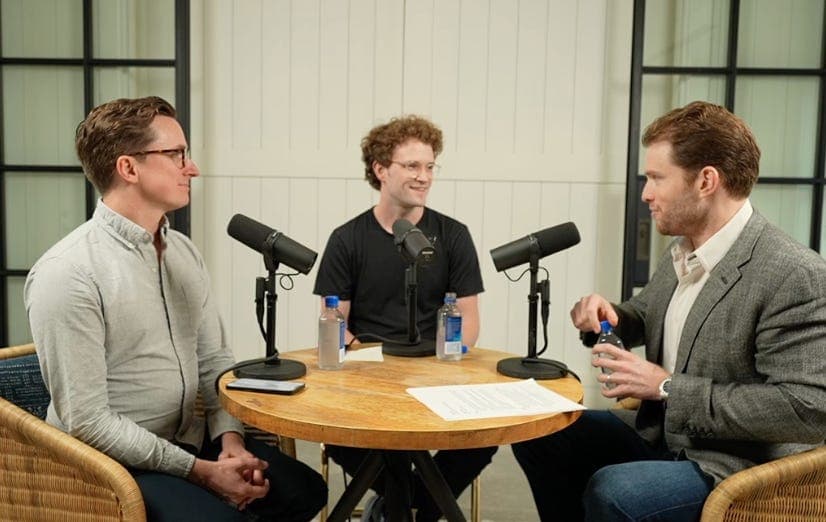
Podcast Overview Podcast Title: Joe Lonsdale: American Optimist Episode Title: Ep 73: How Candid Health Is Fixing the $280B Healthcare Billing Fiasco, With Lessons from Palantir Hosts: Joe Lonsdale Guests: Nick Perry (Co-founder & CEO of Candid Health), Doug Proctor (COO of Candid Health) Episode Description: This episode discusses the inefficiencies of the U.S. healthcare billing system, which costs $280 billion annually, and how Candid Health aims to streamline this process using technology and machine learning.
Key Themes The Inefficiency of Healthcare Billing
- Current State: The U.S. healthcare billing system is complex, outdated, and heavily manual, leading to inefficiencies and a high rate of claims being denied.
- Cost Impact: The healthcare billing fiasco costs the U.S. economy $280 billion each year.
Introduction to Candid Health
- Founders: Nick Perry and Doug Proctor, both alumni of Palantir, founded Candid Health to address inefficiencies in healthcare billing.
- Vision: To become the Stripe or Shopify of healthcare by automating revenue cycle management and simplifying the billing process for healthcare providers.
Challenges in Medical Billing
- Complexity: Over a thousand insurance payers each have different rules for claims submission, leading to high denial rates.
- Manual Processes: The lack of effective software means many claims must be processed manually, which is labor-intensive and error-prone.
Insights from the Founders Lessons from Palantir
- Focus on Hard Problems: The experience at Palantir taught the founders to tackle ambitious challenges.
- Quality of Talent: Hiring the best talent is crucial for success.
- First Principles Thinking: Emphasizing the understanding of core problems and finding tactical solutions.
Candid Health’s Approach
- Narrow Focus: Unlike Palantir's broad approach, Candid focuses specifically on improving medical billing.
- Use of AI: Leveraging AI to predict claim denials before submission, thus saving time and resources.
- Feedback Loops: Integrating feedback from denied claims to continually improve the rules engine.
Technology and Automation Role of AI and Automation
- Predictive Analytics: Using historical data to enhance the accuracy of claims submissions through predictive modeling.
- Rules Engine: Developing a sophisticated rules engine to handle the complexities of claims correctly and efficiently.
Building Infrastructure
- End-to-End Control: Owning the entire claims process from submission to adjudication, allowing for better data management and operational efficiency.
Future of Healthcare Billing Optimism for Change
- Potential for Efficiency: Streamlining billing processes could significantly reduce costs and improve patient experiences.
- Empowering New Entrants: Making it easier and more cost-effective for new healthcare startups to enter the market, thus fostering innovation.
Vision for Value-Based Care
- Moving Away from Fee-for-Service: Advocating for a shift toward value-based care where providers are compensated based on patient outcomes rather than the volume of services rendered.
- Improved Access and Transparency: Creating a more transparent billing process that allows patients to understand costs upfront, leading to better healthcare decisions.
Conclusion
- Call to Action: The discussion emphasizes the need for innovative solutions in healthcare billing to improve efficiency, reduce costs, and enhance patient care.
- Philosophy of Optimism: The episode aligns with the broader vision of fostering hope and innovative thinking in addressing current challenges in the healthcare system.
Key Takeaways
- Candid Health aims to revolutionize the healthcare billing process through technology and AI.
- The current system is fraught with inefficiencies that can be remedied with focused technological advancements.
- Embracing a value-based care model could reshape the healthcare landscape for the better.
For more information, visit [Candid Health](https://www.joincandidhealth.com/) or check out Joe Lonsdale's [blog](https://blog.joelonsdale.com).
Written by AI. May contain mistakes. Listen to the episode to check what was said.
Transcript
Automatic transcript. May contain errors.0:00Unsexy businesses are the ones that can scale really big. Again, I, for better or worse, get excited about unsexy businesses. I think Stripe at one point was an unsexy business, like payments, and they made it cool. I also think it is a very worthy problem. At the end of the day, I'm sure we've all heard about patients who have these crazy bills by insurance and they owe this thing. And we end up saying like, oh, insurance are jerks for not wanting to cover that. And in some cases, that is true. In most of those cases, the provider submitted the claim wrong. At the end of the day, what we could be doing if we get help all of our providers do this is we're dramatically improving patient experience, which I think is a very important problem.
0:42My friends, Nick and Doug, we're superstars at Palantir. They're building a company called Candid Health. Thanks to new possibilities in AI, we're going into areas of the economy that sound boring, such as healthcare billing. These guys are working on healthcare billing, a$280 billion area of the economy. It's a giant mess. There's hundreds of thousands of people tearing their hair out trying to deal with healthcare billing. This creates all sorts of problems for healthcare systems, creates all sorts of problems for building and fixing things in healthcare. And it turns out that thanks to new possibilities with tech and AI, you can actually solve this, make it a lot cheaper, a lot better.
1:13This is going to add a couple of points to our GDP. It's going to make healthcare work better. And I'm excited for you to get to know them and hear how this is possible. I'm Joe Lonsdale. Welcome to American Optimist. We have Nick Perry with us today. Thanks, Joe. And Doug Proctor. Thanks for being here. Thanks for having us. We both were at Palantir for about five years each. Nick, you were there in 2012, you're saying, for five years? Yep, 2017. And Doug, you got out in 2020. Where'd you grow up, Nick? Yeah, I grew up outside Seattle. Stayed there my whole life until college time. Came down to the Bay Area to go to Stanford.
1:40And then I was at Palantir for five years. I did mostly healthcare work there. And we'll probably get into this, but some of that ended up being the genesis for Candid. And Doug, how about you? Grew up in the D.C. area. Youngest of four boys. Played a lot of aggressive sports with my brothers, but also went to Quaker school. knew nothing about the military, but felt a really strong sense of wanting to do something in government, which is what took me to Palantir. I ended up spending most of my time there working in the defense space and yeah, joined Candid when we were about six or seven people.
2:08Nick had started it. I had done some other stuff before that. I remember we were curious what you're going to do next year. People are looking at watching you after you left Palantir. You're one of the top talents as was Nick. And so very excited to see you guys teaming up, you know, just starting on Palantir briefly. What are, what are some of the most important lessons you guys learned from Palantir? Yeah. So I think the three things that really kind of resonate and continue to resonate. One is, I guess I should just caveat to start, like unbelievably grateful for the opportunity and experience work at Palantir.
2:32I think it's a incredibly formative experience for me in my life. I think a couple of the lasting impressions, one is take on hard problems, just like seeing firsthand how we can actually have a huge dent in really big ambitious problems that are, I think for a lot of people's imaginations, just kind of like unsolvable. I think giving us that sort of space to work on those things was one big one. I think another big one was just like really heavy, heavy, heavy focus on the quality of the people. Just seeing firsthand the amount of energy, tradecraft, care that goes into the hiring decisions that were made at Palantir, and then the quality of the people that they were able to bring in, and then how to deploy those people against the problems.
3:07I think that was number two. And then I think three was really just like really heavy focus on going to first principles, thinking about what is the actual problem we're trying to solve, and then getting really tactical. You said some good things about Palantir. What are things you'd want to change and do differently? Yeah. I mean, I think the big thing that I reflect on having now left Palantir is obviously there's a lot of stuff we wanted to kind of bring from the Palantir experience while we're doing it candid. I think if there were one thing that we're probably doing somewhat differently, it's a much narrower and tighter focus.
3:35I think Palantir was often kind of solving a wide range of problems across most industry sectors. Try to build somebody to go everywhere at once. Everything for everyone, always, everyone. Very much my personality as a 21 year old. Yeah. And at Candid, it's quite the opposite. At Candid, we're making medical insurance billing better for healthcare providers in the US. And that's a pretty tight focus relative to everything for everyone everywhere. And it sounds like medical insurance billing is a pretty small problem, but I guess it's about$280 billion a year. It's a massive industry. It's a huge industry.
4:04So one of the reasons I want to talk to you guys and show people what you're doing, aside from the fact that you're a top talent from Palantir and I'm excited about your company, is there's this theme in the economy right now, which is that there's all these areas we spend tons of money on. And it looks like the new advances in AI, it looks like really top tech cultures combined with AI can make these areas more efficient, could actually meaningfully impact the productivity of the economy. I mean,$280 billion spent a year, that is like a meaningful part of our GDP. And it looks like you guys are going to be able to make it more efficient.
4:31So first of all, before we go into this, what is medical billing? Why is this costing$280 billion a year? Yeah. Medical billing at the highest level is the process of that a healthcare provider goes through to get paid by a health insurance company or by patients and sometimes employers in the US. And so there's a bunch of steps in that process, starting from going in network with insurance to ultimately submitting claims and to the insurance company and then getting this claim adjudicated. And that process in particular, which is where we focus, submitting claims, submitting the correct claim to the correct payer is extraordinarily difficult.
5:04How many payers are there? Over a thousand. And then how many types of claims are there? There are many types of claims. I think probably thousands of different procedures or codes that you can actually submit to insurance. And all of all those thousand, over a thousand insurance companies literally have different rules for how to submit the claim. Why didn't they normalize? That is a great question. They didn't. They standardized the form, but they did not standardize the field, what you put in each field on the form. And so they might be like, one parent might be in this box. I want a taxonomy code.
5:33And if you do not put the taxonomy code, I will deny your claim. And another parent will actually just they don't care about a taxonomy code so you need to you need to know all that stuff and the process what we're focusing on is how do you and why this is so expensive so manual is because there's no good software today people have to do this by memory or they're like creating their own rules or they're like doing things they're hand jamming there's a lot of manual work to actually try to do all of these things correctly the first time and there just hasn't been any good software built to to do this stuff for them it just seems like an infinitely complicated a problem for software.
6:04You'd have to have people who become experts on this. I mean, are these people paid a lot of money because there's like, or do they have this like a large book that they're reading to do it? Like, how do you figure this out? Like, how do you know what to put where? Yeah, there are some pairs. It's a mix. Some pairs will publish stuff. So there might be some PDFs. Sometimes pairs won't tell you and they haven't published anything and you need to submit a claim and then they do something and you call, they literally will call the pair and they'll tell you why they adjudicated and what they want you to do.
6:31Do you have something to tribal knowledge? People call them and take notes then because sometimes you have to call even if you're perfect. We're focused on, we will call if we have to to learn these rules. But what we're focused on is we want to take that feedback loop of submit. We want to submit as many claims correctly the first time. And so we're trying to emphasize, call fewer times. Cluster your claims. Find which ones were denied for the same reason. Make one call. Don't call for all thousand of the ones were denied. That's smart. Take that rule. Put it in the rules engine and don't make that mistake anymore.
6:58Just move on to the next thing. Another way to think about the dimensions of the problem is think of 10 or 15 different disparate data sets that don't really have purpose-built systems. And the task of medical insurance billing is perfectly aligning to the center of those overlapping Venn diagrams every time you submit a claim. The challenge is that there are many, many, many different specifications of the rules that need to be followed to submit a claim properly. Moreover, the payers are also at the mercy of their legacy system. So as much as a pair might codify a policy in a PDF that they release quarterly, they have a 30-year-old system that they're instrumenting to adjudicate these claims.
7:32So it's buggy, as you can imagine. So sometimes they might accidentally reject something and you have to tell them that they messed up? In fact, there's a great story of times when... Yeah, actually, I know there's a large pair that I know manually processes one in eight claims because their adjudication system doesn't do it. It's a large pair. We'd all know the name of it. Do you think eventually you could help them too with what you've built? I 100 % think we could because if you think about what we're doing, we're pre-adjudicating the claim. We know what the payer wants on their claims. We know what their rules are for how to submit a claim.
8:01And there's a bunch of noise of every time they deny these claims that could have been avoided, the provider's going to have to call the payer and now the payer needs to pay for support people to answer those questions. They don't want to pay for that, I don't think. And so there's very much a world where I think we could just sell what we're doing, our rules engine, back to the payers and be like, look, we're pre-adjudicating these things. You would have adjudicated it anyway, and I can save you the support staff money. So Nick, you're the co-founder and CEO, and Doug, you were looking at a bunch of options, and you ended up joining here early.
8:27What made you guys passionate to do this? Why is this the thing you want to spend your lives on? You're extraordinarily talented guys. What about this is interesting to you? A couple of things. One, I was looking for a good business, and I think I subscribed to the Polygram. I think it was Polygram, saying like unsexy businesses are the ones that can scale really big. And I, for better or worse, get excited about unsexy businesses. I think Stripe at one point was an unsexy business, like payments, and they made it cool. I also think it is a very worthy problem. At the end of the day, most of the time, I'm sure we've all heard about patients who have these crazy bills by insurance and they owe this thing.
9:02And we end up saying like, oh, insurance are jerks for not wanting to cover that. And in some cases, that is true. In most of those cases, the provider submitted the claim wrong. And so at the end of the day, what we could be doing, if we get help all of our providers do this right is we're dramatically improving patient experience, which I think is a very important problem. It's a good mission. I mean, do you actually think about like, if right now it costs$280 billion a year, should it cost half that much or something if someone's doing this better? Easily. At the end of the day, there's no software.
9:28They're throwing bodies at the problem. The last innovative thing we did in this industry was offshore it. I guess you want to make it cost like a much, much smaller fraction of that, but then capture most of that yourself. Exactly. That's right. That's awesome. So let's go to the tech. I'm very interested in what you guys are doing here. You know, Palantir early on was like specifically not doing AI. It obviously is these days, but it was all about augmenting people. I think even when you guys were there, but obviously in this case, you want to augment people, but then you also want to do a lot of AI, I'd imagine.
9:55So similar, I guess, more to Palantir today. That's what's possible. And so like how have the recent AI breakthroughs the past few years impacted your strategy and what are you doing with AI? Yeah. So I think like, first off, I would say from the pretty outset, I think we, because we've had the luxury of building Candid on modern software tools, we have the ability to really be thoughtful and forward thinking about how do we deploy machine learning from early on. So some of the initial prototypes that we've built and deployed and sort of run against production data essentially allow us to do things like predict if a claim is going to be denied pre-submission.
10:23So you can actually codify the rules for the payer, determine based on the metadata on the claim before it's submitted to the insurance, like what's the likelihood this claim is going to be denied and then just not submit it just because you've seen a thousand claims just like it. And you're like, okay, cool. This little thing needs to go in this value. And if you make that change. We have historical data that suggests that will get paid. And in fact, that's how you really derive the rules. And that's the second piece. How do you get the data to start training these things? It seems like a hard chicken and egg problem.
10:47We submit claims. We have around a hundred different customers in production today. You just started doing the job as best you can, and there's adding AI to it. Yeah. And what we really have is an opinionated data model with really good fine-grained detailed data reporting, where we can say, here's the very precise problem that we're seeing. And that is one thing that our legacy incumbents don't have. They have this like very messy data model, very messy systems, and they're just throwing stuff into things like a JiraQ for offshore to fix, whereas we're actually going through with a fine-tooth comb, root-causing claims, and then codifying the rules engine, which is really our secret sauce.
11:16It does sound very Palantir in a way, obviously, in terms of the logic and the frameworks. It requires you to go and sort through claims data, which is very gritty, very unsexy. And it's categories that organize, they have the ontologies, have the labeling. And it's interesting. So when you first start submitting claims for the business, that was obviously a very negative margin business because you didn't know what the hell you were doing, I assume. So you just start going. What was that like when you were your first month or two? It was painful. I was our first biller for a very long time. And I did.
11:42I think it's important not to get on a soapbox. I think it's important for founders to truly understand their product and to actually get in the weeds and do this stuff. And so I thought it was very important for me to actually be a biller for a little bit to truly understand what is the problem? What is the state of the art of the technology available today to figure out what it needed to be. And did you use other software at first? Like what do you, what does a biller even do? Do you have PDFs you're searching through and trying to figure out what to do? There are various ways to do it. There's software that might be through an EMR.
12:10Most of the, um, many pairs will let you submit claims on their front end. So we might've done it that way. We, we started, we just built a hacky version of a very manual process of just to make claims over the clearinghouse, go to the payer. And I was in charge of submitting all that stuff. So a lot of the late nights of manually submitting claims until we figured out how to do it correctly. What is really powerful about where we are today is we have this incredibly rich data set that we essentially have the end-to-end operational loop that we control. So we control the preparation, we control the submission, we control the entire cycle of how you work this claim to completion, and then instrumenting the upstream rules to essentially never solve the same problem again.
12:49It's a very rich area to apply AI. Yeah. There should be ways to basically get the margins way, way up more. With like the configurability and the tooling, because I think one of the things that our income, our sort of legacy incumbent competitors suffer from is they don't have tools that they can configure to actually close the feedback loop. So once they have identified the problem, they don't have a place to go back and say, OK, cool, mutate this claim the next time we have that high precision plus the closed feedback loop, which lets us essentially operationalize the insight in a much more streamlined way.
13:21that is i think going to be a lot of the value prop for how we're going to deploy some of these like new machine learning and ai techniques i think as we learned from palantir automation and the actually useful application of machine learning is the tip of a very large iceberg and we're building the infrastructure under the ocean right now of like the infrastructure for how do you do all that automation correctly and the machine learning correctly in a way that actually works and that's not something our competitors have done this is what people don't realize about ai you don't just like magically cast like ai you don't sprinkle you actually have to like do all the really hard work to get the infrastructure, get the ontology, present this in the right place.
13:53And now you know how to use it. And now it's not as hard to use it. And owning the operational feedback loop. Like you're actually at the point of the operational decision. You're not just building some like AI analytics engine. You're actually like changing the destiny of the claim. Because you're in the loop on that. You own it. Exactly. And then you go after the$280 billion industry and then you make it a lot cheaper and make everything work better for everyone. The thing just to throw out is like, I don't know if this is interesting to weave in as well but in terms of like probably 20 if you think about sort of 2024 product themes i think a big part of what we've built is this end-to-end platform for managing the preparation submission of claims parsing the metadata back from the payer modern apis sdks for developers integrate with but we also have built in a way where we plan to modularize this thing so we can express just the rules engine via an api to a hospital system that wants to fix their claim routing problem, right?
14:45So there's pieces of this puzzle that I think are deeply intrinsically valuable, even if you peel them off and provide them sort of as a one-off sort of API. There's just so many different pieces of healthcare where you can go in and fix something. So rather than have one key thing, you want to be able to touch everything else separately. As an option. Awesome. Makes sense. Tell us more about the business. How many people are in the company now? Just over 50. How many of those are engineers building things? 20, oh, just over 22. So it's a big, it's a big engineering team. Big engineering team.
15:11And what have they built? What are they building? What's going to change things? Yeah. Right now we have the end-to-end platform for submitting claims to insurance, getting the results that ERAs back to tell you how the claim is adjudicated. What's an ERA? Electronic remittance advice. It's the, in normal terms, it's like the receipt. It's like the pair telling you how they've adjudicated your claim. I thought ERA was like, you know, how many. Earn run average is different. I wish. Um, uh, so we have the whole platform for, I think phase one of our product is just get the, all of the features.
15:45There's a lot of steps to RCM. We needed all the features to actually submit claims, get the results and figure out what's going on in the build the rules engine. That's building, getting all the infrastructure in place. We needed a place to put all of the important data elements. Doug was talking about your provider contracts, your credentialing information, all that stuff we need to know before we split the claim. I think phase two, the next things that are coming out for us are doubling down on our rules engine and letting it do increasingly sophisticated things. The rules engine, I think, is probably the brain of what we're doing.
16:13It's probably the most valuable part of what we're building, and it's how we can submit, in some cases, 99 % of claims correctly the first time. So you have a pretty complicated rules engine, depending on which insurance company, which type of claim, all sorts of scenarios that make it more complicated. Exactly. And I think, as Doug was talking about, continuing to layer on, I think the recent AI stuff has been pretty cool. I think - So how does the rules engine, because the rules engine is not AI. That's just like you having rules, although the AI can help teach you how to make the rules engine better, I guess, right?
16:39Suggested rules. That's the other big one. Interesting. So actually, you actually create new rules for yourself. Exactly. Yeah. So that's another area where we're experimenting essentially is like, if you think about what our business is, we're basically helping to manage the complexity with this insane process. The way we manage that complexity is through storing the data in interesting ways, operationalizing the logic in the rules engine, and then closing the feedback loop between how the pair adjudicate the claim and what should the next claim go out with in terms of mutations or validations.
17:02And so step one of how we've sort of prototyped and experimented with some of this new AI stuff so far is like predicted denial, don't submit the claim. Phase two is essentially instead of having to have a really like analytically oriented person digging through claims data and finding out the rules, it's actually like, how do you suggest the rules? Okay, these are the patterns of issues we're seeing. Consider this as a recommendation engine. So you really turn the user from more of an author into more of an editor who's then going to go in and say, this looks good. This looks bad. Let's test this.
17:30And that's kind of where we're headed with the product. And every new client, every new, every week, you probably get better. Exactly. Are there lots of times now where you've submitted something that you knew was right and then you had to teach them that they were rejected it incorrectly? Has that happened very much? I think a useful thing to talk about a bit is how we onboard customers maybe. So like when we have a new customer joining the platform, essentially the first thing we do is we spend a couple of weeks going through, if they've previously submitted claims, we go through all their historic claims data.
17:54We basically go through it and run it through our system and say, that's really valuable to you. Here's a bunch of stuff where we can create value for you going forward. Here's a bunch of things where you're doing it wrong today. And this is why you've seen denials. And in many cases, these are customers who have like 20, 30, 40 % of their claims were being denied for reasons they didn't have visibility into. Now it's like, here's the problem and here's how we fix it. And that's the value problem. There's literally customers out there with 20, 30 % of claims being denied and they don't know why at all.
18:20And you could fix the majority. It's complicated. And it's like, you have to become an expert in this very arcane legacy administrative task. And people are just trying to deliver healthcare services to patients. Of course, if they're delivering healthcare, they're not thinking about arcane rules for insurance companies. We didn't talk about this at all, but another layer of complexity is, in the Palantir sense, these are adaptive adversaries. The rules change. And so that's another layer of complexity. I mean, how often do the rules change? Is this like every year or all the time? And do they tell you when the rules change?
18:52Sometimes they'll publish stuff, like I said, but other times they'll just change sorry we just changed our mind about how we do this this might blow your mind but a couple years ago one of our customers all of their claims started being denied it was just their claim we could not figure out why we ended up getting in touch with the payment the department the claimant department of that payer and it turns out we were the first company I think we figured it out we got in touch with them within a week and a half of this happening we were the first company in the country to identify that this very large payer had put a bug into their rule system wow and they fixed the bug based on like us pointing out, hey, you guys, something seems to have happened here.
19:27Wow, because you just like, you just figure it out faster than anyone else because everyone else thinks they're doing it. It's about that feedback loop. It's about submitting claims correctly the first time, reviewing the results of reporting and building rules and rules. Seems like you need to get the business on the other payer side pretty soon too. Because that's going to make this a lot more powerful for everyone. Exactly. So tell us about the business. You raised your Series B earlier this year. We've been involved with the company, obviously at AVC since early on. Tell us about your growth.
Read the full transcript
19:49Like where are you now? We grew 6X this year and the team is around 50 people and have about 100 customers now. So one of the things I think is fascinating about this company in terms of scaling it is you could just keep on building it yourself, but you could also potentially just like any of these other companies doing this in this space, you can make them a lot more valuable. Tell me about this space. Like, how many other companies do what you guys do? There's$280 billion. There must be a lot of them. There are tons of companies. Healthcare providers might do this internally. They might outsource it.
20:18And so even companies that do it internally are customers for us because we might convince them not to do it internally. There are tons of probably hundreds of other billing companies ranging from other software companies like electronic health records down to midsize consulting companies with a bunch of people onshore or offshore down to mom and pop shops just regionally. I think an interesting dimension here is if you look at how billing systems were built in the past, often they were kind of an outgrowth of electronic medical record or EMR systems. So they're kind of a bolt on. But with like the emergence of and this is an industry that heavily favors kind of the entrenched incumbents.
20:53So the large hospital system has a lot of built infrastructure. You have a large cohort of new customers that have started or new provider groups that have started in the last, let's say, 10, 15 years who are building their own native tech stack. So they're kind of having to build their own infrastructure. there haven't historically been a lot of purpose-built billing systems. Interesting. I think for us, what that represents is an opportunity not to service those customers alone, but then to rethink for some of those older players, like how are they actually optimizing their revenue cycle without, you know, having to use all of all the legacy systems that are baked into their EMR as well.
21:22Why is this called revenue cycle management? What does that mean? What's optimizing your cycle? So that's a great question. Do you know the answer? I can guess why they call it that. Revenue cycle management. It is a cyclical. It's not like Stripe or a credit card where you might have a chargeback where you submit the bank and the bank approves it and you get paid. It is very cyclical. You submit a claim, 10 % might get denied, and now you're in the appeals process with insurance. And you keep going and you have a snooze button on the claim. It's like, I'm going to call back on this claim because it's supposed to be reprocessed in 45 days.
21:53There's like a cycle there that you're working on. I think there's actually just a cycle and I just call it revenue cycle. The name sort of suggests the core problem. Yeah, exactly. It's actually funny. Maybe it shouldn't be called that anymore if you fix it. That's a great idea. You're going to change the name of the space. Yeah. Revenue line. Yes. Just getting revenue management. Revenue management. Revenue management. No more cycle. Or just call it revenue. There you go. Just call it what you think. Exactly. Well, it's pretty good if you're the one getting the revenue. So we just heard we're at the APC CEO Summit out here.
22:20And you guys, we just heard from people like Scott Cook, who were talking about growing as leaders. How do you guys approach your, you know, to scale your own capabilities as leaders? Like what are you doing to get better as you go? So to be completely honest, I do think this is a thing that I personally feel incredibly grateful to the learnings from Palantir. I think just seeing firsthand the amount of energy investment and tradecraft that went into hiring decisions. I think that's step one for us. Like in the last two years, we've gone from, let's say, less than 15 people to over 50 people. And I think across the board, our team and culture has only gotten better.
22:51And I think that comes strictly like you sort of average out to, you know, the average person that you're bringing in. And I think for us, what that means is hiring people who, frankly, are way overqualified to be doing a lot of the tasks they're doing, putting them in a position where they're doing really gritty, hard stuff. But that is the sort of chasm of learning. And they come out and then they have deep context and hold really strong opinions. You give them space. You take these relatively early in their career people, put them through the forge, and then give them a lot of opportunities to do things that, frankly, they probably, like I was at Palantir, underqualified for.
23:22But then you grow into it and you take on these ambitious problems and you're willing to sort of do the hard thing. And on the other end, you come out with these rock stars who really understand the substance of the work, care deeply about the mission, and are credible to lead large teams and take on new challenges. And I think that's kind of the core philosophy that at least I feel like I learned from Palantir and that we've been trying to apply as well. That's very well said. You basically want people who are overqualified, but brought in for the right reasons, the right personality, the right skills, and then put them in an area where they're now having to learn a lot quickly and figure it out.
23:52That plus like the sort of high output, low ego is how I think we sort of think about it internally. It's like people who are in it to win it together. It's sort of if you think about the most high performing sports teams, you think about people who out on the field are going to push themselves and each other and a lot of accountability, but ultimately want to play their best and know that having each other's backs is how you're going to build an incredibly talented team that wants to stick together through the hard times. Agreed. I would say building on that accountability, we're big on metrics.
24:18Literally, our board deck has the key metrics and has a name next to it. We're very clear internally who owns which numbers. And I think that's a really important part of something like we learned at Palantir, but it's very important to just scaling our ability to lead because it's super clear how to keep score. What are a couple examples of metrics that people own other than revenue? Revenue, various margins. Probably one of the most important product metrics we have is touchless claim rate, which is the percentage of claims that nobody touched that were submitted correctly the first time. Most billing companies do not do that number because they don't care about automation.
24:49They care about first pass resolution. but we want to first pass a resolution where no manual steps were taken. That's going to be good for margin. Exactly. Great for margin. Yeah. That's awesome. Well, you know, we started the American Optimist to push back on a lot of cynicism and pessimism in our country. You know, how could U.S. healthcare look better if we apply the right technologies? What's the best case to be optimistic about U.S. healthcare? I mean, going back to the thing we were talking about before, where like, if you imagine five, ten years from now, Canada is the infrastructure to help healthcare providers automate the preparation and submission of claims to insurance.
25:20maybe on the payer side, we're also the infrastructure that helps to adjudicate those claims. If you zoom out and think about the sort of societal and personal impact that comes with that, imagine anything you spent money on this past week, like with a credit card. So maybe not your investment portfolio, but like you bought something on Amazon. It was a seamless, frictionless transaction. You knew how much you were paying, you knew what you were getting and you got it when you wanted it. Like there's a version of what we're building that I think helps us get there as a society. But right now it's like, it's impossible.
25:46If you're privileged and wealthy, you can afford to take the risk of going to the doctor because you're going to be able to pay the bill no matter what it is. But if you're not, people make conscious decisions not to pursue preventive care. They make conscious decisions to not go see the doctor because it's scary and you don't know how much you're going to pay. And if you think about the infrastructure we're building, it's actually attacking the heart of that problem. It's helping to provide much better tooling and infrastructure for visibility into how much you're going to have to pay at the end of the day.
26:08And I think there's just a part of our transactions that really just need this. No, it's huge. I mean, it's literally adding a point or two to GDP if you get this right and fix things. which is like, it's a kind of hard, it's a pretty amazing if a company could do that. That's very rare. One other point, just to riff on that for a sec, is like, if you think about what are some of the barriers to entry for new entrance to the healthcare space, it's very expensive to start a healthcare company. And one of the reasons it's expensive is like, if you want to collect insurance, you need to know how to bill insurance and that's expensive.
26:36And so it's like, it's a barrier for people who want to deliver better care. It's a barrier for providers who just want to focus on treating patients. And I think there's a lot of opportunities for unlocking more innovation and more opportunities for people to start cool companies if you just take some of the bullshit out of it. What other innovations in healthcare excite you guys? What trend should investors be paying attention to in healthcare? Related to what Doug was just saying, I think one of the things I think we're trying to fix in healthcare right now is the misalignment of incentives.
27:00I'm not saying anything new, but the movement toward value as opposed to just fee-for-service and paying for whatever people do. It is really hard. That actually opened up a can of worms on the move to value-based of how do you actually pay for that? The way they implemented that in many cases is actually they put that on the claims rails. So they actually submit these claims and it's very much a square peg and a round hole kind of problem of claims were built for fee-for-service and there's not an easy way to submit these claims and many billing systems don't support it. So I think leaning into this complexity, I think what Doug was talking about, both in our platform or related things, I think one of the best things we can do is help build that next generation of infrastructure to actually make it easy.
27:41I think if you talk to providers, I think they mostly would say it's hard to do value-based care. It's hard to see if you're doing well. It's hard to even submit. What are you supposed to submit? To remind some of our listeners, how would you describe value-based care? Value-based care is, so in the fee-for-service traditional world, historically we've paid for healthcare in a fee-for-service fashion. Basically whatever a provider does, they can bill for. So it's fee-for-service. Provider provides a service and you can bill for that. And that creates incentives. All systems have incentives. The incentive of that is if you do more things, you will get paid more things.
28:14It makes things more expensive, especially in hospitals. It makes it much more expensive. And so the incentives are to do more things which are more expensive for the system and it's not improving outcomes. Value-based care is the shift to actually looking at the value of the care that's being provided. And instead of just paying for whatever's done, looking at the health, ideally the health of the patient or the patient populations. And we will pay you based on health-based outcomes for that patient or population. And we're going to pay on that. If someone's going to have this type of surgery over a period of a year, here's what it should cost.
28:41Exactly. And you bring down the cost by doing it holistically. Exactly. It's very interesting. That's going to be a lot easier if the whole payment and billing stuff is done more logically. And you could probably even create new frameworks for this, you guys, this thing. So earlier, we were talking about Palantir is going after like really big, really hard and tropical problems in the defense world and the healthcare world. You guys are obviously doing this now in healthcare. What does healthcare look like if we get this right? I think we're spending much less money on back office administrative stuff that is distracting and lets providers actually focus on the thing that they want to actually focus and spend their money on.
29:13And a lot easier, I assume, to start building new healthcare companies as well. Exactly. I think that's an important. Stripe, Shopify, all infrastructure that help the next generation of internet companies grow super fast. I think we could do that in healthcare. Love that. We will definitely need a lot more new healthcare companies to innovate and fix the problems there. Exactly. That's a great note to end it on. Thanks, guys. Thank you.
From the publisher
The U.S. spends $280 billion annually on healthcare billing! It's an irrationally complex and outdated system in which most claims are adjudicated manually, resulting in massive inefficiencies and bogus claim rejections. Why is it so broken? How do we fix it? And what would healthcare look like if it functioned properly?
That's what I discuss with Nick Perry and Doug Proctor, co-founder & CEO and COO of Candid Health, respectively. Two talented Palantir alumni, Nick and Doug represent a trend I'm watching closely: leading technologists with a top culture, the right software, and new breakthroughs in machine learning taking on the most broken areas of our economy.
In this episode, they explain the origins of Candid and how they first learned the billing process by hand in order to build the information architecture necessary to process myriad types of claims with extremely low denial rates. At scale, Nick & Doug envision Candid as Stripe or Shopify for healthcare: the infrastructure layer that automates revenue cycle management and dramatically lowers the barrier to entry for new healthcare startups. And if we ever want the U.S. to move from its broken fee-for-service model to value-based care, we'll need platforms like Candid to enable that shift — another reason I'm bullish on Candid and the leaders behind it.
This is a public episode. If you would like to discuss this with other subscribers or get access to bonus episodes, visit blog.joelonsdale.com