In short
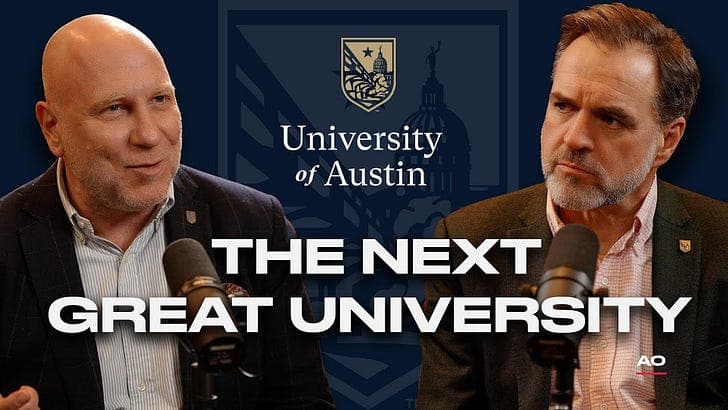
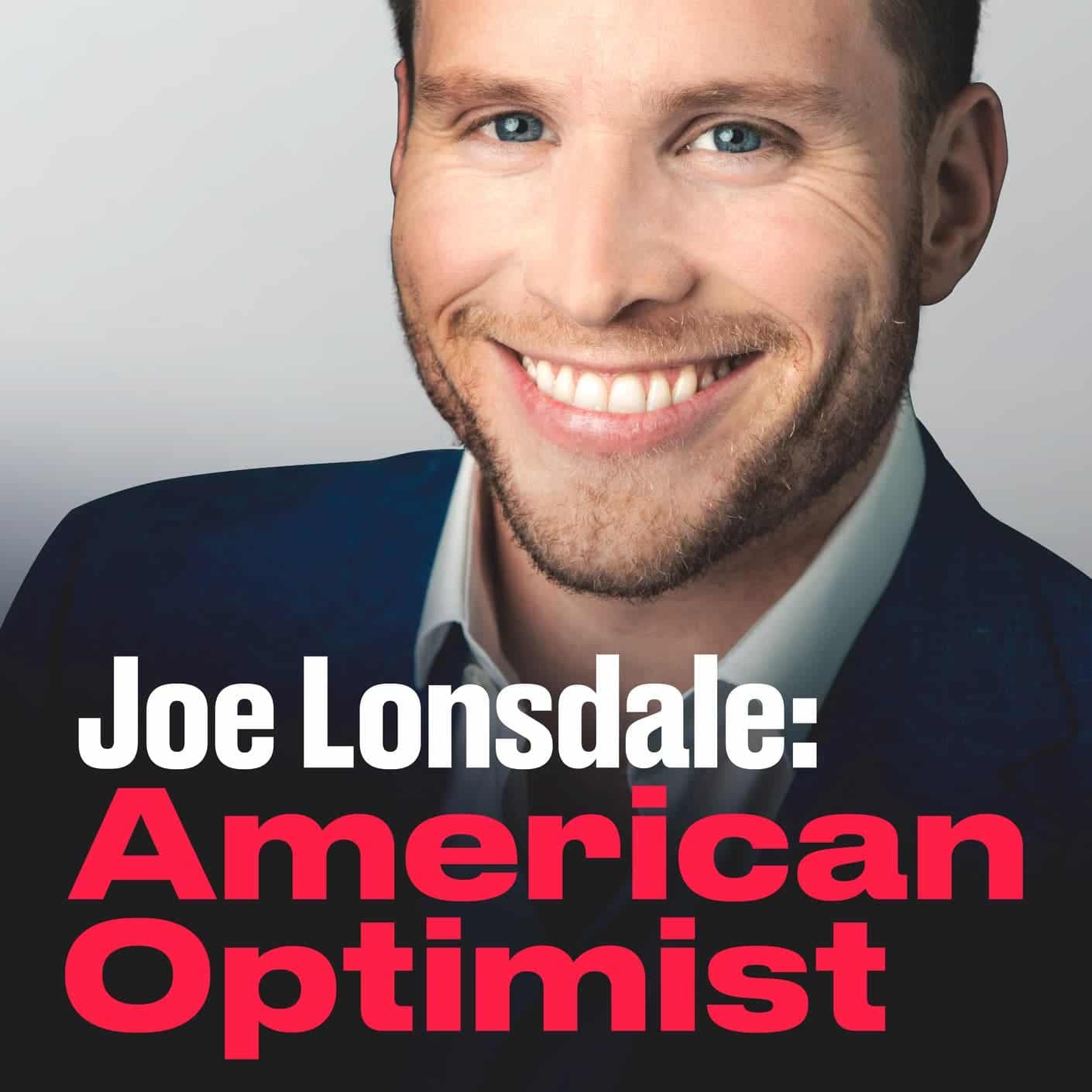
Podcast Episode Notes: Joe Lonsdale: American Optimist - Ep 74: A Turning Point in Higher Education with Pano Kanelos & Niall Ferguson
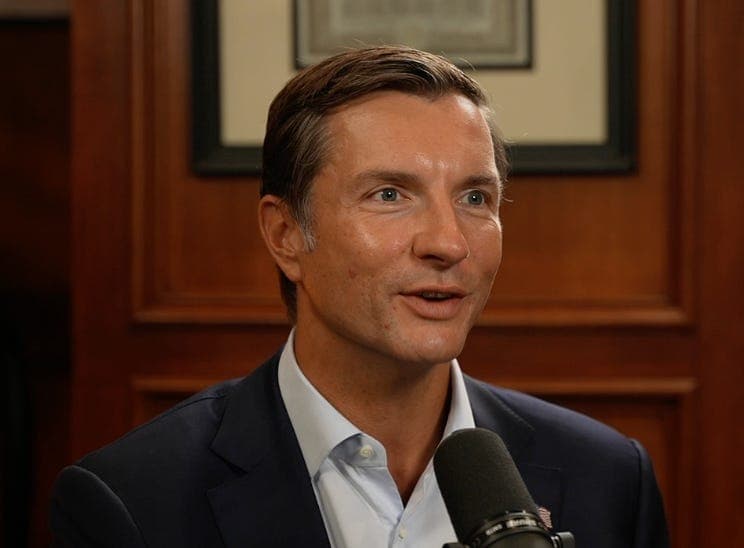
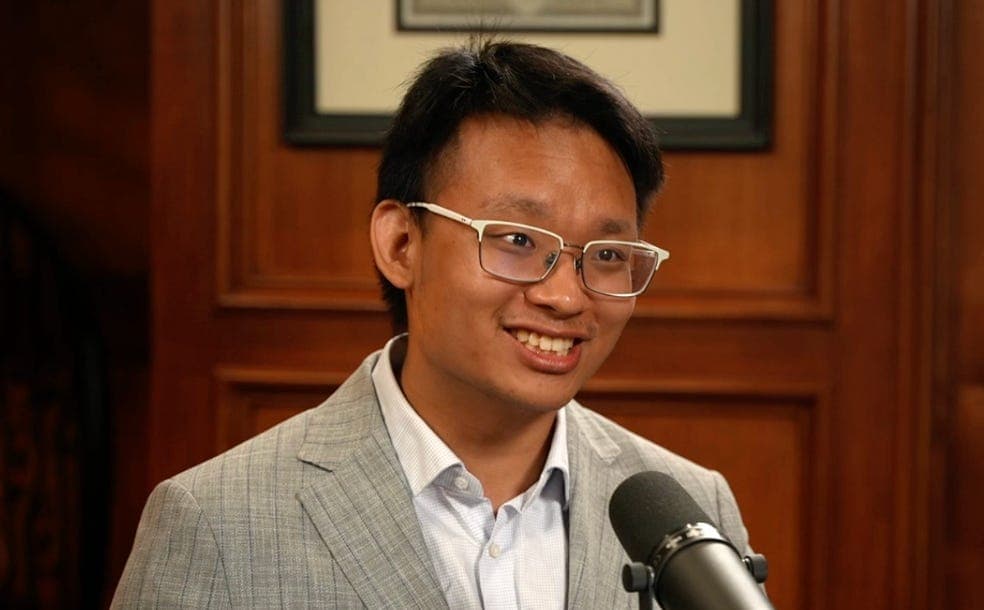
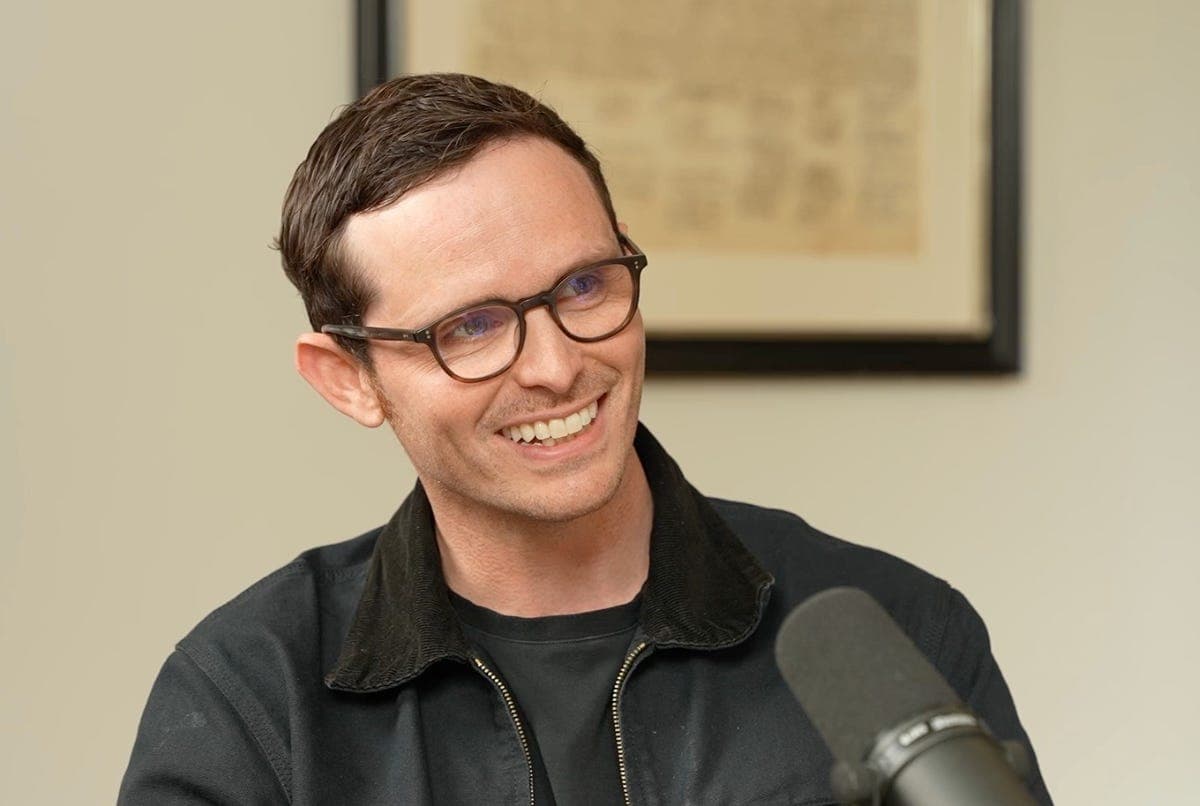
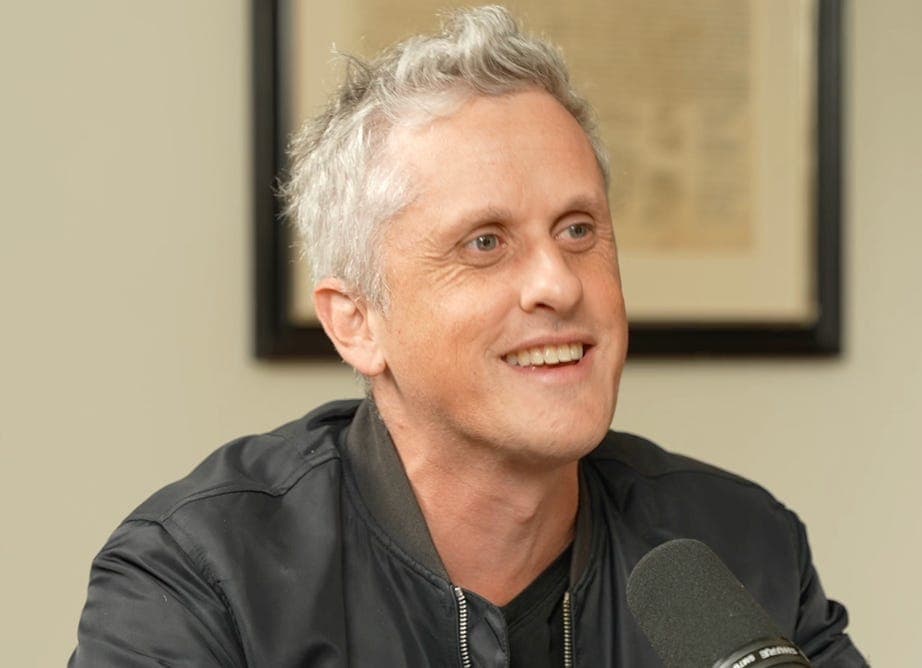
Episode Overview In this episode, Joe Lonsdale discusses the critical need to reform higher education in the wake of recent events that have highlighted the failings of legacy universities, particularly regarding their moral leadership and ability to confront rising anti-Semitism. Joined by Pano Kanelos and historian Niall Ferguson, they discuss the establishment of the University of Austin (UATX), framed as a new approach to university education that emphasizes freedom of inquiry, a rigorous curriculum, and the cultivation of leaders capable of navigating today's complex challenges.
Key Themes
- Critique of Legacy Universities: The episode addresses the perceived decline in moral and academic standards at established universities, spotlighting recent events that have drawn attention to issues such as anti-Semitism and political bias.
- Vision for the University of Austin (UATX): UATX aims to create a new academic institution grounded in principles of free inquiry, intellectual rigor, and real-world applications, contrasting sharply with the current state of higher education.
Key Discussions
The Need for Change
- Crisis in Higher Education: Niall Ferguson emphasizes a long-standing crisis in American higher education, noting that elite universities have become politicized and hostile to free speech. The recent displays of anti-Semitism on campuses have been particularly concerning.
- Moral Clarity and Leadership: Pano Kanelos discusses the failure of university leaders to adhere to truth and moral principles, stating that UATX is positioned to counter this trend by promoting fearless pursuit of truth.
Founding the University of Austin
- Unique Educational Model: UATX is described as a university that will create a "Navy SEALs of the mind," training students to think critically, engage in robust debate, and prepare for leadership roles.
- Student Recruitment: UATX aims to accept 100 trailblazing students for its inaugural class in Fall 2024, focusing on character, creativity, and commitment to open inquiry.
Curriculum and Educational Philosophy
- Intellectual Foundations: The curriculum will blend classical education with contemporary applications, promoting a broad range of disciplines from philosophy to STEM. Emphasis is placed on understanding foundational knowledge and its relevance to modern challenges.
- Encouraging Free Discourse: The classroom environment will be designed to foster open dialogue and intellectual risk-taking, ensuring that students can express their ideas without fear of reprisal.
Real-World Applications
- External Engagement: UATX plans to engage with industry leaders and innovators to bridge the gap between theoretical learning and practical application, thereby ensuring that students are well-prepared for the workforce.
- Interdisciplinary Approach: The curriculum will integrate various fields of study, emphasizing how different disciplines inform and enrich one another.
Fundraising and Community Support
- Financial Backing: UATX has raised over $200 million to support its mission, with donors recognizing the need for reform in higher education.
- Community Engagement: The university is actively recruiting through personal outreach and salons, allowing prospective students to connect meaningfully with the institution.
Conclusion The episode ends on an optimistic note, highlighting the unique opportunity for students to be part of the founding class at UATX and to engage with some of the greatest thinkers and creators. Joe Lonsdale, Pano Kanelos, and Niall Ferguson reiterate that UATX represents a bold step towards redefining higher education in America by fostering a culture of intellectual rigor, moral clarity, and innovative thought.
Call to Action
- Prospective students are encouraged to apply to UATX and join a transformative educational experience.
- Listeners are invited to explore UATX’s website for more information on the curriculum and application process.
Additional Resources
- [University of Austin Official Website](https://www.uaustin.org/)
- [Joe Lonsdale's Blog](https://blog.joelonsdale.com) for further discussions and insights on higher education reform.
Written by AI. May contain mistakes. Listen to the episode to check what was said.
Transcript
Automatic transcript. May contain errors.0:00At the back end of this, students when they graduate from UATX will have spent time with some ofHmm the greatest ideas, the greatest books the greatest minds, the greatest teachers, the greatest builders, the greatest creators, they're going to come out the other side of this experience transformed and ready to take on the world. And the bragging rights will be second to none. To have been in the first class, the founding class of the University of Austin, that is something that will be worth so, so much more than just going into the sausage machine of New England and coming out the other side with a credential that costs a lot, but didn't add very much to your brain part.
0:45Some of our top legacy universities have unfortunately really shown us their true colors over the last weeks. At a moment when we needed moral clarity, their leadership showed the decadence and the rot that set in in these universities. If you go back to Germany in the 1920s, you had the top universities in the world. You had some really popular ideologies take hold there that ended up spreading and creating what we had with Nazism in Germany in the 1930s. American universities have been corrupted by terrible, scary, totalitarian ideologies of all sorts. And we've been talking about this for a few years.
1:16It's why we're building a new university with UATX. This is the moment for the University of Austin. I have with us today, the extraordinary Neil Ferguson, one of the world's great historians, our co-founder of the university, as well as the amazing Pano Canelos, our founding president. I'm excited for you guys to meet them and to hear the latest about the University of Austin. I'm Joe Lonsdale. Welcome to American Optimist. Special episode here. We have Pano Canelos, the founder of UATX and the founding president of UATX. We have Neil Ferguson, the man, the myth, the legend who's in town from England now and also one of our founders of the university.
1:48We've seen some really horrible displays of antisemitism on campus. We saw obviously the terrible showing last week from the university presidents in Congress. And a lot of the so-called elite are finally realizing, we've been telling them for a couple of years that these institutions are rotten in a lot of ways. Neil, why don't you set the stage for us? What's going on? Well, I think I've been talking about the problems in American higher education for close to 10 years. About the only good thing that has happened as a result of October 7th is that the scales have fallen from a great many eyes.
2:18And people now realize what we've been talking about. There's a profound crisis in the culture of higher education. Our elite universities have become highly politicized, professors who think they're activists, students who haven't come to learn, but to engage in campaigns, a kind of culture of indoctrination and intolerance. We know this from heterodox academy surveys. These have been showing for years that 60 % of students don't feel they can speak freely in class. But now since October the 7th, we realize that Jewish students are being intimidated and threatened, singled out in some classes on the Stanford campus.
2:57And so the only good thing about this, Joe, is that now people realize what we've been talking about and why we need to create a new university that's based on very different principles. And I've gotten dozens of texts saying, actually, I want to help now. I realize why you're doing this. Pano, why is this a moment for you, ATX? It's a moment because when we first announced what we were doing, we proclaimed that we were building a new university dedicated to the fearless pursuit of truth. And we're watching college presidents testify before Congress incapable of saying things that they know are true.
3:31You're just watching them shut down in a moment and incapable of speaking the words that they know are true. To be incapable of saying that genocide is an evil and that students on your campus who are hearing calls for genocide are in some ways not threatened or intimidated by that. Being incapable of speaking those words, it makes you realize that from the top down, truth itself is at risk in American higher education. And so, Pana, the big news is that we're officially accepting our first undergraduate class in 2024. Was this a hard thing to do? What's going on? What's the latest there? Look, it was a hard thing to do, but a joyful thing.
4:13In under two years, we went from conception to becoming America's newest university. We received our authorization, our charter from the state of Texas in October of this year, which enabled us to start recruiting our first freshman class who will come in fall of 2024. And we're looking for a brave 100 students to be part of that first class to help found the university alongside us. Let's talk about principles and philosophy. We want to educate the next generation of leaders in our country who can reason, who can debate, who can build. We want to somehow inculcate a courageous spirit in these people.
4:47What are the principles that matter for the university? Well, it's very important that the classroom itself should be somewhere where young people can speak freely and take intellectual risk, be able to say what they think, answer a question as best they can without having to worry about their answer turning up on social media or being in some way used against them. So I think one of the first principles of the University of Austin is going to be that the Chatham House rule applies. And what you say in the classroom must stay in the classroom. That will allow a genuine culture of free speech to exist.
5:20We've gone to great lengths to draw up a constitution for our university that explicitly states the rules. What are your rights in terms of academic freedom? And we've got a mechanism to enforce those. So unlike, say, Chicago, which has great principles, we have even better principles and they're enforceable, which in practice, they really aren't even at the University of Chicago. So I think the most important thing for us to create is an atmosphere of intellectual risk taking, of being able to speak up in class and venture that answer that you worry might be wrong without there being some massive downside risk to doing so.
6:01The other key thing I really want to emphasize is that we want students to have real range, particularly in the first two years. We want them to cover the intellectual waterfront. And that means everything from ancient philosophy to the cutting edge of artificial intelligence. We want them to be literate and we want them to be numerate. And so this will be a very unique undergraduate program. It's going to be difficult. I've often said to you, Joe, that we want to produce the Navy SEALs of the mind. This will not be easy. And it's one of the things that I'm most excited about, the sense that we can take these students, really challenge them, and get them to a place that no other undergraduate program takes students today.
6:43I love that framing, the Navy SEALs of the mind. Pano, there's obviously a lot to cover with intellectual foundations, with STEM. Is there a tension between a classical education and world applications? You were the president of St. John's before where students all came and read the great books. That was obviously more focused on the classics and less on STEM. How do you have both of these work at once? And how's that mixed together? Yeah, I don't think there's, I think they're complementary. I mean, a classical education, sometimes people think of it as being an education that's totally focused on the humanities or humane subjects.
7:14But to understand the foundational knowledge you need to operate in the world, you also have to understand the foundations of science, of mathematics. You have to understand where ideas have come from and how the most important ideas have been answered over time. What questions have arisen? And those questions are the very questions that inform us today when it comes to technology. I mean, the question of artificial intelligence goes all the way back to the pre-Socratics in Greece. The very question, what is the mind? What is intelligence? Where do ideas come from? So there's a direct through line.
7:46And, you know, we entirely intend to graduate students who are going to build things and create things that are going to change the world. But having the foundational knowledge to understand the impact of the things that they're building on the world is just as important as building those things. What we've learned today is that it's essential for those who are going to lead, those who are going to create, those who are going to build to have a moral matrix. And a moral matrix depends upon understanding deeply what the human experience has been and what human beings should do as we move into the future.
8:25I love that. You know, when we were building Palantir, one of the biggest impacts on me was David Hume's treatise on human reason about how the brain works. and we're trying to extend the human brain into massive amounts of data. And you really have to go back to first principles. And sometimes the best first principles are from these documents. People wouldn't think of it as science or tech documents or from philosophy as well. Neil, you've taught some amazing courses in the past at Oxford and Harvard and otherwise, and you're going to be teaching now at the University of Austin in the spring.
8:50Can you tell us what are you going to be teaching? What's the right way to engage on some of these topics for students? Well, I'm a historian and I would love to be able to teach a course that reframes world history so that all our students get a chance to think about the big questions. And there are some huge questions out there. I'll take just one, Western ascendancy. Why was it that some societies beginning, you mentioned David Hume, beginning in Scotland in the 18th century, achieved economic growth and sustained economic growth and became far, far richer than other societies, including well-established empires in Asia.
9:26And that's a huge question. It's not an easy question to answer. Another key question is, why does something stay the same? You know, power is power. You can read Thucydides and it makes as much sense today as it did when it was written, but technology changes. So the other great theme that I want to try and explore in my teaching here is the impact of technological change on the ancient operation of power. Let me give you an example. Wouldn't it be great if everybody who graduated from the University of Austin understood how it was that the Allies won World War II with the application of science from cryptography to nuclear fission.
10:08That's the kind of thing that I think every well-educated person should know. And yet the reality is that tiny percentages of current graduates of elite universities understand that question. I love the idea of diving into certain cases in world history, and you can really dive into the science as well and see what's going on with the technology. Exactly. And educated people need to understand nuclear fission. They need to also understand why it was that after World War II, we spent way more time building nuclear weapons than building nuclear reactors. Not something you might've predicted back at the time.
10:38If I could add to that, I mean, I think this is why a truly liberal education is important, because you start to see how the different components combine into the whole. We tend to think of things like the history of war is involving politics at the highest level, and that, but it also involves the application of science, as Neil said. The course of world history has been at the crux of things like economics, scientists, politics, culture, and understanding how those things come together allows our students to better understand how to combine those things together in ways that serve the common good.
11:16But also to think in ways that are really creative. We want to teach students not what to think, but how to think. And a good example of what tends not to be taught in our universities today is how to think counterfactually, how to ask the what if question. You know, what if the United States had not dropped atomic bombs on Hiroshima and Nagasaki? What would have happened then? How would the course of history have been different? And that's the kind of thing that we should be exploring in classrooms. These are difficult questions. I mean, who knows? If you'd run World War II 100 times in a Monte Carlo simulation, how many times would the Allies have one.
11:52I want our classroom to have that kind of question, the kind of question that I just don't think gets asked at the established universities these days. This gets to a point you've made, Neil, to me that I think is really important for our society is what if we lost our free society as well. And understanding that it's probably not something we talk enough about at universities. I couldn't agree more. The first thing I did when I taught in our forbidden courses program back when we really were just a startup was a course on the difference between free and unfree societies. And I simply got the students to read primary source accounts of life in Stalin's Soviet Union, life in Hitler's Germany, life in Mao's China, life under the Ayatollahs in Iran.
12:31And it was one of the most exciting teaching experiences of my entire career to run that seminar, because young people came for the first time to reflect on what it would be like to live in a totalitarian regime. And that is ultimately the question we have to keep asking ourselves. If we want a free society, if we want free speech and free thought, the best way to preserve it is to keep reminding yourself, what is the alternative like? You're starting to experience something in that direction of some of these other universities as well, people afraid to speak up. I'm very much afraid to. And what was interesting, Joe, was that the students spotted that.
13:08And that was part of my plan. They started to notice there were certain kinds of behavior that went on in Stalin's Soviet Union that were kind of familiar, denouncing your comrades for saying something that was not on message. I mean, that kind of behavior is exactly what isn't going to be happening at the University of Austin. So Pono, what kinds of students are we looking for? We've had hundreds of applications. There's lots of great students coming. We're giving scholarships, of course, to all of our first 100 founding undergraduates. You know, what kinds of students would excel at you, ATX?
13:35Who do you want to come here? Well, what goes into making a Navy seal of the mind, I guess, is the question. And obviously, intellectual aptitude and capacity, evidence for that is essential in an application process. And so we take very seriously quantitative measures, standardized testing, GPAs, class ranking, and that, because we want to understand the operating system inside a student's mind. But character is also very important, and a capacity for creativity, a capacity to bring together these disparate threads of disciplines and ideas, a capacity for leadership, the ability to essentially, the way I think of leadership is accepting the responsibility that comes with the capabilities that you have, capacity to do that.
14:26We're looking for those sorts of things. We're also looking for students who understand the value of the particular kind of institution we're building that are going to be fully committed to open inquiry and civil discourse and understand that these are not optional principles, but they're essential to operating an institution dedicated to the life of the mind. So, you know, I think we're already seeing in the applicants, mavericks, independent minded thinkers. We're seeing students who have a deep interest in the sciences, students who have interest in the arts and humanities, but students who really fully intend to be creators and to be builders and to be innovators and understand that our institution, which itself is a startup, is the kind of place where they can accelerate those skills.
15:18And what are the different ways we're going to be helping them? Like, I have opinions on this on the Talent Network. Who are we bringing around the university to help these students? Like, what do we want to see them do when they move on? So I think one of the things that universities don't do enough is to look outward into the world for people who are successful and have the ability to bring things directly to students. You know, many universities are solipsistic, sort of inward looking, and campuses are closed ecosystems. And at some point, you sort of, you can become detached from the world that you're meant to serve.
15:51So we are already working on bringing on board some of the great tech leaders who have designed things, the great artists. We're talking, for example, just this morning with David Mamet, the playwright, who's eager to come teach for us and talk about how do you tell stories? How do you write plays? How do you make films? we're very very interested in crossing the boundary between thought and action between what's theoretical and what's applied and making sure that our students have both of those skills develop yeah we have over a hundred of my friends who are entrepreneurs who are innovators who've said gosh i really want to try to hire these students as interns as full-time people partner with them on new companies they're building you have this whole part of the tech world that's kind of like moving around here we're asking them what skills they need what should we be teaching them And I think it's cool to have that real world input along with the intellectual foundations.
16:42It's a powerful combination. Yeah, we've built the curriculum in a way that's sort of modular so that, you know, although every student will have the core experience of the intellectual foundations program that have core coursework. And, you know, whether they're studying economics, politics, history or computer science and data science, that around that we can build a supplementary curriculum that may aim at particular things. So, you know, if they're interested in becoming an engineer and we can work with a company, a cutting edge engineering company, we will work with the people who run that company to think about the courses that they would most like graduates to have as they enter.
17:19For example, SpaceX and Boring Company setting up here in Austin is Steve Davis, who is a key leader at SpaceX, CEO of Boring Company. He wants to help teach mechanical engineering, teach engineering at our university. And he's doing it because he likes teaching at university, but also because he wants some of these kids to come work with them and build with Elon. Exactly. And we're just going to continue to multiply those kind of relationships over time. So practically speaking, Pano, how can parents and students engage with UATX over the coming months? What sort of ways can they learn more? Well, you know, obviously the website is a place to start, uaustin.org.
17:48But because, you know, when we think about recruiting students and we're out there looking for that brave 100, you know, we're recruiting students the way that other universities recruit their football teams. All right. We're going out there. We're hitting the ground. We're meeting students where they are. We're having salons, for example, in cities across the country where we have small groups gathered for dinner and conversation. We're taking our Intellectual Foundations high school program on the road. We've started in Austin. We've been in San Francisco and New York and DC. We have programs upcoming in Phoenix and LA and Denver, I believe.
18:22We're trying to go out there because we think the most important thing we can do in recruiting students is actually get to know them face to face and in person because it's a huge commitment to make in both directions. I mean, to become part of a nascent university, you know, this is a major adventure. And so the better that they can know us and the better we can know them, we will be assured of finding those brave 100. Let's say a word about our donors too. We have a lot of people who have shown incredibly strong conviction. We've raised over$200 million so far. Neil, you advise a lot of the most powerful and interesting people in global finance.
18:55Like what sort of friends are stepping forward? What sort of people are excited about this? What is great to see, particularly in the last two months, is a realization that making large donations to established institutions really is the wrong way to go. Because very likely, the money will be used for things the donor disapproves of. And we can do better than that. I won't name any names, but I did say to one major donor to an Ivy League university, we have a carbon offset program for every$100 million you give to that place. give us 10 % and it'll do something to absolve you for your philanthropic sins.
19:32Now, there's a huge sea change happening. And people are realizing that this is America. When things are broken, you build new ones. That should apply to higher education as much as it applies to everything else. And I think people now get that. Maybe they were a little slow to see it two years ago. Not everybody got it. I see a real change now. Plus, I would say the other thing that's really interesting to me is the frustration that I hear from people I advise about the people they hire from the established universities. And so the idea of Navy Seals of the Mind, or maybe I should also say Green Berets of the Brain, is that you get people who are simply more attractive to hire because they have more stamina and they have more courage.
20:11You know, Pano, as you were talking, I was thinking what we also are selecting for is evidence of courage. It takes a lot of courage to go against the current, particularly in this generation. If we see evidence that somebody's willing, even at the age of 17, to take a stand to go against the current, those are the kinds of people that we want to hire and train. And I want to train them to be as mentally strong as a Green Beret is physically strong and courageous. You need stamina in this world. Everybody knows that who's running a startup. Everybody works crazy hours, some days a week, and only the strong can standard.
20:45So we're going to encourage a certain kind of mental training. You know, young people spend a lot of time in the gym these days, more time than I did when I was 18 or 19. You'll miss the gym this morning. I didn't go to the gym this morning. I'm bad at the gym. But mentally, you know, I'm mentally fit and I can read War and Peace faster than you guys. And that's what I want. I want the students to come out able to read War and Peace faster than anyone else in the world. And that's a big skill. That's a useful skill. That's really well said. I mean, honestly, when you see kids coming out of Ivy League these days, you got to be careful.
21:14You got to say, do they have any intellectual courage? Are they going to be able to stand up and think for themselves? Are they someone we want as part of our culture? And it's a much bigger question now than it was 20 years ago. Let's end on this, Pano. Why UATX? What's your pitch to the high school seniors and parents that are going to be watching this right now? Within the next year, students have the opportunity to join really not just a startup university, but probably the most exciting project unfolding in the world. To be at the front end of an institution that's going to have tremendous impact on the world is an opportunity to build and create and to co-create that very few young people will ever have.
21:55At the back end of this, students, when they graduate from UATX, will have spent time with some of the greatest ideas, the greatest books, the greatest minds, the greatest teachers, the greatest builders, the greatest creators, they're going to come out the other side of this experience transformed and ready to take on the world. And the bragging rights will be second to none. To have been in the first class, the founding class of the University of Austin, that is something that will be worth so, so much more than just going into the sausage machine of New England and coming out the other side with a credential that costs a lot, but didn't add very much to your brain power.
22:35It's the ultimate example of entrepreneur versus something else. And so people want to be entrepreneurs, nothing more American than doing what we're doing. Thank you guys. Thank you. I couldn't agree more. It's the ultimate American optimist thing to start a new university. Hands down. Amen.
From the publisher
In the wake of October 7, the decadence and rot of our legacy universities have been on full display. We've seen feckless leadership from college presidents, moral cowardice from faculty, and, as a result, shocking displays of anti-Semitism unchallenged on campus. It's time to build anew.
That's why we founded the University of Austin — America's first new top university in almost a century. And we are now accepting students for our inaugural class in the fall of 2024! In this episode, three of UATX's founders — myself, UATX President Pano Kanelos, and world-renowned historian Niall Ferguson — discuss this critical moment for UATX, and the nation. We dive into what sets UATX apart: a constitution that safeguards freedom of inquiry and expression; a curriculum that combines the intellectual foundations of Western Civilization with real-world applications; and a faculty and support network made up of the world's leading scholars, writers, entrepreneurs, and builders.
As Niall and Pano explain, we're training the Navy SEALs of the mind — the next generation of leaders who can reason, debate, build, and restore our republic to greatness. Right now, we're looking for our first 100 students. If you're a maverick and have what it takes to help us forge a new path in higher education, we encourage you to apply.
This is a public episode. If you would like to discuss this with other subscribers or get access to bonus episodes, visit blog.joelonsdale.com