In short
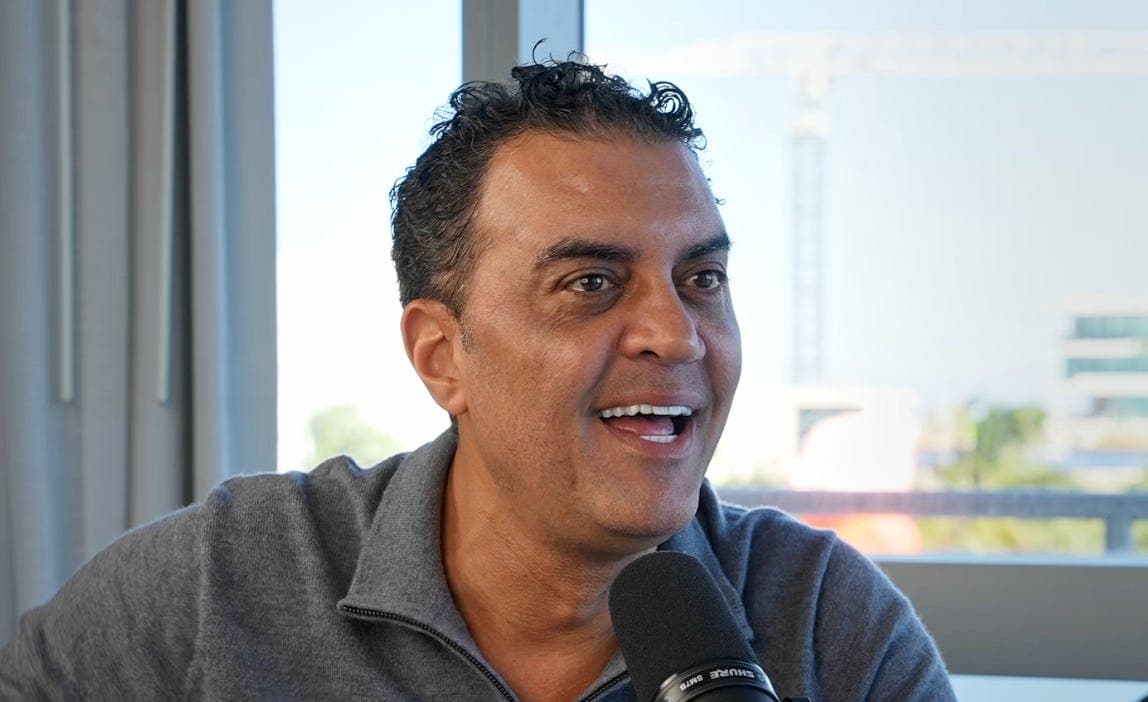
Podcast Summary: Joe Lonsdale: American Optimist - Episode 78: Emil Michael
Episode Overview The episode features Emil Michael, a prominent figure in the tech industry and former Chief Business Officer at Uber. He discusses his journey from his immigrant background to his significant role in Uber's rapid expansion and success, exploring the cultural and operational challenges faced by the company in various regions.
Key Themes and Concepts
Emil Michael's Background
- Immigrant Story: Emil immigrated from Egypt to the U.S. at a young age with his Coptic Christian family. His family's struggle for a better life reflects the American Dream.
- Education: He attended Harvard University and later earned a J.D. from Stanford Law School, showcasing his academic prowess and ambition.
Uber's Rapid Expansion
- Launch of UberX: The launch of Uber's everyman product, UberX, coincided with Lyft's debut, leading to a competitive ride-sharing market.
- Global Dominance: Emil played a crucial role in raising $15 billion for Uber and expanding into difficult markets like China, Russia, Italy, and Saudi Arabia.
- Challenges Faced in Different Markets:
- Italy: The presence of the mafia led to extreme threats against Uber employees, including a campaign to harm the female general manager in Milan.
- China: Contrary to expectations, the Chinese government supported Uber's entry to foster competition against local operator Didi.
Leadership and Negotiation Insights
- Dealmaking Philosophy: Emil emphasizes the importance of understanding human emotions in negotiations and balancing humility with confidence.
- Preparation and Research: He advocates for thorough preparation before negotiations, including understanding the other party's background and motivations.
- Creating Urgency: Establishing deadlines and commitments is essential for driving negotiations forward.
Reflections on Higher Education
- Concerns over Academia: Emil expresses disappointment in the current state of higher education, citing incidents of censorship and the failure to protect diverse viewpoints.
- Future of Education: He questions whether he would choose the same prestigious institutions for his children today due to the prevailing culture of fear.
Insights into the Gig Economy
- Uber's Impact: Emil argues that the gig economy, represented by Uber, has provided flexible income opportunities and improved accessibility to transportation.
- Market Dynamics: He challenges the narrative that gig workers are not earning enough, suggesting that market forces dictate their participation.
Optimism for America
- America's Attractiveness: Emil posits that despite current criticisms, America remains the place where many aspire to live and thrive, affirming its status as a land of opportunity.
- Future Innovations: He is optimistic about the potential for innovation in the U.S., particularly in AI technology, which he believes will lead to significant advancements.
Key Takeaways
- Emil Michael embodies the essence of the American Dream, having transitioned from an immigrant background to a key player in Silicon Valley.
- Uber's journey illustrates both the potential and challenges of launching disruptive technologies in diverse cultural and regulatory landscapes.
- Effective negotiation requires a blend of humility, confidence, and thorough preparation, alongside a deep understanding of human psychology.
- The gig economy has revolutionized the way people work and earn, providing flexibility that traditional employment often lacks.
- Despite criticisms, there remains a strong belief in America's capacity for growth and innovation, particularly in technology.
Closing Thoughts Emil Michael's experiences and insights provide a unique perspective on entrepreneurship, leadership, and the dynamics of change in both the tech industry and broader society. His optimism reflects a belief in progress and the potential for innovation to address pressing challenges.
Written by AI. May contain mistakes. Listen to the episode to check what was said.
Transcript
Automatic transcript. May contain errors.0:00scarier places were Italy. Really? Italy was scarier than China? Nowhere. Yeah. There's a mafia. But I always think there's like a Chinese mafia, but the Italian mafia is more badass. The Chinese mafia, for whatever reason, wasn't interested in transportation. I guess they're badass, but they're just not working in your area. They were in our area. That's fair. But the Thai mafia was in the taxi area. Yeah. The Italian, and we had a female general manager in Milan, and they posted her face all over the city saying, kill this woman.
0:32My friend Emil Michaels, one of the great operators, dealmakers, mentors of CEOs in the technology world. He was the chief business officer at Uber, which he built with Travis. Some of the most interesting stories of the most intense operational times in the tech world, dealing with the mafia, coming into countries all around the world, learning how they work to fight cartels, to have the good guys win. Before he was at Uber, he sold Tell Me to Microsoft. He was involved in the defense world in Afghanistan. A really great immigrant story where his parents came over from Egypt with him when he was young.
1:02Emil is a great American, has some really great stories, and one of the most interesting guys we know in the world of tech and operations. Let's hear from him. I'm Joe Lonsdale. Welcome to American Optimist, Emil and Michael. Emil, thanks for joining us today. Great to be here, Joe. You were the chief business officer at Uber. You basically built Uber with Travis and the group. And lately, you're doing a lot of investing and other things here in Miami. Tell us about your background. You grew up in Egypt. Is that right? Your family came over from Egypt? Yeah, I was born in Egypt. My family is Coptic Christian, so it's the 10 % minority in Egypt, but the country is now 120 million people, so there's like 12 million Christians there.
1:37And just like a lot of these countries, we have sort of a lopsided religious framework. Well, the smaller religion doesn't get as much opportunity as large ones. So there was a diaspora in the 70s from all the Christians. And frankly, the U.S. was incredible in granting green cards. My dad applied for a green card three times, finally got one. And then I moved here when I was an infant. And my sister was actually born here. And we landed in New Rochelle, Westchester County, of all places in the country to land. Tell me about immigration policy, because obviously it's a huge deal for you. I imagine your family, you came here, you've been very successful in America.
2:16We have a lot of debates what's going on right now. I think we have 8 million people have come across the border illegally. How do you feel about this? Disappointing in so many ways, because for two reasons. Number one, a country is not a country without a border, right? And not being able to control what comes in means you can't serve those who come in very well. And if the idea is we have a melting pot so that everyone who comes in here, we take care of. They're entitled to a public education, to the resources to give them a chance to succeed. Well, you can't do that when it's uncontrolled. So that's one piece.
2:49The second piece is, you know, my family did it the right way. We waited. we couldn't bring our cousins and our families and we had to sort of go through all the rules that are required. And by the way, every one of those that in my family who eventually came in is doing something important and loves their work and is contributing back to society. And we all bought into this melting pot concept. We're all American first and then where we came from second. I love it. I love it. That's the way it's supposed to work. Yeah. We got an interesting confrontation at the border. We're going to see what happens there.
3:24So you went to undergrad Harvard, law school, Stanford. Tell us about your all-matter, what's going on in higher education. Are you one of the people signing up to try to support our friends who are trying to fix Harvard? What's going on here? Totally. I mean, what a disaster it has become. It's embarrassing. And there was an incident even before this latest incident with the Harvard presidents in front of Congress where the Stanford Law School had a conservative professor from the Eighth Circuit or something come to speak. And he got shouted down. And some protesters told him they wish his daughters were sexually assaulted.
4:00That was sort of on the way in. They wish his daughters were assaulted because they disliked his views so much. And it was the DEI dean. I remember she got suspended or something. And she got fired ultimately for this. Which at least is good. But there's like hundreds of other people like that at these schools right and then and stanford law school is 180 people so it's a pretty tight community so it caused a battle um for them and then the dean of the law school wrote you know hey we were first amendment first kind of place and then they're creating a search committee for the new dean and they put the person who said all these office things on the committee the search committee yeah so i just had the call with them the other day and i'm like these these institutions don't really get what's happening in the world around them and that 48 49 percent of the country you know views the world a certain way and we're not going to get to a good place if we're shouting down the other side and that's what that's the opposite of what academia is supposed to be right it seems like these places have just really fallen the last five or ten years i mean you and would you still choose stanford and harvard for your kids right now with what you're seeing there would you like like how do you approach this it's a great question i mean Because you're weighing the prestige of the place against what you know it is.
5:11And what you know it is now is a place where people are walking around with fear to not say what they think. They're not challenging their ideas. That means they're not coming out as fully formed adults with the ability to critically think through problems and solve them. So it is a question whether I would want someone to go there versus University of Florida where Ben Sasse has done a really good job sort of taking the politics out of school and letting people speak and debate and come out critical thinkers. Ben Sass is a fan. We text and stuff. You know, we're building a new university in Austin.
5:43Yes, I do. Create an alternative for your kids. That's right. When ATX is ready for them, which it should be. We got to get the status and the prestige to be above these little places. That's the plan. I don't know if a Harvard guy would allow that. Of course we would allow that. All right. Well, you have more prestigious stuff than Harvard, fortunately. Let's jump to your early career in tech. So you started at Tell Me. It was an early speech recognition company, and you helped to grow it until it was acquired by Microsoft. It was 2007 Microsoft? Yeah. Tell me about that. Yeah. So we started the company in 99 and we were one of the few lucky companies that raised a hundred million dollars, which was a lot of money then.
6:17That was a lot. A lot of money in August of 2000. And the internet economy started to get wobbly in about March of 2000. Peter tells how about they barely got a raise on a PayPal in like early September. So right after that. Right after that. And then everything crashed. Right. So you just in time got like a bunch of money. Right. So which means you were default alive. right to use sax's term and and everything else was down so now you said okay now i have a pile of money does my business model work it certainly doesn't work with all these people so we unfortunately do a big layoff big big riff big riff and then had to take the business model we had which was kind of a consumer thing like you called your on your phone which we didn't have smartphones at the time and said hey i want a my eagle score and i want stock price of palantir and that's why it's It was called Tell Me, you called and asked about it.
7:04It was like a Yahoo on the phone. And, you know, Yahoo used, people used it for information at the time, right? You had your whole day planned in front of you there. That didn't work. So then we pivoted to, it sounds boring, but selling automated phone systems to big companies like American Express, Fidelity, where you'd call up and say, hey, my account number is blank, my address. So you changed enterprise. Yes. Overnight. And speech recognition technology wasn't that good back then. So what worked? Was it good enough to do things with the computer? Did you secretly have people in India on the other side?
7:35Like how did this work? Like Cruz did. No, no. It didn't work well enough, but it worked well with what's called directed dialogue. So I know I'm asking you what your account number is. And then I'm now listing for your account number. Got it. And the chances I got it are really high. And actually, the one big win we had was doing directory assistance. So you called, I don't know if you remember, 1-800-555-1212. You wanted the 800 number for Delta Airlines, for American Express. and we killed it. We got like 75 % of calls automated relative to operators. So we brought the cost down from$2 to 50 cents.
8:10Amazing. And we made a lot of money doing it. So we grinded and grinded and that company got to about a hundred million in revenue, which again was a lot at the time. Yeah. That's serious. In 2007, we sold it to Microsoft and right before 08 had, we tried to sell this thing in 08. So you basically got really good timing, Just enough money and time and then selling it before everything crashed. Although sometimes I was like, maybe I shouldn't have raised that$100 million because I went to Google early on or something. But that didn't work out. I read you had like a few hundred million dollar offer on the table and you spent an hour with Steve Ballmer and got that offer way up to$800.
8:45Yeah. How did that work? So we had an offer from a company called Nuance, which Microsoft also eventually bought. They eventually bought Nuance, yeah. And it was kind of a crappy small company like we were. and their offer is 300 million in their private company stock. So I got Hadi Partovi. I don't know if you know the name, but he and I and Ollie and David Wadon were all tourney brothers at Harvard in the same year. And Alfred Lin and Tony Hsieh. We all graduated. You guys were all the same. Wow. Because it was 1994. So if you were in tech, 94, and you had ambition to be other than a banker or a consultant, you went into tech, right?
9:22The outcasts of us went into tech. and uh and i turned this 300 and i said hottie you got to tell bomber we need we need to talk to him and he's like turns out i'm going jogging with him this morning that's funny he got us a 15 minute meeting flew up to seattle and bomber saw my blackberry on the table he dumped his drink on it because you know windows os was his biggest thing and i was like great now i have no phone no nothing front of steve bomber he literally just destroys your blackberry if you bring it That's hilarious. But we, within two hours, we had a handshake on a deal for$760 million.
10:01His corp dev guys were going nuts because he was making deals on his own. That's funny. He took the computer to do the math on a spreadsheet that showed in a screen on the room. And we stayed there the weekend. We walked out with a term sheet the next Monday morning. Wow. And the rest was history. It was the best deal we could have possibly done. Yeah. So you've had this. You have this big exit. just assume the first time you're very wealthy liquid but you could just move to Miami then and it'd be good so what happened how do you end up at uber what's the next step here right so i've done nine years i tell me from the beginning to end because i'd stay with microsoft for about a year and a half so i was pretty exhausted yeah and you know selling enterprise software because i ended up being salesman i carried a bag i tried i know i built quite a few of these things it's a lot of work it's a lot of work and uh and a lot of shaking hands and kissing babies and steak dinners and all these things.
10:50So I did that for so many years. So I said, you know, I want to do something that's more consistent with the passion I had in college, which was doing something for our country, public service, government. I love it. So I applied to the White House Fellowship Program, which was a nonpartisan program that took 15 people in mid-career and put them at the top of government and said, we're going to attach you to a cabinet secretary. So I got attached, I got selected. I got attached to Secretary Robert Gates, who was a defense secretary. And he was the first defense secretary to be a Republican and a Democrat administration.
11:22He was an old guard. That's good. So nonpartisan, you know, defense works best when it's nonpartisan. Today, too, it's really important. Yes, it is really important. So I got to sit with him as a special assistant. And he was charged with winding down the wars in Afghanistan and Iraq. So I spent, you know, I did six trips to Iraq, five trips to Afghanistan. And that's why we got out of Iraq and Afghanistan in 2009. Thank you, Emil. You're right. I tried my best. But at least I did two things. I was able to deploy some basic mobile phone technology there. Because what was happening is we were paying the local Afghani troops like$200 a month to keep them to not join the Taliban.
12:01Yikes. And the Taliban would then pay them$300. And they join anyway. $500 is much better deal. But more interesting, the warlords who were leading these young men were taking the$200 for themselves. Oh, sure. Yeah. So we then did a mobile payment system so that we could pay them. They got to keep it. And we prevented the warlords from taking it. And then we sort of were able to consistently get them on their side. So they wouldn't be doing IEDs against us. So basically paying them not to attack us. And some of them maybe still were, though. Like, how do you know that? What's a verification system?
12:36What's the anti-fraud system here? It seems like they would just scam us. The number of IEDs on Airport Road. And if you remember, Airport Road. Just to reduce that. Just reduce that. Whatever we can do. And then we built V-shaped hulls, which is trying to get the military to quickly move on a piece of equipment, which is pretty simple. I was already hammering on defense contractors. All we need is the bottom of the car to be a triangle. So it's harder for it to blow up on this stuff. That's interesting. Palantir did a lot of work on the IED stuff in the region, trying to track out the bad guys who was doing it.
13:07I guess you'd find... It's interesting. Do you find times you pay people and they would just trick you a lot? Or was it pretty common? Once they got the money, they were okay. but we had money to burn so was it really about money because i like all these rich people who hate us too though so it's like the law of we're just desperate and just needed the money they didn't care and they just want to be able to feed their families anyone was able able to help them do that taliban weren't we were except when the money was getting stolen so we got it not stolen and i was on jayeto which is the joint uh ied on you know task force so we would do crazy things like sprinkle markers into the fertilizer plants in Pakistan that were used to make the IED so we could track them and track where it's coming from and shut it down so I was because I because I was the tech guy I was involved in all these tech so when you sprinkle the markers into these things and you've later found them did you get to go back and like shut down the plant yeah what would happen to the guys doing the plant you went to Pakistan said this plant is selling um material to terrorists so they would shut the plant down the guys will leave the plant and go start another a plan instead.
14:10Or they do an interrogation of people working on plants, say who is taking material out of the side. Interesting. I mean, I totally believe, obviously, from your success, you guys are very confident people doing this. I never understood the big strategy for the next 10 years. Because we ended up being there 10 years more. It's a mess. What was the plan at the time? That we're just going to be here for 10 years and keep doing this? Was there an end goal in mind? How are people thinking about it? How have we screwed this up? We screwed this up in so many ways um do you remember the surge yeah so so president obama i think the military guys like um uh who were there at the time didn't want to lose and what losing to them a certain loss now versus a a unclear loss later with even with all the expenditures that was okay for the military folks so this is why we have a difference between civilian authority over military it's not their money.
15:04They're fine just to keep going, just not to lose. That's not to lose. And so we ended up putting more troops in there after 09. But without any clear goals of where we were going with the country. And the country's obviously a mess. It's going to be a mess. It's a tribal thing from 2000 years ago. They were never going to fix it all. But did they have in mind, like, I remember they started doing like these things where we're trying to build like educational institutions and infrastructure, but they think they were going to somehow bring them into the 21st century. It doesn't make any sense. There is no way you could take a country that doesn't want to move into the 21st century, into the 21st century, no matter how many schools you bought.
15:37So if we go back to 2009 and you're President Obama or you're the main advisor to him telling him what to do, like what should we have done at that point? Even if you go back to 2001 after 9-11, you have to have more. And this is part of why I like companies that, you know, that Palmer Luckey's building and someone's, you have to use the least amount of force to get the most impact drones you do decapitations maybe you did a lot more bombing in tora borra but sending hundreds of thousands of troops it's not it's a cobble for what to you know to do what the bad guys hit us we got to kill them and deter them yeah we don't need to be hanging out there with bases which that makes sense to me yeah well why should you do that anymore we got sulaiman we got where do we get osama bin laden we got him in some you know country house in Pakistan so we spent 15 years trying to get them in a country house in Pakistan so you know use intelligence special forces smaller weapons smaller footprint make them guess what we're going to do and what we're not going to that was what Palantir was about when we started it was build the very best intelligence possible that's right and then use that to yeah well these days of sending hundreds of thousands of ground troops into a meat grinder it's nothing country this country should ever do again yeah well totally agreed so I mean you served our country you helped make it a little more confident which I appreciate there.
16:52Interesting mess in Afghanistan. And then your next big chapter is Uber. So, so tell us about that. You took a couple of years talking with Travis before you joined. Yeah. He came down to visit me while I was in DC because he was launching DC. It was one of the, it was the third city. So you got to join me. And I said, you know, a black car service for rich people. I don't know. I'd like to use it. Maybe, you know, Garrett Camp would like to use it, but I'm not sure. Because black cars used to be this like super high status thing, right? It was like a marker that you had money. It was like Mr.
17:20Big in Sex and the City. Yeah, right. And it's like when this – but we don't think of it that way anymore. But that's how it was at the time. That's what it was. And it was all Lincoln Town Car. And sometimes they were stretched. I forgot you started with a really nice one. Yeah, yeah. Of course you guys did. And then the Lincoln Town Cars actually got discontinued by Ford. And we started – and they started to say like, well, why don't we make this an everyman product? Everyman with a Toyota Prius and every rider who wanted to get to the airport didn't want to pay more than a taxi but wanted reliability.
17:47Why don't we do that? Then I saw it. And I was like, okay, this product's for everybody. Got it. And then I came to him and I said, okay, now it's time for me to join. So you started, basically you were skeptical when it was a high-end thing. But then when you realized, but a lot of things are like that. They start at the high end and then they come to everyone, right? So as a chief business officer, I mean, you guys had a crazy run. You raised what, like for the$15 billion in a few years? How much did you raise? We raised$15 billion between June of 14 and June of 16. So in two years. So all that fundraising we did, I was there four years.
18:20I was concentrating in two years. I remember there were like all these people trying to invest in tech in the US at the time. You guys took full advantage of this. It was very impressive. It was like, oh, you're only a Zerp, you know, phenomenon. I was like, no, we weren't. We would have done it anyway, but we were leading the charge. You went much faster because of that. You had to open like dozens of cities. Did you help create the playbook for this? Like how would you open a new city? How much work was it? Were you running all around? So I did the hardest countries. I did China. I did Russia.
18:49I did Saudi. Just the places that had a mixture of you couldn't just drop a money bomb there. You had to, you had a political thing. You had a PR thing with the US given our relationship with them. Did people ever get put in jail in these places for anything? There were people, I think in some places people did a trip to jail and trip out like in Hong Kong. with the rules are strict or in Japan or in France where, you know, certain traffic tickets got you put in jail overnight. I wasn't, it wasn't me thankfully, but, but yes, mostly it was because it was a corrupt taxi system and we were trying to blow it up.
19:26And that corruption was everywhere in the world. I mean, every transportation system. Yeah. Basically as taxis places have like some kind of version of medallions, cartels everywhere. Cartels are scary though. Cartels find ways to put you in jail when you fight them. Like going to China to fight a cartel would to me be like the stupidest thing to do for your career like are you ever nervous like going into these communist countries that you're in you're fighting these guys who are connected so here's the crazy part the chinese loved us you know why it's because we had a competitor dd a local competitor and if you're a mayor in china you're like the last thing i want is a chinese tech you know ride share monopoly so uber come in here why don't they want the monopoly for themselves um they weren't on so this was in the early part of g's term where they were like no corruption so you got cock being corrupt it was bad this was such a visible thing it was useful to actually scare people to behave yeah so it was useful scare people hey there so then they loved having uber and dd there because that meant lower prices for consumers and so on um scarier places were italy really italy was scarier than china nowhere yes because because the mafia was there and but i always think there's like a chinese mafia but the italian mafia is more badass yeah the chinese mafia for whatever reason wasn't interested in transportation i guess they're badass but they're just not working in your area that's fair but the time off you was in the taxi area yeah the italian and it was there we had a female general manager in milan yes and they posted her face all over the city saying kill this woman um they snuck into her apartment at night and hung a sign from her apartment to the apartment across the road saying she you know she has a relationship is the nice word of saying with the taxi commissioner um they really targeted her for for physical harm.
21:07Wow. And so Italy today still barely has true ride sharing because of that. Yes. The mafia successfully puts us back on this. The one country. That's amazing. Are there certain playbooks when you like, when you open a city, what does that look like? Yeah. So here was the idea. You took a 30 something former Bain consultant because they had a little chip on their shoulder relative to McKinsey consultants. The one step down. I got it. They want to win. they're more analytical so less theoretical and strategy and more like okay i'm gonna do this and we create a launch team and we said your job is to go launch kenya and yeah you're you're american you don't speak the local language you're gonna go there and you can't leave until you do two things you create liquidity in that market liquidity meant you could get a ride in 10 minutes or less anywhere in the city that means you have to find out where the drivers are you have to market to consumers you have to do all this stuff to get to liquidity and number two you had to like hire a local to replace you and you do those two things then you can go off and launch that's cool you get to the next one yeah and what was the incentive you get like more shares for having launched new cities you get more bonuses you were higher up on the leaderboard that everyone in the country saw everyone's on this leaderboard and you get higher up yeah this human competition and it was fun it was fun competition but sure those people got rewarded more stock more were So did a lot of people who like climate leaderboard end up going on to build great companies?
22:31Absolutely. It must be a great talent pool. An amazing talent pool. Very aggressive. Now, these are not tech engineer type product types. These are operational, you know, business unit owner types. And they've spread all over the valley and it's great positions. I've encountered a few of them over there before. Some really good people to hire from. That's awesome. I'm very bullish now on operations alongside tech because of everything going on. You know, I remember going to walk with you after you joined Uber. Or is it just a really, really intense thing that you were in the middle of? Is there something about your personality that helped you confront and deal with that?
23:04Yeah. I mean, I'm a night owl. Maybe it was because during the day I was with Travis all day. And he was intense. And we sort of fed up each other and that. But when you're a company of 300 people, say, and you're operating already in 24 time zones, that means the missiles are flying at you all the time. regulatory there was an accident uh i assume you'd wake up and you check and there'd be a bunch of new things going on yeah and that's when you get to sleep at midnight because you know china was 15 hours ahead from west coast time right so you finish your chinese calls on at midnight and it was just a barrage of opportunity and a barrage of problems and then and then every day of getting up and saying how do we finance this incredible juggernaut and then how do we finance uber eats and then how we finance what would have been Instacart had Travis and I continued there.
23:58So we were just ambitious. And I feel like this was one of the first companies. It was right around the time when the press really started to turn on tech. And they really turned on Uber. Like how and why did that happen? I think it's just a broader societal thing and you guys were the obvious target. Was there something else that you think you could have done differently? So a couple of things. So compare Brian Chesky and Travis personality-wise. start at the same time. And some of it has to do with just how the leader approaches it. And now I would argue that Brian Chesky could not have built Uber with the personality.
24:34You've had to be a little more aggressive. Yeah, you had to be because your people are going to jail. Yeah, the taxi medallions are much more, the taxi cartels are much more intense than he was dealing with it. The hotels are not quite that mean. It's not a cartel. It's a bunch of corporations and more labor unions. So a different fight. And then number two, 2017, 16 election happened and we're on the West Coast and the anger from the population that was like, couldn't believe that the president was elected. January 20th, Trump put the Muslim ban into effect. And a few days later, we had the first delete Uber campaign, which was the first true blow up.
25:17And it was because we decided to reduce surge for the protesters at JFK airport. And we said, hey, you want to protest? We'll take you home. We won't raise the prices on you. The taxi guys said that we were undercutting their own protest on the same thing. And it turned into a nationwide delete Uber campaign. We lost half a million customers. Hold on, but you were trying to help the protesters. So that was a mistake. I mean, you shouldn't have done that. It doesn't. You shouldn't help these people. That's funny, but you got to get punished for trying to help these guys. That's hilarious. And so half a million customers Uber, that was like, you know, $500 million of market cap.
25:56We just lost that one day. Wow. Because of that. And it was very easy to protest. I'm against whoever made this policy, delete this off my phone. Yeah. Screenshot it, Instagram. It's one of the first times this happened. Yeah. But ultimately, it didn't hurt you that much or did it? No, it did. There was the beginning. And then, you know, we took the thing about our set, taking investments from the Saudis, Susan Fowler, workplace culture. They just kept finding it. Yes. The workplace culture obviously had to be intense. It was intense. I mean, are there other cultures today you see that are as intense as Uber was back then?
26:26Is that a thing you've seen around otherwise? Yeah. I mean, look at Coinbase and like Brian Armstrong's statement about what is culture. Well, I really like that. He's just trying to take out some of the politics out of that. Yeah, which was. That's what you guys did too. Yeah, that's what we did too. It was very similar. And it was a very transparent, radical candor place. And 99 % of the people who went through Uber say it was the best experience of their life. What you read about is that 1%. And I think people are really longing for that culture again in business. Like you're mission oriented.
27:01You're intense. You're trying to win. I can't imagine Palantir was that much different. We were skipping weekends the first few years for sure. I totally disagree with Dustin Moskovitz's thing where he's like, oh, you can work 40 hours a week. You can be just as successful. I'm like, I know. They were working 90 hours on Facebook for the first several years. I'm like, come on. Come on. I mean, sure, there are types of work-life balance that are healthy in some context. But when you're creating like a hyper-growth startup, it's like trying to win a gold medal in the Olympics. You're going for it.
Read the full transcript
27:27And if you go home and the rest of the team is there and you're like, hey, we succeeded. You're like, well, you didn't. The leader has to set the tone. The leader's not crazy intense. Like however intense the leader is, everyone's going to be a little bit less intense. Yes. This is true today in my firm as well. Like they have to see you doing all the time or they're not going to. They're not going to. That's right. People follow leaders. But it's like some of these things when they're working, it's like one of the, for me, it's like one of the most interesting and fun things to be is in that kind of intensity.
27:53It's like, so you kind of, kind of look for that. Yeah. Do you think you'll ever have that again in your life? Like something like that? I look for it. I dream about it every day. You know, I was, you know, when I, when I have been to open AI, I feel some of that intensity. when I went to this company ZipLine the other day. I felt an intensity. The delivery thing? The drone delivery thing that's delivering medicines and vaccines. That's super cool. Yeah, very cool. The intensity when you walk in the office and you're this San Francisco at a Friday at five and then everyone's there. I love they still have it on there.
28:22Yeah. No, we still have that in some of our top defense companies, maybe some of our top new AI things. Yeah. It's exciting, right? It is exciting. It's because people feel like they're on the frontier and they can help push it in. Exactly. You're changing the role and you're part of this. It's part of the force. Zooming out on the gig economy is something, the term everyone used to use. We don't talk about as much anymore. Now there's AI and stuff. But did the gig economy live up to its promise? Did it achieve what it was supposed to? Was it positively impactful overall? I mean, I can't even see an argument in any way where it wasn't.
28:49And again, this is the political sort of view versus the actual reality view. Uber over time has probably paid$100 billion to drivers. $100 billion. does the entire taxi system probably only ever paid you know a hundred million dollars after 50 years of existence so so many people got access to money in a flexible way than the decades before them in just the last decade um and so yes are you saying that limo drivers now make less today than they would have ever sure there are some casualties there but you now can guarantee a ride to the airport and do you remember trying to get a taxi in san francisco joe when we lived there to the airport.
29:29You know, what would you do? They didn't show up. You basically employed a full-time driver if you could afford it. If you could afford it. That was a thing to do. Or else you had a friend drive you. And, you know, your friend would have like two people's time wasted driving. So it was all for the better. It gave people enormous serving opportunities. And guess what? If you don't like it, you don't have to do it the next day. You know, I didn't make enough. I didn't like it. Of course. And so that's what people forget. It's not like they're being forced to drive for Uber. They're looking at the numbers.
29:57A lot of people still argue, well, Joe, they're not making enough to cover their costs. Well, I'm like, people are not as stupid as you think, right? They would just stop doing it. They have a car payment, an insurance payment and gas. Are they not making enough to cover that? And then some, why would they do it? Obviously. I think people understand markets very well. It's very annoying. It's our friend, I love Joe Green, but he's like, always like, back then he's like, it's not paying them enough. It's wrong. I'm like, dude, I think it's like this, unfortunately on the left, it's an arrogance where they assume people just don't know what they're doing.
30:23I saw a great story about this also apparently there's the guys who come here from other countries just work an uber really really hard for like a couple years and then they buy like apartment complexes back in these other countries so i thought it was kind of a neat thing like just get their whole family set up back home and then go back and do it it's i had the same argument with joe and then i'm like joe then why do you keep taking ubers you know it's just i gotta get around do you talk to drivers are they happy yes yeah yeah give me a break it's funny i mean we just shouldn't interfere with people in a market.
30:52Maybe just let them do their thing. Yeah. I want to pivot a little bit to leadership lessons. You're a master negotiator and communicator. Do you have a framework for how you approach some of these high stakes conversations? Can you teach us a little bit about that? Yeah. And I like to call myself a little bit more of a deal maker than a negotiator because I like to think that I make deals happen that wouldn't otherwise happen because I'm able to pierce sort of the human emotion that sometimes gets in the way of deals. And Pierce's sort of different math that people are doing their own math. They're not doing the other person's math to see where you can intersect and find a place of agreement.
31:29And I guess the thing, the first thing I learned early on is to walk the line between humility and confidence. You don't want someone who's too arrogant, but you don't want someone who's a pushover either. It's a tough line. It's a tough line. But if you can walk that line where you can walk into a room and be, you know, humble if you're working with a CEO and you're a director at some startup, but guys like you and me have to pretend to be a little more humble than we are. I know how it works. But, but, but if you can flex between those two, that CEO and I walked in the CEO of AT &T or America's Fest when we were doing it or early these at Uber, no one really knew Uber and they respect the fact that it was confident, but also So I was humble and said, hey, I really, you know, here's what you would bring to my company and I'll really value that.
32:16Right. So that was one lesson. And that goes up and down the aid scale. The second is be overprepared. I work my ass off before any negotiation, before any. Just know all that you tell them about. Everything. Where you went to college. You know, what your favorite team was. Again, if it was available, who you're married to, when you got married to. Interesting. Where were you in your career journey? Were you trying to get promoted? Were you already at the top? What are the things that matter to you? because that comes through in your negotiation style. Right? So then I knew if you were like, I got to get to Tahoe in like 30 minutes, buddy.
32:49So you better wrap this up. I tried to like jam in my points in the last 30 minutes. I really did try to understand the person holistically. And then third, always be on top of creating the next deadlines. Compelling about look backwards for when the deal needs to get closed. Have people emotionally commit to the steps they're in. And usually people miss deadlines all the time, but they feel bad. When they promise you, I'll get back to you Tuesday. They don't get back to you Tuesday. Remind them. Remind them. How about Thursday? They're like, okay, fine, Thursday. We call this process engineering.
33:20It's super important. I think it's really bad. People don't actually pace the process at the time, how it's going to work. And then ideally, in a negotiation for financing, you want to bring the process of many different parties up at the same time. So you have choices. And you could drive, then you could drive the valuation and stuff. So the process in that case was creating an auction environment. It's not always an auction environment, but fundraising tends to be. No, totally. And so you mentioned advise a lot of CEOs. What are some mistakes you see young entrepreneurs making? So in this last cycle that you and I have been through, this is our third probably, right?
33:55The 2021 valuation peaks were so high. I know. That getting entrepreneurs to understand that that peak is gone, just assume it's gone forever. And now start from first principles. What are you trying to build? Do you actually have product market fit? How much money do you have in the bank? How are you burning? Do you need to be burning that much? That took like six to 12 months to get people to understand that those times aren't coming back. Just not coming back. It's very difficult because everyone wants to give you money. It's a whole different world now. It's just a whole different world. It's good.
34:27People, we used to call it FOMO. I said, we're JOMO. There's joy in missing out now. People are like, oh, that seemed too expensive. Thank God I didn't touch that. I wish you could go back a couple of years. No, I'm going to know now. I did raise a lot of money for some of my companies, though, which was great. We had, I think, 50 rounds in 2021 in my portfolio that were greater than$75 million in size. So it's like there's just a lot of money flying around. There's a lot of money sitting in balance sheets right now. But the point is, even if you did get that money, you still have to operate differently in this environment because you're not going to get that money again.
34:59It's really hard if you have too much money. You have to really know that it's like you have to pretend someone's not there, basically, because it's bad for discipline. It's bad for discipline. And it's bad for liquidity and you're going to be spending money on weird projects and so on. So the hardest thing to get entrepreneurs is to accept that. And maybe I didn't accept it the first bubble we went through and got burst. But I literally tell entrepreneurs, I know you're not going to listen to me, but you really are not going to be able to raise more money. You have to do a riff now and you have to start slimming the company down.
35:30Six, 12 months later, they get it. But then they do one, two, three more riffs. and they still, the speed at which people react. They need to cut right away. Yeah, it's hard. And you have to sit in a room and say, what do we have product market fit? Or was it just because we had a money bomb dropped down on us? And if we don't, how do we get it, right? And if we do, how do we make sure we're exploiting it, you know, in the maximum way possible? 100%. Let's talk about talent. You said you want to prioritize the talent even over a great product early on. Like, why is that? You know, when I imagine myself sitting around Uber or Telmeny, I looked around that talent.
36:04I was like, man, this business model can change, but these people are going to find whatever the best business model is, given the idea we started with. And they are so passionate that they're going to drive it through. And that was true at both companies. We didn't know we were going to do Uber Eats at Uber. We didn't know we were going to go into China and Russia and all these places. Today, the company is worth$130 billion. At the time, it was$300 million. And those people around the table, many of them are still there, actually. What would it have been worth if it wasn't screwed up? 600 million?
36:36600 billion? Yeah, 600 billion. 600 billion? Yeah, 5X. We would have been Instacart. We would have had a payment system because we'd have so much share of wallet. There was so much more we would have done. Yeah, building this platform, there's like so many act two and threes on top of this thing for an entrepreneurial team. Absolutely. We called it the urban logistics fabric. We would have been able to get anything and anybody from one place, one part of the city to the next. And that's a lot of money you'd be transporting if you actually did that well. It's very impressive. It's funny, the mindset like 20, 15 years ago was that like five or 10 billion is a really big win.
37:13And it's kind of funny how it shifted because now it's like, it's not a really big win if you don't get over a hundred billion, which is obnoxious, but that is like the mindset in the Valley amongst, I mean, obviously we're spending time with Peter and Elon and all these guys, so it's a different bar, but it's kind of interesting how Uber could have been like one of the giant tech companies and it is still very big win though, obviously. But look at Lyft. What's the difference between Lyft and Uber? We started at the same time. Lyft is worth$6 billion today. That's a 20X difference. The single difference was leadership and ambition, right?
37:41The only thing you could attribute it to, because they started, frankly, they started ride sharing the UberX equivalent before we did. It's because we were more ambitious. We hired better people and we moved faster. And you push yourself harder. You guys are probably the operations are just more intense from everything I saw. Yeah. Yeah. That matters. Yeah. No, it does. It turns out. So, Emil, we started the American Optimist to push back on a lot of this tinnicism. and the vision we're seeing in America today. What's your best argument to be an optimist on the future of America? My best argument is if you surveyed every other person in the world who is living in America now, what's the one country they would want to live in?
38:17What system that they think is the best for their children? They would still choose this system. They wouldn't choose China, Russia, Brazil, Indonesia, the other top, Pakistan, the other five populous countries. They would choose America still. Um, and there's still whether the Southern border thing has some of that element to, why are they coming here? It's because of the best opportunity. So when people criticize our system, they say it's broken, irredeemable. They're just wrong because if they were right, why would all these people want to be coming here? And so it's still the best place in the world for anyone to get a fair shot at success for them and their children.
38:57So I'm optimistic that so, so long as our system continues to attract that people, we must be doing something right. This must be an okay place to live and to raise children and so on. So I think the naysayers are wrong when they say America's best days are behind us. You know, what innovation or technologies you're seeing right now are exciting you the most about the future in terms of a positive version of the future? You know, I look at the regulations that the EU is trying to put on AI and everything. And then, you know, India bans, banned a bunch of tech too and in south america can't even develop the tech and so you're like where else is the next wave of ai which is going to produce mass efficiency mass knowledge dissemination um nowhere but here you know we're going to have the first of everything in this new platform that's building if you thought about the last platform is the iphone and apps mobility this next platform of AI is going to be innovated on here faster with more money and more direction than anywhere else in the world.
39:59And, you know, I do worry about the Chinese brute forcing it and using it only for CCP purposes. And we have to be careful not to regulate ours so that we become secondary to the Chinese. But that's the only the risk I see out there. But the benefit that I see is going to accrue to our country more than anywhere else. Yeah, I totally agree. That's a great note to End it on, Emil. Thanks for joining us. Thanks for having me.
From the publisher
By the summer of 2012, ride-sharing had arrived: Uber launched its everyman product, UberX, and Lyft debuted hot on its heels. Today, Lyft's market cap hovers around $5 billion while Uber's is north of $140 billion. How did Uber explode to global dominance? What was different about its culture? And how did it take on taxi cartels around the world and win?
This week, we go behind the scenes with Emil Michael, one of Silicon Valley's great operators and dealmakers. As the former Chief Business Officer, Emil helped Uber raise a record $15 billion in two years and led its expansion into the most difficult markets, including China, Russia, Saudi Arabia, and Italy. (Yes, Italy.) Emil recounts his biggest wins and toughest challenges, including how the Italian mafia threatened to kill Uber employees and why to this day ride-sharing is almost nonexistent in Italy.
Emil immigrated with his family to the U.S. from Egypt as a young child, and his success and character epitomize the American Dream. He graduated from Harvard, received his J.D. from Stanford Law, and began his entrepreneurial journey at TellMe, an early speech recognition company. He quickly became known for his dealmaking skills, including transforming a $300 million acquisition offer into a $800 million deal with Steve Ballmer and Microsoft. After TellMe, he served as a White House fellow at the Pentagon and spent time in Iraq and Afghanistan, before later joining Uber. We dive into his unique approach to high-stakes negotiations and lessons learned from his distinguished career.
This is a public episode. If you would like to discuss this with other subscribers or get access to bonus episodes, visit blog.joelonsdale.com