In short
Podcast Notes: Joe Lonsdale: American Optimist - Episode 79: Bjorn Lomborg and the 12 Best Policies to Help the World
Overview The episode features Joe Lonsdale interviewing Bjorn Lomborg, a renowned thinker and author of the book "Best Things First." The discussion revolves around effective policies for addressing global challenges, particularly focusing on poverty, education, and health, while critiquing the inefficacy of current mainstream approaches, especially concerning climate change.
Key Themes and Concepts
- Effective Policies for Global Improvement
- Best Solutions Identified: Lomborg highlights 12 effective policies aimed at maximizing impact for the world's poor, derived from analysis by top economists.
- Cost-Effectiveness: Policies such as investing in education yield significant returns compared to climate initiatives.
- Example: Investing in education can yield $65 for every dollar spent, whereas climate policies often return much less.
- Critique of Current Development Goals
- Sustainable Development Goals (SDGs): Lomborg argues that the UN's SDGs are overambitious (169 goals) and often merely serve as virtue signaling without tangible outcomes.
- Shift from Concrete Goals: He contrasts the new SDGs with the more focused Millennium Development Goals which were largely successful.
- Focus on Education
- Current State of Education: Many children in developing countries attend school but do not acquire basic reading skills.
- Example: 80% of 10-year-olds in developing countries struggle to answer simple comprehension questions.
- Innovative Solutions:
- Use of technology (like tablets with educational software) can personalize learning and dramatically improve outcomes.
- Incentivizing students through cash rewards for good grades has shown to increase academic performance.
- Health Initiatives
- Tuberculosis: Lomborg emphasizes that tuberculosis remains a critical health issue, causing over a million deaths annually, and can be effectively addressed with simple measures (like better medication adherence).
- Maternal and Child Health: Simple interventions during childbirth could save numerous mothers and infants.
- Challenges of Corruption and Bureaucracy
- E-Procurement: Lomborg discusses the potential of e-procurement in reducing corruption in government spending, which is critical for ensuring funds are used effectively.
- Climate Change Debate
- Lomborg is generally skeptical of alarmist climate narratives, arguing instead for a balanced view that recognizes climate change as a manageable problem rather than an existential threat.
- He advocates for innovation and technology as solutions rather than punitive climate policies.
- Optimism for the Future
- Lomborg encourages a perspective that acknowledges progress over the past century, citing improvements in health, education, and poverty reduction.
- He challenges the narrative that the future is bleak, urging young people to recognize the advancements and maintain hope.
Conclusion The conversation culminates in a call to action for policymakers and philanthropists to prioritize effective and measurable solutions to global issues rather than succumbing to fear-driven narratives. Lomborg's insights advocate for optimism and rationality in problem-solving, emphasizing that the right focus can lead to substantial improvements in global well-being.
Key Takeaways
- Focus on cost-effective policies and measurable outcomes.
- Prioritize education and health interventions over less impactful climate policies.
- Recognize and challenge bureaucratic inefficiencies and corruption.
- Maintain a balanced perspective on climate change, advocating for innovation as a key solution.
- Foster optimism and action-oriented approaches to global challenges.
Written by AI. May contain mistakes. Listen to the episode to check what was said.
Transcript
Automatic transcript. May contain errors.0:00if you ask most rich people, what is it you worry about, of all these things, get people out of poverty, get them out of hunger, fix climate change, fix wars, fix, corruption, stuff like that people will say oh climate, we should do climate, we should do climate, what do you know? the only one and unfortunately many rich people act as if climate is really the only thing we care about and the second thing is that it's not where you can typically get the biggest bang for your buck so again if you want to do good for the world you really have to ask yourself should i be spending money for instance on education and get 65 for every dollar spent or should i spend it on environment and if we're very lucky on climate you can get a couple of dollars back on the dollar Maybe we should start with the education bit.
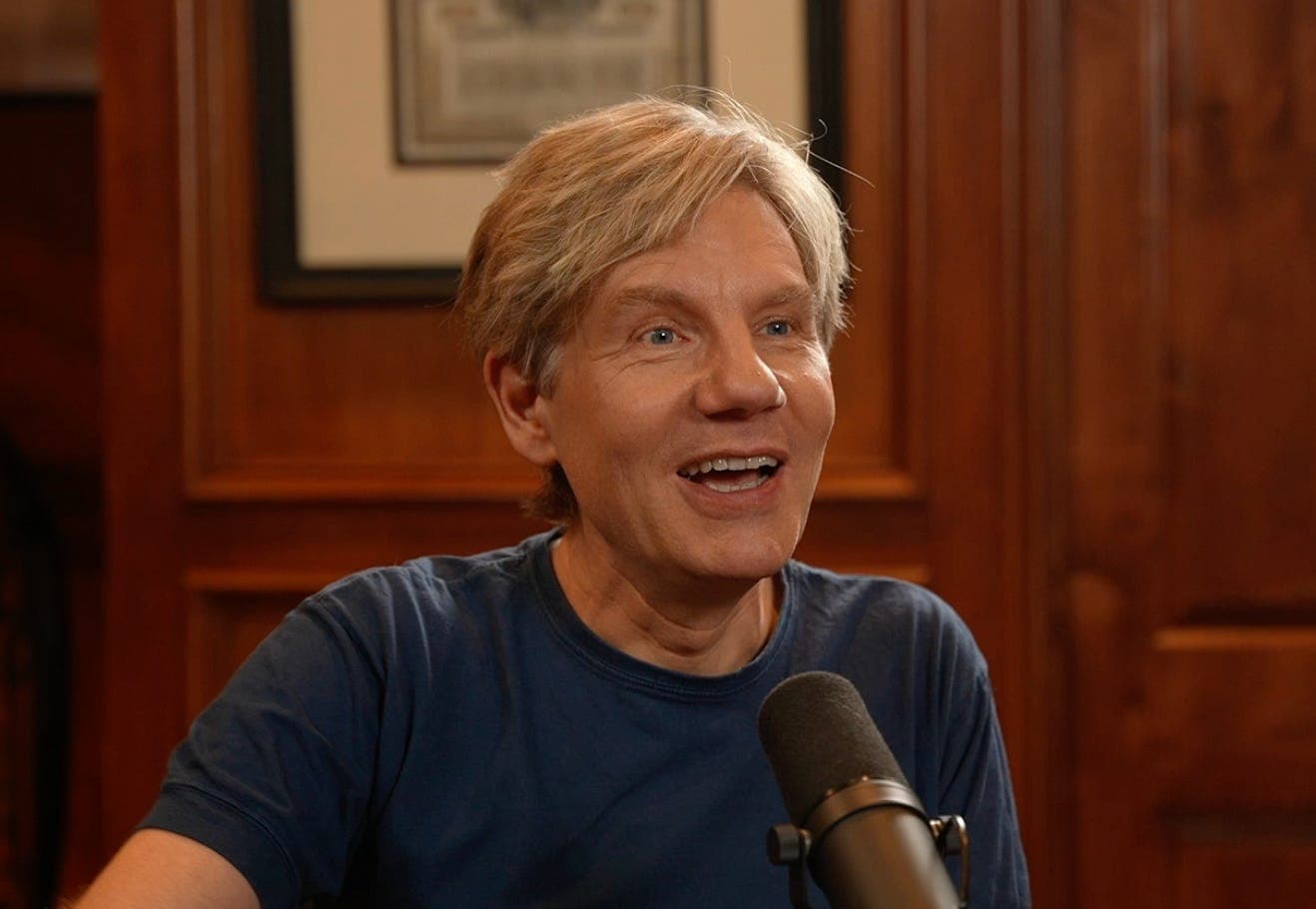
0:53Today, we're speaking to Bjorn Lomborg. He's a famous thinker, writer, intellectual. His new book, Best Things First, is a very well-reasoned look at how we could help the most people most efficiently. He first became really famous for the skeptical environmentalist 20 years ago. Bjorn likes to look at what people are doing, where they might be wrong. Sometimes people get offended because he comes to conclusions they don't like, but it's hard not to agree with Bjorn when you're talking to him. He's such a reasonable guy. Bjorn's not afraid to challenge the narrative, take you where the evidence leads.
1:19One of my favorite thinkers. I think you'll enjoy meeting him. I'm Joe Lonsdale. Welcome to American Optimist. Bjorn Lomborg. Bjorn, thanks for joining us. Thank you. It's great to be here. Bjorn, I've been a fan of yours for over 20 years. You were working on some more controversial things in the past, which I love and I want to talk about. I think your recent book, Best Things First, it's a little bit of an all over branch. You're talking about how to fix the world, how to focus on what matters in a way that I think hopefully everyone can agree with. Yeah, it really is something that everybody should get together on.
1:47I think though, that it is very controversial because it exactly says, where can you spend money and do the most good? If you start talking about what are the smartest things to do, it also inevitably means you say, there's a lot of stuff that we shouldn't be doing. There's a lot of things you put dollars into, you get less than dollars back, or maybe you only get a few dollars equivalent, which is not nearly as good. You won at 15, I think was the ratio, I recall you said. We set the cutoff point where you spend a dollar and you end up doing$15 worth of good. Actually, the outcome that we get for it.
2:16So we find 12 amazing things that the world should be doing. We find an average, they will give you$52 back per dollar spent. Now, it's not a get rich quick scheme. And we should just write that. We're helping a lot of people. It's going to help a lot of people. You're actually going to be able to turn it into dollars because if you could, it would already been fixed, right? This is about making sure that kids don't die from easily curable infectious diseases and we get more nutrition and we get better education. All these other things, some of which I'm sure we're going to talk about. And I remember you referred at the beginning to these SDG promises, Sustainable Development Goal promises.
2:51And these are different than the original Millennial Development Goals. Because I remember the Millennial Development Goals, which you actually are quite positive on, despite being from the UN and these other countries. I guess there were 18 things overall and they were positive overall? Yeah, so there were 18 or 21, depending on how you measure it. But actually, we just cared about eight of them. So they were basically get people out of poverty, get them out of hunger, get kids in school, stop moms from dying, stop kids from dying, and get more water and sanitation to everyone. There's nothing about making people virtue signal and woke.
3:24No, no, no. No, it was very basic. Very basic, just solve problems. And look, if you look around the world and if you realize that most people don't live like rich people do, we're a very, very rarefied group of people, 1.5 billion people out of 8 billion people. Most people have much more immediate issues like their kids are going to die maybe tonight, that they don't get enough food, that they don't get enough good education, so on. These have very simple basic problems that we should be focused on dealing with. And so what I try to do with this new book is basically get people to think about where is it that we could do the most good for the next dollar?
4:03Because after these eight actually worked quite well into 2015, billions of dollars flowed in, like the world got much better. We helped all these people, you know, millions less people dying. Then the new development goals were sustainably focused and there's 169 of them. And a lot of them maybe are more what we call luxury beliefs. They're things that rich people care about, but they weren't as focused on the core. They're partly luxury beliefs, but partly they're just unbelievably everything. right i mean they basically promise you everything to everyone all the time everywhere and and if you promise everything it's like having no priorities and of course that's exactly what the world has that's what happened is no one focused on it we just we just spread the money out thinly and everything and a very large part of this is also if you ask most people if you ask most rich people what is it you worry about of all these things get people out of poverty get them out of hunger fix climate change fix wars fix corruption stuff like that people will say oh oh climate We should do climate.
4:56And look, climate is one of the many things we need to fix, but it's certainly not the only one. And unfortunately, many rich people act as if climate is really the only thing we care about. And the second thing is that it's not where you can typically get the biggest bang for your buck. So again, if you want to do good for the world, you really have to ask yourself, should I be spending money, for instance, on education and get$65 for every dollar spent? or should I spend it in an environment? And if we're very lucky on climate, you can get a couple of dollars back on the dollar. Maybe we should start with the education bit.
5:31Basically, you think for about$35 billion a year, which on the grand scheme of the aid that we waste is not actually that much. And for that much, you can save 4.2 million lives annually. You can make the poorer half of the world, I think you said more than a trillion dollars wealthier every year. So that's a good return. Let's focus on the education bit. So obviously, I think we're all for education. When I see people saying spend money on education, I get very skeptical these days living as I do in 2024, where you have crazy people running governments everywhere, wasting money. So what does it actually mean to spend money in education?
6:00Because there's lots of bad ways to spend money. Oh, God. Yes. Yes. So the problem is that we used to think the big issue was get kids in school. And obviously, if you're not in school, there's no way you're going to learn. But the problem is now we've gotten pretty much all kids in school. Remember, there's about half a billion kids in primary school, mostly in developing countries and poor countries most of them are learning virtually nothing there's one great example i give in the book uh the the un has actually asked about 60 000 kids uh this very simple question you have to read it in order to see why it doesn't work you have to get them to read this following sentence vj has a yellow hat red pants and blue shoes what color is the hat now if i just say it to you, it's not very hard because you can remember this thing.
6:49But if you read it, it's harder. But if you actually read it, by the time you get there, if you can read a little bit but not very well, you just have no idea what it's referencing back to. And so 80 % of kids in poorer countries, when they're 10 years old and they've gone to school for three or four years, cannot answer this question. Wow. And that tells you you're basically getting terrible education. That, of course, means they're not going to be able to be participants in a very productive society. How do you get education to be better? Well, as you point out, there are lots of ways to spend money and not do very much good.
7:22So Indonesia has actually shown the way in a couple of these ways. They build a lot more schools. And yes, it means it's easy to go to school, but you don't actually learn more. They doubled the pay for teachers. It made the teachers much happier, but it didn't actually increase the productivity of the kids. They didn't learn anymore. These schools end up focusing more on the pay for administrators and teachers than they do on the outputs for the educational results. Well, no, it was actually for the teachers. But the point is, so the idea was that it should get the teachers for not having to drive taxis at night as a second job.
7:55That sounds like a good thing. Unfortunately, we now know that it have no impact whatsoever on learning outcomes. The real issue here is to say, when you have 25 or 50 kids in one grade, they're all over the place. Some of these kids are far ahead and some of these kids are far behind. If you have one teacher to try to teach them all, he or she will inevitably have to sort of hit somewhere in the middle and miss a lot of the kids that are far ahead and a lot of the kids who are far behind. That's no way to teach. Ideally, the teacher should teach each kid at his or her own level. You want to personalize it to a level which needs technology or which needs levels.
8:33Exactly. Exactly. You can't do this with teachers, but you can do this with technology. And so what we know, this has been studied heavily, we know that if you get these kids in front of a tablet one hour a day, the tablet has educational software. This software will very quickly catch up on where exactly that student is and teach him or her at that level. The personalized technology teaching is way ahead of teachers. It's just where it is right now. My friend Joe Lamont in town runs a school called Alpha Harris Technology. He's been telling me about this. We're all focused on this in the tech world.
9:02Oh, wonderful. So I think things are going to change. I'll tell you what, though. There's other things, too, that you need to see here. Have you heard of Roland Fryer's work in this area? No. Roland's an economist at Harvard. He grew up poor in a black community and went back to these communities and said, how do I fix this? And he tested all sorts of ways of spending money. And a lot of people said smaller class sizes. A lot of people said whatever else. You know what the number one intervention was to get these kids to learn? It was to pay them for great grades. Pay them for? For good grades.
9:25And the reason was, is it turned out that in a lot of these poor communities, the kids don't actually care about their grades or their school because they think it doesn't matter. So there's all sorts of levels at which you have to actually make the kid care as well as teach them correctly, which I think is very interesting. Yes. So I don't know this result. One of the things we found, if you actually, for instance, pay teachers for the grades, which is, they end up cheating because that, you know, there's a lot of dysfunction in this. So, but this is one of the ways that we really know you can dramatically improve outcomes.
9:54So if you do this tablet one hour a day, remember that means you don't get to have the tablet. You share it with a lot of other kids. It costs about$31 per kid per year. but the benefit is that this kid will learn about three years of normal schooling just from that extra the tablets make a ton of sense i think my friends said for two hours a day you can learn almost everything in chicago they started giving out the tablets you heard what happened is that people lose them and steal hundreds of them and sell them but you probably shouldn't give them out exactly that's very true yeah but and and and the important part is when we've done this we've done this with some of the best economists in the world uh so uh uh uh angrist from uh university of Oxford is one of the leading guys on this.
10:34And they, of course, know that when you start doing this with tablets, some of them are going to get stolen. Some of them are not going to be used. Some of them are not going to be recharged. Some of the teachers won't know how to do it. There's lots of incompetence around the whole world. This does not assume that everybody does it the smartest possible way. No, but it's simple enough. It assumes that everybody is moderately smart and reasonably engaged in doing this. And then we know that you can actually get so much out of it that for every dollar you spend, you'll deliver$65 of benefit. That's a fantastic outcome.
11:06I agree. Well, I think done right with the outputs being measured and accountability with the tablets, I think that's really cool. We focus a lot on accountability here as one of our obsessions. You probably know that in America, vocational schools, for example, when you tie the budget to the student's salaries, which they can't game, they have like twice the results basically. Oh, wow. So it's like, it's a huge difference. So there's a lot of things like this, which in A, that drive me crazy because when you don't have accountability, it's it gets wasted yeah yeah and and look what we're trying to do is simply say instead of instead of saying it to everyone i'm sorry could we do all of this differently you know that doesn't work we're simply trying to push people to what are the smartest things this is true for philanthropies if you're going to spend your money you should spend it on one of these 12 amazing things and you should have usaid spend more of its money on these smart things usaid should be more accountable too which is on these things yes that would be that'd be positive i'm always curious how much is actually being stolen with grift.
11:58That's a whole other question, I guess. I'm curious. Another one you say is tuberculosis, which it sounds like a 19th century conversation to someone living here, that this is actually such a big deal. So what's going on with tuberculosis? So we fixed tuberculosis, right? I mean, in the 1800s. It's like Charles Dickens is what you hear about. It totally is. In the 1800s, every fourth person in the US and in Europe died from tuberculosis. Really? One fourth? Yeah. Like there's by far the leading cause of death. It was called consumption back then too, right? It was consumption. And we fixed it because it's just antibiotics.
12:30This is not rocket science. So we fixed it back in the 1930s. We stopped sending people to sanatoriums and all that stuff. And so out of mind. Now, the problem is we didn't fix it for the poor half of the world. Now, they're much lower incidence. So it's not every fourth person that dies from tuberculosis, but it's a huge problem about 1.4, 1.6 million people die each year from this. This is not rocket science. We know how to fix it. There are two things you need to do. You need to have people take their medication. One of the problems is you have to actually take your medication for half a year.
13:04Have you ever gotten like two weeks that you have to take an insulin or something? It's a lot to remember. It's hard to remember. I'm trying to do statins right now to try to go from good to great in that, but it's like, but I don't remember every day. Okay. I actually have an app that reminds me all the time. There you go. That's good. But yes, half a year, hard to do. The other part is that a lot of people don't want to know that they have tuberculosis. They're kind of hoping that I don't because in Kenya, for instance, if you get tuberculosis, it has so much social stigma that a quarter of everyone who gets diagnosed lose their marriage.
13:40So obviously you sort of go to the doctor and kind of say, please tell me I don't have tuberculosis. And the doctor who's often private will oblige and say, you know what, it's probably just cough. Here, take some VIX kind of thing. So we want to change that. And there's a very, very clear path to do that. You test more people and you make sure that they get better ways of taking their medication. So you get like an app, you get sort of games, you get tuberculosis anonymous. I don't know. Every week we meet up and we say, I took all my meds, that kind of thing. That's the way you make sure that more people take it.
14:15Now, that has costs, but it's very, very small cost compared to the fact that we could actually stop about a million people dying each and every year. It'd be one of the best things we could do. For every dollar spent, we estimate we could do$46 worth of good. Again, that seems pretty straightforward. It's shocking thinking we've done all these mosquito nets and AIDS programs, but we just haven't gotten rid of tuberculosis. Why was that left out when we did all these other things? So part of it is that it sounds like, you know, Diggins and 1800s. it's also because it's not sexy in the same way so look for instance hiv aids which is wonderful that we actually managed to do so much about it but it was also much more of a disease that everyone and especially in the west also had something we were very aware yeah we were very worried that it would you know sort of invade all of the u.s so we were much more concerned about this tuberculosis we've already had it's interesting we're not scared of ourselves so therefore we hadn't thought to help them.
15:11Yeah. And, and, and, and also remember if you get HIV, you have it for life. So everyone who gets it will be a campaigner for get more money to it. But people who get tuberculosis and get cured, they don't talk about it because it's stigma. This is a stigma they don't want to know. No, I've never had tuberculosis. I don't know what you're talking about. So, you know, there's this whole sense of, of, of most people in the developing world don't want to talk about it. But again, we need to talk about it because it kills 1.5 million people. Let's jump into a couple more of the 12. One of them I remember was e-procurement, which I thought was kind of random because you're like tuberculosis kind of fits in with normal things.
15:48Like why is e-procurement on the list? What does that even mean? Yes. It's totally sort of, wow. But remember, most purchases across the world are actually made. The biggest single purchaser is the government. I know my companies sometimes sell to them. There you go. Yeah. And this is typically terribly corrupt. So we did this work in Bangladesh. They have this setup where everything, you know, like a good British former colony, they have the setup that you hand in close to envelope with your bid that has been registered in a very special. As American citizens, we can't work in these countries because they keep telling us we have to pay the consultants and to do these things.
16:28And obviously it's against the law. Yes. But, and the point is, of course, they've already decided, you know, among the local elite who gets the job. And so they put goons up outside the office where you're coming in with your sealed envelope. So, you know, they're very simple ways that you actually push up the price and get that corruption to the ruling families. If you put everything on eBay, essentially, that's what e-procurement is. You put it online. Make them bids for it. It becomes much harder to make it corrupt. So what we know is it simply means countries get better produce at lower cost.
17:03I think this is probably partially true. I want to push back a little bit because I think bureaucracies in the West are very good at making these things corrupt. So I'll give you an example, just as a context. Like when our friend's company with the tunnels, right, was going to do a big underground station, they said, let's just use the top government contractor because we don't do the giant underground station. And the government contractor they hired, they looked at it and it's going to be a little over$300 million. and they said, well, that seems way too expensive. This is the one the government always uses.
17:29They looked all around and they found one that was willing to do it with all the regulations and rules for like$225 million. And they still said, that seems ridiculous. Like it's just too much. And so they did it themselves and it ended up costing them$30 million. And so the government's in the West. And it turns out these firms, in order to become the firms that work with the government, have to jump through thousands and thousands of pages of regulations and rules. So I do think that they ultimately find another way to make it corrupt with something with bureaucracy. It seems very unlikely that we're going to get rid of all corruption.
17:59This is not a get rid of all corruption scheme. It's a way to get rid of some of the corruption, the easy corruption. And so they actually, in Bangladesh, we helped the government in setting up a situation where they took 4 % of their spending and put it online. And we could just simply see the prices drop. It just gets so much better. You get more competition and you got lower super profits, essentially. This is just a great way to say you get more for your tax dollar. I'm sure there's still corruption. I'm sure there's still - They'll find ways to create new bureaucratic hurdles as they do in the UK and here.
18:33But it's going to be harder. And that's all you can - We'll have to take lessons from Europe at that point, but that's totally fair. It's probably not quite as bad. The other nine, what's another one of your favorite? I'm curious. What were you surprised by? So I try not to have favorites. I'd like to ask, what's your favorite kid, right? But one of the things I was very, very surprised about was the fact that every year 300 ,000 moms die in childbirth and 2.3 million kids die within their first month. Why is that happening? This basically happens because giving birth is still terribly, terribly dangerous.
19:08We've sort of fixed it in the West. It's not really a big problem here. It's still somewhat dangerous here, but not nearly as dangerous. Not nearly as dangerous, but it's terribly dangerous there. And there are some very, very cheap things that you can do. Let me just give you one example. So about at least 700 ,000 kids each year, but probably many, many more come out and don't start breathing. We know that this is true in rich countries, for instance, 5 % in Europe. So they'll come out, most of them start crying and breathing right away. Some of them need that slap in the back, but about 5 % of them just don't start breathing.
19:43You have to put a mask on top of them, put in positive air pressure, get air in their lungs, and then many of them will start breathing. But if you don't have that little hand pump, or if the woman is not in an institution where they have this, the kid will probably die. So if you get more women in to give institutional birth, and when you get in there, they have these basic things. This is not rocket science again. This is having that ventilator. It costs, what,$65? But there's parts of Africa and stuff where they don't have this. Yes. It's also running water. It's about having disinfectants.
20:20These are not rocket science things, but we need to get them. They cost fairly little. And so we estimate for about$3 billion a year, you could save 166 ,000 moms each and every year, and you could save 1.2 million kids' lives each year. What is it about USAID? and European A and nurse society that just wouldn't have figured that out. Because that doesn't sound that complicated. That seems like an obvious one to go for. And the real reason is it's because there's tons and tons of tons of things we should do. Oh, we should do this good thing. That's a good thing. This was the sustainable development goals conversation.
20:58There's all these different things. So it's not that they're not looking at maternal and newborn health, but it's because they're also looking at a thousand other things. And what we try to do is to say, look, of all these thousand things, these are some of the 12 best things. It'd be surprising if we found the only 12 things in the world. We really tried to look hard, but there's probably a 13th and maybe a 14th. But this is 12 of the very, very best things. This is where we should focus first. So one of my, I want to ask you about one that's not on your list, which I think is probably controversial.
21:27But one of my views is, I have all these friends who like, they work on like water for people and food for people in these places. and I said, guys, the only reason anyone's ever going to die of a problem with water or food is because they live in a country that doesn't have property rights. It seems like very obvious if you look around the world, if you can get property rights and you can get a decent court system, like just basic, basic properties of freedom and the stuff that caused the West to win, that would actually make it so these people stop dying of all these things. Wouldn't there be a really, really good return on working to go in and teach people about markets and property rights and try to work to push the government in that direction?
22:01Because it seems like it's not that expensive. Would that count if there's someone who is quite good at doing that? Would that count as like a good risk reward return? Because it would probably make the place work a lot better. So one of the things we focus on is actually getting more clear property rights for land. Remember, the vast majority of poor people in the world live off of the land and they have very little protection. It's very corrupt who owns what in these countries. So that would be an incredibly good thing. It would have a lot of impacts in the short run because you need to get a lot of it through courts and that will be expensive, but the overall long-term productivity gain will be significant.
22:36It's huge. Absolutely. So we should definitely be focusing on having better land rights. With that said, I'm not sure just simply knowing that you own land necessarily means that you will be able to drill that well, because it'll still be costly for you to do that. And unless you are able to borrow against it, and certainly again, remember water is typically one of those things, especially in poor countries where girls don't have all that much value. You just send the girls far off. 100%, but in a broader societal sense, once you have property rights, there's going to be some small number of people who are able to build there as opposed to having to leave.
23:14So if you're a smart young person in a place and there's not property rights, you have to leave if you want to build a better life. Whereas once you have property rights, you can now create a business that you're going to own. You can create, you can build, you can iterate, you can employ people. So the whole society is just going to be a lot wealthier. You're going to be able to afford education. you're going to be able to afford health from a large societal sense of support. I think you're absolutely right. I mean, I think that's also what the history of basically a civilization has shown us, is that once we get the opportunity to have a well-functioning economic system, that requires a lot of different things.
Read the full transcript
23:46It requires reliable courts, reliable legislation, and so on. In the frameworks for modern society. Then you get to be much richer. The problem, and again, what I try to address in this particular book is simply to say, where can you spend money and get a better outcome? Definitely, for sure. I guess it might influence that, but it's hard to be sure. It's not clear exactly how we make sure that the world sort of in general get more property rights and more understanding of well-functioning social systems. But again, what we point out, most countries have an understanding of saying, I own this piece of land.
24:26But if you don't quite own it, if you don't quite know, if you know, you can't, for instance, borrow against it, use it as collateral. You don't know exactly, will I be here in five years? So you don't invest in long-term, you know, you don't make the, improve the land. You don't plant orchards that are only going to give you a return five or 10 years down the line. All those kinds of things. That's why we find focus on land rights. And we know that you can, for a little bit of money, make societies much more effective. I like it. And while we're on this topic in general of aid in these places, there's 169, not all of them are necessary.
25:03What are other than maybe climate, which I want to ask you about next, what are the other things people focus on a lot that just don't make sense to you? Like, is there common flaws you see? Well, I mean, there's some of these obvious ones, like, you know, we should do something about plastic straws. Yes, plastic straws are not particularly good. You don't want them in the ocean. It's not like anyone throws them in the ocean. They're not a priority for Africa. No. And, you know, you have the sense of there's no sense of proportionality here. So we focus a lot on saying we want to clean up the Pacific garbage.
25:39My friend has a great project that's cleaning it up right now, actually. He's blocking the rivers. He's cleaning it up. It's very cheap, actually, for him to do it relative to governments. Good. And that's great. But a lot of these, I'm thinking maybe you want to save kids from malaria first kind of thing. So it's about getting a sense of proportion and getting a sense of where can you actually have a huge impact rather than just a small one. So most of these are nice to have. You know, one of the targets that I like to make a little bit of fun of is that we should have more urban parks for the handicapped people.
26:08And, you know, how can you possibly object to that? You can't object to that. I would love to have more parks for handicapped people. Maybe make sure they're not dying at tuberculosis first. But it's not the first priority for the world, again. So it's about, you know, getting a sense of proportion, getting a sense of what is it we should focus on first. So I want to talk a little bit more about climate. I read your book, Skeptical Environmentalists. over 20 years ago now, and you gained worldwide attention for challenging basically the consensus narrative, which I don't think is much of a consensus actually as they like to claim it is, of course.
26:38In your book, False Alarm, you write about global warming is real, but it's not the end of the world. It's a manageable problem. Yet now we live in a world where nearly half the population believes that climate change will extinguish humanity. What's happened over the last couple of decades since then? It seems like they're still censoring. It seems like they're still being alarmist on this. Are people realizing a little better what the actual truth is? Have Have your views changed in 20 years? So, well, I would like to believe that what I'm actually trying to argue for is what the reality of climate change is, that it is a problem, but it's by no means the end of the world.
27:10That's, I think, what the UN Climate Panel very, very clearly tells us. I would say I've been terribly unsuccessful because the world has become more and more alarmed. So as you just mentioned in the quote, now more than half the world's population literally believes climate change is going to be the end of mankind. That's nowhere near what the UN climate panel is telling us. You know, by the end of the century, climate change, if we don't do anything about it, will probably cost us, say, 3-4 % of GDP, which is a substantial amount of money. It's not 100%. It's not the end of the world. It's not worth cutting GDP in half to stop that, though.
27:46Exactly. So it's a problem. But again, remember, the UN estimate that by the end of the century, the average person on the planet will be 450 % as rich as he or she is today. So we'll be much better off. Climate change will mean we will only be 434 % as rich as we are today. So we'll be slightly less, much better off. And that's important to keep that in your sort of frame of reference. this is a problem in saying the world is going to be much better but slightly slower rather than this is the end of the world and that's of course the difference between saying this is one problem that we should fix and we should fix smartly than to say we need to throw everything in the kitchen sink this because this is the thing that'll end us all there's i'm curious i don't know what you've said in public before so i want to be careful but i'm curious what you think this comes from because for me i obviously was younger at the time i was born in 1982 but i saw a lot of organizations that were socialists, that were collectivists effectively, after the Berlin Wall falls, they basically can't really push that same socialist money where people weren't buying it.
28:50And a lot of them became the big environmental groups in the 90s and still were preaching. And you know, Margaret Thatcher at the time, she had a quote I bookmarked for our chat. She said, the idea that some things are more politically correct than others is not new. It's been the guiding sentiment of tyrants in every age who believe that if you can control what people read and thereby what they think, then you can control them. Is this about control in some way for some of these people? Are some of these people actually authoritarians? Like what's going on? So I don't know most people. So it's hard for me to tell.
29:16I'm always skeptical of this idea of, you know, sort of this Dr. Evil and the background that's running the whole thing. I know a lot of these people. I think they're well-meaning. So my understanding is much more that it's very much in our nature to sort of take one problem and run with it. So, you know, if you think back in the early 1970s with limits to growth, people literally believed that we were going to run out of all good things. It's the crazy Malthusian stuff. Yeah, yeah, yeah. The idea that we were going to run out of aluminum and aluminum, I can never figure out what you guys call it, and gold and oil and coal and the whole shebang, right?
29:59We'd just basically be stuffed by around 2000. And we've had those kinds of panics all the time. Now, if you really believe this, and it's easy to sort of get into this cult almost, oh, this is going to happen. Of course, it's the only thing that matters. Imagine if the world had run out of everything in 2000. I should have been campaigning to make sure that we, you know, are just as society for that. And we've had that with acid rain. We thought, you know, most Germans thought all the forests were going to be gone in 2000 because of acid rain. We've had this conversation over and over again. And so in that sense, I think climate is just the latest story that we tell ourselves where if you only focus on climate, you think this is the end of the world.
30:43One good example of this is if you take sea level rise. So, you know, sea levels will rise because of global warming. Global warming will increase temperatures. And that means, you know, sea level, sea water, just like everything else, will expand. It's been rising for a while though, right? It has been rising for a while. Well, a significant part of the argument is that temperature has also been rising for a while. For 400 years. Well, let's not get into that part of the conversation. I think fundamentally just if you look at what will three feet of sea level rise imply by the end of the century.
31:15Well, if you just think about it sort of in a physical sense. Well, everything that's within three feet of height within the water, the edge of the water will be flooded. it turns out that that's 187 million people that live within those three feet. And so - They'll all be dead up to their knees. Very well-meaning people will tell you 187 million people will have to move or even worse, you know, Rolling Stone said 187 million people will drown, which sort of assumes that you stand around for the next 100 years. Which of course is silly. But the point is, if you believe those numbers. And it's sort of easy to get your mind into that if you forget that people adapt.
31:58We've done that for a very, very long time. That's why Holland is not actually flooded. That's why you can go to a ship hole if you've ever landed at Amsterdam airport. It's the only airport that's been a major place for a major naval battle. But it's not like you land there and it's all soggy and wet, right? I mean, they know how to deal with these things and we will in the same way. So what they're actually saying is with realistic assumptions about what mankind will do in the future, you're going to see about one hundredth of that number or even less. So about 300 ,000 people, not 187 million people.
32:35This is what climate change does to you. If you only think about climate, you think that's the only thing you're going to do just like they did in the 70s. We're going to run out of everything. And it makes it the only issue. Climate change is one issue, but it's really just one issue of many that we need to fix. No, that's fair. And I do think there are people like Vox who are very ideologically radical. I think you were making fun of them the other day. I think the earth is getting greener. Hooray, question mark. And like scientists are concerned. Because it's getting greener because of CO2.
33:01It might be a good thing even for that part of it, right? Look, global warming has a lot of impacts. Some are positive, some are negative. One obvious positive is the world is getting greener. We just simply have more green stuff because CO2 is actually a fertilizer. Now, overall, there are more negatives than positives. That's why global warming is a net problem. But to simply ignore all the positives, you know, for instance, those temperatures rise, you're going to see more heat waves. That's definitely a problem. Canada might be nicer though. But you will have fewer cold waves. Well, that's true almost everywhere.
33:32And given that almost everywhere more people die from cold than from heat, in the short term, global warming will actually be a net benefit on that part. Now - Vivek Ramesh Swami loves your point. He mentions that a lot. It's a great argument, the political candidate. But it's true. We put the graph, like a huge number more people die from cold than from heat. It's a massive problem. Yeah. I mean, I think it's so astounding. Do you remember the heat dome that we had a couple of years ago up in Canada and all the way down to Seattle? It killed maybe 700 people. That's real death. That's terrible.
34:06But you have to sort of put in context. Every year in Canada and the US, about 20 ,000 people die from heat. We should absolutely recognize that. But every year, 170 ,000 people die in Canada and the US from cold. We should also remember that. And one of the things we do know from a study that when you got fracking in the US, which made gas cheaper, remember about half of all US citizens use gas as the way to keep them heated in the winter. It means that when gas got cheaper, people could heat up their homes better. That meant fewer people died from cold. We estimate cheaper gas meant that 12 ,500 people did not die from cold every year in the US.
34:50We should know that too, right? So you need to keep a sense of proportion in these conversations, but we only focus on the heat deaths, which are real deaths and terrible, and we need to address them, but forget all the cold deaths that we avoid. People don't realize also because of cheaper gas and using it more, I think we hit the Kyoto Protocol numbers, even though the Bush wouldn't want to do it. So it's actually a really good thing for the environment from that perspective as well. Obviously skeptical of a lot of the alarmism around this stuff. What maybe from the other side, I'm just curious, like what is like the biggest threat to the environment right now?
35:20Is there some pollution you really hate? Is there something you've seen? You're like, oh, this is really bad. What is an environmental thing to be to fight? Is there anything? By far the biggest environmental problem in the world is very, very easy. That's air pollution. Air pollution actually kills a lot of people. Now you're sitting and thinking outdoor air pollution. That's true in the rich world. For most people in the poor part of the world, it's actually indoor air pollution. It's the fact that most poor people cook and keep warm with really dirty fuels like dung, cardboard, wood, whatever they can get their hands on.
35:49So the indoors in most huts around the world is typically 10 times more polluted than in Beijing or New Delhi, outdoor. Wow. So most people in the poor half of the world, it's about getting them off these terrible fuels and get them natural gas, for instance. So this is where one of those very, very simple solutions that require development and that require more fossil fuels. For the rich world, it's very much about us putting scrubbers and coal-fired power plants, put more strict standards on cars, that kind of thing. That's what kills somewhere between 5 and 10 million people each year. That is a big issue.
36:26And again, one that we've sort of forgotten because we used to worry about it a lot in the 70s where it was very obvious you could sort of see it, but now you can't see it anymore. It doesn't mean it doesn't kill you. So that's where, you know, the environmentalists actually write about that. That's a huge thing to help. So Bjorn, this is great. This is funny to me because you're clearly more moderate than me, yet my videos are not flagged with warnings on YouTube. I think every one of your videos, they warn about climate skepticism. What's going on with that? Obviously, you're a thoughtful, moderate person.
36:52These people clearly hear something wrong with them. Like they don't want scientific debate. They don't want other points of view. What's happening? I would like, I don't know. I can't see into their heads. I think a lot of people, certainly a lot of the people I've met are really well-meaning people. But if you've come to the conclusion that this is the big civilizational threat, somehow, you know, if you're sort of a weirdo far out on the left or the right, that's not very challenging. So maybe they don't care all that much about it. But if I'm actually good at making the arguments, I think I happen to make really, really good arguments.
37:28That's really scary. They're threatened by you. Yeah, it actually could end up threatening some of their favorite positions. So I get the idea that if you really believe the world is coming to an end and that Bjorn guy is really making it harder for us to do something about. I understand that you're very annoyed about it, but I happen to believe that it's actually because I have good arguments. both on saying there are some things we should be focused on, like education and tuberculosis, as we talked about, and we should stop spending a lot of money on really bad climate policies. I want to zoom out to policy and philanthropy before we end.
38:02Your research is obviously directed both to policymakers and philanthropists. I think a lot of philanthropy is wasted or misguided or directed for the wrong reasons. What's your view of effective philanthropy? Have you seen certain groups or certain organizations or frameworks that are really helpful for this to align with what you're doing? So I think, you know, effective altruism is obviously a great idea and they're very very much in the same wavelength as what we are uh but my my my sense is all we often disagree because see they have sort of gone off on this more interesting rich world trend of saying oh but the big thing is the long-term survival of humanity and so they become worried about gray goo and and you know ai and all that stuff i'm happy that they're you know that there are people out there worrying about it but for most of the world's inhabitants, the problems are right here.
38:47It's tuberculosis. It's not rocket science stuff out there. The second part is I do worry that a lot of these things end up focusing a lot, just simply by virtue of us being so focused on climate change, they end up saying, yes, we should also do a lot for climate change. The problem is most of the things that we're spending money on in climate are very ineffective. What we should be spending more money on, is innovation. Innovation is what's going to solve climate change, just like it's the thing that solved most other problems. It feels like you can innovate in nuclear, and then you could just get rid of all the outputs entirely.
39:23It feels like you can innovate in carbon capture. I think right now, as calculating, what a team was showing me, there's all these climate change policies that are subsidies that value carbon at$2 ,000 per ton effectively, and you already can take it out of the air for$400 a ton. So, it just makes no sense at all. It's just virtue signaling at some point. Well, I mean, their argument would be that they're obviously going to try and get it down in the future. I do worry about the$400 per ton of just sucking it out of the atmosphere. Why is that? Because it doesn't seem like we can get it down to a level where it'll actually be commercially.
39:54You don't think we can get down to it? No. Well, and this is, you know, I'm not an expert on this. I've just spoken to a lot of the people who are, and they sort of, they're very skeptical that we can get it down to say $5 a ton, where it would be a realistic assumption to get the whole society. It's interesting though, because even at$100 a ton, which I think you might be able to do. Yes, you possibly could get it. I think you'd get it right around there. And if so, especially if you innovate a little bit on nuclear, it's probably only a very small percent of GDP, much less than the amount of GDP that climate change might end up causing.
40:22So I personally don't think climate change is a major problem, but I'm so sick of hearing about it that if we could spend 1 % of GDP and get rid of it, I would probably go along with that. So 30 billion times 100, that's still 3 trillion, be 3 % of GDP. For global GDP. Yeah. And remember, this is money that you spend on basically not getting anything. That's going to be hard to get. So, again, the idea that I envision is if you could cut CO2 for$5 a ton, I think the EU or the US government would sort of say, all right, look, we're going to pay for it and then shut up. But, you know,$100. No, it's probably too much.
40:59There's people like Stripe, you've probably seen the technology company has these contests and Microsoft does as well, where they're trying to do genetic engineering for things to take things out of carbons. And they have a few things they claim can get down there. We'll see. And this is all incredibly interesting. I think, you know, absolutely fourth generation nuclear, you know, solar and wind, lots of batteries that could be incredibly cheap. I don't think we're not there yet, but it could be geothermal, which is, you know, baseload power. There are lots of possible ways to do this. And the simple point is only when you get a technology that's so cheap that everybody wants to buy it, will you actually fix climate change.
41:36I 100 % agree. And I believe innovation will get us there. And it seems like we're both aligned on that. You know, Bjorn, we started American Optimist to try to push back on a lot of the cynicism and pessimism we're seeing. You know, what do you say to young people like in Gen Z in particular, who they kind of buy into a lot of degrowth nonsense. They're afraid to have kids. They're negative on the future. What would you say to those people? That it's not what the evidence actually shows us. You need to recognize that, yes, there are problems in the future, but the vast majority of evidence points to the fact that the developments that we've seen over the last 100, 200 years that we'll live longer, that we'll basically conquer pretty much all infectious diseases, that we will be able to have much better education, we'll get rid of poverty, we'll get rid of hunger as a basic point.
42:22We will simply have a much better life. The UN estimate by the end of the century will all on average live almost 100 years on average. Remember, in 1900, we lived 30 years on average. Now we live 73 years. We more than double our lifetimes. We're not going to get a doubling again, but we'll still have 30 years more. And so, you know, the new 70, you know. You never know if we figure out how genetic aging, Bjorn. So the point is, you got to stop listening to the news media of the world that's telling you this one terrible thing after one terrible thing after one terrible thing. Remember, The job of news is to tell you a very select few stories of the worst things that happened in the last 24 hours.
43:06That's not likely to inform you well. There's one amazing sort of point that I think is worth making. Over the last 25 years, every day, every newspaper in the world could have carried the following story. In the last 24 hours, we lifted 138 ,000 people out of poverty every day for 25 years. The reason why you didn't hear it was because it happened every day. It was not news. It was not interesting. Instead, you read about this catastrophe, that catastrophe. It doesn't inform you well. So my short point to these Gen Xers and sorry. Gen Zers. Gen Zers is basically look at the evidence. things are actually getting better and it's very likely that both you and your kids and your grandkids are going to be even better off the only thing that can screw it up for us is if we don't actually get to fix the right problems first i'm curious what keeps motivating you because you keep putting out great work you're kind of almost always teaching people about you know why they're wrong about these negative things and here's the positive things we could do now i love you're focusing on the positive goals and whatnot what motivates you to keep fighting and keep putting these things out and teaching people?
44:16To make the world a better place. That's just a cool job to be able to do. And I think we're really making a difference in trying to get people to think about where can you spend money and do the most and smartest good. That both means focusing on TB and on tuberculosis and on education. And it also means telling people, don't do the stupid stuff on climate. Do the smart stuff, but don't do the stupid stuff. That way we'll actually end up making the world a much better place. Look, a lot of people will hate this, but the truth is, that's the only way that we've actually gotten progress by getting people to understand the world is a better place.
44:51Well, Bjorn, thanks for being on. Your latest book's Best Things First. A lot of my friends are very wealthy philanthropists, so I hope they read it, and I hope we're able to do some more good together. I really hope they'll, you know, just pick one of those 12 things. I don't have any, you know, a stake in any one of them. I just want the world to be better. Thanks for coming on. Thank you.
45:11you
From the publisher
What are the single most effective policies for helping the world's poor? And what are we doing right now that's ineffective and should be stopped? The answers may surprise you.
In his latest book "Best Things First," Bjorn Lomborg reveals the 12 best solutions to address the most pressing global challenges. He gathered the world's top economists to analyze the policies that would do the most good for the least amount of money. It turns out the United Nations and others are getting it wrong — climate policies didn't make Bjorn's list!
In 2015, the UN released its Sustainable Development Goals — a mere 169 promises to achieve by 2030! Yet as Bjorn explains, these are largely virtue signaling or ineffective vows the UN will never make good on. Instead of overpromising or obsessing over climate change, Bjorn says the evidence points to 12 clear and measurable policy solutions: eliminating tuberculosis, investing in education the right way, and establishing clear land rights, to name a few.
Bjorn is the Founder and Director of the Copenhagen Consensus think tank and one of the world's most influential writers and thinkers. He's made a career challenging misguided narratives, especially on environmental issues, while fighting to restore sanity and fact-based policymaking. His arguments are a direct challenge to the alarmism and doomerism surrounding us today, which is why YouTube and others try to censor him!
This is a public episode. If you would like to discuss this with other subscribers or get access to bonus episodes, visit blog.joelonsdale.com