In short
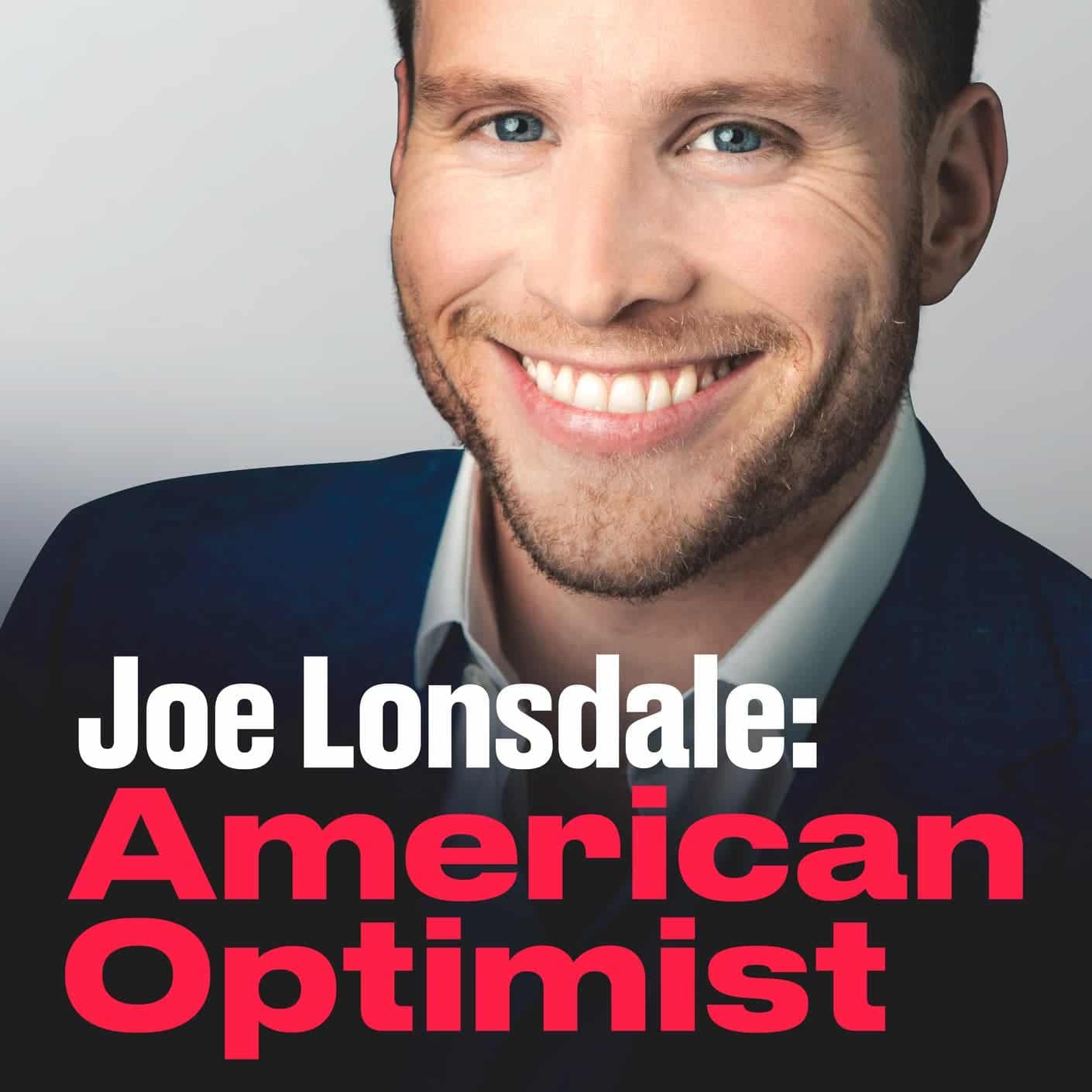
Podcast Summary: Joe Lonsdale: American Optimist - Episode 80
Episode Title
Leonard Leo's Winning Strategy to Rebuild Institutions, Accelerate Innovation, and Save Our Country
Overview In this episode, host Joe Lonsdale interviews Leonard Leo, a prominent figure in legal and cultural change in America, particularly through his leadership with the Federalist Society. Leo discusses strategies for rebuilding broken institutions, the importance of protecting constitutional principles, and the role of the technology sector in combating the administrative state.
---
Key Themes and Discussions
- Context of Judicial System Decline
- The U.S. judicial system has experienced significant shifts since the mid-20th century, leading to politicization and bureaucratic complexities.
- Leonard Leo posits that the roots of this decline trace back to the 1920s and 30s, culminating in the Warren Court’s use of law as a political tool.
- Role of the Federalist Society
- Founded in the early 1980s, the Federalist Society seeks to restore the rule of law and constitutionalism by advocating for originalism in legal interpretation.
- Leonard highlights the society's efforts to place principled judges in key judicial positions to counter the regulatory state.
- Understanding Originalism
- Originalism asserts that the Constitution's meaning should be interpreted based on the understanding at the time it was adopted.
- This judicial philosophy contrasts with more progressive interpretations that can lead to judicial activism.
- Judicial Appointments and the Criteria for Good Judges
- Leo emphasizes three key traits for effective judges: intelligence, philosophical alignment with constitutional principles, and courage to withstand political pressure.
- Challenges of the Administrative State
- The administrative state has grown substantially, resulting in a lack of transparency and accountability.
- Leo discusses the dangers of concentrating legislative, executive, and judicial powers within bureaucratic agencies.
- Calls to Action for Technology Innovators
- Lonsdale encourages technology leaders to engage in legal and political battles, focusing on constitutional defense, property rights, and decentralization of power.
- Leo reiterates the need for innovators to address the regulatory hurdles posed by the administrative state.
- Building Talent Pipelines
- The discussion emphasizes the importance of creating networks of talent who understand the values of limited government and constitutionalism across various sectors, including education, media, and corporate leadership.
- Optimism for the Future
- Leo expresses hope based on the emerging awareness among young adults who resist collectivist ideologies. He believes that this generation has the potential to spearhead a movement towards restoring constitutional and democratic principles.
---
Key Takeaways
- Importance of the Constitution: Understanding and defending constitutional principles is essential for innovation and a functional society.
- Judicial Integrity: The selection of judges based on intelligence, alignment with the Constitution, and courage is critical for restoring judicial integrity.
- Administrative State Overreach: The unchecked power of the administrative state poses a significant threat to freedoms and should be addressed through legal challenges and public engagement.
- Engagement in Civil Society: Innovators and leaders in technology and other sectors must actively participate in civic discourse to shape a better future aligned with constitutional values.
---
Conclusion The episode underscores the critical role of informed civic engagement in safeguarding constitutional principles and fostering innovation. Leonard Leo's insights serve as a call to action for individuals across various sectors to contribute to the restoration and functionality of American institutions.
For more content and discussions about optimism and innovation, visit [Joe Lonsdale's Blog](https://blog.joelonsdale.com?utm_medium=podcast).
Written by AI. May contain mistakes. Listen to the episode to check what was said.
Transcript
Automatic transcript. May contain errors.0:00There's a strong sense amongst, you know, probably hundreds of thousands of my peers that, well, this thing is a problem. It's broken. It's sclerotic. It's tying us down. And a lot of them, they want to help. They want to change it. They want to be part of accelerating into the future and innovating. What should these people be learning about or doing to help here? Like, what are the battles they can engage in to kind of help fight for our country and fight against the administrative state? I think the most important thing that community needs to do is it needs to understand and then defend the Constitution.
0:34Leonard Leo is one of the great conservative intellectuals and leaders in our country. Leonard was instrumental in scaling the Federalist Society as a leader there, and is one of the most influential legal minds in our country. One of the reasons I was excited to interview Leonard is a lot of my friends who are in the EACC movement, you know, the effective accelerationists, the distributed accelerationists, anyone who wants to accelerate and make our country better, who's realizing there's these serious problems we're confronting. Leonard's been in the middle of this movement for 20 years. He's put the judges in place to go to war against the broken parts of our regulatory state to fix our government.
1:05Whether you're on the left or the right, there's a lot of ways we want this stuff to work better. We want this stuff to be more functional, more data-driven, and really more principled in terms of how this stuff works. We really need a meeting of the minds between leaders like him from the DC world and leaders of the technology world who all want the same thing. And I'm excited for you to learn about what he's doing. Leonard, Leo. Leonard, thank you for being on the show today. Joe, it's great to be with you. Thanks for doing this show. Leonard, you're one of my heroes in Washington, D.C. You're co-chairman of the Federalist Society, which you ran for a long time.
1:35You're the chairman of CRC Advisors. First of all, what do you focus on these days? What are you up to? Well, mostly just two things. I mean, one, we're doing a lot of philanthropy. I now manage a trust called Marble Freedom Trust. So we're trying to really institute a lot of legal and social change through philanthropy. And so that takes up a lot of our time. I'm chairing a large public affairs firm called CRC Advisors. It spends a lot of its time actually servicing and managing projects inside the conservative and libertarian movements. And of course, you know, paying a lot of attention to the legal culture through the Federalist Society.
2:09So one thing, let's start with the Federalist Society. You and I are both deeply concerned about institutional decay in America. And one of the few bright spots really has been your leadership in restoring our judicial system to its constitutional role. For our audience who don't follow the courts closely, can you start with the history and context? How did we get here with the courts? Did some of the current problems start in the 1960s with the Warren Court? Like what's happened over our lifetimes? Sure. Well, really, Joe, this goes back to the 1920s or 1930s when you had a bunch of pointy-headed intellectuals in the law schools that said, look, law really has no fixed meaning, no objective meaning.
2:46It's kind of whatever you ate for lunch. And that sort of slowly morphed into the 1960s era where the left began to use the law as a really serious driver for social change. And, you know, the Warren court played right into that and began to use law as a political tool. So that's really where it all began, Joe. And the Federalist Society in the early 1980s was meant to be a response to that, was meant to be a way to bring the law back to what it was, which is an objective, knowable system that allowed people to govern their own affairs and to create accountability and transparency inside of government.
3:30This was the wave with obviously Scalia, with Bork and others. My father was a fan of Bork growing up. I think he married one of my father's friends in terms of being the guy who presided over the wedding. And you have to clarify these days. But, you know, critics try to conflate a lot of this philosophy, a lot of originalism with conservatism. Can you explain what originalism is? It's a judicial philosophy? Sure. It's really simple. Originalism is the idea that basically the Constitution means what it says. The words of the Constitution have an original public meaning. They meant something in the 18th century when they were adopted, and that's the meaning of those words.
4:07If you don't like what those words mean, then you can go and amend the Constitution and put new words in it. But those words mean what they mean when they were adopted, and it's the public meaning. So it's not what James Madison meant. It's not what Alexander Hamilton meant. It's the general public understanding of what those words meant at the time of their adoption. So in the case of the Constitution, that would be 1787. The Civil War Amendments would be the 19th century. And if you want to mean something else, then you have to amend them. You have to pass a new law. You have to do something differently.
4:40Exactly. Exactly. So originalism looks to the text and the original meaning of the Constitution as it was understood at the time. And, you know, it's not just text, it's structure. You know, you look at how the Constitution is structured, the three different branches, the checks and balances. You respect that whole document, the meaning of the words and the way government is actually structured to protect freedom and human dignity. You know, the Federalist Society originated in the 80s. I think you started the first Cornell Law chapter in 86 as well, but didn't become a real force in Washington until the 1990s, I think.
5:16You could have obviously had a very successful career in law otherwise. Why'd you choose FedSoc? Why'd you go into it? Well, I think probably for two reasons, Joe. One was that I really thought there was a relationship between our Constitution and the preservation of human dignity. And I was really interested in trying to find ways to bolster the dignity and worth of people. And I thought being a part of an institution that was going to return the Constitution to what it was meant to be was a way of really advancing freedom and human dignity. Also, you know, just realized in law school and maybe a little bit in my undergraduate education that law just played this very outsized role in our culture and in social affairs.
6:01And I felt that there were enough problems in our culture and in society that maybe we could use law as a driver, just like the left did, to try to achieve a more just, free society. You know, the Fed stocks attracted a lot of great minds. What's the playbook for identifying and cultivating top legal talent that's also mission aligned? How'd you get all these great people together? Well, you have to start by stating your principles clearly and loudly. You can never give up on your principles. You have to make clear that you want to turn these ideas into action, which is something a lot of organizations don't do.
6:37You have to select a core group of leaders who know how to identify mission aligned talent. You have to recruit that talent by appealing to their urge to be involved and engaged in society and carry out their philosophical convictions. And, you know, talented people have a tendency of wanting to become, you know, engaged. That's their instinct. And then you want to create transmission belts to deploy that talent to causes or organizations or initiatives that can shift the culture. I love it. You know, a lot of our most important companies, we also get the best people because they're mission aligned with clear principles and they're joining something they really care about it and that's a great way america works and they're joining a company that's that know that that they know is going to have impact right and that's going to drive results exactly which is the other part of it and the conservative movement needs to be stronger about that it needs to it needs to be committed to ideas it needs to know how to win it needs to know how to win i love it well well you know how to win and i'm going to get into that you've been instrumental first of all leonard obviously in myriad judicial nominations elections at the highest levels a lot of people credit your work with a lot of these amazing judges that were appointed by the last administration.
7:48You know, what makes a good judge? Oh, I think I think it's really just three ingredients. One is smarts. And I learned this actually from Justice Scalia, who told me once, you always want a really smart judge. And the reason why you want a really smart judge is because they can't get snookered by the left. All right. So that was what he said. So always smarts. Two, you want someone who's philosophically aligned, right? Someone who understands that the Constitution needs to be interpreted as it's written. You need to be committed to the rule of law in that respect. And then finally, courage. You need someone who's going to not flinch in the face of criticism or risk.
8:26You need people who are independent, courageous, determined, and are not going to bend to the political winds of the day. I love it. Smart and principled and courageous. That's a good combination for judges. And, you know, I want to ask you about the emergent, what I see as a bit of an emergent legal crisis. Maybe it's obviously been going on for a little bit. But, you know, I wrote an article recently in the Wall Street Journal with Governor Jeb Bush, and we talked about the use of the state's judicial systems to persecute political enemies, both, of course, with Donald Trump and Elon Musk recently with rulings that, you know, even though I looked into them in a lot of detail, they both seem to be BS and to be weaponized.
9:00Like, what's going on with this? Well, courts have always been susceptible to this risk. And, you know, Joe, if you look around the world, this is actually a problem in a lot of other countries, right? One of the reasons why you guys probably don't invest in some countries is precisely because the courts are so susceptible to this. And I really hope the U.S. doesn't get there. Look, personnel is policy. You just have to pick the right judges. There's no rule that you can put in place that's going to contain or constrain a rogue. And so it all has to do with who you put in the first instance, which is why people really have to be engaged in picking political leaders who are going to pick judges who are smart, philosophically aligned and courageous.
9:46You tell me if it's a stupid question, but the Eighth Amendment, I believe, protects against excessive fines. Aren't we seeing excessive fines from some of these state courts? Is that something the Supreme Court could potentially step in on if it's appealed to them? Or is that not how it works? Gosh, I haven't looked at the excessive fines clause in a while. I don't think it applies to this particular context. But, you know, I mean, there's so many problems with, you know, this kind of justice system that goes off tangents and just starts picking winners and losers by creating remedies that really are grounded in the law.
10:25Just random hundreds of millions or tens of billions of dollars seems like it seems dangerous for them to any court anywhere could be weaponized to just take someone down. It's scary. But at the end of the day, the only way you prevent that is by making sure you put the right people on the bench. We work hard on that. And that's something I know you do more than almost anyone. And even in Texas, you know, we have to donate to these people like Dick Weekly working on getting the right judges elected. So it's something everyone has to be part of. I want to pivot to one of my favorite topics, or in some ways, least favorite topics, but favorite topics of the administrative state.
10:53You know, this is a really important topic to me, obviously, because it's a huge threat to our liberty, to our economic power. We all write a lot about this, like the parts of our economy that don't exist thanks to this thing or will be worth trillions of dollars. I think it's the fourth biggest economy in the world is what doesn't exist thanks to the administrative state since the 1980s in the US. So it's a huge area. And, you know, to me, it just seems obvious that a lot of what's happening with this fourth branch of government is unconstitutional. constitutional. Tell our audience a little bit about what's going on with the administrative state in the U.S.
11:19Well, the administrative state, the bureaucracy is bigger than it's ever been in American history. And it really started increasing exponentially after the Reagan administration. They're just, I mean, at the end of the day, it's a really simple problem. The administrative state's not transparent. People can't see most of what it does. It's not accountable in the sense that these are faceless bureaucrats who are not politically responsible officers. They're not elected. They oftentimes really don't answer to politically elected officials. And the other problem, Joe, and I know you focused on this a little bit, you can't put all the power, lawmaking, execution, judging in one set of hands.
12:04Well, it's the opposite of what our founders said to do, right? I mean, the administrative law judges, these are judges within the administrative state. That just seems crazy to me that we ever did that. I think it's nuts. Absolutely nuts. Because you're putting all power in the hands of one group of people as opposed to separating it. It's a terrible system. And the founding fathers knew that and they walked away from that system, which was often the kind of system that European countries had. Reminds me a lot of the Star Chamber or whatnot back in the King Charles time, right? Which is how the guy got his head cut off.
12:33So I guess we don't want to cut off any heads today other than metaphorically, maybe. But speaking of that, let's talk about the cases that set this in motion and how we can fix it. Because one thing I love about how you approach this is a lot of us sit here and complain about it, but you're actually laying out plans and helping and pushing forward. And so in 1984, of course, we had the Chevron versus NRDC case where the Supreme Court ruled the courts basically have to defer to administrative agencies on everything, like their interpretation, everything, just give them carte blanche, it sounds like.
13:02And even Scalia went along with this, which I'm confused by how he got there. But can you explain how this ruling expanded its power and what we could do about it? Sure. Well, it all started with the idea that judges were going too far with their power. And we're sort of grabbing executive power from the executive branch and were trying to be enlightened bureaucrats themselves. And so Scalia, you know, bought into this whole idea of the courts deferring to the judgments of administrators and bureaucrats because the courts had gone too far in the other direction of being active. It's like there's too much power on either side, basically.
13:41That's what he's dealing with. Yeah. But what happened, and later in life he acknowledged this, what happened is Chevron then just got misused and swung totally in the other direction, which is that judges would roll over and play dead when bureaucrats came into court and said, well, you know, we think the statute's ambiguous, so you need to basically accept whatever interpretation we have. And judges kept on doing that over and over again to the point where administrative agencies had carte blanche to do whatever they wanted. And so now what we're faced with is a world where the The Supreme Court's very seriously considering getting rid of this doctrine because it's been abused and it's violating the separation of powers.
14:21Judges weren't doing their job. They have a job, which is to interpret the law as it's written, and they need to do that. And Chevron was giving judges an easy out. Frankly, if you ask me, Joe, Chevron was also giving a lot of judges who are more politically motivated the ability to just kind of rubber stamp lawlessness by bureaucrats and usher in an era of much bigger government. You have people like the SEC just randomly coming up with new rules for what kind of green disclosures or whatever else, or racial disclosures, which never passed by Congress. This is a runaway thing, which is just thousands of abuses, of course.
14:58Now, getting rid of Chevron is not enough. What else do we have to do to kind of push back on the constitutionality of the worst abuses in the regulatory state? Like, what are the other presidents we need to work on here? You know, there are a few other things we need. We need a Congress that actually delegates authority to agencies as opposed to just letting administrative agencies do whatever they want. So we should resurrect something called the non-delegation doctrine, which basically says, look, you know, if Congress wants to give power to an administrative agency, it has to specify what that power is and what its boundaries are.
15:34I think also it's very important that, you know, agencies be subject to the spending power, right? Agencies should not, you know, be given a blank check. Congress should have to basically fund and support those agencies and make decisions about what kind of resources they have to do their jobs. I think appointment power is very important. We should make sure that presidents have the power to appoint agency heads or commissions in agencies and they have the power to remove them. And, you know, we shouldn't have a situation where presidents don't have that authority when they're sitting in the Oval Office.
16:12And then finally, I think federalism is really important, Joe. I mean, you know, decentralization of government is one way we preserve freedom and dignity. And we should make sure that administrative agencies are only exercising power that the national government has authority to exercise. And most things really should be more subject to state control than federal control. Well, 100 % agree. As you know, we focus on about 20 states is how I try to get things done because I'm not as sophisticated as you guys who know how to affect things in D.C. It's easier to work in the states. Well, and you're doing a great job on that with the Cicero Institute.
16:50It's a really fabulous institution, and I think it's making a real difference in the states. I appreciate it. You know, Leonard, one thing I mentioned to you before, there's a big movement called effective accelerationism. There's also like distributed accelerationism. accelerationism. There's a lot of people in Silicon Valley who are frankly optimistic, as I am, about the future of our country. A lot of people in the tech world who are optimistic, and they're part of the side that says, let's do what we can to accelerate innovation, to get things out of the way. And a lot of them have realized now really clearly that the administrative state is in the way.
17:21It's crazy. It's blocking things. They don't really know how it works because they haven't sat in the seat of government and laws you have for decades. But there's a strong sense amongst probably hundreds of thousands of my peers that, wow, this thing is a problem. It's broken. It's sclerotic. It's tying us down. And a lot of them, they want to help. They want to change it. They want to be part of accelerating into the future and innovating. What should these people be learning about or doing to help here? Like, what are the battles they can engage in to kind of help fight for our country and fight against the administrative state?
17:48I think the most important thing that community needs to do is it needs to understand and then defend the Constitution. That's got to be what they do. there are three things that the Constitution provides that are really important to accelerationists. One is less government, right? You can't do what that community wants to do without much smaller government. And the Constitution contemplates a limited government. Secondly, you have to have respect for property rights. No respect for property rights, you're not going to be able to engage in innovation. And fortunately, the Constitution protects property in a number of different ways, including very specific provisions about not taking property without just compensation.
18:33And then finally, decentralized control. Another thing that I think is really valuable in the context of innovation and accelerating innovation, right? Let a thousand flowers bloom, right? Give people the opportunity to figure out what works best. And the only way to do that really well is to decentralize discretion and power. So less government, property rights, decentralization. Those are three things that accelerationists really believe in. And those are three things that are really at the core of our U.S. Constitution. So that community needs to be standing up for the Constitution and supporting efforts to bring us back to what the Constitution means in those three respects.
19:15Less government, property rights, decentralized control, 100 % aligned. Let's dig in one more one more level here. Let's just pretend for the sake of argument that I, you know, we only usually have tens of thousands of listeners, but like dozens of those might be billionaires and there might be interested in getting involved. And so this is maybe obnoxious for everyone else listening, but you know, as you're speaking to the billionaires right now and they're skeptical, a lot of them are cynical. A lot of them are like, Oh, well, that all sounds great in practice, but how are we ever going to get there?
19:41I know when I give my million dollars to the symphony, I do something for the symphony. How do I actually actualize this with millions of dollars? Like, What is the way we can fight these fights and win over the next decade? I think I think there are at least two things that they could do. And I think other people can do this also, but on a lower level. Look, one, you want to support litigation efforts to enforce the Constitution. We talked about some of those cases. There are many more of those cases that are going to be brought over the next three to five years. And it's really, really important that we flood the zone with cases that challenge misuse of the Constitution by the administrative state and by Congress.
20:20Secondly, it's really important, and I think accelerationists will understand this, we need to be building pipelines of talent. Talent pipelines of people who understand that the Constitution matters and that the private sector and civil society matter. And that means building talent pipelines of people who can be in the C-suite and in boardrooms because corporate America plays an enormously important role in potentially constraining government. We need to build talent pipelines in the media and entertainment industry so we can begin to communicate to people the value of this system of limited constitutional government.
21:02We need to create talent pipelines for K-12 education and for higher ed, something like you're doing with the University of Austin, so that basically we remind people that the purpose of higher ed, for example, is to basically build a citizenry that's committed to the Constitution as it was originally written. So there are pipelines of talent that need to be created. There are organizations like the Federalist Society, Teneo. There are others that are trying to build networks of people who can push these ideas in their own verticals and sectors in American life. And then, of course, there's the issue of getting the right judges on the court and then promoting the incubation of litigation that enforces these principles.
21:50So that's sort of the constellation of things that I think can be done and that I think are really, really important. Amazing. Well, hopefully we can inspire some people to fight alongside with us. It seems like given that the Supreme Court has shifted to the point where the law of them may agree with these things, we seem to have a big opening here the next decade to push law this way. We have a great Overton window in the next couple of decades to really try to create a free society. And I think we should take full advantage of it. I want to do whatever I can for that, Leonard. I appreciate what you're doing there.
22:20I want to ask about a couple other examples of areas that are going on right now. A lot of us are interested in the technology world and the FTC, which seems to embody an example of bureaucratic overreach. Chair Lina Khan is part of the new Brandeis movement within academic circles. It really advocates an extreme expansive version of antitrust. And listen, I mean, I think probably a lot of conservatives rightly don't love big tech and don't mind seeing big tech taken down a notch overall. But, you know, there's all sorts of things here where they're reaching into cases in the biotech world and stopping things that would be saving lives, stopping things that would create exits that would then fund new innovation.
22:55I don't know if you saw Axon versus FTC last year where we actually like proactively went and reached out and slapped them down because they were being so ridiculously abusive to this company, Axon. But what's your thought on what's happening with the FTC? You know, it's one of the oldest federal agencies in the government. I don't know if you realize that or not. It was one of the first, if not. The trust busters are the original progressives, right? That was a long time ago. Yeah, yeah. Look, it's a classic case of overreach. You've got an agency that's not really sufficiently controlled by the president.
23:25Congress has given it pretty boundless authority. It falls right into that problem that, Joe, you and I were describing earlier, where you've got the same person kind of making laws, enforcing them, and then adjudicating them. So when you have that kind of centralized power and you don't have Congress exercising adequate oversight with regards to that agency, the FTC, you've got a recipe where they can kind of do whatever they want. It's actually crazy, right? Because you know if you're going to appeal to them, you're appealing to their judges and you have to appeal again to their higher judges.
23:59So it's like being in China where the judges are like friends within work for the Communist Party and you know there's going to be a 99.9 % conviction rate if you try to go against them, right? And then there's another problem, Joe, that people don't realize, which is there's this unholy alliance between the FTC enforcement arm and plaintiff's lawyers and leftist state attorneys general. You know, they all feed off of each other and they create this iron triangle of authority and risk, right? Because if you're an innovator and you're facing not only the FTC, but maybe private lawsuits by the plaintiff's bar and investigations by, you know, progressive attorneys general, you're getting this sort of wave of interoram activity against you.
Read the full transcript
24:48And they all work together in unison, and that creates enormous pressure on innovation and on entrepreneurs. So it's the FTC itself, and it's this iron triangle between the FTC and other arms in the legal arena that have made it so powerful. Yeah. Well, hopefully we can put new people in charge and check it. Is this the sort of thing that we could launch lawsuits against to restrain? Is this other cases like Axon versus FTC or others that you think we should be pushing back on them with? I think if we continue to be successful with beating back the Chevron doctrine, and if we continue to be successful in enforcing rules that require Congress to be clearer about what standards agencies need to operate under, yes, I think you can click the wings of an agency like the FTC.
25:37And I think there's a good chance that you'll see that occurring with greater frequency. There's another important case working its way through the courts right now. I want to ask you about Elizabeth Warren helped create the Consumer Financial Protection Bureau, the CFPB. And there's a case that hinges on whether or not agencies must receive funding allocated each year by Congress, as most do, or whether they can collect it directly from the Federal Reserve and just basically be permanently independent of our three branches of government, which seems insane to me. Like, what's going on here? Is there any chance this doesn't go the right way?
26:06Well, first of all, Joe, the CFPB, I think, is probably the worst federal agency we've ever seen. It violates every single principle of the separation of powers and checks and balances. And this one in particular, not only violates all of that, but it violates the spending power of Congress. One of the big constraints that the founding fathers placed on the executive branch and on other actors within government was the idea that Congress had to basically pass its budget. And the spending power, the power of the purse, we call it, right? The power of the purse. Well, that doesn't exist with the CFPB.
26:42So they have no incentive to hone their behavior and to constrain themselves. There's no really sufficient means of congressional oversight if Congress can't pinch them financially. So it's a disaster. It's an absolute disaster. They also act like the mafia, by the way, have a lot of friends regulated by them who interact with consumers. And if you have any rule at all, that has what's called discriminant impact, they'll say it's based on racism. So it's kind of like Kendi's anti-racism writ large into law. And it's, it's, everyone with like an IQ above room temperature realizes very quickly with thought experiments, this is, this doesn't make any sense, right?
27:18Obviously, you're going to have different impact based on the fact that there's different levels of wealth in these different communities. And so, but what's funny is none of them can talk about it who are in this space. And they all say, Joe, I agree with you, but I can't say anything because then they'll come and investigate my company and they'll cause me, you know, millions of dollars in costs. And so it's just, it is just like very scary mafia right now, which we're seeing more and more in our country. Well, Joe, hopefully the Supreme Court, you know, takes on, takes on this issue of, of congressional spending in the CFPB case, because I really do think it's a, it's a tremendous violation of the separation of powers.
27:50One more case on this area in general, you know, I guess in 2022, we did have the Supreme Court rule in West Virginia versus EPA that the agency did not have the authority to regulate CO2 from power plants, given the Clean Air Act didn't specifically give them that power. So that seems like it was a version of this. Obviously, it seems very extreme. They would just do something like that without the power from Congress. Was that an important ruling? Yes, it was for two reasons. One, it was an important ruling because it vindicates the idea that there needs to be constraints on agencies' interpretations of their own power, and that courts have a role to play in interpreting agency power and constraining them when necessary.
28:31And secondly, it was an important ruling just on a substantive or normative ground, because the EPA is an enormous, regulates an enormous part of the American economy. And I think it's really important that people begin to really scrutinize how much authority the EPA has and whether it's using it in a way that's rational. and that hones to whatever statutes Congress has passed. So I think there was an important win there in terms of administrative law. But I also think just substantively having greater attention on an agency that has, you know, more authority and power over our economy and our lives and most was valuable.
29:15And, you know, when people do go roguelon, whether it's judges or these regulators, as we're seeing more and more, there's more activists, basically. I know you said personnel is policy, but when we have all these activists in our society going rogue, do we need to make sure we have the right to fire them somehow from the top more quickly? Or is there any other system at all we can create, even for these regulators, you know, when they go off, when they go and abuse people? Well, the best way to hold government accountable, if you ask me, Joe, is the electorate. And I think what needs to happen in this country is that voters need to understand their role in defending the Constitution, and that is to elect presidents, senators, congressmen at the state level, governors and state legislators who are going to believe in and believe in enforce limited constitutional government.
30:05That's fair. And the problem is that if you don't have an electorate that's prepared to elect people who believe in that, it's going to be very, very hard to beat back the administrative state. I mean, we can file lawsuits, we can have congressional oversight, but ultimately, we really need to hold these agencies accountable by having political actors who will clip the wings of the administrative state. That's fair. Well, that's how republic or democracy works. That makes sense. And again, just to say what you're doing at a place like University of Austin is really important, right? The idea behind education, as Jefferson put it, was to create good, engaged citizens.
30:46So if we teach them civics in a way that's understandable and comprehensible and appealing, the idea that limited government advances human dignity, and I really believe that, if we can have educational institutions that instill that, we'll create a better electorate. And if we create a better electorate, I think ultimately we'll have a government, including an administrative state, that's much more reflective of a free and just society. I totally agree. You know, Jefferson split it up into two categories is my recollection. I wrote a piece on this, on the old idea of a natural aristocracy. He thought there was like a natural set of men, not by birth, but by talent that needed to be educated as leaders to understand these values and how to run and nurture a free society, not to rule over it, but to make sure to keep it free as leaders.
31:34And then he thought the masses also needed education. But you know what the number one thing you said they needed in their education was? He said it was to learn about despotism and learn how to not fall for all the tricks that would take away liberty. So it's actually ironic because if you look at our K-12 today, it does the exact opposite of what you ever want because it teaches them about statism and it teaches them to be on the wrong side of these issues. And so that's interesting. Exactly. You got it. One other category I want to ask you is the last kind of area is reshaping power and influence structures as you're talking about.
32:03So I mean, given the impact of the federal society, I think a lot of us would call upon you for advice on how to apply this across other civil society institutions. And you're obviously now working on that with Tenea, which I think is very inspiring. like what institutions are most important to reform in your view and how can this problem be approached and what else should we be creating to do this for our society? That's a good question. I think it is doable. These other areas are maybe a little bit harder than the law because they're a little more dispersed. But I do think getting control of C-suites and boardrooms around the country is really, really important.
32:38Corporate America, finance world, banks, they have an enormous amount of influence over our culture and our social life. And we need to be finding ways of getting folks in the C-suites and in the boardrooms who are just tired of our culture. Media and entertainment, extremely, extremely important. And I'll tell you, Joe, there are a lot of people in the entertainment world who really understand limited government and a free society. And they're not happy with the entertainment world, and they're looking for opportunities to band together and to be a part of new enterprises. So I think there's real opportunity there.
33:17We talked about education. I mean, these teachers, both in K through 12 and in higher ed, we need to find some pipelines of talent to get the right people placed there. We need to have some influence over state, over board of education races and local communities so that we can begin to have some sanity and local education. And then finally, you know, and this is one that I just started thinking about, there's the whole issue of clergy, you know, and this is a tough one to crack. Taneo's looking at it a little bit. There might be some other institutions. You know, I mean, you know, this may not be for everybody, but my own perspective is, you know, God made us to know him, to love him and to serve him.
33:54And I think our religious leaders need to center more on that and less on knowing, loving and serving ourselves and whatever personal desires or affections we may have. In other words, you know, the common good, which is, you know, freedom, the rule of law, both of which lead to human dignity. I think it's really well said. And it is a big problem in our society, Leonard. You know, I'm, I'm actually Jewish to my mother's side and was brought up Jewish. And so we're raising our family. The majority of Jews now are reformed Jews and the reformed Jewish synagogues have been conquered. They're basically more arms of the democratic party on the left than they are places of worship.
34:29It's actually a huge problem in our communities right now. And a lot of people, you know, have been trying to have been fleeing them, frankly, because it's just, we're finally just so fed up because it's not what it's supposed to be. It does seem like the clergy is a big issue in multiple faiths. So if we can build pipelines of talent in these different areas, and I think we can with varying degrees of challenge and difficulty, I think we have a chance at creating a, you know, a society that hones more to our constitution, to the rule of law and to the concept of freedom and dignity. I totally agree.
35:03Well, Leonard, we started American Optimist to push back against the cynicism and pessimism in our country. Let's close on a positive note. What's your best reason to be optimistic about the future of the United States of America? Oh, I think our best reason is because if I look at young people in this country, young adults that I've worked with, you know, there's a large number of people who are now wondering, you know, where is our country? Where does it need to go? or have we been moving in the wrong direction? So I actually am an optimist. I am very hopeful because I see a lot of young people who are resistant to the statist, collectivist ideas that seem to pervade our society right now.
35:44I think there's real hope for the future. Amazing. Leonard Leo, you're a great American. Thank you for joining us today. As are you. Thank you, Joe.
From the publisher
Leonard Leo is one of the most effective agents of legal and cultural change in America today. What's his playbook? How can we apply it to other broken areas of society? And why should the technology world be especially interested in his work?
In the mid-20th century, the U.S. judicial system took a sharp left turn, resulting in hyper-politicized courts, runaway bureaucracies, and many other distortions of our Constitutional system. Through his leadership of the Federalist Society, Leonard has led the charge to repair these broken institutions and, in the process, built arguably the most powerful legal network in the nation. He's been instrumental in the most important judicial elections and nominations of the past few decades.
Leonard's wisdom is especially relevant for my friends in the effective accelerationism (e/acc) movement — or anyone who values technological progress. Standing athwart innovation is the ever-expanding administrative state, and Leonard has spent decades fighting to rightsize government and restore the separation of powers. He explains why property rights, limited government, and decentralized power are the bulwark of innovation, and why technologists must also join the effort to rein in the regulatory state and defend these sacred Constitutional principles.
This is a public episode. If you would like to discuss this with other subscribers or get access to bonus episodes, visit blog.joelonsdale.com