In short
Podcast Summary: Joe Lonsdale: American Optimist
Episode Title
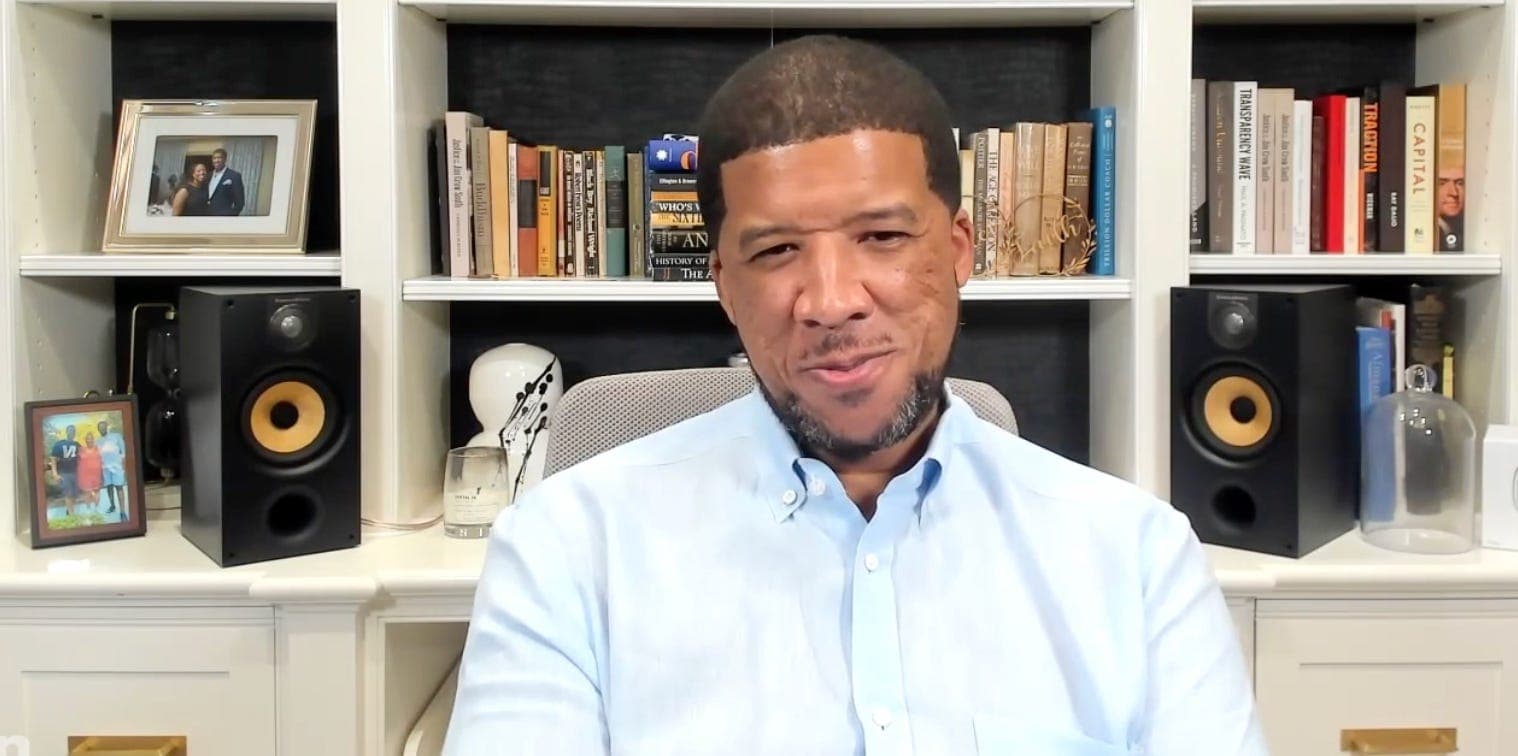
Ep 81: How Palantir Star Tyler Scriven Is Helping Small Businesses Compete Against Amazon
Episode Description In this episode, Joe Lonsdale talks to Tyler Scriven, co-founder and CEO of Saltbox, about the challenge small businesses face in competing with e-commerce giants like Amazon and Walmart. They discuss logistics, e-commerce growth, and how Saltbox's co-warehousing model is designed to bridge the gap for small businesses.
---
Key Themes and Concepts
- E-commerce Growth
- U.S. e-commerce sales surpassed $1 trillion last year and are expected to grow significantly in the next decade.
- Small businesses need to adapt and innovate to stay competitive against larger retailers.
- Tyler Scriven's Background
- Formerly a star at Palantir, where he held the unique title of "Predictor and Crusher."
- Transitioned to entrepreneurship after gaining significant experience and insights from Palantir.
- Saltbox's Mission
- Purpose: To provide small businesses with vital logistics and supply chain support, countering the advantages of larger retailers.
- Model: Co-warehousing, which allows small businesses to share resources for storage and distribution.
- Lessons from Palantir
- Emphasis on building a mission-driven culture that incentivizes employees to contribute to meaningful projects.
- The importance of recognizing and nurturing talent through challenging environments.
- Courageous Leadership
- Scriven advocates for a type of leadership characterized by courage—pushing forward despite fear.
- Emphasizes the value of being transparent about fears and uncertainties in leadership roles.
- Optimism for Small Businesses
- Despite challenges, there remains a robust spirit of entrepreneurship in America.
- Small businesses are crucial for the economy and possess the potential for substantial impact.
---
Discussion Highlights
Tyler's Entrepreneurial Journey
- Began with a landscaping business in high school and a degree in economics from the University of Virginia.
- Joined Palantir in 2009 and contributed to its growth and culture for six years.
Transition to Saltbox
- Established Saltbox to address the logistical challenges faced by small businesses that struggle to compete with larger entities.
- The company has opened a dozen co-warehousing locations in major metropolitan areas.
Mission-Driven Culture
- Drawing parallels between Saltbox and Palantir, Scriven stresses the importance of a mission-oriented workplace.
- The mission at Saltbox is to empower small businesses through accessibility to logistics capabilities.
The Future of E-commerce
- E-commerce is expected to triple in the coming years, highlighting the necessity for effective logistics solutions.
- Saltbox aims to provide the physical infrastructure needed for small businesses to thrive in the digital commerce landscape.
---
Key Takeaways
- Courage in Leadership: True leadership involves embracing vulnerability and overcoming fear.
- Mission-Driven Work: A strong mission can inspire teams and drive success.
- Support for Small Businesses: Innovative solutions like Saltbox's co-warehousing can help level the playing field against larger competitors.
- Optimism About the Future: The entrepreneurial spirit in America is alive and well, suggesting a positive outlook for small businesses in a rapidly evolving market.
Conclusion Joe Lonsdale and Tyler Scriven's conversation encapsulates a hopeful vision for the future of small businesses amidst a competitive e-commerce landscape. By focusing on mission-driven values and courageous leadership, they highlight the potential for innovation and growth in the American economy.
Written by AI. May contain mistakes. Listen to the episode to check what was said.
Transcript
Automatic transcript. May contain errors.0:00And so I don't know if you recall this, Joe, but my first job title was Predictor and Crusher. It was derived from that moment. We had a lot of great titles at Palantir. That might have been one of the very best ones. It made me a few enemies early on. I think people were quite intimidated by that title, but it did serve its purpose. I knew what I was there to do.
0:26Tyler Scriven was one of our stars at Palantir, did amazing work there, helped build the culture to what it is today. You know, after learning a lot of lessons at Palantir and growing as a leader there, he went back to what he likes to call the real world. Tyler's built a couple different businesses since then. He's now applying lessons from Palantir. Let's learn what he learned at Palantir, how he's applying it to help hundreds of thousands of small business people today, and what Tyler thinks about America. I'm Joe Lonsdale. Welcome to American Optimist. Excited to have my friend Tyler Scriven on with us today.
0:54Tyler, thanks for joining us. Joe, it's a pleasure to be here. Tyler, you're calling in from your home in Atlanta. Tell us a bit about your background a little bit. But actually, I read you started your first business as a sophomore in high school and persuaded the principal to let you leave school early to run it. Is that true? What was that first business? What's your background? I'll tell you before I go there. My best high school story is I actually got suspended once for not wearing shoes at school. This is kind of the story of my life. I drove into school, and I realized halfway there I forgot my shoes, and I had a math test that morning.
1:22And so I just went to take the math test. And when my professor or the teacher realized I wasn't wearing shoes, he was very insulted and insisted that I put them on. I'm like, dude, I don't have them. And so anyway, but yeah, it's true. I did. In addition to that, I've always been a very entrepreneurial person. And one of my best friends was my first employee, actually. And given the perspective that I had at that time, I was really very motivated to stay in Jacksonville and just grow that landscaping company. And, you know, it grins this bliss, I suppose. And so I'm grateful that I've had some folks who helped me see a bigger picture over time.
2:03So you were doing a landscaping company in high school and you were scaling it up. But then you went and studied economics at University of Virginia, a great school. And how did you make your way from there to Silicon Valley and eventually Palantir? Man, in 2008, I connected with Sean, whom, of course, you know well. He's now CTO of Palantir. A great friend, sat us next to each other at dinner. And at that time, I was working on Wall Street, and Sean, of course, was early at Palantir. And we just kind of hit it off. He's one of the hires I'm most proud of, by the way. One of the other founders tried to veto it, and I overrode the veto.
2:37So that's one of my strong moves. Well done. And this company, you and I both know, would not be what it is if that hadn't occurred. Yeah, use Q's Q. Yeah. I think sometime later that year, I was invited to, I think, one of the dinner routes that you guys were doing in New York at Peter's Place back then and got to know the team. And then in 2009, ended up joining. And, you know, it was, it's actually the, even the, Joe, I'll tell you, even the story, I began learning critical lessons, even prior to joining Palantir from Palantir. You know, the interview process taught me a great deal. And just to give you some sense of what you know, but the audience, some sense of the kind of intensity of learning that I think one goes through with that company.
3:21How did the interview come across? What was different about Palantir when you, when you first interacted with it? It's interesting. The first time I interviewed, I was actually rejected. And I was quite surprised by this because in your typical company, if a senior executive invites you to interview and seeks you out, you're going to get that job. That's how most of the world works, unfortunately. And I was quite surprised. Well, I was on the one hand surprised that this place was so different so as to not just be automatically given the job. But on the other hand, I was really quite intrigued by that and in some ways inspired.
4:02And I remember I wrote Sham an email and in that email, I laid out to him practically the reasons why I felt I didn't get the job and the ways in which I understood that. And I think Sham appreciated that. And he said to me, Tyler, we really want you here. I'm serious, but we've got to do it at the right time. and probably three months later, he wrote me an email, which I still have to this day. And, and he said, I got the perfect job for you. And the job is all about identifying operational challenges that may get in our way as we seek to scale this business and to crush them. And so, I don't know if you recall this, Joe, but my first job title was predictor and crusher.
4:44And it was derived from that, that, that moment. I love it. That's a, that's a word. There was a great deal of integrity to me and how that played out. And I said to myself, man, if these guys can operate with that degree of discipline, even in their hiring process, what else can we do? And obviously, we can do great things. We had a lot of great titles at Pallinger. That might have been one of the very best ones. That it was. It made me a few enemies early on. I think people were quite intimidated by that title. But it did serve its purpose. I knew what I was there to do. Legal ninjas and people ops, which is much better than HR, but predictor and crusher.
5:20That's a huge one. Matt and Colin and I all started the same couple of weeks at Palantir. Amazing. Amazing. Those are both good friends. Matt's here in Austin these days, you know. What are some of the lessons you brought with you from Palantir to Saltbox? Tell us a little bit about your next steps after Palantir. Yeah. We should talk a lot about Palantir. I know you talk about it all the time, but there's just so much to talk about from what that company has done and what it's doing. But to answer your question, I left Palantir in 2015 after six years at the company and decided to leave Silicon Valley altogether.
5:56You know, my wife and I had had a tremendous run there. My wife, Faith, she's a pretty low key person, but she was actually, it's a debate whether she was the first or second or maybe third. We'll see. But employee at Stripe, you know. And she was there with John and Patrick in their apartment before it was even called Stripe. It was called slash dev in payments or something back then. And we had this kind of fairy tale six years in the Valley and took a great deal from that. But I think we were also always of the mindset that though we loved it there, we were not from there. And we really wanted to put ourselves back into what we think of as the real world.
6:41which is arguably not downtown Palo Alto. Atlanta is more real world to you than Palo Alto. That's fair. That's fair. Yeah, yeah, yeah. My thesis in doing that was that over the past, call it 15 years, Silicon Valley had developed a tremendous arsenal of enabling technologies that were reaching in some ways kind of a maximal use in the context of social media and all the things we loved building at that time. And that we were at a point where the best thing for me to do was to go forward into the real world and take that knowledge and take those technologies and find ways to apply them to regular businesses, if you will.
7:31And so I very much came to Atlanta on the hunt for those types of opportunities. And that's really what led me to discover True Glory. And what's True Glory? What'd you buy? It's certainly not the most exciting business in the world. That story is quite interesting, but it is a retailer of hair care products and wigs in the U.S. It is the largest brand in the Southeast. But here's a story of how that occurred, which I think is quite interesting in the context of the plight of small businesses. This company was started by a gentleman named Kevin. And Kevin grew up in rural southern Georgia, poor.
8:14He moved to Atlanta. he has a deeply held love of entrepreneurship and had tried many, many under-resourced and ultimately failed endeavors up until the point he started this company. And one day in 2012, he had this realization that he could build a business around this product and started from the trunk of his car in Southwest Atlanta, which is not the best part of Atlanta. And he ended up over the course of four years growing that business to nearly$18 million in revenue. And one of the things that I learned in the course of acquiring the business was that he had been blackballed from virtually every major bank in the United States.
9:04And the reason for this was because they all presumed, which is boldly false, obviously, but presumed that he was engaged in money laundering or some sort of drug activity. Were they racist or what was it? Yeah. Well, here's the thing. It's a bit systematic. So, the hair extension industry, which is industry that our business is in, at that time had not yet been meaningfully institutionalized. And many of the entrepreneurs that were engaged in the business were, frankly, under-resourced, under-sophisticated people of color. And as a result of that lack of sophistication, the industry was subject to a lot of fraud activity.
9:50And the credit card processors, many of them would not work with these companies or would charge very high transaction fees. I guess they're working in a bad part of town with other characters in a bad part of town they don't have the same institutional access exactly and and and so what what happened was you know there's this cascading effect well you know the the the credit card process is we're going to charge you 15 so okay we're not going to take credit cards and so now i'm walking into the bank with literally you know bags of millions of dollars of cash yeah so i think if you have lots of cash flying all around these banks are skeptical in the way that he was viewed uh not looking as someone who made that money legit well there's probably people who were dealing drugs with millions of dollars of bags of cash to look similar to him from a similar place right so that's a great way to their pattern matching yeah that's right and so these this pattern matching uh ultimately led to an inability to have any bank and in fact actually uh the company when we acquired it was banking with a chinese bank and the reason that they were accepting of this is because they saw the money flows you know and they understood the business that's you know us jews and the chinese man that's what's it about no that's funny that's that's uh i shouldn't make stereotypes but sometimes you know the cultural but so so this is fascinating so i love this so we started off on palantir and you said you want to talk more about it and then the thing is so fun to me is like i mean what's it like going from a palantir culture to a culture that must be a true glory brands you have like a obsessively elitist software hard-working operational culture there i'm sure there's some hard-working culture true glory but brands too like what's similar what's different in these places and true glory is a small team and it's really more of a family business.
11:32And so it's certainly a rigorous company. We've got some great folks that work for us. And I think what I would say, Joe, is that those six years at Palantir shaped me both with respect to my character and how that plays out in my personal life, but of course, how I operate really significant ways. And one of the reasons why I decided to leave Palantir was because at a certain point, I developed this belief that I wasn't going to be able to fully synthesize and kind of codify the lessons of that time until I left. And I wonder if actually, if you can relate to this. I mean, when you're in the hole in that way, the rate of learning is immense, but it takes some time to process.
12:23And I think that It happened for me in very real ways. And at this point, you know, it's really quite difficult to decompose what was once the rooted in Palantir versus what, you know, what I made myself, you know, of course. Well, that's what a really great company like Palantir hopefully does. It takes people with extraordinary potential like you that we're lucky to find. And then you help build the fabric of the company as well. So you're kind of weaving yourself into it. If you're a great startup, I hope that's how it should work. but i mean so it's actually really funny my now wife uh had worked at palantir briefly unrelated to me after i'd left and i remember her like being up late at night working on data when i was trying to go to sleep past midnight and i was like what is this company that you're you're no longer there it's like oh man that could it's like work culture is too intense and uh in a lot of ways i think the culture does reflect very young very hard-working people like you can you can have a certain energy that's it's harder to have after you know even in my 40s and it was in my early twenties when we were doing it, but I'm obviously, I'm really proud of like the intensity and like the ability to like kind of question everything and operate in this way that, that we kind of, and it really was Sean and carp and Stefan and I, and all of us and everyone like you and others and Aki and Bob and everyone who kind of built that together.
13:37Have you applied that now to your latest work as well? Do you try to like build that culture again in some ways? Like, how does that work for you? I mean, absolutely. Uh, I, you know, it's, it's probably the case that my colleagues at Saltbox get annoyed with how often I mention Palantir, you know, but I don't care. It's worth it. Let's talk about some of those lessons and then, you know, and then we can kind of maybe pull them forward. Sure. Yeah. Let me know. What are some of the big lessons for you? First, there's this tremendous lesson in the value of building a truly mission-oriented company.
14:10Of course, every company has a mission, but the reality is they typically are BS or something on that spectrum. And Palantir is, I can't imagine a company with a more visceral and real life mission. You and I both have friends who were in Afghanistan and Iraq and in difficult parts of difficult cities all over the country and doing all sorts of things, you know, living out that mission. And the benefit of it, I believe, is that building a radically ambitious company like a Palantir, it obviously calls upon the very, very, very best that the very best people have to offer. And in order to get the very best, you have to have mechanisms of incentive that go beyond compensation.
15:04It's just not sufficient. And the greatest mechanism of incentive is to give one the opportunity to actually make a difference in the world, I think. And so many people, so many people in so many different ways discovered that potential at Palantir. And as a result, gave literally their own, literally. And you get what you get out of that, right? You get a company like that. And so, So, you know, I think that that for me, you know, it's probably the most quintessential lesson that if you have the privilege of building a radically ambitious company that is also truly and materially mission oriented, then that is a rare opportunity.
15:48And it's just like tremendous fun. I love it. No, I totally agree. This is what it really comes down to is you, beyond any amount of money anyone's going to make, people really care about making a difference in the world and being part of a great team they're making that with, right? It's having people around you who are similarly motivated. Mission-driven cultures are so hard to create, but I agree there's something magical. You can't really create, I would argue that you don't really, I mean, certainly you cultivate them. You cultivate them. But the mission, the creation of a mission driven culture is a company that's building a product that has an actual mission, you know, and where that mission, you know, makes a difference in the world, period.
16:24You can't make it up. The brand kind of ends up, culture kind of comes from the stuff that's real. You can't just make it up. That's right. I mean, I remember, and you surely were part of some of these, but, you know, it was almost a, we almost had a script for it. The three-star general would come in, you know, pre-Palantir, or we'd go visit them, of course. And, you know, they'd be like, you know, put on some clothes. Like, what do you got? You know, we're not working with you guys, you know. And, you know, but then inevitably. Goes back to you not wearing shoes, huh? You're still scarred by that.
16:57Yeah. You know, inevitably, there would come this moment. We've seen this many times where, you know, that general would, you know, come to Palantir for the day. And they come in a little, you know, a little skeptical in the beginning. What the hell is this? But, you know, by the end of the day, they love us. And many times I observed where they would say, you know, go bring those guys into the cafeteria. And I want to give them a speech. You know, generals love giving speeches. They do. You know, and they would give these speeches and they would basically say, you know, I was a little skeptical of you guys, you know.
17:31We were a little bit weird compared to what they're used to. We were very weird. Very weird. Yeah. But here's the thing. You know, I've seen the impact of this technology firsthand. I've seen the way that it's making our soldiers' lives better, saving their lives, et cetera. And I just want you guys to know how important the work you're doing is and how much we appreciate you and all these things. And people, there'll be tears. There'll be tears. And for good reason. It's like, yeah, you did something important here. And so, again, you can't make that up. And when you have a company that has that sort of impact in the world, people will give their very best.
18:10They will. they will and it was uh it was a key early on the company bringing those people in once we really started to have the impact because people even internally tyler as you probably know like the first year four year five it was it's tough getting to the point where we were making this work so we got to keep convincing them it is key when you see the impact directly from the people out in the field and they're coming in that's that's that's critical for it i want to tie these to current things you're doing a little bit i'm curious tell us about saltbox it's an amazing company i'm very bullish everything i've heard what so how do you get going on saltbox and what you doing?
18:37Yeah, I started Softbox in 2019. It was inspired by my experience in having bought that brought true glory. And, you know, I always thought, Joe, that in some ways, you know, I feel fortunate to have had this kind of master plan, which has actually worked pretty well. You know, the plan was leave the valley and take that knowledge and connectivity and culture and and technology and go and embed myself in the real world and discover some interesting problems and built a little business in the course of that. But the problem I discovered was quite interesting. What I realized in essence was that as a small business, which of course is a hugely critical part of our economy, they have incredible digitally enabling tools to help power commerce, e-commerce.
19:30And those tools work very well. You think of the Stripes and Shopify's and MailChimp's of the world. The digital aspect of their world is beautifully organized, but there's this entire other aspect, which is a physical aspect of the world of an S &P commerce entrepreneur. And it is just a disaster. We're talking about interactions with suppliers and receiving pallets and fulfillment and access to carriers, so on and so forth. And I saw that discrepancy and thought that it was a serious challenge, a serious threat to the long-term viability of the S &B. And the logic there is very simple. The logic is clearly no one believes that digital commerce will not continue to dominate commerce growth in the U.S.
20:17It's clear. Digital commerce requires logistical excellence. These two things go hand in hand. They cannot be separated. And logistics is inherently complex and it's inherently capital intensive. And these are two things that are like kryptonite to a small business. You want to kill a small business, you just pour a little complexity and capital intensity and they will die. And so we want them to survive and thrive. And so what that tells us then, and what that told me back in 2019, was that in order to solve that problem, we've got to find ways to do two essential things. The first is we've got to find ways to aggregate the demand of the S &B because they do not have the wherewithal to resolve, solve for that capital intensity on their own.
21:07And that concept plays out in many parts of our business, which I can describe, both with respect to physical world, but also digital software that we're now building. The other thing we have to solve for is the complexity. And that requires that we think about the entire logistics stack from the physical infrastructure and the aspects of that, which the SMB needs access to, to, you know, the very top of that stack and digital tools and such. And so, sorry, go ahead, Joe. This is a huge market because small businesses are half of our economy or something. And I think it's the e-commerce market tied to all of this.
21:43I guess it's$900 billion or so right now. It's supposed to go to a couple trillion dollars over the next decade. I mean, this is a massive, massive market that you're building. I mean, e-commerce in the U.S. will triple most likely over the next decade in the U.S. It's taken us 24 years to get to where we are today. And we're going to, you know, two and a half, 3x that, you know, over the next 10. And Amazon's more than half of it, but you're helping everyone else, basically, because everyone else is a mess, basically, or a lot of other ones are. That's right. Yeah. And actually, so let me tell you a bit more pragmatically what we're doing, how we started and where we're going.
22:20Logistics begins in the physical world. And so our business started there. In 2020, we opened our first co-warehousing facility. You can think of this as being akin to a ghost kitchen, but instead of being designed for food production, it is designed to support logistics activity at a micro scale. We have, obviously, many, many thousands of SMB customers. We also have now a good number of enterprise companies who are finding increasing need for micro, hyperlocal warehousing capacity and the additional on-site solutions that we offer. We've got now a dozen of these locations across the country.
23:02We've brought them to market not in the way that our friends at WeWork did, but in a more aligned way. So we partnered with institutional real estate investors to go and buy those assets and own them. Oh, cool. So you're not worried about them being pulled out from under you. These are places you have access to permanently. That's great. That's correct. And more importantly, we are an operator of these facilities. We are not the direct lessee. And so it's a very different... Said differently, our real estate partners have deployed about$180 million of capital into the acquisition and development of software is only a very, very small percentage of that, you know, fractional percentages come off of our own balance sheet.
23:48And that's a critical distinction here as compared to kind of the first wave of real estate tech companies in the space. I love it. How many cities are you in now? Are you going to go to a few more cities? What's the kind of... Yeah. So we're in 10 cities, a dozen locations. We believe that there is capacity for, many hundreds of millions of square feet of this sort of space in the future. The future is one where logistics becomes increasingly local and increasingly small. I mean, a massive, an aggregate, but hyper-local at scale. And so the notion then of hyper-local micro-warehousing, I think, is one that's going to be quite substantial over time.
24:34It's obviously a huge part of our economy. And I guess, you know, this is really cool because there's all these small businesses that basically need this to thrive and compete. So if you do this right, you're going to be able to help hundreds of thousands of people run their own businesses in ways they couldn't before. What's the mission to you guys? What do you tell people? Because we've talked about mission-driven cultures in Palantir. How do you have a mission-driven culture here? What do you talk about? Yeah, it's quite easy, right? You walk through the halls of a Palantir facility, you shake the hands of the entrepreneurs that are working, and you hear their often heroic stories.
25:05I met a few weeks ago, a LA County firefighter who is working double shifts, but running a small candle making business out of a salt box. I mean, just incredible, incredible stories, right? And so, you cannot help but be inspired by their plight. And one of the things that I gathered early on, again, drawing from what we learned at Palantir, was that if you can create that mission-oriented culture, it creates massive tailwinds. The truth is actually that for... This could be an entire podcast episode, but for many, many years, decades, Palantir did not benefit in the way that it fit. We did not have a sort of tailwinds that we should in acknowledgement of our mission.
25:54You know, that tide is changing and I'm very happy. It was on the cover of Time Magazine a few weeks ago. I mean, crazy. Yeah. So it's, man, it's been, it's been, maybe go back to that, but, but look, you know, the mission is clear, you know, and, and so in the same way, you know, it is visceral. You don't have to search. You don't have to make it up. It's just, it's just in front of you. It's interesting because our culture itself these days tends not to celebrate tech and building as much as it used to. I feel like if you were building this 15 years ago, it'd be just like this like celebrated thing.
26:22And you're helping all these small businesses or contribute to the community. Like when I see you doing this, Tyler, I'm like, wow, that's great. We have one of our most talented leaders who I really admire. And he's doing something to help hundreds of thousands of other leaders. It does feel like our culture should be celebrating these things more. How do you think about that? Yeah, I think that there's a great deal of, you know, cynicism today that can unfairly mask, you know, the progress of entrepreneurs. I mean, once again, I hate to keep repeating myself, but I mean, you know, we live through this, you know, in incredibly unfair and painful ways.
26:55When you're used to being attacked unfairly for doing things you believe in, you kind of build the muscle. Yeah, you're immune to it now. The other thing that I'm used to, you know, as a result of that time is I'm used to doing the hard things that not everyone wants to do, you know? And a lot of people have said to me when we started, not so much anymore, but when we started like, why do you want to go do that? That sounds hard. It sounds like there's much easier ways to like make money. Like, well, number one, you're absolutely right. There are much easier ways to make money. Number two, you're right.
27:27It's hard. And but here's why is because, um, first of all, I just love doing hard things. I don't, I don't think there's anything better to do than do hard things with smart people. That to me is a joy of life. Second is that the benefit of doing hard things is that you get to be the person that solves the hard things. And that's cool too. Someone's got to do it. And you may think what you wish, but I'm going to go over in here in this little huddle with these really smart, really dedicated people and do a hard thing. And we're going to love every day of it and then we're going to be successful in the end you know you you can have your you know have your fun but i don't care you know and so you know i think that that takes not everyone is willing to to to do that but we had no choice you know and once you once you experience it once you kind of realize the joy of it and and you frankly realize that like you know you're probably going to have less competition because people are just afraid to do the things exactly that's why it's fun to do the hard things because then there's not as many people doing them so this area is more broken.
Read the full transcript
28:29Tyler, I want to ask you about leadership as well. You said one of your priorities is courageous leadership for normal people. What's that mean? I went through a lot of my life, Joe, thinking that courage was this thing which one could only label you could only be given if you were a soldier or something. I didn't really even know quite what courage was. It kind of lives in the holes of the greatest titles that one can have. And if you read the definition of courage, though, it's really quite simple. The definition of courage is the willingness to push forward despite your fear. And I said to myself, man, well, if it's as simple as that, then I'm freaking courageous as hell.
29:21I'm courageous every day, You know, because every day I show up at this company, whichever one it is, whether it was Palantir or it was Ryan True Glory, it was trying to build Saltbox. And I don't know what the hell I'm doing. I don't feel particularly, you know, confident or certain every day. But I do it anyway, you know. And every day, you know, for the most part, things get a little bit better and people listen and they follow. And when they ask me if I'm confident, I tell them, you know, a little bit, you know, and they like that, you know, and they say me too, you know, and we just keep going.
29:56Right. And so I and I at some point I became very comfortable with the idea of embracing the fact that I am a courageous person and that people are I've learned through my own experience that people are drawn to courageous people. People want to work for courageous people. We need people who have courage, right? Because, you know, the future is inherently scary and someone's got to lead, you know? And so I lead in my own little world, but it has served me well. And I think that once as a leader, one of the most powerful things that you can do is to acknowledge your own fear, but also be courageous.
30:42Keep pushing. That's such a positive cultural tone. And ultimately that's such an American trait. And so I love that you talk about that because that's what makes our country great is to have courageous people are building. Tyler, we started American Optimist to push back against this wave of cynicism we mentioned earlier and pessimism. You interface with small businesses every day. What are the best reasons to be optimistic about the future of this country? That's simple. This country, at least as of today, has the greatest density of entrepreneurially minded people of any country in the world.
31:17And that's not guaranteed to us. There are things that we're doing that are, we're shooting ourselves in the foot in many ways. Let's go fix this H-1B problem, for example. Lots of things we could do to accelerate that, But it is still true today. And at the end of the day, it is perhaps no more evident than this past year and all that has happened on the technological front, that the future is one that is going to be defined by innovation. and, you know, and humans will still lead that effort and they will have to go and do the work and we will have to, you know, come up with creative and entrepreneurial ways to apply all the great ideas and technology and such that, you know, we have at our disposal.
32:05And so I am incredibly bullish on that entrepreneurialism that exists here. And I believe that we need to continue to get our institutions out of our way I think that's one of our biggest risks. But if we can do that, then we're going to win. I think it's as simple as that. I totally agree. And you know, Tyler, there are a lot of young people in particular right now who are a little bit negative on the tech world. They see entrepreneurs as a problem. What would you say to those young people? I would say you don't understand entrepreneurship. I would say that entrepreneurship is being a courageous person who works.
32:47If we're going to keep this country great, we all need to commit to working really hard and we all need to commit to taking smart and calculated risk. The future of the world is one that is going to involve at every level from countries and societies and people to take really significant risk. But of course, the rewards and the stakes will be much higher. And so, you know, I would say to that person, if you think you don't love entrepreneurs, go and find a really good one and have a long conversation with them. and tell me at the end of that, that, you know, you think they're wrong. I love it.
33:20Well, it's about taking risks and about courageous people who work. Tyler Scriven, you're a great American. Thank you for joining us today. It's great to see you. Thanks.
From the publisher
U.S. e-commerce sales eclipsed $1 trillion last year and are expected to double or triple over the next decade. As online demand increases, how can small businesses compete with retail giants like Amazon and Walmart? What capabilities do they need? And can a new model help level the playing field?
This week, we explore the future of logistics and e-commerce with Tyler Scriven, co-founder and CEO of Saltbox. Tyler was a star talent at Palantir for many years (his first job title was "Predictor and Crusher" on account of his ability to eliminate operational challenges) before applying his learnings to help entrepreneurs nationwide. He identified a key gap in the market: small businesses have great software tools, but need help in the physical world with supply chain and logistics to compete against large retailers with scale advantages. With a dozen locations in major metropolitan areas, Saltbox provides a unique co-warehousing model to elevate storage and shipping capabilities.
In this episode, we discuss Tyler's most important lessons from Palantir and how to cultivate a mission-driven culture. We cover his entrepreneurial journey from Palantir to acquiring his own small business and discovering the logistical shortcomings that Saltbox is designed to solve. We also talk leadership lessons and Tyler's compelling perspective on "courage for normal people."
This is a public episode. If you would like to discuss this with other subscribers or get access to bonus episodes, visit blog.joelonsdale.com