In short
Podcast Episode Notes: Ep 82 - Whitney Baker's Masterclass on Macro Investing & the State of the Economy
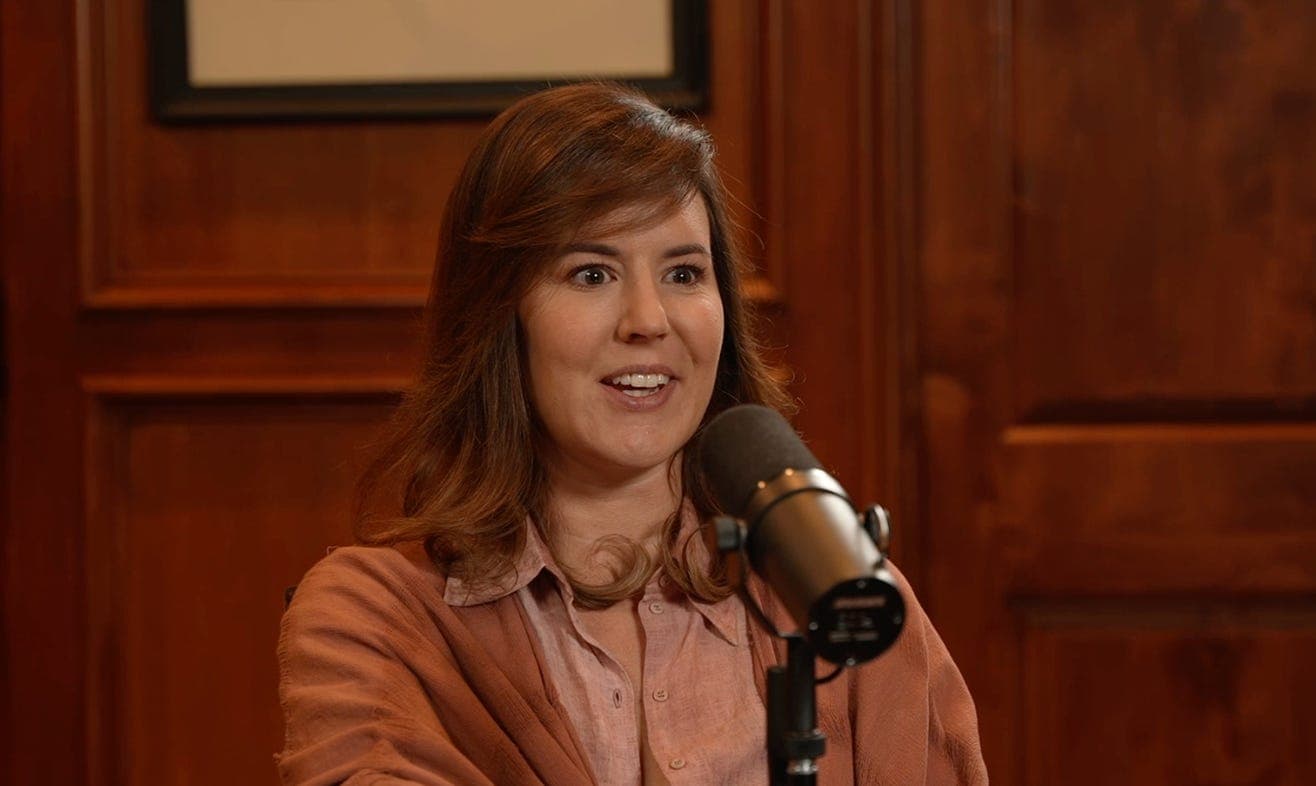
Episode Overview In this episode of American Optimist, Joe Lonsdale speaks with Whitney Baker, the Founder and Chief Investment Officer of Totem Macro. The discussion explores the intricacies of macro investing, the drivers of financial markets, and the current economic landscape, particularly in light of inflation, technological advancements, and social inequality.
Background of Whitney Baker
- Education & Early Life:
- Canadian, grew up in Toronto and a small town north of it.
- Studied economics at the University of Glasgow.
- Career Path:
- Worked at prominent firms: Soros Fund Management and Bridgewater Associates.
- Gained insights from notable mentors in macro investing.
Key Concepts in Macro Investing Definition of Macro Investing
- Focuses on the large-scale economic factors that impact financial markets.
- Unconstrained approach allowing for trading across various assets globally, including currencies and commodities.
Core Principles
- Understanding Flows: Importance of money and credit flows that drive economies and asset prices.
- Reflexivity: The cause-effect relationship where certain economic actions lead to self-reinforcing cycles.
Major Historical Context
- 1971 De-Pegging from Gold:
- U.S. decision to abandon the gold standard led to increased debt and deficit spending.
- Set the stage for inflationary cycles and economic shifts towards global trade, particularly with China.
Current Economic Analysis
- Inflation Trends:
- Whitney argues inflation is persistent and driven by historical monetary policy.
- The Federal Reserve's actions have exacerbated wealth inequality.
Notable Economic Events 2008 Financial Crisis
- The crisis revealed the unsustainability of consumer debt and reliance on housing market growth.
- Central banks responded by injecting liquidity, leading to a disconnect between asset prices and economic fundamentals.
COVID-19 Economic Impact
- Massive fiscal stimulus during COVID-19 resulted in temporary income increases but raised concerns over long-term inflation sustainability.
Predictions and Insights Future Economic Landscape
- Inequality and Inflation: Lonsdale and Baker agree that Federal Reserve actions have widened the gap between the wealthy and the average American.
- Technological Innovation as a Solution: Despite economic challenges, Baker remains optimistic about the potential of technological advancements (like AI) to drive productivity and growth.
Investment Strategies
- Alpha vs. Beta:
- Shift from passive investing (beta) to active strategies (alpha) focusing on identifying undervalued assets.
- Emerging markets may present unique opportunities as they recover from dislocations.
Conclusion
- The episode emphasizes the interconnectedness of macroeconomic forces and their impact on society, markets, and investment strategies.
- Baker’s insights highlight both the challenges and potential for innovation in navigating the current economic landscape, reinforcing the need for a meritocratic approach to funding and growth.
Key Takeaways
- Macro investing requires a deep understanding of economic trends and historical context.
- Inflation is a persistent issue that demands attention from policymakers and investors alike.
- Technological advancements could provide a pathway for economic recovery, provided that resources are allocated to the most innovative and capable individuals.
- Investors should focus on picking individual opportunities rather than relying on general market movements.
Resources
- For more insights and episodes, visit [Joe Lonsdale's Blog](https://blog.joelonsdale.com?utm_medium=podcast).
Written by AI. May contain mistakes. Listen to the episode to check what was said.
Transcript
Automatic transcript. May contain errors.0:00In my view, the Fed has been a huge contributor to inequality already. and by virtue of juicing the assets that wealthy people own by definition. And so that's created a lot of the populist backlash that we've seen politically, not just in the US, but around the world.
0:22Our friend Whitney Baker is one of the great global macro minds of the world. She understands the financial markets better than almost anyone I know. She worked at a couple of the most important, biggest hedge funds in the world. at her level, this is really an interesting game. You have to understand history, economics, politics, all sorts of things about finance, and you're mapping out why things are happening in the world. And it sounds like it's esoteric. It sounds like it's touching finance, but really a lot of what happens in history, a lot of what's happening now in our economy, a lot of what we've experienced in our lives are driven by these forces behind the scenes that Whitney studies for a living.
0:55How do we get to where we are today? What's happening with inflation? Will AI save us? Let's talk to Whitney. Excited to have my friend Whitney Baker here with us today. Whitney's the CIO and founder of Totem Macro. Thank you for having me, Joe. Whitney, let's tell us about your background first. So you're one of the great macro financial thinkers in the world. We're going to get into what that means. But you studied economics at the University of Glasgow, right? I did. And where'd you grow up and how'd you become interested in finance? So I'm Canadian. I grew up in Toronto. I moved to a small town a couple hours north of there.
1:24And, you know, it was like a very small provincial place. It was a little bit tumultuous for me. And so I had this almost a compulsion to just figure out the environment and how the world worked. And that's really what got me into investing. It's not so much investing for the sake of investing. It's more it's a medium to test and understand the world around you and the big forces. What are the forces? What's driving things? How do things actually work and why? You're talking to a macro person. And so the forces are really the flows that drive economies, money and credit flows, borrowing cycles, how those things translate into asset valuations and what's discounted.
2:02So from my perspective, you know, we've had a very long period of almost unconstrained balance sheet growth the world over, right? Debt, money, asset prices, spending associated with that. And the question is just how sustainable that is and the constraints that we're sort of buckling up against. And I think that's the interesting thing right now. We're going to come back to that. early in your career, you worked as Bridgewater's head of emerging markets, right? And you were actually Soros before that as well, right? Yeah, that's right. And a lot of people say Soros, he's like the evil guy funding the bad DAs, but actually like a lot of people we admire the most actually like Stan Drucker-Miller and Scott Best-Sent and many other great minds worked there.
2:38It sounds like it was a great job to learn a lot. Absolutely. Yeah. I mean, they both were for different reasons, but like you're saying, I happen to land at Soros first and at Bridgewater or later, and I have experienced just great mentorship under both Scott Bessett and Greg Jensen at Bridgewater. I consider myself super lucky to have learned a lot from those guys. And the things that I learned really complemented each other well. The Soros idea of reflexivity and directional momentum and having concentrated bets in high wind trades. What's reflexivity mean for our listeners? It's just the idea that a certain cause will create an effect, and that will then create another cause that kind of works in a circular way.
3:18So you can think about anything like a virtuous cycle or a vicious cycle as having some degree of self-reinforcing reflexivity. So you learned those lessons, things around that at Soros and Bridgewater obviously is famous for its radical transparency. Was that something that you're taking with you? Yeah. Well, okay. So Bridgewater, when people ask me what the most important thing I learned at Bridgewater is, it's not investing specific. This is just, I think, the most important thing of all things, which is, you know, I think a lot of people live their lives kind of afraid of the truth. Whatever the truth is, it constrains them.
3:53It creates sort of fears and things that they want to push against. And Bridgewater had completely the opposite mentality, which is, you know, you have weaknesses, we have weaknesses. There are just certain dynamics in play. And it's better if we understand what all of those things are. So let's be transparent. Let's get them on the table. Let's figure out, you know, if you're not good at scheduling, we'll partner you with somebody who is. And I mean, at the end of the day, if you can evaluate your strengths and weaknesses in an unbiased way and kind of disabuse yourself of this shadow government that's driving most of your behavior, you know, then you can solve problems and you can create growth and progress.
4:32And I think it takes some discomfort, but that's... It's fascinating that the biggest insight from the biggest hedge fund in the world was not even the macro stuff, but this understanding of yourself and how to think and how to approach truth. Yeah, it's truth itself is the takeaway, whether that's truth in yourself and how you invest in the biases you have and how to get rid of those, or whether that's like the economy and the markets work a certain way and it's not magic fairy dust. It's things that we can go and understand and test systematically and make sure we're right and that we're not just investing based on what we believe or we want to believe is true.
5:04Um, so that, you know, kind of relentless loyalty to the truth is something that I think, anyway, in my experience, like behooves you to, to incorporate into all aspects of growth and, and work and investing. And so based on this, based on these truths, you understand about yourself now, hopefully too, why did you launch Totem in 2018? You're launching it as an advisory and as a fund, obviously now, like what caused you to do this? So, um, really, I think probably it's, it's not that complicated. It's the same thing that would drive any, you know, tech founder or somebody with a particular set of goals and, and really a like drive to get to those goals quickly to not work in a bureaucracy or not work in an existing company where you have to trade off some of your goals with some other people's goals.
5:50Um, totem, you know, from my perspective, I have always seen the market as a good, um, uh, sort of like testing mechanism of all of your views of how things work. It's just an ongoing laboratory. And we happen to do a lot of our work in these extreme phenomenon, trying to understand the extremes of human behavior as reflected in macro and in markets, and really trying to make sure we can hone our understanding of that, getting up that curve even incrementally and incrementally and want to spend as much of our time solving those puzzles as we can without worrying about other misallocations of resource.
6:28Focusing on part you want to focus on, which you're in charge. So, you know, in my opinion, macro is like the, it's like one of the highest levels of investment. Like you said, you're seeking the truth. You're trying to understand the forces behind the biggest things in the world that are happening in all of global finance, trying to measure where things are at an extreme in your case and take advantage of it. At a basic level, what is macro investing? And what are strengths and weaknesses as a strategy? At the basic level, macro investing is just trying to, firstly, it's unconstrained. You can trade all assets in all countries, long and short.
6:56You can trade Bitcoin, you can trade Turkey. You can trade whatever you want. Trade Rwanda. But the commonality across, there's lots of different ways to execute macro. And the commonality is what you're trying to do is figure out what the macro scenario looks like ahead and how that is different versus what markets are pricing in. And you say macro scenario ahead. This is how the economy is going to do ahead. That's how the financial markets are going to do ahead. What does that mean? Yeah. So it's any number of things. So different currency dynamics, growth, inflation outcomes, how that all translates to where we are in the cycle and how assets are reflective of that.
7:31There's a few different, you know, at the high level, there's a few different things that matter. Any asset, any market, any economy, all of it is just transactions that add up to that thing, right? So as like any individual human's behavior, if there's a bunch of humans in a company, their behavior adds up to the performance of that company. You can think about that, therefore, like any market, any macro outcome as being a reflection of those same sorts of dynamics, transactions that add up to the high level. All of those transactions are financed with something. So our particular lens in terms of looking at macro is understanding which flows of money, which flows of credit are coming from where and into what.
8:12What are people spending that money and credit on and how sustainable is that? And therefore, what are the prices that that creates? It's not just true in economies. It's true in financial markets. Where are the flows coming from that are going into U.S. stocks? How sustainable are they? What's motivating those flows? Can we figure out when they're going to stop? And when they stop, what happens? Because if they're setting the marginal price, if that flow stops, some marginal weakness is going to happen as that price starts to reconnect. I think to outsiders, this stuff sounds like wizardry. It's really interesting, right?
8:44Because you think about it, you have to understand history. We'll talk later. You go back and you go back very far and explain different things. You have to understand economics. You have to understand politics. You have to know how banks work, how central banks work, how normal banks work. You have to understand how markets themselves work in different ways. Are people in macro just like really smart? Like you have to know all this stuff. You have to know all of the high level stuff. But the thing that I like about macro is that, you know, if you're investing in particular companies or stocks, you got to like, there's like 30, 40 stories in your head at every level of the P &L that you're trying to remember about those investments.
9:18You don't have to worry about this. You just don't have to worry about that. And from my perspective, all that stuff, you don't have to worry about it because it's idiosyncratic. And then when you consider markets or economies at large, all of those idiosyncratic things diversify out and net out at the high level. So you're just saying, look, I mean, it's hard to predict what a particular stock is going to do because that particular stock is driven by a bunch of idiosyncratic things, their growth profile, their sector and so on and their strategy. But if you look at a diversified basket of stocks like the US market or any other global equity market, the vast majority of what drives the variability in those prices is some combination of growth, inflation, discount rates and equity risk premium or the multiples that people will pay.
10:03And that is all just a function of these flows that I'm talking about. So it's a sort of scientific way of figuring those things out. I want to get into specifics so people don't understand examples here. But before I do that, you know, I did some macro with Peter Thiel when I was younger and I really enjoyed macro trading. Some people I admired were people like Paul Tudor Jones and Stan Drucker-Miller, who I got to know. And Stan, of course, returned over 30 % annualized over 30 years on a very large amount of money. So a lot of people think that investing is random or luck or doesn't make any sense.
10:30Like here's a guy who's a legend who just did this consistently without losing money for 30 years. So clearly it can be done. Are there people like that you've interacted with that you really admire in the macro world who shaped your thinking? Yeah. I mean, well, the most important, the most formative were my CIOs at Soros, Scott Besant, who's worked under Stan for a long time, and Greg Jensen as co-CIO at Bridgewater. And like I say, they were instrumental in different ways. And I think to some degree, I always wonder if I just happened to land in the right place to learn from those two guys, or whether there was something sort of pulling me in that direction in the sense that we think about things a similar way and have similar frameworks for investing.
11:14And so when you have a similar sort of base level of parameter, you can then learn a lot and interface really well on all the particulars and refine your expertise that way. But those two guys in my career have been, you know, huge, hugely impactful mentors and teachers for me. And before I asked you a little bit more about macro specific, I also curious, so you're an emerging markets expert. You ran emerging markets, I think, at Bridgewater. And so it's already really hard to do all this stuff. You also must have to learn a little bit more about like 20 emerging market countries as well. Is that you spent a lot of time doing this?
11:46Yeah, I spent all my time doing this. Do you have to fly there or do you just have to read or what? It's a good mix, I think. On the one hand, we're a reasonably systematic strategy in the sense that we think about things systematically. Money and credit flows drives spending, drives prices. Can we go figure out which money and credit flows matter, which players matter, what they're doing and why? And yeah, you maybe want to go talk to those players. Maybe you want to talk to the central bank or you want to talk to the heads of banks that are doing a bunch of lending that's going into a particular place.
12:16But by and large, you want to understand there's a lot of universality in what drives economies and drives markets. It's this basic idea that there's a business cycle. It's driven by credit creation. When the economy gets too hot, you hike. It turns credit creation down. It creates slowdowns. Like this set of linkages, they operate differently and different linkages matter more in different places. But the financial piping and the flows that run through those pipes are the same everywhere. So yes, you do need subject matter expertise when it comes to India or Turkey or Poland or wherever you're investing.
12:51but what you're looking for is not random. You're not just gathering all the things you could possibly know about that place. You are understanding how those features of your framework and that architecture that you need to understand how they look. How they're impacting them and how they're creating different extremes. So let's get into specifics. You were just, you were just teaching some of the business leaders in Austin at lunch with me, some of these things. I think you started in the 1970s there. She didn't want to go too far back. Like what's, like what's, you probably, we could go to the 19th century.
13:19Yeah, stop me if I start quoting Nietzsche or something like that. You could go way farther. I have lots of books from the 18th and 19th century here, which I like to read, and it probably do inform us. But let's give the picture since the last 50 years. What's going on and why would you start there? Right. Let's go back to 1970. So there's a few, two very important changes that happened in that year, right? Up until that point, by and large, the world had been operating. There's these alternating centers of power and all these things change, right? Which countries are in control, which markets are deep and all that stuff, where the flows go.
13:50But the same thing remained the case for hundreds of years, which was that the supply of money was a constraint on the supply of credit and the supply of money was tied to gold. So it's very, everyone knows this. It's we've been in a weird experiment for essentially 70 years of, this is really the only time that we've had any currency, a global currency, a general. It's called a fiat currency. It's a fiat currency, right? Where there's no hard and fast tether to how much supply of that can exist. And so what that's meant is that we started from a position in 1970 where actually, you know, the prior 20, 30 years, we built up a lot of debt in the wars.
14:29We had come off the gold standard in the wars to finance that during World War I and II, lots of inflation, lots of debt accumulation, and then 20 years working that through. So 1970, everything is clean again, right? It's like, okay, balance sheets are clean, not a lot of debt. Assets had been enjoying a technological boom like we've just had throughout the 60s. U.S. stocks, U.S. exceptionalism characterized that decade as well. And ultimately, it was very similar to today. Like in 1968, you had this very late cycle fiscal stimulus. So we're in a boom. There's a bubble. There's a tech-driven cycle.
15:05And all of a sudden, there's a bunch of fiscal spending and deficits are rising Vietnam as well. And so Nixon had a choice, right? And it's the same choice everybody faces. It's, am I going to cut spending and piss some people off? Or am I going to find a new way to finance the spending? Do I de-peg from gold and do that and start borrowing abroad? And basically, that's the choice that the US made at that time was that we are going to start spending above our means and financing that with either money or credit essentially sourced from abroad. And so what that meant was that, as I said, like the supply of credit globally used to be tethered by this fixed amount and that just went away.
15:43So we had this explosion in global debt and global spending associated with that borrowing, people borrowing to buy cars or borrowing to buy houses or whatever it was. And we've gotten to this point where we have the highest debt to GDP globally in the US, pretty much everywhere, secularly that the world has ever seen, including those worlds. Right now we've gotten that point. So it's untethered and there's a crazy waves of inflation and et cetera in the 70s. Right. And it didn't get under more control in the 80s or were you just expanding it? Yeah, okay. So the issue was, again, you're unleashing a bunch of demand through these financial channels.
16:17And okay, initially there was a lot of inflation. When you're running hot like we are today and you're financing a huge fiscal deficit like we are today with printed money like we are today, you get into this self-reinforcing inflationary cycle like we had in the 70s. And that's bad because it generates a real erosion of wealth, real losses of purchasing power. And throughout that whole decade, the Fed was constantly behind it and didn't tighten because that would have created problems for the fiscal side. And because it's not popular. You say problems for the fiscal side, if you raise interest rates, if you're in debt and you raise interest rates too high, then your debt servicing costs a lot of money and it's troublesome.
16:50It's a combination of, yeah, your debt servicing goes up, so your fiscal deficit goes down. And that's very true today because the debt stock is so large, right? It's so large and it's all short term. But problems would it cost back then? Why didn't they raise more back then? So back then it was just simply they thought they got the situation under control. And then they were very and then by that time they'd impose some degree of economic pain on people in order to choke off the inflation. And they reacted very quickly and tried to ease up again. Got it. So he just went too early. They didn't have someone who's strong enough to impose enough pain to actually solve the problem until Paul Volcker.
17:21Right. And then and then bear in mind, you know, the dollars depreciating during this time and all of OPEC are saying, well, we had to deal with you, which was that you were going to pay us in dollars that were tethered to gold. But then you went and you violated that. And now there's this inflation and the dollar's falling. And like, why do we want to sell you our actual real stuff for your dollars, which are just, you know, something you can print in your basement? And so those guys do the second oil embargo. And you have this combination of inherent, you know, still an economy operating above capacity, entrenched inflation, which only temporarily went away because of that gross lowdown.
17:57And then another oil shock on top of that. So you get the second wave of inflation later in the decade. And then ultimately, you know, stocks are like reeling from this because the essentially money supply is tightening to try to choke this off. Stocks, as I say, had a bubble and a tech driven boom in the late 60s. They trough at like eight times earnings in the early 80s after Volcker jacks up the rates. Way down eventually. Way down. Negative real returns to pretty much every asset you could have held in dollar and the dollar was falling. So this is the danger of allowing inflation to become very entrenched by overly relying on printing.
18:32particularly when your currency is falling, because then essentially you're giving new money to people who are foreigners who are selling your currency and creating additional. So we have this mess, Volker cuts it off, and then we still have this fiat currency and we should be inflationary, but I guess there's lots of disinflationary forces as well from globalization. So yeah, here's the second thing that happened in 1971. And again, I don't think this was like a grand plan. I just think it was his combination of his foreign and domestic policy. Nixon de-recognized Taiwan and recognized the PRC, so he recognized China.
19:03So that set in motion globalization, all of the trade deals we saw since then, the wave of essentially bringing 3 billion people into the global labor market that depressed wages and provided a bunch of cheap outsourced supply for things. So yes, you have Western demand, like debt funded consumption booming, and you have all of the manufacturing of the stuff they're demanding being sent to China and other emerging markets that were cheaper. And so supply is increasing one-to-one with the growth and demand. So you don't really get the inflationary problem because these two things are offsetting.
19:37So globalization is just massive disinflationary force, basically. Yeah. And tech to some degree as well, although globalization was more impactful in the early part of this story. Tech became impactful, particularly in the 2000s and 2010s. We like to think we're very impactful in the tech world. You are. You are. You are. Increasingly more so because it's that nonlinear, tech development that's been going on. But no, so that was the issue. I mean, you basically had this perfect virtue, coming back to the reflexivity point, this perfect virtuous cycle where you could spend as much as you want.
20:11The foreigners kept buying our bonds. So there was no lack of support for the dollar, even though we're doing all this printing. And there's a lot of supply of all of these goods that we're buying. So the prices continue to basically fall from the 80s onwards. And so you just had rates falling and inflation falling and all assets rallying. We get to the 90s and a lot of people don't realize this. There was a lot of macro forces behind the tech bubble, of course. I think you started in 94. What happened then? Okay. So what drives a bubble, right? So a bubble is financial assets essentially going up faster than the economy.
20:44So you get things like re-rating and equities, the PEs are going up or the market caps at the economy-wide level are going up much faster than GDP. The thing that causes that is always an economically inappropriate amount of central bank printing. And what started in the 90s was, this was really the first time any foreign banks had been materially involved in US debt purchases. So what we had, coming back to the China story, China had been going through its own infrastructure boom in the early 90s, led by Deng Xiaoping. They're trying to liberalize, become a little bit more capitalist. They do all this infrastructure build out.
21:21They became very reliant on debt, just like today. But at that point, they were pegged to the dollar still. The dollar, the renminbi was very expensive. And so their ability to keep expanding their debt pile was constrained by their own monetary base, which just means that they had uncompetitive currency and it was creating problems for liquidity. And so that tightening created a domestic crisis, banking crisis, unwind of this whole investment boom and so on, big NPL upswing. And what they responded to that with was a DPEG. So they devalued the currency by about a third. They re-pegged to the dollar at very cheap levels.
21:59This is around 1994. And by consequence of the economic crisis, the current account deficit went into this huge surplus. This is even before WTO accession. And so what happened was the PBOC was forced to buy huge amounts of U.S. bonds. It was People's Bank of China. Sorry, People's Bank of China, the central bank. It's maintaining this peg. And the only way to do that is to buy U.S. bonds. And so they're doing that and taking those bonds off the hands of U.S. investors who previously held them. Bear in mind, under Clinton, there wasn't a lot of deficit spending. So not a lot of supply, lots of new demand for bonds.
22:33Chinese come in, take it out of the private market. All of a sudden, people who are sitting there with 10 or 20 year bonds previously now just have cash. And they're thinking, well, what's another long duration asset I can buy? And so that is how you start the kindling for the dotcom bubble. That money basically works out through credit instruments and then into stocks and sort of riskier and riskier things, pushing up the prices of those things. And then retail starts to notice, oh, man, the tech stocks are going up. We're going to buy some of those. And so, you know, you start the bubble with the central bank printing, which creates this rally, and then everybody kind of piles on to that.
Read the full transcript
23:08It's amazing how much the macro forces create these things, because there was a real internet, there was a real tech, but there's also a lot of nonsense that was driven by this. And our friend earlier today obviously worked with Maureen Scholz a little bit, and I think, you know, when LTCM blew up in 98, that was probably also a macro thing where we probably juiced the markets a little bit in response to that, is my understanding. We cut rates a lot when we shouldn't have. Well, yeah. I mean, so that was back when the Fed was paying attention to global conditions and whether they would reverberate back on the U.S.
23:34And if you remember, the Fed had been hiking. The tech bubble was getting out of control. So the Fed had been hiking and the dollar was rallying because everybody was buying U.S. stocks in the world. And so you had a rallying dollar, a tightening funding cost of dollars. And oil was starting to slow because that tightening was creating an economic slowdown, even though the bubble was still going. And so that hit Russia, which was pegged to the dollar at the time, had the same sort of tightening that China experienced in 2015 later on and oil collapse. So that's like, OK, that's a trifecta for Russia.
24:10Russia defaults. And there's a lot of bad, you know, unsustainable financial dynamics going on in Russia at the time. But this kind of just crazy 90s there. Crazy 90s, lots of weird privatizations, you know. But that was the catalyst. Like there's lots of uneconomic investment today, right? We're in a bubble today. And so there's a lot of these flows that are going to be unproductive ultimately. And so that was the case in Russia at the time. And that triple tightening created a big unwind in global markets and a huge vol shock, which is what took out LTCM. And then, yeah, the Fed responded to that and gave the tech bubble another year and a half of new ammo because the U.S.
24:49wasn't in crisis. And that's when I went into tech first. So it was interesting times. It is just amazing how all these things in our lives are tied to these macro forces that people don't realize. I want to fast forward to today a little bit, of course. What are the frameworks for what's going on right now? A lot of people think inflation is falling. Everything is going to look good. That's not what you think. No. How do we think about the next 20 years in a nutshell? What's some of the frameworks? Okay. So bear in mind that context of we've had this huge ramp up in debt. Everybody in the West is basically like funding all their consumption with debt, which means you're basically spending above your means and you're pulling forward from the future in order to finance that excess spending.
25:25It's fine if you're investing and it's productive investment. If you're borrowing just to consume, that's a problem, generally speaking, right? So we got to this point in the GFC where all of a sudden - The Great Financial Crisis 2008. Right. That's right. Yeah. And so that was the moment where essentially households in the West realized, oh, actually, you know, my wages have been getting crushed because of this globalization dynamic, but I continued spending nonetheless because my house was going up and I was financing it in debt and all that. I never really noticed that my lifestyle got worse because it didn't.
25:56It just got financed with debt instead of my earnings. And so that was no longer sustainable. This is all the debt in their houses pretty much. Yeah. I mean, and also consumer credit. But yeah, by and large, there's that collateralized housing boom and people are taking their money out and using it to buy things. And so that all hits a wall. And then you have like a deleveraging pressure globally, because that was obviously a huge buildup of debt globally. And so then what happened was the central banks, particularly the Fed, is saying, look, credit's going down. So how do we, we don't want deflation.
26:27How do we keep overall financing free flowing? And they say, OK, we're going to offset this credit crunch with a bunch of money. So they print a bunch of money to try to stabilize asset prices. But what this naturally means is money is going more into financial markets than it is into the real economy, which is where credit goes. And so you get what we've got now, which is this huge disconnect between market caps, of assets and GDP, which is really just the cash flows that support assets. Like if somebody is going to own a house, they have to pay for the mortgage. Stocks have to earn. We can probably put a chart up basically where there's a disconnect with the cash flow versus the valuation.
27:04And it's just the ratio is much higher than it ever has been. Than it ever has been. So you've got this huge bubble relative to US GDP, but also relative to global GDP. So it's very large. And the difference is this money that's been printed. And this is probably going to make a lot of populists unhappy because a lot of people tied to global finance are probably going to be able to make a lot of money from this, whereas the average guy on Main Street might not, right? Yeah. Well, I mean, part of, in my view, the Fed has been a huge contributor to inequality already. And by virtue of juicing the assets that wealthy people own by definition.
27:37And so that's created a lot of the populist backlash that we've seen politically, not just in the US, but around the world, right? So anyway, coming to today and where we are from a macro perspective, obviously, this whole model of printing and spending and consumption, even though you're not producing things and all of that, all of that went to this crazy extreme in COVID. In COVID, we had a 6 % of GDP shock. So the economy shut down for a quarter. Incomes basically fell from 100 to 94. The government comes out and says, okay, you guys lost a dollar of income. We're going to give you$2.5 back.
28:14So there's the first recession we've seen where incomes are expanding, where household wealth is going up, you know, everything. Overreaction, maybe. Huge overreaction. And that's what they've learned since Nixon is there's no consequence to printing and spending because some foreigner will buy your assets and will finance you. But that's no longer really the case because foreigners have more exposure to the U.S. than ever before. They're no longer really majority pegged to the dollar. How would you quantify their exposure to the U.S.? What's the right number? So like if you look at the US balance sheet, just the whole country versus the rest of the world, and we have things like stocks and bonds that the rest of the world owns ours and we own some of theirs.
28:51Okay. The net balance is in 2007, we, the US, we owed the rest of the world 10 % of GDP after you net out all the assets that we held of theirs and all the stuff they held of ours. That negative 10 % number is a deficit position, but it's not like a huge problem. Now, since the US was the only game in town for the last 12, 13, 14 years or so, that number's gone from negative 10 % of GDP to negative 60 % of GDP because foreigners have invested almost every net dollar of capital into the US. It feels like a real extreme. And I remember one of our friends said, is that partially accounted for by the fact we have all these global companies here you have to invest in in order to invest in things?
29:31Or does that offset that a little bit? So there's certain conditions that favor those companies, right? Global companies benefit from having lots of liquidity, lots of access to capital markets, globalization so that their costs are cheaper. The biggest benefit of this secular environment for U.S. multinationals has been that you got to put all your costs abroad. And normally that would mean you're paying domestic workers less. And so they spend less. So then your revenues fall. But the revenues never fell because the domestic workers had access to a lot of debt. So both the debt cycle and the globalization benefited U.S.
30:07companies more than anybody else. So yeah, they were beneficiaries of the last secular environment, but those things are now balkanizing. Global liquidity is constrained by this inflation problem. So there's an extreme of money already coming into the U.S. I remember whenever people would buy tech, which was a big run up in 2015 to 2020, the dollar would go up because there's money going into tech, right? And that's the opposite of how it works 20 years ago, when there are different flows. So that was a big flow. Now we're at extreme of money in the US. COVID happened. We threw a ton more money at the economy.
30:37We finally got inflation, I guess, right? Yeah, right. I mean, that's the thing is when you give people$15 to spend and they only lost six and they don't have to produce anything because they're sitting at home because it's COVID, you get this mismatch in demand versus supply. And so people like to point to this as a supply problem. Oh, it's a supply shock because everything's shut down. That is just, it's not true. Like go look at the data. What happened is demand surged. It surged to like 120 points, right? People say that inflation is coming down now, but that's not what you think. No, it's actually happening.
31:10No. I mean, what happened on a backward looking basis is, okay, so we've got this cycle where people spend a whole bunch coming out of COVID. Then companies took that profit and hired more people and did more spending, expanded their factories, all this kind of stuff. And so it's led to this cycle where households in the US even now are earning something like eight or 10 % more every year than they were last year. So if your earnings are growing eight to 10%. Eight to 10 % more, what's that come from? So there's a couple points of job growth. So if you look at total jobs in the economy, they continue to grow about 2 % year over year.
31:43And then if you look at wage growth, it's bouncing around in the six, 7 % region right now. But so a given person is earning, 6%, 7 % more this year than they were last year. So let's say your total sources of income are going up by 8%, 9%, 10%, and we've been bouncing around in that range, then your spending is going to roughly follow that. And if you're operating as an economy with a shortage of a whole bunch of things, you're already running hot, there's all this unsustainable services demand, goods demand, and so on, then every marginal dollar that gets spent, there's not any widgets left.
32:17So most of that dollar just goes into prices instead of volumes and you get chronic inflation. This is what we have here. It looked like it went down for a little bit over the course of last year. Mainly, the reason it went down was not because U.S. demand fell or U.S. supply increased or global supply increased. It was that global demand for goods fell because the rest of the world, okay, we've all done hiking cycles. Interest rates are up a lot everywhere. The rest of the world, their debt is floating rate. So these rate hikes pass right through. This is a very important point. So floating rate debt for the rest of the world means that as soon as you hike rates, it slows things down in their economy because right away they're paying more money.
32:55Because right away you, the borrower, have to pay more interest. In the US, a lot of it's fixed rate. Most of the debt on the household side is fixed rate mortgages. And on the business side, there's a lot of bonds. So it takes a while for the rate hikes to basically get through and slow things down. Right. And it's been very little impact. And what impact there was in the US, the government has offset because the fiscal deficit has continued to expand. And so the U.S. never had a recession. We never thought there would be one. There hasn't been. But what it did get was the benefit of global recessions creating this drag, temporary drag in goods prices.
33:28And that's why inflation went from, it was always going to slow from 9, 10, 11 % peak, but probably down to about six, four to six range. And it's at the bottom end of that range with goods being negative. And now goods is accelerating again because the rest of the world is recovering. So it's coming up again. So we're not going to get a few minutes left. So first of all, like, what does this mean for investors? Like, it seems like what you're saying is that overall, the U S is very overvalued. Now, a lot of us happen to believe that there's some really bright things going on with productivity and AI, uh, with biotech with things that are actually working, but maybe similar to other tech booms, but even though if those work, there's going to be a lot of other things that are overvalued that are probably going to come down on the margin.
34:06Like how do you, how do you play this? Yeah. Like just think about it as the bubble created an environment where a lot of money and a lot of flow went into a lot of companies. And there will be winners and losers coming out of that. And so mostly going forward, yeah, like AI can be a thing and so can a lot of the other technological innovations that I think are accelerating here. The question is how quickly will those transmit through to real productivity gains? And are those productivity gains going to be broadly distributed or concentrated in a few oligopolies? And so anyway, the point here is going forward, if you think about that disconnect between market caps and GDP, AI creates winners and losers, right?
34:47Productivity is income saved by companies that use AI and income lost by the workers that they no longer have to hire. You know, it's a force that redistributes income within the economy and can grow the economy in aggregate. I mean, if it raises productivity, it's going to be good. As long as it generates additional benefits that go beyond just profit retention, then it's somewhat helpful for growth. So the question is how quickly that comes online versus these, I think much more rapid rebound in inflation. If inflation goes up, the flow could just hit the market really hard, even if this other stuff's true.
35:20Well, yeah, because then the Fed has to pivot back from saying, okay, we're going to... I mean, last year, they just started printing a bunch of money again because of what they thought was a banking crisis. And now they're pivoting back and saying, actually, you know what? The bubbles come back as a result of that money printing. The inflation is now a constraint again. So we get liquidity tightening. So again, they will contract money. Those flows will come out of stocks and you'll get this D rating. And it can still be true that AI wins and that there's a lot of sort of long-term benefits to this new technological wave, but that they've been overly discounted by a bunch of companies that ultimately will fail.
35:56So the markets are going to need to adjust. If somebody, like a lot of my listeners are very exposed to tech, they're very bullish on the tech stuff. How else can you position yourself financially with your money that's not in tech? What are you doing otherwise? So, you know, this comes down to this concept, which is, do you invest just putting your money in the markets and seeing what they deliver? And that's beta. That's just taking what the market gives you. Or do you try to pick winners and losers, either domestically or abroad, within stocks or across assets, whatever you want to do to try to figure out, even if the market's going sideways or down, I'm generating returns by picking the right assets.
36:29I would say that it's a bad time for beta because we've really pulled forward a lot of market returns this way, at least in real terms, because we sort of have to inflate the economy into these asset levels. But it's a great time for alpha because since so much flow has concentrated in so few assets in the world, it's left this whole range of other assets extremely dislocated from their fundamentals. And there's other shorts in the world. There's assets that are very overvalued in certain North Asian markets. So you look for these extremes. Remember, you were mentioning Turkish banks might be trading at one and a half times earnings.
37:00And for structural reasons, no one's even been giving them money for 10 years. And that's interesting. Where's these other extremes over here? So you find these spots that you measure as extreme based on the flows you measure. So there's still lots of ways to be making money on macro, basically, even without having to buy or short the US tech stocks. I mean, yeah, macro has been a challenged environment for 10 years because volatility has been suppressed by the central banks. They smooth everything out. They've printed a bunch of money, created a lot of dislocations. So if they're not able to do that anymore, because they have these other constraints.
37:29Those things have reached an extreme. Those dislocations will close, and it's time for sort of macro folks can come in and anticipate and pick these out to then benefit from those prices. So we're bullish on macro for the next decade. It's a good time to be doing it. Alpha-centric macro. Alpha-centric macro, that's fair. Not exposure to beta. So we have here an interesting scenario that's not so bullish on America for valuations for the next 10 or 20 years, because we've reached these extremes. We've showed some of them on the screen. These extremes are going to need to close. You know, we started American Optimist, of course, to push back on cynicism and pessimism in our country.
37:59You're leaving me a little bit worried about some of the macroeconomy here, which is great to learn about and study because it seems like everything in the world is tied to this. What's the best case for an optimistic vision of the future? How does this work out for us? So the best case here is that if you go in history, we've had different hegemonic power centers. You had the British Empire, you had the Dutch before that, you have the US now. Obviously, we go back, there's Rome. There's all sorts of different global superpowers. Typically, a new one takes over or you start to get some sort of decay in the existing order when there's a lack of technological innovation.
38:36So the US and also to some degree when you're overstretched from military perspective, because then all your sort of opponents who don't want to be under your thumb anymore, they start to sort of test the limits and you can't respond to them all. So we're sort of in that area geopolitically on the, okay, all of these fault lines globally are kind of buckling. But on the tech side, there's really nowhere else in the world that has the same set of technological innovation that the US has, the same sort of drivers that create that. And so to the extent that we can preserve this leading advantage in innovating and those innovations are increasingly important drivers of macro outcomes, then that's the best case.
39:19The question is just for a, it's not to say that the internet won't exist. It's just that there was a bubble that then derated and the internet still existed and generated gains for. Well, this is a great case for an optimistic scenario. Basically from a macro and geopolitical perspective, we're in a huge amount of trouble. If you just read the macro and there's going to be a really tough 10 or 15 years ahead, but hopefully our friends in the technology world can save the day and innovate and America can be strong again, which is great because we have people like Elon Musk and Palmer Luckey and others who are reinvigorating our defense and actually making it work despite, you know, I think if you take away maybe five or 10 of the most important tech people, a lot of these really bad things do happen.
39:53Hopefully we're able to push this forward and fix things. Yeah. And I think it's important that a lot of the available resource still goes to those sorts of people, you know, like in a bubble, it was very easy for everybody to get capital. And I think in order for this advantage to persist, that the people who have access to capital going forward in a more constricted pool of funding are the ones who have the best ideas. So this idea of having a meritocracy that underscores the innovation, I think is very - All right. Well, the pressure is on for us in the tech sector to solve these macro problems.
40:23Whitney, thanks so much for joining us today. Thank you for having me, Joe.
From the publisher
What are the forces behind the scenes that drive financial markets? How do bubbles form — and are we in one now? What do the world's best investors understand and how do they consistently come out ahead?
This week we dive into global finance with one of the sharpest minds in macro investing: Whitney Baker, Founder and Chief Investment Officer of Totem Macro. Whitney previously worked at two of the world's leading investment firms, first in global macro & long/short strategies at Soros Fund Management and most recently as the Head of Emerging Markets at Bridgewater Associates.
In this episode, Whitney lays out the principles behind macro investing and how credit flows, borrowing cycles, and monetary policy drive global finance. She traces our current-day situation back to the 1970s when President Nixon ditched the gold standard and opened trade with China. She explains how a new age of deficit spending combined with China entering the U.S. bond market paved the way for the dot com bubble, and ultimately where we are today. Whitney makes the case that inflation isn't going away soon and believes the Federal Reserve's actions over the past few decades have exacerbated inequality in America. Yet, despite these headwinds, Whitney believes technological progress can sustain the U.S. through these challenging times, so long as we set the right conditions for our best entrepreneurs to succeed.
Thanks for reading! Subscribe for free to receive new posts and podcasts.
This is a public episode. If you would like to discuss this with other subscribers or get access to bonus episodes, visit blog.joelonsdale.com