
In short
Podcast Notes: Joe Lonsdale: American Optimist
Episode 85
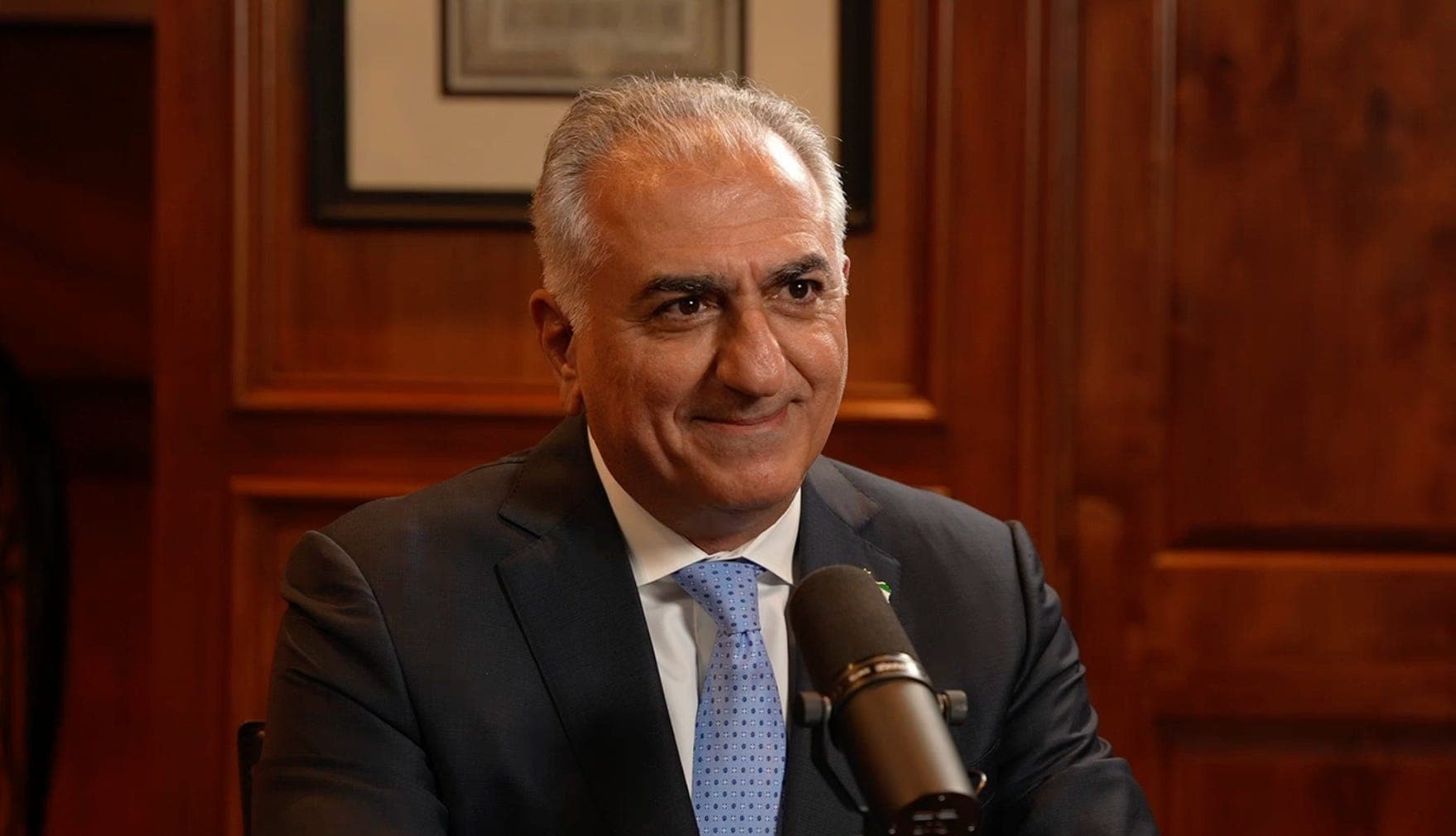
The Path to Regime Change in Iran with Crown Prince Reza Pahlavi
Overview In this episode, Joe Lonsdale interviews Crown Prince Reza Pahlavi, the last heir to the Peacock Throne of Iran, who shares his insights on the current political climate in Iran, the potential for regime change, and the historical context of the Iranian Revolution of 1979. The discussion delves into the implications of recent events in the Middle East, particularly Iran's actions against Israel, and explores strategies for supporting internal movements towards a secular, democratic Iran.
Key Themes and Concepts
Historical Context
- 1979 Iranian Revolution: Overthrew the pro-Western regime of Pahlavi's father, leading to the establishment of an Islamic theocracy.
- Comparison of Iran’s Past and Present: Pahlavi emphasizes how Iran was once modern and progressive but has regressed under the current regime, likening it to North Korea rather than South Korea.
Current Political Dynamics
- Fragility of the Iranian Regime: Pahlavi asserts that the current regime is weaker than perceived and discusses the internal conflicts within the ruling group.
- Iran's Role in Regional Conflict: The regime's support for terrorist organizations like Hamas and Hezbollah is discussed in the context of its ideological motivations.
Vision for Iran's Future
- Maximum Support Strategy: Pahlavi outlines a dual approach of combining sanctions (maximum pressure) with support for the Iranian people (maximum support), including:
- Ensuring internet access for free communication.
- Providing financial assistance to support protests and strikes against the regime.
- Post-Regime Transition: He discusses the need for a clear plan for governance after the regime's collapse, emphasizing the importance of a constitutional assembly.
Insights from Crown Prince Reza Pahlavi
- The Iranian People as Allies: Pahlavi stresses that the Iranian populace is the primary actor in the fight for change, and international support should focus on empowering them.
- Cultural Ties with Israel: The Crown Prince notes the historical friendship between Iranians and Jews, contrasting this with the current regime's antagonism.
U.S. and Western Involvement
- Role of the U.S. and Allies: Pahlavi argues for a shift in Western policy towards Iran, advocating for support that directly benefits the Iranian people rather than the regime.
- Examples of Successful External Support: He draws parallels with historical movements that succeeded with foreign assistance, such as the Solidarity Movement in Poland.
Public Sentiment and Support
- Admiration from the Iranian Diaspora: Many Iranians abroad view Pahlavi as a symbol of hope and potential change, particularly among the younger generation.
- Importance of Bipartisan Support: Pahlavi calls for a unified stance in the U.S. regarding support for Iranian freedom, transcending political divisions.
Conclusion The episode concludes with an optimistic vision for Iran's future, underscoring the potential for a democratic transition led by the Iranian people, with support from the international community. Pahlavi expresses his commitment to being a facilitator in this process, aiming to restore freedom and democracy in Iran.
Key Takeaways
- Understanding Historical Context: The Iranian Revolution's outcomes still shape contemporary society and geopolitics.
- Fragility of Authoritarian Regimes: The current Iranian regime, while appearing stable, faces significant internal challenges.
- Empowerment through External Support: Strategic international assistance can bolster internal movements for freedom.
- Vision for a Democratic Iran: A clear roadmap for governance and societal rebuilding is crucial for a successful transition following regime change.
Written by AI. May contain mistakes. Listen to the episode to check what was said.
Transcript
Automatic transcript. May contain errors.0:00As a result of what I think is the legacy of my father and particularly my grandfather of putting it on back from the dark ages and putting it on the track for modernity and progress and education and everything that led to be a result of the future. So, people were appreciative of the fact that now we are addressing many social issues, women's rights, things of that nature, which was part of that vision. And of course, in contrast, what the regime did was all of a sudden put us back in the Middle Ages. And when you hear people today just comparing, they say, you know, we should have been today the South Korea of the Middle East, instead we become the North Korea, which means it's not the people, it's the system.
0:45It's a very volatile week in the Middle East. It's an unprecedented time. This is the first time that Iran has directly attacked Israel with hundreds of armaments, including over 100 ballistic missiles. We're all on the edge of our seats waiting to see how Israel responds. 45 years ago, the Iranian regime was overthrown by a radical theocracy, and this new regime started sponsoring terrorism all around the region. It's one of the biggest sponsors of terrorism in the world. It's also repressed its own people. It's done some horrible things internally. took a very prosperous pro-Western country and made it into something very backwards and very scary for a lot of people who disagree with the regime.
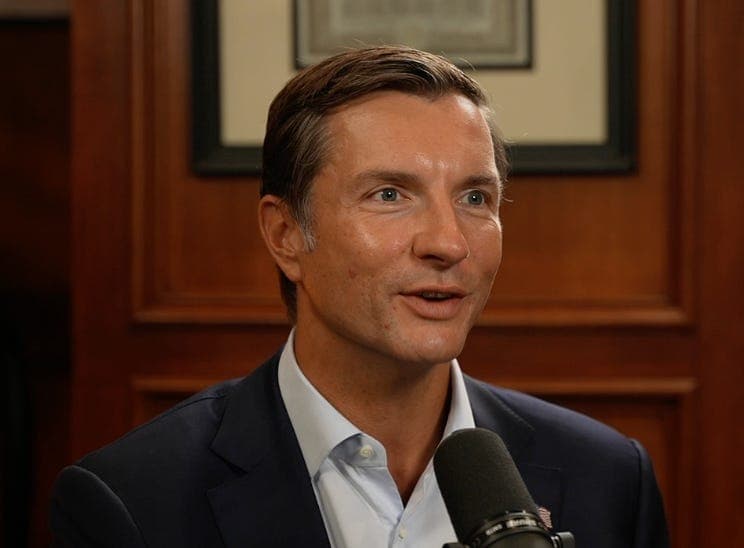
1:19We're very lucky to have spoken in the last week with the crown prince of Iran, Reza Pahlavi. He was in fighter pilot school actually in Lubbock, Texas when his father was overthrown. And since that time, 45 years ago, he's really emerged as a key leader, a prince in the true sense of the word. He's no longer in charge of his country, but he's still playing the role of a prince. He's looked up to by a lot of my Persian friends. There's Iranian immigrant cab drivers all over the world who have their background out of their phones, is Reza Pahlavi. And the crown prince is a symbol and he's someone who's eager to help transition his country to a free republic.
1:53He's likely to play an important role if that happens. He says the regime is a lot less stable, a lot weaker than people realize, and has really interesting insight on the dynamics there and what's going on and what could happen. At this critical moment in history, it's an important conversation to hear from the crown Prince, what could come next with Iran and the region. Thank you very much for joining us. I thank you for having me on your program. I was looking forward to this discussion. Well, it's an honor to have you here at my home. Good to be here. It's wonderful to have you in Texas as well.
2:18I hear you're a big Dallas Cowboys fan and have a certain affinity for Texas. How did that come about? In the mid seventies in Iran, there was a third television station that was created for the consumption of English speaking community living in Iran, American and British and what have you. and it was only in English. And I remember on Fridays, which is equivalent of a Sunday here as a weekend, they used to broadcast the NFL game of the week and the highlights. And back then it was the era of Tom Landry with his hat and of course Tony Dorsett and then the Redskins and what have you. And that star on the helmet somehow attracted me in the first place.
2:56And I said, why not? I've got to like this team. Of course, we had no clue what American football looks like. I learned that later, But still, it was interesting for me to see. That's an interesting sport. And that's how it started. Amazing. And, you know, during the Zonk Revolution in Iran in 1979, you were in fighter pilot school here in Lubbock, Texas. I read that some people came to bother you guys, but Texans came to your defense. Do you mind sharing that story? Well, I was their adopted son in a way. And they said, how dare they come? And, you know, they were ready with their shotguns and say, if they want to mess around with you, we're here to protect you.
3:27I was very touched by that. That's very Texas style. Yeah, absolutely. And that's cool. you're training to be a fighter pilot for a while, huh? Correct. Well, I started flying when I was 13 in Iran. I was the youngest pilot at the time, flying solo on an F-5 jet before leaving Iran. And when I came to the States, the idea was to go to a formal pilot training program, but also not so much for the flying part, but getting to know America in terms of being the crown prince. And of course, my father wanted me to be more acquainted with America and how it operates. So during my stay in Lubbock, I visited many different parts of the country, going to Houston, going to the space center, visiting hospitals or this or that.
4:08It was all part of a package of getting more acquainted. Amazing. We know a few princes, none of them were flying jets as teenagers. That's very fun. But so obviously America was very important to your father. What was it like visiting as a prince back then around in the 70s? Well, I mean, obviously it was an era where I suppose the awareness of another country half the way around the world was reciprocally limited. So, you know, the kind of question I was getting back then is that, you know, do you have camels or ice cream in your country and things like that? I said, okay, yeah, I had to explain.
4:44No, Iran is not flat. We have mountains and snow. Just because we are in the Middle East doesn't even know. Iran was a very modern country back then. People now even don't realize that, you know, people see around the world by the mullahs and it looks like a very backwards country now. But Iran was a very modern country. It is part of the mindset that was created as a result of what I think is the legacy of my father and particularly my grandfather of putting Iran, putting Iran back from the dark ages and putting it on the track for modernity and progress and education and everything that led to our country beginning to prosper.
5:17So people were appreciative of the fact that now we are addressing many social issues, women's rights, things of that nature, which was part of that vision. And of course, in contrast, what the regime did was all of a sudden put us back in the Middle Ages. And when you hear people today just comparing, they say, you know, we should have been today the South Korea of the Middle East. Instead, we become the North Korea, which means it's not the people, it's the system that creates that problem. And the economy was growing rapidly. Women had rights. You had some of the very best universities in the world.
5:49There's still a great electrical engineering talent that comes out of Iran. Some of the most talented people I work with here are from Iran, but they're escaping now to come work. That's correct. While the revolution was occurring, you were obviously in the fighter pilot training, but what's your view of what happened? Tell us about the revolution. Well, obviously, let's not forget that we were at the time of the Cold War. So there was definitely a line of demarcation and confrontation between the two blocks. And there were some who did not see the West as an ally, but rather as the enemy. So whether it was the Marxist tendencies or the Islamist tendencies against that kind of progress or the Western connection were in direct conflict with the policies of the previous regime.
6:29Were there separate groups that were Marxist versus the Islamics as well? Well, there was basically some kind of a partnership between two things that would otherwise be incompatible, because one would be deeply religious, the other one completely atheist, but somehow they ended up, you know, what my father used to refer to as the alliance between the red and the black, red being the communist and black being the Islamist. But the most important aspect of what led to a crisis was, I think, a little bit the fact that although today, retrospectively, if you talk to people at the time were opposed, was the fact that it was a reformable situation that we had as opposed to opting for a complete revolution.
7:12Back then, the mindset was not that. The mindset was, let's get rid of this system, then we'll see. And they bought into this thinking that perhaps this religious symbol is going to bring some different kind of an outcome. By the time people realized what it was all about, it was too late. And since then, Iran has been pretty much entrapced by religious radical theocracy. It's interesting. As revolutions are more dangerous than people realize, because they think they're getting, they're changing one thing, and they're actually changing something else sometimes. Well, I mean, we all have to look at the results.
7:41And the question is, well, now what? Where do we want to go? And what I'm trying to say here is that whatever you hear today from the Gen Z of Iran, what they tell you is that, hey, our country was getting somewhere. Now we are all the way back. How can we reconnect with the world? We want to be part of the free world. We want to be able to have all the, of course, prospect of human rights and liberty and democracy and what have you. But the philosophy, the mindset is the same as the countries want to be allied with. One of the reasons Iranians are very much appreciative of Americans and America is because of, as of a land of an opportunity, as a land when there's freedom of religion and what have you, it goes exactly down the same principle and values that we cherish, unlike a regime that is totally opposed to these values.
8:29And that's where the conflict starts. Well, you know, I'm a great admirer of Iran and of Persian culture, Persian people, Persian food. I wrote a piece on Cyrus the Great recently because I was reading his old book. But, you know, so I don't want to bash what's going on too much, but I would like our listeners to understand, because some of them might not know, what happened with revolution. I understood they hunted down and killed huge numbers of people who had been allies of your family. And obviously, it's a very repressive regime. Can you tell us just a little bit about some of what happened and some of the troubles there?
8:54Well, there were several victims immediately that had to take flight from Iran. One was the immediate persecution against other religions, like the Baha 'is and the Jews. You also had the persecution against people who didn't think alike, the regime who had to take flight from the country. Some of them could not get out in time, and there were ultimately executed ministers, military officers, and what have you, which was basically a decapitation of the system. And in a way, it also perhaps contributed to the conflict between Iran and Iraq shortly after the revolution because Saddam Hussein thought that perhaps this is an opportunity to attack Iran.
9:32He thought they're weak. I can go give them trouble now. Exactly. And since then, you've been a leader and a catalyst in the fight for freedom and human rights in Iran. What are your goals in terms of what you're trying to accomplish and in terms of regime change? Well, I think the most important message that the world needs to understand is that today, the Iranian people are the first one to call for regime change. And why is it important? It's important because if the basic flaw that has existed in Western foreign policy, whether US or its European allies, was the expectation of behavior change.
10:07If you don't understand the true nature of this regime, its DNA, what it is composed of, you will not understand why it is that diplomacy doesn't work with them because they don't see eye to eye. You cannot find an area of compromise. It's either them or you. It's zero sum. The only solution is to look at the Iranian people who are themselves the victim of the regime as your natural allies on the actual, quote unquote, boots on the ground. They are the natural army in place. So part of the strategy at this point where we have to get rid of this regime is to work on a campaign of maximum support.
10:44Tell us about your maximum support plan. How does this actually happen? How do we make this work? Well, understand that maximum support is my suggestion of having a parallel course to maximum pressure. What was maximum pressure so far? Economic sanctions, what have you, depriving the regime from the kind of revenue that it will spend, of course, on its war machine, on its proxies, as opposed to the Iranian people. But that's not enough. In order to bring more pressure, you have to have an internal element of support. That means, first of all, making sure that Iranians are not deprived from access to information.
11:14So internet access was one of the key components. In the tech area, you realize how critical it is to have the connectivity to the outside world. For everything that we do through social media, through messaging, for coordination, organization, what have you. One is in what way can we empower society and enable people to actually support one another. For instance, let's say if you want to bring pressure by means of economic paralysis to the regime, meaning labor strikes, somehow we need to be able to support our working force. There are some elements that ties to current policies of sanctions, which limits the ability to transfer money to send money back home, for instance.
11:50These are the kind of things that has to be worked on. So if people are going to go on strike at the right time and create pressure and the people are going to fight, then they need some other ways of being supported. You're saying you need to be able to send them money, you need to be able to help send them food. At this phase, it's one of the components. And of course, right after the regime's collapse, the question that becomes obvious to all is how do we manage the transition? So what's the plan for that? And on that, there's a whole host of things that need to happen and occur in terms of structure, in terms of organization, in terms of how you fill the boxes.
12:16And here's where the most important aspect of this process of change, which is part of my vision, is how do you maximize defections from the regime? How could you maximize a guarantee of survival beyond this regime to a majority who are not corrupt or involved in criminal action? So you can give them a way to get out and be on the good guy's side and not be punished if they're not too corrupt? Absolutely. There has to be at some point a policy of amnesty. I know people want their day in court and they will get it for people who have really committed crimes against humanity or need to be really accountable for what they did.
12:49But if you think of the bulk of the people who are part of the current bureaucracy, who in fact I know don't want this system, hate the guts of the system, but they cannot openly - They have no choice. Sure. But they need to know that they are not going to be thrown away like the baby with the bath water, that there is going to be a survival beyond this regime. That's part of the policy of reconciliation and amnesty that I'm thinking of, because you want to minimize the cost of change to the nation. So I've heard from a lot of friends, you know, we have a lot of Persian friends in the Bay Area and Los Angeles and all around the country in the US.
13:23And a lot of them are very big fans of yours. And they tell me that there's people who maybe fled Iran driving taxis in Europe and here. And a lot of them have your picture on their phones, the taxi cab drivers. You're an inspirational figure to them. Why is that? Why are people looking up to you? And what gives you the leverage to do this? Well, I think there are several reasons for it. One of it is because after all, the name that I'd carry and the legacy of my father and grandfather resonates very deeply in Iranian society today, now that they have a chance to compare. And especially if you look at today's Gen Z, the young Iranians, I think they have a special connection to me because they understand my message.
13:57They understand my vision. They understand that I'm a man of my times and I'm here with a whole set of new ideas and a different agenda. and they relate to that. And social media has been a great reason for that information because unlike the days I was training in Lubbock, Texas, when communication was very scarce and limited and general knowledge was only based on what you were told by official outlets in government controlled medias or what have you, today's a different world. Today you can get your information instantaneously and nothing can truly be censored as long as you can connect to the VPN and send a message out or receive a message.
14:35And that helps communicate and get an idea of this vision. So for that, I think that they recognize the role that I can play to help them with this transition. And tell us what role can the US and the West play further on? Like, you know, why is Iran allied with Russia, you know, working with China on things against us? What should we be doing differently or how should we be helping with this? Well, when you have regimes that know that they can't count for their survival on popular support. They ultimately have to reach out for other forces to maintain them in power. So in a way, I think from the very beginning when the whole rhetoric of the regime was anti-American, anti-Western, and they started tilting more and more and more, although they were claiming we want independence, but in reality they played more and more into the Soviet orbit at the time and then later on the Russian orbit, a lot of Iranians, the military intelligence structure, security is dominated by Russian influence and support.
15:31So in a way, we should not be surprised that recently in this conflict between Russia and the Ukraine, that Russia is using Iran as, you know, a tool to benefit from it. And that kind of is as a consequence of the regime going... It makes sense that bad guys work together. When bad guys take over in a South American country, they start working with the Russians too sometimes and they do inappropriate things. And, you know, Iran right now, unfortunately, is the chief sponsor of many militant groups around the Middle East. What do they hope to achieve backing Hamas and Hezbollah and the Houthis firing at ships?
16:08It actually really surprised me, like talking to more people about, they explained to me the Persian people actually don't dislike Israel so much. A lot of the Persian people are very pro-Jewish and knew a lot of Jews. but it seems like this regime just hates Israel, hates America. Like what are they trying to do? Well, again, it's the exportation of an ideology. And one of the components is to create as many proxies so they're not directly focused on. It's a little bit like interesting you in fighting the tentacles rather than the eye of the octopus. That's number one. Number two, part of their strategy is to create an element of regional instability that works in their advantage, antagonizing regional governments, whether it's the Saudis or having a hand in Lebanon or in Iraq or elsewhere.
16:50The proxy war is one way for them to get as much credit without being accountable and answerable directly. All of this is part of this strategy that they have adopted all these years. But obviously, this is a complete different viewpoint from the people of Iran. As you mentioned, especially during this recent campaign of Women Live Freedom, we saw that But in many demonstrations on the streets of Europe and elsewhere, Iranians were marching together with Israelis or Jews with the Iranian flag and the Jewish flag in complete, you know, conflict. It's amazing. We're sharing a lot of values. Absolutely.
17:29And when the U.S. and you tell me this is not appropriate to ask, but when the U.S. tries to make decisions on foreign policy and Trump assassinates Soleimani or when Israel assassinates the leading Iranian generals who are supporting these terror activities, obviously, as a leader of a country, you don't want your people killed. But if these are bad guys, part of a bad regime, is that appropriate for people to be eliminating those players? Or how do we think about that? Well, I mean, it's the unfortunate consequence of a regime that has been fomenting terrorism, among other things. And when it gets ugly, obviously, we can see these kinds of consequences as a byproduct.
18:06Hence more reason to say, look, you can eliminate all of this by changing the nature of what is governing a country. Means liberating a country from a regime that never cared for Iran to begin with. That's what Khomeini said. Let's not forget. He said, after 15 years in exile, I think it was an Italian journalist that asked Khomeini on the plane as he was flying back to Tehran, what are your sentiments of returning to Iran after 15 years in exile? The answer was one word, nothing. That's what he said. I don't care. I'm going to use Iran and its resources to launch my revolution and exporting this modern the Shiite caliphate all the way to the shores of the West, starting with the immediate region.
18:53That was the mindset back then. And that's the part that I don't think many administrations here, or for that matter in Europe, really understood how serious this could get. Because I remember in the early 80s, when I was talking to British parliamentarians or French diplomats or American congressmen or what have you, you know, they were thinking, okay, this is a regional thing. It's a fight between Muslims in that area. How could we be possibly affected by it? But look at how far it has reached. Islamic radicalism has already penetrated many borders in the Western world. And that's part of a problem among other things.
19:30So 45 years later, Khomeini is still there, obviously. He has the Muslims around him. They have the Revolutionary Guard. How big is the ruling group right now? If people wanted to remove the ruling group? Like, what does that consist of? How hard is that to do regime change there? Well, imagine that you have this huge tent with Khamenei as the main pillars. And under this tent, there's a sort of a symbiosis of a mafia-like military paramilitary group that benefits from economic privileges and a whole host of people directly or closely associated with that top ranking element that basically are dividing the country among themselves.
20:05These guys are taking They just control every aspect. But as much as they might be in control, they are also very much in conflict. And I think that at some point in time when Khamenei is no longer around, we're going to see even more of that. So the regime is far more fragile than everybody thinks it is at this point. So I think understanding cleverly that there will be a point and history has proven to all of us that ultimately totalitarian system cannot survive. The question is when, as opposed to whether or not they will continue to exist. But I think it's important that the world so far has confronted critical elements by directly getting involved in putting an end to something.
20:49Best example I can use is the example of putting an end to Nazism in doing the Second World War. And you had strong leadership in Washington and in Britain. You had Roosevelt and you had Churchill. Then it came an era where the Soviet Union had to come into it and you had a strong leadership in the form of Ronald Reagan and Margaret Thatcher. Today, we're talking about a change that does, it's an internal change, but it needs support. It goes back to my argument about we need to maximize support to the Iranian people. But behind that policy has to be strong leadership, decisive leadership you cannot on the one hand expect iran to change by almost be appeasing and giving more money rather than to the people to a regime that's going to spend it on even more if you appease a bad regime it doesn't make it better of course it's been proven i have another historical question actually for you i'm curious if you don't mind me asking so you know i'm a founder of palantir is one of my companies that you know i've worked with a lot of the global intelligence people especially u.s and allies and one of my mentors ran british intelligence and was involved before the Iraq war in the US.
21:54He tells me that the Iranians are very, very clever, the regime and certain people there. And he says that he believes from the best intelligence he saw that they helped trick the US leaders into thinking there were more WMDs in Iraq because they were worried that US might've gone after them instead. And they knew that if we went into Iraq, we'd get bogged down and we wouldn't bother them. At the time, should the US maybe have gone after the mullahs instead? Was there any reason, was there any excuse to do that at the time? And do you think that's something Iran could have possibly done? I know we don't have the data, but is that a theory of something that they would be smart enough to do?
22:23I think, as I explained to you before, understanding that the root cause of this entire regional mayhem is directly tied to the emergence of this regime in the first place. Because everything else that you see as a consequence was as a result of the revolution in Iran and a regime that brought in every aspect that led to radicalism and what have you. On the other hand, we had events that somehow propelled America to get involved. The same way that had it not been for Pearl Harbor, would America been involved in the Second World War. In a way, what happened in 9-11 propelled a campaign of getting engaged in Afghanistan and later on Iraq.
23:03But all of this is to say that while at the time it was putting an end to an existence, particularly the scenario of Iraq, which was an argument for regime change, which happened, but the way it was handled gave the name regime change a bad reputation. What I've been arguing is that regime change is still the solution just because you didn't - Just because you messed it up one time. Yeah. Yeah. That doesn't mean that it's the wrong concept. Particularly if it is the ask of the people there. You are basically addressing that. So either you say, look, we can either hope that Yet again, we can cut some kind of a deal with a regime that has never been honest, that has always been non-transparent and with ill intentions.
23:49Or we can trust a nation that say, hey, liberate, help us be free. And you will see that our values, our aspirations, our interests are one and the same. And it's only a win-win scenario that you can anticipate out of it. It seems to me it's too bad that Bush and Cheney and Rice didn't do this with Iran 20 years ago. It might have been better for everyone. Well, I don't think anybody was truly ready back at the time. I must be honest with you. I think that a lot of change had to occur, particularly inside Iran, in sense of, well, how much this expectation of gradual change or reform actually will pay off?
24:26because this reform game has been the key argument for diplomats in the West. They're saying, you know, well, some of them are more hawkish. Some of them are more moderate. Maybe we should allow the moderates to gain more traction by helping them as opposed to the more hawkish ones. They even said that at the time of the Soviet Union. Some people said, you know, Andropov is more moderate than Chernenko. Why? Well, you know, he likes jazz music and drinks whiskey. Oh, is that your indication of more moderation? But in a way, it may sound funny, But actually, when they looked at Mohammad Khatami at the time, or for instance, other so-called moderates in Iran, people in Iran are way past that.
Read the full transcript
25:04They say, you know what? The problem is fundamentally the nature of the system, that you cannot bring change by means of legislation or people's having a free election. You can't vote these guys out right now. No, exactly. Exactly. Maybe people are more ready. I also want to ask you, last year you made an important visit to Israel. Tell us about that trip. How did it come about? And what did you see and learn? Well, what is, you mentioned Cyrus the Great. And in fact, you know, a lot of it had to do with the fact that while in modern days we all recognize how important and vital a role our two nations can play with one another to bring that element of stability in the region, because there's really a biblical relationship, it somehow ties back to Cyrus the Great.
25:48Yeah, there's a big history between our peoples. And that simply explains why is it that to us, it's really part of understanding how we value this in terms of our national identity. In recent years, Iranians have been gathering more and more around Cyrus the Grace's tomb to celebrate the new year or on his birthday, which is on October 7th. And I think when I mentioned that, in fact, in the press conference while I was in Tel Lviv, and I talked about the fact that, well, look at the benefit of the Abraham Accords and how we can move towards regional cooperation rather than conflict. And hopefully we will escalate the Abraham Accords to the Cyrus Accord that will include Iran in that package.
26:30Imagine a world in the Middle East where rather than having all these conflicts and killings, we have key countries working together, bringing in every aspect. As an investor, I'd be there right away. If you could get the Jews and the Persians working together, you know, some of our very best companies here Actually, that's part of my vision because the issue is not just to have a change of system, which goes without saying, but it's for people like you and understand how we can bring back prosperity and progress, whether it is technology and all resources. So entrepreneurs, companies, technologies, what Iran needs.
27:01If you get a free country and property rights and a court system that's not corrupt, then I think all of us want to invest a lot more very quickly in Tehran. It'd be a lot more prosperous place. That's really what resonates for the average man on the street that understands slogans like democracy and human rights, as you would say, motherhood and apple pie. But at the end of the day, how am I going to find employment? What is it going to, how it's going to impact my life? If to understand how big this could be as a difference, and that the only obstacle between having that bright future is this regime that keeps us from making it happen, the same way the iron curtain had to come down, this wall has to also be lifted.
27:38Is there a way to buy these people off? I remember people would talk about the guy who runs North Korea and they say, can we just give him a bunch of money to live somewhere? And then he doesn't fight. And there's something like that with the mullahs. Like at some point, can you buy a bunch of them off? Or no, they're always going to fight to the death. Like, how does this work? Well, it gives me an opportunity to also say something that I think your audience needs to understand. Even at the time of the revolution, 44 years ago or so, there were approximately 180 ,000 clerics in Iran at the time, ranging from the Simpa Mullah all the way to the highest rank.
28:11Out of that 180 ,000, only 4 ,000 or 5 ,000 were really part of the revolutionary groups. Most Most of them were opposed to what Khomeini was talking about. Today in particular, not every mullah is necessarily a bad person. You have the mullahs that stick with the regime and they benefit from it, but there are many who stand at the risk of against that because, curiously, they understand the value of a secular alternative. Why? Because they all recognize that state being separated from religion or vice versa is not not only in the better interest of the churches, regardless of which religion, but it's also a prerequisite to democracy.
28:57Now it's not an automatic given in the Middle East to understand, but I will tell you that Iranians are the most aware of that only as a result of having lived under a theocracy for 45 years. And that's very important for all to understand that while we advocate secularism and separation of church and state as a prerequisite, but freedom of religion as it exists in America, existed in Iran before the revolution. And if a simple ideology was to rule any country, it's the beginning of discrimination from the get-go. So if you eliminate the element of discrimination and give every citizen equal rights and protection under the law and the rule of law, ultimately, that's how a country can really start operating properly.
29:45And it gives the maximum incentive for the citizen of that country, irrespective of its ethnicity, religious beliefs, or political beliefs, or sexual orientation to know that they'll be treated equally. And that's the only thing that maximizes incentive, I think. Yeah, that makes sense. Well, let's talk a little bit about hope for the future. It seems that protests and uprisings in Iran are becoming more and more frequent. This young generation you call in the Gen Z in Iran, they aren't afraid to stand up to the government a little bit at least. Like what's different about this generation of Iranians?
30:13What's the best optimistic case for the future of where this goes in Iran? I think this generation has proven that they have a common agenda or they have a common means of coming out of this nightmare by sticking together, that being in one voice, that backing each other up. And that sense of unity is always crucial. Whenever you're fighting a Goliath, it can't be a singular group or organization. You have to bring as many people to equal the playing field. This is where part of it is what we need to do as Iranians. How do we go about this? How we understand that today, while we know that there are differences of opinion and that's normal, but what is the priority?
30:57Our national interest is for all of us to fight for an opportunity to liberty and justice, which is why we all have to be rowing in unison in the same boat. This is why I think the external component is also key because I haven't seen any successful movements based on civil disobedience without involving foreign elements in terms of war or all that. Even America needed the help of the French in our revolution. Well, look, we saw perestroika in Russia and ultimately the Red Army not intervening and being an obstruction to that process. We saw the help to organization labor groups such as Lech Walesa and the Solidarity Movement in Poland.
31:38We saw how important it was to put pressure on the Pretoria government to put an end apartheid and finally negotiate a solution in South Africa, and there are numerous examples, none of this would have happened without some level of tacit support from the outside free world. That's the missing element in my view, because the people in Iran have already proven that they're willing to take every risk that there is because they have nothing more to lose. So it behooves all of us to say, what can we do to make sure that they have the maximum chance for success while minimizing the cost for change.
32:12So I saw you gave a speech at Oxford Union recently as well, and you had thousands of supporters show up, and you have a lot of these supporters in the West. People are rooting for you. Some of my good friends, one of the people who runs things with Elon Musk is Persian, and he's a huge fan of yours. You're going to meet him soon. So what should these supporters in the West be doing? What could we be telling our government? How do we support Iran? Well, I mean, obviously, I'm just giving you a general idea, but there are many specific components and many aspects in how and where we can live. Some of it may be changing legislation or exception to the existing sanction laws.
32:45For instance, let's say if a family living in Seattle or Austin or London or Stockholm wants to sponsor a family of workers in Iran to be able to afford to not starve to death because they lose their wages if they go on strike. Example. Right now as we speak - It's very difficult to wire money back home because the sanction was meant to block from the regime benefiting from it, but the people are also suffering the consequences. In what areas can we maneuver to make sure that at least that aspect is changed? Why do I say this? It's because I can imagine the average American sitting and saying, oh my God, my tax dollars are again going to go and finance this or that campaign.
33:31And we're tired of this, right? For some reason. We're not asking for tax dollars. We're asking, for instance, that if the Biden administration wants to release$10 billion blocked in Iraq, which is electricity revenue, which is the people's money to begin with, why releasing it to a regime that kills people on the streets as opposed to redirect it for a better purpose? It's an executive decision. Or are there a way to repurpose frozen assets by the regime? There are areas like this. I don't know if there's some legal answers to it, but it's worth exploring it. Because again, we are trying to say as Iranians that we want to do the most that we can, counting essentially our own resources.
34:15But obviously, any lending hand is welcome. And I think that's the way that we should approach it. So what can be done? I think a lot ultimately leads to policy. I think a lot of it depends that we have bipartisan support. I tell my own compatriots who are voters in this or that country that we should take a page, an example out of the Israeli experience. Because as far as it comes to the Jewish communities around the world or the Jews in Israel, it was always, look, we expect nothing short of bipartisan support for our interests. Same thing goes for Iran. I don't want Iran to be the subject of partisan conflict between the Republicans and the Democrats.
35:01supporting liberty in Iran should be a common agenda on both sides of the eye. And I hope so too. I don't think there should be a partisan issue. I think everyone in America is seeing even more what this Iranian regime is doing, obviously, and hurting us and attacking us. And we also see that there's some young people in Iran who are on our side that we need to be supporting. What do you think the catalyst is going to be? Is there going to be a catalyst in the next few years that kind of gets everyone to push and fight here? Well, I certainly intend to play an active role in addressing a sort of campaign that mobilizes as much as we can a coalition of the willing and capable people who really see eye to eye into going in that direction, whether it is between now until the regime ultimately collapses, but also to have a very clear game plan and strategy for the post-regime interim process.
35:49Because everything that I'm talking about, ultimately, my vision of transition, democratic transition is very simple to explain. And I'm simplifying it, of course. Clearly, after the collapse of the regime, you have a period of transition that could last a few years, two, three, four, hard to put an exact time on it. So there has to be an interim governance of the country. So how are we filling the boxes? What is the responsibilities of interim government? Is there a plan for the first hundred days? The country cannot stop functioning. That's what I was talking about, including the existing civil bureaucracy into part of the solution, but also to prepare the stage for the election of a constitutional assembly.
36:31Why? Because this constitutional assembly is where there's not absolute consensus on the ultimate result. There has to be a parliamentary process where you debate different aspects, you write a new constitution, you give people an opportunity to understand what is being presented, unlike 45 years ago, by the way. People had no clue what they're talking about. No idea. Well, these things are hard when they first get going. And generally, Israel also messed theirs up where they didn't even do the constitution, right? So this is a good lesson to get together. We have legal experts. We have economists.
37:01We have a whole host of people who can bring in all sorts of good ideas. And I think it's important to include people in the process. I don't want to see one of those scenarios that some people make decisions behind closed door. I see it more like a C-SPAN type session where you can see the ongoing deliberation of people's representative in the constitutional assembly. So everybody understand what's really happening. They have to partake in that process. And I think that what a beautiful thing it will be that for the first time in Iran's history, Iranians will be able to say, you know what, we have defined and decided our future based on our own resolve.
37:37It's not inherited, it's not imposed, it's not as a result of a foreign intervention. we the Iranian people have been able to finally bring an era of true democracy to our country. This is a beautiful vision for the future. And if I may say, your leadership's very inspiring. You're really showing what it means to be a prince and to be a leader because you've had this very difficult situation put upon you and the way you've responded to it and are fighting for your people is something all of us admire. So thank you very much for joining us. And I've always said, look, I'm utilizing this political capital you have vested in me to liberate you.
38:11I'm not looking for any personal interest out of it or any position for myself. But if you trust me to be your transition agent, that's what I'm here for. And it's the only thing that preoccupies me day and night. Help manage this transition to a successful end. Well, I'm optimistic that you're going to get there. And thank you very much for joining us. Thank you, Joe.
From the publisher
In 1979, Crown Prince of Iran Reza Pahlavi was attending fighter pilot school in Lubbock, Texas when the Islamic Revolution overthrew his father's reign. A radical theocracy seized power and began extinguishing freedoms, persecuting minorities, and taking a pro-Western Iran back to the Middle Ages. Since then, the Crown Prince has lived in exile as a leading voice for a secular and democratic Iran. What is his view of the Revolution? Why does he believe regime change is possible today? And how should the U.S. and the West deal with Iran?
Given Iran's recent attack on Israel, we get a rare and timely perspective on the power dynamics within Iran and why the current regime is more fragile than we realize. The Crown Prince paints a picture of his homeland pre-and-post Revolution, and explains why many governments misunderstand the fanatical leadership of Iran. He lays out his strategy of "maximum support" and how combining sanctions and external pressure with internal support, such as internet access and financial resources for protestors, could someday topple the regime. And if it does, he details a post-regime strategy to transition the government toward a secular democracy. We also discuss the longstanding history between the Persian and Jewish people, and how, with the right leadership, the region could once again become dynamic and prosperous.
[NOTE: this conversation was recorded shortly before Iran launched hundreds of missiles and drones at Israel.]
This is a public episode. If you would like to discuss this with other subscribers or get access to bonus episodes, visit blog.joelonsdale.com