In short
Podcast Summary: Joe Lonsdale: American Optimist - Episode 87 with Dr. Cliff Winston
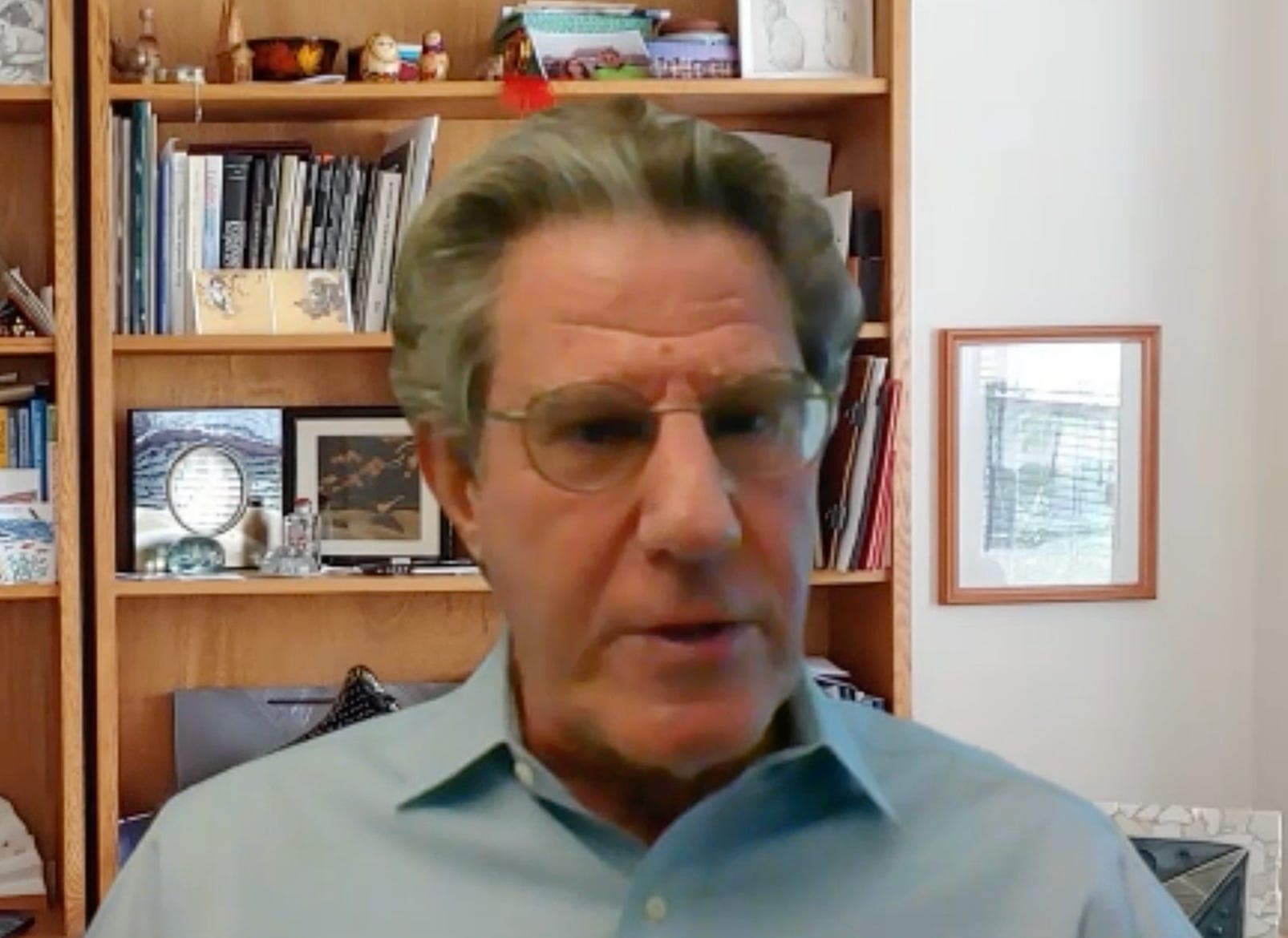
Episode Overview In this episode, Joe Lonsdale interviews Dr. Cliff Winston, a prominent microeconomist and Senior Fellow at the Brookings Institution. They discuss the impacts and effectiveness of government interventions versus market corrections, highlighting the failures of government policies and advocating for deregulation in various sectors, including law and airlines.
Key Themes
- Market Corrections vs. Government Interventions
- Dr. Winston argues that there is insufficient evidence that government programs are superior to market corrections.
- Economists tend to focus on market failures without adequately addressing government failures.
- Deregulation as a Solution
- The conversation emphasizes the positive outcomes of deregulating industries, particularly airlines, which improved competition and consumer choice.
- The potential benefits of deregulating the legal profession are explored, including improved access to legal services.
- Government Accountability
- There is a call for government retrospectives and experiments to assess the effectiveness of policies.
- The importance of tying funding to performance outcomes is stressed to ensure accountability in government programs.
- Antitrust Policy Discussions
- Dr. Winston critiques the current antitrust policies, particularly under Lena Khan, emphasizing the lack of evidence that such actions improve consumer welfare.
- He advocates for retrospective assessments of antitrust actions to evaluate their true impact.
- Occupational Licensing Criticism
- The episode discusses the burdens of occupational licensing, suggesting that it restricts market entry and raises costs without necessarily improving service quality.
- Dr. Winston supports the idea of deregulating certain professions to enhance competition.
- Innovation and Technology Regulation
- The episode touches on the potential benefits of innovations like autonomous vehicles and the need for a supportive regulatory environment to facilitate their development.
Notable Quotes
- "Just because there's a market failure, trying to intervene often leads to worse government failures."
- "Markets do self-correct. They have incentives to do so."
- "The biggest problem with government is thinking long term; they only think to the next election."
Key Takeaways
- Critique of Government Programs: Dr. Winston presents the argument that many government interventions fail to produce beneficial outcomes and often incur significant costs without delivering proportional benefits.
- Deregulation Advocacy: The discussion supports deregulating various sectors, including airlines and legal professions, to improve efficiency and access.
- Importance of Market Dynamics: Emphasizing the adaptability and self-correcting nature of markets, the episode argues for a greater reliance on market solutions rather than government regulations.
- Call for Experimental Governance: Both Lonsdale and Winston express a desire for governments to adopt experimental approaches to policy-making, similar to methods used in the private sector.
Conclusion This episode of American Optimist with Dr. Cliff Winston offers a critical perspective on the roles of government and market forces in the economy. It challenges conventional wisdom regarding government interventions, advocating for deregulation and a more experimental approach to governance that recognizes the dynamic nature of markets. The discussion encourages listeners to reconsider the effectiveness of current policies and explore more innovative solutions for economic challenges.
Written by AI. May contain mistakes. Listen to the episode to check what was said.
Transcript
Automatic transcript. May contain errors.0:00I've got an idea. Why don't you allow foreign airlines to compete on American routes? There's so many amazing foreign airlines. I would love that competition. It would raise the bar so much here. Yeah, we all want to go on Singapore air, right? You and I want to be on Singapore. Let me meet them. What's the problem? The notion of market corrections is kind of a weird idea for most people and oftentimes even for economists who tend to think markets have a problem and that's it. We will always pollute, for example. They don't think about, maybe there's some technological solutions that the private sector is working on, like carbon capture.
0:45Economists love studying market failures. It's the popular thing to do. Very few of them study government failures, of which there are many, as we are all aware. Cliff Winston at the Brookings Institute has been beating this drum. for over 30 years. There are tons of government failures. Very often, just because there's a market failure, you try to intervene. The government failure is worse. And this is something that economists need to wake up to and need to map out better. Cliff is a great person to hear from on this topic. I'm Joe Lonsdale. Welcome to American Optimist. Cliff Winston, thank you for joining us.
1:14Great to be here. Thank you. Cliff, you're a senior fellow at the Brookings Institution. You've been there since 1984, almost 40 years. And before that, you were at MIT. Is that right? That is true. PhD in economics from UC Berkeley, went to London School of Economics, so strong academic background as well. Before we begin, tell us about your expertise and role at Brookings, your microeconomist who specializes in regulation and markets. Yes, that's right. I mean, when I came, Brookings had what they call a regulatory group and a macro group. And so I was actually a visitor and I was working on a project on airline deregulation, actually just assessing the effects of airline deregulation.
1:54So that fit in with the regulatory group. And then when I decided to stay, then that's sort of what I continued to do. But broadly interpreted it as, you know, applied microeconomics. Airline deregulation, thank goodness we had that back then. I think most people are too young now to know what happened. Did you assess that it was positive in your study? Oh, yes. Across the board. What's interesting, I don't know if you've seen now sort of, you know, revisionist attacks on it. But this sort of seems to happen, you know, anytime there's sort of a problem with airlines, you have a bunch of people that come out and say, oh, it was a mistake to deregulate airlines.
2:32And it's the same thing over and over again with most of these people attributing things that are really not the problems of the airlines, but oftentimes the government policy that surrounds them. Well, we definitely have lots of market failures left in that space. seem to be talked about. But yeah, I'd like to start with your book, It's Indispensable, Market Corrections in a U.S. Economy Beset by Government Failures. And one of the things you write, which struck me, was that economists generally believe that market failure is a greater social problem than government failure. Why do economists tend to believe that?
3:04And why are you countering that argument? Well, it goes back to, in many ways, sort of the evolution of economics, really, in more recent decades, where sort of all the cool work, if you will, was involved in theories of market failure. You probably know the names of Joe Stiglitz, George Akerlof, Market for Lemons, Mike Spence, these people all won Nobel Prizes. You're sort of pointing out why there were market failures was a lot more interesting than assuming the base case of perfect competition. And many things have sort of been in that spirit. So the theoretical instincts were that the action is really in market failures.
3:50And very little attention was given to government failures. And so as things go on, people think, yeah, market failure is a problem. They never step back and say, well, is government going to fix this? Is it going to make it worse? I think it evolves really from the theory. I don't want to spend the whole podcast bashing government, although I'm sure we will most of the time. But let's start with some things the government's responsible for, like national defense and maybe some aspects of transportation. When is the government effective? What makes government effective? When does it get it right?
4:22Well, it's hard for me to sort of systematically say, this is what they should do. It's what they do do, and they do it well. You know, in other words, where I'm going with this is trying to give some sort of systematic explanation for government success as well as government failure. And the truth is, it's hard to find it. There's certain things that government certainly has done that have been successful. Obviously, it helped fund, led to Google its funding, you know, Genome Project, you know, various sort of things like that where they've given some, you know, seed money for investment. I'm going to push back on your Google.
5:02I don't know if the government really was responsible for that one, but I get what you're saying. They probably did things that helped. Some very important inventions. One of my biases here, I'm curious what you think, is that in the mid-20th century, after the Second World War, you had a total war. You had a lot of the most competent people in our society, part of government, and innovation was very expensive. So in order to innovate, you need to either be at a giant company or at a government institution. So I feel like because innovation was so expensive, the best people had to be part of it.
5:29Like they were able to do certain things in the 50s and 60s with moon landing program, with the highways. They did things really well. And I feel like today, 70, 80, 80 years later, they're not doing things as well, partly because innovation is so cheap that you can do things well from a small group and be rewarded for it. So why be part of this giant thing? Is that part of it for you? Or like what are the trends against government here? Yeah, I mean, certainly, you know, it's hard to see that government's improved over time. If anything, it just seems that, yes, less talented people are attracted to government and more and more people find constraints working in government.
6:09It just, things are getting harder. Whereas at the same time, the private sector is offering more opportunities. Obviously, there's venture funding that helps broader participation in the workforce, whether it be women, minorities, you name it. You'd be able to draw on a greater base of talent. And all of those things go with the general theme that the private sector is dynamic. It changes. You get new kinds of people coming in, new ideas, so on and so forth. Whereas the problem with the government is things are very static. It's very difficult to get fundamental changes that adjust to what's going on in society.
6:51Yeah, and one of my passions is trying to make government accountable. You tie funding to things, sometimes you can improve it, but it's a mess. So let's dive into some specific areas of government failure versus market corrections. For example, one area obviously huge is anti-poverty or welfare programs. How has the government failed in that area? And are there other better solutions? Are there ways market corrections can somehow do a better job? Yeah, let me at least step back before sort of accusing government of failing. Let's be clear on really what we mean by that, at least from an economic perspective.
7:21One way government fails is it certainly does things that reduce welfare. On net, there are no benefits from what it has done. Secondly, it does things, but they have sort of negligible effects. But at the same time, they're spending taxpayers money so on net uh you know this is this is a failure waste resources yep that obviously be used for the thing the final thing which is where we're talking about here with poverty is there are some successes but they're very expensive that is we could have achieved this at much lower cost so you know yes it is true on the positive side poverty has declined and some of government policies are certainly contributed to that, but it's so expensive to do that.
8:12And oftentimes there's multiple policies to address poverty as opposed to something that's more streamlined, more focused, so on and so forth. And there's very little attention to minimizing costs. Again, this is the pressure that you get in the private sector with firms, with government, they're just ready to write checks, come in with a new program, spend the money, point to it and say, see, it did things. And you point out, yes, but look what it cost you. Right. And this sort of goes on and on and on a major part of their failures. Are there specific examples that strike you in this area? Are there are there things where where there's there's principles that could be using to save money?
8:52Oh, there's plenty of principles more often usually don't do this. In other words, do cost benefit. Before spending all this money, ask yourself, one, what problem am I, the government policymaker, trying to solve? Is there a problem? Oftentimes, they're trying to solve something that isn't really a problem. That's obviously the view of certain people on the antitrust cases we have going on now. Secondly, okay, we see a problem. Are we the ones to carry this out? Now, is this something that ultimately market could solve or do we have a policy? If we do, what are the chances of actual government failure, where things could go wrong?
9:33So there's a sort of checklist of things that you want to go through. But obviously, this is not what government does because you can have failure along at any of these points. And more often than not, we just go ahead with things and there's never been any checks on what's going on. We just do it. And that's been this idea of what you said, you know, assessment, retrospective assessments. That's just not part of the agenda. Have you seen people write legislation that would address this somehow? Because obviously we're not just going to get the bureaucrats to wake up one day and be more competent at their jobs.
10:07So what's the right way to approach this? How do we fix this problem? That's a very tough question, more so than what people think. what I point out in the book is we really don't even know systematically why government fails. Oh, we can speculate about many things, but trying to find some hard evidence is this is why government fails. We have a theory. We test it. It applies to many things. We don't have that. That's what's sort of remarkable about all of this. We're sort of in the dark and there's no learning. You don't see this. You don't see government saying, well, we figured it out. here's what we did wrong and let's reform our policy.
10:48That's exceedingly rare. The few policies that we see reformed are ones when government sort of gets out. They say, yeah, regulation was a mistake. We don't need to do this anymore. Let's deregulate. That's the kind of thing that's successful. Potentially with privatization, which I think could occur in a number of areas, government might say, there's no reason why we should own this facility. Let's privatize it. Those are the things where we can get some successes. I want to push back on that because I have seen government iterate towards better answers with legislation. For example, I work on a lot of state-level legislation.
11:27Vocational schools is one area I'm passionate about. It turns out that if you fund these state-based schools in a competitive way where where the funding's tied to some kind of goal that they can't game, then the results are vastly improved. We can basically double the salaries coming out of these schools, for example, over some number of years by tying their funding to that goal of teaching relevant skills and high salaries. And so there's things like that where the government iterates and it works better. Is this not something economists study very much or is that a branch of economics? Let me be clear.
11:56Most of what I'm talking about is the federal government. So the kinds of experiments that you're talking about would be great if they translated, you know, at the national level that, you know, we can think of national programs where we can get these competitive incentives. For example, there's training programs at the national level. I think I studied there's about 50 major training programs, the federal government sponsors. And our hypothesis would be that if you tie the funding of those training programs to the salaries of people coming out, it would vastly change how they work just based on the same way we're doing it in states of But no one's done this, though.
12:31I think it's plausible. I mean, the scholarly work I've seen on the training programs, again, you know, for what you're paying in terms of what you get, they're not terribly effective. It's a disaster is the work I've seen, too. My point is, why not iterate and try different ways of funding them tied to some kind of accountability? Oh, experiment to what this is all about. You know, in many ways, that's another problem with government is it doesn't experiment enough. And unlike other countries, we have the benefits of states. So we can do experiments or learn from states. As a matter of fact, that is what got deregulation going.
13:08There was intrastate deregulation of airlines in both California and Texas. Before we went to the national level, this was done at the state level. And national policymakers could see this is how this stuff is working. and they were attracted to that kind of thing. So yes, what you're talking about is definitely the direction we wanna go with experiments and the kinds of incentives you're talking about for state level program, that kind of evidence could be very useful. I love it. Well, that's what we're doing at Cicero. So that's good to hear. There's some areas of course have to be done federally.
13:46One area you cover a lot of is antitrust. And I'm curious to hear your thoughts on this now. Lena Khan's not my favorite bureaucrat right now with everything she's doing, But actually, it's funny. I sold a company for one point eight billion dollars last month. One of the companies we started and it's the second biggest sale in three and like since 2021. Thanks to Lena Khan. So, you know, I have to thank her for being on top of the record board. She's blocked all the bigger sales, but not necessarily good for the country. You know, where's the government failed and where has it done well in antitrust?
14:12What are your thoughts on this area? Well, this really in many ways is what got me going on this. Early 2000s, you know, we wrote a paper and I didn't really have strong priors on this. about the efficacy of antitrust policy. Now, I went through all the evidence that economists had accumulated. I said, where have they done well? You know, monopolization cases, collusion cases, merger cases. Where is there anything strong that shows, yes, consumer welfare has improved? This is what they call the Borks test, the Borkian theory, which is consumer welfare is the number one thing to focus on here. Yeah, yeah.
14:49I mean, economists think of it that way, certainly. And I found very little. And we wrote this paper up and got a lot of pushback, that's for sure. Presented it at the FTC, the OJ, same thing. I said, give me the evidence. Yeah. Just, you know, you give me the scholarly evidence. Where is it? So I've been continuing to say this for decades now. Well, it's like a stalemate of their argument. Like, what have they accomplished when they push back and say, no, we're doing important things? I think what they tend to say is, well, we did this. In other words, we stopped a merger. We brought a case against, quote, a monopolist, like even Microsoft.
15:34We won that case. Fine. That's not the end of the ballgame. Then you've got to see, okay, let's do an assessment. In the end what did you accomplish yep in terms of improving consumer welfare social welfare by doing this did this help the problem yeah when you go through those kind of analyses it's very hard to come up with some evidence as to wait this was really worth doing and look at look at all the benefits we've got that's the problem and it seems like they're even going even more off the deep end right now with these anti-vertical merger theories that the courts strike down but they still keep doing them i don't know if you saw the illumina grill one i wasn't personally involved in that financially, but I have friends on both sides.
16:17And, you know, grill is a blood test that detects cancer and Illumina was going to scale it up. And the models are that we probably would have saved, you know, at least a thousand lives, maybe a few thousand lives a month by detecting more cancers if you could have bought it and scaled it up. And they blocked that and they're proud to block it. And I think they got the EU to help them block it. So it just seems crazy to me. And blocking is it. In other words, the story ends then. As far as they're concerned, they did something good for the country by blocking it. They don't ever say in retrospect, was this good?
16:47What happened after that? Really, they don't go back and check their work 10 years, 20 years later. You think they'd be part of the department that was like, let's learn from what we did and what worked or not. That's right. Yeah. That's right. When our paper came out, there was actually an alleged plan to do retrospective assessments and start saying, okay, let's pinpoint. where things go wrong they never did it and to this day i've never seen anything should the next administration if we get someone in power who's who's more skeptical of government put something in place to do retrospectives and and try to and try to learn from these things it'd be nice but it's it's you know it's rare we see that kind of thing so far government should be conducting more experiments and it should be doing retrospectives and what works it sounds like it sounds like a well-run organization and i'm skeptical it's possible but it's exciting that's right that's the point that I'm saying that, you know, and let me go back to Brookings.
17:40You know, Brookings was the kind of organization that sort of believed in well-intended government. It just needed to get the right advice, right? So it says government could do well. It just needs help. We have to advise them, so on and so forth. And, you know, things like, you know, Walter Heller telling Kennedy to cut taxes. So these high watermarks where we had academics come in and say things, and they did them, and they were good. So it's a sort of belief that, yeah, you tell them the right things, they'll do them. And decades, decades, decades of evidence is piling up. No, they don't listen.
18:24They don't implement it right. There are just too many complexities, which we really don't understand. And at the same time, and this is really the other point of my book, markets do self-correct. They have incentives to do so. There are opportunities that they want to take advantage of. Obviously, innovation and technological advance gives the freedom to do so. But markets rarely get credit for doing these kinds of things, but they're extremely important. Well, that's well said. I'm biased in that direction because I build things in the markets, but I agree with you. One area that kind of overlaps with these is there's government efforts to promote innovation, right?
19:02Tax credits, subsidies, Democrats and Republicans, I think alike, both dole out tax incentives. What does the data tell us about what actually works to benefit society with these ones as well? Very, very poor results, as you'd expect, though, right? The private sector already has incentives. Some people go as far as to say, look, we need to get rid of all of this. no patent system, no subsidies or contests or any of that. So most of my experience in my life with patents, you know, I've built a lot of businesses and invested in a lot of businesses. It's mostly trolls harassing us and wasting our time.
19:33And so it's mostly not useful. The one area where I do think you need patents is I think in like therapeutics, because you spend, especially the way we said that you spend a billion dollars developing a drug. If you didn't have the patent, you couldn't do that. So there's things like that. Maybe it's still useful. That's right. And the evidence says that there are probably some selected areas, pharmaceuticals, that kind of thing where patents may have a payoff. There probably should not be software patents, for example. I say this is someone who's built tons of software companies. It's probably not necessary.
20:05It probably just helps bad people. So that's very interesting. It just generates litigation. Yeah. No, it makes money for lots of lawyers and it wastes a lot of my time. By the way, that's another part of the problem that doesn't quite get enough attention. is the legal system and the legal profession. I mean, this is all about them because they are the most highly represented profession in government. Most of it's, a lot of it's lawyers. I mean, they have a whole branch of government and obviously in Congress, that's the leading profession. It's actually something that I think we're not, you don't get angry enough about how broken this is.
20:40I'll give you an anecdote. I had a friend over yesterday and we grew up in the same town together, Fremont, California, and there was a little coffee shop in our district that all of our parents went to and that they still went to. He's still living there. And a lawyer came in a couple of years ago and noticed that this little old lady running the shop didn't have ADA compliant restrooms. So he sued them. And then she's out of business and the old beautiful little shops closed now. And it's just because of some random lawyer and a frivolous lawsuit. And it's, I guess it's not frivolous because he won his ADA thing, but it's just, it just seems unnecessary in terms of how these things work.
21:11Exactly. In terms of what kind of training does someone get to do that? I mean, I go back to the legal profession. Remember, this person went to law school. You ask them, after three years of law school, this is what they want to do with their time? This is what you're taught that's a good thing to do with your knowledge of the legal system, which very few people have. Why How do you spend some of your time helping people who aren't represented by the legal profession, which is basically 85 % of the country? What are some good solutions? I think you said deregulate all the lawyers. I mean, I love the sound of that.
21:49Absolutely. How do we do this? Absolutely. How do we do this? This is the broad area called occupational licensing. So in this country, there's a large fraction of the workforce that needs licenses to perform their tasks. Now, the theory behind this is, well, there's imperfect information. So if some consumer comes to have somebody, I don't know, do their nails, prefer surgery from high things to low things, they don't know if the person's any good. And so we want them credentialed in some way. Give them a license. And that will help us. Now, whether that is true or not many years ago, it's hard to believe now with the revolution in information technology that we have trouble finding out about the confidence of people.
22:42Yeah, we can have our own groups that do this in the private markets that we trust. Exactly. Exactly. So all occupational licensing is doing is putting up entry barriers to new suppliers, raising prices, and limiting service because there are not as many people around. So in the case of lawyers, my sense is this. Look, the legal profession can be free to provide credentialing all they want. But my sense is you shouldn't have to have anything to be a lawyer. compete on your own and we've seen people actually do this illegally but they were successful that is there was a there was this kid who actually had a website called you know askmehelplaw.com he was in high school and he would get questions and just look him up at a library that's funny was the most you know heavily requested person on this website and there There are lots of examples of people sort of providing service with actually not having the license to do so.
23:51And they get charged with this. But there are many things that you really don't need three years at a fancy law school to provide and allow the market to determine this. What's the statement or argument against this? I guess it would be annoying in the courtroom if there's like all sorts of unprofessional people wasting the judge's time or something. Or like what are they pushing back on? Oh, what they're pushing back on is competition. That's fair. Yeah. And part of that, of course, we don't allow foreign law firms in this country. I mean, the entry barriers for lawyers are enormous. And actually even state level competition.
24:26In other words, you have to be a member of the state bar to provide certain services. So there are people who are out of state that can't compete with you. Wow. So the amount of rents that the legal profession earns are enormous and at the same time you know my concern is they're just not helping people who often could use some legal legal advice that's very fair i mean doctors and health systems do this too let's let's back up at a high level regulatory overreach regulatory system there's there's i guess there's more than a million restrictions at the federal level i think the average state has like nine million words in its regulatory code one study i really like found that without the regulatory buildup since like the late 1940s you know to early 2005 you would have had three times higher GDP would have been maybe 39 versus 13 trillion.
25:10So just tons of wealth destruction from this. How do we right size governments? One of my favorite ideas is automatically sunsetting regulations and it was a process where technology helps do it to make sure it actually happens. But what are some of your favorite ideas to address this massive mess? Most of it really gets involved getting government out. I mean, where I've seen any progress is cut back their activity where at all possible. Have experiments to give them confidence that if they get out, there won't be harm, there'll be benefits. But trying to get reform within the system, we just have not seen any evidence that we can get anywhere with that.
Read the full transcript
25:50They're certainly seeing good ideas. The problem is getting them to do it. And with little incentive, it just doesn't happen. So I'm asking you, Dr. Winston, as someone who's, I'm in a lucky position because I have like 25 people working for me. We're drawing up laws. We have governors and legislatures taking our advice in a bunch of states. What are the types of laws or things we should be doing specifically? I agree with you about getting government less involved. What specifically should we be doing in these states to prove this out? Are there ideas you have along with? Oh, I would love to see experiments on ending occupational licensing.
26:22I would like to see that. Is that what Governor Ducey did in Arizona where he reduced a lot of licensing requirements? I think what they're doing is they're allowing certain types of practices to be done by people who don't have a law degree, like helping people with their wills, this kind of stuff. Something like that. Just let's see when you give people a chance. Let's open up more areas where there's no licensing and no rules, basically, for people. that, you know, other than... But the market, there are rules. Yep. There are rules. There's still laws. There's still laws. Don't think that. That's fair.
26:57The market will discipline them. There's a demand side of consumers who are going to get information about you. There's a supply side where you've got to compete with people. Yep. Let's see how well that does. But there are even other things. You know, why do we have airports in the public system now? You know, why is it that Atlanta, busiest airport in the country, there's only one airport in that area. They make it really hard to open new airports, huh? That's kind of crazy. It's impossible. I mean, impossible, right? I mean, Atlanta has won and has had it forever, but you know, where I am, there are three and they can compete easily, easily compete with three airports.
27:36And so that's your one example where again, let's let some competition loose and let's see how it does. I think it's clear what would do well. I love it. Well, there's a ton of areas like this in our society. There's new areas right now people are trying to regulate too. I'm involved in the artificial intelligence technology world, of course. It's a big thing in the venture capital world. People are talking a lot about AI safety. Given what you've told us, what's the right way to approach novel technologies like AI, driverless cars, all these sorts of things? Oh, yeah. That to me is shaping up to be a tragedy.
28:09And AI with autonomous vehicles, and we have written about this, have the potential to provide enormous social benefit, a true game changer. We're talking trillions in benefits. The most obvious one's obviously on the safety end. There's no doubt that these things will work. I mean, you have the best minds in the world working on it. This is not just a US thing by any means. You have people all over the world competing on this. We're going to get there. All right. So you're going to get a lot of benefits in terms of safety, reduce congestion. You put these things together, obviously, with electric vehicles.
28:50And so you'll have autonomous electric vehicles help, obviously, on the environmental end, but even other things. For example, we hear about police stops and then somebody was shot and typically a minority, that kind of thing. you're not going to be stopping people with autonomous vehicles. You're not going to have those kinds of social problems, right? When you need social distancing, you're going to get it. I mean, you just have to start thinking more and more about it and you see, God, the potential for this is enormous. So here's my question. Where's the federal government on this? Why aren't they leading the adoption of autonomous vehicles?
29:34And they can do so by setting testing standards nationwide, by setting ultimately adoption standards, this is how they're going to have to be, so on and so forth. There was one piece of legislation in 2018, 2018, called AVSTART. It was held up in Congress. It was supported, and McConnell didn't bring it to a vote, and it died. and has not been resurrected. So in this case, you're against them making too many licensing rules, but it's still important to make some kind of standard to help adoption, basically. That's right. I mean, this is the way it works for non-autonomous vehicles. You and I just can't make a car and start selling it and say it's ready for you to go on the road.
30:21Yep. Right. I mean, the truth, you know how this thing works. I mean, you'll deal with the regulatory agency. You'll educate the regulatory agency. Right. You'll know more of the car than they do. but you'll tell them, look, this is a good car and that's okay. We'll think about it. And they'll probably, you know, talk with another car maker who knows, or maybe even one of your people. And then they'll put some rules in place. This is what we're doing with air taxis right now. It's exactly the same thing. They don't know anything about it. They'll learn from you. But my point on AVs is this is something that there's such a huge social benefit.
30:56They need to encourage the process that we get going. So now, since we don't have this at the federal level, you see what's going on at the state and local level. So you do see testing going on. You know, you're in Texas, right? We are here in Austin, Texas. You're seeing autonomous trucks being tested, right? A whole network there. Right. So that's, you know, one area. But again, that's Texas is doing this. Right. But this should be done and led at the national level, saying, look, we want these things on the road as safely. but as soon as possible. I'm generally against more government, but maybe there should be some part of the federal government whose job is to do innovative things like this and to push things through the regulators.
31:39Absolutely. For this case, absolutely. This is not a focal point. Buttigieg and the Department of Transportation is beyond me. He's more worried about racist highways, I think, than he is about innovation. It's just a different focus for him. We started American Optimist to push back against a lot of cynicism and division in our country. What's the best optimistic future? What's the best case for an optimistic future of government competence and healthy market dynamics? How do we get there? I think, look, just a better recognition and appreciation of markets and the evolution of markets. I mean, that really is the point of this book.
32:11The notion of market corrections is kind of a weird idea for most people and oftentimes even for economists who tend to think markets have a problem and that's it. We will always pollute, for example, you know, they don't think about, you know, maybe there's some technological solutions that the private sector is working on, like carbon capture, right? This is an example of a powerful market correction. Or how about, you know, we don't think there's enough airline competition. I've got an idea. Why don't you allow foreign airlines to compete on American? There's so many amazing foreign airlines.
32:49I would love that competition. It would raise the bar so much. We all want to go on Singapore air, right? yeah you and i want to be on singapore of course what's the problem let them in you know it's all that kind of thing that really involves a certain situation now and allow some correction to solve it that's you know an appreciation of markets being able to do that especially if government could do that because then they could say okay here's what we think we need to turn them loose and realize that. Alan Blinder, who is certainly not aligned, let's say, the way you think I am, I mean, I consider myself independent.
33:30Alan is certainly liberal. We're saying, though, that the biggest problem or a big problem with government is thinking long term. That's really all we're talking about here. If there's one thing that would greatly improve of government and government performance is thinking long term. But these guys only think to the next election. And that's an inherent problem that makes it difficult to solve problems. But again, it also shows a difference between government and the private sector. I mean, you're in this business. You've got to think long term, what your competitors are going to be, what opportunities are going to be, what technologies.
34:07When you're the owner of something, you have the incentive to think long term. That's right. Otherwise, you're in trouble. And government doesn't. And that's really where things have a big problem. Well, Dr. Cliff Winston, thanks for joining us. It's your book's Indispensable Market Corrections in a U.S. Economy Beset by Government Failures. I hope we can get to know you better and conduct some experiments together. Thank you for your work. Happy to do so.
From the publisher
Are government programs and interventions superior to market corrections? According to Dr. Cliff Winston, the evidence to support such a claim doesn’t exist. Many economists obsess over market failures but seldom point the microscope in the direction of government, despite its many failures. And worse, the bureaucracy doesn't hold itself accountable.
This week, we examine some of the flaws of modern economic theories with Dr. Winston, a microeconomist and Senior Fellow at the Brookings Institution, with a B.A. and Ph.D. in economics from UC Berkeley, and Masters from the London School of Economics. He is the author of numerous books and papers, including, most recently, “Indispensable: Market corrections in a U.S. economy beset by government failures.”
From antitrust to welfare programs and tax incentives, most Americans assume government interventions are preferable to allowing the market to correct itself, but as Cliff explains, we don't have scholarly evidence to back that up. He explains why we need government retrospectives and more widespread experiments to test what does or doesn't work. When has government been effective? Ironically, Cliff says, when it gets out of the way: deregulation. We talk about the benefits of airline deregulation, for example, and Cliff makes the case for deregulating the legal profession and other areas that require occupational licensure. Finally, we discuss scenarios where government involvement could be beneficial, such as setting adoption standards for autonomous vehicles.
This is a public episode. If you would like to discuss this with other subscribers or get access to bonus episodes, visit blog.joelonsdale.com