In short
Podcast Summary: Joe Lonsdale: American Optimist - Episode 88
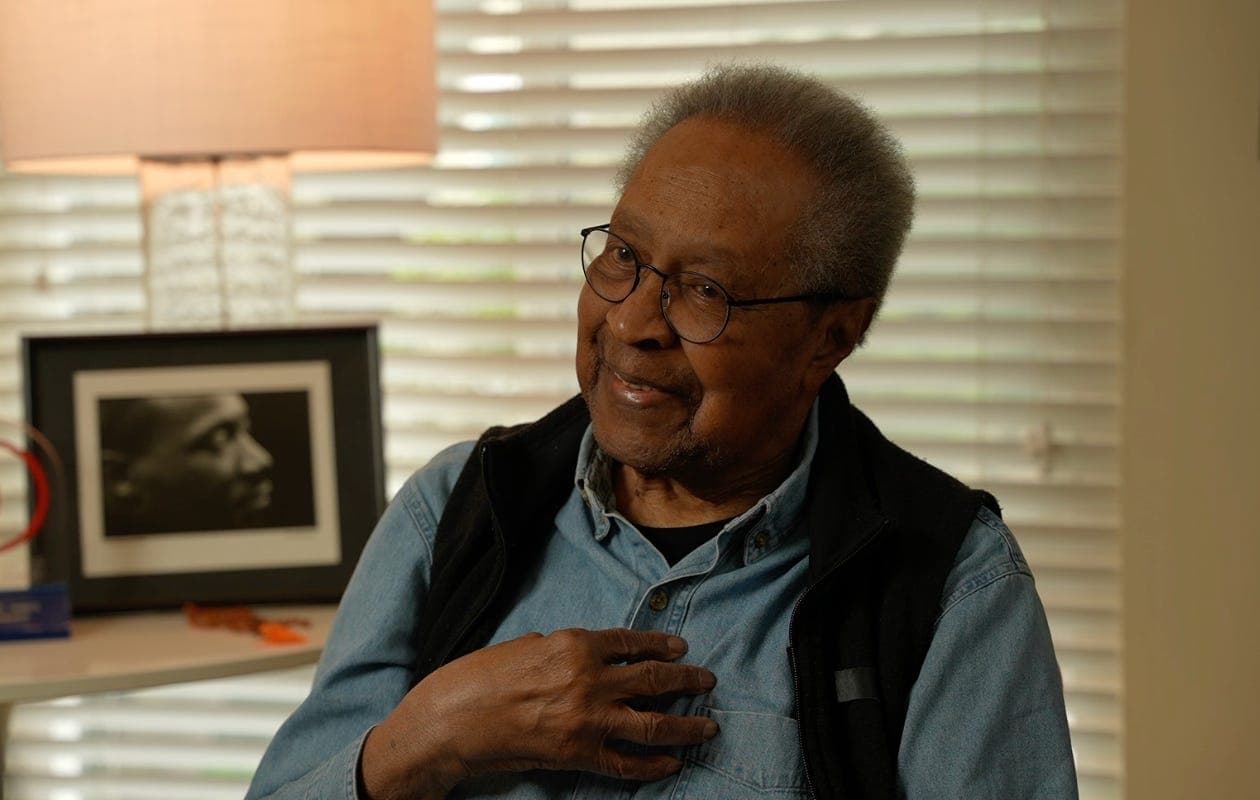
Episode Overview In this episode, Joe Lonsdale engages in a profound conversation with Dr. Clarence Jones, a vital figure in the civil rights movement and the personal attorney and speechwriter for Dr. Martin Luther King Jr. At 93, Dr. Jones reflects on his life experiences, pivotal moments in the fight for justice, and shares his perspectives on contemporary issues surrounding race, excellence, and community alliances.
Key Themes and Discussions
- Dr. Clarence Jones' Background
- Early Life: Son of domestic servants, attended a boarding school where he was instilled with confidence and the belief that he was beautiful.
- Education: Valedictorian in high school, studied at Juilliard, and became a successful attorney.
- Meeting Dr. King: Initially hesitant, he was moved by Dr. King’s sermon, which inspired him to join the civil rights movement.
- Key Contributions and Experiences
- The Letter from Birmingham Jail: Dr. Jones smuggled notes in and out of the jail to help compose this pivotal document.
- Mutual Respect with Dr. King: Developed a deep professional and personal relationship leading to collaborative work on many of King's famous speeches.
- Civil Rights Movement Insights
- Black-Jewish Alliance: Importance of collaboration across communities, with anecdotes illustrating Jewish support for civil rights initiatives.
- Humor in Adversity: Dr. Jones discussed how humor helped navigate the stress of the civil rights struggle.
- Contemporary Issues
- Critique of Current Racial Narratives: Dr. Jones expressed concern over the modern interpretations of race discussions, particularly regarding Critical Race Theory and diversity initiatives.
- Pursuit of Excellence: Advocated for a commitment to excellence that transcends race and ethnicity as a means to empower future generations.
- Advice for Younger Generations
- Pursue Excellence: Encouraged young people to be radical in their pursuits but grounded in a commitment to excellence.
- Truth and Understanding: Emphasized the need for open dialogue about race, urging both Black and Jewish communities to understand each other's histories and perspectives.
- Reflections on Love and Unity
- Power of Love: Dr. Jones articulated that love, even for those who may be hostile, is a personal power that can transcend conflict.
- Optimism for the Future: Despite historical and contemporary challenges, Dr. Jones maintains a hopeful outlook for unity in America through mutual respect and understanding.
Key Takeaways
- Historical Awareness: There is a critical need to acknowledge the historical contexts of race in America without assigning blame to current generations.
- Excellence Over Division: Advocating for excellence as a unifying principle can aid in overcoming racial tensions and fostering collaboration.
- Dialogue and Trust: Constructive conversations between communities are essential for healing and moving forward together.
Conclusion Dr. Clarence Jones' reflections serve as both a reminder of the struggles of the past and a call to action for the future. His emphasis on excellence, love, and understanding is a hopeful framework for addressing contemporary racial issues and fostering unity across communities.
For more insights and information, visit [Joe Lonsdale's Blog](https://blog.joelonsdale.com?utm_medium=podcast).
Written by AI. May contain mistakes. Listen to the episode to check what was said.
Transcript
Automatic transcript. May contain errors.0:00I want them to be as radical as I have been, okay, and continue to be, but I want them to ground themselves with a personal commitment to the pursuit of excellence. The pursuit of excellence has no ethnicity, has no race, has no color.
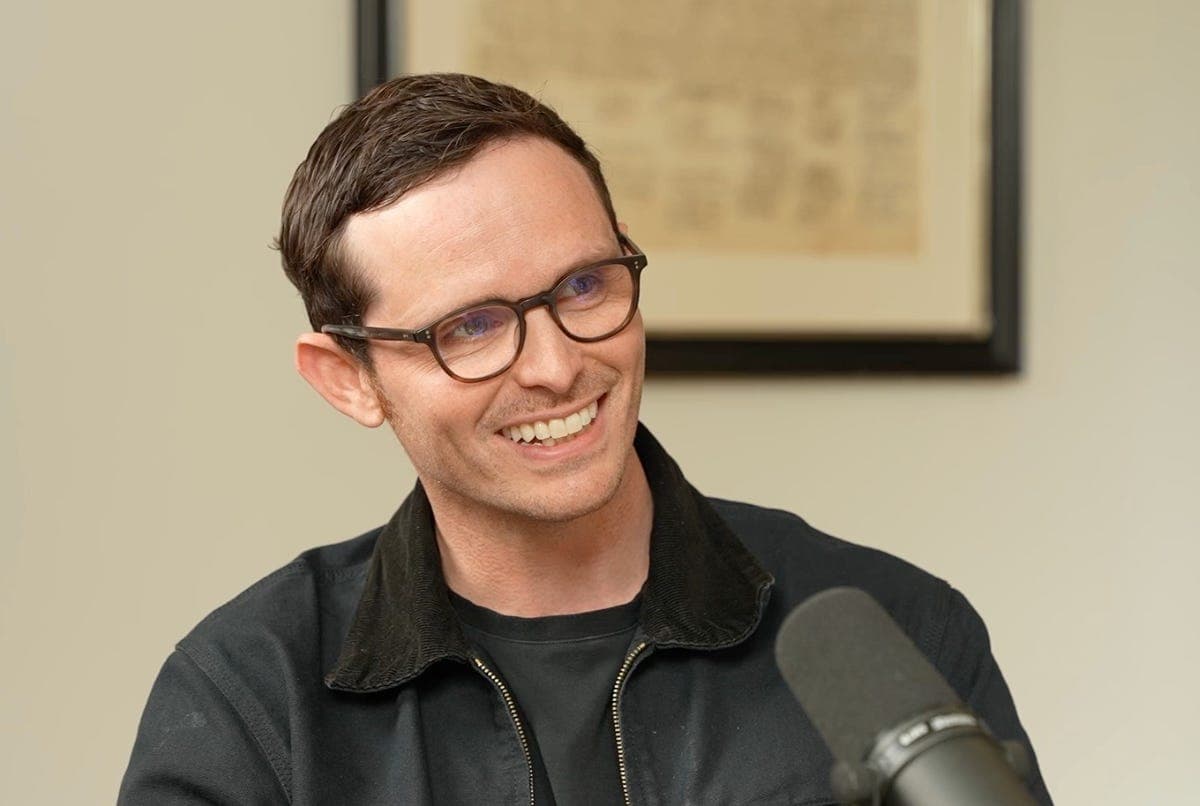
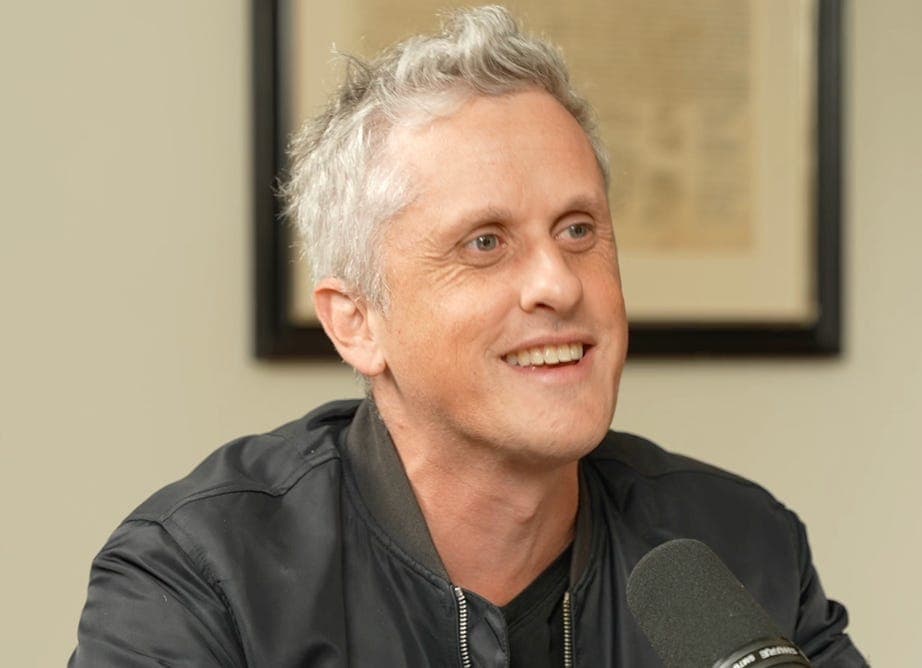
0:26I'm honored to be able to introduce Clarence Jones to you. He's a civil rights legend. He's 93 years old, but his wisdom and his insights about the world are more relevant than ever today. What he lived through with Martin Luther King Jr. was extraordinary. He was a big talent behind the scene, up and coming top lawyer in LA who was convinced to go out and fight for his people. Really bright man. He went to Juilliard. He was a valedictorian in his high school. He truly cares about excellence in a way that I think the movement today could really learn a lot from. There's a lot of voices out there that we all hear from today about race.
0:59And a lot of them we maybe shouldn't be listening to relative to someone like Clarence. Clarence is also passionate about the Black Jewish Alliance. Clarence worked with a lot of Jewish leaders when he was fighting for civil rights. And I think this is something all of us can learn from today about how blacks and Jews united to really fight for what was right as a key part of the civil rights movement. Clarence and I may not be aligned on all politics, but I think it's extraordinary what he accomplished. This is the man who smuggled out Dr. King's now infamous letter from Birmingham jail. He has some amazing stories about their fights for justice together.
1:29I think you'll really enjoy hearing from him. I'm Joe Lonsdale. Welcome to American Optimist. Dr. Clarence Jones, it's an honor to have you with us today. It's my honor to be here, sir. I'm curious, you met Dr. King, and you were up and coming. You were already a very successful lawyer at the time, and he needed help. And he came out, and it sounds like you were too busy to deal with him. At first, you didn't know who he was. You said, I don't have some tax problem, whatever. But then you listened to him speak, and you decided you wanted to help this man. How did you realize this was somebody you wanted to help?
1:56Well, I didn't want to help him. Actually, his lawyer, handling his defense in the tax case, had tried to persuade me. And I said, I don't have time to deal with no Negro minister, Peter, and so forth. In the event, to make a long story short, one day in the second week of February, Martin Luther King Jr. and someone who traveled with Bernard Lee, they showed up at my door at 2751 Highview Avenue, in altitude of California. He walks in, and Dr. King said to me, you know, Judge Huber Delaney told me so many nice things about you, so I figured I'd just come down and talk to you. Now he walks into my house.
2:36He says, Attorney Jones, you know, we have lots of white lawyers from New York and Chicago and the Northeast who help us. And he gets close to me. He says, but what we need, we need Negro lawyers, a young Negro lawyer like you to help us in our cause. So I said, well, Dr. King, I admire what you're doing, you know, and I wish you well. But, you know, I'm here in California. You know, there's not much I can do except I'd like to help Judge Delaney in any way I can. So he asked me some questions about my family. I told them it was my parents were domestic household servants. At the age of six, they put me in a boarding school, Catholic nuns from the age of six to 14.
3:25I was in a boarding school for so-called colored boys. The way I write about it in my book is that the Sisters of the Blessed Sacrament, from the age of six into 14, those white Irish Catholic nuns would say to me and the other boys, and I just remember what they said to me, Master Jones, be a good boy. We love you. Jesus loves you. And you are beautiful. Now, they said that from six to 14 years of age, ten and a half months a year now. And as you get older, it's not that you forgot, Master Jones, be a good boy. Jesus loves you, we love you. But as I got older 12, 13, or 14, the thing that I remember was that I was beautiful.
4:10They said that to us two or three times a week. So therefore, when I went to public school, 70 % white and 30 % colored. Okay. I still believe what those Catholic nuns had told me. Well, it seems like it gave you some confidence. You were the valedictorian, weren't you? Valedictorian in my class. That's amazing. Right, okay. Valedictorian in my class, and I tell everybody, you can't make this stuff up. That gave you confidence, you're a superstar, you're successful, but you weren't really involved in civil rights at the time. No, no, I wasn't involved in anything. So how'd you make the choice to, what inspired you to suddenly kind of work with Dr.
4:46King? He invited me to come hear him preach. I never heard Dr. King speak anywhere before in person. He asked me to come and hear him preach in, this is 1960. Baldwin Hills is like the black equivalent of Beverly Hills. Never heard Dr. King, okay? If you were a successful teacher, banker, musician, businessman, you lived in Baldwin Hills. Yeah. And he gets so many preachers and he congregations 1 ,300 people. Wow. Packed. I had never heard this man speak before. He said, brothers and sisters, ladies and gentlemen, the text of my sermon today is the role and responsibility of the Negro professional like you to aid our less fortunate brothers and sisters.
5:35He's speaking to you. Well, he was speaking to the contribution. And then I have to tell you, I was 29 years old. I had never seen another human being, you know, with hands, feet, legs like that. No. Never seen another human being speak like that. It takes a lot to impress me. I was mesmerized. Do you spoke to your heart as well? No, he was speaking to me. He was speaking to the whole congregation. But I never heard anyone, black, I never heard anyone. Okay? And then he got to a point in his sermon when he said, there's a young man sitting in this church today. my friends in New York and other places tell this young man a young lawyer.
6:23They tell me that his brains have been touched by Jesus. They tell me that when this young man goes into the law library and does legal research on any problem, he goes all the way back to the time of 1066, the Magna Carta, and William the Conqueror. So the first thing I'm thinking, how does this Baptist preacher know anything about the history of British constitutional law? How does he know that? And they tell me that this young lawyer, when he writes down what he finds on the pages, the words are just so compelling, they just jump off the page. So I began to think when the service is over, I'm going to find out who he's talking about, because I don't think He's talking to me.
7:13I'm going to find out who Dr. King is so impressed with in this congregation, because I need to know who this murderer is, okay? And then he paused for a moment. But he has forgotten from which he came. And then he went on to talk about my mother being a maid and a cook. And then he did something very unfair at the time. But then I knew how powerful what he did. He took an actual poem by Langston Hughes, Life Ain't Been No Crystal Stair. He took that poem, only he changed the lyrics in the poem to make it sound as if my mother was a person in the poem. And the poem talks about this Negro house servant scrubbing crystals, scrubbing stairs.
8:06And she pauses very automatically, and she says, I know I'm doing this for you, son. Don't you give up. Life ain't been no crystal stair. Mama's doing this for you. Well, when he did that, and he made it personal, I said, like it was my own mother, I started to cry. I'm sitting in, you know, third world from the third distance from the front of the church. I take a pair of glasses, put my sunglasses on, because I started to cry, because he had a vivid picture. Now, I'm still upset and emotionally, and I go after the service. He's signing autographs of books on the chairs, on the stairs from the pulpit.
8:51And when he sees me, he comes down from the stairs and he walks over to me. He says, you know, I never mentioned your name. I never mentioned your name, Mr. Jones. You know, sometimes we Baptist preachers, I didn't say anything. I just walked over to him, grabbed his shoulder, pulled him to me, and I said, Dr. King, when do you want me to go to Montgomery, Alabama? Now, in the first book, I wrote what would Martin say? The first chapter I call The Making of a Disciple. I'm 93 years old. I'm sitting here talking to you, and I can remember Dr. King pulling me over. 64 years ago. Like yesterday. And sometimes during the course of that 64-year-old journey, not that I get that despondent often, But sometimes when I hear I'm bombarded with challenging questions, either about the legitimacy or authenticity of his message, the relevance of his message today or the durability and consistency of my own commitments, sometimes I'm bombarded with these.
10:08I think about that. Okay. You ended up having a mutual admiration, obviously. He said that somehow you were in his head, and you could hear how he talked and how he thought. And so you wrote a lot of his most famous speeches with him because you really understood his voice. There's an old expression, the Lord's not finished with me yet. I have the capacity to resurrect in my memory the sound of Martin King's voice. I can hear his voice in my head, just like it was 64 years ago. So tell us a little bit about some of the experiences. One of the ones that stood out to me was the letter from Birmingham jail.
10:44It was very famous. You actually smuggled in a paper. Had you written some kind of help them with the outline or anything on that? What happened was that April 12th, Martin King leads a demonstration. He gets arrested. Arthur Shores, a major civil rights lawyer, was out of town. As his lawyer, I was the only person who could go in and see him. So April 12th, Friday, I never will forget this. April 12th, I go to see them at those times. You know, it's before they knew who I was, so they would, I'd take my wallet out and show my identification. But they didn't pat me down, you know, they knew who I was and so forth.
11:21I don't want you to misunderstand. I'm just going to state the facts. Normally, I would be wearing a custom tailored shirt and a custom pinstripe suit and a Rolex watch. I was dressed to the nines, as I said, you know. and they knew me because I was such a contrast, you know, this Dr. King's New York lawyer, you know. So I went in to see Martin, and I said, Martin, we got a real problem with bail money. He wouldn't even, he dismissed, I said, Martin, are you listening to me? He said, well, you and Harry Belafonte have to sign that. I said, that's why I'm in here. I just talked to Harry Belafonte.
11:57He said, I should come in and talk to him. He wouldn't hear any of it. He said, have you seen this? And I said, what is this? And he shows me a full-page ad from the Birmingham Herald, the major daily newspaper in Birmingham. And a group of white clergymen had taken a full-page ad in the Birmingham Herald, an open letter to Dr. King, but to the public. And in effect, this letter said, Dr. King, you know, like in Birmingham, like in other southern cities and other places, you know, we are trying to work out our differences with Negroes, okay? Your being here is not a help. You're an outside agitator.
12:45And the best way you can do is leave town because all you're doing is stirring up trouble. And you don't understand. It takes time, you know. We have to wait for these things to happen. Well, when I went in, Dr. King had taken any piece of blank newspaper that he had, any paper towel, anything that you could write on, and he started writing a reply. So he says, Clarence, what's this? He starts giving me pile number one, pile number two, pile number three, so forth. He says, take this out and give it to Dora McDonald, his personal secretary. and you got to have her tight. When you come back, you got to bring me some paper.
13:28Okay. So I stuffed these things, these pieces of paper in my pocket. Now I can visit him twice a day. Okay. In the morning and in the afternoon. So the next morning when I came in, I bought blank sheets of paper under my dress shirt. They made you hide it. They wouldn't just, they wouldn't let you just bring it to him. You had to hide it, huh? That's crazy. No, no, I just put the, no. I just put the white sheet of paper. They just never touched me. They just let me go through. But it's crazy they wouldn't just let them have paper in jail anyway. You had to hide it to bring it to them. That's interesting.
14:06Now that I think about it, somebody else asked me that question. We just never thought about it. I guess maybe if he asked for paper, they thought he might be trying to agitate something. There you go. You know what I'm saying? But twice a day in the morning and in the afternoon, I would take what he had written, put it under my shirt, and then I would take the blank sheets of paper that he needed and give it to him. And then the following, that afternoon, or if it was the afternoon next morning, that went on twice a day for five days until April 20th, Friday. I come back to the AG Gasset motel I'm staying at, and I walk in, and the people at the front desk, they say, Harry Belafonte has called you three to five times.
14:51He's trying to reach you. I said, well, he says, so you want a ticket? I said, no, I'll go up to my room. So I go to my room. And Harry Belafonte says, how soon can you get to New York? I said, what's going on? He says, how soon do you need to be? How soon do I need to be? He says, ASAP. So I got what I think was the last plane out of Birmingham. Harry had explained to me that as much as he wanted to say it with a phone, that the Rockefeller family wanted to help. Nelson was helping the family. No, he said the Rockefeller family. He didn't say Nelson. He said the Rockefeller family. I remember that distinctly.
15:28Call this number when I get in. So I called this number. The man's name I called was Hugh Morrow. He was a PR person for the Rockefeller family, Governor Nelson Rockefeller. He instructed me, now this is April, Friday, April 20th, 1963. Yeah. The Saturday morning, the Chase Bank was then at 46th Street, and Avenue in America is not where it is now on Park Avenue somewhere. Banks were not open. It was Saturday. There were no ATM machines. Yeah. So I go into the Chase Bank, and there is Nelson Rockefeller, the governor of the state of New York. David Rockefeller was the CEO of the bank, right? David Rockefeller was the president and CEO.
16:12Yeah. But Nelson was Nelson that day. So they both helped you. Yeah. Wow. I walked into the bank and David is taller than Nelson. He just died at 102 about seven or eight years ago. Yeah, I know. I know. He's taller than Nelson. Yeah, I remember him. They go into a bank. I never paid any attention. I just go to a bank. Never paid any attention. The only time I ever paid attention to a bank vault was in gangster movies. I'd watch a gangster movie and somebody would say, this is a stick up. And I'd never, you know, I'd go into a bank, I'd even... You don't think about the place of all the money here.
16:52I'd never even thought about a bank vault, okay? But when I went in this time, there was this huge, like, wheel on a ship. Yep. You know? That's a safe. I love it. Turn that ship. And when that door opened, the bank vault door was that thick, okay? And David, who was taller than Nelson, walked in. As I said, repeat to me, I said, walked in. Grabbed a bag of money. $100 ,000. Wow. I had a chain, a wrist chain made for me. Wow. I said, geez, I'm so thankful and so forth. And then a case for carrying the money was a change of wrist. Wow. So I want to leave. He says, oh, no, no, no, no. I said, gentlemen, you have to go over and see that man sitting there.
17:38So I said, what? So I go see a man, and I go over there, and he's typing. He says, your first name is Clarence. What's the B for? The B stands for Benjamin. So we're sensing Clarence Benjamin Jones. I said, excuse me, what are you typing? He said, well, this is a promissory note. You know, we're a bank. We have to have a record. We can't just give you money. So I signed this promissory note. It was a promissory note on demand. I signed it for$100 ,000 in 1960. That was real money back then. In 1963. So I sign it, and I'm pissed. I'm angry because I wasn't anticipating this. Yeah. And I go to a pay phone.
18:23I call Harry Belafonte. He says, did everything go okay? He says, yeah, but you didn't tell me I have to sign a promissory note for$100 ,000. He says, better you than me. I said, but you have the money and I don't. Okay. Tuesday, that was on a Saturday. Yep. I take the money and the cash, I go to Birmingham. I'm in my office on a Tuesday morning. As a messenger comes in from the Chase Bank, they ask me some identification. I show them who I am. This gentleman says, can we go into an office, private office, my office? I go into the office, and there's an envelope mark. Clarence B. Jones, personal confidential.
19:01I open the envelope, and there was a note that I had signed. And it says, paid in full. That's good, guys. I said, damn. I didn't pay it. That's nice of them. Okay. So they took care of you. Okay. And David was a great man. That's a wonderful story. Tell us a little bit of what it was like to be, you know, during the civil rights movement, you had protesters who were beaten up. The FBI was spying on you. You had all sorts of this, like, really, you know, kind of tough time going on. But what was that like living through that? Was it scary? Was it like you were in a battle together? Would you wake up kind of worried about something, but you keep fighting anyway?
19:37How did it feel being in a minute? Well, there came a point, and I know we shared about Andy Young. Andy Young was saying the same thing, you know. Andy Young does it very humorously. The way we dealt with the stress, we had to humorize it. And Martin King had a kind of strange sense of humor. He would say, now, Andy, if something happens to you, don't worry. I'm going to preach a sermon that you've never heard. And he says, now, Andy, I think I can preach him into heaven. Now, Clarence, I don't know about you, but I will do my best. If something happens to you, I will give, I will preach. I'll say, Lord, let him in.
20:23Let him in, Lord, let him in. So we used to, he used to, we used to externalize. You had to joke about it a little bit. We had to externalize the reality because none of us, including myself. Okay. I'm 93 years old. Okay. I never expected to live beyond the age of 50. I thought if I lived behind the age of 50, that would be old. It would be amazing, yeah. Okay. I just figured. And so you lived that way. I didn't have insurance. You didn't buy insurance for it. You were living in the moment fighting for - Yeah, you didn't think about estate planning or anything. Because you never thought you were going to live beyond the age of 50.
21:03I want to ask also, because you worked on so many of Dr. King's speeches, with him and you knew how he thought, a lot of us were really inspired by how he would go back to the Enlightenment values. He would go back to the founding values of the U.S. and our Constitution and explain to people, we're not living up to these values of our founders of our country, of America, in a way that, frankly, people don't do that today. But he really knew that history, and he really drew upon it in a way that inspires a lot of us who do believe in this country, that we need to live up to our country's ideals.
21:29Now, there was a speech that I had nothing to do with except over the phone. We talked about it. There's a speech he gave March 29th at the National Cathedral in Washington, D.C. The speech is called Sleeping Through a Revolution. Talks about Rip Van Winkle, Sleeping Through a Revolution. That speech that he gave at the National Cathedral, which we talked about over the phone, content. Well, you know, You know, you didn't have texts. You couldn't text each other those days. Yeah, you couldn't text him anything. So we would talk about texts as things I would suggest to him. But that speech in which he talks about Rip Van Winkle, Stephen Wim, one of the most powerful speeches he ever gave, equal to the speech he gave, of course, on April 3rd at the temple in Memphis.
22:25If I had to bookend Martin King's life, I'd bookend them with two things. The letter from the Birmingham jail and the speech he gave opposing the war in Vietnam. Time to break the silence. Those are the two most powerful. He'd written a lot of speeches. Now, let me say something to a question you didn't ask. One of the reasons I was able to be so effective with Dr. King, that I had gone to the Juilliard School of Music before I went to law school. Interesting. And when you go to the Juilliard School of Music, you develop, they have something called ear training. You develop the capacity to memorize enormous amount of pages of music.
23:12I was a clarinetist, I was a clarinetist. But you develop the capacity to memorize pages and pages of music. but you remember that the note A has 440 vibrations per second. Note A, you hear it. Note C, 426 vibrations per second. I have to speak in languages you would understand by telling you performers like Barbra Streisand has what is called perfect pitch, meaning that when she sings a note, it's neither above the line sharp or below the line flat. It's the right number per second. Right, right. Ray Charles, perfect French. Frank Sinatra, perfect pitch. Okay. This young girl, Taylor Swift, perfect pitch.
24:04The ability to be able to sing the note exactly with the vibrations per second, need to flatten. That was the power of Frank Sinatra. I had that capacity. And notwithstanding, I'm 93 years old. I still have the capacity. You still do. When he gave his speeches, you were able to kind of get the tones and tunes right. I still have the capacity to write. And as I write, if I speak it, I can hear it. I can hear my words. The advantage I had to Dr. King, that I could write words. and I could hear how they would sound when he spoke them because I had an ear that was attuned to what the words would sound like.
24:55And this was a big part of his power is how he played it. It's almost like a singing then along with the worship. Oh, unbelievable, unbelievable. Never. That's amazing. Never, I mean, it's like, you know, I mean, And I think of great people like Aristotle and Schopenhauer and Shakespeare. You know, these are great people. This is a very important point. I'm asking you questions about the intellectual side, or I was asking questions about the intellectual side of the founding values, but you're telling me, listen, there's that side, but even more important is this power of the speech and of the music and of how it is to people.
25:29And I believe that came from his encyclopedic knowledge of the Bible and a more than average knowledge of the Talmud. Wow, really? Jewish. I'm Jewish, so I studied Talmud. That's amazing. He was to me... He studied Talmud. I didn't realize that. Well, it's to me the first and only... I haven't met a black preacher, okay, that had as a commanding knowledge of the Talmud, as Dr. King had. I want to drill in on this because I'm, you know, as a Jew, I'm very proud of the role some Jews played in the Civil Rights Movement, at least from the understanding they did. So you worked alongside many of them.
26:13Were there a lot involved with you directly that were helpful? Helpful. That's the understatement. I always like to put the, see, one of the things, I have a responsibility as a 93-year-old survivor. I have a responsibility to not speak to you or speak to other people about the role of Jewish people in the Civil Rights Movement. I have a responsibility to speak to you not about what somebody told me, not about what I heard, but what I saw and what I heard. Ironically, I would challenge Dr. King. I say, you know, you're a bad, you know. I mean, I think you are unbelievable. But let's just face it, Martin.
27:02There's no way that 12 % of the population, we Negroes, are going to get 88 % of the population, white people, to do something they don't want to do. It's not going to happen. Now, I don't mean to denigrate you, because you're the best. I've never seen anybody speak the spoken word so magnificently to you. But the fact of the matter is, we're only 12 % of the population. He says, well, Clarence, we have to try to raise the consciousness and so forth. So I'm a very outspoken person. I mean, I'm not an introvert. I'm an extrovert. I could tell. Okay. So I would be places and I would go and I would see white people.
27:43And I would go up and I say to them, excuse me, why are you here? And it'd be taken aback. I said, no, why are you here in this picket line? Why are you here? And these white people that I raised that question was, they would say, you, Attorney Jones, you and your Dr. King should know that I am here, or my brother or my husband or I are here, because this is what our grandparents would want us to do. So I said, excuse me? Yes, you see, my grandpa, or sometimes they say their grandma or grandpa, they died in the Holocaust. You heard about the Holocaust? Oh, yes, I know about that. Well, I am here because I know that this is what they would want me to do.
Read the full transcript
28:41So you go back and you tell your Dr. King that I'm doing this. we respect what he is doing and what you're doing, Dr. Jones, so don't misunderstand me. But we're doing this not because of your Dr. King alone, but because this is what our grandparents would want me to do. And when I tell the story, I choke up. And why do I choke up? And I tear up. Because you can't make that up. What I'm telling you you cannot make what I'm telling you up. Okay? I was there. I saw it. I want to tell you a story that's repetitive. You've probably read about it, I've heard it and other things, but I want to tell you the same story.
29:37Dr. King and Rabbi Abraham Joshua Heschel, conservative rabbinical scholar from Poland, Mm-hmm. They were invited to come to the Catskills. It was Rabbi Heschel's 65th birthday. He's a conservative rabbi. So they go to the Catskill Mountains, and they go into this assembly hall, and locked arms and arms around this huge hall, there are these rabbis. and as Rabbi Heschel and Dr. King walked to the middle of the room since it's just celebrating Rabbi Heschel's birthday right? They began to sing in Hebrew we shall overcome the anthem of the civil rights movement. Dr. King tells me the two of them stood in the middle of the room and wept.
30:39and soft. Our people have a lot in common. I want to ask you a tough question on this, if you don't mind. There's no tough question you can ask me. So this is something that's very important to me personally. And I think there's a lot that both sides have done to be allies over the years. And if you look at the younger generation right now, there's a lot of philosophies they're taught. And they say that there's groups that are either the oppressed people or the oppressors, as in the DEI thing is you're oppressed or you're oppressed or isn't all. And they see that a lot of Jews started to become a lot more successful the last 50 years.
31:06and they say, well, those Jewish people, they're successful, they're oppressors. And it's really sad right now that if you ask a lot of young black people, they tend to be biased against Jews these days. And they say, oh, they're successful, they're oppressors, they must have got there by treating us wrong. It seems like the people, we aren't as close as we could be. It's not as positive. And it's a hurtful thing. Is there a solution for how to overcome this? Should young black people be learning this history more? How do we bring these sides together? There is a solution. Truth. There is a solution.
31:34You have to speak, people like me have to speak both to black people and to Jewish people, as I try to do. And I tell, see, when you don't have to make shit up, excuse the expression, okay? I don't have to invent the story about what I just told you as to why these Jewish people said that. That was real. Yeah, it was real. Okay? So the challenge we have now, and it's the challenge of both communities, is that we have to go back and reground ourselves. And by regrounding, what that will enable us to do is that if I am a black person, totally committed to an alliance with the Jewish community, does not mean that I have lost my ability to criticize.
32:33Okay. But the difference is, you see, someone like me, I know it. when Jewish people hear me, if I say something, well, I don't think Israel should have been doing this or doing that, they accept it. You know why they accept it? Because they know from which I came. Yep. Okay? They can accept. They're not going to say, oh, he's an anti. No, no, no, no. On the contrary, They respect me. And when I hear a Jewish person critical of black leadership, I don't assume they're racist. I assume that they're speaking the facts that they want to bring to my attention. Yeah. Yeah. That's to be from a place of trust and care.
33:30That's correct. Let's jump to current events a little bit. I have a couple of questions on current events for you. Sure. I was really interested to see your letter to Governor Newsom in 2020 in opposition to the ethnic studies curriculum we have in California public schools. You wrote that it excluded the intellectual or moral basis for radical nonviolence advocated by Dr. King. And you said they were promoting blackness over excellence. What's missing or wrong with some of these approaches? Well, I stand by. I am not opposed to diversity or inclusion or whatever the current verse is. But I want to ground myself on a commitment to the pursuit of excellence.
34:07I love that. That has no ethnicity or color line. I love how you said you want to ground things in excellence too at first, because you are a very talented person who used excellence to have a change. I want to ground, and I urge a generation, the generation behind me, I want the generation, let's let me be very precise, of blacks. I want them to be as radical as I have been, okay, and continue to be. But I want them to ground themselves with a personal commitment to the pursuit of excellence. The pursuit of excellence has no ethnicity, has no race, has no color. This is indicative, you know, of a larger debate in the country right now.
34:55There's a clash between the teachings of Dr. King. And there's other narratives such as Derrick Bell's critical race theory. So King looked at the Declaration of Independence like we were talking about earlier. Well, CRT says America is inherently racist and discrimination is necessary to right the wrongs. So there seems to be that. Well, actually, I knew Derrick Bell very well. He used to sit in my home in Riverdale. I knew Derrick Bell. And I think that we have to be careful. Sometimes I hear Derek Bell described in ways that are just not accurate of what he wrote, because I knew him. Okay. Now, we are at a critical, we are at a point where there is a contention about so-called critical race theory.
35:45The way it's being taught, yeah. Okay. So I like to cut through all of that and simply say, what I teach, this is what I teach. I teach about the reality of the American experience, you know, the reality of the American experience is. There were 300 plus years of slavery in this country. You didn't have anything to do with it. I didn't have anything to do with it. Your brother, your mother, your sister, neither of us did anything. But that is an historical fact. It's true. And as part of that historical institution of slavery, they developed a companion ideology to justify that system. And that companion ideology has some explicit words.
36:34But the words are real. They're called white supremacy. Because they had to justify, how can you enslave? How can you be comfortable enslaving someone else unless you give them a rationale as to why they should be enslaved? Well, that is part of the history of the United States. Successor generations of white people, successor generations of black people are not going to be able to disown that history. It's the question of how you interpret the impact of that history on current relationships between black and white people. Hmm? You can't walk away from it. It does seem that there are different approaches a little bit that Dr.
37:25King wanted versus what some people are doing today. Do you see some things going today too far, discriminating in order to try to fix it, or is that the right answer? Or how do you think about it? Well, the right answer. The right answer is a historically accurate answer. To first appreciate and understand in everything we do. I mean, you can't. You had nothing to do with the institutional slavery, neither did I. You had nothing to do with the origin of doctrine of white supremacy, neither you did it, or I did it. We have to understand it, you're saying. But it's a historical legacy that came back from a generation, and it had and continues to have an impact, believe it or not.
38:04on generations today. We have to be candid, thoughtful, and courageous enough to acknowledge that without engaging in a name called, he's a racist. You know, you understand what I'm saying? Yep. Facts are facts. One interesting debate today is there's a debate over colorblindness, and I thought your perspective was really interesting on colorblindness. Can you share a little bit of that? Oh yeah, if you're colorblind, then you need to go see a doctor. You need to be aware of it to understand what's going on. Yeah, you can't. There's no such thing as being colorblind, okay? What the person is trying to say is when I see color, I don't associate a particular way of thinking.
38:47But I say if you're colorblind, you need to go see a doctor. There's no such thing as colorblind. You need to see color. Seeing color is the most beautiful thing in the world. It's what we attach to that color. that's beautiful so some of the irony today which a lot of us are struggling with is you know 60 years later some of the gallup polling says race race relations are are much worse now than than they were the last 20 30 40 years race relations are tough so a lot of the polling i think the dialectic of that is yes or no i think that the yes is because people see more know more and some people by access to this additional knowledge.
39:32You know, the thing that's so scary now is to see the objective ability of how you can manipulate opinion. You can, the technology exists because you can actually manipulate, okay? Yeah, people get more attention by making us more negative and fight over things sometimes. That's correct, that's correct. And so that we have to stop being afraid or self-conscious about talking about race. I say, turn it on its head. We have to go right into it. We have to go right into the headwind of race and start talking about it. Because if we don't talk about it, the more we talk about it, the better understanding we will have.
40:15The less we talk about it, the less understanding we will have. So one other point on this that's a little controversial, but I'm curious. your take on it, is one of the things data shows us is one of the best predictors, if you want to fight inequality, if you want to fight poverty, one of the best predictors is the share fraction of children who are single parents as opposed to two parents. And that's obviously, it seems to be a big problem in a lot of communities around America. Hello. And what do we do about this? Patrick Moynihan. Yeah. In the Moynihan Report. Yeah. He started talking about the crisis going on with the black family.
40:47People get, people got really angry when people mention this sometimes these days. But what do we do about it, though? What we do about it is to have the capacity to stop getting angry and learn how to address the issue. They jumped on Daniel Patrick Moynihan. They did, yeah. You know? One time I said it on Twitter a few years ago at something, and they jumped on me too, so I shut up. Yeah, no, I understand. Yeah. I don't mean you, you know. Yeah. But we have to have the capacity to deal with the truth. So you did an interview that really inspired a lot of us with the free press. I thought it was a really wonderful interview.
41:16We're friends with them. And you were asked about advice for young black Americans. and you talked about excellence, but can you give us a few thoughts on what your advice for people are? The most important takeaway from the heritage, if you look at the history of the so-called black experience, going back to Ida B. Wells, going back to Frederick Douglass, going back to giants of literature and history, there's a common line, and that common line is a commitment to the pursuit of excellence. Commitment to the pursuit of excellence has no color. It has no ethnicity. It's neither Jewish. It's neither French.
41:58It's neither black or Scandinavian. Commitment to the pursuit of excellence. We have what I like to call a shared legacy in this country. It's unavoidable. you didn't have anything to do with it. People don't know that there were two drafts of the Declaration of Independence. You know what the problem was? They were trying to wrestle with the fact of the fact that there were slaves. Slavery. But they wanted to assign the responsibility for slavery to King George. You did that to us. You want to blame him for it, yeah. Yeah, don't put that on us. So that was a struggle. Even at the time, they knew it was a sin.
42:44That's correct, that's right. That's right. Okay. The truth will set you free. For example, we need to stop this nonsense going on with anti-Semitism and Blacks. We need to stop that nonsense. Okay. We need to come to a point where a Jewish person, if they don't know me and question what they might consider a criticism of an action of Israel and so forth, before they have a preemptive reaction to criticize me, they need to know something about my history. And similarly, you know, I hear blacks talking about, the Jews do this, the Jews do that. And I say, what are you talking about? I mean, let's just look at the history.
43:36The history is that to 5 % of the population, what they've been able to do, not only in the contribution to this country, but to enabling us to be free is often forgotten. Yes. Well, thank you for that. It's often forgotten. So my credentials are, you goddamn, if I want to be critical of Israeli policy, I can do it. you know why because I got the cred to do it yeah so you know there's no respect and a Jewish person can be critical of some Jewish people I know can be critical of black leaders because I know the Jewish people and I know the particular Jews and I say you can say whatever you want because you got the cred yeah the trust and respect and credibility you got the cred I know from when you came so you can say whatever you want so I want to end on an optimistic note and a lot of your work is very inspiring so it's not too hard with you but you know you've seen America at its worst with people burning churches and MLK's assassination and everything.
44:39And I think hopefully you've seen America some things that were its best as well. And how do we acknowledge the past mistakes but move forward in a way that unites us together? What's the way we're gonna be able to unite and move ahead from this? Love is a funny thing. I don't love everybody. There's some people I can't stand being around. But I have the capacity. I have the capacity of loving someone who may not love me because of who I am. Because I am committed to the pursuit of excellence and an undying belief in the power of love. So you can call me 10 ,000 names all you want. You can even spit on me.
45:28I don't give a damn. Because when I made a commitment to love you, there's nothing you can do about it. That's not in your power. That's my power. And so what I want to do, I want to convince you to have that same capacity. We don't have a choice. See, when you're 93 years old, every once in a while, everybody who gets old, every once in a while I open my eyes and I say, Lord, is this the last day? You know, I put my face, Lord, is this the last day? And I stand up and look in the mirror and say, no, this ain't the last day. Why? Because I just looked at myself and I said, damn, you are beautiful.
46:09You ain't going nowhere. Dr. Jones, that's a beautiful note to end it on. Thank you. Thank you. It's an honor.
From the publisher
Dr. Clarence Jones is a giant of the civil rights movement. As the personal attorney and speechwriter for Dr. Martin Luther King Jr., he risked everything to help save the soul of America, including smuggling scraps of papers in and out of Birmingham prison that would become Dr. King's Letter from Birmingham Jail. In fact, Dr. Jones never thought he'd live to see the age of 50.
Today, he's 93 years old, and one of the last living civil rights icons. In this episode, we trace the journey of an American hero — the son of domestic servants who became valedictorian of his high school and studied at Juilliard before becoming a successful entertainment lawyer. That is until Dr. King showed up at his California home asking for legal assistance. After initially turning him away, he went to hear Dr. King preach, and his life — and the direction of our country — changed forever.
We discuss the key moments in his fight for justice, the significance of the black-Jewish alliance, and the legacy of Dr. King, including his thoughts on today's debate over DEI, Critical Race Theory, and colorblindness. He also shares his powerful approach to radical non-violence and his advice for young people today: pursue excellence. Dr. Jones has lived an extraordinary life, and his wisdom on issues of race should be heeded over many of the voices in popular culture today.
SHOW NOTES:
Dr. Jones was recently awarded the Presidential Medal of Freedom, the Nation's highest civilian honor.
Last year, Dr. Jones released his memoir, "Last of the Lions."
Learn more about Dr. Jones' work through his foundation and as Chair of the Spill the Honey Foundation, which continues the legacy of the Black-Jewish Alliance.
This is a public episode. If you would like to discuss this with other subscribers or get access to bonus episodes, visit blog.joelonsdale.com