In short
Podcast Summary: Joe Lonsdale: American Optimist - Episode 89
Episode Details
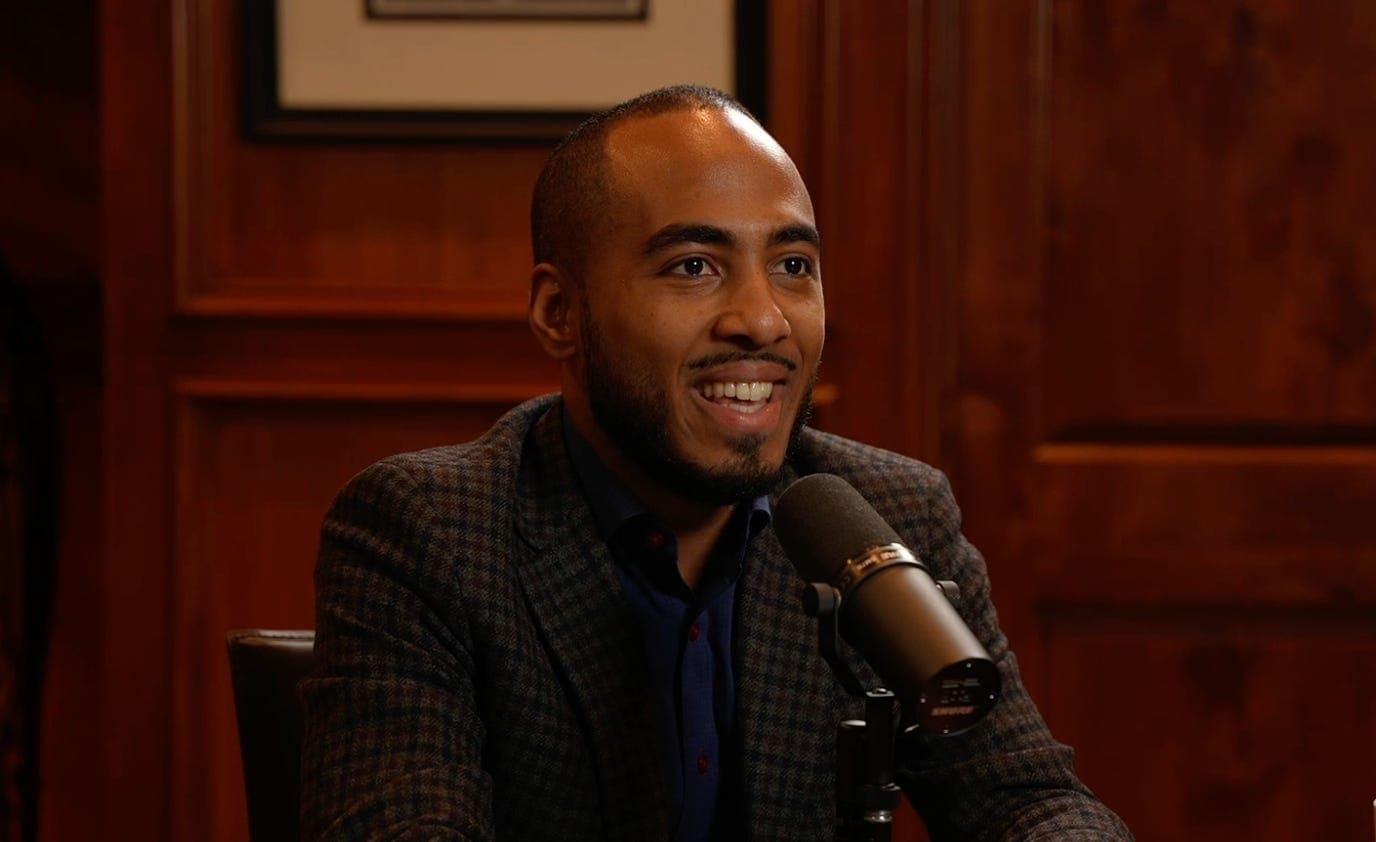
- Title: Coleman Hughes on "The End of Race Politics" & the Worst Ideas Done in the Name of Diversity
- Description: Coleman Hughes discusses the implications of race politics, critiques current diversity exercises in elite institutions, and presents ideas from his book "The End of Race Politics: Arguments for a Colorblind America."
Key Themes and Discussions
- Racial Segregation in Education
- Columbia University Experience: Coleman recounts his experience during a freshman orientation where students were divided by race.
- Purpose: To reflect on racism, portraying minorities as victims and whites as beneficiaries.
- Result: Created hyper-awareness of race rather than fostering unity and friendships.
- Critique of Race-Based Ideologies
- Coleman argues against the narrative that focuses on racial identity as a primary lens for understanding social issues.
- He emphasizes that socioeconomic factors are more significant proxies for addressing societal disadvantages.
- Colorblindness as an Ethical Framework
- The idea advocated by Martin Luther King Jr. that individuals should be judged by their character rather than the color of their skin is central to Coleman's argument.
- Coleman promotes a return to colorblindness—not ignoring race, but moving beyond it in public policy and social interactions.
- Criticism of Current Diversity Practices
- Coleman critiques the notion that “diversity is our strength” as a platitude that lacks depth and understanding.
- He points out the potential negative impacts of diversity exercises that can reinforce divisions instead of fostering genuine understanding.
- Cultural and Historical Context
- Coleman acknowledges cultural differences but argues they should not dictate public policy.
- He stresses that race has been misused as a category for discriminatory practices and that historical injustices should be addressed symbolically.
- Proposed Solutions
- Emphasis on socioeconomic status rather than race in public policy.
- Public policies should be designed to assist those who are struggling today, irrespective of historical contexts.
- The Role of Art and Music in Integration
- Coleman highlights jazz as a historically integrated art form that transcended racial boundaries.
- He draws parallels between artistic merit and the meritocratic ideals that should guide social policies.
- Future Outlook
- Coleman expresses optimism that new generations will possess a more colorblind perspective, as children naturally do not view race as a barrier.
Key Takeaways
- Meritocracy vs. Race: A merit-based system is essential for fairness and should be the foundation for policies aimed at helping disadvantaged groups.
- Skepticism of Race Politics: Current race politics often perpetuate divisions rather than resolve them.
- Socioeconomic Focus: Addressing disparities should focus on economic status rather than racial identity.
- Cultural Awareness: Recognizing cultural differences without ascribing a moral hierarchy to them is crucial for societal cohesion.
Conclusion Coleman Hughes advocates for a shift toward a colorblind approach to race relations in America, emphasizing the importance of socioeconomic factors over racial identity in shaping public policy and social discourse. He critiques current practices and offers a vision that focuses on unity and character over division and identity.
Written by AI. May contain mistakes. Listen to the episode to check what was said.
Transcript
Automatic transcript. May contain errors.0:00I enjoy the part of the book where you highlight some platitudes about race that permeate our society. and one of them is like diversity is our strength. Like, why is that a dumb thing to say and how should we be talking about it instead? Yeah, I think this is something a lot of people say, a lot of people want to believe, though I'm not sure if they deeply believe it in every sense. So for example, I've never heard anyone say that Earth, Wind & Fire was great, but they really needed a white guy to round out their sound or that like the Beatles were an excellent band. They would have been perfect if they had a Mexican guy.
0:35Coleman Hughes is an important rising voice in America. His new book, The End of Race Politics, is a great antidote to a lot of the nonsense about anti-racism that we're seeing. He speaks with authority from his own experience and is a great intellectual. Coleman's an important voice for a lot of these issues we're confronting in our country. He's somebody I've been following for a few years. I'm excited for you to get to know him today. I'm Joe Lonsdale. Welcome to American Optimist. Coleman, thanks for being here. Good to be here. Thanks. Coleman, I want to start with Columbia University, which is all over the news.
1:05You attended Columbia, and in your book, you tell a story about an orientation where they separated the students out by race, which you thought obviously wasn't very helpful. Can you explain what happened? And also, is this part and parcel of some of the anti-Semitism, of this other nonsense we're seeing? How does it all relate? Yeah, so when I enrolled at Columbia University, I think it was 2015, they had a student orientation. And they did this exercise where they had all the kids go to different corners of the room based on their race. white kids in one corner black kids in another corner Hispanic etc so right off the bat I had to choose between black and Hispanic which you know there's no really principled way for me to choose there you're kind of half each I'm half half yeah so I think I chose black for whatever reason and the intent of this exercise was to somehow get on get us to reflect on racism with the assumption that the students of color were victims of racism and the white students had benefited from racism.
2:04That was the framing of this exercise. But the actual effect was just to make me now sort of hyper aware of my race. And other people probably around you too. Yeah, right. Like where I had gone into the room, just, you know, hoping to meet my fellow classmates, learn their names, learn something about them, see if I'm, you know, if I have something in common, a basis for a friendship. Now I'm thinking, okay, so they now see me as the black guy and the victim of racism. That's how this is framing me. And I thought that actually had the opposite of the intended effect of bringing us together. I thought it made me, if anything, it made me almost paranoid about how I was being viewed now.
2:50And it drove us further apart, I think. You know, as for the overall tenor of Columbia University and, you know, what's happening now, I think my experience at Columbia is, you know, every week, almost every day, you would hear a student make some offhand comment denigrating white people. In four years there, I'm not sure I ever heard a student make a denigrating comment about Jews. Interesting. That tells me, uh, there is a general widely, uh, I shouldn't say widely shared because a lot of the students actually didn't agree with it, but there was a spirited, uh, kind of passionate sect of true believers that viewed everything through the lens of whiteness, blackness, oppressor, and oppressed.
3:34I made this point the other day, and I think it's a good way of crystallizing it. I remember when I I was reading the arguments for and against slavery in the 1850s when this was a very live debate in America among intellectuals. It's really tough for me to read the old Abraham Lincoln debates, Lincoln-Buglis debates, because they both have to come from this side where they're on the white men's side, and they're both speaking in ways that are very offensive today. Oh, for sure. Yeah. Yeah. And but what I noticed and what I picked up on reading those debates is that everyone framed their arguments in terms of Christianity.
4:07The people that were against slavery were against it for Christian reasons. The people that were pro-slavery were for it for Christian reasons. That was their framework for the world. That was their whole framework for the world. Similarly, when I was at Columbia University, many students, their entire framework for what is right and wrong in this world was intersectionality. Yeah. Was whiteness versus blackness, white supremacy, oppressor versus oppressed. and they didn't even know how to make moral arguments outside of outside of that paradigm i mean it really is to me a lot like in some ways it's a lot like a religion for them right one of the ways i like to quantify this i know if you've seen on average um on average women are more religious than men for 300 400 years it's like a known fact of sociologist on average yeah but that's changed in the last eight years since the wokeness thing started going right now women are less religious but they claim they're less religious but it's probably because this is actually doesn't identify as religion right so it's an interesting phenomenon no that's a very That's a great point.
5:04And I think it gets to the heart of what religion really is. You know, politics can be a religion in the psychological sense, at least. And I think one thing we're seeing now is young men and young women are having trouble dating because young men are considerably to the right of young women. It's really polarized a lot more since this thing came out the last eight years. That's right. And this is one of the questions I've actually gotten most often at Q &As and on my, for my podcast audience is from young men saying, what advice do you have on dating? Like I'm trying to date, but also be honest about my politics.
5:41And those two ends are at cross purposes. I remember my college girlfriend went and like, there was a big thing for Al Gore and I was not on that side. And there was like a big fountain hopping thing. And then they had like this morning thing when he lost. And it was something we disagreed about, but we were still dating and it was fine. I feel like today that'd be a lot more complicated. Oh, sure. I mean, my mom was a Marxist. My dad was a libertarian guy. And that wasn't viewed as that weird when I was growing up. I mean, it wasn't even that weird to have, you know, a husband vote one way and a wife vote the other way in the 90s or 2000s.
6:15It wasn't super common, but it wasn't, no one would go home asking, oh my God, how do Jeff and Mary make it work? How are they not divorced? Well, some ways that adds spice to relationships. You don't agree on everything, right? Absolutely. Yeah, but it's almost impossible now. You know, it's interesting because it comes back to something you said earlier. You know, there's something about not offending people and not going against anything that would challenge them intellectually about their views. That's really core to, you know, the ceremony you described at Columbia. You describe it in your book as well, where you first went down and first got exposed as people of color conference.
6:48And you're not supposed to push back, not supposed to challenge them. And for me, it's like, I actually think people should have to experience things that are tough and even be offended by new ideas a little bit because it makes you grow. It makes you stronger. But it seems like that's like a thing in general. You're afraid to offend. You're afraid to push, which I think for dating is also complicated because a guy many times historically would like try something and it's pushed and maybe you get pushed back. That whole energy of trying things that might be, you might try to ask, try to pursue.
7:14That's like seen as like harassment now. So I feel like, you know, teenagers are hooking up a lot less. And I think it might be tied to this whole, like, don't offend people, culture, don't kind of go out of your boundaries type of thing. It feels like they're like, I mean, they're weaker in some ways. Yeah, no, I think teenagers are less experienced in every possible way, right? With sex, with relationships, with even just spend, they spend less time hanging out with friends than teenagers did a generation ago. So they have less social at-bats, you could call it. What is this tied to? Where's that coming from?
7:46Well, presumably there has to be a kind of unified cause of it all. I think, I think Gene Twenge and Jonathan Haidt persuasively argue that it's social media and smartphones. Just the more time teens spend on those products, the less by default, the less time they spend doing everything else, doing anything in person, including just hanging out with friends at the mall, like American teenagers used to do, going to parties and, you know, by default having sex, having relationships, just all of it, they're doing less of. So I think the, The 18 year olds of today are considerably less experienced and mature, frankly, than the 18 year olds of a prior generation.
8:26Because there's only, I mean, I think we all know this. Like there's only one way to really become an adult. Like you have to do stupid stuff. You have to make mistakes. And that's how you learn about yourself. And that's what play is about. We evolved to play and try things and have fights and have things. You know, you don't have it. You don't grow up. There's something combination of this new religion with this like smartphone world that's somehow interacting badly. Let me pick up though on another thing you said. So when I was at Columbia, so many curious students found that the classroom, which is supposed to be the place where you question everything, was precisely the last place you could really talk honestly about issue and question things openly.
9:06That would certainly vary depending on the professor. There's some fantastic professors that were like havens of open inquiry in an otherwise intolerant atmosphere. sphere um so i don't want to play that point too much but a few of us founded a club called colloquia because we actually wanted to talk about stuff and we can do that in class turns out so we would have this weekly debate club essentially where we would we would even do this thing where say we were talking about gun gun control this week we would force half the room to talk about uh the pro gun control arguments and the other half to take the other side just as an exercise and that club was viewed got a reputation on campus for being you know controversial and um you know it kind of had a stink around it um as as this is part of this sorry i keep saying religion this is part of the religion is to demonize everything that doesn't disagree with it like anything that goes against it you're controversial you have a stink around you by by i mean it's almost like that's how they fight is they do is use cancel culture for anything they would speak up right you're automatically controversial if you're not just giving in and repeating what they say is my impression yeah that's that's right it's interesting you know being at uh uatx today the similarity between the ethos we were trying to cultivate in that club and the ethos that uatx is trying to cultivate uh and also the difference between the reality and the perception so the reality of that club is like we were extremely open to all political points of view.
10:41Yep. Uh, we welcomed, it was not right wing club. Right. But the perception from other clubs and other students is that this is right wing club, right? Well, if you're not giving in to this extreme radical thing, I mean, relative to them, you're probably, you're moderate if you're right of them, I guess. Yeah. Yeah. That's right. And if you're, if you're, if you're allowing conservative perspectives, uh, you will be smeared as a conservative or right wing organization, even if you're aspiring to be a big tent organization. Literally last week I was in Washington, DC and we had a bunch of people speak on the right and Trump did a video in, but then a bunch of people spoke on the left and Schumer gave the keynote of this big event.
11:21And the guys at Politico who are on the way left, they're like, it's a MAGA event. Even though Schumer, like the head of the Senate on the left was giving us keynote speak because we allow the right voices in. Right. Because, you know, in their mind, you should only allow the voices from their side. Otherwise you're on the right. And it's crazy how it works. I want to ask about your recent appearance on The View, if we can. Yeah. First of all, how did you get invited on the program? How'd that come about? Yeah, I'm actually not sure, but I think, I suspect Sarah Haynes was involved, who's one of the co-hosts.
11:45Okay, because it seems like normally they don't want to, speaking of these things, they wouldn't normally bring someone on who's a moderate. Yeah, well, I'm pretty sure Sarah Haynes is pretty moderate herself, and I think she was aware of me, and she must have lobbied to get me on. A lot of conversations about race can seem somewhat counterproductive, kind of like arguing with Sonny Hostin or something. And do we need to have more conversations about race or there's an argument? Is there an argument for talking less about race and focusing more on music and sports and culture and other things?
12:13Yeah, there's definitely an argument for talking less about race. I think that if you go back and look at the time when race relations were the best, it was the first Obama's first term measured as measured by poll results. That was a time in American history where the greatest number of people were comfortable with race relations. People of all races, the majority believe race relations were good. black people believed on the whole that bias was going down and not such a big problem. And yeah, I mean, that was definitely a time when we talked about race less in the media. It was less of a big topic than it's been in the past 10 years.
12:49Reminds me of one of my old favorite shows, Star Trek, The Next Generation. They portray a future where you just don't think about it at all, which I always thought that was a great thing to aspire to. I'm now told that's really horrible. And that's the point of my book is there's been a very successful PR campaign against to the idea of colorblindness such that people no longer aspire to it or the people that do aspire to it aren't courageous enough to say so publicly, have been cowed. And my view is that colorblindness actually is in the sense of trying to treat people without regard to race.
13:23That is the only proper goal, right? Like everything else, that should be the North Star when we're talking about and thinking about race as a culture. And I hate it how there's so much of this stuff around me that you almost, it almost tries to force you to talk about race when you don't want to. It's really annoying for me in business because I felt like we'd got to a place that was a lot more colorblind, but now I'm told that's wrong and I'm told you have to focus on it. But then by focusing on it, I feel like it almost makes things a little bit more racist because then if you know other people are focusing on it, you'd have to wonder why the person is there.
13:53Is it because they were focusing on it or it's because they should be there? And I hate that. So it feels like it's taken us back. Yeah. I mean, in my book, I, I quote a famous interview with Morgan Freeman, uh, that you've probably seen. I mean, it's really, uh, been viral for decades. You know, I, um, I think it was with Charlie Rose and Morgan Freeman basically says, well, the way we're going to get past race is I'm going to stop calling you a white guy. And I'm going to ask you to stop calling me a black guy. Um, you know, you, you just, just call me Coleman. Right. And, uh, that point of view has been widely, uh, widely dismissed in elite institutions as backwards.
14:34But I think there's a deep wisdom to it. And the wisdom to it is that, you know, I think, you know, almost anyone who has young children observes that they don't care about race. They notice they'll say, Oh, you know, mommy and daddy, he has chocolate skin. He has vanilla skin, things like that. But, but they'll innocently notice how human beings look differently, but they don't ascribe any greater meaning. My two year old's carrying around the black baby doll and she don't think she realizes it's any different. She's her favorite doll. Yeah. There actually are even cases of, of kids not, not understanding that they don't look like a doll of a different race because race is not the salient feature to them.
15:14Right. They're thinking, oh, we have similar eyes or we have similar eyebrows. Right. And in our, unfortunately, in our race obsessed culture, by the time Americans become adults, most of us are sensitized to racial difference. But the deep wisdom in Morgan Freeman's comment is that if kids are born with the right attitude, they are born with the correct attitude, which is not caring about race. And then on top of that, we teach them the Martin Luther King ethic that you should never judge someone based on the color of their skin, but only on the content of their character. Well, I think you have each generation is an opportunity to raise a set of Americans having a broadly ethical and sound point of view on race.
16:02It doesn't need to be talked about over and above that, in my view. We don't need woke kindergarten, which is some people may not may think I'm joking. That's actually a real program that they did in San Francisco. But we don't. Yeah, we don't need Robin DiAngelo coming to your kids kindergarten and teaching about white supremacy and white privilege in order for kids to have the right attitude about racism. The thing I've learned about a bunch of the stuff that goes on on the extreme left is a lot of it seems to be tied to these frameworks from Marxist type activists that part of the revolutionary framework is that we have to learn to kind of hate our own history and dismiss it in order to overturn the entire society.
16:43So I think a lot of it, they're not actually even themselves believing that they're helping race relations, but they are believing that they're teaching kids to hate the US and hate our past, which they can then use to transform the future. Is that something you see at all? Or what do you think of that? It's a good question. I don't know exactly what the agenda is, but I do know that academics, academic institutions have a point of view on American history that is absolutely strange and totally lopsided. So, for instance, the number of people that come out of high school not knowing that slavery was an institution that obtained almost everywhere on earth.
17:24And that actually thinks slavery was unique or mostly unique to America or even the Western Hemisphere or even the few hundred years between, say, the 16th century and the 19th century. The number of students that actually believe that that's somehow unique when slavery is an institution that's been practiced on every inhabited continent for about 10 ,000 years is astonishing and quite damning of our educational system. So, you know, it's no wonder kids come out of high school and college believing that America has been uniquely sinful. I have a lot of these kids tell me that our whole economy was more successful than the rest of the world because we had slavery.
18:06Like they literally believe this. It's crazy. Well, it's absurd. If they knew that the Aztec had slavery, that all the slaves that were brought here were already slaves in Africa. Okay. They weren't captured like Kunta Kinte. They were slaves enslaved by other African tribes. and then sold for goods to Europeans. Korea had slavery throughout its entire history. China had slavery. Japan had slavery. It's like it's been everywhere. And that's to say nothing of Roman and Greek. And yet only the U.S. is as wealthy as we were. So it's not really a scientific analysis there. Yeah, no, it's very frustrating.
18:48You mentioned earlier some of the people on the other side of this, So obviously, Robert D 'Angelo, Ibram Kendi, some people who I think they're not very sophisticated, but they definitely appeal to a lot of people. A lot of CEOs have invited these people to come speak and pay them to speak to their companies. Has any CEO of a big company invited you yet to come speak? Are they courageous enough to do that or is that scary for them? One or two, but there are people that are probably friends of yours that you know that are very much CEOs in your specific network and are the exceptions to the rule.
19:15Do you think that is that changing at all? So one thing since October 7th has been really interesting. A lot of people on the kind of moderate left have seen more and more crazy things coming out of the far left. And so I'm hearing from a lot of them that they're really disturbed and perturbed by this. And a lot of people have woken up and even asked me to catch up and apologize to me for not kind of pushing back on the craziness in our society. So I feel like a lot of people in the competent part of our world, the business world, are finally realizing how dangerous this nonsense is. But I feel like our institutions are still completely captured by this whole woke thing.
19:46And so these people have woken up. I mean, are you seeing any shift at all in this conversation with people you know overall or is it really just a small networks? No, I think there's definitely been a shift. I think that whether you want to call it wokeness, DEI or intersectionality, it peaked in 2021 and 2022, kind of in the shadow of George Floyd and BLM protests and riots. And it has declined since then. I think there's no doubt about that. That said, we're not where we were even in 2011 or 2012. We're actually not back to the pre-Great Awakening status quo. So, the analogy I make is like in 1946, you can be like, oh, well, violence peaked last year.
20:32Like, well, it's still a pretty violent world actually if you look around the world. So, but there's no doubt that October 7th, the reaction to October 7th, before Israel had even dropped a single bomb, that you had people siding with Hamas, that you had the stark hypocrisy of college presidents laid bare before Congress. They're so eager to prevent any minor offense at all. And then they found free speech right away for everything. It was crazy. Yeah, I tweeted recently that a few years ago when I was at Columbia, there was a kid named Julian von Abelay who went on a rant outside of Butler Library, probably mere yards away from where the encampments were a few weeks ago.
21:19And he went on this rant about how much he loved white people and the civilization white people had built. And he seemed a bit drunk and he made clear that he wasn't denigrating any other race. Just he's proud of his own race. Yeah, he said, I don't hate anyone else. I just love white people. It's a dangerous thing to say. Yeah. So, this was caught on video. It went viral throughout campus. He was actually banned from Barnard's campus as a result. Wow. Though it didn't actually happen on Barnard's campus. They banned him preemptively. Just to show. Yeah, they banned him anyway. And if I recall, I was one of the very few people, if not the only person, to publicly defend him.
21:59not because what he said made all that much sense but because he absolutely had the right to say it he didn't hurt anybody and i believe in free speech it was a free speech thing where he wasn't actually denigrating people no he was actually careful not and they and they abandoned for that but they don't ban people attacking and calling for violence that's right they don't ban people who say globalize the intifada or from the river to the sea so when i defend the the free speech of pro-Palestinian protesters, which I've done, no one can call me a hypocrite. But 99 % of the campus administrators, the institutions are deeply hypocritical.
22:35But by the way, I like in your book, when you talk about the fuzzy boundaries between the races and stuff and everything. And it's, it's interesting whenever I hear people talking about white people, I think I present as a, as a right word to say these days, I present as a white man, but it's funny for me because one side I'm Jewish on the other side, I'm Irish. and on both my sides of my family, we got like beat the shit out of, like if you go back two or three, four generations, right? It was actually not that we had as much trouble as some other people, but we didn't have it easy at all. We were kind of like the minorities who were treated pretty badly.
23:02And then it's just funny to me today that just, but now I'm just like a white oppressor. It's just, I don't even know if like white even makes sense as a category. I'm curious how you think about this. It seems like a silly thing to even have these categories that we have them right now. No, it is a silly thing. It's a silly thing if you ascribe any deep kind of meaning to this. these categories i go through this point by point in the book um race is not correlated with who's poor and who who's rich or rather it's correlated but it's not the best proxy right it's much better to simply look at people's tax returns and income if you want to see who's the funny thing about all the rich black kids who gets all the preference getting into places that's right that's right um so it's not it's not the best proxy for economic disadvantage it's not the best proxy for historical disadvantage as, as, as you just showed.
23:50And yet we ascribe all of this meaning to it. We, we, we inject it into public policy. We use it as a category in which to base public policy as if it's the best proxy we have for any of these deeper, um, in universities, admit you were not based on it too. There's poor Asian kids who struggled their whole lives and worked really hard are assumed to just have an unfair advantage and they can't come in, you know? Yeah. I just did a podcast with Rob Henderson, um, who is ethnically Korean, I believe. And he grew up without both of his parents. Both of his parents were unable to take care of him.
24:22So he bounced between shitty foster homes for his entire childhood, essentially. And, um, if he and I were to apply to college, the college would view me as a disadvantaged student because I'm black and Hispanic, but I grew up with two parents in the home, both college educated, upper middle class, idyllic suburb, suburban life. And yet Rob Henderson, because he's Asian, he's probably getting discriminated against. It seems ridiculous. So it's absurd. Just tell me on the other side for a second. So the subtitle, Coleman, of your book is Arguments for a Colorblind America. I had a conversation recently with Clarence Jones.
24:59He's 93 now, Dr. King's attorney and speechwriter, really bright man. We don't agree on politics, but we both agree on excellence. And he's just a really clever guy. And one of the things he said to me, he said, if you're colorblind, you need to see a doctor. And I think his point being, if you know, we should see race, the problem is what we attach to it. So what do you mean by colorblind? And what do you think of that? Well, I don't disagree with him. I think colorblind, it's the word I chose because it's the word people most readily recognize. But I'm very careful in the book to say that we should not pretend not to see race, right?
25:32If you're sitting across the table from me right now, there's no use pretending that you don't notice I'm not Asian, right? That just strikes people as deliberately obtuse. And so, critics of colorblindness have had far too easy a time being able to say what Clarence said. They've been able to dismiss the deeper argument on the grounds that you're not colorblind. Of course, you see race. Stop pretending. And in doing so, they've been able to dodge the deeper point, which is we should all be trying to treat people without regard to race. Once we see race, we ought to disregard it as a reason to treat anyone differently.
Read the full transcript
26:13That's the real argument. Are there on average in our culture, like cultures that are tied to race or their experiences black people almost all tend to have that white people don't, at least more recently? Is there something like that that matters? There is such a thing as cultural differences. Absolutely. And black Americans are a subculture as much as any subculture is a subculture, right? So nothing in my book is meant to deny the reality of subcultural differences. But what I'm talking about is race, right? What does a black American have in common with an Ethiopian? Culturally, almost nothing.
26:55But... That's a great point. And I think the Nigerians that come here, I know, do better than white people on average, even though they look like black people. And have, you know, West Africans by this point have a very different culture than black Americans. Why is that, by the way? Is there some is there some basic reason that they're doing better? Oh, well, I mean, there there are many reasons, but broadly, yeah, you have different cultural attributes, right? The set of Nigerians that make it from Nigeria to here are also not necessarily representative of Nigerians as a whole. That's fair. So you have to already be exceptional to come over here, which gives them a kind of big advantage.
27:31Yeah. I mean, this is the whole history of immigrant groups, you know, coming from different places of the world is is both a history of of them bringing the home culture to the new place, but also a history of whether or not it was a random sample that left. Right. The Irish that left Ireland due to the famine were not they weren't. most of us weren't the best and brightest is that what you're saying i'm saying it wasn't that you had 0.1 percent of people able to leave and it was all all all the you know the the most privileged right it was people driven out well i do i do think there's something about like the indians that come to america have tended to be on average some of the most exceptional out of a billion people and they've they've really done well here but it's kind of what you'd expect whereas other groups is different.
28:23Right. And if there were a famine in India that drove half of India here... We'd probably need a firm room action or maybe not that. There'd be a different set of cultural attributes on average. And so this is the history of every immigrant group is inflected with these variables and it leads to highly disparate outcomes in every case. So one of the things you argue is that our society should stop focusing on race and public policy but focus on socioeconomic status instead. What does that look like in practice? So, for example, in France, the government's not allowed to collect data on race or ethnicity, which I think is pretty interesting.
28:55Should we be moving in that direction? And shouldn't we also make sure, like, the cultural stuff's considered in the policy? Because wouldn't that interact with it? When you say the cultural stuff? Well, for example, different cultures have different challenges. I get in huge amounts of trouble for calling this out. But, like, different cultures have different rates of out of wedlock birth, for example, which seems tied to things. Like, are there cultural attributes that overlap sometimes with race that should be thought about in public policy? Or is that inappropriate? Like, how do you pull that apart?
29:20No, I don't think that's necessarily inappropriate. My argument is always that you should just look directly at those proxies themselves. So if you're a college admissions office and you want to help disadvantaged students get in, okay, that's fine. But don't equate blackness with disadvantage. If you want to ask if someone grew up with a single mother, ask if they grew up with a single mother. Or if they grew up poor or whatever else. But don't assume it. Don't use race as a proxy for all of those. It's kind of racist to use as a proxy for that. Yeah. At this point, there's with the unraveling of many parts of white American communities in the past 20 years, you see many of the same problems.
29:58It's going at some of these communities. It's over 50 percent as well out of white whites, too. And that's that totally makes sense. So measure the things you want to actually measure, not the race. That's right. I don't go quite as far as they do in France. I don't think we should necessarily prevent the government from legally being able to ask those sorts of categorization questions necessarily. but we should just not accept and not politically reward policies that do categorize us in such ways. I call them neoracists. The neoracists say that meritocracy is unfair to minorities. Like what's the best counter argument?
30:43That meritocracy is unfair to minorities? That's what a lot of them say now, yeah. Well, meritocracy properly achieved is the definition of fairness. There's also quite a bit of research that finds, I think it was Broward County, Florida, it was a famous study, found when they took away standardized testing and then re-implemented it, they actually ended up because of the, when they reinstituted universal IQ tests, that is, they actually ended up identifying more talented disadvantaged minority students as a result. Really? That's great. Than when they did not have IQ testing because this is also true.
31:26This is part of the reason why the argument against standardized tests has made so little sense is because if you're a bright black kid from a disadvantaged neighborhood, a single mother, what are the odds that you did six extracurriculars and the rowing team and were president of student council it'd be much harder for you yeah and have flawless college essays that were you know half written by your parents or by a coach and you had a tutor um tutoring you how to apply to ivy league schools very little yeah but if you're bright you might have you can show that on an SAT or an ACT. Yeah. If you have, if you have a natural ability.
32:12And so, in many ways, and this is, for instance, my mother was born and raised in the South Bronx back when that was almost code for like this, the way people talk about the South side of the Chicago today is how they talked about the South Bronx then. And she got into Stuyvesant on the basis of standardized tests. Amazing. So, it's actually much fairer to disadvantaged students to weight standardized testing more highly than all the other things that colleges generally weight. So, I enjoy the part of the book where you highlight some platitudes about race that permeate our society. And one of them is like diversity is our strength.
32:49Like, why is that a dumb thing to say? And how should we be talking about it instead? Yeah, I think this is something a lot of people say. A lot of people want to believe, though I'm not sure if they deeply believe it in every sense. So, for example, I've never heard anyone say that Earth, Wind & Fire was great, but they really needed a white guy to round out their sound or that like the Beatles were an excellent band. They would have been perfect if they had a Mexican guy. And so, I don't think that at the end of the day, I don't think diversity always makes everything stronger necessarily. And I don't think other people believe that either.
33:20My view is that diversity inherently is neutral in most cases. It's neither good nor bad. um i know certainly you know for my podcast if if i'm looking to hire someone to do a task i don't care what they look like i want to see how good at the task they are and how much they charge and so i would make an exception however for certain professions where racial diversity might contribute to your ability to do the job so for example if the nypd for some reason were 99 white yeah they would need more diversity yeah i mean i think it would actually it would actually hurt their ability to effectively police black and Hispanic neighborhoods if, if you, because they just wouldn't be trusted.
34:01They'd be seen more as outsiders. That's right. Yeah. So, so that's an exception. I think that proves the rule. Most jobs are not like that. I buy that. It's, it's, it's more of a neutral thing. We shouldn't be focused on the race. Yeah. You know, let's end on solutions. You studied a jazz trombone at Juilliard, right? And you still play professionally in clubs in New York. I'm curious. Is there anything about the history of jazz or music as a positive force for racial integration? How do you see that? Oh, absolutely. I mean, I think as a matter of historical fact, jazz was much more integrated than the rest of the country was at an earlier time.
34:34If you wanted to experience racial integration, there was no better place than to go to a jazz club in the 1940s or 50s. So, you know, there's something inherent about the pursuit of a higher aim and an art that allows people to transcend superficial differences. These are like a merit-based thing of arts and athletics and all that kind of stuff. Athletics is similar. And so far as you allow people of all races to participate, you'll find that there are geniuses of every race. And that it's pretty easy. It's easy to everyone kind of knows genius when they see it or hear it. And so it becomes more difficult to sustain a policy of racial discrimination in those kinds of domains.
35:17No, that makes sense. You know, by the way, we're speaking about Clarence Jones earlier. He also attended Juilliard. and what was interesting and so he said he had to like hear dr king's voice and it was which was a very powerful like sense of like music and sound and how he expressed himself so dr king also he claims was extremely talented and like being just very aware of like his effect on people based on tone and based on it's an interesting type of intelligence around musical ability and i just find an interesting coincidence there are people involved in social change or somehow culturally people involved in social change more musically oriented in this is that something you've noticed at all?
35:50I don't know. I, I, I wouldn't say I've noticed that, but there might be something related to being a good orator in the sense that if you have an ear for music, you may also have an ear for how your own voice should sound and how to make your voice sound better. Um, Bayard Rustin, they say was a, was a, was a great singer. Um, Paul Robeson. I mean, you know, many people. That's amazing. Yeah. It does seem, it does seem like culturally it's an important part of the black community. People are like really good at music and really good at being an orator. And there's also preaching, of course, which is tied to it as well.
36:21Yes, absolutely. I love that. So zooming out, Coleman, what's the best way for us to be acknowledging the sins of America's past, but moving forward in a way to unite people? Like what works best? How are we going to move forward together and get beyond some of this mess? So I'm in favor of symbolic acknowledgments of America's past. I think I'm in favor of the fact that we have an African-American history museum in Washington, D.C., Smithsonian Museum, that has a huge exhibit on slavery in the Middle Passage. I'm in favor of the fact that Juneteenth is a federal holiday. Yeah, I agree. Celebrating the end of slavery, one of the most significant moments in American history.
36:57We're proud of that here in Texas because that was, I mean, yeah, it was a local thing. But it's like proud that the polity came from here because it was where it last finally got to. And so it's an important thing to celebrate. Absolutely. So I think all of those symbolic, all of those symbols are powerful and important and should not be poo-pooed. um however i think there's an attempt uh there's a desire by some to use the levers of public policy to undo the effects of slavery and this is a dangerous fantasy i think people have the idea that um you know everything that whatever you include under the legacy of slavery category this can all be undone by means of public policy today um that creates new people to discriminate against, uh, new people to discriminate in favor of, uh, in favor of this quixotic fantasy of, of somehow undoing the legacy of a massive, you know, hundreds of years of history.
37:57This is, um, this is, this is a grave mistake. I think that people, uh, people have fallen into. So along with the symbolic acknowledgements, what are the other things we could be doing that are positive? And they had like, what people want to do something. They go, this is a problem. There's people who, there's a legacy of slavery and there's people on average who are having a really tough time in our society. Like, how should we be engaging with that and helping them? Because there are people, it is true, there are people who have black skin who on average are having a much tougher time and who are from families that have experienced some really tough things.
38:27Not even that long ago, right? With the red lining, with all the rest of this stuff. So what should we be doing in response to this, if not what these other activists are doing? so what we have to do is focus on who is struggling today and use public policy to help those people my ancestors were slaves in this country i don't need help my kids are not going to need help my kids are going to be upper middle class um and so to separate these two projects the one project is reparations style payment or delivery of some benefit to the descendants of slaves who span the socioeconomic spectrum from the poorest person people in America to people like me, right?
39:14Who do not need the help. And then... I know some black friends are much better than you too. Oh yeah, of course, of course. Yeah, exactly. And so those people do not need the limited attention that the federal government and state governments have to give towards assisting people who actually need help. That's not a worthy project in my view. The worthy project is identifying the people that are struggling today for whatever reason and leveraging the resources of the state to, in the most efficient way possible, actually give people a helping hand. And before we end, what makes you most optimistic for the future.
39:50I guess what I said earlier, the fact that each new generation is, um, the fact that children by default have the right point of view on this kind of thing and that each new generation is there for an opportunity to, uh, enshrine the colorblind ethos once again. Well, awesome. Well, that's a great time to end on. We'll make sure we post the copies of your book. People should order it as well. An amazing book. Thank you for coming Coleman. Thanks for having me.
40:19you
From the publisher
At Columbia University's freshman orientation, Coleman Hughes and his classmates were separated into groups by skin color to discuss the effects of racism, with minorities portrayed as victims and white students as beneficiaries. Why have exercises like this become commonplace in elite institutions? How did this neo-racism take hold? And what are the counter-arguments and better approaches to race and diversity?
These questions are at the heart of Coleman's new book: "The End of Race Politics: Arguments for a Colorblind America." A talented, rising public intellectual, Coleman was one of the first courageous voices pushing back against the "anti-racist" pablum popularized by Ibram Kendi and Robin DiAngelo. He's a contributor to The Free Press, analyst at CNN, and host of the popular podcast "Conversations with Coleman."
In this episode, Coleman argues for a return to colorblindness and the ethics of MLK — not that we pretend we can't see race, but that we strive to move beyond it and focus on character, culture, and merit instead. He makes the case that socioeconomic factors, not race, are more accurate proxies for helping the most disadvantaged in society, and our public policy should be oriented as such. He also exposes the lazy thinking and platitudes that permeate conversations about race, along with some of the worst ideas done in the name of diversity, such as rejecting standardized tests. Finally, we discuss a better way to acknowledge America's past sins while moving forward in a way that unites our country.
This is a public episode. If you would like to discuss this with other subscribers or get access to bonus episodes, visit blog.joelonsdale.com