In short
Podcast Episode Notes: Joe Lonsdale: American Optimist - Ep 91: Ken Langone on Leadership, Courage & Defeating the Bad Guys
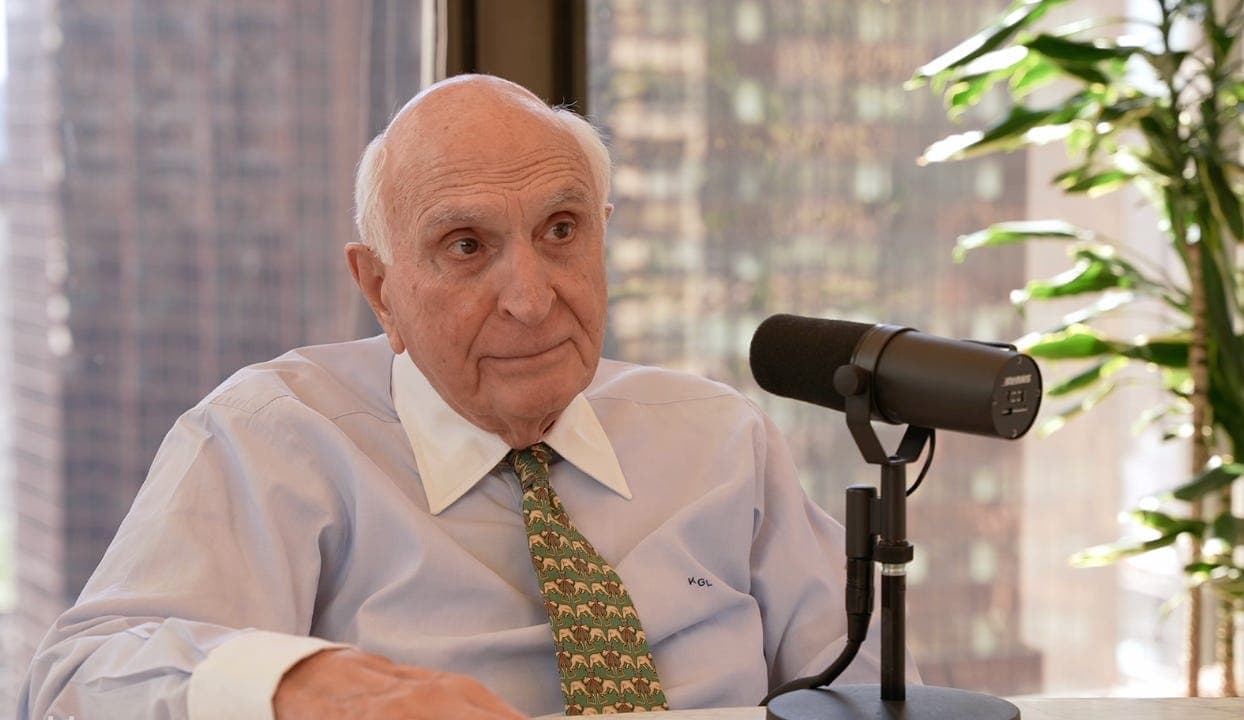
Episode Overview In this episode of *American Optimist*, host Joe Lonsdale interviews Ken Langone, a legendary investor and co-founder of Home Depot. The discussion revolves around Langone's remarkable journey from humble beginnings to becoming a multi-billionaire, his investment philosophy, leadership lessons, and philanthropic efforts aimed at improving education and healthcare in America.
Key Themes and Discussions
Ken Langone's Background
- Humble Beginnings: Ken's father was a plumber and his mother a cafeteria worker, neither having progressed past the 8th grade.
- Rise to Success: Despite his background, Ken became a billionaire, known for his patriotism, defense of capitalism, and philanthropy.
Investment Philosophy
- Eli Lilly: Ken became the largest shareholder through loyalty and patience, holding onto his shares for an average of 42 years.
- Key Principles:
- Importance of knowing management and understanding corporate culture.
- Emphasis on honesty, expansive thinking, and risk-taking in leadership.
Leadership Lessons
- Home Depot's Culture:
- Ken emphasizes the significance of the employees on the floor as the most crucial part of the company.
- Celebrates the success of 3,000 entry-level workers who became millionaires through the company.
- Regularly engages with store managers to gather feedback and reinforce a positive workplace culture.
Fighting Corruption and Lawfare
- Showdown with Eliot Spitzer:
- Ken faced challenges from the New York Attorney General and fought back against corruption, standing up for his colleagues and principles.
- Shares experiences of his legal battles, emphasizing the importance of standing up against corrupt practices.
Philanthropy and Education Reform
- Financial Contributions: Ken has made significant donations, including a $200 million contribution to NYU Medical School to make education tuition-free.
- Harlem Children's Zone: Ken supports educational reform initiatives that demonstrate success in helping children from underprivileged backgrounds.
Thoughts on Public Education
- Advocates for accountability and quality in public education, criticizing the ineffectiveness of teachers’ unions.
- Stresses the need for reforms that prioritize the interests of the students rather than political agendas.
Vision for America
- Optimism Despite Challenges: Ken expresses hope for America, emphasizing the need for collective action to address issues in education and healthcare.
- Government Accountability: Advocates for cutting unnecessary government spending and ensuring that resources are directed towards programs that genuinely benefit society.
Future Outlook
- Macro Environment: Ken acknowledges the precarious economic situation, with high debt and inflation, and the need for systemic change.
- Emphasizes a focus on merit in education to prevent the dilution of standards due to ideological pressures.
Key Takeaways
- Capitalism as a Force for Good: Ken believes capitalism has the power to lift people out of poverty and create successful individuals.
- Importance of Leadership: Successful leaders prioritize the welfare of their employees and foster a culture of mutual respect and opportunity.
- Civic Responsibility: It is crucial for successful individuals to give back to society and advocate for the next generation.
Conclusion Ken Langone's story is one of perseverance, courage, and a deep commitment to improving American society. His perspectives on leadership, education, and capitalism serve as a call to action for listeners to engage in the fight for justice and opportunity for all. As Ken puts it, he wakes up every day grateful for his opportunities and committed to making a difference.
---
For more insights and discussions, visit [Joe Lonsdale's Blog](https://blog.joelonsdale.com?utm_medium=podcast).
Written by AI. May contain mistakes. Listen to the episode to check what was said.
Transcript
Automatic transcript. May contain errors.0:00The most important person in the company are the people on the floor of the stores because they're the ones that interact with the customer. We have 3 ,000 people that started pushing carts in from the lot. It's about as entry-level as you get that are multimillionaires today. And I took him on, and you know what? I whipped his ass like he was a rented mule. My bill was$23 million, my legal bill. If he ever sticks his head up again, I got more. I wake up every morning, and I put my American flag pin on my lapel. I look up at the ceiling, and I say, Grandma and Grandpa, thanks for coming to America.
0:39Ken Langone is an extraordinary American. He's an entrepreneur, an investor. He's a fighter. Ken helped start Home Depot, which he's been helping build for over 40 years. He's the largest shareholder in companies like Eli Lilly. He's a personal mentor of mine and a friend. Really excited for you to meet him. One thing that's interesting about Ken is that when the government used lawfare against his friends, he stood up for them. And then the government came for him and he fought back and he won. Some of the things we're seeing right now in our country with lawfare is the stuff that Ken dealt with and pushed back on and defeated the bad guys 20 years ago.
1:10It's a good role model for how you stand up strong, how you show courage, how you get people around you to show courage, too. We need more Americans like Ken. I'm Joe Lonsdale. Welcome to American Optimist. We have a friend and mentor and great American Ken Langone with us today. Ken, thanks for joining. Thanks for having me, Joe. I'm honored to be here. It's amazing to see you. I want to ask you to start about Eli Lilly. This is things on fire. Stock's been on a tear. You're now the largest shareholder. How did that happen and what's going on there? I will only say I own a lot of stock, a whole lot of stock.
1:38And I've been told, although I don't know, that I'm the largest individual stockholder in the company. How did that happen? It happened because there's two things I think work well for me. Loyalty and patience. In 1977, I had a small medical device company in California by the name of IVAC Corporation. Lilly was very interested in getting into the medical device business. And bottom line was we made a deal with Lilly for Lilly to buy IVAC. 1977. So that means you've been a shareholder for - 47 years. So give us a crash course in your investment philosophy. Is this normal? You hold these things for a long time?
2:21My average holding is 42 years. 42 years on average. Right, on average. I believe in getting to know management very well. I believe that the key to any great investment are the people at the end of the day. Sure, technology is important, but where does the technology go? Doesn't management change multiple times during those periods? And sometimes you have ups and downs. For example, we sold out in 77, and there was a palace revolution at Lilly. and the guy that had been made CEO for a year got fired, born Bryson. And they brought in a fellow who ran a phone company to be the head of the company.
2:58Bryson got fired and the guy that was there that should have gotten a job was Sidney Terrell, who I knew very well. And Sidney stayed, thank God. And Sidney finally did get the job. But you held even though it was the wrong CEO for a while because you thought it'd be fixed. I got to know the company. Well, by the way, when Lilly sold to me, they had a market cap of$2.5 billion, and they had sales of$2 billion. Pretty low market cap to sales. And they gave us roughly 2.5 % of Lilly for our company. There's inflation in the economy, then things were valued really cheaply back then. Yeah, but also, you know, unless you had a, by the way, a big drug then was$100 million a year.
3:37Wow. That was considered to be a successful drug. What's their big drug doing now? Is it GLP-1 stuff they're doing now? Is it the biggest? Well, I think that Mangiorno probably, by 2030, the pundits say, probably will be over$30 billion a year, well over$30 billion. The whole market now is up to those GLP ones. Amazing. You know we're producing a few billion dollars for them with one of our companies right now worth this stuff on the wholesale side, advanced biomanufacturing. Oh, sure. Well, there's such great demand. They're in short supply. And that's then a novel. So Lily, I think the profile on the Lily molecule is far more beneficial than the Novo, but Novo's got a great product too.
4:22So anyway, I got it. I got to know the management. I got to know everybody in the company. I had enormous respect for them. I think they were conservative. They had a great balance sheet. And by the way, they had a nice dividend. So I took a company that was, by the way, IVAC, when I took control in 1972. in a proxy fight, had a market value then of a million and a half dollars. Public company. Public company. A million and a half. Public by accident. The guy that was running the company, the guy that I threw out in the proxy fight, would take a packet of stock certificates and one of the devices they made, which is an electronic thermometer, and go to Las Vegas and go to the back where the band was and take out the thermometer, and he'd sell a guy's stock for a dollar a share,$2 a share.
5:10Crazy. And that was his undoing because factably we had to go in and register all those shares. Then you have to go public when you have to shareholder. So for five years we were public from the time we took control. But we got it cleaned up good. We put a good group of guys in to run it. That's funny. So anyway. So to put a good group of guys in, what have you looked for in management and leadership? What does that mean to you? First of all, I look for honesty. That'd be the basic stuff. I look for honesty. I look for wisdom in terms of breadth of thinking. Are they thinking provincially or are they thinking globally?
5:46Are they thinking about the opportunities and the possibilities? The thing I loved about Lily's research was they had a strong franchise in antibiotics back then. They had a significant animal health business. Ironically, they owned Elizabeth Aud and the cosmetics company, which they eventually sold. But more importantly, they made their mind up. They wanted to go into medical devices in a bigger way. So they bought a cardiac pacemaker company. They bought a defibrillator company. They bought a number of companies related to devices. Most of the devices, of course, were related to it. So integrity, expansive thinking.
6:28And also, Joe, were they willing to stick their neck out and take chances? Research in R &D, R &D and pharmaceuticals is a high risk business. And you got to spend a lot of money to be in the game. Really right now this year, I think their budget, their R &D budget is going to be over$10 billion. They're still taking risks. They're still being bold. Well, they're doing it. And included in their research are the cost of clinical trials. Yep. So you can't make a claim unless you go through significant. Of course. They've spent a lot of money developing these products and applying them to new markets.
7:03and the results look very, the point is it's always about the people. So my focus always has been, I'm not a scientist. I don't know molecule from a, whatever the hell else you want to call something scientific, but I know people and I have a pretty good nose. What are you bullish on right now? Are there certain teams or certain areas? Yeah, I'm bullish on a company right now called Option Care Health at-home services, medical services. So for example, if you're a patient and you need a certain medication intravenously, they have pharmacies all over the United States. They ship the drug to the home for the next day.
7:41A nurse shows up the same next day. That's amazing, yeah. And the nurse does the administration there. It seems like keeping things out of the health systems, you save a ton of money. Well, you save money, but also it's safer. Lower infection rate, believe it or not, hospitals are dangerous places. The hospitals kill people by mistake. Well, because disease is in the hospital. That's what the hospital is there for. So they got a hell of a good management. They had a weak start, but the guys that came in to run the company have pulled it together. And I'm very excited about that. And I've already owned that stock now almost five years.
8:17And we've done okay, but I think we'll do a lot better in the future. Amazing. Ken, I want to ask you a little bit more about what it takes to be a leader. Your father was a plumber. Your mother was a cafeteria worker. Neither of them went to high school. you started working at age 11 or 12. How'd your upbringing shape you and help you become a leader? For example, one of the things I won't take a backseat to is judgment of people. I got a pretty good nose for people. That talent or that ability became conscious to me when I was a caddy. Oh. And I'd caddy for people. There were two types. There were guys that if they had a bad shot, They didn't blame it on anybody else for themselves.
8:59And there were guys that they had a bad shot. They're looking around. Who's around that I can blame? And typically the guy that gets the punishment is the caddy. The caddy, yeah. But I learned close up, because these guys, don't forget, they think we're just mechanical. We don't evaluate. We don't observe. We don't do the things. I made it a point to studying the men I was caddying for and how they behaved and how they treated each other and how they talk to each other and how they treat the caddies. To this day, Joe, one of the things I love to do, if I'm being asked to evaluate somebody for a job in one of the companies, I like to take them to a meal.
9:40And I love to watch how they interact with a waiter or the busboy. How do they talk to them? Yep. What's the tone of their voice? How do they value them as people, you mean? Exactly. Do they have empathy? Do they have the ability to make a bridge? I know if you have a waiter that feels good about you, for some mysterious reason, whatever, the service is always better. Yeah. I'll be right back or I'll bring you this or I'll bring you, oh, you want this? I'm sorry. It shows awareness of what matters to them too. That's the whole point. That's their life. Yeah. And one of the things that really disturbs, I was having been in that category myself, you don't feel good when you're beaten up upon by somebody that you can't fight back.
10:23Yeah. Because, you know, that guy's going to give you your tip after your caddy. You don't want to tell him to drop dead because if you do, he goes, oh, you told me to drop dead here. I'm going to stiff you. Yeah. Same with waiters. And where I get superb service, I like to reward them exceptionally. This reminds me, I know the story of Home Depot is well known. You talk about it a lot, but it reminds me of how you talk about the managers and associates there, right? Tell us a little bit about that. Well, I just had a meeting Friday. I took 25 store managers and district managers to lunch. I do it once a year.
10:53At Home Depot, I still take him to lunch. And I have him around in a big circle. We'll go to an ice restaurant. I let him off the menu, whatever they want. And we go around a room and we talk about what they like and what needs to be fixed and what's wrong. And you've got to listen as much to what's wrong as to what's right. Because if it's wrong, you've got to fix it. But one of the things that comes through loud and clear, again and again, the positive side, the culture. how we take care of each other, how we care about our associates. I'll make a bet that of those 25 remarks from each one of them, I'll bet 75 % of them focus on the culture.
11:34And that was something we developed day one. That was something we said, we're going to be mindful that the most important person in the company are the people on the floor of the stores because they're the ones that interact with the customer. They're the ones where if they give the customer a great experience, The customer's got a room in. The waiter. One of the things that always stuck with me, Ken, is when we met early on, you were talking about Home Depot. You were so proud of how many people you made successful by building that. We have 3 ,000 people that started pushing carts in from the lot.
12:05That's about as entry level as you get. That are multimillionaires today. And by the way, most of them - 3 ,000 multimillionaires from this time. And most of them are still working here. Now, guess why? When we went public, we had a$50 million capitalization. 50 that's all last year we had a 400 billion dollar market cap that's real money these days do the math it's 27 % compounded annually so these kids that hung in there these kids, I mean and by the way these years of service, 30 years 28 years, 35 years amazing how many people and why do they hang in there they liked where they worked, they felt They were important.
12:48They felt that they mattered. They were rewarded. They were given opportunities for progression. All the things that motivate people, that's what we did. That's America in a nutshell. Let's switch gears a little bit and talk about fighting for America. Your book, Ken, is called I Love Capitalism. Right. I love the title. You know, a cynical young person might say, of course you love capitalism. You're a billionaire. What would you say to them? I said, but I wasn't when I started. Right? I didn't have a silver spoon in my mouth. If I did, I never saw it. The point is, Joe, we bring a lot of people to the party with a stink of the fact that Bernie, Arthur, and I and Pat Farah, four of us, with$2 million in capital, today we have a half a million associates.
13:31And by the way, last year we initiated significant pay increases for the hourlies. Our attrition rate has plunged. And that's important because you know what? Those people are now trained and they're on the floor. if you replace them with somebody new, you got to go through the whole course of indoctrinating them, orienting them, training them. That goes away. So you know what we did? We're realizing that by not having to recycle people or not having to put new people in, we're able to do so much more for our people. So capitalism actually led you to want to give them ownership, which led you to want to make them millionaires because you all went together.
14:07I want them all to be billionaires. I want them all to have a good, I want them all to be like my friend Joe Lonsdale. I'm serious. That's what I want. So, Ken, you're a fighter for values you care about. You're a fighter for America. You know, there's a lot of successful people who don't speak out. Like, what are the ways in which you're fighting? And what led you to be willing to be controversial? Joe, no pain, no gain. I believe that it's incumbent on me, it's a moral obligation on my part, to do all I can to propagate all those things that I benefited by in this country. The most sinful thing right now in America, in my opinion, is the dire straits public education is in.
14:49It's a mess. I went to a public school in Long Island. I got a great education, even though I wasn't too excited about getting educated. But in spite of myself, most of it got through to me, and I benefited by it. So starting with that, I'm very passionate. I'm very supportive of the Catholic schools here in New York. How do we fix the public education system? It's a mess. The woman who used to be smart and go into it, they have other jobs now. How do we get talent? How do we make it work? The teachers were brilliant. They organized themselves into a political force and they have great sway over the politicians.
15:25There's a lot of reasons why public education is bad in America, but one of the biggest reasons, in my opinion, is a lack of quality instruction, teaching. And I think unless we address that to start with, nothing's going to change. You've got to hold the teachers accountable for... Absolutely. And you know what? There should be a capital. There should be an incentive for those teachers. You should make the best teachers wealthy. Those teachers that show results, a test, an objective test, like New York State has the Regents. Yeah. Nobody sees that test until the morning the test is given to the students, not even the teacher.
16:00The teachers that taught Regents courses, not all courses are Regents, like math was geometry, trigonometry, history, English. those teachers, the tests results are as much for them as it is for the student. Yeah. Because if there's a high failure rate of those tests, you have to ask yourself the question. What are the teachers doing? What happened? Yeah. Where did the transmission of knowledge? We have to have some kind of accountability. Absolutely. So that's one thing. The other thing is job creation. I'm excited about the number of kids that we've hired at Home Depot, barely out of high school, 18 years old.
16:39A store, Home Depot store in Long Island, has$100 million a year revenue, one store. He's got 250 people working for him in that store. He's got an enormous responsibility in inventory and management, in positioning the company in terms of products and knowledge of the market. He's in business for himself. He can go run any business after five years as a Home Depot store manager. So we benefit there. We benefit. They benefit. They develop skills they never would have had a chance. When I talk about capitalism, I'm saying right up and down the line, the more we can do to bring people to the party, the stronger the capitalistic base becomes.
17:18We're only going to keep the country capitalist if we fight for everyone to win. Kids that work at Home Depot now, they're conscious of the stock they own. That's great. They're conscious of what it's worth. They're conscious of what they're now able to do. One guy I'm sitting next to yesterday, the other day, he's from the company a long time. He's telling me about this big boat he's got. I'm saying to myself, hey, that's great. he comes to work in a bunch of stores every day and at night he goes home to his boat and that's the benefits of capitalism there's no sin in living well that's what you want I want to ask you about education one more time because you guys did something here in New York and you've done a lot of things in education but the Harlem Children's Zone I thought was such a cool thing so you had a part of town where the kids were some of the worst scorers in the nation just really really failing and you guys did a series of things where you and our friend Stan Druckenmiller and others Stan brought me into it early on And for 10 years, I was chairman of this.
18:11What we did, we started with the afternoon school program. And Jeff woke up and said, wait a minute. By three o 'clock, there's too much going wrong. We got to get these kids to go to school. This is Jeff Canada, who's an African-American at Harvard. Yeah, African-American. He founded it. And he said, we got to have a school. And now, every single kid that's going to our school has graduated from our school. Every one of those kids has gone on to college. You're giving them male role models. You're teaching their parents when they're young. Well, to the extent they have parents. A lot of these kids come from broken homes.
18:47A lot of these kids don't live in any kind of a home at all. It was shocking to me the number of kids that we had that were homeless. Wow. So we take them blind. We don't care what their background is. We take them and thank God for Stan's rucking mother. He got into it early. I just thought that was amazing. and you took the most troubled area, one of the most troubled areas of our country and you iterated and you worked with these kids and you proved the kids from any background could actually succeed if you worked on them hard enough. And by the way, now that program is being adopted all over the United States.
19:18So Jeff has now effectively moved on from HCZ to a higher level where he's now working with communities all over the United States because President Obama, when he heard about it, said, we got to do this all over America. It works. That's great. It works. I hear the teachers unions don't like it very much usually. No, because, hey, we're showing them. We've got the same kids they had. Here are our results. Their answer is, well, they come from broken homes. And we say, yeah, that's right. That's why you've got to do more. You've got to do more to help them. So it's only President Obama is smart enough to see that that works.
19:52He wants to help the kids. And yet he supports the teachers unions who are against it. He's playing both sides. How does that work? Hey, Joe, politics is politics. It's complicated, huh? And, well, where is his bread buttered? He's getting money from one side, so he can't fight them. If he has the school teachers, don't forget this, what,$380 ,000 or some huge number? And$80 a month dues? Think of the amount of money they can throw into the political process. And that's all going to help his party, so he can't really fight them. That's going to help who feathers their nest for them. That's what it's all.
20:25Who's being compromised are the kids. Look at the Catholic schools here in New York. Look at the results from the Catholic schools. And by the way, in New York, kids that go to religious-based schools get zero support from the state. Yeah, it's crazy. I think we get 27, HCZ gets$27 ,000 or$28 ,000 per student from the state of New York. Well, that's why it's working better then. Well, because we could have, and by the way, we have bonus programs for teachers. We have an extra period of time at the end of school. The kids have to go. We have summer school that's mandatory for kids that are failing.
21:00to bring them up to speed. So we're making the effort and we're spending the money. And as I said, Jeff was the creator, but he had the wisdom, I guess the good fortune, to latch on to Stanley early on. And what Stanley has done here and Stanley brought me and other people in. What you guys have done is amazing there. I want to switch over, Ken. You're a fighter. You fight for what you believe is right. In the early 2000s, you had a front page showdown with the New York Attorney General Elliot Spitzer. You were the chairman of the New York Stock Exchange. No, no, no. I was chairman of the comp committee.
21:31So you're chairman of the Dinger Stock Exchange comp committee at the time. That's right. And he was going after Wall Street to make a name for himself. The typical thing people do is they back down, they settle. Most of them did. Yeah. Why do you take the fight to Spitzer? Because it was wrong. We did it legitimately. More importantly, we were not a for profit. We were not a not-for-profit. So we weren't under his jurisdiction. We paid sales taxes. We paid insurance. We paid, I'm sorry, income taxes. We paid real estate taxes. Charities don't pay any of those things. Yeah. We made one year a couple hundred million dollars for the exchange.
22:06We paid big federal taxes and state taxes. He comes after us because at that time, this is right around when Enron blew up, the big issue was how much these guys were making. They didn't want people making too much money. Well, here's where they all blew it. The typical New York Stock Exchange chairman came from outside the industry. So a fellow by the name of Mel Batten, who was a retired CEO of JCPenney, he served for five years as chairman. Bill Donaldson, who had been on the board of Philip Morris, and he founded Donaldson, Lufkin, and Jen Redd, he served for 10 years. We had SERP and SES.
22:50We had these plans for paying people. When Dick Grasso got the job, he was the first person to start at the very bottom and go to the very top. He started as an$82.50 a week clerk. Wow. Union clerk. A union clerk almost. He had 40 plus years of service. When you look at what it did with the payout, it drove the number through the roof. But that was the deal that was made. Yep. It was in place. All of a sudden, I had these captains of industry. I might have been there. I'm not sure I was there. I don't know if I knew about this. I think I might have known about it. Because people were just afraid to say they knew about it.
23:29They were terrified by Spitzer. They were terrified. No one wanted to stand up to him. I asked one of them, a good man, a good man. I said, how can you say you don't know? You knew everything. He said, I know, I know. But you know, he said, Spitzer's a bad guy. And if he comes and gets you, you're going to be in trouble. I said, well, he's coming for me. Let's see how much trouble I get in. And I took him on and you know what? I whipped his ass like he was a rented mule. It reminds me today of how they came after Elon Musk for getting paid too much. The judge tried to take out the deal. He's fighting back.
23:59No, there's an example. And old Elliot, the only thing I regret that it ended. I was having more fun. And more importantly, my legal bills were all covered by DNO insurance. Oh, that's funny. So you keep fighting. Oh, I'd have gone on as Dick Grassus. But he tried to put you in big trouble after you stood up to him. What did he do to you after you stood up to him? claims, his claim was that I misled the other members of the comp committee about Grasso's pay package. Well, I had a very interesting practice. I kept very strong records of who showed up for the meetings. People that were on that committee that didn't show up for a meeting where we were going to go over Grasso's pay package, I would have the head of HR go to their office with all the information in their office for as long as it was took, go down and give them all the information.
24:49And I had proof that every single one of them knew everything that was going on. And in the case of one guy, this is a great story. I love it. For his deposition, I showed up and he says, what are you doing here? I said, you know, I said, Martha Stewart went to jail for lying and she wasn't even under oath. Yep. you're going to be under oath. And I have the evidence. And as soon as you lie, I'm going right down to the U.S. attorney's office and say, lock him up. This guy's lying. Here's the proof. He said, why are you doing that? I said, I'm doing it for one reason and one reason alone. Now, let me give you a little bit of the flavor.
Read the full transcript
25:31Dick Grasso's lawyer, who I call Luca Brazzi, the mafia guy, his name was Gerson Zweifach, wonderful guy. He was a partner at Williams & Connolly in Washington. He's interviewing this guy and he said, how would you describe Grasso as a CEO? Best I've ever seen. What flaws did he have? He says, I really would have trouble thinking about any flaws he had. Did he perform his duties with integrity and bring good credit to the institution? Oh, by all means. So he's going on and on and on about all the great things. So now Gerson, very theatrically, takes his hands, takes his glasses off, rubs his eyes like this, and says to the court reporter, would you read back all the questions I asked Mr.
26:25So-and-so and read his answers? So she reads back, what kind of CEO is he, the best I've ever seen, blah, blah, blah, blah, blah. And he says to the witness, he says, is there anything there you'd like to change? He said, no. He said, well, tell me then, why'd you fire him? And the answer, I don't know. That was his answer. It's because he was afraid of Spitzer, is the real answer. Terrified. They all, don't forget, he was going around swearing he was going to close places up, he was going to bankrupt them. I mean, this guy was, you talk about hubris, and I want to tell you something. when I kicked his ass.
27:02I so enjoyed it. It was more fun than it was worth. Every nickel the insurance company had to pay. My bill was$23 million, my legal bill. Wow. Rassos was$27 million, and all the other directors was$90 million. This guy still became governor afterwards anyway. He became governor. And somebody hired a private investigator and found him doing horrible things. And they blamed me. They blamed me. No. Joe, honest to God, I learned the day he announced that he was caught with a hooker. Yep. That very day was the day that I learned about him going to the Grand Central Post Office on his own as governor.
27:41Yeah. He's waiting in line as governor to buy a$2 ,800 money order. And the guy that was in the back of him, the guy that was in the back of him, I'm having a drink with the same night that they announced that he was quitting. Yeah. And he tells me, hey, he said, I couldn't figure out why he was waiting in line. And he bought a$2800 because he was standing so close to him, he could hear what he wanted. So I go down to this. Dick Brasso always hosted every year a dinner for the Medal of Honor recipients. And I was always invited to be co-chairman with him. And we went down, and the media was writing it with that little bastard Brasso.
28:20He goes in the back door because he knows the media is stupid. with me i go in the front door well they got these booms with the mic and he and he says uh the guy says to me um how do you feel about what happened i said i feel very good why i said well because look he was found out i always knew he was a bad guy yeah so i'm walking away and he says the guys well you got anything else you want to say i said yeah i said you know all of us have our own private health i just hope this is harder than everybody else's he's a bad guy and that's a quote. And I'll tell you something. If he ever sticks his head up again, I got more.
28:59I hope he does. I mean, all of a sudden, there was a big letdown. It was like, after you work hard to do something and you get it done and you're all done, you say, oh my God, look at the void now. What am I going to do? Are you seeing, Ken, it seems like there's more of that weaponization going on today than even 20 years ago. He's clearly weaponizing things. It seems like it's much more common now. Absolutely. It's scary, right? It's a political weapon. Everything has been politicized. Joe, there should be nothing political about the fact that our kids are getting inferior educations in public schools.
29:29That has no room in the political arena. You're not interested in making this political. You just want to fix it. I don't want to blame anybody. I want to just fix it. I want the kid to have the same chance I had when I was a young kid going to a public high school. in spite of the fact that I didn't work very hard when I look back I really learned a lot yeah you learned a lot from public high school you did work hard once you were out of school oh when I realized hey this is a real play this is a real main event I better get off my ass and get working you're a philanthropy we talked about a couple of things you know I think last year you made news you gave another 200 million dollars to NYU Langone Medical School to make it tuition free why'd you do that Joe in the year 2030 that's six years yep america is going to be short 50 000 primary care physicians 30 000 pediatricians and 30 000 ob-gyn going to be short 110 000 doctors in just those specialties why those specialties because they don't make very much money in those specialties Yep.
30:35So a kid leaving medical school with a$300 ,000 debt is going to say, I want to go into ophthalmology. I want to go into orthopedics. I want to go into cardiovascular. They're averting. They're staying away from those three areas. They're paying for their tuition. They can go into the key areas. If they want to be with babies, they haven't got to worry about paying medical school debt or they haven't got to worry. So what my whole motive, well, first of all, it was not my idea. In 2007, when Bob Grossman took over as dean, the day he was inaugurated, he and I were walking back to his office. And I said, okay, Bob, this is your first day on the job.
31:12What's your dream? He said, I really would love it if one day we could. He was a poor kid from the Bronx. One day I would love it if we could have tuition free for our kids and he cited the reasons. I said, Bob, I don't know when we're going to do it, but let's make a deal. We're going to do it. So we decided that day, now it took us 13 years to raise all that money. Because don't forget, you're talking about 400 students a year. Each class is 100. And we also opened a school out in Long Island now for primary care. In other words, if you go to that medical school out there, you're being educated and trained to be a primary care physician.
31:52There's 26 kids. So there's 100 kids. So there's 500 kids a year that were paying their tuition. So we needed almost a billion dollars. Yeah. And we raised it. Wow. And my wife and I felt very strongly that this was the right thing to do. This is the thing that would most put America in a good position of anything we could do with our money. That's why we did it. It's amazing for America and for New York. Well, and then I got to tell you, the real payoff, about seven months ago, one of our trustees called me and said her mother-in-law would like to sit with me and talk to me. I said, sure, bring her in.
32:25Her name is Ruth Gottesman. She was on the board of Albert Einstein, and she came in to see me in my office, and she said to me, can you tell me the experience you had by setting up free tuition at NYU? And I said, I can't think of anything that's given me more satisfaction in my life than that program. I said, the sense of worth, it's the one thing that I can say in my financial success, it's really accomplishing something for humanity. I said, I urge you to be part of an effort to do it. She did better than that. Two months ago, May, April, May, I guess it was, they announced she's given them$1 billion to set up a tuition-free school at Albert Einstein College of Medicine.
33:16So their kids all go tuition-free. The fact that we became a role model for other people, I hope every medical school does it. I think that's really inspiring. I got to ask you one tough question about this because I'm curious. So UCLA recently, we saw that school's really been taken over by ideologues and they're graduating a lot of people who are not competent doctors. They're bringing the wrong people in. A lot of these schools in America right now, it seems like they're being conquered by ideologues who have the wrong things in mind. They're not focused on merit. How do you keep the culture of these schools you're sponsoring focused on merit?
33:46How do you make sure that nonsense doesn't come out? For example, I'll give you a for instance. We had a group of students come to us asking us to go to a fail pass system. Yep. We said, no, we're not going to do that. Why? These kids work their asses off. Some of them work harder than others. Some of them more able than others. When these kids go out for the match, whether they're good with their specialty in residencies, if all the committee sees whoever they'll be in considered pass or fail, the only same assumption they make if pass is at the lower end of the rung. Exactly. So it hurts the best kids.
34:25It hurts the best kids. And it doesn't help the less best kids. The second thing is that they wanted us to give up our chapter of AOA. AOA is the equivalent of Phi Beta Kappa in medical school. And we said, no way. These kids that have worked their asses off, that are gifted, that get that designation, they're worthy of it. How do you make sure these places stay that way, then don't get conquered later on? Like, is this leadership? What is it? Joe, that's the age-old question. How does Henry Ford, when he set up the Ford Foundation, make sure that the Ford Foundation sticks to what he had in mind?
35:04It's not the case. Right now, I'm about to engage with Elaine, where we want to create a program on free speech. That's great. How do I make sure 100 years from now, that institute that we're going to create is balanced? Even 20 years from now. 10 years. Yeah. Balanced. How do I make sure that the kids hear this side of the argument and that side of the argument and they make their own mind up after that? That's what free speech should be all about. An argument of ideas. I have my ideas. You have yours. Here's how I defend mine. Here's how you defend yours. We need some bold people. We'll need to be controversial, right?
35:41These people are all afraid. They back down. Look, conventionalism is alive and well. Nobody wants to be the odd man out. frankly believe it or not by being willing to be the odd man out, me I'm now the big guy in people come to me and they want to talk to me about this, guys like you I'm following your lead prominent, successful, powerful guys like Joe Lonsdale says, can we do a blog and hell, I'm saying, wow when I see you out there I realize it's okay to speak out and you know what But as long as your motives are solid and as long as they're meant to benefit mankind, who can force you? I'm saying these poor kids that are performing at fifth grade level get high school diplomas.
36:33These kids are performing at fifth grade level in math and English, two basic areas of education. We fail those kids. They're out in the world. Take the Chinese. the Chinese are going the exact opposite way with their children. Let's focus a little bit on the future at the end here. You're a student of history and markets. We do seem to be at a very precarious moment in time. We have record debt. We have persistent inflation, geopolitical challenges. What's your macro outlook and what do we do here? Joe, it can't go on forever. And when it ends, it's going to be ugly. Today, you and I talked earlier off camera, we talked about defense.
37:13defense, we talked about our competitive defense. Today, Joe, we spend more money to service the debt. We spend interest alone a trillion dollars. That's more than we spend on our military to defend us and protect us. And that number goes bigger every year. It's compound interest in reverse for us. Now, how do we stop it? I'm sure there's going to be some pain. I'm sure, for example, guys like you and me, the irony of it is, Joe, they can take all the people like you and me and put us all together. Take all our money. And punish? Yeah. It's a spit in the ocean. Yeah, they take all our money, we're still in massive, massive debt and deficit.
37:53You don't solve the problem unless you hit the little guy because there's billions of them and there's hundreds of us. Well, maybe we could turn down the spending instead a little bit. Well, Joe, that's exactly, but that's a good start. But that doesn't, cutting back, some of the, I mean, for example, the education department, Look at when the education department was founded. Look at the results of education from when it was founded till now. It's going downhill. Well, it's not really an education department. It's a special interest department. That's exactly right. Yeah. So there's a case where we have to be objective and we have to be brutal in terms of being fair and saying, what are we gaining for what we're spending?
38:31I shouldn't get so, Joe, I have a charming life with everything I could imagine a human being could want. And I get a check from the government every month for$3 ,600. Something's wrong with that system. Maybe you need to stop paying the rich people Social Security. Cut me off. I won. I won big. You know, if I walk into a room down in Florida where there's a lot of retired guys, and I say, hey, you hear they're going to put a new rule in? That if you own two homes, you're ineligible for Social Security. They throw the cards up. They can't do that. It's my money. I'm getting my money back. No, Joe.
39:07We all have to have skin in the game. I shouldn't, my wife and I together get close to$5 ,500 a month. You did pay into the system, but I understand what you're saying. I'm not supposed to. I won. You buy, I held it. You buy life, you buy fire insurance on your house. Yep. Thank God at the end of the year, you don't put a claim in. That's insurance. The insurance company doesn't give us a premium back. The insurance company said, we took the risk. Yep. I got the benefit of having risk covered. Yep. I didn't need it. I shouldn't get anything. That's, look, we have to start thinking. You have to start finding ways to cut all the different places.
39:40We have to start thinking about we instead of me. Yeah, so what can we cut from ourselves? What are we getting that we don't need that we can figure out? And by the way, ideologues are on both sides of the equation. That's fair. Okay? And I think what source of the goose is source of the gander. Like I've had people say, oh, you're like them. No, I'm not like them. I'm a realist. My country needs me to do more. Yep. I want to do more in a way that it benefits all those people who can't do more. That's what a leader does is they give from themselves more. You feed the troops. The military has a simple rule.
40:13You feed the troops before you feed the officers. Okay? They're the ones that win the wars for you. Those kids that went on the beach, June 6, 1944, on Omaha Beach, those are the kids that won the war. How old were you when they went? I was nine years old. And I have a cousin that was in that day. He had over 15 months from March of 43 until November of 44. He got two silver stars and he got two bronze stars. He was a poor kid from Brooklyn, diminutive kid, small kid. When he came back, I asked what it was like. He said, oh, I said, it was great. He said, every time I kill somebody over there, they gave me a medal.
40:52He said, if I kill somebody in Brooklyn, they put me in jail. That sounds like a rough guy. But these kids, they're the kids that won the war for us. They did. They're the reason we have our freedom. They made it happen. It was the greatest generation. They were the greatest generation. And what are we doing? we're frittering away what they give their lives up for. That's what we're doing. So Ken, we started American Optimist's podcast to push back a little bit on the cynicism that's facing America. What's the best case to be optimistic about the future of America? The best case is parents wake up and realize.
41:21We've got to start, a ball of string has an end. Sometimes it's hard to find the end. I believe the most biggest payoff comes if we address public education in America as a first priority and go from there. You start, though, by saying, all right, we're all committed. We've got these public schools. By the way, Joe, you go to the North Shore of Long Island, the education and the public schools on the North Shore of Long Island are the equivalent of the best prep schools in America. So they are really good in some places. Yeah, because first of all, the board of education of each one of those schools is independent.
42:00So, for example, all the Great Neck schools. So the Board of Education, all of whom are parents for the most part, when they start to see something slide or something bad, they go bananas. So you take Roslyn, Great Neck, Herrocks, Garden City, Manhasset, you take all those schools, those kids get into the finest colleges in the country. Their SAT scores are through the roof. So you've proven it could be done in Harlem in the toughest area. You've proven it can be done elsewhere. We're proven it. Look, we know these kids. These kids truly deserve to be treated equally. They can be taught just like the brightest white kid, and we're proving it.
42:43I love it. Well, Ken, you're a great American. It's amazing what you've done for our country. I hope you keep fighting for us. Joe, I wake up every morning, and I put my American flag pin on my lapel. I look up at the ceiling, and I say, Grandma and Grandpa, thanks for coming to America. That's how I feel. I'm a grateful American who can never do enough for the country. That's what so good to me That's a great note to end it on. Thanks, Ken. Thank you for having me Joe
From the publisher
Ken Langone's father was a plumber and his mother a cafeteria worker — neither made it past 8th grade — yet Ken became a multi-billionaire investor, builder, and philanthropist. And he did so as an outspoken patriot, defender of capitalism, and man of honor, famously taking on one of the most corrupt politicians of our time — and winning!
In our conversation, we begin with Ken's investment philosophy, including how he became the largest shareholder in Eli Lilly. Next, we dive into leadership lessons and how he co-founded and grew Home Depot into an American icon valued at over $400 billion. But Ken is most proud of the fact that 3,000 associates who began pushing carts in the parking lot have gone on to become multi-millionaires within the company — a feat only possible under capitalism he says.
In the 2000s, Ken had a front-page showdown with then-NY Attorney General Eliot Spitzer. Most of the Wall Street bigwigs in Spitzer's crosshairs cowered and ran, but not Ken. He fought back and won, exposing Spitzer's abuse of power. Ken hilariously recounts his epic battles and demonstrates the importance of fighting for justice and defending the honor of your colleagues, no matter the cost.
Finally, we discuss the impact of Ken's prolific philanthropy, such as his recent $200 million donation to help make NYU Medical School tuition-free. For decades, he's also been a leader in education reform, including one of the greatest urban success stories: Harlem Children's Zone. They have proven that kids from the most difficult areas and family backgrounds can succeed, and have revealed the failings of the teachers' unions and education establishment.
I'm fortunate to call Ken a friend and mentor. There will never be another quite like him, but we should do our best to follow his lead!
This is a public episode. If you would like to discuss this with other subscribers or get access to bonus episodes, visit blog.joelonsdale.com