
In short
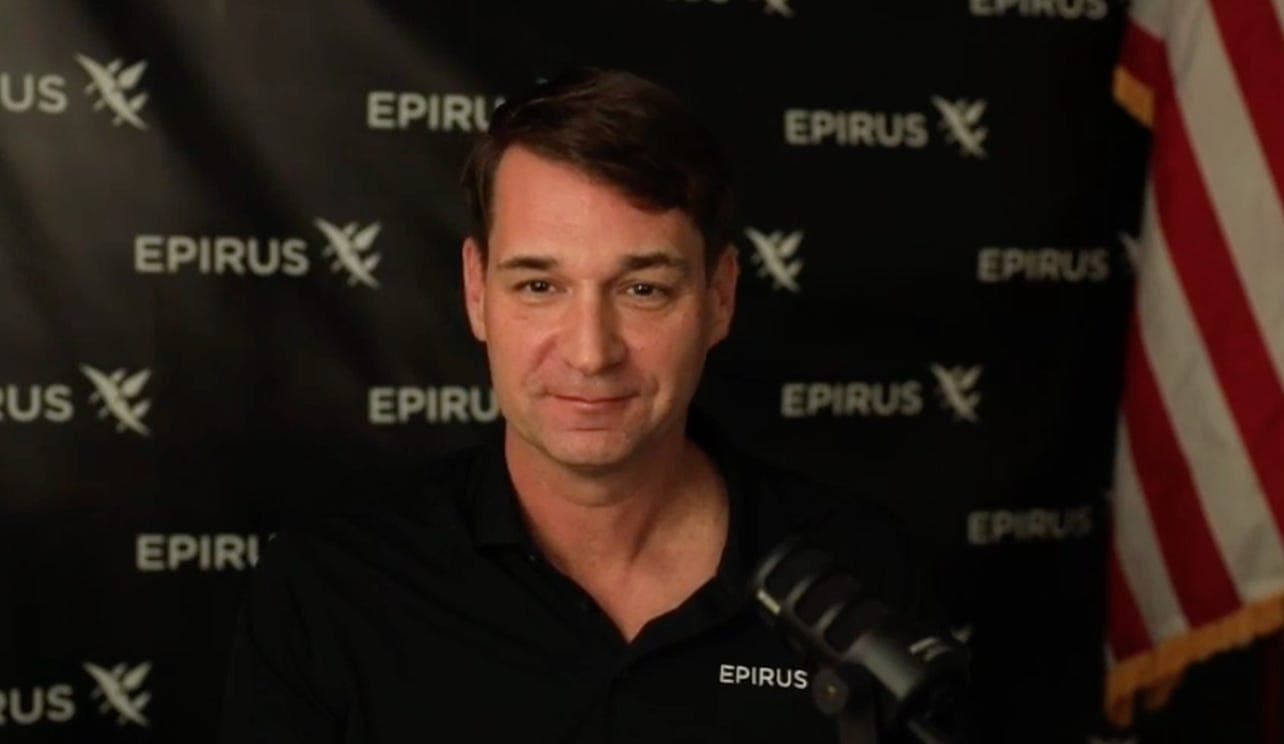
Podcast Summary: Joe Lonsdale: American Optimist - Ep 92: High-Power Microwave & the Rise of Electronic Shields with Epirus CEO Andy Lowery
Podcast Overview Host: Joe Lonsdale Guest: Andy Lowery, CEO of Epirus Description: This episode discusses the evolution of warfare and the development of high-power microwave (HPM) technology as a solution to modern threats like drone swarms. The conversation covers the scientific foundation of HPM, its applications, and the integration of innovative technology into military practices.
---
Key Concepts
- High-Power Microwave (HPM) Technology
- Definition: A type of electronic warfare technology capable of disabling electronic devices, including drones, missiles, and vehicles, from miles away at a low cost per shot.
- Applications:
- Defense against drone swarms.
- Protection of military assets like tanks and airfields.
- Space defense for satellites against threats.
- Changing Nature of Warfare
- Emerging Threats: The proliferation of autonomous drones and irregular warfare has led to new challenges for traditional defense systems.
- Asymmetrical Warfare: The need for innovative defense solutions against less conventional threats, exemplified by the use of consumer electronics by adversaries.
- Epirus and the Neoprime Model
- Formation: Founded in 2018 as part of the 8VC Build program, aiming to revolutionize electronic warfare.
- Neoprime Concept: A new model blending Silicon Valley’s innovation with defense requirements, offering agile, scalable solutions.
---
Discussion Highlights
The Science Behind HPM
- Technical Features:
- Utilizes gallium nitride in a phased array system for flexible targeting.
- Capable of creating a “shield” effect to disrupt incoming threats.
Military Applications
- Integration Across Forces: The technology is sought after by the Army, Navy, Marines, Air Force, and Space Force for its versatility.
- Field Testing: Successful tests demonstrated the capability to engage various drone types efficiently.
AI and Automation in Warfare
- Future of HPM Systems: Discussions on the potential for fully automated systems that could make real-time decisions in combat situations.
- Ethical Considerations: Ongoing debates regarding the use of AI in military applications, especially concerning autonomous weapon systems.
Challenges Faced
- Regulatory Hurdles: The need for collaboration with the FAA for domestic applications and the slow pace of adaptation by government agencies.
- Funding and Innovation: The importance of flexible budget allocations to foster innovation and enable neoprimes to thrive.
---
Key Takeaways
- Technological Edge: The U.S. maintains a significant lead in advanced electronics and engineering, but must integrate this with innovative software and data analysis from the tech industry.
- HPM’s Role in Modern Defense: HPM technology is positioned as a critical component of future warfare strategies, especially in countering the growing threat of drone swarms and electronic warfare.
- Collaboration Needed: Bridging the gap between traditional defense contractors and tech startups is essential to sustain U.S. military superiority.
---
Conclusion The podcast episode illustrates the promising advancements in electronic warfare through high-power microwave technology, highlighting the interplay between military needs and innovative solutions from Silicon Valley. As warfare evolves, the integration of these technologies will be paramount in ensuring national security and addressing emerging threats.
Written by AI. May contain mistakes. Listen to the episode to check what was said.
Transcript
Automatic transcript. May contain errors.0:00founding EPRES, we said we need a defense company, electronic warfare company, that can build systems that will attack that particular threat, asymmetrical or regular. And we came up with high powered microwave, basically a similar structure to next generation jammer that had a software defined back end of the system. So you could program the computer to do whatever you needed it to do. And the front end was a phased array powered by the substance called gallium nitride. And so those two things basically coupled together created sort of the most impressive electronic warfare system that the military has ever fielded.
0:48We have some science fiction coming to life here. If you ever watch Star Trek, you see that big oval shield that would appear around the ship, turn off the torpedoes or disruptor fire or whatever else is coming at the Enterprise. We're actually figuring out how to do some of this nowadays, at least in terms of any electronics. We can turn off electronics now miles away. Smaller versions of these shields can turn off incoming drones and missiles from closer up to protect a plane, protect a tank, protect a base. This is going to be an integral part of the future of modern warfare. It's awesome because it's going to save a lot of lives.
1:20EPRES is the global leader in higher power microwave. It's creating EMP pulses to shoot down enemy drones, take out missiles, tanks, ships, all sorts of things. We started EPRES out of the 8VC Build program in 2018 is now being deployed live in the field to confront a changing type of warfare. Andy Lowry, the CEO of EPRIS, has great experience building things inside and outside of their primes and around the defense world. He knows how electronic warfare works, knows how the DOD works. Really excited for you to meet Andy today and to hear about the latest with high-power microwave warfare and what's going on with EPRIS.
1:53I'm Joe Lonsdale. Welcome to American Optimist. Excited to have Andy Lowry here with us today, CEO of Epris. Andy, thanks for joining. Thanks, Joe. Pleasure. And thank you for thinking of me and inviting me to the show. Well, Epris is one of the most exciting companies for us, obviously, but involved since the start. And we had Bo Mar on earlier. A lot's happened in the last couple of years. And Andy, let's start with your background a little bit. Epris, of course, is the global leader in high-power microwave, HPM. But you've held leadership roles previously at Raytheon. I think you led the engineering team behind the Next Generation and jammer, which is also a form of electronic warfare.
2:26Tell us a little bit about your background to begin with. Sure thing, Joe. Yeah, I like to talk about my background in three sort of sections. The first section, I was 10 years active Navy. I was a Navy nuclear engineer. So I worked on the nuclear power plants on board subs and surface ships. And ultimately, the majority of my time was spent on board aircraft carriers as a nuclear propulsion engineer. So that's where, You know, the first parts of my life, I was the customer. I was maintaining, repairing and operating complex systems across the military. I stayed in the reserves and retired as a lieutenant commander in 2017.
3:07But on the civilian side in 2002, I left the active service and I moved into defense, big defense. And I spent about a decade at Raytheon in a variety of positions, including a chief engineer of a set of space programs, chief engineer over a set of intelligence, surveillance and reconnaissance programs. And then ultimately, I culminated my career there as running an electronic warfare group. And in that program, I had a number of different sorts of electronic warfare systems that we were selling at various phases. But most importantly, we had Next Generation Jammer that you pointed out. And that's going to come in in an important way later, I think, probably in our conversations when we talk about how EPRIS came about and how it sort of was thought about.
3:58And then finally, in the last 10 years of my career, I've spent it in startups. And when I left Raytheon in 2014 to go into startups, I started out looking at kind of a far-flung industry, going into consumer electronics and augmented reality, AI, big data type stuff. I'm thinking about it, computer vision, big data. I didn't think that would come and bring anything to bear into a defense career in the future, but it turns out it kind of did. And then finally, about three years ago now, Dr. Bomar, who was on the show before, invited me into EPRIS. He had innovated something incredible. He had gotten the company to a very, very successful innovation phase.
4:48And then he needed someone who had spent a career productizing things. And I had built both commercial products now at that point and obviously defense products I had almost a decade of experience with. And he said, could you join us and help us see this company over the line? And that's why I joined EPRIS. So it was something that was so incredible and important to me and had brought in so many elements of my back history and all of that, that I felt in a special way that this was a special company for me to come in and help lead. And obviously, there's some really amazing innovations here. Like, why else make the jump from defense prime to startup?
5:28Are there other aspects of the primes that are frustrating? Are there more positive things in startups? Like, how do you see it differently? Well, I think primes are exactly what they're, you know, structured to be. I mean, they're structured to be, I would say, an offshoot nearly of the DOD, of the Department of Defense, of the Pentagon. Everything they do is tethered to kind of direction from the DOD. And so they do very little like internal commercial innovation. There isn't a lot of internal research and development dollars spent on pure innovation that isn't tethered to a DARPA or some other type of program that the military kind of comes up with.
6:12And that's fine and that's good. And that works. It works for all of this defense era up until today. today but now there's been like a scratch of the record if you will and everything's gone to all stop with this new type of warfare that we see so prevalent across the world today and it's only growing we had bomar on you said a couple years ago what's happened since then at epris remind the audience a little bit what does epris do catch us up on the growth since then epris is a electronic warfare company at its heart just like uh we created a great electronic warfare department at Raytheon, we are in effect building a company that sort of mirrors that in a new, what we call neoprime, we say neoprime type of a way.
7:00In our quest to try to build systems that are able to contest the new warfare that we see, asymmetrical, irregular warfare, this consumer electronics highly distributed highly networked type of threat and it could be ground air sea or even cyber space it can be in all areas we see the proliferation of swarms swarms attacks paralleled attacks very paralleled attacks which confounds basically the traditional defense prime electronic warfare so when we came about uh founding and you were part of that founding team Joe founding EPRS we said we need a defense company electronic warfare company that can build systems that will attack that particular type of threat asymmetrical irregular and we came up with high-powered microwave and we highly leveraged basically these ideas we had in Next Generation Jammer and other places where we said why wouldn't this work in high-powered microwave and that question just wasn't even asked in the DOD they didn't ask it they were had a blind spot to actually this approach and Bo said nope we want to do it we want to try it and what he did was is he created basically a similar structure to next generation jammer that had a software defined back end of the system so you could program the computer to do whatever you needed it to do and the front end was a phased array powered by the substance called gallium nitride and so those two things basically coupled together created sort of the most impressive electronic warfare system that the military has ever fielded.
8:47And oh, by the way, Next Generation Jammer just went on its first deployment with the USS Lincoln. So now it's being shipped overseas. So by taking kind of lessons learned there, we've applied it to a phased array, which means what a phased array is, is an antenna that can electronically scan a beam. So you can push high amounts of energy out towards a target, surround that target with the electromagnetic fields that cause disruption and disablement of their circuits, and then scan that beam very rapidly in a blink of an eye, in microseconds, across large portions of the sky. So in effect, what you have done is you've created in an electronic uh electronic warfare shield or wall you can kind of visualize like a star trek shield if you want to where you have a base and you have this like shield and that star trek shield is basically turning off any sort of electronics that would pass through it absolutely right absolutely right and it can self-protect uh air base it can self-protect a tank it could self-protect a helicopter and i could keep going and we have activity in a wide spectrum of different sorts of applications that range from a very sort of close range self-protect, like the Abrams tanks, for example, ranging all the way up into the protect a whole entire airfield.
10:14So you could protect planes, tanks, airfields, groups. You're seeing the Russian tanks are being taken out by these really cheap drones that are flying at them. I imagine if we had tanks too, they try to use drones against us. Like how far away do you have to take out a drone so it can't kill a tank wouldn't just keep flying and explode you anyway how does that work well the interesting thing about what's happening there and we did i think the ukrainians or whatnot did lose a couple abrams as well this way what happens is is a first person viewer drone with what they call a contact charge needs to drive that first person viewed drone all the way into impact yep because how the contact charge works is it hits the armor and then a little spike shoots through the armor then blast it's out from the inside creating a vulnerability and then it's attacked by a subsequent charge blows up the tank got it uh if you knock down that drone five feet from the tank no no effect doesn't do any damage so five feet ten feet so what we've done is we've engineered and because we've got a lot of the elements at epris of product companies we built the epris product, Leonidas, with the idea to be hyper scalable, that each one of the little elements inside can be sized and shaped to different missions.
11:31So on the case of the tank, we just have a few of those elements basically in either side of the tank that creates a close in, let's call it force field. So basically you'd have some force fields that might, it's probably classified, but then might go like miles and you can have other force fields that might just go, might just go yards basically, depending on how much output. And there's been talk a lot of obviously not just drones but drone swarms dozens hundreds thousands of ai enabled battle networked you know drones you know attributable units acting in coordination we're trying to build versions of these obviously in different companies what makes hpm a viable solution against the swarms like you can turn off all of them at once well that's the thing it's a wider area effect technology so where you have lasers you think of a laser has a very very uh tiny little beam that needs to hit one target at a time and burn through that target and then disrupt it.
12:23A microwave system, especially at the frequencies we're using, can be very broad and spread. So we can spread all of that microwave into the atmosphere and everything in that section of the atmosphere would be affected by that electromagnetic radiation. So it lends itself just by the sheer nature of what we've brought to kind of the army and then the dod at large just the sheer nature of it allows for that uh combating of a parallel set of threats and when you combine that with some of the big data techniques that you see in automatic driving and other types of industries like that you have a sensor system that can see hundreds or thousands of things at the same time ai that can drive basically an effector that can very quickly determine, okay, here are these drones, 100 drones coming from this direction, hit them with a wall of these frequencies and these waves.
13:23Here's another set of drones coming from this direction. Next, shoot the beam over there in a microsecond and put another wall on top of those. Is that system ready? Have you tested that system that's looking at what's going on in a battle and helping make those decisions? The system now is in its infancy, But those hooks and those basically that fully automated mode is dialed into the way we architected it. So today the military is not willing to go fully automatic. And there's a whole bunch of discussion we can have around ethical AI. And if we're really ready for the robots, so to speak, to start taking over our machines.
13:59And in the case of this type of warfare, it's going to be necessary. The necessary decision to go forward with AI controlled battle. otherwise a man or a human in the loop won't work yeah if i have thousands of things coming at me controlled by ai that are dynamic that are fast that are hitting me from multiple directions i sure as hell hope that our that our that our shield we're putting up to fight them is also enabled by i making the decision to put them all down once you tell them that i think the framework is of course you have to agree that it's on a mode where it's going to be shooting things down but then i think you obviously have to let it go and go and do it otherwise you're otherwise you're going to be a lot slower if a person has to be pressing the button every time and it seems pretty obvious to me.
14:37I don't know if there's really ethical questions there. I guess some people think there are still, huh? Well, when we were working on Next Generation Jammer, it was a similar issue where the jammer could go out automatically and hit a whole bunch of traditional targets like the integrated air defense systems that line up along the coast. They could hit multiple ones of those and they could calculate how to do it internally. But we fought for a sort of an automated mode and the military at least 10 years ago hadn't quite ingested enough sort of experience around AI to trust it fully. So if you look at even Next Generation Jammer today, I think it's run, and I haven't been on the program for 10 years, but how it was going, it was run as a program that had a man on the loop, not in the loop.
15:20So they weren't making a determination of every sequence or every order, but they would have a final check to say, all right, go ahead and do it. And I think we now today have sort of that mode that we're basically starting to get into with the idea of taking the army a little bit further as the swarms become more and more prevalent into a fully auto mode it's the only option to tell us a little bit about there's something called capes and limbs capabilities and limitations testing how many types of drones you guys shoot down like how many drones can lean i shoot down at once and how far ahead are we of the competitors well the great thing about it so we did some capability and limitation testing out in uh the desert in april just this last april and that's what sort of prompted the military now to go send their systems overseas.
16:03So we had a flying sort of passing grade, I would say, my assessment, you know, the Army isn't going to endorse this yet. It's not been released yet, the report, but from my assessment, we exceeded my expectations. We completely exceeded my expectations. They conducted the event to have a lot of threats, a lot of threats that bridge the gambit of different types of classes of different things. And so they tried to get as many as they could that would be relevant and something that we would see overseas. If we were to go overseas, they wanted to have relevancy and they wanted even to have drones that might have been hardened or protected against electromagnetic emissions to see if they could get a militarized drone and send it into our system.
16:51Now, the first thing I'll say is we didn't we had zero targets that we did not take down in other words we were 100 percent effective on every single scenario and every single target that they threw at us we had an effect on which was incredible which was just incredible now we learned a lot as well and we're in the process of rapidly fixing some of the things around the sensor integration and some of the other things that have less to do with how the high powered microwave effector works and more about the support systems that are surrounding it that have to kind of map into the army's overall structure, a larger air defense structure.
17:35So a lot of those systems, we found bugs and issues, things that are easy to fix that we're fixing right now. And we intend to be in deployment mode come this fall. So in this fall, we'll have a final sort of test out of all the different bugs that we learned in the first limitations test. And then we'll send these things overseas to really, really, really be in the war and out there on the front line with the war fighters. And so we're excited about that because we'll learn a lot and it'll give the world a chance to see one of our systems in action. So knowing that these things are working so well, people are excited.
18:11You're building a lot more of them before they're even bought. What are we building right now as a company? Yeah, that's part of the Neo Prime playbook. So we right now built ahead before we had anything on order. So when the Army gave us a contract, they said, see if we can deliver these in a couple years. Two and a half years, actually. We delivered four systems in 15 months. I mean, just unheard of. 15 months, four full systems to the Army. Now they're looking at sort of things that could improve the lethality, the range. You talked about wanting to reach out to miles. Yes, absolutely. We can do that.
18:46And so now we're basically rapidly on our own money, on money that we are self-investing in. We're building basically systems that I call it at a zero, you know, compared to our baseline system. Everything that we can shoot at, let's say, 100 yards, we could shoot at 1 ,000 yards with the system that we're building now. So a lot of work is going into that system because we think that system is going to be effective against the longer range targets. It's still in the short range air picture, but when we're talking the long range, short range, we're talking 10 kilometers, you know, five, six miles and that type of a range.
19:24And we're confident that we can build HPM that can have effects, very, very ubiquitous effects out at those ranges as well. Very, very confident. So it's very exciting right now, the moment we're experiencing at EPRS. Since we're talking about different form factors and stuff, I love a couple of other ideas of what's next. So right now this is against drone swarms. This could also defend bases and planes and everything. Like what are the other possible partnerships? Like, for example, it seems like you could probably put these on advanced ground vehicles as well. You were talking about tanks, probably things like GD Strikers.
19:57I imagine special forces are excited about those types of things. Oh, we have a ton of work going on compared to when Bo was last on your show right now. When Bo was here, they had some of the makings of the striker program, and we had a little bit of a nod towards the Army program. Army has really matured since Bo has been there, and I no longer say we have a tiger by the tail. I said we've climbed up onto the back now, and we're riding the tiger. Still could get thrown off, but we're very close to a program of record there on the Army side. And so since then, we've also had success with the Air Force, the Marine Corps, and even the Navy.
20:36And each of those have a specialized application, like the Marine Corps wants us to look at expeditionary protection. So working into what they call their Mattis program, that program of records to potentially put some sort of air protection element or effector into that mix. And then looking with the Air Force, we're looking at different sort of class vehicles, you know, air vehicles, self-protection of helicopters, Self-protection of big wide body planes that are like the cargo carriers and other sorts of planes of that site and shape. We've got a program working with the Air Force on preliminary sort of S &T work in that area.
21:15And then finally, with the Navy is a really exciting event in August. We're going out with the Navy and participating in what's called Antex. And Antex is a program that we're going to take one of our systems and put a whole bunch of different outboard boat motors out in the water and see how far and how quickly and how effective we can take out outboard boat motors. And that would be sort of vectoring into USVs and pirates. We could put some of these on the hundreds of Ceronic boats to take things out. Speaking of other potential partners, a lot of our friends are really excited about Androl.
21:46Androl has some amazing different products right now. One of their products is the Roadrunner. Could you put something on top of something like that? Are there other chats about things like that? Yeah, Roadrunner actually would make an excellent vehicle to integrate into. It has a nice compartment behind its nose navigation equipment that we could put a decent size effector inside. And it's able to run up and close approach a lot of vehicles, but it just didn't have something. It could just like a little bomb. It could just throw at them and then fly off. So what we were looking at doing is putting an HPM bomb, basically, or electromagnetic pulse generator inside that that carry space.
22:22And then because it has that really incredible engineering done where it can return and land, I don't know if folks know that, but the Roadrunner, unlike some of these other vehicles that get shot out like the switchblades and don't have an ability to recover, you can recover a Roadrunner. So even though HPM systems are relatively expensive compared to a$30 ,000 drone, you can actually take down maybe 10 drones a flight and then re-land and recover with a Roadrunner. So the Roadrunner actually is a great vehicle. And back when he was part of Richto, General Thorogood actually helped us to kind of devise our initial projects and our initial programs with HPM.
23:05And I was just speaking with him the other day about the potential for the two companies to align on a Roadrunner type of an application. So that is a great example. You know, it was a lot of work to do still a long road to go. And that sort of a development effort, not as long as it would take a prime a lot quicker than that. But still, it's in its early days, but very exciting and something that would be a natural further extension or application of our system. That'd be really fun, basically, to be able to have a handful of roadrunners go out, intercept incoming drones for them, shoot them all, get close enough to shoot them all down, come back and land and wait for next time.
23:41It's also a lot more efficient, right? I think there's no reason to waste a ton of money with these things if you don't blow them up. I mean, how about outer space? Like, it seems to me that, you know, there's all these really important potential weapons being developed in space. There's obviously other things we're doing with space that are critical for warfare and otherwise. could you could you could you put something paired with a satellite and and then turn off an incoming missile trying to destroy it and protect the satellite too is that the kind of thing we should be doing yeah that is a wonderful uh you know we started to the ground and we've moved to air with the air force and we've had preliminary discussions with space force but i've had a really interesting discussion just three days ago about this and this fellow that knows a lot about space domain awareness said you know Andy the satellites where they're at today are just like an NFL line that lines up before the whistle blows soon as a war happens those satellites go every which direction perform different functions that you don't even think I was blown away I had no idea that's what was going on up there if they're saying that the next war apart from this asymmetrical drone and swarm stuff we're talking about, the next war will be determined by space and how you dominate in space.
24:53And so today we're building hunter killer satellites, seeker satellites that fly around when one of those things happen. And to be able to put an HPM in space, you can think of it in terms of hypersonics. You can think about it in terms of what the Chinese are doing or thinking about as far as their ballistic missiles go and being able to go in route or in course correction. to targets and stuff. Well, we need to be able to be in space in order to intercept those things as they go. And the good thing about space is because we're using electromagnetic energy, the vacuum of a space actually provides some advantages that makes even more sense.
25:34And so although that we're still like I was saying about Roadrunner in the preliminary discussions, it provides an excellent, excellent adjacent sort of area, if you will, warfare area for us to now move into now that we've done so well with the ground-based stuff. Does the EMP go further in space with the vacuum without the molecules of the air in the way? Is that what's going on? It does. It does. There's less resistance, basically, if you think of it that way, to microwaves. And then the other thing is, is in space, you have first the option, of course, to use the stuff we're using, gallium nitride, a lot of gallium nitride today, these days in space.
26:12But also you can use things like the vacuum tube technology. They're a little safer to use, obviously, because they're away from people. They're in a vacuum, so they don't have the leakage problems with air and stuff that they have on Earth. So, yeah, you can use other methods as well of creating high powered microwaves. But space is a very it would be it's it's definitely a domain where high powered microwave will become a significant player in in the near future. Awesome. And so you hinted at it earlier. One of the first things to get really big as a company, I don't know if we're releasing, but you've obviously had a lot of revenue.
26:49It's growing really quickly. It's a big company, but you need to get to a program of record. What's a program of record and what's it take for you guys to win the program of record? What are the next steps there? That's a great question. And, you know, when you look at programs or record, people define them slightly differently. The type of weapon system that we're building, the particular type of expertise that EPRIS has over the other neo startup, the neo primes that are working in the defense space, is that we need basically a program or record because the weapon system itself has certain restrictions and things about export.
27:27it, about selling it and everything else. So you have to be directly partnered with the military. It can't be like just a COTS company where it sells commercial, what they means selling commercial off the shelf, like a laptop or a computer, or even some drone companies just sell their drones like commercial drones. So when you get a program or record, what you're getting is basically an investment on the, on the customer side to create a franchise. And this franchise will start in whatever development or integration work you need to do be then followed by a full rate production program where you'll have hundreds and hundreds of systems built.
28:05And then you'll have a tail of aftermarket and operations and support that you'll need to do. It will be at least as much as your production contract based upon history of all these big programs. So by getting a program or record, yeah, you might that first year have like 100 million, maybe 200 million in revenue. But that is indicative of a franchise that will continue to produce$200 million of revenue for a decade or maybe 20 years. And then beyond that, once you're in to a technology like this, the adjacencies just become start spilling in over your walls. So it's such an important kind of holy grail to be able to get yourself an established franchise.
28:49And once you're there, you're profitable. You're taken seriously. You have corporate experience and past performance that you can bid into other projects and other programs with. That'll really be what it'll take for us to leave the valley of death, as they call it, and become an established, respected neoprime. And if you ask me, well, how close are we to it? I would say we are at getting one right at this moment. We are deploying to CENTCOM. If those deployments are successful, we will be palmed into a program of record in 2025. So that'll be a wonderful news. And I'm excited about ushering that new age of EPRS into reality.
29:34So it's a big deal. And to tell us a little bit more about working with the DOD, like what's frustrating? What's encouraging? Is it easier that you think that it was to break through here than 20 years ago? What's it been like? My experiences lend well because they've done similar activities in the prime. And now outside, I've been able to talk the language and understand kind of the directionality that they want to take it. But back when I was in prime, in the primes, we didn't have the adaptive acquisition framework. So what I would say is really good about the DOD and the Pentagon is under Secretary Ash Carter, They implemented what they called an adaptive acquisition framework that has contract types called OTAs, has pathways to production called MTAs, mid-tier acquisitions.
Read the full transcript
30:24And these different ways of approaching engaging with Department of Defense has sprung the basically potential for neoprimes to become something significant and become a player in sort of the mix that the DOD can draw from. Now, why do we need neoprimes? Like what has caused this sudden need for us to say, hey, we would really like Silicon Valley to come in and help us with a bunch of our problems? I would say two major things have happened. One is the proliferation of this new class of warfare called I called it back 10 years ago, asymmetrical and irregular. Today, you would probably not call it that.
31:03You'd call it something more down the fairway as far as how warfare has evolved. And how that was represented back then and how it's represented today is that it would be marked by a heavy reliance on consumer electronics. So why does that matter? Well, when you're leveraging consumer electronics to build weapon systems, you can build to the order of like, for example, Russia, I think, can build 500 shahads per month. Wow. The Group 3 shahad, 500 per month. I think our entirety of our short range air missiles that we can build per month are in the dozens, like I think in the tens or that are maybe end up to like 100.
31:45But just orders of magnitude less than what folks can build with consumer electronics. If you talk group one and group two, China can build probably 100 ,000 group one and group two systems in a single month. so it becomes a type of warfare that is sort of like if if you were like 10 years ago they were looking at it like this can't really threaten this big industrial military complex could it like how could it penetrate well we're seeing how by just the multiplicity of being able to drain our arsenals about being able to take out basically or take our heads out of the game probably say drain our arsenals we have things we build to shoot down and defend things but they costs a huge amount of money we can only produce so much per month and if they're producing 10 or 100 times as many per month we no longer have the ability to stop them so well this this is actually the core of why HPM is so cool right so you can shoot down a bunch from without having to use anything other than just a few cents for firing but this the story I'll tell you one last thing on this topic because you asked about what are the negatives and I always say what I would say the negative about the traditional approach with primes is is that you know for a while folks had been kind of knocking on the door with certain agencies within the government to say, hey, we should look at what we call solid state, this different approach to high powered microwave that the DOD had shied away from.
33:08They had a certain viewpoint on how high powered microwave should work and they were wedded to it. And we all know how this goes. It happens in all industries. You get wedded to it. Some people call it not invented here syndrome. And when that occurs, how do you innovate when you have a sort of closed mind? How do you innovate with that customer? So by bringing in neoprimes, these crosses between commercial, big data, Silicon Valley type technology and culture, you cross that with people that have worked in defense like myself and a lot of my team, and you build this new sort of model of a business, and you take a lot of your capital, a lot of your money going forward, we have methods that will continue to be a very high EBITDA type company so that we can take that free cash and reinvent it, reinvest it, so that when we see other blind spots or not invented here issues or things that we think we can solve as an organization that are adjacent to what we've done so far, we can jump on it.
34:18Whereas if you're at a prime, it's not that they're worst engineers. I mean, I was there for years to years. It isn't like the worst engineering are there. It's just how do they spend their money? What are they capable of putting their money into? Like if the CTO of Lockheed Martin said, I want to put$500 million into creating this new product line of just all of our free cash, people would say, no way go get the military to pay for that go get darpa go get afrl go get some other lab to pay for that work we're not taking 300 million of our uh money it just the stockholders would go crazy it's not how they invest basically it does seem to me to be the case that the they're not as many of the top computer scientists i feel like the primes will have the best as good phds and like certain technical areas but i haven't seen the engineering culture of silicon valley be reflected in them as much as that is that your experience as well or did you actually think they also get the best CS guys?
35:12No, I think that there is a large valley between what Silicon Valley has become really, really good at. And that's things like big data, computer vision, AI, ML, those sorts of elements and those sorts of technologies versus the advanced electronics that DOD has always been very good at. And I think they're completely different talent skill sets. And I do agree. There is a very huge void on the AI, ML, and computer vision side, on the DOD side, on the traditional prime side. Hopefully we can combine the two and make them both work together and we're able to show people. That's the plan. That's the plan.
35:53One thing I didn't ask yet, I'm curious, what customers are you hoping to attract beyond DOD? Are there federal or civilian US agencies or the allied militaries? How does a company like EPRS think about that? You know, that is a really great question. I start with this provocative statement. You know, I learned just recently and I didn't fact check this. So I'm going to have to fact check. But somewhere to the tune of 80 percent of the illegal drugs and the illegal guns that are being brought across the border are being brought by drones today. They have somewhere along the lines of a couple thousand drone incursions over the border.
36:29And all we're doing today is just watching them fly on by. That's all we're doing. We're not doing a thing to them. And they're coming in and we know they're carrying illegal drugs and illegal guns and we're doing nothing. So there is an example of a very, very, very real and present danger beyond just the folks coming through the border, but actually them sending drones across the border and being able to build, let's call it an electronic wall that goes right side the real wall and keep not only the folks at bay that aren't illegal to be here, but also these drones that are flying in overhead.
37:05That would be an application where I think it's beyond urgent to get something kind of going in that dimension. But we've been a little bit stifled by some of the agencies, FAA, some of the domestic agencies, where they just don't have basically the teams available like the DOD do in order to infuse and ingest new, very sophisticated technologies like this. So in a large part, they're playing a waiting game to say, well, let's see what DOD does with EPRES and then we'll follow suit. But, you know, that's playing a risk game to me, a risk game that I don't think we should be taking right now. So basically, these regulatory agencies have a jurisdiction over the spectrum of electronic warfare.
37:50And they're saying we're not going to allow anything for now, but maybe we will later. Yeah, the FCC designates bands of frequencies and say these bands owned by this agency. And in the frequencies we work in, a lot of those frequencies are run by the FAA. Got it. And so the FAA has to give us permission to radiate big radiation at those frequencies. And we've run into problems domestically, even on bases, even on military bases, being able to have a full clear to operate or authority to operate by the FAA. Now, I'm not saying they're not working with us. And I will say the FAA is understaffed.
38:27It's undermanned. And it doesn't have all of the people it needs in order to create a vibrant sort of technology review board. Let's call it. They just don't have the people. And so they have been trying to lean or leverage other agencies like the DOD. But, you know, so I don't know who I'm going to call to fix it, but somebody needs to fix it, I think, in order to get the FAA more engaged and our domestic threats a little bit taken a little bit more seriously beyond just the DOD lane. I mean, that's the other thing about this type of warfare. It is not constrained to DOD lanes. It just immediately.
39:04I mean, look, we have the Houthis. The Houthis doesn't even have a country. It's not constrained by traditional defense lanes. It goes into homeland security. It goes into stadium protection, prison protection, border protection. I mean, you let your imagination run wild on what could be the future because it's just so bloody easy to take a drone put some dynamite on it and send it into somewhere to do damage yeah when we were starting epris and seeing what was possible my friend just built a 49er stadium previously and we had a place there and we're like wow it'd be really easy to to have a bunch of tiny drones with bombs on them really cheap just like come and attack and kill a thousand people which is thank goodness no terrorists have done that yet, but it seems like there are applications of being able to protect stadiums, mass gatherings later, especially if there is a war going on.
39:54Unfortunately, we might need these things. So I'm hoping we get these things more aggressive and cheaper over time so we can have them everywhere to protect civilians too. That's the plan. That's the plan. Last question I want to ask is on Congress. What should Congress people be doing differently here to try to put more money towards innovation that matters in defense? Most of the money is still captured by the primes. They're very good at it. They are by far the most lobbyists. They kind of have the structure of how it all works. You know, a lot of us think more money should be going into some of these new innovative areas that terrify and deter our enemies.
40:24Like, what does that look like if you're in Congress and you're trying to fix this? Yeah, that's a great question. I think the one thing that I think we could stand to do better at, and not to say that we haven't been doing a little in this direction, but more money that is programmed to be flexible in the budget in year. You know, each year there's several billion dollars, let's say, of money that they can actually do anything flexibly with the DOD. You know, everyone talks about the 800 some odd billion dollar budget that the DOD has. But what people don't say that when you boil it down to what actually is reprogrammable, it's a tiny fraction of that.
41:08It's like I think the army has maybe$150 billion or less to do anything with each year to year. And then of that amount, there's a tiny fraction that isn't already sort of the big programs, a record, the big primes, the big traditional method. There's just single digit billions at most, at most. And And things like AppFit is the right idea. AppFit's just several hundred million, you know. DIU, this year, they got a billion dollars. Incredible. That's the right direction. I think more money needs to be placed in a more flexible spending structure year to year because otherwise I'm being, again, held up by the pace of bureaucracy.
41:55We're not moving as fast as the pace of innovation. Well, to end on an optimistic note, you know, we started this to push back a lot on a citizen We're seeing a lot of people, you know, say, oh, China is becoming so much more advanced. They're going to crush us. You know, it seems to me like America still has some of the best innovation in the world and still ahead in some of these areas. Like, where are you seeing things like is HBM going to save a bunch of lives or are we the best in the world? Are we going to be able to deter these guys? The DOD and what we have built from an advanced electronics perspective is still eye wateringly advanced.
42:28We still crush our enemies on our lead and our ability to maintain that lead engineering wise. But this risk that we are now facing of having consumer electronics, more or less, this asymmetrical risk that we've talked about is confounding traditional DoD. And we need to have a fusion of big data and Silicon Valley type orientated technology, if you want to think of it that way, with the advanced electronics know-how that we've gotten from sort of our military complex over the years. And by bringing those two worlds together, we will have an order of magnitude advantage over China, over Russia, over anyone.
43:11But it's in bringing those two worlds together. And that's what folks like you, Joe, have been doing in your investment attempts is saying, hey, I see this potential. Let's bring these two worlds together and have a 10 year, 20 year lead on everyone else, because there are areas like hypersonics and others where we're not the best in the world. And we need to get there again in those areas. And I think the only way to do it is by the fusion of traditional Silicon Valley with traditional defense. All right. Well, let's do it as fast as we can and try to try to stop war here. Thanks, Andy, for everything you're doing.
43:46My pleasure. Thank you very much for having me, sir. And look forward to talking to you soon.
From the publisher
Electronic shields are iconic elements of Star Trek, Star Wars, and other great American sci-fi. Once a fantasy, we are now building versions of these in real life! And they're a vital solution to a new type of threat confounding our legacy defense industry.
This real-life force field alternative is called directed high-power microwave (HPM), and it's an answer to drone swarms and the proliferation of autonomous, attritable threats. Founded out of 8VC Build in 2018, Epirus is building the world's most advanced HPM systems, capable of disabling hordes of drones and other electronic devices up to miles away — and it only costs pennies to fire! This week, we talk with Epirus CEO Andy Lowery about the science behind HPM and why the Army, Navy, Marines, Air Force, and Space Force are all pursuing Epirus' technology.
We begin with the changing nature of warfare and why harnessing — and defending against — autonomous, attributable systems is essential for any future conflict. Next, we dive into HPM technology and its myriad applications, from taking out drones, missiles, boats, and other vehicles to defending satellites in space. We also discuss the rise of "neo-primes" like SpaceX, Palantir, and Anduril and a new model for getting the best technology into the hands of our warfighters as quickly as possible. Finally, we discuss the importance of fusing Silicon Valley's AI and big data expertise with the U.S. defense-industrial base's advanced hardware experience in order to maintain our technological advantages over China and other adversaries.
Learn more about Epirus’ approach to electronic warfare, and follow Epirus on Social: YouTube, LinkedIn, X
This is a public episode. If you would like to discuss this with other subscribers or get access to bonus episodes, visit blog.joelonsdale.com