In short
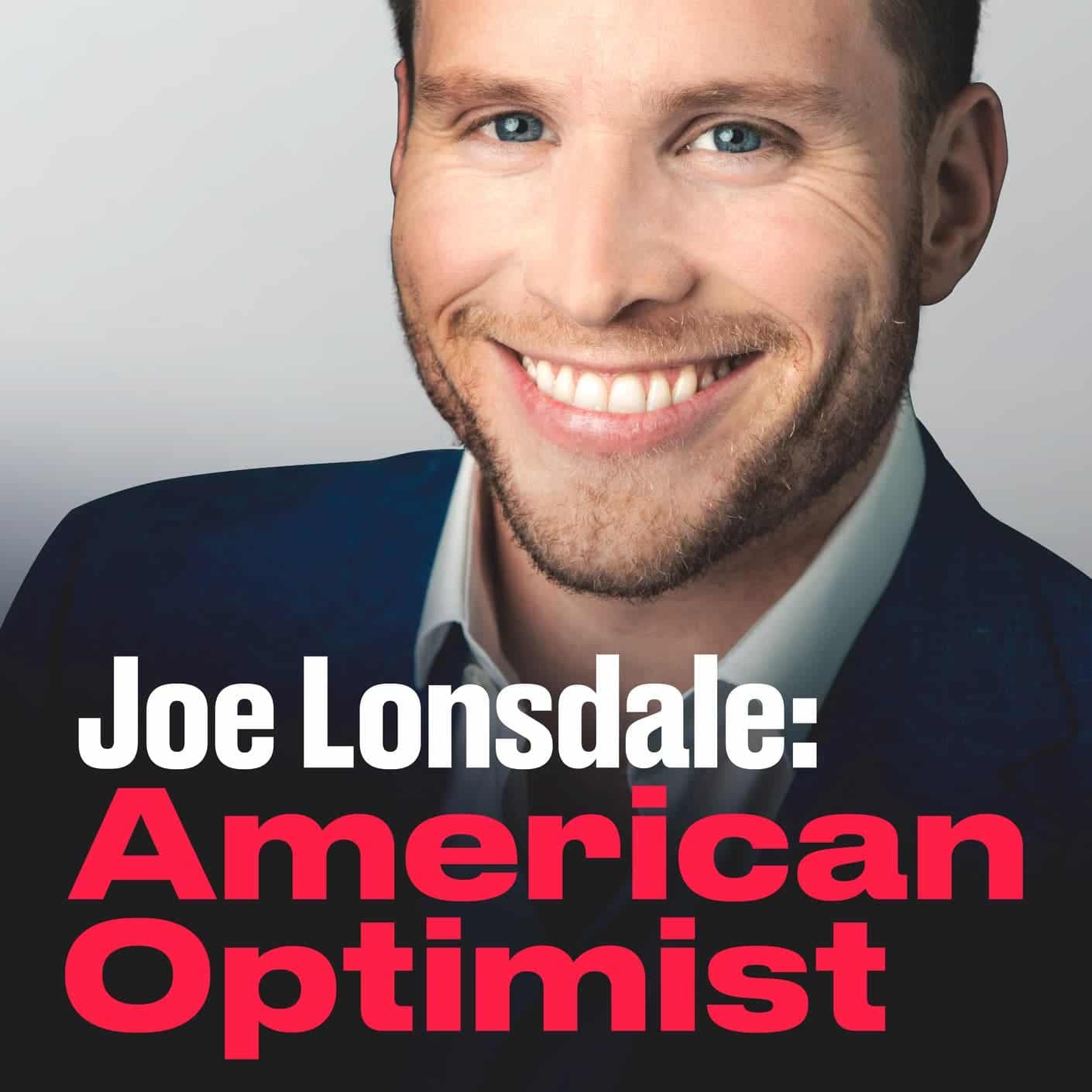
Podcast Episode Summary: Joe Lonsdale: American Optimist - Ep 94: A Conversation with Turnaround King & U.S. Commerce Secretary Wilbur Ross
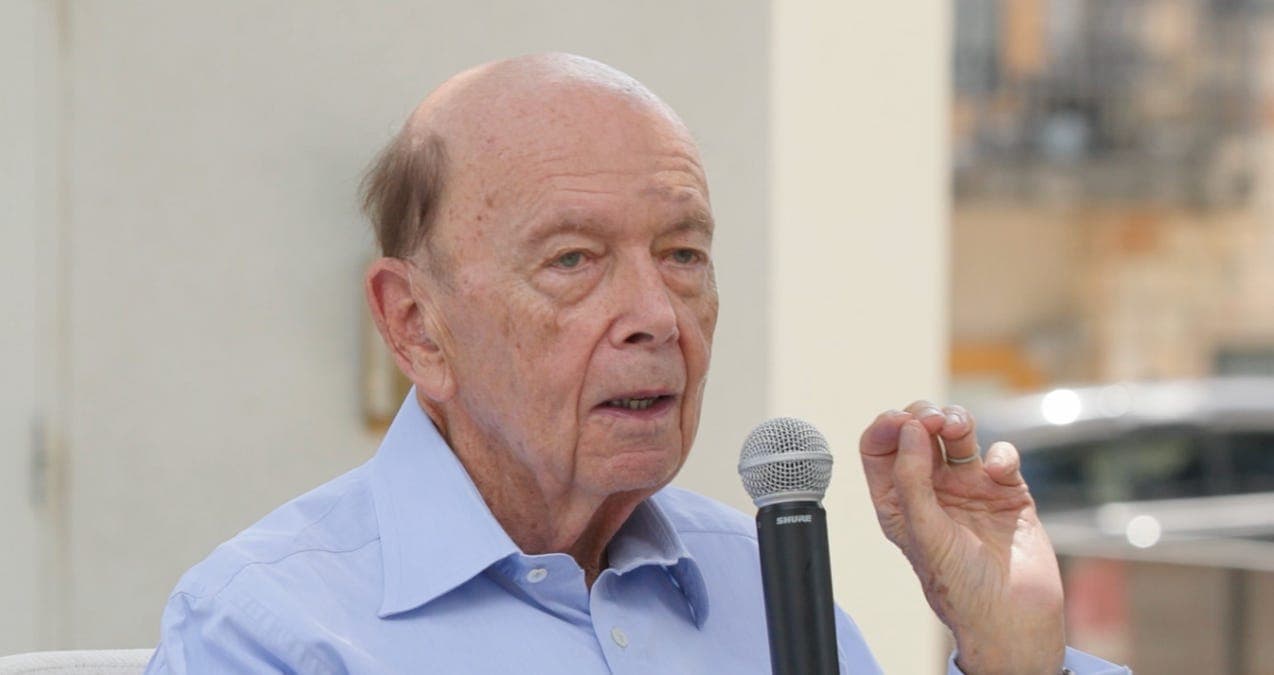
Overview In this episode of the American Optimist podcast, host Joe Lonsdale engages in an insightful conversation with Wilbur Ross, a prominent turnaround artist in finance and former U.S. Secretary of Commerce. The discussion covers Ross's career, his investment philosophy, experiences in high-stakes trade negotiations, and insights from his recently released book, *Risks and Returns: Creating Success in Business and Life*.
Key Themes and Takeaways
Wilbur Ross's Career
- Turnaround Artist: Known as the "King of Bankruptcy," Ross has restructured over $400 billion in distressed companies, significantly impacting industries like steel, coal, and textiles.
- Transition to Politics: In 2016, Ross moved to Washington to serve as U.S. Commerce Secretary, focusing on trade negotiations and defending American businesses, particularly against competition from China.
Investment Philosophy
- Common Issues in Bankruptcy: Ross identifies two main reasons for failures in traditional industries: overexpansion and undercapitalization. He emphasizes the importance of leadership and accountability in restructuring efforts.
- Mindset Shift: He points out a "loser's mentality" in failing companies, where management often blames external factors instead of seeking internal solutions.
Trade Policy and Negotiations
- Realities of Free Trade: Ross argues that true free trade does not exist; countries protect their interests through protective mechanisms, leading to significant trade deficits like the $800 billion annual deficit with China.
- Regulatory Relief Initiatives: During his tenure, Ross emphasizes the regulatory reforms aimed at reducing burdens on businesses, citing examples of excessive regulation stifling economic growth.
Experiences with Trump Administration
- Support for Trump: Ross recounts his early support for Donald Trump, influenced by direct experiences during the bankruptcy of the Taj Mahal Casino and Trump's understanding of middle-class struggles.
- High-Stakes Meetings: He shares notable anecdotes from his time negotiating with world leaders, including a memorable dinner with Chinese President Xi Jinping that coincided with a U.S. military action in Syria.
Insights on Education and Policy
- Educational Crisis: Ross expresses concern about the current state of education in the U.S., criticizing policies that undermine traditional subjects like mathematics.
- Future Outlook: Despite challenges, Ross remains optimistic about America's entrepreneurial spirit and resourcefulness, believing innovation will drive future success.
Conclusion Wilbur Ross's insights reflect a blend of financial acumen and political experience, providing a unique perspective on American industry and trade policies. His new book, *Risks and Returns*, aims to share lessons learned throughout his career in a way that resonates with both business professionals and the general public.
For further discussion and access to bonus episodes, visit [blog.joelonsdale.com](https://blog.joelonsdale.com?utm_medium=podcast).
Written by AI. May contain mistakes. Listen to the episode to check what was said.
Transcript
Automatic transcript. May contain errors.0:00There is no such thing as true free trade in the world as we know it. We don't have a something like$800 billion a year deficit with China as an accident. Trump announced, Mr. President, I don't mean to interrupt you, but we just launched 52 missiles into Syria. Xi, who had been speaking through interpreter the entire evening, said in perfect English, repeat, please. Bullies are only bullies if you don't hit back at them.
0:39We had an event with Wilbur Ross, who was the Secretary of Commerce under President Trump. He's just out with a new book, Risk and Returns. Wilbur was one of the most important industrial and financial leaders. He helped turn around over$400 billion of bankrupt companies, saving jobs and industries as diverse as textiles and steel and all sorts of American manufacturing. A lot of this tied to extraordinarily important trade issues. Under President Trump, he was involved in high stakes negotiation with some of the most powerful leaders in the world. He's really at the forefront of understanding the United States, trade and dynamics and other issues of the economy with other countries.
1:14Excited for you to meet him. It's great to be here at Arena Hall. Really honored to have Secretary Ross with us. Secretary Ross, you were the chairman and CEO of W.L. Ross & Co., U.S. Secretary of Commerce. He's also the author of a new book, Risks and Returns, Creating Success in Business and Life. I want to start by asking a little bit about your background in finance. I think back when Fortune was run by sane people, they called you the king of bankruptcy. You restructured more than$400 billion worth of assets. And what that means is you went into industries like steel and coal and textiles, and you helped kind of resurrect these things.
1:46And obviously, you went on to work on that for America as well. But how are you so successful in restructuring so many of these assets? What's the background there? Well, you'd be surprised at how similar all of the companies that went bad are. Generally, it's a result of either overexpansion and or undercapitalization. Unlike tech companies, the old economy companies tend to be very balance sheet heavy, and therefore they often tend to be a little leverage heavy. But the most important thing is once they've been under siege for a little while, they develop what I call a loser's mentality. You'll ask them, well, what's gone wrong with your business?
2:31And they'll always say, oh, it's the union or it's the lawyers or it's the politicians or it's something else. It's inflation. They never talk about anything that's within their control that they could do something about fixing. And to me, that's a telltale sign that the guy is headed for real trouble because a lot of things you can't fix. But if you don't focus on the ones you can fix, you're going to be lost. When you're dealing with a lot of these bankruptcies in these old industries, obviously people are blaming outside forces as opposed to themselves. It means they're not as good of a leader.
3:07But were there also outside forces that caused a lot of these bankruptcies in some ways over time? Were there things with competition with China? Were there different rules we should have had in place? Well, one of the fundamental causes, and in fact, what got me really going on distressed securities, was Mike Milken. Mike is now a pretty good friend. But when he was inventing deliberately junk bonds at Drexel, Burnham, Alambert, you knew putting out that much highly leveraged debt would result in many more bankruptcies than before. And what Mike had been doing since he was basically advocate for the issuer, not so much for the security holder, he would go to one bondholder at a time, kind of pick them off and gradually build up a consensus.
3:59we had a little different idea. Our idea was get the bondholders together, or in some cases, the equity, band them together, go to the company and Mike and say, you have to pay our advisors fees, but we're going to negotiate as a group, not get picked off one by one. That proved to be a very useful idea to them. And I'm pretty sure it helped their recoveries. So it's interesting because a lot of people have lauded the LBO, what Mike Milken did, because it brings more capital to markets. But you're saying his incentives were to get people to take risks that were too large sometimes would actually cause a lot of problems.
4:39Well, it has to be both. I mean, when you're creating highly levered situations, like Federated Department Stores was one of the ones that we did. A shopping center owner called Campo from Canada made a hostile bid for Federated, took it over, paid something like$6 billion for it, 97 % of which was debt finance. So we had basically nothing in it. And 18 months later, it proved there was a little recession. And that was the end of that. Was that sometimes good for a business though? Because you might not be involved until that happens, then you get to step in and fix it, right? Yeah. But on balance, I think high yield bonds were a good idea and a useful idea and had a very stimulatory effect on the economy.
5:34But anytime you put a lot of leverage on things, you know there are going to be some that don't make it, don't make the cut, whether it's for external reasons or just they made some kind of a mistake. So I'm not against high yield bonds. I think they were a wonderful innovation. Strangely, I ended up doing the bankruptcy of Drexel, but a lot of other people started getting into high yield. Drexel went from 70 % market share to 40 % went from being the most profitable firm on Wall Street to being bust. So it was a little strange. In effect, my patron saint who helped me create my whole business, we were now technically on the other side of him.
6:29But we're big supporters now at the Milken Institute. So he forgives me for the sin of having done their bankruptcy. He does a lot of important work. So after restructuring hundreds of billions of dollars of companies all over America, you went to Washington as Commerce Secretary, and you took on a similar mission in some ways. You were standing up for U.S. businesses and workers in some of the most important trade negotiations in decades. So why did you go to D.C.? You've obviously made enough money, you could be on a yacht. Why was it important to go serve that way? Well, a couple of things.
6:58You can argue that the U.S. government is the most over-leveraged and undermanaged situation that we have, especially then it was. So that was part of the allure. But the other part was I was one of the first Wall Street people to endorse Trump. I felt I had done for the bondholders the bankruptcy of the Trump Taj Mahal casino in Atlantic City. And that was a very weird story. Merrill Lynch and Bear Stearns underwrote an$800 million mortgage bond for a company that was a startup. Trump had a couple million dollars in it, and that was about it. Well, it never paid one coupon. As you know, the coupons were every six months, never paid one.
7:54So naturally, the bondholders were a little cross with him over that exercise. Yet you still chose to work with him after that. Yeah. And the interesting thing is when the bonds collapsed, Carl Icahn, who's a good friend of ours, became the largest bondholder. So the two of us were quite adversarial in a very public way to Trump then. But interestingly, both of us turned out to support him later on, because when you run into someone under those adverse circumstances, you really learn what they're made of. And we decided that he was a very real phenomenon, a very real person. And then the second reason we supported him, I felt of all the candidates back then, both Republican and Democrat, he was the only one who understood the horrible distressed situation in which middle class America found itself and was finally recognizing it and was determined to do something about it.
9:06So I felt that he would be the right choice. And I think he was the right choice. So in your book, you share some vignettes about working with Trump in some really high stakes meetings with Xi Jinping, with Angela Merkel. Can you tell us about a favorite story? Yeah. Well, one of my favorite stories is about President Xi from China. I knew China pretty well because over the years, we had 18 different factories making different things at different companies in China. So I was in China 80 times before the Trump campaign. And I also got money from the various funds in China. So I felt I understood it pretty well.
9:53Anyhow, so the first big state visit was President Xi with a 100-person delegation to Mar-a-Lago. Mar-a-Lago is in Palm Beach. It's the old Margaret Merriweather Post estate. When she died, she left it to the State Department. They didn't want to keep it because the upkeep was too much. So Trump finally bought it. And so here we are in this very, very luxurious setting, a meeting with Xi. The meeting was a dinner meeting, and it was scheduled to begin at 6.30. About 3 o 'clock that afternoon, I get a call at my house in Palm Beach. I was a member of the National Security Council in addition to commerce.
10:44Anyway, so got a call. We had an emergency National Security Council meeting at 4 o 'clock. Naturally, they wouldn't say over an open phone what it was about. So we got there, and if you look in the pictures in the book, you'll see this little tiny crowded room with Trump, Mnuchin, myself, and a small bunch of people. And that's where we decided to launch the 52 missiles into Syria to retaliate for them attacking an American base in the Mideast. And we decided to do it at 7.15 that evening. That would be the wee hours of the morning in the Mideast because they're around seven hours ahead. But it would also be right smack in the middle of dinner with Xi.
11:38So it was kind of an almost after dinner treat for him. And so Xi, who had been meanwhile monopolizing the whole conversation with his version of the history of China, going way back to when our ancestors in Europe were running around in loincloths, and China was a very wealthy and very well-educated country. and he had just about gotten into World War II. He had gone through the abuse they took from the colonial powers, just getting into the Japanese invasion. And an aide came to Trump with a little note. Well, I knew what the little note was going to say, that we had launched the missiles. So Trump announced, Mr.
12:30President, I don't mean to interrupt you, But there's something that your intelligence will soon pick up, but I wanted you to hear it from me. We just launched 52 missiles into Syria. Xi, who had been speaking through interpreter the entire evening, said in perfect English, repeat, please. So Trump repeated it, and then his translator translated it. He thought about it for a minute, and then he said back through the translator, Mr. President, you certainly had a busy afternoon. And that was the only comment he ever made. He picked right up in his history lesson, right to the sentence where he had left off.
13:17That told me several things. Number one, what Trump's message was both to the Iran and their surrogates and to China, Push me too far, and I'll come back at you in a very heavy-handed way. And I believe that even though it didn't make Xi blink, he took the message. And I think it's a big part of the reason that single event, big part of the reason we didn't have much warfare during Trump's whole administration. Think about it. It's nothing like what we have now. And the problem now is however well-intentioned they are, their responses are too weak. Yeah, people definitely seem like they're more afraid to mess with President Trump.
14:09Yeah, and I learned as a little kid, I still am pretty scrawny, so I was a perfect target for bullies. But bullies are only bullies if you don't hit back at them. Once you hit back, they stop being bullies. That's something this administration, I fear, has yet to learn. So looking back, I'm curious on the Trump administration overall, are there other themes you think he got right? And what were some of the missed opportunities? Were there a couple of things you wish you could have done differently? Yeah, there were lots of other things we got right. First of all, understanding that there is no such thing as true free trade in the world as we know it.
14:50It's a nice theory that every country will just manufacture and even export the things that they're the best at, will import everything else, and life goes on merrily. The problem with that is in between, you have human beings, and the human beings are always trying to advance their own country's economic interests. So you get into all sorts of protective mechanisms. And as a result, it's a fantasy to think. We don't have something like$800 billion a year deficit with China as an accident. It's partly mistakes we made, particularly letting them into the World Trade Organization without having any proper enforcement mechanism.
15:44President Clinton operated under the assumption that if they were admitted to the WTO, they would abide by the rules. Well, it turned out they didn't, but there was nothing we could do. And we compounded it by the Congress passing NPRS, Normal Trade Relations. And what that gave China was exemption from the annual review by our Congress, who it took away one of the few protective powers that we would have had. So the combination of those things and the WTO rules is what led to the boom in China. If you do a chart of GDP of China, look at the 20 years before WTO. They made a little progress, but nothing particularly outstanding.
16:44Suddenly, WTO, they take off like a rocket ship. And it was partly trade-driven because they had big surpluses and partly capital investment-driven. Since then, we have invested inadvertently$10 trillion in China in net exports from them to us. And there's been another something like$10 trillion of foreign direct investment into businesses in China. So that's$20 trillion that China gained as a very direct result of actions we took and the WTO took. And now that part of the reason they're having the troubles they're having are the measures we put in, in the Trump administration. The other part of it, and the other thing I'm very proud of, is regulatory relief.
17:43the administrations before us seem to have two theories. One is, if it doesn't move, tax it, and if it does move, regulate it. And so they were very stiff on regulation. And a lot of the regulation wasn't even truly enacted by the Congress. It was just overbearing by the enforcers, the people in the field. We were in the oil business for a while, and one day I get a call from our guy in New Mexico, and he said, you won't believe this, but they're now insisting that I get a permit to put a port-a-potty on a well site. I said, a port-a-potty? I mean, it's not even an invasive unit. What is this all about?
18:37There is no such law. Tell them to go to hell. And he said, yeah, that's fine. But then when I do go back to them for a permit that I do need, you can imagine what they'll do to me. So it was not just the fact of more and more regulation, but it gave all the left-wing people out in the enforcement area encouragement, go after them, Go after them. Trump put in a rule for every new regulation any cabinet member wanted to enact, you had to cancel two of at least equal magnitude. Well, we actually overall canceled eight for every new one that we put in. And as time went on, I got more compliments from business people for the regulatory relief than for the tax relief.
19:34Because think about it, business can adjust to good news, it can adjust to bad news, but uncertainty is a paralyzing thing for business. And when you never know what new rule is going to come in, but you're pretty sure they're after your industry, like oil and gas or coal or even steel, then it paralyzes decision. It postpones decision making. The other thing with the regulations, one of the mining companies, Rio Tinto, a very good mining company, spent 10 years trying to get the permitting necessary for a huge open pit copper mine in Arizona. It would have been the world's largest copper mine.
20:23They had spent$400 million and still didn't have the permits that they needed. Well, that's got to be abusive. And this was not even an underground mine where you could make some different argument. The big open pit mine right at the surface, the Indian tribes that were in that area were all supportive of it because it was more important to them to get jobs than this. And it wasn't a historic site for the Native Americans anyway. But that kind of thing is a terrible abuse. Were you able to fix that and help them open it up or was it impossible by the time you guys, like were there mines like that you guys opened?
21:09Well, the problem with the over-regulation. Every time there's a regulatory decision to be made, somebody can bring litigation in the courts. So it takes a lot of time to get the regulatory decision made, but then they can tie you up in courts with appeals and everything for years. So it's like a mousetrap. Once you're it. You just can't get back out. So those were the things that were really retarding, in our view, the economy. And that's what we started getting rid of. So our mantra was get rid of unfair overseas competition as best you can. And in our case, in commerce, we're responsible not just for inbound traffic, but for export controls.
22:05So we were the first ones to put a lot of controls on the exportation to certain sanctioned Chinese companies of militarily sensitive products. We call them dual-use products because a lot of them had some commercial use, but also could be military use. And given that it's written into the law in China that even private companies must cooperate with the government and must share everything with them. So even if it's technically a private company, it's not really. They have in each company. And nowadays, Xi has put in even more what they call a party secretary, seemingly an innocuous position. Well, at the state-owned enterprises especially, but even a lot of private ones, the party secretary appointed by the Communist Party is the most powerful person in the company.
23:08So he's not under all the regulatory supervision because he's just party secretary, but they really control a lot of the businesses. So, Mr. Secretary, I think there's a lot of amazing work you guys did with China and the regulatory state. Is there something you wish you had done differently, were more bold about, that the administration had done differently? Yeah, there was. It took us too long to understand what you had to do to fix things. Most of all of us who are in the cabinet and most of the people in the White House had never been in federal government before. Well, it's a very complicated creature.
23:52You know, it's obviously the largest employer in the country. And the voters in Washington, D.C. vote about 94 percent left wing. So you can imagine how hospitable they were to our administration. So it took us about a year to figure out what was going on and how you could fix it. If we had acted a little more rashly, a little faster, not made sure that we truly understood how it worked and just go a little more adventurous, we would have accomplished a lot more because that would be another year of reforms, another year of tax rollback, another year of regulatory rollback. So that's the thing I regret the most.
24:42I love that. We've got to be more bold, basically, and go faster sooner, even if it's not perfect. Yeah. That's great. Let's talk a little bit about your upbringing. You were a self-described bookworm. You were served in the ROTC. What were your most important character-shaping lessons from your childhood? Well, my very first job proved to be a very weird and negative exposure to capitalism. I was 17 years old, had just gotten my driver's license in New Jersey, and got hired as a car parker at Monmouth Park Jockey Club, big racetrack near the seashore in New Jersey. First day, the 20 of us kids were there, the lot boss, Louis the lot boss, who is a Teamster leader.
25:31Teamsters naturally organized the car parkers because after all, they dealt with something that moved. And so anyhow, so Louis the lot boss says, a couple of things you guys have got to understand. Number one, there will be accidents when you're trying to get the cars, especially back out at the end of the race, because everybody's very impatient to get home. So there will be accidents. Now, if you can make it that the customer whose car was damaged doesn't realize it till after he leaves the truck's premises, they don't have to pay for the damage and you won't get set down. But if they do notice it before they leave, it's going to cost you a week's work.
26:22And if it happens twice, it's going to cost you your job. So he was first of all telling us how to defraud the very customers that the track had. Then it got worse. He said, as you know, all you're getting is minimum wage, but there's a way you can earn more, and that's to buy a concession for me. It's a concession. What is a concession? Well, a lot of people would leave a child and or an animal locked in the car for six or eight hours while they're at a racetrack. So we would charge them$2 to park it under a tree so that at least the people would or the animal would be a little bit more comfortable.
27:12And then there were other concessions. Washing the car would charge them$2.50. So it was a whole bunch of little things like that. Needless to say, none of the money went to the track. It was just divided between the kids and Louis the lot boss. But one kid, very scraggly guy from Brooklyn, said, I'm not going to buy a concession. I don't need you to invent a concession. I'm going to make my own concession. What is this going to be? And his concession was this. You would be, say, the first car that he parked. He would say to you, sir, I know who's going to win the first race. And he would tell you the number one horse.
27:55Then he'd tell the next guy the number two horse. The next with the number three. So he would have a certain number of winners of the first race. And then when they came back to him to ask who was going to win the second race, now he charged them$10 a shot. And the very few who also won the first two, when they came back for the third, he charged him$25. So he became a very wealthy kid in no time at all. And Louis, the lot boss, was so astonished at the aggressiveness of this kid that he didn't even take a cut of it. I guess he figured the kid was mafia or something. But anyway, so that was my introduction to working for a big company.
28:43Sounds like the kid probably became a hedge fund manager. That made me a very bad idea. My next job was a very different one. Between, next real job, between Yale and Harvard Business School, I was a trainee at the old J.P. Morgan. And that's what I learned about corporate culture. Morgan was, at the time, just entering into the so-called merger of equals with Guarantee Trust. Guarantee was a much bigger bank, but Morgan had really all the big clients, but their balance sheet wasn't big enough. So they did a merger of equals that really amounted to Morgan taking over Guaranteed Trust. I was the first trainee that they sent to the old Guaranteed Trust department.
29:34So I'm going up in the elevator with a young secretary from Morgan. And in those days, the Morgan secretaries were all from the Seven Sister schools. They all wore little white cashmere sweaters with little pearls. And they were very, very elegantly done carrying a Wall Street Journal as well. So one of the guarantee girls who was going up on the elevator turned to the Morgan girl and said, well, dearie, how do you think you're going to like it working up here at 140 Broadway? And the Morgan girl, without missing a beat, said, well, how would you feel if you were working at Tiffany's and you got transferred to Woolworths?
30:20Silence all the way up in the elephant. Wow, that's status. Your sports was a barksmanship, is that true? I think you set a record in the 100-meter small bore in the Olympic trials? Yeah, as I had mentioned, when I was a kid, I wasn't very good at baseball or basketball or football and things. But when I was 10 years old, my paternal grandfather took me to a recreation hall that had a bowling alley. He was an expert bowler. And they also had a shooting gallery. Well, I wasn't too interested in bowling. Ball was too damn heavy for me. But I was interested in shooting. It turned out I had an aptitude for it.
31:05So by the time I was 14, I won the New Jersey State Championship. And when I was 16, I set the U.S. record over the Olympic small bore rifle course. But that was also a strange learning experience. By then, Winchester was my sponsor. and they were trying to encourage me take a year off from school get ready for the olympics because they figured with another year or so of just doing that and nothing else it might get to be pretty good so they gave me a spotter when you're shooting outdoors particularly with 22s which are not the most powerful kind of cartridge there's always wind and the wind keeps varying So they give you two targets, a real target and a practice target where you can check the wind, adjust your sight to adjust for it.
32:03Well, that makes a lot of demand on you to make sure you're counting the right number of rounds. So Winchester gave me a guy whose job was to spot and make sure I fired the right number. Well, when they announced the scores and they said to my great pleasure that it was a new national record, it seemed like the score in prone, the simplest thing because you're lying on the ground, seemed like the score in prone was nine or ten points too low. So Winchester paid the protest fee and we checked. And it turned out he had overcounted the shots I had fired. so I only fired one fewer shot than I should have and still broke the record.
Read the full transcript
32:49But it taught me a big lesson. You can delegate authority, and in fact you need to or you can't build anything, but you ultimately can't delegate the final responsibility. It was my responsibility to fire the right number of shots. And while it was nice to have him there, I should not just have relied on him. So that made me into kind of a micromanager going forward where I believe in delegation, but I also believe you've got to closely monitor and closely supervise the people. because usually as the CEO, you can perform any of the tasks better than your next subordinate. But if you don't get over that, then let them make some mistakes and then correct them.
33:39You can't grow the business because they're only 24 hours in a day anyway. So it taught some good lessons. And that's really what the book is about, is deriving lessons from individual strange personal experiences that I've had over the years. And what's most gratifying to me, the book isn't out yet. It comes out September 10th. But Yale School of Management is taking 500 books, one for each faculty and one for each student. And Harvard undergraduate now has a course in entrepreneurship, and they took 250 books for their seminar. And NYU has a class in distress, and they took 100 books for that class.
34:28So that really, to me, is the most heartwarming thing, because while it's not a book just for young people, that was part of my big motivation in wanting to do it. Well, that's a great leadership lesson as well. I love how you come back to how the leader needs to figure out what they could have done better versus blaming other people. That's a real sign of leadership. I have two more questions for you. One on politics. Let's talk a little more politics. Right now, I think you consider yourself a moderate Republican who served under Donald Trump. But years ago, you were the treasurer of the New York State Democratic Committee.
35:00Did your views evolve? Did the parties change? Was it some of both? Yeah, some of both. I grew up in Hudson County, New Jersey, which is one of the most heavily Democratic counties in the country. And in those days, it was ruled by a man called Frank Haig. He was the mayor of Jersey City. He controlled New Jersey, and some people think controlled the whole Democratic Party. And my mother had been a Democratic County committee woman for 50 years. My father was a local elected official so democratic politic and i worked on the campaigns so that was the only thing i knew so when i got to new york i naturally started helping democratic candidates and then a catalytic event occurred i had raised was pretty good at raising money so they made me the treasurer of the Democratic State Committee in New York.
36:01And then the election, a different group of the Democrats elected the winning candidate. So the new chair of the State Committee, who had been the chair in Bronx before, a very heavy party politics guy, became the chair. And he said, well, do you want to stay on as treasurer? And I said, well, let me understand what you visualize this as being. And he said, oh, we'll raise a lot of money. What you'll do is you'll call each of the insurance company heads and charge them$50 ,000 to have a one-on-one lunch with the insurance commissioner. Then you'll call the head of each of the banks. You'll charge them$50 ,000 to have lunch with the banking commission.
36:49I said, But I don't think that's quite for me. And so I stepped down. It sounds like how Gary Gensler works today at the SEC. Yeah. Two years later, he went to jail. Not for those particular things, for something else. But at any rate, so that was the start of the change. But the other thing, I had been very friendly with Pat Moynihan. And I think Pat was one of the few geniuses really to be in federal elected office. And I don't know if you've ever seen it, but he wrote a little book 30, 40, maybe by now 50 years ago, saying that ethnic warfare was going to be the next major problem for the whole world.
37:37so he was quite a a visionary back then but he was about the last of the ones that i'd like the the welfare thing got out of hand everything got out of hand moynihan was famous for talking about the problems in the black family very controversially in the 60s as well right yes yeah i mean it just they went too far uh for me and so then I eventually switched over. To do a formal change, I had to wait until my mother died because she would have been heartbroken. It's like converting out of Catholicism or something. It was bad enough I didn't become a lawyer like she wanted me to, but not to be a lawyer and not to be a Democrat would have been punishable by my death.
38:26So, Mr. Secretary, one last question I want to ask. You travel the world advocating for our businesses, for our workers all around the world. And what do you see as the most important relationship for the U.S. next decade? And what gives you hope for America's role in the world going forward? Well, I think the biggest crisis that we have facing us, and it's not just later on, it's right now, is education. because our educational system, by and large, is failing to produce students that are qualified for the new world that we're going into. You know that technical world better than I do. But I was appalled to hear.
39:08Milken Institute sent me an interview they had done with the head of the school system in Los Angeles. And the reason they did an interview with him is he had abolished, prohibited the teaching of mathematics in high school. And they said, well, why? Why are you doing that? How can it make sense? Especially California used to have even more tech than they have now. But anyhow, he said, well, why are you doing that? And you know what the fellow's answer was? He said, teaching mathematics is a racist act. He said, a racist act? What do you mean? And so the fellow said, well, name me a black mathematician.
39:56That kind of reasoning is going to be death to this country. If we have to look at everything through a racial prism or a sexual orientation or something, we're losing our way. And if you look at the statistics, even in grammar school, the lower grades, we rank at best 30th in the world in reading, writing, and grammar school math. How are you going to stay the number one country in the world if you're 30th in the quality of education that your kids get? So I'm much more worried about that threat. And I think you've seen it lately. A lot of these kids protesting for Hamas, I don't think they have any idea about the actual situation.
40:51The idea that Hamas somehow are victims rather than terrorists, I don't quite get it. So I'm not a warmonger by any stretch of the imagination, but the kids are very ill-informed. And one of the most amazing things about that, there's this university, I think it's University of Wisconsin, surveys people 18 to 25 each year with a bunch of macro questions. and the two most interesting ones on the last survey I saw. First one was, where was slavery invented? You know what the most popular answer was? United States. Now, it's not only thousands of years incorrect, it's thousands of miles incorrect.
41:42I'm not saying that we should have done what we did do with slavery. That isn't the point. But they had no idea how it came to be. The other one, which is a little more amusing but almost as terrifying, they asked, who was Andrew Jackson? And you know what the most popular answer was? Michael's brother. Now, that's all for two. When this is what people 18 to 25, by now they're voting age. And if they're that ill-informed, it really gives me worry, much more worry than anything else. What gives you hope for the future? Well, what gives me hope for the future is the U.S. is a resourceful, entrepreneurial country.
42:37And as long as we don't lose that, there'll be some guy come along with the next great invention, and then another guy and another guy. My worry is we'll run out of those people before we can afford to. But if we don't, I think we'll be fine. The other thing is, while our government has a lot of misfunctions, and you read a lot about it in the book, it still functions better than any other government that I've seen. so it's like Rudyard Kipling said in the kingdom of the blind the one-eyed man is the king and we're at least the one-eyed man I'm just afraid we'll lose vision in the other eye before we get done with it well Mr.
43:24Secretary none of Texas has anything to say about it you're a financial legend and a great American leader thank you for joining us thank you thank you
From the publisher
Wilbur Ross is one of the great turnaround artists in modern finance. Dubbed the "King of Bankruptcy," he restructured over $400 billion of assets, saving companies — and jobs — in distressed industries like steel, coal, and textiles. In 2016, he went to Washington as U.S. Commerce Secretary to take on a similar mission and defend American companies and workers in high-stakes trade negotiations, particularly with China.
We were privileged to host Wilbur for a conversation about his storied career and new book: “Risks and Returns: Creating Success in Business and Life." We began with his investment philosophy and how he reshaped Wall Street, including his close relationship with Mike Milken and the inception of leveraged buyouts. Wilbur also recalls going head-to-head with Donald Trump during the bankruptcy negotiations for the Taj Mahal Casino in Atlantic City, and explains how that interaction led him to become one of the first Wall Street leaders to support Trump's candidacy for president.
Next, we dive into his tenure as Commerce Secretary and the ongoing debates over U.S. trade policy. He shares his favorite Trump story — an early interaction with Chinese President Xi Jinping — as well as the accomplishments he's most proud of, like regulatory relief, and what he wishes the administration had done differently: act faster and more boldly! Wilbur is a patriot and leader we can all learn from, and hope you'll check out his new book.
This is a public episode. If you would like to discuss this with other subscribers or get access to bonus episodes, visit blog.joelonsdale.com