
In short
Podcast Summary: Joe Lonsdale: American Optimist - Episode 95 with Dino Mavrookas
General Information
- Podcast Title: Joe Lonsdale: American Optimist
- Host: Joe Lonsdale (Entrepreneur and Investor)
- Episode: 95
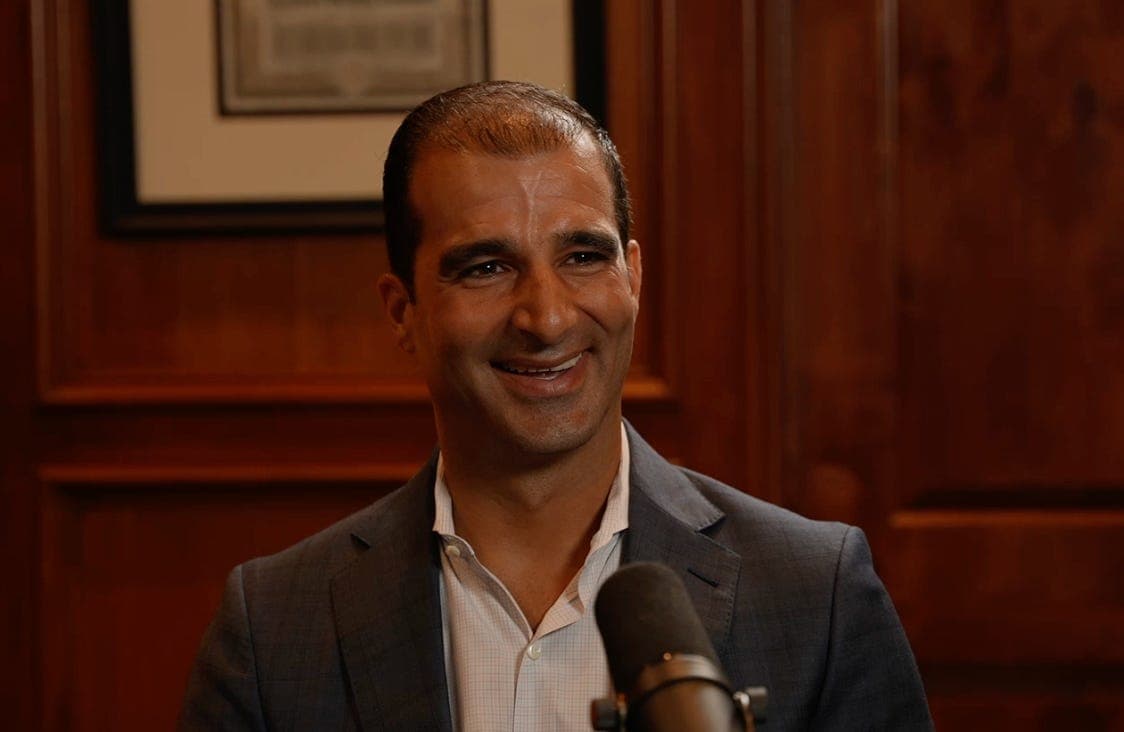
- Guest: Dino Mavrookas (CEO of Saronic Technologies, Former Navy SEAL)
- Main Theme: The race for autonomous ships and maintaining naval dominance, contrasting the current state of U.S. naval power with that of China.
Episode Overview This episode features an in-depth conversation between Joe Lonsdale and Dino Mavrookas, where they discuss the state of naval power, the significance of autonomous surface vehicles (ASVs), and the transformation underway in maritime warfare through technological advancements. Dino shares his journey from a Navy SEAL to the founder of Saronic Technologies, emphasizing the critical role of innovation in defense.
---
Key Themes and Discussions
- Historical Context of U.S. Naval Power
- World War II Era: U.S. Navy’s dominance stemmed from unmatched industrial capacity.
- 1943: Over 18,000 ships built.
- Current State:
- Last year: U.S. built only 8 ships while retiring 12.
- China’s shipbuilding: 250 times the U.S. capacity, producing hundreds of ships annually.
- Technological Advances in Warfare
- Need for Autonomy:
- U.S. must leverage ASVs and AI to maintain deterrence.
- Saronic Technologies focuses on creating a range of modular ASVs.
- Dino’s Vision:
- The push into unmanned systems likened to a modern space race.
- Vision to redefine maritime superiority through innovation.
- Saronic Technologies
- Overview:
- Founded in 2022; has grown rapidly, closing a $175 million Series B funding round.
- Develops hardware and software for autonomous vessels designed for military applications.
- Products:
- Three classes of ASVs (6, 14, and 24-foot models).
- Modular platforms capable of carrying various payloads for different missions, including weaponry.
- Challenges and Opportunities
- Defense Industrial Base:
- U.S. must transition to a model that allows for rapid scaling of production.
- Importance of manufacturing capacity to replace losses quickly in combat scenarios.
- Ethical Considerations:
- Discussion on the autonomy of vessels and their decision-making capabilities in warfare.
- Need for robust protocols to manage operations in jamming environments.
- The Future of Naval Warfare
- Scalability and Reliability:
- Emphasis on the ability to deploy and control large swarms of ASVs efficiently.
- Integration with Existing Forces:
- Collaboration with military leadership to develop operational concepts for ASVs.
- Call to Action
- Encouragement for Innovation:
- Dino stresses the need for the Pentagon to continue embracing new technologies and partnerships with startups to enhance defense capabilities.
- Optimism for the Future:
- Commitment to maintaining U.S. naval superiority and deterring future conflicts through technological advancements.
---
Conclusion Dino Mavrookas articulates a compelling vision for the future of maritime dominance through innovation and autonomy. His experiences as a Navy SEAL, combined with his role at Saronic, position him uniquely to lead this charge. The episode underscores the necessity for the U.S. Navy to adapt rapidly to technological advancements and the changing nature of warfare, emphasizing a hopeful outlook on the defense industry’s future.
Key Takeaway Innovation and a focus on autonomous systems are crucial for maintaining U.S. naval superiority in an increasingly competitive global landscape, particularly against adversaries like China.
Additional Resources
- [American Optimist Blog](https://blog.joelonsdale.com?utm_medium=podcast) for more insights and episodes.
Written by AI. May contain mistakes. Listen to the episode to check what was said.
Transcript
Automatic transcript. May contain errors.0:00China is building a huge number of diesel submarines as far as I can tell these are relatively silent. They're very scary. I'm worried a lot of them are following our Navy around. How do you fight submarines? Could you put a torpedo on these things? Could you have these things be in an area and push things down to detect submarines? Is that something our swarms could do? So anti-submarine warfare is a big, big mission for the Navy. You could put a torpedo, for example, on one of these potentially. They could hunt a submarine. We have a really talented team that can figure out how to put a lot of things on a lot of things.
0:28That's great. So yes, there's all sorts of ways you can use the ships. That's right. But we're not going to talk any further about that before I get in trouble and Dino has to leave.
0:43Dino Mavrucas became a Navy SEAL after 9-11. He had no background with the military, but he was called to duty to defend our country and became one of the most badass SEALs out there. And after that, he went into finance, started making a ton of money, but he felt the call of duty again. So he started a new company, Cerronic, just a couple of years ago. It's already raised a couple hundred million dollars. It's one of the most important new defense unicorns in our country. He's doing extraordinary work, and he's going to change the game from maritime superiority. Excited for you to meet Dino. I'm Joe Lonsdale.
1:12Welcome to American Optimist. Today, we have Dino Mavrukas, the CEO and founder of Saronic Technologies. And Dino, you were a Navy SEAL for 11 years, had an interesting background after that, and then went back kind of into the military technology area. You think Saronic just raised$175 million? It's the newest defense unicorn. Lauren, tell us, first of all, what's Sironic do? What is it? So at our core, we're a defense technology company. What that means is the military is our number one customer and our number one priority, right? Our mission is to redefine maritime superiority. We're just doing that through autonomy.
1:46Now, there's a lot of reasons why that's possible today with advances in technology, but there's a lot of reasons why it's critical today as well. And I'm sure we'll get into all that. And then we've just approached the market from a fundamentally differentiated perspective in that we're a software and technology company first that also builds and manufactures hardware. So what that means is we make autonomous surface vessels. So we have six, 14, and 24-foot autonomous boats that are designed for naval use cases. Well, we work with the Navy. We design those boats from the ground up. We build and develop all of the software and autonomy that goes on those boats to enable the mission.
2:25And then we manufacture at the speed and the scale that's needed. We're just over two years old. We started the company in September of 2022. To date, we have brought three hardware products to market that I just mentioned. We've raised over$250 million in private capital. We have 165 employees, and we have over 150 ,000 square feet of manufacturing space. Now, all that growth is not for growth's sake. We are meeting the customer demand where it's at and solving a very urgent problem. So today you're helping the Navy redefine itself, build hopefully thousands of weaponized small vessels and deter our enemies.
3:03Let's start a bit more with your background. You were a Navy SEAL for 11 years. You did eight combat tours. That's a lot of combat tours. First of all, what led you to serve? So I'm originally from New Jersey. I never really even considered going into the military. I was a computer engineer. I was studying computer science. I thought I was going to go into cybersecurity. This is back in 1999, 2000. 9-11 was my junior year of college. And I just had this call to serve. I started researching government and military service. I had no idea what that looked like. I'd never even met anybody in the military.
3:37Wow. I ended up learning about the Navy and specifically the Navy SEAL teams in a recruiter's office in a strip mall in New Jersey and just fell in love with it. It was like, this is what I've been looking for. The culture, the mission, the impact of the team. And I enlisted as soon as I graduated college. And what were some of the most important lessons you learned being an AVCO? Oh, geez. There's a lot. I mean, I take a lot of what I learned and I try to impart it into the company across leadership, decision-making, constantly balancing risk and reward. I'll tell you one of the most important lessons that I've learned, and I'll tell you the story behind it, is the difference between an amateur and a professional.
4:16And I learned very early on that an amateur does something until they get it right. A professional does something until they can't get it wrong. And I fortunately and unfortunately learned this the hard way, but in a very safe environment in a training base in San Diego, where part of SEAL training, they tie your hands and legs up, they throw you in the deep end of a 15-foot pool, and they make you float around and do things for about 15 minutes. And then they untie you and take you out and say you've passed the test. Well, I struggled with parts of that. And I went and practiced until I got it right.
4:52When test day came, I got it wrong. Right. So what that meant is I had to train until I couldn't get it wrong. So when the pressure's on, you get it right. How'd you get it wrong? What happened? I was not good at floating. So I would just essentially, when they tied me up, I'd sink to the bottom. And because I am not able to breathe underwater, I very, very quickly started to go outside of the scope of the test, we'll call it. Yeah, that seems like that would be pretty terrifying. But once I got it, I clicked and you could tie me up right now and throw me in the middle of Chesapeake Bay and I'll make it back to shore.
5:31Wow. No one has ever tried to tie me up and throw me in my pool. That sounds terrifying. How do you practice that by yourself? It seems dangerous. You hold your hands behind your back. You don't tie them. Oh, man. So you went on eight combat tours. What does that mean? What's a combat tour? So combat tour is going to, I spent most of my time in Iraq and Afghanistan and a typical SEAL deployment cycle is nine months of training and then four months of deployment. So you spend nine months in the States and you do a variety of different training exercises, shooting, skydiving, land navigation. You take all of that training, both individually and with your team, and then you go deploy.
6:12So what that means is we go in a base, we go to a base, in Iraq or Afghanistan. And then we live there for four months and we basically look for bad guys. And then we go capture the bad guys. Capture, kill the bad guys. Sometimes. Sometimes. What were bad guys in that context? So we were mainly, I mean, when you look at where we were at in Iraq and Afghanistan, those 20, that 20 year period, we were focusing on terror states. Right. So we were trying to take out terror cells so that we were bringing the fight to them. so that they couldn't bring the fight to American soil. Well, you guys did a really good job since 9-11, unfortunately.
6:49I think you stopped a lot of bad stuff from happening. Yes. So prior to Saronic, after being a Navy SEAL for a long time, you came back and you worked on private equity, your Vista Equity, which is obviously a very successful investment group, probably making a lot of money there. Why make the jump to a startup? You're already successful, have a safe, good life. Why did you come back to the startup world then? You know, it really was that call to serve again. It was the draw to get back into defense. You know, when I left the military, I didn't necessarily think I was going to work in defense over again.
7:20I kind of wanted to go the other direction and candidly needed to go the other direction for a little while. What I was able to gain in the private sector, working at Vista Equity Partners, understanding finance, investing, operations, and then being able to combine that with my military experience to go and co-found and build Sironic has been invaluable. But again, it was that draw to get back into defense. I started feeling that call to serve again. And we're at a really critical time in our country where we need to build new products and solutions for our defense industrial base in a way that we haven't done over the last 20 and 30 years.
8:00A hundred percent. And we started Sironic with you at the ABC Build program with you as a founder and CEO. For the entrepreneurs in our audience, can you tell us a little bit about your experience? Like, why'd you come work with APC and how'd that work? How'd you decide what to start and what would the process look like? Yeah. You know, for me, Joe, it was that first conversation that we had after I left Vista that convinced me that you and APC were the right partners. And it was when I thought about what I wanted to do in the defense space, it was, I want to go have a really, really big impact on the security of our country.
8:34Like there are big problems. How do we have a really big impact? And hearing the work you've done with Palantir and Andrel and other defense tech companies, and actually the story about giving Palantir to the army for free because soldiers were losing their lives in Iraq, that's the why, right? That's the why we're doing this. And then building out the what and the how with a partner that has been there before, took an idea and let us go execute on it very, very quickly in what would have taken eight or nine months to figure out the blocking and tackling. We basically stood the company up overnight.
9:12I love how fast you're moving in general. This is one of the fastest companies I've seen from getting going to where you are. You're planning on ramping it up to, I don't know if we could say, but a large number of ships per month in the next year. Is there anything you can say? What's the pace you're trying to go here? No, I mean, we focused on manufacturing from the very beginning. We talked about all the different things we did. The thing that delivers the overwhelming force that the military needs is ultimately scale. So we started with that thesis point in mind and we said, look, we can go and design a cool boat and we can write the best software in the world.
9:45And if it's not made to be put together and manufactured at scale, then it really doesn't matter. And so we've been focusing on that from the very beginning, when we're very early hires as our head of manufacturing comes out of SpaceX, he's always talking about how do you build the machine that builds the machine? There's a lot to learn from what Elon's done, bringing back his skilled manufacturing to the US. So 100%. I'm not allowed to steal any of these people myself. But to answer your question, the military needs hundreds and then thousands of these types of platforms. That's where they're headed.
10:16And that's where the demand is. Hopefully we can get to thousands a year. And that's, you know, let's talk about the state the U.S. Navy actually a little bit. So the U.S. obviously had the most powerful Navy in the world at some point around the time of World War II and after. I remember stories where every time they destroy one of our ships, we'd have two or three more out there pretty soon. Actually, I remember, is it true the Germans, I think, had better ships back then, but we had a lot more of them? Is that true? Yeah. Tanks, when you look at the military platforms back then, what our defense industrial base was able to do is absolutely incredible.
10:46The forge that America built with its private sector helping was the best in the world. 100%. And when you talk about the Navy specifically, I mean, you go back to 1943, we built 18 ,000, over 18 ,000 naval vessels in one year. We built over 125 aircraft carriers that year. Today, the US Navy has 11 aircraft carriers. That's embarrassing. They cost$10 billion and they take 10 years to make. It sounds a little bit more like a bad version of the Germans back then where we have the very, very best stuff, but we don't have nearly enough of it. Our defense industrial base has changed over the last 40 or 50 years.
11:26We're not able to produce anywhere near what we used to be able to. And that's why we have to rethink the problem. I'd imagine our 11 aircraft carriers right today could probably win a war against 125 aircraft carriers from 1943, I assume, right? Well, quantity is a quality all of its own. And so when you have a defense industrial base that essentially keeps replenishing the platforms, and that's what we're talking about doing with our platforms now, right? If you have a tritable platforms that are meant to go and deter an enemy and you send them out into combat and they don't come back, you better be able to backfill them.
12:01Otherwise, you're essentially out of ammo. And if you're out of ammo, you lose, right? People don't realize how much war is an engineering game. When you talk about engineering, right? Engineering is dealing with scarcity, right? So if you want to design a bridge, anyone could build a bridge with infinite money. The question is, how do you build it really, really safe to last a long time by using a hundredth less metal? It's the same thing with everything else we're doing. And so one thing, of course, our most important adversary, unfortunately, right now is China. China is the biggest adversary.
12:29And I think most Americans would be pretty shocked to learn how much more shipbuilding capacity China has. What's the situation right now? Well, look, you want to start with the overall premise of, in modern history, global power has been determined by naval power. And naval power has been determined by who has the most ships. So that's a pretty easy equation that even I can understand, right? Now, we talked about a little bit about what has happened to the US defense industrial base specifically around ship building. So we built 18 ,000 naval ships. Do you know how many we built last year? I guess it's in the kind of tens.
13:03Eight. Wow, that's even less. And we retired 12. So that's negative. We're negative four in a peacetime environment. Now you overlay that with what the Chinese have done over the last 30 years. I mean, they're building hundreds of thousands a year. They have 250 times our shipbuilding capacity, and they have 50 % of the world's shipbuilding capacity. That means if you got the entire world teamed up against China, you're only at parity. That's scary. And that's a lot of power to be concentrated in any one country. And that's why we're building what we're building. And that's why we're building it so fast.
13:36So basically, we're going to ramp up and we're going to help build hundreds and thousands of ships per year. These are smaller ships. Why does that make more sense? Well, when you talk about changing the dynamics of warfare, and you see this happening in all domains, you're seeing examples of it in the Ukraine. It's a big shift from large, expensive, exquisite platforms that are manned to attributable, autonomous platforms that can be produced economically at scale. Look, our country isn't what it was back in the 1940s, right? Even if we could hypothetically build that many ships, do we have the sailors to man them?
14:12And do we want to man them with people when we can make them fully autonomous, right? You're seeing in the Ukraine how small unmanned surface vessels can essentially immobilize the Russian fleet. Yeah, the Russian big ships had all leave the Black Sea, right? They can't move. Yeah. So when you talk about doing that at scale against a much larger fleet, potentially in the Indo-Pacific or just maintaining naval superiority, it's being able to roll these things off an assembly line so you can constantly fill the supply and constantly backfill. It's a tritable autonomy that can overwhelm a much larger force.
14:49And let's get into that some more of the details. Like why does software matter so much? I think historically you think about these things, I want to know what kind of missiles or bombs are on them. What's the purpose of AI and software in this game? that's obviously the number one thing you're leading with. Why? Yeah. Well, the reality is we're just kind of scratching the surface of what's possible, right? The Navy is just starting to define the concepts of operations and how to use these types of platforms. And we're partnering with them in doing that. The reason why software is so important is because we're taking people out of the equation, right?
15:19It's how do you extend the range capability and survivability of large manned naval assets to keep them safe while still delivering overwhelming firepower into the weapons engagement zone. So in a battle right now, if you might have like a handful of big ships, but you might have hundreds of smaller ships around it. And then those ships, can they each make their own decisions? Are the people controlling them? Like there's a lot of ethical questions around when you can let something fire or not, because it could try to hack into them and turn them to fire on us. Like how's the battle work? Tell me about this.
15:50Yeah. So what we're enabling is that one-to-many operator control, right? If you look at what's existed in the US and even what's going on in Ukraine right now, take a Predator drone, for example, that's one operator. It's actually more than one operator. It's one person flying the system, but then there's many people monitoring the information coming off of that system. So you actually have four or five people controlling one platform. That doesn't scale. What you want is you want to flip that equation. You want to have one person controlling five, controlling 10, and you want to be able to say - Kind of like Starcraft.
16:24Exactly. And you want to be able to say, hey, these 20 boats, go and search this area. If you see adversarial craft, report back and we'll decide on what action to take. And then those boats are all individually intelligent, but also know how to conduct the mission together. So we're hearing a lot about electronic warfare right now. one thing that means is just people could jam the spectrum like China could figure out okay you're talking to your 500 boats in this big battle this way we're gonna totally jam everything boats can't hear from me anymore now you have all this autonomous stuff that's untethered what's it do is it just stay there and get shot and just destroy then or can it keep fighting or how's that work so jamming's interesting right it's not it doesn't really zero out the communications bandwidth what it does is severely degrades it and only severely degrades it in certain frequency spectrums.
17:13So you're often able to get out snippets of information. And if you're able to use software to prioritize that information, you can keep connectivity back to headquarters. The other thing is when you're using AI at the edge, each individual agent is intelligent and they know what to do. So each boat knows what to do. And then if they're able to communicate with the swarm, they're able to pass information amongst themselves. So depending on the policies of the government, you could say, go out into this operating area. Here's your mission. Here's your objective. And if you get jammed, continue with the mission.
17:53So even if you're unable to get communications back, the platforms are still very, very effective. They can still be on a mission that involves battle as well as other things. That's right. So let's talk a little bit about the weapons. People always want to know. So there's, you said there's a six foot, a 14 foot and a 24 foot. The six foot ones, those are smaller. In some cases, they're just have sensors on them. I guess you could have bombs on them as well. Is that, is that the main way they would hurt the bad guy if they needed to? Yeah. So the, so we've made our platforms completely modular.
18:18So our goal is to what we say is enable the delivery of user defined effects. So what that means is you really want to integrate with a variety of payloads and sensors for multiple missions. So we're looking at intelligence surveillance and reconnaissance, electronic warfare, over the horizon targeting, which basically means let's provide very, very precise location data. So you can fire a missile from really far away and hit your target. I guess even artillery sometimes you need sensors that are closer in order for them to be able to attack. That's right. And we've designed our platforms very open from both the hardware and software perspective.
18:53So what that enables us to do is iterate and test with the military very quickly. So we're able to go and try new concepts of operations, try new missions, test them in a real life environment, and then do those integrations very seamlessly. So in a war, you might even try something and roll it out the next day or something. That's right. It's an emergency mission. Yep. We were at a, we were at a demonstration out in San Diego and the Navy walked up and said, Hey, we want to integrate with this. I know you haven't done it before. Do you think you can do it? And overnight we did it. And the next day we had rolled it out into a live exercise.
19:25One of my favorite ones is Andrel has something called the Altius 600, I think it is. And these are, these are like these things that you can show it on the screen, but it'll, it'll like fires a missile out of it. And they could just go and hit things or it could like loiter it for a long time in the air and help with sensors. And so how, how big does our ship have to be to have, to be able to fire those things on top of it? Is that the 14 foot? That's the 14 foot. So the only thing that the 14 and the 24 foot can't, can do that the six foot can't do is integrate with those types of loitering munitions or external payloads.
19:57And that's exactly right. Andrel is doing phenomenal things and building great platforms in the aerial domain. And they're actually doing stuff subsea now as well. And they just won a massive contract with the CCA program for the Air Force. And they're really showing that new startups can enter the space and compete and win for these large programs. This is a really important point is having a prime like Andrel is a great precedent for us, but they're also a great ally to partner with. 100%. So we work really closely with them. We've done integrations. And to your point, we've integrated with Altius, launched it off of our 14-foot platform.
20:33We did that really quickly. And now you're talking about bringing cross-domain collaboration of autonomous systems that are all integrated through software to the military. Tell me, this is too secret. I want to ask one more weapons question. Yeah. So China is building a huge number of diesel submarines as far as I can tell. These are relatively silent. They're very scary. I'm worried a lot of them are following our Navy around. How do you fight submarines? Could you put a torpedo on these things? Could you have these things be in an area and push things down to detect submarines? Is that something our swarms could do?
21:04So anti-submarine warfare is a big, big mission for the Navy. You could put a torpedo, for example, on one of these potentially. They could hunt a submarine. We have a really talented team that can figure out how to put a lot of things on a lot of things. That's great. So yes, there's all sorts of ways you can use the ships. That's right. But we're not going to talk any further about that before I get in trouble and Dino has to leave. So one thing that's really impressive about Sironic is just the pace of iteration and progress. Within the first 90 days of starting the company, you had two government contracts to engage with you and work with you.
21:36Within 180 days, you got prototypes in the water. Ships actually built and in the water, not just being sketched up. By year's end, I think you completed the full customer demo. How do you achieve that? How do you move that fast? So it's actually faster. We did the customer demo 30 days after we built the prototype. Right. Amazing. But we have to bring a couple of things together, but really it speaks to the urgency and the critical nature of the problem that we're solving, right? What we've been able to bring together is a really, really talented team, like world-class team, engineering, business development, operations, manufacturing across the board, private capital partners that are convicted in our mission and letting us and fueling us with private capital to move ahead of the pace of government contracting as we're convicted in that customer demand.
22:26And then connecting both of those things to a customer with a, here's the key, a really urgent and critical problem. If you're not solving urgent and critical problems of the Pentagon, kind of like, oh crap, we're screwed if we don't do this, then the military is not going to move or I should say hasn't moved with the speed that we're moving at. Tell us about the reception for some leading admirals. How do these people hear about you and what are they saying? So the reception we're getting across the board has been overwhelmingly supportive, right? There is a universal thought within the DOD now that we have to move into unmanned systems.
Read the full transcript
23:08We have to move into a charitable autonomous platforms because our defense industrial base, the way that it was will not win the next conflict alone. They need to have new platforms, new ways to solve the problems. So senior leadership in the Navy has acknowledged that we are solving critical problems all the way down to the end user and across Capitol Hill. Secretary Braithwaite, who was the former Secretary of the Navy, is an advisor for us. Admiral Michael Gilday, who is the latest Chief of Naval Operations from 2019 to 2023. This was the person that was in the seat solving this problem for the Navy is working with us.
23:48And so there's widespread support, not just for what we're building, but for this overall movement. And I'll tell you, Joe, the push in the unmanned systems is really our generation's version of the space race. We haven't seen, and I personally haven't seen the military move this fast in my lifetime to acquire new types of technologies. And it's very encouraging. That's awesome. And you're building the company right here in Austin, Texas. Why did you choose Texas? Not the first time I got, why'd you build a maritime company in a landlocked city in Texas? But I'll tell you, it's been the best decision that we've made.
24:26The first thing going back to the underlying premise of the company, we're software and technology first, and it's all based around talent. So where do you find software talent? Where do you find hardware talent? Well, the type of talent that we're looking for, there were really only two options. It was Austin, Texas, or Southern California. And then we were looking at the defense landscape and building it here in Texas, pro-government, pro-defense, pro-business type culture. It just made all the sense in the world. And we're really helping shape the defense ecosystem here in Austin. Bringing a lot of talent into Austin.
25:01We're bringing talent into Austin. We're cultivating the talent here in Austin. Austin is a phenomenal bet of talent. We're relocating people from California, from Seattle, from Virginia. We're hiring people local to Austin. It's all over the country. Well, we're always happy to have more patriots here in Texas. That's right. If we're the right people. You know, we talk a lot about challenges working with the Pentagon. Obviously, you said you're getting a great reception. You're partnering with them. You're building quickly. Are there people, you know, a lot of people listen to this from DC. Are there things you see should be doing better?
25:30Are there things they should be changing and how they're working with companies like yours? I would encourage the Pentagon to continue to do what they're doing. We talk about the push into unmanned systems. We've talked about Andrel. They're turning the cruise ship. They're moving in the right direction. They're letting startups compete and win, if they deserve, win these large programs of record. That's all you can ever ask for. Let us show up to the table and show you what we can do for you. And as you need these new types of platforms, I promise you, if we compete fairly, we will win and you will have the best products and solutions as fast as possible in the warfighter's hands.
26:15You're going to have a huge number of ships pretty soon. They're going to be demonstrating things in the real world. What's the sort of competition or impressive thing you're going to be able to show them with a lot of ships that no one else can do? I mean, when you talk about heterogeneous swarms of naval vessels of all different sizes that are made to launch and recover off of naval platforms, get pushed out of backup planes, we're talking about easily deploying highly technological platforms that can operate independently with minimal operator control. That doesn't exist in the maritime domain right now.
26:47It just doesn't. There was this huge gap in the market that we saw when we started the company where the technology was really 15 and 20 years behind. So the drone swarms that you see in the aerial domain didn't exist in maritime before Saronix started. So I remember getting the question very early on in the company's life, like, what's it going to take for the Navy to actually adopt thousands of platforms? Right. What's it going to take for the Navy to actually make this big? You got to rebuild the autonomy protocols. You got to rebuild the communications protocols and the backups. There's a lot of new stuff to be created.
27:21The biggest problem that they were facing was reliability and scalability. So you can't adopt thousands of platforms if you can't get thousands of platforms. So it's building that reliability and scalability, not just in the hardware, but in the software. So you can actually control them at that scale when you have them. So we started this American Optimist podcast to try to counter negativity and cynicism and try to give people an idea of what's possible and the great things happening in America. If Sironica is successful, what do you think its impact will be? And what would you want people to take from the company?
27:53So again, our goal is to redefine maritime superiority. We want to deter conflict from ever happening. And if we get in one, let's make sure we win it decisively. How do you do that? You do that with overwhelming force, right? The bad guys wake up and they say, I really don't want to pick that fight today, right? So when I look forward, what do I hope Saronic is able to accomplish? I hope we're able to reshape innovation for the DOD for decades to come and ensure our military has that overwhelming force. And I'll tell you, the thing that makes me optimistic is going into work every single day and seeing our team and working alongside of our team.
28:37Some of them are veterans. Many of them are not. but I'll tell you all of them are passionate about serving their country with the work that they're doing at Saronic. We're seeing the best and the brightest minds in this country go back into defense and that's absolutely critical and that's what makes me optimistic about the future. Amazing, Dino. Well, thanks for being a good guy and helping deter the bad guys. Well, thanks, Joe. We're doing it together. Great job, patriots like you. Thank you.
From the publisher
The U.S. Navy dominated in World War II, not because we had the most advanced ships, but because our industrial capacity was unmatched. When we lost a ship in battle, we could instantly replace it with two or three new ones. Our enemies couldn't keep pace. But today, our shipbuilding is a shell of its former self. In 1943, we built over 18,000 ships. Last year, we built eight (and retired 12). China, on the other hand, is producing hundreds of ships and now boasts 250 times the U.S. shipbuilding capacity!
How can the U.S. Navy maintain deterrence? One answer is autonomous surface vehicles (ASVs) and harnessing new possibilities in AI to field and simultaneously coordinate hundreds or thousands of unmanned vessels. That's why Dino Mavrookas and his team are building Saronic Technologies — the leading ASV manufacturer. Saronic is the only company engineering the hardware, software, and AI to create modular platforms that can be produced economically at scale. They currently offer three classes of vehicles that can be fitted with various sensors and weapons (including the possibility of torpedoes!).
Dino believes the push into unmanned, attritable systems is our generation's space race. He served 11 years as a Navy SEAL with eight combat tours before working as a private equity technology investor. He partnered with 8VC through its Build program to launch Saronic in 2022, and it has quickly become one of the fastest-growing defense technology companies. Saronic recently closed a $175 million Series B, making it the newest defense unicorn. Its advisors include former admirals and other naval leaders, and did we mention it's being built right here in Austin, Texas!
This is a public episode. If you would like to discuss this with other subscribers or get access to bonus episodes, visit blog.joelonsdale.com