In short
Podcast Notes: Joe Lonsdale - American Optimist
Episode Title
Ep 96: Harvard Economist Roland Fryer on the Truth Behind Police Shootings & Using Data to Supercharge Meritocracy
Guest Introduction
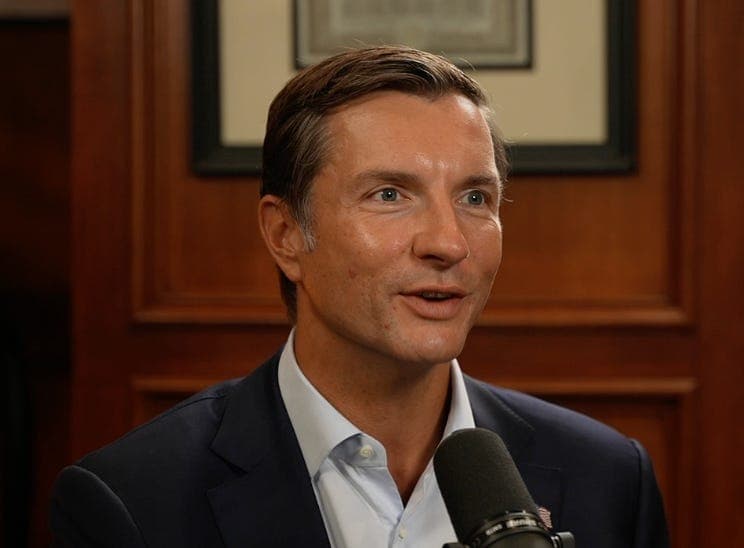
Roland Fryer
- Background: Roland Fryer is a Harvard economist known for his courage in following data, even when it leads to controversial conclusions.
- Achievements:
- Conducted impactful research on education and police use of force.
- Co-founded Sigma Squared, which aims to improve hiring practices using data science and AI.
Episode Overview
- Roland Fryer's journey from a challenging upbringing to becoming Harvard's youngest tenured black professor.
- Discussion on the importance of data in addressing societal issues, particularly in education and policing.
Key Discussions
- Courage in Research
- Police Use of Force Study:
- Fryer collected extensive data on police shootings, discovering no racial bias in officer-involved shootings.
- Findings led to backlash from peers and media, highlighting the challenges researchers face when confronting prevailing narratives.
- Education Reform
- Paying Students for Performance:
- Conducted experiments where students were paid for good behaviors and academic performance.
- Results showed that incentivizing specific behaviors (e.g., homework completion) was effective, whereas direct payment for grades showed no significant impact.
- Insight: Students in underprivileged areas often lack motivation due to a lack of incentives.
- Data-Driven Solutions
- Charter School Best Practices:
- Identified five key practices from successful charter schools that could significantly improve traditional public schools.
- Demonstrated that applying these practices can effectively close achievement gaps in public education over time.
- Understanding Disparities
- Labor Market and Discrimination:
- Discussed a 1995 study showing that after accounting for pre-market skills, the racial wage gap shrinks significantly.
- Proposed focusing on educational equity to address labor market disparities rather than solely on workplace bias.
- Sigma Squared: Supercharging Meritocracy
- Company Goals:
- Aims to optimize hiring processes using data analytics to identify the best candidates based on past success.
- Focus on eliminating bias in hiring while ensuring meritocratic principles are upheld.
- Implementation:
- Collaborates with companies to utilize existing HR data to predict employee success and longevity within the organization.
- Employs advanced analytics and A/B testing to enhance the hiring process.
- Insights on Diversity, Equity, and Inclusion (DEI)
- Fryer argues that DEI initiatives should align with meritocracy principles, emphasizing the need for data-driven approaches to hiring.
- Disparate Impact:
- Discussed the challenges of standardized testing in hiring processes and the need for predictive measures that accurately assess candidate potential.
- Optimism for the Future
- Fryer envisions a future where data-driven approaches enable true merit-based hiring, fostering equal opportunities regardless of background.
- Emphasizes the importance of recognizing talent and potential in every individual to create a more equitable workforce.
Key Takeaways
- Courageous Research: Pursuing truth in research can lead to significant backlash but is essential for progress.
- Impact of Incentives: Incentivizing education can reshape student behaviors and outcomes.
- Data Utilization: Leveraging data science is crucial for making informed decisions in hiring and education.
- Meritocracy and DEI: Combining meritocracy with DEI initiatives can foster a more productive and equitable environment for all employees.
- American Optimism: Fryer embodies the spirit of American optimism, believing in the potential of individuals when provided with the right opportunities and support.
Conclusion
- Roland Fryer's insights contribute significantly to discussions on race, education, and hiring practices, highlighting the need for data-driven approaches to create a more equitable society. Through Sigma Squared, he aims to revolutionize how companies perceive talent and merit.
Written by AI. May contain mistakes. Listen to the episode to check what was said.
Transcript
Automatic transcript. May contain errors.0:00We watched cities in protest over these videos and I wanted to do something about it. Everyone had to be thinking, is this really the norm in America? And so I collected millions and millions of data points. For officer-involved shootings, we found no racial differences and no bias. And that's the part that people got really upset about. It was not only the media, but my own colleagues. The backlash was quite tremendous, but I'd do it again tomorrow.
0:35Roland's one of the most interesting public intellectuals of our time. He's also an economist at Harvard. We don't want to hold that against him. Roland's someone who's curious about the world. He goes where the data takes him, and he's found some amazing results in education, in labor, and other areas like police use of force. He's a really courageous thinker, and he's building some important things. There's a big debate over DEI and meritocracy. Roland believes we could actually use data to solve a lot of these problems rather than just sit here and yell and talk about it. Let's actually figure out what the data says and let's apply that and make the world work better for everyone.
1:07Let's chat with Roland about it. I'm Joe Lonsdale. Welcome to American Optimist. Really excited to have Roland Fryer with us here today. Roland is a professor of economics at Harvard. Despite that, he's also one of the most creative and interesting minds around these days. Senior fellow at the Manhattan Institute and also an entrepreneur these days. Roland, thanks for joining us. Thanks for having me, Joe. It's going to be fun. I'm excited to talk about your new company Sigma Squared in a little bit, but I want to start with your background for our audience, you know, a little bit. You grew up, I think, in a really challenging situation in a broken family.
1:36You know, how'd you make it out? I don't know how I made it out. I had a couple of things, maybe, Joe. I had a lot of people who took an interest in me. My grandmother was a schoolteacher and was phenomenal, even though she wasn't my parent. She liked to say she brought me home from the hospital and she did. And I had teachers along the way, but also, and I hope this doesn't sound too self-absorbed, but I was a big dreamer, man. You know, I had things I wanted to accomplish in life. And there were people in the neighborhood I grew up in who were like, you know, to show how tough you are, you should go to prison.
2:14And I was like, that doesn't make any sense to me. Like, why would I want to, I got customer service needs. Why would I want to do that? And so I really thought I was going to be good at something and I was willing to put in the work to do it. And it started out as a little toy athlete, you know, playing football at age five years old. But that gave me the confidence to know if you really put in the effort, you can be great at something. And so throughout life, when things came up, you know, my father went to prison, et cetera. People told me I wasn't going to amount to much. I just knew that probably because I was a dreamer that big things were possible if I put in enough effort.
2:56So Roland, you went on to graduate Manicum Laud from UT Arlington while you're working at McDonald's drive-thru. And you earned a PhD in economics from Penn State. By age 30, you'd become the youngest black-changer professor in Harvard's history. How's that possible? What led to that? You know, one tiny thing. When I was in college, I was working as an intern at Verizon then, but I did work at McDonald's drive-thru, Pizza Hut 2, all of them. I had the worst jobs America has to offer. The worst one was I was a waiter at Golden Corral, which is horrible, a waiter at a buffet, right? You make half a minimum wage and no tips.
3:32It was terrible. But I did knock out employee of the month. In any event, when I walked into my first economics course, literally economics 101, it was taught by Ryan Amacher. He was the former president of the University of Texas at Arlington. I tried sociology, I tried other things, nothing sang to me. They were all so complicated. My first sociology class, they said, oh, the world is interlocking chains of oppression. And I was like, that's really complicated and depressing. I don't know how to think about that. Economics was people are self-interested and they maximize their own revenue. I said, now that makes a lot of sense to me.
4:13They maximize their own happiness. In any event, this professor had office hours at 7 a.m. The class was at 8 a.m. Now that I'm a professor, I know that was a joke. But as a student, I showed up every Monday and Wednesday and Friday at 7 a.m. to debate with this professor. We talked about government's role in the lives of poor people in America. We talked about optimal tax structures. We talked about optimal inequality because according to him, it wasn't zero. And, you know, having grown up where I was, that was unheard of. And I fell in love with economics. And so the way that I was lucky enough to accomplish what you described was because as soon as I went to that class, I was in a big hurry to catch up.
4:55I really, I, you know, I, that was my first economics class and I then sped through undergrad and graduated in two and a half years and I did my PhD in three. So five and a half years from, you know, kind of hanging out. Were you in a rush? Cause it was expensive also, or what was, what was the rush? I was in a rush because I was enthralled by the actual subject matter and I, I could see the power in it. Um, and, uh, you know, I was a nerd, so they were paying full freight for me. I wasn't in a rush. Back in those days, Joe, I made as a graduate student at Penn State, I made$15 ,000 a year. And I remember the first time I looked into a bank account and I had $3 ,000 in it.
5:35And I thought, what could happen to me? Like I have$3 ,000, you know, there's nothing that can happen to me today that would cost this amount. I, this is pure profit. So no, I wasn't in a big hurry because I thought I was rich,$15 ,000 a year, but I was in a big hurry to use the tools of economics to actually increase social mobility. Because what I noticed was these tools were beautiful, but used for silly things. And the things that were most important for American optimism, like how do people get jobs that are equated with their skill level? How do you actually make true equal opportunity in America.
6:17Those things were led to politicians and other pundits to debate, and we weren't using the brilliant tools of economics to study those. And that's what I wanted to change. I was in a big hurry to change that. You really did kind of ride all the cages when you got to Harvard, trying new things, exploring and studying that. One of my favorite studies you conducted, I think with one of our mutual friends is sponsoring it as you paid kids for better grades, right? You tested what works get kids better grades. I think you spent like$10 million in the inner cities, but what were the results you found?
6:44Yeah. You know, uh, there were a few, few sets of results. You may be the only person who liked that. My grandmother didn't even talk to me when I was doing that. Um, so you know, look, I didn't meet many adults that liked it except for you, but I never met a kid that didn't. Uh, and so, but the actual statistical results were very positive when we paid kids to, so we did two types of experiments. One, we paid them for inputs, right? So we paid them to do, to do specific behaviors or accomplish very specific things that we wanted them to do. Do your homework, come to school, don't beat people up, stuff like that.
7:18When we did that, it was wildly successful. So I was having a conversation yesterday with my old friend, Michelle Rhee. We worked together in DC doing those experiments and she was remarking, yes, they were wildly successful. On the other hand, when we designed experiments exactly as economic theory thought we should, which is you pay for the actual output, not the input, we got nothing. And so what we realized was that incentives can be extremely powerful. And we even measured what the kids spent their money on. And so it was interesting. The kids actually saved and it was really an interesting experiment.
7:53They'd actually save the money. It's a, it's a, it's a extremely high return investment in kids is to pay them to do specific behaviors, like reading books and doing their homework. One of the reasons I really liked it, other than the fact that it works to me, you were showing something that people all need to see is these kids in the inner city who were failing and suddenly succeeding. Clearly, they weren't failing because they were dumb or because they were incapable. It was clear they weren't interested or didn't care or didn't think it mattered to get good craze. I thought that was a really interesting insight, right?
8:21The incentives weren't there for them, right? And it was interesting. An 11-year-old really schooled me one day in New York City, and I think it was in Crown Heights. And I asked him, why do you like the experiment? And he says, oh, I said, is it the money? He says, no, it's not about the money, man. He said, although it's nice. He said, in every other aspect of life, I'm basically need to be an adult. But when I come to school, I'm not treated like one. And so for him, the incentives, this really was his job. Now he could focus on it. And I never had, I mean, you know, sometimes you do the right thing for the wrong, for lucky reasons.
8:55And I never thought of that as a mechanism, but these kids really liked the idea of making this what they were truly focused on in their occupation. We do that in middle class and upper middle class households all the time, but in the inner cities, not so much. And so I was, I think that was one of the reasons it worked well. I love it. I grew up with my dad paying me for good grades. So to me, it's all intuitive, you know, that's weird. I grew up with my grandmother whipping me for bad ones. We can't do that in schools. We used to do that. I want to ask on the top of the education, because you've done all these studies and found lots of cool things.
9:29Is there anything else that strikes you as like a really cool insight that you could share? It's one of your favorites, you know, from all the education stuff you've done. Oh man, I think my favorite work in education is the work we did in Houston. You know, I think it, and there's two basic insights there. One, for the first half of the work I did in education, Joe, I was really focused on IRR, which is really important. And, you know, did this work or not? I wasn't really focused on, is this something that can fundamentally close the gaps in American education. Because incentives are great, but let's say the gap between poor and rich is one standard deviation.
10:09Incentives will give you a quarter of that, but you've got three quarters left over. So what we did that I'm really proud of is we went around to charter schools, some successful and some not, and we used their flexibility and their natural variation and their policies and what they do with kids and their pedagogy, et cetera. To extract from that five things that explain 50 % of the variance in what makes some charter schools good and other charter schools not so good. And we didn't stop there. We took those five things and we put them in a randomized experiment in Houston in the worst 20 schools there.
10:44And what we showed was that in three years in the secondary schools, you could close the racial achievement gap in math. And in five to seven years, you could close it in reading. And so this is something where we distilled down the best practices from the innovation that's happened in charter schools and then put them in regular old public schools without a lottery, with no parent consent, and demonstrated that you can actually turn these schools around and fundamentally change the lives of kids. So it just showed me that what's possible in American in education if we have the courage to do it.
11:19That's amazing. Where can people read about that if they want to go read about it? Yeah. Hopefully we'll link to some papers on my Harvard website and it's there. It's called Injecting Charter School Best Practices in the Traditional Public Schools. That's amazing. Well, we'll definitely link to that. I want to go over one more area study of yours that was even maybe more controversial, if that's possible after the education work you did, which I love. The most noteworthy probably was your study on police use of force, right? And this was in 2016, shortly after the shooting of Michael Brown. I apologize, you probably told the story a lot of times, but can you reprise it briefly for us?
11:52What did you discover about the police use of force and why did it piss people off? Yeah. Well, you know, look, I was upset because I was watching just like you and everybody else, these videos come out and we were watching this and everyone had to be thinking, is this really the norm in America? You know, and we watched and we watched cities in protest over these videos and I wanted to do something about it. Now, as you know, I'm an economist, economist, and I believe in comparative advantage. So protesting is not my comparative advantage, but I'm a data nerd. So I decided, let me see, let me go collect some data and I will demonstrate that police are biased and then, you know, that'll help, that'll help this movement along.
12:41And so I collected millions and millions of data points, uh, both on the lower level uses of force, putting your hands on a suspect, throwing them up against a car, maybe hitting them with a baton and other physical types of force that are not lethal. And then we also collected a lot of data on actual lethal uses of force, uh, officer involved shootings, for example. And what we found was that on the lower level uses of force, there are racial differences that we couldn't explain. And we put them through formal bias test and there is bias that goes on in the lower level uses of force. What we didn't find was any that that bias actually was still there as the force ratcheted up.
13:25So for officer involved shootings, we found no racial differences and no bias. And that's the part that people got really upset about. I didn't expect them to get that upset about it. But it was not only the media, but my own colleagues. And, you know, but we put the paper out and the backlash was quite tremendous. But I will say I'd do it again tomorrow. Well, it's definitely courageous. I know you had people even inside of Harvard who went after you, caused you a lot of trouble, disinvited you from some things all around this. And I think one of the ones who went after you, she ended up being the president and then got thrown out.
14:04So that must have been interesting to watch after all of that. That happened? I didn't even notice. Didn't even notice. Let's go to the DEI debate. We'll skip some of that. That's good. As a transition to Sigma Squared, I want to ask you about a 1995 study on the difference between black and white wages in the workplace. Can you explain the study and how it impacted you and your work on these issues? You know, I grew up in a lot with my grandmother and my grandmother was, I think this is important. I'm sorry, it's a roundabout way, but my grandmother was born in 1925 and she integrated Florida public schools in 1969.
14:40And, you know, her first day of integration, Joe, she was spit on. And I only say that because she had very different views of race relations than I did. you know, thank God that the country was in a different space when I was a kid so that I had a different purview. And so that's one of the things we would argue about a lot. But I will admit I was inculcated into the view or I was just, that's how I was raised, that discrimination was omnipresent. And it was, you could look someone in the face and understand if they were biased or not. Although we didn't use words like bias back there. And so when I got to graduate school and started thinking about what to work on, I was really interested in testing some of my grandmother's theories, those things that I sat on the couch and sipped sweet tea with her for years.
15:30I was interested in that. And one of them was the prevalence of discrimination in the labor market. And I stumbled on a paper in 1995 written by William Johnson at the University of Virginia and Derek Neal at the University of Chicago. And what they wrote was that, what they found was that once you accounted for pre-market skills, that the racial gaps went from something that looked like 33%. So before this paper, what people did was they ran a bunch of regressions without great controls, meaning they weren't accounting for context in the right way. And the result was a 33 % difference in wages between blacks and whites.
16:15That's a huge amount. So for every dollar a white person makes, a black person makes 67%, even when they're equally qualified. But the issue is it's hard to understand if someone's equally qualified. And so what Neil and Johnson, they had a brilliant idea. The idea was what if we accounted for and only compared people who went into companies with the same skill set. Right. And so that skill set was obtained before they went to the company. So they're every. So it's really apples and apples at the time of hiring. Yeah, that's oversimplifying, but that's basically it. And what they found out was that that 33 percent went down to seven percent.
16:52Wow. OK. And in other words, they would say if you're really interested in racial inequality in America, you've got two options. You've got two margins. Economists would say to think about the developmental margin, which is, should we spend resources on K-12 education, making sure people obtain skills? Or on the employment margin, should we spend our energies on regulation and making sure that employment practices are unbiased? Okay. Well, their results would say, look, if 80 % of the effect is happening before people ever hit the market, that means we need to spend more time in K-12 education.
17:30And it's because of that paper that I spent so much time in education reform, trying to ensure that people get to the labor market with the same skills. And less of my time, although I spend considerable of it, figuring out innovative ways to ensure that we don't have bias in companies. So the paper is really, really important because it says two things. And typically in America, people say one or the other. The two things this paper says, just to repeat, is yes, there is bias in the world, but the vast majority of disparities is accounted for because of K through 12 skills. This is more department of education where it run correctly in the department of labor, basically.
18:07Like we need more, more training and less, less going and harassing people. Right. And both of them are statistically important, but one is a lot more important than the other. That makes a lot of sense to me. I want to, I want to ask you one of the things that really has been bothering me lately, Roland, we're trying to study how to make government better. You probably see there's a huge election going on in the background is debates about all these things. And, you know, my friend Elon has gotten really passionate about making government, you know, less broken and wasteful amongst others. And one of the things I studied, you know, there used to be tests in the government starting in 1883 for almost a hundred years.
18:39We had these tests that are merit-based. And the idea was you can only run certain departments if you can get certain scores, right? And so there's, I think there's a hundred point test called the PACE exam in the 1970s. And it turns out you need about a 90 score at least to run something really senior. And as of the late 70s, there's about a single digit percent of people who got that really high score. But unfortunately, it was only 0.6 % of the black applicants that got that score. And so the courts, they got rid of these tests because they said that's disparate impact. I'm curious how to think about that and disparate impact in general, because it seems like this disparate impact thing has stopped us from having a lot of these merit-based tests in general.
19:16To a lot of us, garbage just got stupider over the last 40 years, because you can't even quiz people anymore. And yet people seem to be still obsessed with disparate impact. Are they correct? Like, why is that? Yeah, it's not how I would think about it. I would say, look, it's not whether or not there's a disparity in the test scores that should cause you to throw out the test. Although they've been doing this, as you say, forever. They continue to do it. I remember years ago that on the SAT, they threw out the following test because it was biased. Seven is an integer. Could you pick out the other integers?
19:46And they threw that out because they had disparate impact against non-minorities. so it's just it's just a culling of test scores to make us all look like to blunt the instrument here's what i would do i would say look um is the test equally predictive for the groups yeah yeah that's what matters and if not then maybe you want to use different instruments for the different groups right i know that's controversial but the idea is what you're trying to do in your mercy in the most earnest way is figure out what predicts success right That's what these instruments are for. And so if you told me that, look, there were really, really skilled black people who scored very low on this test in aggregate at scale, not two people, but on on average that that was true, that it was essentially zero correlation between the test and a objective measure of productivity for black people.
20:40But for white people, it was different. Then I would say, well, this test is not a good test. Let's find another instrument that's correlated for both groups. But that's really important. I get really nervous, Joe, when people say when the first thing, when a thermometer tells you you're cold and your first action is to throw out the thermometer. What we need to understand is whether or not it's actually accurate. Yeah, that's a great way of putting it. And the worst benefits of the time, some of these tests did seem to be predictive, but that's a great point. You need to really confirm are they predictive for each of the different racial categories as well, because it might be different depending on the culture you came from.
21:08That kind of takes us into sigma squared a little bit, because that's something that's kind of tied to what you're trying to do now. You're trying to predict how people will do in their job performance. So we have a lot of people, especially big corporations, talking about doing DEI, talking about doing diversity. I guess what they really care about with hiring, with promotions, is how people are actually going to do on the job, how they're going to perform, how value they're going to create, right? So how do you approach this? In the simplest but pretty data-driven way, what we're trying to do is supercharge meritocracy, right?
21:35Because at a high level, and I'll get into the details if you want, but at a high level, if companies have bias, then meritocracy is completely consistent with a DEI strategy. Because if you're getting to your talent frontier and you have bias, you're removing that bias and you're saying, look, I'm just going to hire the best person for the job. then you're getting higher productivity and not or diversity. That's ironic. So if you assume the company actually is like super racist, then the DEI would be working better. That's the point, right? Then you don't have to call a DEI. You can just say, hey, I'm trying to ensure meritocracy in my hiring.
22:19And so that's what we're working with large corporations to do is to supercharge that meritocracy. And the way we're doing it is understanding for each company their specific success phenotype, right? And, you know, you know this better than anybody, but I don't care what industry you're in, whether you're at Harley Davidson or you are a an AI company or some other type of analytics company. You are a in the people business. Right. And so what we're doing is we are helping companies predict who will be successful before they ever start in a really data driven way. right and so we are understanding the types of folks who have been uh um successful in the past by role by region all sorts of things like that and then when people apply we're able to give them a screener score immediately instantly to say hey this guy joe applied and here's what we think his expected tenure is in the company and his expected performance how are you getting this data your data to find success traits right like where is it where are these coming from what's predictive Well, they're coming a lot from the HR.
23:28They're hidden in plain sight in the HRS systems that are already in use every day in these companies. And they're just not making use of them in this kind of data-driven way. I think that's the first step. The first step is we help companies optimally use the data they already have. But the second step is even more exciting, which is we're working with companies who are really trying to get innovative and even doing a lot of A-B testing on finding the types of questions that are predictive of the folks that they want. So some people are looking at softer skills like grit and resilience and locus of control.
24:00Do you internalize things when they go wrong or do you blame other people? Folks are looking at all sorts of different characteristics and traits that they can assess at the time of hiring. And then we are helping them A-B test those things so we can get an application and a set of interview questions that are the most predictive of high performance. Let's go back to your previous example and say, look, Roland, we had this test, disparate all that. This process would help you figure out the types of questions and instruments that are most predictive for you specifically as a company. And they won't, they'll be different.
24:34They'll be different for Starbucks than they are for Pizza Hut. But the key thing is you can build these. We help companies build these models internally. which turns out to be their own specific talent IP. And then they can operationalize that to make sure they get the best people and the best jobs doing the things that they're capable of doing. And that is when you get people to their talent frontiers. No, it makes sense. Let's talk a little bit about hiring and conversation as well, because that's tied into this. You know, one interesting data point you discovered, I thought was kind of crazy, is that high-performing black employees are often even more likely to be promoted than similarly performing whites.
Read the full transcript
25:07But among those with mediocre performance, the whites tend to have an advantage in promotion. And I know not everything should be about black versus white, but this was just very interesting to me. It's like if you're a really smart black guy, maybe like you, you got an advantage in the world. But if you're like amongst the mediocre, you have a huge disadvantage. That's kind of fascinating, right? It's kind of interesting. We have seen it a lot in large enterprise data, but it's even true if you look at the census data. So if I were to show you, hey, what are black-white gaps look like at different percentiles of the distribution?
25:40If you have the 90th percentile, there's been a lot of convergence between blacks and whites in the last 30 or 40 years, right? But if you're at the median, there's been no, the black-white wage gap at the median is the same today as it was 1950. Wow. So I can see why people at the median would be experiencing a world that's very different than the people at the high end. Yes. Because in my life, I work with a lot of like super smart African-American people. And if anything, everyone's even more trying to hire them, right? Because that's like the world I'm in. I can see why there'd be a political difference maybe for the media.
26:11And then they're pretty annoyed. They're living in a different world. Well, it's funny because we were working with a very large restaurant chain. And I was trying to convince them. I think their talent, you know, pipelines are a little broken. And they're not hiring, you know, talented people. There's no role. And we got all these great programs, et cetera. So I applied. Couldn't get an interview.
26:36so yes but there is an anecdote which is i still can't get a job you still gotta work as at the buffet man stuck at the buffet bro that's that's rough you know it's interesting how politicized is this in the big companies because a lot of us from the outside when we see dei we think like i'll share this obnoxious thing on X where like the government's going for four days to party in Florida with secret service right now for their DEI LGBTQ thing when it's, you know, busy time and all this, there's, it's to all of us. It's like this, like just, they're just spending money to party and to, and it's politicized and it's silly.
27:11And like how many of them really want meritocracy versus want something else? How should we think about that? It's a great question. I'm not sure I know the answer, but I, I, in my experience, um, executives really want meritocracy. They don't know how to say it in the right way. And they're trying to figure out that it's more of a comms problem than it is the substance problem. Yep. Right. And they also don't have the tools to do it. Right. Because most HR analytics tools are, let me connect to your systems and show you, you know, dumb dashboards. Sorry, we're gonna get some complaints about that, but whatever.
27:50Let's just show you, you know, here, here's how many people you hired last year. Here's how many people you got. Here's the average wages or compensation. Maybe. But what I think where the future is, is helping CEOs and COOs and CHROs really optimize talent in a serious way by using their own data, right? And not in a statistical snapshot way, but in a sophisticated ML AI type way. And that's the software we build to make that easy for them, right? Because you can put that on autopilot and it can really supercharge the analytical capabilities that companies have now. And I think if CEOs understood what was possible in terms of supercharging meritocracy, I've never met one who said, I don't think that's a good idea.
28:45I don't want the best talent. Well, this does seem like a very good 2024 correction to go back to meritocracy. I think everyone wants, not everyone, but I think the majority of our society wants to help people who are either underprivileged or make sure they're not discriminated against. But it seems like a lot of things went away from that. You've seen a movement in tech and a lot of these companies to now embrace merit again and use that to help everyone. I want to ask, what are some of the results to date? What are some of the examples? Who are you working with? What can you tell us? Well, I don't know if I can name names here, but I think that - Tell us about some wins.
29:19We are working with corporations that range in size from 230 employees to 700 ,000 global franchises. And it's all the same type of problem, which is particularly in food and bev or in hospitality or other entry-level jobs. It's all about figuring out how to reduce attrition by hiring the right people. And most of the products out there, Joe, are all about saying, let's just hire faster. and, you know, less friction in hiring is always a good thing, but what if we could hire faster and with higher predictive quality? And that's what we're helping companies do. So it's, it's, um, we're, I like nothing more than helping innovative CEOs win.
30:22Right. And, and the way you win is that you get the right people in the door. And this is not, this is not, you know, Early 2000, 1990s HR I'm talking about. This is using the most sophisticated analytics on the planet to be able to finally break through in an area that I think has been a real pain point for a lot of executives, which is how do I use data in a serious and sophisticated way to increase the talent available to me to reach my goals? The talent wars have definitely gotten a lot more intense even in the last 10 or 10 years or so. On the food and beverage you mentioned, I know you're growing really fast in that area.
31:05Why is it useful, but in particular for food and beverage? How does that work? Yeah, it's, you know, as we joked at the beginning, I did have all these jobs early in life. And, you know, there is, that is fundamentally a people business. And, you know, I talked to a Food and Bev CEO last week who described to me year over year attrition in the 40 to 50 % range. If we can use analytics to get that to 25 and 30, that's a game changer for his business. Right. And, you know, or one of the key hiring points for for for franchisees is how do I get the best store manager? How do I develop a talent pipeline from entry level to store manager so I don't have to go outside for that?
31:50These are all challenges we're helping people in food and be have actually solved. And so attrition is really a big problem in the food and bed industry. And what we're seeing in our algorithms is that we can really significantly reduce attrition by understanding and helping serve up really high quality people in the interview. You take big chains, some of them don't even interview 90 % of the people who apply. And so we're helping them with things like an AI interviewer to surface up talent that they might have overlooked before. But the key to our success is using a company's own data and the software tools so that they can build models that the software tools do it for them.
32:33So that when someone applies, right, imagine you open up your applicant tracking system and you don't just get a name and an address, but you get an expected tenure and expected productivity. So when you're looking to hire someone, the computers have already told you, here's how successful we think Joe will be. To dive one level deeper into the data science there, like when you have the expected tenure, like what's the standard deviation you're getting there? Pretty good models. And then also like, what is it pulling out? What's it finding is useful for these things that you think they wouldn't use otherwise?
33:05Is there an example of that? Yeah. Things like experience, education really matter, but might matter in different quantities than you might imagine. And the standard error on these estimates for big companies is extremely small. We can make really, really fine delineations. Now, if you're a company of 40, of course, our standard error is going to be higher. But for larger franchisees, you have 200, 300 employees or medium size. We're making really, really precise estimates on the expected tenure and the expected performance of these people. And again, it doesn't overwrite the humans. I want to be very clear about that.
33:57It doesn't overwrite the humans. But if you're only going to interview 2 % or 3 % of the people who apply, let us serve up to you who we think those top 2 % or 3 % actually are. Is there any way to give really short tests or certain types of questions that help you with the cohort analysis or help you learn more? Because people might BS their resume. How do you - 100%. Yeah. Yeah. And that goes into the phase two, right? Phase one I described earlier is we take the data you already have and build models. Where it gets really fun is what you just described. When, you know, if you were operating a franchise, you and I, Joe, would come in and say, all right, like, what should we ask at the time of hire?
34:29What can we experiment with that's going to have the highest predictability? Could be a short test, as you described. It could be that we ask, you know, all sorts of other types of open ended questions and allow people and allow AI to actually analyze the answers. Really? And that's where the fine tuning of the models to particular companies becomes a lot of fun. That's how you help people win is because the executives have real hypotheses about the types of characteristics and traits that are really successful for them. What I'm trying to get away from is these kind of corporate terms like, you know, I want, you know, radical teammates.
35:13Like, what does that mean? Right. I want the data to tell us here are the specific characteristics and traits that we had access to that are correlated with performance. And let's go double down on those things. I love it. And you got to learn over time and get better. I love the visual of you and I doing a food service business together. We got to figure out what kind of brand is. Let's do coffee, man. You know,$6 for flavored water. I mean, I'm all in. Let's do it. Roland, we, you know, we started American Optimist to push back on a lot of negativity and cynicism in our country. You're somebody who makes me really optimistic.
35:45What do you hope to achieve with Sigma Squared? And how could things look better and different if people, you know, have the right perspectives on issues of bias and race and these sorts of things? Imagine that we can use data and technology to fast track us to a world where everyone is operating at their God given talents. Or everybody, or we're at a state of meritocracy. I know for some people that's like, you know, they'd rather go with Elon Musk to the moon. But trust me, this is both harder and more satisfying. Sorry, Elon. It is a world in which the best person for the job gets the job. And people are going to look at me like I'm naive and I'm not.
36:35Okay. That's data can help us get to that place many, many years before our intuition will ever get there. And that's what I'm really excited about, because that's something, talk about American optimism, that's something we can all get behind. Who doesn't want the best person in the job? Now, we may argue about the true definition of meritocracy. Let's do that over a beer sometime. But the idea that we have gotten rid of any type of bias and friction in the hiring and promotion processes and we are limiting the human bias in that system and allowing data to drive us, not all the way, but drive us, that is a world that I am excited to enter.
37:25Uh, that is a world that gets a guy like me, an interview at, at, at the, at the, at the local, uh, food place. That's a guy who, and you asked me at the beginning, how'd you do it? It's because, you know, growing up in Texas, I had the view that, and people operated in the way that if they thought you really had the skills, they'd give you an opportunity. And I want to use technology and software to be able to supercharge that for every company. I want everyone, independent of where they grow up or how much money their mom or dad has, to be recognized by these algorithms and understand this person has true potential.
38:08We've seen this before. The machines are way better at pattern recognition than human beings are. And be able to say, we've seen this before. We think this person has potential. at least give them an interview, give them a shot. That is true equal opportunity. That is not wait until the end result and saying, let's figure out the numbers so we look good to the public. That is changing the process so that we can supercharge meritocracy. And I believe we're on the path to do that. And that's why the stuff we're doing at Sigma Squared is so absolutely exciting. Because if you imagine a world where that's true, then we're not having these debates about DEI and this and that and this.
38:46We are saying, look, we're hiring the best people for the jobs and here's the evidence that we're doing it. I love it. Well, Roland, there's nothing more American than using your research and using entrepreneurship to help people self-actualize and then lifting up millions of lives. So thanks so much for joining us. Thanks, Joe. Appreciate it.
From the publisher
Roland Fryer is a profile in courage; the Harvard economist follows the data where it leads, no matter the outcome. He studied the impact of paying kids for positive behaviors. He demonstrated how charter school best practices can transform even the worst public schools. And most controversially, he conducted a comprehensive study of police use of force, finding that racial discrimination exists at low levels of force but not in shootings. His colleagues at Harvard pressured him to shelve the study; he received death threats. Learn why he didn't cave and why says he would do it again tomorrow.
Roland is not only a leading public intellectual but also a builder. In 2020, he co-founded Sigma Squared, which uses data science and new AI tools to help employers find the best talent for the job, or as he says, supercharge meritocracy. His goal: bring HR into the AI age and take the hiring process from a well-educated guess to a precise science.
Roland's accomplishments are even more impressive considering his upbringing: his father went to prison and his mother walked out. Yet, he fell in love with economics and worked his way through college — including stints at McDonald's and Golden Corral — to become the youngest tenured black professor in Harvard's history! Roland personifies American optimism, and you'll see why.
Learn more about Roland's research and read his study on charter school best practices here.
This is a public episode. If you would like to discuss this with other subscribers or get access to bonus episodes, visit blog.joelonsdale.com