In short
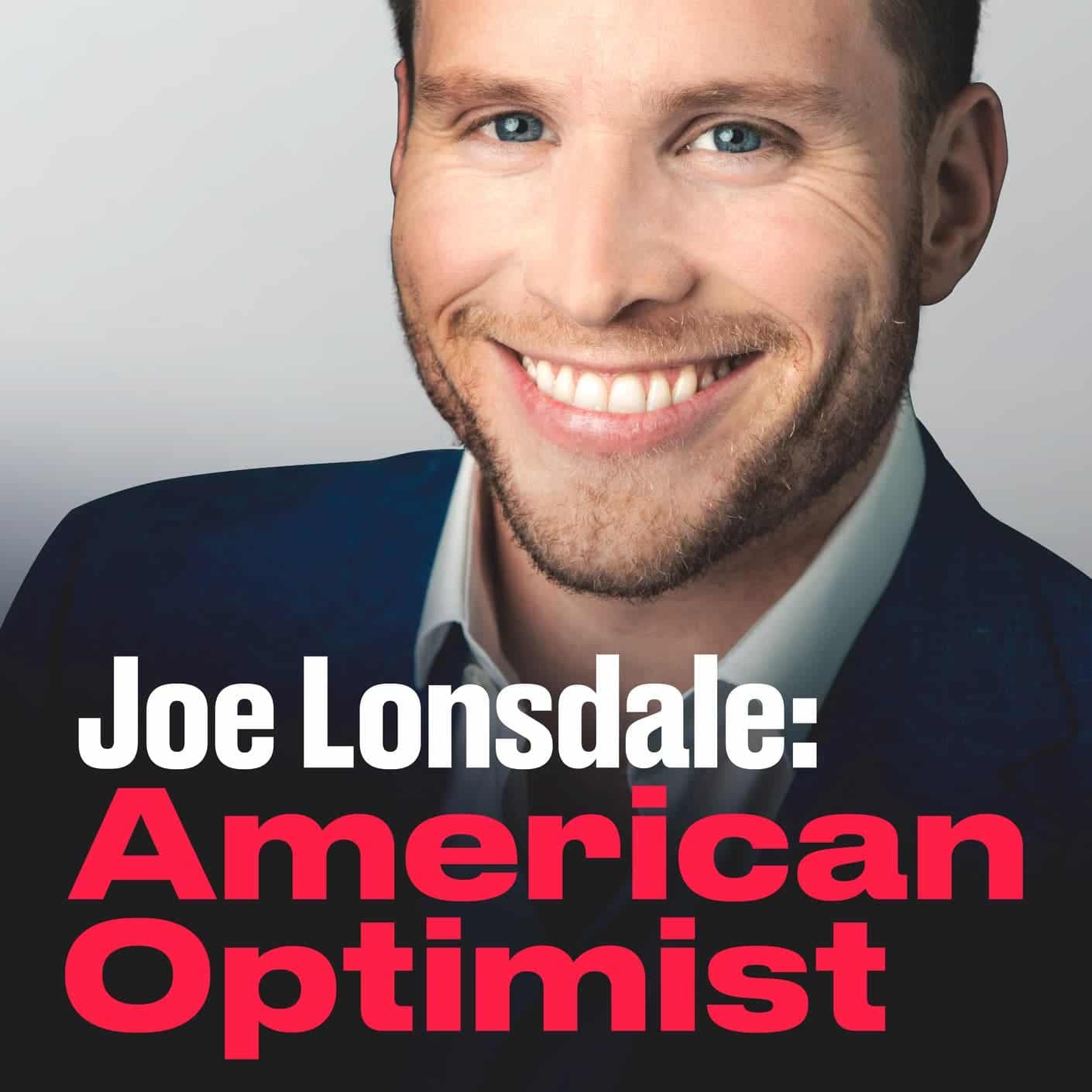
Podcast Summary: Joe Lonsdale: American Optimist - Episode 99: The Myth of American Inequality with Senator Phil Gramm
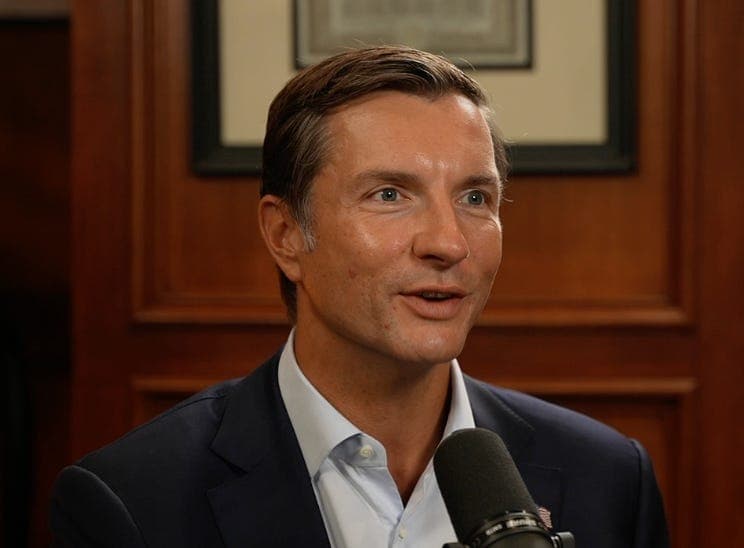
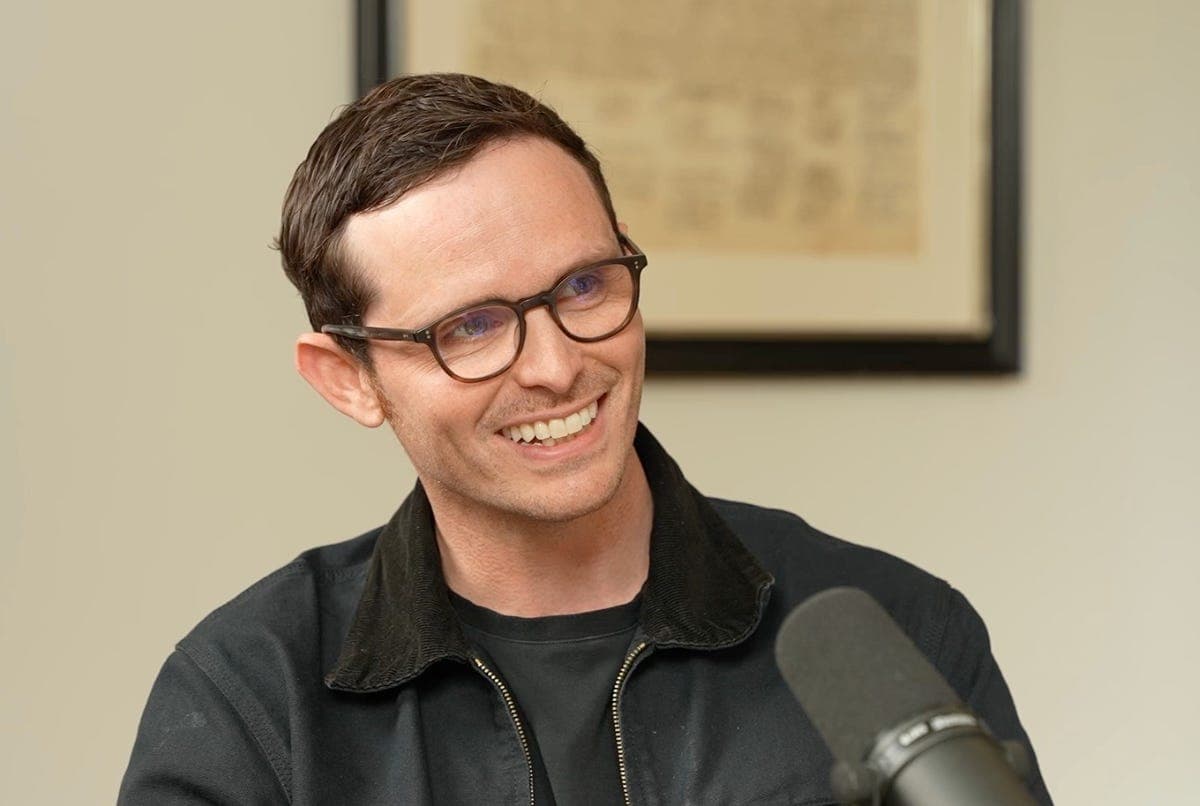
Episode Overview In this episode, Joe Lonsdale interviews Senator Phil Gramm, an economist and former U.S. Senator, discussing the prevalent narrative surrounding income inequality in America. Gramm challenges the conventional wisdom that claims the rich are getting richer while the poor are getting poorer, presenting data that suggests a different perspective on economic disparities.
Key Themes and Discussions
- Debunking Income Inequality Myths
- Main Argument: Senator Gramm argues that income inequality is often exaggerated in public discourse.
- Data Misrepresentation: Claims of the top 20% earning 16.7 times what the bottom 20% earn are misleading as they do not account for government transfer payments or tax contributions from high earners.
- Adjusted Figures: When considering government benefits and taxes, the actual inequality ratio is closer to 4:1 instead of 16.7:1.
- Government Transfer Payments
- Increase in Support: Benefits to the poor have increased significantly, from $9,700 per household in 1967 to nearly $50,000 in 2017 (inflation-adjusted).
- Impact on Workforce Participation: High benefits have led many low- and middle-income Americans to drop out of the workforce, affecting labor participation rates negatively.
- Cultural and Historical Context
- Historical Perspective: Gramm argues that the narrative of inequality has roots in ancient political tactics to divide society.
- Welfare Dependence: He asserts that what America faces is not extreme inequality but rather welfare-driven equality that discourages work and self-sufficiency.
- The Role of the Super-Rich
- Wealth and Society's Prosperity: The idea that super-rich individuals like Elon Musk and Warren Buffet are detrimental to society is critiqued. Gramm contends that their wealth contributes to overall societal advancement and innovation.
- Tax Fairness Debate: Discussion on whether the super-rich pay their fair share, concluding that the U.S. has a highly progressive tax system, even more so than many European countries.
- Economic Mobility
- Mobility in the U.S. vs. Canada: While some data suggests that economic mobility is lower in the U.S. compared to Canada, Gramm argues that the nature of immigration plays a significant role in these statistics, as Canada has a selective immigration system that brings in skilled individuals.
- Personal Success Stories: Gramm shares his personal story of rising from humble beginnings to underscore the opportunities for success in America, emphasizing that hard work and good decisions can lead to prosperity.
- Critique of Welfare Programs
- War on Poverty: Gramm critiques the War on Poverty, stating it has not succeeded in making people self-sufficient but has instead fostered dependency on government aid.
- Mandatory Work Requirements: He advocates for work requirements for able-bodied individuals receiving welfare to encourage self-sufficiency and dignity.
Key Takeaways
- Economic Reality: The narrative of growing income inequality is challenged by data that adjusts for government benefits and taxes, suggesting inequality is not as extreme as often portrayed.
- Welfare Impact: Generous welfare programs can inadvertently disincentivize work, leading to lower labor participation rates among the poor.
- Cultural Narratives: Many perceptions of inequality are rooted in historical political strategies and cultural biases rather than objective economic analysis.
- American Dream: Despite challenges, the potential for upward mobility remains strong in America, provided individuals are willing to work hard and make prudent decisions.
Conclusion This episode provides a thought-provoking exploration of the complexities surrounding income inequality, welfare, and economic mobility in America. Senator Phil Gramm's insights challenge listeners to reconsider widely accepted narratives and emphasize the importance of data-driven discussions in understanding economic realities.
Written by AI. May contain mistakes. Listen to the episode to check what was said.
Transcript
Automatic transcript. May contain errors.0:00Bernie Sanders says that income inequality in America is obscene and unsustainable. Actually, if you count all transfer payments and taxes, income inequality is lower today than it was in 1947.
0:24We've heard a lot about the problems of inequality, about the rich getting richer, the poor getting poorer, people suffering in America. Senator Phil Graham served in D.C. for 25 years. He's an economist. He's an iconoclast. He's a legend from Texas. He and a couple other great economists spent a lot of time on the data. And they wrote a book that challenges conventional wisdom, has a very different view on how people are doing in America. Let's hear from him. You're very respected here in Texas. I've come here the last five years and a lot of people have spoken highly of you. So it's an honor to get to meet you.
0:51Well, I appreciate that. My mom will. I enjoyed your book. You're clearly an economist. You're interested in data as well. You wrote a book a couple of years ago called The Myth of American Inequality. Before we jump into that, I want to hear a little bit more about your background in D.C. What brought you to D.C.? I was an academic. I was an economist at Texas A &M for 12 years. But I didn't like what was happening in America in the 1970s. And I got promoted to full professor when I was 30. And I sort of woke up one morning and realized I was an adult, and I didn't like what was happening in our country.
1:31And so I was doing energy work in Canada and led to a book, The Economics of Mineral Extraction. And so I knew everything the government was saying about energy was wrong. You know, we were never going to produce more fossil fuel. It was absurd. So to make a long story short, I wrote an article for the Wall Street Journal. And I had written a lot of academic stuff, which nobody had ever read. And suddenly this article produced dozens of letters in response. And so I started speaking out on subjects and that basically led to me ultimately running and being elected. Amazing. I mean, I guess a lot of the energy in the 1970s was very pessimistic.
2:27People thought we were running out of everything. People thought America was - Yeah, the joyride was over. There'd be no more oil and gas. We had to learn to live on less. Well, that wasn't the American that I was known for. I love it. Well, you're one of the early American optimists who helped turn things around back then. So thank you for that. Let's dive into your book a little bit. It's just Myth of American Inequality. We're constantly hearing from all sources about how America is becoming more unequal, about how it's just so horrible for the least well off, about how the top are taking everything.
2:58And you guys do a very kind of scholarly analysis of this and say that's wrong. Yeah, it is wrong. Well, first of all, let me say that it has always, since the time of the ancient Greeks, been a political ploy to try to create divisions between the people who have things and the people who don't have much. This is not a new idea. And even in America, it has some salience as an issue. It's reinforced by the fact that the Census Bureau, in measuring income starting in 1947, made a series of simplifying assumptions that basically came down to the fact that very little income was paid in kind, like your employer buying health insurance or contributing to your retirement system or government benefits like food stamps, housing subsidies, Medicaid, didn't exist.
4:11So the Census Bureau defined income, household income, as cash payments or cash equivalents. Pre-tax they defined it as well. And they didn't take into account taxes. And so that was, other than the tax assumption, that was a pretty reasonable approximation in 1947. But on dozens of occasions, when the war on poverty started and virtually all of its benefits were paid in kind, they weren't paid in cash, The Census Bureau didn't count any of those benefits as income. So today, in measuring household income, the Census Bureau counts only about a third of all transfer payments as income to the recipients.
5:05It doesn't count food stamps. It doesn't count housing subsidies. It doesn't count Medicare. And it doesn't take into account taxes. So it doesn't count refundable tax credits. It's where you get a check from the Treasury. So in total, for the people who are classified as being poor in America, 88 % of the benefits that they get from the government are not counted as their income. So let me just, I don't want to bore you to death with figures, but let me just give you two of them. In 1967, when the warm poverty ramped up, counting all transfer payments as income received and all taxes paid as income lost, the average family in the bottom 20 % of income owners in America got$9 ,700 in real purchasing power dollars.
6:10Everything together,$9 ,700. They got$9 ,700 from the government benefits. Got it. By 2017, 50 years later, that number was approaching$50 ,000. Wow. Inflation adjusted. Inflation adjusted. So that in reality, the way we define poverty, if you count all transfer payments and taxes, only about 2 % of Americans are poor. And most of those are people that have got a problem, physical problem, mental problem, drug problem, alcohol problem. And so they're not receiving many of the benefits. Also, in terms of income inequality, according to the Census Bureau, in their measurement of household income, the bottom 20%, the top 20 % of earners in America have 16.7 times the income of the bottom 20%.
7:18Yes, that's measuring it the wrong way, the way we're told, 16.7. That's not counting taxes, and the top 20 % pay a huge percentage of the taxes. That's not counting two-thirds of all transfer payments. And so when you count all the transfer payments, you count all the income the census doesn't count, and you take into account taxes, the ratio of the top to the bottom is 4 to 1, not 16.7 to 1. And now you can say 41 is too much. Maybe it is. But it's a completely different debate. And I'll have to say, whether I was at Stanford or Harvard or the University of Chicago, no one has ever said that these numbers are wrong.
8:11I think they're probably afraid to get attacked for it is my guess. Well, no, the best they have been able to do, which is the way I would attack the book academically if I were opposed to it, is to say, well, you can't eat Medicaid. Oh, got it. Well, that's true. You can't eat Medicaid. But for working families who are not much better off than people on welfare in America today, they can't eat Blue Cross Blue Shield either, but they buy it. One other number where the census says that income inequality is rising. You know, Bernie Sanders says that income inequality in America is obscene and unsustainable.
8:55Actually, if you count all transfer payments and taxes, income inequality is lower today than it was in 1947. What was the ratio in 47 between the top and the bottom? Well, it's now about 3 % less than what it was then. Wow. Now, and this is important because we're having a real debate in America about the sustainability of democracy and capitalism based on the thesis that income inequality is growing rapidly when, in fact, it has declined in the last 50 years. Culturally, why do you think that is? I think the Greek call out you made was very interesting to me. I remember there was something in ancient Greece where they'd choose like the richest person that nobody liked and they'd ban them and they had to banish them and take their stuff for 10 years, right?
9:53Ostracize. Yeah, ostracize. And that's where the word ostracize comes from. Look, in our system, there are a lot of people who are successful that we don't like. There are a lot of people that are successful, and you say, well, I'm as smart as that guy. And part, to be free and to be prosperous, you got to accept the fact that when you set people free, some people are going to be more successful than others. I don't have a problem with that. Rich people make me richer. How Elon Musk, I don't know if he's still the richest man in the world, but I'm no poor because he's richer. I'm richer because he's richer.
10:42I have his satellite on my house. Isn't it great? And it's one-tenth as expensive as the Internet service I was getting before, and it's twice as good. Amazing. So yeah, he's richer than me, but I'm richer because he's richer. It doesn't bother me. I think you'll think about inequality in the wrong way. I think you're right. So I've also, not as big as Elon, but I've started a bunch of companies as well. And it's funny, I tell my friends, if I were to start another company, that would make inequality go up. But if I were to spend all the money on the beach and go have vacations, that makes inequality go down.
11:18So they really think I should be going on vacation more. Is that what they're saying? Right? It's a little interesting. And there's so many things, and I know we're going to get into them, that are so misleading the way people talk about it. I mean, for example, do the rich pay their fair share? Okay, well, if their fair share is everything, no. But if you look at actual IRS data, the tax code is progressive up to about$7.5 million a year. Yep. It rises federal, state, and local taxes to a little over 40%. And then it levels off, and for a very small number of people who earn almost all their income from capital gains and you give vast amounts of money away, it falls into the 30s.
12:12Got it. But this idea that the rich don't pay their fair share is a result of a bait and switch. You remember the article that came out from ProPublica where they stole the tax returns, remember? Well, I looked at those, wrote an article in the Wall Street Journal about it. Apparently, they took the actual taxes paid when they're doing Warren Buffett, a great public benefactor, in my opinion. They took his actual taxes, but they didn't take his actual income. Interesting. They made up an income by saying what would his income have been if he sold every asset he owned every year and paid taxes on it.
13:07Yeah. And on that basis, even President Biden quotes their number that his taxes would have been very low. It's a fake number saying. It's a fake number. It's the thing, anything you own should be taxed right away, which wouldn't work for capitalism. This is a big debate going on right now in America, is you have some real extreme radical left people that gave Kamala and Biden this idea that you need to take everyone's wealth exactly where it is and tax them on it, unrealized, every year, which seems like it would break a huge part of our system. It would destroy capital accumulation. Exactly.
13:41And ultimately the prosperity of the country.
13:47But, and you've got Piketty, for example, the French economist. He's French socialist. All of his data is based on, when he's talking about inequality, he doesn't count any transfer payments as income. That's crazy. And he doesn't take into account taxes on the upper end, and he does the bait and switch on income on the upper end. by saying we should count their asset appreciation. Well, that would be equivalent to a normal person. You've got to sell your house every year. You've got to cash your retirement. They'd have to come to my house. They'd have to look at the artifacts. They'd have to judge the value of the artifacts and tax me on them, which would be very invasive.
14:31Which is what widened the - That's what he wants to do. That's what he wants to do. The chairman of the Senate Finance Committee, hopefully not chairman much longer. But what he wants to do is tax people on the appreciation of the assets they own. Well, what would you do if they started taxing you on all this? Get rid of them. You would get rid of them, exactly. And what would happen to its value? It would go down. It's interesting, too, because inflation in that case would allow them just to steal your money very easily, right? Because they could cause inflation by printing money and giving it out to people.
15:07Then they could say all of your stuff's worth more and then tax you. Well, and of course, inflation is how government historically has stolen money. Yeah. But in any case, the book looks at a range of issues from do the rich pay their fair share? And let me give you one of the Warren Buffett. You know, one of the criticisms of Buffett by the left is he doesn't pay himself income. He pays himself a modest salary. He doesn't spend any money. He drives a used car. And so they say he's cheating the government. Really? Yeah. That's funny. Well, then you're asked the question, well, if his wealth is not, if he's not spending it, what's happening to it?
16:04Yeah, what's it actually doing? Well, what is the wealth doing? It is invested in the future of America. It's making all of us richer. Buffett is a public benefactor. When he dies, and may it be a long time from now, when he dies and the government takes 40 % of what he's accumulated and spends it, Mm-hmm. We're going to be worse off having them spending it than him having invested it in the future of America. Yeah, it was helping grow the country. It's the same argument about Ebenezer Scrooge, you know, where Fred, his nephew, says, well, his wealth doesn't know good. He doesn't spend it well.
16:51Who did it do good? Yeah. Britain. Yeah. It built the railroads. It built the factories. Yeah. Yeah. Yeah. People, I think the system level understanding of wealth creating our society and making things work is, is unintuitive to people. I want to ask you a little bit about the war on poverty. So we had this big war on poverty. We cited some of the statistics that 50 years before 2017, it was a much smaller amount going to people. Now it's a much bigger amount going to people. A lot of people talk about how the war on poverty has done little to move the poverty rate. It was a failure, but it's actually interesting using your data.
17:23Hasn't there been a massive transfer of wealth to the poor? Has some of this worked in any way? Ben, if your objective was to eliminate want, it's been successful. It's transferred a huge amount, 22 % of GDP. Wow. Okay. Transfer payments. That's in general, not all of them going to poor people. But if you go with the objective that Lyndon Johnson announced, which was to make people self-sustaining, it's been an abject failure. And let me give you one more number. When the war on poverty started, 68 % of the poor people in America worked. That number is now down to, and that's prime work age persons, okay?
18:16Now it's down to 36%. Really? Is that big of a difference? Yeah, 36%. And in the second quintile, the second 20 % of income owners, they had the highest labor force participation in the country. And that's now fallen below middle income workers. So Speaker Paul Ryan's a fan, and he's, I think, been very eloquent on the bad incentives of welfare and how a lot of people, they will make less if they work because of bad government policy. So I understand why the bottom has been pushed not to work, which is horrible. But I understand why the incentives work that way. Why would the second to highest people not work as much?
18:58Because welfare is now so generous. So big. That it's inducing people that are in the second quintile to stop working. And in fact, the reason the labor force participation rate fell during the pandemic, even after the pandemic was over, was the benefits had spilled into the middle class. There's so much free money to everyone. Yeah. So look, it's wasteful of people's lives and their tax money to pay people not to work who could and should work. Yeah. But when you get to the point where we're paying middle income Americans not to work. That's crazy. You're assaulting the very foundations of the country.
19:46I'm paying a lot of taxes, but if they're being used for that, I'm not feeling too good about that. Well, they are being used for that, and you shouldn't feel too good. This reminds me of a popular idea called UBI. Have you heard of this universal basic income? A lot of people in tech naively think that we're going to not, it's like Star Trek and no one's going to have to work too much. They're just going to give everyone money. It seems like it's not good for the soul of a nation to me. Well, look, whether we ought to have over 100 welfare programs or not is clearly debatable. Whether we would be better off giving people cash rather than all these benefits is debatable.
20:22But it doesn't seem to me to be debatable that if you got able-bodied people that are prime work age and you're providing welfare benefits, they all have to work. To me, that's not debatable. And look, working gives you the dignity that comes from being self-sufficient. And if you're not, the American economy is like an escalator, okay? You go to work, you get on the escalator, you work hard, you climb up, you fool around, you stumble down. But the escalator is going up. Yep. Compared to 1967, 66.3 % of all American households are now in the top quintile of earners as compared to 1967. Two-thirds of the people.
21:29Two-thirds are now living as well as the top quintile. The top 20 % did in 1967. Yeah. And because of the increased productivity of the economy. But if you weren't working, if you're one of those 68%, it's now down to 36%, you weren't on the escalator. And so you benefited only to the extent that government gave you more. So I am firmly committed to the principle that we should have a mandatory work requirement for able-bodied people on welfare. I like that idea a lot. I think that makes a lot of sense. It's not healthy not to. Let's talk a little bit more about history. We talked about, you mentioned Greece.
22:14Your book talks about Victorian England as well, which I really enjoyed. But I think a lot of us are brought up on these stories of these like really kind of grubby cities and you see all these poor people and you're kind of told in popular culture, oh, this was just a horrible time. All these people were suffering in the cities and being mistreated and having a tough time and there's kids working. And it's interesting because if you actually look at the statistics from about 1200 to 1800, you had a pretty much flat, pretty much flat productivity, flat growth, like people weren't doing better.
22:43And then all of a sudden people started doing much, much, much better in the 19th century. Actually, they were improving the whole time. So what's going on there? Why the confusion in our culture? Well, what's going on there is we had the Enlightenment, which was an intellectual movement that recognized that people should have the right to worship God in their own way, that they should have the right to own their own labor and capital. Because in the medieval world, the incentive to work was leached away because of the fealty that people had and the foresharing they had with the crown, the church, the guild, the city.
23:37And so when we came to view people's labor as something they own, as the fundamental property, as Adam Smith has carved on his grave, then things started to change. And so if you look at income levels, for a thousand years, they're pretty flat. And then all of a sudden. Yeah. And that was the Enlightenment, the birth of capitalism, the Industrial Revolution. Now, were conditions in the Industrial Revolution terrible as compared to today? Yes. But were they better than any people who had ever lived on the face of the earth had experienced? Yes. I think this is the confusion. I think one point in your book you mentioned when people thought of country life, if they were high class, they think of the manor houses and they think of these really nice, beautiful places.
24:42But actually, there were people suffering and living really badly in the country. So when you brought it to the city, you all of a sudden saw it. And they chose to come to the city. They saw opportunity and freedom in the city. And they found both. There's never been a period in the history of the world where working people benefited more than they did in the last half of the 18th century and all of the 19th century. And a lot of the literature you read about how terrible it was, was from the landed gentry who were losing workers. Interesting. And who were in a political battle with people living in the city over the corn laws.
25:31And the corn laws in England were laws that limited the import of food products and grains. This is cronyism to try to keep the prices up. So what happened is when the cities became more politically powerful, they forced the parliament to repeal the corn laws. And the living standards exploded. Yeah. And much of this literature was sort of there trying to discredit the new industrial revolution. And don't forget that in economics, you have creative destruction. When new industries come, they kill off old industries. So if I'm a landed aristocrat and I've got the parliamentarian really works for me, and then suddenly you've got industrialization and you've got all my workers going to the cities and land values are falling, I'm unhappy.
26:43You're trying to stop it. I'm trying to stop it. This is why, you know, as a tech guy myself, we had to get involved in government because the old businesses try to stop us from disrupting them. Exactly. And the biggest difference between America and Europe today is we allow creative destruction. They try to impede it. That's fair. I see every day. I still work. I lie and tell people I have a young wife, wants money, would put me in a nursing home if I quit working. But I work because I like working. And one of the biggest problems in Europe in private equity business, in acquiring businesses, is that when you're looking at a business and you look at the number of people who work there, and often it's twice as many people as you would have doing the same thing in america and yet you can't lay them off without paying a huge severance so you can't it's sort of like in the but if if if the body can't throw off old cells it can't build new cells i grew up upper middle class and my father was helping some companies do something in france at one point and i remember him being on the phone yelling because he couldn't fire people even back then.
28:00This is impossible. The other thing I'll give you on that, which is interesting. Elon Musk, of course, has become very famous now. We worked with him back at PayPal and other contexts. And when we were building PayPal, I was a kid there. Elliot Spitzer kept trying to destroy the company with regulation. And he came very close to doing so. And in Europe, there actually were companies that were destroyed by the regulators. So it's funny, like we actually have our Elon Musk, thanks to America not quite being able to stop us, whereas in Europe, I feel like they did stop us. Well, the first place I ran into anything similar to that was in China, interestingly enough, where that was the first place you ever could, you know, hold a card up to something and have it register.
28:41And they were way ahead. Of course, we have blown past them now. Freedom works. I want to ask about the super rich, because that's something that's very contentious. I feel like a lot of the worry about inequality maybe comes through social media today where people see people living much, much better than them and the very rare exceptions of private jets and huge amounts of money. And Kamala Harris and Bernie Sanders all kind of use this against you. They say these firefighters and teachers are paying higher rates. Yeah, we could have more if we took some of what they got. That's their argument.
29:18Are there some things that are unfair about how the super rich are getting something in America? Are they paying their fair share? If we took a bunch away from them, would it make things better? What's the thing about this? Well, I think, first of all, if you look at the actual tax data based on how we define income, the tax system is very progressive, and it's the most progressive tax system in the world. That's an important point. So the U.S. is the most progressive. We pay the most at the high end. They're far and away more progressive than France, Germany, Sweden, more progressive than Sweden.
29:56That's not how people think about it. People assume that it's less progressive than them. Well, because of this argument, I'm going to give you$25 ,000 to buy a house. I'm going to give you$6 ,000 if you have a child. I'm going to raise the refundable tax credit. You'll get this check. Well, how are you going to pay for it? Oh, more tax the rich. Okay? That's the answer. Answer to everything. Look, here, let me give you a figure. If you took every penny of income of billionaires in America, you couldn't fund the 2022 government for a week. Okay, look, there are people that are very rich, but there are not very many of them.
30:51People should never be deceived that it's basically upper middle income Americans who pay the great bulk of taxes because there are a lot of them and because we have a very progressive tax system. So we have a lot of maybe single-digit millionaires or people that they're the ones really paying for most things. Yeah, and remember, Bernie Sanders is a millionaire. Yeah, that's why he doesn't attack millionaires anymore. Well, look, that's why he didn't exactly, because my wife is a perfect example. We taught at Texas A &M, and when I went to Congress, she didn't want to work for the government until Reagan was elected.
Read the full transcript
31:38And so she worked for the Institute for Defense Analysis. And so they paid like Texas A &M had in the TIAA-QEF. Her retirement from the 10 years she taught and the two years she worked at the Institute for Defense Analysis is worth over$2 million. Wow. Okay. Well, it's power of compound interest. That's great. And that was a long time ago. We're old. The point being that this is all a big myth. Americans are extraordinarily prosperous. Some people are very rich, but we're not poorer because they're richer. That's the point. I'm poorer because government's richer, but I'm not poor because Elon Musk is rich.
32:39Yeah, it's actually, to me, it seems like the opposite. The parts of the world where they don't let people become billionaires, they seem to be a lot worse off. Well, they are a lot worse off. I want to ask about ability for people to start at the bottom and go to the top as well about mobility. And there's some data from professors like Raj Shetty at Harvard. He tries to argue that economic mobility in the U.S. is lower than Canada. That's not what you guys said in your book. Now, we would say he's absolutely right, but let me explain why. Canada has a very active legal immigration program. The percentage of their citizens who are immigrants is huge as compared to us, and they have a selective immigration program.
33:27So who is immigrating into Canada? engineers, data scientists, doctors. And so as a result, these people come to Canada with nothing. They don't die with nothing. Okay. So, and it's even true in America with legal immigrants, even though we don't do it the way they do. You know, you look at the profile of legal immigrants in America, Most households have both natural parents. Children tend to make much better grades in school, have fewer discipline problems, and are driven to achieve because their parents are driven to achieve. So ambitious legal immigration seems to have high mobility. So Canada, Chetty's right, but for the wrong reasons.
34:27That's interesting. Canada doesn't have a better system than we do. And look, let me, and I hate to get into personal stories, but my brother was the first person in the history of my family to graduate from high school. Wow. Okay. And I had a big family. Wow. My brother was the first person to graduate from high school, first person to go to college, first person to graduate from college, okay? My mama came to Columbus, Georgia to work in a cotton mill. Wow. Okay? So if you're going to convince me that America is unfair, you're going to get up mighty early in the morning. Because I've lived the American dream.
35:15And I've lived it not because I'm brilliant. I mean, look, if you can be born rich, beautiful, and brilliant, do it. Yeah. That's my advice. But not being any of those things does not disqualify you in America. I love it. If you work in America and you make good decisions, you're going to be successful. I failed third, seventh, and ninth grades. I had a reading disability problem that I didn't learn to read until I was in the 10th grade. Amazing. So I tried to fail over and over and over again. But in America, especially if you had a mother like mine, you succeeded. And people succeed every day, every day.
36:06One of the interesting data points I've seen, I don't know if you've looked into it, it seems like we may have actually greater disparity in educational outcomes than we do in wealth, if you've looked into that. So I think right now, for example, between the races, maybe it's not comfortable, but Asians have 25 % of them that score at the top level in math, whereas with Hispanics it's 2 % and blacks it's 1%. And it seems like the wealth disparity is actually less than the educational disparity in some ways. Well, look, the Asians have been extraordinarily successful in America. If you've got children in school, as they get to the point where you start having lists of who the superlative students are, you're going to find massive numbers of Asian names on those lists.
36:55Ted Cruz and I had some competition from those people. Why? Because their parents came here, they saw this opportunity, and they instilled in their children, you can have anything in America if you work for it. So are Asians on average smarter? I don't know, and I don't know that it matters. I know as students, they tend to work hard and they tend to be successful. And that's what America's about. I don't have any problem with merit. I have a problem when you try to fix the game, but I don't have any problem with merit. So we started American Optimist for conversations like this to push back on cynicism and pessimism in our country.
37:46And one thing that's a little sad is a lot of young people increasingly believe they'll do worse than their parents and believe that's been the record the last 50 to 100 years. Can you set the record straight on that? Yes, it's completely false. Their parents did better than their parents. The odds are very high they're going to do better than their parents. But the reason their parents did better than their parents, who did better than their parents, is because of economic freedom. China is beginning to fail economically for one reason, because they have—the government is reducing the economic freedom people have.
38:32When government can't stand someone like Ma, and they attack him and destroy half the equity value of the tech industry in China, you're going to have an impact on growth. So when government is assaulting economic freedom, they're assaulting the opportunity of people who are trying to succeed in America. Limiting economic freedom is bad for you, but it's disastrous for young people that are ambitious, that want to be successful. And that's why the system, if we can preserve freedom in all its essentials, especially economic freedom, there's no limit to the future of the American people. That's very well said.
39:24A good friend my age actually went to Beijing right before taking his company public, about to become a new billionaire in China. I'd known him for 15 years, and he died in his sleep after saying no to the government about something. So I don't know what actually happened, but it does seem like they're really cracking down, and it really has hurt their growth in that sector. And I really hope America can stay free and not become like that, not go along with what Senator Wyden and Kamala Harris seem to want to do to the billionaires. Well, if we do, it'll be our choice.
39:54and one of the reasons I wrote this book is we need to get the facts straight. We can't have a debate unless we know what the facts are. And one of my great frustrations having been in government for 25 years is that, and I'm not trying to toot my own horn, I'm just telling the truth. I never knowingly in 25 years in public office said something that I knew wasn't true. And I'm sure I said a lot of things that weren't true, but I didn't know it, okay? Yeah. Now, routinely, politicians say things that are verifiably false. If I had made a statement about some economic fact that was wrong, the media would have jumped down my throat, and I knew it.
40:54And now they let both sides get it. Well, one side more than the other, but both sides, depending on the media source, and that's very harmful to the system. When somebody says something that's wrong, the facts need to be corrected. Well, I'm a fan of the facts. Senator Phil Graham, The Myth of American Inequality. If you hadn't read that book, look, I've given the royalties away. If you hadn't read books out in paperback, Wall Street Journal rated it one of the top books of the year, won the Hayek Prize$50 ,000. Congratulations. I'm a huge fan of Hayek. That's a cool prize to win. I love it. If you haven't read this book and you believe in freedom, you need to read the book so you know the facts.
41:44Then you make up your own mind. Well, thank you for being an American patriot and a fighter for freedom. It's great to have you on. Thank you, Joe. I appreciate it.
From the publisher
The rich are getting richer, the poor are getting poorer. The wealthiest among us don't pay their fair share in taxes. The American Dream is disappearing... Are these claims true? What data are they based upon? And does it stand up to scrutiny?
This week, we analyze the debate over income inequality and mobility in America with economist and former U.S. Senator Phil Gramm. In his book, "The Myth of American Inequality" (winner of the 2024 Hayek Prize), Gramm lays out the oft-cited data for widening inequality and exposes where it falls short. According to the U.S. Census Bureau, the top 20% of earners possess 16.7 times the income of the bottom 20%. However, Gramm reveals that this data excludes nearly all government transfer payments to the poor, like food stamps, and fails to subtract the high taxes paid by top earners. Adjusting for these factors, inequality drops from 16.7X to 4X!
Gramm also points out that benefits to the poor have increased from $9,700 per household in 1967 (adjusted for inflation) to nearly $50,000 today. He argues that we suffer, not from extreme inequality, but from welfare-driven equality that encourages huge numbers of low-and-middle income Americans to drop out of the workforce.
Senator Phil Gramm served in Washington D.C. for 25 years, first as a Congressman and later as a three-term Senator from Texas. He's an economist by training who taught at Texas A&M before entering public service. His book is a must-read for understanding the inequality debate, the truth about the super-rich, and the state of the American Dream.
00:00 Episode intro
03:32 Is inequality extreme and growing?
10:45 Elon Musk and the super-rich
16:19 Is Warren Buffet cheating the government?
22:55 Industrial Revolution — setting the record straight
29:35 Do billionaires pay their fair share?
33:40 Is the American Dream dying?
This is a public episode. If you would like to discuss this with other subscribers or get access to bonus episodes, visit blog.joelonsdale.com