In short
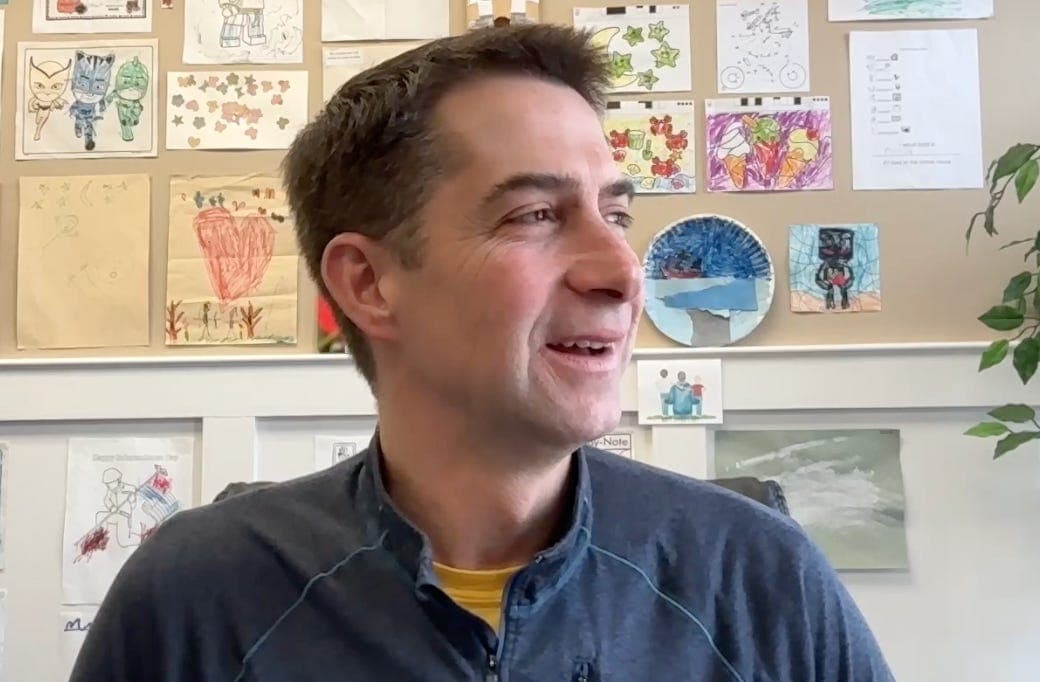
Podcast Summary: Joe Lonsdale: American Optimist - Episode 111: Sen. Tom Cotton on DOGE, TikTok, and "Seven Things You Can't Say About China"
Podcast Details
- Title: American Optimist
- Host: Joe Lonsdale
- Guest: Sen. Tom Cotton
- Episode Number: 111
- Date: [Insert Date Here]
- Description: In this episode, Sen. Tom Cotton discusses various pressing issues, including cryptocurrency (Doge), TikTok, the Chinese Communist Party (CCP), and insights from his new book, "Seven Things You Can't Say About China."
---
Key Themes and Discussions
- Activist Judges and Government Oversight
- DOGE and Government Spending:
- Sen. Cotton praises the role of entrepreneurs like Elon Musk in exposing waste and fraud in government spending.
- He discusses potential legislative measures (rescissions bill) to cut unnecessary government spending.
- Judicial Concerns:
- Cotton highlights issues with activist judges issuing nationwide injunctions, arguing that district judges should not have power over cases beyond their jurisdiction.
- He urges the Supreme Court to clarify limitations on district judges' authority.
- China and National Security
- Lab Leak Theory:
- Cotton reflects on his early advocacy for the lab leak theory regarding COVID-19 and discusses the implications of China's handling of the pandemic and information suppression.
- "Seven Things You Can't Say About China":
- Cotton provides an overview of the themes in his book, emphasizing the immediate and severe threats posed by the CCP, including:
- Chinese Expansionism: Discussion on China's influence over critical areas like the Panama Canal and its military ambitions concerning Taiwan.
- Cultural Infiltration: The impact of Chinese censorship in Hollywood and academia, limiting free expression and American values.
- China's Global Manipulation
- Economic Warfare:
- Cotton argues that China is waging an economic war against the United States, leveraging unfair trade practices and espionage.
- He emphasizes the need for the U.S. to strengthen its industries and maintain competitive advantages.
- Fentanyl Crisis:
- The podcast discusses the fentanyl crisis in the United States, linking it to the Chinese supply of precursor chemicals to Mexican cartels.
- Cotton calls for aggressive measures against these cartels, likening them to terrorist organizations.
- Optimism for the Future
- Potential for Change in China:
- Cotton expresses hope for a future where the Chinese people can thrive without the oppression of the CCP.
- He invites listeners to envision a scenario where American values and partnerships can prevail over authoritarian regimes.
- Future of America:
- The episode concludes on an optimistic note regarding the prospects for America as a dominant global power, emphasizing the importance of individual rights and economic freedom.
---
Key Takeaways
- Legislative Action: Emphasis on the necessity for Congress and the Supreme Court to act against judicial overreach.
- Cultural and Economic Threats: Highlighting the multifaceted approach China employs to undermine American interests.
- Call to Action: Cotton urges proactive measures to combat drug trafficking and to safeguard national security against Chinese influence.
- Optimism for America's Role: The belief that America can navigate its challenges and emerge stronger if it focuses on protecting individual liberties and promoting innovation.
---
Conclusion This episode of "American Optimist" with Sen. Tom Cotton sheds light on critical national security issues, particularly regarding China. It emphasizes a need for vigilance against both domestic judicial overreach and foreign threats, particularly from the CCP. The discussion is framed within a narrative of hope, focusing on America's potential to uphold freedom and innovation in the face of global challenges.
Written by AI. May contain mistakes. Listen to the episode to check what was said.
Transcript
Automatic transcript. May contain errors.0:00So I'm a fan of President Trump. I think it may be the greatest administration this time that we've had in generations. But I've heard him saying to friends, well, I don't want to give Mark Zuckerberg a win and make Facebook worth a lot more. And I just I disagree with him on that, even though a huge fan of his. Like, I feel like there's a lot in the CCP is the bigger threat here. Is this going to be handled correctly or what's what's going to happen? First off, I thought he and Mark had made up and they're friends now. And second, remember, remember what the law said. It didn't say we're going to ban TikTok.
0:27It said that TikTok's parent company in China had to divest if TikTok continues to operate.
0:39U.S. Senator Tom Cotton is the chair of the Senate Intelligence Committee. He's one of our key national security leaders, helps run our country in a lot of different areas. We catch up on Doge, what's going on there, catch up on the activist judges. Are we going to be able to stop these judges from breaking everything the administration is doing? And then we jump into China. He's written a new, really great book on the seven things you can't say about China. China has been running over us the last few decades, taking advantage of America, surging ahead in a bunch of areas. What are we going to do about the fentanyl reverse opium war?
1:08Are we going to start assassinating, killing the terrorists and the cartels? Are we going to push back on these things? What's going to happen with Taiwan and TikTok? Are we actually going to stop the CCP from controlling the algorithm and brainwashing 100 million of our people? What is the next step in that battle with TikTok? And what's it going to take for the 21st century to be the next great American century instead of letting the CCP dominate? Tom Cotton knows. Welcome to American Optimist. Excited to have with us here today, the U.S. Senator for Arkansas, Tom Cotton. Thank you for joining us.
1:34Hey, Joe. Thanks for having me on. It's good to see you. Mr. Senator, you're the chairman of the Senate Intelligence Committee, member of the Armed Services Committee, and recently the author of a new book, Seven Things You Can't Say About China. You like writing books. How do you have time for that in the middle of all this other work? The Senate Intelligence Committee, maybe an oxymoron if there ever was one. I can borrow an old joke from military intelligence from my days in the Army. Well, you know, they're related. This book, more than my previous books, really synthesizes a lot of what I've learned, a lot of what I've done and said on the Armed Services Committee and the Intelligence Committee and now as chairman of the Intelligence Committee.
2:09I wanted to ring the alarm for the American people that however low the opinion is they have of China, it's actually much worse. the threat is more immediate and it's more severe. And how do I have time? You know, I guess, you know, lots of lots of nights and weekends put away once I get the kids. Well, we all know you're a really hardworking center. Appreciate the work you do. Before we jump into the book in China and the CCP, I want to go over a few hot topics right now. First of all, let's talk about the new administration. I'm a huge fan of what Elon and Doge are doing to uncover waste and fraud.
2:39Do you think these cuts are going to get reflected eventually in the budget bills? And, you know, how do we stop the schemes for good here? Well, I certainly hope so. And I think they will. One thing we can do is a so-called rescissions bill. The president has the authority under the Budget Act to send a bill to Congress saying, hey, here's a bunch of spending cuts that I think are appropriate and I don't want to spend this money. and in the Senate only requires a majority vote. We tried this once in the first term. Unfortunately, we didn't have 50 Republican senators to vote for it. I think we're more likely to get 50 Republican senators, hopefully 53, getting everyone for it.
3:20Second, now that we control both the House and the Senate, I think you'll see more focus on eliminating the kind of waste, fraud and abuse that Elon Musk and his team have exposed. And obviously, there's a strong political reason for it. I mean, even Chuck Schumer years ago was saying that fraud or wrongful payments in programs like Social Security and Medicare are actually stealing money from beneficiaries. If you have people who are fraudulently receiving benefits from programs like Social Security and Medicare that is depleting their trust funds so they won't be able to pay out benefits that are earned for the future.
4:02I think it'd be very hard for the Democrats to oppose any effort that is simply trying to eliminate the wrongful payments that the federal government often sends out every year. And we're not talking something here, Joe, that's in the millions of dollars, that the billions or tens of billions. We're talking about hundreds of billions of dollars. So I think Elon Musk and his team are doing really good work to identify that kind of fraud and waste. And I think there's steps that Congress can take to help formalize those cuts in the future. Well, I'm excited to see it. You know, a lot of that money being sent out, some of it seems to find its way to friends of people on the left, especially with the NGOs, which is why it's probably hard to turn it off.
4:40I want to ask about one that I think both parties could do a little better. I think you've done amazing work. I'm a big fan of yours on the Armed Services Committee. Doge for the Defense Department. In my experience, there's great things going on in the DOD. There's things I'm really proud of that I'm involved in and that my friends are involved in. A lot of the DOD also seems to spend money on job programs and on cronyism. And I know politics is the art of the possible. You can't just turn it all off at once. There's bases we might not need, but you can't destroy the local economies. But how do we move money away from some of these things that are more job programs towards terrifying and deterring our enemies?
5:11How do we think about that? Something that Elon Musk and his teams are working on that I think hasn't gotten as much attention, but it should. And they did a good job of highlighting some of these efforts on the Fox News channel with Brett Baer recently, is that it's not just about finding things to cut. It's about finding efficiencies and streamlining and modernizing a lot of what government does. So at the Pentagon, as you know, Joe, there's always the tendency to make a customized, bespoke solution for every problem they have. And if you're building a stealth bomber, okay, well, you can't just go out and find a company that's building stealth bombers for anyone besides the Pentagon.
5:51But if you're talking especially about software solutions, but increasingly even smaller platforms, say, you know, unmanned aerial systems, there are a lot of commercial off-the-shelf providers. And that's exactly the kind of thing that Elon Musk or you or Palmer Luckey have both excelled in doing in the private sector and are trying to help the Department of Defense do. So in addition to identifying wasteful spending or spending that doesn't advance the national interest, just reforming a lot of our processes and procurement in the Pentagon, improving systems in the Pentagon and throughout the government is, I think, something that can be a lasting legacy of the Doge efforts, too.
6:28I love it. Well, it seems like we have a lot of great leaders. You're going to be bold this time about that. So I appreciate what you're doing there. I want to ask the other thing that's going on in this administration. We're getting a lot of good things done, but a lot of these activist district judges from all over the country have been unilaterally blocking the administration on multiple fronts, including on national security decisions. I think we've seen more injunctions in the first few months of Trump's second term than the entire Biden presidency. What can we do about this? Well, I think the Supreme Court is going to have to step in and hopefully sooner rather than later put an end to this.
6:55I think it's important for your listeners to know that district judges, the trial judges we have all across America, only have the authority to bind the parties in front of them and the case in front of them. So you could have two different judges in Little Rock, Arkansas, hearing two different cases on the same matter, and they could have conflicting decisions. And those decisions are binding on those parties. So if you can't bind another judge sitting down the hallway from you, how can you issue an injunction that binds every single person in the country? That's not the way our legal system is designed to work.
7:30So I think these activist liberal judges are issuing so many of these injunctions that you will see a decision, I hope sooner rather than later, at the Supreme Court, where the Supreme Court, using its power, the apex of our judicial system, outlines the circumstances which are exceedingly narrow in which a district court be empowered to bind anyone other than the parties in front of it in its own district. That sounds like a great solution. I hope some of the appellate judges of the Supreme Court or somebody steps up. I'm a little shocked by the silence we're seeing on this. So I really hope we can act on that.
8:04You know, as we shift gears to China, I want to ask, I think you were the first elected official to publicly defend the lab leak theory. I actually posted about it myself right when it happened. And my Facebook account at the time, I don't have one anymore, but my Facebook account got throttled for talking about the lab leak because I thought it was the obvious thing. And they censored me on that. So it kind of woke me up a little bit to that issue. And you obviously attacked relentlessly for that. Is there going to be a reckoning of what happened? And, you know, have we unraveled the lies and the money trail around this?
8:28And why did Fauci's pardon date back to 2014? I mean, there's a lot of sketchy stuff here. Are we are we still going to fix this? What's going to happen? Joe, Joe, I think I was the first elected official who said, you know, maybe we should use our common sense and the evidence right in front of our eyes in February of 2020 and say that, you know, this whole bank shot theory about how the virus was in a in a bat that was at a food market that kissed an aardvark that then someone turned into a soup. spread it as opposed to looking just down the street where they've got a giant lab that has a history of bad safety practices that researches live bats and bat-based coronaviruses.
9:04And the director is literally named the Bat Lady. I mean, we work with a lot of Chinese researchers who are very smart, but their standards are lower just culturally. So it makes sense to be a leak. And again, like you said, your Facebook account was throttled. Many other people experienced something similar. The liberal media immediately attacked me and called me a racist and a xenophobe and a nativist. Of course, now most people have come around to recognizing this common sense view. I think even the New York Times conceded that it's the most likely answer. Right before the Biden administration left office, the CIA joined the FBI and the Department of Energy's intelligence unit, saying that it almost certainly came from the laboratory.
9:42John Ratcliffe is the one that released that finding, but it's important for everyone to know that that was not a Trump administration finding. That happened in the final month of the Biden administration, because it is simply common sense. Will we get further to the bottom of it? I'm not sure. I suspect most of the evidence has been destroyed in Wuhan and anyone in China who knew about it has probably been disappeared. Now, that's not to say that one day something might not come forward that establishes this more conclusively. But I do think the American people are justified in using their common sense and drawing what seems to me like the obvious conclusion.
10:17And I do think it's important to remember that episode. I know a lot of us want to forget the COVID period, and I understand why you'd want to forget it. But remember that episode because it shows you what communist China is capable of. And as you said about your Facebook account, it shows you how many Americans are willing to man the ramparts to defend Chinese communists and to try to silence Americans who are critical of them. That's right. Well, the authoritarian streak on the left is very scary in our society. We all saw that really clearly there. And that is one of my great fears is that the left ends up partnering with China.
10:50Let's pivot to your book, Seven Things You Can't Say About China. I want to go over seven really quickly and get your thoughts. Number one, China is an evil empire, you say. Why is it important to understand that Xi and CCP are true communists? What do we need to learn about this? That's obviously an echo of what Ronald Reagan said about communist Russia in 1983 when he called it an evil empire. And it, too, scandalized polite society in Washington, D.C. But I don't think you can understand the way a nation behaves and acts on the international stage unless you understand how it treats its own people.
11:21And for decades, there's been a powerful lobby inside of Washington and influential voices on Wall Street and corporate America that tried to downplay Chinese communism. They're not really communist anymore. They only do that to hold on to power. They want to be like us, grow rich and stable. And it's simply not the case. Xi Jinping, if you read what he says, is a Marxist, Leninist, Maoist to the heart. He probably wants one day some future Chinese leader to call himself a Marxist, Leninist, Xiist, because he wants to displace Mao as the great leader of communist China. And just look what they do their own people, the kind of genocide they've conducted against the Tibetan people for going on 70 years now, the genocide against the Uyghur people in northwest China, the way they oppress Chinese Christians.
12:18Many people are surprised to learn that China is one of the largest Christian nations in the world, anywhere from 70 to 100 million Christians there. what they did to Hong Kong and breaking their promises to Great Britain. In less than half the amount of time, 50 years, they promised Hong Kong to remain autonomous. They rolled in under the cover of coronavirus and cracked down on it and brought Hong Kong to heel. So I think it's important to understand the nature of the regimes that we encounter in the world. And you cannot expect communist China to act like a normal power with normal grievances that can be redressed through conciliation and negotiation and compromise.
13:02And that's the story over and over again with communist China, and especially over the last 12 years since Xi Jinping took power. Yeah, no, he really disappointed me. We thought it was maybe going to open up. We were very naive 15 years ago, and then it went the wrong way. And I 100 % agree with you. I actually lost a A good friend who was a Chinese citizen who was a tech billionaire who said no to them, and he died in his sleep right after doing so in his 40s. And so this is a very scary regime. It's a very evil regime. Number two, China's preparing for war. You chair the Senate Intelligence Committee.
13:30You probably can't tell us everything you know, obviously. What's the latest you can tell us about their military buildup and its aggression and its nefarious dealings? What are they doing? China has undertaken the largest peacetime buildup in the history of mankind since the turn of the century. China's increased its military spending by more than 1000%. It's now got the largest military by far in the world. It's the second most technologically advanced. In some ways, it has some advantages over our military because it was upgrading from, say, junkie aircraft in the 1950s and taking a huge leap ahead in technology to fourth and fifth and soon sixth generation fighters.
14:09But it has expanded its military faster than any nation has ever done in peacetime. And that's not just its conventional military either. That's its nuclear arsenal as well. China has long claimed it would only maintain what's known as a minimal deterrent, enough nuclear weapons to strike back if it was ever attacked by nuclear power. That went out the door with Xi Jinping as well. They've more than doubled the number of warheads they have since Xi took office. It's going to double again, our Pentagon estimates, by the end of this decade and double again by the middle of the next decade. This is all, of course, directed towards what they view as the last real remaining piece of unfinished business in consolidating Chinese communist power, which is going for the jugular in Taiwan and annexing it to the mainland.
14:57And of course, that military buildup is not necessary just to take Taiwan. it's necessary if the United States comes to the aid of Taiwan. So really, it's all directed at one nation, our nation. So I also want to ask, you know, China has its fingerprints all over the Panama Canal. I've seen them, I think, marching with things in Mexico, doing fentanyl in Mexico. Whatever happened to the Monroe Doctrine? And what should we be doing here? This is ridiculous to me that we're letting them play next door. This is something that President Trump is right about. You know, people on the left criticize him when he says that China owns the Panama Canal.
15:30canals, like maybe they don't have the deed to it, but a Hong Kong company has operated ports at both ends of the canals for many years. And with Hong Kong reduced to essentially a vassal state to China, of course, communist China in effect has control over those ports, which are vital to the operation of the canal. Now, President Trump's already getting some results and a group of American investors are buying out those ports, not just in Panama, but around the world from that Hong Kong company. And I think he's committed to taking more action like that, reducing Chinese communist influence throughout Latin America.
16:08You mentioned in Mexico, as I write elsewhere in the book, China has been sending in the drugs or the chemical ingredients for synthetic opioids like fentanyl for years to poison Americans' kids. And you see what he's done at the border and what he's trying to do to crack down on those cartels. So you're right that there's been a lackadaisical approach, especially under the last two Democratic presidents, Barack Obama and Joe Biden, to Chinese meddling in Latin America and trying to get footholds there. First, maybe economic and political, but one day, if we don't take it seriously, perhaps militarily as well.
16:43I totally agree. I hope we can step up on that. Number three, Mr. Senator, China's waging an economic world war. Obviously, China's targeting key U.S. industries. I think we talk a lot about some of this green stuff and EVs. I do a lot of stuff in bio and biomanufacturing. And FDA has now made it much harder to operate in the U.S., much easier to operate in China. I have no idea why we're doing this to ourselves, but they seem to be stealing away a lot of this across the board. What's the answer? How do we fix this? Yeah, and this is one way that China has funded that large military buildup is that we've helped China grow wealthy and powerful.
17:17It was a terrible mistake to give China permanent most favored nation status and then welcome them into the World Trade Organization in the late 1990s and early 2000s. That really fueled, supercharged the so-called China shock, where you had not just some jobs being shipped to China, but entire factories, companies, industries. And our government often makes it harder to do things here in America than it is in China. At the same time, China is rigging the game for all of its own companies. As you say, cutting corners, loose regulations that would be appalling to us and are deadly to Chinese subjects in terms of air and water quality, massive subsidies and tax breaks, land giveaways, state ownership.
18:02And then the flip side of that coin of helping their own companies is hurting our companies. Espionage, both the traditional kind of espionage with corporate spies, hacking into companies, stealing their intellectual property. And when you add that together, you see the massive trade imbalances that our country's had over the last couple of decades. And what President Trump and most Americans think that we need to try to address. You mentioned in particular so-called green energy. As I say in the book, green is the new red because the progressives often march under the banner of climate change, but it looks pretty much like the five-star Chinese communist flag to me because China uses all those tactics to corner the market on so-called green energy, whether it's solar cells, solar panels, electric vehicle batteries.
18:56they've used all the tricks of the trade that they've perfected over the last several decades to corner the market in these green energy sectors. Now, you don't have to put solar panels on the roof of your home or drive an electric vehicle to also understand that thousands of our fellow Americans put food on the table for their kids in those industries, and they deserve the same kind of level playing field that a steel worker or an auto worker gets. Yeah, we'll totally agree. I like how the administration calls it intermittent energy. I am suspicious of it sometimes, but we should have a level playing field.
19:30Let's go to number four from your side is China has infiltrated our society. You talk about Hollywood and media. I want to tell you something I don't think I ever mentioned to you. You know, I had some friends who were very senior at Pixar, which is that big movie company. And everyone kind of knew that to get into China, they had to make some things that they censored to get into China. What a lot of people didn't know, Mr. Senator, and I still believe it goes on, is that whenever they release a movie, there's two things. One is the stuff they have to do to get into China. But two is the stuff they have to do worldwide if they ever want to work with China.
19:59Again, it's basically just a quiet check that China's totally in charge of everything coming out of there. And so they have to be very, very careful in Hollywood not to piss off China. They permanently could be banned. It would destroy their business. And so China seems to have a censorship block over a lot of what's going on here. It's insane to me we're still allowing this. But what's going on here otherwise with China and our culture? You lay it out very well. And it's one of the most vivid stories I think resonates with most Americans because you just ask them, when was the last time you saw a movie with the Chinese villain or that cast communist China in a bad light?
20:31And the answer is it's been a very long time. Probably the last time was 1997, when seven years in Tibet was released and communist China came down on the production studios and Brad Pitt and the other actors like a ton of bricks. And studios got the message. If you want access to the large and lucrative Chinese movie market, you can't have Chinese villains. You can't reflect communist China in a negative light at all. So you don't have any of the great movies that we remember from the Cold War, like Red Dawn or Rocky IV. And speaking of Red Dawn, about 10 or maybe 12 years ago, there was an effort to remake Red Dawn.
21:06A great story, again, from the Cold War about communist Russia invading America and teenage kids fighting back like guerrillas against them. The movie was remade. And this time around, it was communist China invading the United States. That was until the studio suits got wind of it. And in post-production, they digitally manipulated the content to turn it into a North Korean invasion of America. Just think about that. North Korea, a starving, impoverished nation of 25 million people with nothing but some fishing dinghies, somehow made it all the way across the Pacific to invade the United States.
21:42That's the lengths to which Hollywood will go to not offend Chinese communist censors. And that's why I want to I mean, probably the defining cultural institution in America that we gave to the rest of the world is totally, totally in hock to the Chinese Communist Party. Yeah, well, I feel like the Chinese and the Islamists have places at a lot of our universities. It just seems like we're letting them spread all over the country. And I hope we can push back harder on that. I also want to go to number five here. China has infiltrated our government. What does that mean? How has China infiltrated our government?
22:16Of course, there's traditional spying. China has spies running all over Washington, D.C. and elsewhere, targeting intelligence officers, military officers, high ranking government officials. With a modern spin on that, they also are some of the most aggressive hackers in the world as well, targeting government systems, targeting corporate systems, emplacing tools in critical infrastructure for moments of tension in the future. But it's not just Washington and it's not just that kind of traditional espionage. China targets state and local officials. Probably the best example of that is Congressman from California, Eric Swalwell, who was targeted by a Chinese spy, apparently had a romantic relationship with her.
23:04She had similar relationships with mayors all across America. Why do they do that? Well, even though state and local officials don't have authority for foreign policy, national security, which any nation cares most about in America, they can be turned into de facto lobbyists. You can have mayors and city councilmen and county executives and state legislators come to Washington and ask their congressman, senator to take it easy on China. It's happened to me. Two, they give concrete economic benefits, tax breaks, land grants, subsidies to locate Chinese factories in their city, county or state. And three, it's kind of like a farm team.
Read the full transcript
23:45I mean, look at Eric Swalwell. This happened not when he was in Congress, but when he was a local official. Yeah, no, it's a soft power thing that they're projecting. It's funny. You know, when we were building Palantir, we were all young, single guys and they warned us about these Chinese spies. And so we were kind of excited maybe that would happen, but it never did, unfortunately. But it is a big problem, I guess, in our society. It's amazing the extent to which they're kind of pushing this power throughout our society in a very calculated way. I think people assume that they're somehow not as calculated or something.
24:11It does seem like there's people in Beijing. I think I saw a document once about just looking at just our cultural impact and what they could do with our culture, what they could do to connect everything. It seems like there's just a massive effort there. It's everywhere. I mean, just think about a sister city program. You know, you drive into a city, maybe you're on a cross-country trip, and you see that they're a sister city with some foreign city. You know, if that foreign city is in Japan or in Finland, you know, okay, that's great. You know, maybe they have an exchange of students or something.
24:39They do pen pals. Okay, fine. When it's with a Chinese communist city, it's not great. It comes with strings attached. And they're turning those local officials, again, into de facto lobbyists and advocates for communist China. Even if your zoo has a panda, a little cuddly panda has a lot of strings attached to it and what they want the zoo officials or local politicians to do. So there's no point at which communist China does not seek to leverage its influence in America to affect American politics and government. 100 percent. Number six in your book is China is coming for our kids. And I want to I want to ask you about one of the most obvious examples here, which I'm passionate about, which is TikTok.
25:21I've been pretty involved on this issue. And it's very clear to me that having the CCP control the algorithm for TikTok, forget about even the data, the algorithm lets them make certain politicians more popular, certain politicians less popular, lets them influence 100 million of our people in really powerful ways. It seems totally insane. We passed a law. I think you were involved in that. We passed a law to make it illegal. The Supreme Court, I think, has validated. that like, and I'm a huge fan of this administration. What is going on? Like, are we going to obey the law or not? Well, I think one good rule of thumb that any American can apply to communist Russia is this.
25:59Would we have allowed communist China is this. Would we have allowed communist Russia to do this? And I think everyone would agree. No, of course, we would have never allowed communist Russia to gain a major foothold in the American media. We wouldn't have allowed Pravda to be distributed freely to 100 million Americans. We shouldn't allow TikTok to do it either. And there is genuine threats to data. And those are real. It's not just kids' data. It's adults and kids become adults. But as you say, Joe, in addition to the data, it's the algorithm. And that's how they manipulate public opinion in America.
26:35It's why you see a river of anti-Semitism on TikTok since October 7th, unlike any other social media platform. While you see TikTok celebrating the little Gazas that have sprung up on America's campuses since the October 7th attacks, much more so than any social media platform. And of course, while you can't see anything on TikTok related to, say, Hong Kong or Tibet or the Tiananmen Square or the Falun Gong, this is a tool of Chinese communist propaganda. And just like we wouldn't have allowed a communist Russia to put a tool of Russian propaganda in our country, we shouldn't allow it with China.
27:10So I'm a fan of President Trump. I'm a huge fan. I think it may be the greatest administration this time that we've had in generations. But I've heard him saying to friends, well, I don't want to give Mark Zuckerberg a win and make Facebook worth a lot more. And I just I disagree with him on that, even though a huge fan of his. Like, I feel like there's a lot in the CCP is the bigger threat here. Is like like is this because it's going to be handled correctly or what's what's going to happen? First off, I thought he and Mark had made up and they're friends now. Oh, hopefully. And second, remember what the law said.
27:37It didn't say that we're going to ban TikTok. It said that TikTok's parent company in China had to divest if TikTok continues to operate. So the import of the bill is not just ban TikTok. I understand many users use TikTok and it's harmless for them. And they even have businesses on it. And it's an important way to advertise. No one really wants that to be lost for them. But what we can have, again, is a tool of Chinese communist propaganda in America. So what I'm hopeful is that some kind of deal, and I'm not going to prejudge the structure of it or say who needs to own it, whether it's someone like Mark Zuckerberg or Microsoft or Oracle or a collection of American equity investors, or for that matter, foreign investors from friendly nations.
28:26That's not really of import to me. What's of import to me is that we stop this tool of Chinese communist manipulation and propaganda in the United States. And that's all the law calls for. If TikTok's parent company sells it to a non-Chinese controlled or influenced owner, then TikTok will continue to operate in the United States. Well, we'll totally agree. I think because this is such a powerful tool for the CCP that Xi Jinping will not allow it to be sold out of his control and will turn him off instead and therefore use that to try to stop it is my bias. But let's let's see what happens. I really appreciate your work on that.
28:59The other the other part of coming for our kids. I love you write about this because that's how I think about it, too. And it's how some Chinese billionaires, by the way, joked to me about it very rudely, is that there's a reverse opium war going on over the last decade. Tell us, what does that mean? Well, first off, if you've forgotten your high school history, which I often do as well, Well, the opium wars were wars in the early to mid 18th century that European countries waged against China to force China to keep the opium trade open for them. And China lost those wars and had to allow the opium trade and it lost territory and had to grant other concessions.
29:37In fact, China's leaders today still call that the beginning of their so-called century of humiliation that only ended when Chinese communists won the Civil War in 1949 and took power. And now, as if American teenagers are somehow responsible for what European imperialists did almost 200 years ago, they're killing American teenagers to the tune of hundreds of thousands in recent years. So rather than opium flooding into China 200 years ago, we have fentanyl flooding into the United States via Mexican drug cartels. For a long time, it was just finish fentanyl pills and go to Mexico and the cartels would ship it in.
30:19President Trump was able to stop that in his first term. But since then, they've been shipping in chemical ingredients, the precursors for fentanyl, essentially giving Chinese or giving Mexican drug cartels the ingredients and the menu on how to make it. even supplying pill presses for them. And that's what we have to crack down on now, because Chinese communists are probably the number one cause of death for American teenagers over the last several years, if you look at overdoses from fentanyl and other synthetic opioids. I want to click into this one more time. I was really excited that this administration declared some of these cartel organizations officially terrorist organizations.
30:56And I know what this means, because obviously, building Palantir, we partnered to help use a lot of very advanced techniques in partnership with special operations forces to wipe out several thousand terrorists. I know how you can track the money. You could watch them carefully. You know, in Mexico right now, a lot of us are very aware. It's obvious the government is tied into these cartels in lots of very intricate ways. There's probably people running that country who are being paid by the cartels, who are part of the cartels, whose families part of the cartels. I'm excited to go in there to map it out, to start eliminating, blowing up fentanyl plants, assassinating cartel leaders, threatening government people that if they don't cut it off.
31:30We're going to expose their connections. Are we going to do this? Are we serious now, or are we just kind of waiting? What's going on? Well, I certainly hope so, and I think we will. As you said, it's complicated. It can be like a house of mirrors trying to figure out who in Mexico is genuinely committed to the common good in Mexico and trying to serve the Mexican people, because they're the first victims of these cartels that often act like many states, terrorist states, for the territory they control. But unfortunately, there are many Mexican officials who are tied in with the cartels as well.
32:00Declaring them foreign terrorist organizations, unlocking all the tools that we would use against al-Qaeda and ISIS around the world is an important step. And I know that President Trump and Pan Bondi and Kash Patel and others who are directly overseeing this effort think we're just at the beginning, the leading edge of it, and they want to eliminate this threat to the United States. As I often ask our Kansans, you know, when we talk about this. Just imagine that ISIS or Al Qaeda had set up shop in Monterey or Juarez, and they were responsible for the deaths of tens of thousands of Americans every year.
32:36What would you expect your government to do? And whatever it is you would expect, whatever it is you would expect your government to do in that situation, that's what we should do to these cartels. Yeah. Well, I'll tell you that you probably know this, Mr. Senator, we had to re-engineer the rules in order to take out these terrorists in the Middle East. And we got a list of people who were plotting attacks, involved in attacks, killing Americans. We got it approved ahead of time that if we found any of them with a certain process within 15 minutes, the lawyers would have to say no. Otherwise, we can go ahead and kill them.
33:03And then we wiped out thousands of these terrorists. And I really hope we do the same thing here. We need to start going after these cartels and actually getting them on the list and just killing them is my view. President Trump is certainly willing to do that. Obviously, Pete Hexeth is too. I remember from his first term early in his tenure, and he was very new to government. He'd never been in government before. And he told me that he'd gotten a call over the weekend from some colonel somewhere about striking some Islamist terrorists somewhere in the Middle East. And he said, why are you calling me?
33:33He said, sir, you said, keep all of President Obama's policies in place until you change the policies. And his policy was you had to call the president to get a strike against some random terrorist in the Middle East? I was like, sir, yes, sir. He's like, OK, well, that strike is authorized until whoever comes up with these things to change that policy. So someone like you, some colonel overseas who spent months tracking this guy can approve this strike because it doesn't need to be approved by the president. I love it. I love it. That's funny. At least Obama approved it. Unlike Biden, that's another story.
34:05Number seven, your last one, China could win. I don't like this one, but it's important. We realize that, you know, how do we prevent China from winning the long end? And they are winning in a lot of different sub-economic areas we talked about. They're building a lot of really great stuff. And, you know, they're playing the game hard. Like, how do we make sure they don't win? Well, it is that the title of that chapter is China could win. Not that they will win. They could win. They're fated to win. Yeah. I don't believe in vast impersonal forces or history with a capital H that moves ineluctably in one direction.
34:38History is the accumulation of human choice, individual choice, collective choice of nation. And it's important that we understand what China means by winning. They want to replace us as the world's dominant economic and military superpower. And there's no living American who understands what it's like to live in a world where Washington doesn't call the shots, where most foreign capitals, when they think about any kind of significant action, not just military action, but political, diplomatic, economic action, think, how will Washington respond to this? Just look at how many foreign leaders immediately started flying into Mar-a-Lago before the president was even sworn in.
35:18They want to know what is the American president going to think about this? What is the American Congress going to do about this? So the benefits to our safety and our prosperity to being the dominant power in the world are just immeasurable. And that's what China wants. And what it thinks it needs to do that, again, And it's done a lot, as you say, to win in certain economic sectors and to take advantage of American workers and businesses. But it really can't achieve that ambition unless it takes Taiwan and incorporates Taiwan back to the mainland. And I understand that some people say that, well, it's a small island and it's right next to them.
35:58And it's so far to us. And does it really matter? You know, they they did this in Hong Kong five years ago. They did it in Tibet 70 years ago. We didn't the world didn't end. And like, what's the difference? And the answer is that Taiwan is simply different. You know, at the beginning of the Korean War, Douglas MacArthur said that Taiwan was the unsinkable aircraft carrier and submarine tender right off the coast of China. And it remains that because geography never changes. It controls the sea lanes out of the South China Sea. It's the linchpin of the so-called first island chain from Japan to Taiwan, the Philippines and on down that kind of hems in Chinese ambitions.
36:34But it's even more so now because it's also the site of most global semiconductor manufacturing. More than 60 percent of all semiconductors, more than 90 percent of all advanced semiconductors. And that's the lifeblood of a modern economy. I mean, it's everything from the phone in your pocket, your computer, appliances, cars, tractors, manufacturing equipment. So China does not just view Taiwan as a kind of a local historical grievance that it wants to settle. It views it as the linchpin of its ambitions and is willing to risk or face huge risks to seize Taiwan. You know, global economic depression, massive loss of Chinese life, you know, seeing a severing of economic ties between China and the West because Taiwan is so vital.
37:23And that's why I say in the book, the the only way to win a conflict about Taiwan is not to fight one in the first place. And the way to do that is to be strong and confident and resolute to rebuild our military, to encourage and help Taiwan rapidly build up its military. A successful Taiwan policy for President Trump would be handing off the peaceful status quo, what we have today, to the next guy in January of 2029 without having any military conflict and with our military and Taiwan's military even better positioned to deter that conflict going forward. Well, agreed. Well said. Last two questions for you.
38:04I want to say something nice about China, not about CCP, because I'm 100 % aligned with you on the trouble with the CCP. And they are our scariest and worst enemy. And I think this is a very important book you've written. But I work with a lot of Chinese American people. We were doing stuff in AI that's changing the world for the better. And we have just so much talent. And our companies here in America, by the way, they're better than the Chinese companies. We're not allowed to compete in China, but we could go there. We'd beat them if they let us. People don't realize that. I'm very confident about that.
38:32And I work with some of the brightest people in the world happen to be Chinese Americans born here. We're patriots. You know, it'd be great if China was not run by these evil madmen and actually could partner with them and work with them and build with them. Is there a chance in our lifetimes that somehow the CCP is no longer in charge and that China becomes an ally and the Chinese people can build with us again? Well, as I say in the book, in fact, I think the very last thing I recommend that the American people do in the books to pray for the Chinese people. They are the first and the worst victims of Chinese communism.
39:02Mao was the worst mass murder in human history. Some people are shocked to know worse than Stalin, worse than Hitler. So the Chinese people have always been those who are most oppressed and harmed by Chinese communism. Many communist regimes throughout history appear to be enduring and eternal and what seems impossible seems impossible until it automatically kind of shifts overnight and seems inevitable. Putting aside communist regimes, just look what happened in Syria a few months ago. Bashar al-Assad had fought viciously to hang on to power in the span of just seven or 10 days. His entire government collapsed.
39:49You saw that happening in the late 1980s and early 1990s with the Warsaw Pact and finally Soviet Russia itself. So I would never say never, but also wouldn't, as a leader here in America, count on that happening or say that we're going to direct our policy, that we're only going to consider that policy a success if we lead to the defeat of Chinese communism. It'd be great for the Chinese people and for the United States and for the cause of peace and stability in the world. But we have to take the world as it is. And we have to focus on stopping the harms that threats that Chinese communists pose to the United States.
40:30Very well said. I do hope that one day I get to work with the Chinese people there again because it would be amazing. Let's end on a note of optimism. What's the best case scenario that the 21st century will be an American century? Like what do we have to do to make it happen that America is going to dominate and just crush it for the next hundred years? No doubt. America still has many problems, as we always have. But there's also no doubt that America is still the strongest, most powerful, most stable world power in the history of mankind. It just can't be denied. And a central reason for that is our way of life, embodied in the Declaration of Independence and the Constitution and the respect that we place for the dignity, and sanctity of individual human life and human liberty.
41:14And as you say about your companies, that's why American companies are so successful, is that we respect men and women like you and everyone who works for you. We respect your rights, protect your under the rule of law, rights of contract and property. We give you a stable framework, allow you to keep the bread that you win through the sweat of your own brow. And we don't just do that, we encourage it. And And that's not the case anywhere else. And the ethos and spirit of America, you see, even compared to some of our European friends, their economies are just very sclerotic. And the prospects for someone like a Joe Lonsdale, or as we mentioned earlier, Mark Zuckerberg, to rise from nowhere and create a giant company out of nothing is almost unheard of.
41:57That goes doubly so in communist nations like China. So I'm still extraordinarily optimistic about the future of America, if we get the fundamental things right about safety and security that continues to protect those rights and protect the United States as a place where the individual can flourish. China doesn't do that. That's one reason why China faces a lot of pressures of decline, a demographic collapse because of the barbaric one-child policy, huge economic problems with its massive debt and excess capacity in industrial sectors. Now, in the short term, that might make China even more dangerous because a cornered animal often lashes out.
42:37And Xi Jinping and Chinese communists might think they're getting as close as they're ever going to get in relative terms to American power. And now is the time to go for the jugular. But over a longer time horizon, I think things look much better for the United States than they do for communist China. Well, Mr. Senator, I really appreciate all of your leadership. Leaders like you make me make me optimistic that we're going to have a great American century. So thank you for all you do. Thank you very much, Joe.
From the publisher
Sen. Tom Cotton is a key leader on Capitol Hill, standing up to cronyism and grift at home and our adversaries abroad. Does he think DOGE can effect lasting change? What can we do about activist judges blocking the new administration? And how do we stop the Chinese Communist Party from infiltrating our government, undermining American innovation, and targeting our kids with synthetic and digital drugs, i.e. fentanyl and TikTok?
Chair of the Senate Intelligence Committee and member of the Armed Services Committee, Sen. Cotton plays a vital role in shaping our nation's foreign policy. He also knows the impact of policy firsthand, having deployed to Iraq and Afghanistan in the U.S. Army after graduating from Harvard and Harvard Law school. His new book sounds the alarm on America's capitulation to the CCP and is appropriately titled "Seven Things You Can't Say About China."
As the first elected official to publicly defend the lab leak theory, Sen. Cotton courageously challenged the CCP and our own establishment media, reinforcing his reputation as a bold fighter on issues foreign and domestic. We begin with DOGE and a key legislative mechanism he believes Republicans can use to remove waste, fraud, and abuse in the budget for good. He also explains why the Supreme Court needs to weigh in on activist district judges issuing nationwide injunctions. Next, we dive into his new book and the seven areas of the CCP's malfeasance, including its influence over the Panama Canal, what's going to happen with TikTok, and whether the U.S. is serious about stopping the "reverse opium war" and taking out the Mexican cartels. There are many in Hollywood, academia, corporate America, and even Washington D.C. who downplay or cave to Chinese influence; Sen. Cotton is not one of them!
00:00 Episode Intro
03:05 DOGE & activist judges
08:40 Lab leak theory and exposing lies
11:27 Seven Things You Can't Say About China
15:47 Was Pres. Trump right about China and Panama Canal?
20:06 How China infiltrated Hollywood
25:50 What's going to happen with TikTok?
29:36 The CCP's reverse opium war
38:55 Is there optimism for a free China?
This is a public episode. If you would like to discuss this with other subscribers or get access to bonus episodes, visit blog.joelonsdale.com