In short
A round-up of sports-industry business themes: Premier League club commercial structures (via Everton), what DAZN is now after acquisitions, and Formula 1’s upcoming Madrid race as a potential European “capital city” model.
Guests
Aaron Duckmanton, Chief Revenue Officer at Everton. Background: content/marketing career including Grabio; Premier League stints at Leeds United and Crystal Palace; now works under Everton CEO Angus Kinnear.
Key claims
Everton splits revenue leadership between Mark Rollings (Chief Partnerships Officer) and Duckmanton (Chief Revenue Officer) because one person can’t efficiently cover all revenue streams in a modern, stadium-heavy club. Player trading is now essential revenue, with transfer fees dwarfing traditional streams. DAZN has evolved from “Netflix for sport” into a multi-part distribution and infrastructure business.
Notable examples
Everton front-of-shirt sponsor CMC Markets; Hill Dickinson Stadium naming rights; stadium events like England Women’s “Magic Weekend,” Super League, a golf event, and rugby vs Fiji. DAZN buying Everpass (rebranded “disown for business”) and earlier ViewLift; F1 building the Madrid circuit near IFEMA and Real Madrid/Atleti areas, with “Monumental” as a standout corner.
Written by AI. May contain mistakes. Listen to the episode to check what was said.
Chapters
Tap a time to open that second in VOPreview of Topics
0:34 to 1:35
Discussion of the upcoming topics including Premier League executives and DAZN.
“I'm intrigued about the DAZN thing, David.”
Returning from Break
1:35 to 1:53
Hosts share personal updates and reflections on their time away.
“But it's back to school week, certainly in the UK.”
Camping in France
1:53 to 2:20
James shares his campervanning experience in southern France.
“So I'm going to be chained to the microphone, David, for the foreseeable.”
Aaron Duckmanton's Role at Everton
2:20 to 5:14
Discussion about Aaron Duckmanton's career and his role at Everton.
“But that stage, in fact, sadly cooled off halfway through because of big old fat hailstones.”
Commercial Strategy at Everton
5:14 to 7:58
In-depth look at Everton's commercial structure and revenue generation strategies.
“So has overseen some of the deals that we've seen Everton strike in recent times, notably its new front of shirt sponsorship with CMC Markets.”
Stadium Utilization Challenges
7:58 to 10:50
Discussion on the complexities of utilizing the new stadium for events.
“and probably says something about the complexity with which partnership portfolios in the Premier League are put together and delivered and managed now.”
Diversification of Events at Hill Dickinson Stadium
10:50 to 14:03
Exploration of various sports events hosted at the new stadium.
“At Hill Dickinson Stadium, they have the stadium itself that they want to utilize for as many concerts as they can.”
Exploring Hill Dickinson Stadium Events
14:03 to 14:48
Learn about the diverse sports events hosted at Hill Dickinson Stadium and the challenges involved.
Transfer Window Insights and Critiques
14:50 to 17:00
Discuss the intricacies and criticisms surrounding the soccer transfer window in Europe.
“Interesting timing, I think, for you to have spoken to Aaron.”
The Shift in Football Revenue Streams
17:01 to 18:36
Understand how player trading has transformed into a crucial revenue stream for football clubs.
“I mean, Everton, you know, as an example, sold one of their star players, Illiman Undai, for about 65 million pounds, was it?”
Show all 15 chapters
The Evolving Role of CFOs in Football
18:37 to 20:37
Analyze the rising importance of CFOs in football clubs amidst financial regulations.
“The idea that the transfer merry-go-round can sustain club operations is absolutely, you know, coming to bear.”
Recent Appointments in Sports Management
20:38 to 23:06
Stay updated on the latest leadership changes in various sports organizations.
“Anyway, it is definitely worth a listen, that interview with Aaron Duckmanton on the feed.”
Gillian Anderson's Involvement in Sports
23:07 to 24:35
Explore Gillian Anderson's growing influence and investments in sports.
“Colorado Rapids in Major League Soccer, and of course, Prem Champions Arsenal.”
DAZN's Evolution and Future Direction
24:36 to 28:00
Delve into DAZN's recent acquisition and its implications for the company's future.
“who was like, there was some Australian company that Daniel Ricard became like the chief happiness officer or chief morale officer or something.”
Episode Discussion
28:00 to 41:13
“wondering what was missing from disown as a title and i didn't realize it was the words for business But I like it a lot.”
Transcript
Automatic transcript. May contain errors.0:03James Emmett:Hello and welcome to the Leaders Worth Knowing podcast, the sports industry show from Leaders, where we talk about what's worth knowing in the business of sport this week. I'm Leaders Editorial Director James Emmett.
0:15David Cushnan:And I'm David Cushnan, the Content Director, on the show this week with the new season up and running, what's making Premier League Club executives tick. The underlying potential driving F1's new Madrid race project. And how
0:28James Emmett:How should we be describing DAZN these days? This is Leaders Worth Knowing. Yes, it is. I'm intrigued about the DAZN thing, David. I feel like we've gone really back to the future. DAZN, I think, is 10 or 11 years old this year. And do you remember in the lead up to the DAZN launch, it's not how we're going to be describing DAZN, because we were describing it as the Netflix for sport back then. It was how the heck are we going to be pronouncing DAZN? it's just the next iteration of that isn't it not an issue anymore but there's new there's new challenges there's new comprehension challenges david how are you doing really well thank you
1:06David Cushnan:i know we've uh we've just um reintroduced uh ourselves to each other um but back back we've been away but now we're back ready for um i mean it feels like q4 but it's not of course it's the end of Q3, business-wise, but sort of back to school week.
1:25James Emmett:Doesn't it make it Q4 if it's the end of Q3?
1:28David Cushnan:Yeah, but we're not quite there yet, are we? Oh, I see, right. There's another month of Q3. Yeah, we're slap bang in the middle of Q3.
1:34James Emmett:In biz speak.
1:35David Cushnan:But it's back to school week, certainly in the UK. Sure, sure, sure, sure. Very much new term vibes all around. And we are locked in for the next several weeks, I believe, of high quality audio.
1:48James Emmett:Big time. Several months, I'd say. I've certainly been through my allotted holiday allowance. So I'm going to be chained to the microphone, David, for the foreseeable. Can I tell you about my holiday briefly?
2:02David Cushnan:Oh, please, please, please.
2:03James Emmett:I've been campervanning around France and very enjoyable, very joyful, not particularly restful. But I went down to a beautiful little town on the southern tip of France, really on the border between France and Spain. It's called Colliore. um where it's very small it's sort of a fishing village but the impressionist painters kind of made it their hangout the quality of the light down there is said to be superb um but uh i was there um during the vuelta i was just gonna say did you bump into the vuelta well there are lots of signs around warning me that various roads would be closed um because of the vuelta but then as it transpired the vuelta made a little foray out of spain and into Perpignan, which is very close to where I was in Collier.
2:53James Emmett:Well, it started in Monaco, of course. Of course it did. Yeah. Of course it did. But that stage, in fact, sadly cooled off halfway through because of big old fat hailstones.
3:04David Cushnan:I happened to tune into that and they were all huddling for cover. They lost the TV feed.
3:08James Emmett:Yeah. And then they were huddling for cover in a hotel. Big weather in the Pyrenees. Big weather. Yeah. In fact, it was a spectacular trip for the lightning. What happens in a Grand Tour when you lose the peloton? Do you know what? If you were into weather watching, tornado chasing, you know, hail experiencing, try traveling around France in August in a camper van.
3:29David Cushnan:In a real mixed bag.
3:31James Emmett:So a smorgasbord of the weather. Yeah, it turns out lightning's pretty, you know, covers the whole sky. I'll tell you that. Right. What are we talking about? you have been speaking to people for the podcast. You had a little show out with Aaron Duckmanton. Duckmanton. Duckmanton. Yes, yeah. The new-ish Chief Revenue Officer at Everton. We've been tracking Aaron's career for some time, actually. He's been a regular at one of our private series of events. Used to be Broadcast Disruptors. Now called Attention Seekers. But Aaron is a fascinating chap. Kind of comes from the content and marketing world.
4:14James Emmett:From Grabio. From Grabio, yeah. And he's done stints at Leeds and Crystal Palace in the Premier League and now finds himself at Everton. Really enjoyed this discussion, David. And he's a very nice chap, Aaron, and clearly has a lot of strings to his bow. But intriguing commercial setup they've got at Everton at the moment.
4:39David Cushnan:Yes, seems to have been driven by the club's American owners and Angus Kinnear, who came in as CEO and previously worked with Aaron at Leeds United. And it's a sort of triangulated commercial structure. You've got Angus Kinnear as CEO, but rather than one person being responsible for all revenue generation, you have two commercial leaders at the club. So Mark Rollings works as Chief Partnerships Officer on what you might describe as the more traditional sponsorship side of things. So has overseen some of the deals that we've seen Everton strike in recent times, notably its new front of shirt sponsorship with CMC Markets.
5:25David Cushnan:And Aaron Duckmanton, with the role of chief revenue officer, has a very broad remit, which sort of covers everything else. Ticketing, premium, hospitality, marketing, retail, major events inside the, and outside, in fact, Everton's new Hill Dickinson Stadium, tours international. so um the you know the other revenue streams i suppose which is and as he says in the in the
5:57James Emmett:conversation direct revenue streams aren't they the direct revenue things that they can affect um through marketing product positioning and um yeah the things that they can directly affect
6:09David Cushnan:yeah and it seems to be it seems to be working it seems to there's clearly a bit of overlap between the roles and close collaboration required. But Aaron was making the point that he thinks effectively doing that role as a single person is increasingly sort of not viable and not really efficient within an organisation of the size of a Premier League club, especially one with a big stadium where there is so much commercial opportunity. And of course, Everton, having just moved in a year or so ago to their new, shiny new Hill Dickinson Stadium are right in that moment of trying to commercialise it.
6:51James Emmett:Yeah, it's a lot for one person to manage, obviously. I think this is a little bit of a quirk, I think, within the Premier League structurally in that you would normally expect your chief revenue officer or your chief commercial officer to ultimately have responsibility for all revenue streams outside of player trading. So usually people in Aaron Dutton's role would also oversee partnerships. They wouldn't necessarily be doing the partnerships themselves. And I can see, so they would have, for example, responsibility over ticketing, retail and merchandising, partnerships, hospitality, the sort of four or five drivers of revenue outside of player trading in football, aside from media rights as well, which clubs would not traditionally sell on their own, apart from for their pre-season friendlies.
7:55James Emmett:So interesting that it's been segmented this way and probably says something about the complexity with which partnership portfolios in the Premier League are put together and delivered and managed now. and Mark Rollings and his team will be servicing a number of high-level partnerships at Everton. He will be working with probably a number of external agencies to source and close partnerships as well as probably deliver them. I know Elevate were involved in doing the Hill Dickinson naming rights deal. I'm not sure which agency was involved in CMC, in getting CMC for the front of shirts at Everton.
8:44James Emmett:But yeah, sort of an interesting structural setup there.
8:49David Cushnan:Yeah. And the stadium is the thing, really, as Aaron says, that sort of makes this kind of setup workable, but also, in his view, necessary. and as we sort of made the point in the conversation, one of the biggest things a Premier League club can do is move stadium. It happens very rarely and when it does happen, there's all sorts of things to think about. The operational side of it, of course, the very delicate journey that you have to take fans in particular, but also brands and other stakeholders on, you know, moving from a very historic, traditional stadium where habits have been formed over generations to something that is new and shiny and different.
9:33David Cushnan:But then, of course, the commercial opportunities that I think it's fair to say they're continuing to try and unlock. And I thought Aaron was particularly interesting when he was talking about the time, and I guess a bit of a legacy of this, the way that the role is and his remit has been created, giving himself the time to really learn and understand things like the live music touring business and how that works and the kind of lead times that you need to be able to secure the biggest acts, the biggest events in your stadium, two, three years, understanding who you need to talk to, understanding the commercials behind some of the very biggest acts in the world and what's required in a very competitive landscape UK wide.
10:22David Cushnan:But also even in the Northwest, there's a lot of stadiums, there's a lot of venues competing for the very big acts.
10:30James Emmett:Yeah, but Liverpool is a music heartland, obviously. And there hasn't been a major sort of stadium venue in Liverpool. I mean, Anfield.
10:39David Cushnan:Anfield is allowed to host a number of venues. There's also, as he was talking about, there's licensing arrangements that you have to work with the city, you have to work with the public authorities. It is a long, complicated process to get one of these things to happen. At Hill Dickinson Stadium, they have the stadium itself that they want to utilize for as many concerts as they can. They also have an area outside the stadium in the sort of precinct of the stadium, an outdoor area that can host smaller, medium-sized gigs. Anfield... Live Leaders podcast recording, for example. Yeah. Anfield is able to host a number of concerts each year.
11:23David Cushnan:There's places like, you know, within the sort of Northwest, you've obviously got the Etihad that hosts major events. You have got interesting projects like Bolton Wanderers, who have a big stadium that and some new ownership with Tim Laiwiki's group coming in to take a minority stake that might be looking for a play in that sort of area. And that's before you even get to, you know, the wider UK picture and you come to London and you think about all the stadiums and arenas that are competing for big music acts. It's a different world. It requires, I think, dedicated time for football clubs and football club executives and leadership to really understand that.
12:10David Cushnan:And I think Aaron's really relishing having the time to do that.
12:14James Emmett:Yeah. I mean, it's a complicated business, the sort of entertainment touring, entertainment and cultural touring business absolutely requires time to kind of learn it. And an independent operator like Everton would come up against numerous challenges working in the marketplace that it does. You mentioned Tim Laiwiki and his group who are now installed at Bolton. Tim Lyricky previously at AEG, which specialized in filling arenas around the world with all sorts of different sports and entertainment products. And then at Oakview Group, which he set up, which did a very similar thing. Tim Lyricky absolutely knows that business, which you're alluding to.
12:56James Emmett:In Manchester, just down the road from Liverpool, you've got the Co-op Live new arena, which is a big music venue and the same team working at Manchester City to program various venues there. I think you've got a new stadium coming soon.
13:16David Cushnan:That's Oakview Group as well. Yes, you've got a new stadium at Manchester United some years away, but we'll absolutely have the biggest music acts in mind. There's also, of course, a very limited window during the summer, basically, when you can, as a football stadium, host these things. And so you also are thinking, having to think about dates. I know Aaron and lots of other people in similar roles are already thinking about the summer of 2028. Euro 2028 is happening in the UK. A lot of stadiums will be involved. Yeah, if you want. And thinking about what impact that has on, you know, commercial revenue generation opportunities with major music acts.
13:56David Cushnan:there's also away from the music world um one thing that um aaron and his team at everton have done really uh successful i think in this first year is bringing a host of other sports events to hill dickinson stadiums so the fa came and brought england's women's team magic weekend the super league uh blockbuster weekend where every team plays in the same stadium uh was held there and very successfully by the sounds of it too they've had a golf event there over the the summer they had uh they hosted fiji a sort of fiji home game in rugby union against england um so they are figuring out ways to to make this stadium sweat um but it's an ongoing process for something that's so new and of course they're still figuring out what works and what there's an audience for and the right economic model which is different for every type of event to make make the thing viable.
14:50James Emmett:Interesting timing, I think, for you to have spoken to Aaron. I suppose you spoke to him a few weeks ago, but we've obviously released the podcast this week off the back of another frantic closing of a transfer window in well across some markets in Europe. Transfer transfer window in soccer is one of the most idiosyncratic and um poorly um thought through uh things in my view in how um uncohesive it is around uh you you can challenge that
15:27David Cushnan:i could not agree more and i think the the way it is sort of breathlessly broadcast broadcast you know across lots of channels not just sky sports news in the uk uh is needs a needs a shake-up it hasn't changed in sort of 15 years as the sort of market has developed as actually fans literacy of the business side and the mechanics of some of these transfers work yeah yeah it personally it leaves me a little bit cold yeah uh if you're interested in
16:03James Emmett:football and you support a team obviously you're interested in who's potentially going to come into your club but yeah the there's something very unpleasant i think about the way that um the transfer deadline day is something something base um about how and the you know the awe at these numbers but uh and you know there's obviously lots of coverage about everton's particular work in the transfer market and a couple of challenging situations which didn't necessarily fall for them with a couple of players that they wanted to bring in. But with yet another trading record struck in the Premier League and in England, it absolutely obliterated the previous high watermark of 3.1 billion pounds in player trading it does strike me that player trading as a revenue stream for football clubs is no longer optional the the amount of money going around for the trade of of players is absolutely extraordinary when set against the traditional revenue streams that someone like Aaron Duckmonton at Everton would have to play with is extraordinary.
17:27James Emmett:I mean, Everton, you know, as an example, sold one of their star players, Illiman Undai, for about 65 million pounds, was it? Which is an extraordinary sum, which would be, you know, far greater than Aaron would be looking at for a whole year's operations in kind of retail or ticketing or you know extraordinary sums and it used to be that and obviously this is all driven by the clubs getting bigger and bigger media uh media rights revenue payouts from the premier league and from uefa if they're involved in european competition but it used to be that certain clubs would build their business models around player trading and that's all well and good you know you would you would find you know buy cheap sell sell high buy low sell high and that's that's fine but that would be the preserve of a certain status certain size of club for the bigger clubs that would always be optional you know the other revenue streams would sustain them but that is absolutely no longer the case The mould has been set, in my opinion, by, ridiculously, Chelsea and Todd Bowley and his crew.
18:46James Emmett:The idea that the transfer merry-go-round can sustain club operations is absolutely, you know, coming to bear. Yeah.
Read the full transcript
18:56David Cushnan:And as you say that, it strikes me that we talk about the sort of literacy of your average football fan in terms of the business of the club, the operations of the club. something we haven't seen really yet but we might see a bit more of um we have talked before about how much more high profile you know yeah people like Aaron but certainly CEOs of clubs are and how some CEOs not all but some CEOs are really leaning into that and trying to you know be more forward-facing in terms of communication. What we haven't necessarily seen is the raising of the profile of chief financial officers or finance directors at Premier League clubs or major football clubs, which is a little maybe surprising given how much more literacy there is around whatever version of the, quote, financial fair play rules are in effect at the moment, the sort of squad cost ratio, you know, the absolute and in some cases very overt ways in which Premier League teams are at a certain point in their financial cycle or having to sell players to meet certain financial regulations.
20:17David Cushnan:that's very commonplace now it is openly discussed you know across all the sort of oceans of content that you see around um football clubs and football in general and the premier league in general and actually i wonder if over the next few years as this continues to play out the the cfo might become a more high profile figure for good or bad yeah depending on where a club is at um hasn't happened yet but that's sort of a direction of travel yeah who's your favorite cfo but it's sort of you know transfer market of cfo's perhaps yeah well you know barcelona were
20:56James Emmett:at one point sort of uh ironically celebrated for their handle on financial levers that would allow them to operate uh yeah within the rules yeah but that you know the role of the cfo cfo
21:10David Cushnan:far more critical than at possibly any other time in football history, probably. Yeah, completely.
21:17James Emmett:Anyway, it is definitely worth a listen, that interview with Aaron Duckmanton on the feed. What else has been going on, David?
21:26David Cushnan:Let's run through a couple of people who've got new jobs. How about that? What about Carlos Espalita, who we had on the podcast a few weeks ago? He's been promoted from Chief Sporting Officer at MotoGP to Deputy CEO, solidifying his role in that Liberty Media-owned structure. Olly McFarlane has left his partnerships role at SaleGP to join Manchester United as Global Sales Director. Amanda Chin is the new Chief Marketing Officer at Golden State Warriors. She is one of a number of promotions at the NBA franchise. And Kirsten Lutz has officially joined Mercury 13 this week as the organisation's new CEO.
22:11James Emmett:Sticking with women's football, actress Gillian Anderson has invested in Crux Football, the multi-club ownership group set up by Beck Smith, which owns French club Montpellier. Amazon has become a global partner of High Rocks, has got that deal in place with Infront, And that includes title sponsorship of the competitive fitness brands London event. And Arsenal owners, Cronky Sports Enterprises, Stan Cronky, has bought Major League Baseball franchise, the Los Angeles Angels, for reported$4 billion, which would make it a record price for an MLB team, just slightly more than the$3.9 billion sale of the San Diego Padres last month.
23:01James Emmett:And Kroenke now owns teams in six major sports leagues. That's the NFL's Rams, the NBA's Nuggets, the NHL's Avalanche, Colorado Rapids in Major League Soccer, and of course, Prem Champions Arsenal.
23:17David Cushnan:it's interesting uh that you mentioned in front uh was that involved in that deal no no it was absolutely okay i assume it is correct yeah i assume you've you've done your homework but um i would imagine philip blatter at in front is not not unfamiliar with high rocks he's a he's an
23:33James Emmett:all-action fitness guy isn't he he loves a although i'm not sure philip blatter's on something like a 60th Ironman. He's the real deal. Extraordinarily addicted to extreme exercise. Do you know what? I'm enjoying Gillian Anderson's growing role in sport. Really like the look of her investment into Crux football as I did her involvement with Marks and Spencer's not too long ago. In fact, her ongoing involvement with Marks & Spencers. Did you see that?
24:11David Cushnan:I must have missed that.
24:12James Emmett:It's really good. She's become, I don't know, she's got some sort of nominal job title at Marks & Spencers.
24:18David Cushnan:An ambassador, one step above an ambassador.
24:20James Emmett:No, essentially this is a, what is she? She's become the chief compliments officer at Marks & Spencers. Essentially they've taken over her LinkedIn account. Yeah. This is a thing, isn't it? Yeah. Was it Daniel Ricciardo?
24:38David Cushnan:who was like, there was some Australian company that Daniel Ricard became like the chief happiness officer
24:43James Emmett:or chief morale officer or something.
24:45David Cushnan:Yeah. Of course, Paddy Power famously have or had a chief mischief officer.
24:51James Emmett:It was Paddy Power himself, I think. Yeah. Do you know what? I'm willing to state for the record that I really want Gillian Anderson to either come on the podcast or grace a leader's stage somewhere.
25:01David Cushnan:Invite's already a mate. Let's see what happens. Great. Who with?
25:05James Emmett:With. Gillian. Gillian. Gillian.
25:08David Cushnan:gillian gillian gmail.com okay x files gmail.com you've gone to bex have you yeah great um james yeah should we have a small conversation about what on earth the zone is at the moment i would love to we we touched on this didn't we at the start um and so what's happened um whilst we were being away is the zone the zones bought something else um it's bought everpass uh which is the, I mean, how would you describe Everpass? It's the sort of commercial broadcast distribution firm. Would that be fair?
25:45James Emmett:Sort of. So Everpass, I think, was a sort of arm's length NFL entity, media entity, which specialized in distributing NFL media rights, NFL media products into pubs and clubs and things like that across the world, specifically, you know, mainly for value in the US, but I think also with a global remit.
26:15David Cushnan:Yeah.
26:16James Emmett:It had an interesting ownership structure Everpass. So obviously DAZN, now the majority owner, But I think it was set up by 32 Equity, which is the big group, which has the 32 NFL teams, essentially this sort of commercial structure.
26:37David Cushnan:That sort of strategic investment vehicle.
26:39James Emmett:Strategic investment vehicle, exactly. So alongside Redbird and TKO slash IMG or whatever it was at the time. um and yeah now DAZN has come in and um bought a majority stake in this it is in DAZN's patch is a media company um and I think Everpass in recent years has acquired or been given NFL Sunday ticket which is something that DirecTV had for many years um yeah and DAZN is getting into the distribution game basically yes so what my returning to my question what is DAZN it's
27:26David Cushnan:worth noting actually that um Redbird 32 equity and TKO group um have become minority shareholders in DAZN through this acquisition so you know in DAZN or in Everpass no in DAZN okay so it's you know there's a lot of interesting sort of corporate um engineering uh as part of this deal worth saying as well that alex kaplan the ceo of everpass will continue to lead the business
27:54James Emmett:which is being rebranded as disown for business great it's a great name disown for business i was wondering what was missing from disown as a title and i didn't realize it was the words for business But I like it a lot.
28:10David Cushnan:So this is, as you say, a distribution platform for commercial premises, essentially. And very much as is reflected in the press release and the way it's written, a focus on continuing DAZN's mission in the US. But it is, again, returning to my question, what is DAZN now? So sports streamer, you know, the original thing about DAZN was the Netflix for sport.
28:35James Emmett:Netflix for sport, yeah. Which Netflix now is, right?
28:39David Cushnan:Yeah. So DAZN still has its own rights portfolio, particularly in lots of sports, but particularly this sort of home of idea, the home of boxing. It sort of moved away from being the home of other sports. There was a time when it was sort of considered itself the home of women's football, for example, when it had the UEFA Women's Champions League.
29:01James Emmett:It's got major packages of soccer rights in various markets across the world.
29:07David Cushnan:Yeah. You've got Dizona's aggregator. So you have, for example, its relationship, which we are still to see fully play out, I think, with FIFA around sort of distributing FIFA Plus and the sort of, you know, the archive, the sort of library of content that FIFA is pumping out through, you know, what is, what was its own channel, its own platform. You've got this role as sort of distribution, particularly in the US, but via the Everpass acquisition. And you've also got the... The betting thing. The betting side of things. You've also got the acquisition of ViewLift, which, well, the announcement was earlier in the year, but it has just in the last few weeks closed.
29:56David Cushnan:And you have got the sort of back-end plumbing for ViewLift now DAZN to go into rights holders and help them develop and build and grow their own OTT, direct-to-consumer platforms. So, you know, it's doing a lot. It's doing a bit of everything. I think it's probably a little bit unfair to call this another pivot by DAZN, but they are clearly... Diversifying.
30:23James Emmett:Diversifying and layering up.
30:25David Cushnan:its offer its service to the sports industry whether that you know ranging from b2c and traditional traditional subscription streaming model to the back-end plumbing and commercial
30:40James Emmett:distribution side yes uh definitely and it's worth saying that they um uh building a significant business in basketball as well in the US. So they've got exclusive D2C deals with the Timberwolves and the Pacers, the Cavaliers, the Spurs and the Grizzlies. It's got digital deals with the Knicks, Nets and Wizards and the Magic and Hornets to come.
31:09David Cushnan:Yeah, just from an organizational point of view, as with any acquisition of any company at any point, but certainly at least two happening at once here. Just within DAZN and the sort of structures, sort of figuring it all out. So, you know, the sort of basics, figuring out who reports to who, what gets integrated, where do these things continue to operate fairly independently for a while before being sort of more folded in. Certainly seems with Everpass, you know, it is quite striking, I think, that there's been this immediate announcement about the rebrand. So it certainly indicates that things will be happening at pace and Zone wants this and wants to be seen to be operating in this area.
31:53David Cushnan:But as always, as they have been really for the last 10 years, they are a company, a fascinating company and one to very much keep having eyes on.
32:03James Emmett:Yeah, definitely. Do you know where and when the last time I saw Shai Segev was?
32:09David Cushnan:chief executive of design oh that's a good question i'm just sort of thinking through
32:15James Emmett:where you've been was he at the australian open uh he might have been but i didn't see him there no it was at it was the same place that i last saw um alex caplan and his i don't know where that is then colleague derrick chang um who was uh running overpass with him was it at the img Redbird Summit where they're all there together with Jerry Cardinal and Ari Emmanuel so there we go potential the potential launch pad for this particular deal can we talk Formula 1 briefly of course David now what's been happening in Formula 1
33:00David Cushnan:well we've got the championship battle such as it is uh continuing you've got a lot of can i just interject there
33:10James Emmett:sorry to say in the south of france i saw quite a lot of fake ferrari merchandise oh dear yeah is that something that the the guys at marinello are up on i wouldn't have thought so um flag it
33:22David Cushnan:maybe yeah busy week for the ferrari gang because it's the italian grand prix at monza on sunday one of the best races of the year and they're actually doing a lot of um uh commemorating uh 30 years since michael schumacher's first season at ferrari and the first time he won the italian grand prix in a ferrari back in 1996 this weekend including a special livery yeah and to some extent ferrari are still in the world championship battle but the week after next uh We are going to see the first Spanish Grand Prix in Madrid at the Madring, the new circuit. Madring. Madring. Yeah. That is being, well, built, I presume it is built now, which is a really, I think, strategically important moment for Formula One for the following reasons.
34:19David Cushnan:Tell me. It's the first F1 race that will take place in a major European capital. Now, it's not absolutely in the center of Madrid, but it is very close to the airport. It's very close to where Real Madrid's training center is. It's not too far away from the... Atletico Stadium.
34:35James Emmett:...Wanda Metropolitano.
34:40David Cushnan:And the background to this race is direction of travel in Formula One in terms of new races. at least to some extent has been to, as Louise Young was saying when she was on the podcast a few weeks ago, F1's chief race promotion officer, to wherever they can bring F1 a bit more to the people. And that to some extent means races in urban centers where there's a lot of population or where there is at least a lot of public transport links. And F1 has been able to do this over quite a substantial period of time now in places like Singapore, the Miami Grand Prix, Las Vegas, but hasn't quite been able to find the right spot in Europe.
35:25David Cushnan:You know, some very historic capital cities in Europe, extremely challenging. London, Paris occasionally have been talked about, but things have never got to any sort of, you know, viable project.
35:39James Emmett:Well, where have they done the city circuits in Europe? So, Baku. Baku, Sochi. Sochi, yes.
35:45David Cushnan:And that's about it in terms of, obviously, there's Monaco. Monaco will always be Monaco. What F1 was looking for was another, you know, what you might call glamour race, another race that could be a honeypot for a corporate audience, easy to get to in a livable, you know, exciting, dynamic city, major city. And they found Madrid, a city sort of a few years ago, quite bruised and battered, I think, by several Olympic bids that didn't quite happen. And Madrid changed course. They decided to go ahead and try and get an F1 race, try and take the Spanish Grand Prix away from Barcelona, which they had managed to do.
36:30David Cushnan:And with the help of IFEMA, the big or the vast conference and events centre in Madrid, they have created this circuit that sort of weaves and winds its way around the convention centre. The pit lane will be utilising some of the facilities. And they've created what on paper looks like a really attractive race circuit, which is close enough to a city to be hugely, I think, attractive for a corporate audience. Now we'll see how this first edition plays out. It has been a bit of a race against time to get the thing going. We probably won't see its full potential in this first year, but Madrid is leaning in as a city.
37:11David Cushnan:There's already plans for a big dance festival to be happening around the race weekend. Atletico Madrid's stadium will be utilised for a number of entertainment events and I believe the shuttle car parks. um real madrid have lent in and become a local supporter of the race uh this first race um over the next few days and i think it's going to be a roaring success for f1 and do stuff in europe for f1 that i think they would have always liked ideally monaco to do but there are obvious restrictions in terms of space in monaco and also sort of just historical convention in Monaco that means they haven't necessarily always had the full freedom to do whatever they want from a sort of business and commercial point of view.
38:03David Cushnan:There is a little bit of a sense that Formula One has slightly outgrown Monaco in terms of the event, although F1 should never touch Monaco in terms of taking it off the calendar or trying to alter it in any substantial way because it is a special race, but it's not the kind of race that is going to give F1 the equivalent of what they have in Miami, which is a huge corporate event. I think Madrid has a real shot at being that event in Europe.
38:34James Emmett:Yeah, and potentially a model for future F1 hosts. Yeah,
38:39David Cushnan:a model, although it's incredibly difficult to do. So I think let's see if it becomes a model, but certainly in and of itself, I think as this race beds in, I think it could become a really attractive, you know, slightly post-summer destination for, you know, for the fans, but also for the corporate crowd. Yeah, I've just looked... I quite fancy a trip, is what I'm saying.
39:01James Emmett:Yeah, I'm sure you do, yeah. I know that's coming through loud and clear, Dave. I have just Googled Madrid F1 and it's sort of a microcosm of the type of media that afflicts World Cups and Olympics, I think, in the lead up to something like this. So we've got top of the pops here with the Guardian article, Madrid residents bracing for noise and disruption from the new Formula One circuit. There's also been a shock cable theft, which is an unwelcome problem that's hit the setup just a few days before. Or there's some sort of big crash that's happened in testing, F3 testing?
39:46David Cushnan:Well, there's been a lot of...
39:47James Emmett:So they did a day of F3 testing to basically test all the systems in place, make sure everything was working.
39:54David Cushnan:It's effectively a street circuit in large parts. So there's a lot of walls nearby. There's going to be a lot of action. There is this incredible banked corner that they've built called Monumental. Monumental. Which is, I think, going to be a bit of an instant classic. So it should be a good spectacle on TV. Let's see how it plays out. As I say, I think it has been such a race against time to build the thing that it's not going to be perfect in year one, but there's absolutely something to build on.
40:20James Emmett:Yeah, well, I hope to see you there, Dave, in September 2027. And listeners, if any of you are going to the Madrid Formula One Grand Prix this year, please do get in touch and tell me where the best tortilla in Madrid is, because I'm really interested in finding that out.
40:38David Cushnan:Okay. There we go. Drop us a line. Yep. James? I'm going to New York, Dave. Got to go. Yeah.
40:44James Emmett:Like now? Yeah, literally got to go. I'm in New York for a couple of days. I'm going to go to the US Open. I've just basically been tracking Craig Tiley around the world at the Australian Open this year. He's made the US.
40:54David Cushnan:He's noticed.
40:55James Emmett:I'm coming after him again. Going to the US Open, doing something with the PIF for a couple of days in New York. If you're listening to this and you're in New York and it is Thursday or Friday, drop me a line. See if I'm around. And then I'll see you next week. Look forward to hearing all about it. Safe travels. Goodbye.
From the publisher
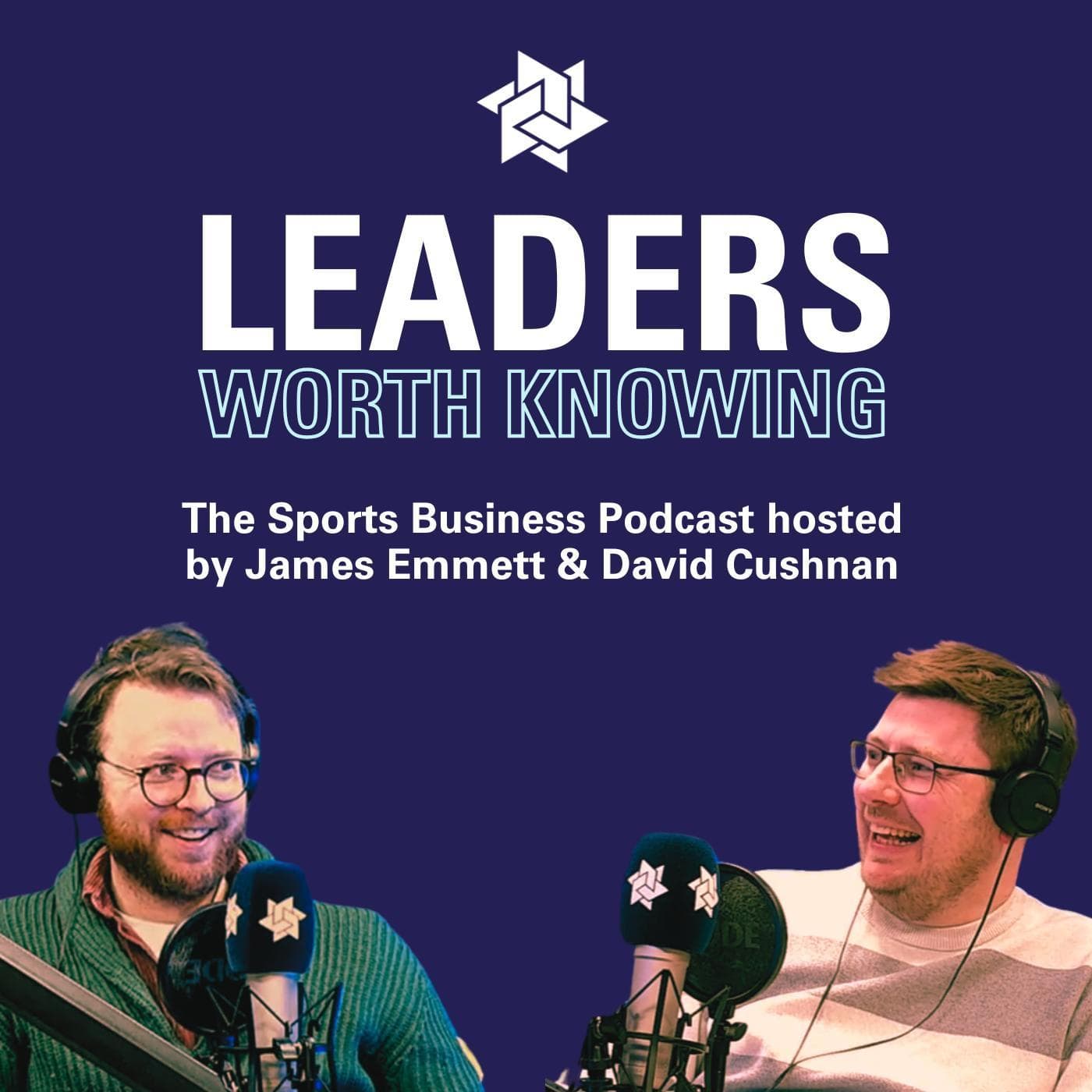
Just over a week out from the first Spanish Grand Prix at the new Madring circuit in Madrid, David Cushnan and James Emmett are back in the studio to discuss why it could become one of the most important - and commercially powerful - events on the F1 calendar.
They also consider how to define DAZN in the wake of its acquisition of commercial distribution platform Everpass, and the closing of its deal to buy streaming platform technology firm Viewlift. Does this indicate a change of tack from the company once dubbed the 'Netflix of sport'.
There's also time to reflect on this week's conversation with Everton Chief Revenue Officer Aaron Duckmanton, and his role bringing major sports and music events to the club's new Hill Dickinson Stadium.
-----
The Summit at Leaders Week London takes place on Wednesday 7th and Thursday 8th October. Visit leadersinsport.com/leadersweek for more information on speakers, who's attending and networking experiences to suit every taste.